
So we did get to Maryland and our dock early 2020 but no real cruising since. However we did install the extra solar on the new hard top. Now 1920 watts. Scotty got on board for a bunch of mechanical stuff. We did a major electronics upgrade and luckil…
Major Update
The Covid years really messed us up. In Dec 2019 Sylken Sea was in Trinidad. We purchased and took possession of a cottage in Maryland site unseen, but with help from friends in Pocomoke. Big draw was a deep water dock with good weather protection and …
Back Cruising
Ok. I did not have much success with earlier Blogger apps on the phone. Probably me. Anyway thought I would reinstall and try again.
Bahia de Tortuga, Day 1
Continuing on with Wednesday, February 22 — We decided to anchor near the only village in the bay. We’re unclear on whether the name of the village is Bahia Tortugas or if it is Puerto San Bartolome — we’ve seen … Continue reading →
Brazil Part 2 Recife and Natal
Brazil Part 2 – Recife and Natal, Brazil
March 3, 2023 – Recife
After 2 days at sea we arrived at Recife, one of the ports we had been at in 2008. Many guests went to the colonial town of Olinda, which Miriam had visited on that earlier visit. Olinda sits on a hill some 9 KM from Recife, which sits at sea level with one of the longest urban beaches in the world. We had planned to spend some time on the beach, but the transfers to the beach we cancelled due to safety and congestion concerns by the shoreside tour operator. By the time the ship docked the temperature and humidity were both out of sight.
Instead, Patrick rode the shuttle into the Casa da Cultura in the old city where many handicrafts were for sale. Walking around the immediate neighborhood with many abandoned buildings, crumbling sidewalks, and with many shops selling home goods like appliances and mattresses, stepping around homeless people sleeping on the sidewalks and being accosted by panhandlers, Patrick decided to just return to the ship.

Interior of Casa da Cultura

An actual phone booth in ceramic hat

Recife is known for dolls


Typical street scene
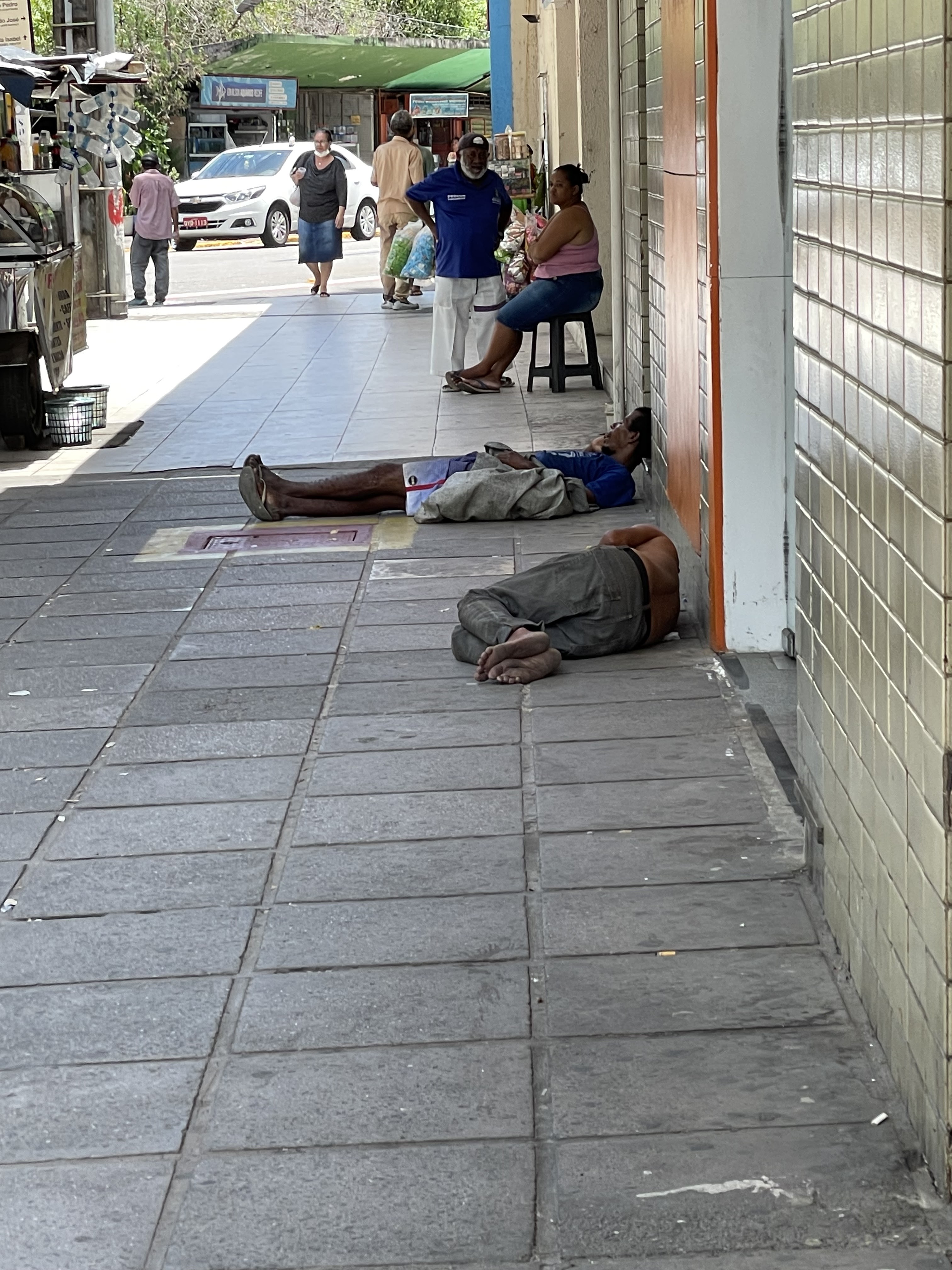
Some of the homeless sleeping on the sidewalks

Colonial era theater
Saturday, March 4, 2023 – Natal, Brazil
Natal was named after the Portuguese word for Christmas on December 25, 1599 and is the capital city of Rio Grande do Norte, a state in Northeastern Brazil. It is known for massive sand dunes, and dozens of sandy, white beaches stretching more than 9 KM from north to south.
We arrived at the pilot station about 0630 and negotiated the narrow entrance to the small port, passing under a large suspension bridge across the river. On the southern side of the channel was the star shaped Fortaleza dos Reis Magos. The fortress was built in 1598 to protect the area from French pirates and during Brazil’s colonial period was one of the most important defensive barriers in Brazil. For more than 300 years it was used as military quarters, administration and even as a prison. It is built in the water and is accessible via a pedestrian path. The name come from the statues of the Biblical Magi at the fort entrance.

Suspension bridge across harbor entrance at Natal

White fortress at harbor entrance – Natal

Local fishing boats

High tide at the beach

Yak Beach at Natal
The courtesy shuttle dropped us at a local handicraft market across the street from one of the city beaches, called Yak beach. We had intended to walk around town but were advised to stay out on the beach side as the interior roads were not considered safe for tourists.
The beaches were a mix of tidal pools protected by a coral reef and sections open to the surf. The surf was fairly high, the wind brisk and the temperatures HOT, but the wind did moderate the high temperatures. At high tide the beach nearly disappears and the vendor carts struggled in the wet sand at water’s edge.
Later that afternoon we had a folkloric show around the pool by local entertainers performing traditional dances.
Natal is also home to the worlds largest cashew tree, covering 8,000 square meters and producing more than 60,000 cashews per year. The tree is believed to be at least 1,000 years old and is roughly the size of 70 normal cashew trees. Since the tree is located more than 18 miles from the ship and a lengthy taxi ride, we did not get a chance to actually see the tree.
Seabourn Quest departed Natal for the three day 1000 NM journey to the entrance of the Amazon. We should cross the bar into the Amazon about noon on the third day. The entrance has to be carefully timed as March is known for the strength of a tidal bore known as a pororoca, which can be surfed for miles, or can be destructive as it travels at 10-15 knots for up to 300 miles upstream.
Brazil Part 2 Recife and Natal
Brazil Part 2 – Recife and Natal, Brazil
March 3, 2023 – Recife
After 2 days at sea we arrived at Recife, one of the ports we had been at in 2008. Many guests went to the colonial town of Olinda, which Miriam had visited on that earlier visit. Olinda sits on a hill some 9 KM from Recife, which sits at sea level with one of the longest urban beaches in the world. We had planned to spend some time on the beach, but the transfers to the beach we cancelled due to safety and congestion concerns by the shoreside tour operator. By the time the ship docked the temperature and humidity were both out of sight.
Instead, Patrick rode the shuttle into the Casa da Cultura in the old city where many handicrafts were for sale. Walking around the immediate neighborhood with many abandoned buildings, crumbling sidewalks, and with many shops selling home goods like appliances and mattresses, stepping around homeless people sleeping on the sidewalks and being accosted by panhandlers, Patrick decided to just return to the ship.
Interior of Casa da Cultura
An actual phone booth in ceramic hat
Recife is known for dolls
Typical street scene
Some of the homeless sleeping on the sidewalks
Colonial era theater
Saturday, March 4, 2023 – Natal, Brazil
Natal was named after the Portuguese word for Christmas on December 25, 1599 and is the capital city of Rio Grande do Norte, a state in Northeastern Brazil. It is known for massive sand dunes, and dozens of sandy, white beaches stretching more than 9 KM from north to south.
We arrived at the pilot station about 0630 and negotiated the narrow entrance to the small port, passing under a large suspension bridge across the river. On the southern side of the channel was the star shaped Fortaleza dos Reis Magos. The fortress was built in 1598 to protect the area from French pirates and during Brazil’s colonial period was one of the most important defensive barriers in Brazil. For more than 300 years it was used as military quarters, administration and even as a prison. It is built in the water and is accessible via a pedestrian path. The name come from the statues of the Biblical Magi at the fort entrance.
Suspension bridge across harbor entrance at Natal
White fortress at harbor entrance – Natal
Local fishing boats
High tide at the beach
Yak Beach at Natal
The courtesy shuttle dropped us at a local handicraft market across the street from one of the city beaches, called Yak beach. We had intended to walk around town but were advised to stay out on the beach side as the interior roads were not considered safe for tourists.
The beaches were a mix of tidal pools protected by a coral reef and sections open to the surf. The surf was fairly high, the wind brisk and the temperatures HOT, but the wind did moderate the high temperatures. At high tide the beach nearly disappears and the vendor carts struggled in the wet sand at water’s edge.
Later that afternoon we had a folkloric show around the pool by local entertainers performing traditional dances.
Natal is also home to the worlds largest cashew tree, covering 8,000 square meters and producing more than 60,000 cashews per year. The tree is believed to be at least 1,000 years old and is roughly the size of 70 normal cashew trees. Since the tree is located more than 18 miles from the ship and a lengthy taxi ride, we did not get a chance to actually see the tree.
Seabourn Quest departed Natal for the three day 1000 NM journey to the entrance of the Amazon. We should cross the bar into the Amazon about noon on the third day. The entrance has to be carefully timed as March is known for the strength of a tidal bore known as a pororoca, which can be surfed for miles, or can be destructive as it travels at 10-15 knots for up to 300 miles upstream.
The Rest of the Passage from Magdalena Bay to Turtle Bay
Tuesday, February 21 — The seas had been calm on Monday until about 2030 (8:30 pm), when the swells, swell period and wind chop all started to pick up. By midnight, Kosmos was pitching so much that we had to … Continue reading →
Passage from Bahia Magdalena to Bahia Tortuga, Day 1
Continuing on Monday, February 20… After returning from our amazing whale watch expedition, we ate lunch and did a few last minute get-ready-to-go things before lifting anchor. Since we hadn’t gotten the dinghy down, we hadn’t gone out to the … Continue reading →
Petting Wild Whales in Magdalena Bay
Sunrise on Monday, February 20 The panga picked us up from Kosmos at 0740. It was a 20-minute ride back to the mouth of the bay in their fast panga, as opposed to the over 1.5 hours that it had … Continue reading →
The Rest of the Passage from La Paz to Bahia Magdalena
Continuing on Saturday, February 18… after we rounded the corner of Cabo San Lucas, the conditions in the Pacific continued to get calmer and calmer. Here was the sunset on Saturday. The smoothest seas were at about midnight, then it … Continue reading →
