If It’s A Boat, It Will Break

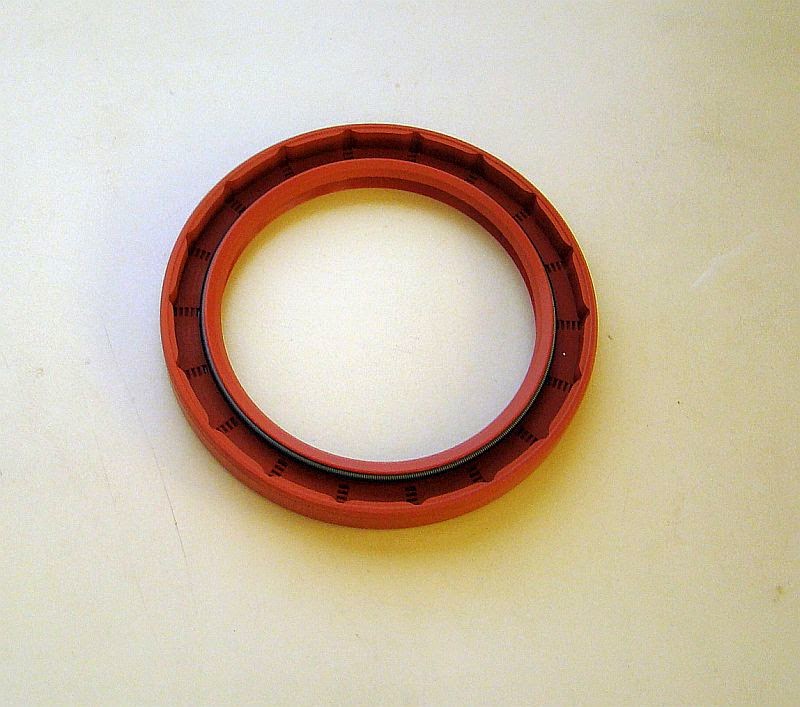
If there is one thing that I am certain of after a half century of boating, it’s that on a boat, something will break. A pesky oil leak in the front of the engine began as a minor thing and an annoyance. By the time we were halfway across the Okeechobee Waterway, the leak increased and since it was the front main oil seal, the belt pulley was starting to fling the oil as it spun. That meant oil was not only dripping under the engine, but slinging up on the engine room walls and everything else around it. Not a pleasant thought and definitely time to make repairs. Replacing the main seal is not a major repair, but it requires equipment most boaters don’t carry on board. We knew a good mechanic from our time living in Port of the Islands near Marco Island, so a call to him arranged the repair when we arrived in Fort Myers. The parts were ordered from American Diesel and would arrive at about the same time as Beach House. All seemed to be set for a short stop and a quick fix. Ah, but this is a boat after all.

No sooner were we docked at Fort Myers Yacht Basin than a familiar face appeared on the dock to greet us. One of our neighbors from a short stop we made at Lamb’s Marina near Elizabeth City, NC had moved their boat to Fort Myers and was a few slips down the dock. It’s always good to see familiar faces when we arrive at a new place. A check at the marina office confirmed that the parts had arrived. We ordered a new front engine oil seal and the replacement gasket for the timing gear cover. The mechanic was lined up to arrive the next day to look over the situation and if all looked good, to make the repairs. Things were going according to plan and that worried us, a lot. But this is a boat after all. The other reason for this marina stop was to take care of some appointments that were made months ago and we needed to rent a car to get from Fort Myers to Gainesville, FL. Enterprise Car Rental in Fort Myers proved to be a little difficult at first, but we finally worked things out and hit the road.

The replacement of the front engine seal on a Ford Lehman 120 requires the removal of the wheel that contains the pulley for the engine belts. This is also known as the balancer. It has a tapered nut holding it on at about 200-foot pounds and requires an impact wrench to get it off. Once off, the plate on the front of the engine that covers the timing gear is removed and the front seal is pressed into that cover. While we were on the road, a call to the mechanic revealed that the repair was not going to be as simple as we anticipated. The timing gear cover had a crack in it and it was probably the crack that was leaking and not the seal. The mechanic planned to take it to a machine shop to see if the metal could be welded, but the location made that repair iffy. We might need to find a replacement cover. These engines are over 30 years old and sometimes finding parts can be problematic. A call to American Diesel resulted in some bad news. They did not have a replacement and had not had one in a long time. This is when we started to worry. There is another provider of parts for the Ford Lehman, and that is a company called Bomac in Georgia. What a relief it was to call them and find out that they had a replacement in stock and could ship it out immediately. During the course of all of this, the new seal was damaged and another was ordered with the cover. It would arrive overnight.

The parts went in the next evening and everything went back together without complication. Running the engine at the dock did not indicate any oil leaking. By now we had been at the marina a few days longer than anticipated and the crew was anxious to get underway again. The next morning the engine was run at the dock for a half hour just to make sure everything was okay, and it seemed so. But this is a boat after all. Dock lines were let go and with a little effort and help from the marina staff ̶we had a strong cross wind ̶Beach House eased out of the slip and continued out onto the Caloosahatchee River with plans to connect up to the Gulf Intracoastal Waterway. But first, we wanted to stop and investigate an anchorage a few miles away in Bimini Basin. Once the anchor was down, a check of the engine room showed the leak was not only back, but worse than before. Remember what I said earlier about boats. A call to our mechanic resulted in him offering to have us bring the boat to a dock behind his home to try and determine what happened. Since he lived nearby, we decided to spend the rest of the day and that night in Bimini Basin. We dinghied ashore to do some exploration and as we sat on a park bench near the anchorage, we spotted our friends cruising around Beach House in their small deckboat. We had just spent the evening before with them at their home for a lovely dinner.

It was a pleasant afternoon and evening, but the next day the problem with the leak had to be resolved once and for all. A short motor back up the river to the mechanic’s dock didn’t take much more than an hour, but when oil is leaking all over the front of the engine and being flung around, it can be a long hour. It wasn’t enough oil loss to be of concern, just enough to make a mess. We tied to the dock behind the mechanic’s home, but he was across the state working on another job and would not return until the evening. There was nothing to do but wait. When the parts were removed once again, it appeared as though the seal had failed. The only thing we could conclude was that it was a defective seal. Rather than ordering another from Bomac, the decision was made to order a new seal, plus a spare, from American Diesel. Any parts that came from them was always of high quality. Once again, the parts would arrive overnight and for the third time, a new seal would be installed.

Great care was taken to be sure the newest seal was installed properly. In order to do that, the seal must be properly pressed into the timing gear cover, taking care to make sure it’s oriented properly. The cover is put in place with the many bolts that hold it on only loosely installed. Then the balancer is put in place until it is just barely seated in the seal. This lines the seal up and centers it on the balancer. The bolts for the cover are snugged up until all are snug, and then they are tightened as much as needed. And of course a new gasket for the cover was installed. Once the cover and seal are in place and everything is tight, the balancer is tightened down using an impact wrench. This time we ran the engine at the dock for over an hour at cruising RPMs. Once again, everything looked fine. But we have been fooled before. The following morning we left the dock and continued on our journey. Our next anchorage was only a couple of hours away just in case there was still a problem, but far enough to give the seal a workout. Hallelujah. After repeated checks of the engine room about every 30 minutes and another thorough check once the anchor was down, all looked fine. We could begin to breath a little easier, but it would still take a few days to feel confident things were finally resolved.

As the days progressed and no oil leaks were detected, confidence in the engine returned to normal. There are still hundreds of miles to cover as we make our way along the Gulf Coast researching our next edition of The Great Book Of Anchorages, The Gulf Coast, including the Okeechobee Waterway. Most days the boat will put in a full day of running, but the distance transited along the coast might only be about 10-15 miles. There are so many anchorages to research and explore that we zig and zag across the GIWW. There will be other days where 50 or 60 miles of the open Gulf of Mexico will be ahead of us as we cross the Big Bend region of Florida. Traveling alone on a boat with a single engine keeps us aware of the need to have everything in good working order. A breakdown miles out in the Gulf and a long distance from any help can be more than an inconvenience. Weather this time of year along the Florida coast also plays an important part in all of our decision making. It’s already the rainy season and afternoon thunderstorms are becoming a fact of life. Some of these storms can be sudden and very violent. We need a boat and equipment we can count on, and we believe Beach House will not let us down. Let the adventure continue. Don’t forget to visit us on Facebook to see lots more photos and the latest news.
Day 153 – 365 Project…Big Rock Blue Marlin Tournament

Welcome to day 153 of  365 photos…the 56th annual Big Rock Blue Marlin Tournament is happening in Morehead City this week and excitement abounds. I’m told that this is one of the largest sport-fishing tournaments in the US. There are prizes for fish given each day and of course, a large cash prize given for… Continue Reading

The post Day 153 – 365 Project…Big Rock Blue Marlin Tournament appeared first on Moosetique Musing.

Production TW28 in Turkey

Was shown this link today. A company in Turkey is producing the TW28.

Kuzey Ege Yatç

Here’s the brokers listing.

NORTH AEGEAN TRAWLER 30 – WEEKENDER

At today’s exchange rates it works out to:

$74,400 USD
$80,750 Cdn

Of course I had to photochop the picture of it to see what it would look like with the hull extension I did on our hull.

I’m liking that!

Bloor West Village & High Park

As part of our ongoing series about neighbourhoods in Toronto we’re pleased to feature a segment on Bloor West Village and High Park which is just northwest of the Boatel. It’s been 10 years since we left our land-based home near Bloor West … Continue reading

Stormy’s Log: Aqua Yacht Harbor to Chattanooga

Stormy’s Log:   Hello again, my name is Stormy.  You probably remember me from my other log several years ago.  I am now 12 years old and I am spending the next two weeks with Aunt Susie and Uncle Jeff.  Let me tell you about my trip aboard Idyll Time with Sebastian.   My trip […]

Alaska 2014 – On To Sitka

June 6, 2014 – Continued

As we headed out of Petersburg at 0725 we waved goodbye to the Krogenites on the dock and quickly cleared the entrance buoy at the north end of Wrangell Narrows.  Frederick Sound was a millpond, with no wind and sunny skies so we opened up the flybridge and drove Spirit from there.  Aside from a few small fishing boats close to the shore there was little marine traffic.  Cell phone coverage stops quickly and by the time we reached Sukoi Islets coverage had disappeared.

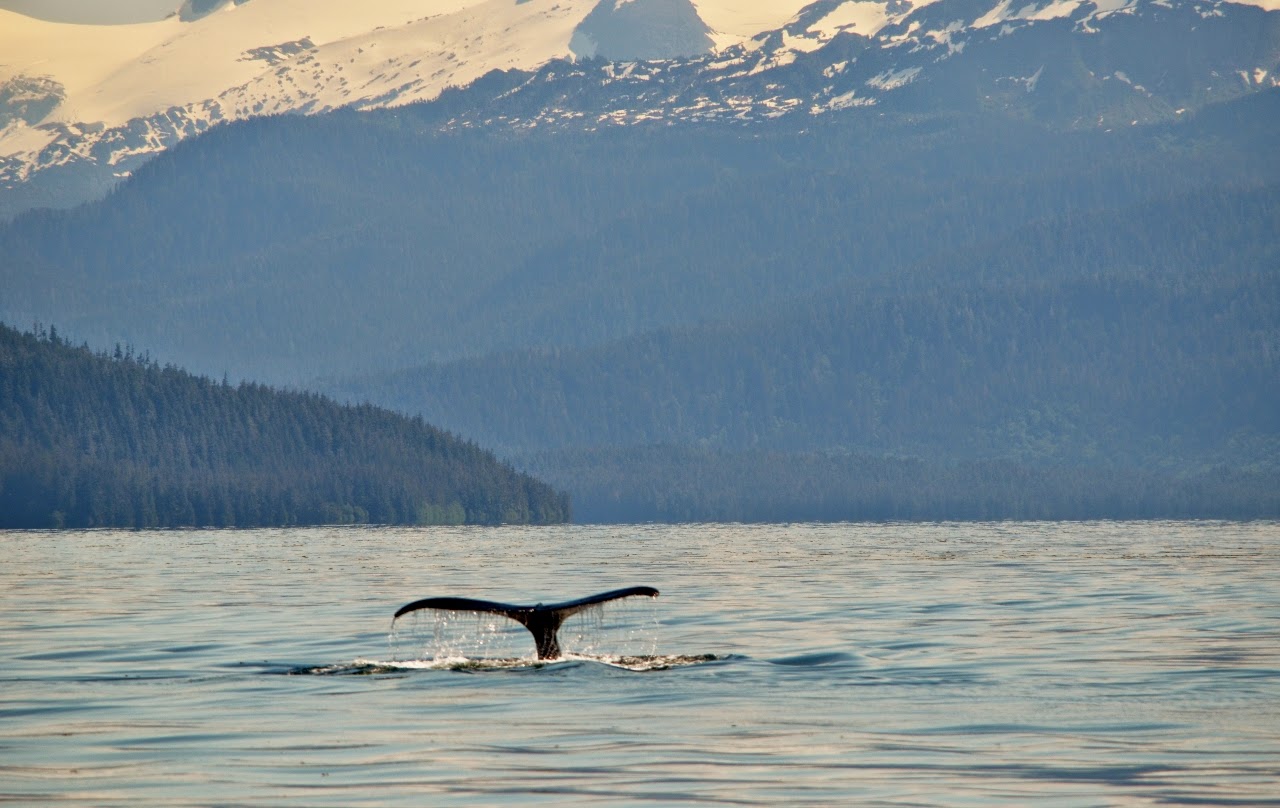
Just past Portage Bay we encountered our first good Humpback whale sighting in Alaska this year and managed to get some a few good tail photos.  Continuing down Frederick Sound past the lower end of Stephens Passage we had several encounters with Dall’s porpoises.

The Devil’s Thumb leaving Petersburg

Humpback in Frederick Sound

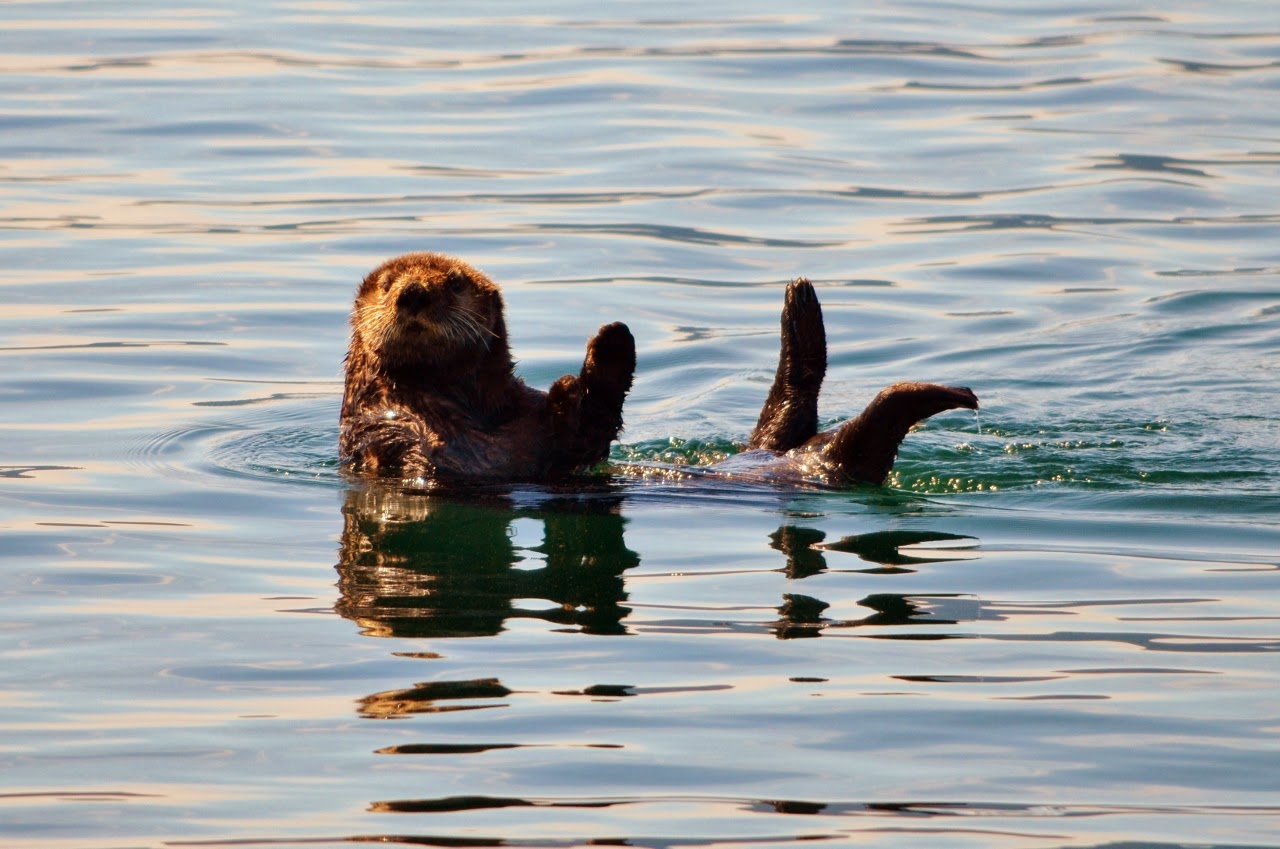
Sea Otters are cute, but destroy the crabbing

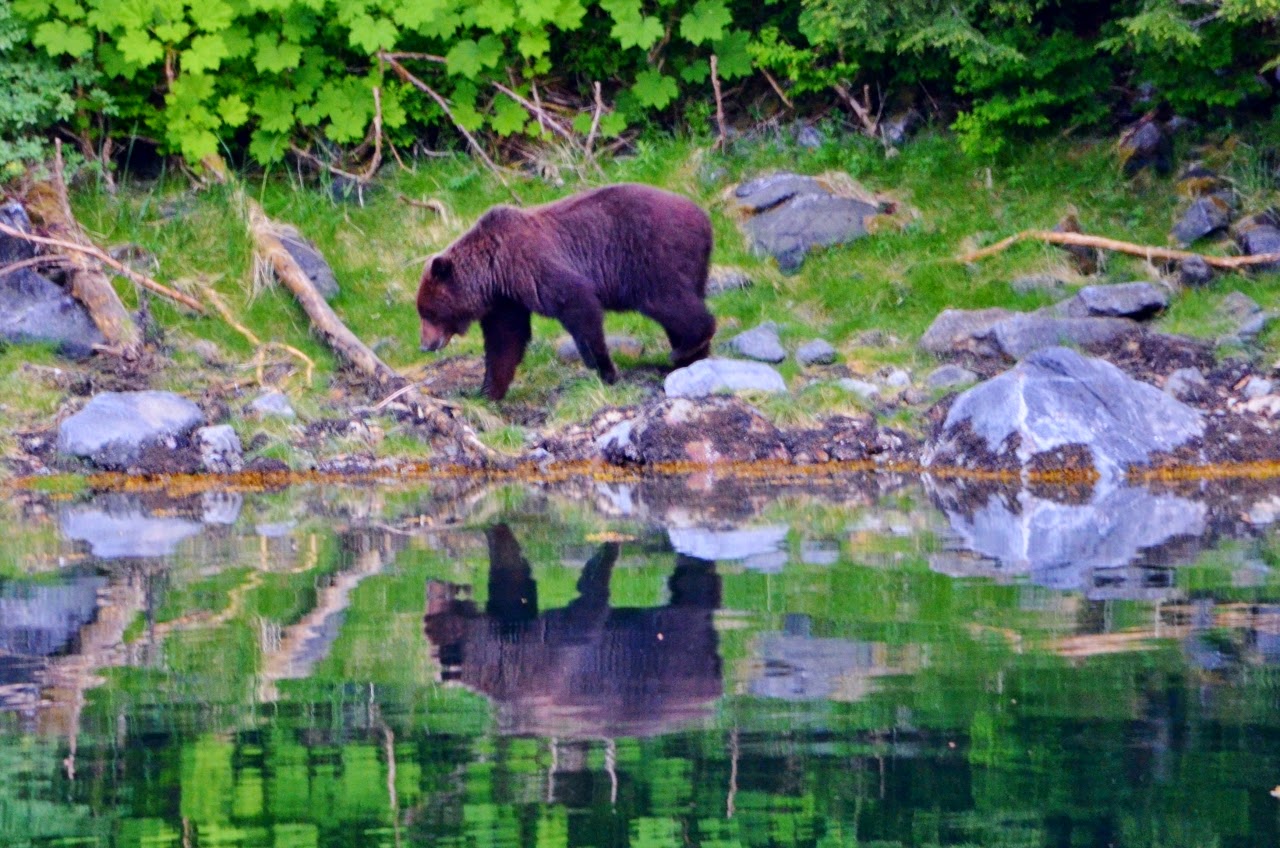
We began picking up cell phone coverage as we passed the town of Kake and coverage continued until we entered Warm Springs Bay, where Baranof Hot Springs is located.  The public dock did not have enough space for us, so we anchored in the south inlet where we were treated to 2 different brown bears foraging on the beach.  The anchor was set in 90 feet of water at 1800 after a 75 nautical mile day.  The bottom in this inlet is hard, so we have had issues in the past getting a good set, but not this time.

Brown Bear out for breakfast in Warm Springs Bay
The inlet has such steep sides that the GPS occasionally lost lock, as well as the TV satellite dish.  We are at the northern most limits of coverage with this unit, so it has now been turned off.  We still have our DVD movie collection, if we ever find the time to sit down and watch one.

June 7, 2014

As predicted, the rain began shortly after midnight, but with no wind the anchorage remained secure.  It starts getting light before 0300, so with light coming in the cabin windows it can be hard to sleep.  We pulled the anchor up at 0622 and headed out of Warm Springs Bay, intending to fish.  However, 2 large sea lions had also decided to fish in the same location so we just kept going.  The visibility in Chatham Strait was initially less than ½ mile, but within a couple of hours had increased to several miles.  We altered course several times for Humpback whales feeding on the surface directly ahead of the bow.

Taking a small shortcut through Thatcher Channel, which cuts over a mile off the entry into Peril Strait we ran into more rain and fog.  The wind, which was from the SE in Chatham Strait, bounces off the hills on Chichagof Island and changes direction by almost 180 degrees.  We entered Saook Inlet with a 10 knot breeze behind us from the northwest, with a 1 foot chop.  Anchoring in 100 feet of water off the end of the inlet, in a good mud bottom, we had only travelled 37 nautical miles, for a grand total of 940 nautical miles.  Most cruising guides do not recommend Saook Inlet, but only because of the deep water anchorage and the steep shelf on the delta at the head of the inlet.  Many cruisers are not comfortable, nor have the length of anchor rode to safely anchor here.  Today we are the only boat in Saook Inlet.  Patrick set two crab traps, and when we checked them 4 hours later, had to pick the six largest crabs from the 24 legal sized male crabs in the two pots. 
The non-resident limit this year is three crabs per person per day, with the possession limit equal to the bag limit.  We had no sooner brought the pots back to Spirit when the Alaska State Wildlife Police showed up in their large RIB and boarded us to check our licenses and the number and size of crab.  Fortunately, everything was in order and after a nice chat they motored out of the inlet.  After the troopers left we cooked the crab and then made crab cakes with some of the crab and froze the rest.  The rain continued, heavy at times, all night.

June 8, 2014

Checking the two pots the next morning we realized we should have only set one pot.  We kept the six largest crab and returned 20 back to their home in the inlet.  After cooking the crab we pulled up the anchor at 0800 in rain and fog, sunshine and rainbows and continued through Peril Strait riding a modest ebb tide through Sergius Narrows to our destination, Kalinin Bay on the north end of Kruzof Island.  By 1300 the anchor was down in 25 feet of water and after lunch we headed out for our first salmon fishing expedition in Alaska.  Alas, the fish ignored our bait, while we worked through the logistics of a new boat and downriggers, so we returned at 1900 empty handed.  Talking to one of the other boats anchored in the bay we discovered that fishing has been spotty for everyone in this area, the fish are still mostly offshore.

June 9, 2014

We headed out for the shark hole outside of Kalinin Bay at 0530 in rain.  A blown fuse on one of the downriggers cut the morning short, and we had no action with the identical rig and technique that had proved successful in the past.  We spent the afternoon watching eagles fish in the bay.

Eagles Fishing in Kalinin Bay

Brown Bears in Kalinin Bay

June 10, 2014

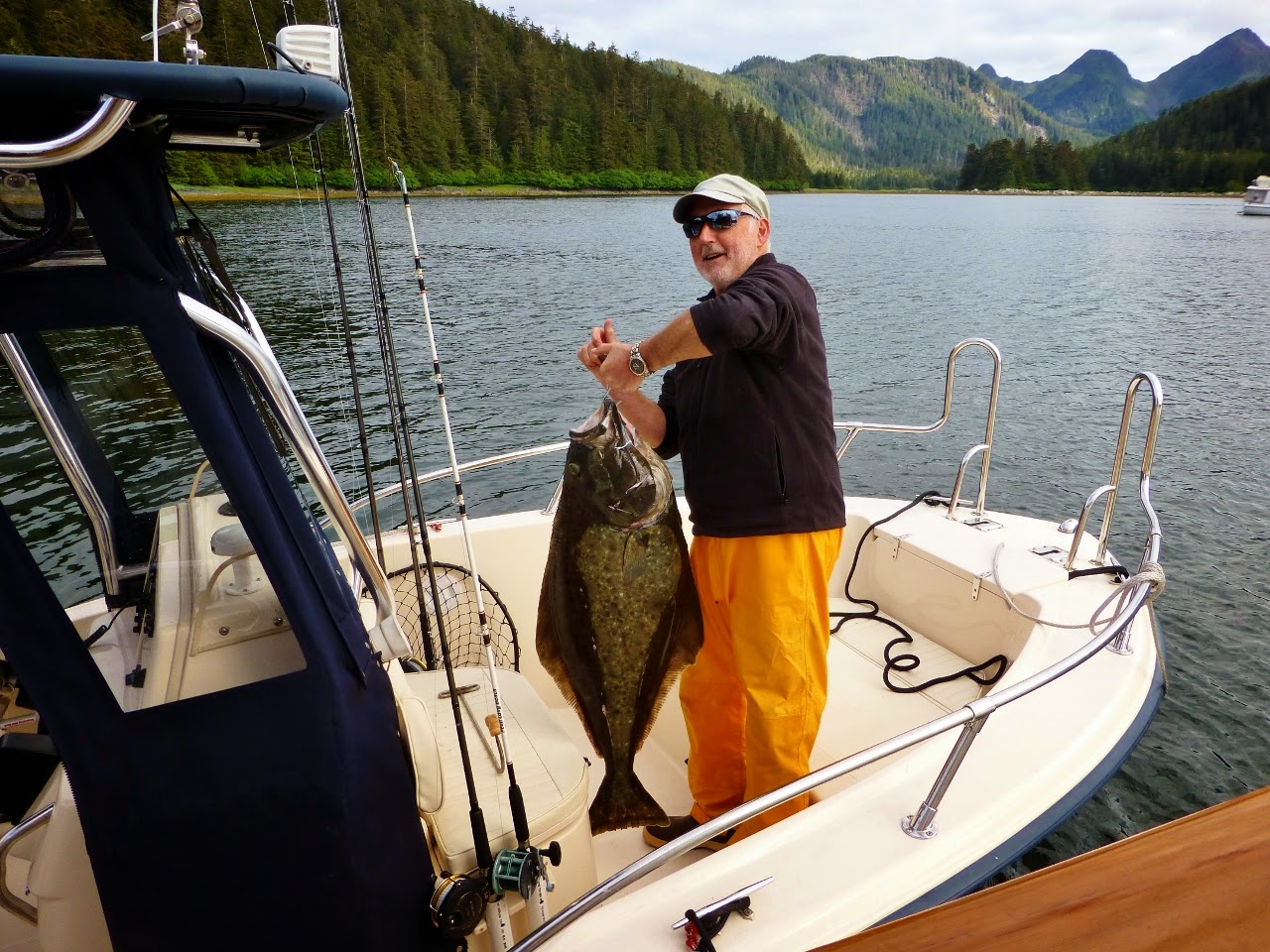
We did not get underway for fishing until 0600, and hoped for the best when we had our first salmon hooked on the gear.  Unfortunately, the fish was too small and was released.  We had two more fish on that escaped our grasp while reeling them in, but did catch 7 sea bass.  Six of the sea bass were big enough to convert into fish tacos at some later date, so we finally called it quits and returned to Kalinin Bay and filleted the sea bass.  That afternoon we headed for a halibut fishing spot at high slack tide and in just a few minutes had landed a small 13 pound halibut.  Putting the line back in the water, no more than 5 minutes later we had hooked another fish, this time taking quite a while to get to the side of the Grady White.  The halibut was too large to safely get into the boat until nearly dead, so our friends from “Jericho”, who were guiding us to the fishing spot in their tender, came over with their halibut harpoon (we had left ours on Spirit) and speared the fish, passing us the harpoon line.  We spent the next 45 minutes getting the 38 pound halibut on board, since leaving the water was not on the fish’s wish list.  Returning to Kalinin Bay we spent the next several hours filleting and vacuum packing the fish.  We finally set ourselves down to celebrate 42 years of marriage with a fresh halibut dinner.

The halibut is harpooned

Patrick with the 38 pound halibut

June 11, 2014

At the relatively late hour of 0700 we pulled the anchor from the mud of Kalinin Bay and carefully headed out the channel on a -1.1 foot tide, avoiding the rock in mid channel which has only 5 feet of water, whereas we need 6 feet.  By 1045 we were docked in Eliason Harbor, having covered 992 nautical miles on Spirit since Anacortes.

We have some maintenance to perform, and will fish from the Grady White for the next several days before heading back out to somewhere close to Sitka and continue our hunt for the King Salmon.  The weather is predicted to deteriorate for a few days, with small craft warnings through Thursday evening and seas increasing to 11 feet offshore by Saturday AM.

FPB Systems Log – Maintenance on a Voyage Halfway Around the World

With the FPB 64 Grey Wolf covering an average of a thousand or more nautical miles per week on her voyage home, we have in effect an accelerated maintenance test to observe. Experienced cruisers and marine professionals will be surprised by the data accumulated since her departure from New Zealand the last week of March.Peter […]

There and back again…

 (Continued…)

Day 152 – 365 Project…Orange Flowers

Welcome to day 152 of  365 photos…these orange flowers caught my yet. I don’t know what they are but I LOVE the cherry, bright orange color. I bet the butterflies would love these. If anyone knows what they are, please leave a comment. I would love these somewhere in one of my gardens.Camera: Nikon D7100… Continue Reading

The post Day 152 – 365 Project…Orange Flowers appeared first on Moosetique Musing.

The ARGONAUT The Marquesas May 11 to June 3, 2014

CAPTAIN’S LOG                The Marquesas             May 11 to June 3, 2014  The Islands and Their History The Marquesas Archipelago consists of twelve islands lying in the middle of the Pacific Ocean 3,500 miles west of Peru and 3,500 miles southeast of Hawaii.  The Marquesas are volcanic islands formed approximately three million years ago of basalt and tuff rather than black lava.  Each island is different in appearance, yet they are all strikingly beautiful with very tall peaks that…