Grand Americas Part 7 – Chilean Fjords


Jan 25-26, 2023 – At Sea enroute to San Antonio, Chile


Seabourn Quest spent 2 days traversing the 700 NM between Antofagasta and San Antonio, which is one of the two port cities for Santiago, the capital of Chile.  Santiago is 71 miles from our port stop, where about ½ the passengers ended this segment of the cruise.  The same number will embark for the Antarctic Segment.  The ship is limited to 400 passengers for this segment in order to do landings in Antarctica.


Jan 27, 2023 – San Antonio, Chile


Seabourn Quest docked shortly after 0700 under cool overcast skies and by 0800 the first disembarking passengers were leaving the ship.  All decks were filled with staff cleaning and preparing suites for the soon to arrive new guests.  By 0900 the skies had cleared and the temperature rose to about 72 F.  Patrick took the shuttle to the cruise terminal and walked along the sea wall about 1 mile to a local shopping mall to get some additional Voltaren gel for our arthritic joints.  The seawall enclosed a fishing boat harbor and there were many local fisherman cleaning fish and selling them to local Chileans.  About 1200 the new guests began arriving and the ship began to get crowded as the balance of the 400 passengers arrived.


The ship departed on time at 1700 and headed out into the Pacific, where the swells were from the south at more than 3 meters and the winds increased to 40 knots.  The ship began to pitch as we headed south along the Chilean coast.  Overnight the swells increased again.


Jan 28, 2023 – At Sea, enroute Puerto Montt, Chile


The winds and seas remained high during the day as the ship continued south at 15.5 knots.  The Antarctic parka and boot exchange, as well as the introduction of the 18 person expedition team occupied most of the morning.  We continue to have most of our meals poolside, but now the heat-lamps are on and we are wearing jackets, with blankets at our table.  Tonight is the Captain’s reception, mostly for the newly embarked guests and so it is the first formal night of this segment of the cruise.  Miriam and I have booked dinner at The Grill, so we will miss the lobster and filet mignon offered in the main restaurant, but both are always on the menu in The Grill.


January 29, 2023 – Puerto Montt, Chile


As Seabourn Quest turned into the Chilean Fjord system shortly after 0500, it was clear with stars.  Soon the fog rolled in and at 0600 the foghorn began the two minute automated signal blasts on the horn.  The fog persisted off and on all the way to Puerto Montt, where the ship anchored off the town and the tenders were deployed.  At 1000 the ship was cleared and passengers on shore excursions lined up to get off the ship.  Patrick waited 30 minutes and the tender was nearly empty.


Volcano from the ship, looks like Mt. Rainier
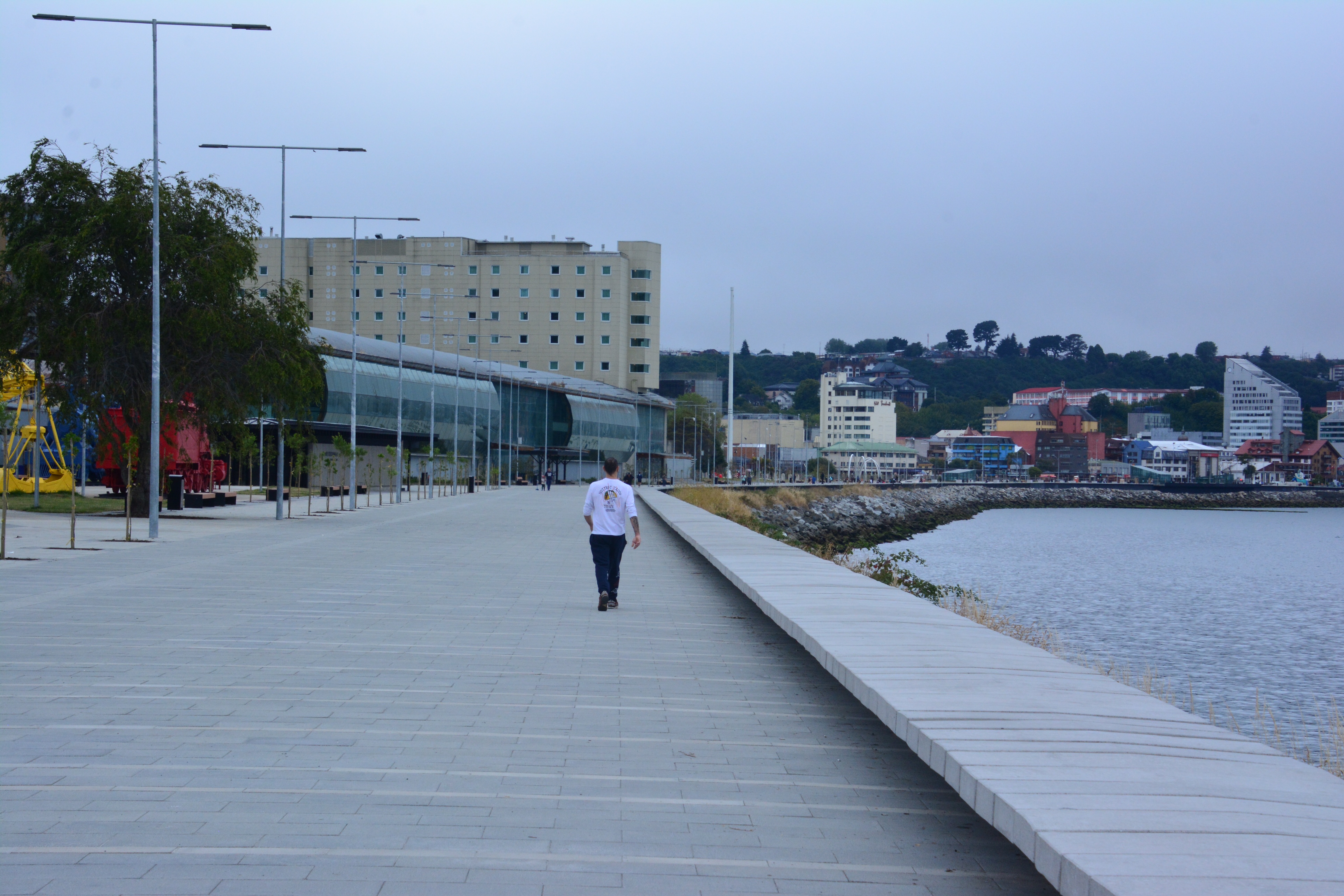
Beginning of the new Esplanade

German architecture influence

Local Cheeses
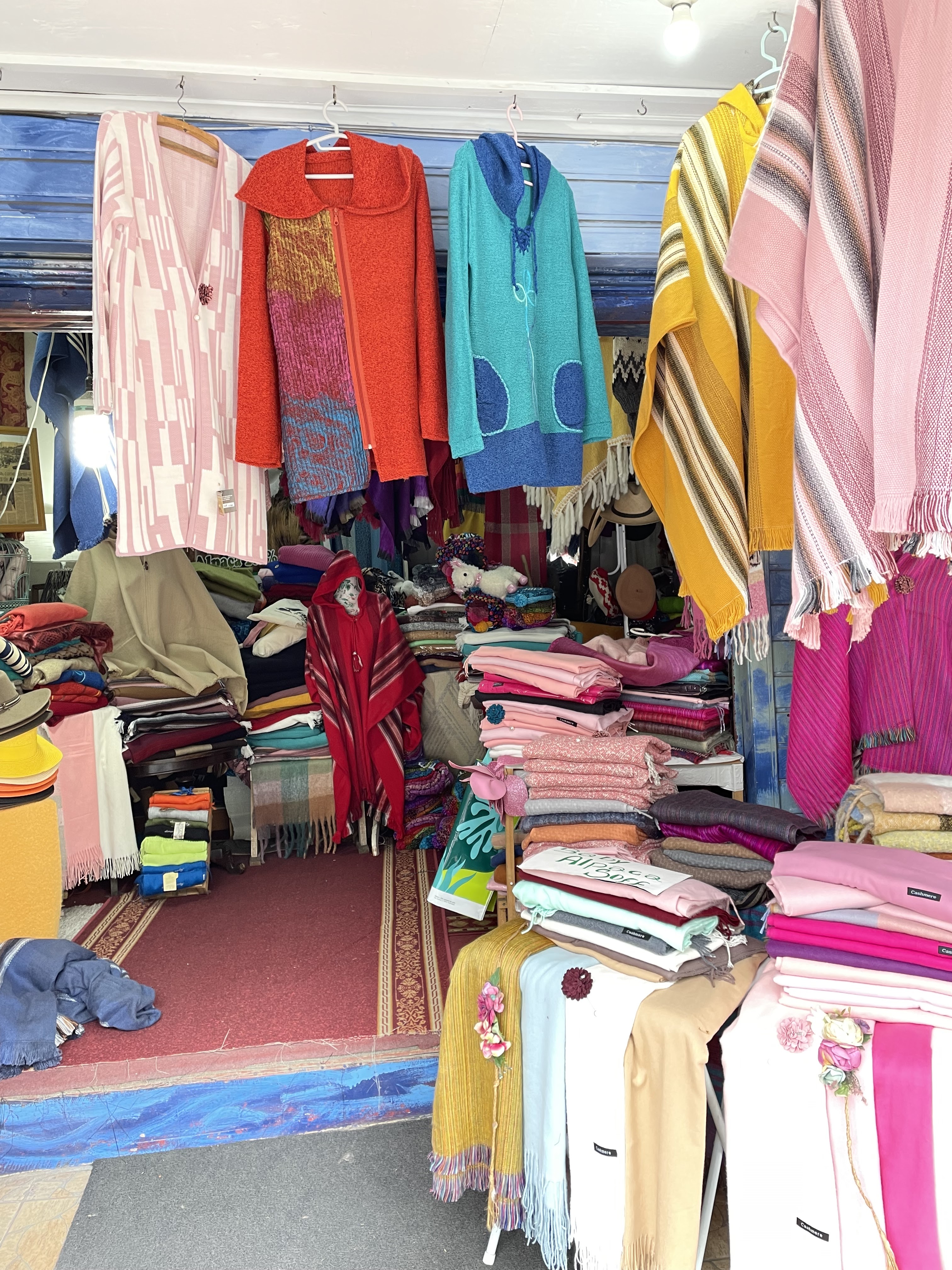
Local Handicrafts

Local Produce

Puerto Montt has changed since 2015, with a very nice seaside esplanade with playgrounds for children, public sculptures and other displays.  It is not yet totally finished and stretches for more than one mile along the harbor.  At one end is a new passenger terminal still under construction and the other end has a modern shopping mall.  Going the other direction is a more traditional open air shopping area with restaurants, local handicrafts and local foods, stretching nearly another mile.  Since it was Sunday, the market was crowded with local families shopping.


The German influence in this part of Chile is apparent in the architecture.  Our departure was at 2200, since the distance to our next destination is only 108 NM.  When the sun came out we were treated to views of one of the active volcanoes surrounding Puerto Montt.


January 30, 2023 – Castro, Chile


Overnight the ship travelled at fairly slowed speeds, and dropped anchor in front of Castro at 0600.  The ship is anchored alongside of massive aquaculture farms, mostly mussels and oysters here, however this area also has extensive salmon farming.  The last time we were here we visited a nature preserve where Darwin began his observations on the origin of species so we did not visit the town itself.  Today Patrick took the tender into shore and walked up the hill to one of the Unesco World Heritage sites, the Cathedral of San Francisco, which is yellow painted metal on the outside and beautiful wood on the inside.


Cathedral of San Francisco, Castro
Castro Street Art
Interior of Cathedral, all wood

Exterior is all metal, painted

We depart early from Castro to do scenic cruising before arriving in Punta Arenas the day after tomorrow.


Third Trip to San Evaristo, Day 2

Sunrise on Tuesday, January 24 The wind had picked up during the night, and by morning the wind was back to screaming with sustained winds in the low-20-knot range and gusts to 30 knots. We even had one gust of … Continue reading →

Pourquois Pas Island

Pourquois Pas Island, at the north edge of Marguerite Bay, was discovered by Jean-Baptiste Charcot. He led the 1908-1910 French Antarctic Expedition, and named the island after his ship. Charcot in turn is the namesake for the French expedition ship Le Commandant Charcot, the highest rated ice class vessel in the world, that we’ll be…

Keith’s Perspective on Ensenada Grande and San Evaristo/Le point de vue de Keith sur Ensenada Grande et San EvaristoKeith’s Perspective on Ensenada Grande and San Evaristo

I had an okay time at Ensenada Grande. There were a lot of kids. We did some D&D, but there were too many kids playing D&D to be fun. We went on a hike with some other people. Most of … Continue reading →

Stonington Island

Stonington Island in Marguerite Bay is the site of two early research stations. East Base, the oldest American Antarctic station, was built starting in 1939 but hasn’t been used since 1948. The British Base, Station E, was used for many historic survey missions in the 1940s and saw use until the mid 1970s. From Red…

Ensenada Grande on Isla Partida to San Evaristo

During the night, the wind shifted to come from west, where this anchorage had no protection. When we woke up on Monday morning January 23), it was very uncomfortable. We got Kosmos ready to go and pulled up anchor at 0700, … Continue reading →

Red Rock Ridge

After our second night at sea through the Drake Passage, we woke up in Antarctica. Massive icebergs floated everywhere, some surprisingly close to the ship, in an endless variety of fantastic shapes and sizes. Ashore, steep and snow-covered slopes soared straight up from the water. Antarctica is much more mountainous than we were expecting. Taking…

Second Trip to Ensenada Grande on Isla Partida, Day 3

Sunday (January 22) was another rolly morning. First thing in the morning, we coordinated with the other families to go for the big hike. We encouraged everyone to meet onshore ASAP so we could all get a reprieve from the … Continue reading →

Second Trip to Ensenada Grande on Isla Partida, Day 2

Here was the sunrise on Saturday, January 21 The wind picked up overnight and was screaming by the morning. The wind caused a lot of noise — the wind itself was loud, the anchor chain/bridle moved a lot, waves slapped … Continue reading →

Grand Americas Part 6

 January 23 – Iquique, Chile


Iquique is a larger city than Arica, but still perched on the edge of the Atacama desert, sandwiched between high barren hills and the Pacific Ocean.  The city was founded in the 16th century, but there is evidence of human habitation as far back as 7000 BC, by the indigenous Chango people who settled the coastline of the Atacama desert from southern Peru to northern Chile.  Chango is one of 10 indigenous peoples recognized by Chile and there is a remaining population of about 4,000 people.


Iquique was a prosperous saltpeter mining town in the 19th century, today it is a popular holiday destination with a tax free zone, a seafront casino and beautiful beaches.


The ship docked near the old town center.  There was a significant swell which was mostly protected by the sea wall, but no natural harbor.  However the ship was still rolling at the dock, but not nearly as much as the container ships anchored offshore.  There were also a number of Chilean navy vessels anchored behind the sea wall.  This port is often bypassed by cruise ships due to the swell at the dock, making it hazardous to tie up and disembark passengers.


The shuttle bus dropped us at the main town plaza dominated by a 19th century clock tower and ornate theater, undergoing restoration.  The plaza and surrounding area is mostly a pedestrian mall with many pubs, restaurants and hundreds of street vendors selling stuff under canopy tents or even out in the open since there is seldom rain here.  We were cautioned against wandering very far from the main plaza due to high crime rates.


January 24, 2023 – Antofagasta, Chile


After an overnight transit in mostly calm seas, Seabourn Quest arrived at the port city of Antofagasta, some 700 miles north of Santiago.  Antofagasta is the capital of the province and region of the same name and has a population of more than 400,000.  Again, the city is at the base of steep barren hills spread out along the Pacific beaches.  The harbor is protected from the ocean by a seawall forming a space with room for perhaps six ships at one time.  The skyline is impressive, with many high rise buildings stretching for miles along the shore.  However, the slums stretching up the hillside reminded us of the favellas in Rio De Janiero.


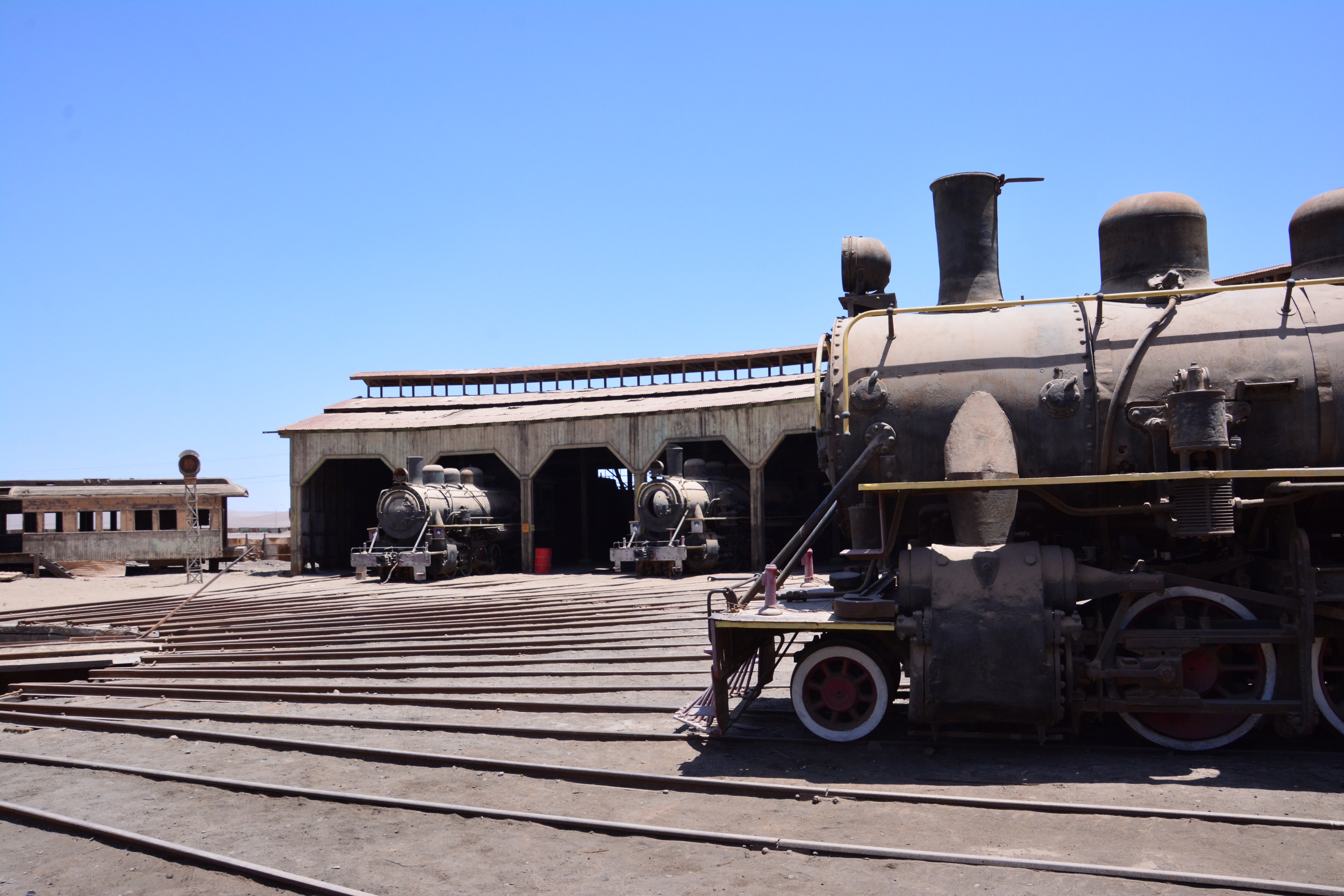
Our shore excursion today includes the main Plaza Colon, a mining museum, then a 60 mile drive into the Atacama desert to the small town of Baquedano, an important rail junction with a number of well preserved locomotives used in the nitrate industry.  Mining is still practiced for things like copper and the tailings from the open pit mines are huge.  The rail lines are still in use.


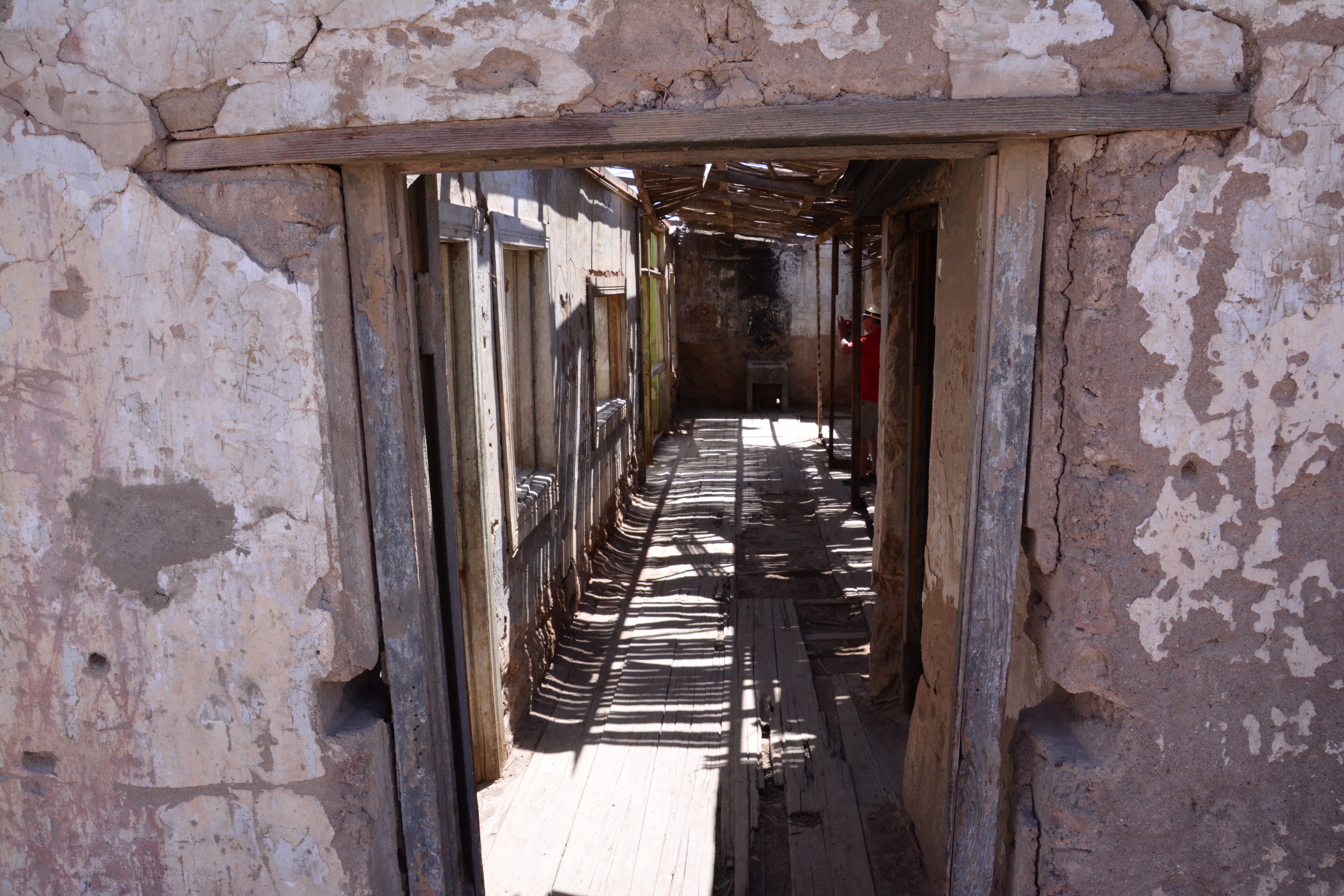
From that town we went to Chacabuco, one of a number of purpose built towns constructed in 1920’s for the workers in the nitrate plants which accounted for 50% of Chile’s GDP at the time.  When that industry collapsed after only 14 years, the towns were abandoned and fell into disrepair.   The Pinochet government used Chacobuco as a concentration camp for some 1800 political prisoners from 1973-1975.  It is now a “ghost town” with a grim past and a tourist attraction.  The German government is funding the restoration of some of the old buildings.  The town is really grim, with collapsed buildings, barren dirt streets and no water.  Ocean Falls in British Columbia looks like an oasis compared to Chacabuco.


One point of interest was a chapel constructed in the prison area of Chacabuco by the political prisoners in the 1973-75 time period, still well preserved.

Returning to the ship we had a nice dinner at the poolside patio grill followed by a dance party around the pool as the ship departed at 11:00 from Antofagasta and nosed out into the gentle pacific swells.  We are  headed for San Antonio, one of the port cities for the capital of Santiago.