Tag Archives | Selene

South Georgia Island

January 6 – Cooper Bay – South Georgia Island

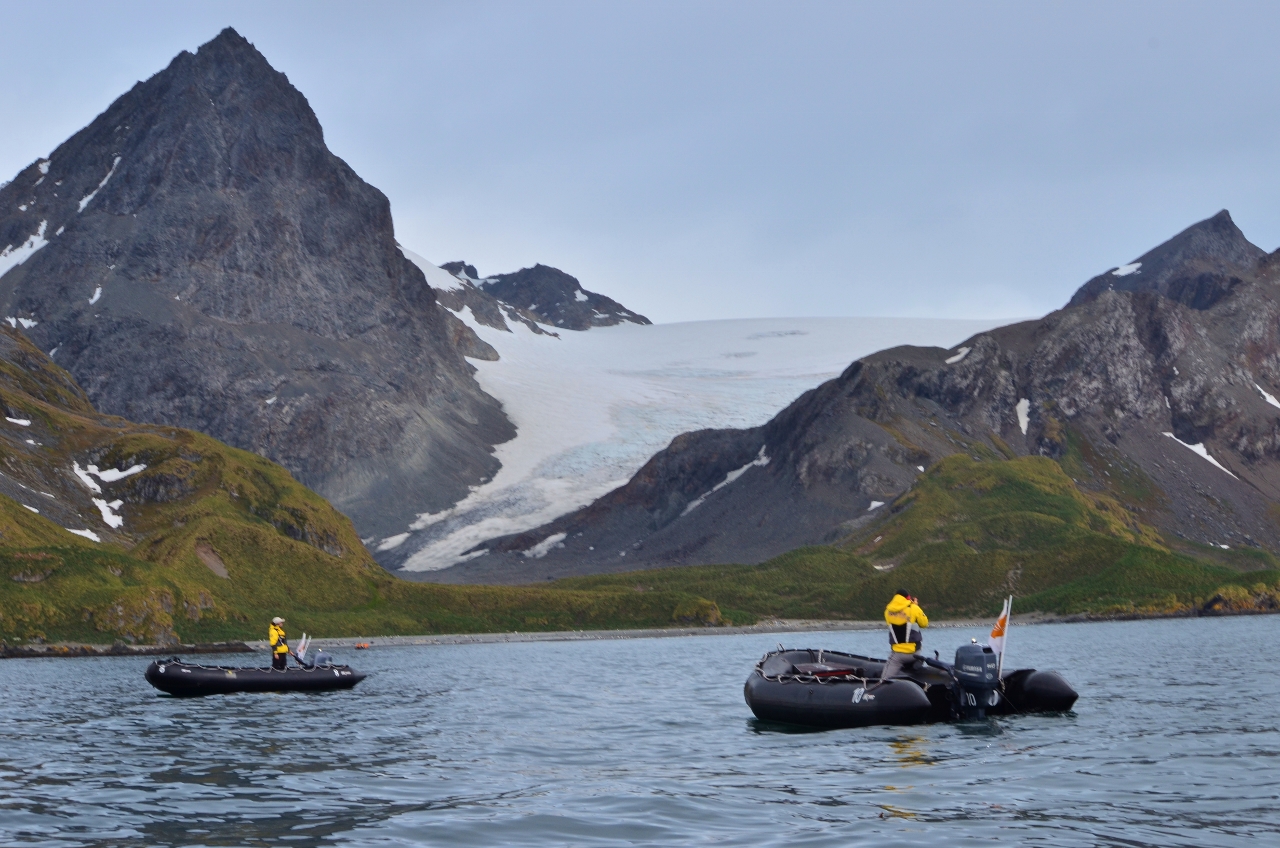
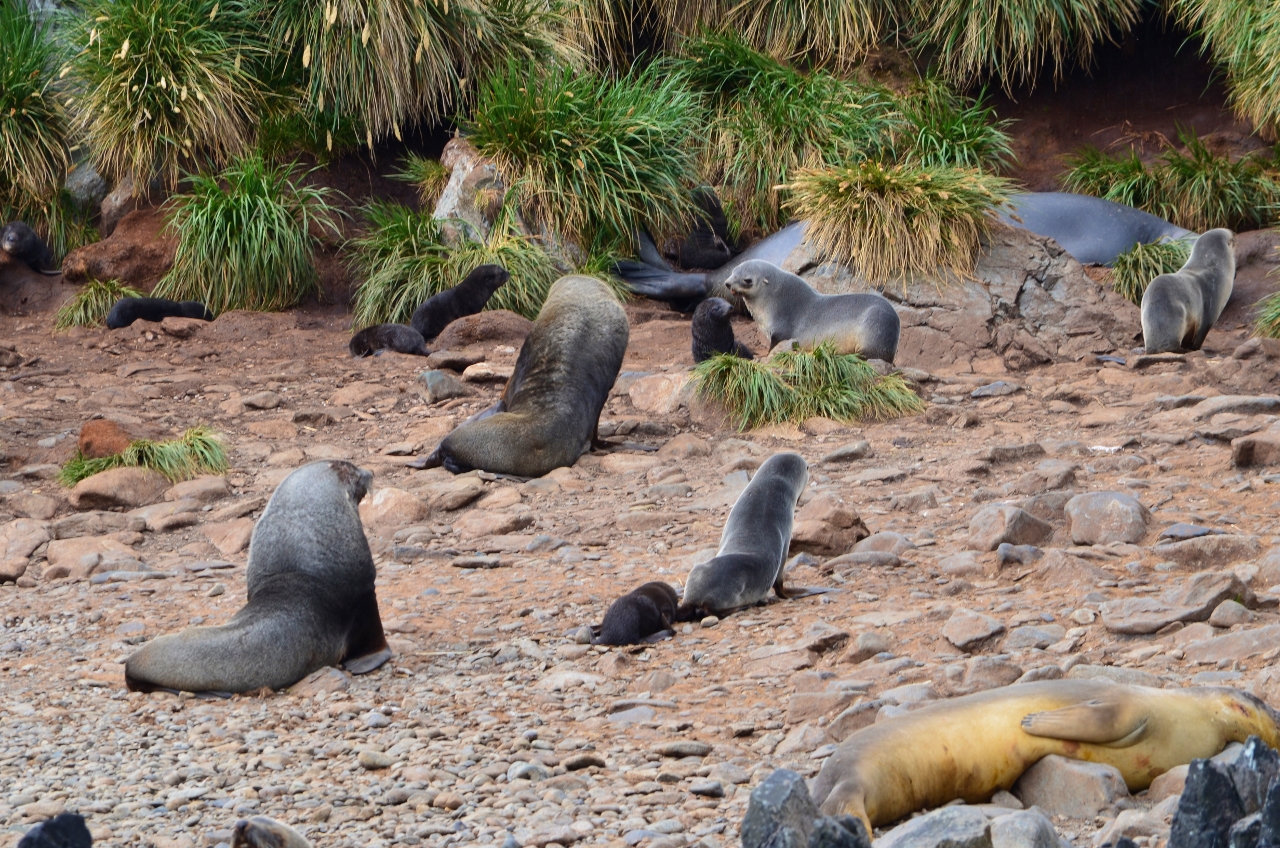
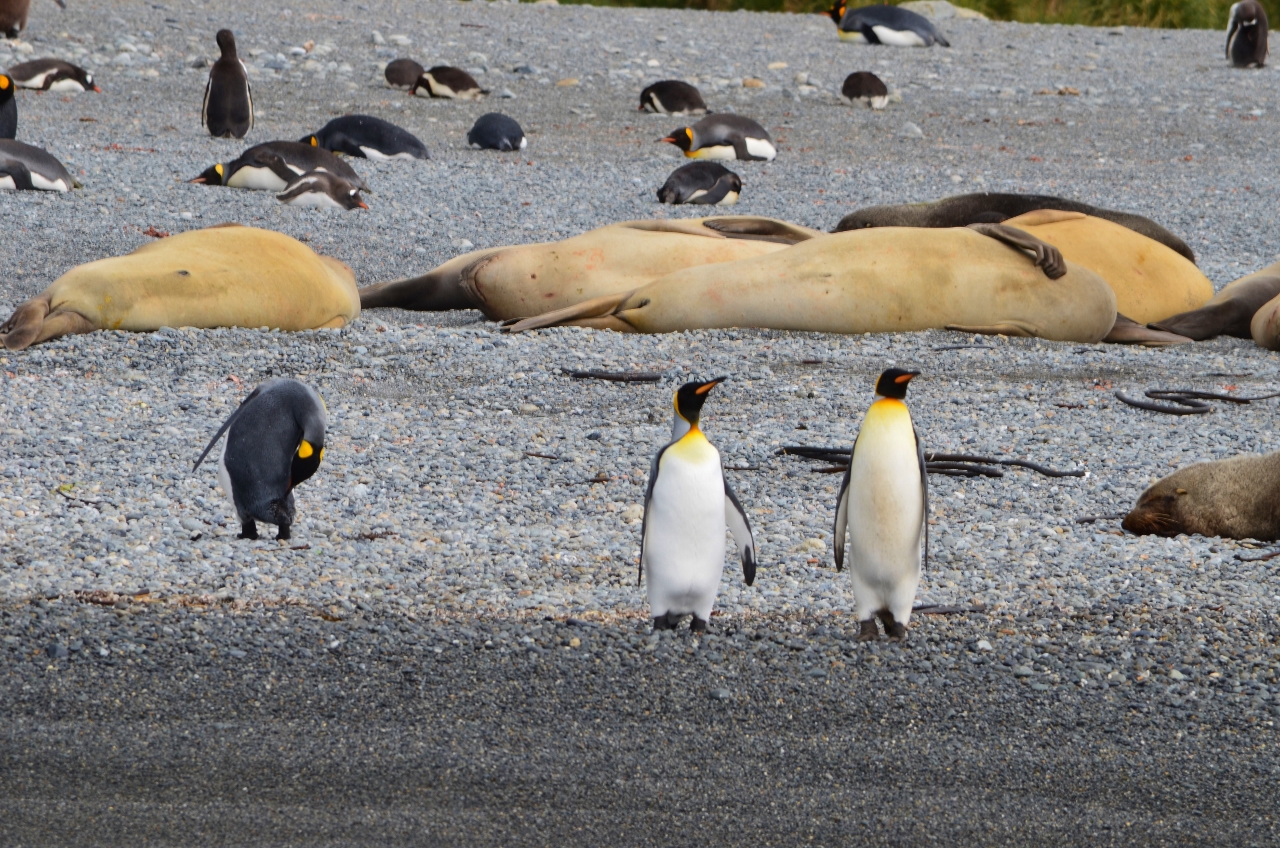
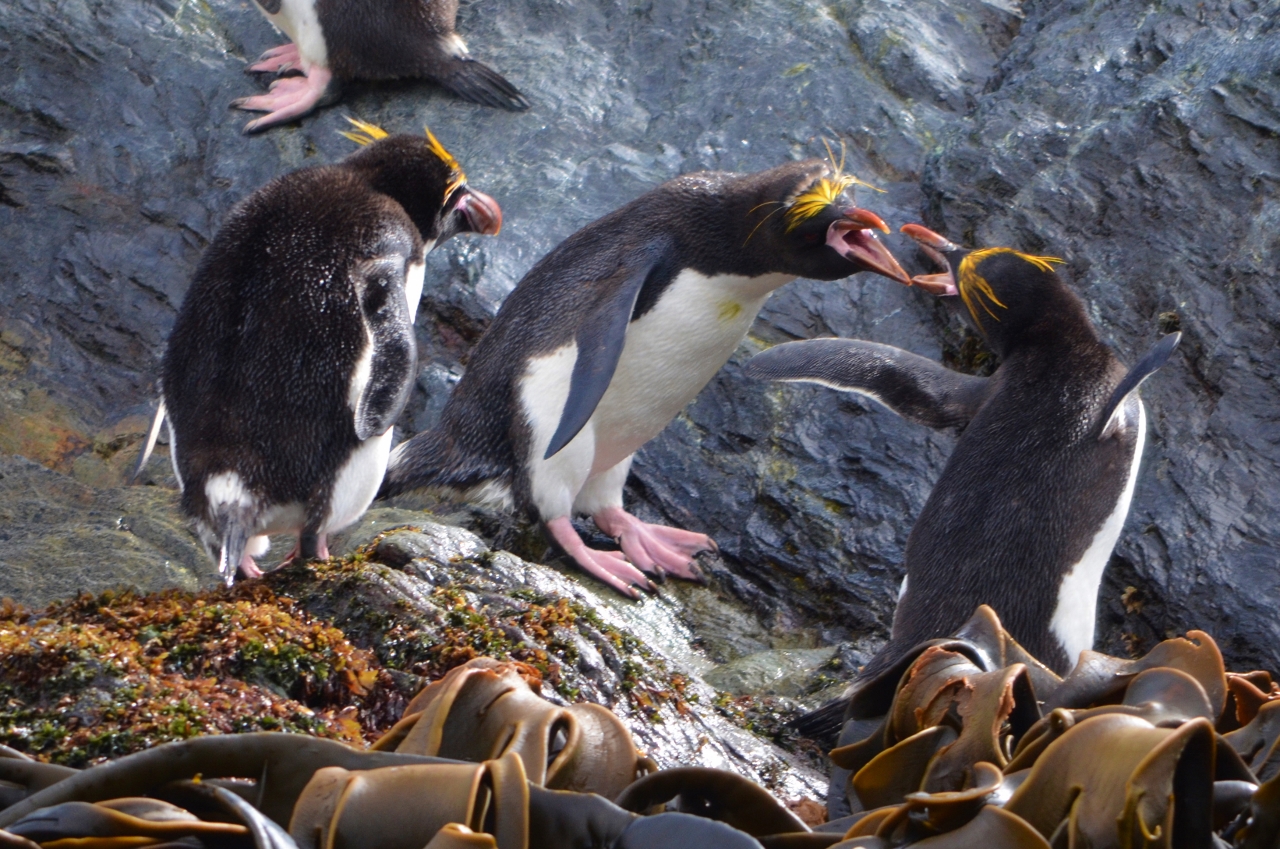
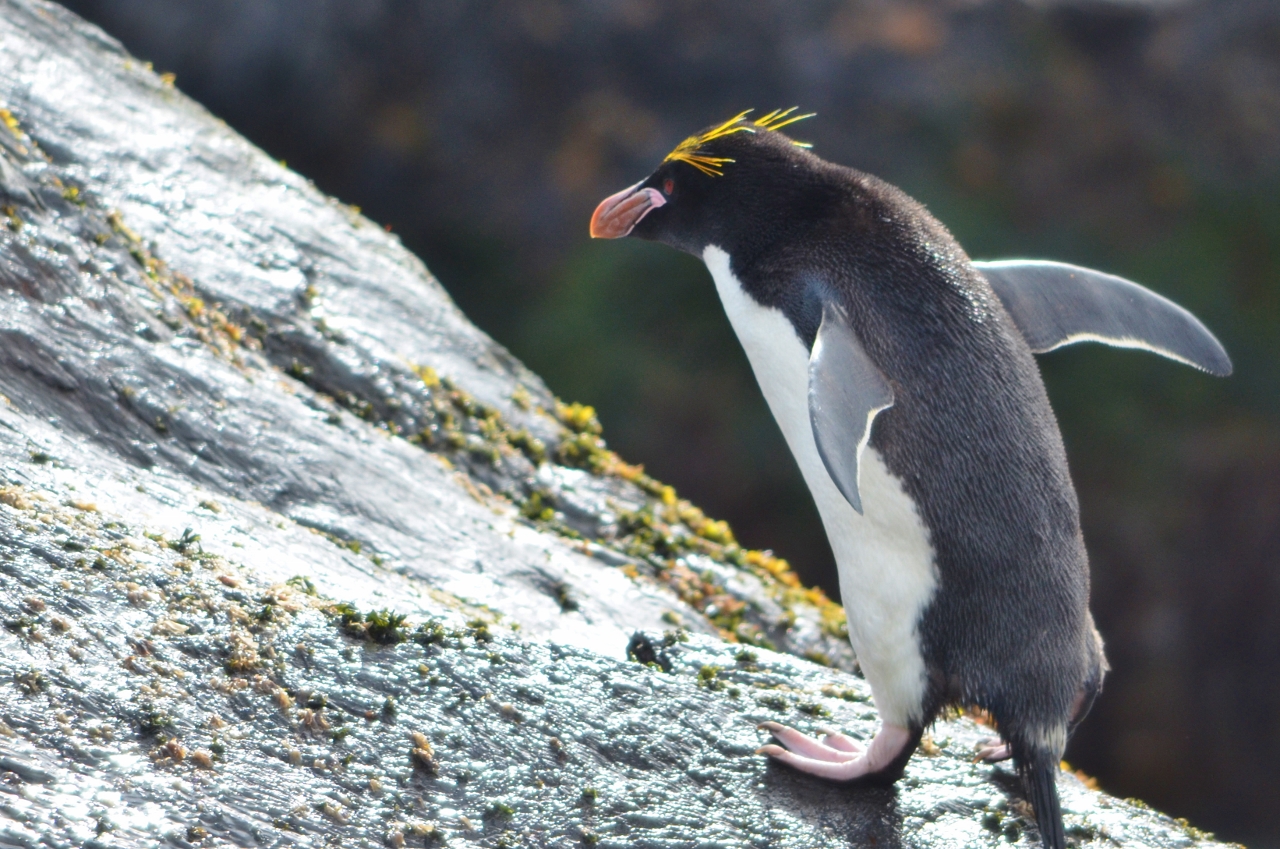
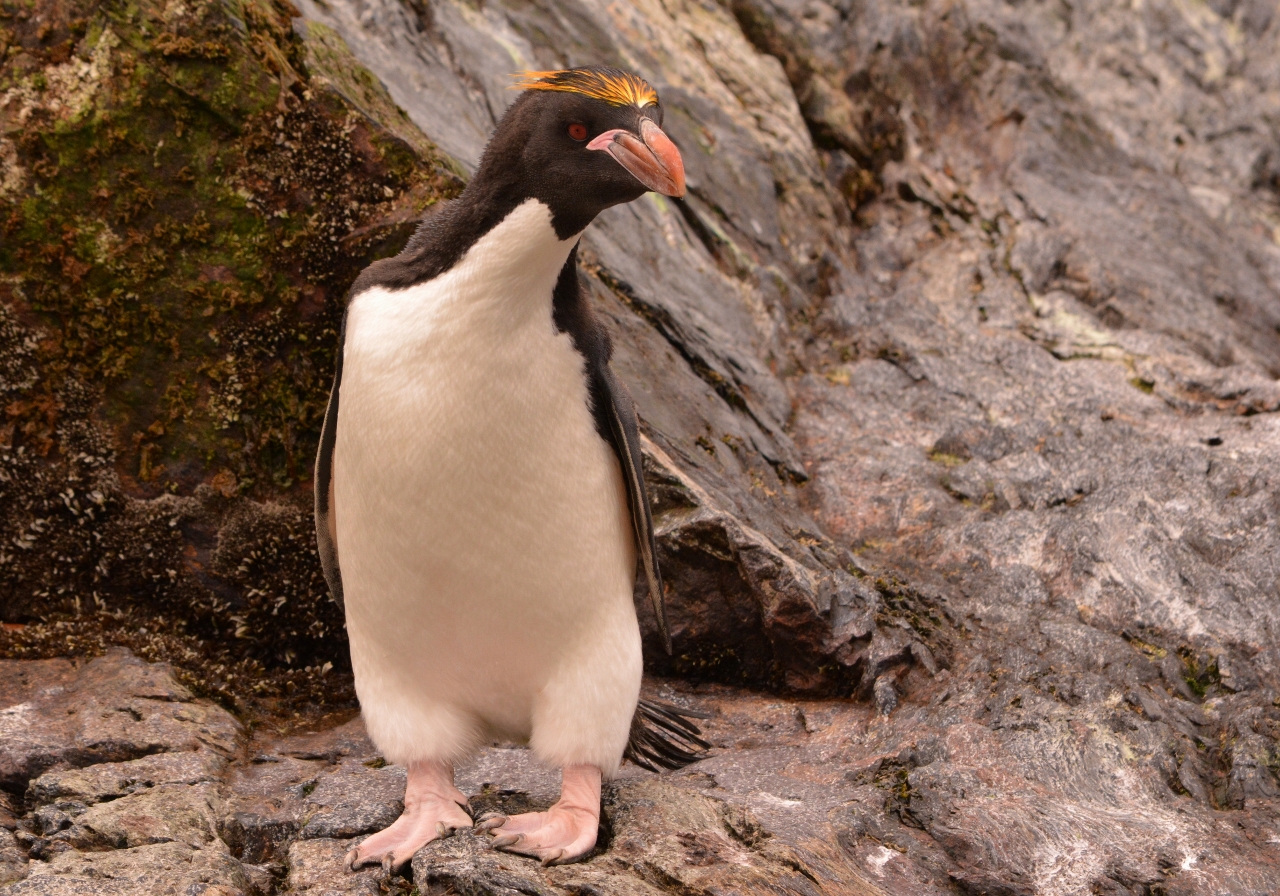
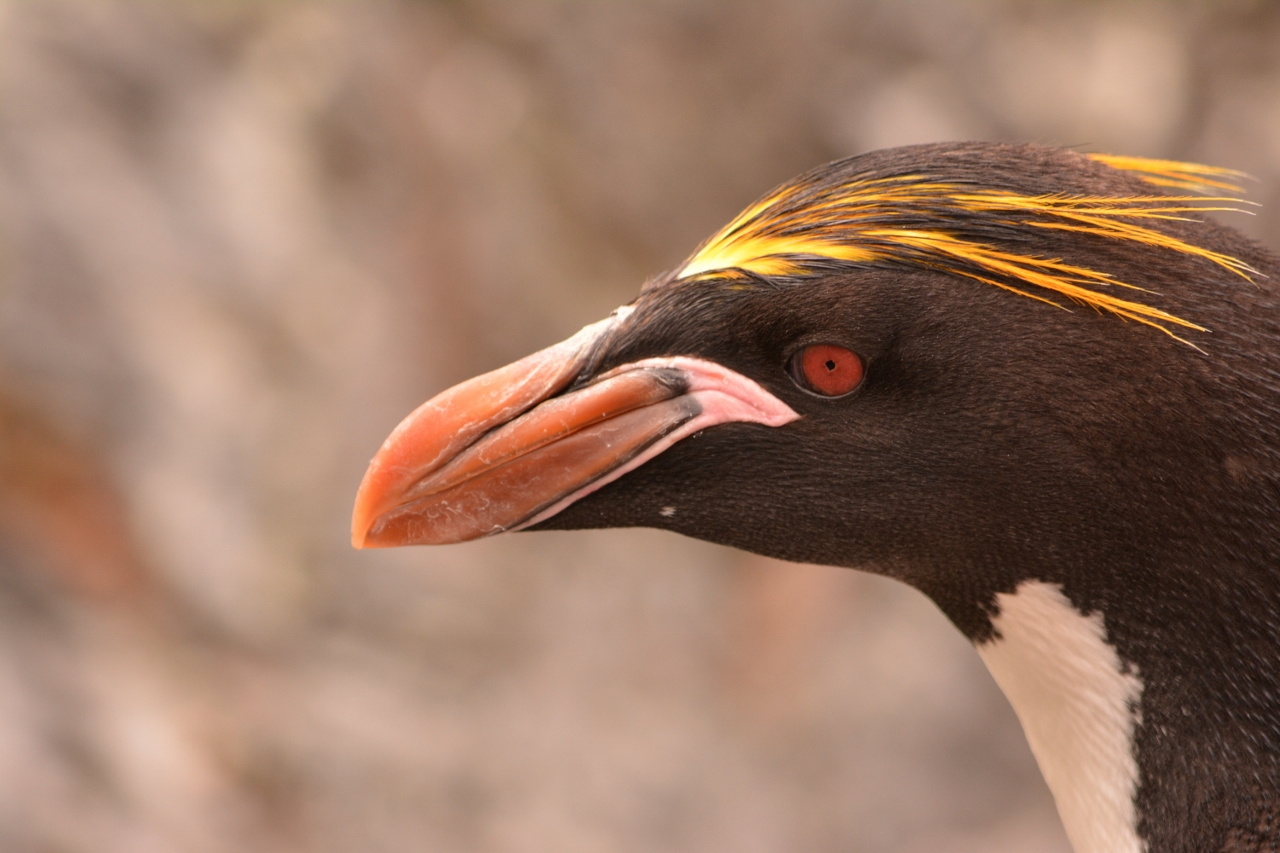
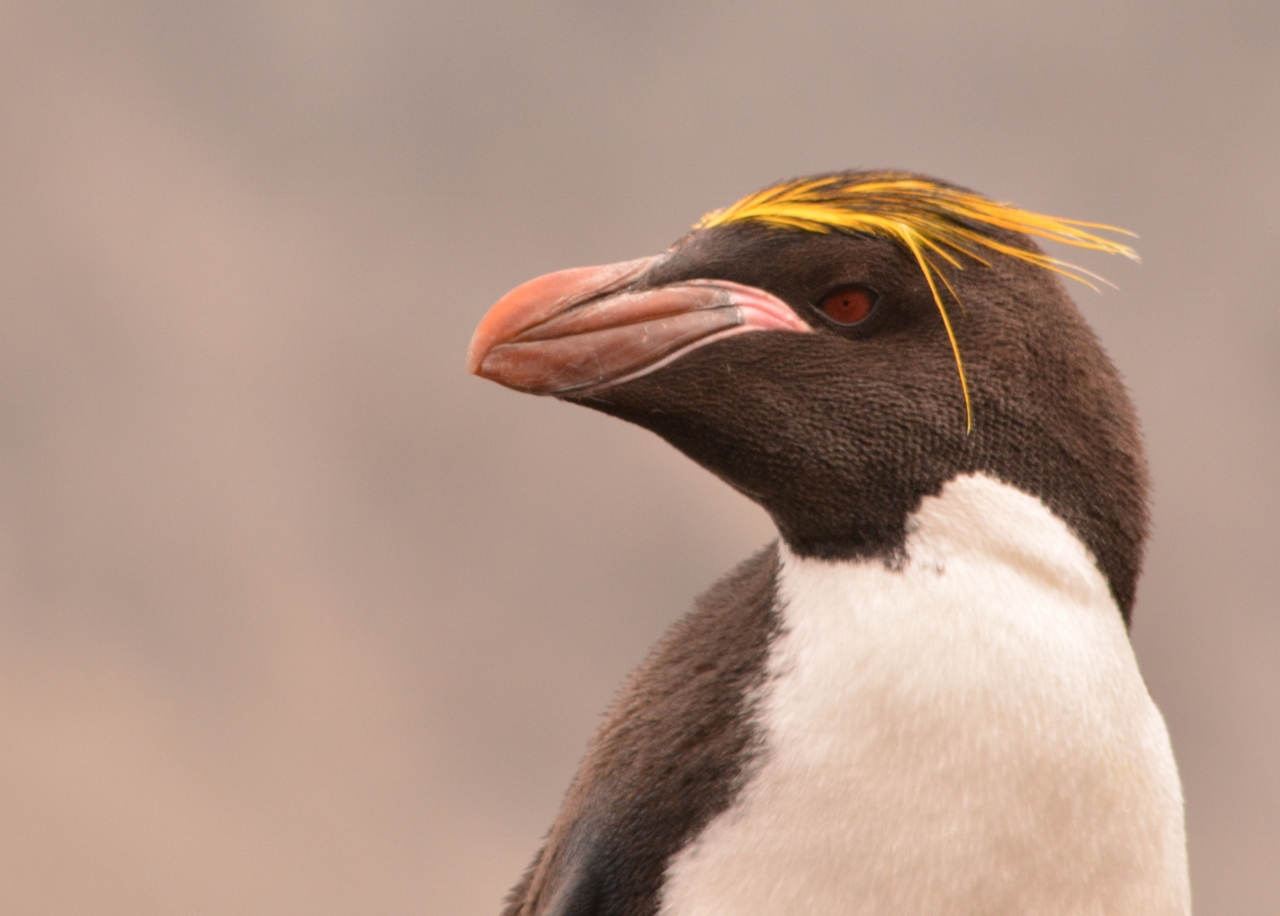
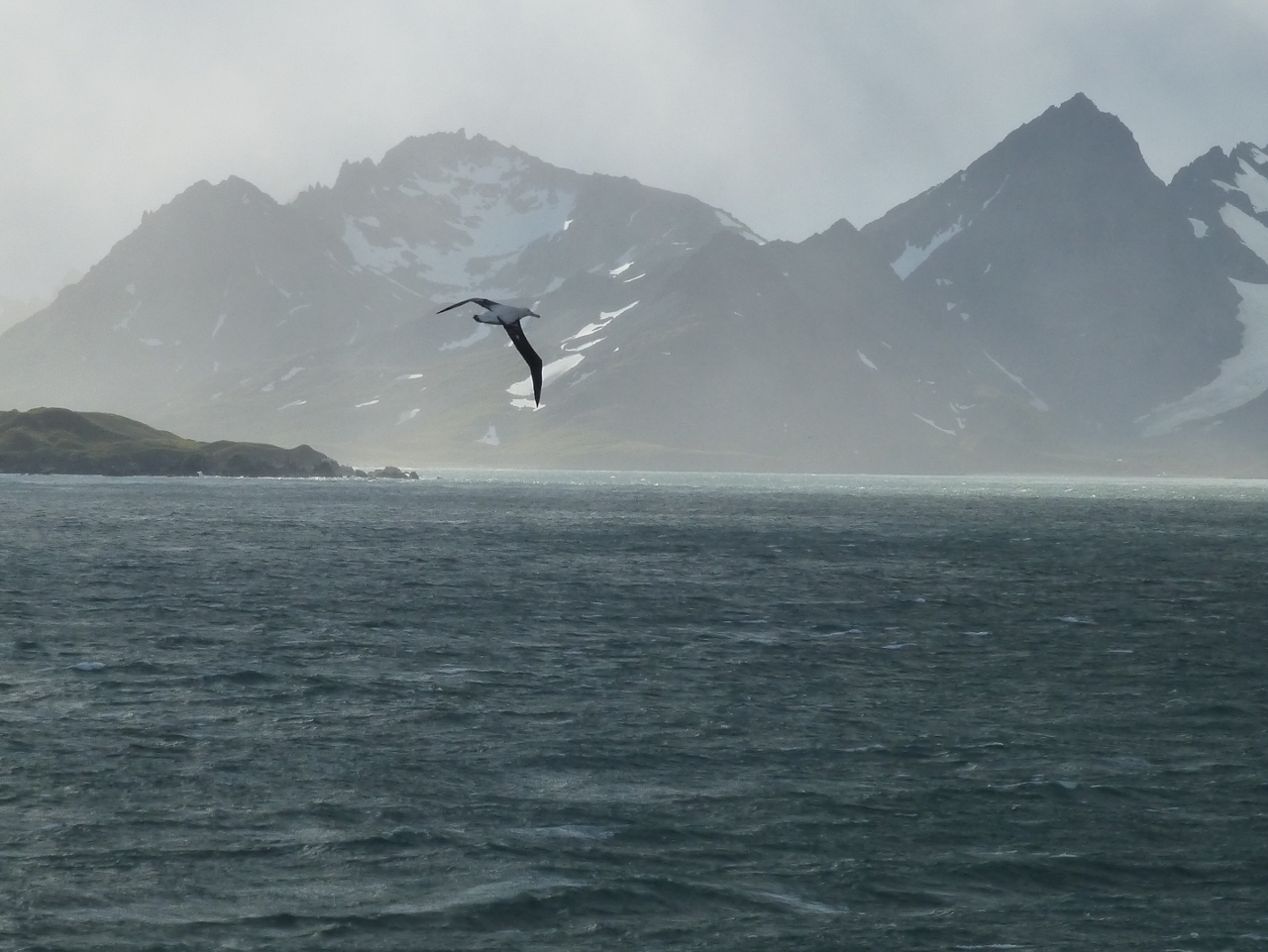
The Seabourn Quest arrived at Drygalski Fjord just after dawn. The winds were screaming down the fjord at better than 40 knots, so partway up the fjord the ship made a u-turn and headed for Cooper Bay, just a short distance away.  Finding a lee from both the wind and the swell, shore operations commenced at 0800.  Patrick took a kayak trip and Miriam took a Zodiac tour. There were two kinds of seals, four species of penguins and many seabirds. Getting up close and personal to the Macaroni Penguins was a real thrill, as were the seals coming close to the kayaks and zodiacs to investigate the yellow and orange strangers in their midst. Later in the morning Patrick took his zodiac tour.

Approaching Drygalski Fjord


Cooper Bay as we prepared to tour in Zodiacs

Lots of Fur Seals

Lots of sea lions also

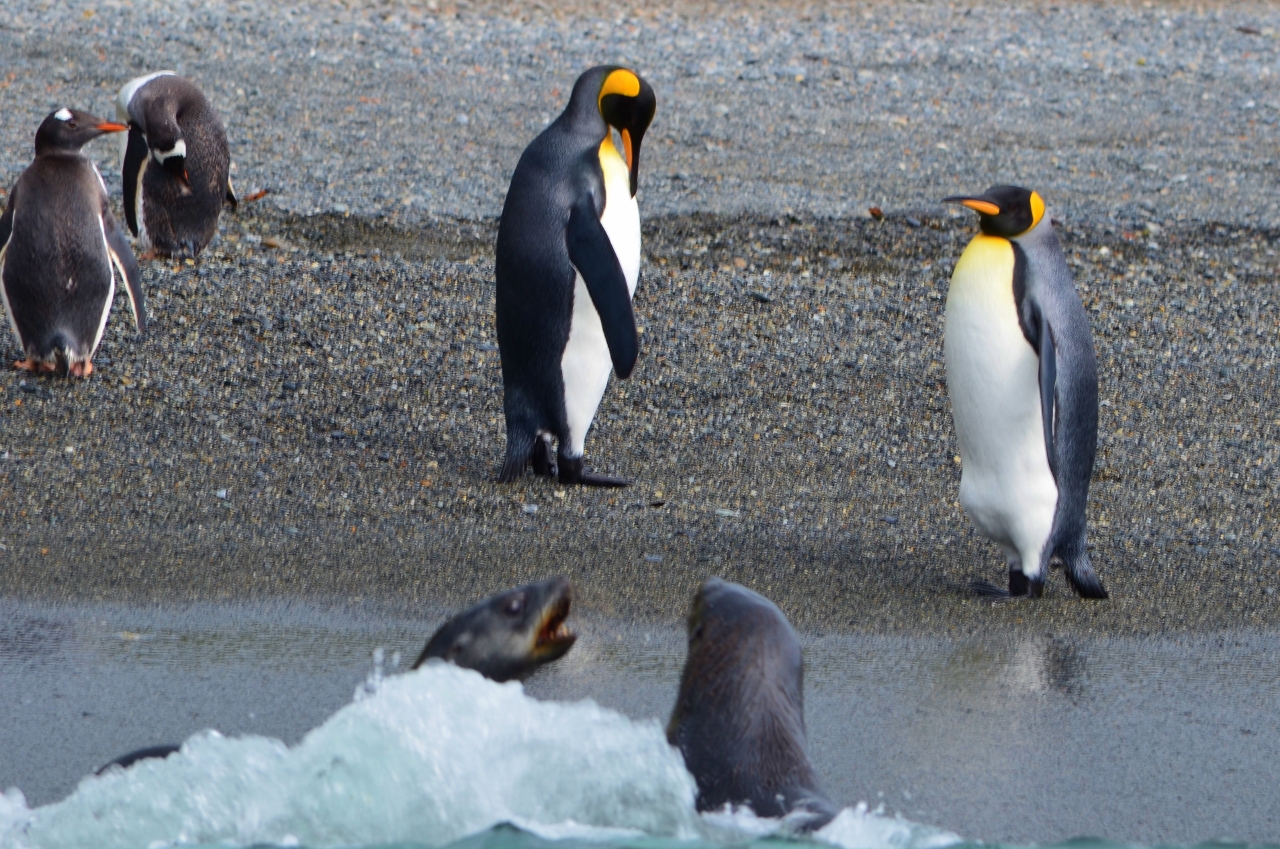
The Gentoo Penguins and seals seem to coexist

The King Penguins also wander among the sea lions and seals

Here the King and Gentoo Penguins are together

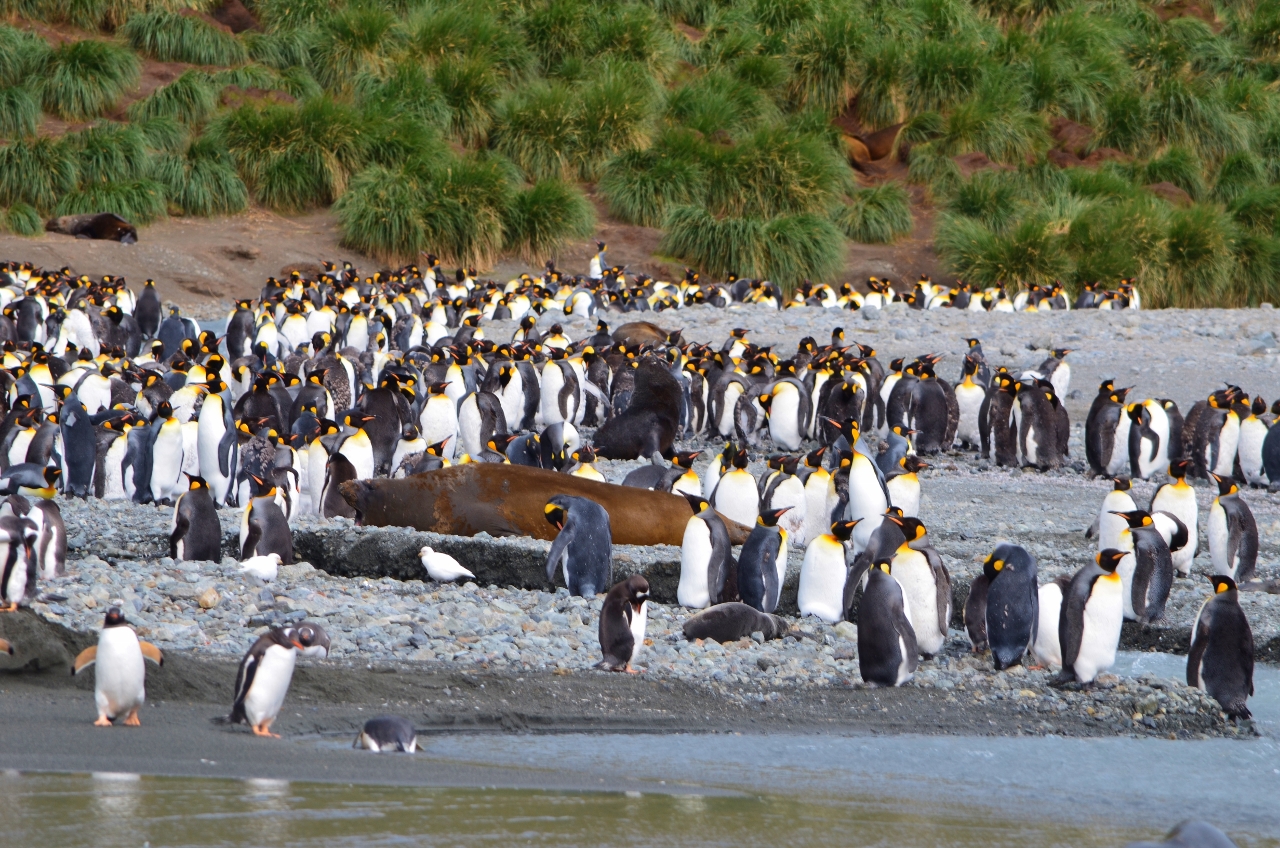
Looks like a lot, but not compared to a later rookery

Lots of younger fur seals

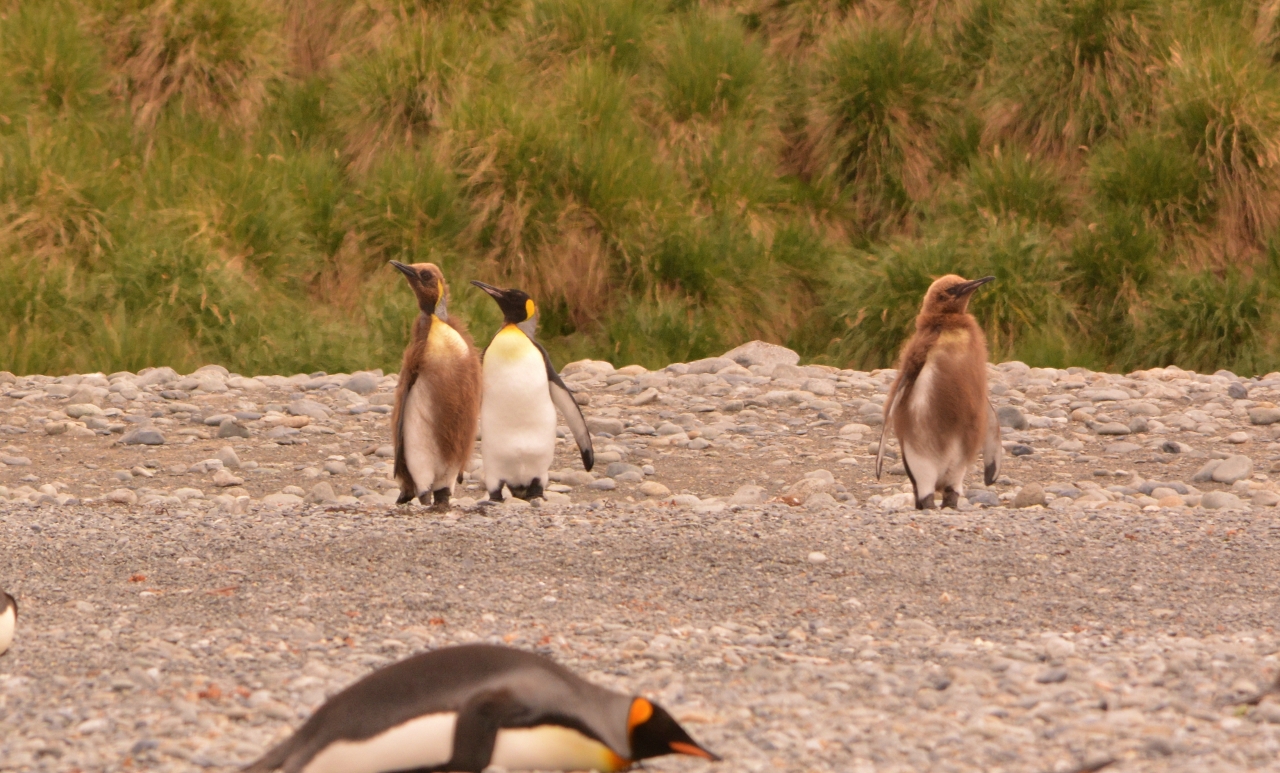
The brown penguin is a immature King Penguin before molting

King Penguins in various stages of molting – they don not swim until in adult feathers

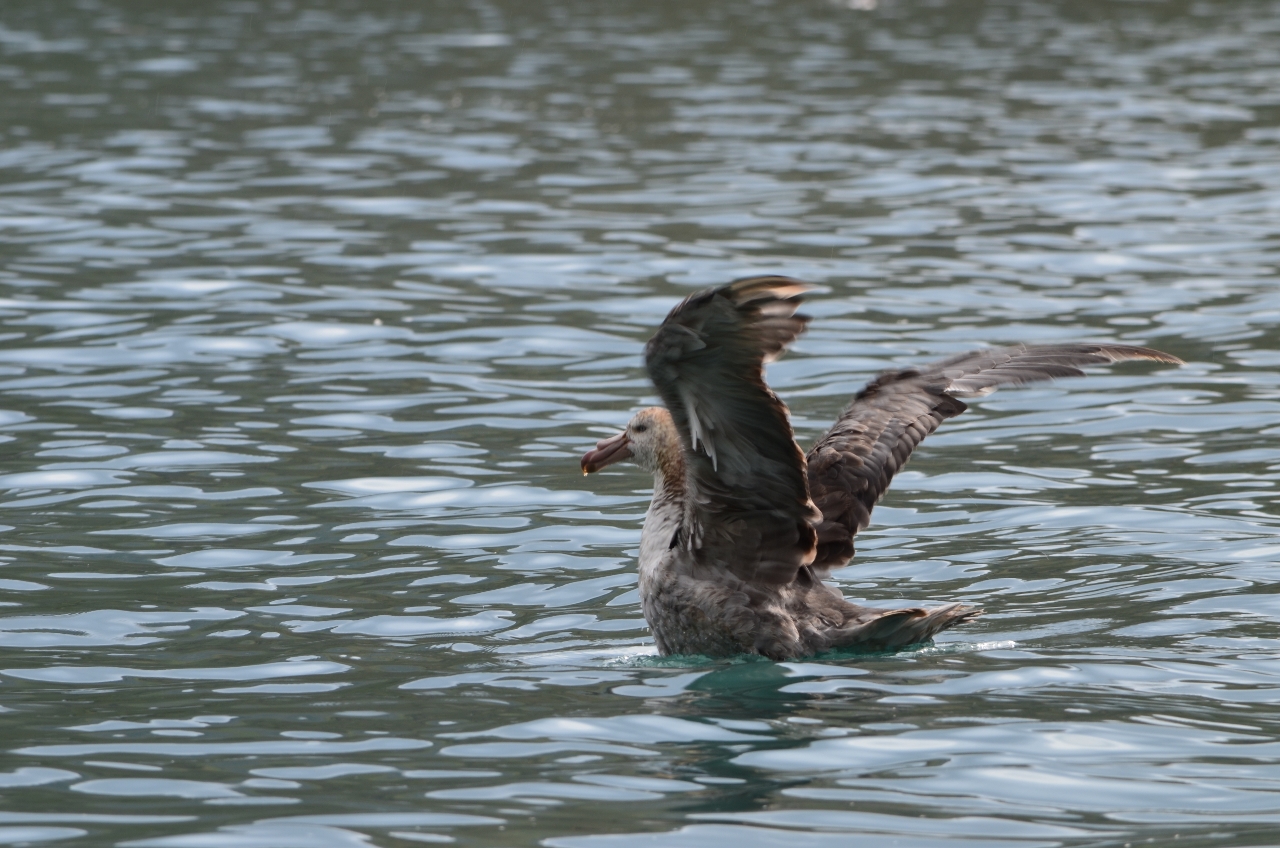
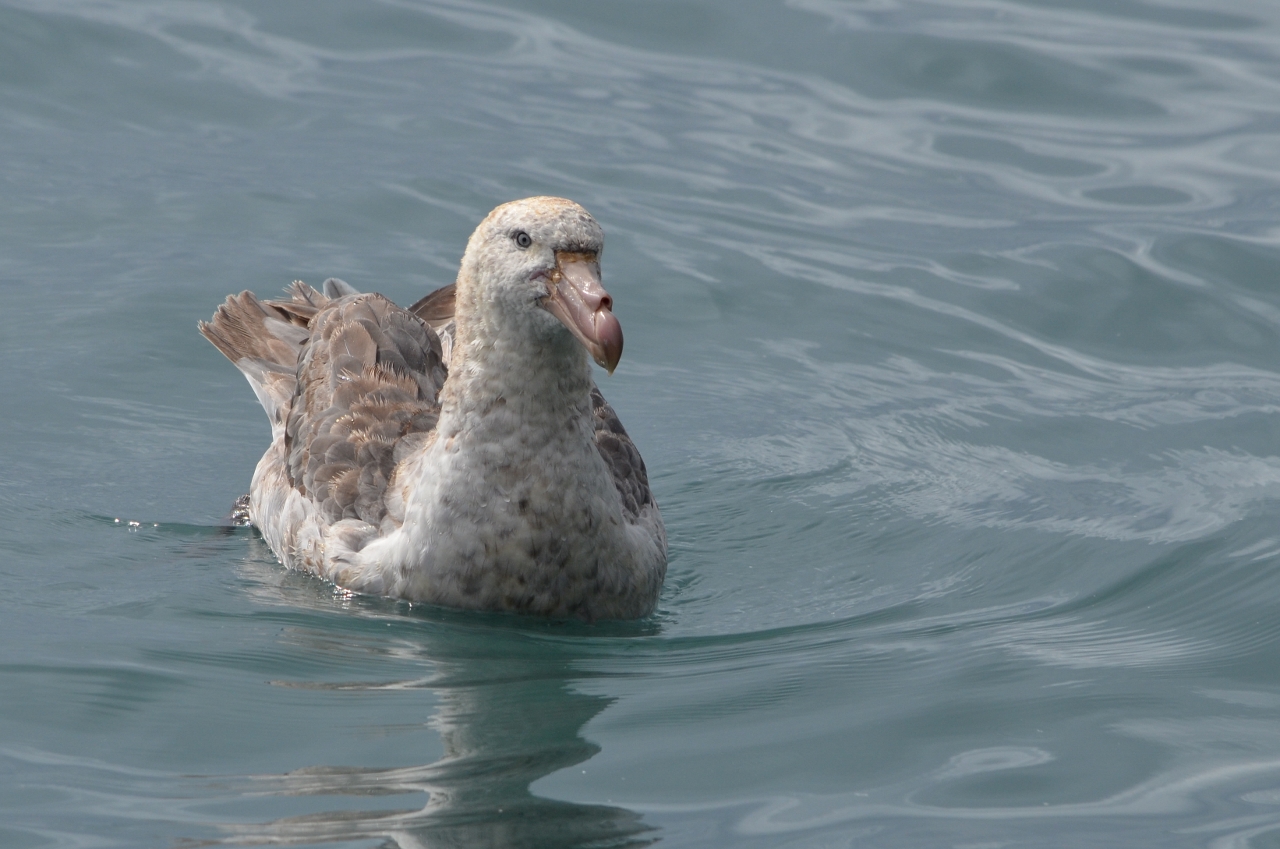
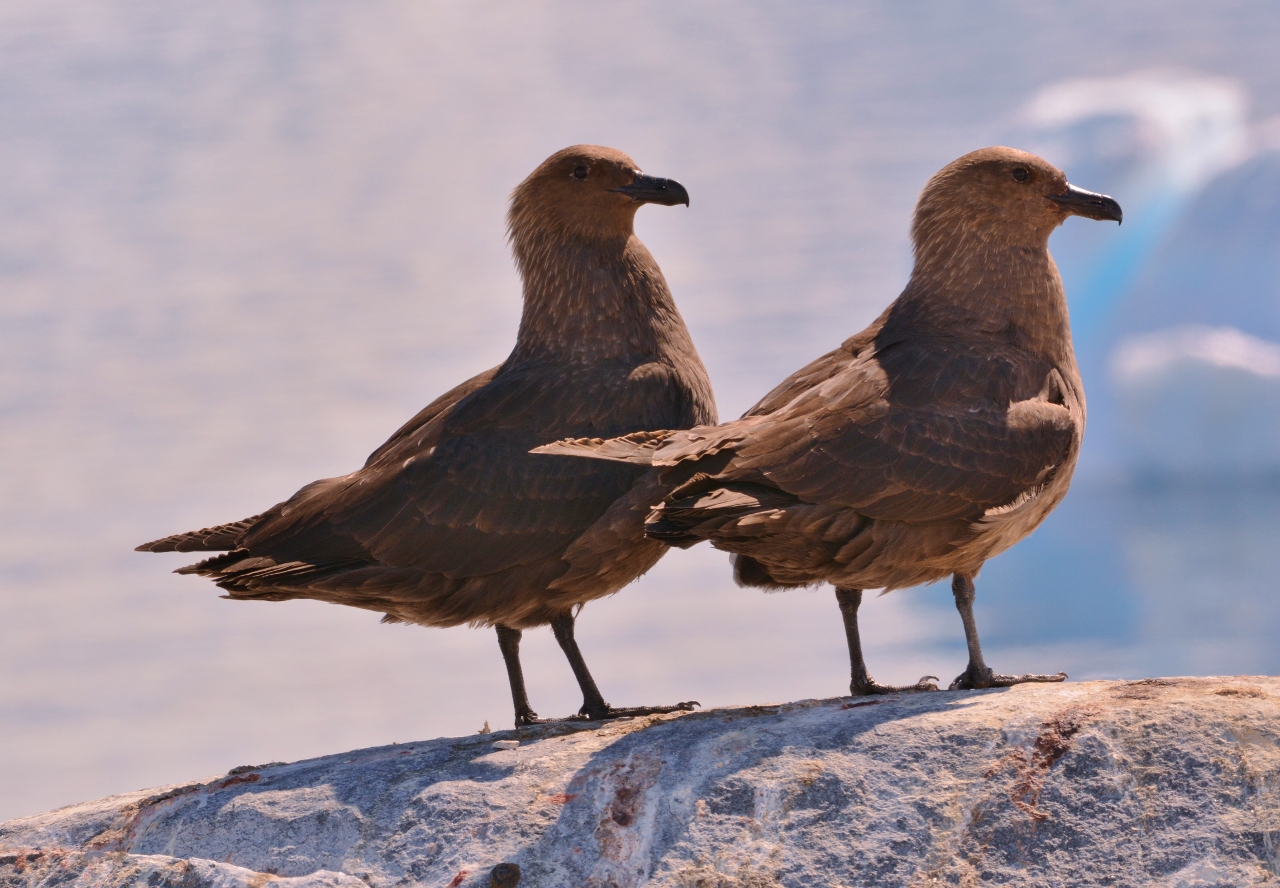
Petrels lurking waiting for a chance to catch something

The petrels are from the family of tubenoses

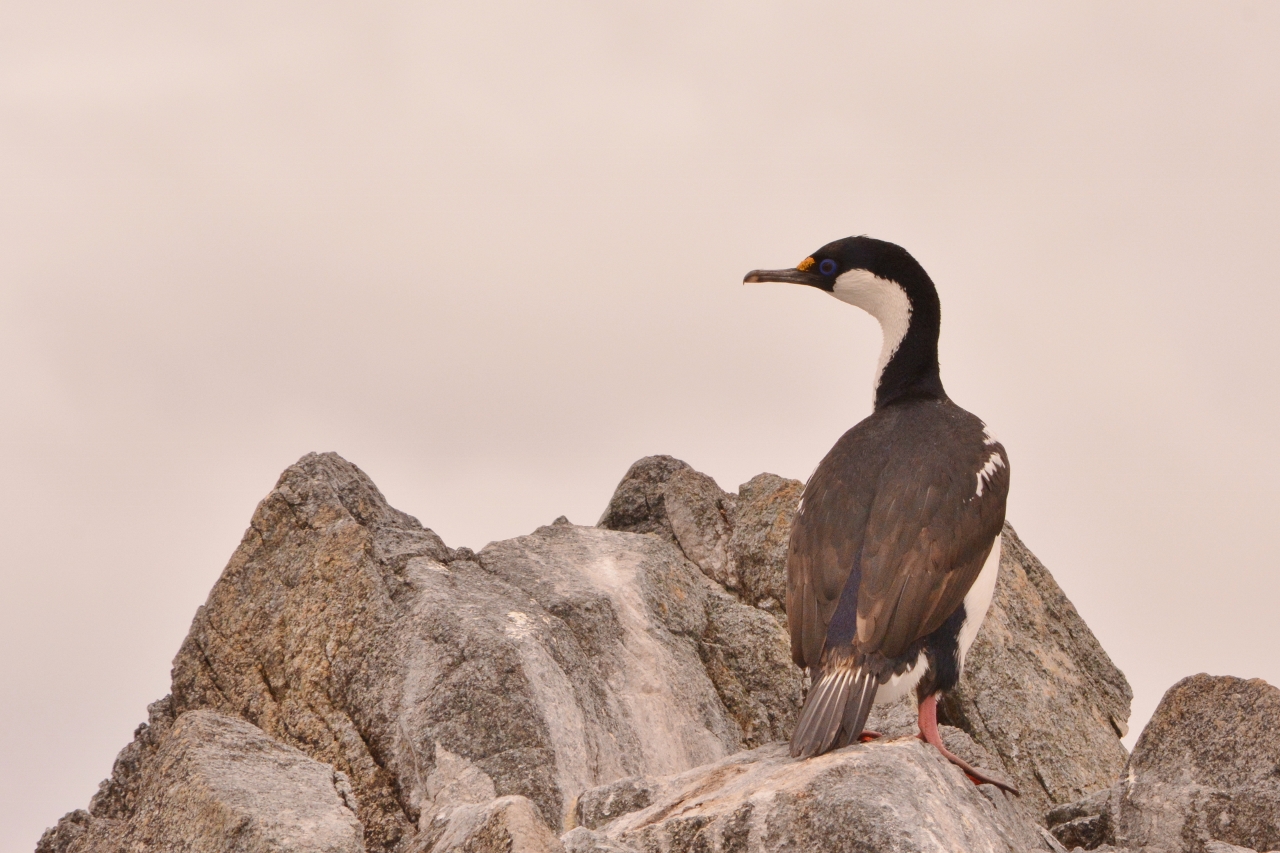
Antarctic Shap, a type of cormorant
Our first views of the Macaroni Penguins

Their rookery stretched to the top of a hill

Add caption

We decided Donald Trump modeled his haircut after the Macaroni Penguin 
A brochure moment paddling back to the Seabourn Quest
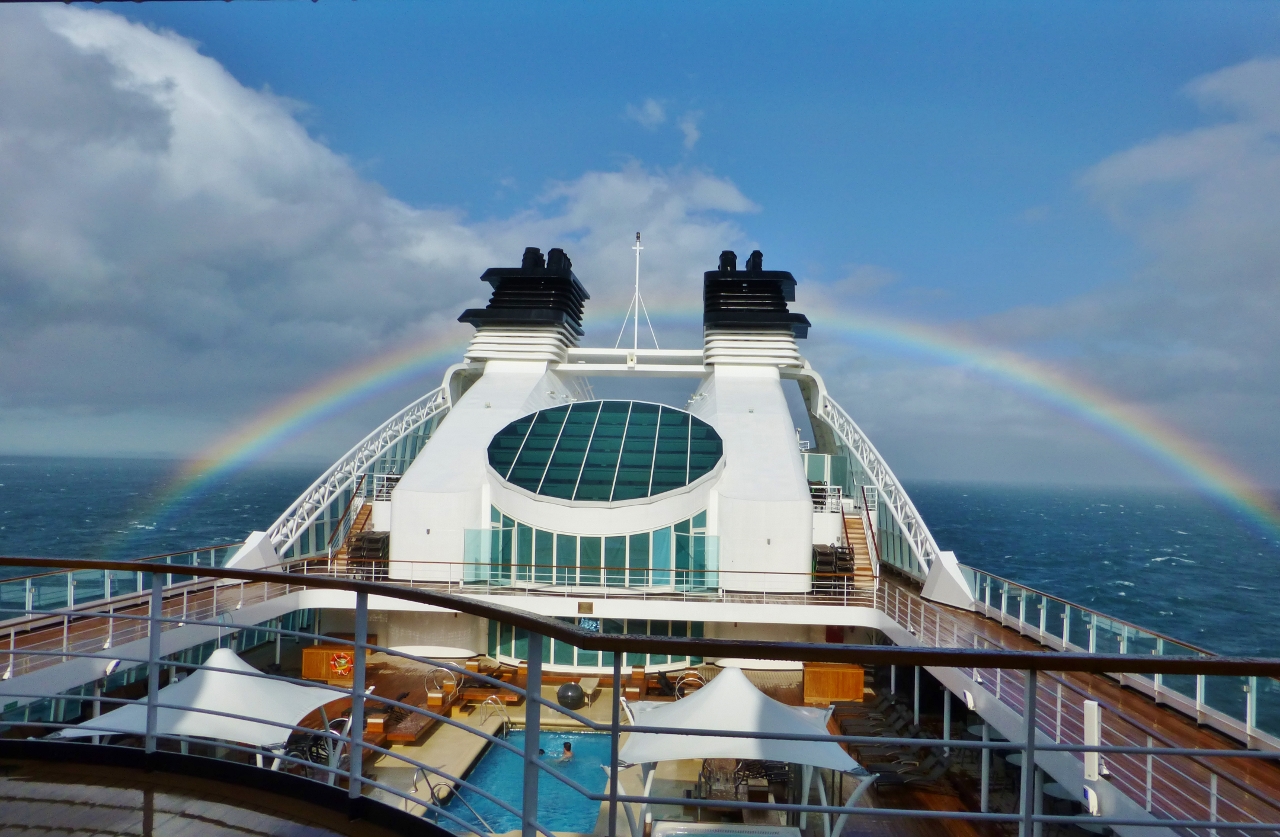
In the afternoon the ship once again tried to go up the fjord, but the winds and seas were still bad, so the ship did scenic cruising up the eastern coast of South Georgia Island, passing many pods of whales, both Minke and Humpback, We were treated to a magnificent rainbow before anchoring for the night in a protected cove. We sat in the Observation Bar before dinner watching as the guests ran from side to side trying to catch the moments on film. We were content to just take it in visually as we sipped our drinks and had caviar appetizers.

Our second unsuccessful try up Drygalski Fjord
The magnificent rainbow as we left Cooper Bay

Hope Bay

January 3, 2016 – Esperanza Station / Hope Bay 63.23S,57.00W

Weather permitting, we will be at our final Antarctic destination tomorrow. The weather is reputably deteriorating so it remains to be seen whether we will actually be able to even take a zodiac tour.
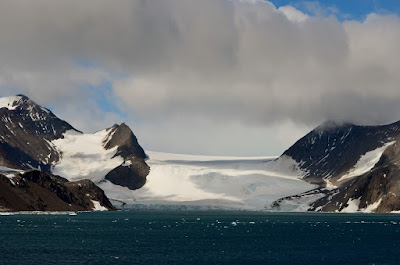
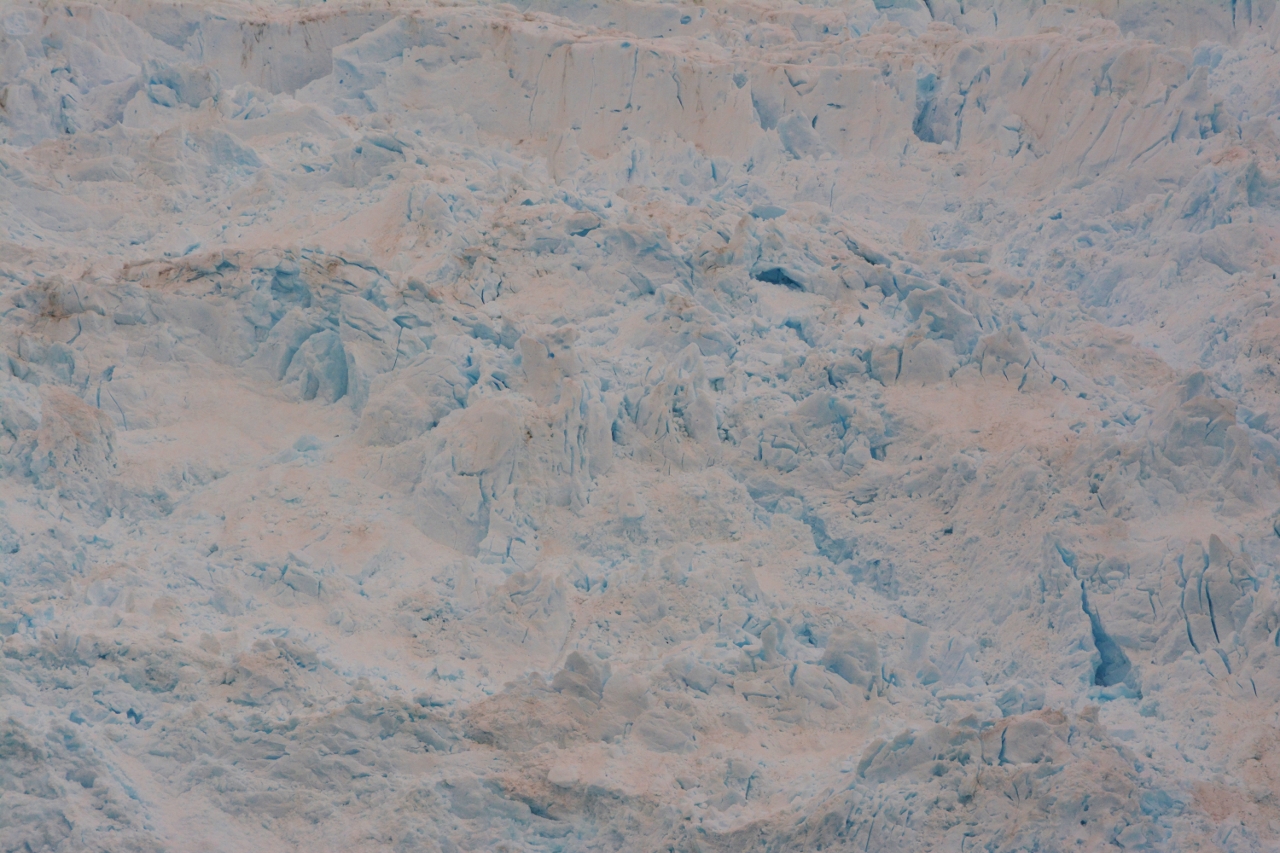
Glacier at the head of Hope Bay, the source of the wind that cancelled most of the tours

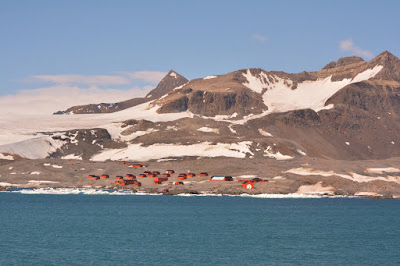
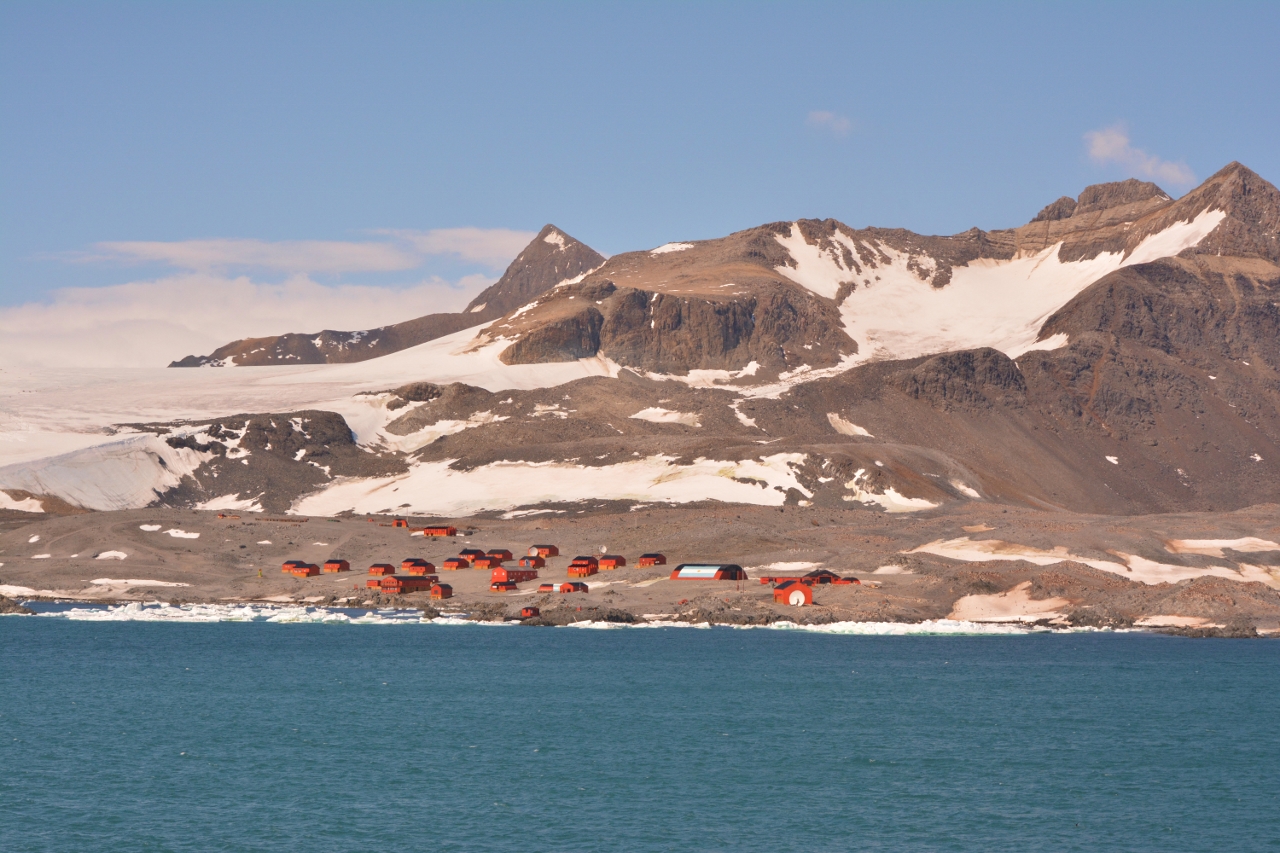
Esperanza Station

When we got up at 0400, the ship was stopped in fog as the crew decided on what to do for the rest of the day. Finally, at about 0600 we started moving and headed into Hope Bay, where there was little wind at the time. Hope Bay is the location of Esperanza Station, an Argentine outpost manned year round by 55 people.  Patrick had the opportunity to go on a 0700 zodiac tour before his planned kayak tour at 1100.

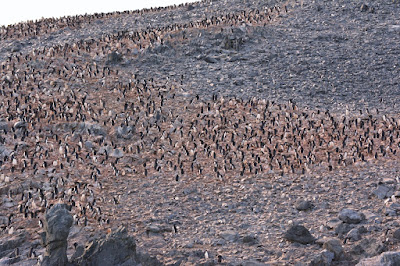
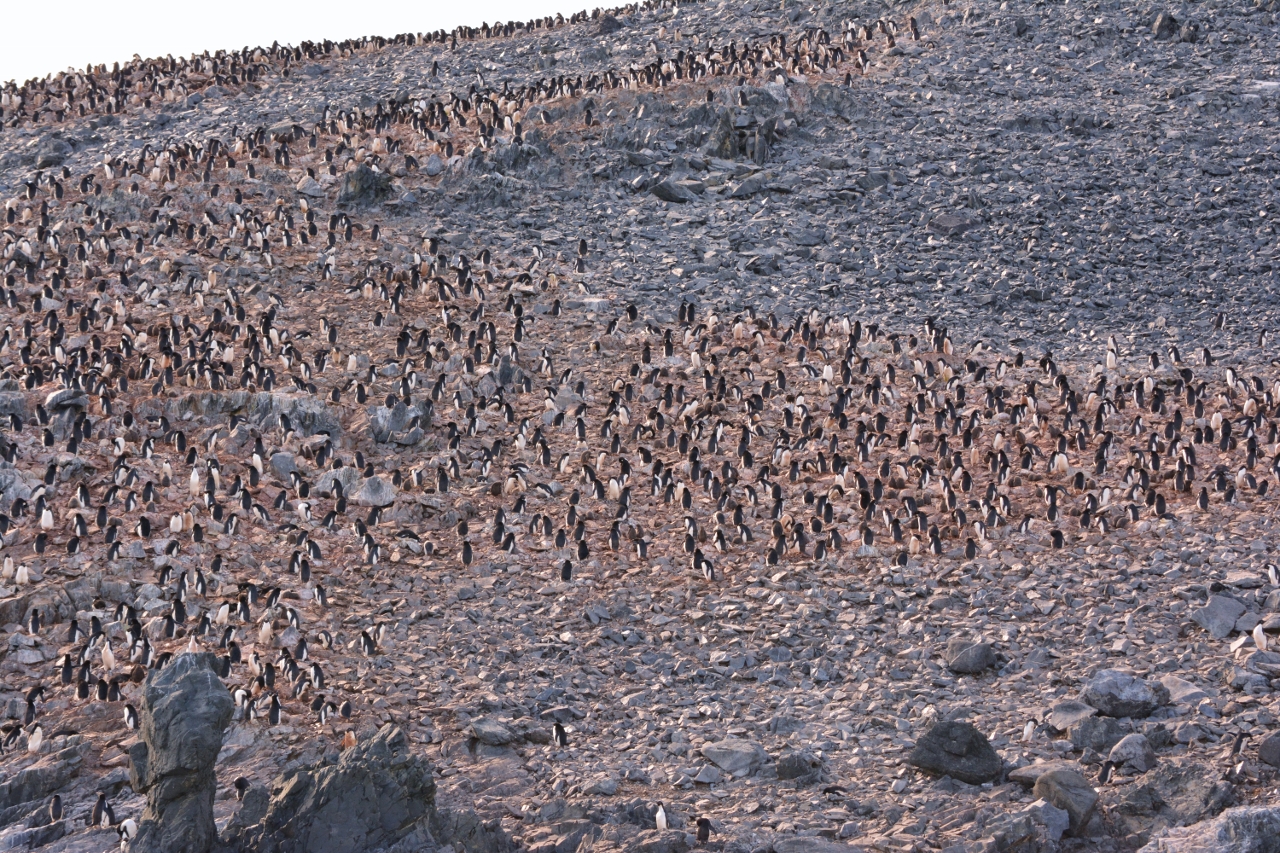
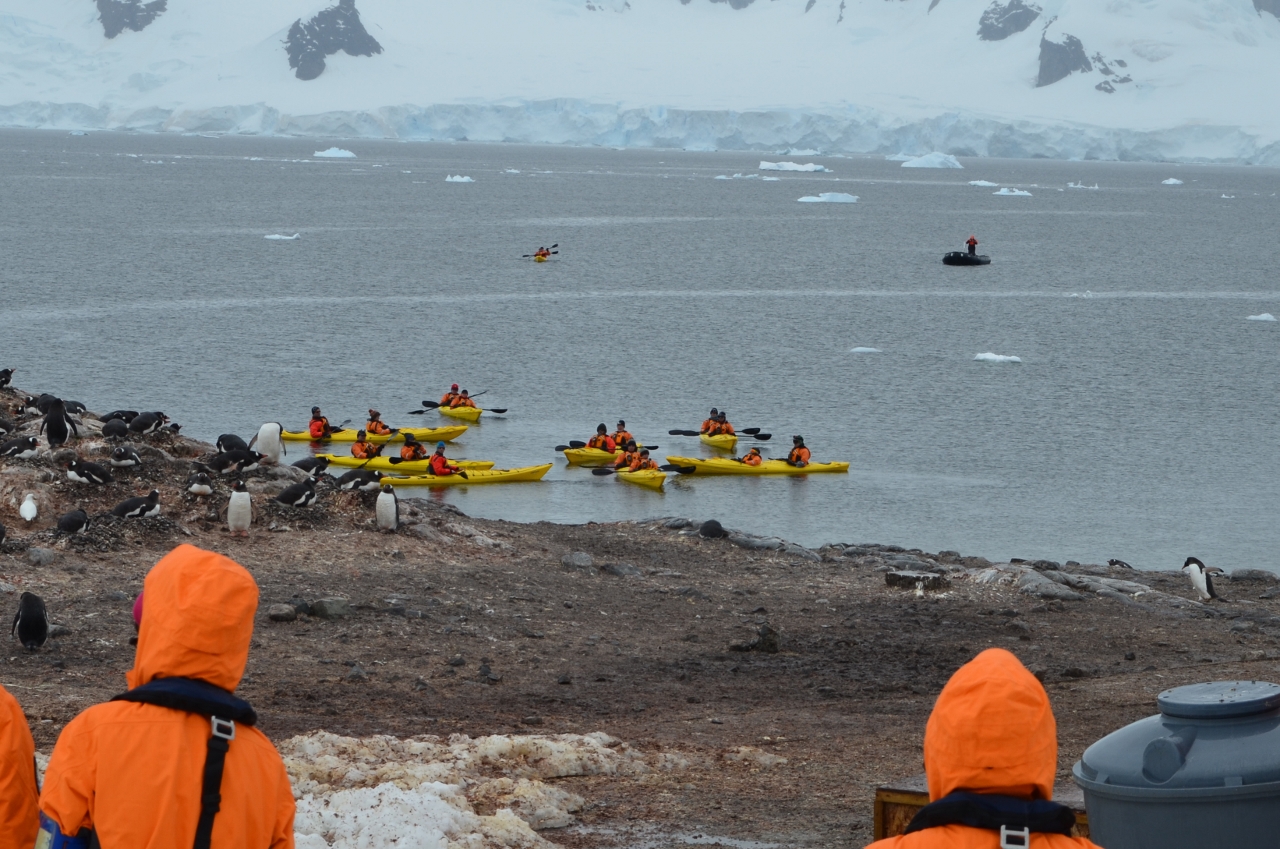
 No landings were planned, just zodiac tours and kayaking. The captain found a lee in front of a glacier and Patrick was in the first group of 8 zodiacs that went close to shore to see the Adelie penguin colony of more than 60,000 spread out across the hillside near the station.

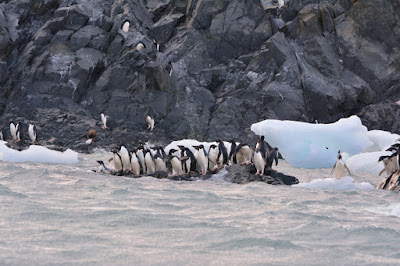
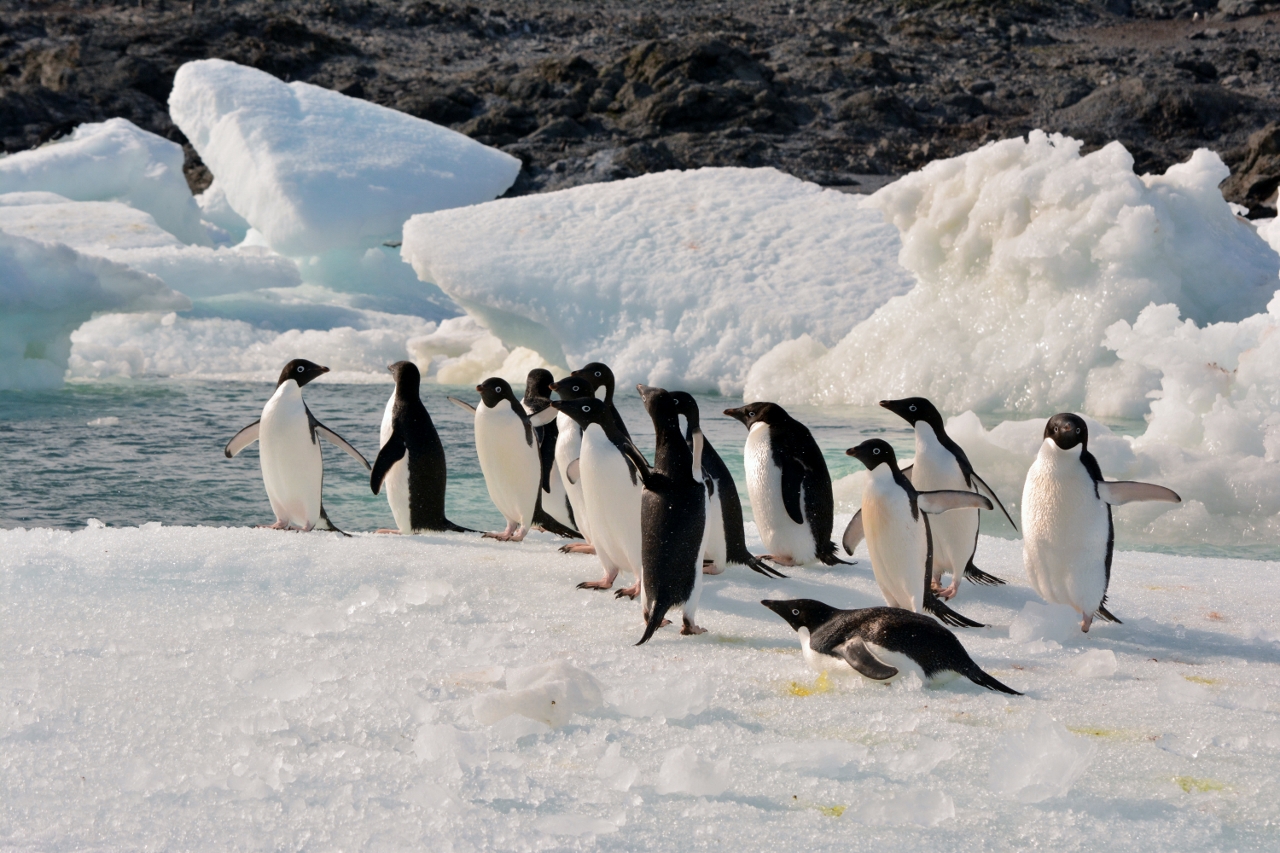
Adelies on bergs

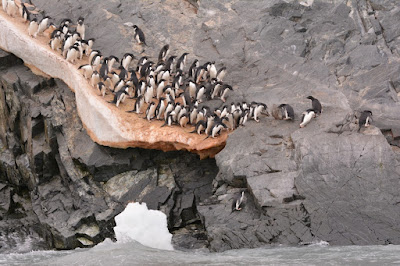
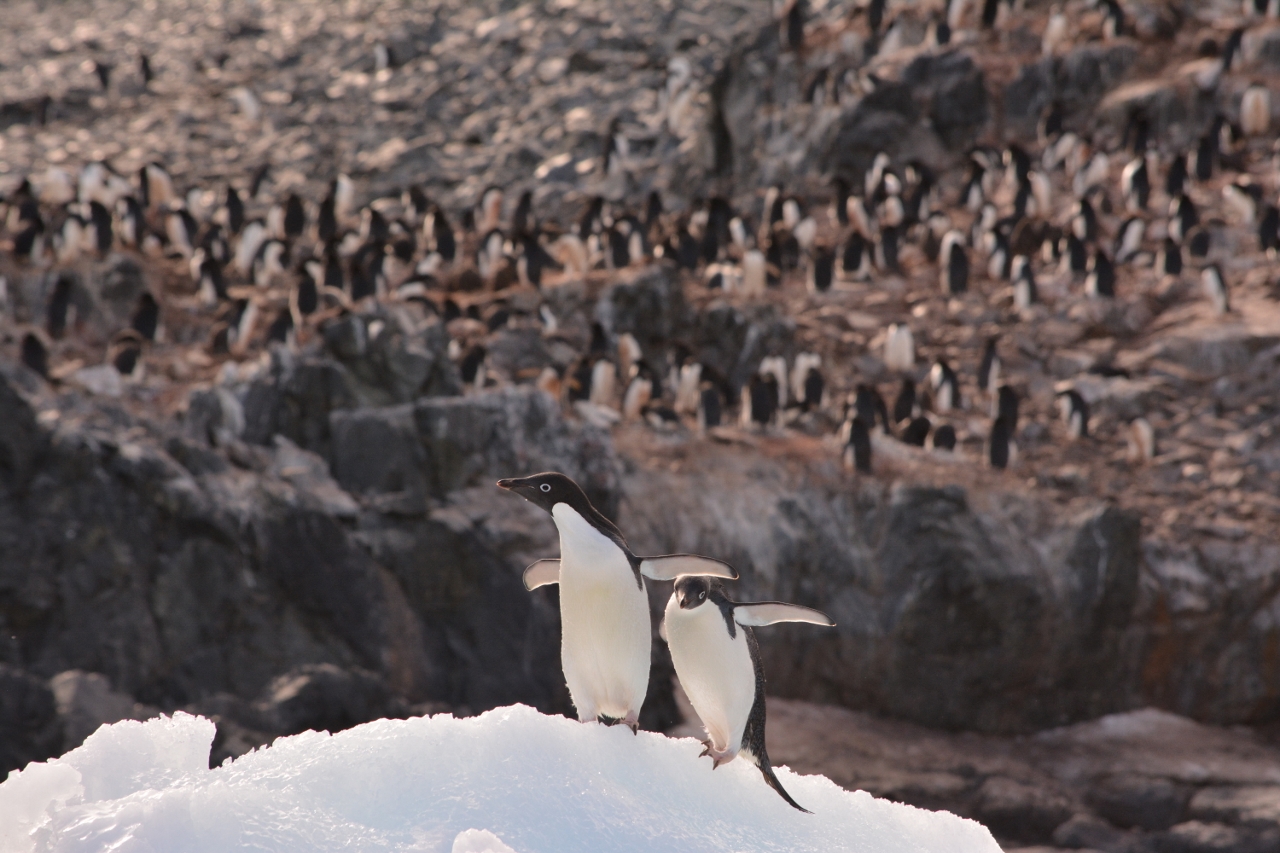
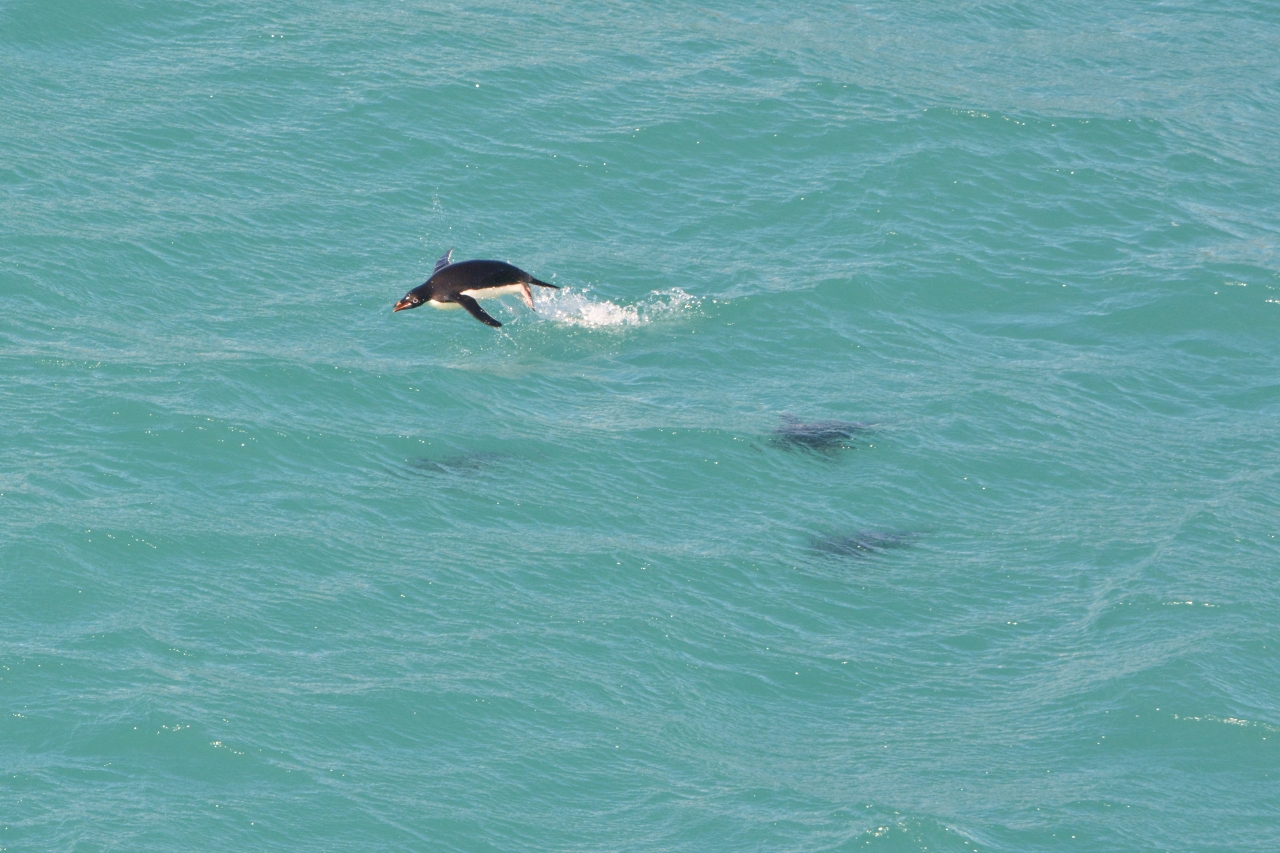
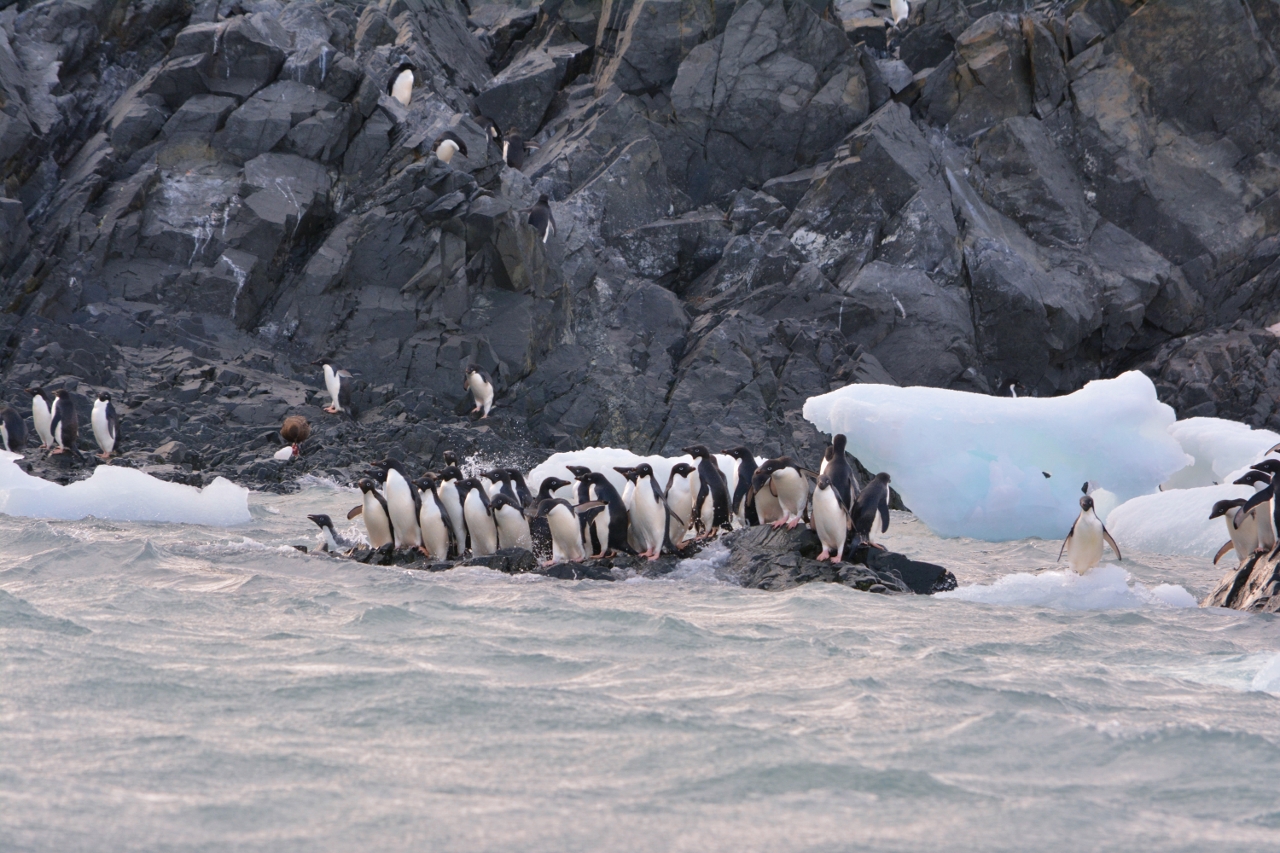
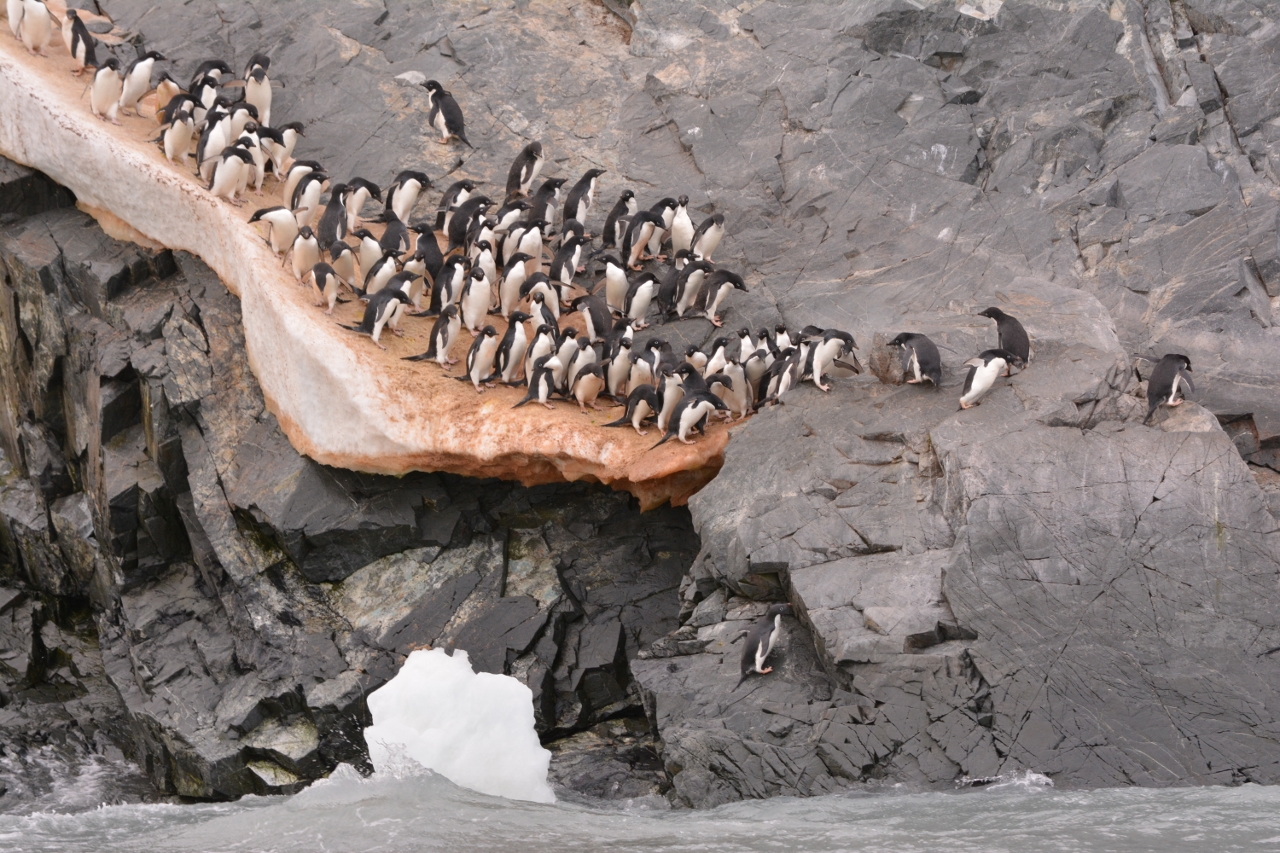
 The Adelie Penguins were the most active, jumping off the bergs, lining up to jump off cliffs and climbing up the rocks with remarkable ease.
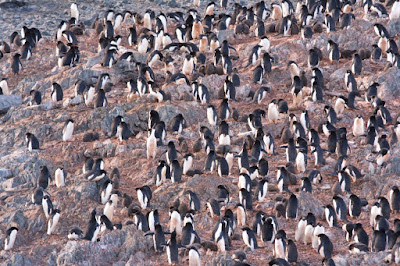
The hillside was a sea of nests

Stretching up to the top of the hill

The wind is starting to really increase

The Adelies shove and push each other off the cliffs and bergs

The seem to want to go both ways

Who is going to jump first

As his zodiac headed into the beach, the wind began to increase, but still manageable.

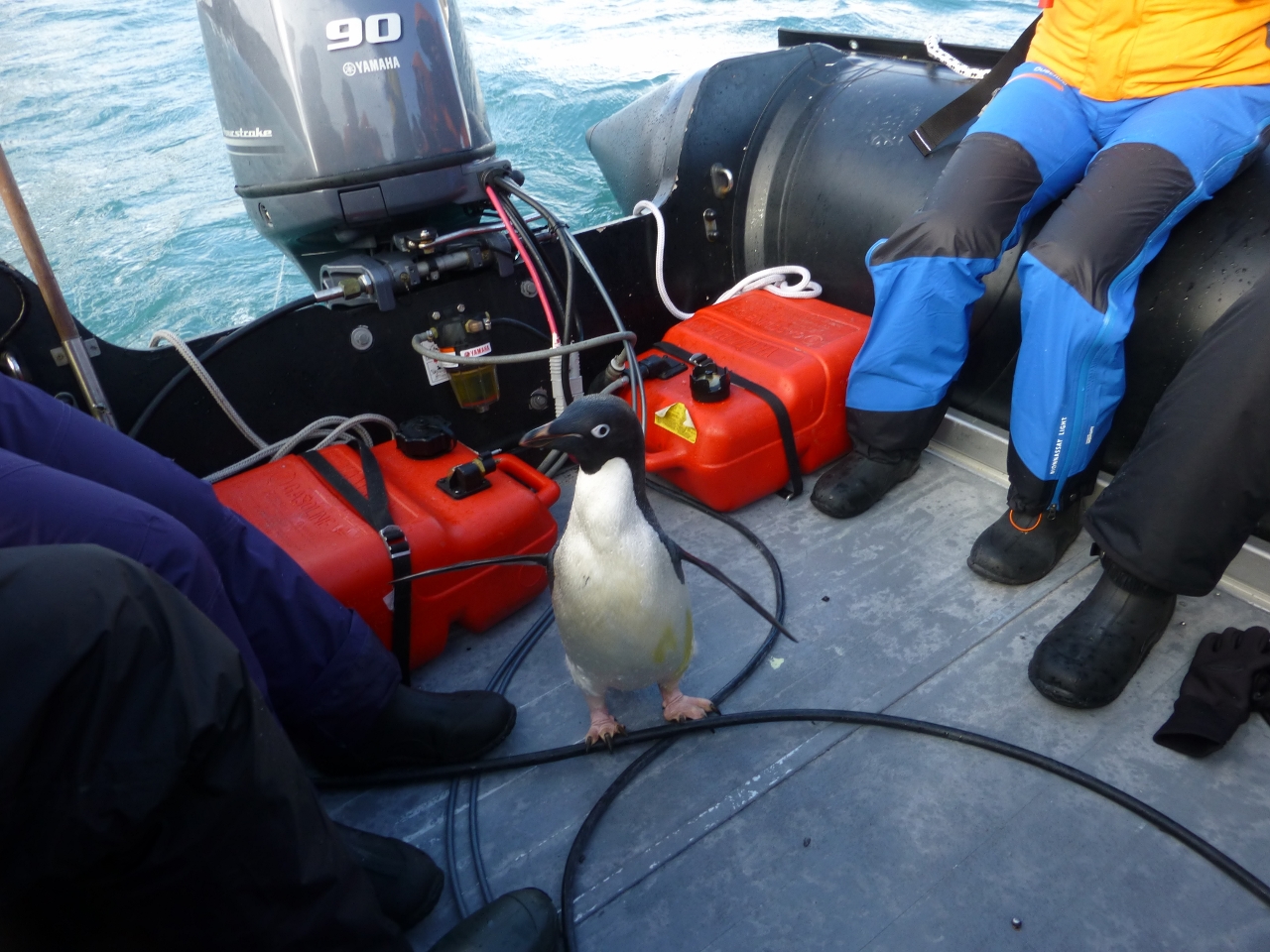
Then the wind came up quickly, gusting to more than 40 knots. The seas quickly built and water was splashing over the side of the zodiacs.  In Patrick’s zodiac an Adelie penguin jumped out of the water right into the zodiac and stayed for about 4 minutes. It is on video as well as a picture.
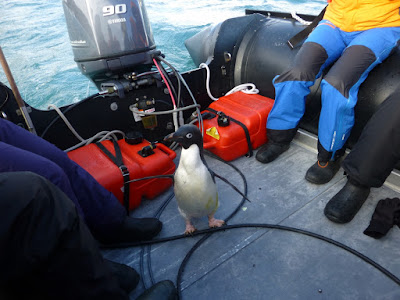
This Adelie thought we were a berg and stayed about 4 minutes
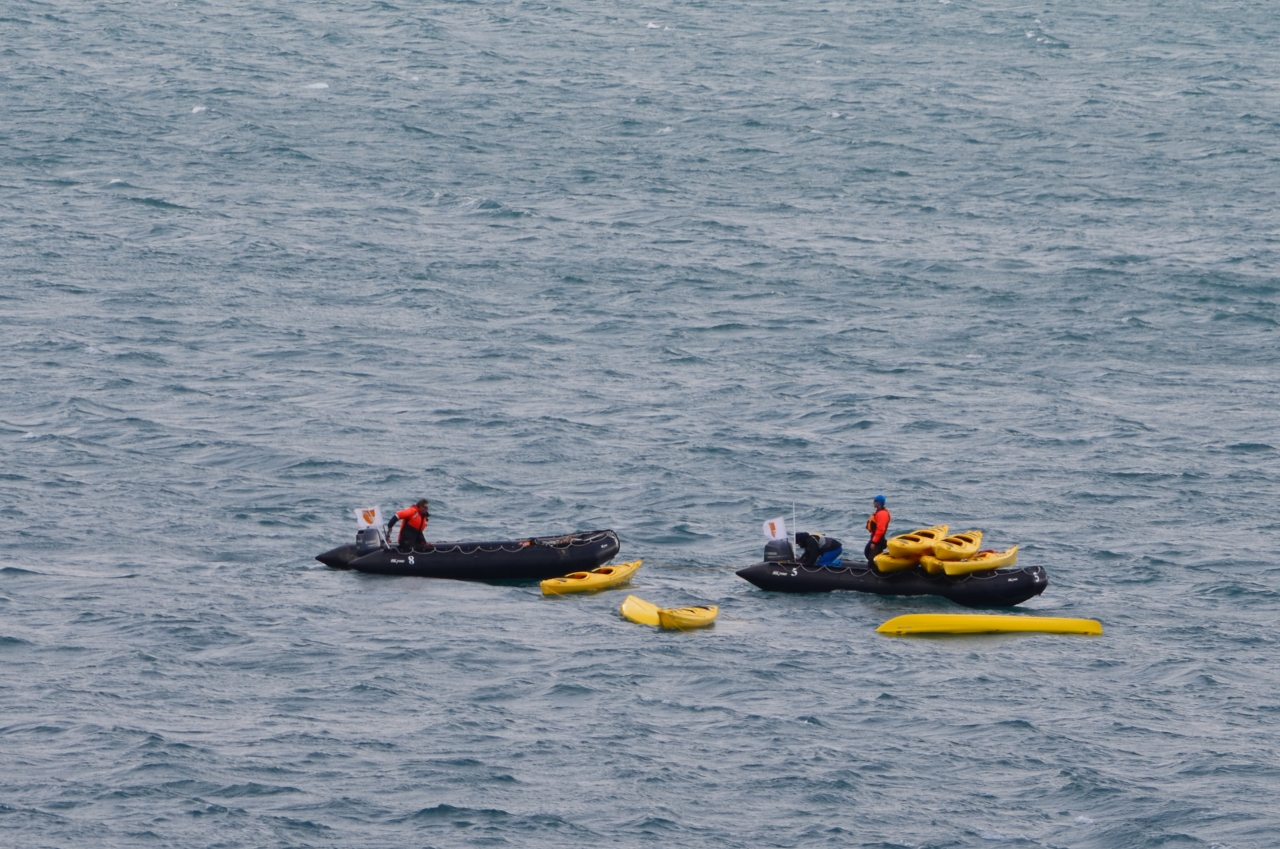
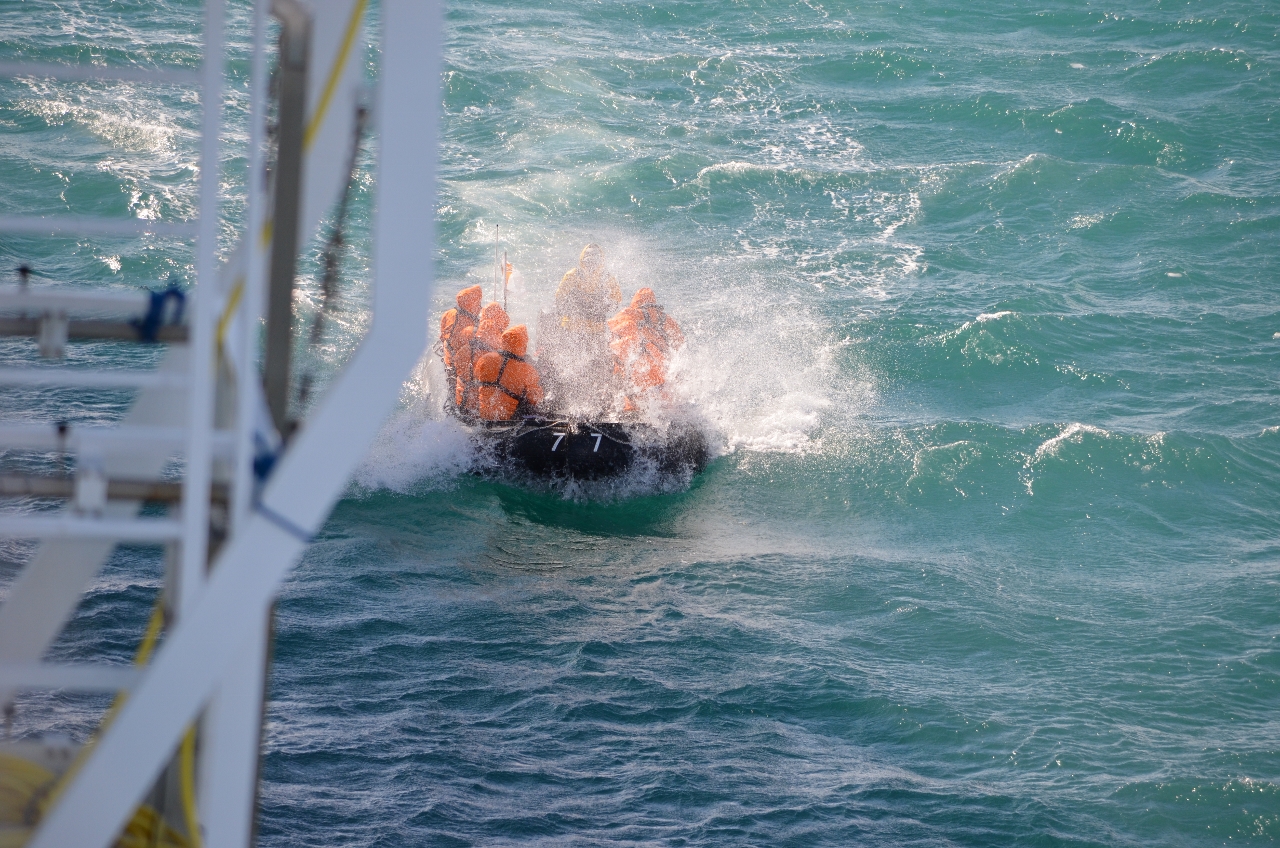
All the zodiacs were recalled, the kayakers were retrieved, and we had a wet return to the ship, with some zodiacs taking waves over the bow. Everyone got back safely and the captain cancelled the rest of the tours, so Patrick was fortunate to get pictures.
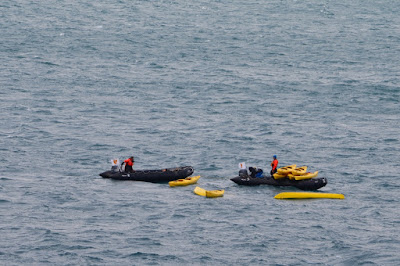
Retrieving the kayaks, some had overturned in the wind

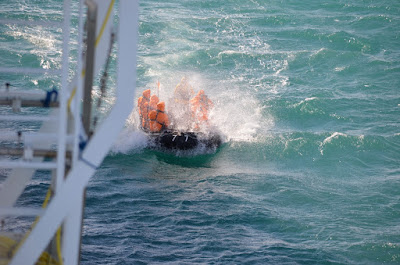
A very wet ride getting back to the ship
The Seabourn Quest departed the Antarctic Sound via Bransfield Strait, cruising past enumerable tabular icebergs as the fog and wind rolled back in. Continuing northeasterly, we set a course for South Georgia Island, 2 days and 900 nautical miles away.

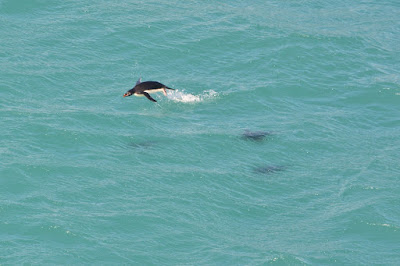
As we departed, the Adelies were like porpoises alongside the ship

It is no wonder they were able to leap into the zodiacs

Departing the Antarctic Sound

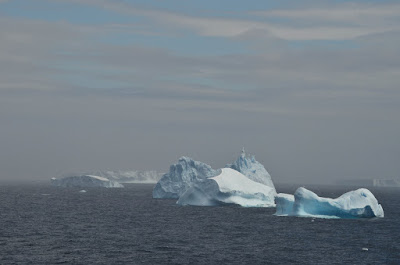
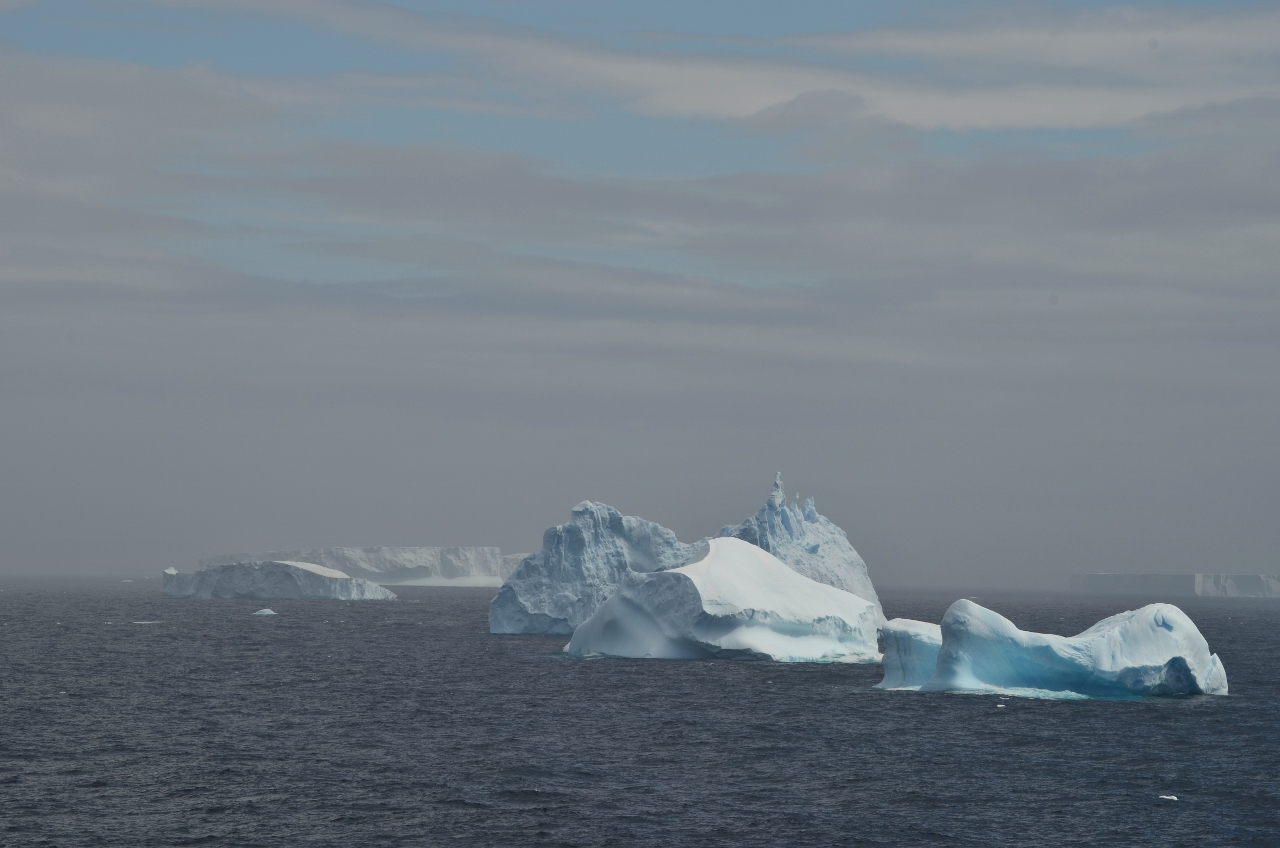
Bergs stretched into the mist as far as we could see

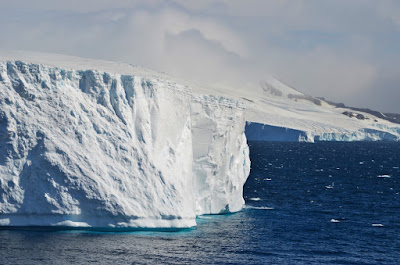
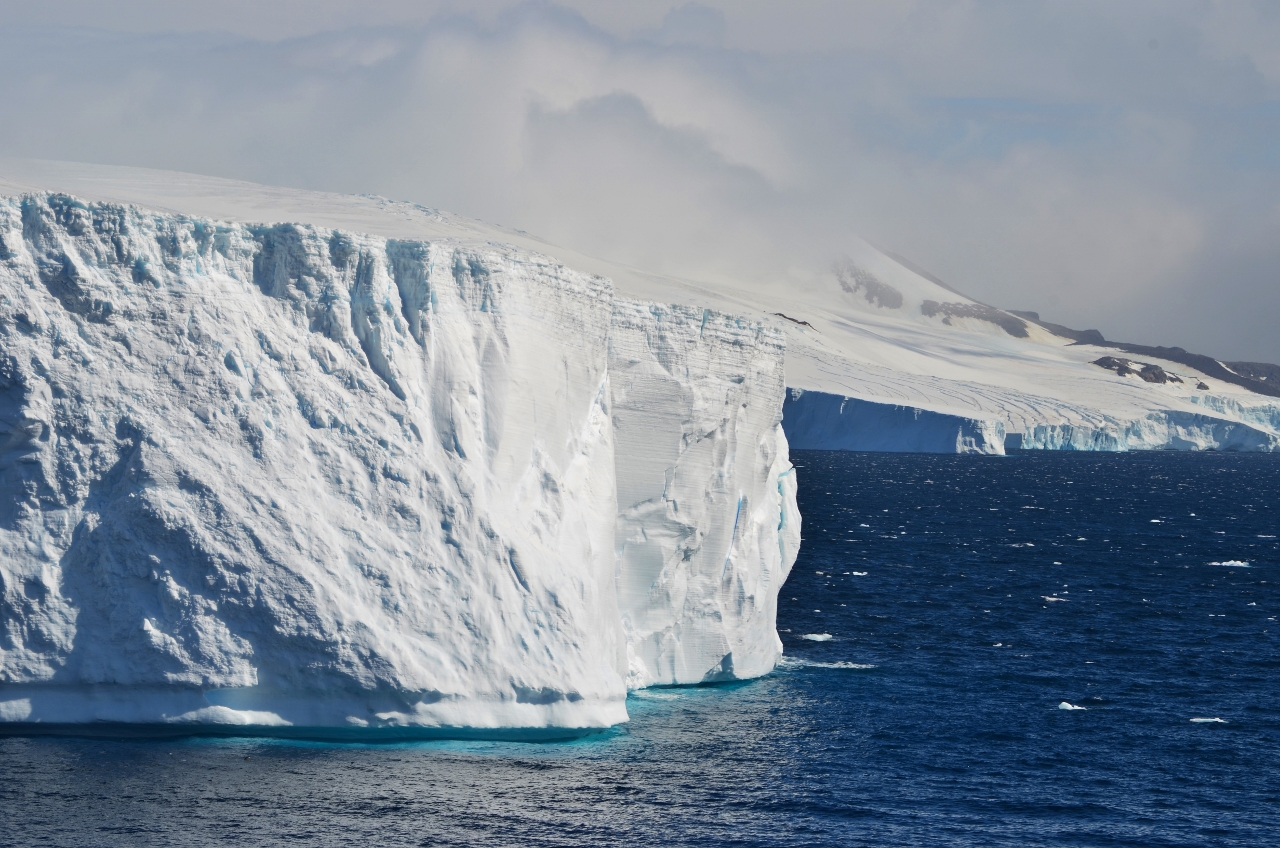
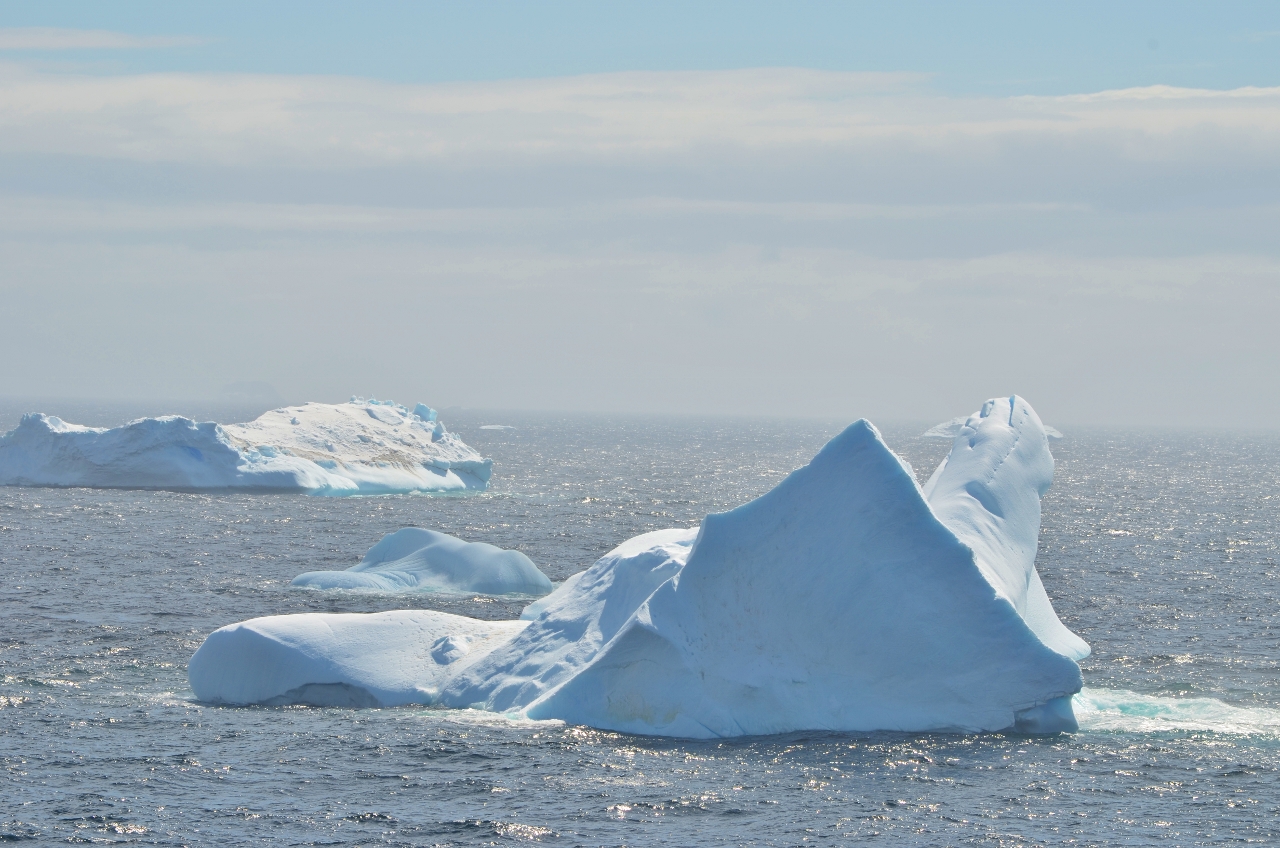
Some were tabular, some had calved from tidewater glaciers

The ship rocked and rolled all night in 30 knot winds and 3 meter seas on the beam and we headed out into the eastern Drake Passage, no longer a “lake”.   During darkness we passed Elephant Island, where Shackleton left most of his crew while he went by open boat to South Georgia Island, also our destination.  The story of his expedition is one of the great stories of seafaring.

January 4 – At Sea

Rough all day, the ship shudders heavily at times. We spent the day attending seminars and cleaning our outdoor gear in preparation for the bio-security checks tomorrow prior to arrival at South Georgia Island. We also worked on sorting pictures. Patrick’s Adelie penguin video has gone viral on the ship.

Tonight was the first night with the ship blacked out.  Lights have been dimmed, covers put over all windows and doors, and the outside decks closed. With the wet, chilly and windy weather not many people have a desire to go out anyway. Even for seasoned mariners the motions were uncomfortable, as well as the sounds of the ship shuddering in the seas.

January 5 – At Sea

As predicted, the winds and seas were even rougher overnight, with many slams and shudders as we headed to South Georgia Island. The ship has slowed to less than 12 knots and we have entered an area with extensive icebergs and brash ice, which combined with the wind, makes for interesting navigation.

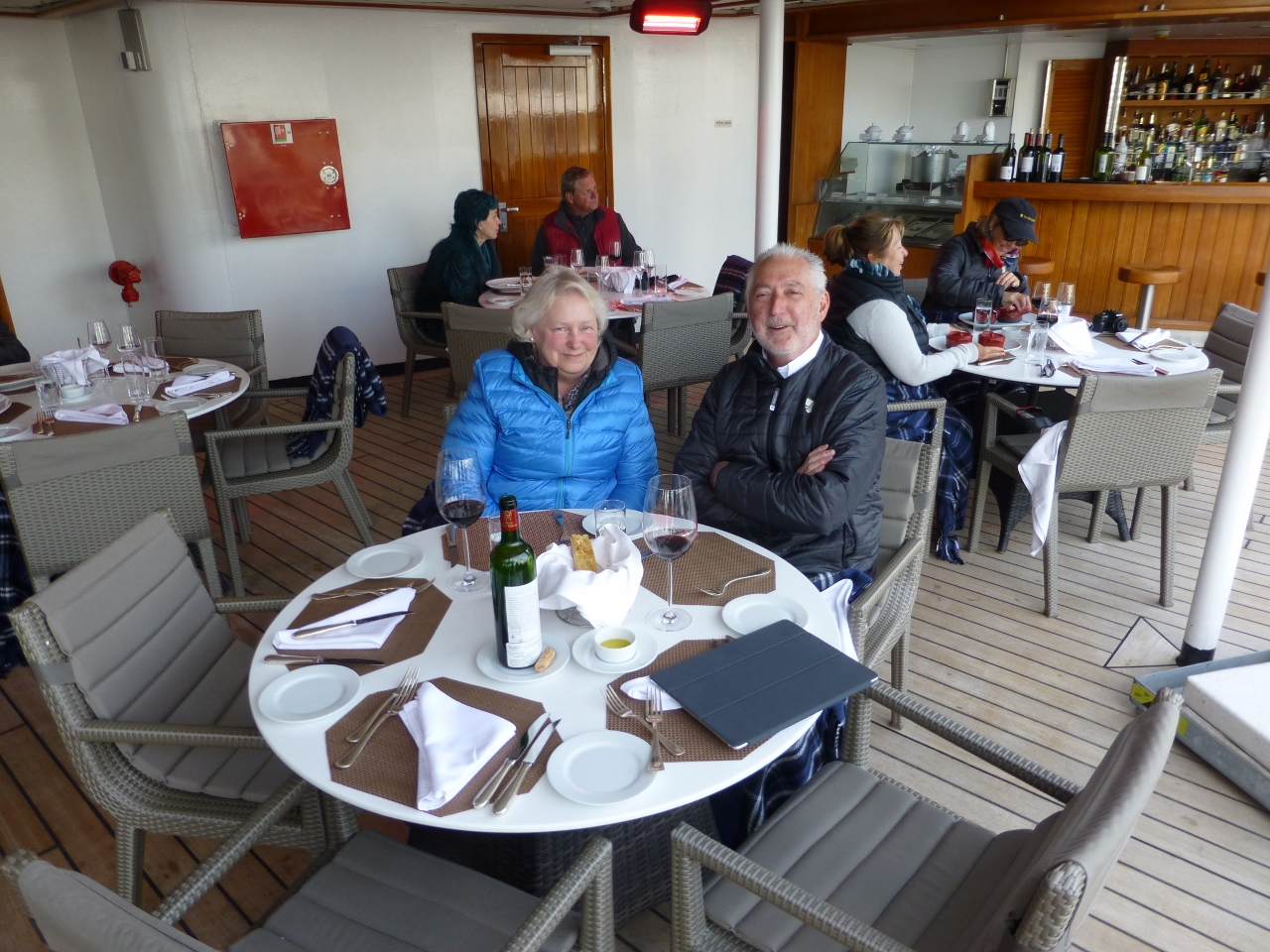
We had our bio-security clearance in the morning after photography lectures by the Keough’s in the Grand Salon. Lunch was in the Colonnade with a focus on Pacific Rim cuisine. The wind and seas continue to be Beaufort Force7-8 and occasionally Beaufort Force 9, with rain.  Even so, the Patio Grill was open, with plenty of blankets and “snugglies”.

The evening briefing continued to emphasize the bio-security requirements. The ship has even altered meal hours to have the dining rooms dark before full darkness to minimize bird strikes. All the outside decks are closed and all the windows are covered. We are living in a large white submarine. We expect to arrive at South Georgia Island at 0500 and Patrick is scheduled for a kayak trip at 0700, weather permitting. The sun will rise before 0400, and dawn twilight will be at 0300.

Yankee Harbor

January 2, 2016 – Yankee Harbor 62.32S,59.47W

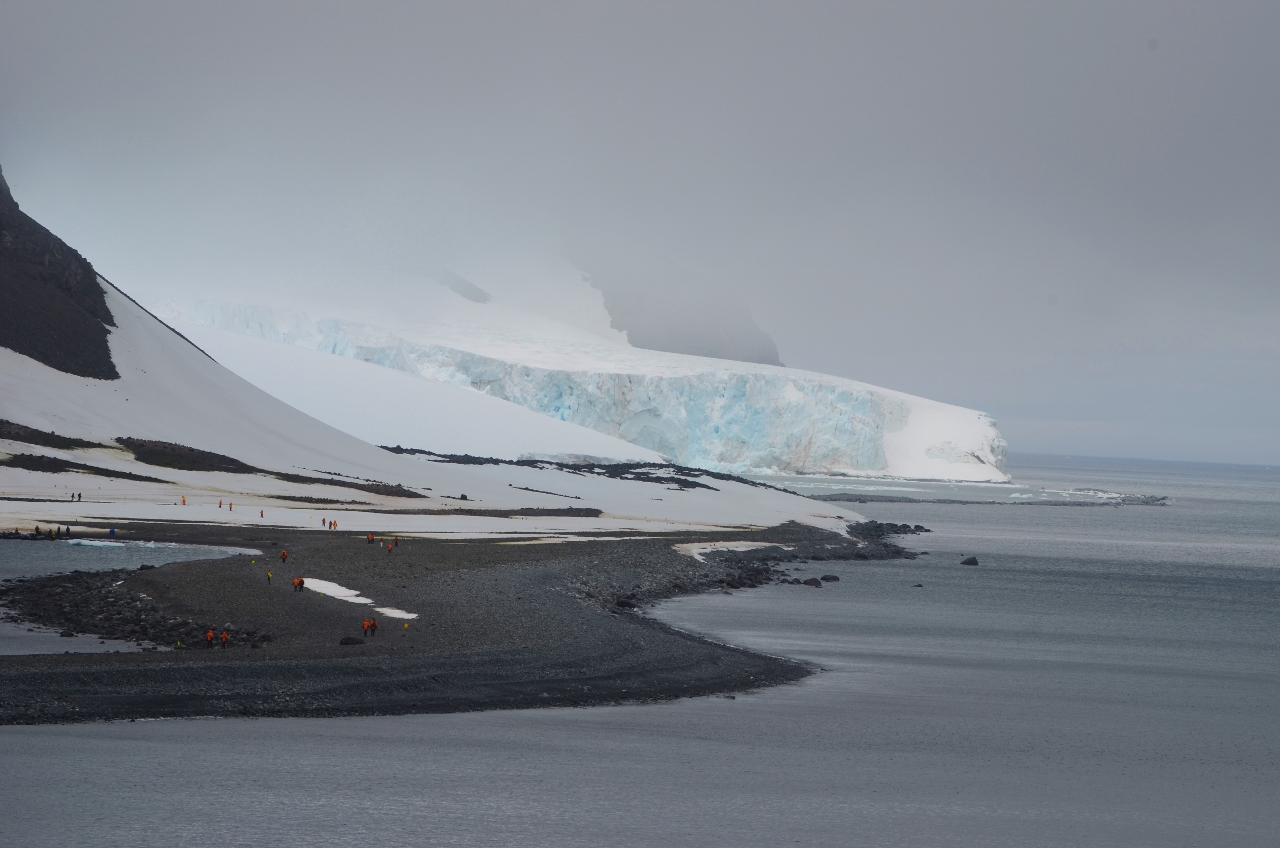
Overnight we headed north up Gerlache Srait.  Yankee Harbor is only a few miles from Half Moon Island, where we started our Antarctic experiences. However, it is on the Antarctic Peninsula.  The harbor is formed by a large terminal moraine in front of the glacier, which was too shallow for safety with the Seabourn Quest. The ship stayed outside the harbor, maneuvering on thrusters. Yankee Harbor was used by both American and British sealers as early as 1820, and the remnants of some of the try pots are still on the beach, along with a large Gentoo penguin colony.

Patrick went kayaking first thing in the morning, but the wind was brisk and the light flat with low visibility and fog. He did see a berg roll closeup.  With flat light and fog, as well as wind, all other kayak excursions ended up being cancelled.  Returning to the ship and changing clothes for the landing, Patrick then went ashore and toured the colony. The Gentoo penguins here had not yet begun to hatch.  Miriam elected to remain aboard.  Meanwhile, two humpback whales fed and cavorted around the ship. We had hoped to see elephant seals and penguin chicks, but neither were to be found.

Part of the terminal moraine

Remains of a try-pot

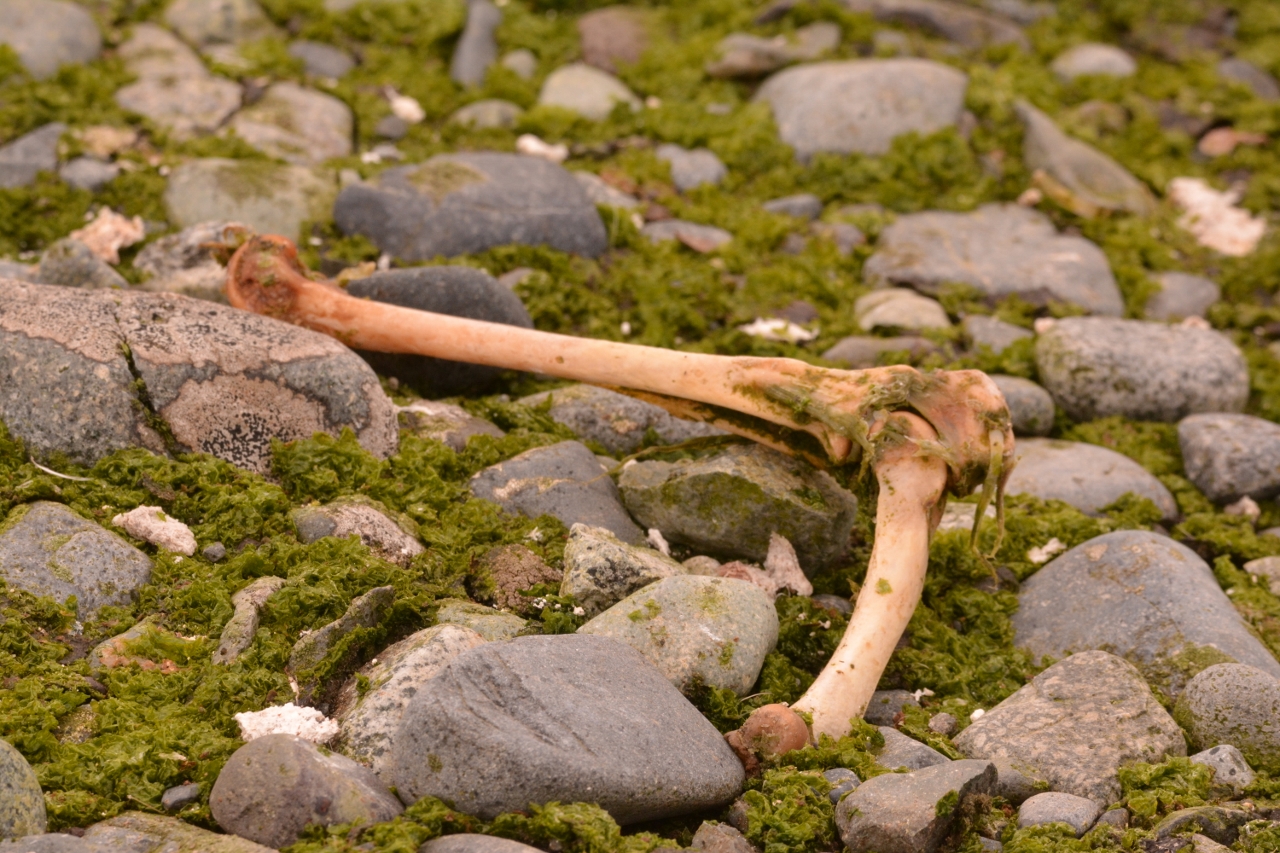
Evidence not all penguins survive

Abandoned eggs

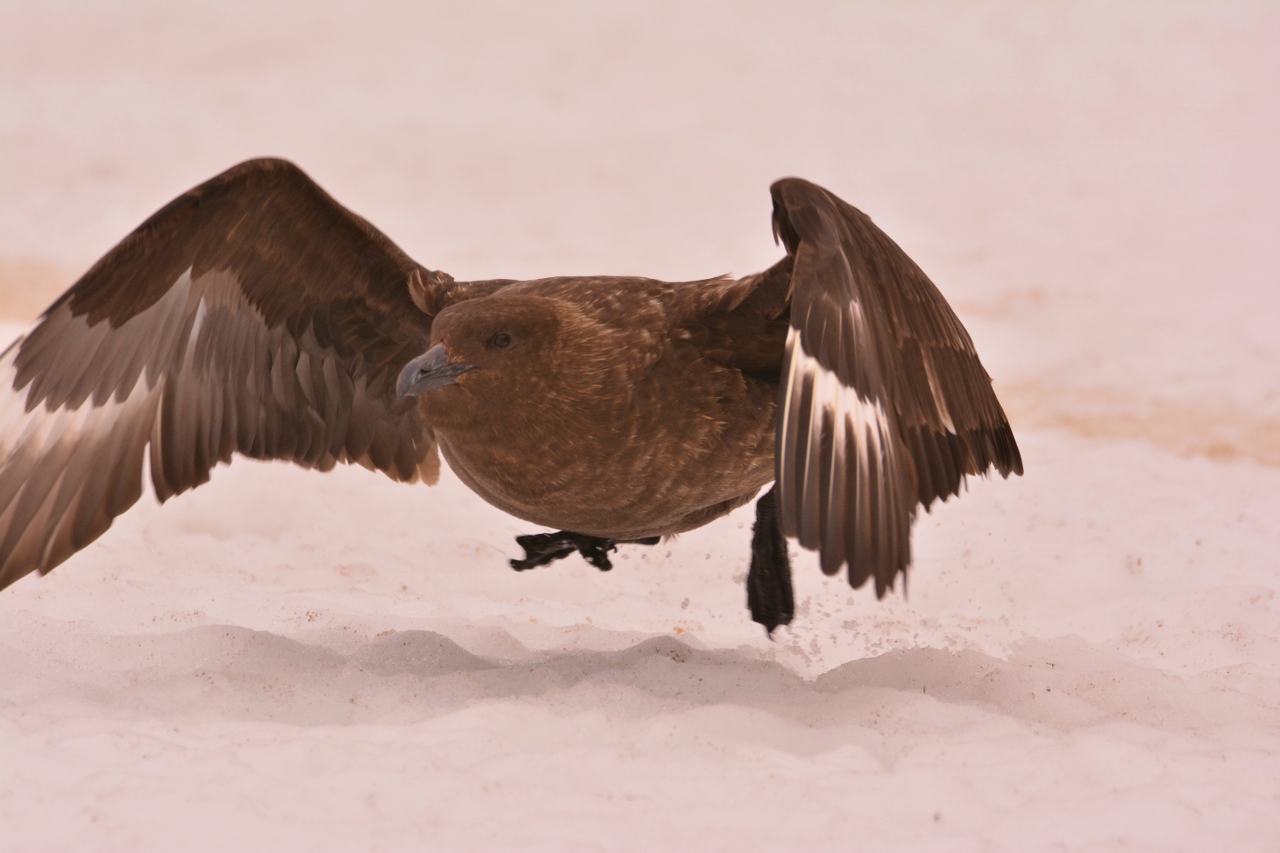
Skua on the hunt

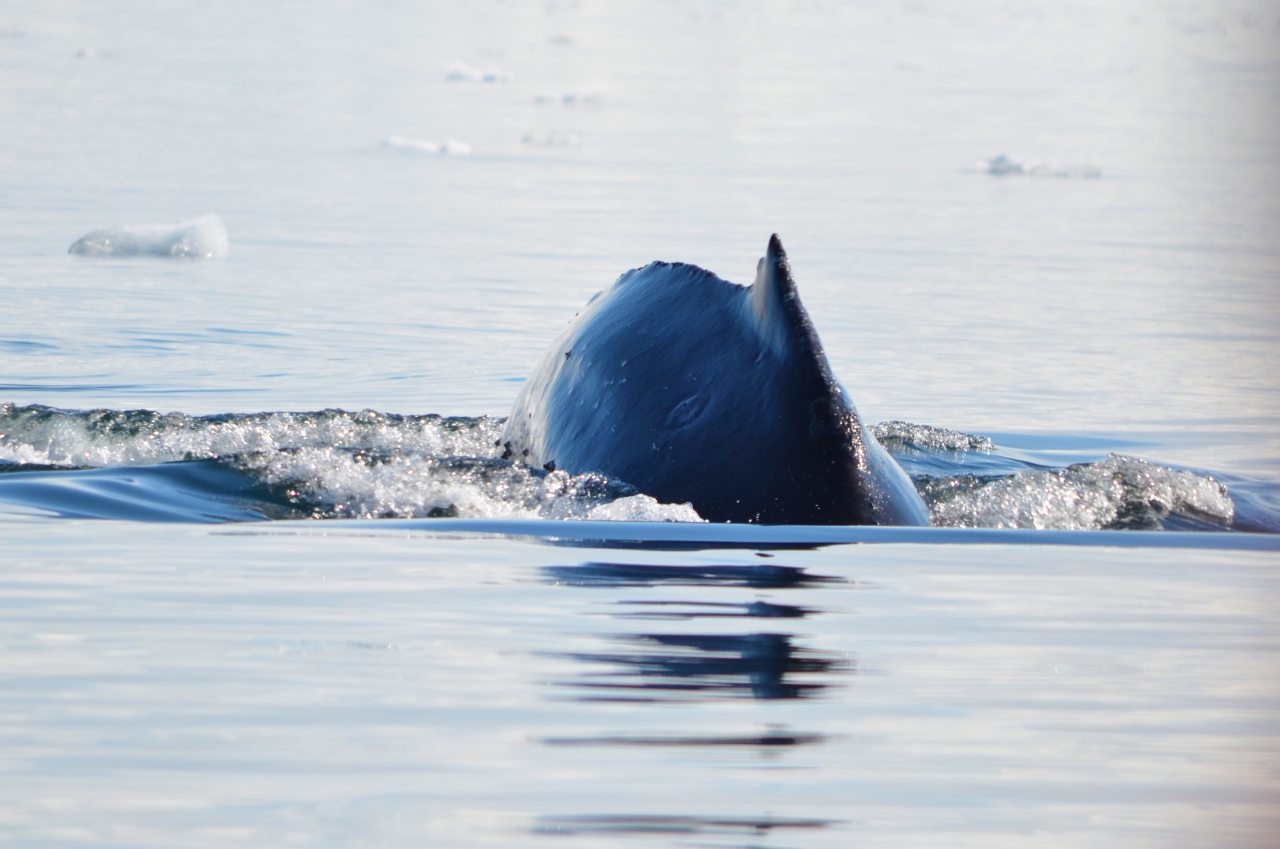
Just another Humpback Whale tail

What is a sailboat doing out here?

The Seabourn Quest left shortly after 1600 and headed north up the Bransfield Strait to our next and last destination before heading to South Georgia Island. Shortly before the 1830 briefing we encountered numerous Humpback whales and the captain stopped the ship so we could enjoy the views. 

Waterboat Point

January 1, 2016 – Waterboat Point, 64.49S,62.51W

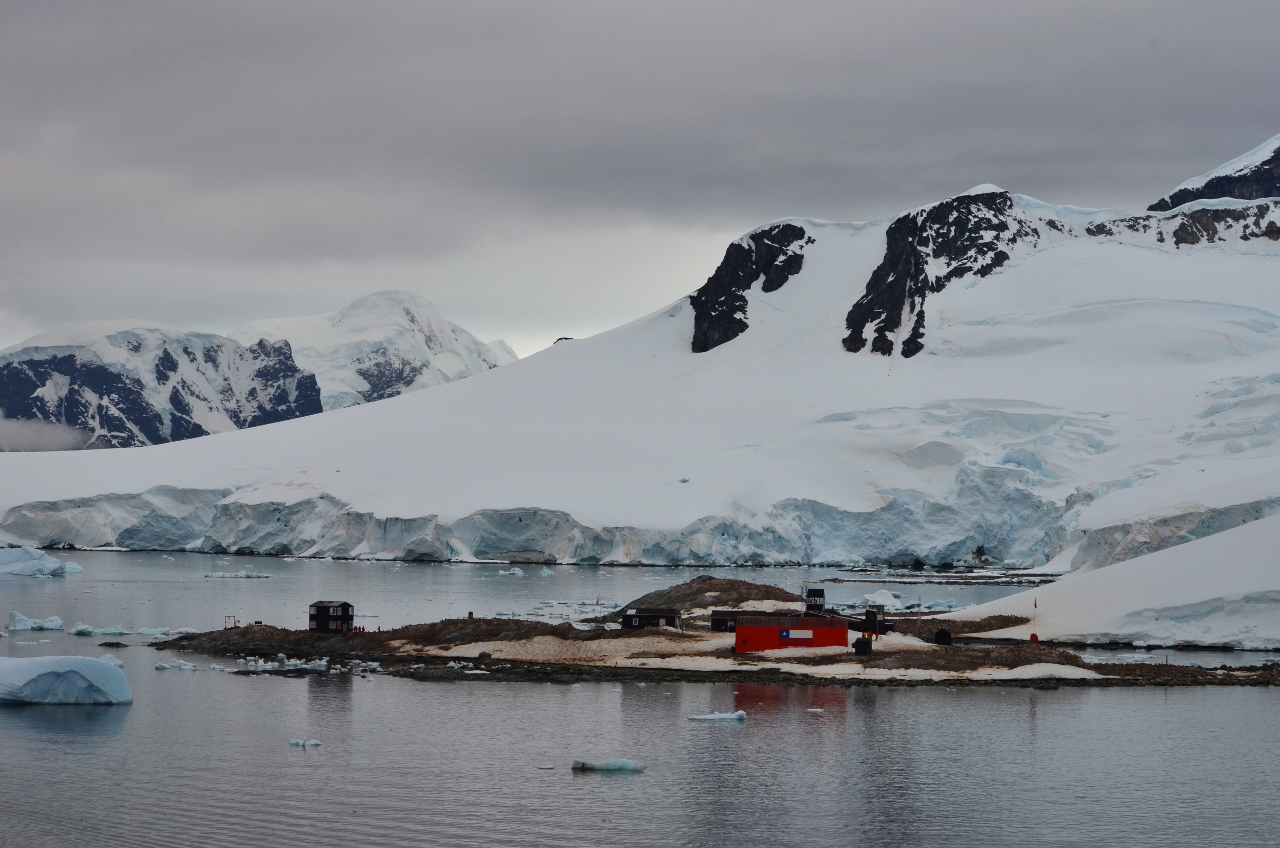
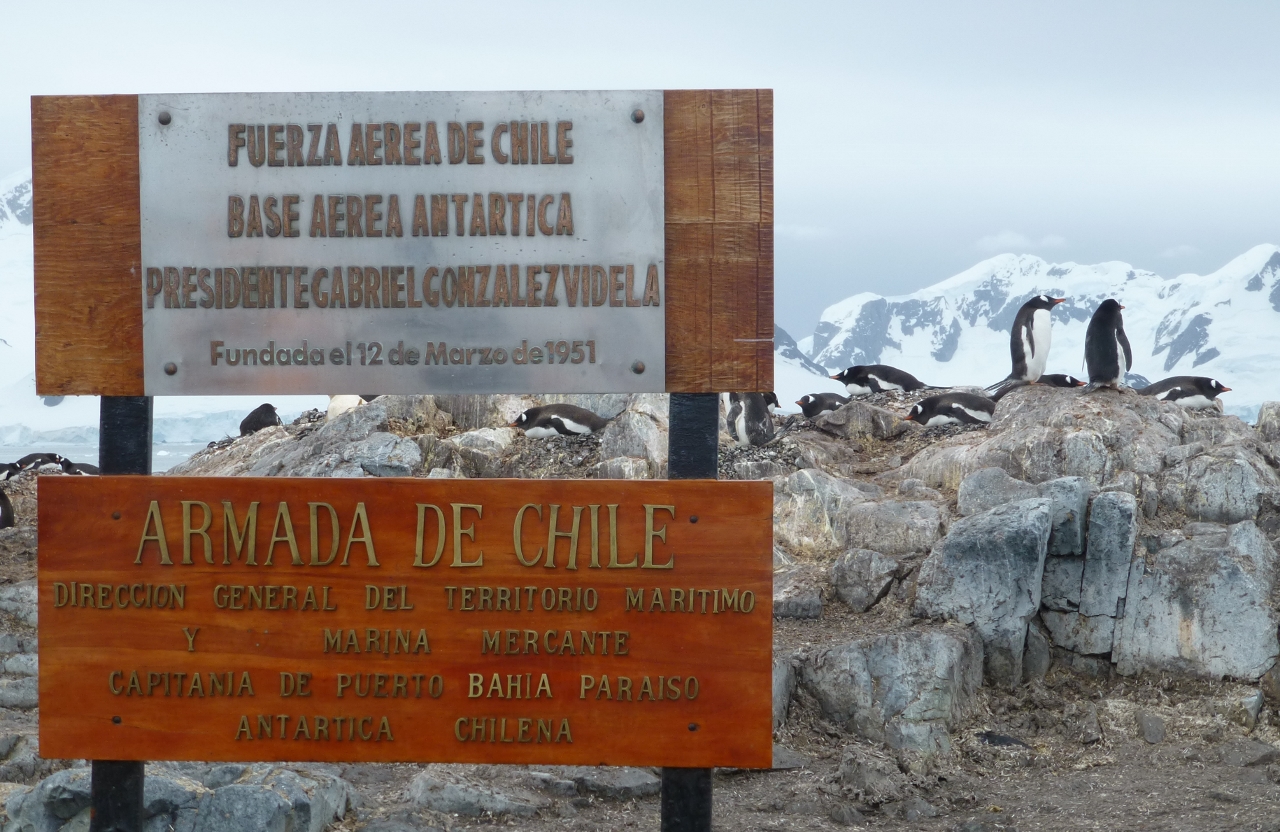
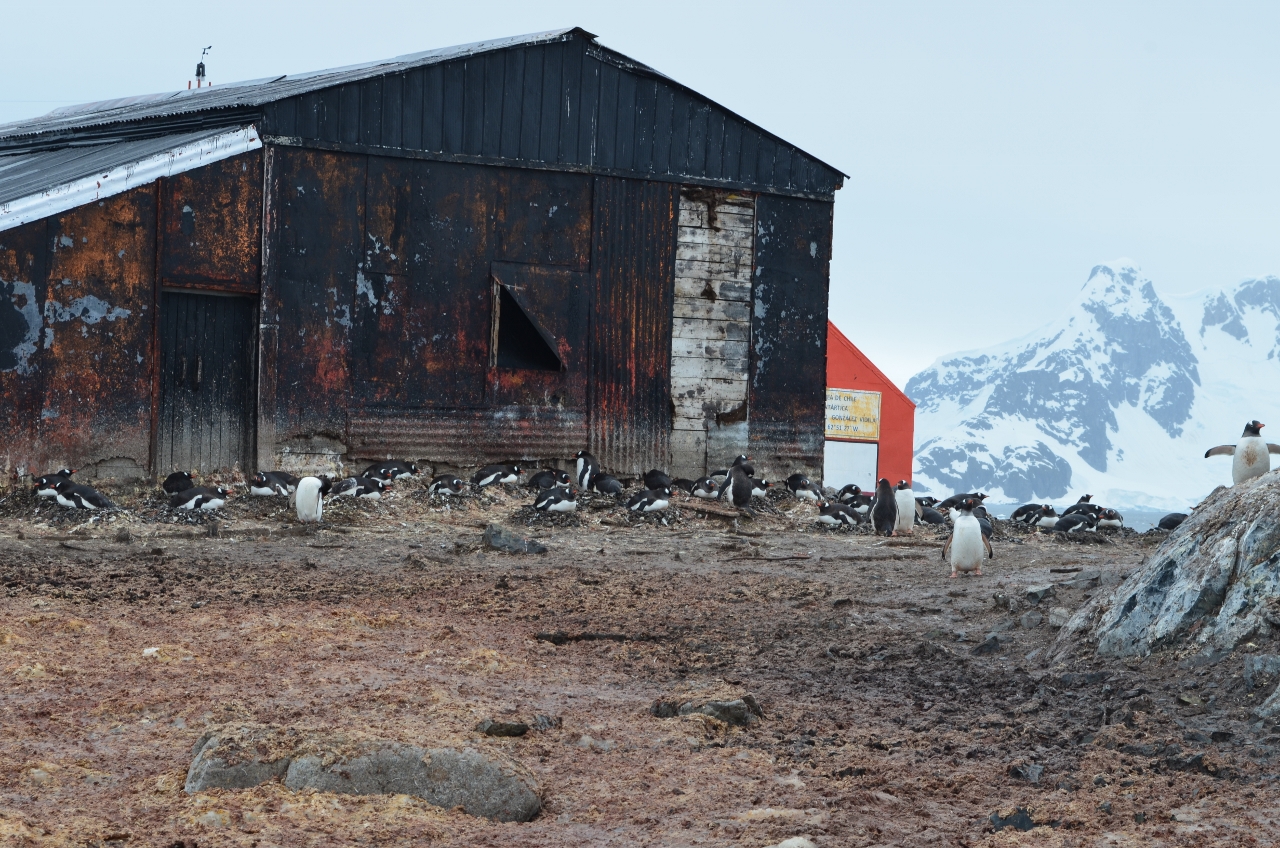
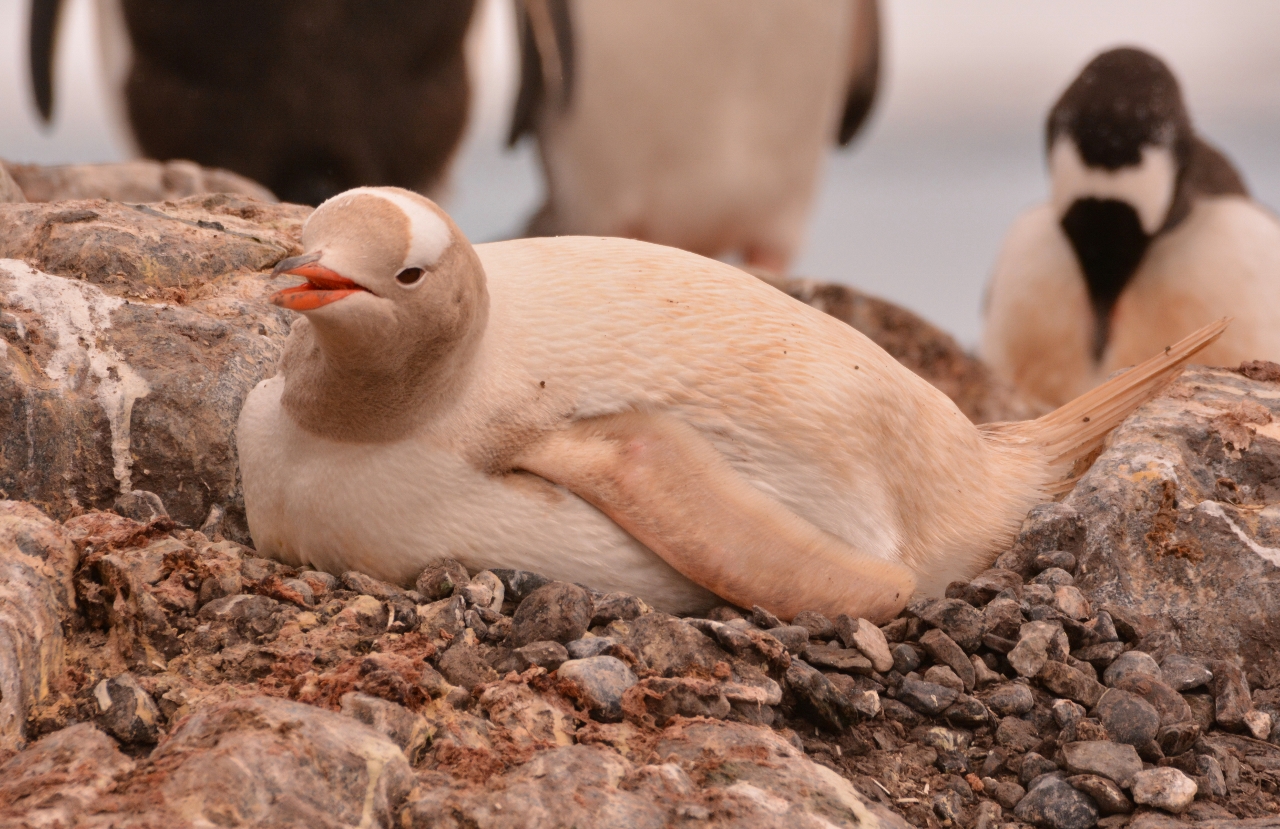
Just a few miles from where had drifted through the night was Waterboat Point, the site of both a Gentoo rookery and the Gonzales Videla Chilean research station, and also the site where two British researchers spent the year of 1921-1922 living under a boat, doing tidal and  penguin research. We were hosted at the station to coffee and treats, and the 22 staff came on board for lunch. We were also able to see our first Leucistic Gentoo Penguin, sitting on it’s nest. 
We had to stay on the concrete paths, but the penguins do not know the rules, so there is guano everywhere.  We had special cleaning procedures with pressure washers on boots and other gear when we returned.  The ship used two boarding platforms on opposite sides of the ship, with clean passengers disembarking on one side and dirty passengers coming back aboard for cleaning on the other side.  All part of the bio-security precautions and to keep the smell out of the ship as much as possible.
The station houses 22 people for the summer
The Chilean Base is in a Gentoo rookery
The station has thousands of Gentoo Penguins in residence
They use every available space for nests
Leucistic Gentoo Penguin

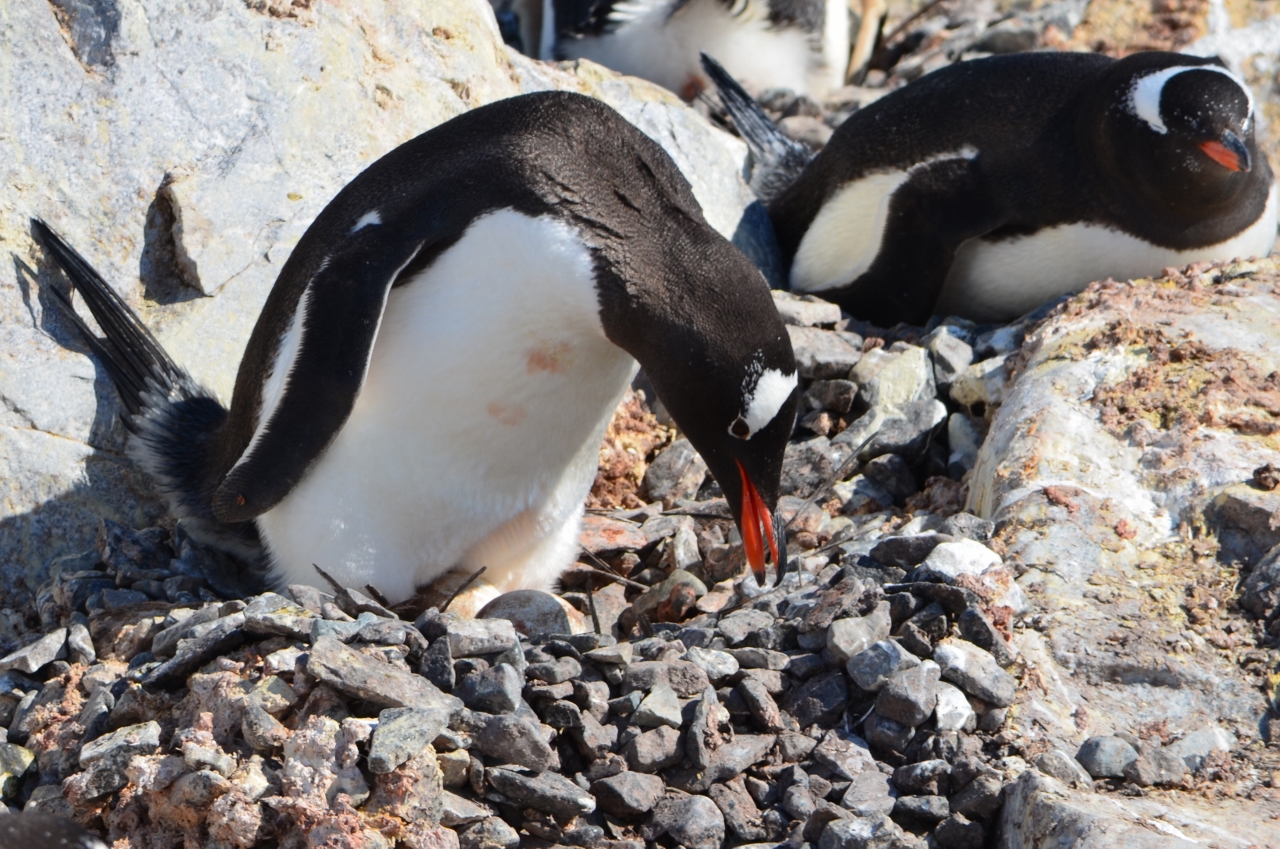
Checking the eggs

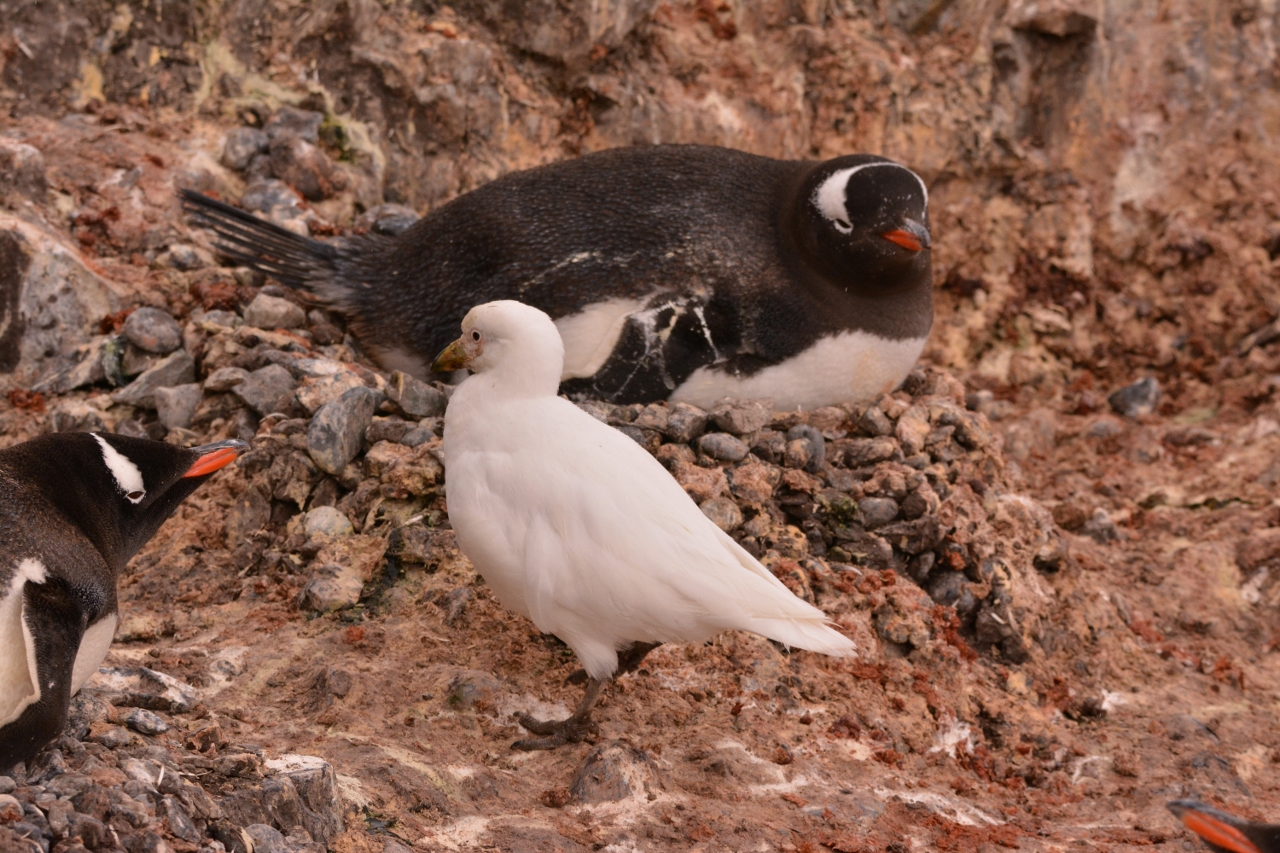
Opportunistic Sheithbill waiting for a penguin to make a mistake
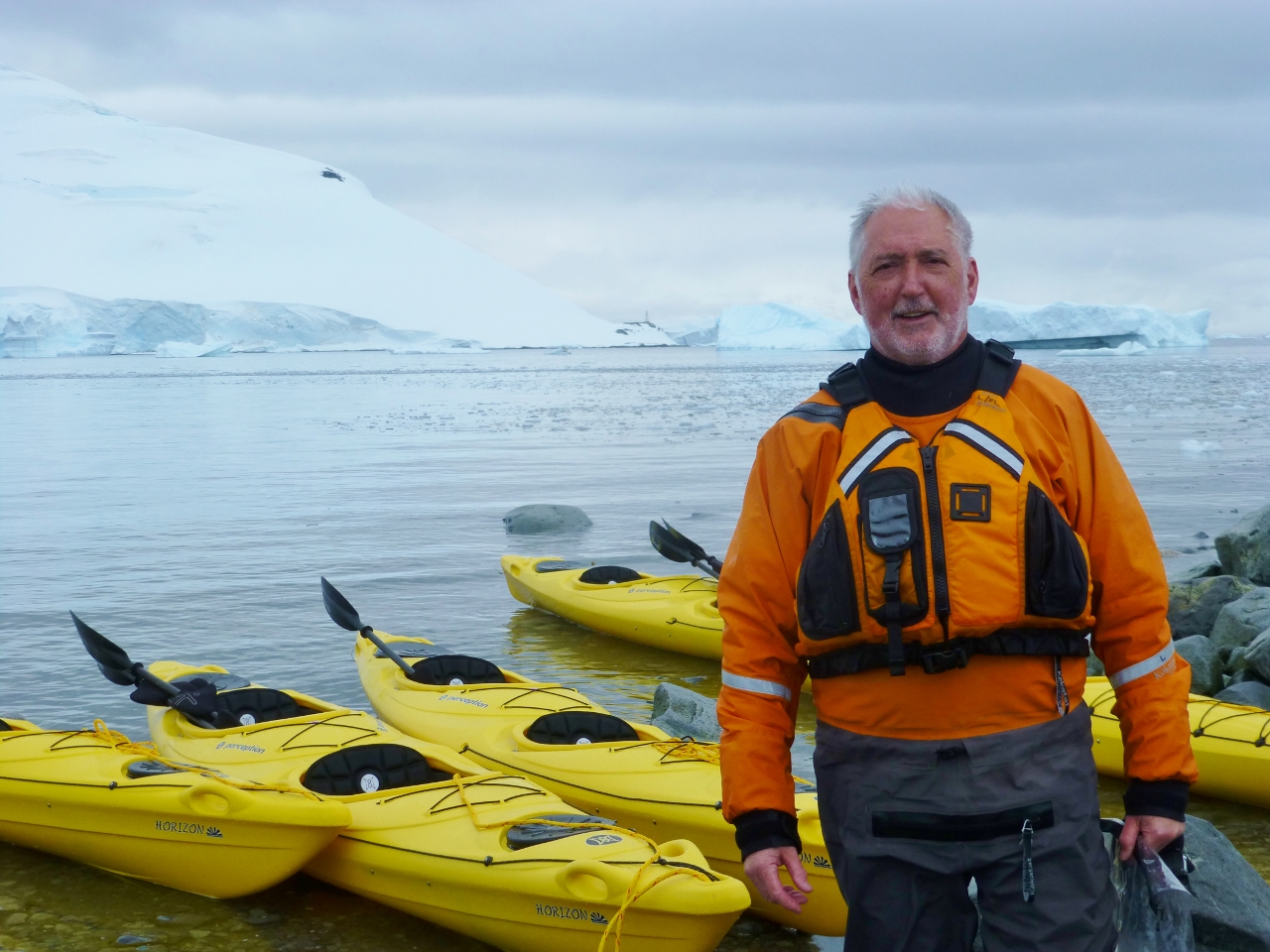
Patrick went kayaking at 0720 once again.  This time the kayaks were boarded in the middle of the bay from the zodiacs. The weather alternated between cloudy, rain, sleet and wind by the time the ship departed at 1600.  
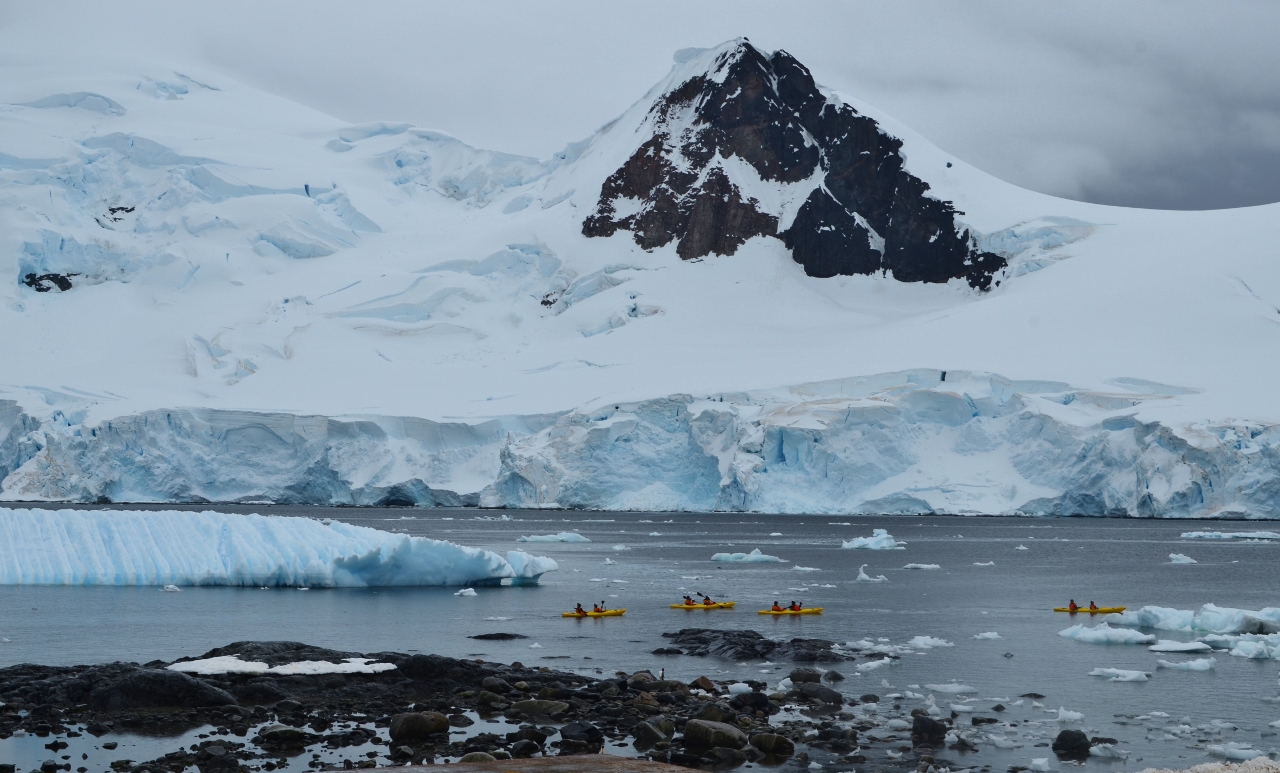
Patrick is in the middle kayak

Spectacular place to kayak

We boarded from zodiacs but found a beach to land on.
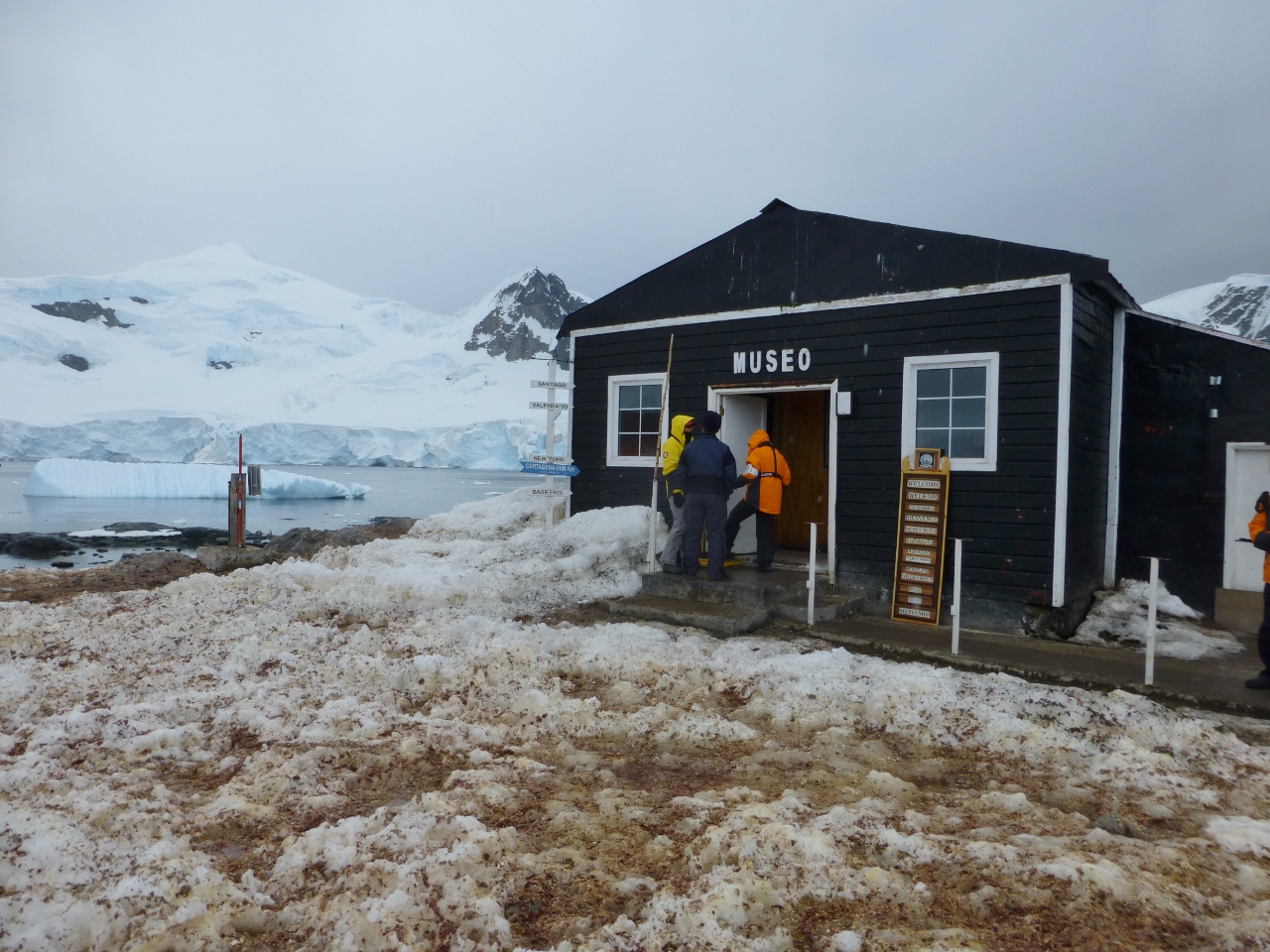
The museum is also the gift shop

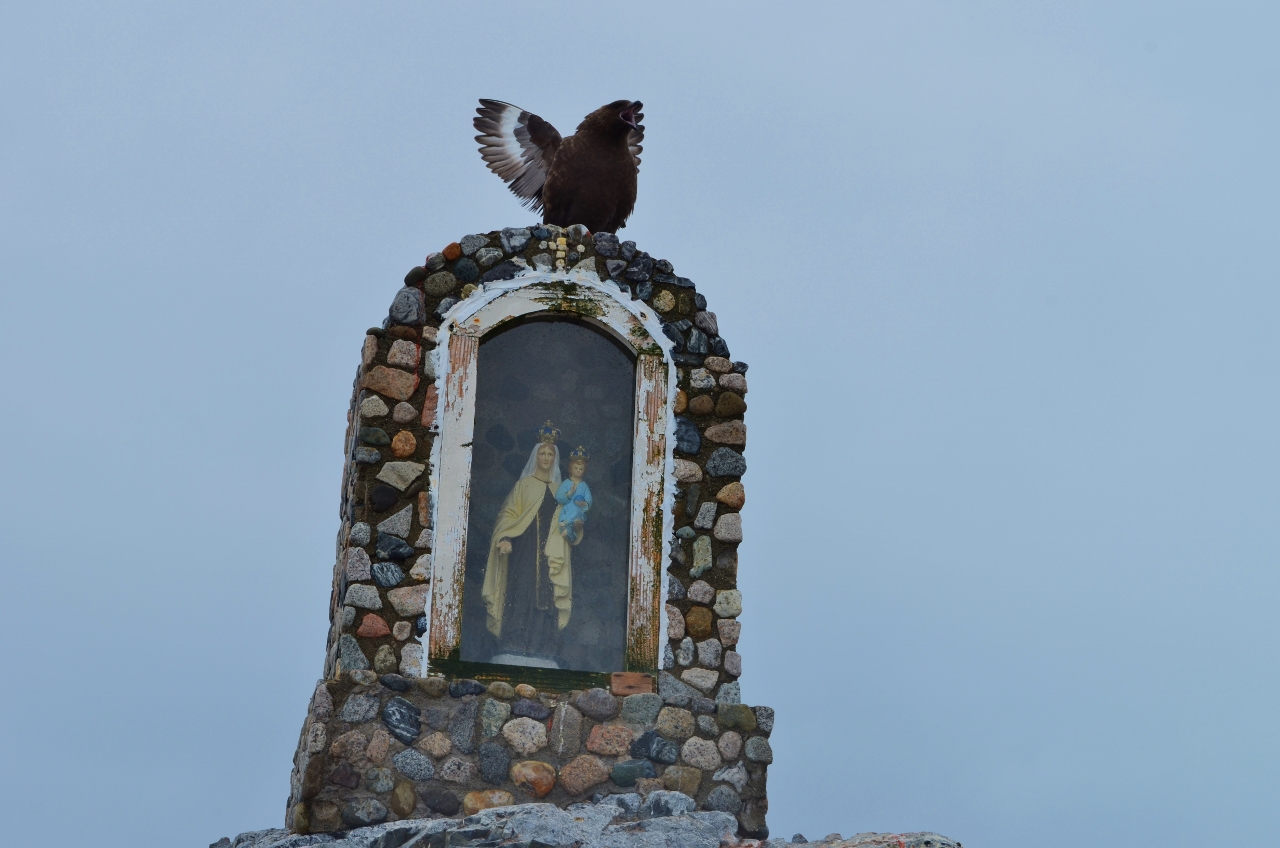
Shrine with a Skua 

The penguins do not stay on the paths – what a mess

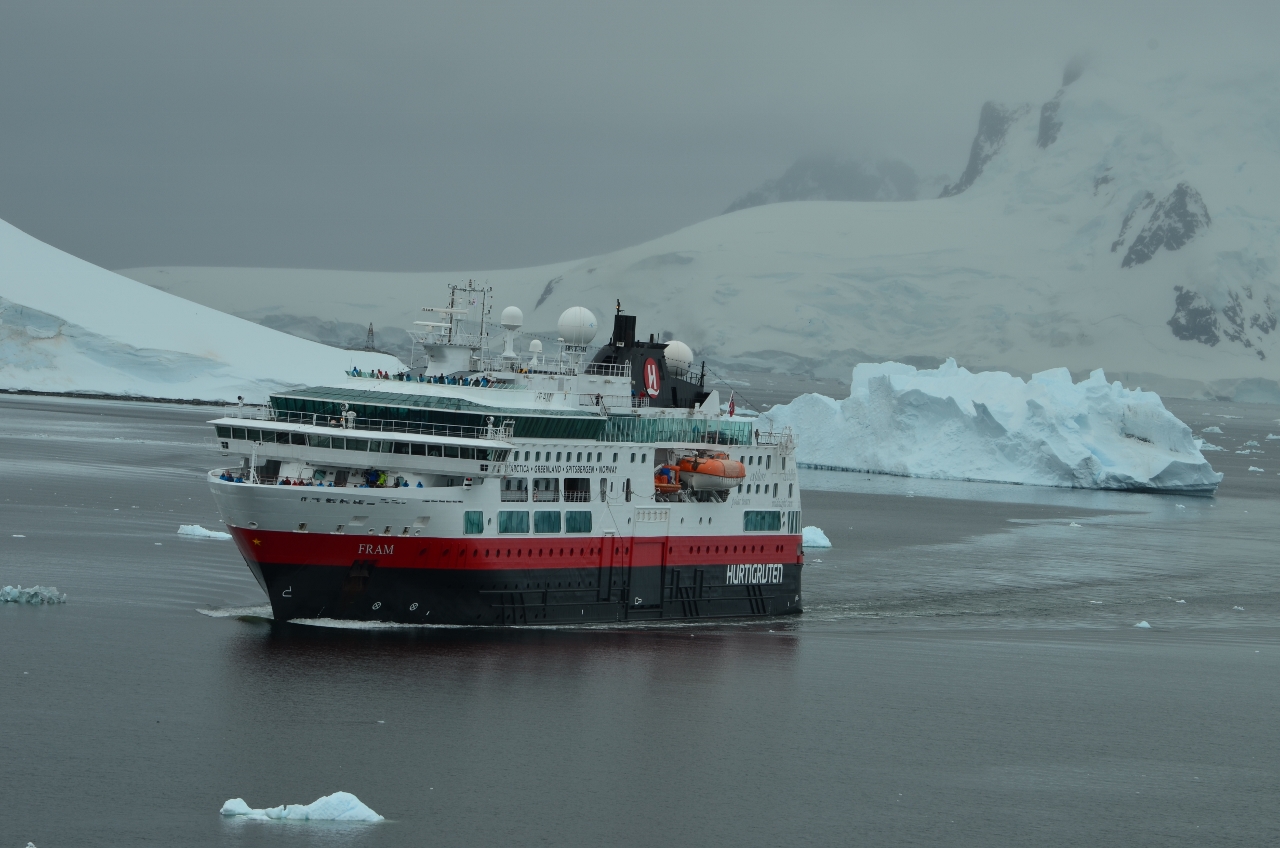
The Fram passed us while we were visiting the station
Once out of the shelter of Paradise Bay, the winds and seas began to build, with low visibility and rain. By the time we had completed the daily recap in the Grand Salon we were in fog and the winds and seas had moderated as we headed north up Gerlache Strait.  We had reached our furthest point south during the night, 64 degrees 58 minutes South.

2016-01 Fall and Winter Cruising Views in the Pacific Northwest

January 21, 2016: Fall and Winter Cruising Views of the Pacific NorthwestEach winter we cruise the Pacific Northwest.  The sun’s low position in the sky and the varied winter weather provides the stuff for better photos.  Here’s a few you can…

Neko Harbor – First Antarctic Peninsula Landing

December 31 – Neko Harbour, 64.50S,62.33W

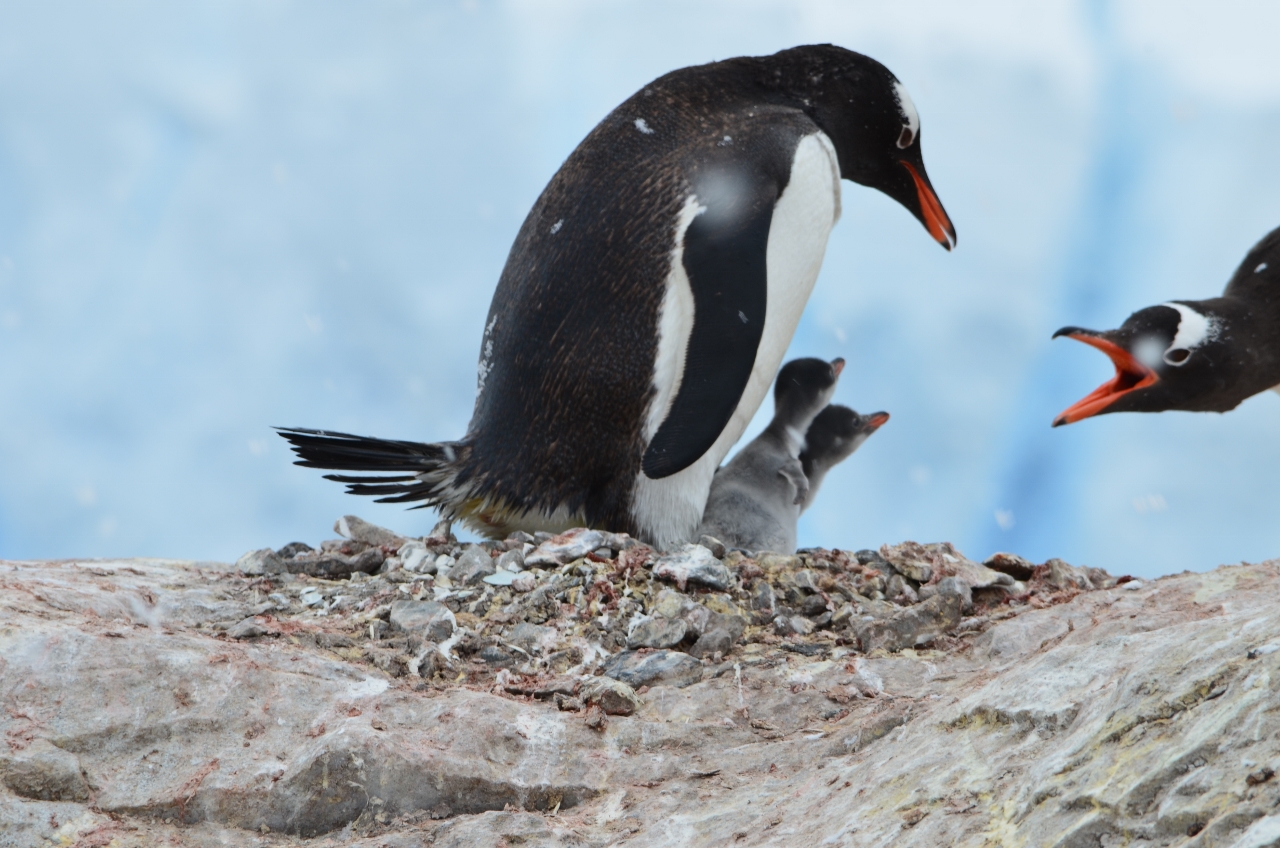
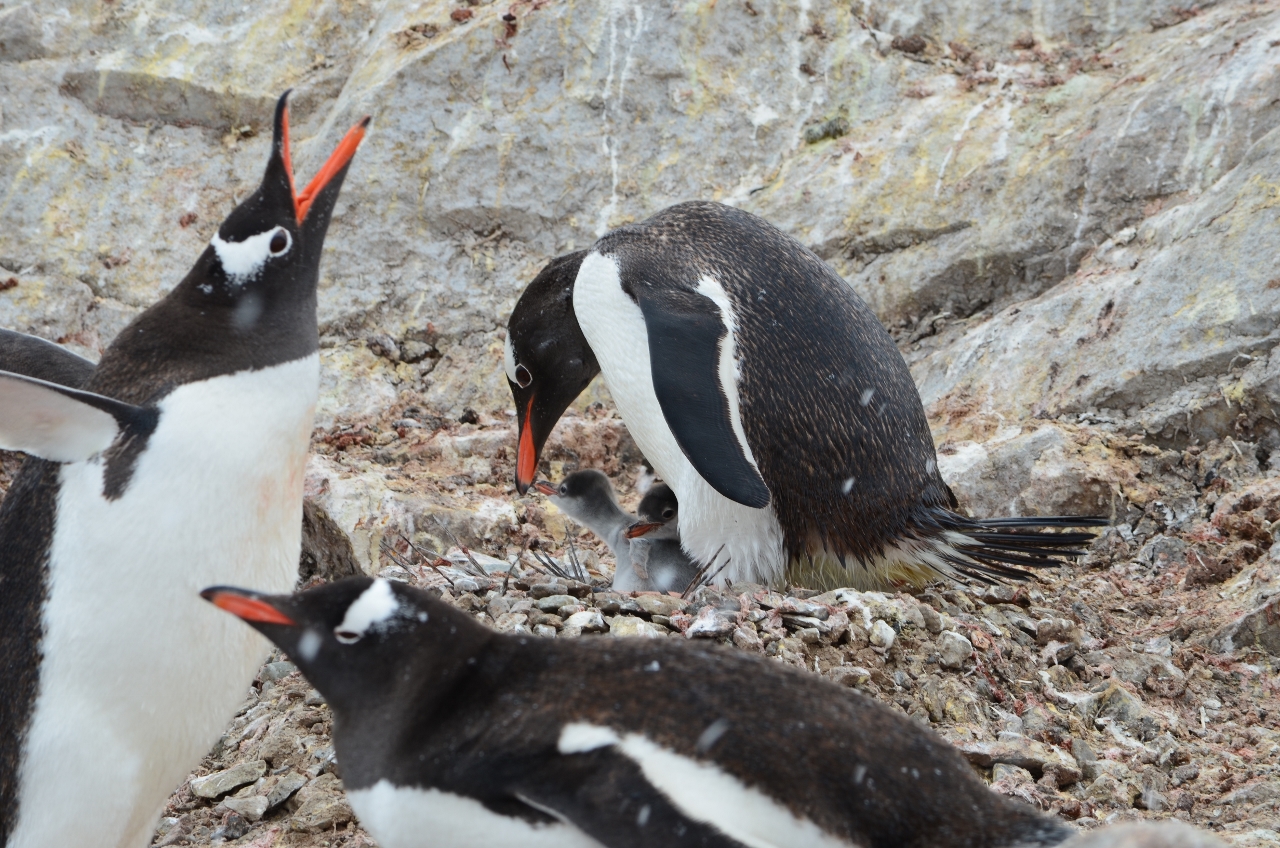
Just when we thought the vistas could not get better, we woke up surrounded by glaciers in Neko Harbour, which were active. We could hear the thunderous crack and then see the splash into the water. We landed on a sandy beach below a hill, technically our first landing on the Antarctic Peninsula itself.  There was a Gentoo Penguin rookery here, both close to the water and stretching up the side of a hill. We were able to hike up the hill, an elevation gain of about 300 feet. The sun had disappeared and it was snowing, sometimes heavy. It was fun just watching the Gentoo’s going up and down the penguin highways from the water to their nests. There were lots of Gentoo chicks, often two in the nest, but only one will typically survive.

Neko Harbour landing site

Taking a bath

All refreshed

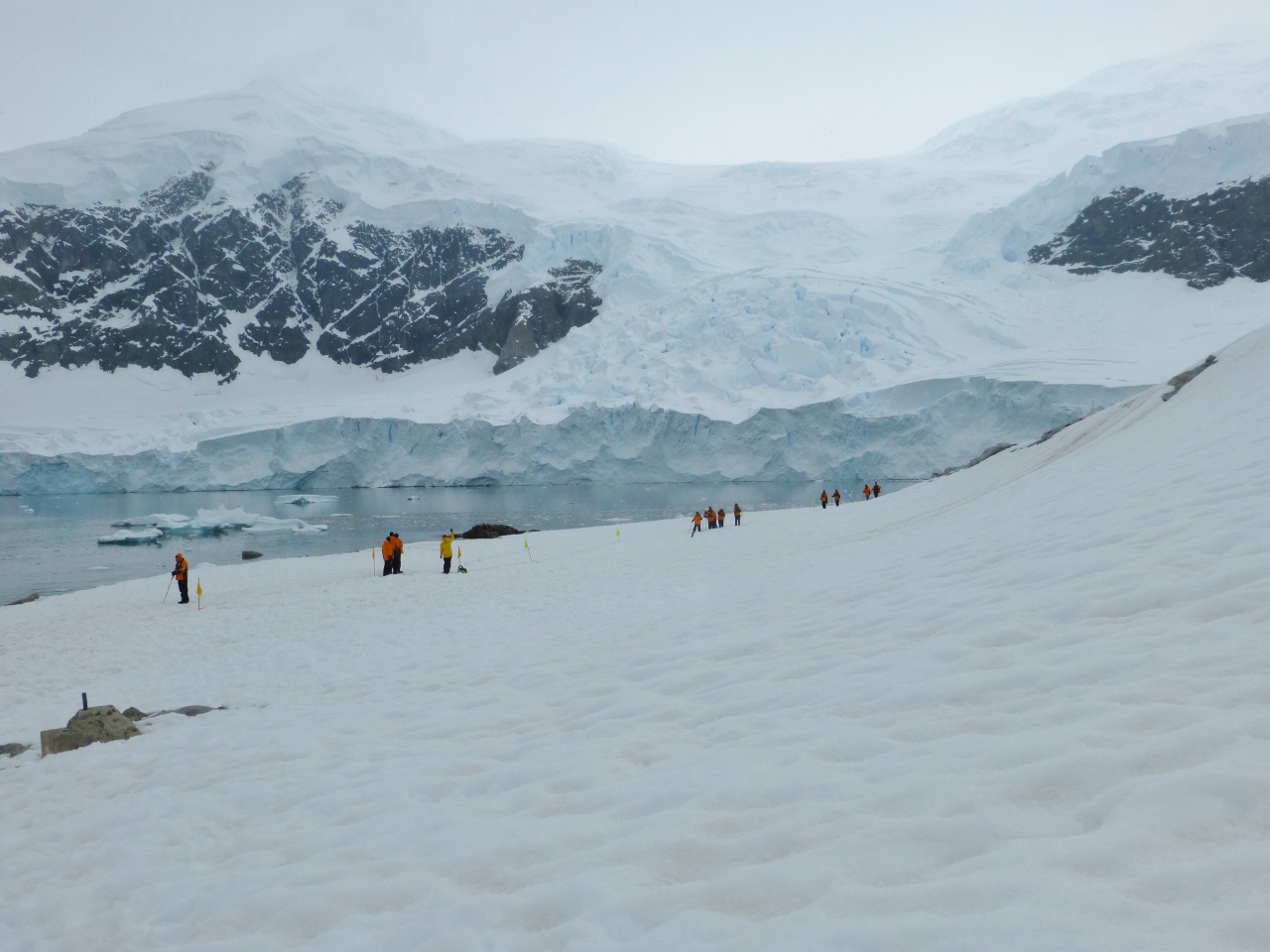
Neko Harbour glaciers

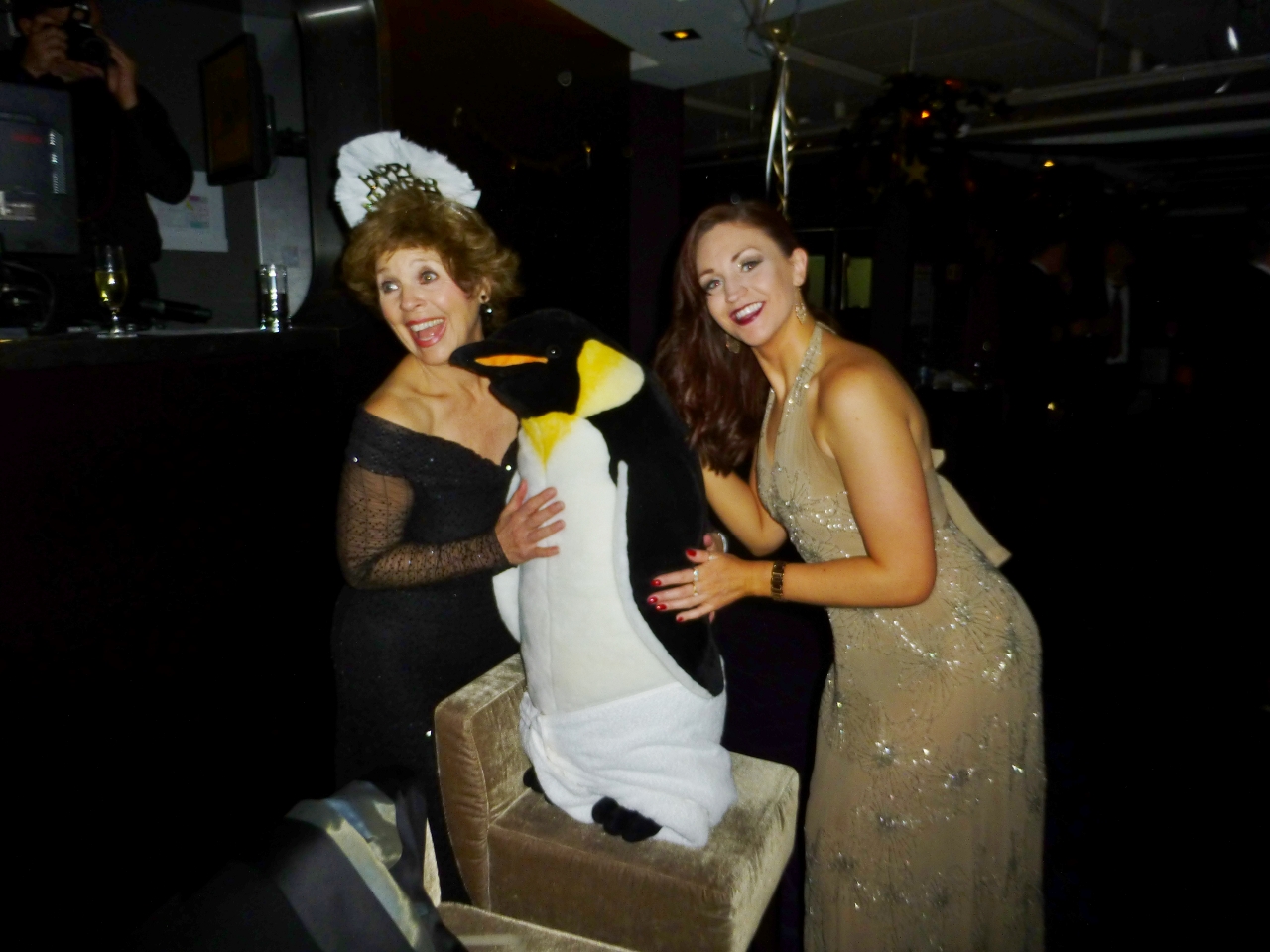
Departing Neko Harbour about 1700, we went a short distance to Paradise Bay where the ship drifted on still waters as we celebrated the arrival of a new year.  The still waters were only interrupted by the sounds of the humpback whales feeding around the ship.  The ship was decorated and there were festive meals and lots of champagne. We had dinner in Restaurant 2 with the Schoonmakers, which has a small plate fixed tasting menu, just perfect. After dinner there was a celebration in the Grand Salon, with music, dancing and ringing in the New Year, with a stuffed penguin in diapers as the guest.  At midnight it was still light!

View from the top of the hill

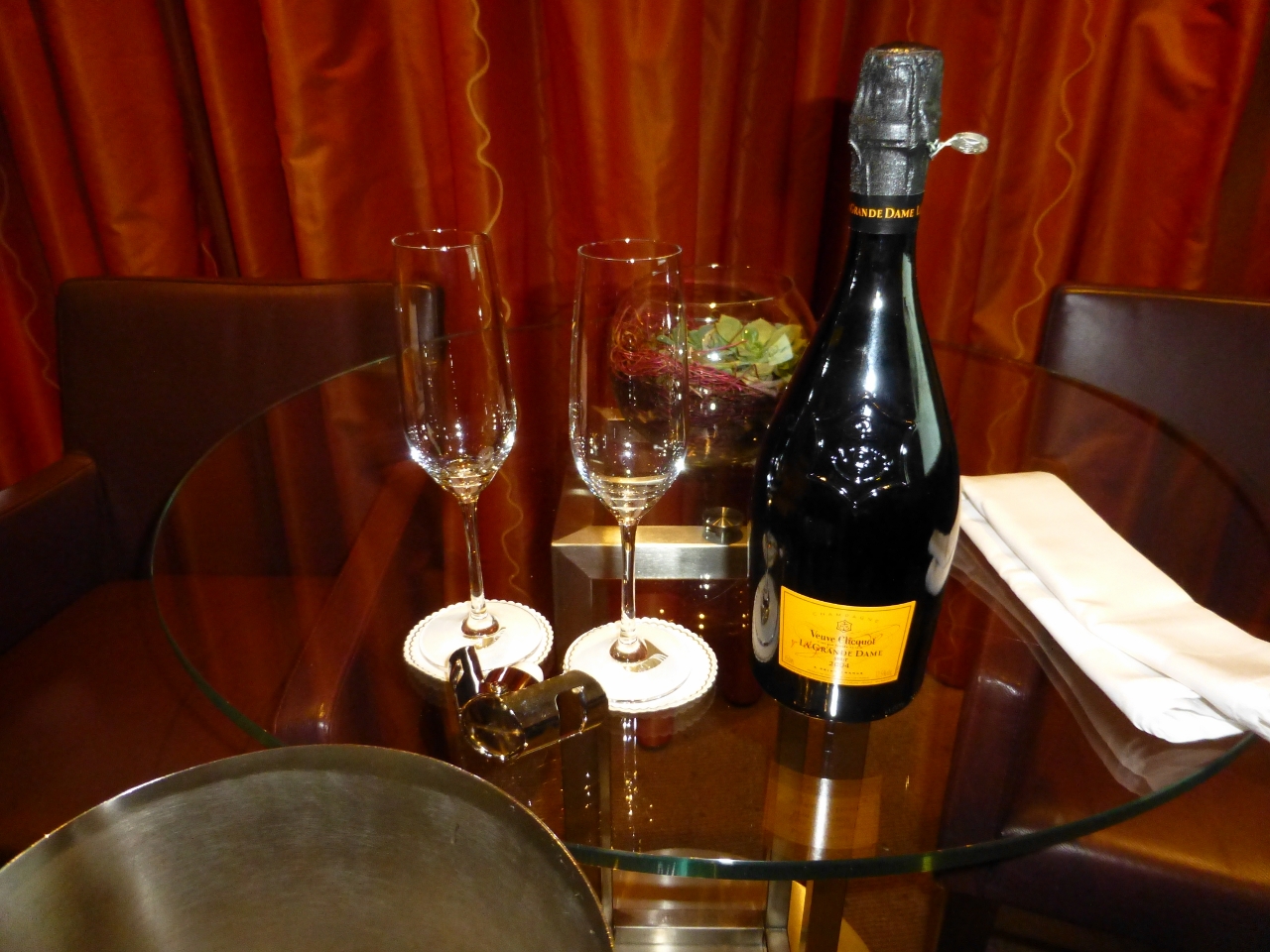
Champagne waiting in our suite

Humpback whales feeding while we drifted

Gill’s and Schoonmaker’s in Restaurant 2 on New Years Eve

Putting diapers on the Penguin for New Years Eve

Cuverville Island

December 30 – Cuverville Island – 64.41S,62.38W

On our second day in Antarctic Waters we stopped at Cuverville Island, which is a protected sanctuary for Gentoo Penguins. Patrick went on an early kayak tour and Miriam went on a zodiac tour and then ashore with her color group,  Due to international restrictions in Antarctica, only a maximum of 100 people are allowed ashore at any one time, so we were divided up into groups which rotated daily as to which group went ashore first.  Ships with more than 500 passengers are not allowed ashore at all.  
The Gentoo chicks were just hatching, with some only a few hours old. Patrick  saw Leopard Seals, Crabeater Seals and even some Weddell seals on his kayaking trip, before also going on a zodiac tour and then going ashore.

Miriam was lucky to see a humpback whale up close on the zodiac tour.
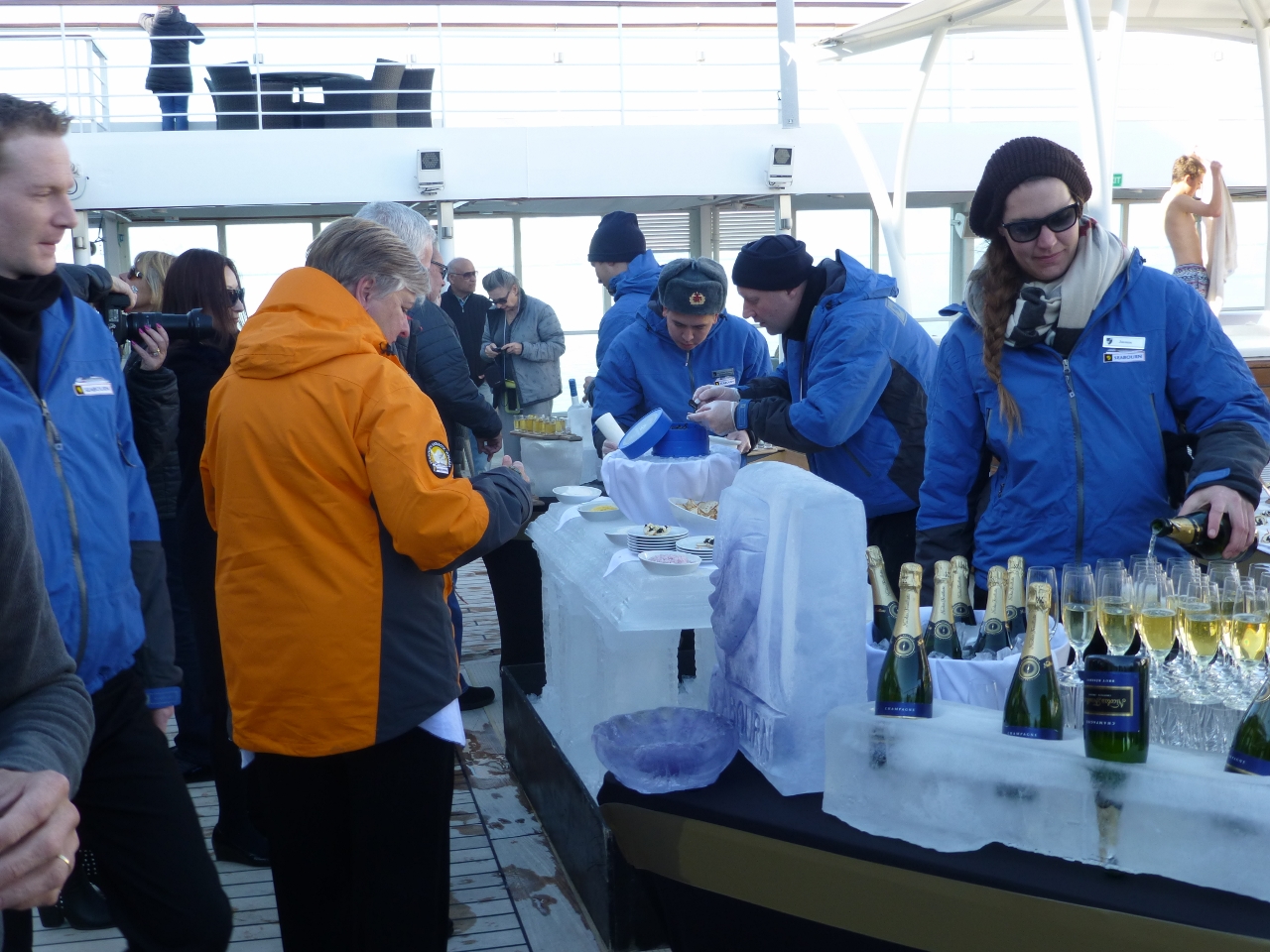
The day culminated with the “Caviar on Ice” event poolside as we headed down Errara Channel to Neumayer Strait to our next possible harbor, Neko Harbor on Andvord Bay, situated on the west coast of Graham Land.  Both orcas and humpback whales entertained us, with the ship stopping at times for photos.  We ended up dining at the Patio Grill on the pool deck just so we would miss as little as possible.

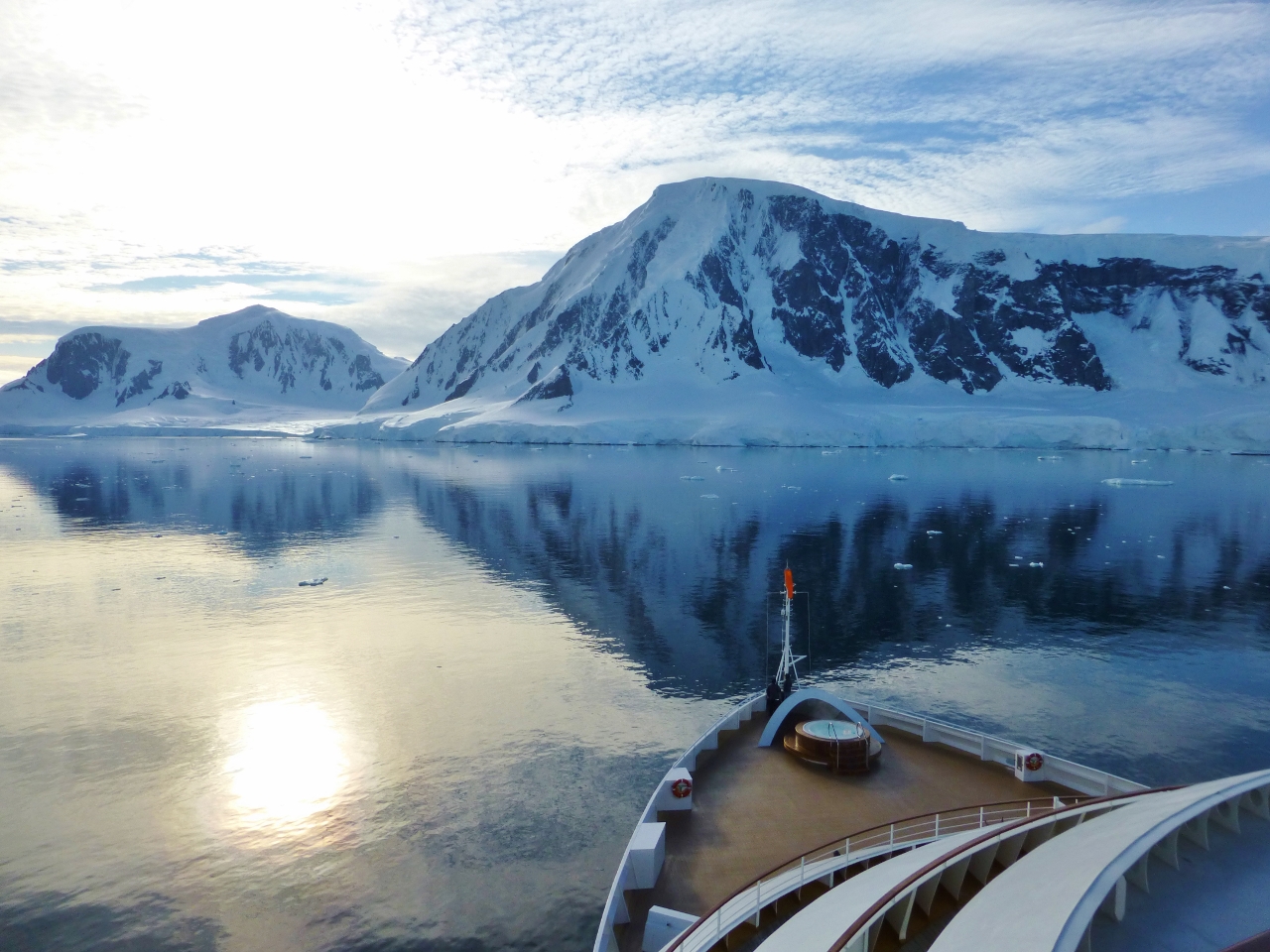
The narrow strait we navigated was so visually stunning, one could use up a lot of film, since every turn brought new stunning vistas of snow, mountains, ice and sea. With daylight stretching into daylight at 65 degrees south, it was hard to actually close the drapes and get some sleep.  Seabourn even issued eyeshades in the suites to try and help. However, every time we thought we were past the best parts, a new vista would open up and then the cameras would come back out.

Cuverville Island and the surrounding waters are popular with expeditions, since we saw several other ships in the area.

 Miriam’s Zodiac Tour

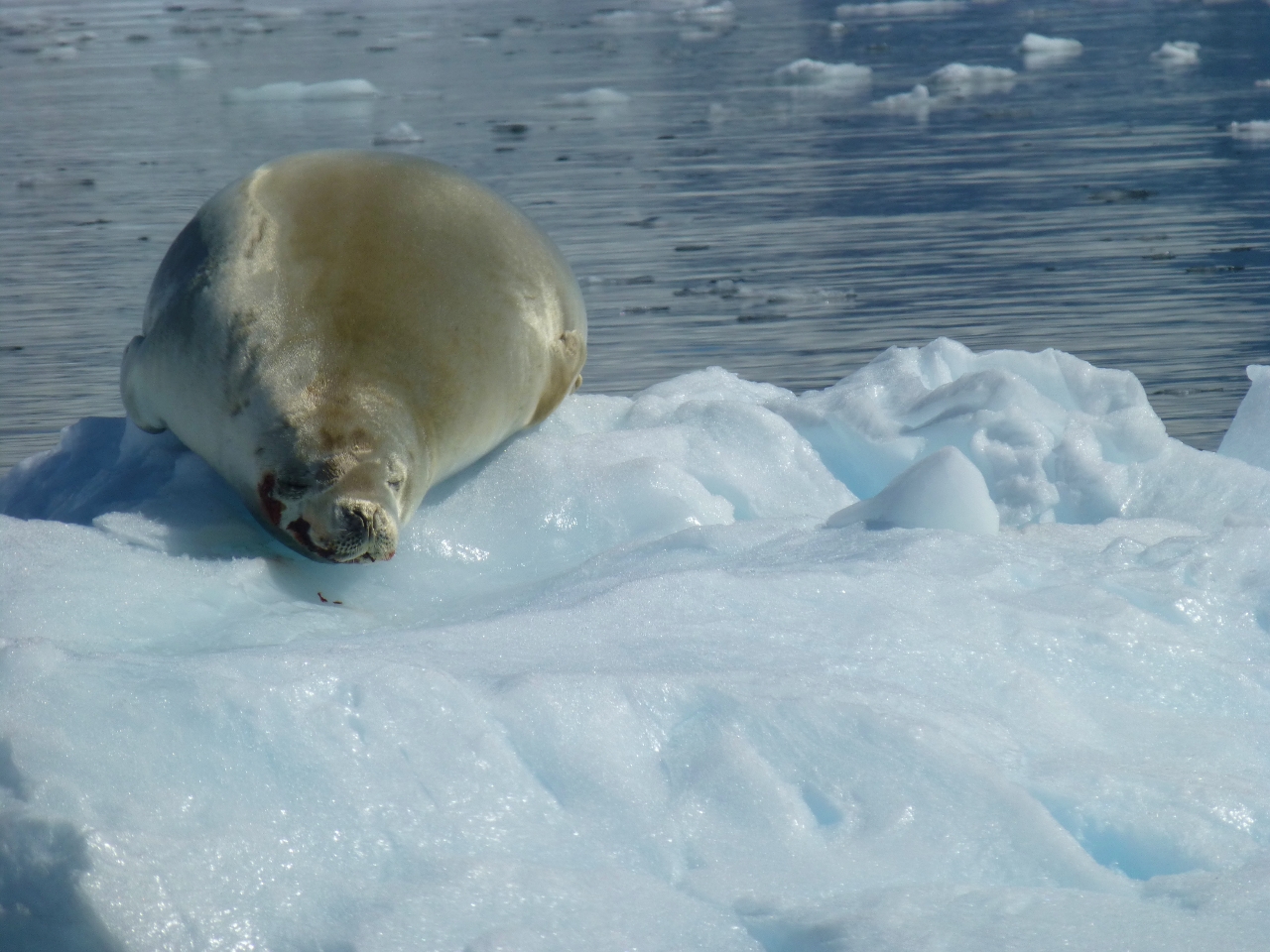
Crabeater Seals
Up close to Humpbacks

Going for a dive

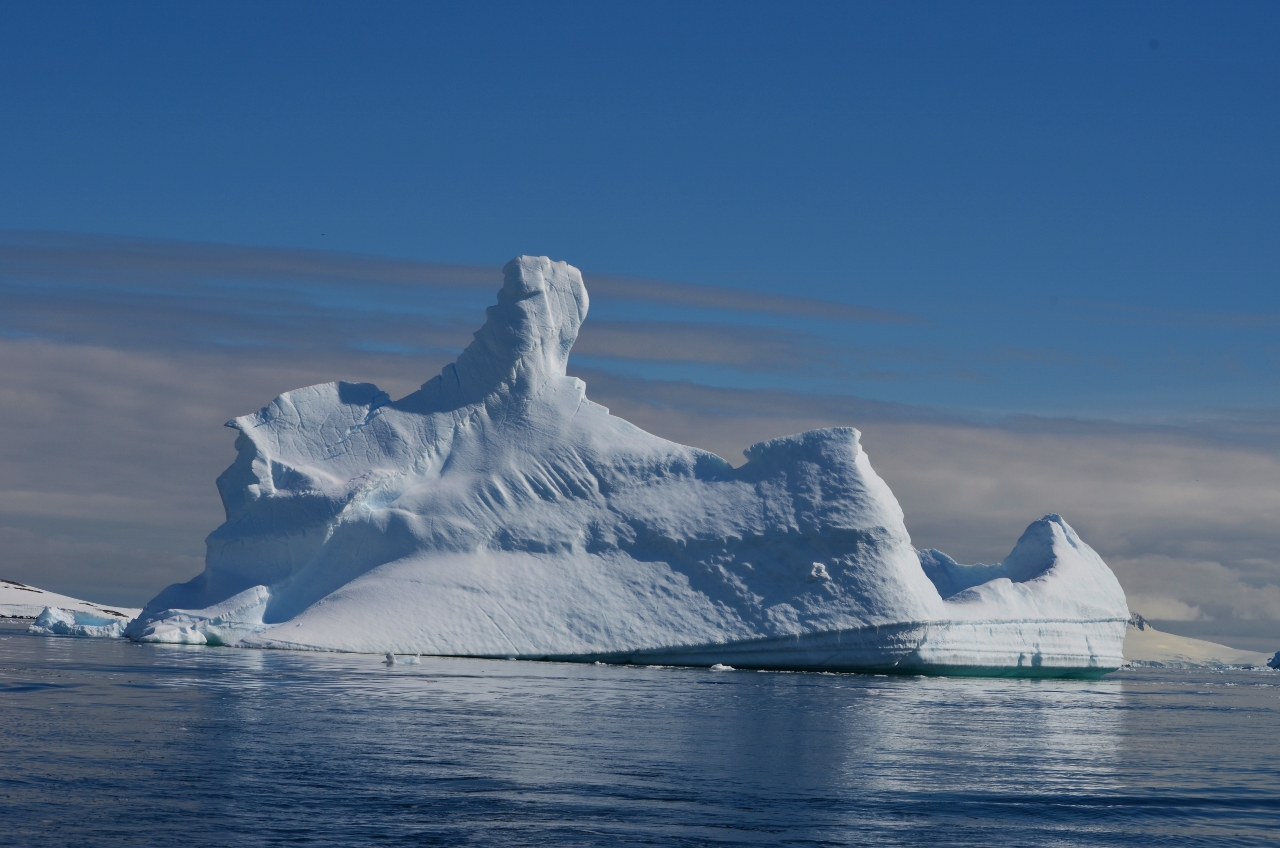
Bergs with vertical lines have already flipped at least once

Really angular shapes

This berg later rolled over

 We did not anchor here, the Seabourn Quest just drifted in the calm waters.

A lot of ice for the zodiacs to navigate getting to shore

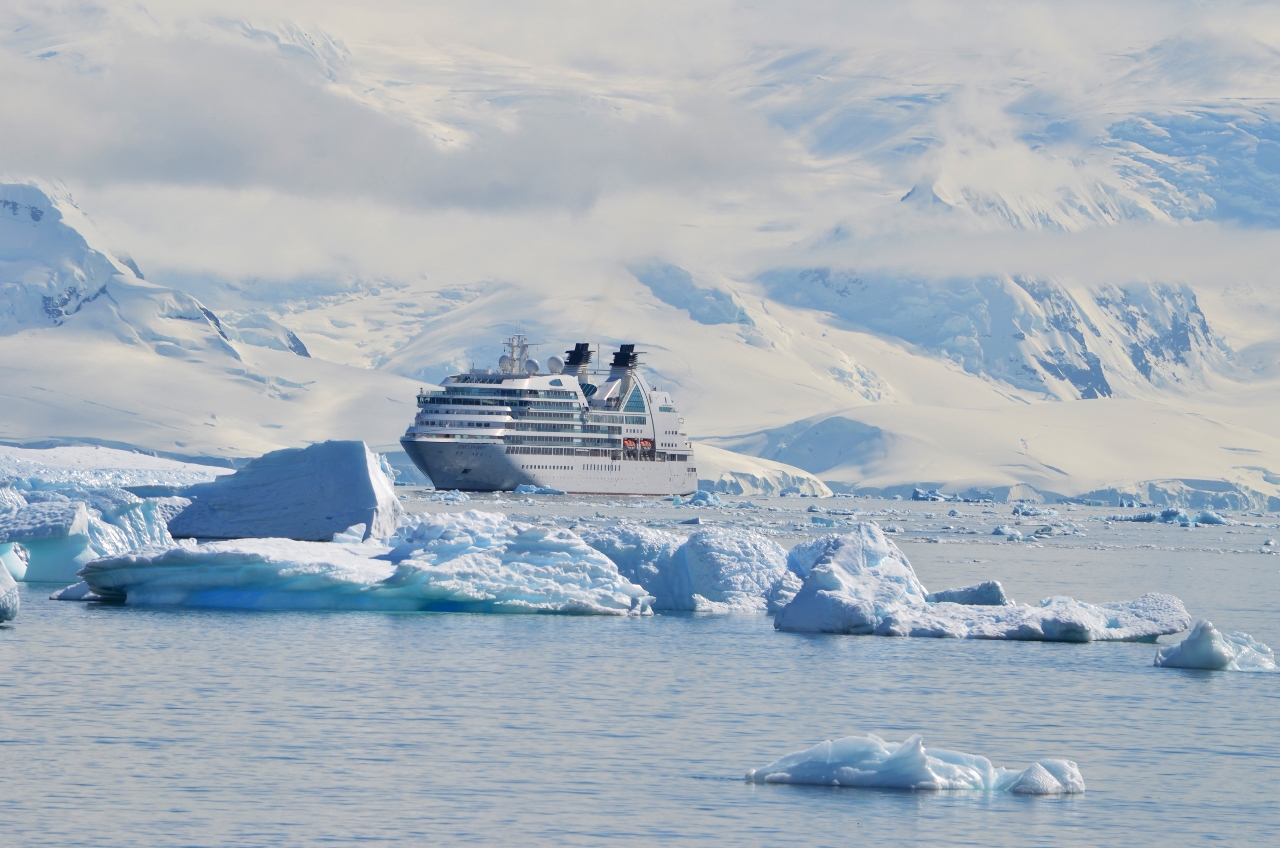
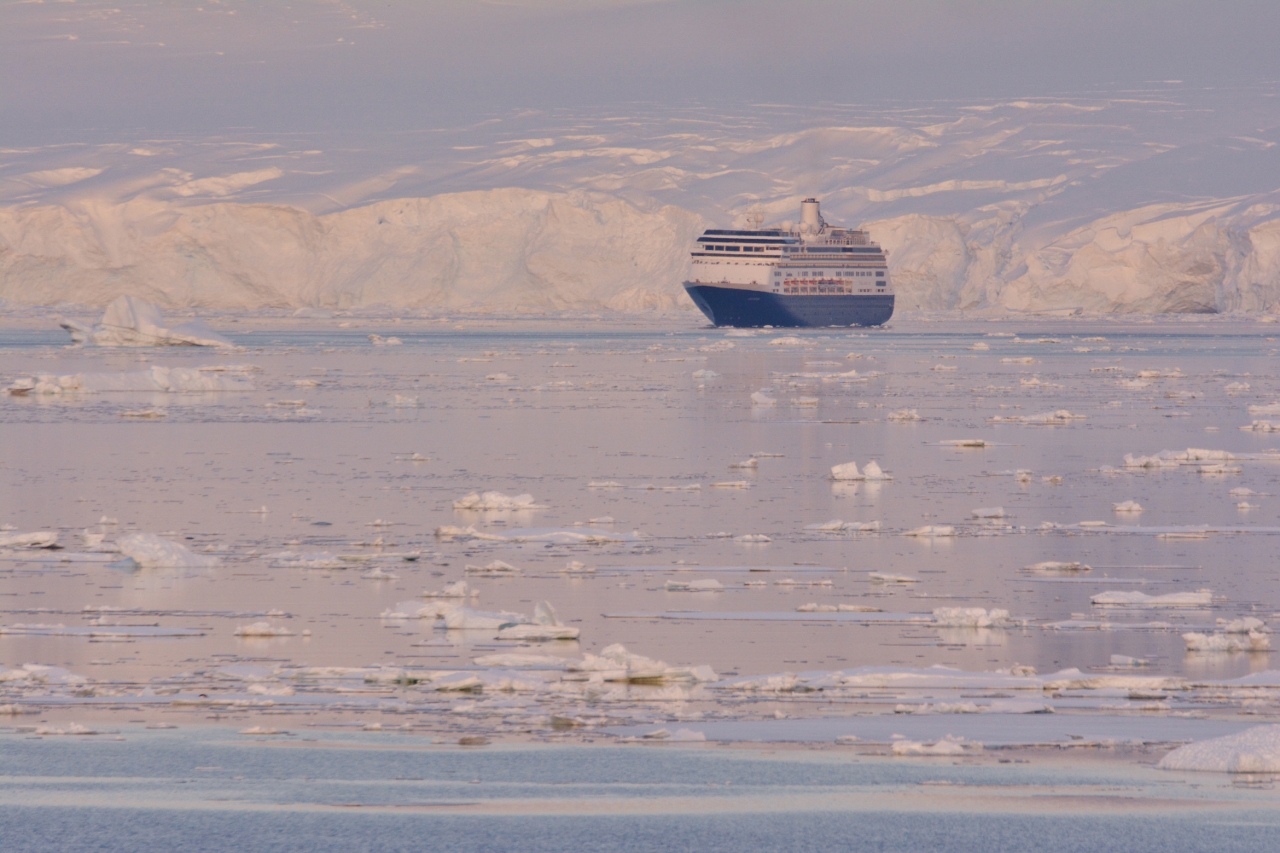
Seabourn Quest in the ice

 Ashore on Cuverville Island with the Gentoo Penguins.

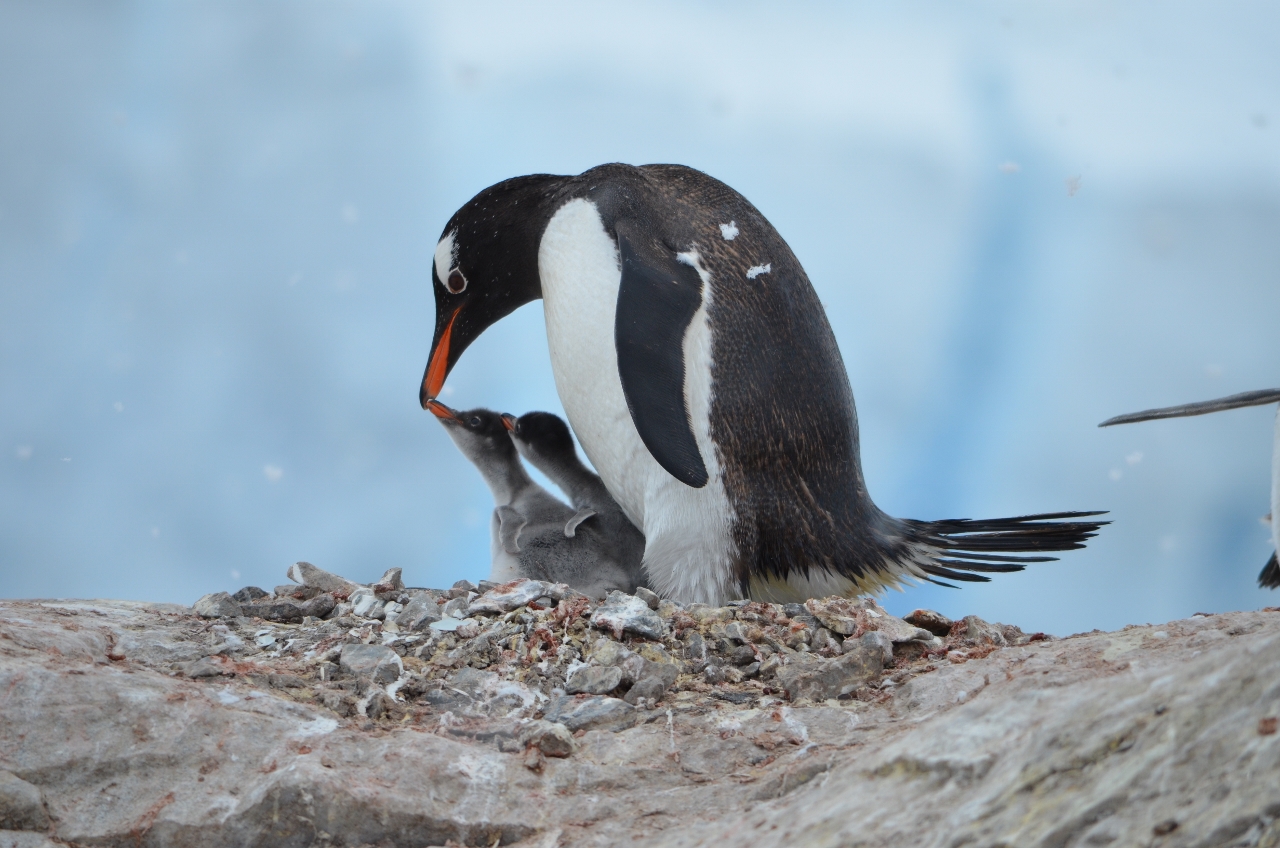
The chick is barely visible under the parent, little gray head

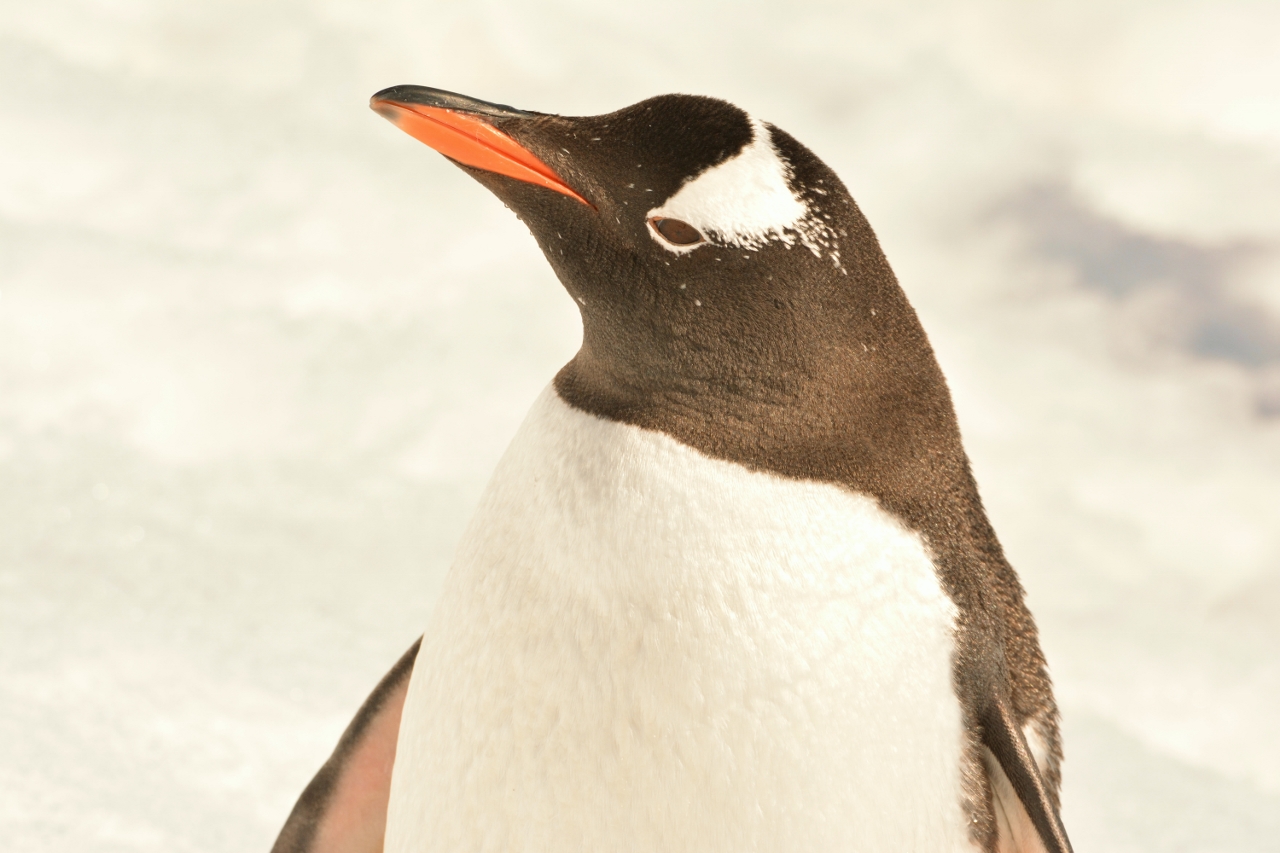
Gentoo Penguin

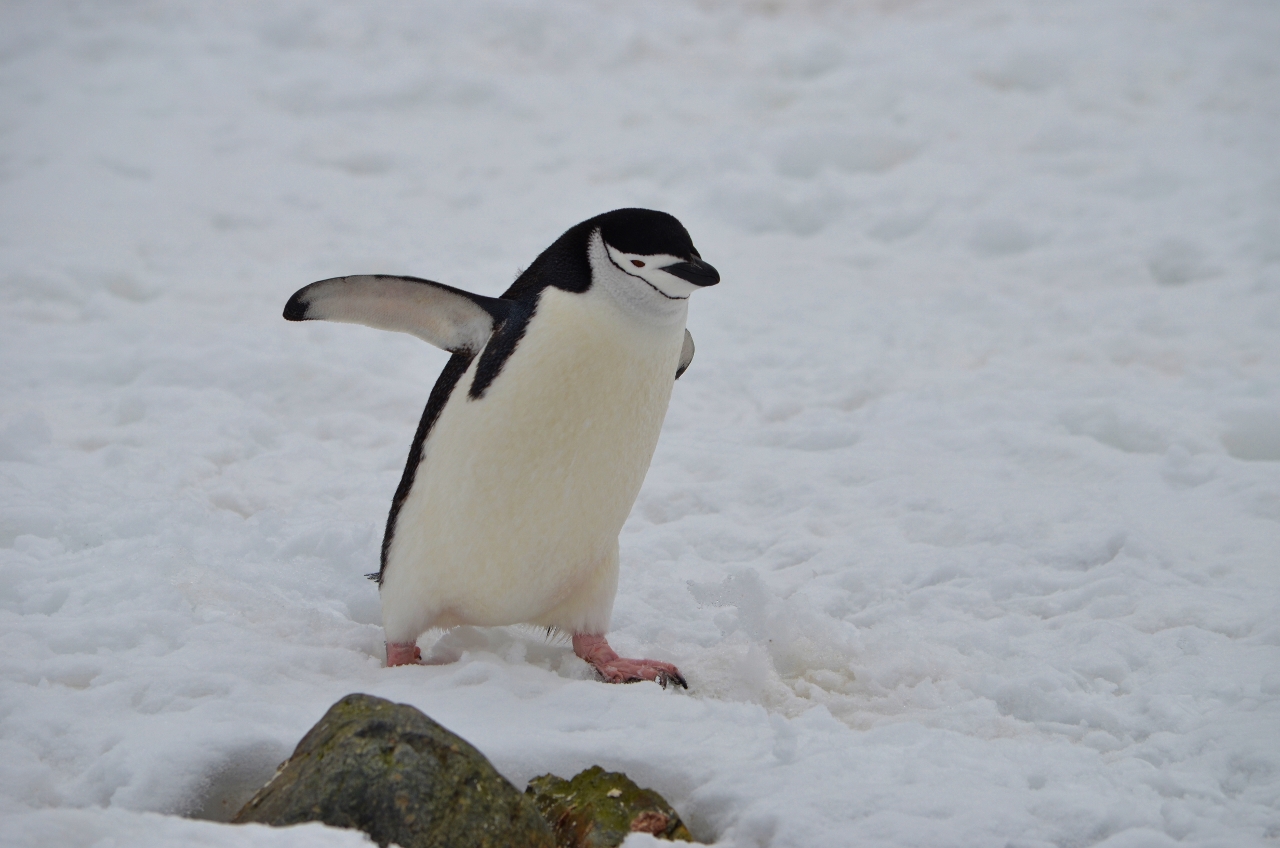
The penguins are remarkably agile in the snow

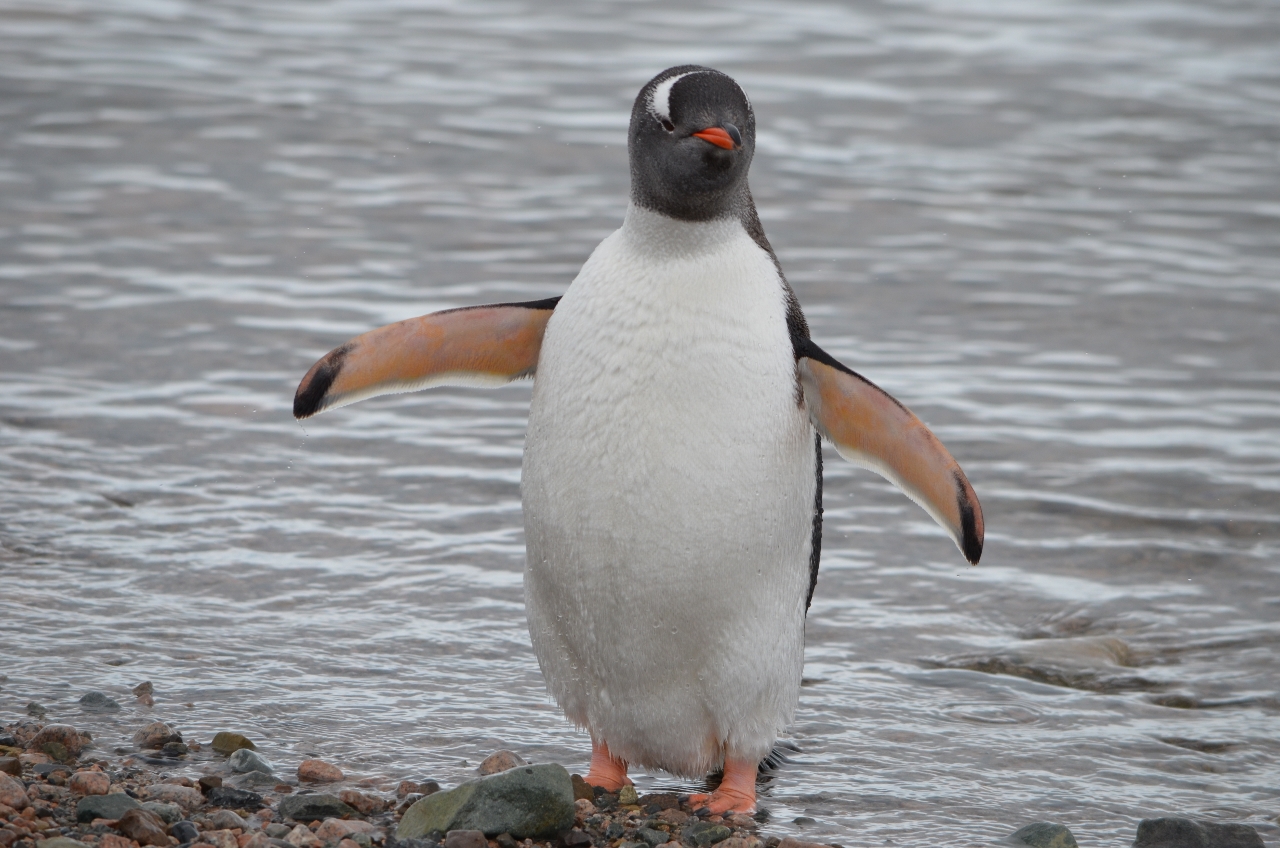
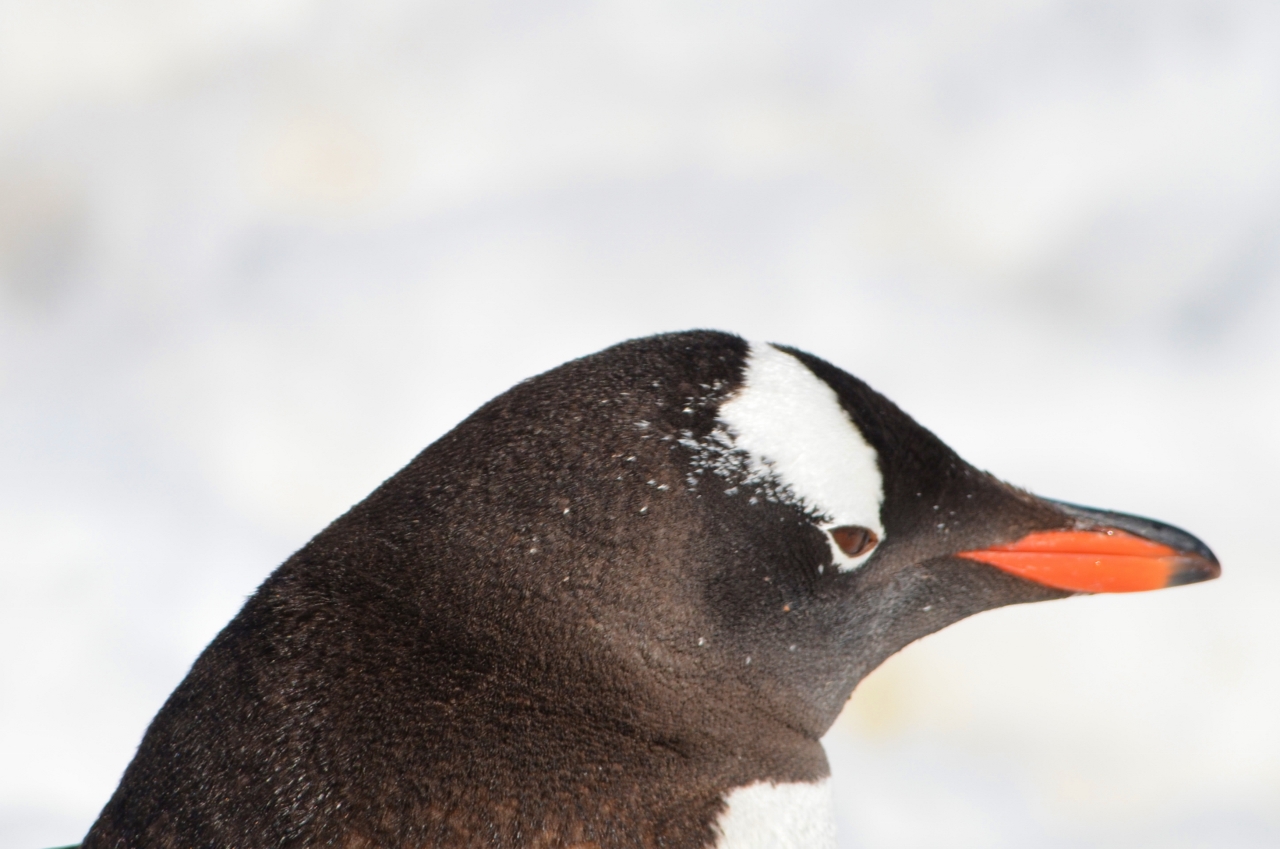
The orange beak is a Gentoo identifier

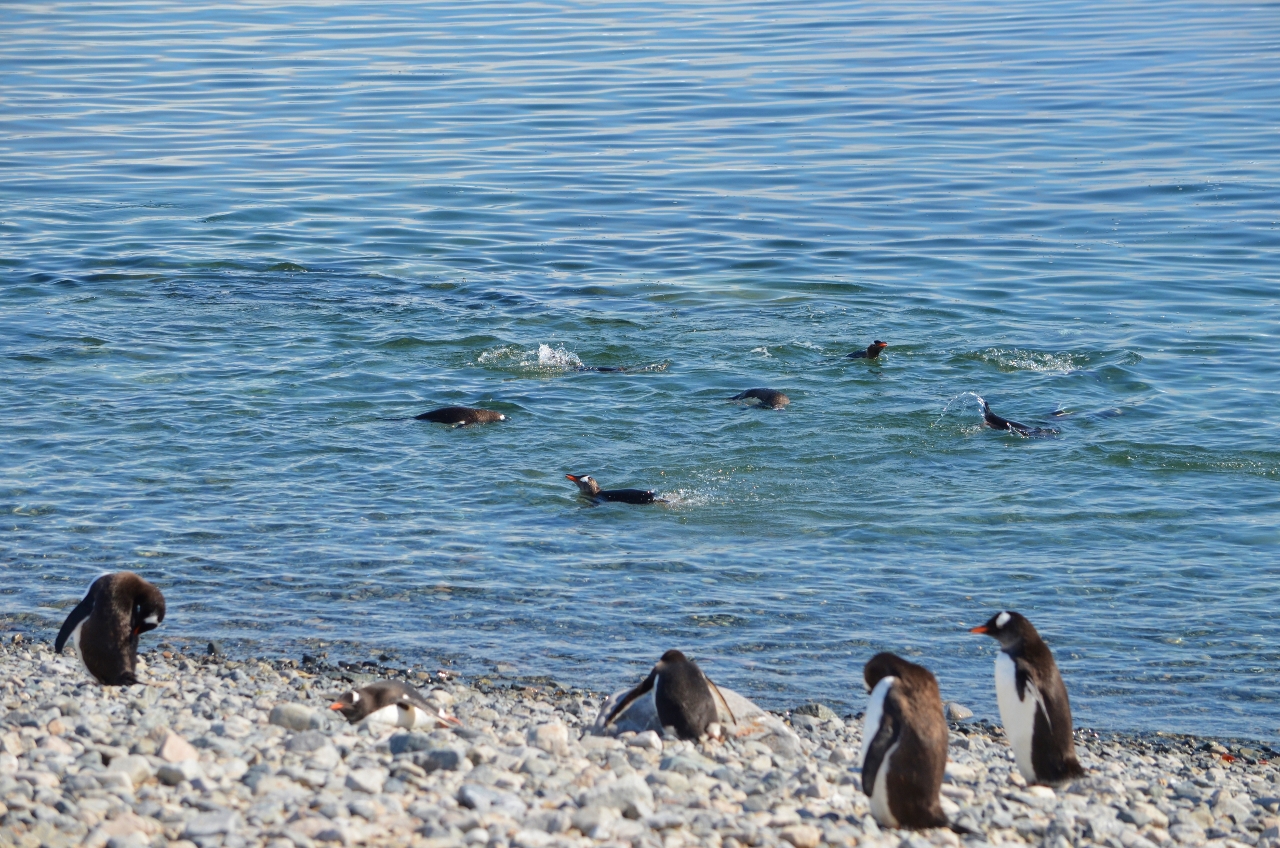
Coming back from a swim

Gentoo nests

Skuas waiting for a meal, eggs or chicks
Gentoo Penguins on a runway

Heading down for a both
Bathing in the clear water
Gentoo Penguin
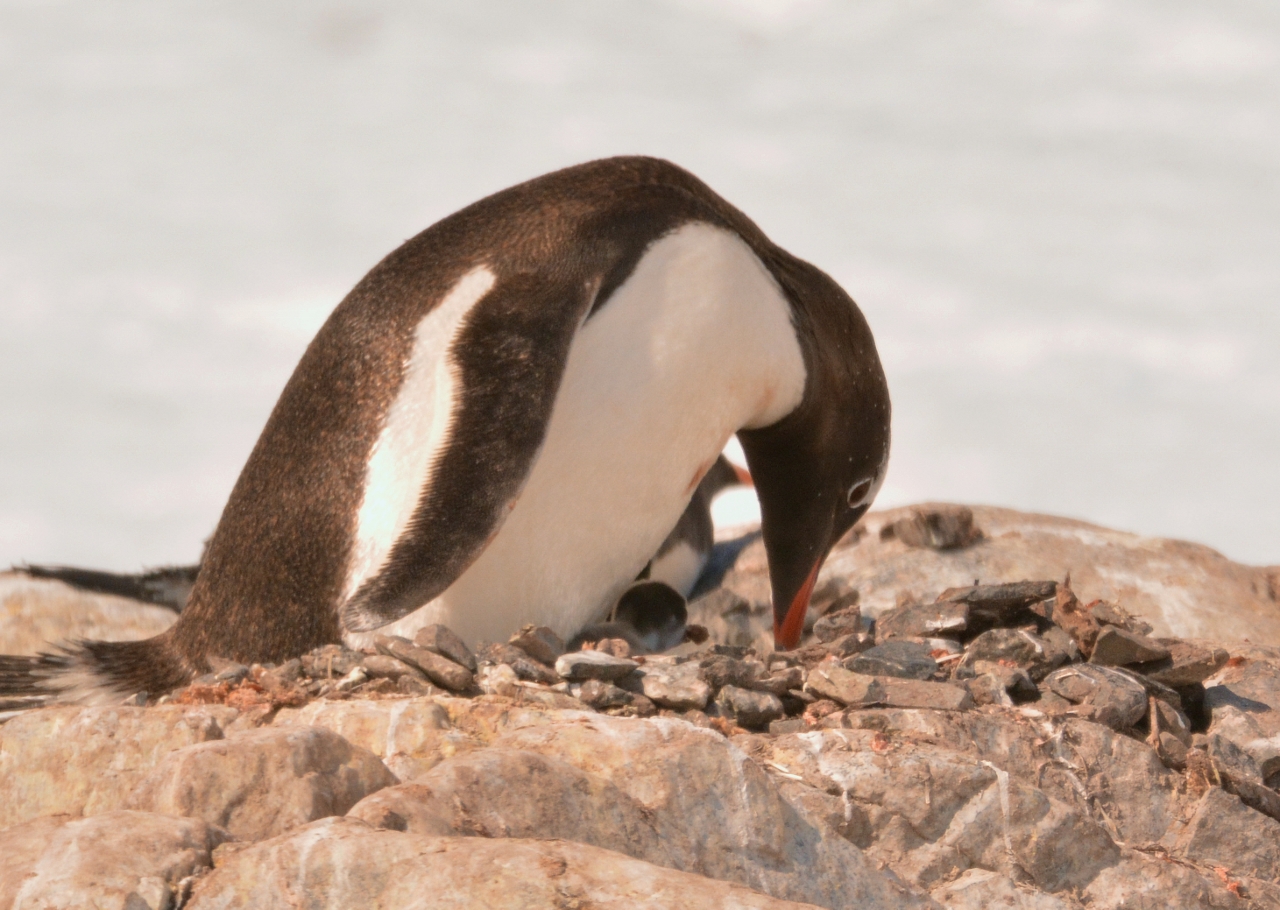
Tending eggs on the nests

 Cruising after leaving Cuverville Island.

Stunning vistas

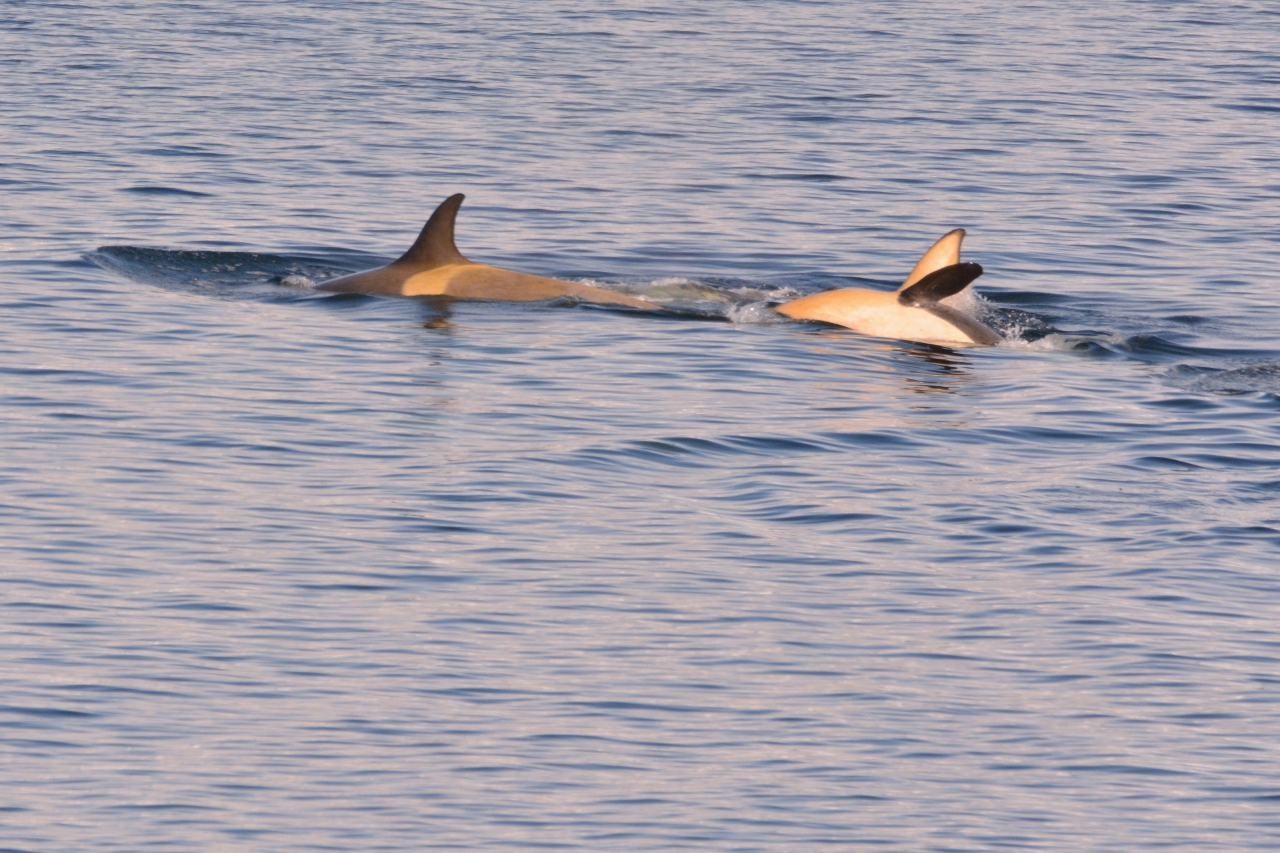
Pod of southern orca – more brown than black

Orca

Orca

Humpback Sounding

Zaandam scenic cruising

The Antarctic Peninsula
Approaching Cuverville Island

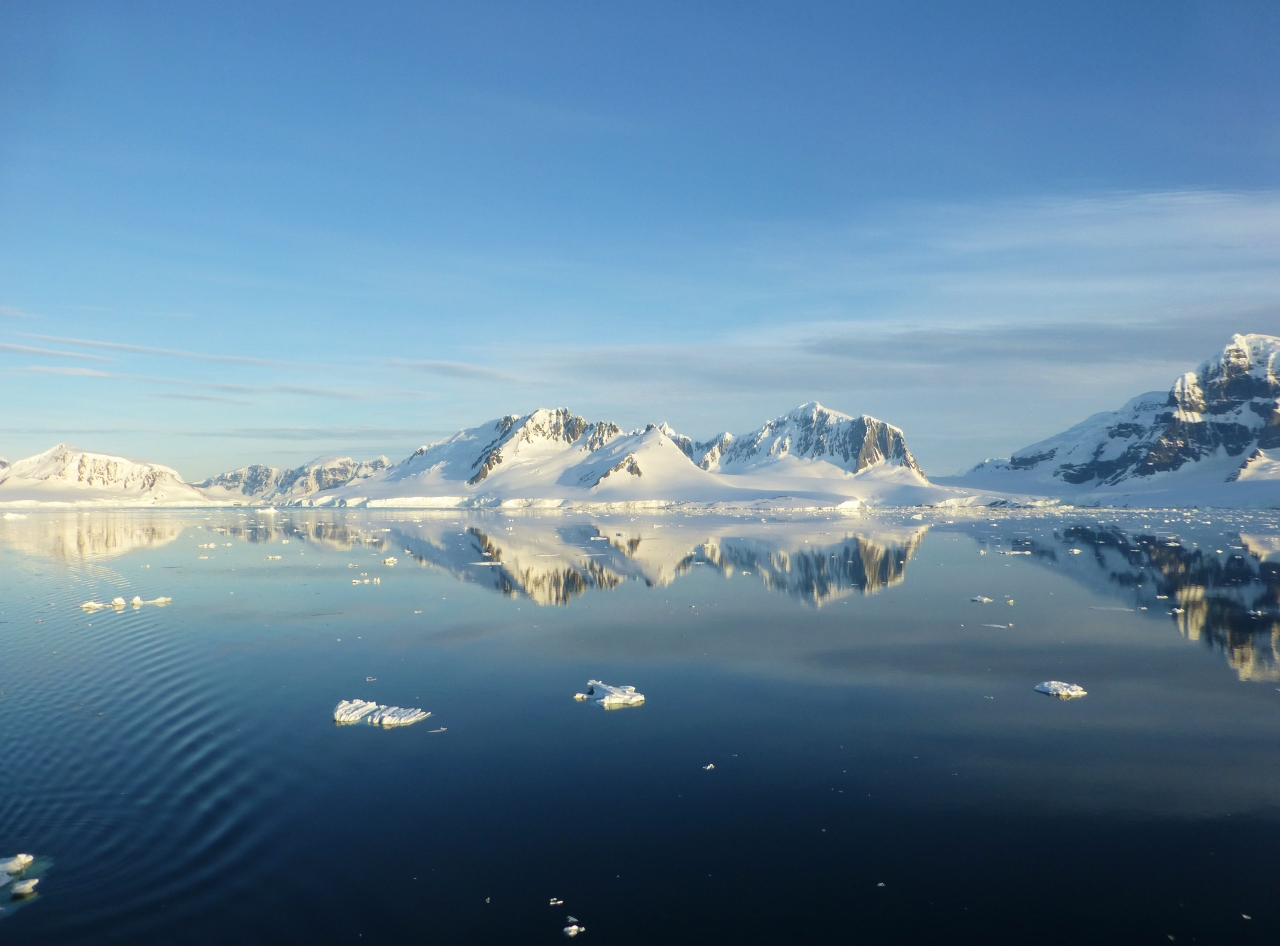
Stunning scenery on a sunny day

 Patrick’s first Zodiac Adventure.

Taking the kayaks ashore

The fleet of zodiacs circling

Patrick headed out for the first kayaking trip
Kayaking among the ice floes

The peaks along the Antarctic Peninsula

Crabeater Seal

Leopard Seals

Another view of Leopard Seal

 Caviar on Ice

Caviar on Ice

 Cruising Errera Channel

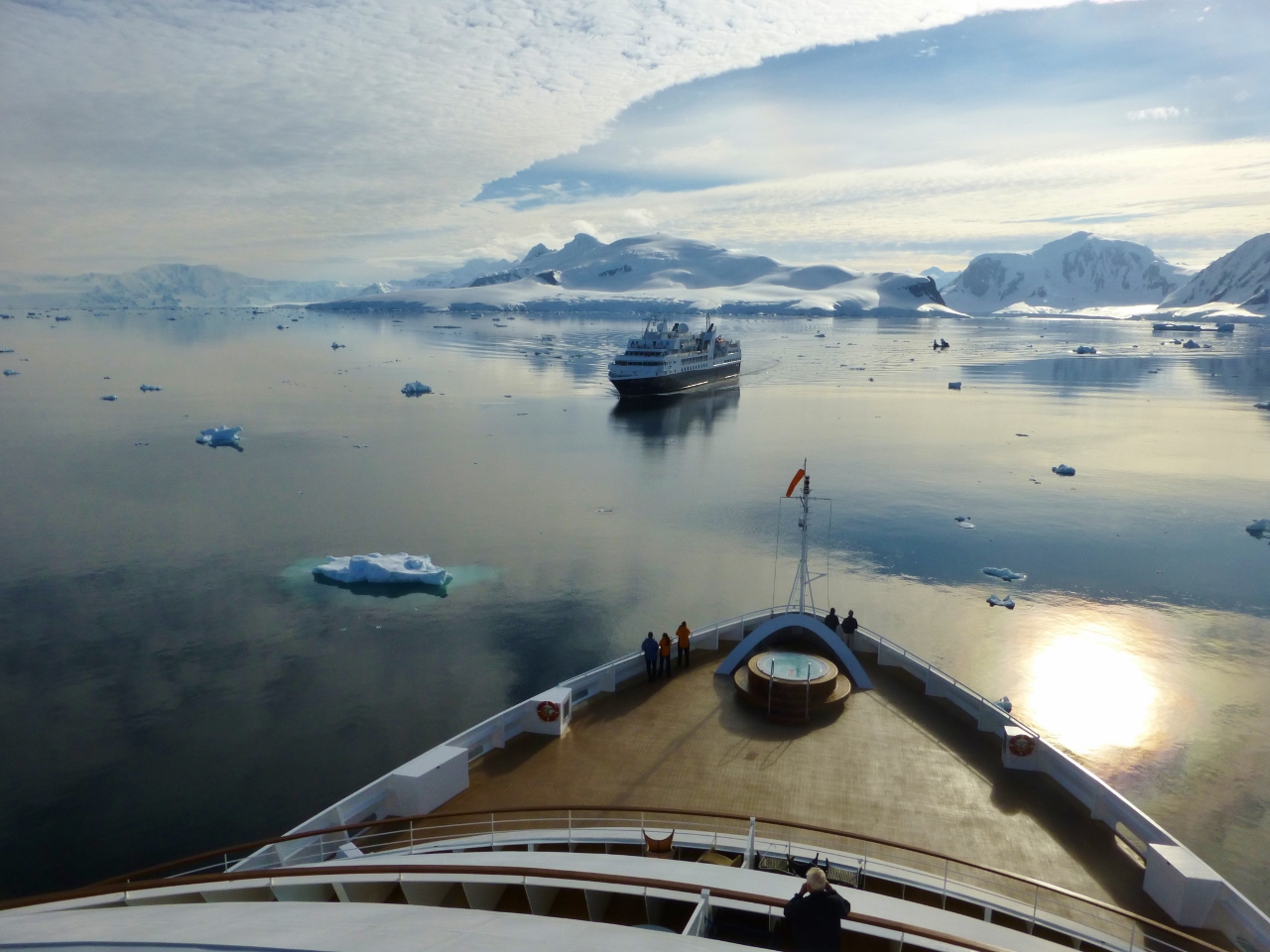
The Silversea Explorer approaching

Heading down Errera Channel

The views just kept getting better
Dinner poolside at the Patio Grill
Errera Channel
Neumayer Strait

Half Moon Island

December 29 – First Day in Antarctica

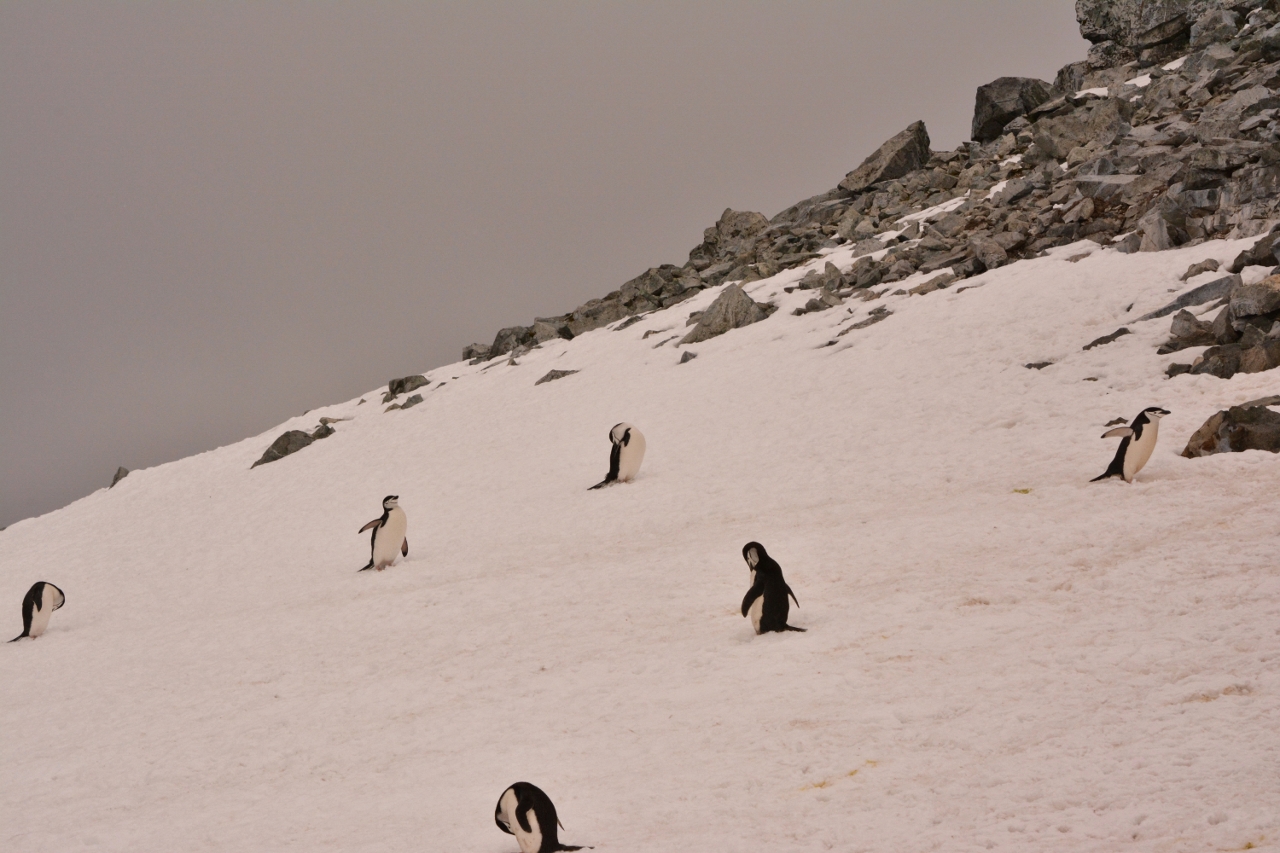
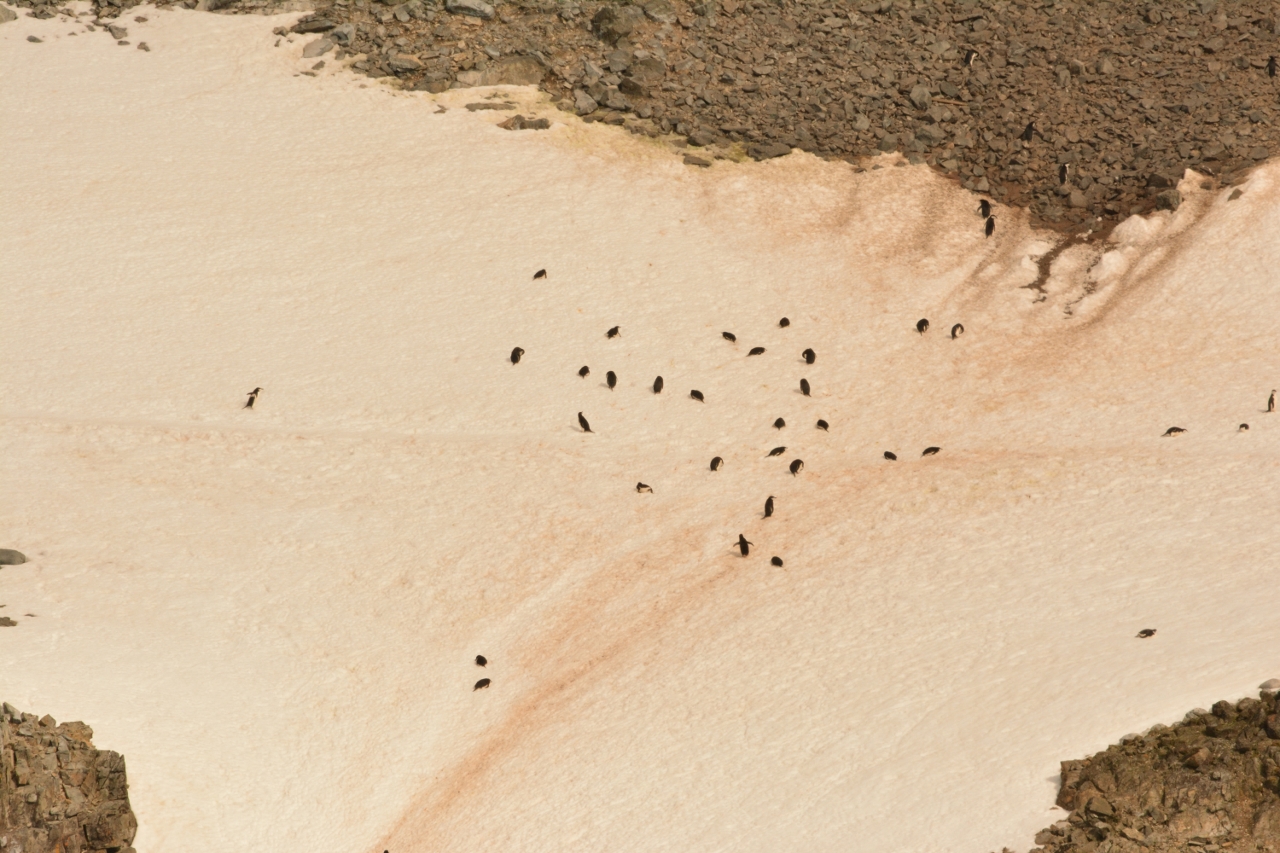
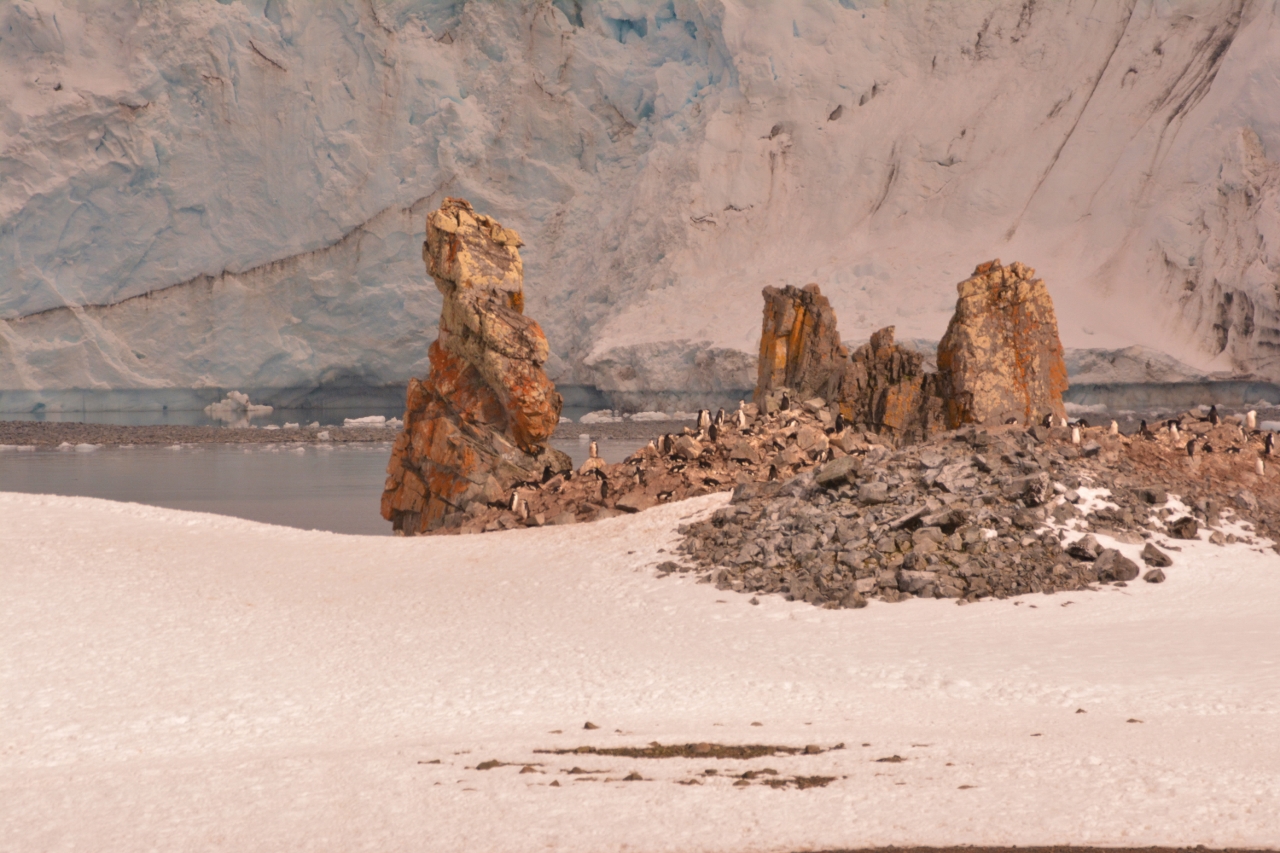
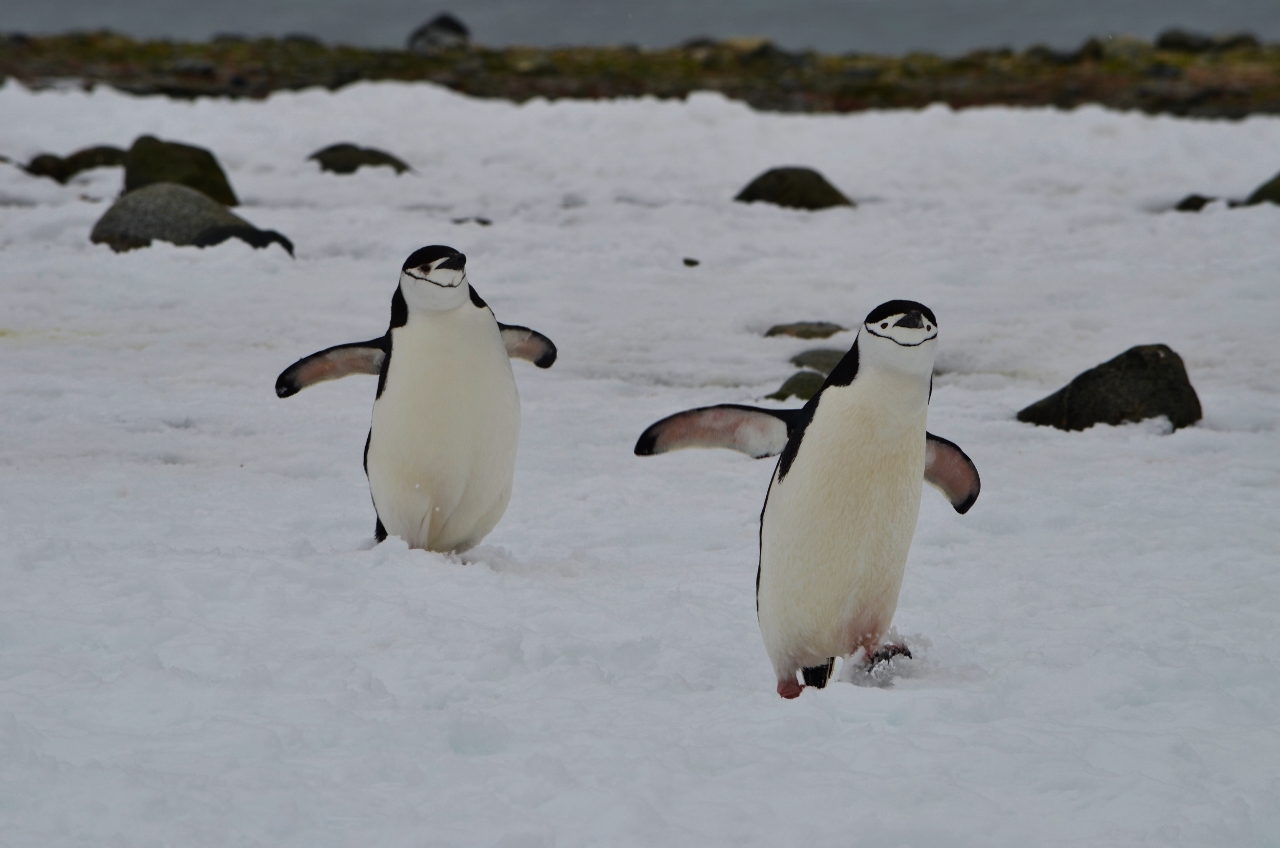
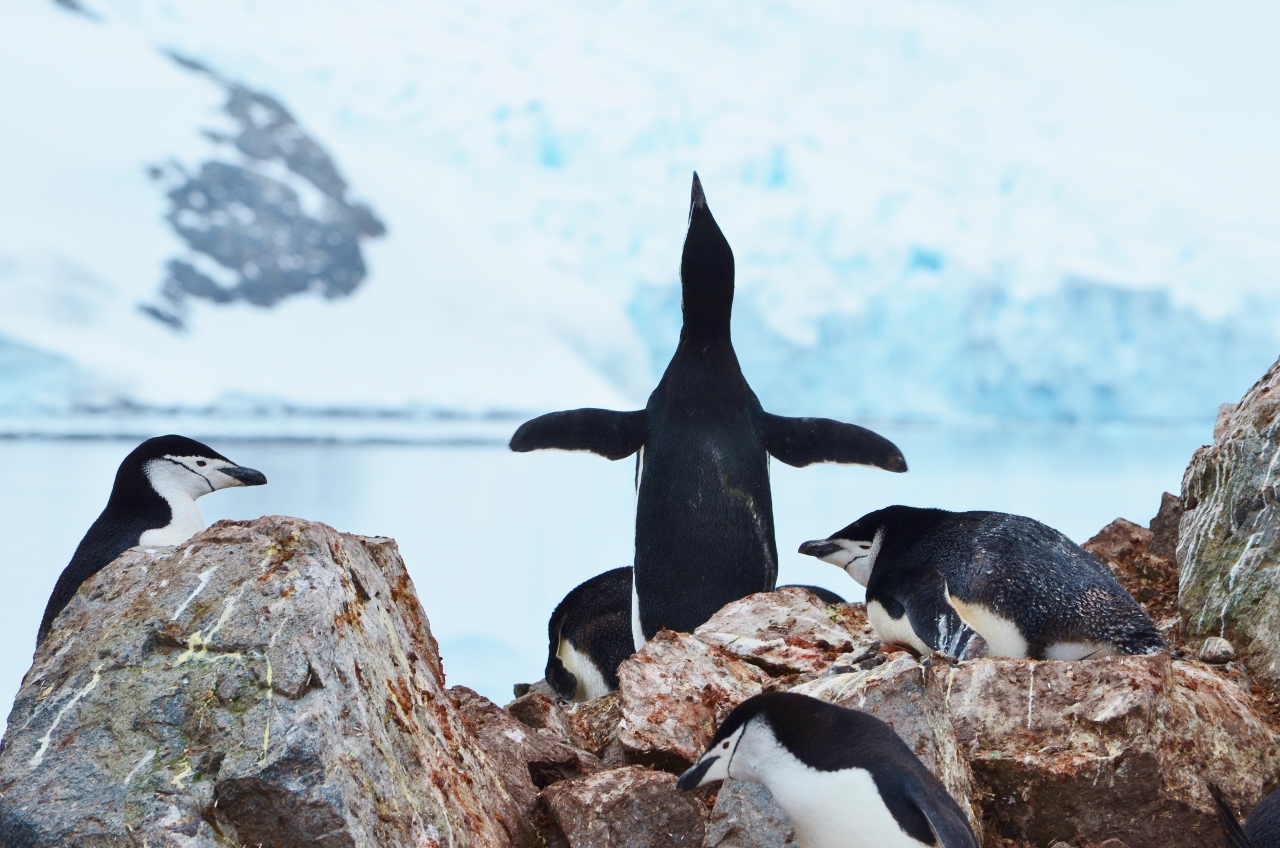
At 0330 the ship’s horn blew loudly and we stopped at King George Island to pick up a scientist they had left two weeks before. The ship then went to Half Moon Island, which is in the lee of Livingston Island and anchored about 0700, in light snow. The temperature was about -4 C. By 0815 the first passengers were on the beach. The snow increased for a while, but then we ended up with partly cloudy skies by the time we boarded the zodiacs at 1100. We were able to see Chinstrap Penguins, a few Gentoo Penguins, Gulls, Arctic Terns and a few Weddell Seals before returning to the ship at 1230. Unlike the Magellanic Penguins of Punta Arenas, these penguins build nests of pebbles raised above the ground to provide drainage.  The rock formations on the island were covered with the colored lichens that provided relief from the stark black and white of the landscape under the cloudy skies.  The winds remained calm the entire time we were anchored. As the skies cleared the views of the glaciers on Livingston Island continued to improve.
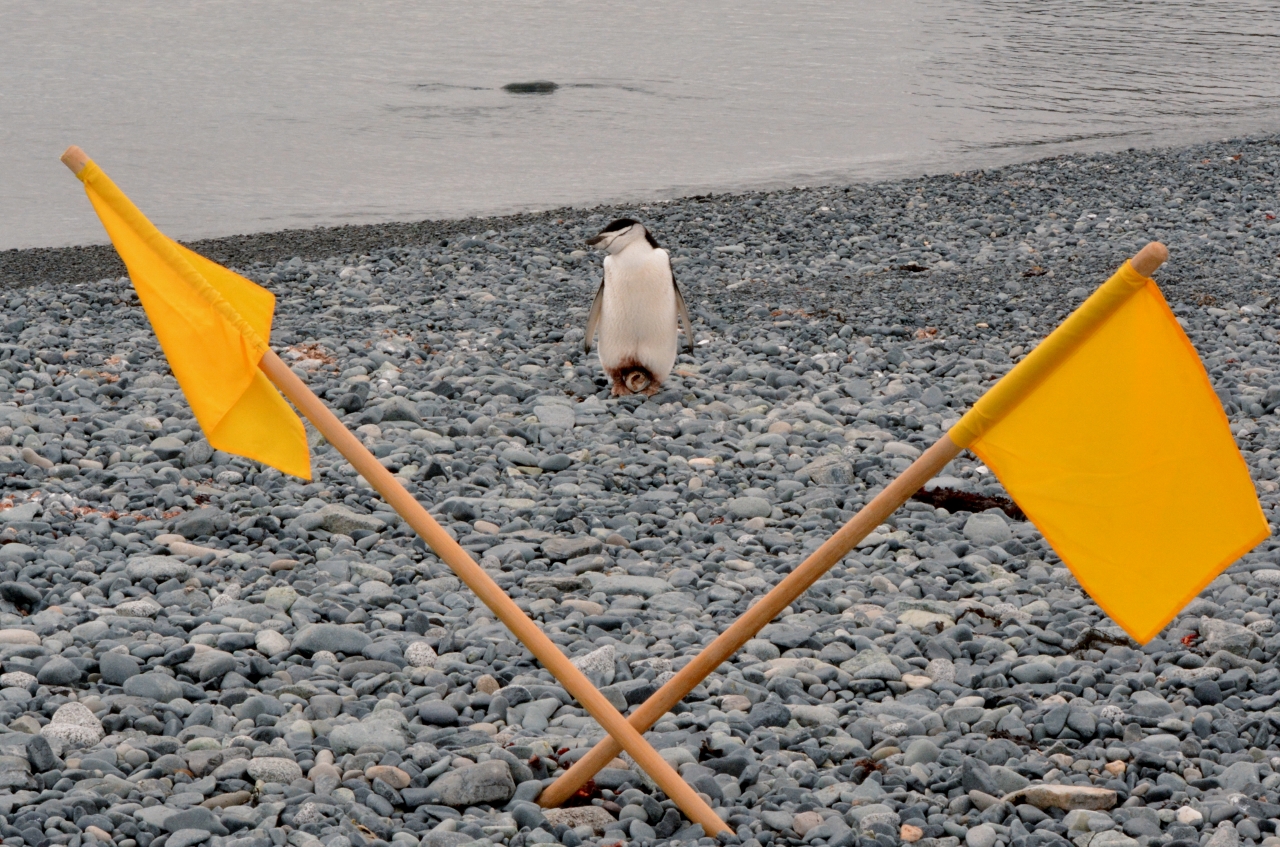
The Chinstrap Penguins had just begun to hatch, and we were fortunate to see a few chicks covered in gray down.

After everyone was on board about 1630, the Seabourn Quest raised anchor and set a course for Cuverville Island, passing close by Deception Island, an active volcano and former whaling station in the South Shetland Islands. As we continued down the Palmer Archipelago the shoreline of the Antarctic Peninsula loomed on our left, right out of our suite windows.
Approaching Half Moon Island

Our first shore landing with the Seabourn Quest

The Chinstrap Penguins scattered on the hillsides

Another view of the Seabourn Quest at anchor

Guarding the egg

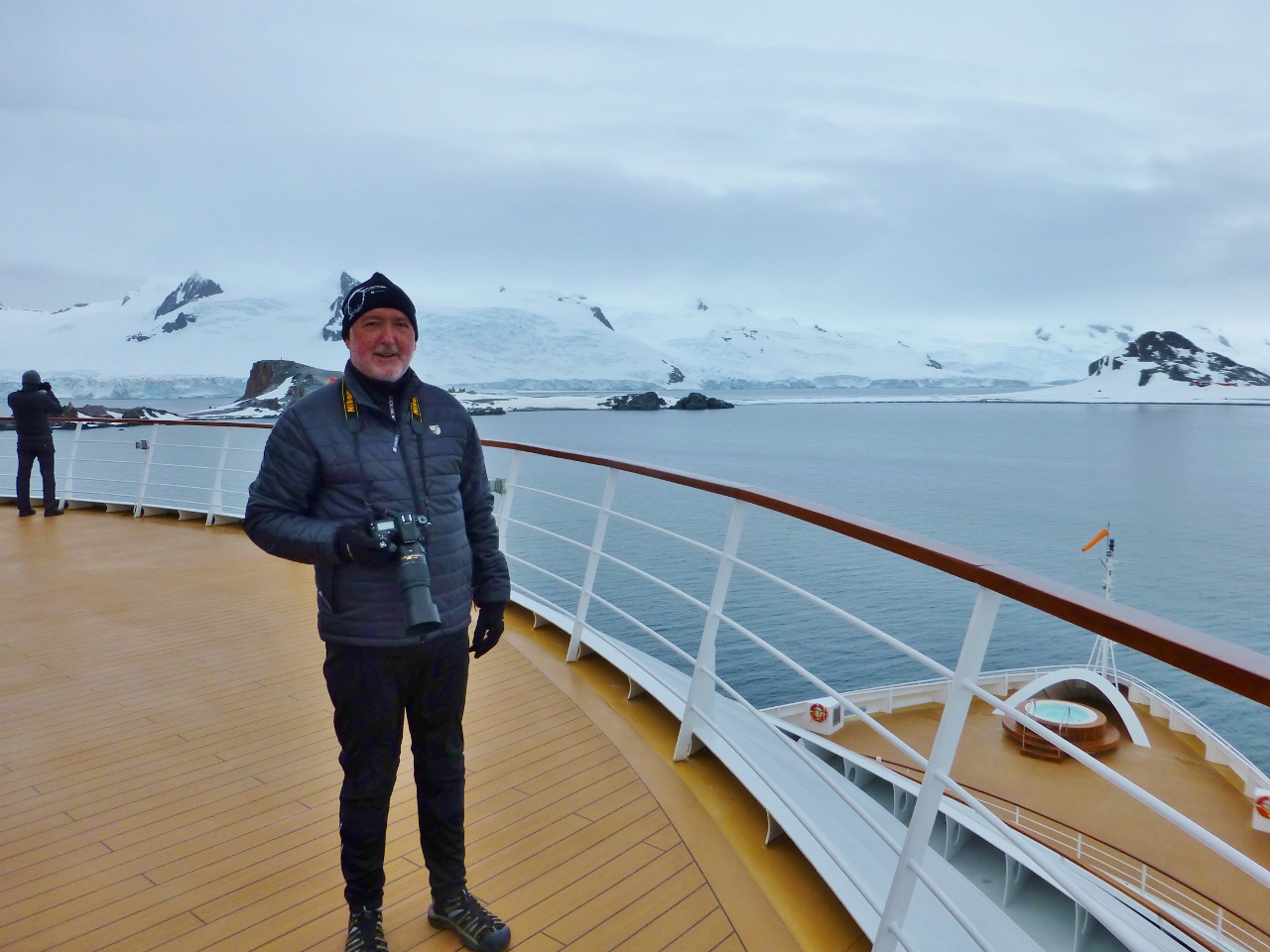
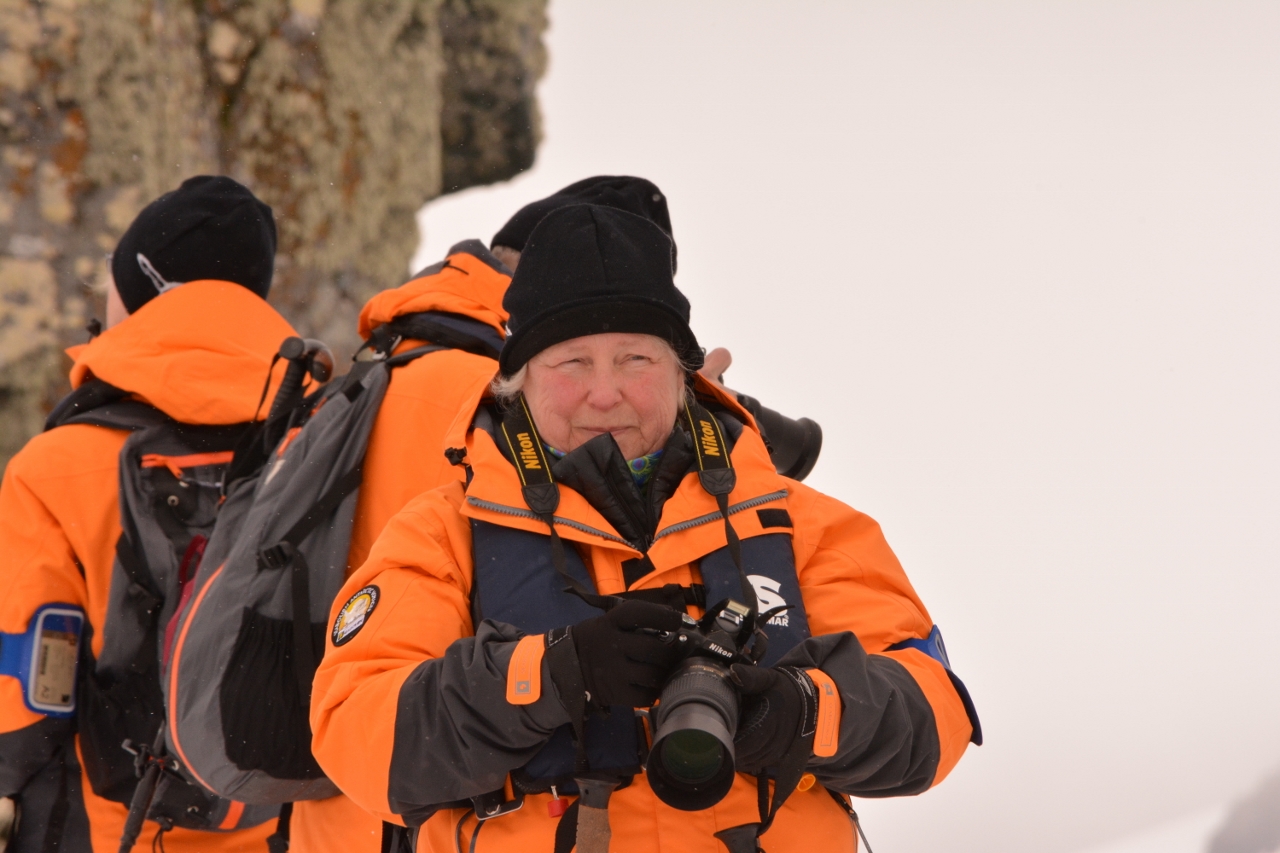
Miriam with her camera at the ready

Trudging to the beach for fishing and a bath

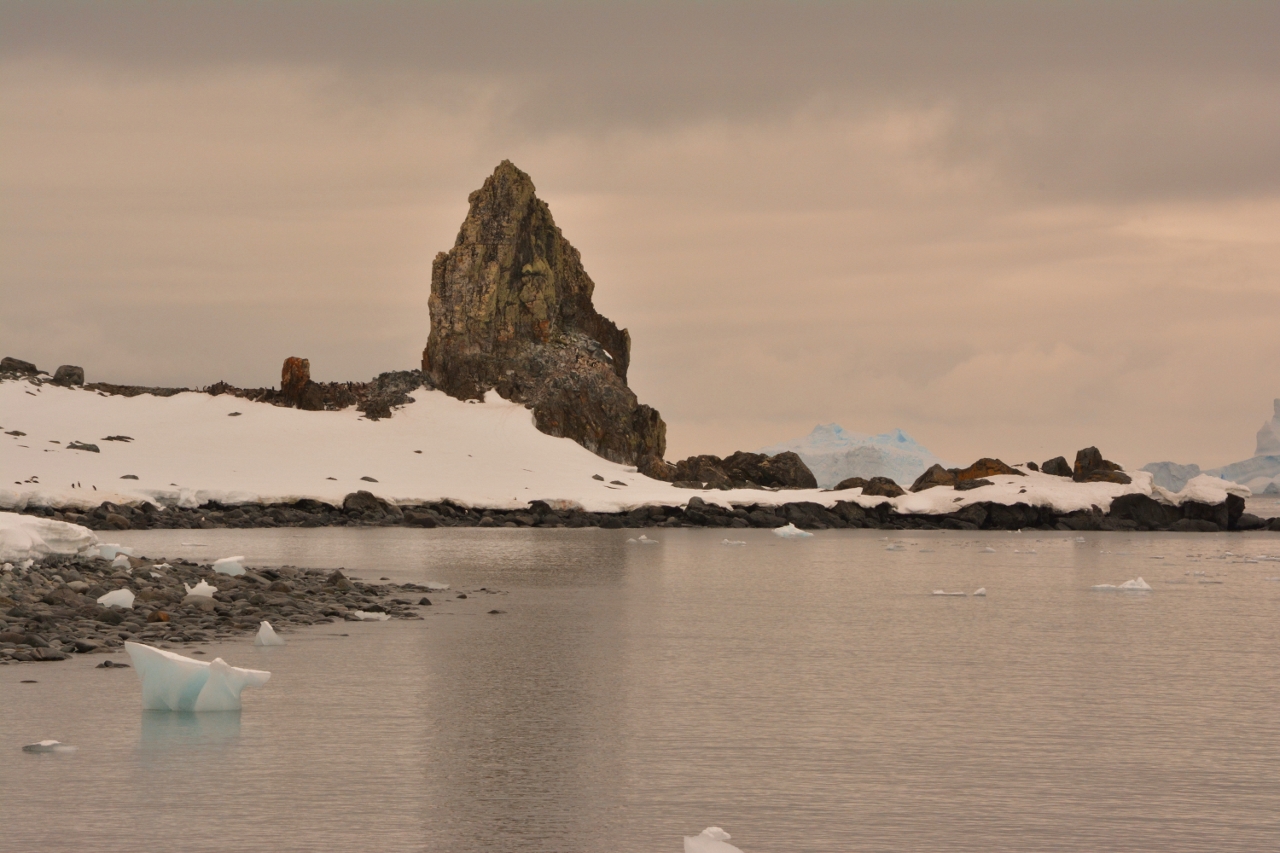
The rock formations are really rugged

This penguin is guarding an empty egg

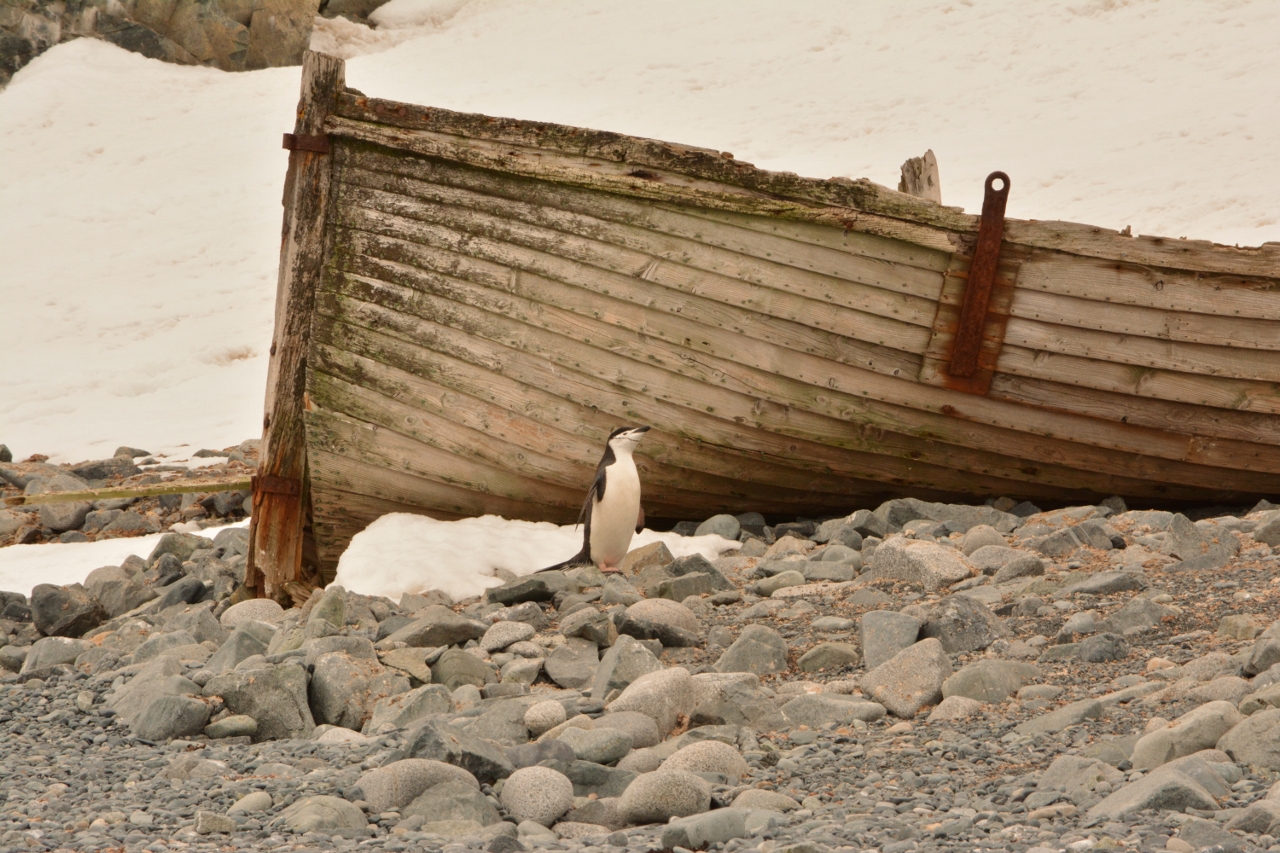
While thisone stands guard over an old whaling boat

As we leave, the penguin “runways” are really evident

The red lichens on the rocks bring some color, Livingston Island glaciers in the background

Large tabular bergs standing just outside the island

The rookeries extend clear to the top of the hills

T

The chinstraps are often in pairs

But sometimes solo
Too bad we could not get the sound effects

Drake Passage

December 28 – At Sea crossing the Drake Passage

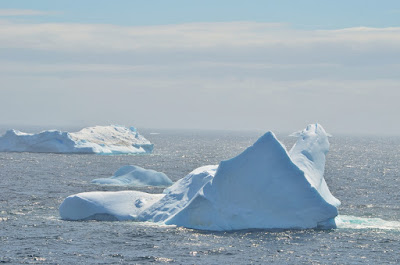
Weather conditions were good in the Drake Passage and we boomed across at full speed.  The skies cleared and we passed by our first tabular iceberg and then a second one over one mile long, still small by Antarctic standards. We could see whale spouts, but they were too far away to identify the species. By 2000 we had officially crossed into Antarctic Waters.

The berg in the background is more than 1 mile long

Glacier Alley and Ushuaia

December 27 – Glacier Alley and Ushuaia

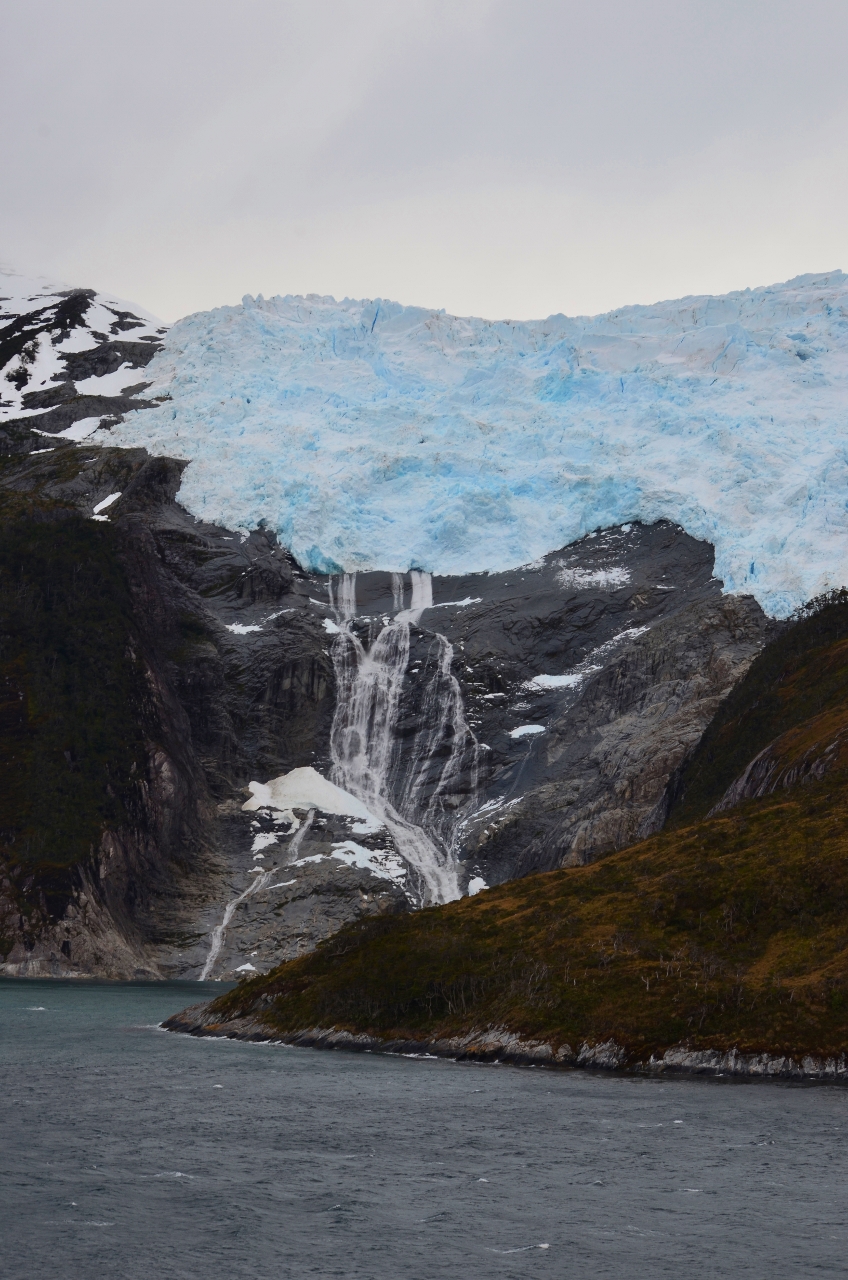
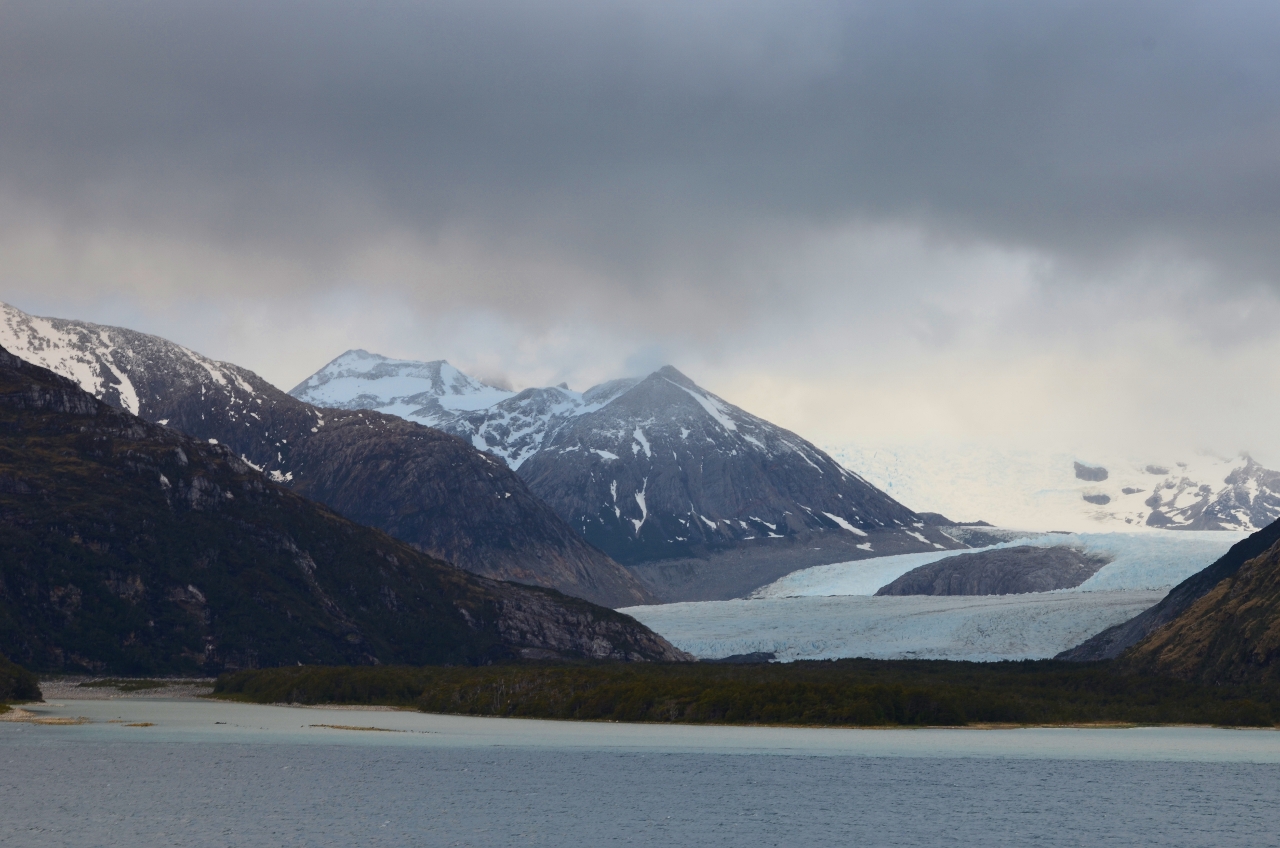
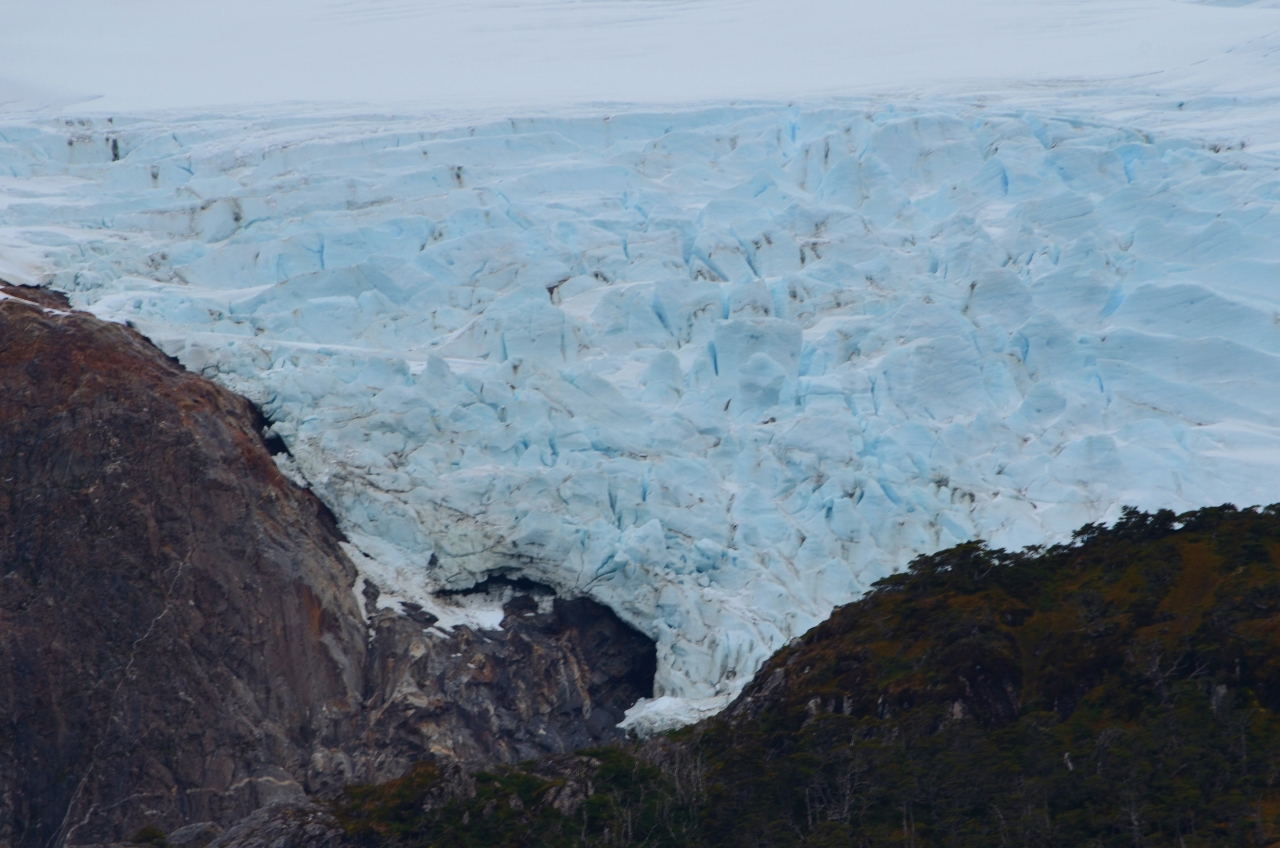
We were up at 0500, along with most of the passengers, as we entered Glacier Alley.  The proper name is Darwin Pass and it leads to the Beagle Channel and Ushuaia. Almost all of the glaciers were on the port side, so we had a good view from our stateroom, as well as the bow. There were about six glaciers, many named after countries. The transit took only about one hour and then we joined the Beagle Channel.
Entering Glacier Alley near dawn

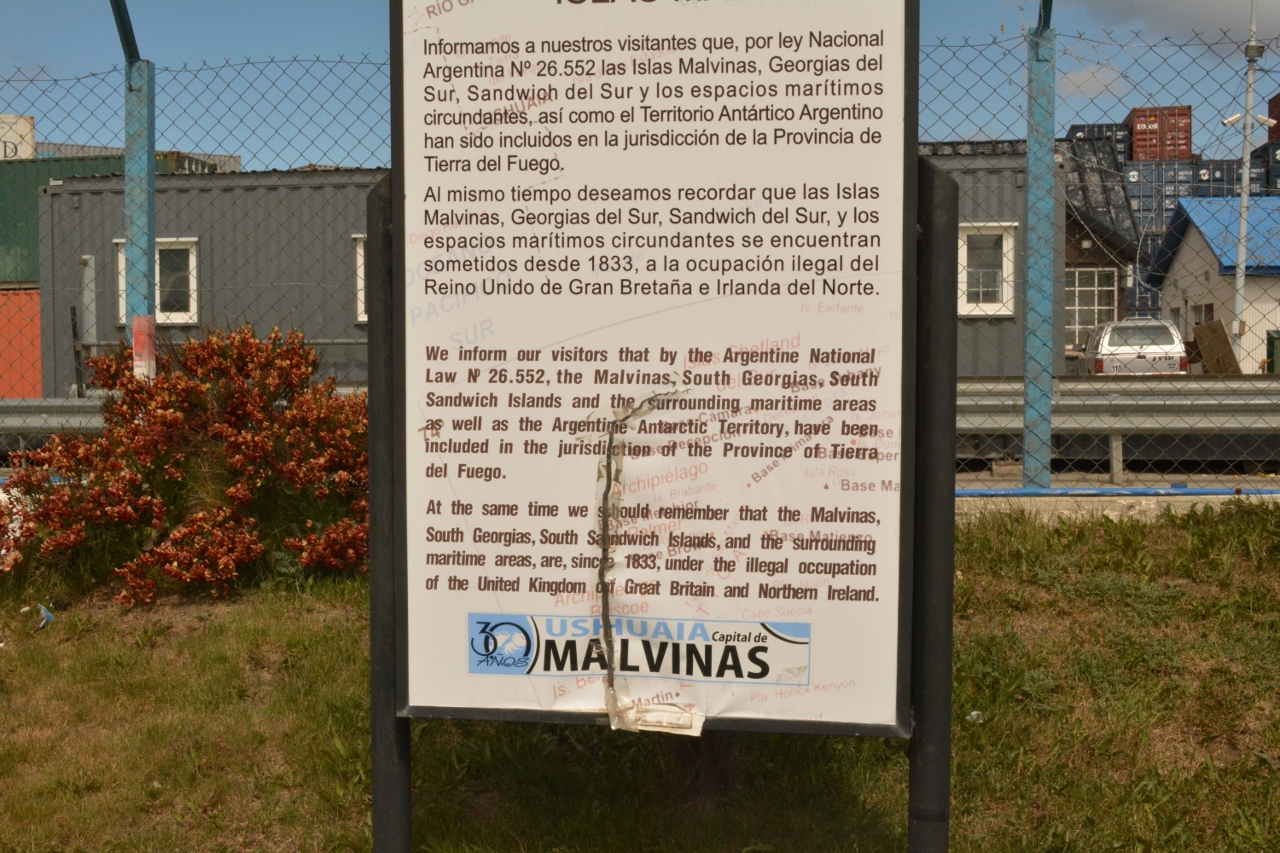
The wind really increased from behind us as we followed another cruise ship down the channel and made the turn around the Fin El Mundo lighthouse and into Ushuaia harbor. The docking was interesting since the captain used the other cruise ship as a lee from the wind and turned the ship around and docked stern first. We were off the ship shortly after 1100 and walked the few blocks to the main street. The local people are still militant about the Falkland Islands war and you are greeted right on the dock with signs.  Since it was Sunday, most of the shops were closed until later in the day.

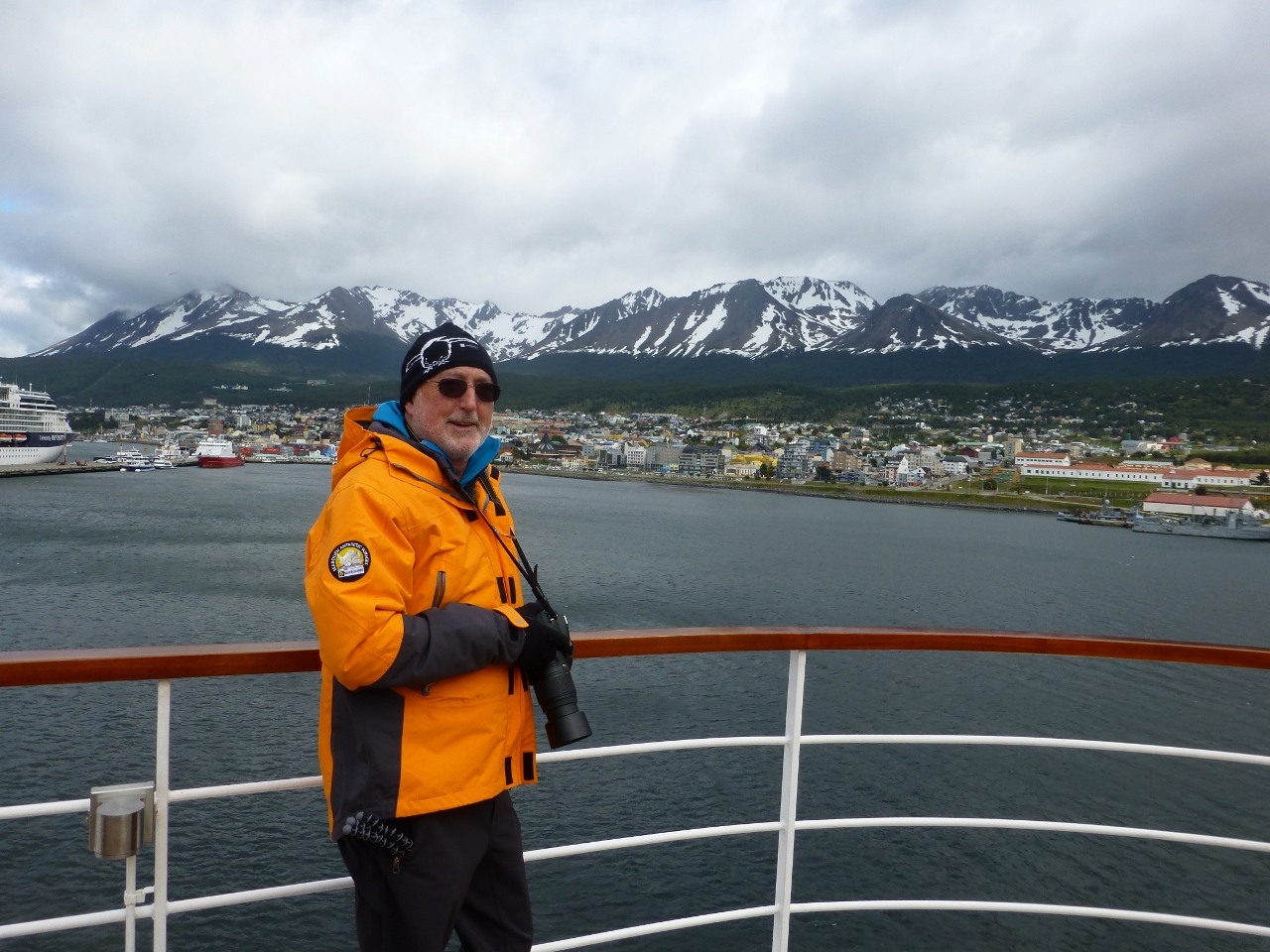
Approaching Usuaia

Political statements on the dock

We have entered Argentina

Irish Pubs are everywhere

Since it was Sunday, the bells were ringing

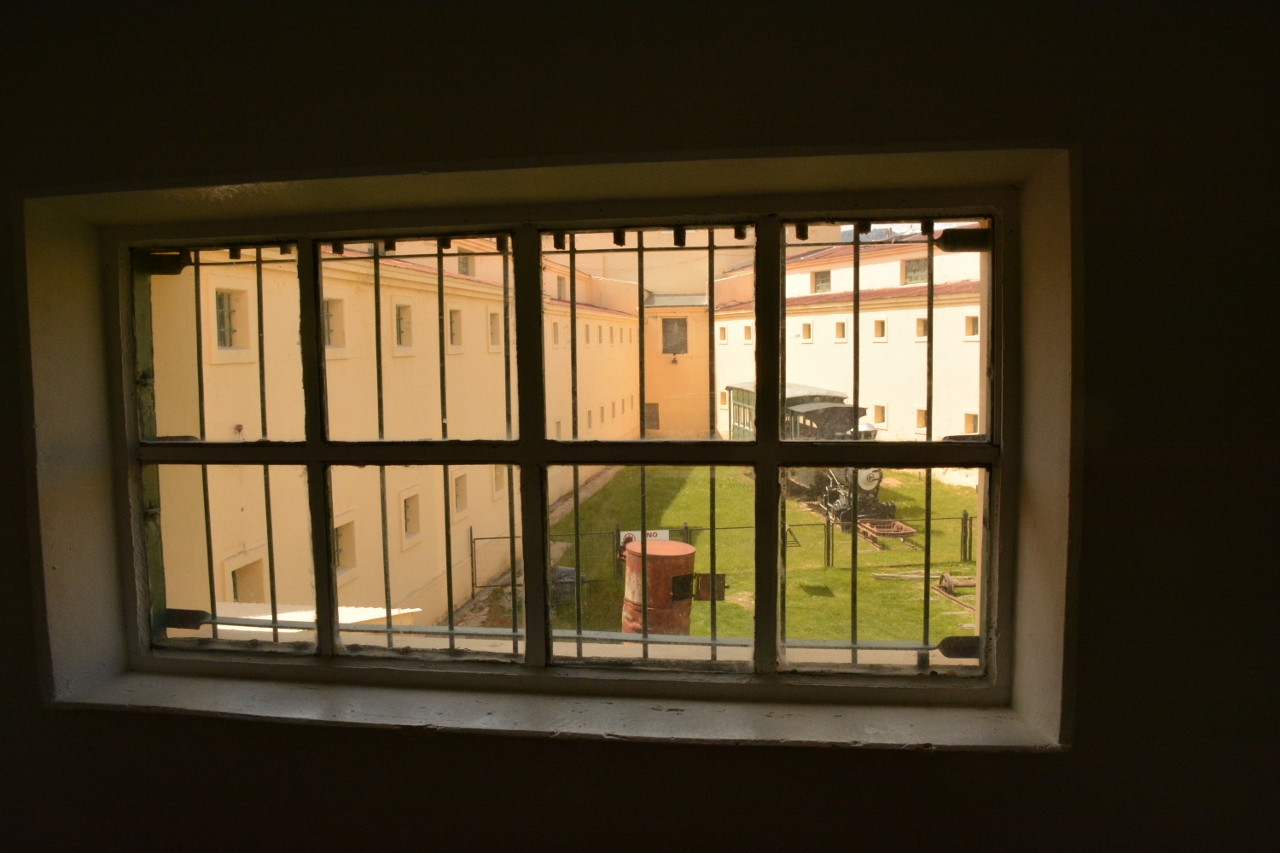
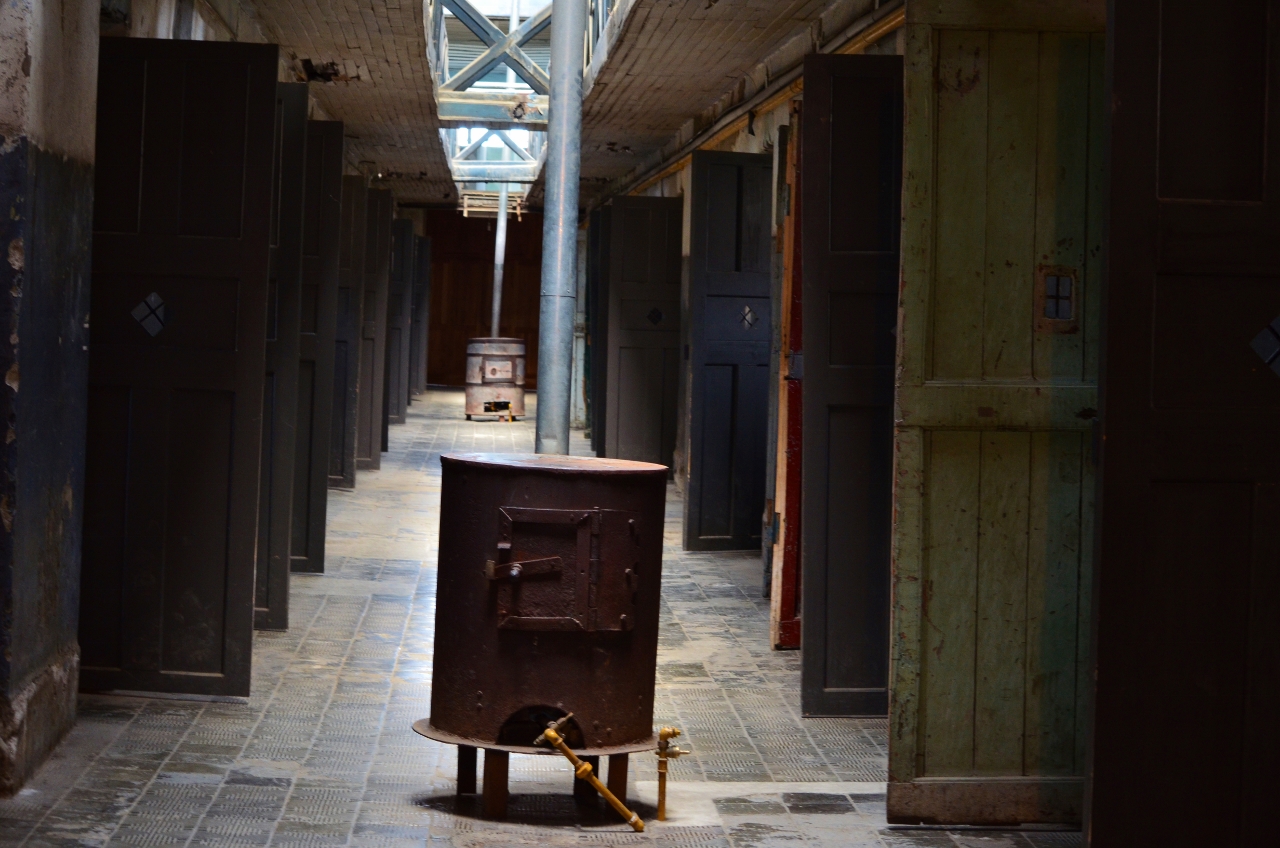
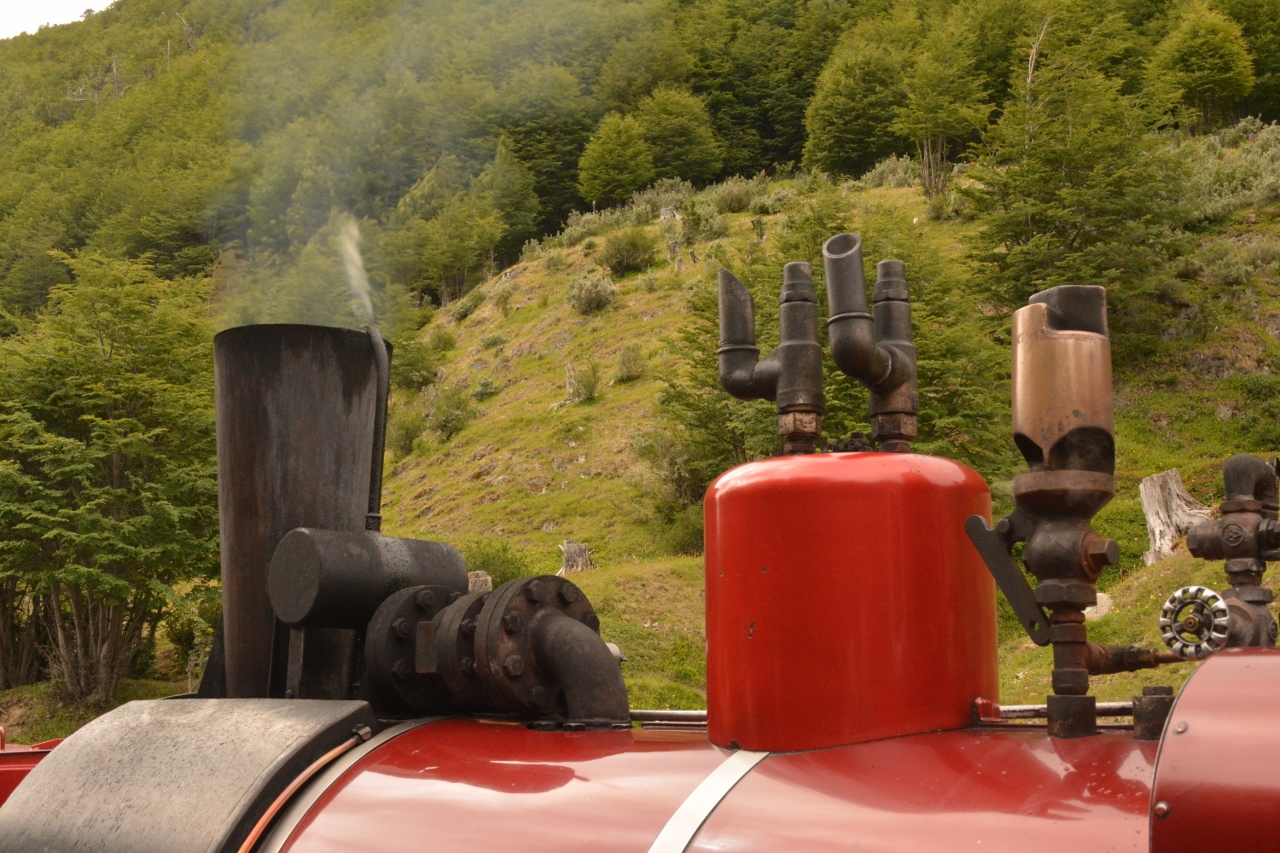
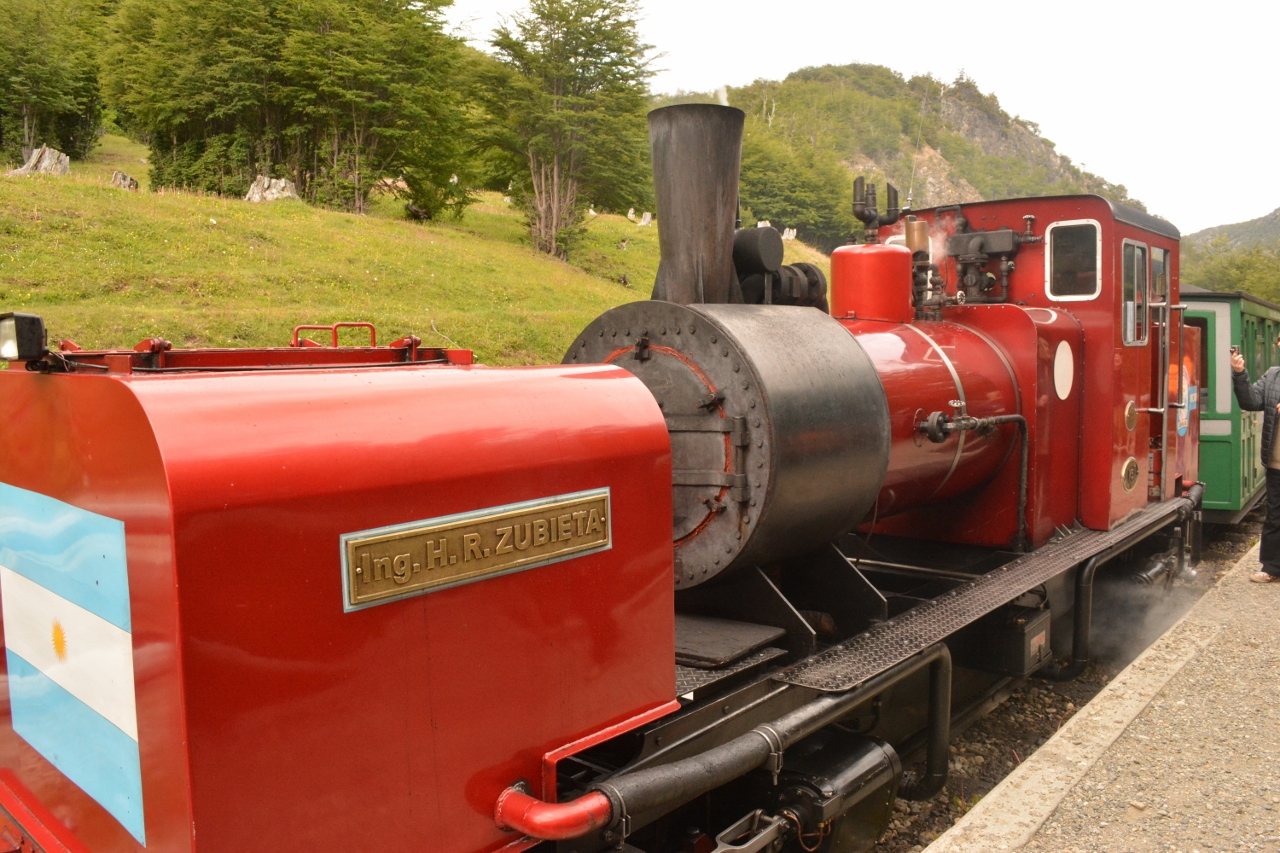
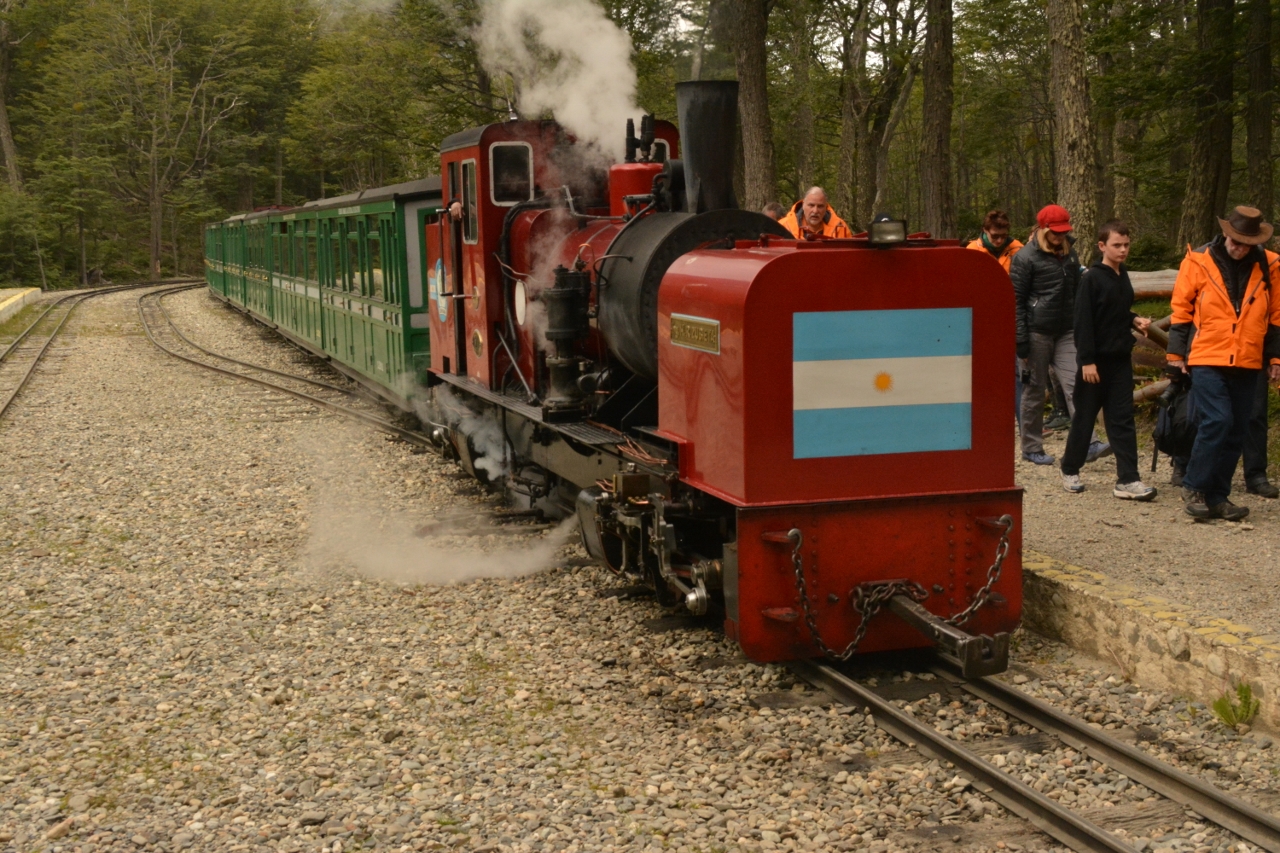
Ushuaia is a pretty rough town, with an eclectic mix of architecture and graffiti. Returning to the ship we had lunch and then boarded buses for the short ride to the Prison at the end of the world, now a museum. The prison was active from 1904 to 1947. The prisoners cut wood and built streets in Ushuaia, hence the reason for the narrow gauge train into the forests. After time at the museum we then headed to the partially restored train for a ride of 7 kilometers into the National Park.  At the end of the line we boarded our buses for a visit to Ensenada Bay for scenery and then back to the ship, which departed at 2000.
Part of the prison is now a museum

Those stoves were the only source of heat

The steam train has been restored

Add caption

We are sure the prisoners did not get cars

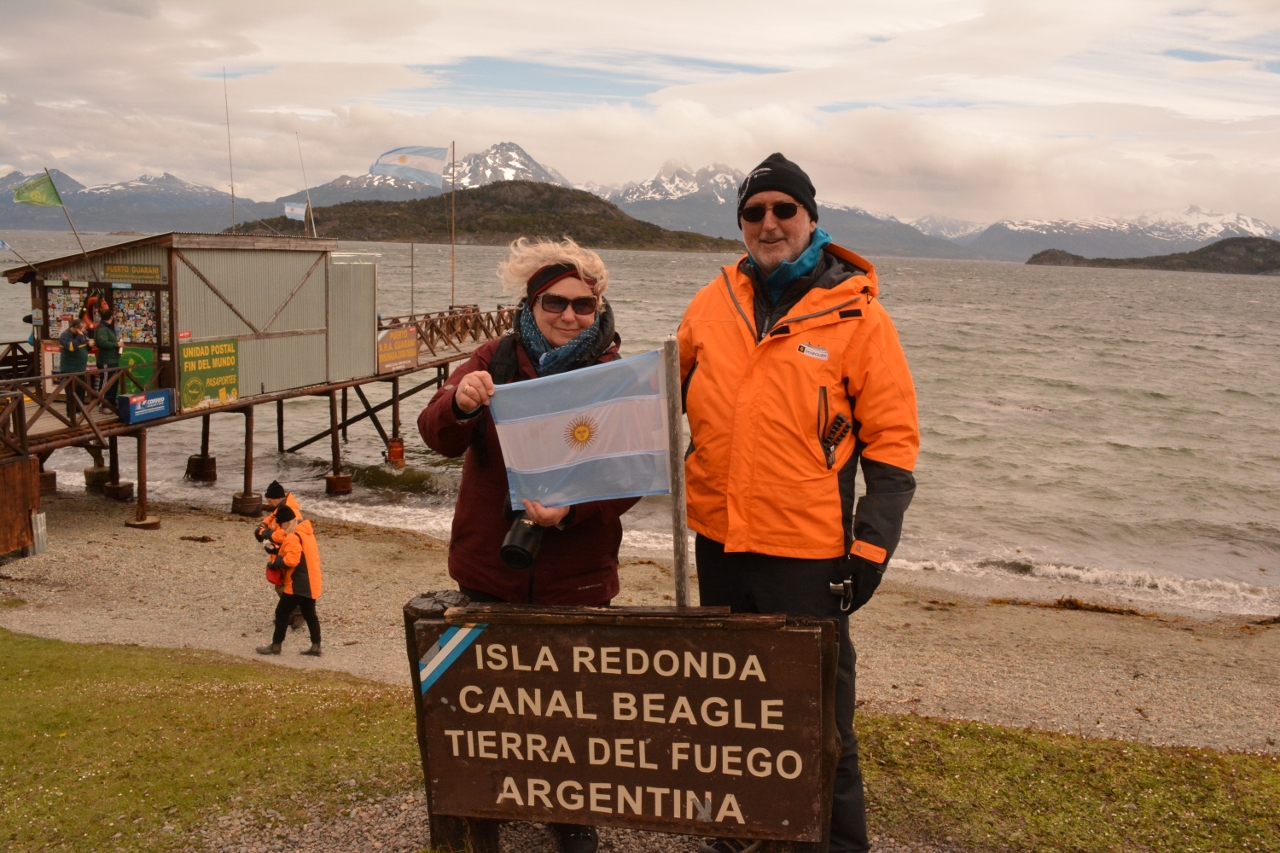
At Ensenada Bay looking over the Beagle Channel, Chile in background,