Guam to Chile – Blog Post 7
September 17, 2024
Departing Honiara on Guam at 1800, Seabourn Pursuit proceeded east once more for the 600 nm voyage to Espiritu Santo, in Vanuatu. Our destination was the town of Luganville.
Wednesday, September 18, 2024
![]() |
| The route from Guadalcanal to Luganville, Vanuatu |
After leaving Honiara, we were now in the Solomon Sea. This area was named after the Solomon Islands from the legendary biblical land of Ophir, which the Spanish were searching for on their first voyage in 1568. The land of Ophir was reputed to be the source of Solomon’s wealth. The Solomon Sea includes the New Britain Trench which reaches a depth of nearly 30,000 feet in the New Britain subduction zone.
The weather continued to be somewhat rough with winds of 20-30 knots and seas to 3 meters, which made for an uncomfortable ride.
The lectures today included ones on the culture of Vanuatu, connecting to wilderness, kayaking history, and coral reefs, why are they disappearing.
Thursday, September 19, 2024
Seabourn Pursuit made a leisurely approach into Luganville, Espiritu Santo, Vanuatu which turned out to be a mistake. The ship docked by 1100, and only then informed by local officials that due to biosecurity regulations the ship would have to leave by 3:30 pm, rather than 6:00 pm. This is due to an infestation of the Rhinoceros Beetle in Vanuatu, which is decimating coconut palms and other crops. The beetles swarm at night, are attracted to light and therefore all ships must leave well before dusk to avoid transporting more beetles to other islands. The beetles have, despite expensive eradication measures, gradually spread to many Pacific islands, with significant economic impact.
During WWII, Luganville was a major military installation. At the end of the war, instead of shipping the war materials back to the states, those materials were just dumped into the ocean. Not acceptable today, but that decision has contributed significantly to diving and snorkeling tourism today. The ship passed close to “Million Dollar Point”, referring to the values of the wrecks scuttled there.
That meant all afternoon activities were cancelled, including Patrick’s Submersible dive on the wreck of the President Coolidge, as well of Miriam’s excursion to a demonstration of firewalking. The President Coolidge was a converted liner used as a troopship that navigated poorly and was hit by US mines in the channel protecting Luganville. All 5000 people on board got off safely, but the ship slid down the sloping beach and now rests on it’s side in 20-70 meters of water.
The Seabourn Pursuit crew made some quick adjustments and Patrick, Miriam and Julie were all able to go to the Runsuc Village demonstration of dances, firewalking, sand painting, kava making, and cooking.
![]() |
| Making Kava |
![]() |
| Cooking Spinach and Tapioca in Bamboo |
![]() |
| The young dancers were delightful |
![]() |
| Preparing the firewalk |
![]() |
| The chief doing sand painting |
![]() |
| The attractive woven mats used everywhere |
![]() |
| The chief starting his firewalk on the hot stones |
Pentecost Island in Vanuatu is also known for the practice of land diving headfirst off bamboo towers 20-30 meters tall with local vines tied around their feet and touching just their head to the ground. The contests are only done in certain seasons when the liana vines are flexible enough, so we did not get to see that. Patrick tasted the kava, which we watched being made and which made dishwater appealing as a beverage, both from taste and appearance. Although no submersible trips were made, it was still an enjoyable day. The ship managed to depart on the revised schedule at 3:30 and started the voyage to our next destination, some 600+ nm away in Lautoka, Fiji
Guam to Chile – Blog Post 7
September 17, 2024
Departing Honiara on Guam at 1800, Seabourn Pursuit proceeded east once more for the 600 nm voyage to Espiritu Santo, in Vanuatu. Our destination was the town of Luganville.
Wednesday, September 18, 2024
![]() |
| The route from Guadalcanal to Luganville, Vanuatu |
After leaving Honiara, we were now in the Solomon Sea. This area was named after the Solomon Islands from the legendary biblical land of Ophir, which the Spanish were searching for on their first voyage in 1568. The land of Ophir was reputed to be the source of Solomon’s wealth. The Solomon Sea includes the New Britain Trench which reaches a depth of nearly 30,000 feet in the New Britain subduction zone.
The weather continued to be somewhat rough with winds of 20-30 knots and seas to 3 meters, which made for an uncomfortable ride.
The lectures today included ones on the culture of Vanuatu, connecting to wilderness, kayaking history, and coral reefs, why are they disappearing.
Thursday, September 19, 2024
Seabourn Pursuit made a leisurely approach into Luganville, Espiritu Santo, Vanuatu which turned out to be a mistake. The ship docked by 1100, and only then informed by local officials that due to biosecurity regulations the ship would have to leave by 3:30 pm, rather than 6:00 pm. This is due to an infestation of the Rhinoceros Beetle in Vanuatu, which is decimating coconut palms and other crops. The beetles swarm at night, are attracted to light and therefore all ships must leave well before dusk to avoid transporting more beetles to other islands. The beetles have, despite expensive eradication measures, gradually spread to many Pacific islands, with significant economic impact.
During WWII, Luganville was a major military installation. At the end of the war, instead of shipping the war materials back to the states, those materials were just dumped into the ocean. Not acceptable today, but that decision has contributed significantly to diving and snorkeling tourism today. The ship passed close to “Million Dollar Point”, referring to the values of the wrecks scuttled there.
That meant all afternoon activities were cancelled, including Patrick’s Submersible dive on the wreck of the President Coolidge, as well of Miriam’s excursion to a demonstration of firewalking. The President Coolidge was a converted liner used as a troopship that navigated poorly and was hit by US mines in the channel protecting Luganville. All 5000 people on board got off safely, but the ship slid down the sloping beach and now rests on it’s side in 20-70 meters of water.
The Seabourn Pursuit crew made some quick adjustments and Patrick, Miriam and Julie were all able to go to the Runsuc Village demonstration of dances, firewalking, sand painting, kava making, and cooking.
![]() |
| Making Kava |
![]() |
| Cooking Spinach and Tapioca in Bamboo |
![]() |
| The young dancers were delightful |
![]() |
| Preparing the firewalk |
![]() |
| The chief doing sand painting |
![]() |
| The attractive woven mats used everywhere |
![]() |
| The chief starting his firewalk on the hot stones |
Pentecost Island in Vanuatu is also known for the practice of land diving headfirst off bamboo towers 20-30 meters tall with local vines tied around their feet and touching just their head to the ground. The contests are only done in certain seasons when the liana vines are flexible enough, so we did not get to see that. Patrick tasted the kava, which we watched being made and which made dishwater appealing as a beverage, both from taste and appearance. Although no submersible trips were made, it was still an enjoyable day. The ship managed to depart on the revised schedule at 3:30 and started the voyage to our next destination, some 600+ nm away in Lautoka, Fiji
“Life is better when it’s more important to know the tide than the time.” –Unknown
“If you find yourself having to tiptoe around others, you’re not walking amongst your tribe.” -Tanya Markul
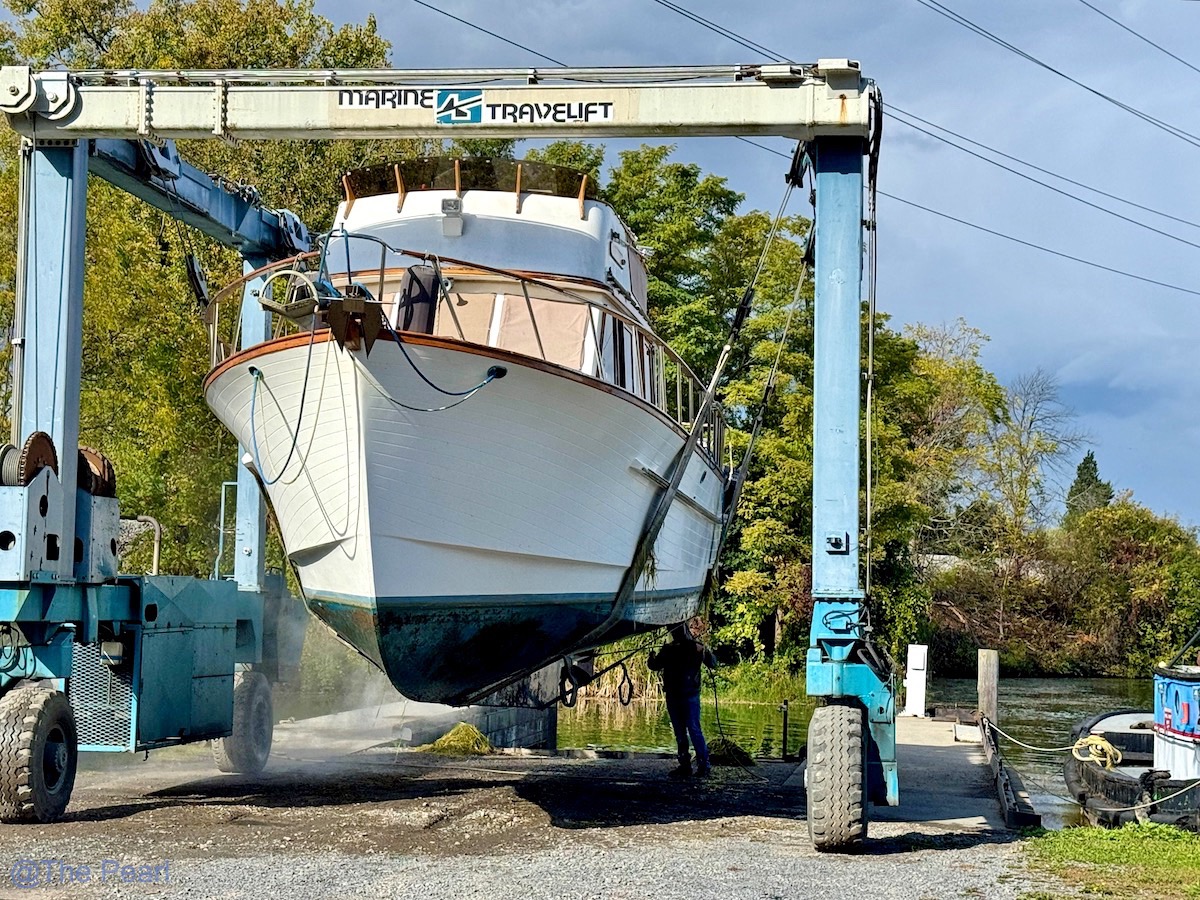
Getting hauled out and having your boat worked on is always stressful. Since we have no land-based living accommodations in the area, we continue to “live” on the boat while it sits on stands in the boatyard. That means we can’t spill any water overboard, black (most certainly!) or even grey. We do have holding tanks for both kinds, but they are not so large that they can be used for much more than a week of “normal” use. Consequently, we try to put nothing in the holding tanks. That means no cooking beyond boiling water and using on shore toilet & shower facilities.
Boatyards are usually dusty because of the sanding and grinding, either on your boat or other boats in the yard. There can be lots of foot traffic from the coming and going of the workers doing the work. Each new foot brings a little more dust on board.
On our work list for the folks at the Port Townsend Shipwrights Coop (PTSC) were routine maintenance items (e.g., bottom paint, new sacrificial anodes), repairing failed/failing items (e.g., the anchor windlass), and upgrading components. We spent 11 days out of the water, being hauled out on Monday, 8/19 and launching on Thursday, 8/29. We spent the night after launching in Port Townsend before departing on Friday, 8/30.
The last several years we have spent 1 – 2 weeks at the end of our cruising season in the San Juans. While it is still crowded compared to SE Alaska, September, after Labor Day, isn’t quite as crowded as in July and August. Setting realistic expectations is the key. If you expect to share the anchorage with 40 other boats, you shouldn’t be upset if it turns to be true. And if there are only 35 boats, you’re ahead of the game.
The nice thing about San Juan Islands is how compact they are. Twenty-five miles is probably the furthest you’d have to travel to get from any two anchorages on any of the islands. With good shore access at the many parks, it encourages a slow pace. As a result, Drake gets frequent walks and ball play when we visit. This year we stopped at Reid Harbor (Stuart Island), Garrison Bay (San Juan Islalnd), Griffin Bay (San Juan Island), Deer Harbor (Orcas Island), Fisherman’s Bay (Lopez Island) and, Echo Bay (Sucia Island). We used Hunter Bay (Lopez Island) as our last stop before crossing the Strait of Juan de Fuca and slogging down Admiralty Inlet on the way to our home port in Eagle Harbor on Bainbridge Island.
We arrived Eagle Harbor in the early afternoon on Sunday, September 15. In total, we were gone 135 days but I am going to attribute13 days as time in the boatyard and not count them. Of the 121 nights out on the cruise, 73 were at anchor while 48 days were on docks. We put on 3,091 miles in 503 cruising hours (we had an additional 27 engine hours trolling or idling while fishing (mostly deploying or retrieving prawn pots).
Getting hauled out and having your boat worked on is always stressful. Since we have no land-based living accommodations in the area, we continue to “live” on the boat while it sits on stands in the boatyard. That means we can’t spill any water overboard, black (most certainly!) or even grey. We do have holding tanks for both kinds, but they are not so large that they can be used for much more than a week of “normal” use. Consequently, we try to put nothing in the holding tanks. That means no cooking beyond boiling water and using on shore toilet & shower facilities.
Boatyards are usually dusty because of the sanding and grinding, either on your boat or other boats in the yard. There can be lots of foot traffic from the coming and going of the workers doing the work. Each new foot brings a little more dust on board.
On our work list for the folks at the Port Townsend Shipwrights Coop (PTSC) were routine maintenance items (e.g., bottom paint, new sacrificial anodes), repairing failed/failing items (e.g., the anchor windlass), and upgrading components. We spent 11 days out of the water, being hauled out on Monday, 8/19 and launching on Thursday, 8/29. We spent the night after launching in Port Townsend before departing on Friday, 8/30.
The last several years we have spent 1 – 2 weeks at the end of our cruising season in the San Juans. While it is still crowded compared to SE Alaska, September, after Labor Day, isn’t quite as crowded as in July and August. Setting realistic expectations is the key. If you expect to share the anchorage with 40 other boats, you shouldn’t be upset if it turns to be true. And if there are only 35 boats, you’re ahead of the game.
The nice thing about San Juan Islands is how compact they are. Twenty-five miles is probably the furthest you’d have to travel to get from any two anchorages on any of the islands. With good shore access at the many parks, it encourages a slow pace. As a result, Drake gets frequent walks and ball play when we visit. This year we stopped at Reid Harbor (Stuart Island), Garrison Bay (San Juan Islalnd), Griffin Bay (San Juan Island), Deer Harbor (Orcas Island), Fisherman’s Bay (Lopez Island) and, Echo Bay (Sucia Island). We used Hunter Bay (Lopez Island) as our last stop before crossing the Strait of Juan de Fuca and slogging down Admiralty Inlet on the way to our home port in Eagle Harbor on Bainbridge Island.
We arrived Eagle Harbor in the early afternoon on Sunday, September 15. In total, we were gone 135 days but I am going to attribute13 days as time in the boatyard and not count them. Of the 121 nights out on the cruise, 73 were at anchor while 48 days were on docks. We put on 3,091 miles in 503 cruising hours (we had an additional 27 engine hours trolling or idling while fishing (mostly deploying or retrieving prawn pots).
September 14, 15 2024 At Sea between Pohnpei and Bakawari, Papua New Guinea
Departing Pohnpei about 1930, Seabourn Pursuit continued south overnight. The wind and swell were on the beam, with the seas about 10 feet at 9 second period, so the ship had moderate roll motions. This wave height is typical for the Pacific Ocean, which has an average wave height of 3 meters.
The sunrise was spectacular once again and we had no rain all day. At 1400 we held the Equator crossing ceremony and my sister, Julie, being a Polliwog, was inducted during the ceremony into being a Shellback, so we now had permission from King Neptune to cross the equator with no Polliwogs on board.
Lectures today included one on Seabirds and another on mangrove swamps.
September 15, 2024 – At Sea
September 16, 2024
The Seabourn Pursuit took up position off Bakawari Island, Papua New Guinea at 0600.
![]() |
| Bakawari Island lies next to Bougainville Island Papau New Guinea |
The ship was cleared by the local authorities about 0700 and Patrick headed off for a Kayak excursion. At 0830, other guests were shuttled ashore in color groups and were treated to a folkloric performance by three local groups on Bakawari Island. The kayak tour finished just in time to be delivered to the beach for the performance.
![]() |
| Dancing at Bakawari Island |
![]() |
| Some of the bamboo flutes used by the performers |
![]() |
| Native canoes fishing |
![]() |
| Native Canoe |
By 1200, all guests were back on board and Seabourn Pursuit headed for Honiara, Guadalcanal, Solomon Islands, our next destination. Our route takes the ship down the “Slot”, through Bougainville Straits and past Savo Island before docking at Honiara.
The area we are transiting is larger than we expected. The distance from Bakawari Island to Honiara, Guadalcanal is 335 NM. To make that distance overnight means Seabourn Pursuit has to average more than 15 knots. Fortunately the seas and wind are favorable.
One of the reasons for making this cruise is the opportunity to visit locations in which my father served while in the USN in WWII.
This morning, with calm seas and sunny skies, we are approaching Savo Island and will pass by the final resting place of the USS Astoria, which sank following a fierce night battle just off Savo Island, only two days after the USMC landed at Red Beach on Guadalcanal. The night of August 9, 1942, a night attack by the Japanese navy caught the allies off guard. Four heavy cruisers were sunk, three US and one Australian. Three cruisers were sunk in just a few minutes between 0230 and 0300. The USS Astoria did not sink immediately, but was badly damaged. The crew initially abandoned ship, but later 350 crew returned to try and save the ship. My father was one of those who returned to the ship. He told us about jumping off the bow initially, and returning to collect the bodies of those killed and preparing them for burial by sewing the corpses into hammocks while eating stewed tomatoes since the galleys were unusable and on fire. Initially we were skeptical of some aspects of that story, but when we saw the same story in other eyewitness accounts, we were convinced he had survived a horrific experience.
However, the crews’ efforts were in vain, as underwater explosions in the bow area fatally damaged USS Astoria (my father was aft at that time). The ship was abandoned once again and at 1215 that day, August 9, 1942 the USS Astoria listed 30 degrees, then capsized and sank stern first in 2800 feet of water about 2 miles from Savo Island. More than 247 sailors perished and another 250 were wounded. It was the worst defeat at sea for the US Navy, excluding Pearl Harbor. The USS Astoria was rediscovered by Paul Allen in 2015, in 2800 feet of water, with the bow missing.
![]() |
| The bridge display as we were at closest point to Astoria |
![]() |
| Last known phot of Astoria, one day before sinking |
![]() |
| Photo of Astoria remains by Paul Allen |
![]() |
| Savo Island |
We wer fortunate to be on the bridge of Seabourn Pursuit when we passed just 2.85 nm from the location of the USS Astoria. We observed several minutes of silence in memory of the hundreds of navy personnel who died in that action on both the Astoria and the other three ships.
My father was then reassigned to the destroyer USS Blue. That ship was torpedoed on August 22, 1942 and scuttled on August 23, 1942, after unsuccessful attempts to save her. My father also survived that sinking.
![]() |
| USS Blue – DD-387 |
The area between Savo Island and Guadalcanal has been named Iron Bottom Sound, since more than 50 allied and Japanese ships were sunk in the 7 month Guadalcanal campaign. Iron Bottom Sound is considered a sacred place due to all the people who perished and whose remains went to the bottom. Guadalcanal and the Solomon Islands campaigns marked the beginning of the successful, but bloody island hopping strategy which the Allies used to eventually defeat Japan.
The Battle of Savo Island was also a turning point for the US and it’s allies in that the Japanese failed to destroy the troop transports and supply ships lying off of Red Beach, just a few miles from the Savo Island battle, instead withdrawing after destroying the four heavy cruisers. The pattern of tactical victory but strategic mistake would persist throughout the war.
Seabourn Pursuit docked at the container port in Honiara, Guadalcanal at 1100, and by 1140 we were on a bus tour of the Eastern Battlefields of the Guadalcanal campaign.
Honiara is the capital of the Solomon Islands, a sprawling independent nation with more than 95 major islands and a total population of more than 700,000. Honiara has a population of about 65,000. This island nation is being impacted by climate change, with sea levels rising 8 mm per year, more than the average worldwide. The evidence of WWII is still present, with significant amounts of unexploded munitions still being discovered 82 years later.
The first tour stop was at Red Beach, where the USMC landed on August 7, 1942, with little opposition. That was soon to change as the USMC took control of Henderson field (our second stop) and set up defensive perimeters, including one at “Bloody Ridge”, our third stop of the tour. We finished the tour with visits to the Japanese War Memorial and the the US War Memorial. The Guadalcanal took seven months to achieve victory, with more than 7,000 Allied deaths and more than 19,000 Japanese deaths.
![]() |
| Monument at Red Beach |
![]() |
| Red Beach |
![]() |
| Memorial Park at Henderson Field |
![]() |
| View from Bloody Ridge |
![]() |
| Monument at Bloody Ridge |
![]() |
| Japanese War Memorial |
![]() |
| View of Savo Island from US Memorial |
![]() |
| Battle of Savo Island at Memorial |
![]() |
| List of US Ships sunk at Guadalcanal |
September 14, 15 2024 At Sea between Pohnpei and Bakawari, Papua New Guinea
Departing Pohnpei about 1930, Seabourn Pursuit continued south overnight. The wind and swell were on the beam, with the seas about 10 feet at 9 second period, so the ship had moderate roll motions. This wave height is typical for the Pacific Ocean, which has an average wave height of 3 meters.
The sunrise was spectacular once again and we had no rain all day. At 1400 we held the Equator crossing ceremony and my sister, Julie, being a Polliwog, was inducted during the ceremony into being a Shellback, so we now had permission from King Neptune to cross the equator with no Polliwogs on board.
Lectures today included one on Seabirds and another on mangrove swamps.
September 15, 2024 – At Sea
September 16, 2024
The Seabourn Pursuit took up position off Bakawari Island, Papua New Guinea at 0600.
![]() |
| Bakawari Island lies next to Bougainville Island Papau New Guinea |
The ship was cleared by the local authorities about 0700 and Patrick headed off for a Kayak excursion. At 0830, other guests were shuttled ashore in color groups and were treated to a folkloric performance by three local groups on Bakawari Island. The kayak tour finished just in time to be delivered to the beach for the performance.
![]() |
| Dancing at Bakawari Island |
![]() |
| Some of the bamboo flutes used by the performers |
![]() |
| Native canoes fishing |
![]() |
| Native Canoe |
By 1200, all guests were back on board and Seabourn Pursuit headed for Honiara, Guadalcanal, Solomon Islands, our next destination. Our route takes the ship down the “Slot”, through Bougainville Straits and past Savo Island before docking at Honiara.
The area we are transiting is larger than we expected. The distance from Bakawari Island to Honiara, Guadalcanal is 335 NM. To make that distance overnight means Seabourn Pursuit has to average more than 15 knots. Fortunately the seas and wind are favorable.
One of the reasons for making this cruise is the opportunity to visit locations in which my father served while in the USN in WWII.
This morning, with calm seas and sunny skies, we are approaching Savo Island and will pass by the final resting place of the USS Astoria, which sank following a fierce night battle just off Savo Island, only two days after the USMC landed at Red Beach on Guadalcanal. The night of August 9, 1942, a night attack by the Japanese navy caught the allies off guard. Four heavy cruisers were sunk, three US and one Australian. Three cruisers were sunk in just a few minutes between 0230 and 0300. The USS Astoria did not sink immediately, but was badly damaged. The crew initially abandoned ship, but later 350 crew returned to try and save the ship. My father was one of those who returned to the ship. He told us about jumping off the bow initially, and returning to collect the bodies of those killed and preparing them for burial by sewing the corpses into hammocks while eating stewed tomatoes since the galleys were unusable and on fire. Initially we were skeptical of some aspects of that story, but when we saw the same story in other eyewitness accounts, we were convinced he had survived a horrific experience.
However, the crews’ efforts were in vain, as underwater explosions in the bow area fatally damaged USS Astoria (my father was aft at that time). The ship was abandoned once again and at 1215 that day, August 9, 1942 the USS Astoria listed 30 degrees, then capsized and sank stern first in 2800 feet of water about 2 miles from Savo Island. More than 247 sailors perished and another 250 were wounded. It was the worst defeat at sea for the US Navy, excluding Pearl Harbor. The USS Astoria was rediscovered by Paul Allen in 2015, in 2800 feet of water, with the bow missing.
![]() |
| The bridge display as we were at closest point to Astoria |
![]() |
| Last known phot of Astoria, one day before sinking |
![]() |
| Photo of Astoria remains by Paul Allen |
![]() |
| Savo Island |
We wer fortunate to be on the bridge of Seabourn Pursuit when we passed just 2.85 nm from the location of the USS Astoria. We observed several minutes of silence in memory of the hundreds of navy personnel who died in that action on both the Astoria and the other three ships.
My father was then reassigned to the destroyer USS Blue. That ship was torpedoed on August 22, 1942 and scuttled on August 23, 1942, after unsuccessful attempts to save her. My father also survived that sinking.
![]() |
| USS Blue – DD-387 |
The area between Savo Island and Guadalcanal has been named Iron Bottom Sound, since more than 50 allied and Japanese ships were sunk in the 7 month Guadalcanal campaign. Iron Bottom Sound is considered a sacred place due to all the people who perished and whose remains went to the bottom. Guadalcanal and the Solomon Islands campaigns marked the beginning of the successful, but bloody island hopping strategy which the Allies used to eventually defeat Japan.
The Battle of Savo Island was also a turning point for the US and it’s allies in that the Japanese failed to destroy the troop transports and supply ships lying off of Red Beach, just a few miles from the Savo Island battle, instead withdrawing after destroying the four heavy cruisers. The pattern of tactical victory but strategic mistake would persist throughout the war.
Seabourn Pursuit docked at the container port in Honiara, Guadalcanal at 1100, and by 1140 we were on a bus tour of the Eastern Battlefields of the Guadalcanal campaign.
Honiara is the capital of the Solomon Islands, a sprawling independent nation with more than 95 major islands and a total population of more than 700,000. Honiara has a population of about 65,000. This island nation is being impacted by climate change, with sea levels rising 8 mm per year, more than the average worldwide. The evidence of WWII is still present, with significant amounts of unexploded munitions still being discovered 82 years later.
The first tour stop was at Red Beach, where the USMC landed on August 7, 1942, with little opposition. That was soon to change as the USMC took control of Henderson field (our second stop) and set up defensive perimeters, including one at “Bloody Ridge”, our third stop of the tour. We finished the tour with visits to the Japanese War Memorial and the the US War Memorial. The Guadalcanal took seven months to achieve victory, with more than 7,000 Allied deaths and more than 19,000 Japanese deaths.
![]() |
| Monument at Red Beach |
![]() |
| Red Beach |
![]() |
| Memorial Park at Henderson Field |
![]() |
| View from Bloody Ridge |
![]() |
| Monument at Bloody Ridge |
![]() |
| Japanese War Memorial |
![]() |
| View of Savo Island from US Memorial |
![]() |
| Battle of Savo Island at Memorial |
![]() |
| List of US Ships sunk at Guadalcanal |
The view from the bell tower of the church.
Watching the toboggan action from the church.
We decided against doing the toboggan since the lines were so long. But it was fun watching them.
Funchal has so many little cafés along the narrow streets…so many good cafés. To celebrate Stan’s birthday we ate at O Visconde (The Viscount). The service and good was wonderful.
We tried a few different things. Seafood is a big thing in Madeira and it is very fresh. We started with the octopus salad, which was very good. Stan had sardines and I had the carbonara. We also had a bottle of wine and the bill only came to $44.50.
© 2026 Trawler Blogs. All Rights Reserved.