
After 16 nights in a La Quinta hotel, the entire Red Head crew was happy to have the boat splashed on Friday afternoon.First, there was one last walking of the plank up to the salon where the crew awaited the much anticipated moment. While none of us l…
Scottish, Dutch, Latvian, Irish, English & Swedish
our family of immigrants.
Not like the brazen giant of Greek fame, with conquering limbs astride from land to land; Here at our sea-washed, sunset gates shall stand A mighty woman with a torch, whose flame Is the imprisoned lightning, and…
Scottish, Dutch, Latvian, Irish, English & Swedish
our family of immigrants.Not like the brazen giant of Greek fame, with conquering limbs astride from land to land; Here at our sea-washed, sunset gates shall stand A mighty woman with a torch, whose flame Is the imprisoned lightning, and her name…
STABILISERS PART 1
Envoy is in Lefkas Marina for the northern hemisphere winter and we are home for the New Zealand summer returning to Lefkas during April.
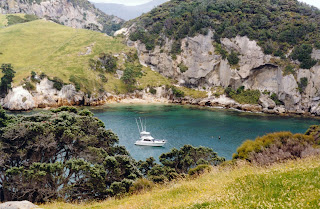
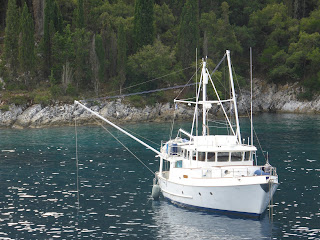

This posting is based around an article I’ve written for Pacific MotorBoat magazine.
In pre-Envoy days boating around Auckland’s Hauraki Gulf we owned several planing boats culminating in a 40 ft Oliver Royale GRP planing boat with twin Yanmar diesel shaft drives. We never then considered rolling to be an issue, however we realised very soon after buying our Nordhavn 46, Envoy, that full-displacement hulls are another matter, definitely requiring stabilisation to provide acceptable levels of comfort and safety when cruising moderate distances in beam seas higher than about one metre. I’m sure there are reasons for this that a boat designer could properly articulate. As much as I know is that in slight to moderate seas the flatter hull sections of a planing boat resist rolling to a greater extent than the rounded sections of a displacement boat. Also I have found that a fast boat on the plane seems to sit quite comfortably on beam waves without too much roll. On the negative side I understand that planing boats can roll dangerously in heavy beam seas and are more prone to capsize than ballasted displacement hulls like the Nordhavn. Additionally planing hulls pound when their flat sections hit waves, whereas the rounded sections of displacement hulls rise and fall more gracefully with greatly reduced noise and violent motion.
In our experience a planning boat like our previous 40 ft Oliver Royale doesn’t roll under way to the extent that a displacement hull does
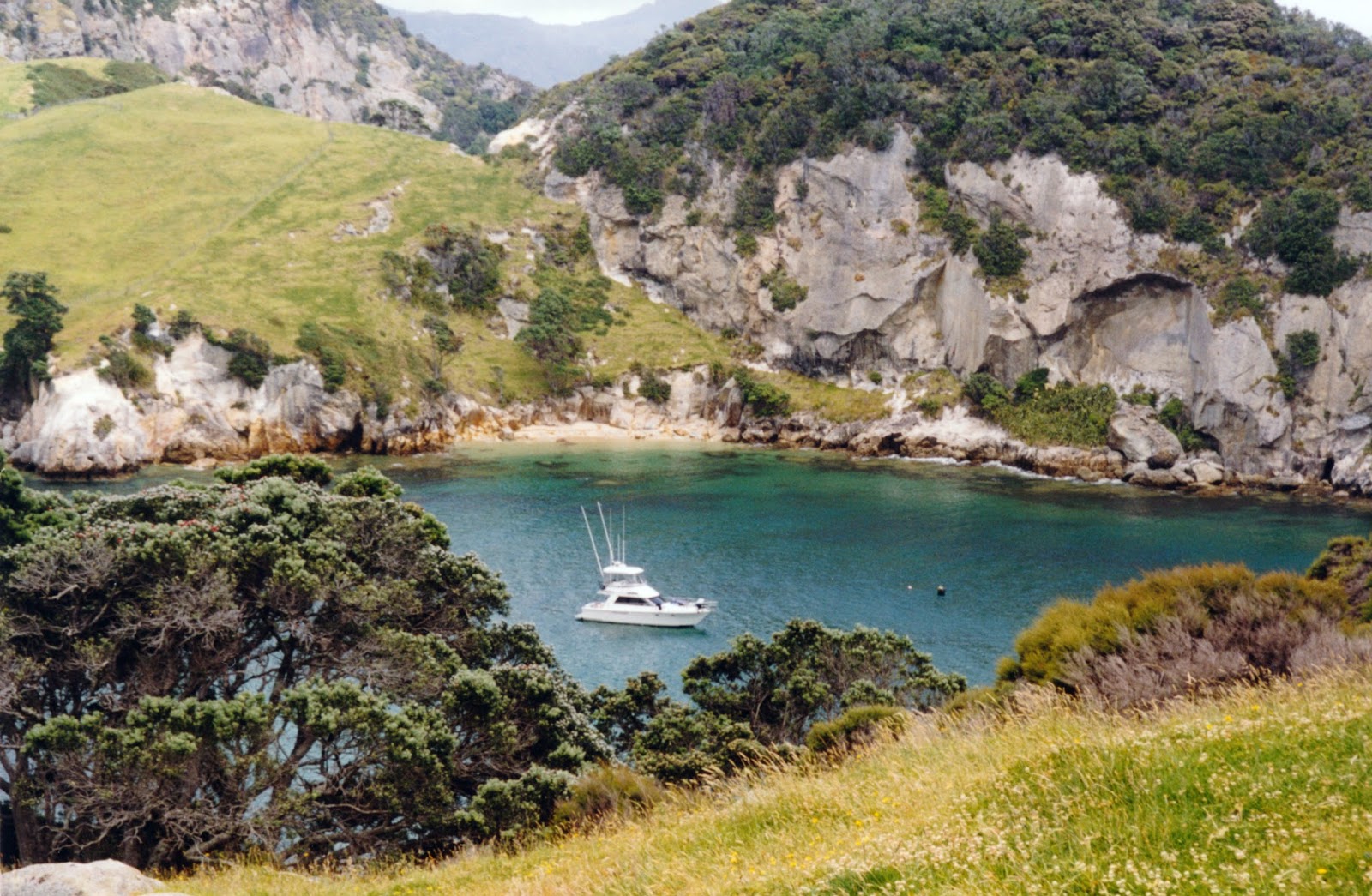
What follows isn’t a technical treatise but comments based on cruising thousands of miles using Envoy’s three stabilisation systems.
Stabilisers have been used for many years aboard commercial vessels but aboard pleasure craft only for about the last 40 years, considerably reducing rolling motion in beam seas, but with minimal effect on pitching caused by seas on the bow or stern.
Now some reader is bound to think “buy a catamaran and you won’t have a problem” and I’d be the first to agree you’ve got a lesser problem, but we’ve met many folks who complain about their cat’s motion both under way and at rest. Of course this is either better or worse depending on their design, as with monohulls.
Envoy at anchor with starboard stabiliser pole deployed with flopper-stopper to reduce roll from slight swell. The port pole can be seen in the vertical position
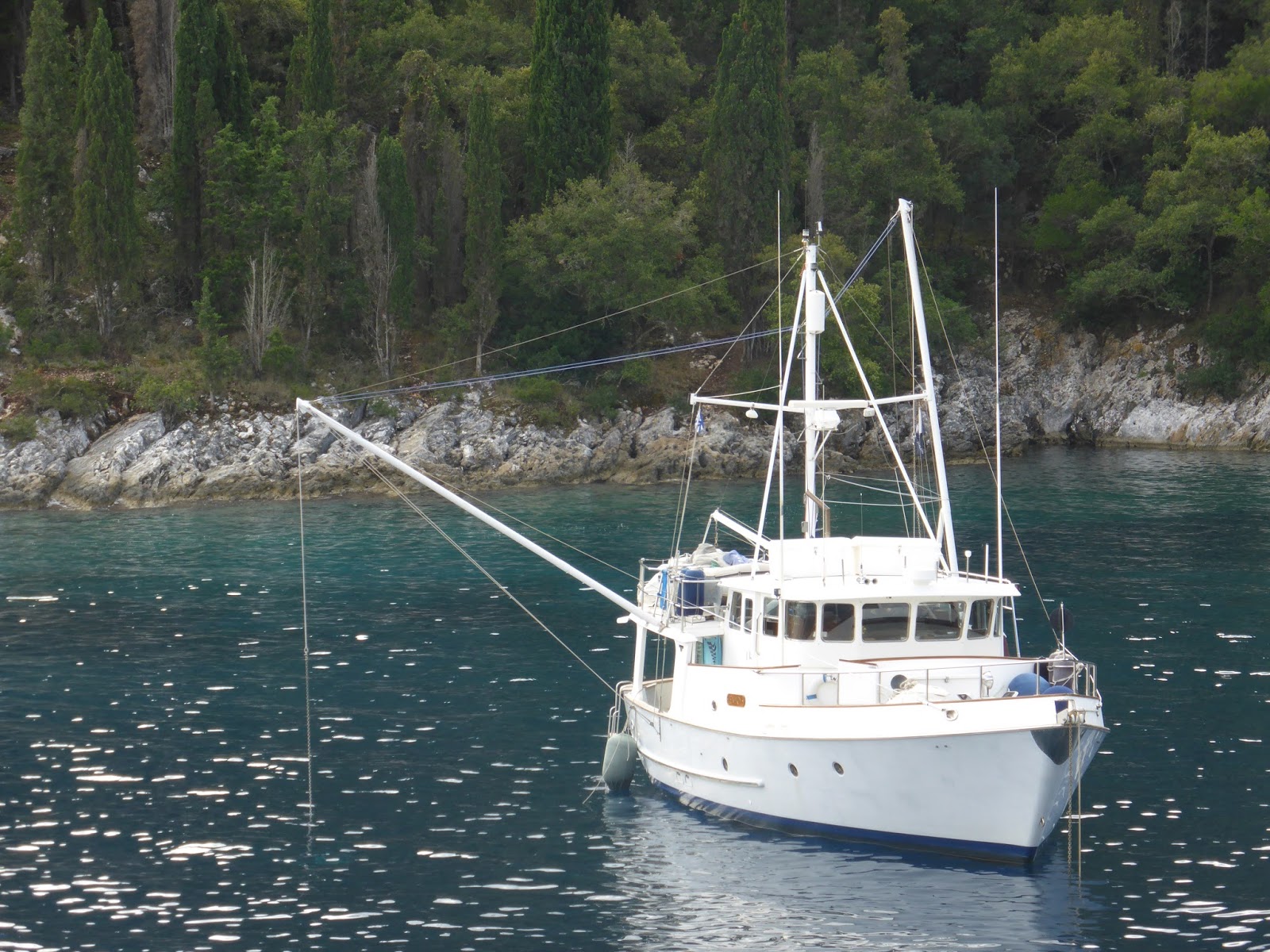
A web search shows many variations of stabilisers, but the mainstream systems fall into three basic types; passive, active and rotary.
We have no experience with rotary stabilisers, which are a more recent development utilising a flywheel contained in a vacuum chamber to provide a gyro effect, but they’re reportedly highly effective in roll reduction both under way and at anchor with the advantages of having no protruding parts to cause speed-reducing drag or become fouled. They are able to be retrofitted either amidships or offset to one side, but have a significant investment cost. Presumably, if used for long periods such as overnight at anchor a generator would be needed to provide sufficient power – something we would not want to do.
Envoy has both passive and active stabilisers providing effective stabilisation under way and at anchor.
Envoy with both poles deployed with flopper stoppers to reduce roll at an exposed anchorage with ferry wakes

Next posting will discuss passive stabilisers in detail.
Linkage.
As you may see I’ve started an overhaul of the links on this blog, as all the old ones appeared dead. If you’d like a link to your own blog, or website or whatever, or if I’ve removed you and you’d like to be put back, please get in touch via the…
Linkage.
As you may see I’ve started an overhaul of the links on this blog, as all the old ones appeared dead. If you’d like a link to your own blog, or website or whatever, or if I’ve removed you and you’d like to be put back, please get in touch via the…
Austin – San Marcus – Denton – Grapevine – Fredericksburg – San Antonio – Terlinguas – Big Bend State and National Parks – Alpine – Fort Davis – Odessa
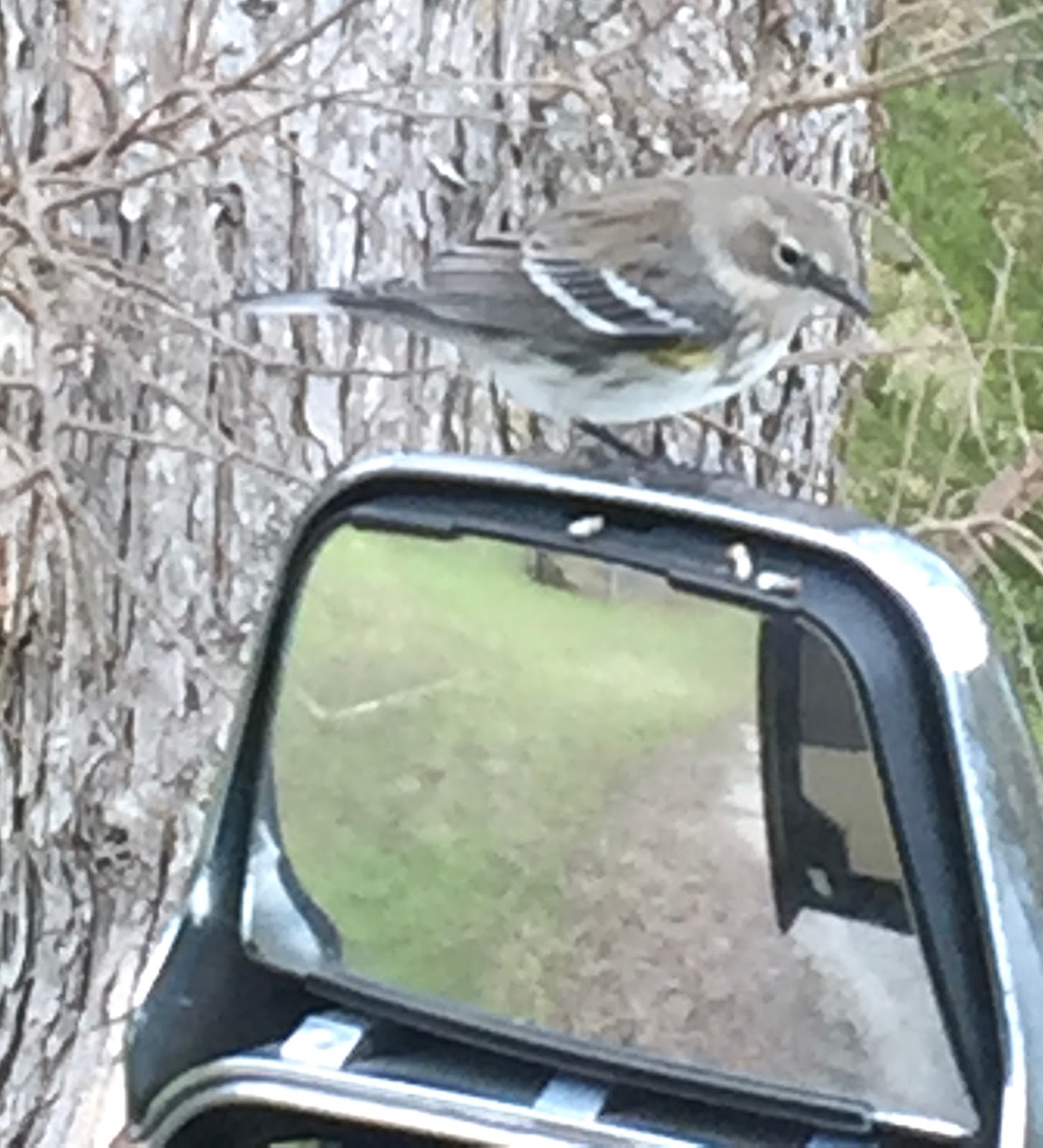
New Year’s Day we said our goodbyes to son, Matt, our grand daughters and great grandson, and drove to Austin where we stayed in McKinney Falls State Park. The location was about 5 miles outside of Austin but we had easy access to the city. The park is beautiful with different kinds of birds and other wild life—but we saw only deer. A little wren became our friend and each morning, would come and perch on top of our coach’s side mirror where he would peck, then fly down to the mirror’s base and he’d fly “in place” admiring himself. He was there every single morning except for the morning that we were leaving.
We enjoyed quite a few of the hiking trails in the park, leading to 2 water falls. Looks like nothing’s been moved for decades—lots of fallen trees and old limestone walls that look ancient.
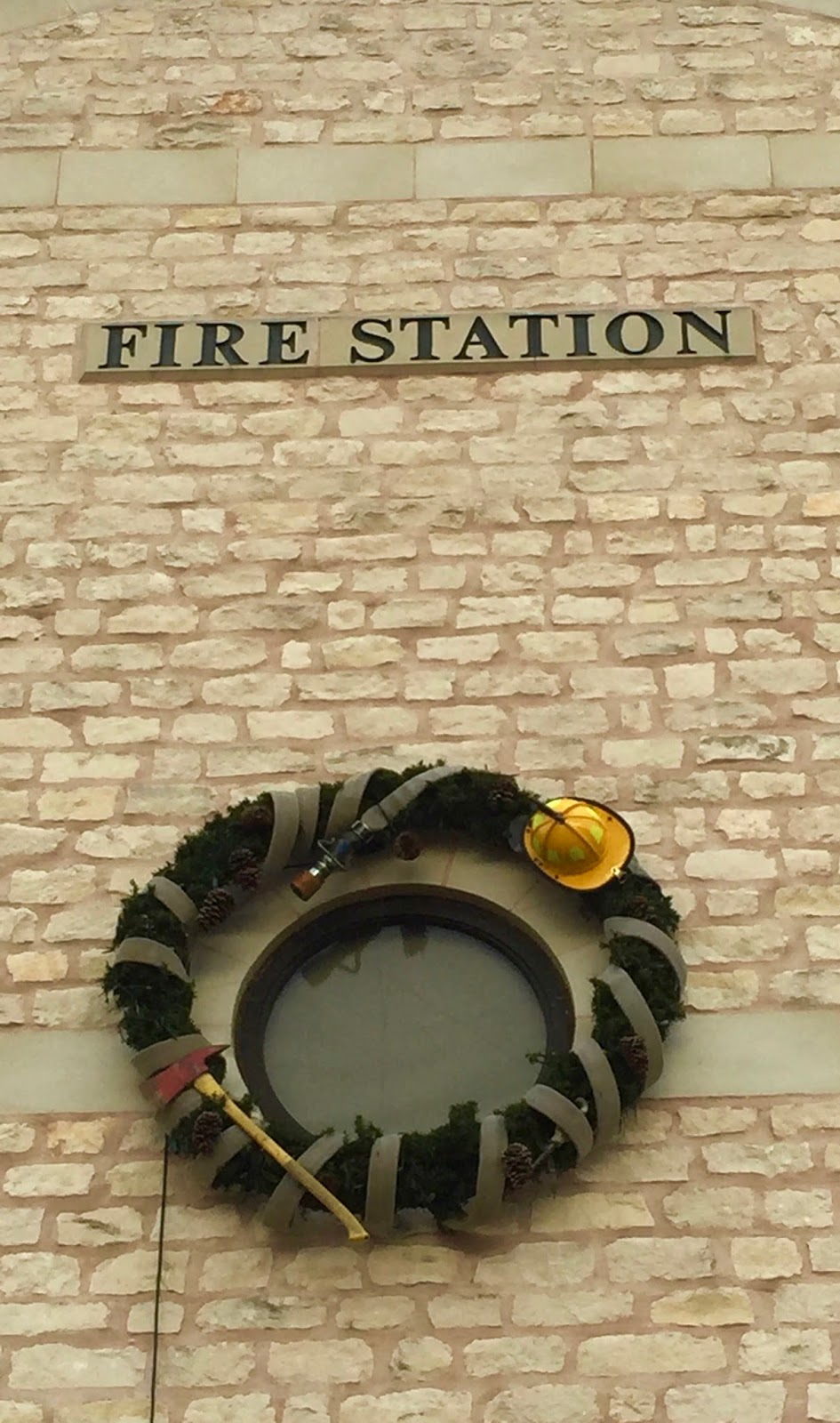
Love the firemen’s creativity!
Youngest son, Stephen, lives in Austin and we spent almost every evening with him. Cycling there is great and the very first day we rode the 11 mile trail around Lady Bird Lake—but better known from days of yore as Town Lake. Stephen took us to an old established restaurant to satisfy Bill’s hankering for real TX BBQ’d brisket. He said that sadly, chains and new eateries are buying the small mom and pop businesses, dozing the building and building “new, bigger, and better.” As a bachelor, Stephen eats out more than he prepares food at home so we had a varied and exciting palette of cuisines to enjoy. The oldest TX restaurant is Scholtz Garten and other than a sullen server, our evening there was a delight.

 |
| A lamplighter in Grapevine |
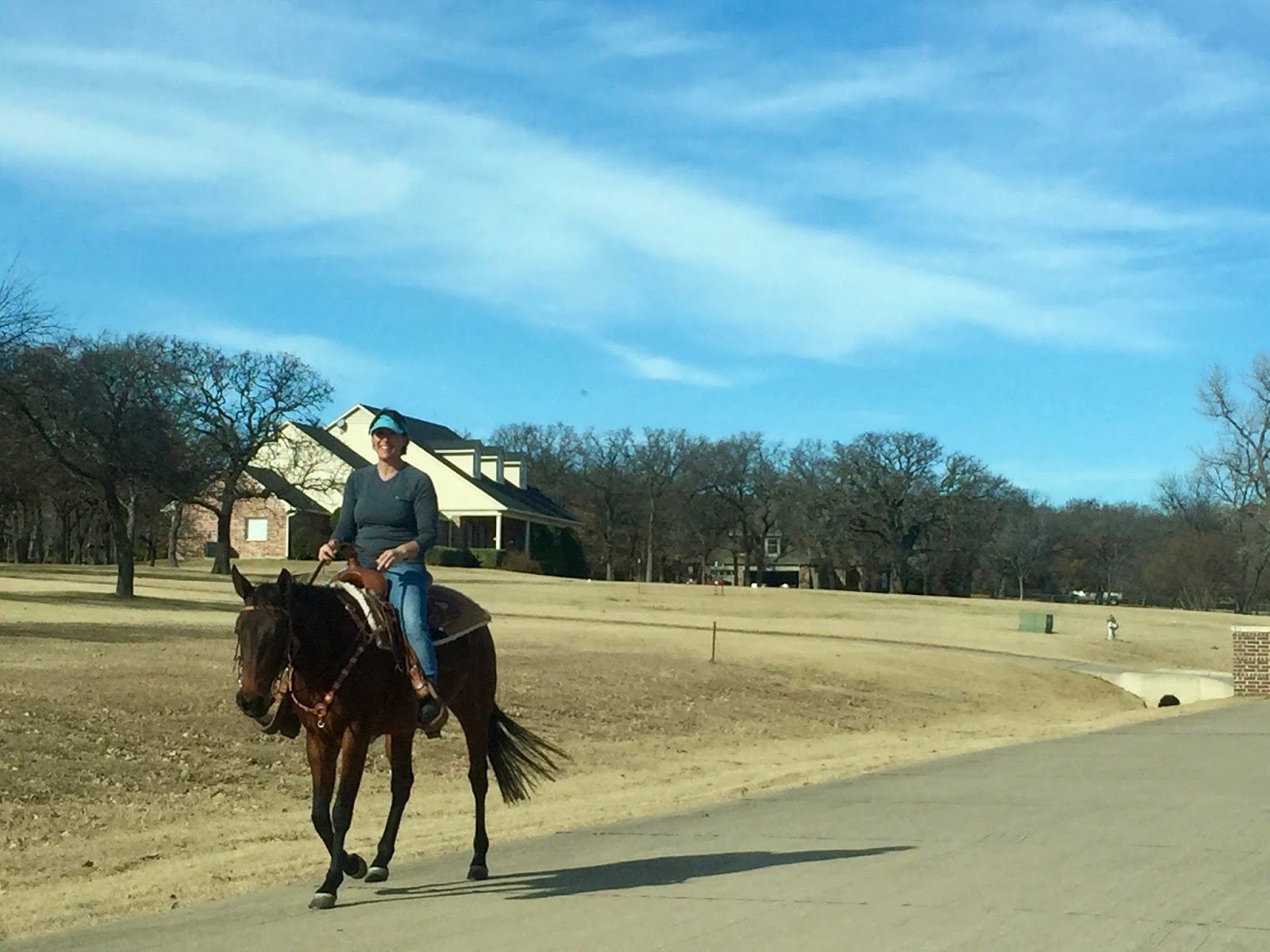
An equestrian out for a trot on a street in Denton, TX
A very thoughtful gesture was a mid afternoon gathering at another Austin icon of 11 of Stephen’s closest friends for “Meet the Parents”. The opportunity to chat with them, all with varied educational and professional backgrounds, was a great learning experience.
We were very fortunate to be in Austin when Dana, a sculptor and one of Stephen’s “solid core” friends, had an exhibit at the Dimension Gallery. I love the name of the gallery because it really tells you what you’ll find there. His work is awesome and we felt it a real privilege to be present for his showing. His wife, Felice, also a magnificent artist, was shipping some of her work to London for a lecture/teaching opportunity there.
Food preparation isn’t something that often occurs in our Rolling Home but I broke the spell and we had Stephen out for dinner. Then he reciprocated by delving into his Cajun roots and rustling up some Étouffée that was mouth-watering. I was very impressed with his presentation of hors d’oeuvres that he’d readied in advance and had them waiting for us.
He lives close enough to down town to ride his bike and/or walk to interesting places—like Town Lake and restaurants. He led Bill and me on a downtown hilly (!), fun, and exciting bicycle excursion onto paved paths that we hadn’t discovered when we were out on our own. Periodically he’d stop and tell us a bit of history of a particular area.
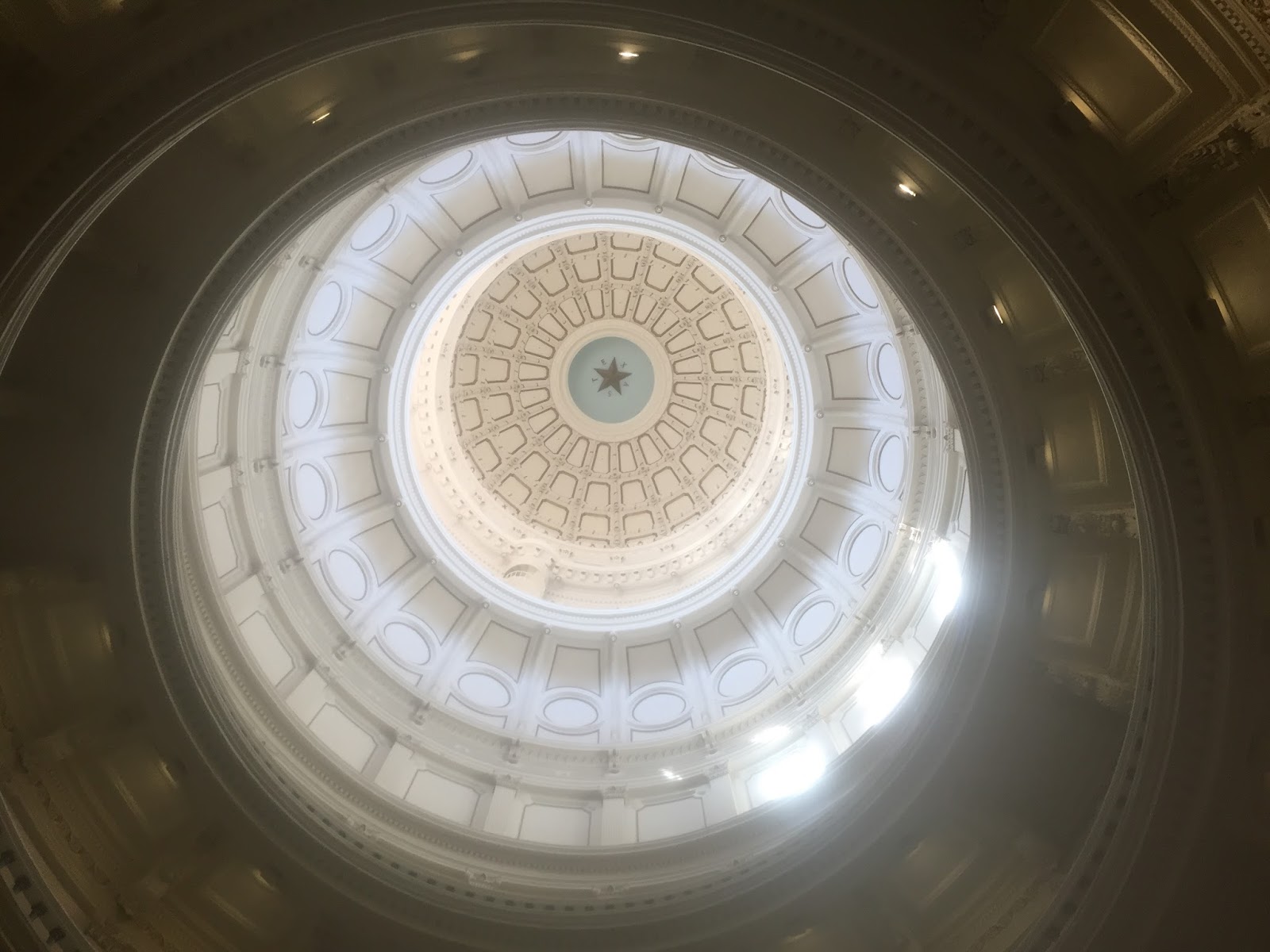
TX Capitol Dome |

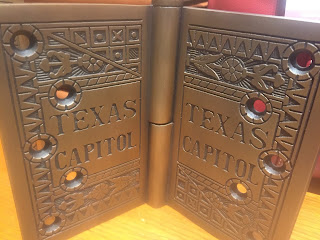
Door hinges in the Texas Capitol
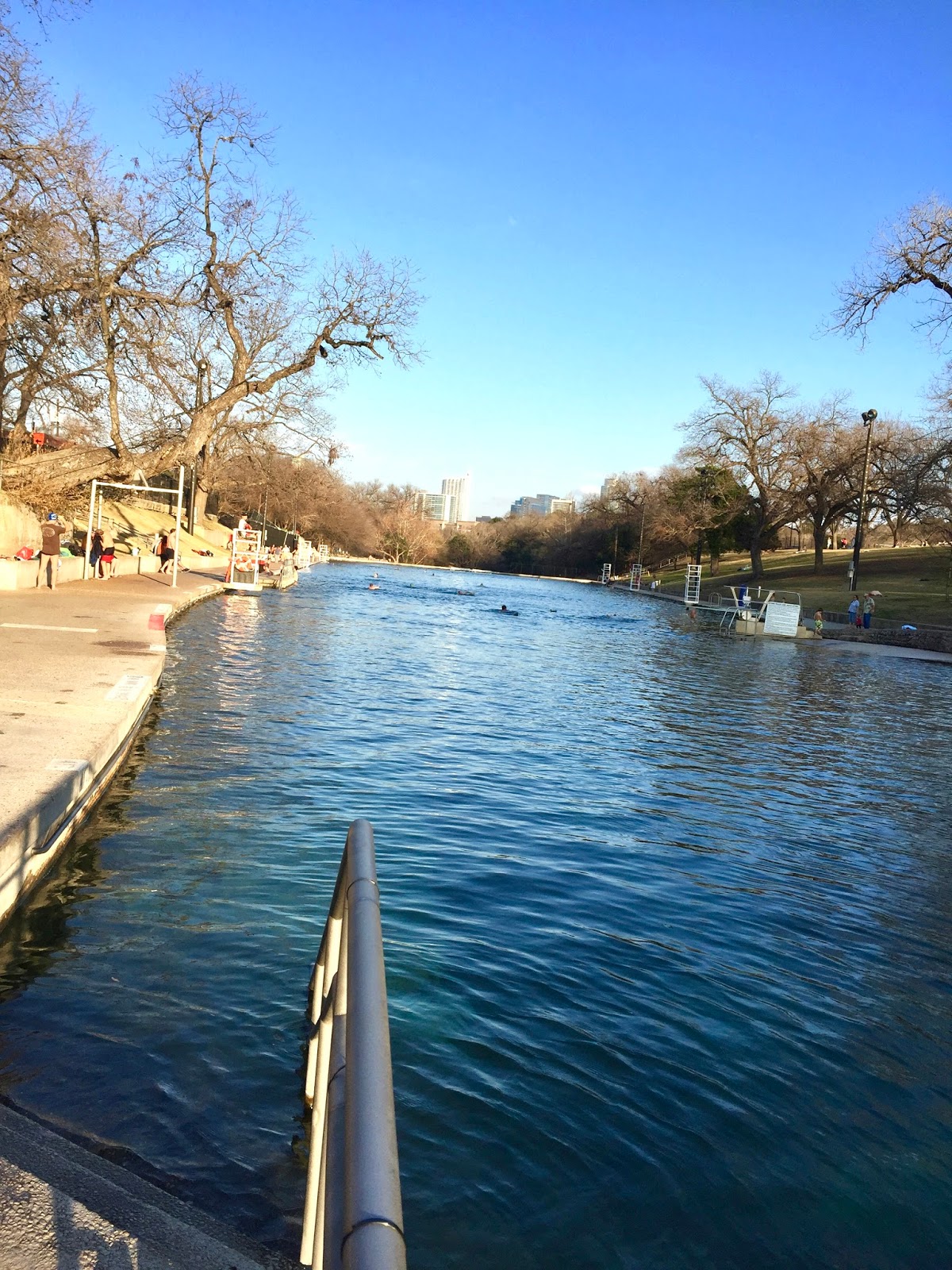 The 68 degree Barton Springs has always intrigued me. Stephen swims there often. There is a Deep Eddy Pool that has water from the springs fed into an actual swimming pool complete with black lines and lane lines! His fave is to swim in the actual springs itself, watching fish, turtles, and swaying grasses beneath him as he swims. It took a big dose of nerve for me to plunge into that cold water but, surprisingly, took far less than a minute to acclimate. My swim was our last day there but could make that part of my daily routine if I lived in Austin. Stephen said 150 people are moving to Austin every day. I chatted with a small business person and told him how much I loved his city and would love to live there. His manner is rather brusk and he kept repeating himself saying, “Don’t! Don’t! Don’t! New people are ruining our city.” That seems to be an across the board feeling of Austin’s long-time residents. I just love its outdoorsy-ness—to see people cycling, walking, running, SUP-ing, kayaking, canoeing, swimming, practicing yoga——you name it and residents are doing it. Austin-ites love their Barton Springs Park and Lady Bird Lake!
Clad only in a newborn’s sock and 2 strings
(Be relieved that I’m sparing you the side and frontal views which would be sights that you cannot un-see!)
(Be relieved that I’m sparing you the side and frontal views which would be sights that you cannot un-see!)
We drove to San Marcus for Bill to visit an exhibit of restored classic cars and he absolutely LOVED it. Then we visited Denton and were agape at the expansive ranches and trillion dollar homes in the area. We’d never been to Grapevine—I’d thought it was just the hailing port of DFW but it’s the most charming little village and they claim the title of being the Christmas Capitol of TX. Even after Christmas, their decorations remained and every little shop along the main street was festooned for the holiday.
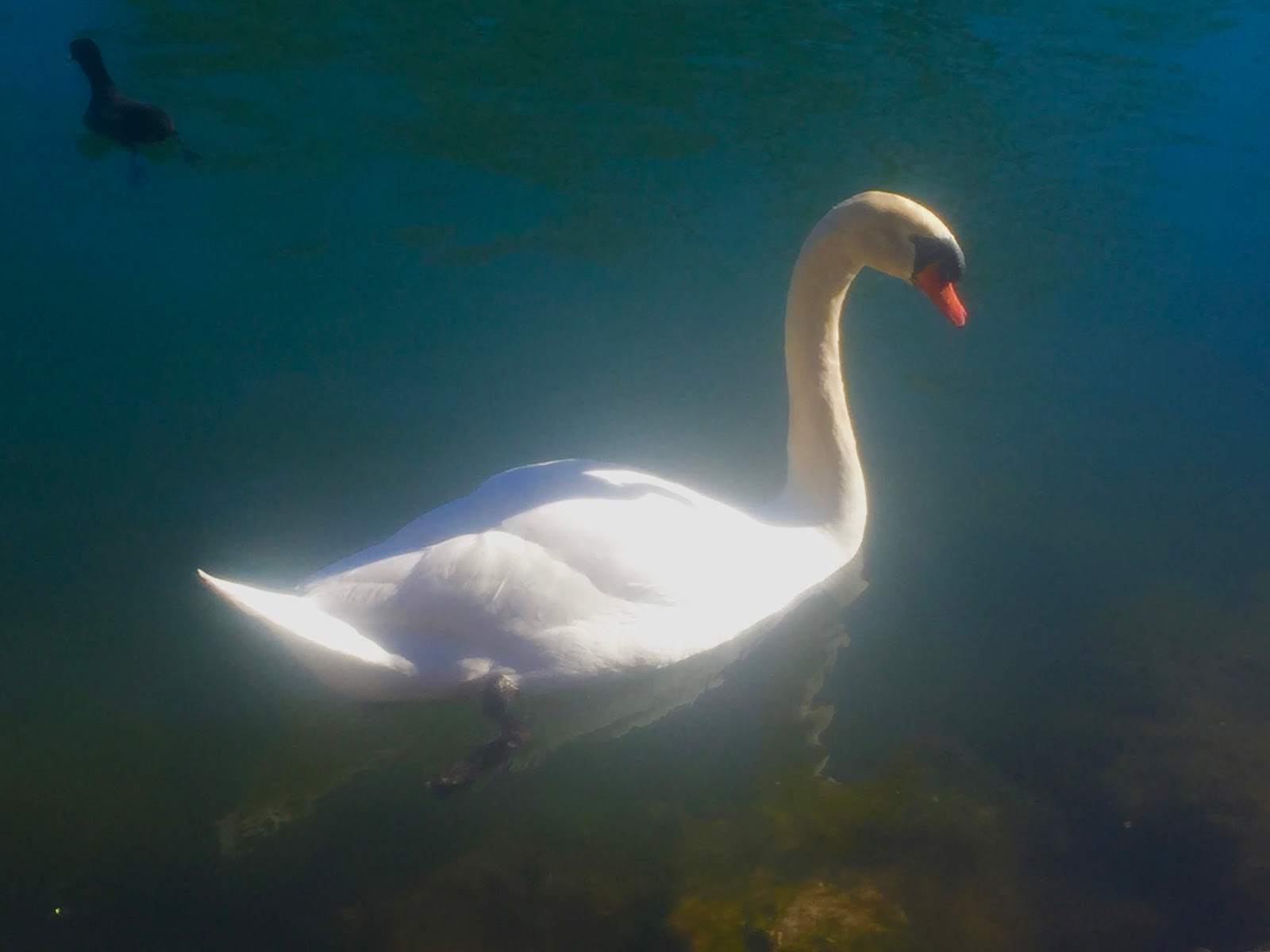
One of the things that makes us smile
Afloat on Town Lake
Sadly, our Austin time came to an end and we moved on to the German town of Fredericksburg, TX, where we stayed in the Lady Bird Municipal RV Park. I’d never even heard of this town but we spent an entire day walking the streets and poking into many of the little shops. Our day ended at Fredericksburg Winery where we had a fun time talking and laughing with 2 of the employees and came away with their “squeezings” and a bag full of corks to complete my wreath—and the corks have the winery’s name on them! We sauntered into a genuine German restaurant, Aüslander’s. Aüslander is the German word for outsider, foreigner, or tourist. Luckily, our server grew up in Berlin, is a cyclist, and has a family connection in Clemson—a neighbor to Greenville, SC, our city of retirement. We each had a different German beer which went wonderfully with our German dinner.
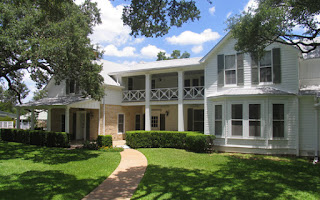
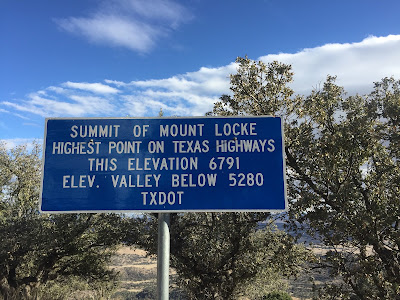
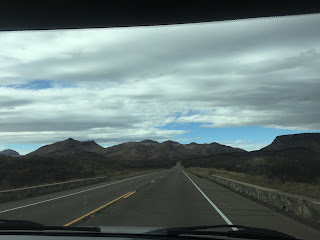
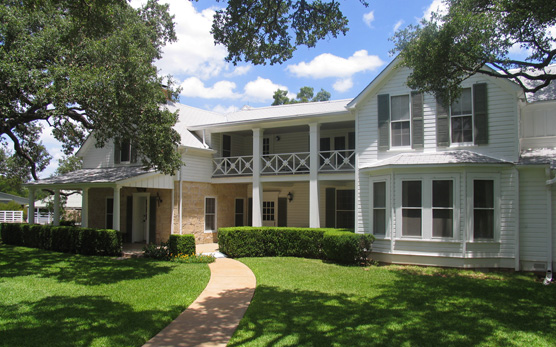
LBJ ranch, Stonewall, TX, was on our way west and we don’t want to pass up too many learning opportunities. The ranch is 1600 acres—absolutely enormous and the driveway to the home takes a very long and circuitous route.
We stopped for one night in Marathon which has the distinction of being a “Class 1 Dark Sky” (as dark as it gets). Its remote geographic location and elevation all contribute to enhancing this resource.

Terlingua, our next destination, was an 1880’s mining site for cinnabar from which metal mercury was extracted. The only remnants of the mining days are a cost town of the Chisos Mining Company and several capped and abandoned mines. The cinnabar was known to Native Americans who prized its brilliant red color for body pigment.

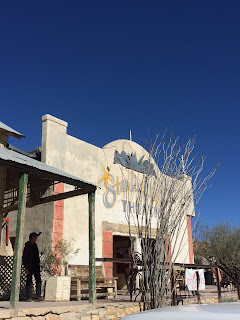
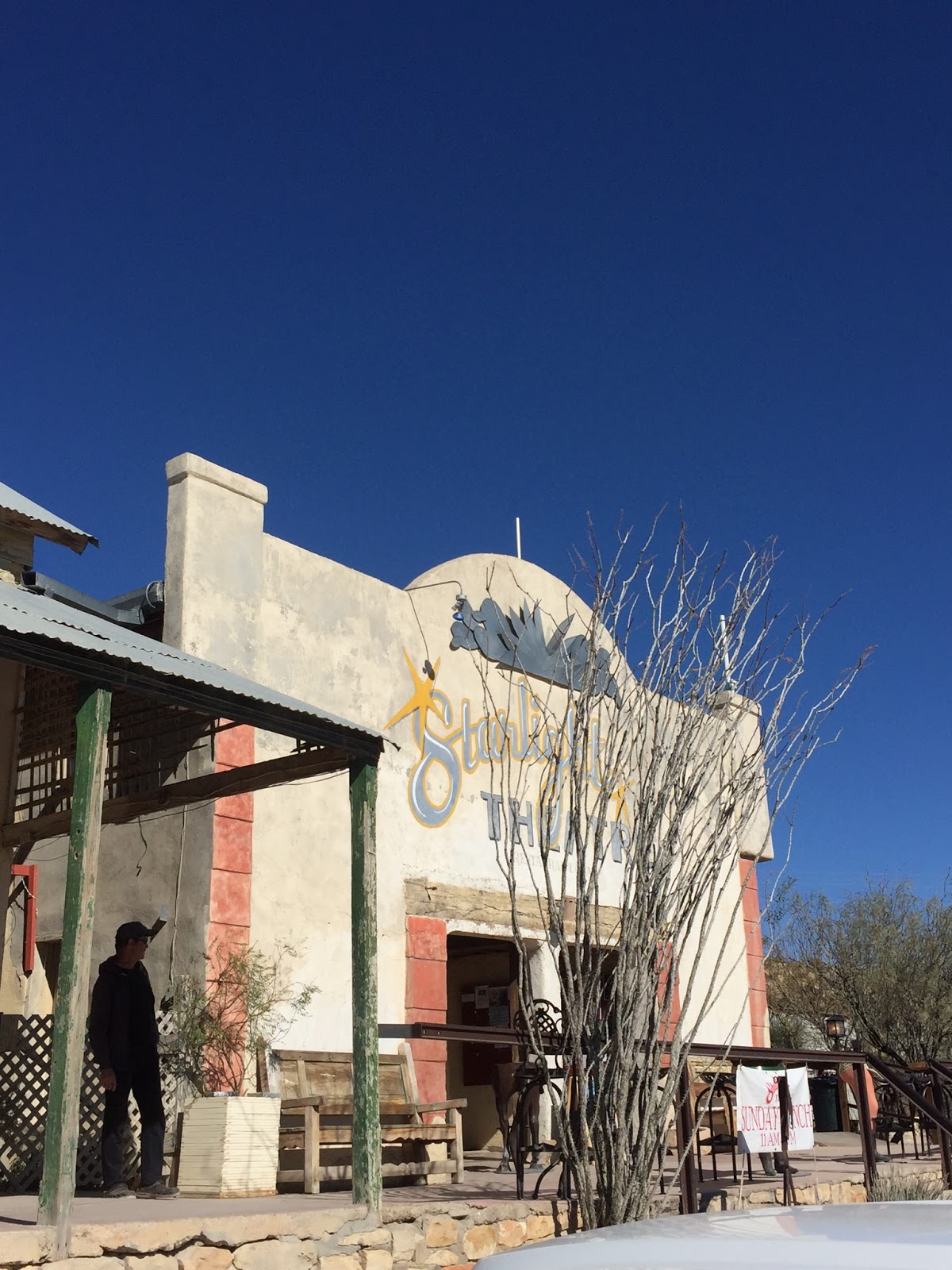
Terlingua Ghost Town holds the largest concentration of mining architecture in the area, restored as shops, restaurants, and homes. Favorite stops include the Starlight Theatre and the front porch of the Trading Post.

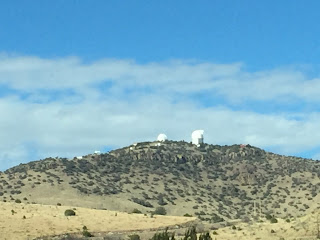
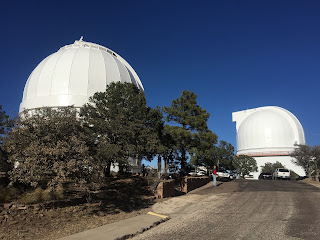
We traveled NW to Ft. Davis to visit the McDonald Observatory, a world leader in astronomical research. This is research arm of UT.

There’s a place in far west TX where night skies are dark as coal and rivers carve temple-like canyons in ancient limestone; a place where hundreds of bird species take refuge in a solitary mountain range surrounded by weather-beaten desert. Tenacious cactus bloom in the southwestern sun and the diversity of species is the best in the country. This magical place is Big Bend with 800,000 acres of rugged mountains, desert badlands, and towering river canyons—our national treasure.
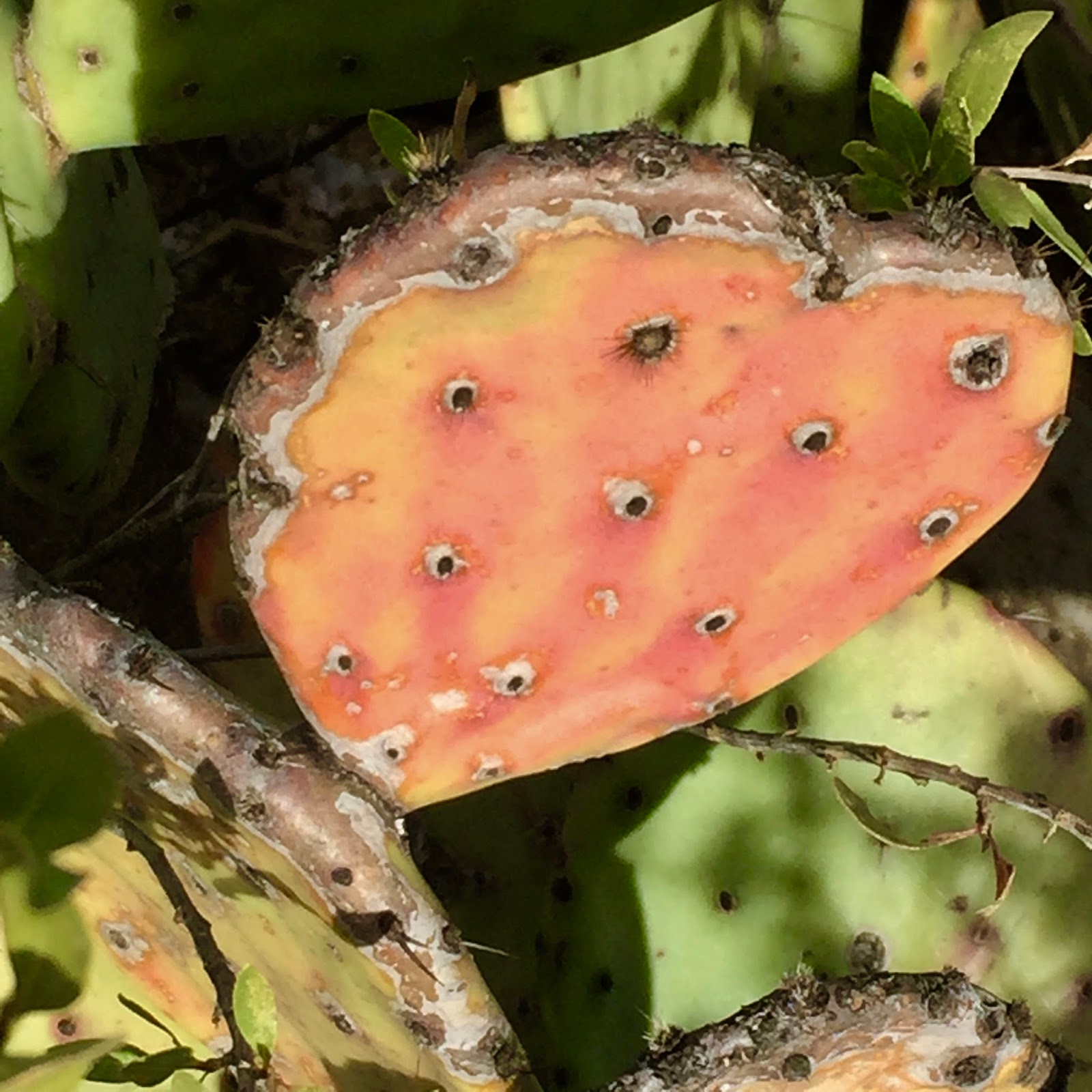 |
| A Love Heart Cactus Leaf |
We’ve heard so many positive stories over the years of Big Bend National Park. Two of our sons rave about it. One, who’s traveled the world, said it’s the most beautiful place he’s ever been. Andy and Stephen get off the beaten path, hike and backpack, sleeping under the stars. There are 5 visitor centers that help to explain the geology, archeology, and human history of the area. There are many exhibits and paleontological displays. We spent a week exploring and could’ve very well spent much longer. Splendid isolation, the Big Bend! Words cannot convey the strangeness and supreme melancholy of the landscape there..
Starting 40 million years ago, a series of volcanic episodes created the Chisos Mountains from lava and igneous formations that metamorphosed limestone and clay and eroded canyons, providing habitats that are countless and diverse.
The massive cliffs of the Sierra del Carmen appear an unyielding wall. The Rio Grande has carved a gorge 1300 feet deep directly through the escarpment. Boquillas Canyon is so narrow that the entrance is almost invisible from a distance. It looks as if President Trump has already built the wall but I think nature beat him to it.
Between 230 and 280 million years ago, Africa and South America collided with North America creating the Appalachian Mountains. This rugged mountain chain extended through the Big Bend – Mexican Borderlands region.
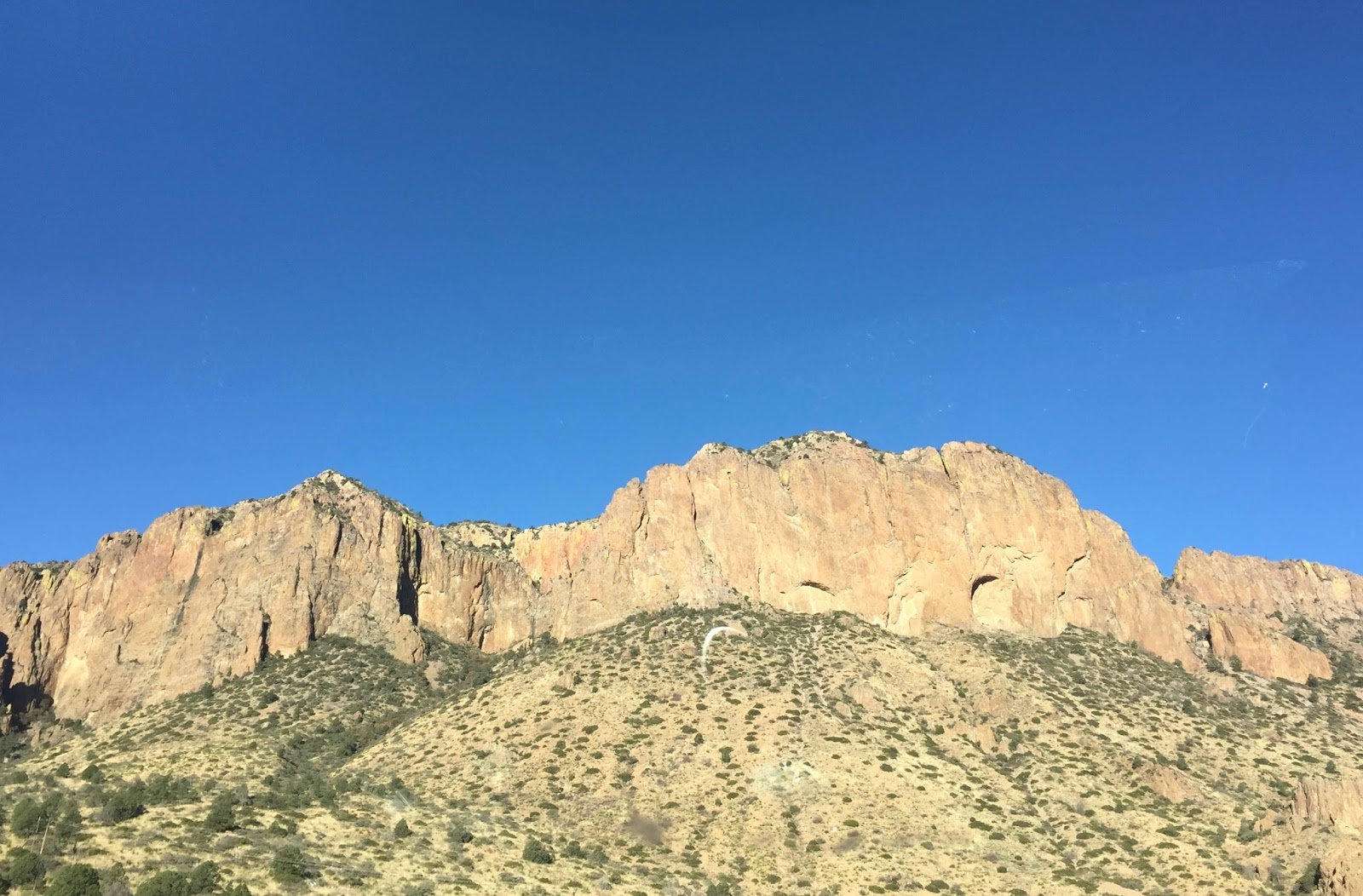


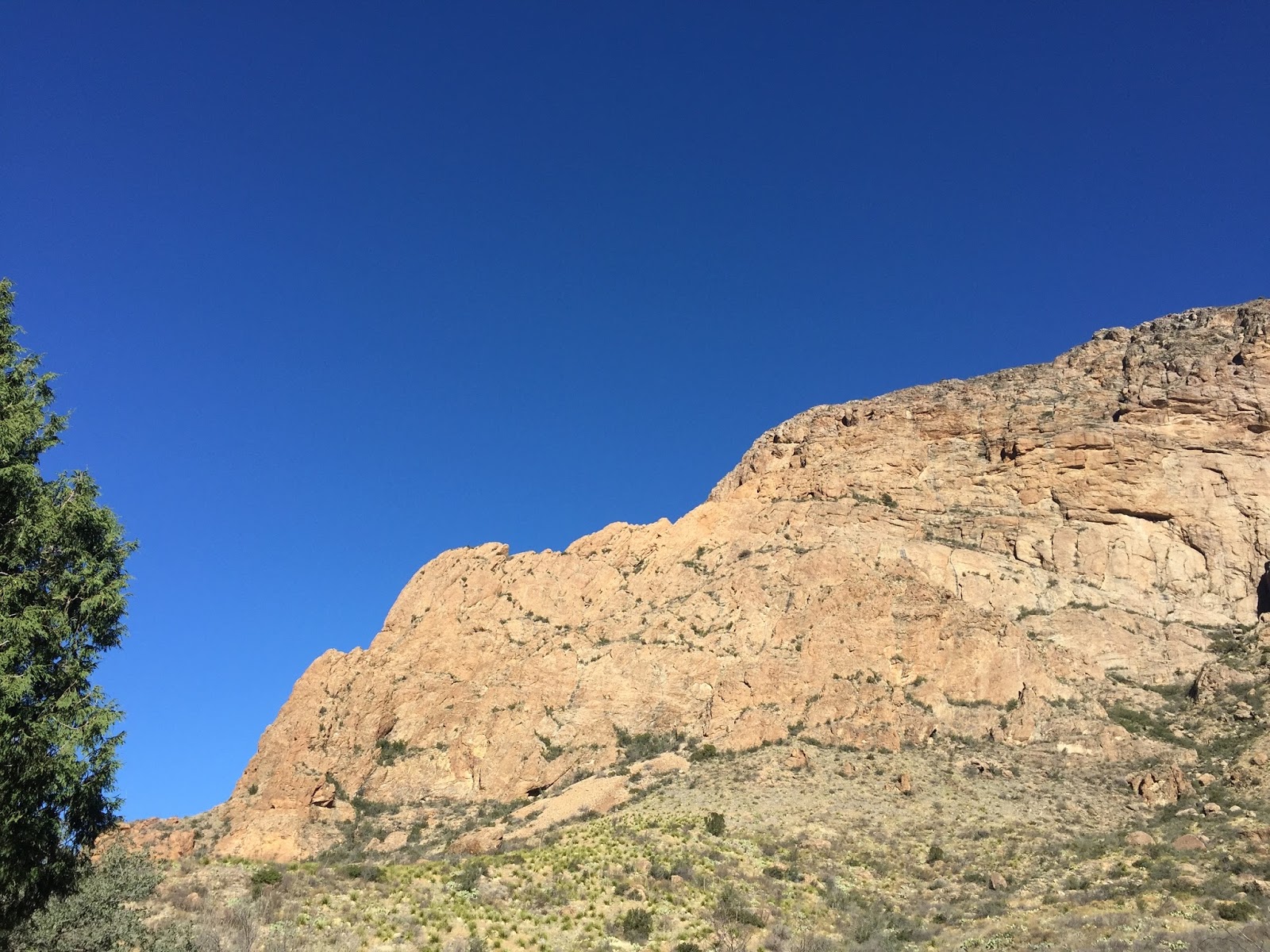
 |
| While on a hike, this little curley-cue caught my eye. |

This was an unusual tree to see in the middle of a desert. We hiked through the ruins of a resort that closed in the 1940’s and was built with the hot springs as the focal point. The springs are a constant 106 degrees and overflows into the Rio Grande.
 |
| The Rio Grande was very shallow and dry in places but here beside the hot springs, it’s flowing mightily. |

I’m fascinated by the striations of the rock.


Bill’s dipping his toes into the hot springs with the raging Rio Grande River behind him.


Our new president acted very fast to erect a wall!

Unfortunately, we were here on one of the 2 days a week that the border’s closed. Was looking forward to our row boat crossing.
The austerity of the cliffs is softened by colors which camera nor pen can reproduce. Every other aspect of vegetation, landscape configuration, and rocks is strange and weird and of a type unfamiliar to anything that, in modern civilization, we’re accustomed to seeing.
A drive to the Chisos Basin was a way to experience the transition between arid desert and cooler mountain habitats. The scenic, winding road rises over 2000 feet above the desert floor offering vistas of the mountain peaks and the basin area caused by erosion.
Our trip to Rio Grande Village took us over ancient limestone and wonderful views of the magnificent Sierra del Carmens. We continued to Boquillas Crossing but they were closed that day. We did see excellent views of the Rio Grande as it enters the canyon.
2 of our sons had really promoted the Santa Elena Canyon and when we hiked it, we were not disappointed. The limestone cliffs rise 1500 feet above the Rio Grande. We wished for a geologist and/or archeologist to answer our many questions about the geologic splendor that was all around us.
Big Bend is an oasis of darkness giving those who want to escape the bounds of the city; a place to revert to a time when nature was part of the human existence. This helps preserve not only darkness for the benefit of people, more importantly, they allow flora and fauna to thrive in environments that each and every species evolved to exist in—cycles of light and dark, varying in length only by the seasons, for millions of years.
Big Bend NP is one of the darkest places in the lower 48 states. It’s a place of solitude, where people can recapture a part of themselves that in many cases has been suppressed by careers, distance, time, or anything the keeps them from being in nature.
In addition to defining the curve that forms the Big Bend, the Rio Grande also serves as the International boundary between the US and Mexico

Rio Grande River separating Mexico and the United States
Our month of January ends with us in Odessa, TX, having the San Antonio repair repaired.
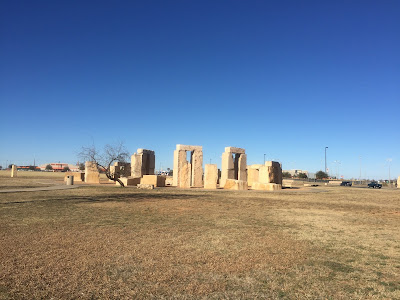

Odessa’s Stonehenge Replica on the campus of UT of the Permian Basin.
Bill and Laura
Pocosin Lakes National Wildlife Refuge
The Pocosin Lakes National Wildlife Refuge includes 111,106 acres of wetlands south of Albermarle Sound. The refuge is home to over 300 different wildlife species including otters, muskrat, turtles, and the endangered red wolf, plus tens of thousands of migratory birds in the winter. Sponge-like peat soil in the wetlands retain water and hold it…
October 5th – 26th, 2016 Port Aransas, Harvest Moon Trip
October 5, 2016 – Clear Lake to Galveston, Harborwalk MarinaOn this trip we had a couple of construction areas to contend with. The first one was the dredging under the Galveston Causeway Bridge. The bridge was closed to all boaters until 7…
FPB 70 Bow – Taking Metal To New Levels Of Shaping Sophistication
The FPB 70 brings together the very best of everything we’ve learned in the last 40 years, not the least …Read More
