
After leaving Cape Lookout, North Carolina, we ran for three nights to Massachusetts and stopped overnight at Plymouth so that we could enter Boston Harbor the following morning. As with Cape Lookout, we chose Plymouth mainly because it was a convenient and easy place to anchor without taking us too far off our route. But…
Little fabrication
Pretty warm in the boat shed today, thermometer was approaching 40 C which is waaaay to warm for this fat ole’ bastard! I was drenched inside of 5 mins!Managed to fabricate a new bulkhead or whatever you want to call it to support the prop shaft tube. …
Finally
New intercom phone to replace the nasty old nicotine stained one. Nothing has changed in the design and construction!!
Finally
New intercom phone to replace the nasty old nicotine stained one. Nothing has changed in the design and construction!!
Life’s little difficulties
Sometimes life just has it’s moments that seem to get in the way of a boat building session. Yesterday I was off and running for the UPS store to pick up my new motor mounts. Almost about to cross the border when the oil pressure in the ole’ IROC goes …
ENVOY CONTINUES CRUISING SOUTH
Envoy is currently anchored off Yiyhion on the mainland Greek southern coast with our friends Kevin and Diane aboard.
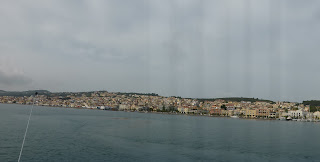

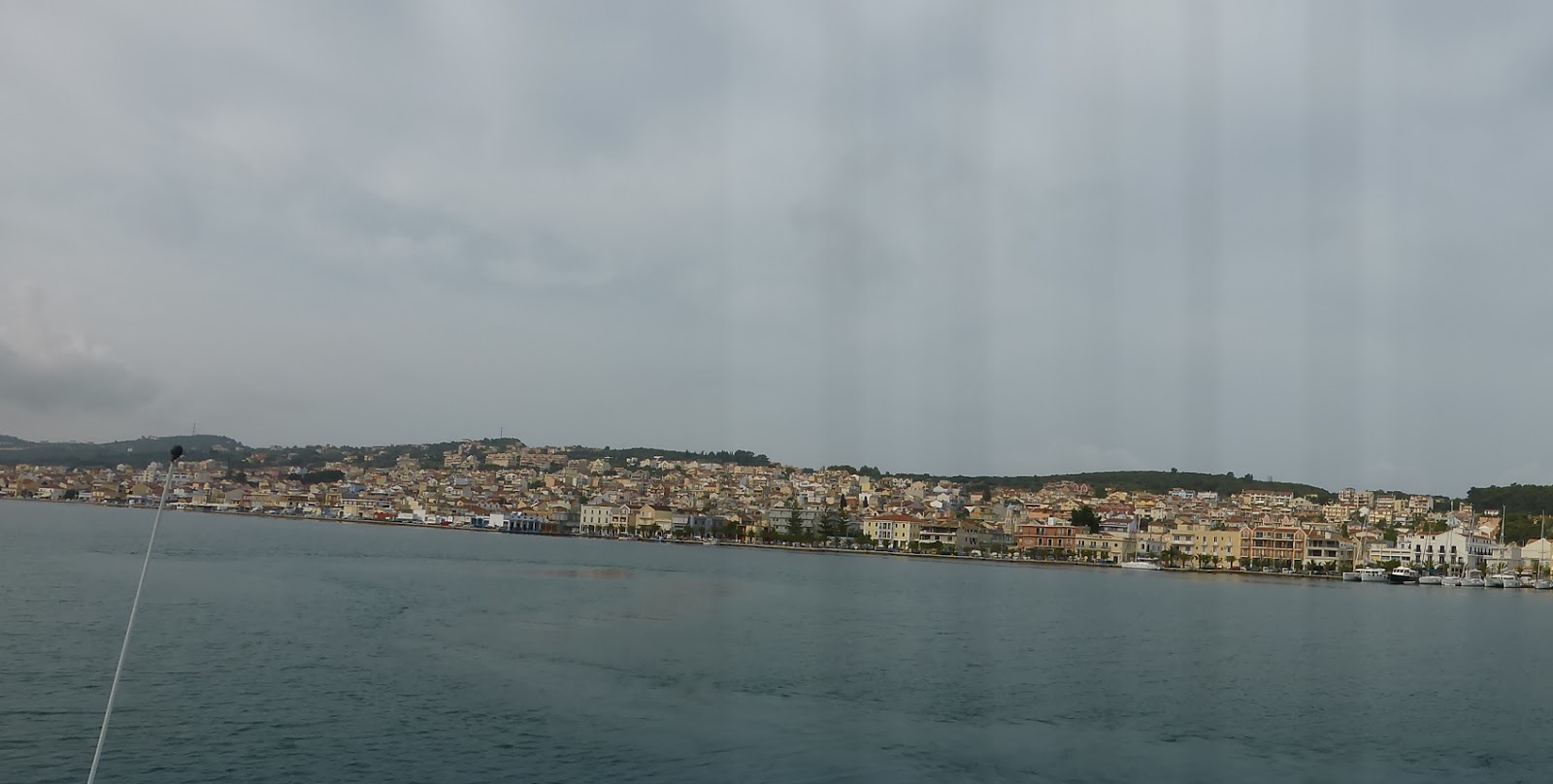
After leaving Lefkas Marina we cruise south to Argostoli, the port capital of Cephalonia, and anchor in the harbour seeing turtles for the first time this season as they pop their heads out of the water, take a look around and dive back to the depths. It’s a quaint town that suffered considerable damage during an earthquake in 1953 and was then largely rebuilt in its original Venetian style.
Vista of Argostoli from Envoy at anchor
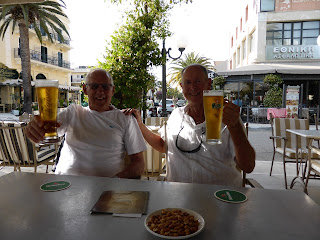
Chris and Laurie enjoy ice cold Mythos beers at Argostoli – someones gotta do this!

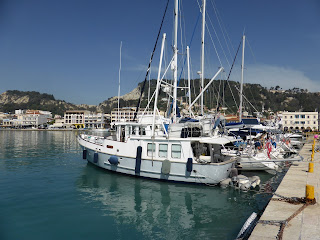
For the first time we visit the island of Zakynthos and anchor one night off a great beach at Alykanas before going into Zakynthos harbour so that Envoy will be safe while we hire a car to look around the island. The marina cost is a reasonable 35 Euros (about NZ$58) per night including power and water.
Envoy in Zakynthos Marina

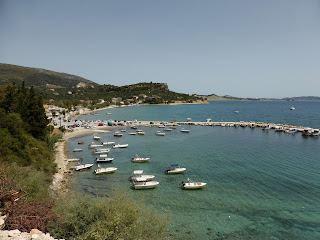
Alykanas is a great settled weather anchorage

In Zakynthos we have a rare bad dining experience with poor quality and over-priced food costing 100 Euros (about NZ$167) for the three of us. To be fair this is partially our fault for not checking the price of off-menu specials so that we end up paying 50 Euros (about NZ$83) for a small snapper that we’d throw back in New Zealand. After Chris makes our complaints known on behalf of all of us, they offer free meals for the following night although get off lightly as we don’t take up their offer.
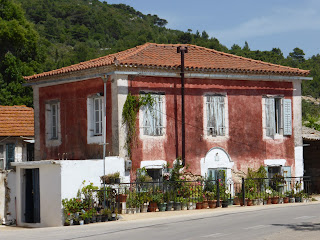
We loved this rustic old stone building

On the south side of Zakynthos is a marine reserve where turtles return to sandy beaches to nest and breed. Understandably boats are not allowed in most of this area but are allowed at nearby Ormos Keri where we spend two nights and we’re able to replenish our fresh water supplies from a tap at the local small boat harbour.
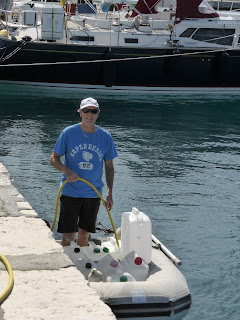
Gathering fresh water is a regular activity

Ormos Keri and its local boat harbour

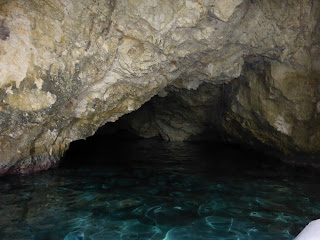
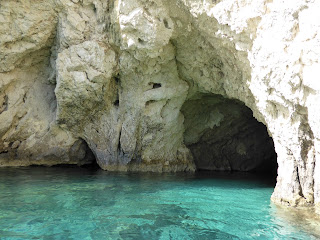
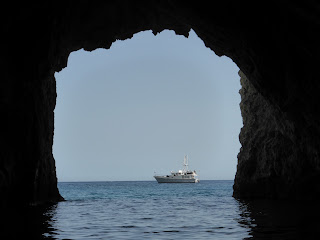
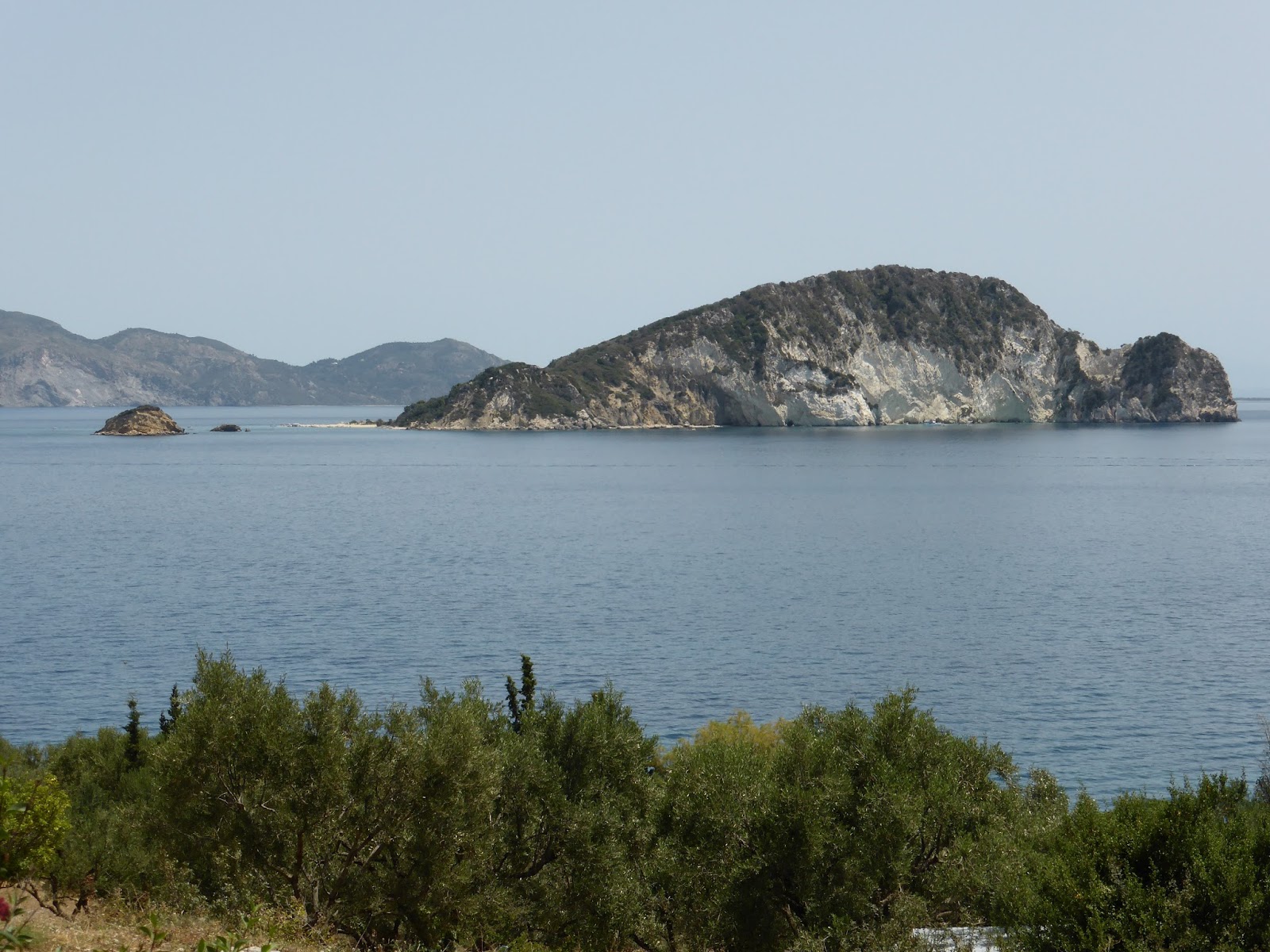
Two miles off the anchorage the island of Marathonisi has numerous sea caves that we are able to explore taking our RHIB completely inside.
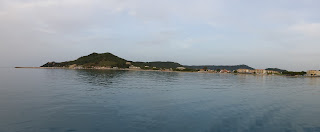
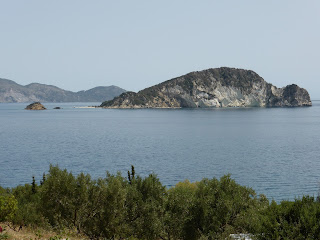
Marathonisi Island looks like a giant turtle
The sea caves of Marathonisi have exceptionally clear water


We are inside the cave looking out at Envoy

From here it’s about 50 miles east to the mainland Peloponnese coast where we ‘ll spend the next several weeks, so we break the journey about halfway at the remote and lonely Nisidhos Strofadhes Islands. We are the only vessel here and the cruising guide says gales from any direction cause the seas to be like a giant washing machine swirling around.
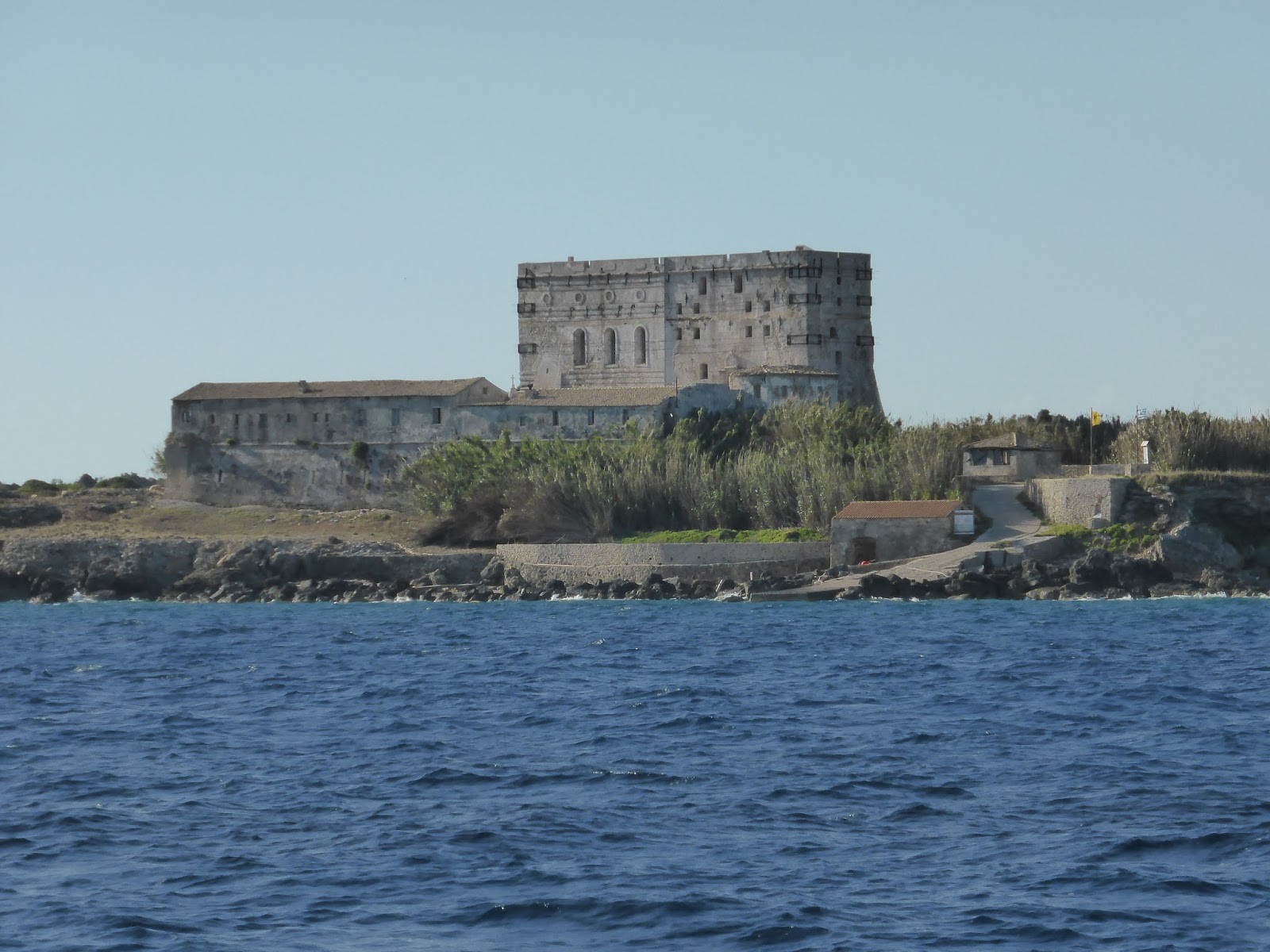
We don’t encounter a gale but even the 15 knot winds causes an uncomfortable swell to enter our anchorage making our flopper-stoppers necessary. The islands are inhabited by a solitary monk who looks after the 13th century Ay Panayis monastery, built like a fortress to withstand historic pirate attacks.
The fortress-like 13th century monastery
TECHNICAL
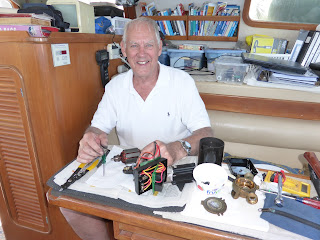
All fuel used by Envoy is filtered (or “polished”) using a 7 litres/min !2 volt pump feeding a 2 micron Racor filter and a magnetic DeBug unit into our in-use fuel tank before being used by any of the engines. Before if gets to the engine it then goes through a Racor primary filter and secondary on-engine filter. Shorty after leaving Lefkas Marina the 12V polishing pump fails, emitting just a faint clicking noise, so we replace it with our on-board spare – a simple exercise except for the time required to remove the pipe fittings from the failed pump and refit them to the new pump. As a new pump costs about US$500 and there was nothing to loose we decide to utilise Chris’s expertise and attempt to repair the failed pump, which consists of three separate parts – a rotary vane pump, a 12V DC motor and an electronic controller – any one of which could be at fault.
Chris fixing the failed polishing pump motor in Envoy’s pilothouse

We dismantle the vane pump and find no broken parts or blockages so dismantle the motor and find the armature and its associated brush housing in poor shape. We clean it up with white spirit and carefully clean the commutator grooves with a sharp blade and fine emery paper, then reassemble the motor without the pump and test it on a 12 volt power supply, but it still doesn’t run and makes the original clicking sound. However when we remove the motor from its electronic controller it runs perfectly. We take the controller apart and find two relays hard-wired onto a circuit board – by elimination probably the cause of failure. We consult the specs to find these relays simply enable the pump to be switched for forward or reverse operation. Our use is for one direction only, so we remove the relay board and hard-wire the motor using its existing switch and fuse, reattach the vane pump and it works perfectly.
We finally confirm the cause of the seawater leak to the guest cabin bilge. The outlet hose from the aircon’s seawater cooling system discharges out of a through-hull fitting (without a seacock) just above the waterline. This hose is not visible or accessible for its complete length and must have a split or developed a small leak so that when sea water has been splashing into this hose it’s been leaking into the bilge. We fit an in-line gate valve near the through-hull and when closed the leak soon stops. Normally gate valves aren’t recommended, but this is an above-waterline and non-critical application so we’re comfortable with it. The hose will need replacement.
June 24 – Bloomsburg, PA
“The best and most beautiful things in the world cannot be seen or even touched. They must be felt with the heart.” ―Helen Keller
We’ve spent the last week helping our son and his family move and get settled into their new home in Pennsylvania. It’s a pretty little town and the surrounding countryside is beautiful.
CONTINUE READING HERE…»
SUSUI WOMEN GARDEN CLUB
SUSUI WOMEN GARDEN CLUB
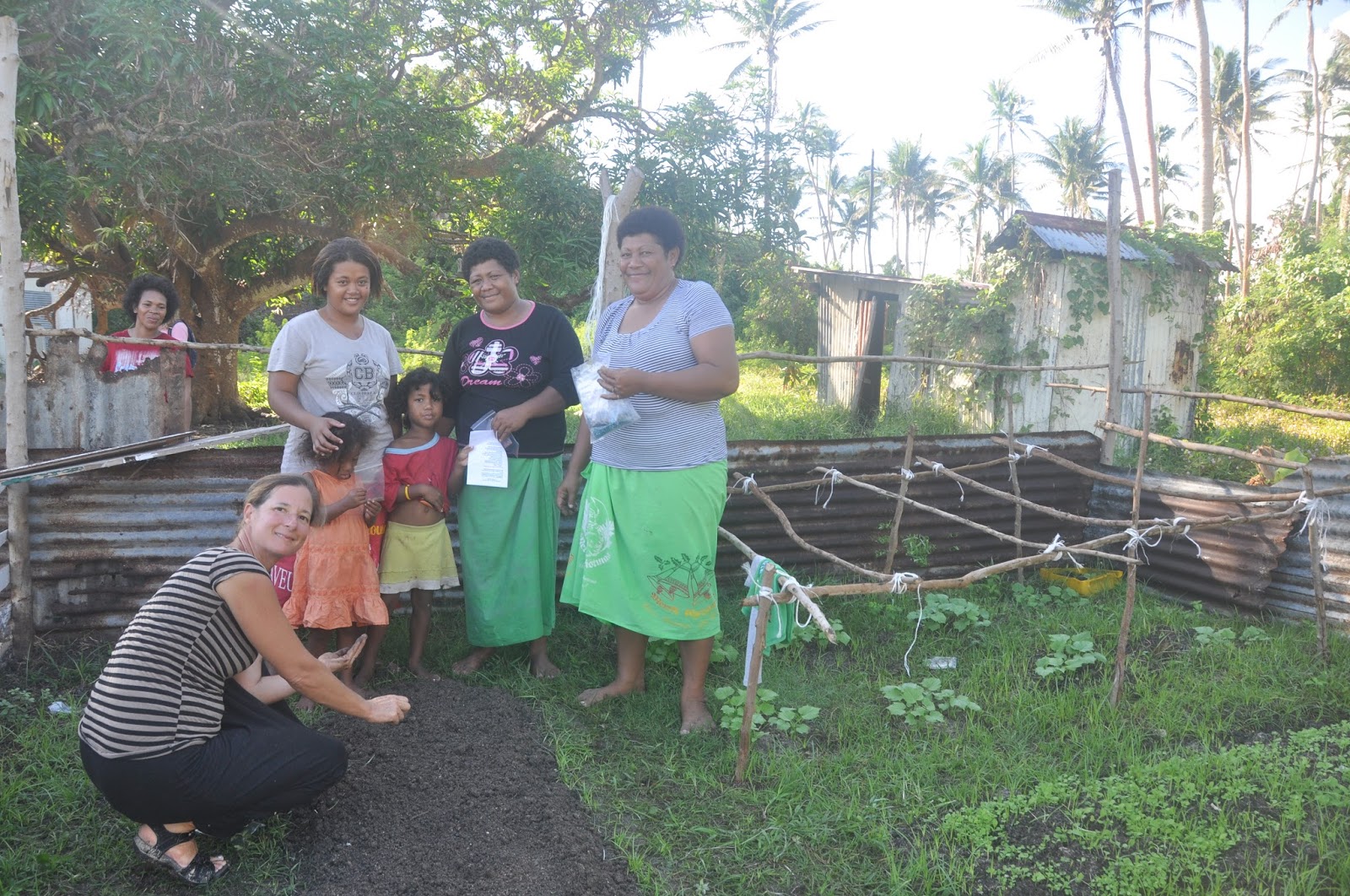 |
| Sea Mercy Volunteer and Susui Sponsor Gretchen (S/V Peregrine) and the Susui Women Garden Club |
Loma Loma, Vanua Balavu (Fiji)
June 24, 2016
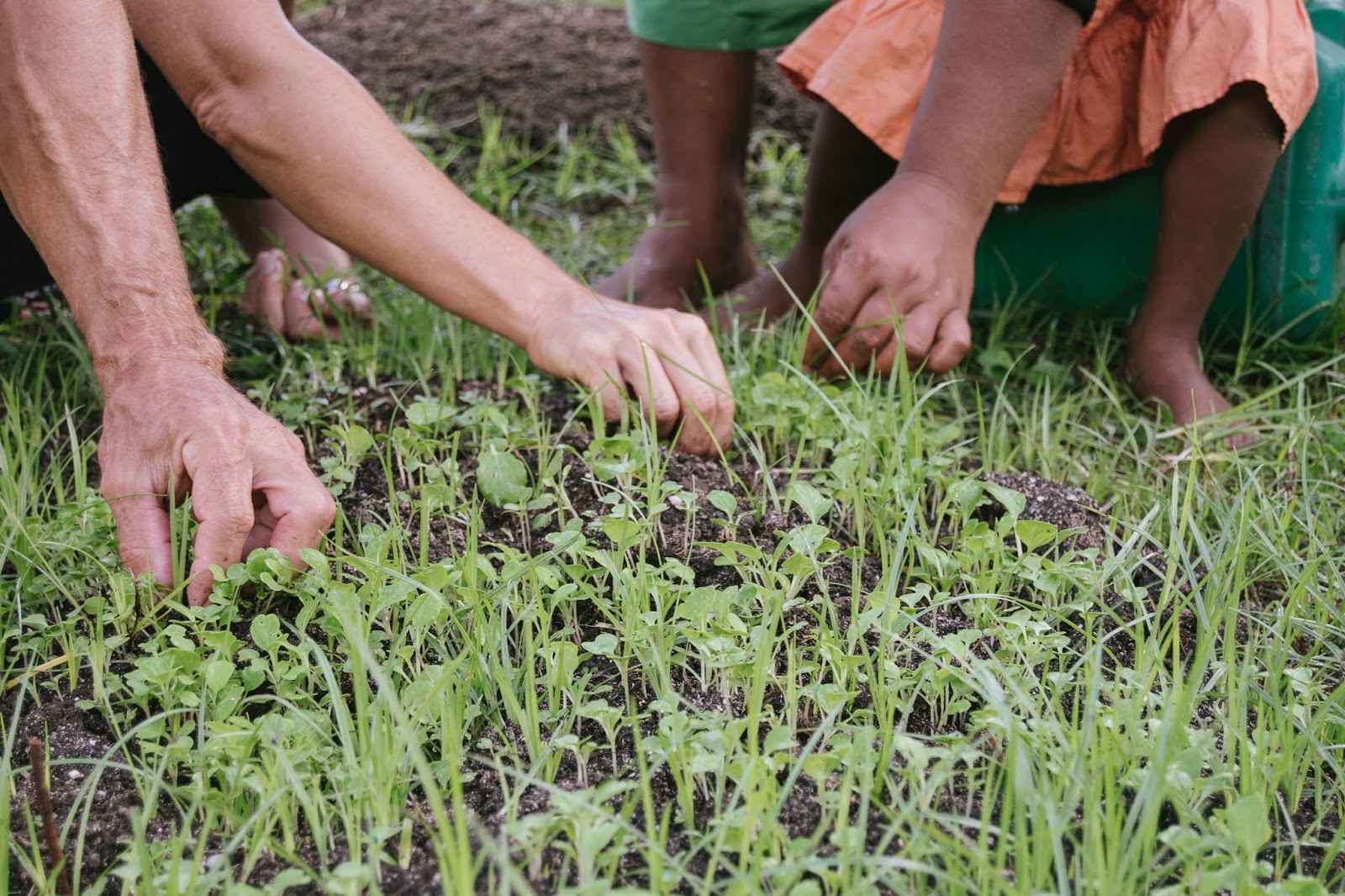 |
| Weeding through the Chinese cabbage (Photo Tessa Irvin) |
One island at a time, one village at a time, one garden at a time, we’ve distributed seeds to 12 gardens already, and Susui Island was our 13th distribution. Like in the other villages, our little group of volunteers was overwhelmed by the kindness and ardor of these hard-working women.
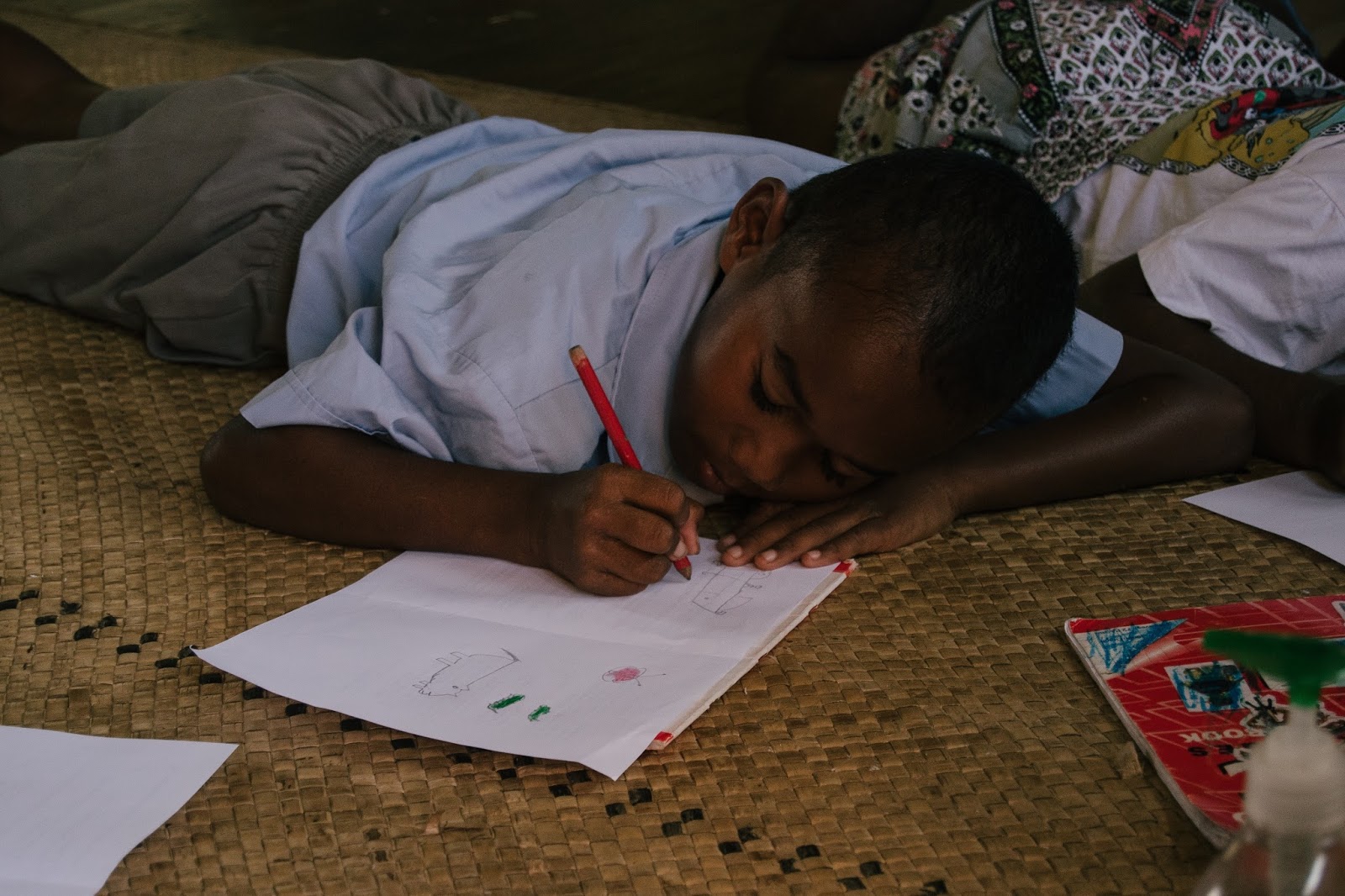 |
| While we wait for the women to gather for pesticide instruction, the kids draw caterpillars and bugs and fish and pigs…. |
Take Bale, for example, the leading woman of the village. When we called on her at 8 AM to start the gardening program, she had spent all night out fishing, caught 70 small fish that she was frying for our dinner, and had not gone to sleep yet. Kindly, she took us to the community garden, not complaining that she was tired, not asking us to come back after her nap!
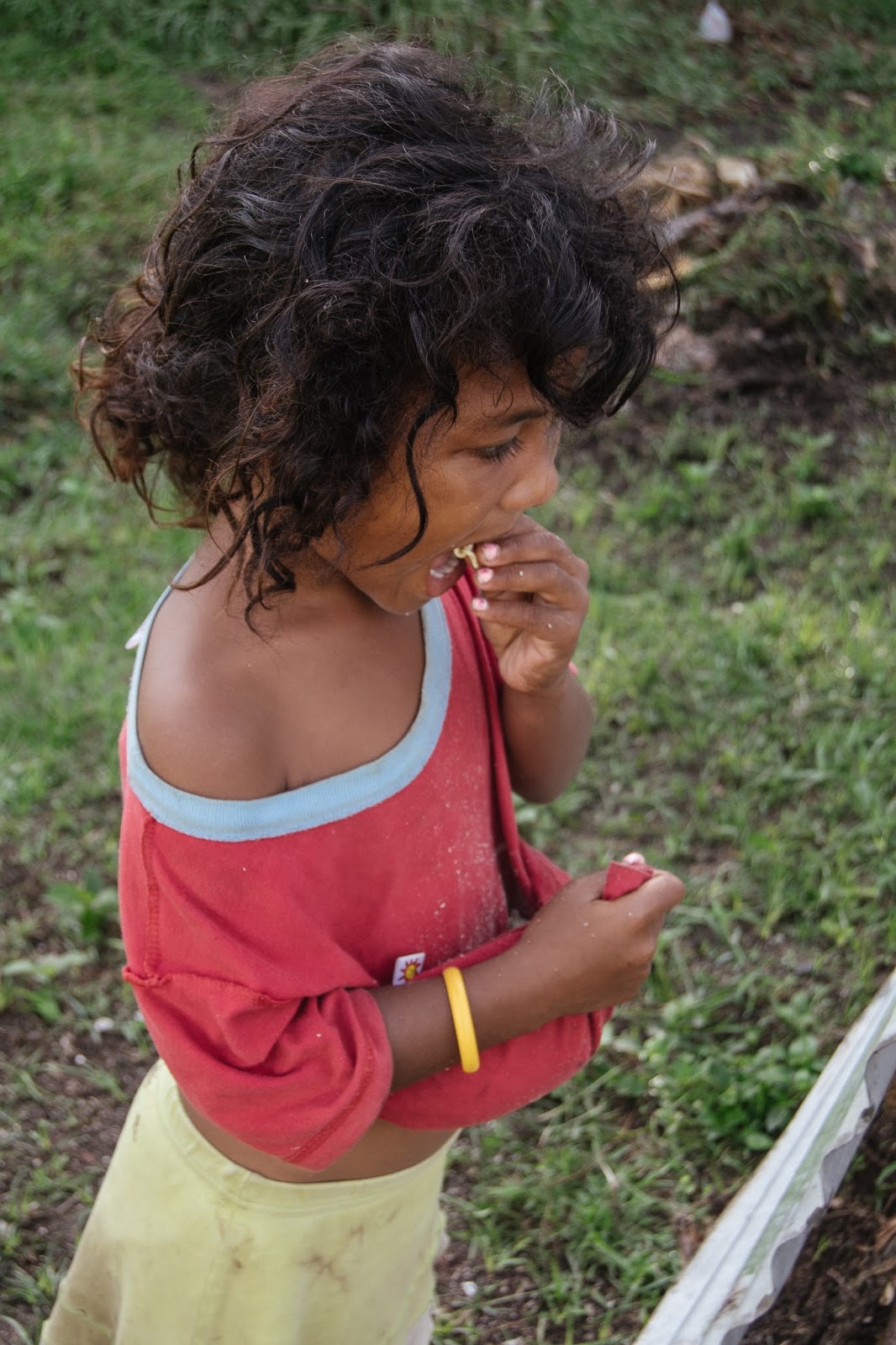 |
| Bale’s daughter lunch: dry ramen noodles tucked into her shirt |
The Susui Women Garden Club, as they call themselves, is a small, enthusiastic group of young women, full of energy. Before our 1st visit, they had already built a fence to keep the pigs out of the garden and had planted a few beds: tomatoes and green beans. But the main problems was poor weeding and white flies. It’s not enough to turn the soil over, you need to remove all weed and roots.
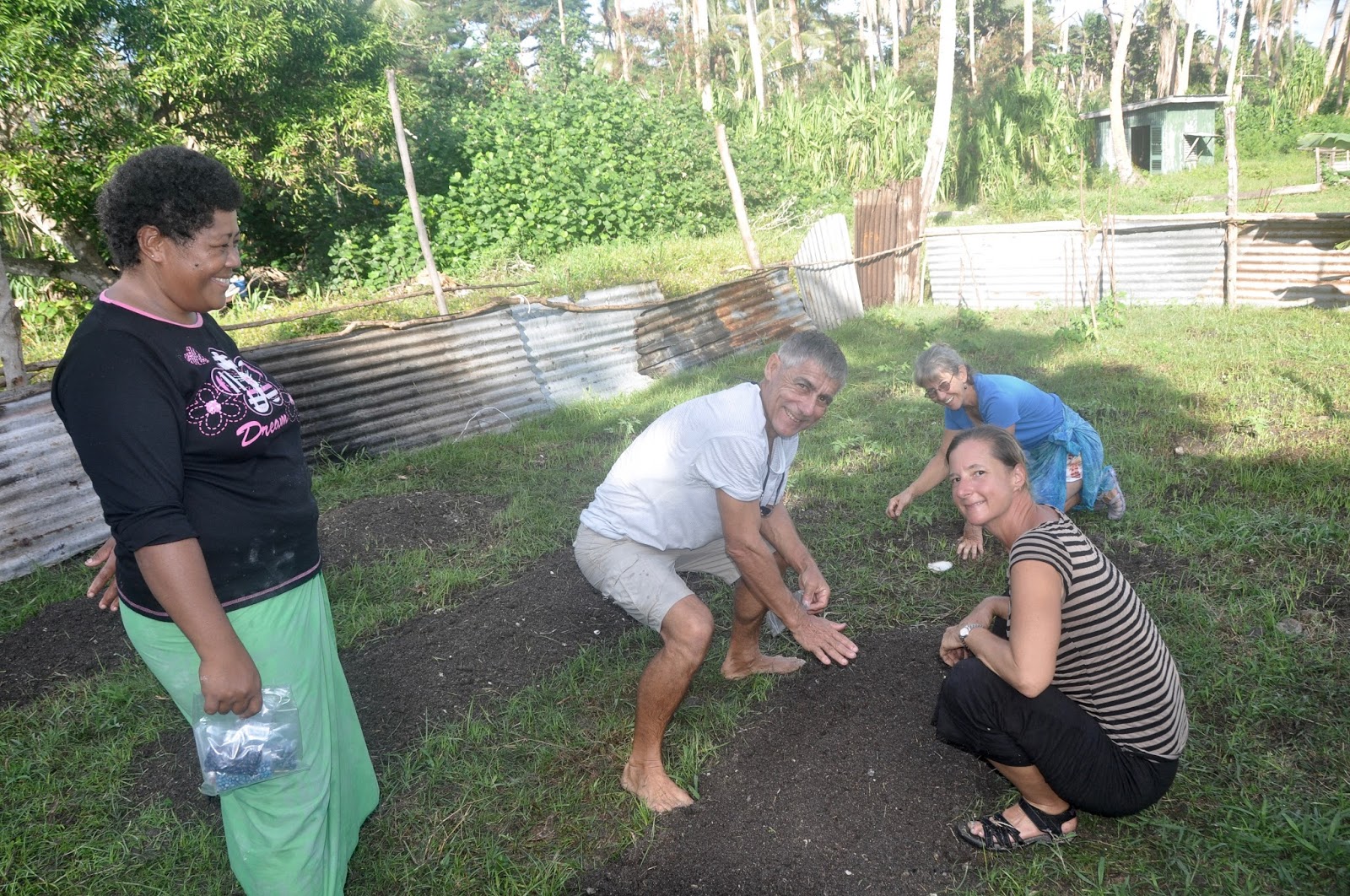 |
| Bale learns how to seed carrots with Sea Mercy volunteers JP, Willie and Gretchen |
We made quick work of seed distribution and planting instructions, including pesticide information and spraying. When we returned the following day, the women had gotten up at 4 AM, awoken by the village drum, as they do every day, had gone to church promptly, had breakfast, sent the kids to school, and had weeded the beds and sprayed the chili-garlic brew on the beans… all before we cruisers were even awake! JP and Gretchen seeded the 1st bed of carrots: once more, the women were so excited about those carrots, which they had never grown before!
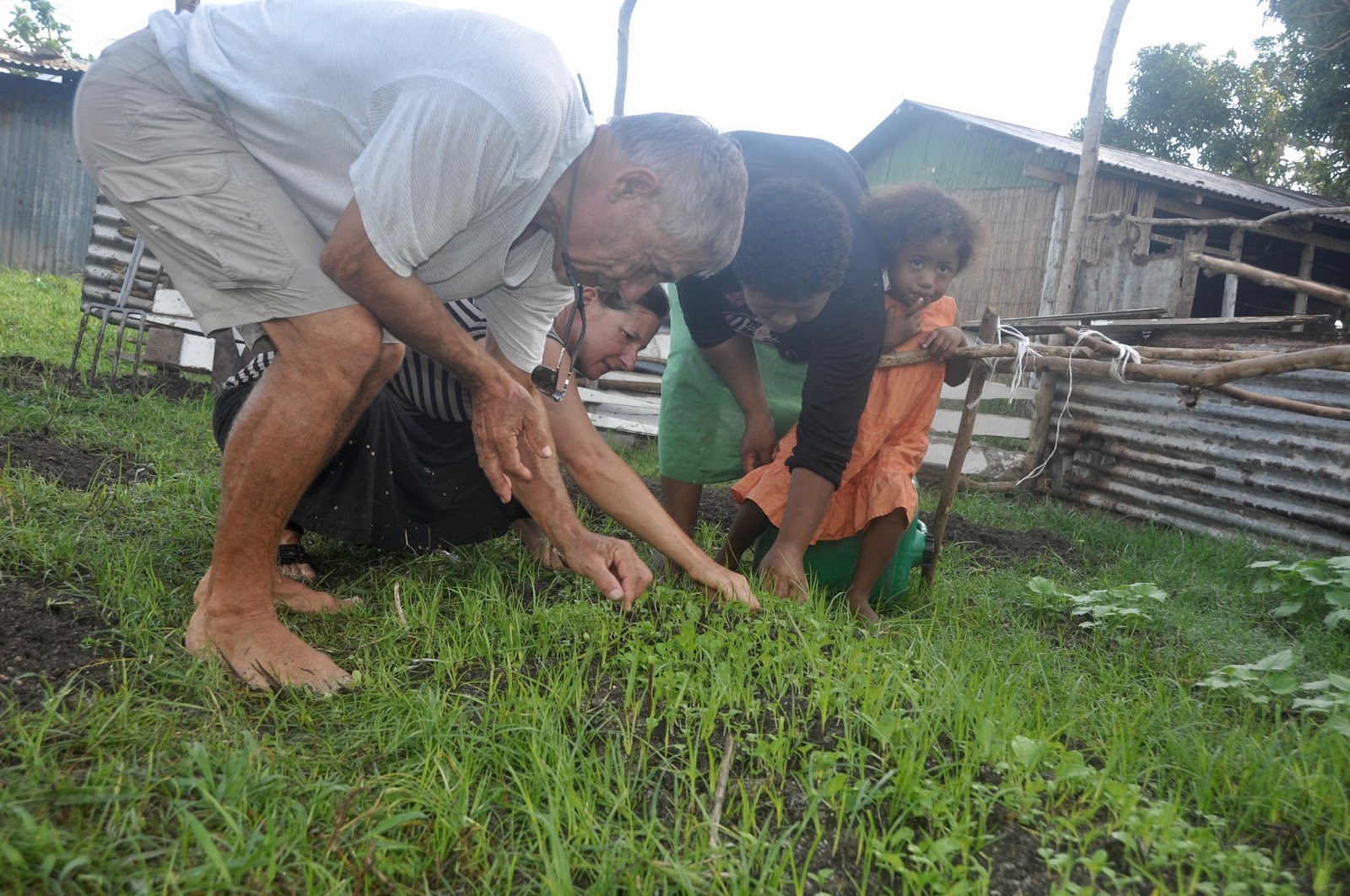 |
| Let’s get this weeding party going…. |
By now we have this gardening program running pretty smoothly. Gallons of chili-garlic and white oil sprays, 88 Ramakrishna seed packs distributed, DOMINO’s contribution is now at its end, since we are leaving tomorrow for Vulaga, Onega and Vatoa, all Southern Laus islands. Tomorrow, it will be some other Sea Mercy volunteer who will take this program to Cikobia, another isolated island inside the Vanua Balavu lagoon.
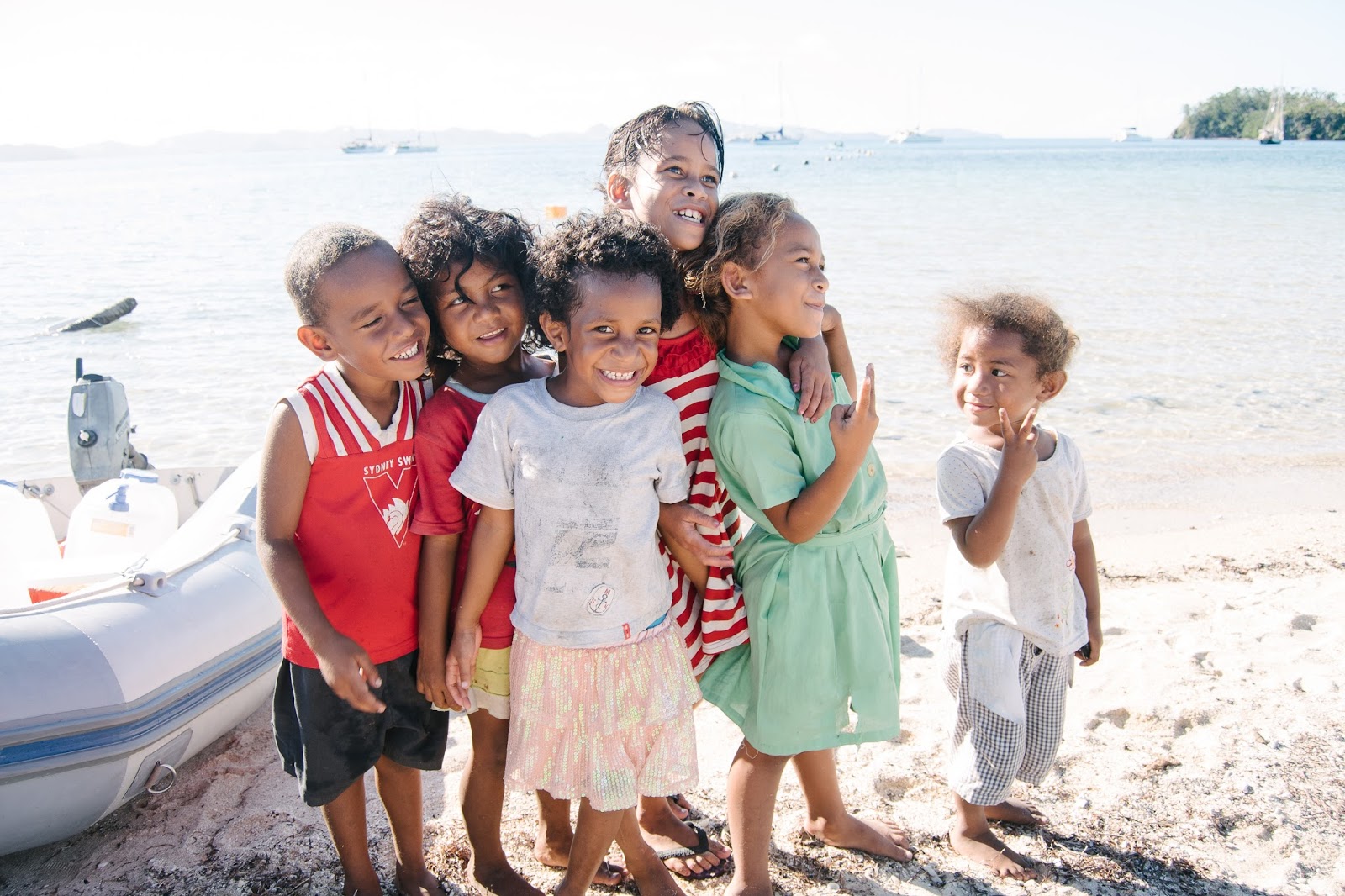 |
| Susui’s kids (Photo Tessa Irvin) |
This has been an amazing time and we wish all the women of Vanua Balavu a rapid recovery and a plentiful harvest.
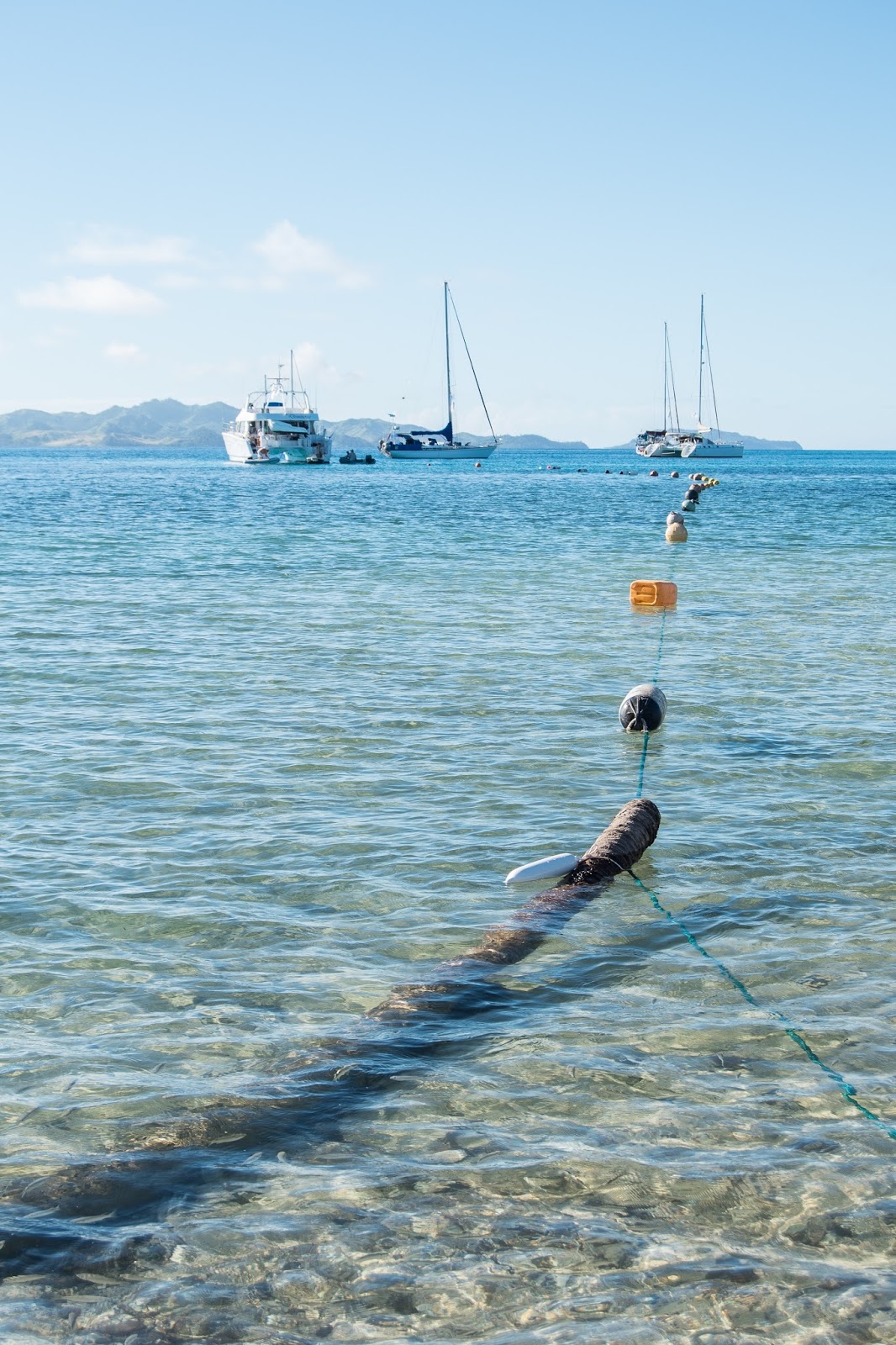 |
| Domino delivers water in Susui (photo Tessa Irvin) |
Till next time…
dominomarie
SEA MERCY – AVEA ISLAND GARDEN
SEA MERCY – AVEA ISLAND GARDEN
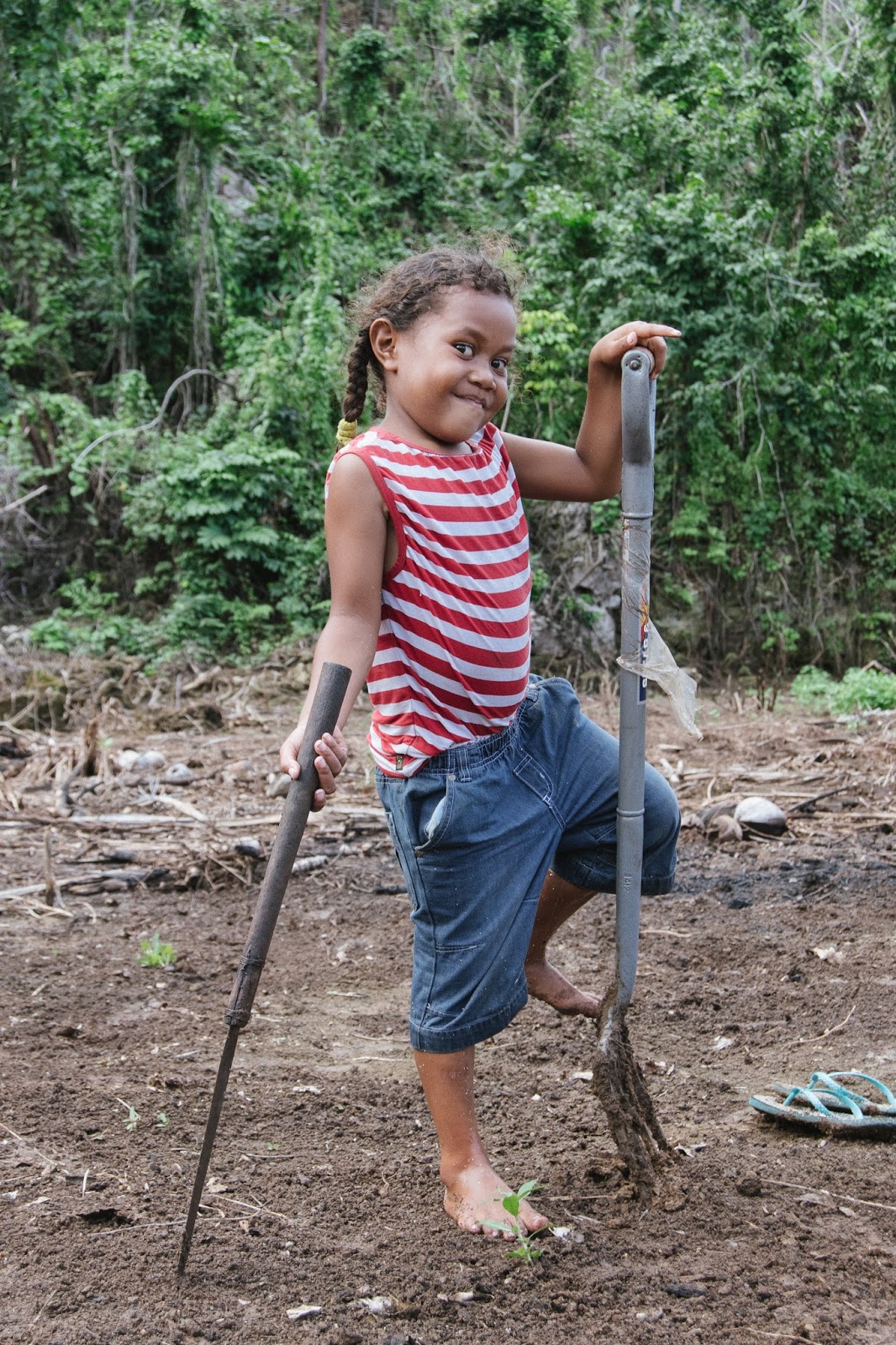 |
| The younger generation at work |
Loma Loma, Vanua Balavu (Fiji)
June 24, 2016
(Photos and Videos by Tessa Irvin, S/Y REWA, Sea Mercy Volunteer)
Perhaps it is because they only have ONE day a week to work in their community garden for ONE hour only, perhaps it is just their nature, but the women of Avea Island pour their hearts, energies, and pure joy into their garden.
Avea is a very small, low island north east of Vanua Balavu, and Winston hit it hard. The school and community center are gone, a good chunk of the beach has been washed away, and the soil in the village is salty and sandy, not very fit for gardening.
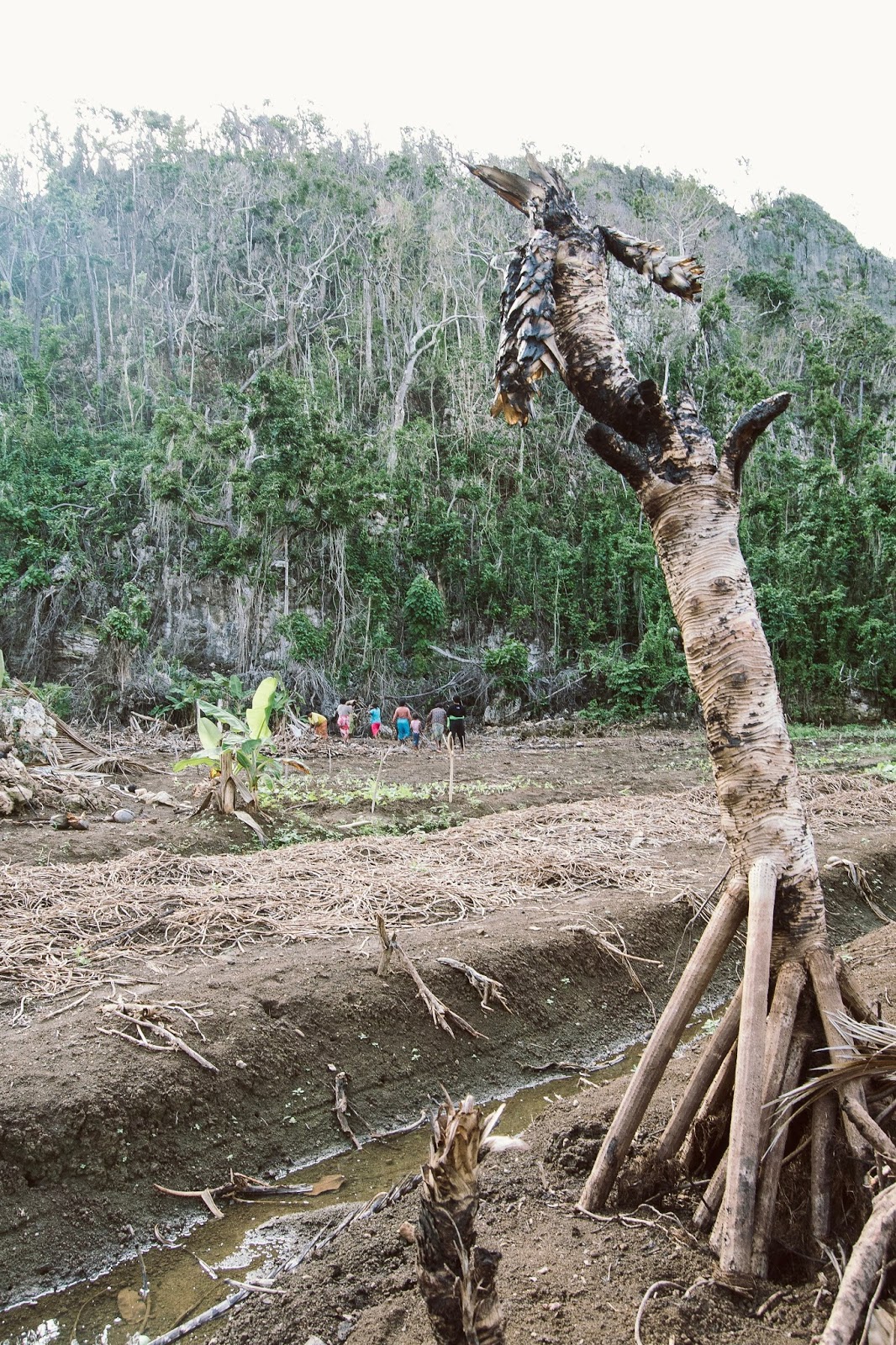 |
| Deep in the valley… irrigated plots |
But away from the village, there is a fertile land at the bottom of the hills, where fresh water flows abundantly and the alluvial soil is very rich. The problem is getting there! It’s either a 30-minute walk, wading along the shore at low tide (unreacheable at high tide) or a very wet long-boat ride, racing the tide.
 |
| Transplanting Chinese cabbage: too small… JP instructed in bigger tanspland (“Petite salade, gros chou!”) |
While JP and DOMINO were delivering water into the village’s cistern, the Sea Mercy volunteer women hopped into the long boat and were in for a surprising ride! As if to squelch their discomfort, the women were singing their hearts out, a pot and machete their marching drum!
Once our driver Tomasi dropped us all on the beach, thoroughly soaked, we single-filed through the struggling coconut grove, through the beetle-infested sweet potato beds, only to arrive at the Garden of Eden.
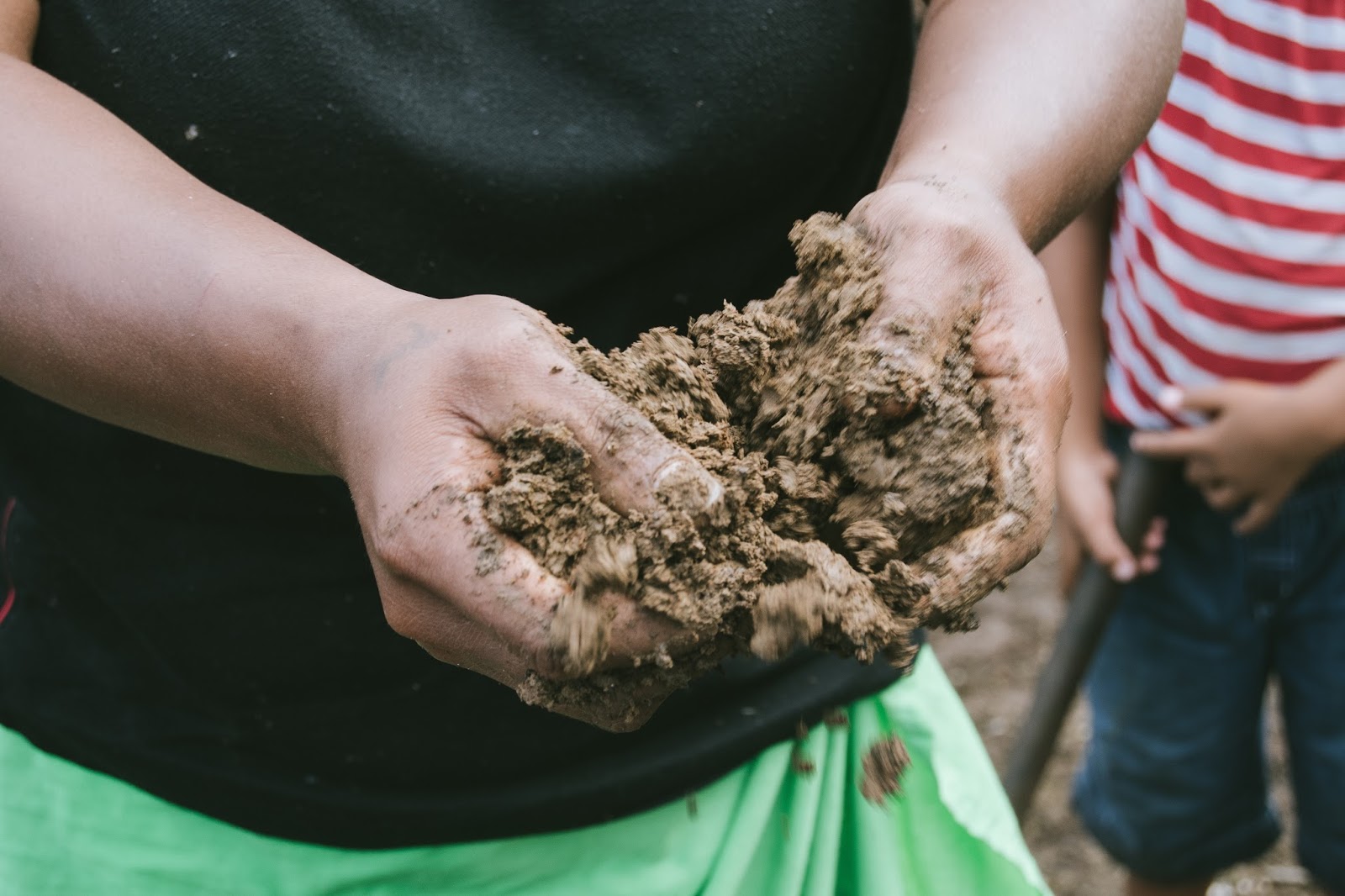 |
| Rich, thick, wet soil |
WOW! A large field of deep-dark soil, divided into irrigated rectangular family plots, lay before us.
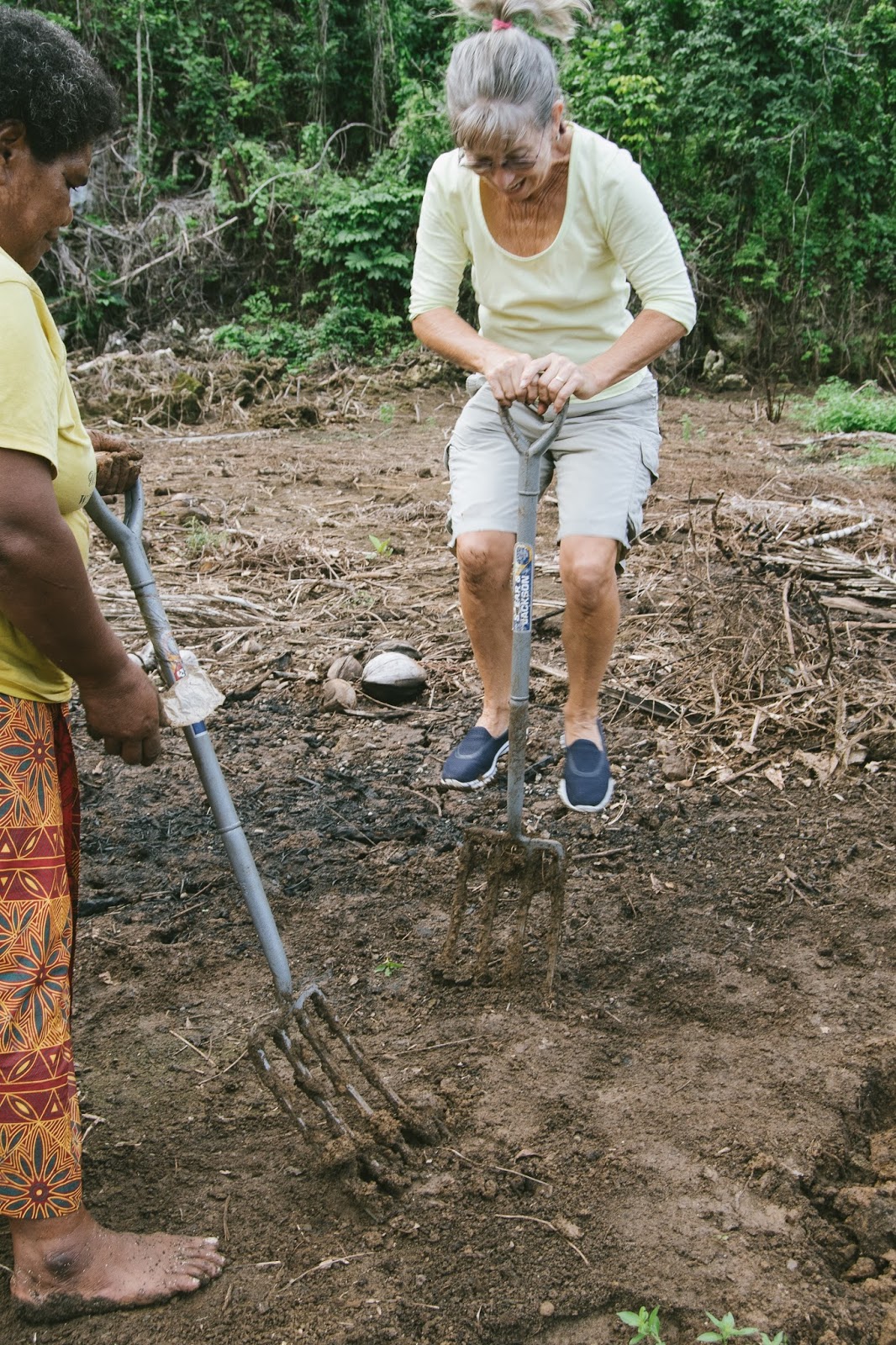 |
| Sea Mercy Volunteer Willie (S/V Dream Catcher) gives it a go! |
Nana Sarah, the women’s leader, explained. “These are family plots. Some families exploit their gardens, but not all. We have not started a community garden yet, but that’s what we are here for today. Let’s get started!” In no time, the women had tilled beds and were planting seeds, helped by our volunteers.
Our ride back, downwind, prompted the women to more singing and dancing, making circles around DOMINO to try to get JP’s attention!
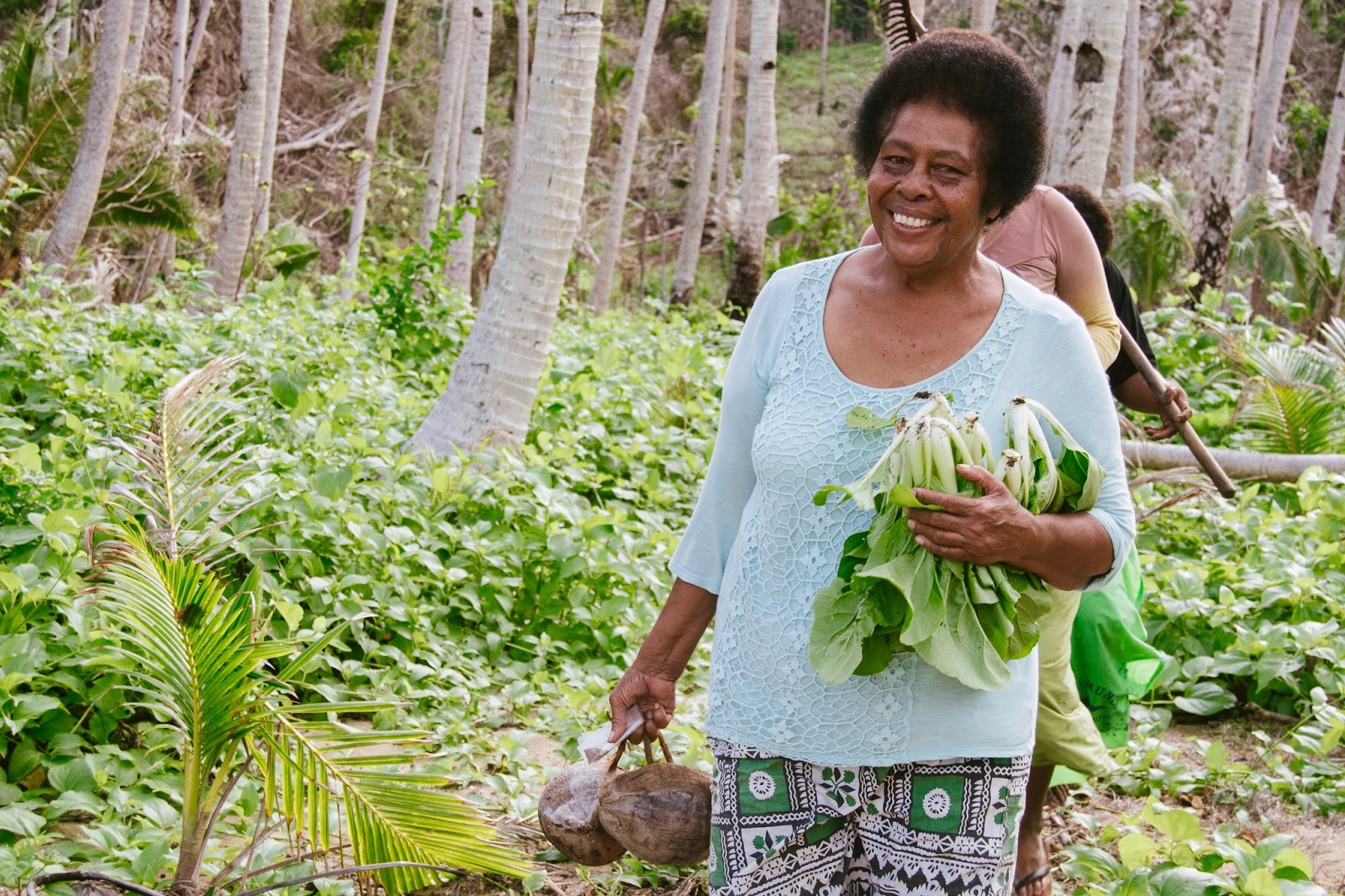 |
| Nana Sarah brings home Chinese cabbage and coconut |
JP and I returned the next day with a small party of women. It’s a long walk at low tide, under the glaring sun, bare foot on the cutting reef, but they walk on, carrying shovels and forks, while JP and I brought our pesticide sprays (and forgot our camera.) It took only an hour to inspect the sweet potatoes and spray for white flies and potato beetle, to walk through the beans and taro plants to remove the caterpillars, to teach the women how to prevent bug infestation and seed carrots, start a composting pile. Exhausted, Nana Sarah accepted to wear my hat (now HER hat) and returned to the village with a smile.
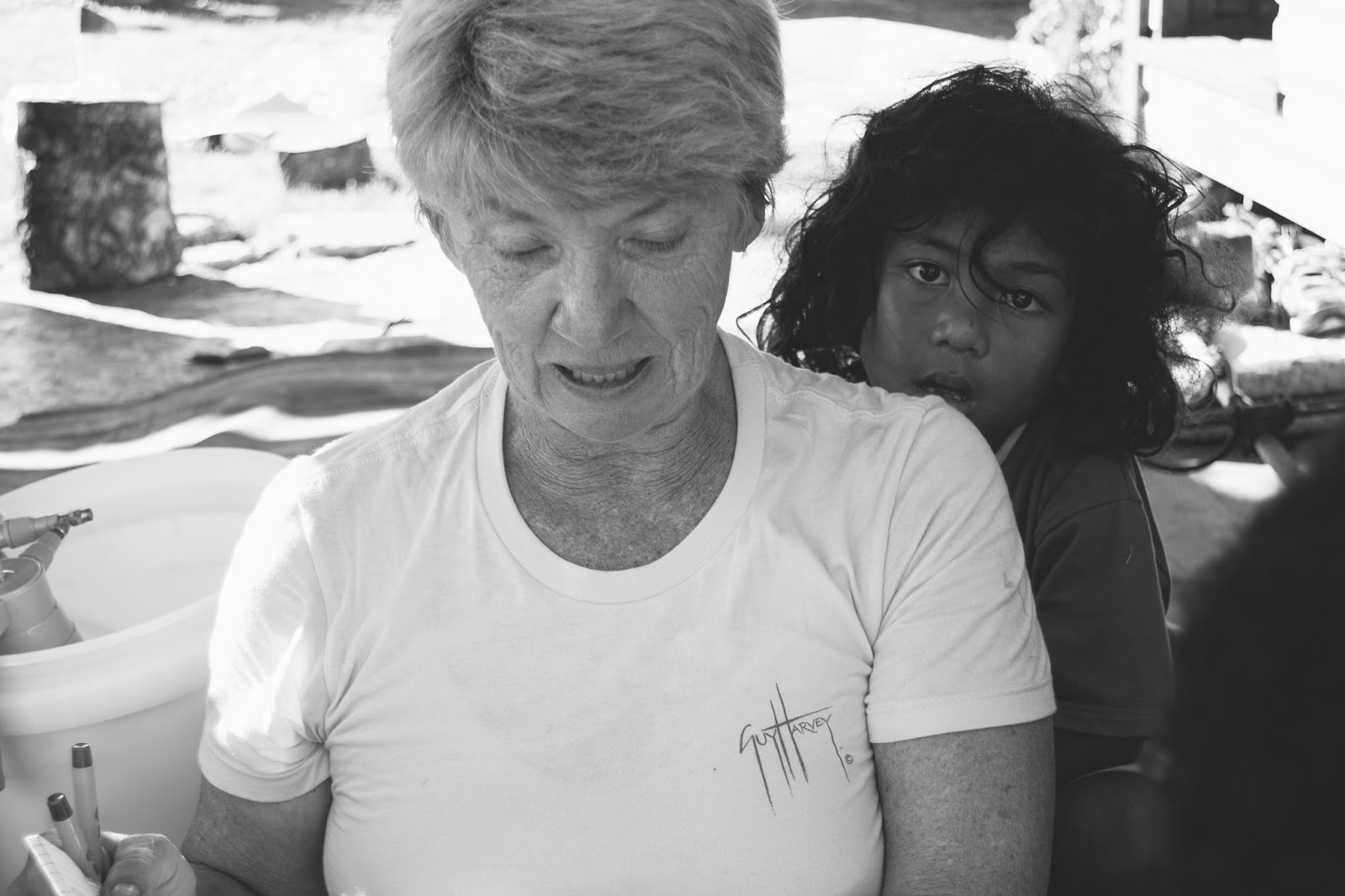 |
| Teaching the next generation |
Avea now has a community garden, of which we are glad. But in Avea, I think it was us, the volunteers, who were the winners, having gained so much joy and happiness from this fun-loving and hard working women!
Until next village…
dominomarie
SEA MERCY – SEEDS OF HOPE in BOITACI
SEA MERCY – SEEDS OF HOPE in BOITACI
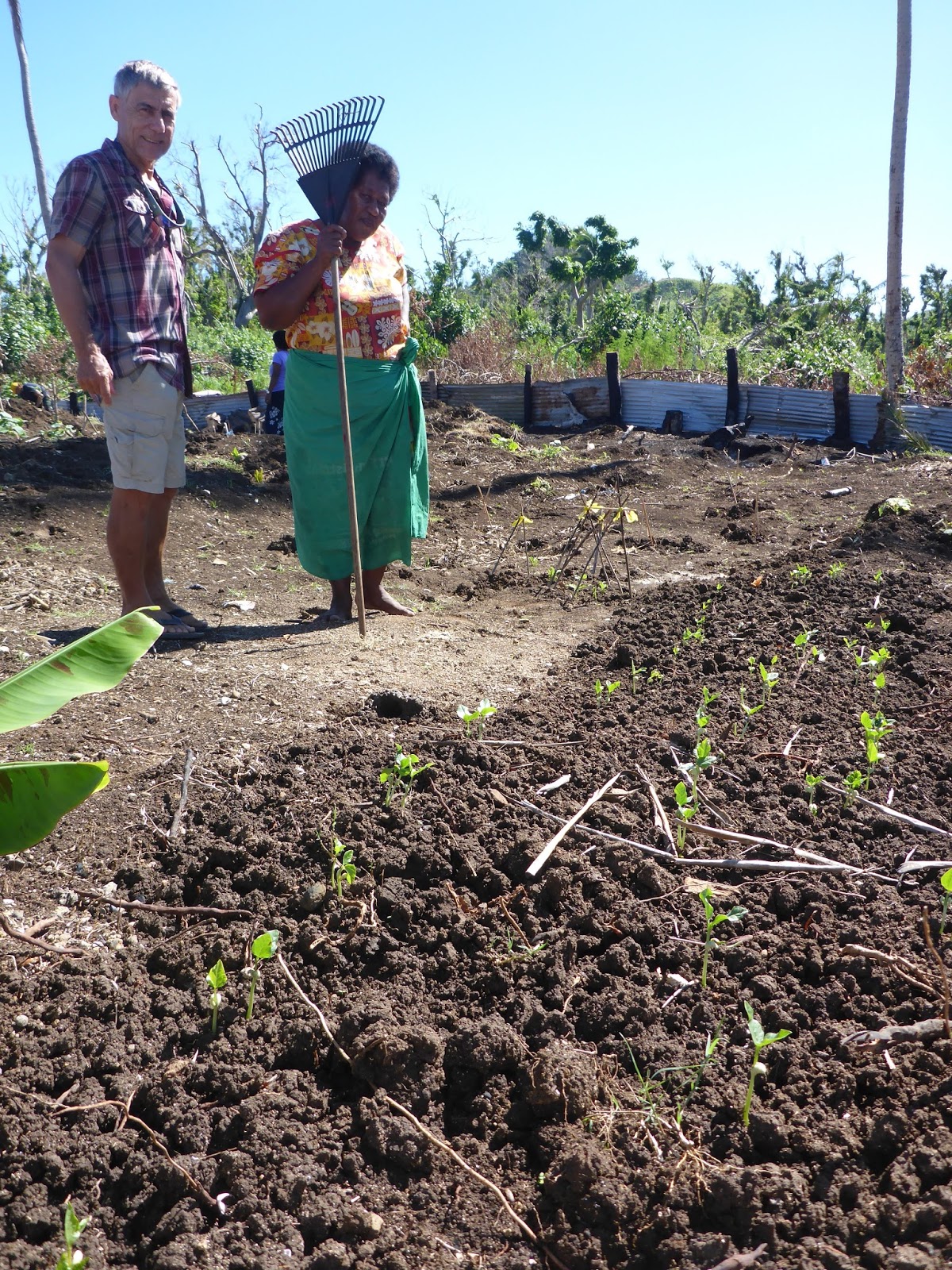 |
| Long Beans sprouting in that 1st bed |
Loma Loma, Vanua Balavu (Fiji)
June 24, 2016
All over Vanua Balavu, the Sea Mercy gardening program, in partnership with the Ramakrishna Mission Fiji and the Australian Aid, has distributed seeds to community gardens. One hundred packs, thousands of seeds: French beans, long beans, butter beans, cow peas, radish, carrots and Chinese cabbage. In the villages of Delaconi, Malaka, Mua Mua, Mavana, Boitaci, Mua Levu, Avea, Susui and (tomorrow) Cikobia, Sea Mercy is sowing seeds of hope.
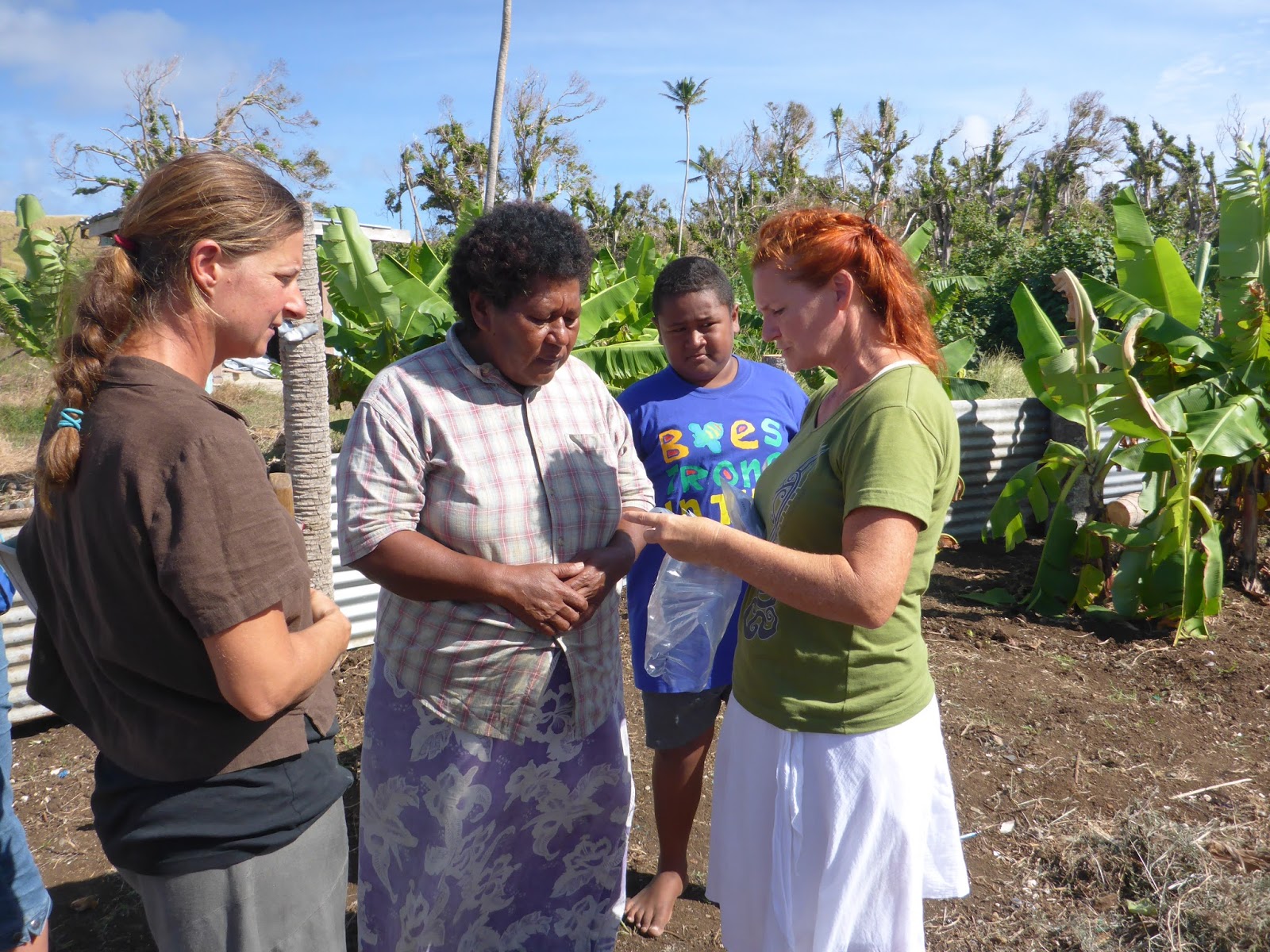 |
| Sea Mercy Volunteers Gretchen and Anita present Vuli with the 1st pack of seeds and instructions |
BOITACI – We’ve reported after our fist visit that the garden was a mess, such a challenge that we even contemplated to change the site. But the Sea Mercy Chain Saw team went into that project like a tornado… Fletcher (S/V Interlude,) Marc (S/V Amelie IV) and Norm (S/V Dream Catcher) let their chain saws loose and within a day had cleared the site of the biggest logs and fenced the garden against the pigs.
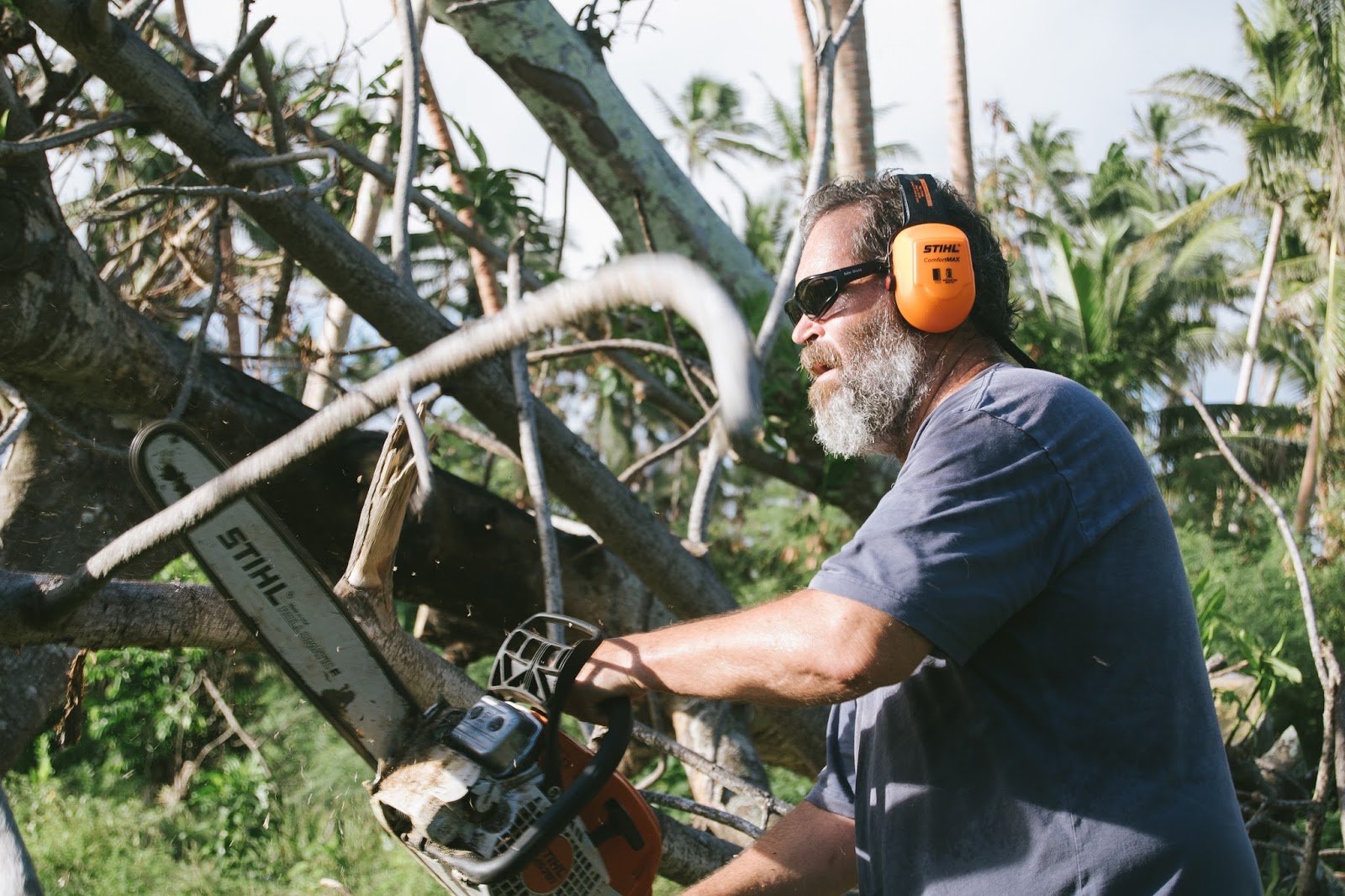 |
| Sea Mercy Volunteer Norm (S/V Dream Catcher) heads the chain saw team |
On our second visit, the women had already prepared some beds and were anxious for our seeds.
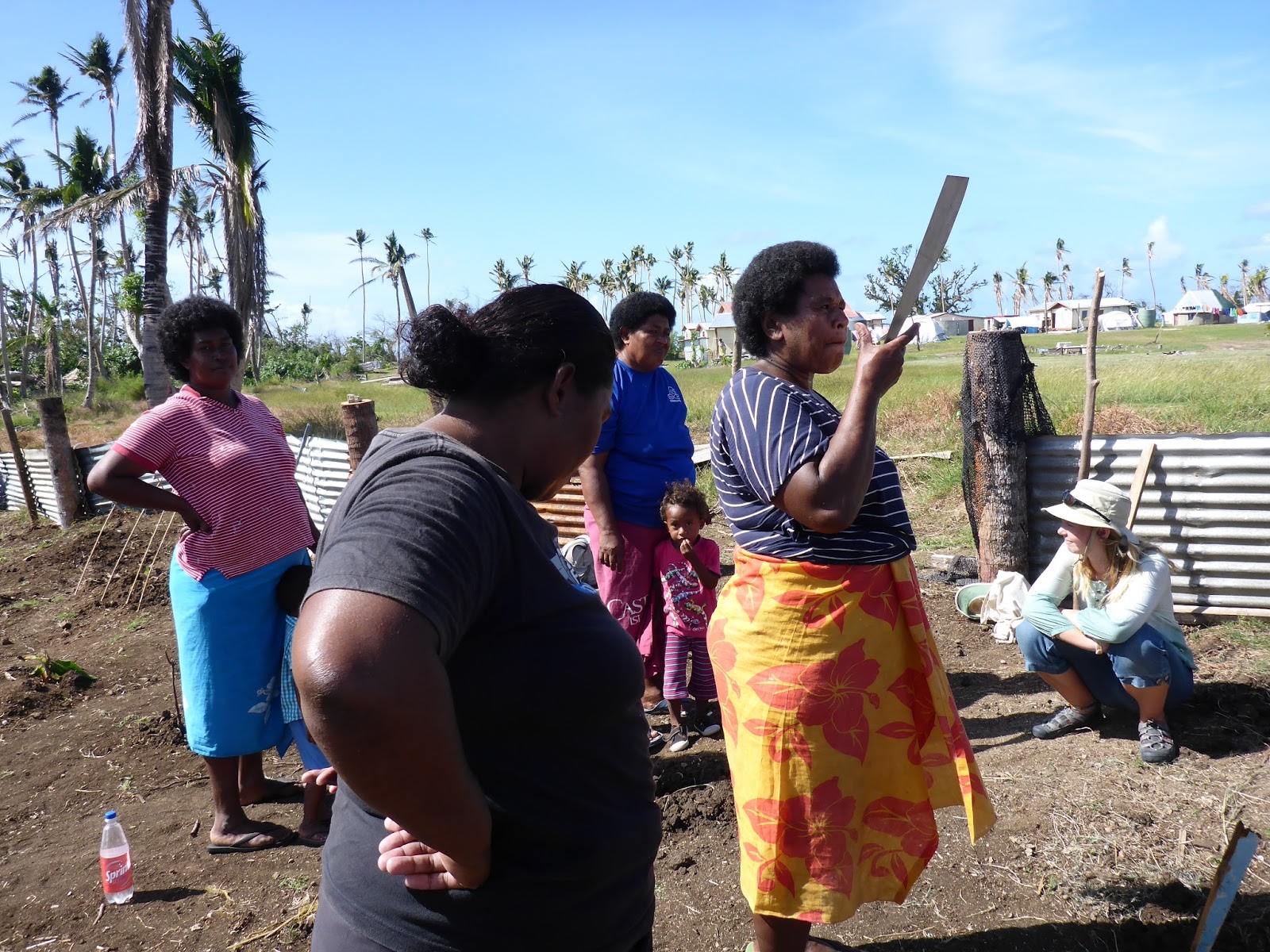 |
| Boitaci women, ready for work |
On our third visit, all the seeds had been planted and we started a composting pile. Still the garden’s topography was a disaster. Water had been water logging the bottom of the garden, stumps had been burned and left in place, piles of garbage had been burned, nothing looked right.
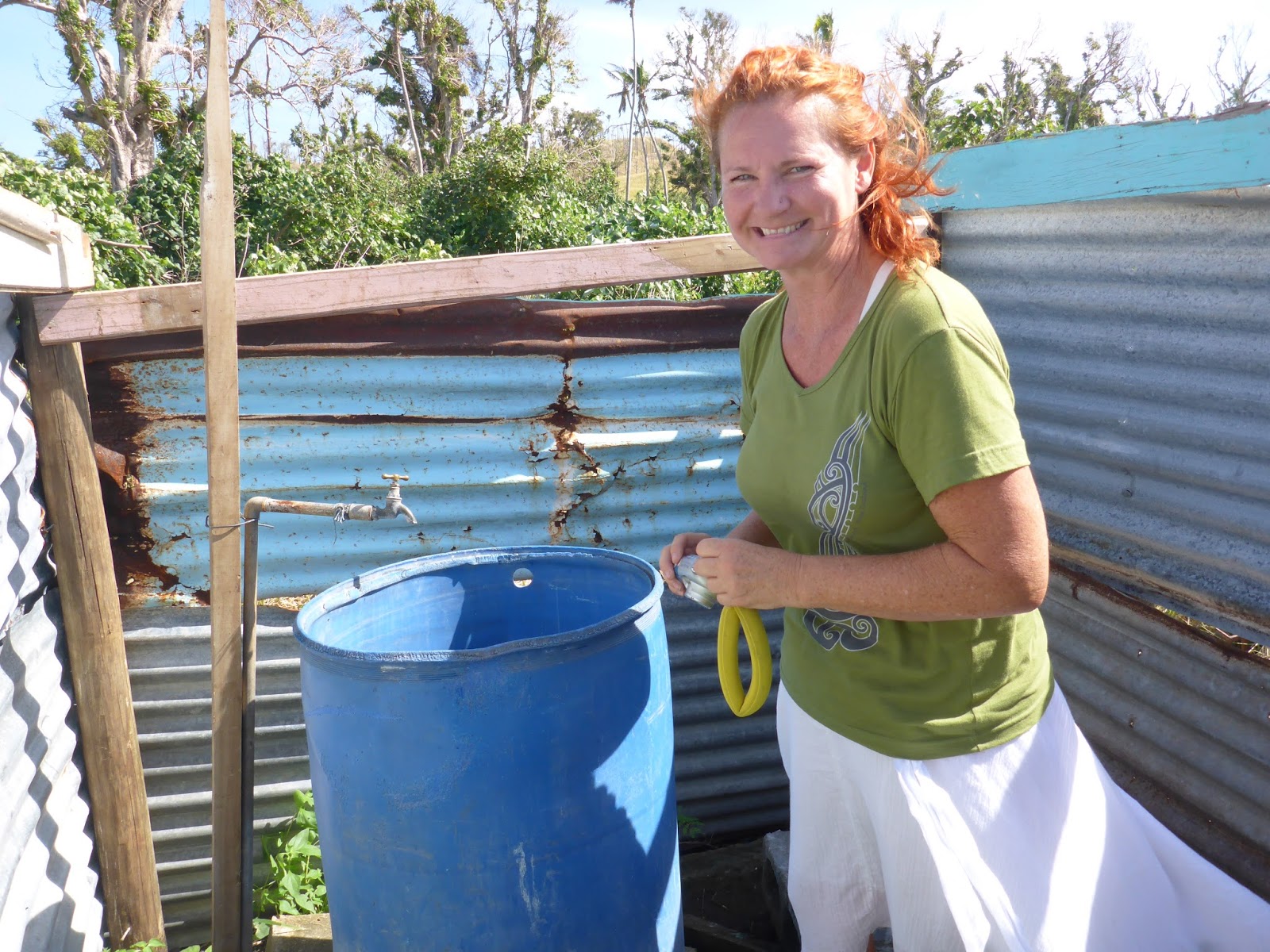 |
| Sea Mercy Volunteer Anita Damiani checks the spigot: let’s order 100 yards of garden hose and a clamp! |
We returned for a fourth visit with three ARC volunteers, three young men happy to help. Within seconds of the Loma Loma Hospital Pick-up truck dropping us off, all the women were in the garden, giving our boys working orders.
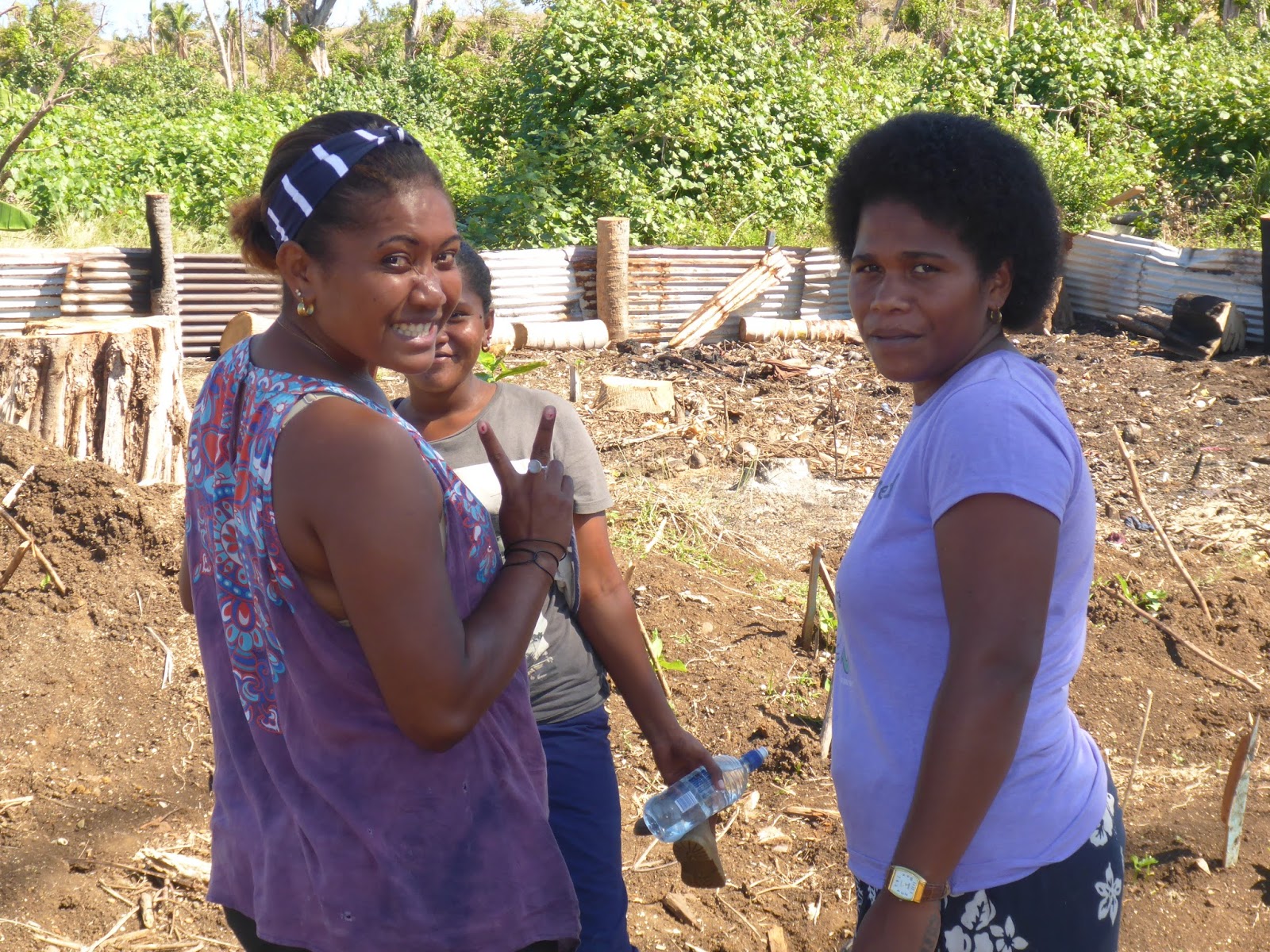 |
| “Facebook! Facebook!” The young women ordered our boys around and wouldn’t let them leave! |
“Take this clump of banana trees, divide it, and replant each tree along the fence.”
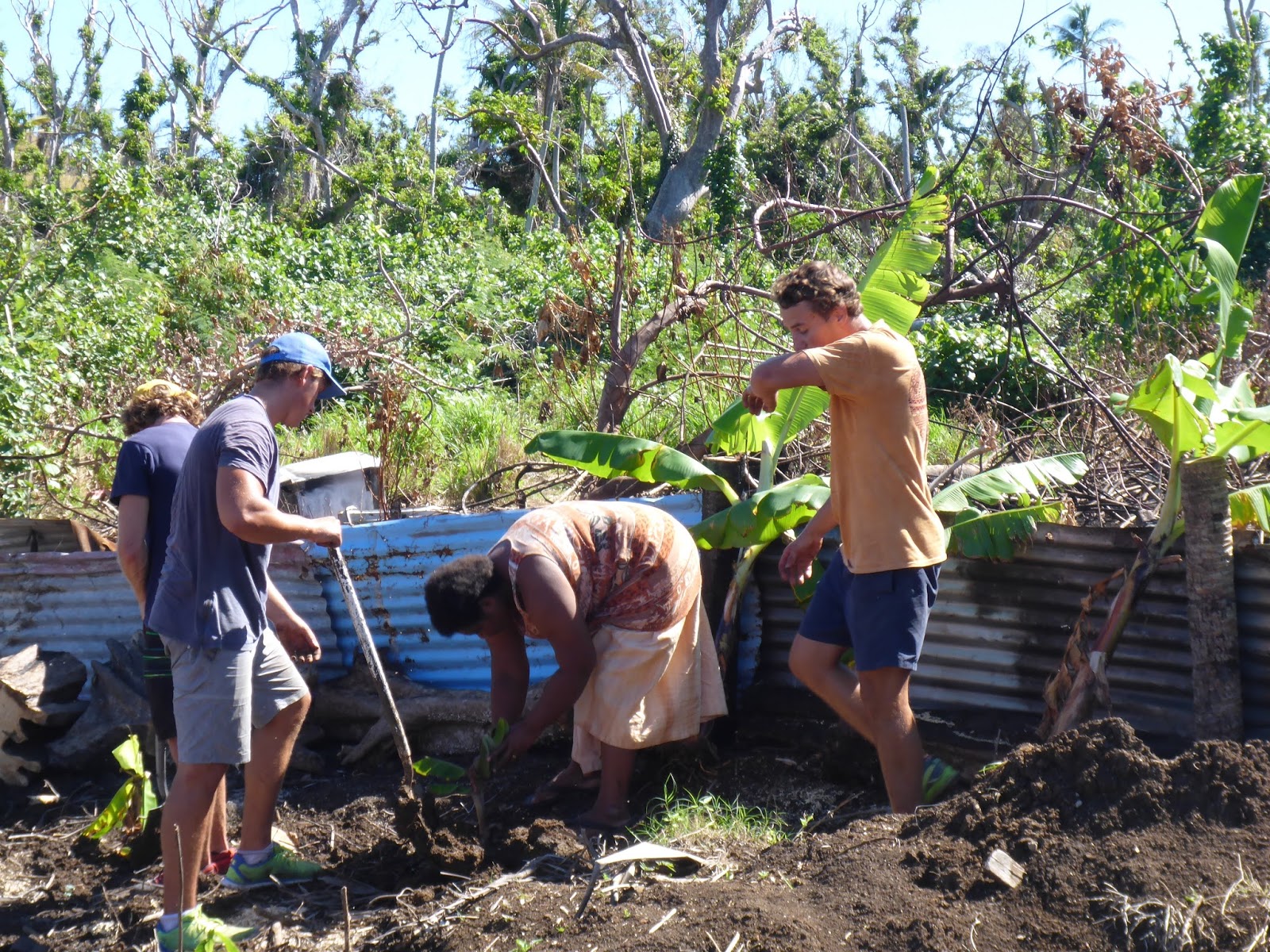 |
| Replanting the banana trees |
“Clear these burned stumps.”
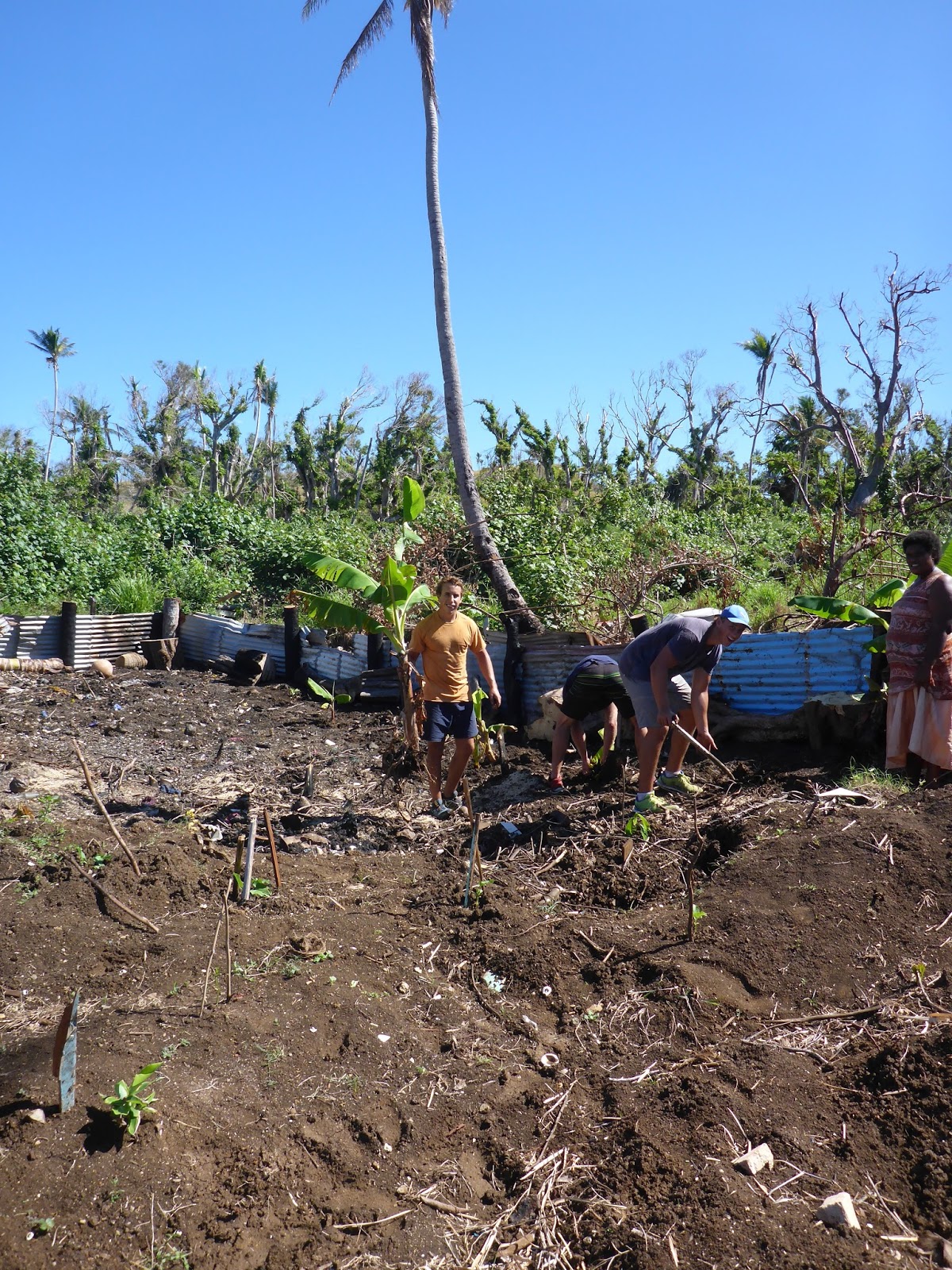 |
| Clearing the stumps |
“Dig a drainage ditch.”
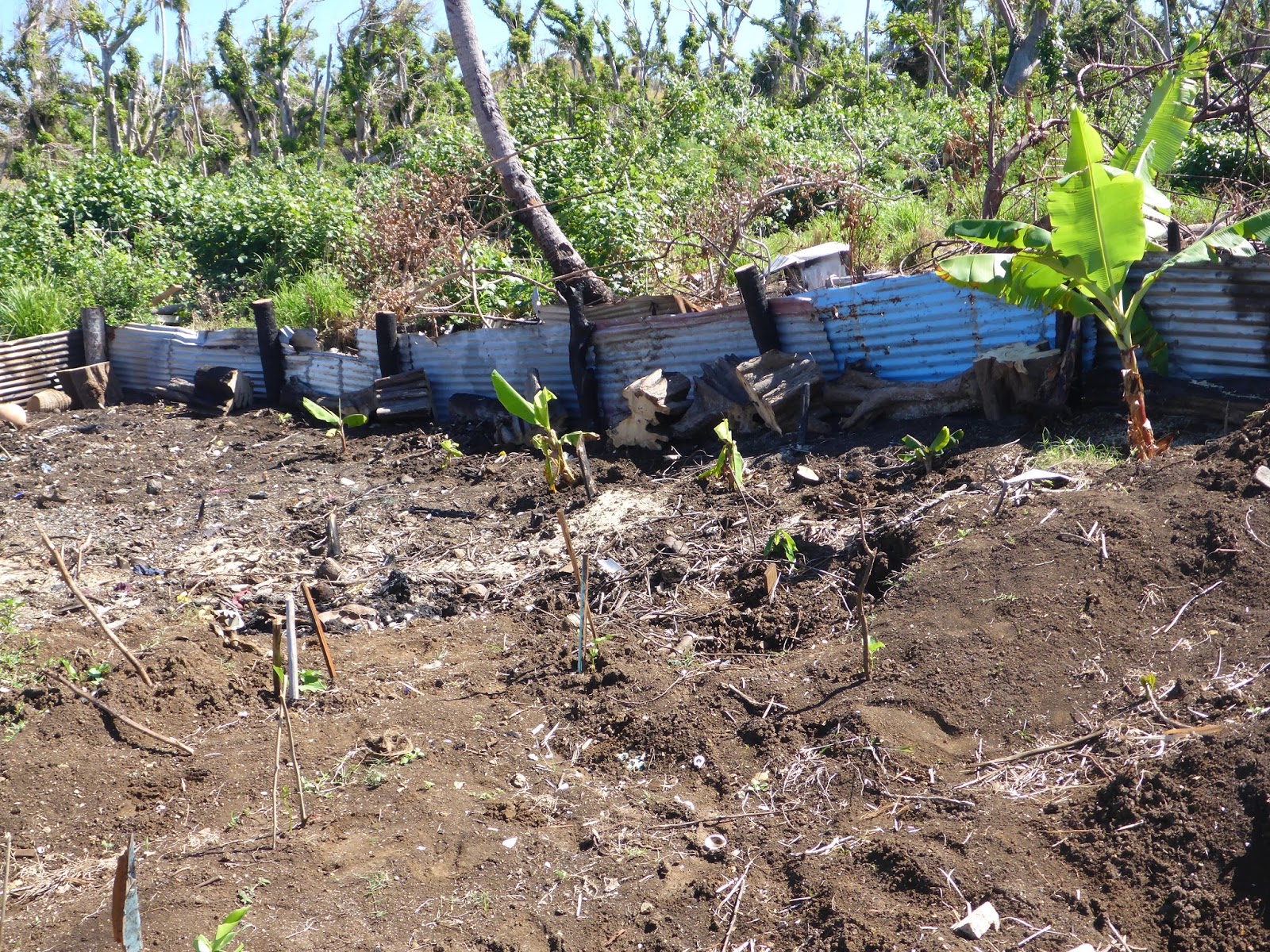 |
| This sloping garden needs drainage |
“Level off this pile of soil.”
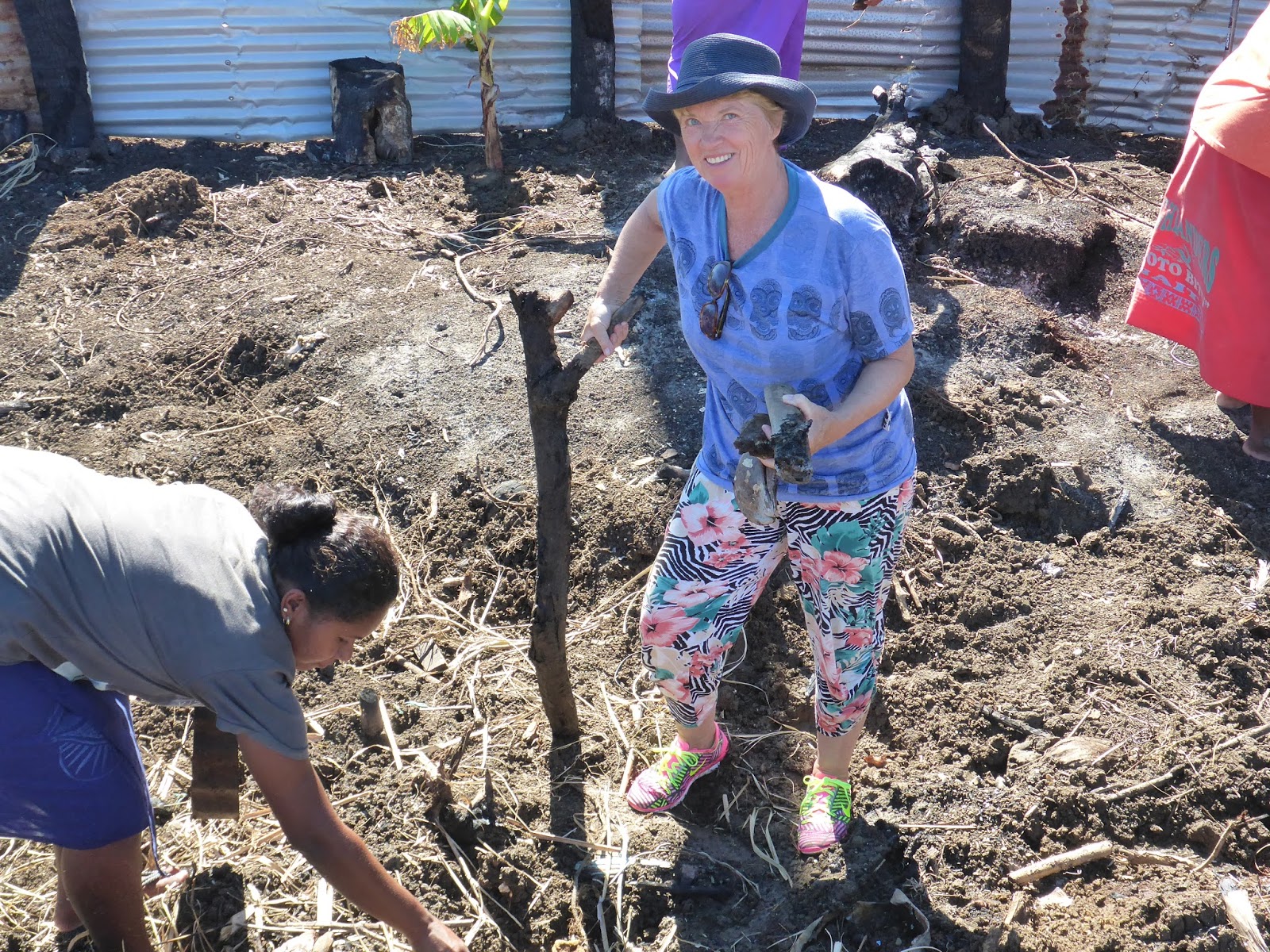 |
| Clearing charred stumps and debris |
Meanwhile, JP was teaching how to seed carrots, a first for all the women.
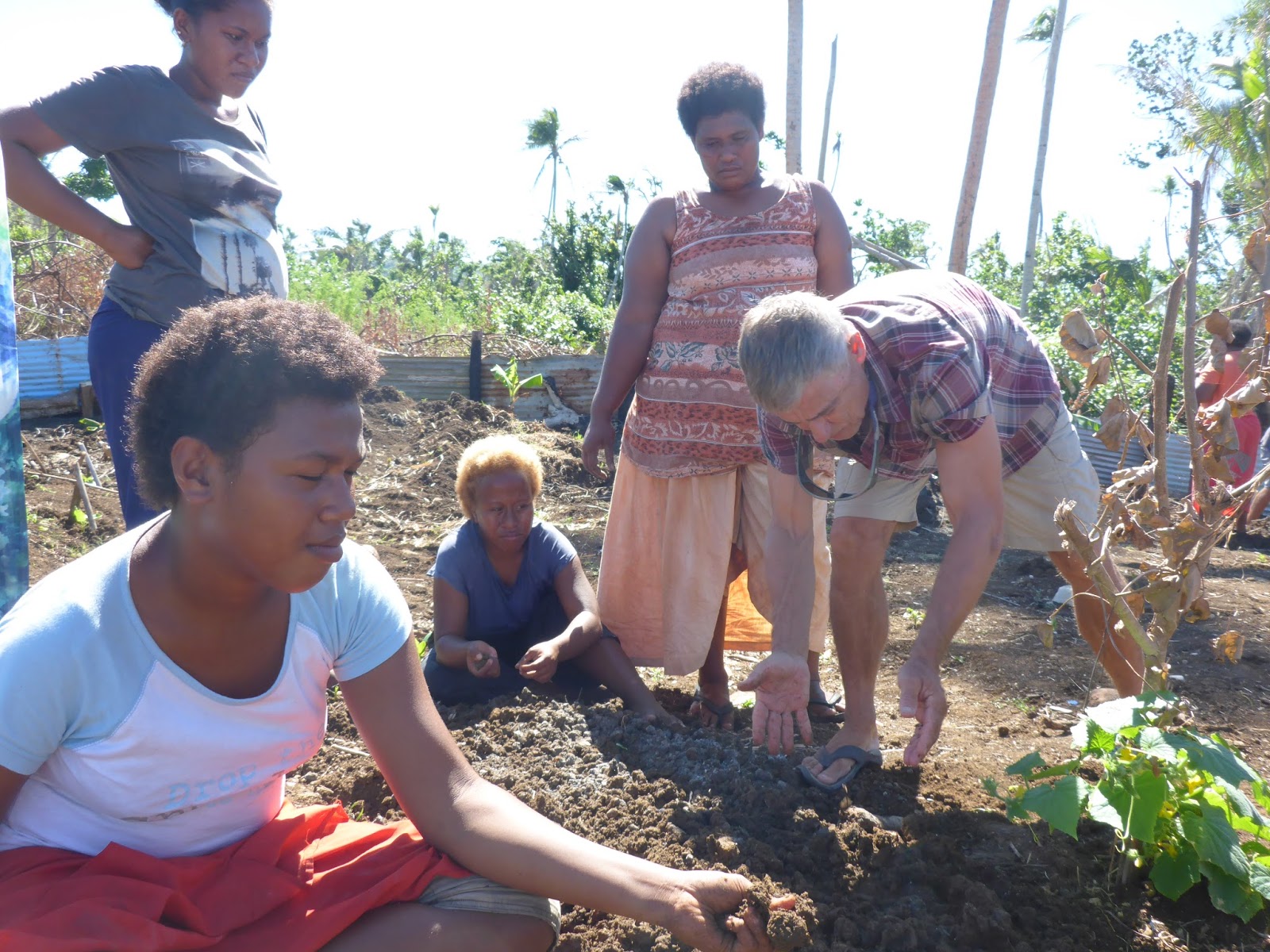 |
| Heavy soil for carrots, added ashes to lighten it up… |
On the edge of the garden, I joined Vuli in sifting though the ashes of the rubbish fire. With her bare hands, she was removing broken glass, spiky roofing straps, melted metal meshing, a charred bicycle chain, blackened tin. We soon used sticks, but that wasn’t doing the job very fast. So I grabbed my folding camp shovel/pick combo out to my backpack. “I dig, you pick!” Within minutes we had sifted through the entire pile of ashes, now clear of solid debris. Vuli looked at my hand tool, the only one in the village. Of course, I left it with her, this little camping shovel her most prized gardening possession.
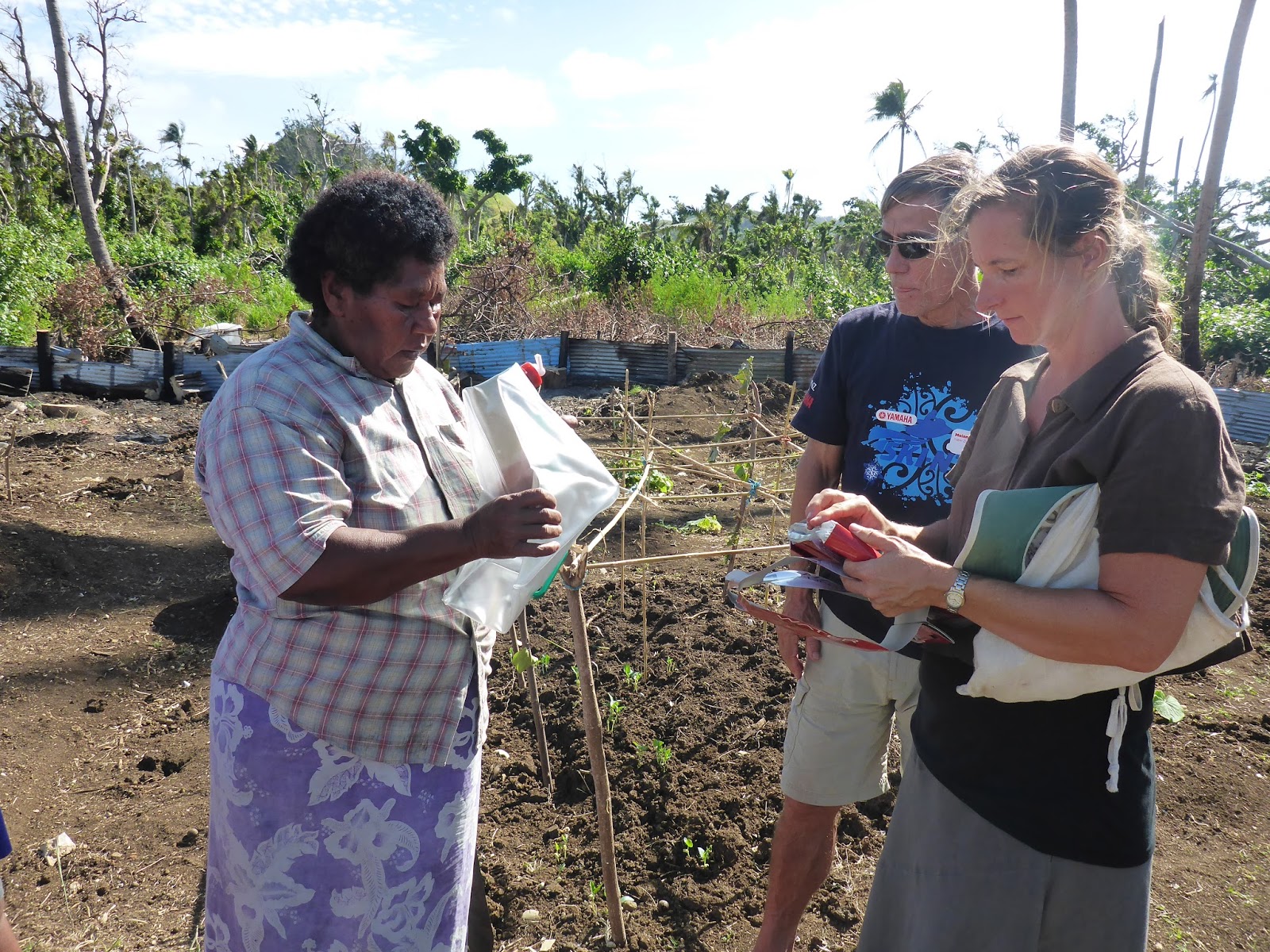 |
| No watering can, no garden hose: Gretchen delivers collapsible water jugs |
When we finally etched a plan for amending the soil, the women were carrying handful of ashes in their bare hands, fault of any other type of bucket or shovel or hand tool, except for the machetes we distributed.
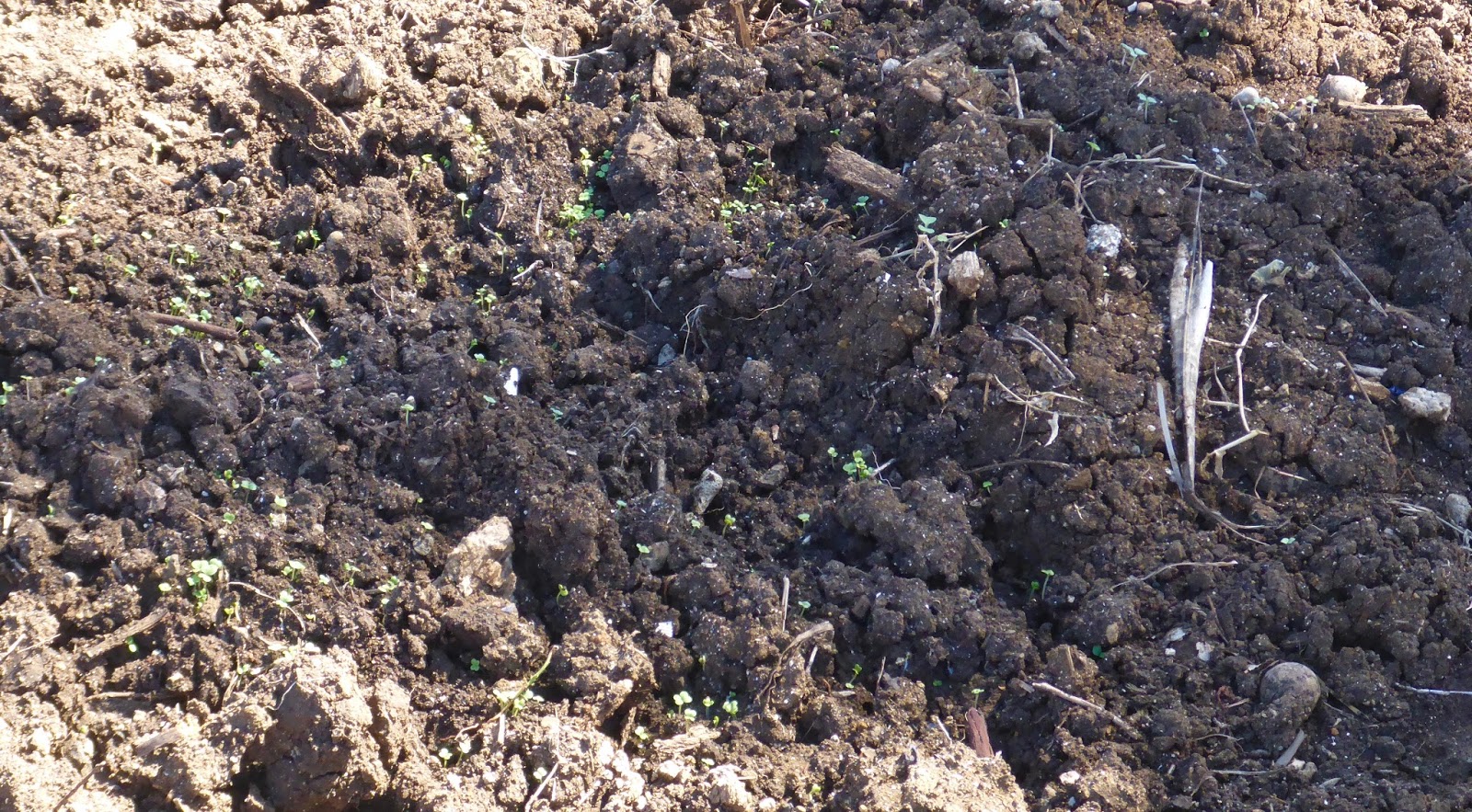 |
| First sign of Chinese cabbage |
On our fifth and last visit, Vuli proudly showed us the progress: beans 1/2’ tall, sprouting Chinese cabbage, and a new bed of carrots.
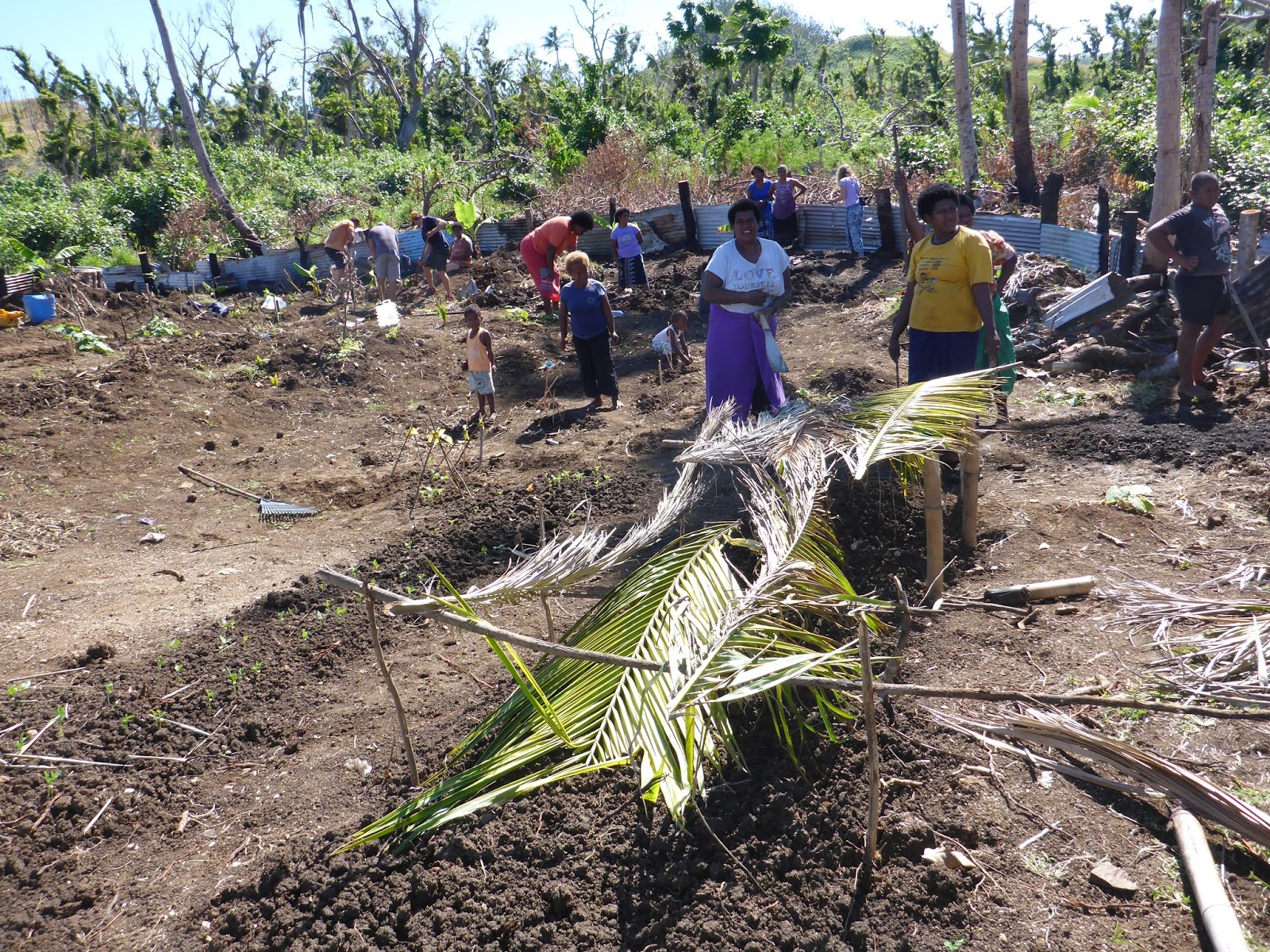 |
| Carrot bed, sheltered from the harsh sun and pecking birds |
We didn’t have a chance to say goodbye to the women. On our last visit, they were sitting with the grief counselor. Winston took 4 lives in this tightly close community, scarring children and adults. But Vuli sat with us for a last chat: our pesticide presentation. We left her, our samples of garlic spray and white oil, getting away in our Police ride, cheered along by a throng of chirpy and unforgettable Boitaci kids.
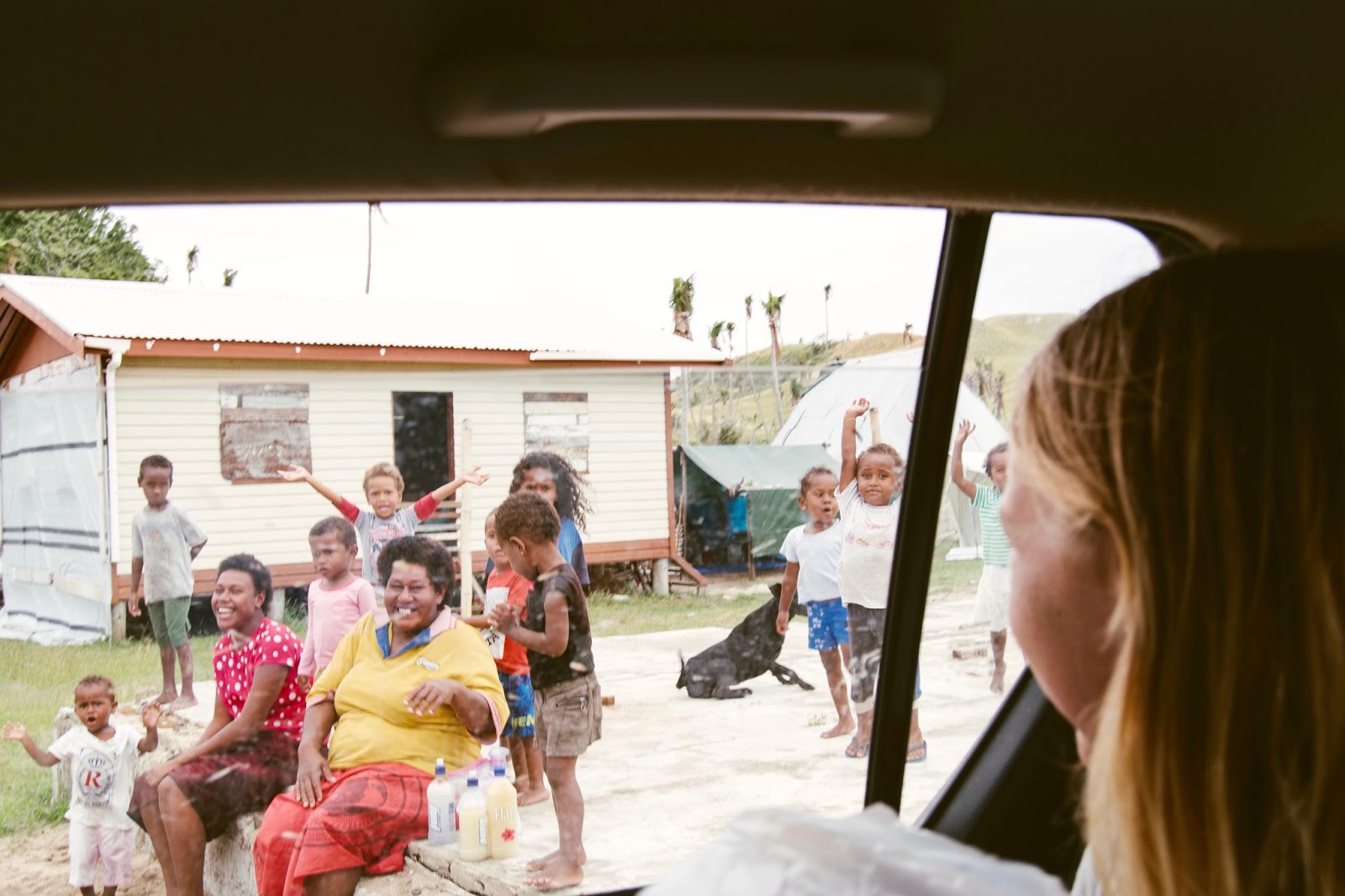 |
| Vuli is thrilled with her pesticides and the kids ran along the car, singing their goodbyes (photo Tessa Irvin) |
Until the next village…
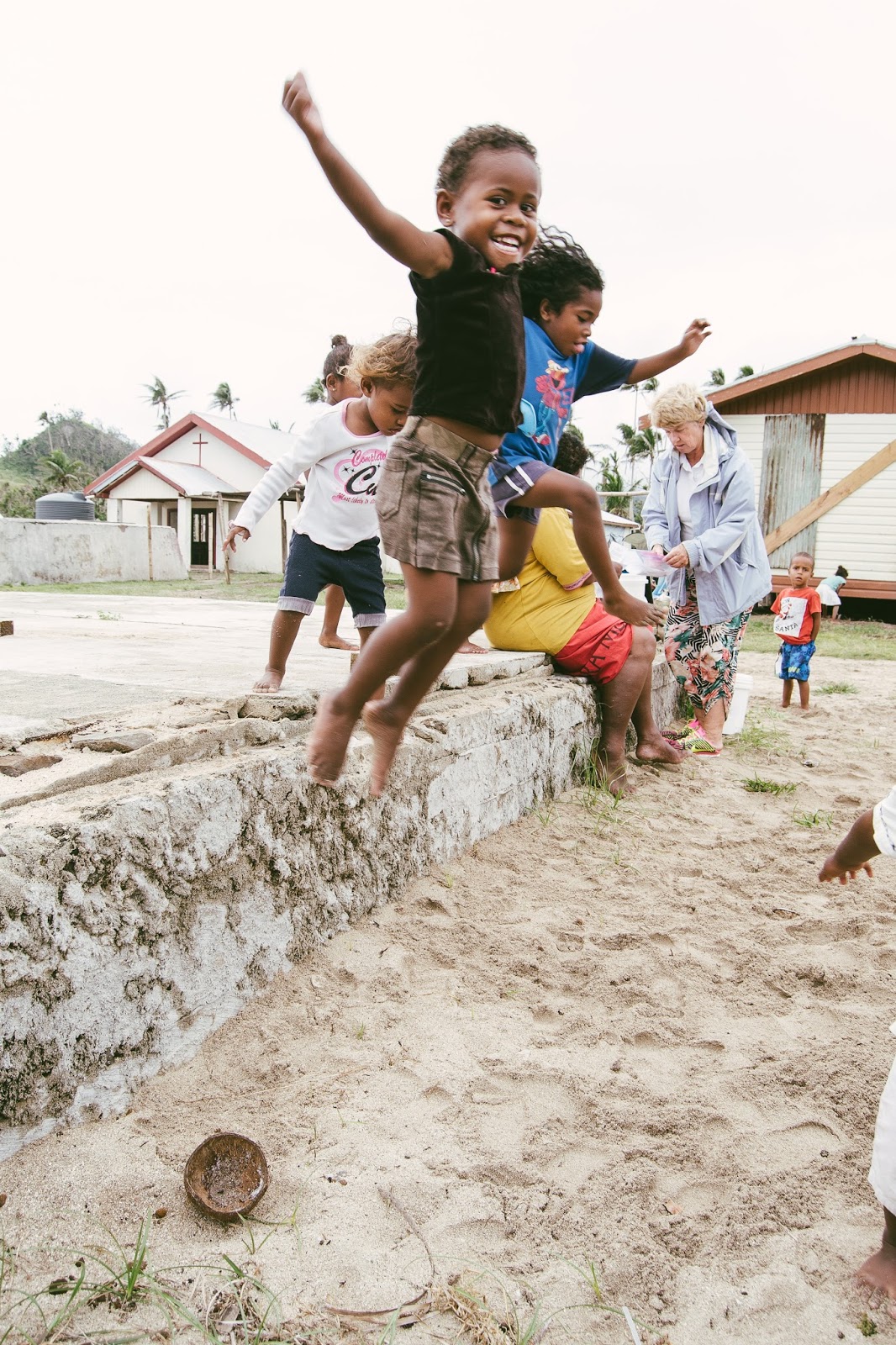 |
| Boitaci Kids (Photo Tessa Irvin) |
dominomarie
