Sitka to Sitka – June 8-13

Among the communities in SE Alaska, Sitka is one of the most popular. In population, it ranks 3rd, behind Juneau and Ketchikan, so most services are available. Its harbor only has one dock capable of a cruise ship and that is a couple of miles north of town so even when a cruise ship is in, it doesn’t feel overwhelmed. Tourism other than cruise ships is high as it is a sport fishing destination and a community with a rich history going back to the Russian ownership of Alaska. The commercial fishing industry is quite vibrant so it has an economic base besides tourism.

We know of several pleasure craft that spend 3 to 4 weeks in the Sitka area using it as a base from which to go fishing for a few days then to return for reprovisioning. We thought we’d try a reduced version of that concept this year.

We headed out on Wednesday, June 8, towards the popular fishing area on the north side of Biorka Island, about 15 miles SW of Sitka. As we approached, the wind and seas picked up and we couldn’t see anybody fishing We decided to fish a more protected nearby area but no bites and no evidence of fish on the fish finder. We spent the night in Herring Bay, an anchorage on an island about 8 miles away.

The next day, we reached the fishing area earlier and there were other boats present. The conditions were better than the day before but still “lumpy” with a 15 knot southerly wind coming over the island and a westerly swell coming in from the ocean. Despite the conditions, Marcia was able to hook and land a nice king salmon.

That evening we gave Annie-cat a subcutaneous infusion of lactated Ringer’s solution using the new setup Marcia obtained from a Sitka veterinary office. Rather than needing to restrain Annie while we gave her injections, the solution is infused through a smaller gauge needle attached to a drip bag as she naps on the helm chair.

We hoped to repeat the fishing performance on Friday, June 10, as we went out to Biorka again. Unfortunately, despite excellent sea conditions, the fish were absent. We anchored for the night in deGroff Bay on Krestof Island, an anchorage new to us.

For Saturday, we traveled to the fishing area near Kalinin Bay on the north side of Kruzof Island. We were too late for the morning bite so we anchored for a few hours waiting for the afternoon bite. Marcia took the opportunity to make cinnamon rolls while we waited. Once again, no salmon were hooked.

On Sunday morning we were out bright and early. As we were finishing up the final pass before leaving, Marcia hooked a fish which turned out to be 33″ ling cod. While not the salmon was looking for, it was a nice fish with plenty of meat on it.

As we were crossing Sitka Sound intent on trying some more fishing the winds kicked up similar to the week before. Soon we were bashing through 25 knot winds and steep 3 to 4 foot seas. We altered our course and headed towards the secure anchorage of Samsing Cove.

All was calm by Monday morning as we pulled back into Eliasen Harbor in Sitka, just a few steps away from the slip we had vacated five days earlier.

Sea Mercy – One Garden at a Time

SEA MERCY – ONE GARDEN AT A TIME
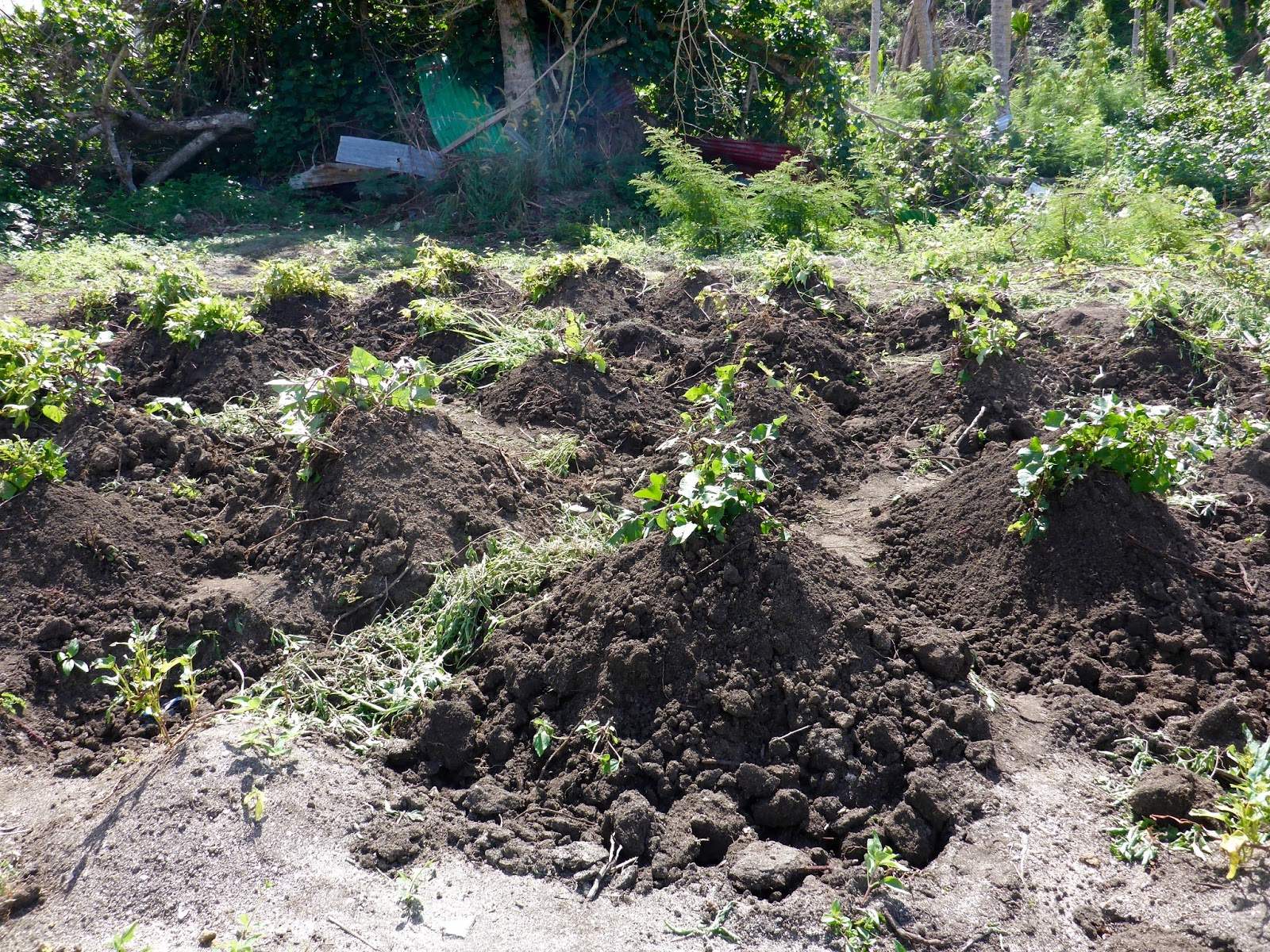
In Malaka, preparing a bed to seed the first carrots
Loma Loma, Vanua Balavu
June 23, 2016
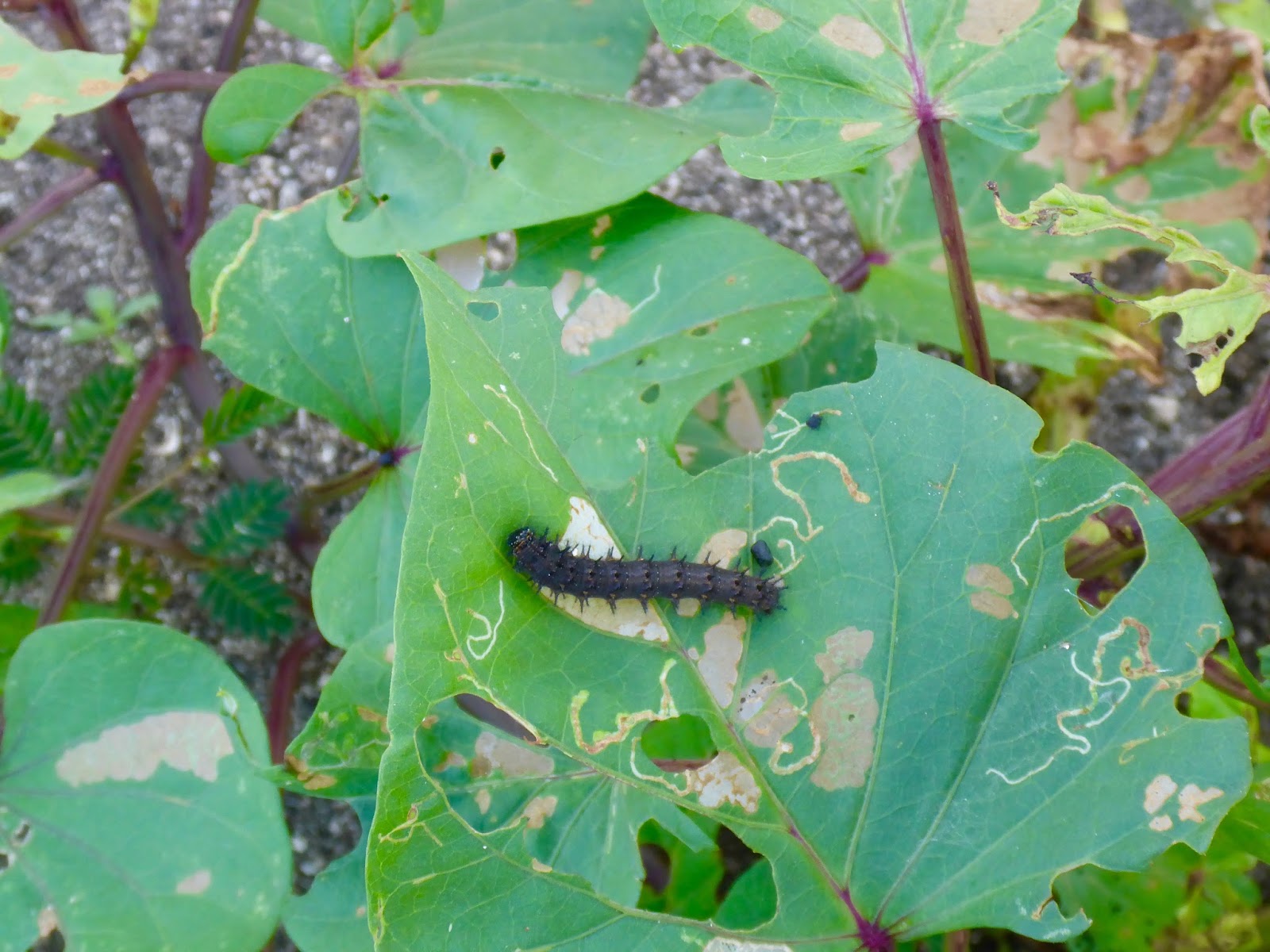
“First Winston destructed all our crops.  Us, women, replanted our small gardens but six weeks later cyclone Xena hit us again, not as hard as Winston, but still destructed our new crops.  We planted again, but then the caterpillar came.  We’d never seen caterpillars before.  They ate all our crops.  We replanted again, and now the caterpillars eat our plants and the doves eat our seeds.  We are desperate!”
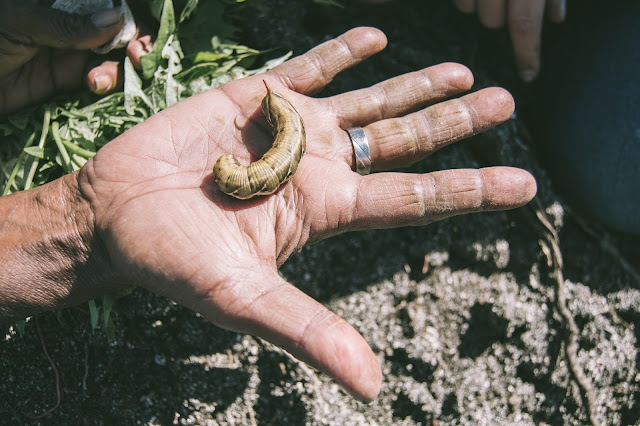
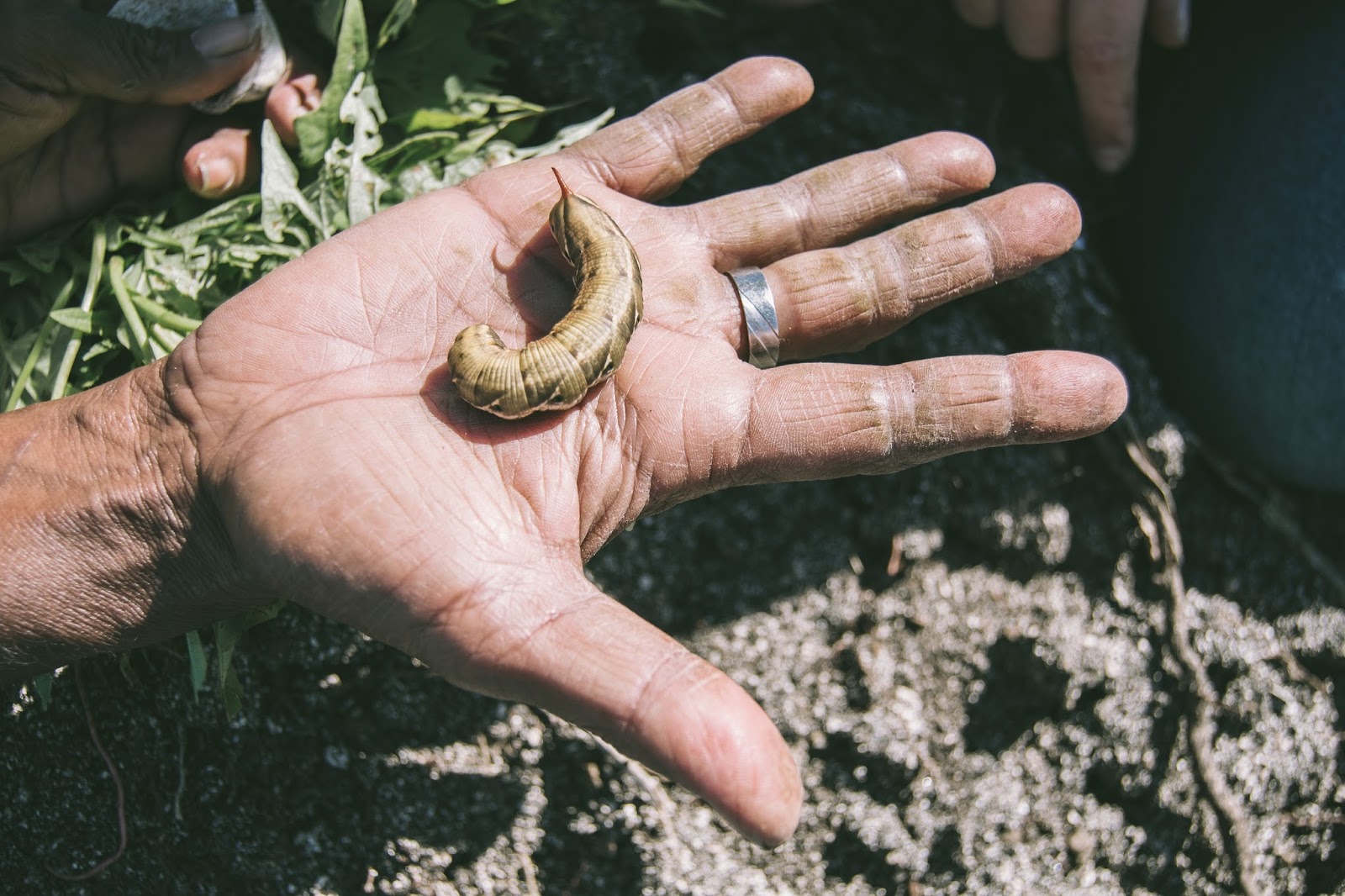
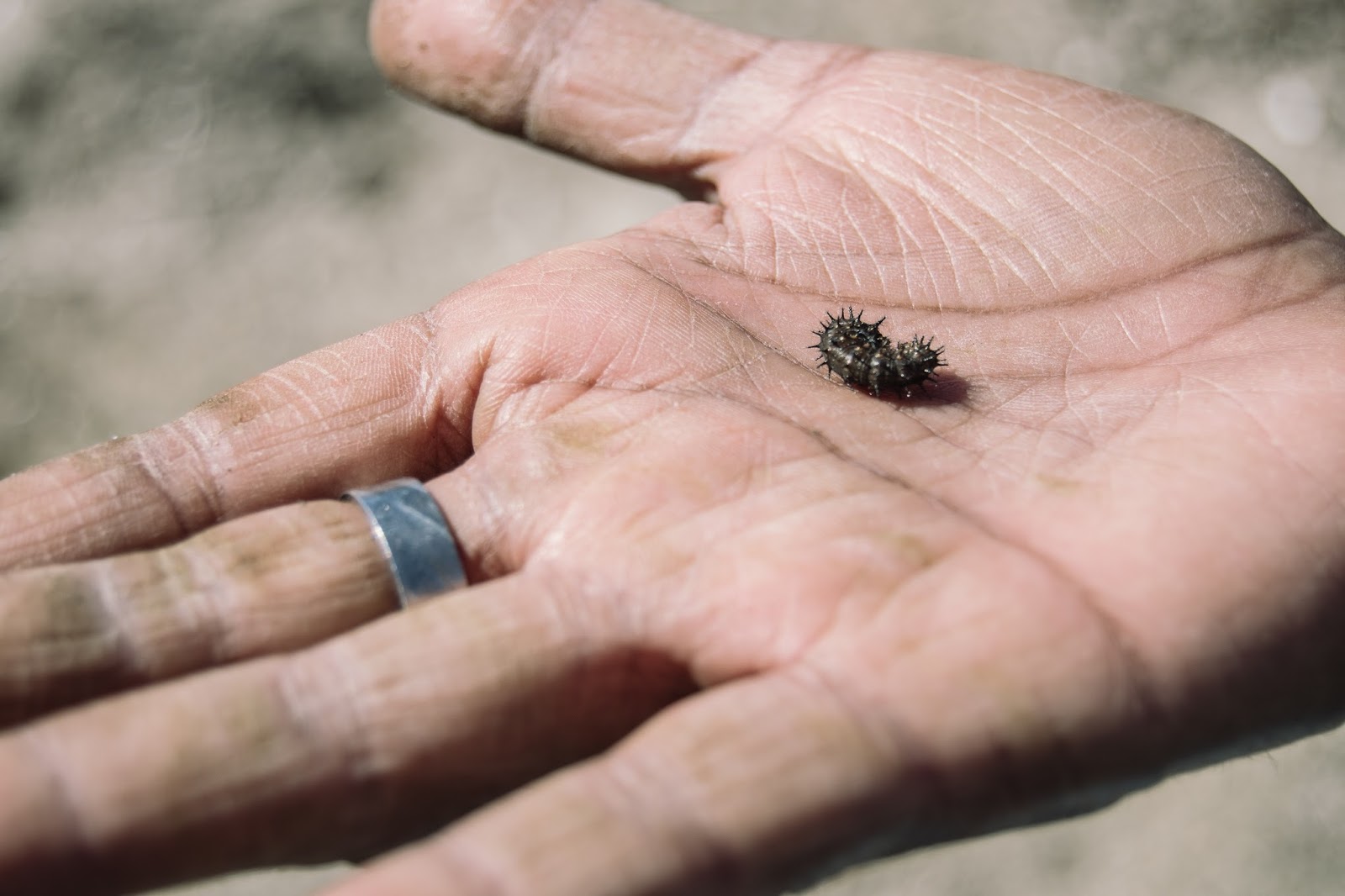
Found in the sweet potatoes
In Mua Levu, Nani’s plight reflects the mood of Vanua Balavu’s women.  They are alone, most of the men have left for Suva to pick up the financial aid from the Fijian government and order building materials for their homes.  Meanwhile, the women are left in the villages, fending for themselves and the children.  One of their main concerns, aside from shelter and water, is food.  Of course, they have received more rice and canned goods than they imagined, but that is not their usual diet.  They need fresh vegetables and there are none to be found.
Some have started small gardens by their homes; some villages have started community gardens, spurred by Australian Aid that had distributed seeds to the villages just before Winston.  But all seeds have been planted, and there is no more.

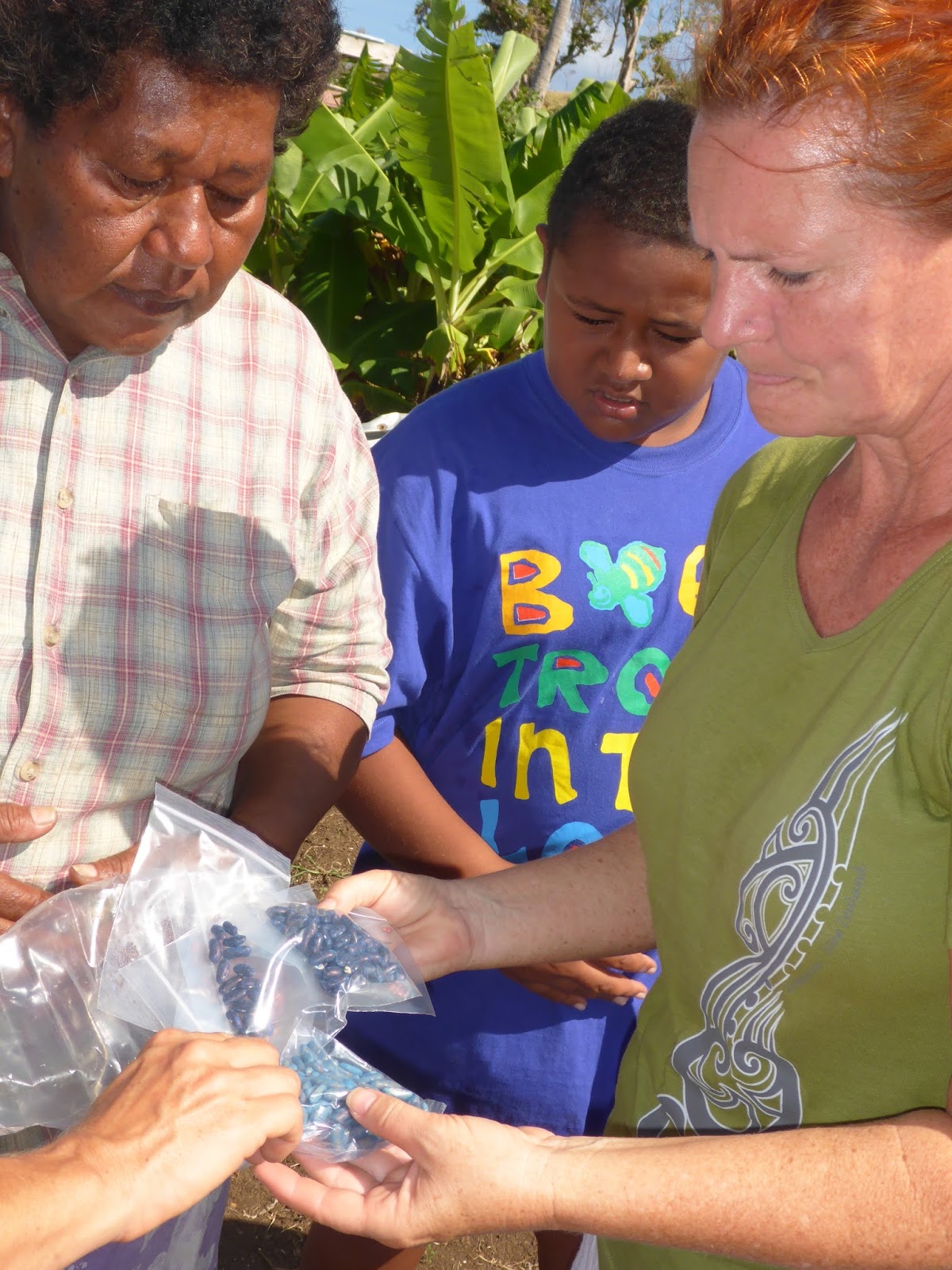
In Boitaci, Sea Mercy volunteer Anita Damiani presents a sample pack of seeds.
Enter Sea Mercy and the Rama Krishna Fiji Seeds Program.  With 100 packs of seeds to distribute throughout Vanua Balavu, we started a community gardening program, complete with seed distribution, composting instructions, proper bed preparation and seeding instruction, and a natural pesticide program.  With the OK from the public health officer and the agricultural officer, we went to work in 8 villages.
Seed packs included 150 seeds of each: long beans, French beans, butter beans, cow peas, as well as radish, Chinese cabbage and carrots.  The women had never seen carrot seeds and were delighted!
DELACONI – Voted the best community garden in Vanua Balavu, Delaconi served as our model garden.  The soil had been well worked and the women’s gardening club was harvesting cabbage and even selling us some!  But it was also time to distribute seeds, so welcome!
The caterpillars had been at work on the cabbage, though, and the potato beetles on the sweet potatoes.  It was time for our natural brews of white oil and chili-garlic spray. 

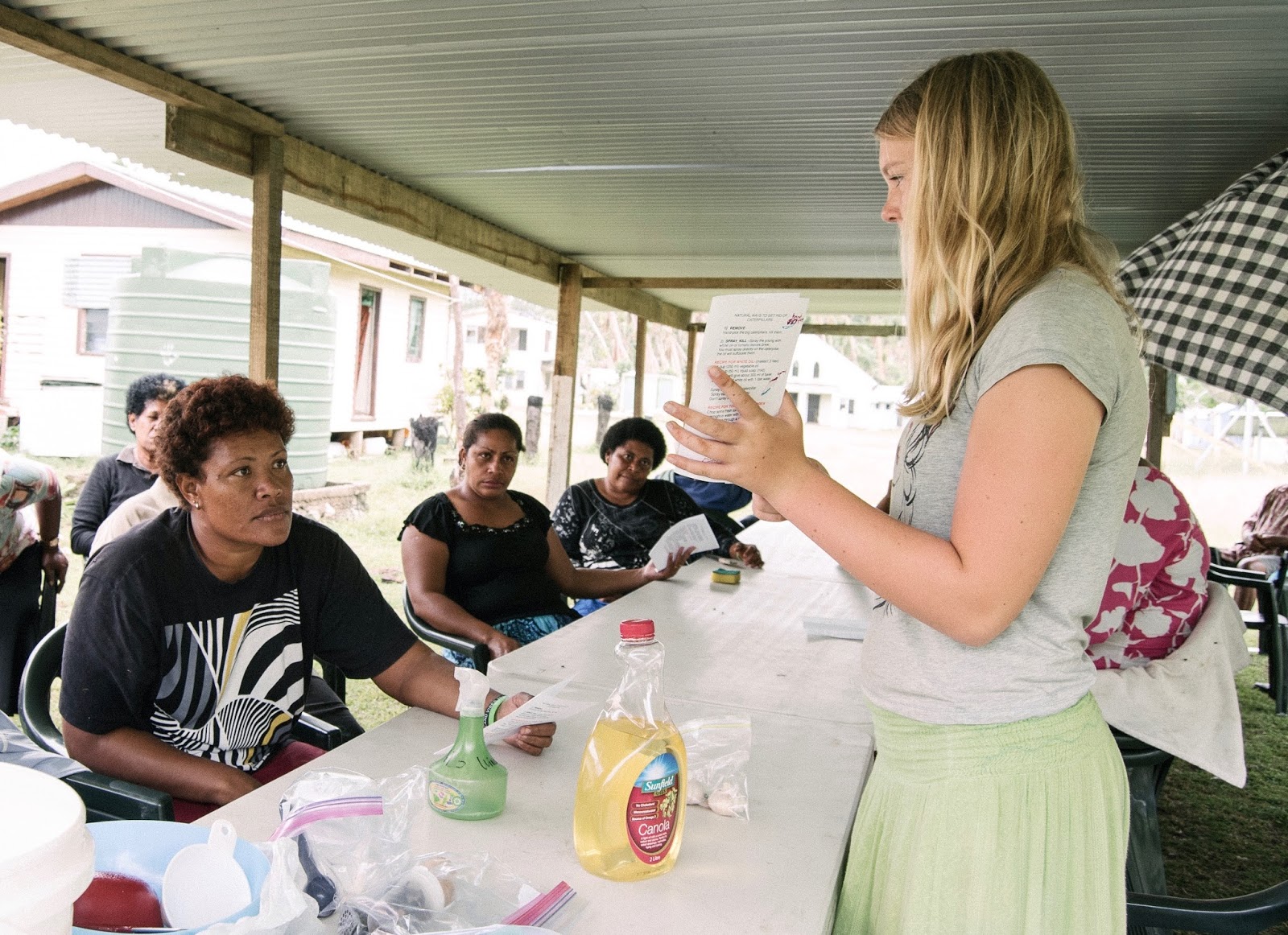
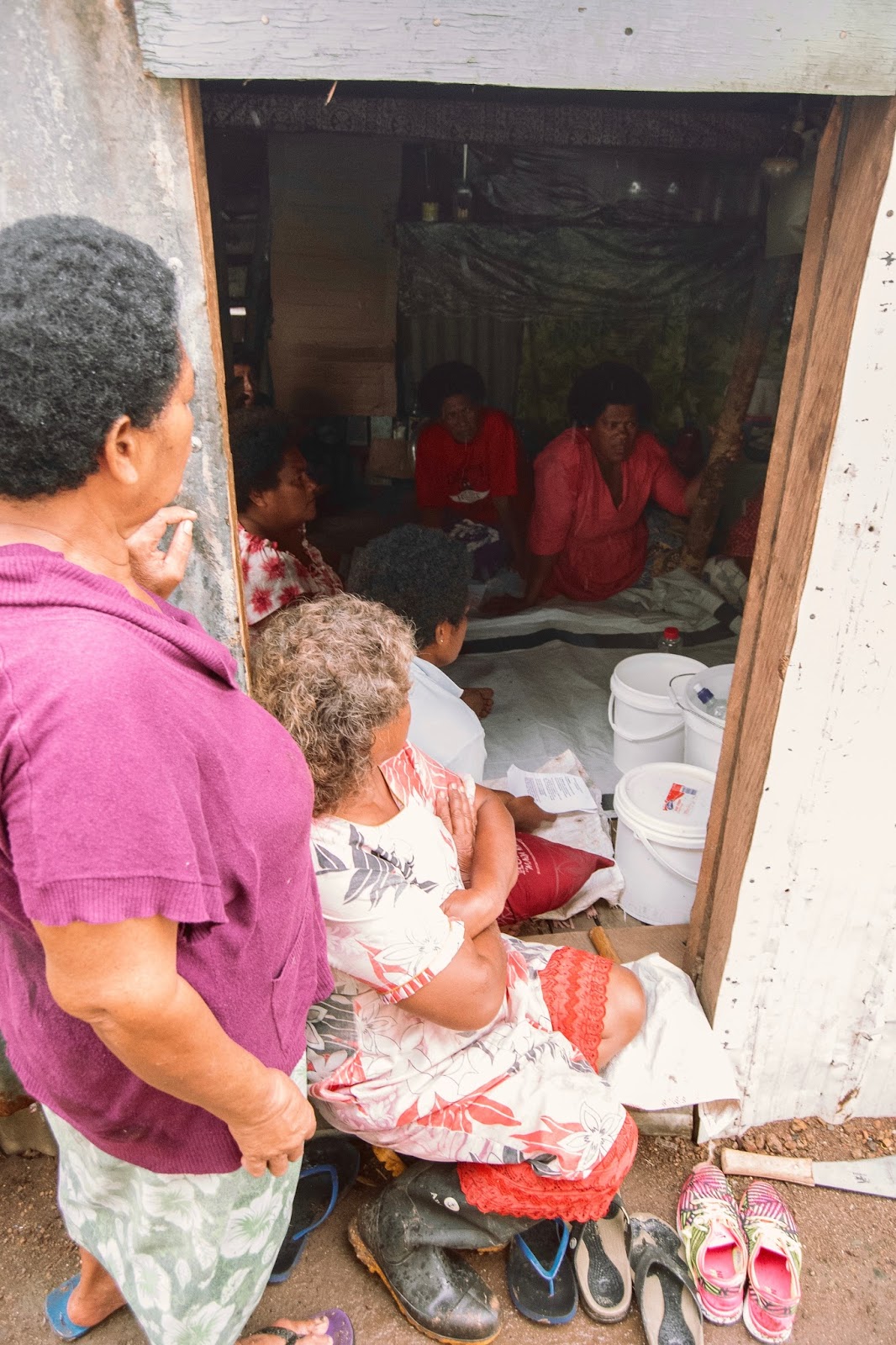
Megan (S/V AMELIE IV) presents white oil and chili-garlic spray to the women,
attentive in spite of their grief
     But our timing was awful: when we showed up for our scheduled pesticide presentation, the entire village was in mourning, having lost our friend Biu’s husband the day before.  I was ready to turn around, but it was Biu herself, sobbing in my arms, who insisted that we should go on with the presentation.  Dressed in black, all the women pulled chairs around the banquet table (for once, there was a table) and while I was choking on words, it was 15-year old Megan (S/V Amelie IV) who pulled herself together and talked about caterpillars and natural pesticide.  
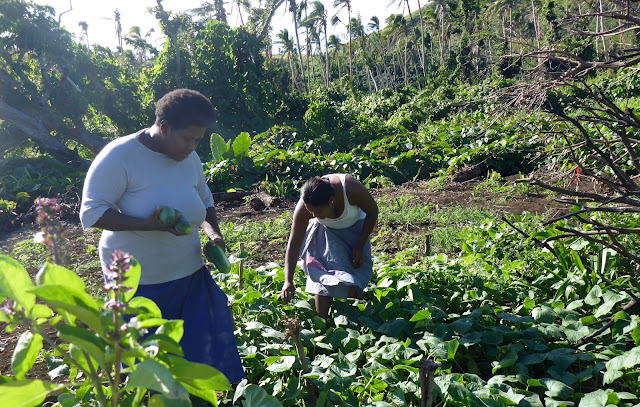
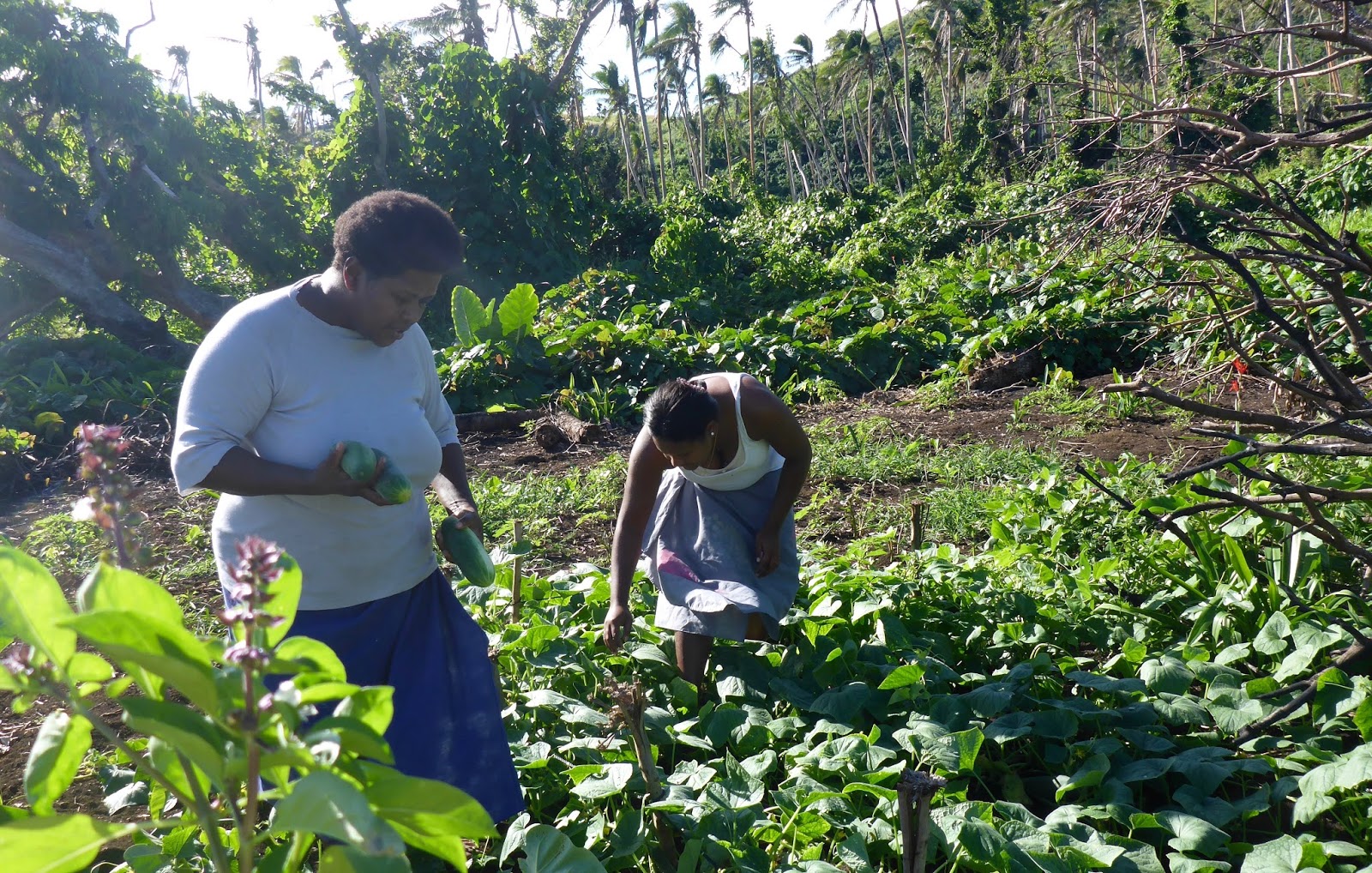
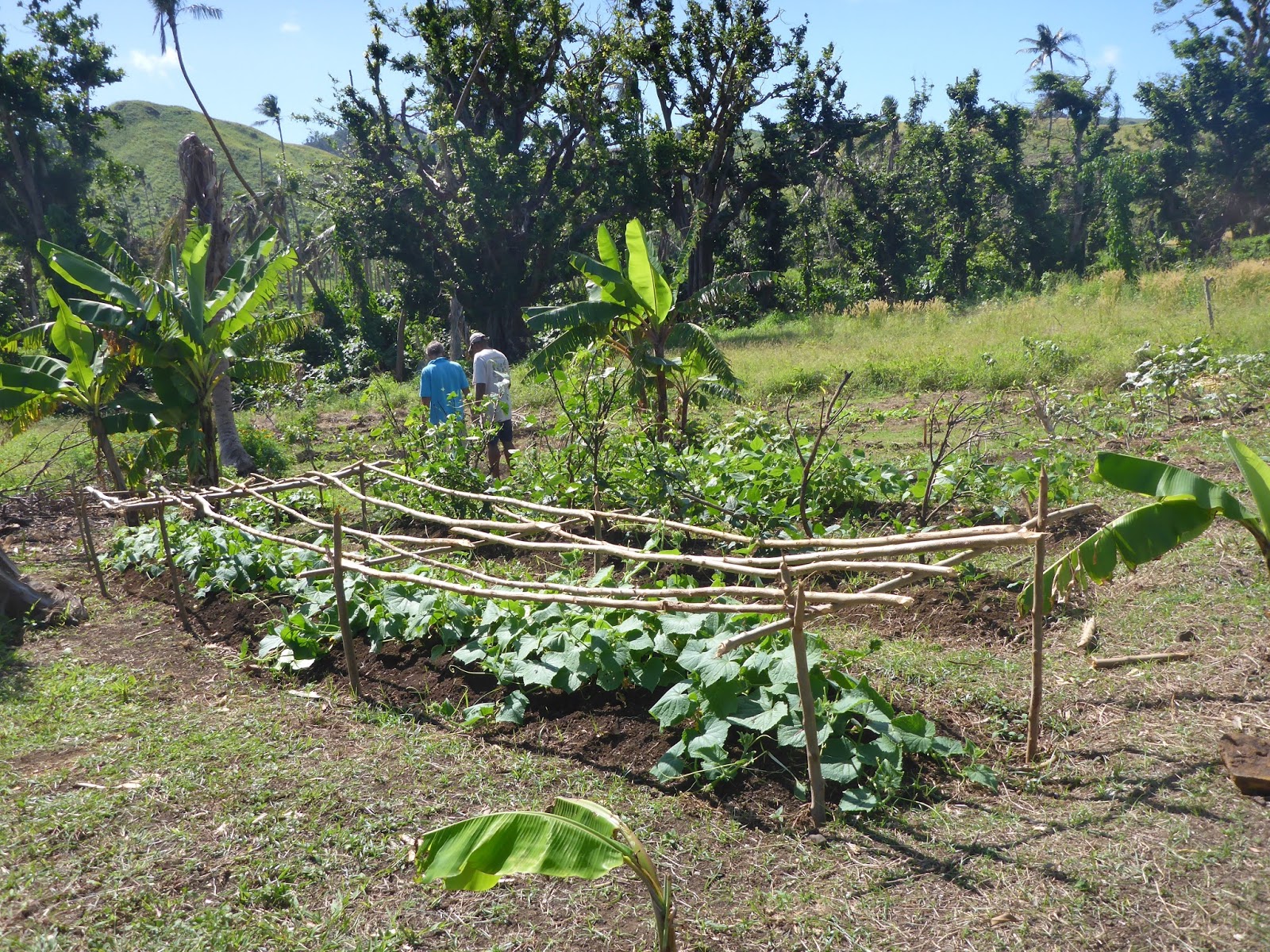
In Malaka, Unisi’s daughter harvests cucumbers to sell to the fleet.
Thai Basil grows wild, here, and women have no idea it can be used for cooking;
They only use it for medicinal purposes (sore throat)
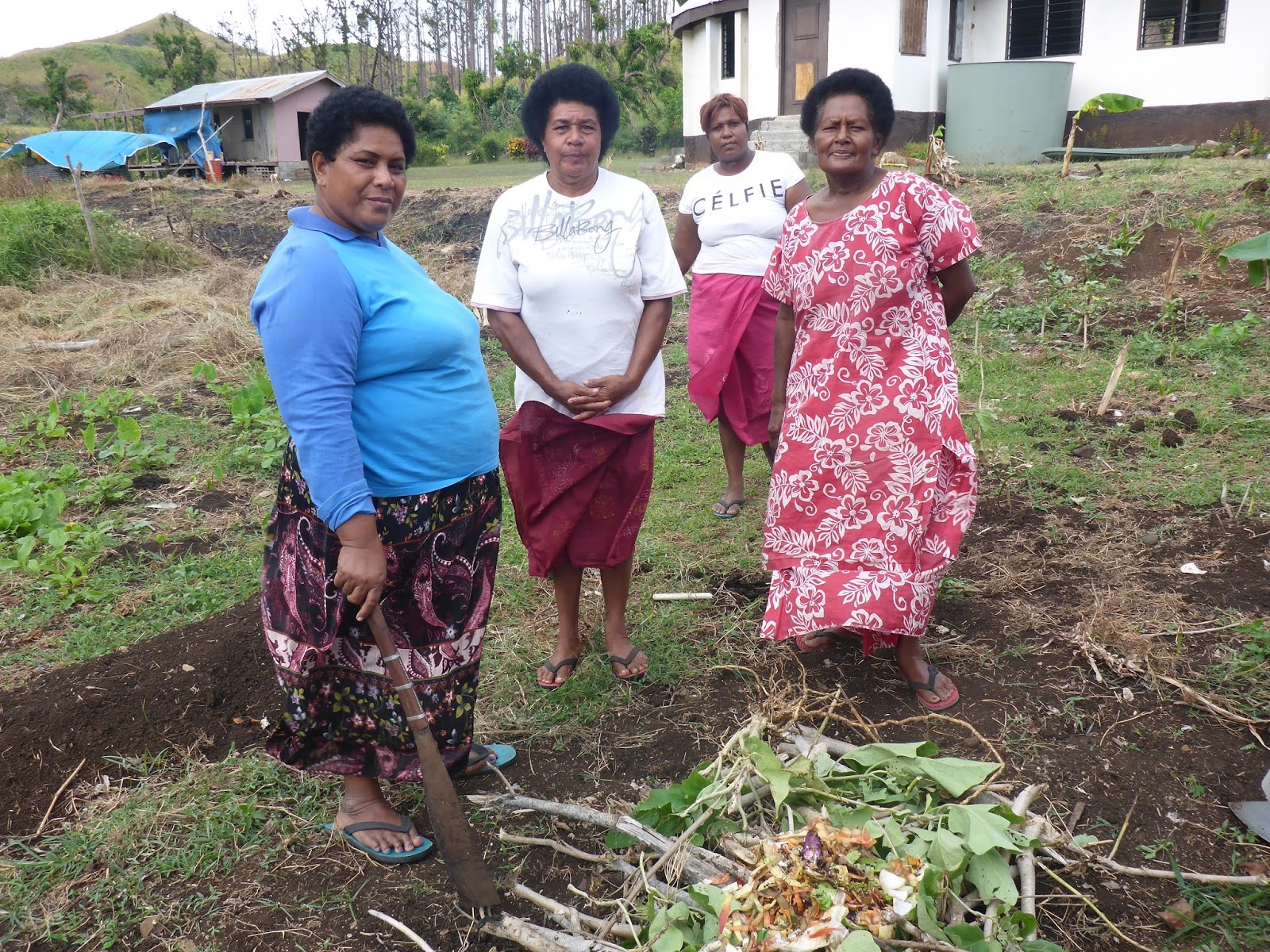
MALAKA – Unisi, the chief’s wife, and her daughter are very good gardeners.  They walked us through beds of cucumbers in full production, and were proud of the upcoming long beans, green beans and tomatoes.  They too, were out of seeds and our distribution put big smiles on their faces.
Like we had in Delaconi, we started a compost pile, hoping that the organic wastes will, in time, lighten up the heavy soil.
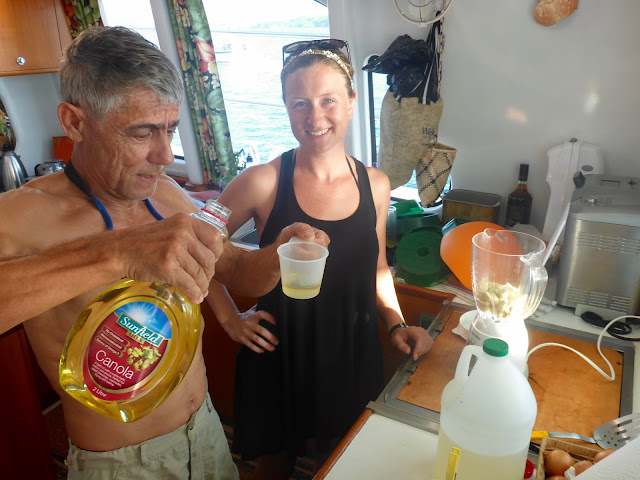
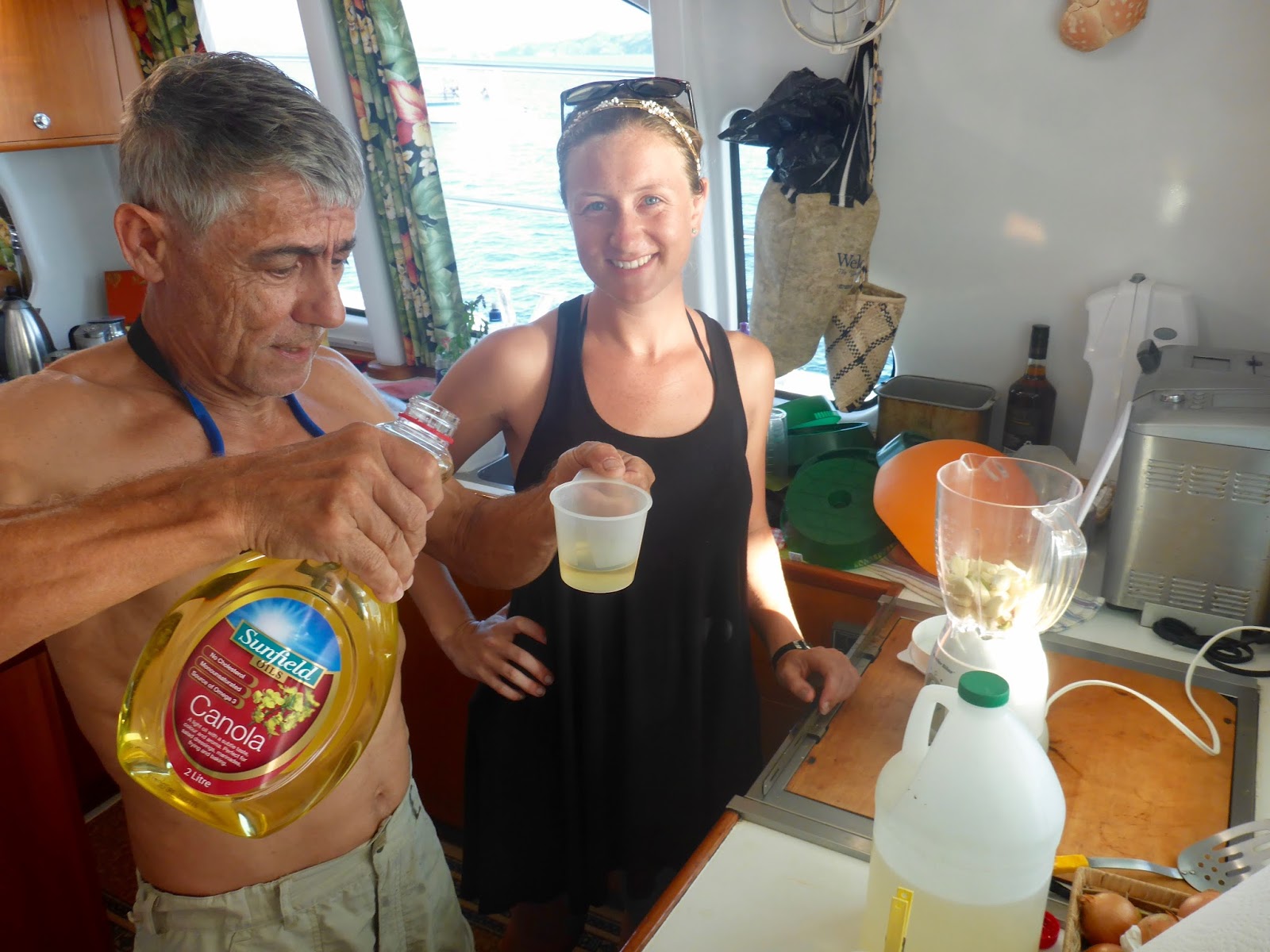
On board DOMINO, JP and Tessa (S/V REWA) prepare a batch of chili-garlic spray,
Recipes sent by our son James via Iridium communication… pretty cool!
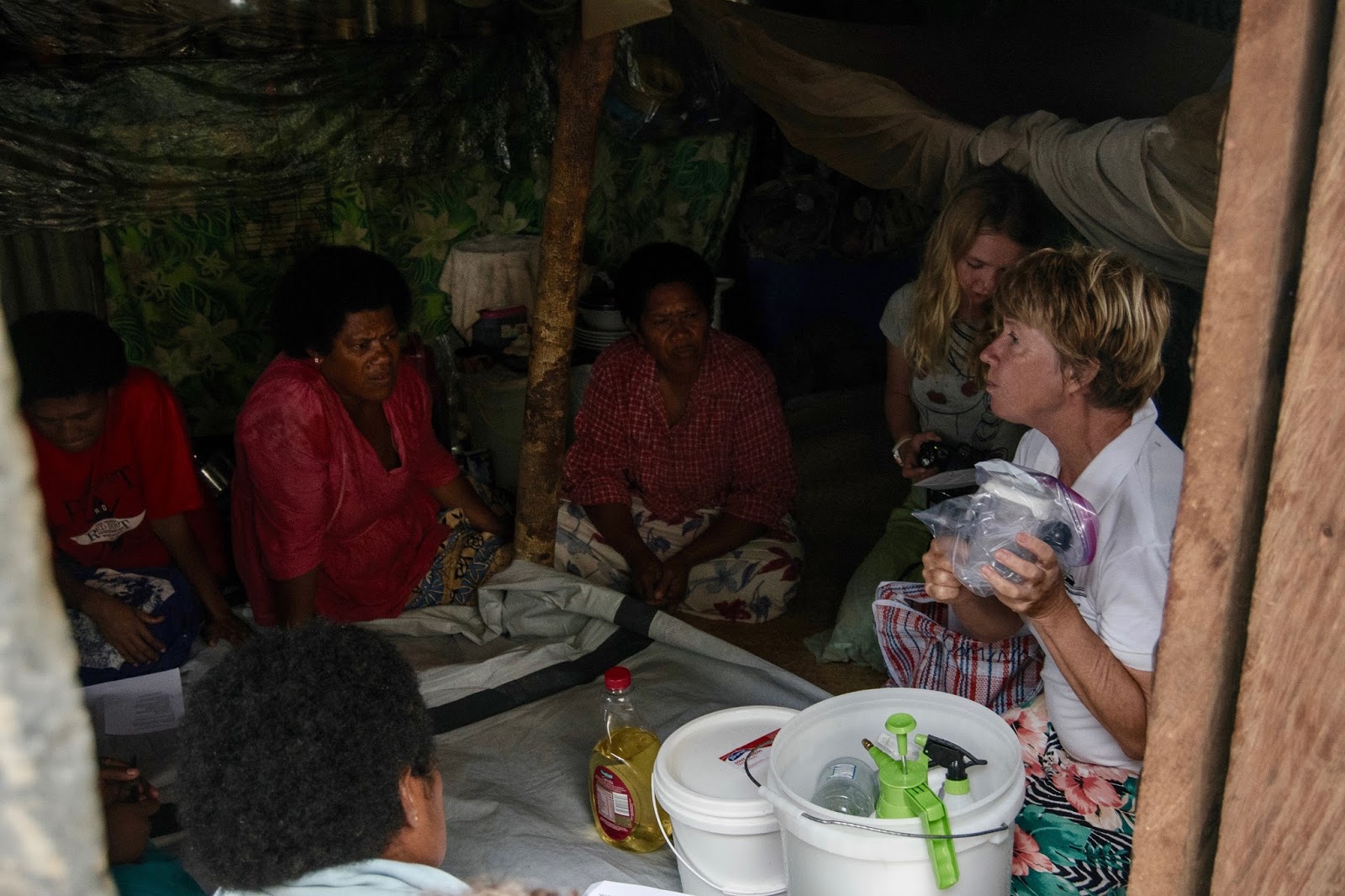
   There too, the caterpillars were at work and we gave our presentation: by the 2nd presentation of the morning, our team was smelling pretty ripe of garlic and chili, but nobody minded.
On our last visit, we bought more cucumbers and green beans, happy to have given the women a new source of income.
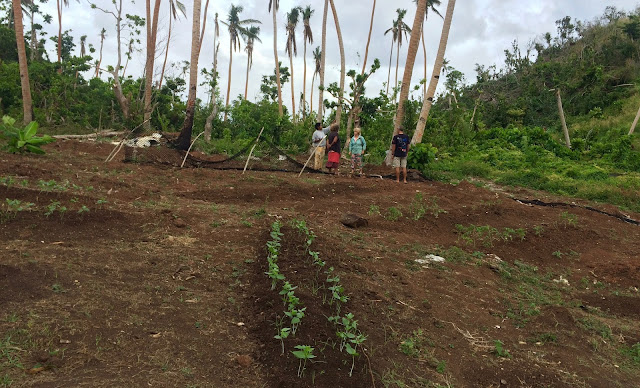
Mua Mua: green beans coming up
MUA MUA – Lo and her sister have a grip on the garden, a green thumb, and had no idea of how to fight caterpillars.  In no time, our little group was walking through the rows and picking and squashing the big, fat, green caterpillars.
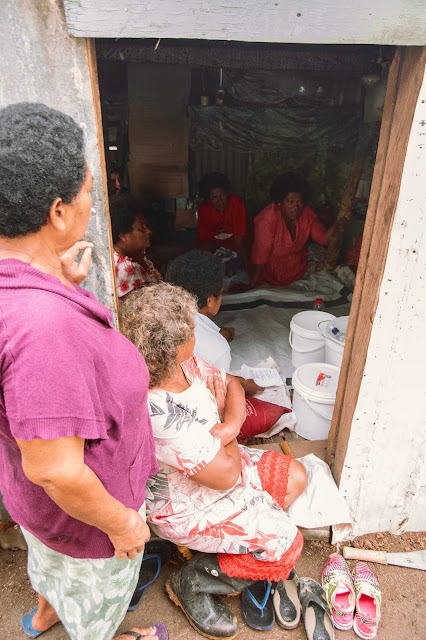
Pesticide presentation is a hit!


Our seed distribution and pesticide presentation under the cooking shed was a big hit —standing room only — mixing the aromas of wood fire and garlic, the smoke of a smoldering fire and the vapors of crushed hot chilis… lovely on a rainy morning!


Our fleet was only delighted to buy fresh watermelon while the women smiled ear-to-ear, pocketing the $ bills for their produce and new seeds for their garden.
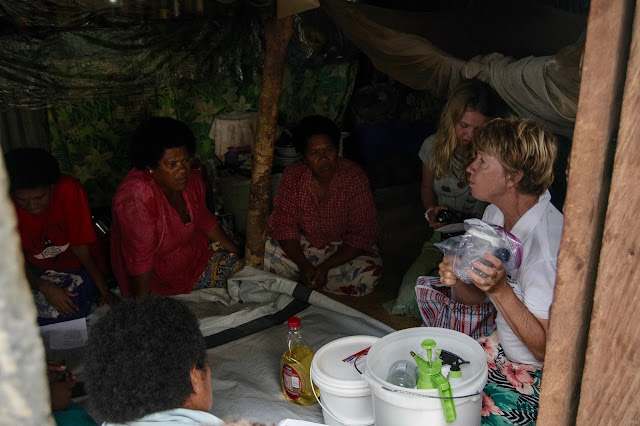
Smell of garlic in the morning!
The three villages on the west coast were easy-peasy.  When we visited the east coast, however, the picture changed to dismal.
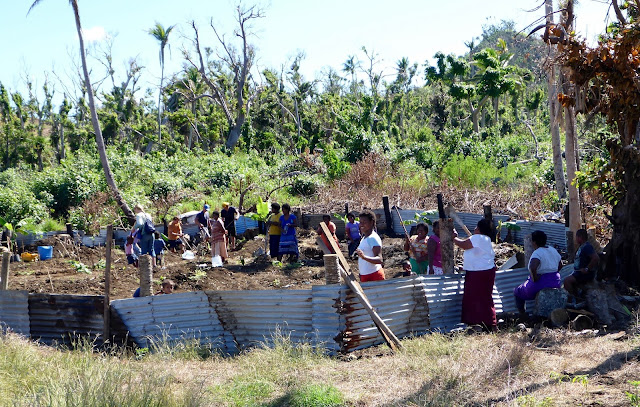
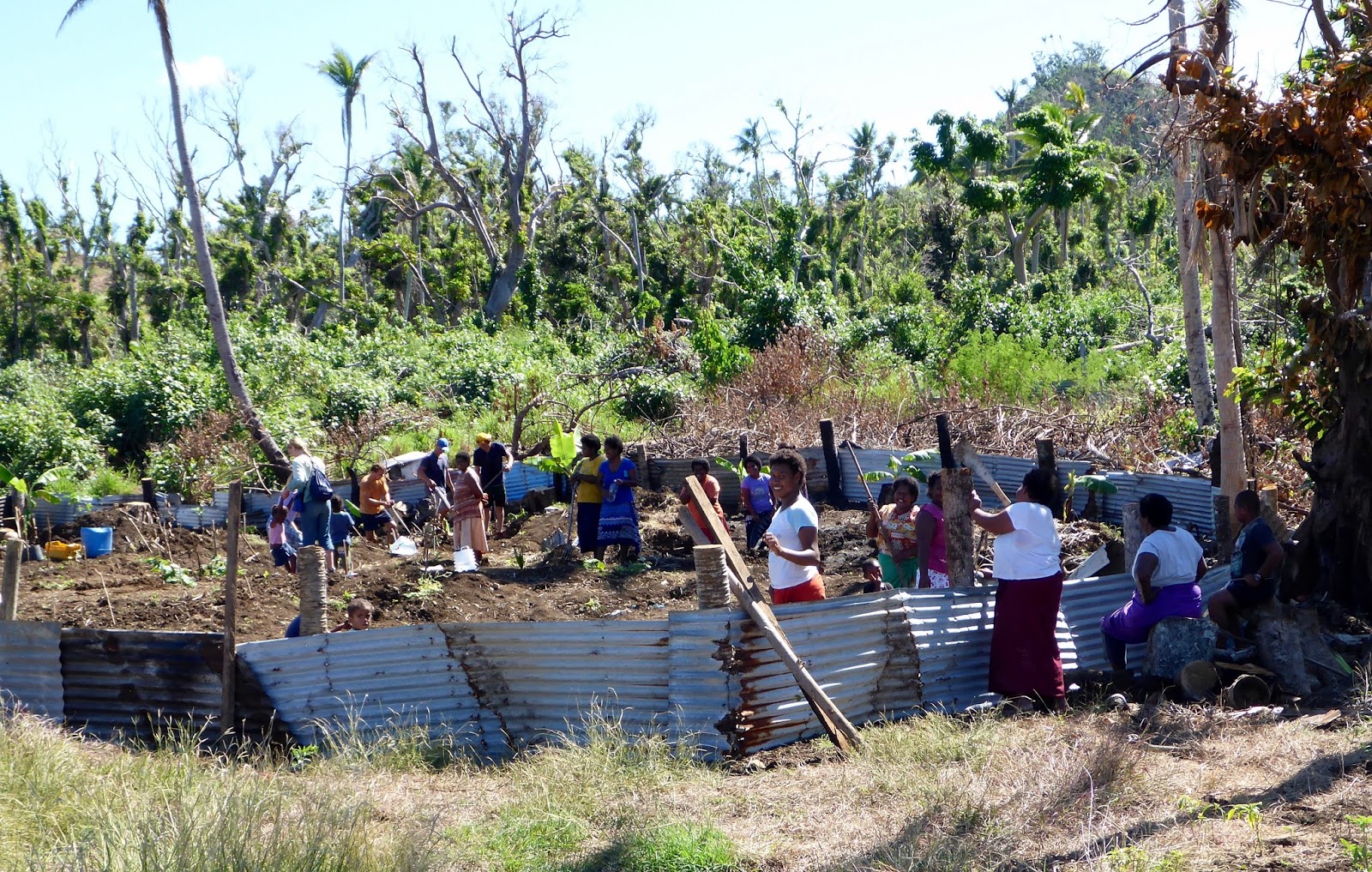
Gardening day in Boitaci: fenced against the pigs… so much to do!
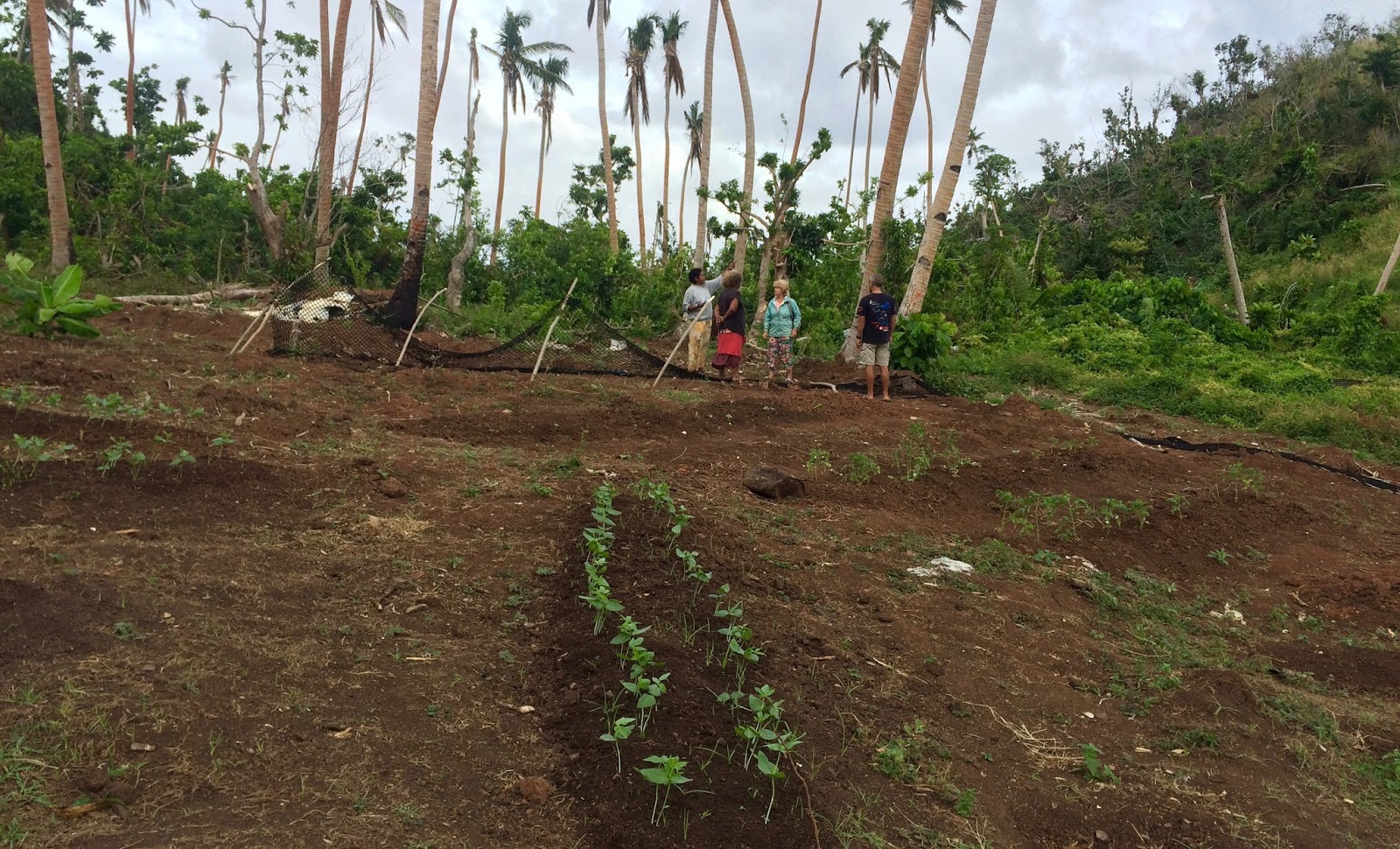
BOITACI – The garden was a mess!  Pigs were roaming through the village and had destroyed the garden.  It looked like a bomb had exploded, craters and tree stumps dotting the dry and pocked landscape.  There was nothing we could do until the Sea Mercy chain saw team came to chop down trees and build a fence to hold the pigs out.
All we could do was to deal out water jugs for watering, ordering a hose to reach the spigot 70 yards away, and distribute some seeds to get started.  
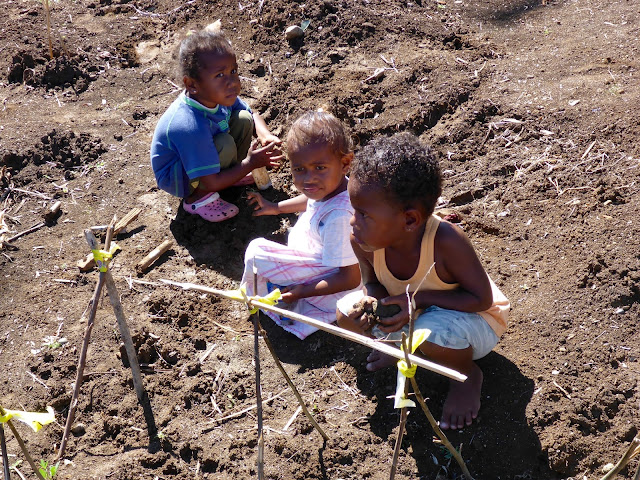
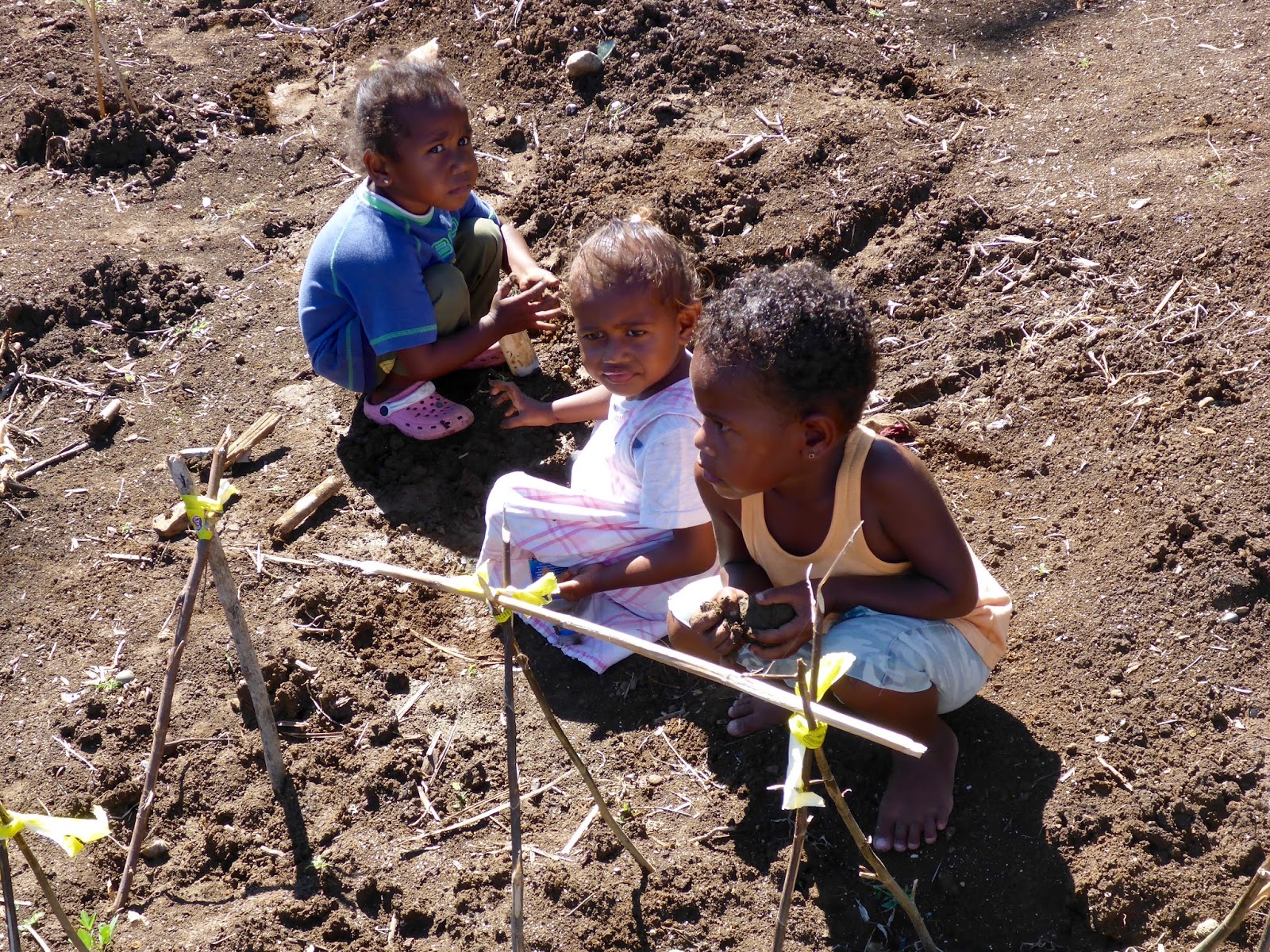
Boitaci’s kids, always following us imitating us
There was so much to be done in this garden, we had no idea if it would ever be fruitful… but more on this later.
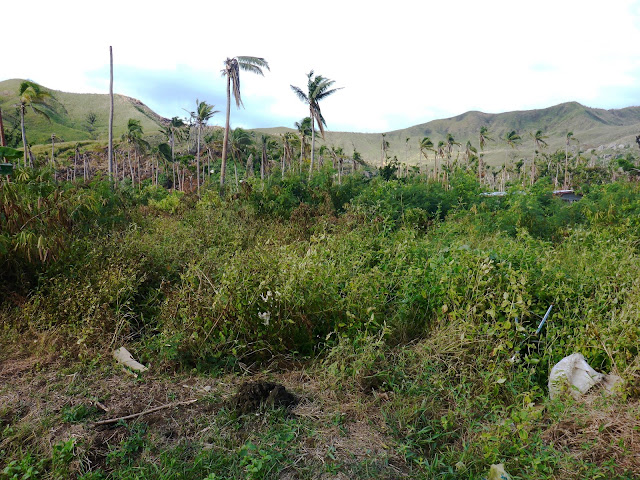
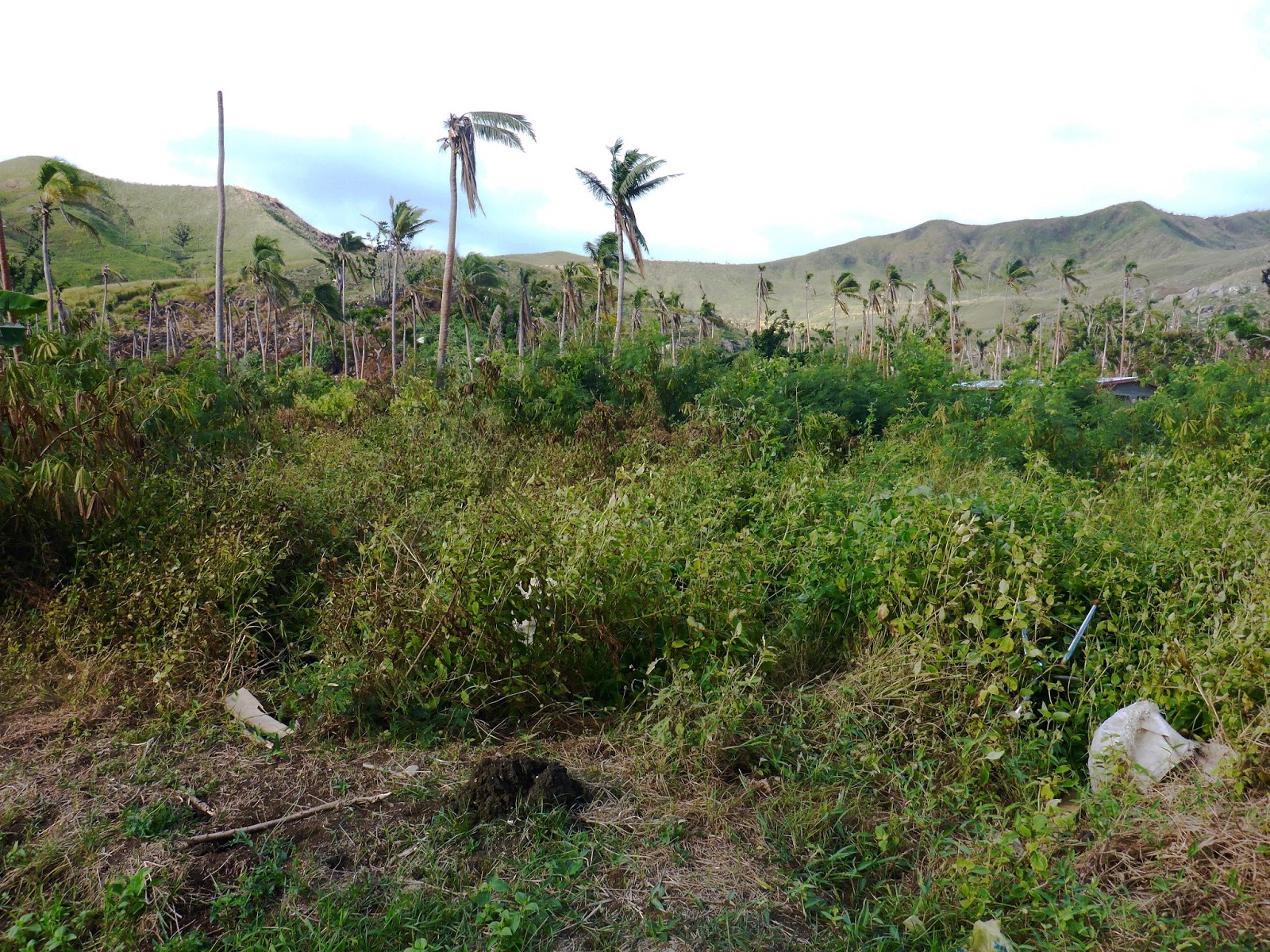
Mavana’s overgrown school garden
MAVANA – What once had been a beautiful school garden was now —3 months after Winston— abandoned and overgrown.  But the schoolmaster and Va, the woman with the Green Thumb, were determined to get it started again. 


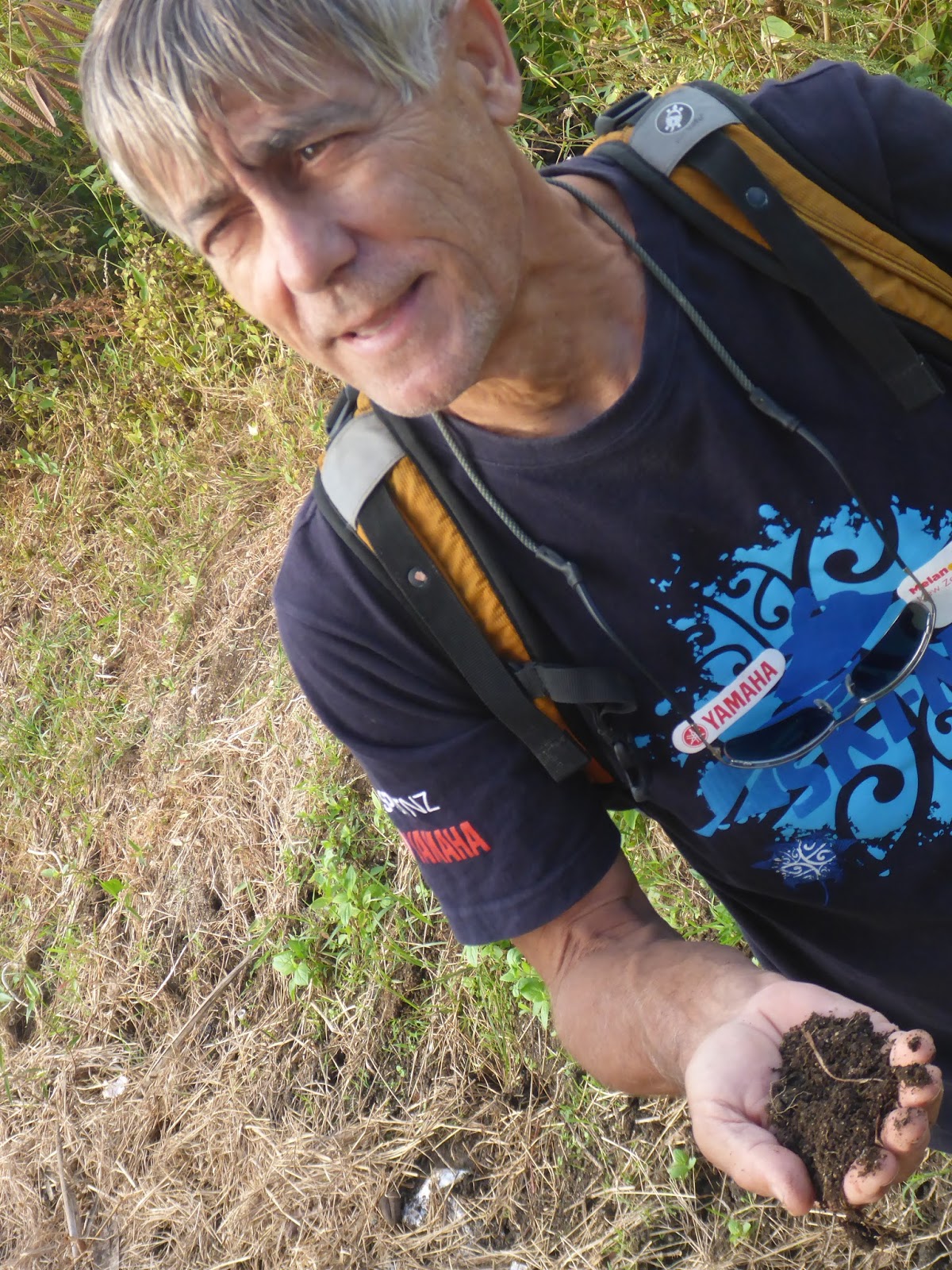
 JP traipsed through the weed, picked up a handful of soil and beamed: “Beautiful!  This is going to be great for carrots!”  Yet, clearing all this brush with nothing but machetes looked over our capabilities.  


We distributed packs of seeds, wondering when we could put them in that ground.

    
 Five days later, we returned with a work party (3 young boys from the World ARC Rally) only to find out that the women had cleared the entire garden, 1/3 of it already tilled and planted.  They had seeded all their seeds.
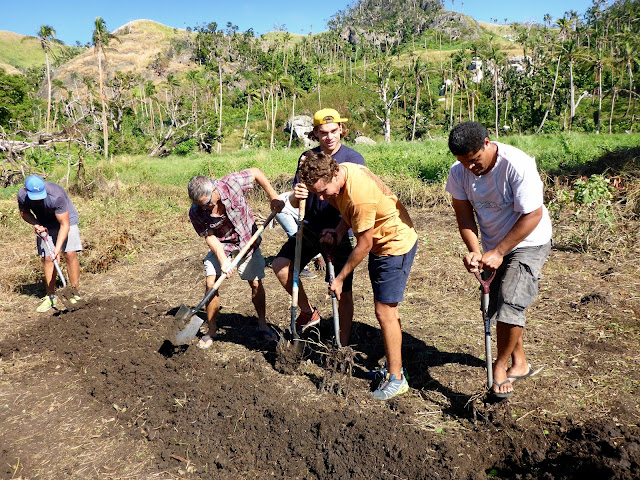
JP & the ARC volunteers are joined by the village’s men to dig new beds.
   Needless to say, JP and the 3 boys went to work, tilling 3 more beds.  But a funny thing had happened: two men were now working in the women’s garden, removing stumps, tilling, doing the hard labor.  The women’s courage was motivating the men to help out.   It was with pleasure that we left more seeds for the new beds.
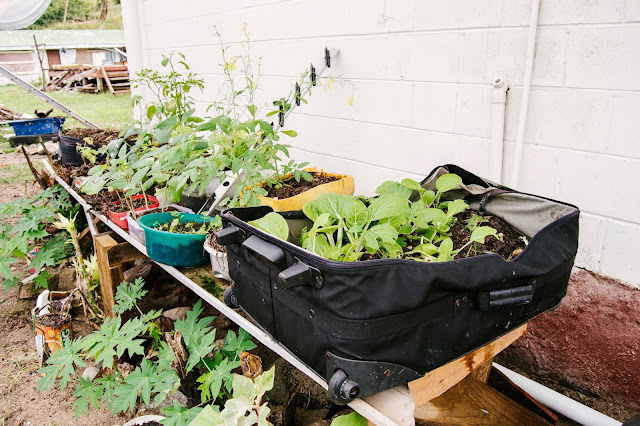
Va’s beautiful garden at the back of her house
Va keeps her own garden behind her house, in more than unconventional containers.  She and her sister sat down on the grass with us and once more we gave our pesticide control presentation.  But since Va has such a green thumb, we also gave her extra garlic heads and dried chiles to grow new plants… they can make their own pesticide!
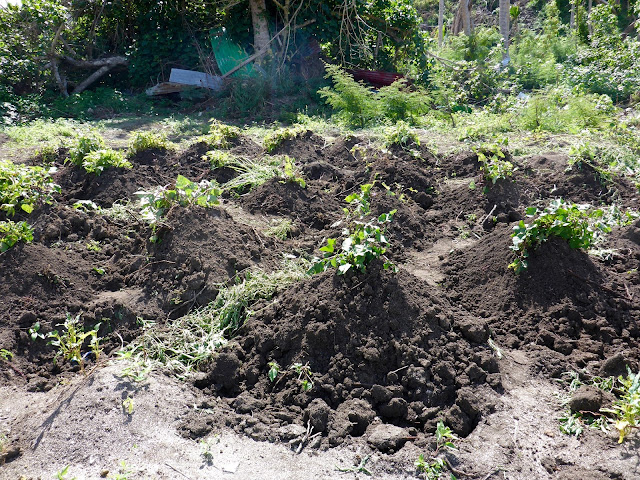
Mua Levu’s struggling sweet potatoes
MUA LEVU – This is a totally different village, based on a strong clan system.  There are 4 clans in the village, which means 4 community gardens.  In addition, Betty (the chief’s wife) has her own garden behind her house… so, make that 5 gardens to watch!

This village was caterpillar heaven!  All sizes, colors and varieties of caterpillars, worms and beetles were feasting and had destroyed a good part of the crops.

We started with the easy part: walking through the rows of taro and sweet potatoes, removing the bugs and squashing them underfoot.  It took a bit of persuading, but the result was immediate: no more bugs!


Each clan leader took a volunteer to their garden, visits followed by a full “debriefing” conducted by Betty under the chief’s awning.  Wow!  So much structure!  


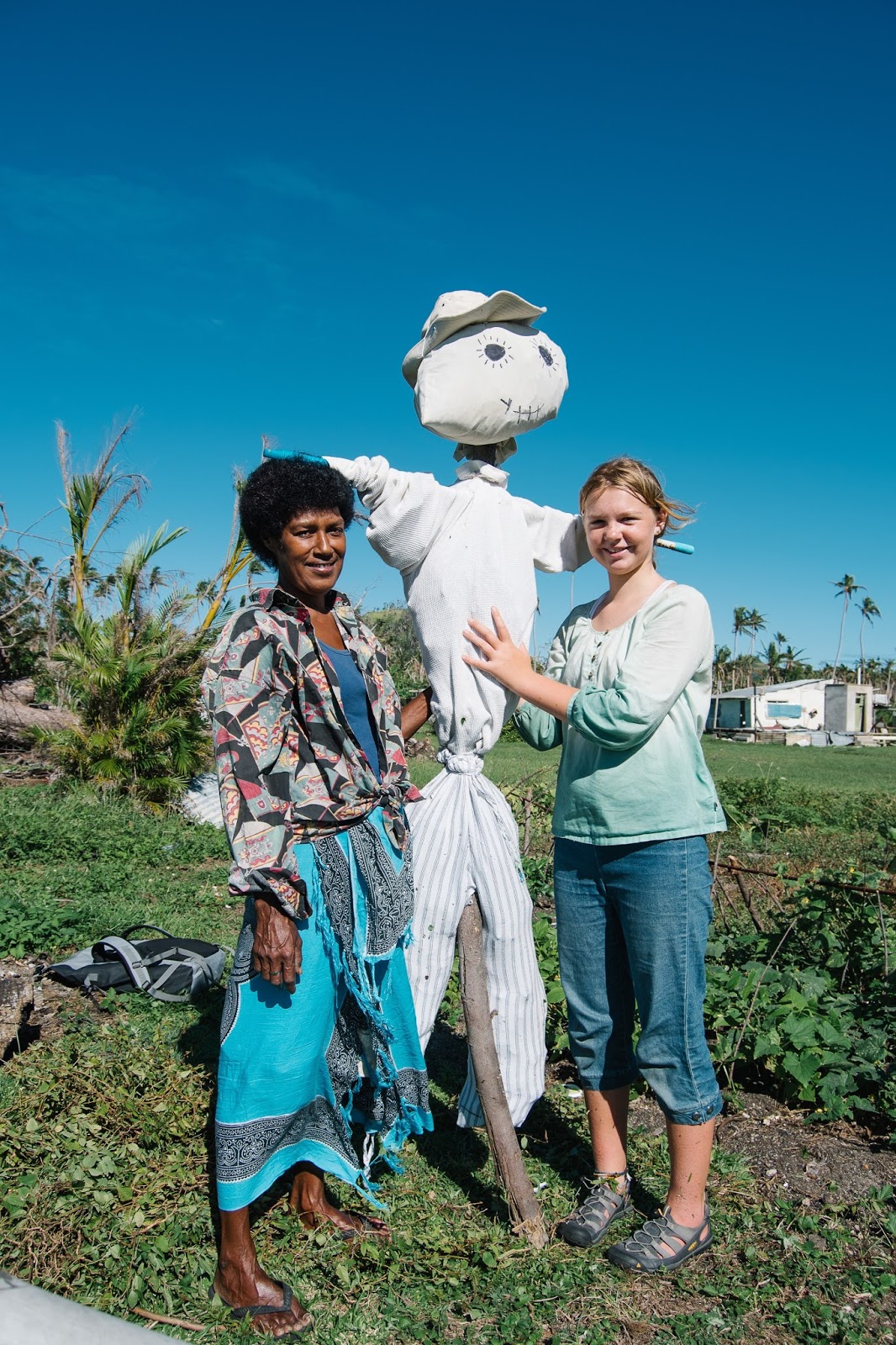
Losanna’s garden was being eaten by doves?  It was a job for young Megan who returned 2 days later to build a scarecrow.


Once more, we gave our pesticide presentation and distributed the last of our seeds for this village, pretty confident that they would soon harvest sweet potatoes and green beans.
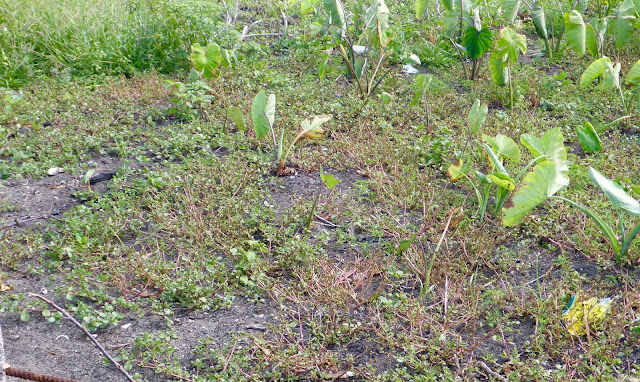
Betty’s crop ravaged by caterpillars and beetles
    This was an intense program, giving our pesticide presentation to 6 villages in 1 morning, driven by the police pick-up truck, slip-sliding in the mud, sloshing garlic-chili sauce all over, squashing bugs,   but unmistakably supporting those beautiful Fijian women in their fight to survive Winston!
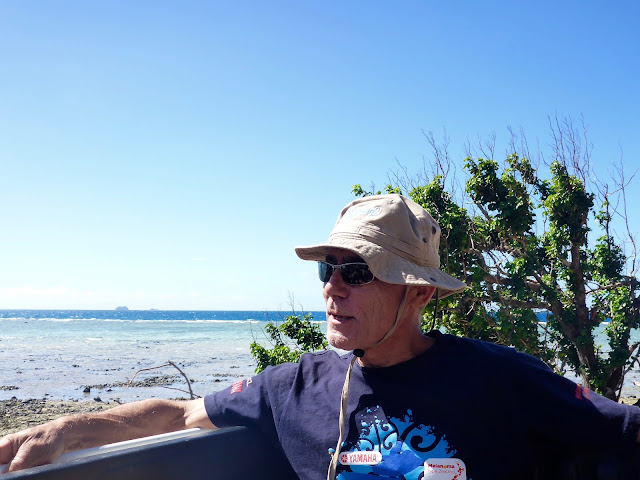
In the back of the truck, JP going to work!
More gardening in the next blog;  Until then…

dominomarie

Road Trip to Red Head

Up at 4 am, in the rental car by 4:44 am. This is no ordinary road trip. The crew is psych’d.

Cape Lookout

Our first stop after leaving the Palm Beach area was at Cape Lookout in North Carolina, just south of Cape Hatteras. We’d stopped there en route to Boston mainly to wait out a storm that would be passing through the Boston area, but it turned out to be an excellent anchorage. We toured the Cape…

Bedding, fillets & tape

Sorry it’s been a few days with no words. Things just sorta got in the way I guess. Jeep needs a new clutch and when I was at the garage to arrange that the old Camaro wouldn’t start! I guess if you’re going to break down the garage is the best place. …

Sea Mercy – One Water Tank at a Time

SEA MERCY – ONE WATER TANK AT A TIME
Dirk (S/V PEREGRINE) inspects the 300 yards of garden hose suspended over the reef – No snag, please!
Susui Island – June 18, 2016
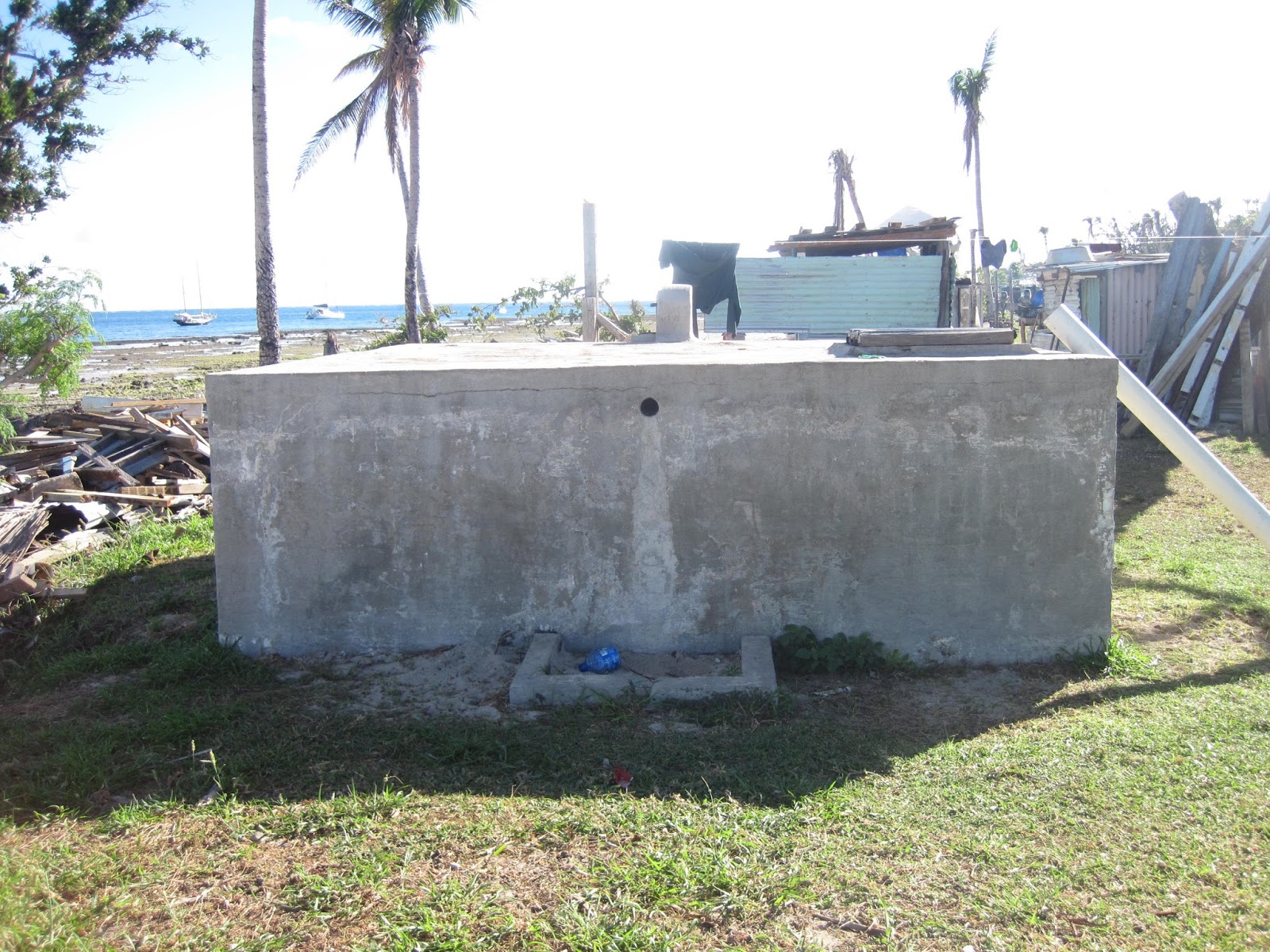
One of the main hardships after a hurricane wipes out a village is the lack of fresh water.  It may be raining but there is no water to be had.  In most of the villages of Vanua Balavu, the main source of water is rain catchment from the roofs into large water tanks.  No roof, no gutter, no water tank = no water.  It will be months before the community centers, churches and homes have new roofs and gutters.  Indeed, our Sea Mercy Recovery team has asked for roofing and guttering for the villages in dire needs.  But what to do in the meantime?
Living in precarious conditions, to say the least

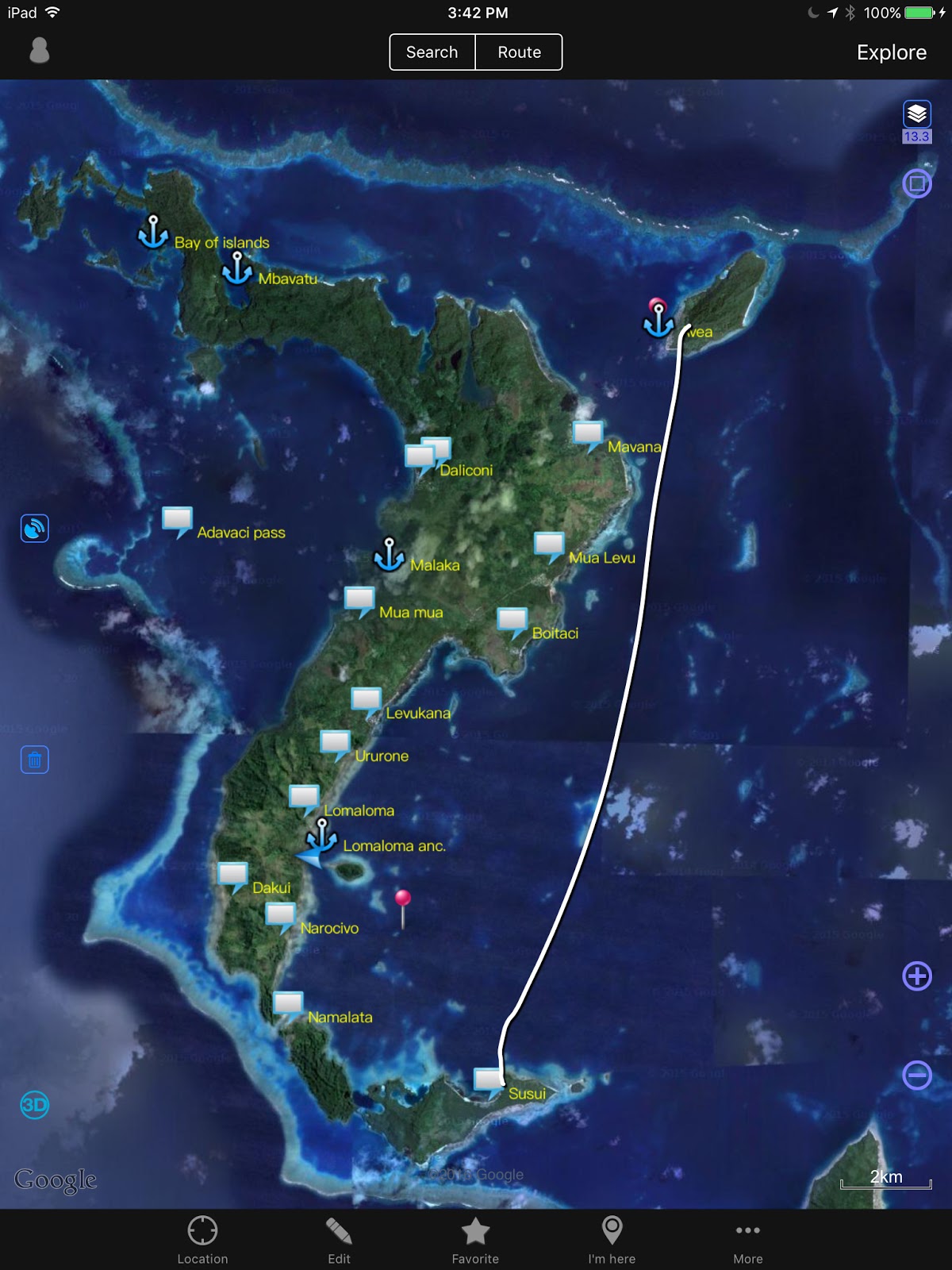
Our team has identified 3 villages in critical need, all on islands off of the main island of Vanua Balavu:  Avea, Susui, and Cikobia.

Stern anchor into the reef, as close as we dare, it took a team to set-up the delivery
Two weeks ago, the super yacht NOMADESS delivered 6,000 liters in Avea and Cikobia, and 8,000 liters in Susui.  But in spite of rationing the population to 1 liter/person/day, the villages are running out of water.  So, our little fleet rallied to see what we could do.
In Avea, no more water catchment… living in makeshift tin houses
AVEA – Located Northeast of Vanua Balavu, Avea is a small, low island, where 330 people fight to survive.  When we arrived, the cisterns were almost empty.
Portable water maker, solar panels, pumps… let’s get it to shore
One team of engineers worked on setting up the water maker stored on board DOMINO and soon they were pumping water out of the brackish water well and turning it into fresh water, slowly filling the main tank at the center of the village.
In Avea, let’s fill this cistern!
Meanwhile, DOMINO was moving into position, dropping anchor in front of the village and backing close to the reef, a stern anchor set inside the reef.  How do you deliver water?  Strong from the experience on board NOMADESS, the Sea Mercy water team quickly deployed 200 yards of garden hose, floated them above the reef, dropped the end into the village’s 2nd water cistern.
Hard-hit Avea
JP fired up the 12 KW Northern Light Genset, powered up the HORIZON Seafari HRO watermaker, and that was it!  Water making at the rate 250l/hour –  DOMINO pumped water for almost 14 hours (with a 2-hour break for shut-eyes) and delivered close to 3,500 liters of water, to the great joy of the locals who gave us an amazingly warm tea party and church ceremony, singing choir and all!
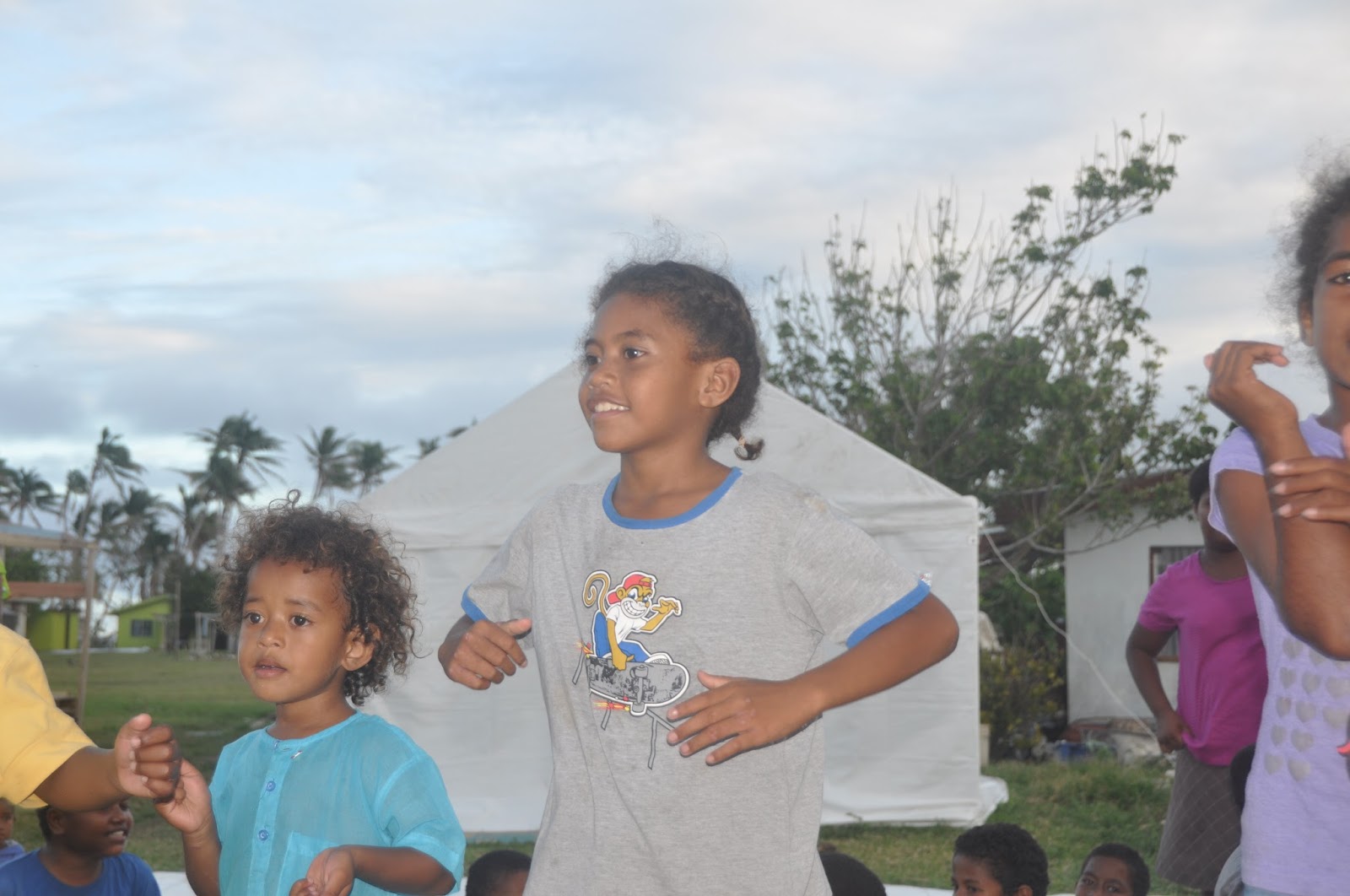
All the kids sang and danced for us!
SUSUI – No sooner had we disconnected the hoses from Avea at 0800 and let the HRO rest a bit, we were en route for SUSUI, 11 miles south, where S/V PEREGRINE’s Dirk and Gretchen had prepared our arrival. 


It’s just a short hop from Avea to Susui
Under Dirk’s brilliant guidance, JP dropped anchor in front of the village, backed up in a small hook in the reef, and Dirk dropped our stern anchor as close to the reef as possible.  But the bottom was rock-hard and I ended up diving the anchor, wedging it between dead coral heads, making sure that all the chain was flat on the bottom and that no line was caught into the rising coral heads.  Piece of cake at low tide on a flat-calm day!

JP and I taking care to float the hose above the reef.
Within minutes, our volunteers were stringing 300 yards of hose off our stern, once more floating them over the reef, and dropped the end into the cistern.  By 11:30 we were pumping again.
A happy Jacob inspects our Horizon HRO water maker
We pumped all day and most of the night, till the 3 PM the next day, some 23 hours of pumping and 5,600 liters of water.  Jacob, the village’s mayor, helped us all day and night, keeping a night watch and calling us, checking on the water flow.

Jacob loved the power of our Northern Light genset
On board, JP checked on the flow volume every 30 minutes, checking our tank’s level, adjusting the makeshift distribution valve for an even flow: no need to overflow or dry-out DOMINO’s tanks! 
HOW LONG can the HRO pump?  We have no idea!  This was the first time we ran the water maker for so long and it worked beautifully. 
Enough water?  Not quite!  The rest of the fleet had ran their own on-board water makers, delivering close to 1,000 liters in water jugs.
Once more, the villagers took care of us, with a nice kava ceremony and community dinner.  We were blown away!
The villagers in Susui prepared a feast!
Hopefully, this will hold the village till the roofing and guttering gets installed.  Sea Mercy is shipping the materials and we can’t wait to see the roofing go up at the community centers!

CIKOBIA – This kind of water delivery operation demands flat calm conditions, which we had for the 3 days in Avea and Susui.  But the wind kicked up and is not supposed to let up for the week to come.  Cikobia is a tricky delivery, needing high tide in the middle of the day and glassy waters.  Unfortunately, we were not able to deliver and the fleet is waiting for better conditions while the village is still rationed at 1 liter/day/person.  They really need roofing, guttering, and a way to tap into their collapsed water source.   To be followed.
If you want to help any of those 3 islands with 
water makers and stream head pumping, 
visit the 
and make a donation for 

VANUA BALAVU!
Thank you!
Until next time…
dominomarie

Sea Mercy Vanua Balavu – One step at a time

RECOVERY: ONE STEP AT A TIME
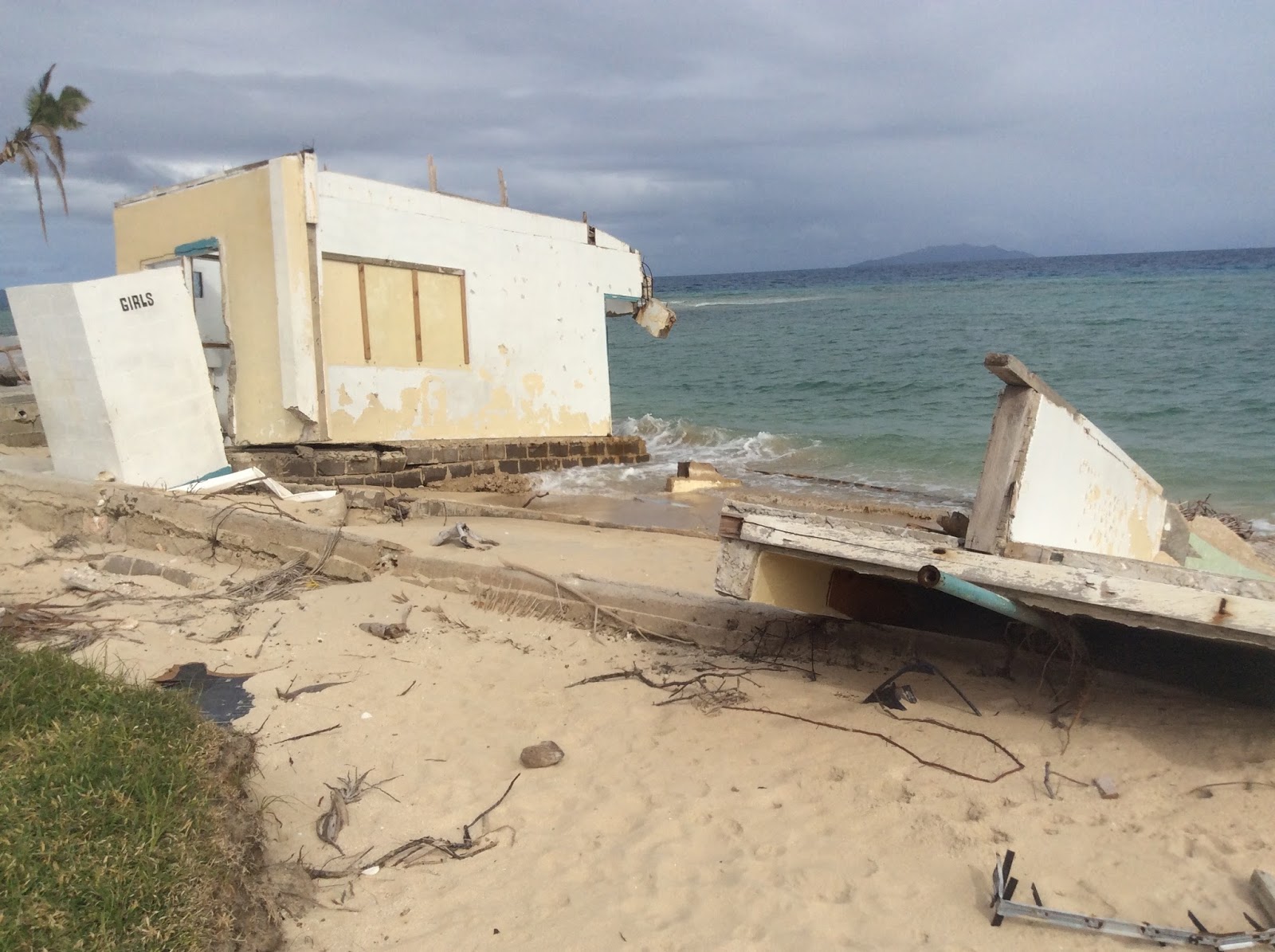
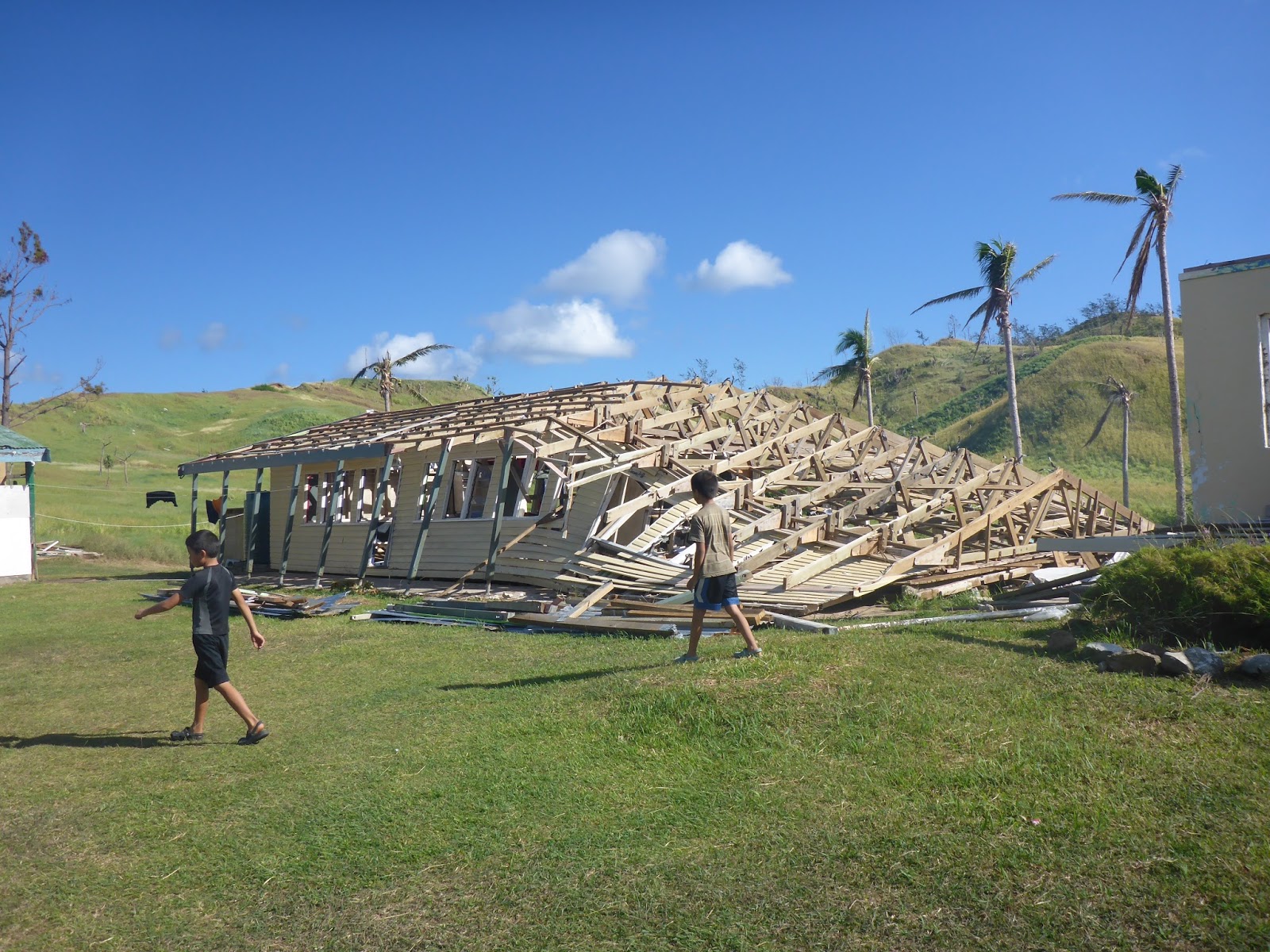
The school in Mua Levu (East Coast of Vanua Balavu) is just matchsticks
Malaka Bay, Vanua Balavu, 
June 5, 2016 (17*14.260S, 178*58.090W)
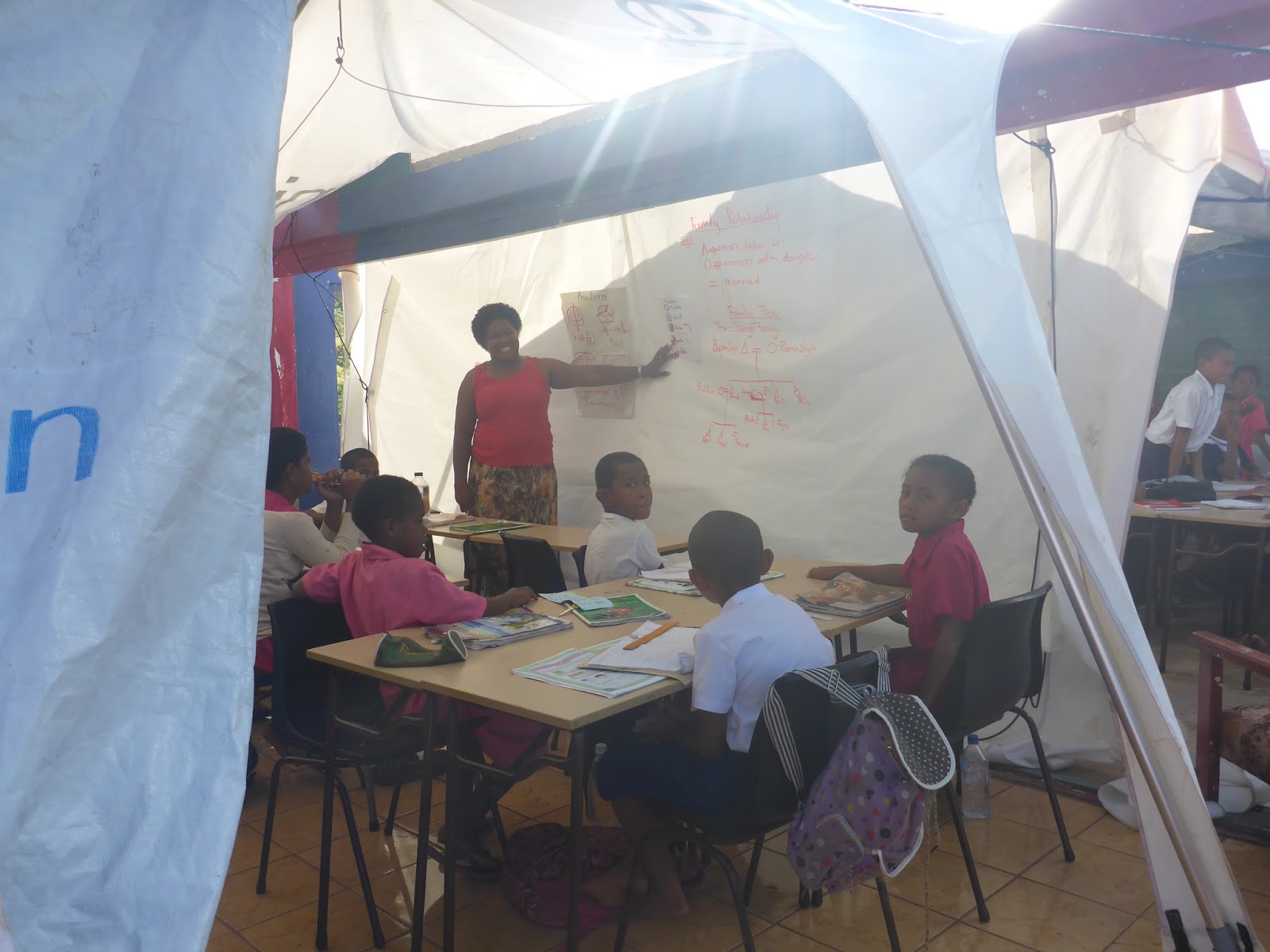
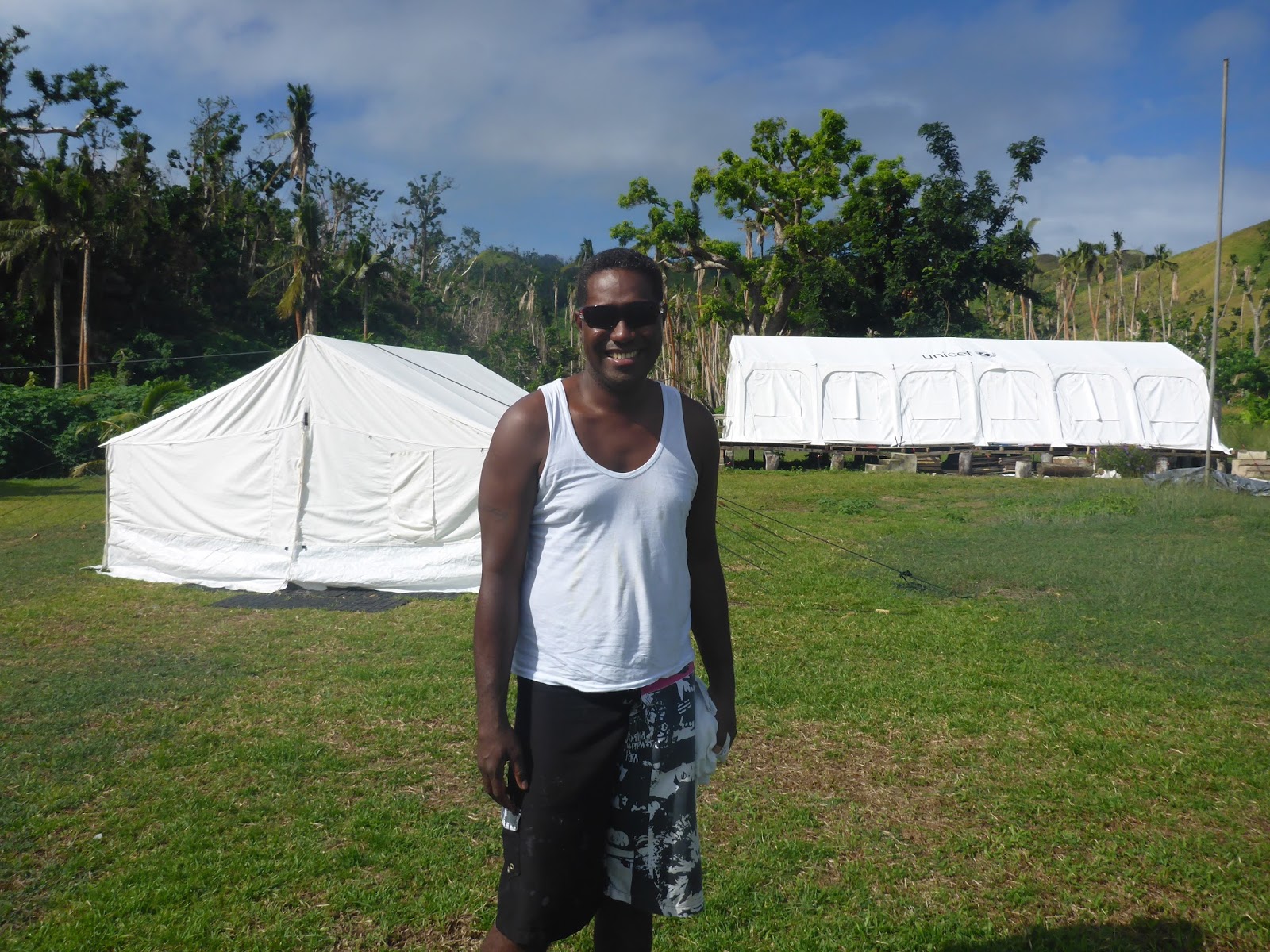
In Mua Levu, school is conducted under a UNICEF tent.
Kids travel by long boat and open transport from 4 villages, rain or shine, no raincoat, no shoes
When faced with such a massive disaster and a recovery process of such magnitude as Cyclone Winston, where do you start? How do you proceed?  
What is left of the school in Avea… and the beach beyond it has been washed away
SEA MERCY coordinates with major NGOs (Red Cross, UNICEF) as well as government agencies, and identifies gaps in the aid process.  Since the organization is small, it is nimble and able not only to respond quickly to small needs but also to initiate long-term, inexpensive programs that benefit long-lasting recovery and self-sufficiency.  That’s what we did this week with interventions in Loma Loma and Delaconi, Avea, Susui, and Cikobia.

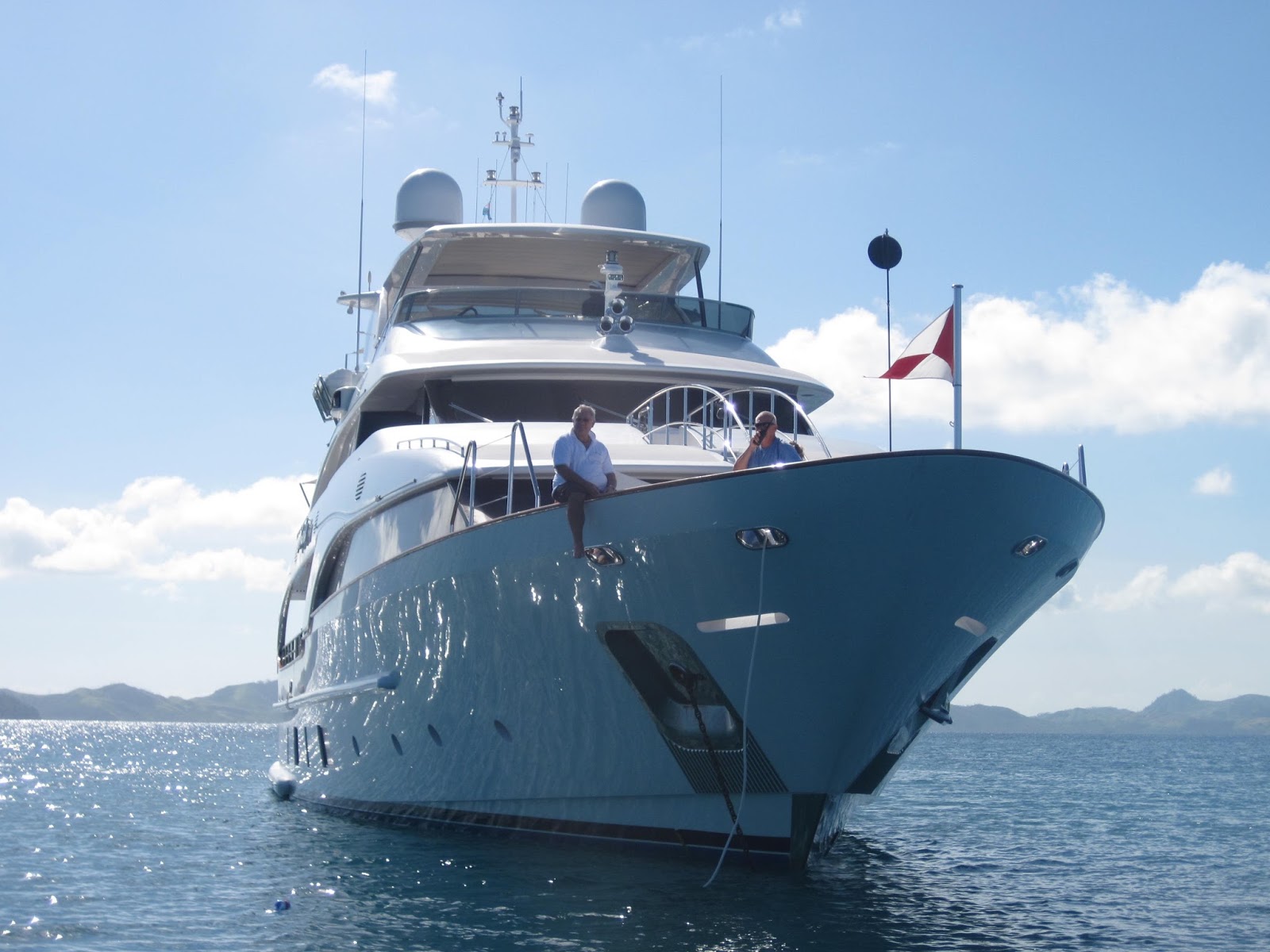
Super Yacht NOMADESS came to the rescue
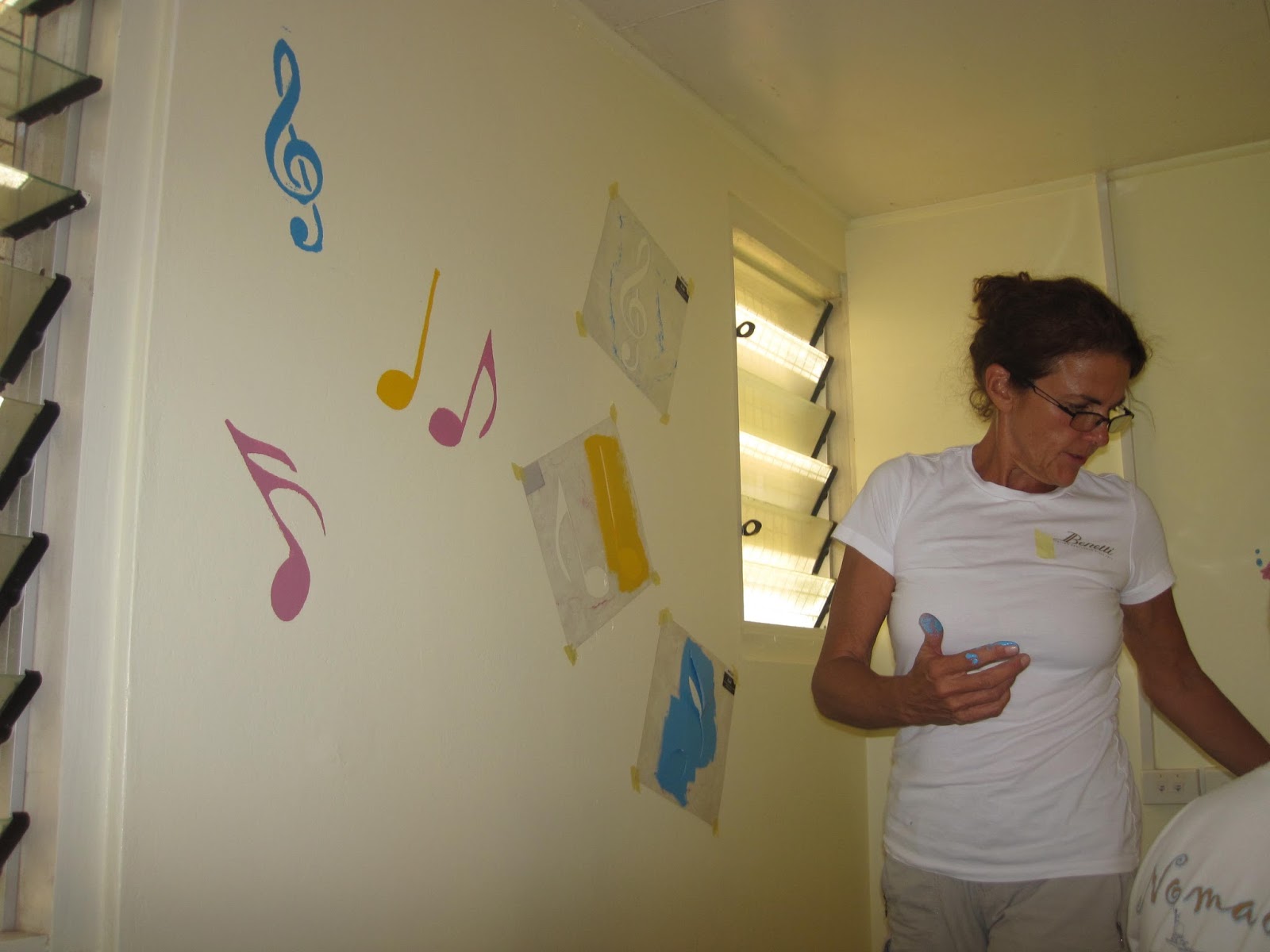
When we toured Loma Loma last week, Dr. Malo —the hospital physician— asked for the women’s ward windows panes to be repaired, for the children’s ward to be repainted and for some linens for the beds.  Within hours, our coordinator had relayed the need to NOMADESS, a super yacht coming our way.  That yacht was only with us for 2 days, but what a powerhouse! 

NOMADESS crew at work: repainting the hospital children’s ward
The crew repainted the wards, fixed the windows, brought linen… but they didn’t stop there.  They went on to the 3 islands in the lagoon in dire need of water.  The situation in Cikobia was so dire that the islanders were ready to light up their emergency signal: a fire seen by the next island, then relayed to the mainland!  Sea Mercy yachts Peregrine and Remedy relayed for immediate help!
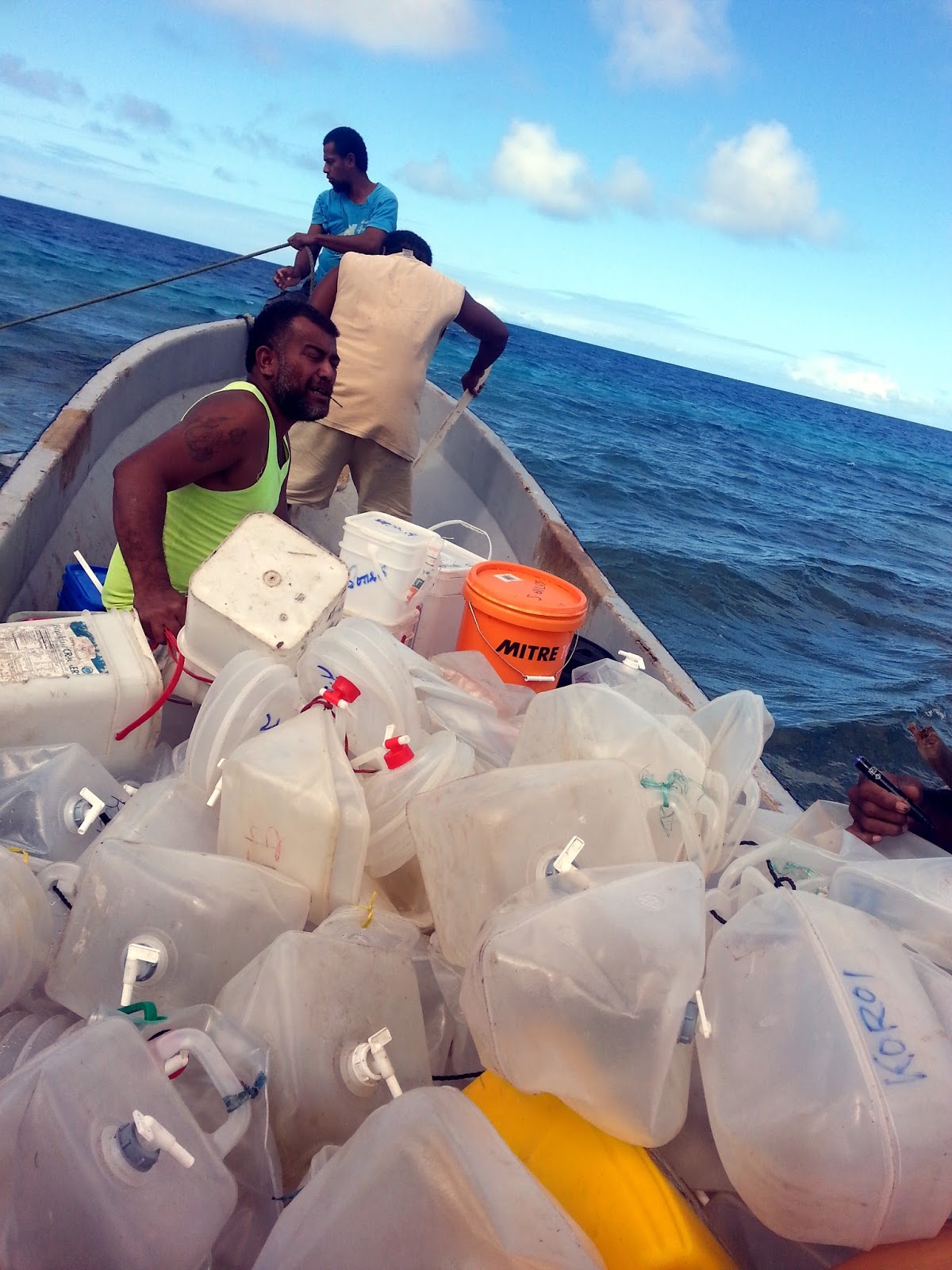
Cikobia: filled 6,000 liters by jerry jug on long boats
In 2 days, NOMADESS brought relief while using daring, exhausting means:  6,000 liters in Cikobia, 6,000 liters in Susui and 8,000 liters in Avea.  TWO DAYS… and they were gone, having relieved the immediate water needs and worries of hundreds of islanders.
You can read the story at http://seamercy.org.
The crew of INTERLUDE IV babied the solar panels and water maker kit all the way from the mainland.
DOMINO will deliver them to Avea for water making
Right now, we are loading 2 water makers on DOMINO, complete with solar panels, pumps and hoses to deliver next week to Avea where one of our fleet yacht will monitor water making and refilling of the water tanks.  Then, on to the next island!
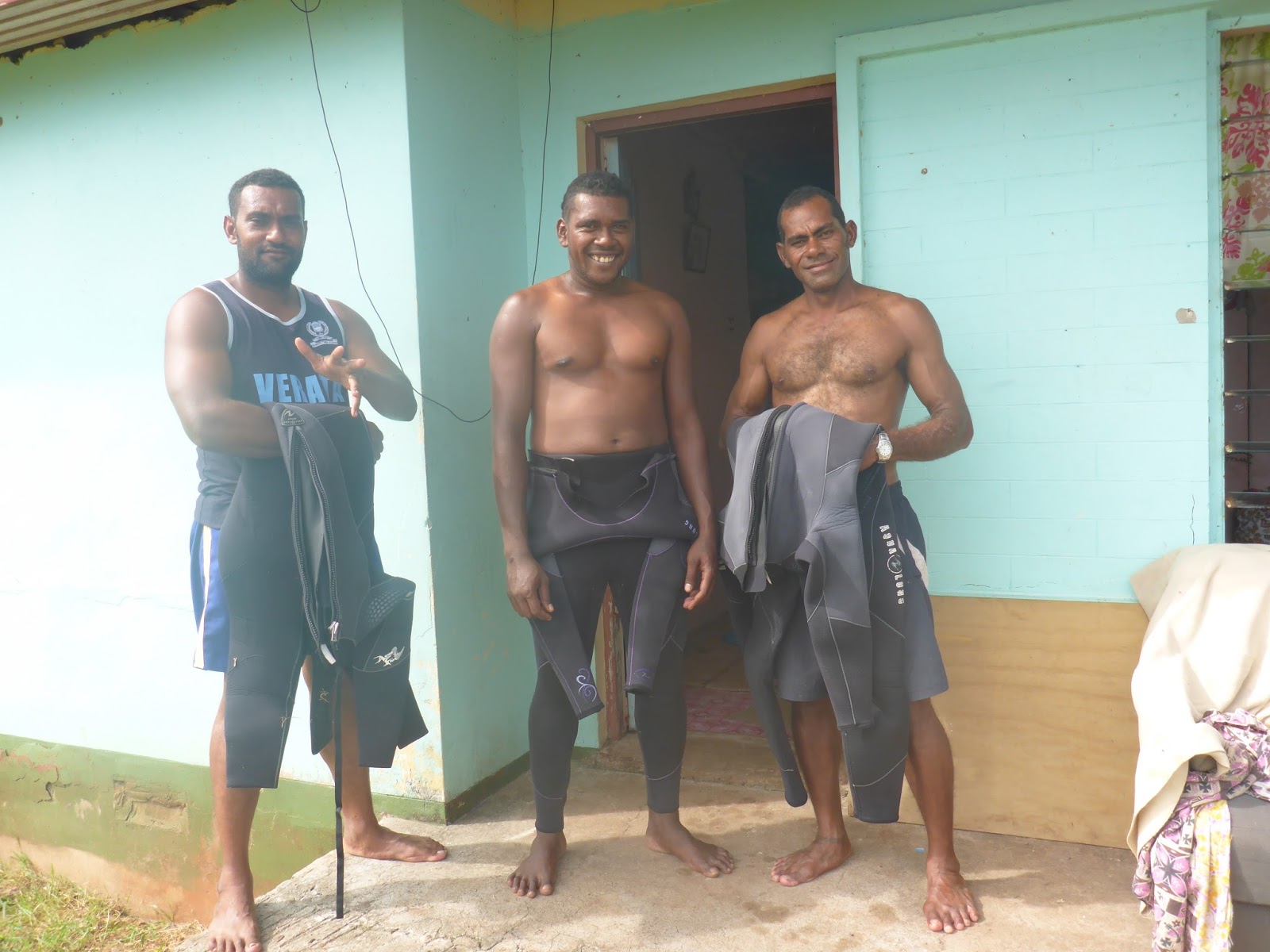
Fitting the fishermen with more wetsuits from Dive Tutukaka, New Zealand
Meanwhile, on the west coast of Vanua Balavu, DOMINO was preparing the next step: help the fishermen, improve the community gardens and start composting.  It takes a lot of talking, meetings with the chiefs and the officials, respect for local customs and hierarchy, but once the rapport is established the people are eager to let us in.  
Vanua Balavu’s agricultural officer gives JP the Thumbs Up on the Sea Mercy gardening program
With the full accord of the local agricultural officer and spurring from the public health nurse, we went to work.  Six of us met with the women’s club leaders and the school teachers.  
In Mua Mua, clearing space for the 1st compost pile
If JP thought he was pretty good with the machete when he started to clear the site for the compost pile, Mila showed him how to really use a machete!  A few stick, and there we are, the first compost pile on the island… and more to come, in each of the 12 villages!

First compost pile in Malaka
We loaded our backpacks with fresh bokchoi and the women were happy with their first vegetable sale.
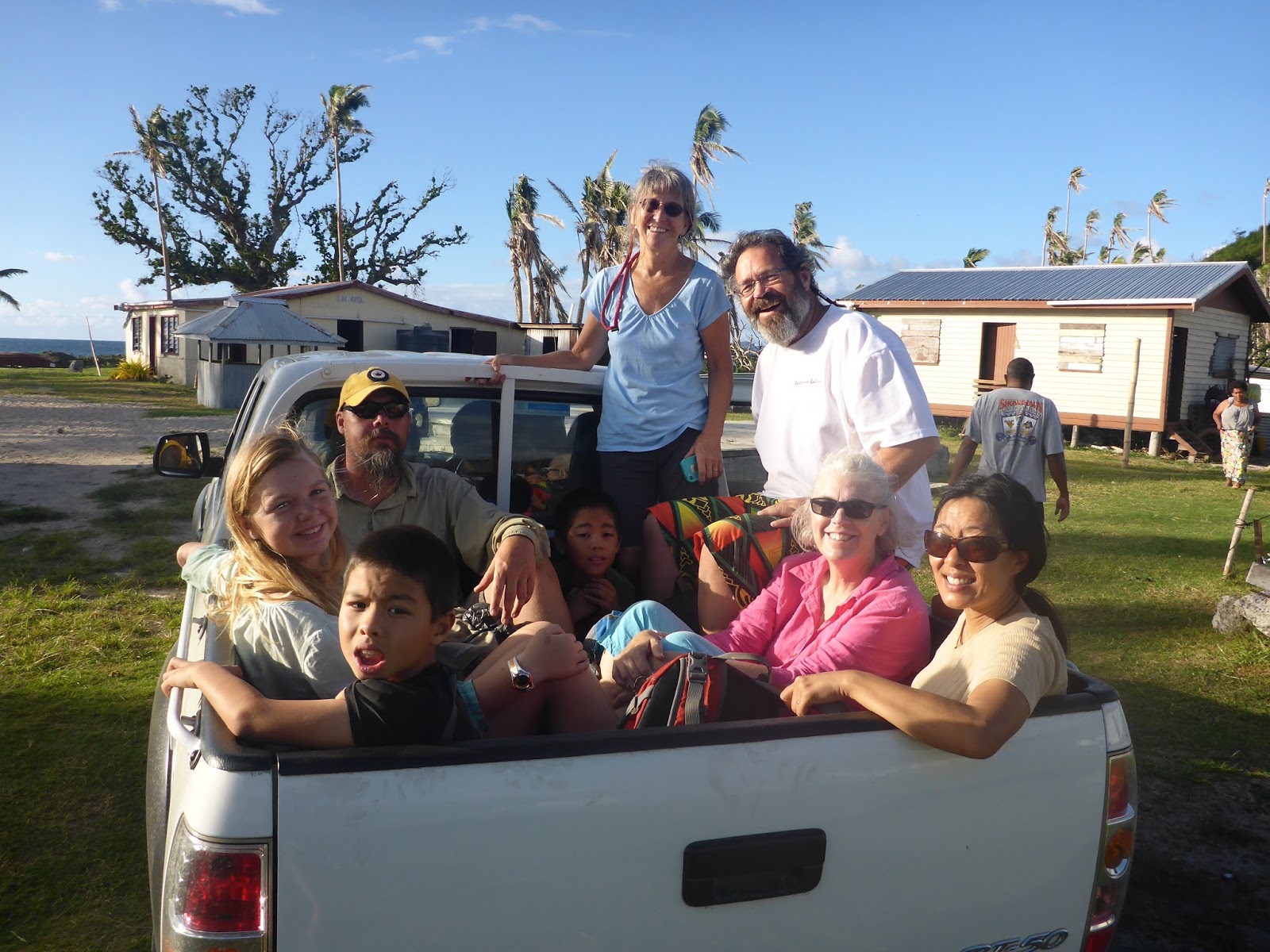
The Sea Mercy Volunteers pile up in the hospital’s truck to visit the villages, travelling Fiji style
Given the success in DELACONI, we are more than happy to go on. 
 Monday: Malaka and Mua Mua, 
 Tuesday: Mua Levu, Boitaci, and Mavana
  Wednesday: Avea
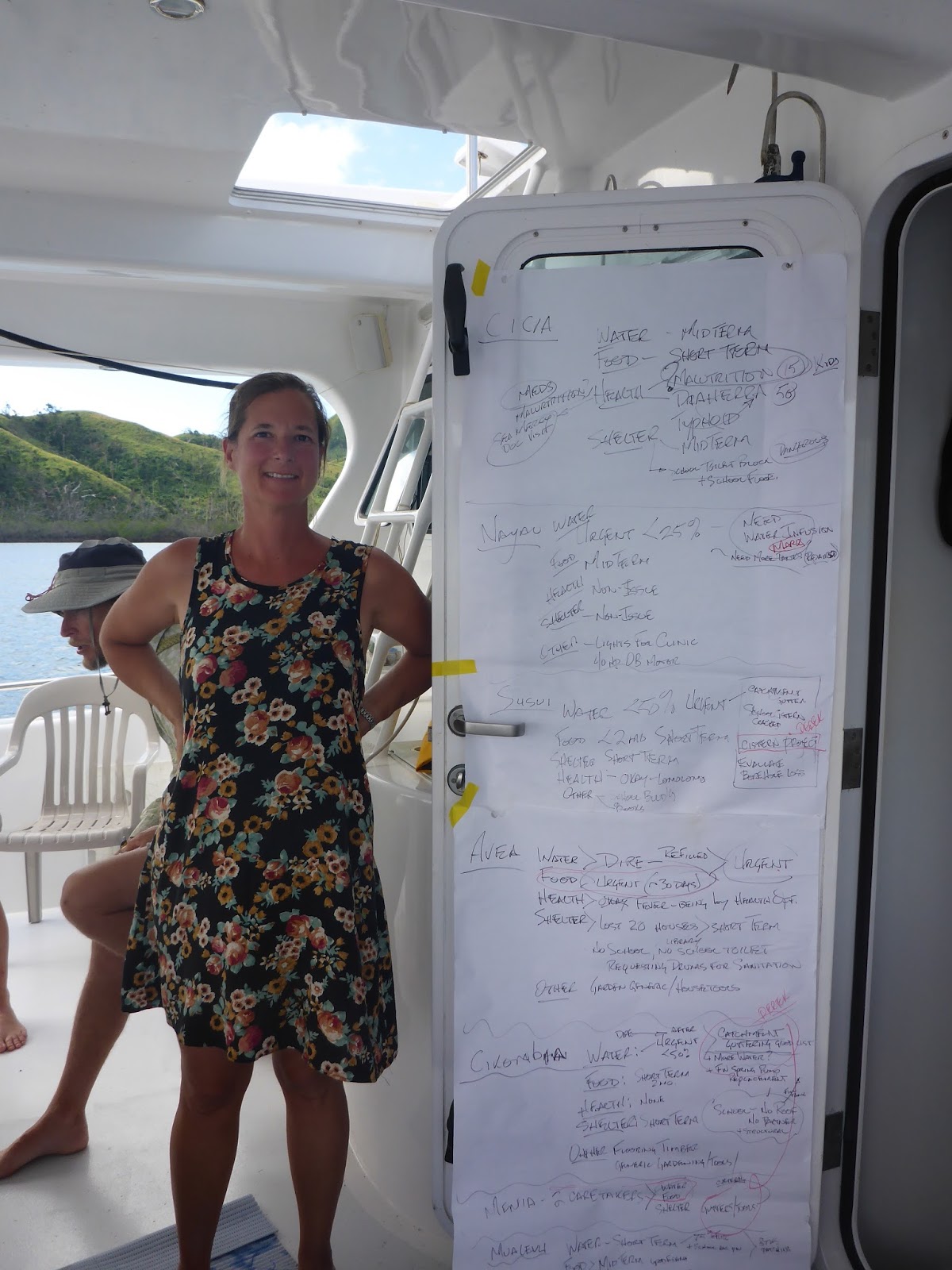
Dr. Gretchen reviews priorities
It’s a busy schedule but the smile on the Fijian faces is all we need to keep us going.


“And how are we to get all this aid to shore?”
Clothes and food… a start but far from being enough
WANT TO HELP VANUA BALAVU?
SEA MERCY now has a specific donation page for each site where they deliver aid.
Pick Vanua Balavu!  
THANK YOU
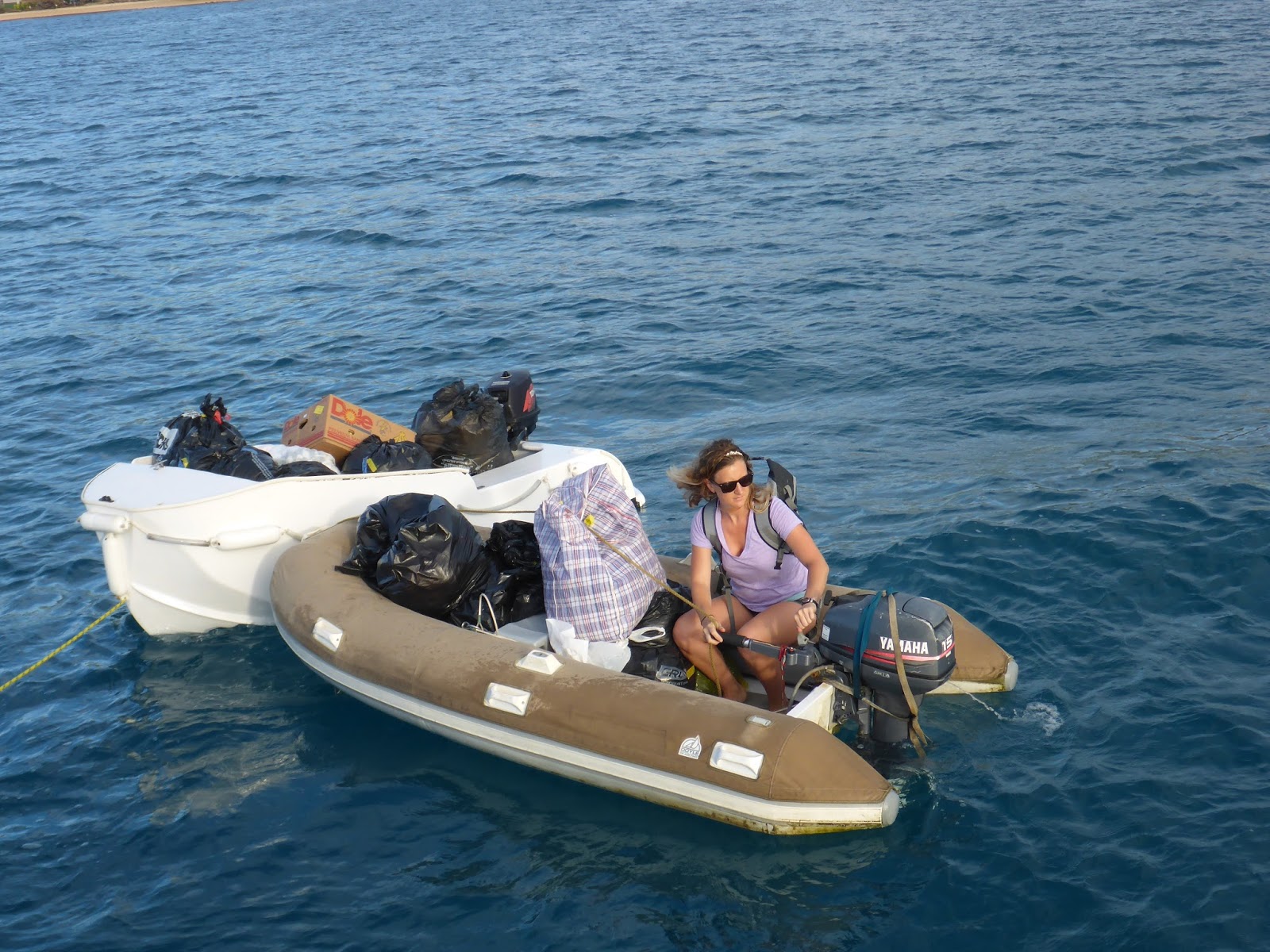
Dinghies start shuttling bundles of clothes and food to shore
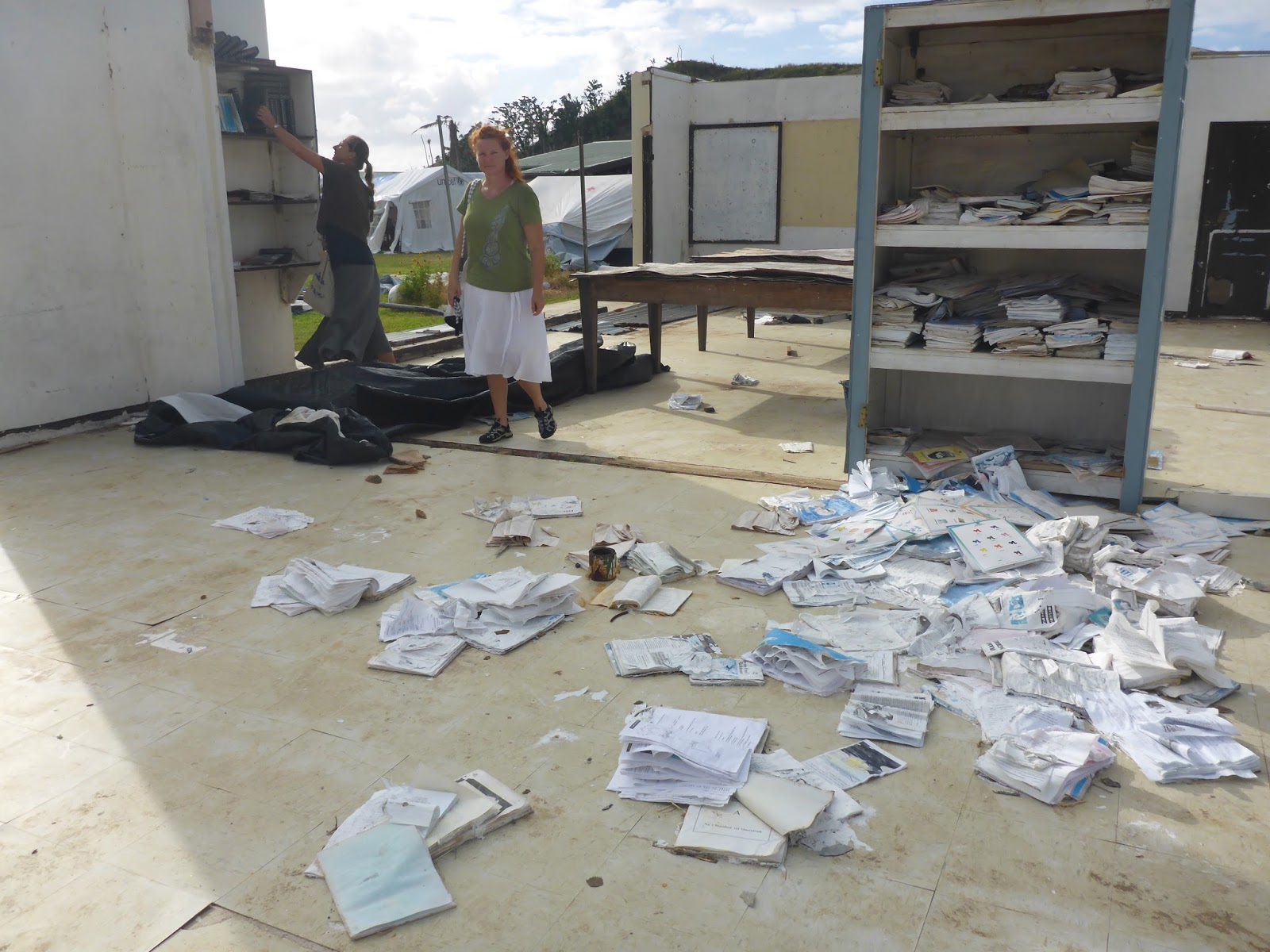
Sea Mercy Volunteer Anita Damiani walks through the wrecked school library in Mavana
Until next time…
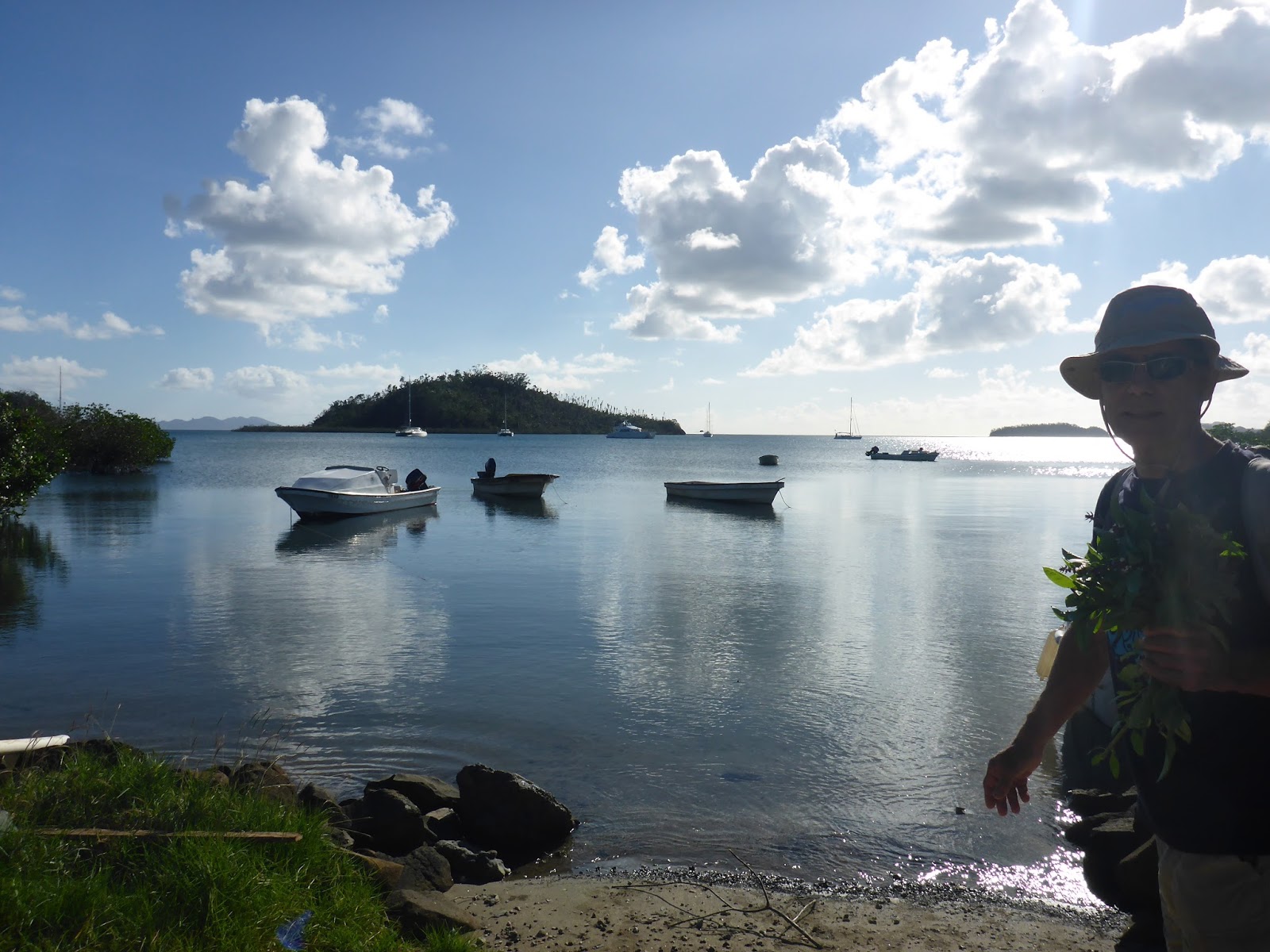
Returning to our anchorage in Malaka Bay after a long day on the road
dominomarie
Mississippi River Here We Come!

Our stay at Green Turtle was a good one as it always is. So much so that for a few moments we thought about stopping right here for the summer. But then I saw the river levels on the Mississippi dropping and our thoughts of staying quickly vanished.
M…

Mississippi River Here We Come!

Our stay at Green Turtle was a good one as it always is. So much so that for a few moments we thought about stopping right here for the summer. But then I saw the river levels on the Mississippi dropping and our thoughts of staying quickly vanished. My…

Vanua Balavu: One Village at a Time

WINSTON REFUGEES: ONE VILLAGE AT A TIME
DELACONI – flattened homes
Malaka Bay, Vanua Balavu, May 31, 2016 (17*14.260S, 178*58.090W) 
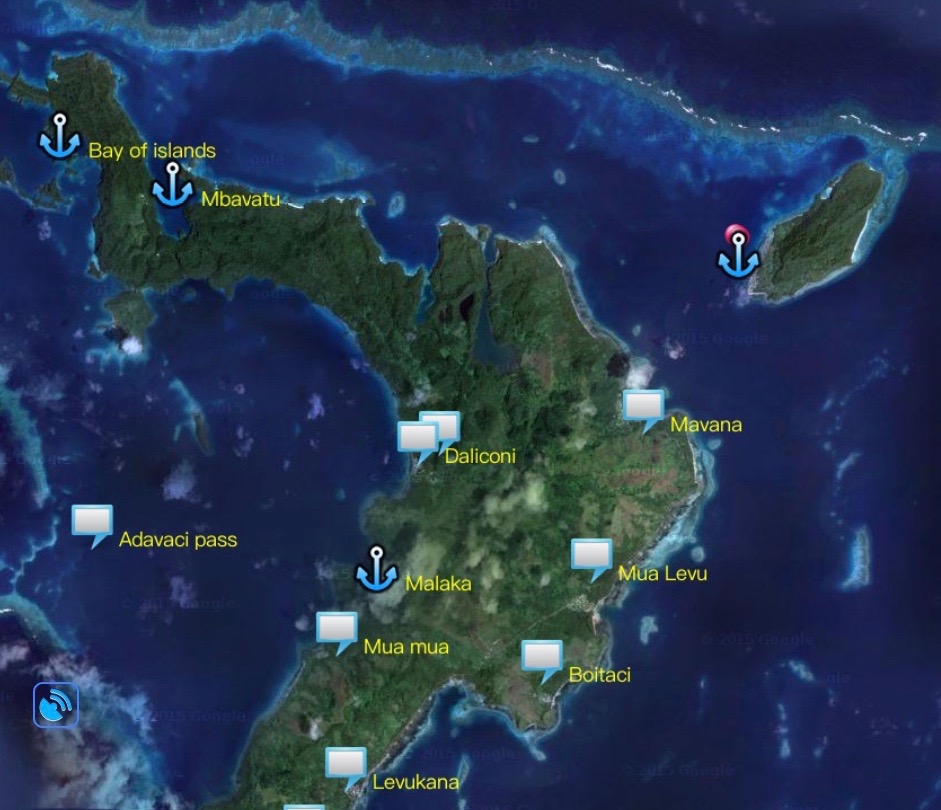
The 3 west coast villages of Vanua Balavu:  Delaconi, Malaka, and Mua Mu
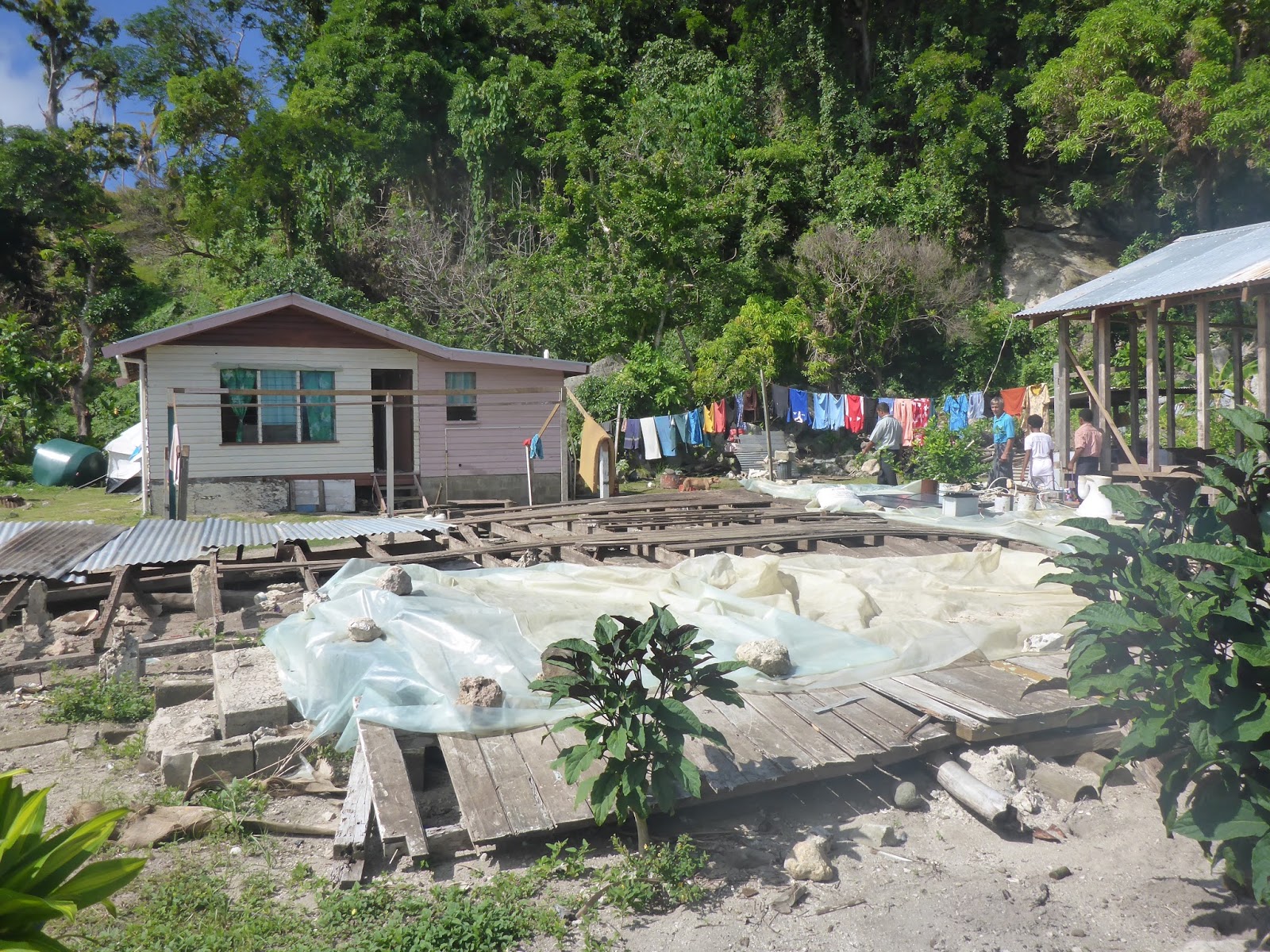
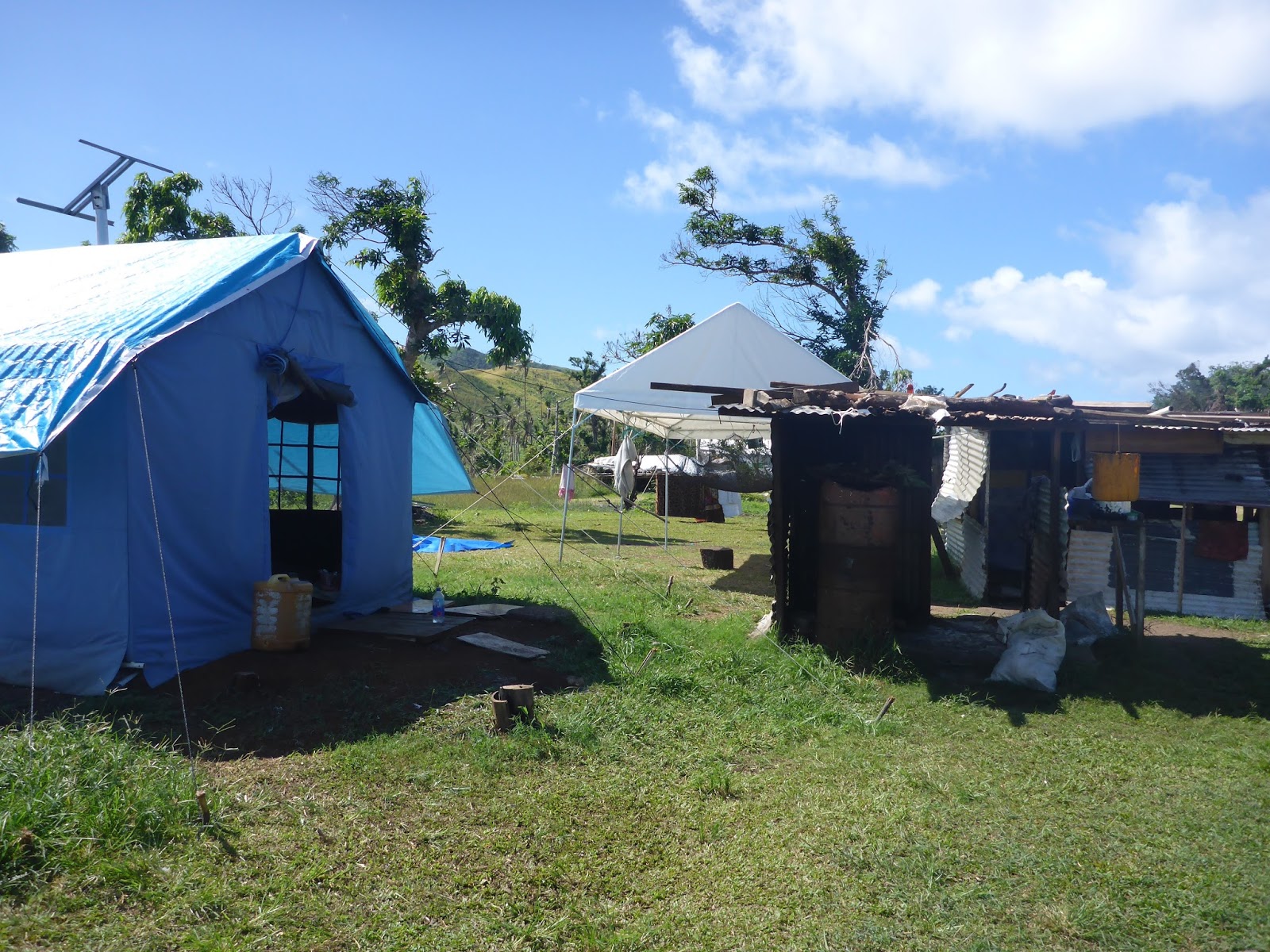
You’ve seen it many times on TV, refugees in tents, precarious living conditions, but it doesn’t hit you until you see it for yourself.  Never had I imagined that a cyclone could deal such utter devastation and perhaps the annihilation of a traditional lifestyle.

DELACONI – 3 months ofter Winston… still no roof, still no gutter… a disaster
The three villages we are assigned are located on the west coast of Vanua Balavu: Delaconi, Malaka, and Mua Mua.

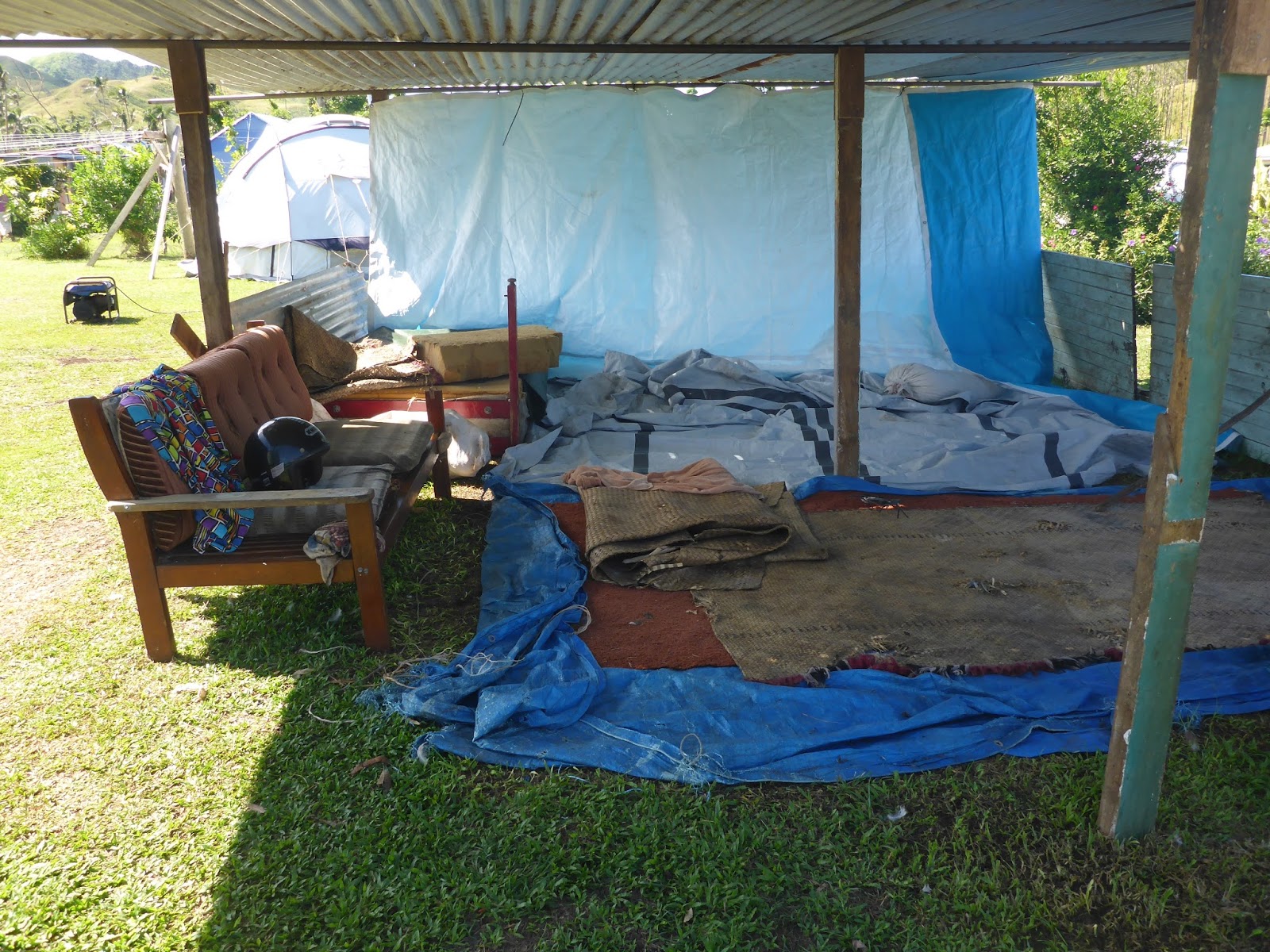
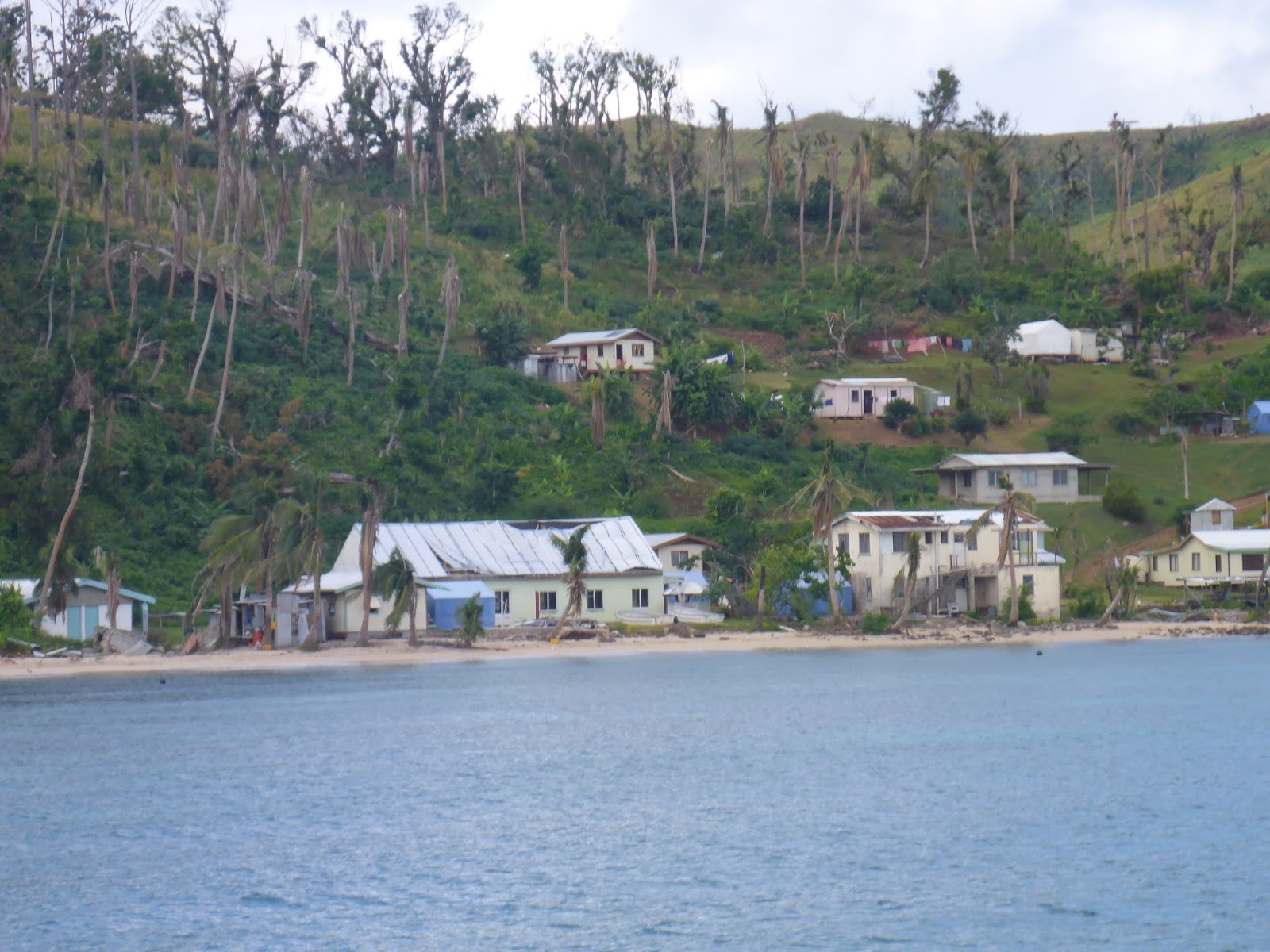
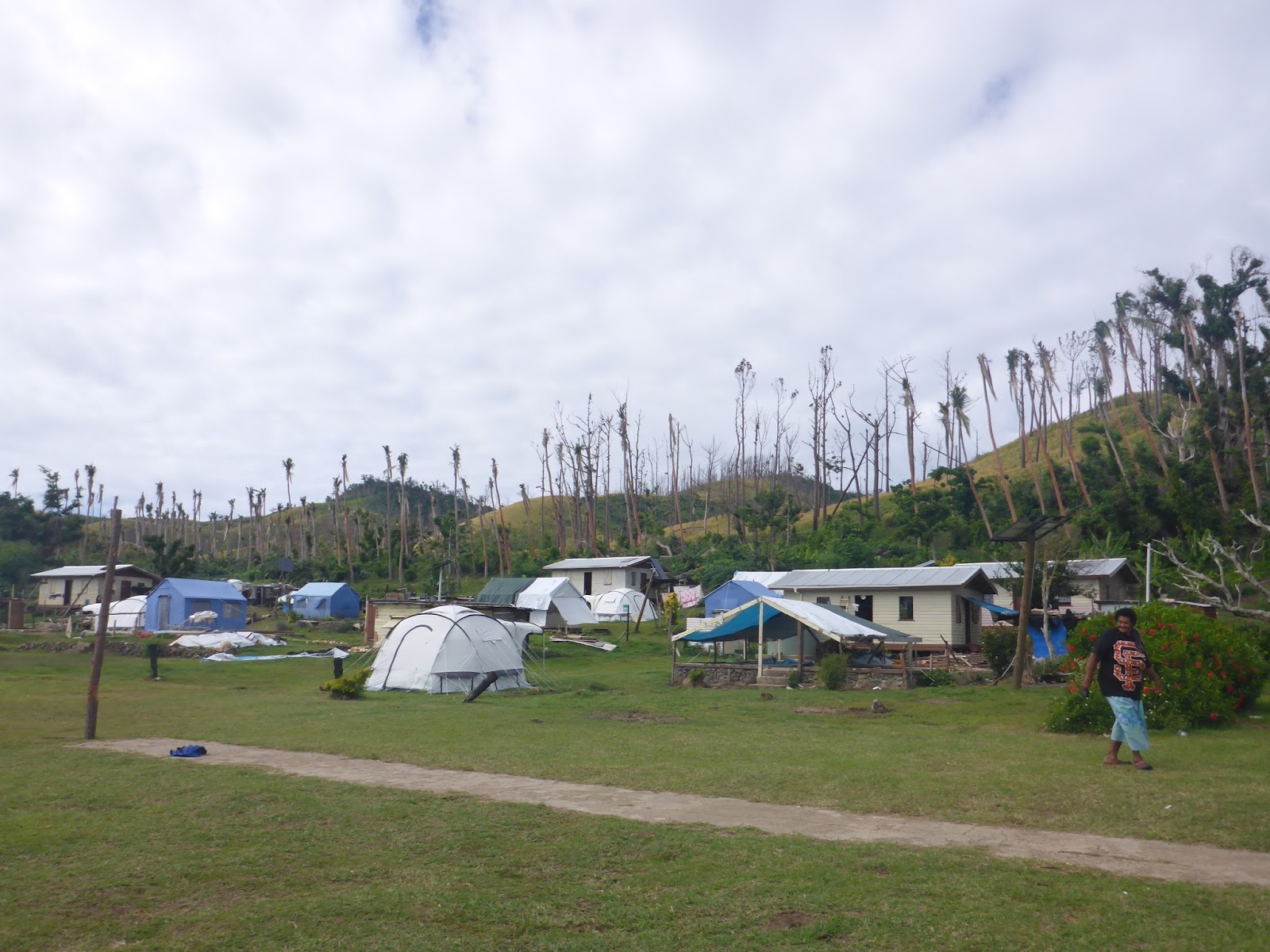
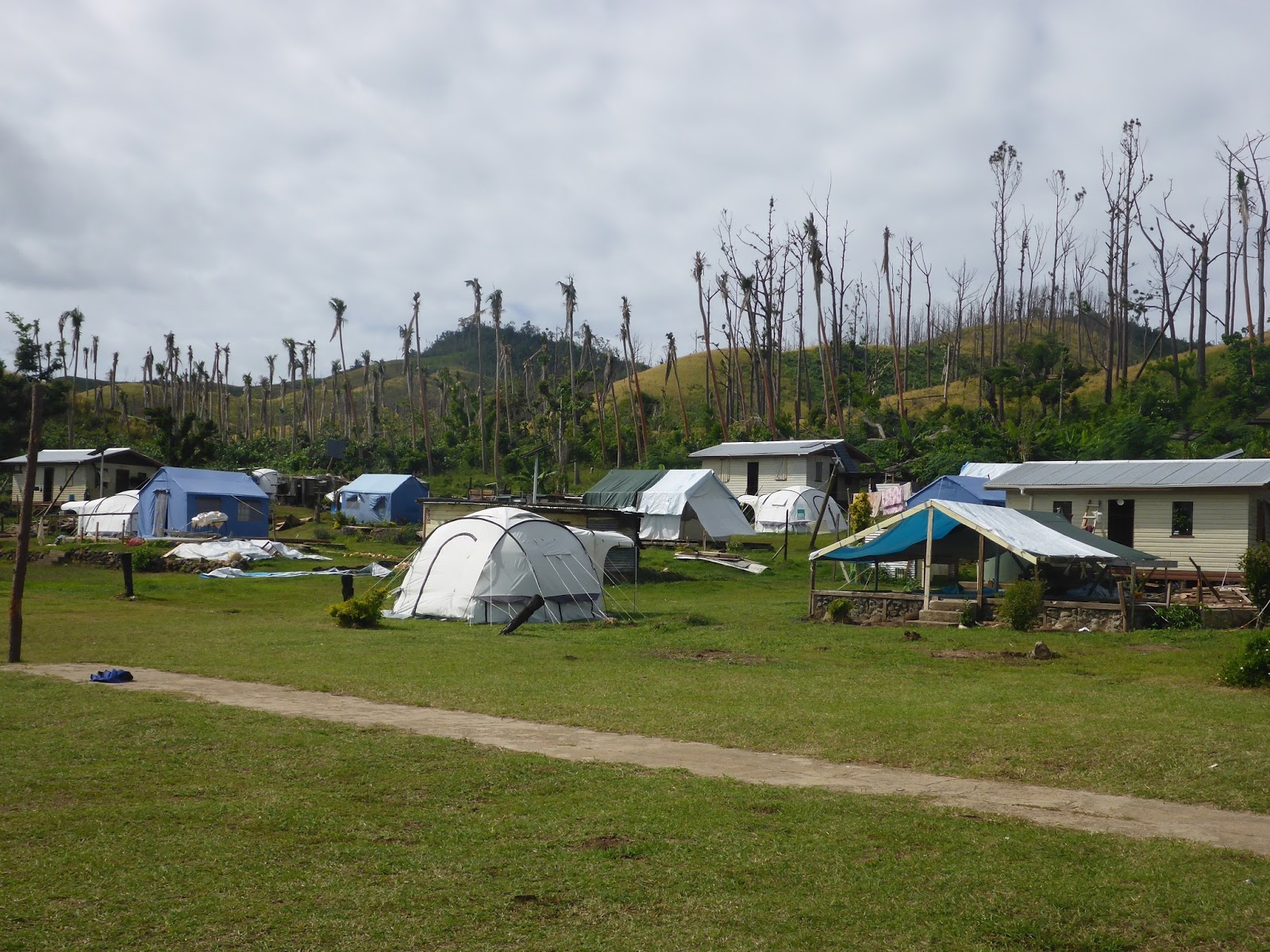
Mua Mua – devastated coconut and pine trees, 80% of the people under tents or precarious shelter
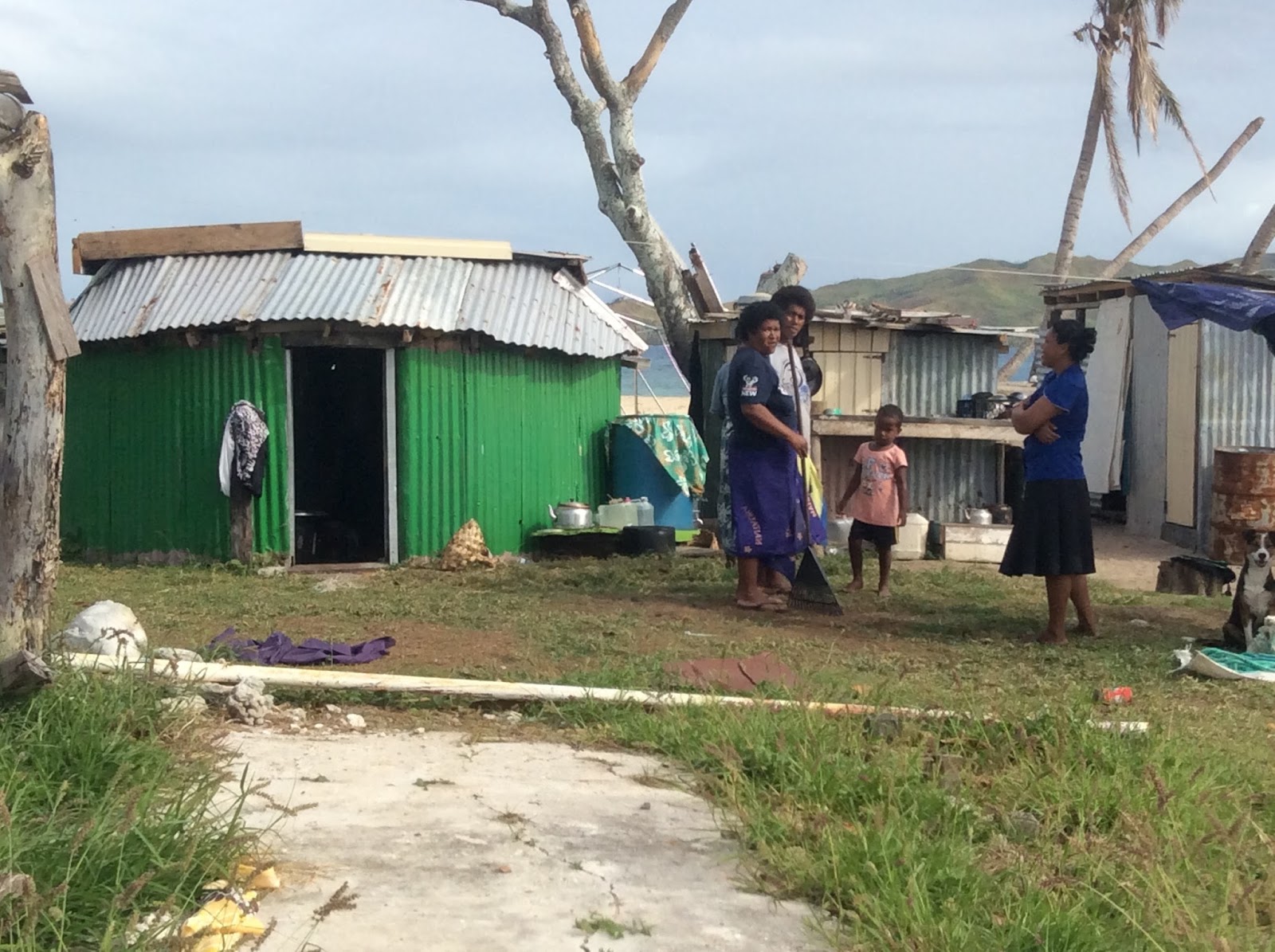
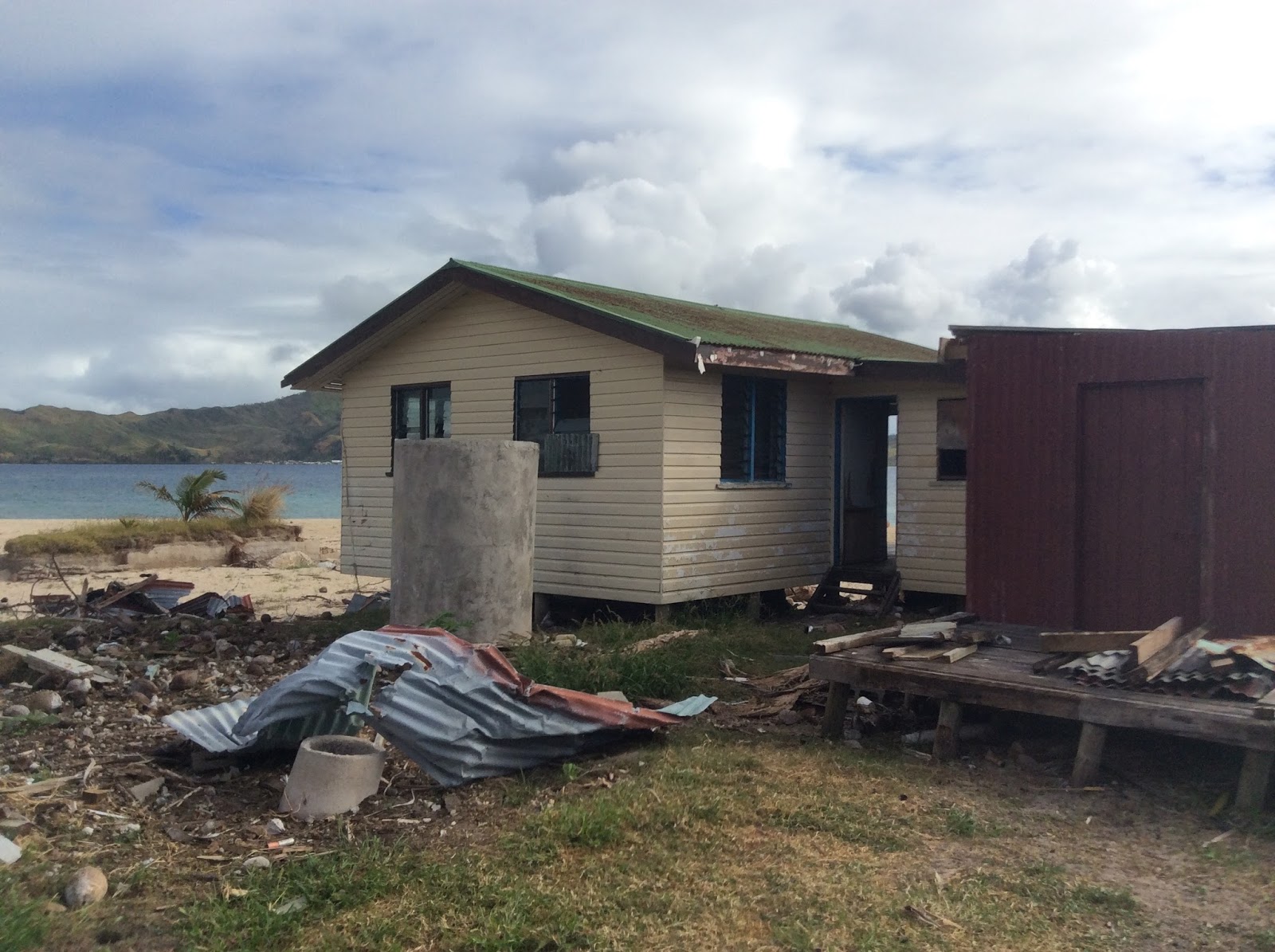
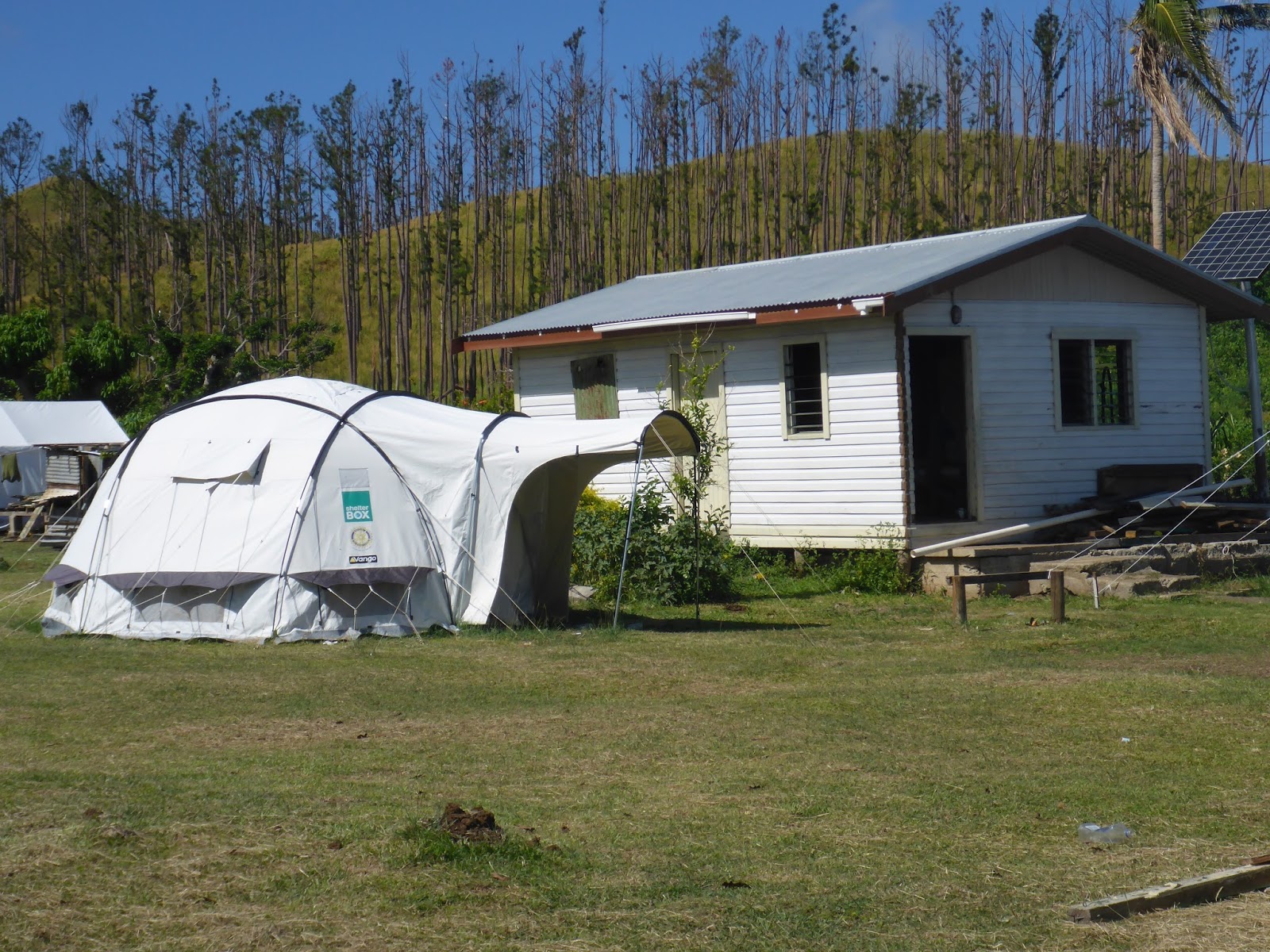
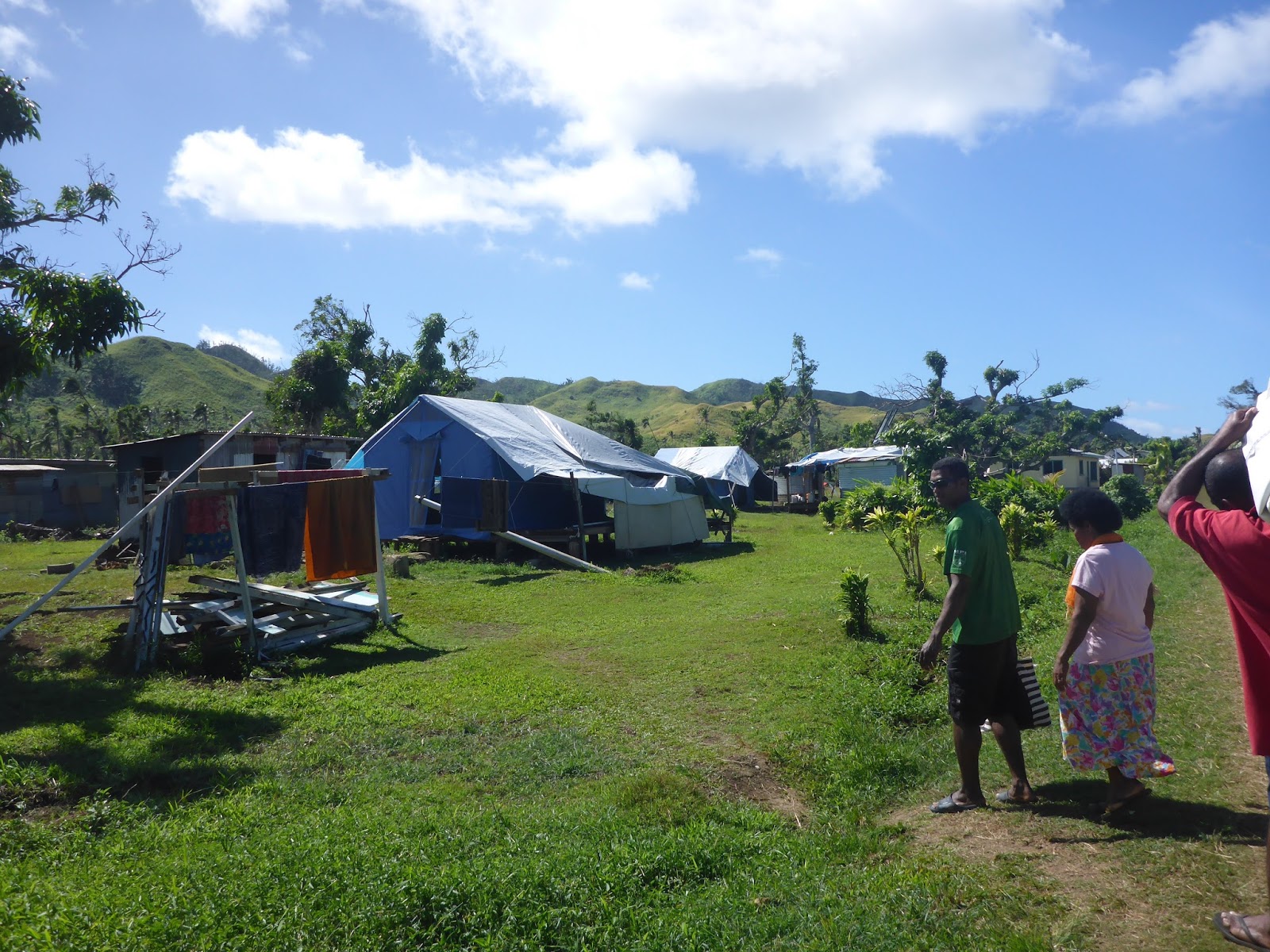
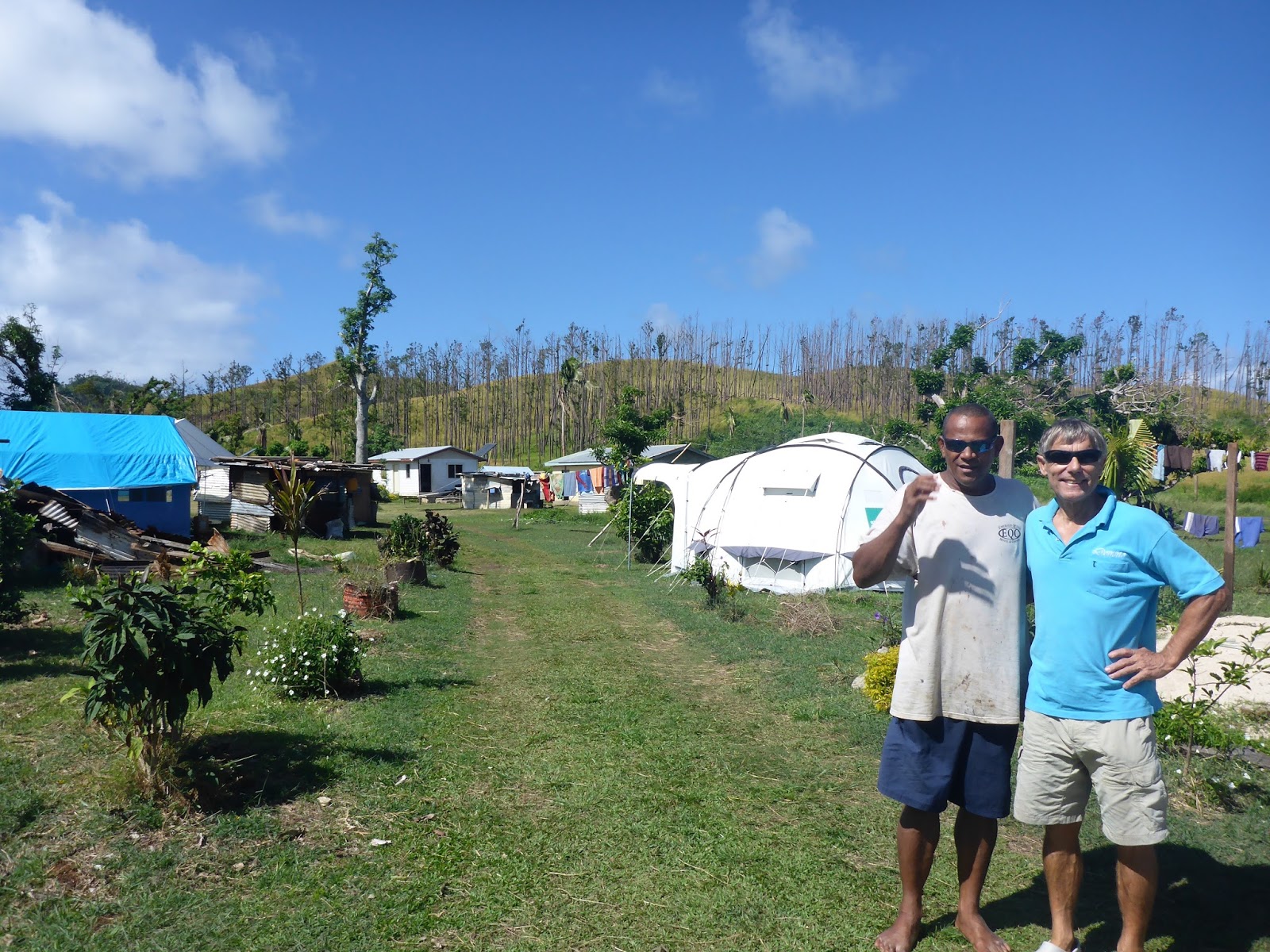
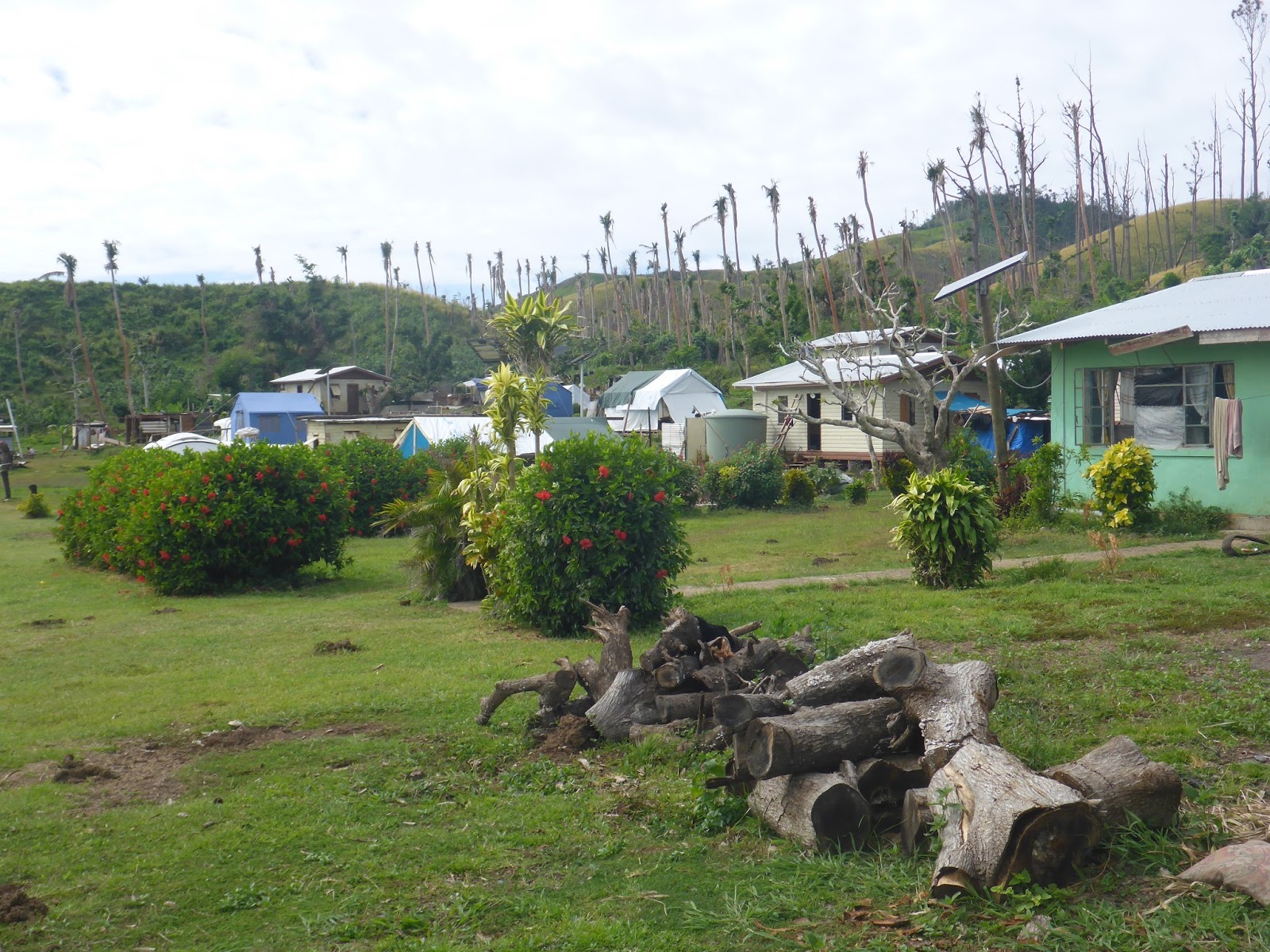
 Of the villages total 95 structures, 80 have been completely destroyed, and only 15 are still standing but damaged.  Tents and Shelter Boxes line the villages lanes, flanking the concrete slabs where the houses used to stand.  Women are cooking the last of the staples distributed by the government. All contemplate a lasting hardship.


In Delaconi, where the 3 school buildings have been flattened, the schoolmaster makes do under UNICEF tents.
The Kindergarten building is almost rebuilt (Fiji Governement)
Delaconi was the darling of cruising yachts, since its chief controls visits to the Bay of Islands, a favorite cruising ground.  The we visited last year, we couldn’t help commenting how wealthy the village was.  Indeed, the entire village had put together a traditional birthday celebration for Robbie (one of the cruisers), complete with roasted pig, flower necklaces and dances.  Wealth no more.  The school’s 3 building have been wiped out and the new schoolmaster copes with teaching all grades k-8 under UNICEF tents.  “We’re coping,” says he, grabbing our soccer and rugby balls.
Sea Mercy delivering aid in Malaka
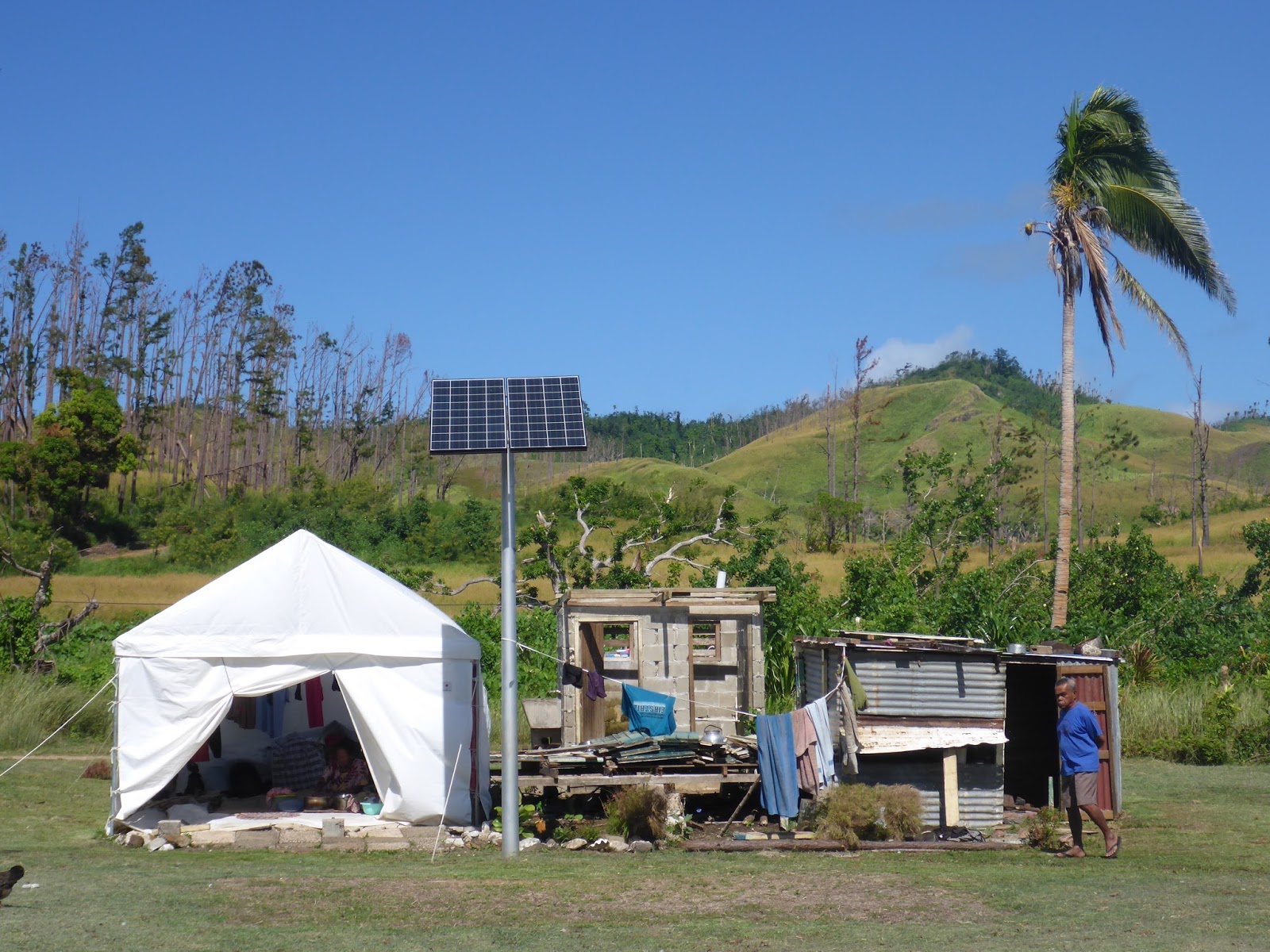
Malaka, a favorite anchorage in good holding mud, is no better.  On the beach landing, the fishery’s ice maker and blast freezer were damaged, but the fisheries department has just shipped a new freezer: help is coming.  Along the main village path, again, tents line up under damaged solar panels.  There is no electricity in the village, aside from individual solar panels.  
Sonny, Malaka’s headman, welcomes our visit.
The pine forest is devastated, so are the coconut groves.
The cassava plantations have been 90% wiped out
Mua Mua is perhaps the poorest of the 3 villages, with little hope of quick recovery.  
The very hard-hit Mua Mua
As if the loss of their homes were not enough, villagers also have lost their way of income: copra.  All coconut plantations have been severely damaged and the villagers estimate it will be 5 to 10 years before they will harvest a decent crop.  Meanwhile, they need to clear the plantations of fallen trees and replant a new crop.  But they just don’t have enough coconuts left to replant and must import them from Rotuma.
Mua Mua is a disaster zone
Women, whose traditional occupation was the weaving of pandanus leaves into mats and trinkets for tourists, have lost their ways.  Pandanus trees have blown away and they estimate that it will take up to 5 years before an adequate crop.
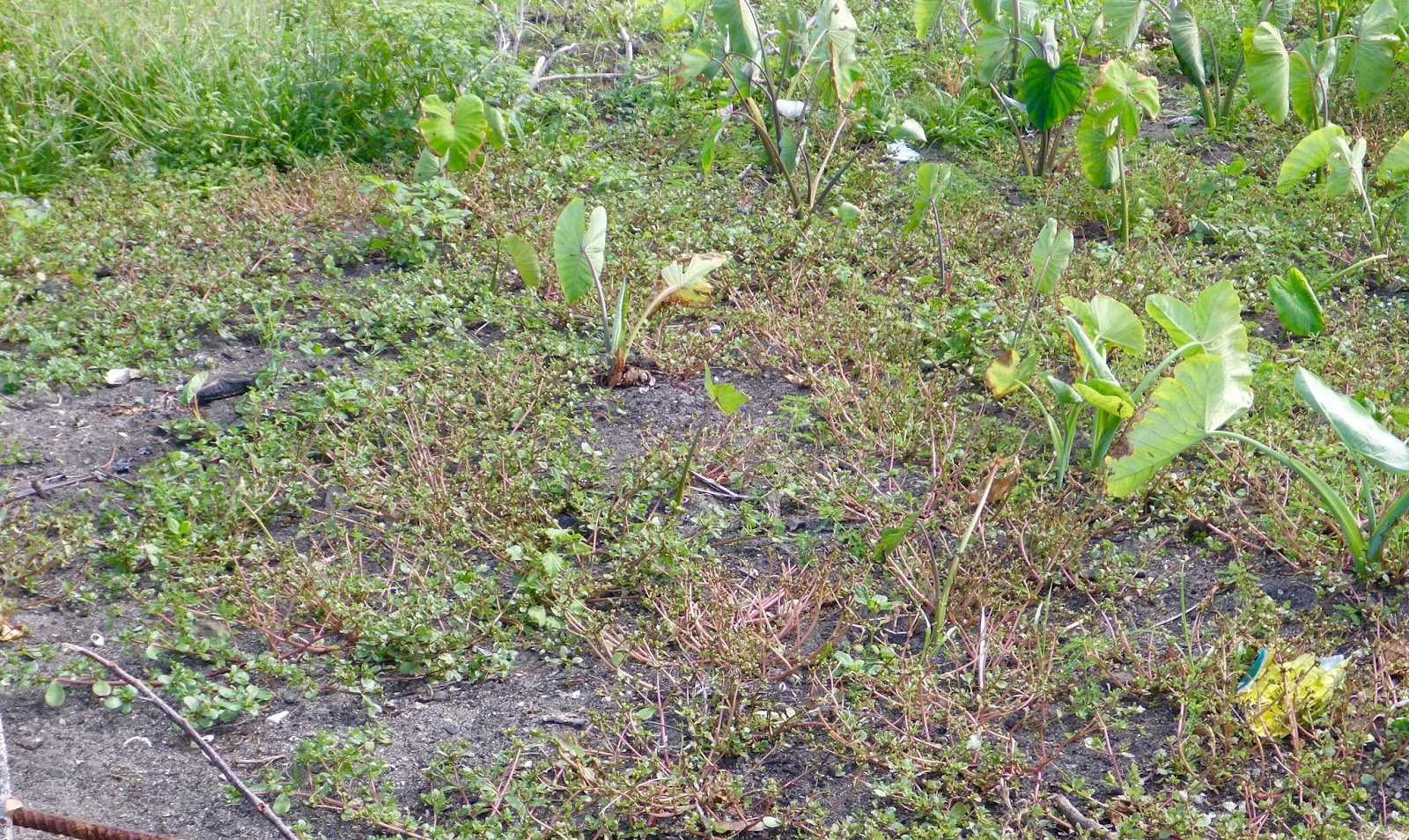
Unisi, Malaka’s leading woman, tends the community garden and is desperate to fight the caterpillar infestation
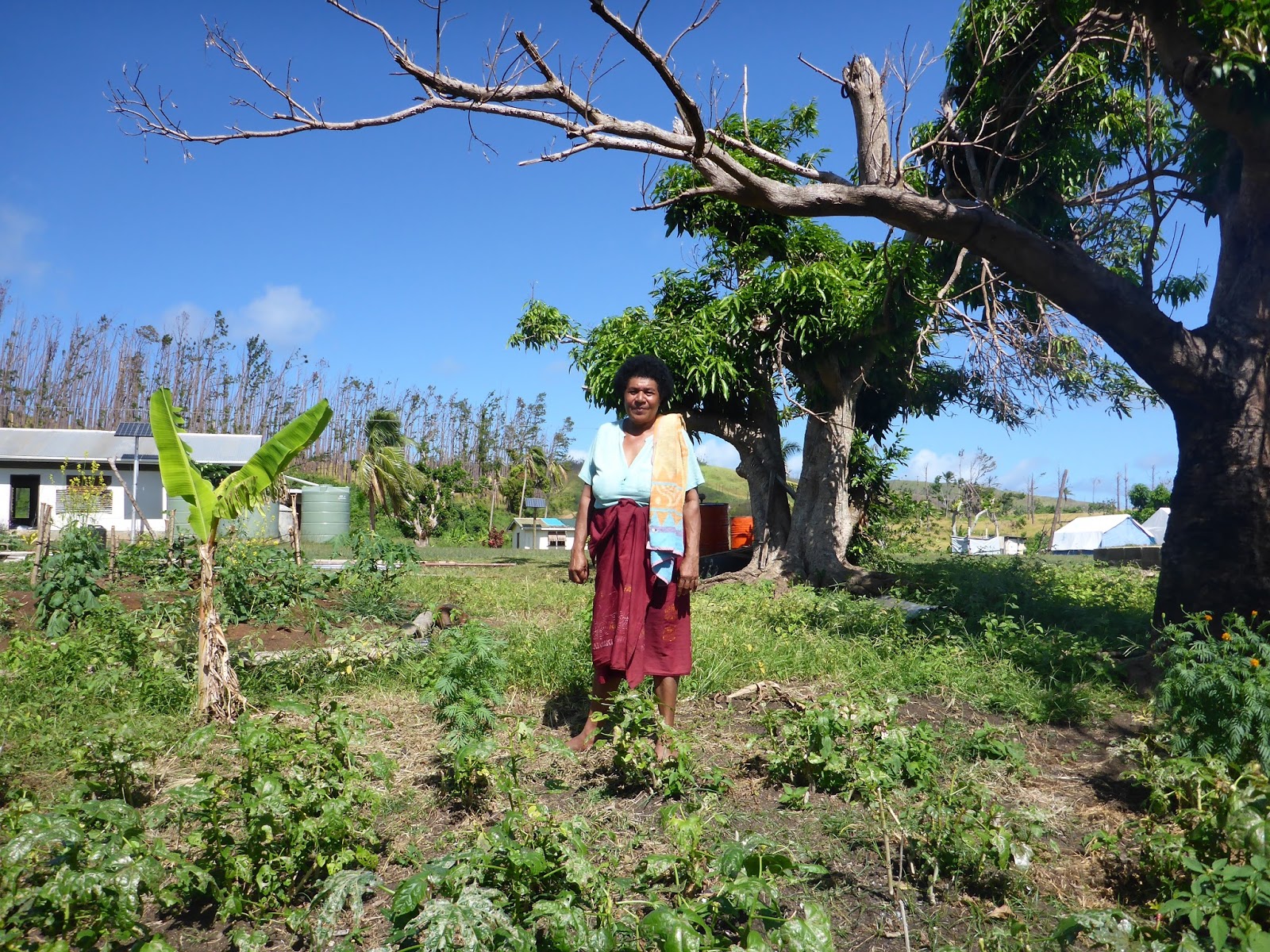
Yet, in this dismal picture, life goes on and we admire the spirit of the Fijian people.  Women are leading the way with their community gardens.  The gardening kits donated by the Australian government have been put to good use in all three villages and the community gardens are trhiving.   In Delaconi, the women pride themselves in having been voted the best community garden in the entire island.  And they should be proud: lettuce, cabbage, cucumber, and all sorts of roots.  They are eager to start a composting program, boost their production and sell fresh organic produce to the yachts visiting the Bay of Islands.
Making do in Malaka
In Malaka, the fisheries representative is eager to support the fishermen, who provide food and income for the village.  The 7 professional fishermen, however, run on scant material and equipment: not enough fishing lines and hooks, masks, fins, snorkels.  Women help with night fishing and we can hear them babble while they fish out of their canoes, on our port and starboard.  
It’s the same disaster zone everywhere we go
In Mua Mua, the chief struggles to understand how to rebuild after such a devastation.  The young men are overwhelmed with the task of clearing fallen trees and replanting the coconut farms.  Yet, the nurses and dietitian come from Loma Loma to conduct their regular clinic… under a tent.
JP meets the health care team under their makeshift tent-consultation room
The needs are staggering.  The government is responsive: each family has been issued a credit card with funds to rebuild their homes.  This week, all heads of households have travelled to Suva to collect their credit cards and order their building materials: work on building houses will start soon.  But what about tools? Supplies? Household items? Clothes? Food?
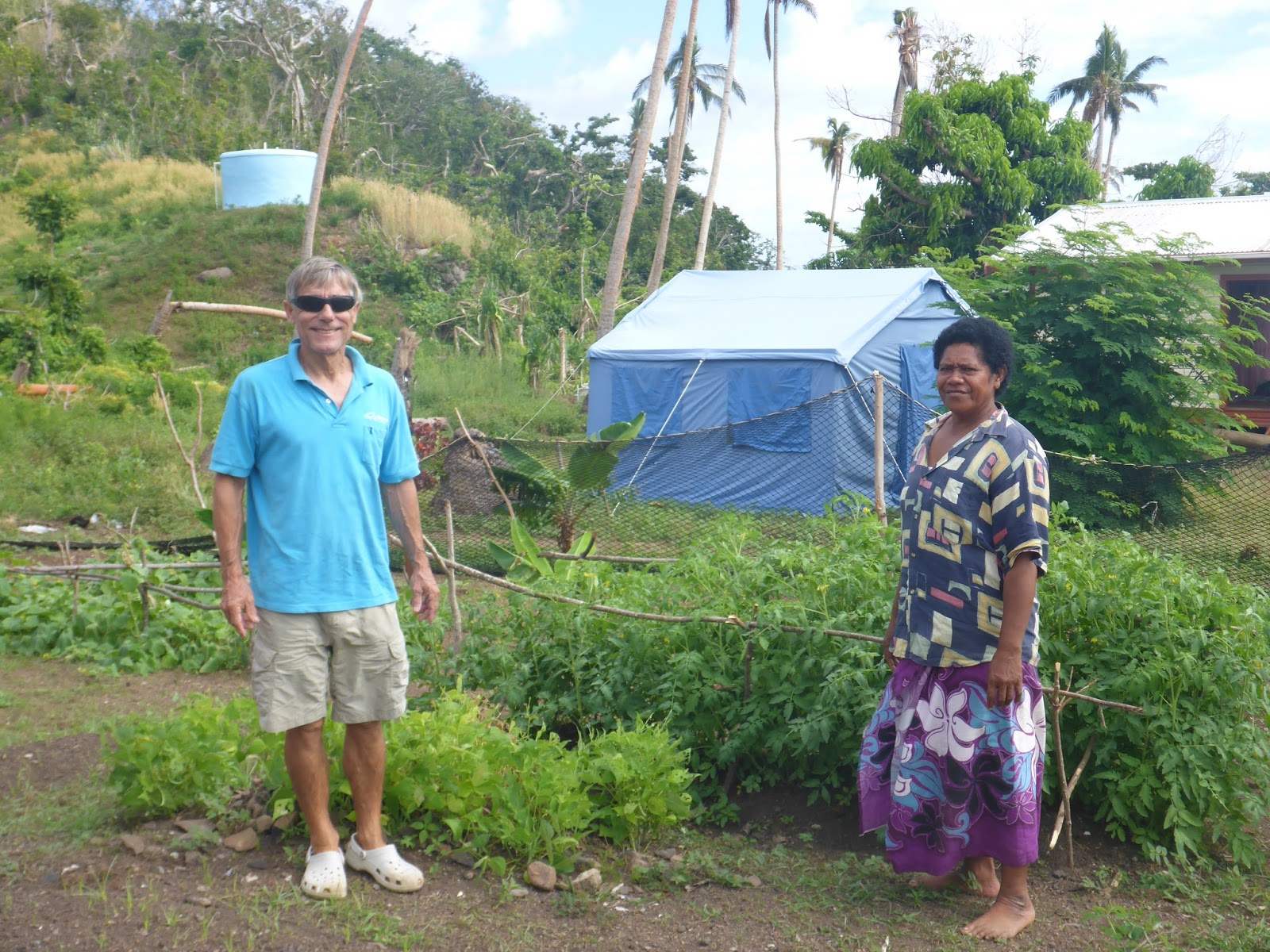
In Malaka, the community garden: cucumber row
That’s where Sea Mercy comes in.  This week, 8 Sea Mercy yachts are working the “Sea Bridge” around Vanua Balavu, assessing the needs of each village and delivering what aid they can, from organizing water delivery to clearing trees and delivering food and tools.
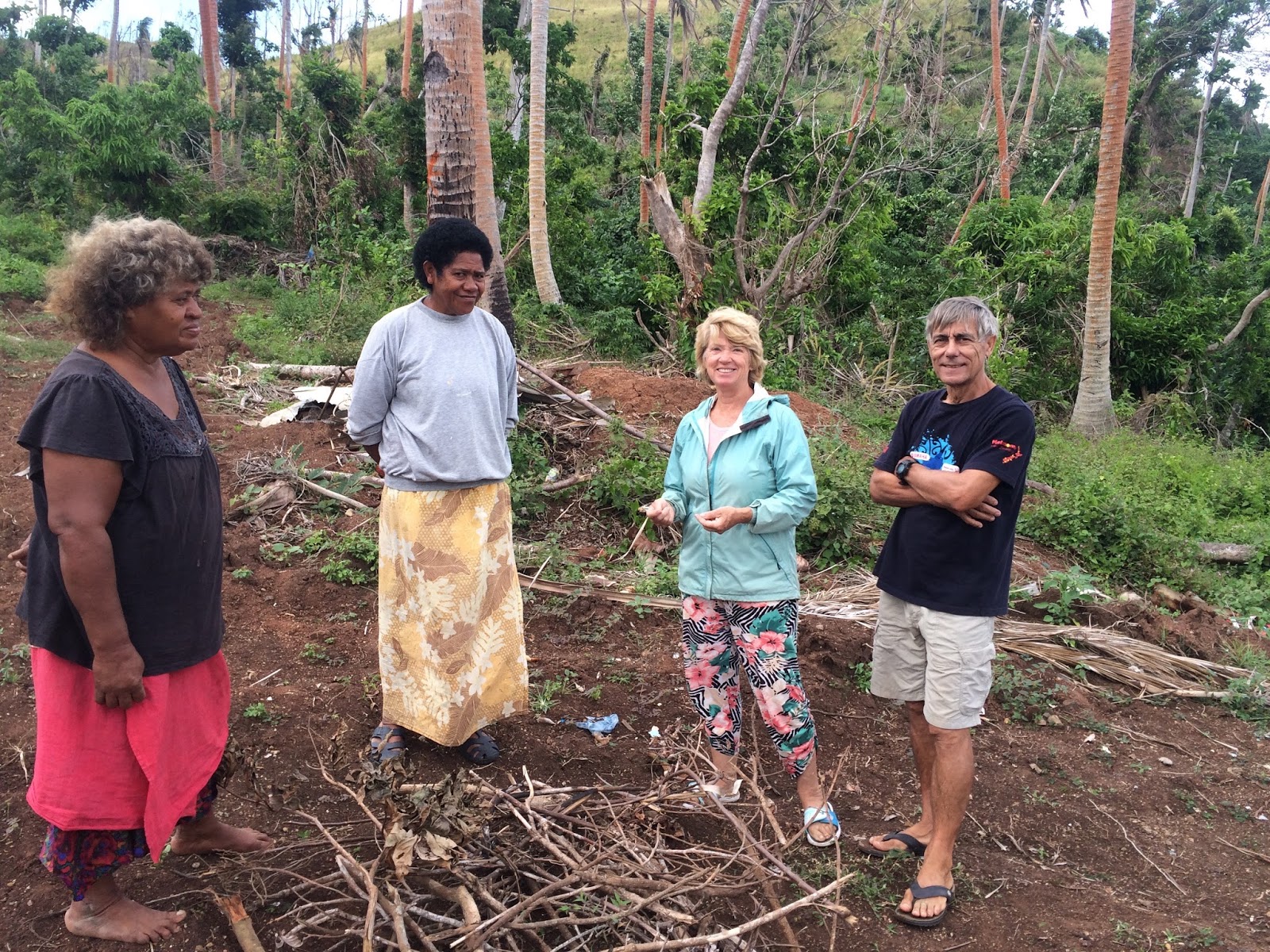
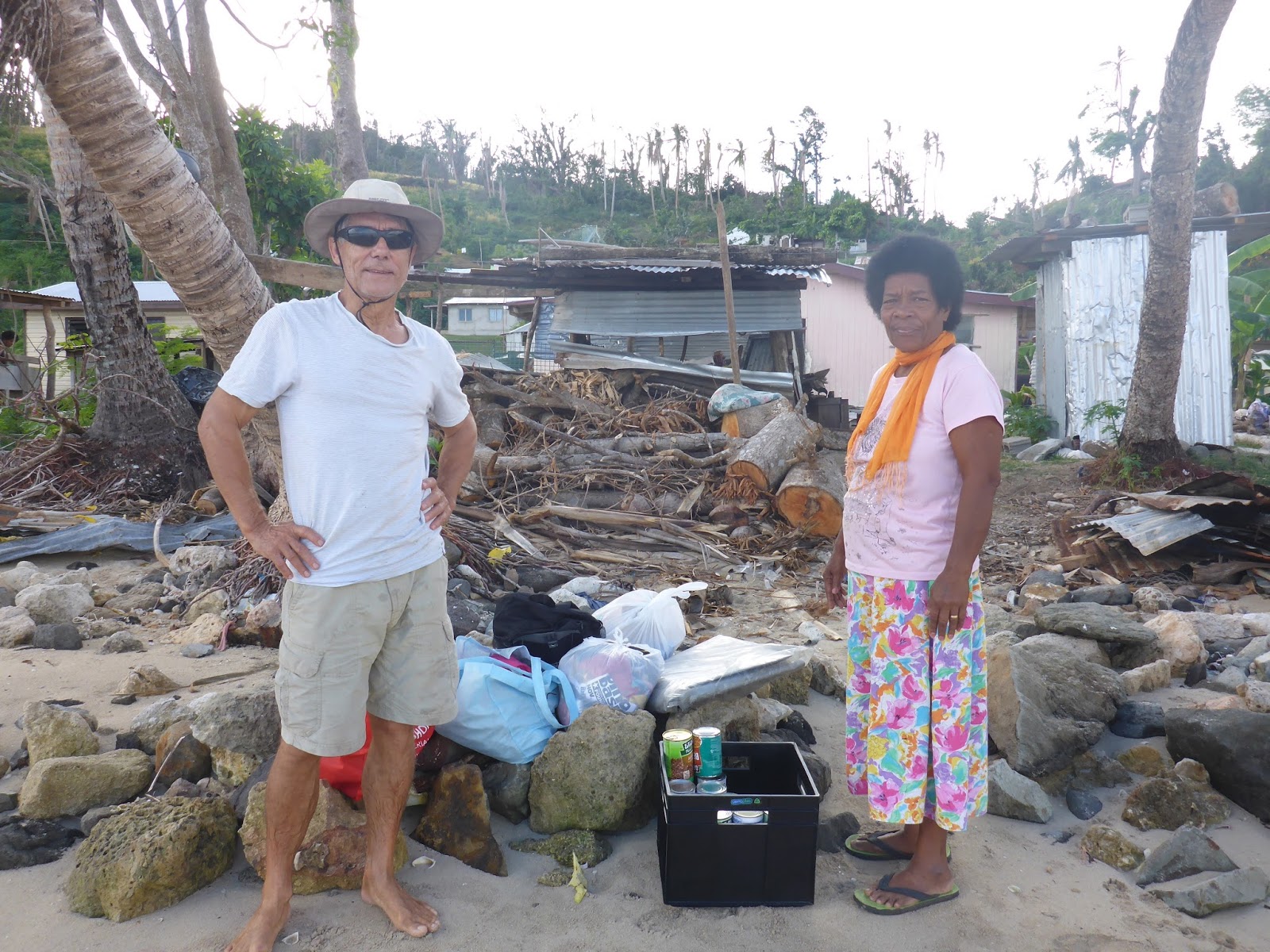
In Delaconi, Biu guards our aid delivery on the beach
As for us, we are working with our 3 villages.
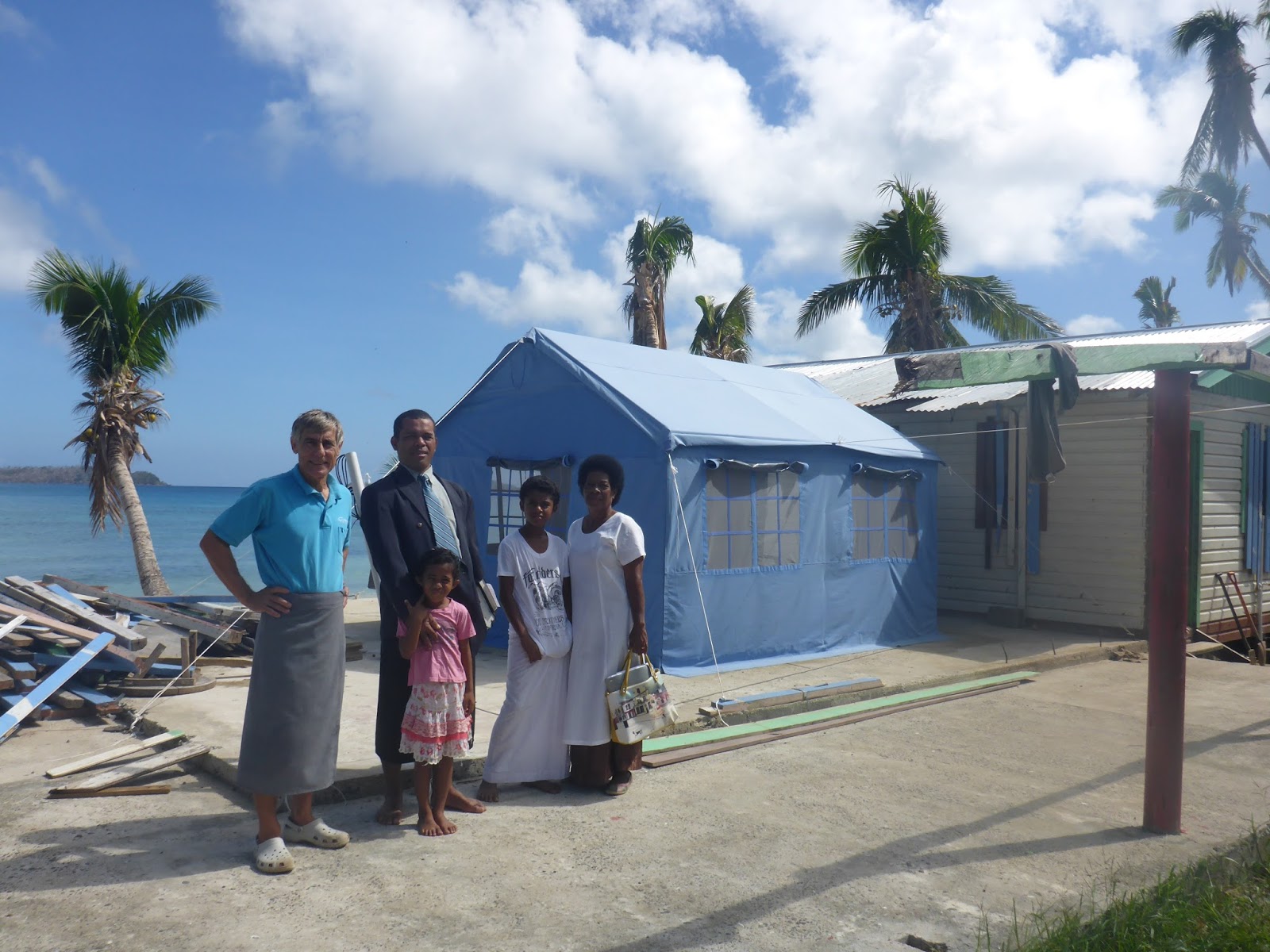
In Delaconi, our guide Biu shadows us and makes sure that our supplies get to the people in need: food, clothing, shoes, tools are snatched up in a snap.  On Sunday, after church (blown roof and windows), the pastor delivered our first case of canned goods.  To the question, who should get the first of the canned goods, his answer was quick: “Widows and orphans.”  And so it was that we met the many orphans and widows in the village.
The pastor lost everything, his home, his property, and lives under a tent.
Yet, when we brought the aid, he distributed first to the neediest: orphans and widows
In Malaka, the young headman and his wife (the village nurse) are keen on distributing our aid of equitably.  
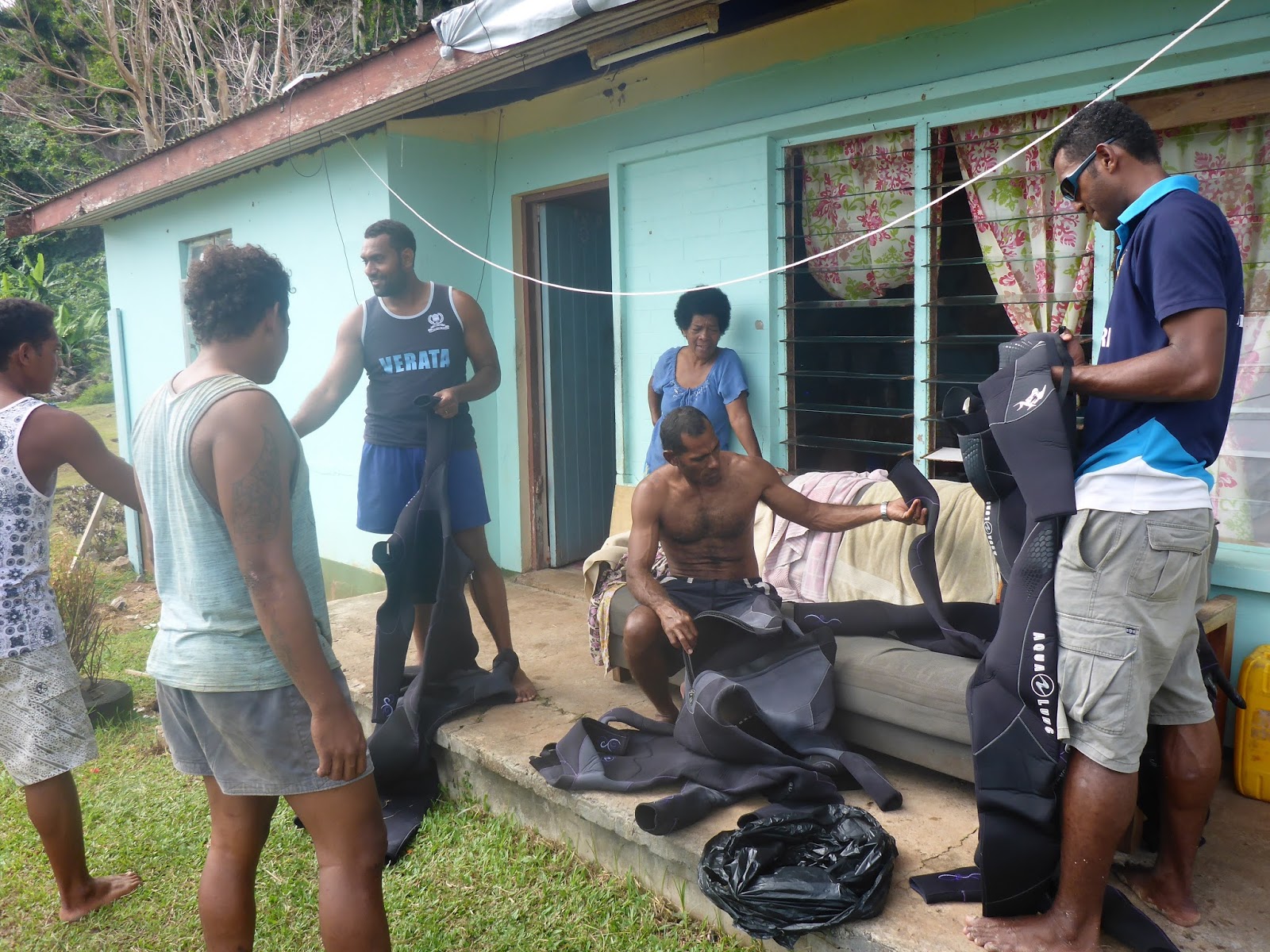
The fishermen appreciate the wetsuits
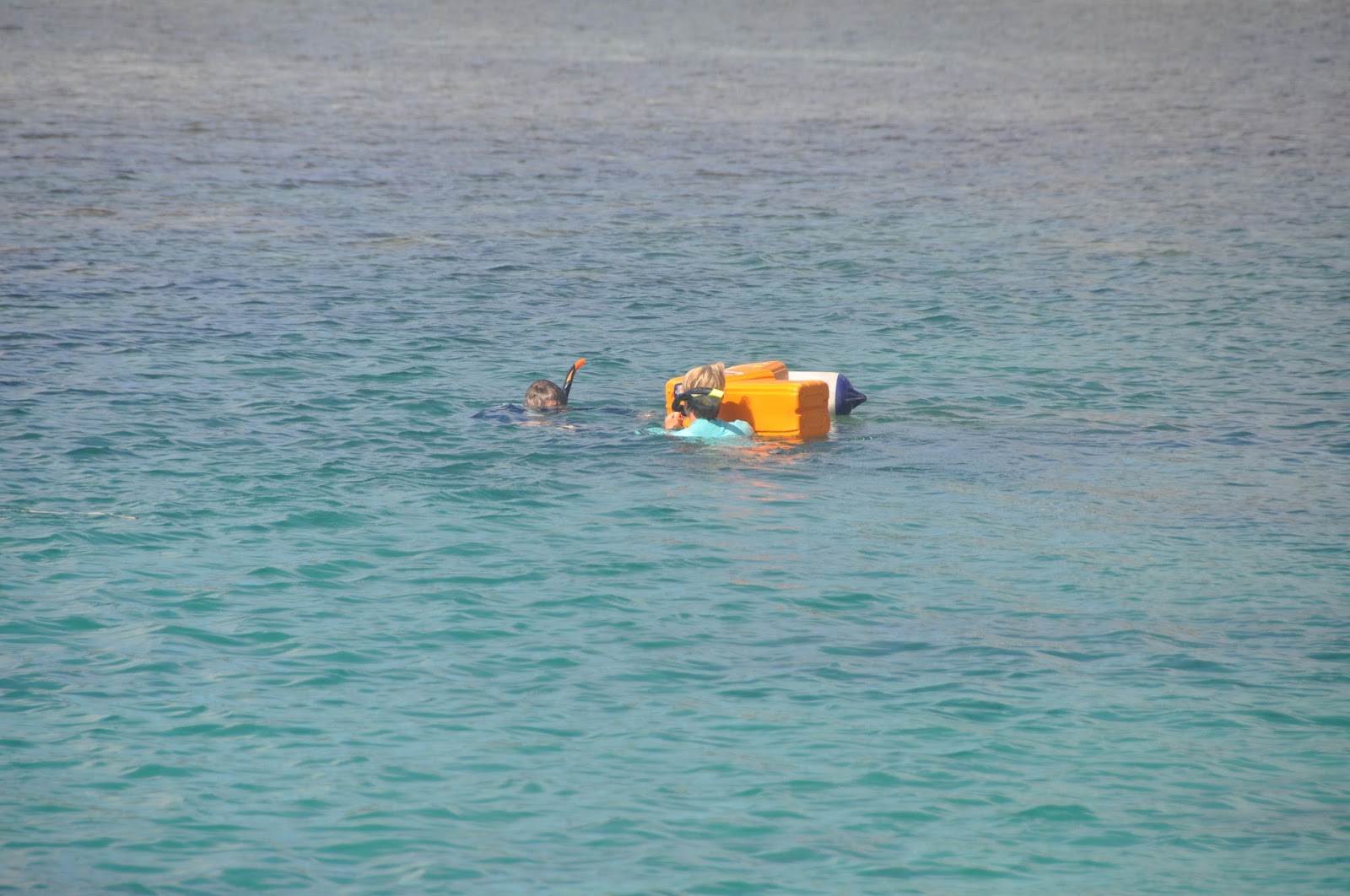
This afternoon, the fisheries rep. is taking us to fit the 7 fishermen with wetsuits donated by Dive Tutukaka in New Zealand.
The chief fell in love with the Sea Mercy Luminaid solar lights.
In Mua Mua, our guide Lo is taking an active role in making sure the aid gets to the chief’s house.  In the afternoon, she calls all the women and distributes the aid.  But it is the chief, who had to think a bit about according us Sevu Sevu and asked many questions before allowing to work in the village, who was dazzled by the LuminAid solar lights that will give each home a bit of light in this village that does not have any generator and where most individual solar panels have been blown away.
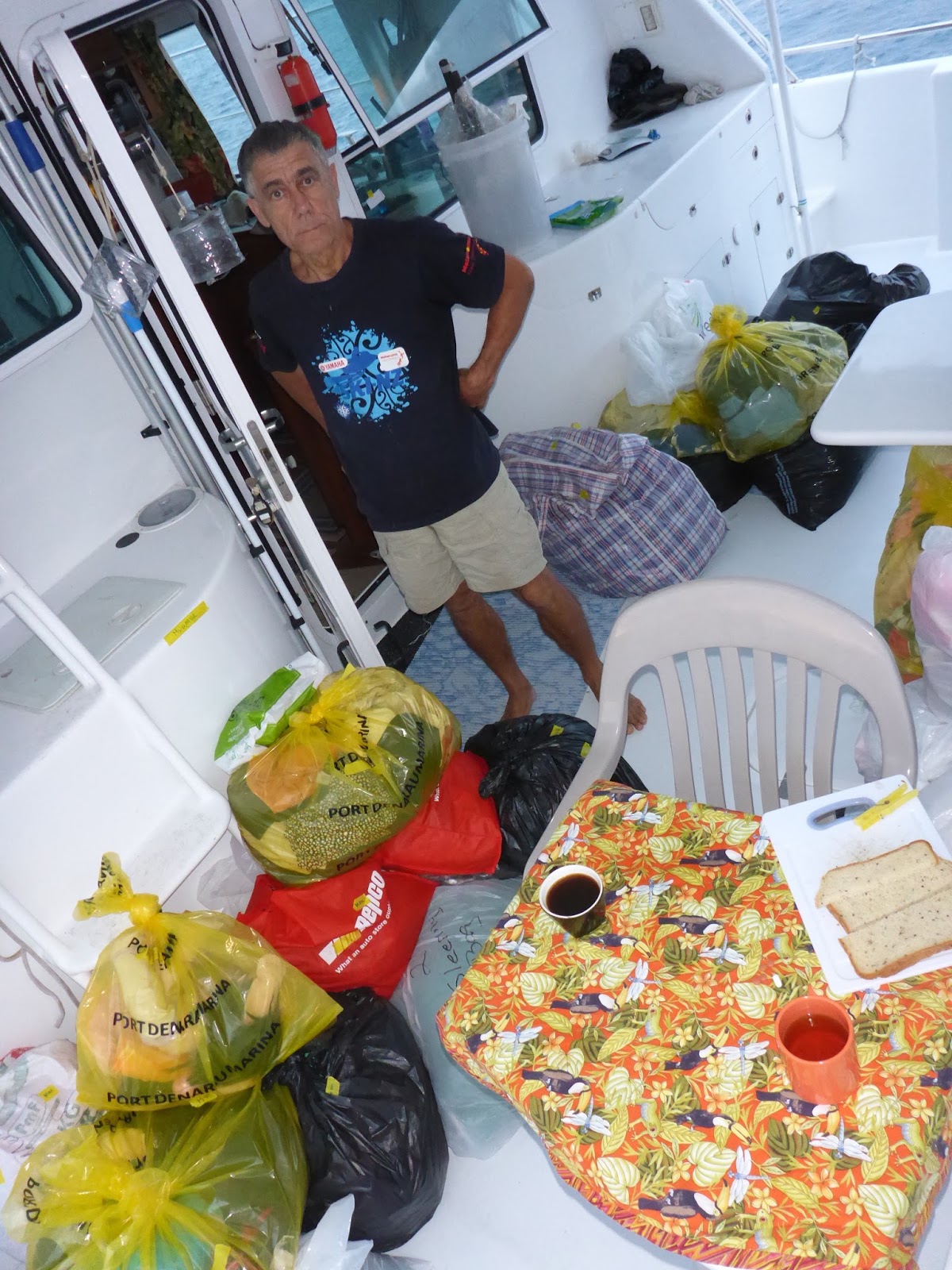
Do-Mini is loaded to the gills
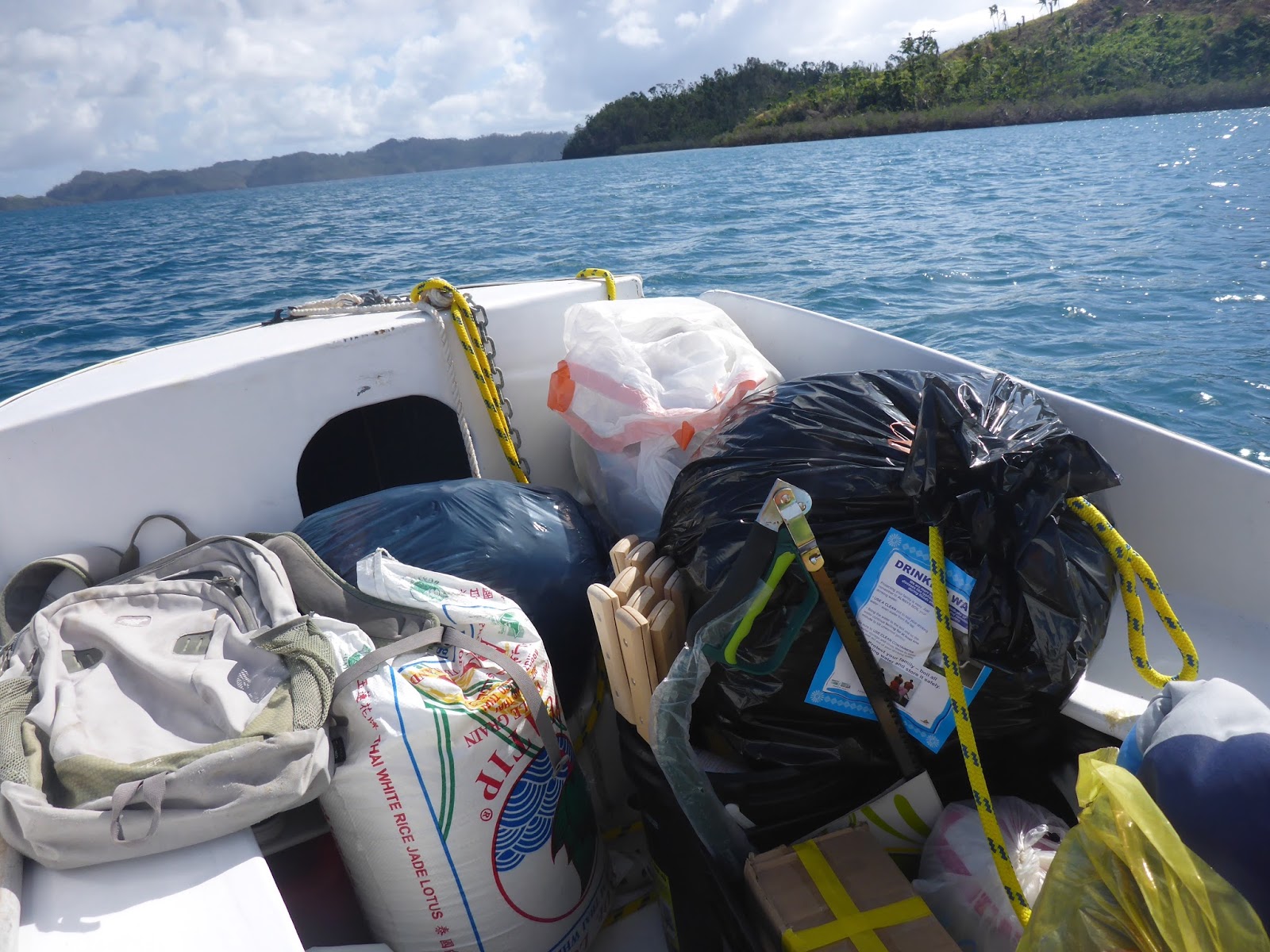
In the last 3 days, we have delivered 8 cases of canned foods, 110 lbs of rice, 10 kg of flour, 2 kg salt30 machetes with files, 3 bow saws, 3 boxes of nails, 50 solar lights, 3 tarpaulins and sails, 11 packs of fishing line, 7 boxes of fishing hooks, 4 bags of shoes, 6 bags of clothing, 2 bags of bedding,  25 bars of soap, 3 cases of water sanitation tablets, 7 wetsuits.
In Mua Mua, Lo is anxious to plant the seeds that Sea Mercy provided, thanks to the donation from the RamaKrishna, Fiji
We are barely scratching the top of the iceberg.  Village women are very eager to create sustainable community gardens, while the men will be busy to replant the coconut and rebuild the homes.  It is an overwhelming task. 
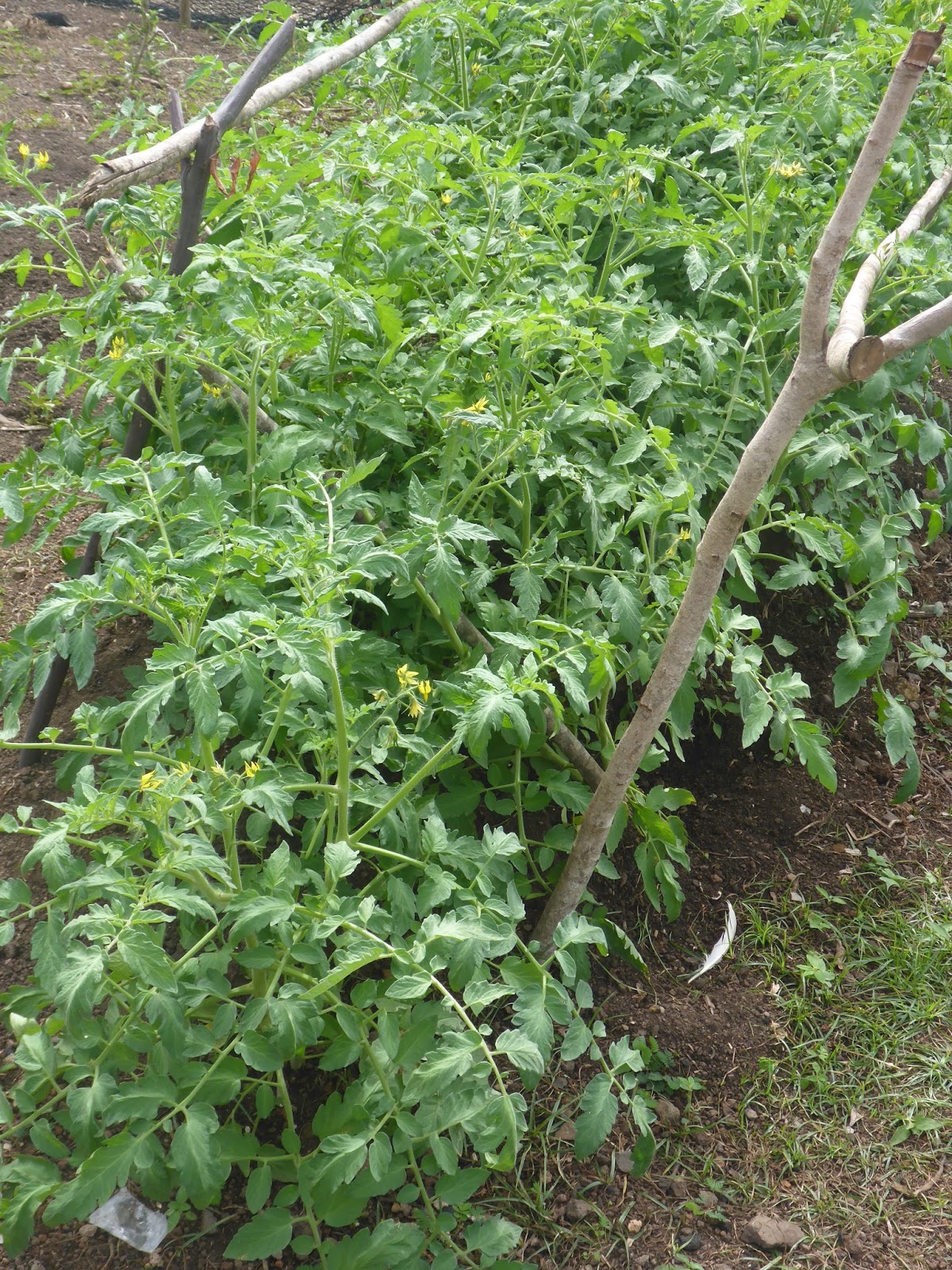
Tomatoes grow year-round
Want to help?  Gardening tools, gardening education, seeds, and of course for food, clothing, mattresses, bedding, sturdy plastic containers, home-building tools, linoleum floors… if you care to help, send your donation to seamercy.org – The Sea Mercy fleet of volunteer yachts will make sure it gets where it’s needed!  One beach at a time, one village at a time.

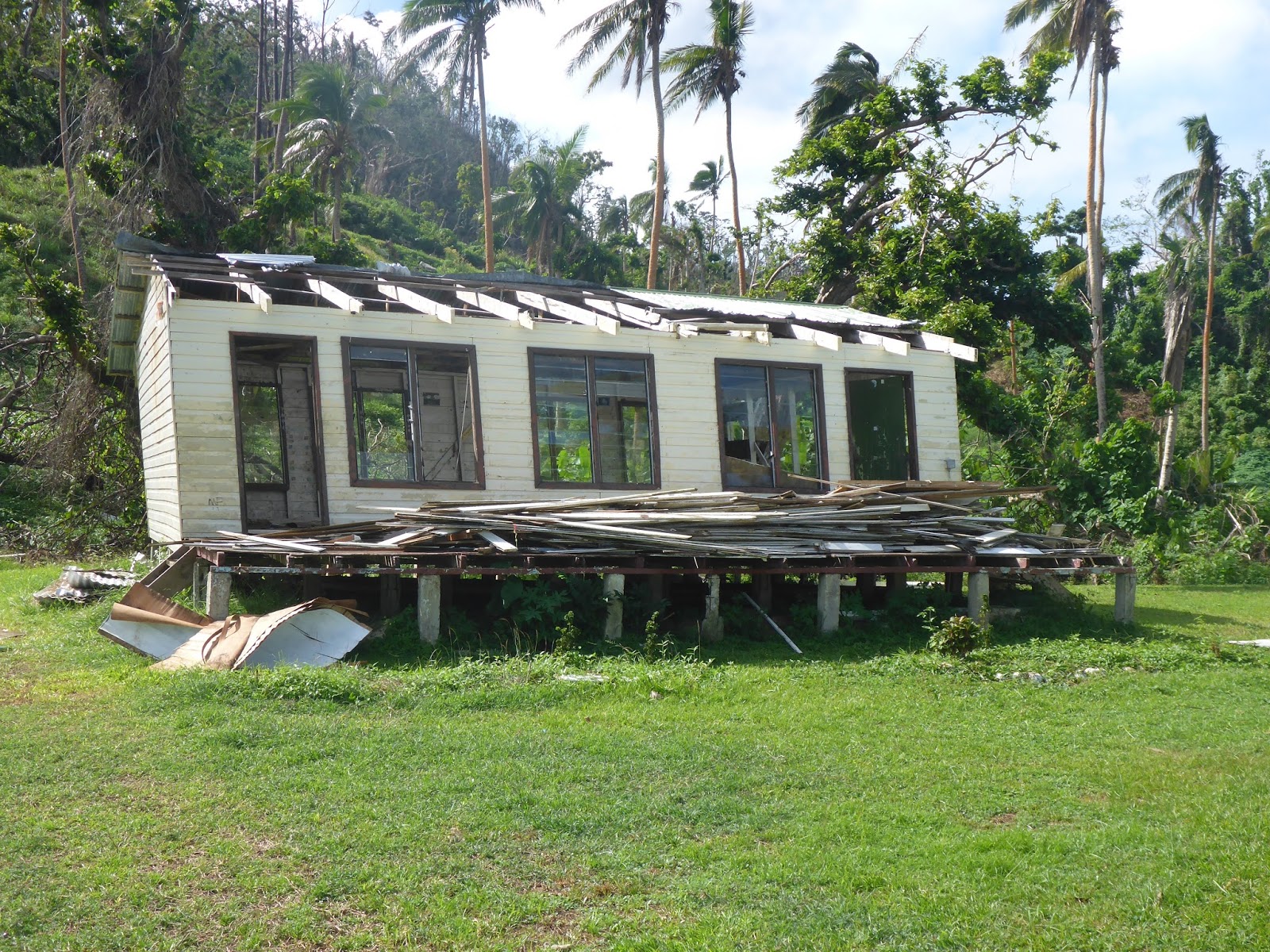
The Delaconi school: the only building left standing…
(Photo: Marie HF)
Marie Dufour, Yacht DOMINO Powercat