
|
|||||||||
[KensBlog] Rocking Keeley – Party Animal!


Passagemaking with a Nordhavn 2015-08-18 23:15:47
|
|||||||||
Solar Panels
Solar panels are installed and making electricity. The past few weeks has been a crash course in solar power technology. We ended up with six Kyocera panels for a total of 840 watts. We went with Blue Sky MPPT controllers for their compact size and exc…
18 August 2015 Utah Salt Lake City – The Great Salt Lake – Park City – Sundance
 |
|
| Utah’s State Capitol
Loved Yellowstone and the Tetons but time to move on to Salt Lake City that we used as our base to enjoy not only that city but also a side trip to Park City and Sundance. Park City began as a raucous, rough and tumble silver-mining boom town but nearly faded into history as a ghost town. Later it re-invented itself as a ski town that has grown into a “destination”. I fell in love with this quaint little town. It’s a funky, quirky, artsy place and a haven for just about any athletic endeavor you could think of—except swimming. Didn’t see a drop of water except for the stream that ran beside one of the restaurants. A couple about our age who are full-timers there, approached us–(we must’ve had the look of what-should-we-do-first?) and provided us with so much info of places to go and do and see that we wouldn’t have gleaned from any of the tourist brochures. It’s a precious, darling, historic little town. Look forward to returning but not in the winter–think temp’s dips below our 65 degree comfort zone. Robert Redford’s Sundance was an exciting trip. I looked and looked but never saw him. Maybe we should’ve called in advance. 🙂
We enjoyed a day on Antelope Island State Park, the largest island in the Great Salt Lake. There are free-roaming herds of bison, bighorn sheep, mule deer, and pronghorn antelope. A 7 mile causeway across the lake joins the island to the mainland. From that vantage point, the views are stunning of the Wasatch Mountain Range and the Salt Lake City skyline. This is the largest natural lake west of the Mississippi River and a remnant of pre-historic Lake Bonneville which covered more than 20,000 square miles during the Ice Age. Water flows into the lake from four river drainages but there is no outlet so whatever goes into the lake, stays there. Water leaves the lake only through evaporation, consequently leaving behind high levels of minerals. It is America’s Dead Sea.
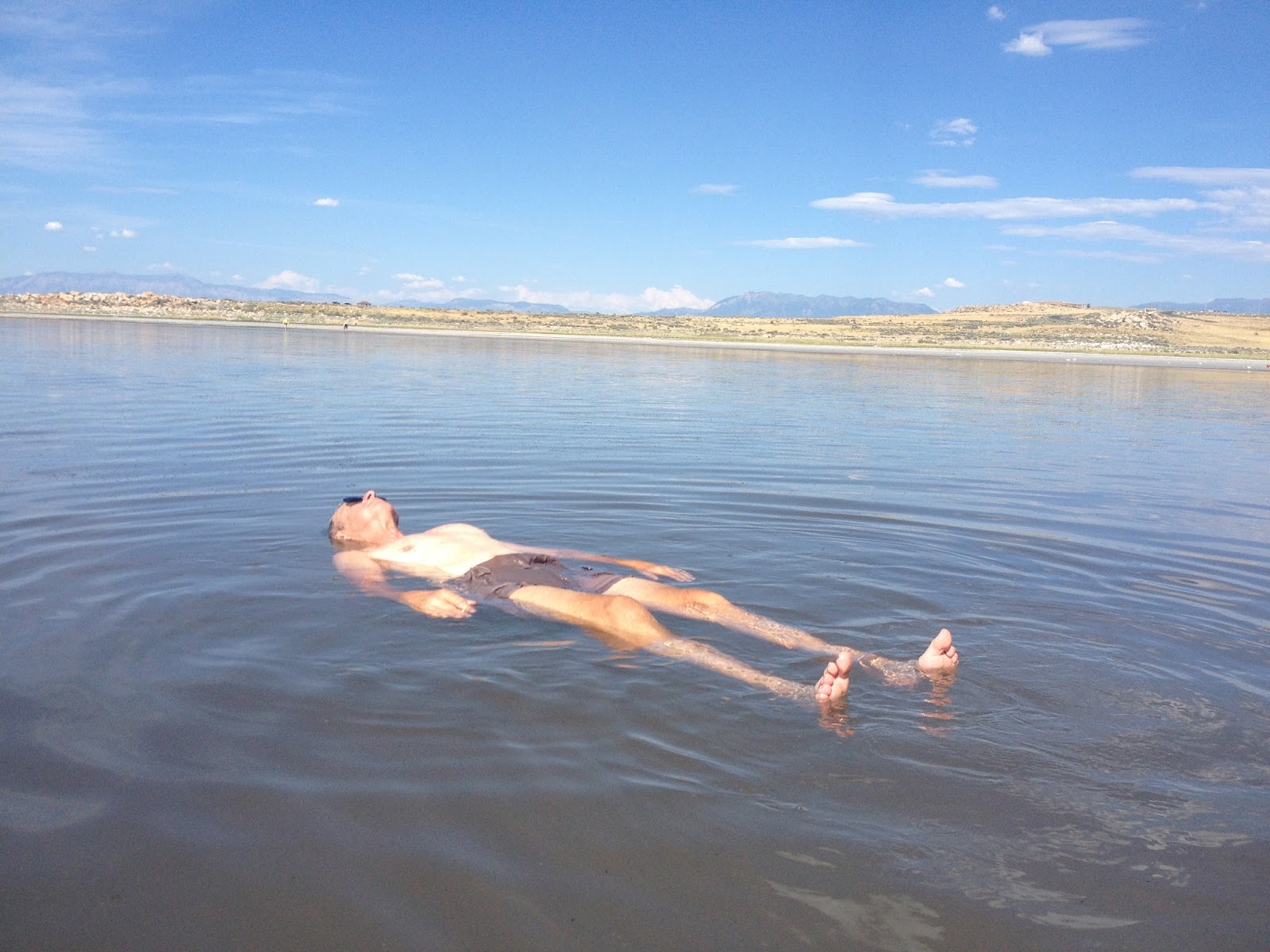
Bill, a non-floater, demonstrates the high salinity of the Great Salt Lake
Bill floats like a rock but look at my very buoyant hubby. In the summer when the lake is down, the salinity is about 27%–obviously much more dense than is the ocean. The trek from the parking lot to the lake’s edge is about a half mile of wading through very soft ankle-deep sand and rocks. Certainly not a time to leave your water bottle behind. Bill sorta rinsed his shorts and the next morning they had dried and they stood all alone and by themselves in the corner!
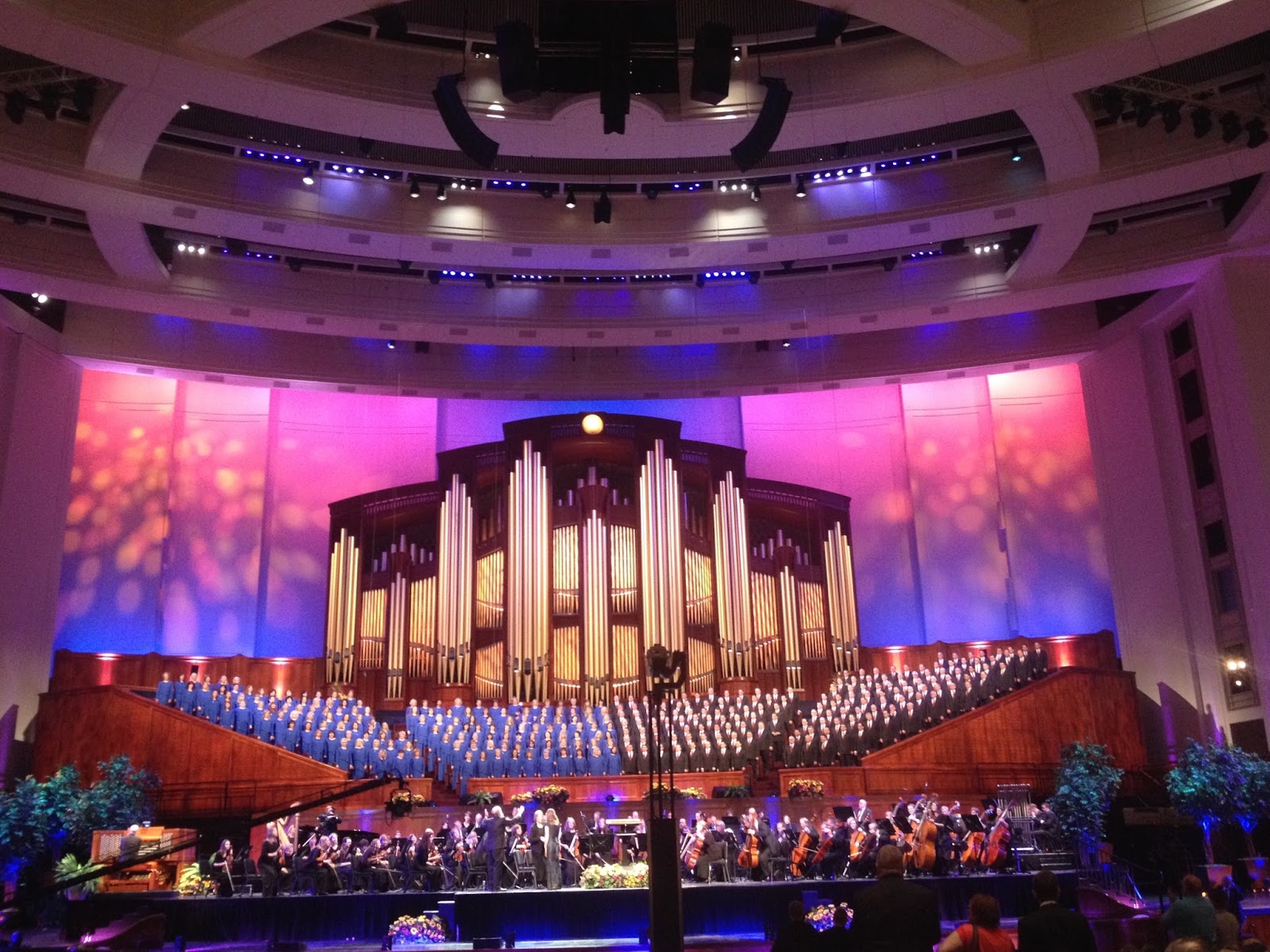
Knowing that Thursday night is the rehearsal time for the Mormon Tabernacle Choir and Orchestra, we made it a point to be there for that. |
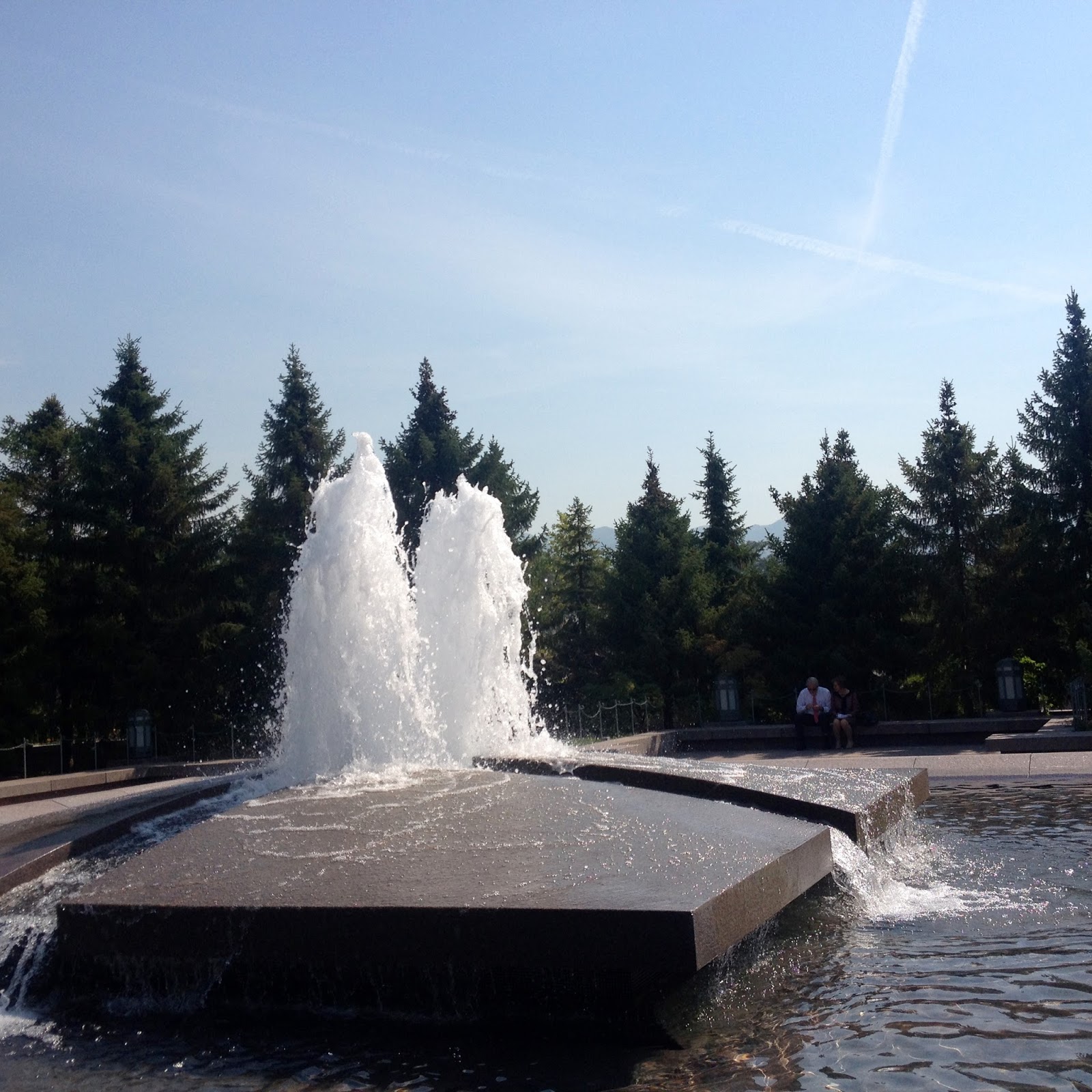 |
| A fountain atop the 10 acre Conference Center |
 |
| Conference Center Bell Tower. |
 |
| Notice the waterfall |
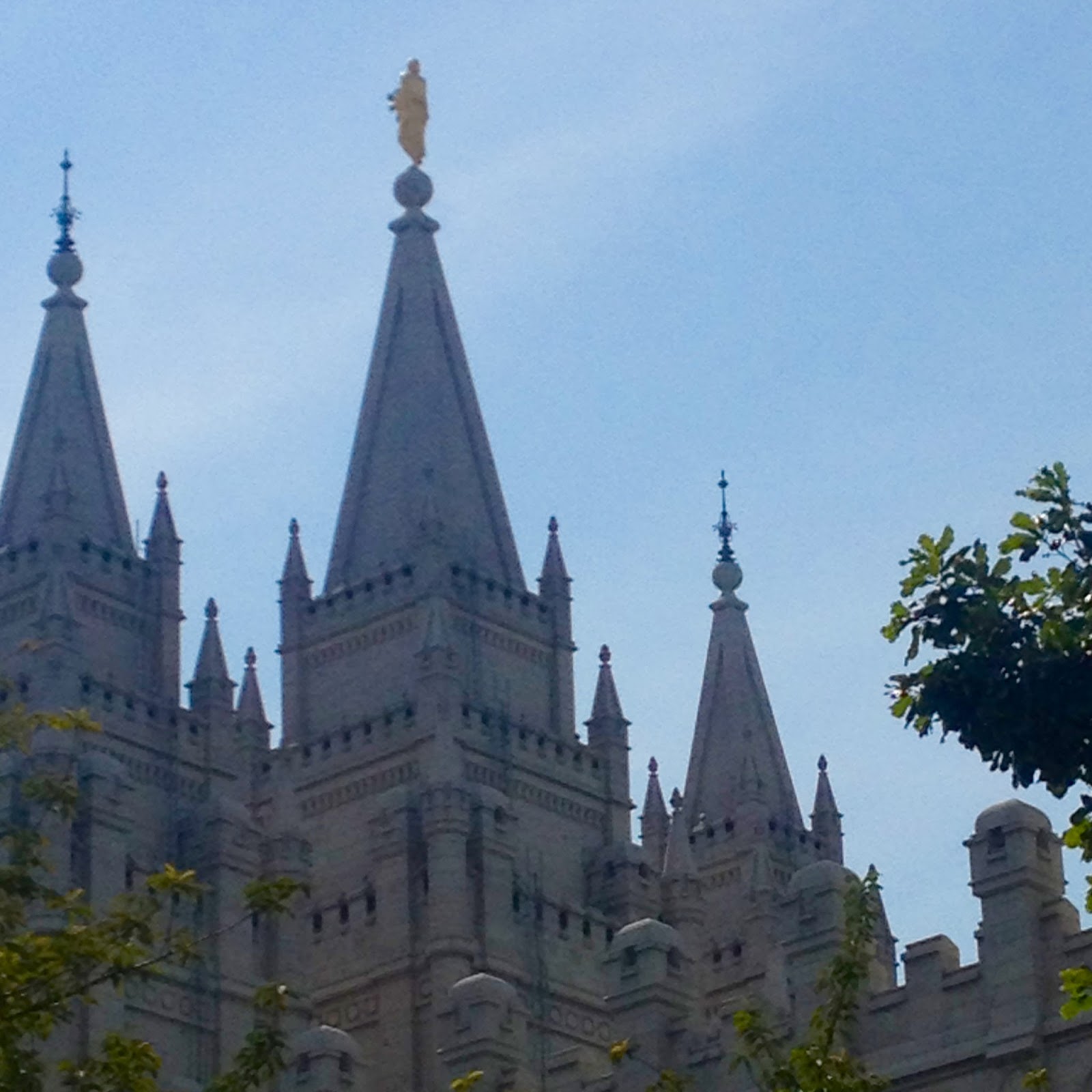 |
| Angel Moroni atop a spire |
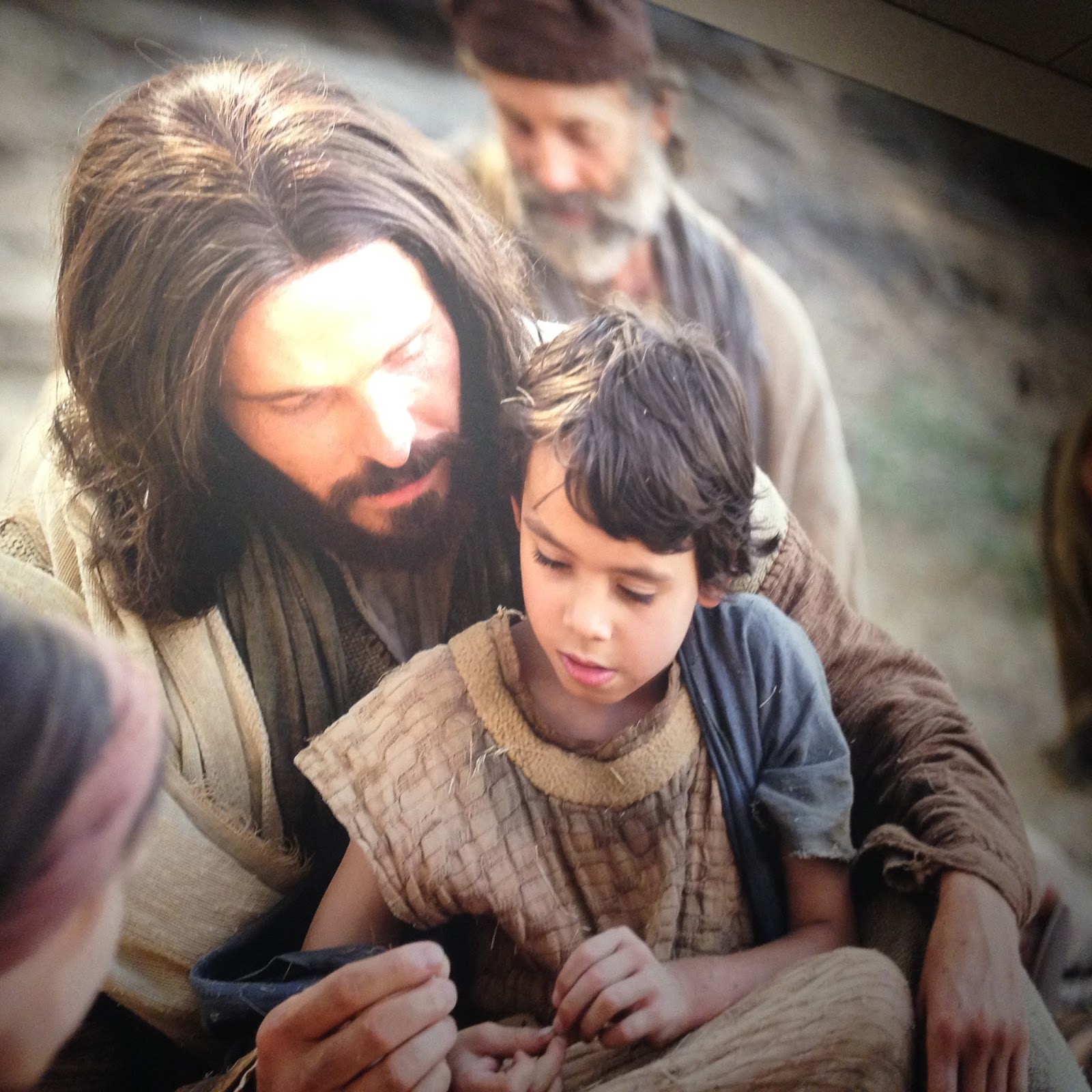 |
| The visitors’ center has many “life-like” photos |
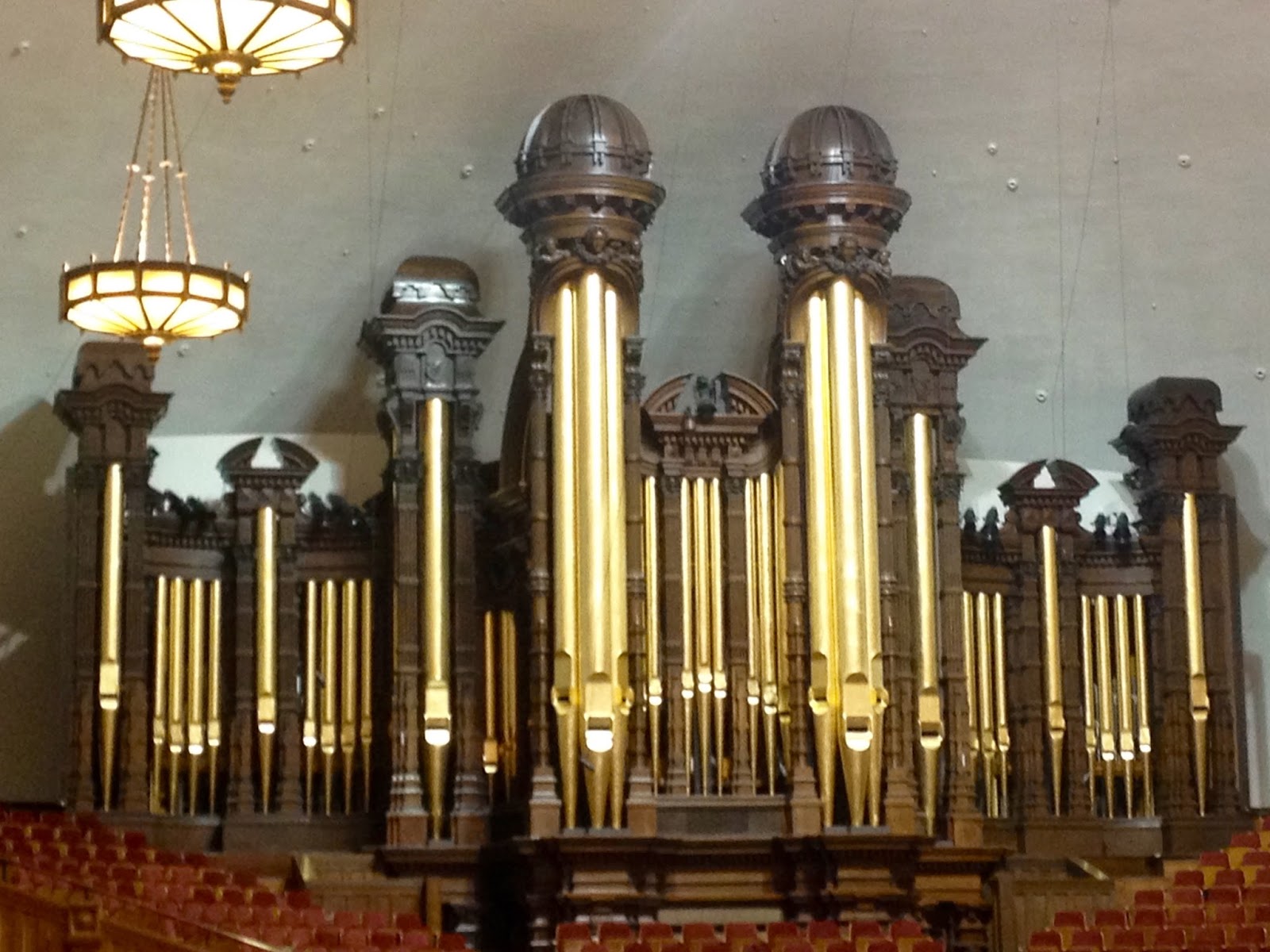 |
| 7,667 pipes for the 5 rank organ |
The rehearsal just wasn’t enough so we returned on Sunday morning for their service and to see and hear the live performance of Music and the Spoken Word. This has aired every Sunday morning for 80 years. I struck up a conversation with the lady sitting beside us. She had worked at Temple Square for many years and was a wealth of information. She retired and moved to SC, the state from which we retired.
After the service, we toured several of the buildings which are outstanding structures. No short cuts were taken with the construction nor furnishings. They thought of absolutely everything. The sanctuary in the Conference Center is being re-carpeted with 7 ½ acres of carpet! One of the tours was of the roof and the guide said that the plantings there and on the ground level around the building are to camouflage it’s tremendous 10 acres. This is truly a feat of engineering. There are no visible support beams. Besides the previously mentioned 21,000 seats, there’s a 900 seat proscenium-style theatre and 1300 parking spaces below the building on FOUR levels. On the roof are 4 landscaped acres with trees, an alpine meadow of grasses and wildflowers, fountains, and a waterfall. The main support beam weighs 621 tons. The structure exceeds building code requirements to withstand seismic forces in the event of an earthquake.
 |
| Strolling the city’s streets, I just found the 2 types of architecture–the old brick and the new glass buildings–an interesting contrast |
 |
| A view from Antelope Island of the Great Salt Lake |
 |
| The Great Salt Lake
Time to pull up the tent stakes and begin moving east.
Bill and Laura Bender
18 August 2015
|
Solar Panels
Solar panels are installed and making electricity. The past few weeks has been a crash course in solar power technology. We ended up with six Kyocera panels for a total of 840 watts. We went with Blue Sky MPPT controllers for their compact size and exc…
Stud Welder
In order to mount the solar panels, we decided to rent a CD (Capacitive Discharge) stud welder to create the attachment points for the solar panel brackets on the wheelhouse roof. It consists of a welding unit and a gun that holds the threaded studs an…
WHERE TO GET THE INFORMATION YOU NEED FOR CRUISING
PassageMaker, published in the US, is the undisputed leading magazine dealing with passagemakers – that is boats from about 40 to 70 feet in length able to undertake extended voyages with minimal crews across open seas in most weather conditions (although like all small power or sailing vessels avoiding hurricane and cyclone seasons).
Passagemakers are a growing market with over 500 Nordhavns sold along with similar brands such as Kady Krogen, Selene, Fleming and Ocean Alexander as well as other brands and custom-built vessels.
While some passagemakers have done some very impressive blue water cruising (for example Nordhavn 46, Kanaloa, has recently commenced her fourth circumnavigation), I believe it’s true to say the great majority of passagemakers are purchased because owners like the traditional style and economy of a “small ship” rather than they intend to do much offshore cruising. We fall into this category ourselves and have only done coastal cruising aboard Envoy with our greatest distance from land having been about 60 miles.
PassageMaker has recently celebrated its 20th anniversary and this reminded me how this magazine was the first source of information we turned to when we decided to buy a passagemaker, eventually leading us to purchase our Nordhavn 46.
So what sources of information are available to those interested in adopting the cruising lifestyle?
Information requirements generally fall into two categories – technical and destinations – including formalities needed, and here are the sources we have used and still use to meet these requirements:
– Our on board Nordhavn 46 technical Manual, constantly updated
– Our on board equipment instruction Manuals
– Manufacturers of the equipment in question
– Technical books such as Nigel Calder’s Boat Owners Mechanical and Electrical Manual
– Articles we have copied from boating magazines
– Discussions with other cruisers
– Selected cruisers’ blogs
– Local marine engineering companies and/or agents for equipment
– Internet searches and youtube
– The Nordhavn factory
– The Nordhavn Owners website
– Previous owners of our vessel
– Technical questions at passagemaker.com
– Charts and cruising guides
– Tourist guides such as Lonely Planet
– Google Earth
– Navionics on our iPad
– www.noonsite.com a website offering cruisers a wealth of information
Passagemaker’s special 20th anniversary edition mentioned some amusing reflections on maintenance:
– No boat project can be accomplished without creating new projects and the more complicated the first project the more new projects it will spawn
– You will never have all the parts, supplies, fasteners etc required to complete a project no matter how well you plan, and the final item needed won’t be identified until after the stores have all closed
– All projects except the tiniest will result in the entire boat being torn up
– The more deeply you are involved in a project the more people will stop by the boat for a chat
– Any dropped object will end up in the most inaccessible place possible, including Davy Jones locker
Next week I’m attending a technical training course run by well-known guru Steve D’Antonio so our next post will be about that.
Where we were (2015)
The map below shows where we stayed overnight on our 2015 cruise. If you click on a place mark additional information (i.e., place name, distance, engine hours, anchor chain)will pop up. Map of 2015 Cruise in separate window
2015 – By the Numbers
It turns out that 2015 was our shortest cruise yet of the five total cruises we’ve done to Alaska since we off loaded Alpenglow in January 2010. Ignoring our “shakedown” cruise, we left on May 6 and returned on August 17, a trip length of 104 days. The table below summarizes the easily tabulated values from the ship’s log.
| Departure date | May 6 |
| Return date | August 17 |
| Duration | 104 days |
| Distance traveled | 3580.1 nautical miles |
| Total engine hours | 629.2 |
| Total genset hours | 28.7 |
| Number nights at anchor | 67 |
| Number nights at mooring buoy or float | 7 |
| Number nights at dock | 29 |
With regards to average speed, I usually subtract the number of hours spent idling while fishing or sightseeing (i.e., time not underway), 42.4 hours in 2015, from the total engine hours and divide that value into the total distance traveled. Using that method, we averaged 6.1 nm/hour.
[KensBlog] At rest stabilization? An email from a blog reader
Sans Souci, Nordhavn 68
…
