
On Saturday, after resting up a few days in Ketchikan, we decided on a short weekend cruise to nearby Prince of Wales Island. We looked for an anchorage protected from the forecast SE winds and Kasaan Bay on POW’s east coast offered several optio…
Life in the Fast Lane: Green Light to Norfolk
“Life in the Fast Lane” is proving a perfect name for this series. Things are happening so quickly and often we are moving so fast (40 MPH) on rough or bumpy water that it is difficult to blog. That said, I always seem to be in a catch up m…
Day 128 – 365 Project…Beachy Colors
Welcome to day 128 of 365 photos…there is nothing like a ride near a beach area to find a lot of beachy colors. Many of these large houses are built with garage and storage areas on the ground floor in case of a storm surge during a hurricane. What I love is riding along these… Continue Reading
The post Day 128 – 365 Project…Beachy Colors appeared first on Moosetique Musing.
Life in the Marina
After a few years of hard travel, 5000 miles a year often, i yearned for a break and some time in a marina. Furthur needed some TLC and a few new projects too beckoned. With a to do list, a things to do list, people to see list, and a musical to do li…
If You Cannot Win, Lose with Flare
Our new crew member, Megan, and i heard some loud party music from a corner of the marina compound. Upon investigating we found the sing up area for a large community run, The Run for Charity, a mini marathon. We agreed it sounded like fun and plunked…
Just a quick update
Been tardy at posting to the blog lately. Lots of little stuff getting in the way. I added another layer of fairing compound to the bow section the other day and sanded that this morning. After that I moved onto putting the first layer of compound on t…
On to Craig
After spending a few days in Ketchikan, we headed out around Revillagigedo Island (where Ketchikan is located) for a few days. We visited our favorites at Yes Bay and Fitzgibbon Cove and also spent a night in Walker Cove in Misty Fjord National Monument. We were successful crabbing and prawning along the way but it was slower that our previous visits which were in June and July.
We returned on May 14 to Ketchikan where we had our outboard serviced and picked up a piece of metal work we had fabricated to improve the mounting system for the downrigger we purchased to fish from Alpenglow.
On Saturday morning, shortly before we departed, Dave & Dorothy Nagle on DavidEllis came into Bar Harbor where they’ll meet their daughter and her family for a brief cruise. We had a whirlwind visit and set up a tentative rendezvous for later in the summer.
We are now anchored in Gardner Bay on Prince of Wales Island. From here we’ll head around Cape Chacon and explore our way through Cordova Bay towards Craig. In Craig, we’d like to go out with a fishing guide to pick up fishing techniques and local knowledge about the Craig area.
Charleston,South Carolina
Normal
0
false
false
false
EN-US
X-NONE
X-NONE
/* Style Definitions */
table.MsoNormalTable
{mso-style-name:”Table Normal”;
mso-tstyle-rowband-size:0;
mso-tstyle-colband-size:0;
mso-style-noshow:yes;
mso-style-priority:99;
mso-style-parent:””;
mso-padding-alt:0in 5.4pt 0in 5.4pt;
mso-para-margin-top:auto;
mso-para-margin-right:0in;
mso-para-margin-bottom:auto;
mso-para-margin-left:0in;
mso-pagination:widow-orphan;
font-size:11.0pt;
font-family:”Comic Sans MS”;}
Normal
0
false
false
false
EN-US
X-NONE
X-NONE
/* Style Definitions */
table.MsoNormalTable
{mso-style-name:”Table Normal”;
mso-tstyle-rowband-size:0;
mso-tstyle-colband-size:0;
mso-style-noshow:yes;
mso-style-priority:99;
mso-style-parent:””;
mso-padding-alt:0in 5.4pt 0in 5.4pt;
mso-para-margin-top:auto;
mso-para-margin-right:0in;
mso-para-margin-bottom:auto;
mso-para-margin-left:0in;
mso-pagination:widow-orphan;
font-size:11.0pt;
font-family:”Comic Sans MS”;}
Well, Emily Grace
may well have tried to make us linger in Charleston as she proceeded to let the
overboard macerator pump fail on the passage from Georgia. Since this little pump allows us to discharge
waste when 3 miles offshore, it is mighty important and she may have succeeded.
The captain, however, thwarted any such mutinous plan by having 2 spare pump
impellers aboard. Although that fixed
the problem, the captain was also ready with another complete replacement pump!


In any event, we entered the Ashley River and found the
private mooring ball that we had found and reserved using Active Captain on our
Coastal Explorer navigation software.
Unfortunately the owner had left a decrepit dingy tied to it using
copious amounts of rope. Despite valiant
efforts by Captain and crew, we couldn’t get the tangled line free with our
boat hook and ended up with the dingy painter wrapped around the underwater
stabilizer fin. A local boater came over
and with his help and the swift 2 knot current, we managed to break free
unharmed and get temporarily re-attached to the mooring/dingy mess. The owner of the mooring was then called and
he borrowed my knife to cut off the tangled mess he had left us and we were then
properly attached to the mooring ball.
It all worked out well, since we paid him $15 per night for a $20 per
night mooring. He got a $45 windfall for
our 3-night stay and we got a good deal.
private mooring ball that we had found and reserved using Active Captain on our
Coastal Explorer navigation software.
Unfortunately the owner had left a decrepit dingy tied to it using
copious amounts of rope. Despite valiant
efforts by Captain and crew, we couldn’t get the tangled line free with our
boat hook and ended up with the dingy painter wrapped around the underwater
stabilizer fin. A local boater came over
and with his help and the swift 2 knot current, we managed to break free
unharmed and get temporarily re-attached to the mooring/dingy mess. The owner of the mooring was then called and
he borrowed my knife to cut off the tangled mess he had left us and we were then
properly attached to the mooring ball.
It all worked out well, since we paid him $15 per night for a $20 per
night mooring. He got a $45 windfall for
our 3-night stay and we got a good deal.
After foiling the mutiny and surviving the attack mooring
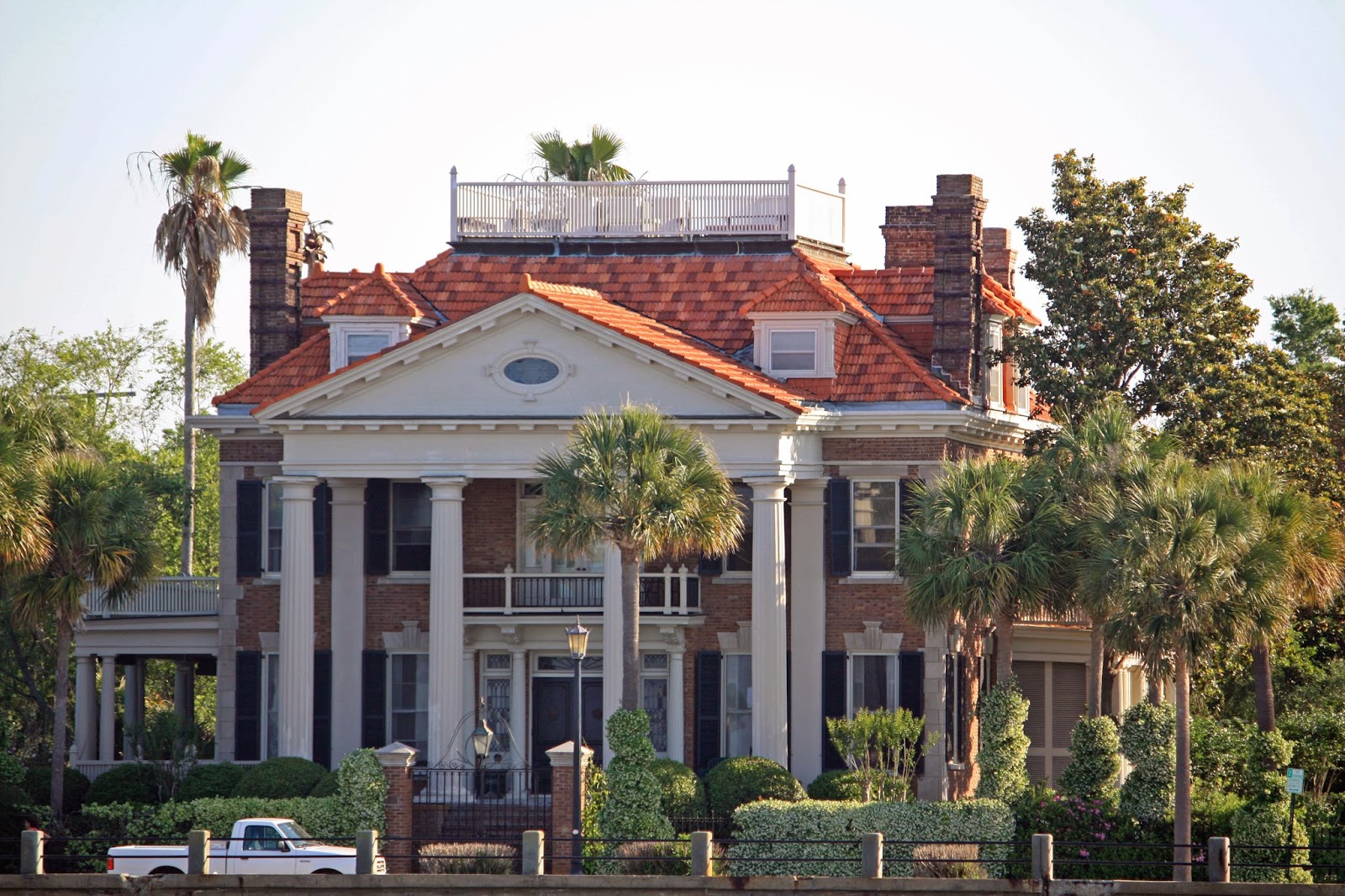
ball, the crew deservedly went ashore to explore Charleston. We found the gracious waterfront mansions and
well-made but overpriced sweetgrass baskets were still as we left them back in
our 2008 visit. We revisited the oldest
museum in America, the old slave market and the historic Nathaniel Russell
house.
ball, the crew deservedly went ashore to explore Charleston. We found the gracious waterfront mansions and
well-made but overpriced sweetgrass baskets were still as we left them back in
our 2008 visit. We revisited the oldest
museum in America, the old slave market and the historic Nathaniel Russell
house.

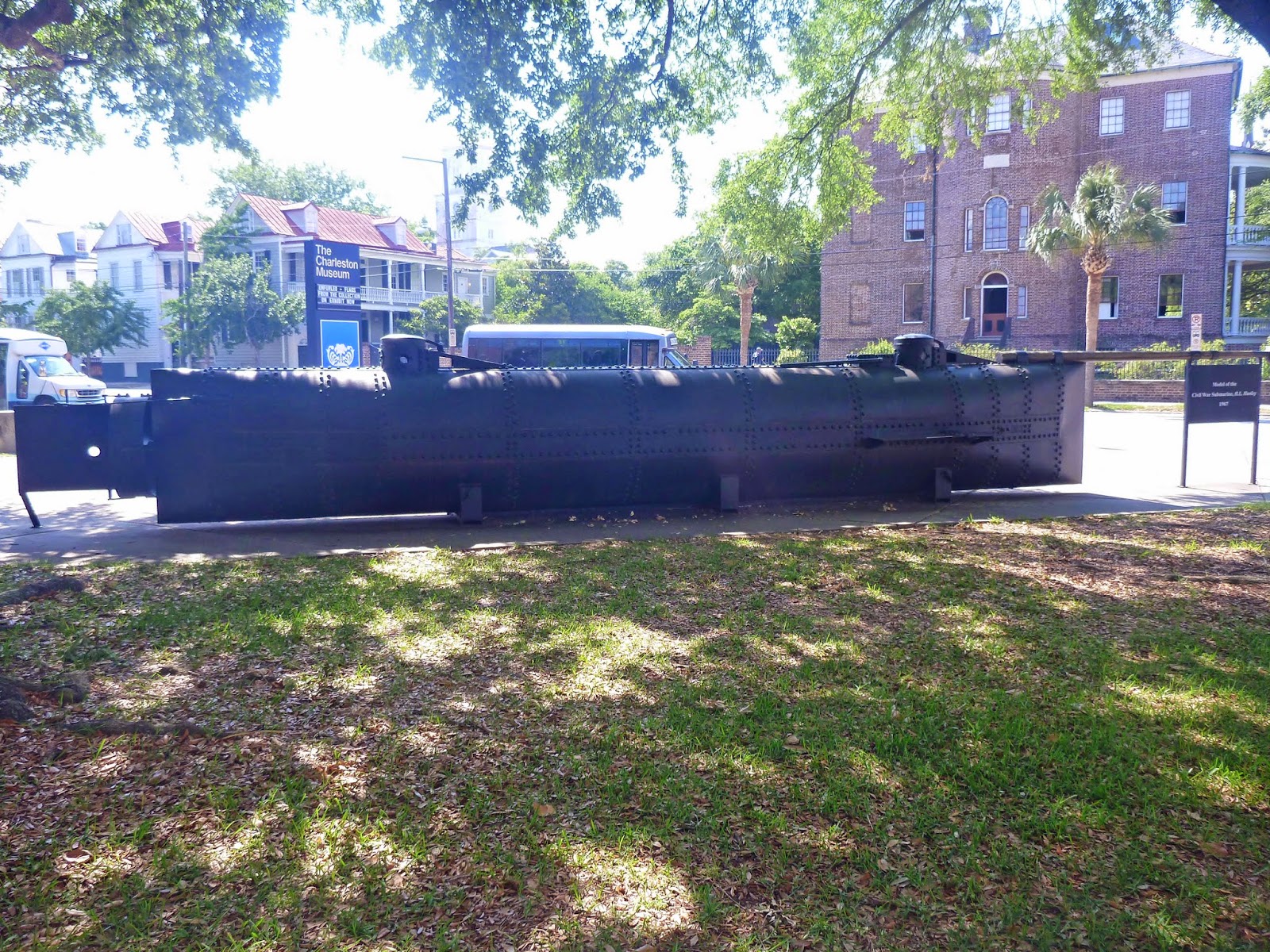
America’s oldest museum happens to be The Charleston Museum right
here in South Carolina. It opened in 1773, and from the beginning, displayed
geological specimens from its surrounding areas. Outside there is a replica of the American
Civil War H. L. Hunley submarine of the Confederate States of America. Drawing
from my vast experience working at the Groton submarine factory (Ha Ha), I explained
to Emily that the Hunley demonstrated the advantages and the dangers of
undersea warfare. She was the first combat submarine to sink a warship,
although Hunley was not completely submerged and, following her successful
attack, was lost along with her crew before she could return to her base. Apparently, the bowsprit containing the explosive charge was not quite long enough!
here in South Carolina. It opened in 1773, and from the beginning, displayed
geological specimens from its surrounding areas. Outside there is a replica of the American
Civil War H. L. Hunley submarine of the Confederate States of America. Drawing
from my vast experience working at the Groton submarine factory (Ha Ha), I explained
to Emily that the Hunley demonstrated the advantages and the dangers of
undersea warfare. She was the first combat submarine to sink a warship,
although Hunley was not completely submerged and, following her successful
attack, was lost along with her crew before she could return to her base. Apparently, the bowsprit containing the explosive charge was not quite long enough!
The exhibits inside run the gamut from textile and clothing
to silver to lowcountry life, rise of the South, Revolutionary War, Civil War,
natural history, and the most impressive arsenal of weaponry I’ve ever seen. If
we only had one of these multibarrel rifles aboard, maybe we could have gone
through the Somalia pirate waters!
to silver to lowcountry life, rise of the South, Revolutionary War, Civil War,
natural history, and the most impressive arsenal of weaponry I’ve ever seen. If
we only had one of these multibarrel rifles aboard, maybe we could have gone
through the Somalia pirate waters!


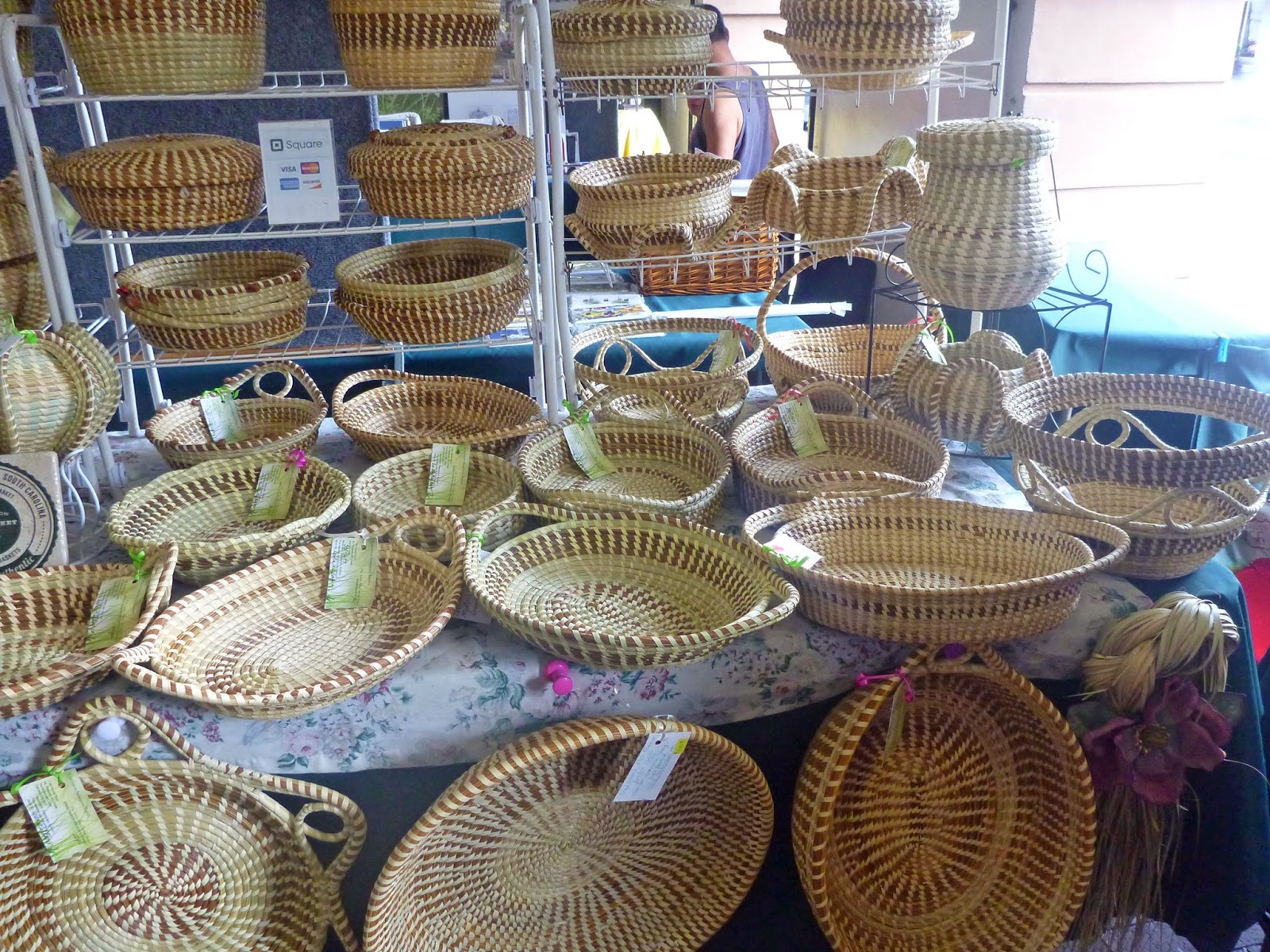
The slave markets only redeeming quality is the ability to
see the nicely made sweetgrass baskets. Since
we found and bought these same baskets in Dominica for less than 1/10th of the
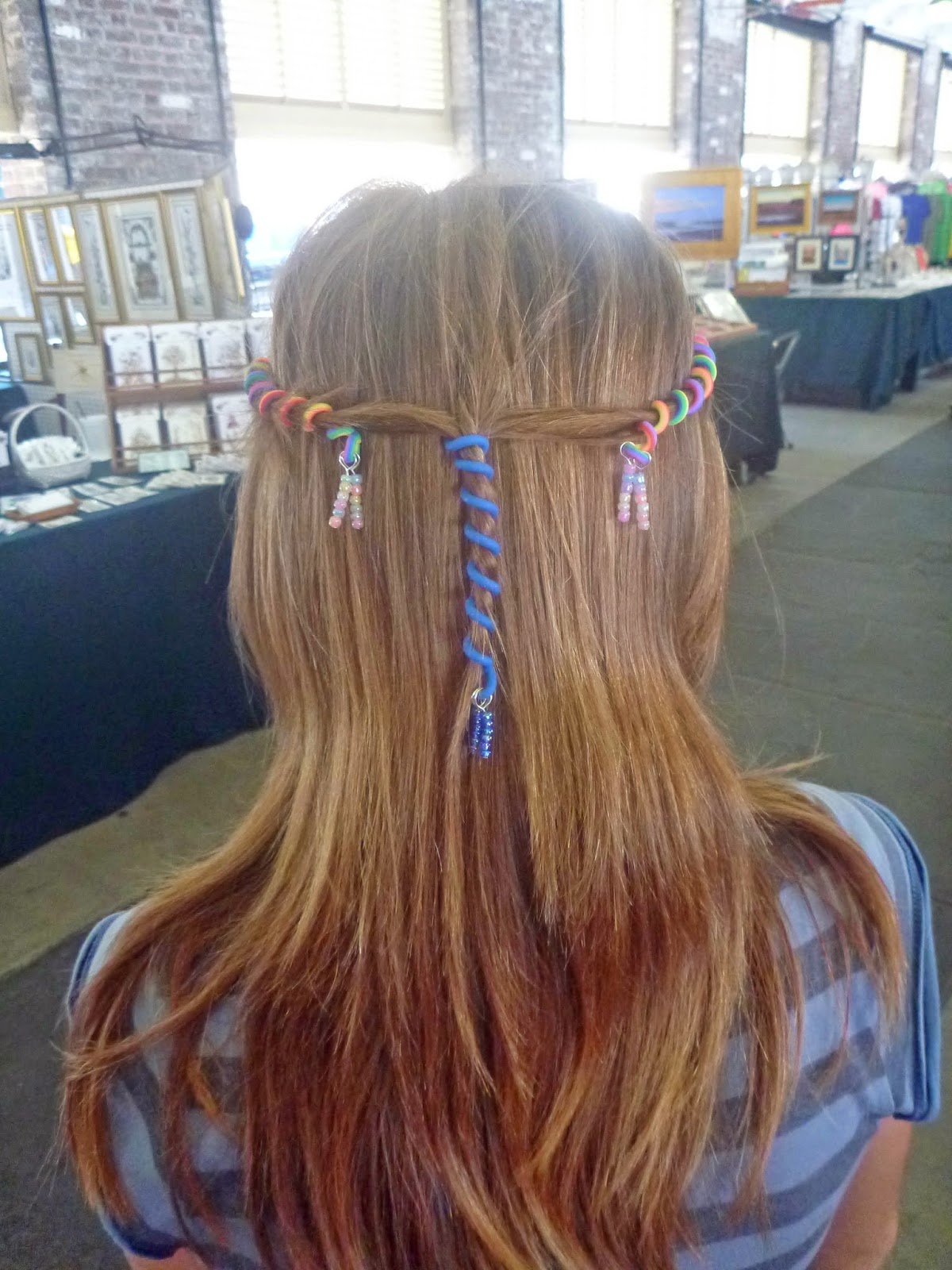
selling price here, we simply looked and complemented the ladies on their work. Among the cheap trinkets being hawked here,
Emily found some cool resin hair thingy’s she hopes will be OK with the school girls
in Ludlow, Mass.
see the nicely made sweetgrass baskets. Since
we found and bought these same baskets in Dominica for less than 1/10th of the
selling price here, we simply looked and complemented the ladies on their work. Among the cheap trinkets being hawked here,
Emily found some cool resin hair thingy’s she hopes will be OK with the school girls
in Ludlow, Mass.
Located in Downtown Charleston near High Battery, the
Nathaniel Russell House Museum at 51 Meeting Street, is widely recognized as one
of America’s most important neoclassical dwellings and was worth the stop. The Historic
Charleston Foundation purchased the National Historic Landmark in 1955, and the
house served as the Foundation’s headquarters for 37 years. Today, the
interiors are restored to their original 1808 grandeur and surrounded by formal
gardens.
Nathaniel Russell House Museum at 51 Meeting Street, is widely recognized as one
of America’s most important neoclassical dwellings and was worth the stop. The Historic
Charleston Foundation purchased the National Historic Landmark in 1955, and the
house served as the Foundation’s headquarters for 37 years. Today, the
interiors are restored to their original 1808 grandeur and surrounded by formal
gardens.
Nathaniel Russell was born in Bristol, Rhode
Island. He settled in Charleston at the age of 27 in 1765, when Charleston was
a bustling seaport. By 1774, Charleston boasted a per capita of wealth nearly
four times that of all the American colonies. Russell’s career as a merchant
involved the shipment of cargoes to and from New England, the West Indies,
South America, Virginia, Great Britain, continental Europe, West Africa and
Asia.
While most of his profits came from the
exportation of staples, such as Carolina Gold rice, indigo, tobacco and cotton,
Russell handled a broad range of imported goods. He also participated in the
African slave trade both before and after the American Revolution.
The Nathaniel Russell House is an excellent
example of the Adam style of architecture. Russell’s house was built when local
carpenters had a decade of experience with the light and airy manner made
popular by Robert Adam. His house has been called an exercise in ellipses, for
from its free-flying stair to the wrought iron balconies, to the principal
windows and doors, we found it to be extraordinary. It was the last great house
of the city’s post-revolutionary period. Built in 1809, the house was listed in
the National Register in 1971 and Designated a National Historic Landmark in 1973.


We also stepped into the Cathedral of St. John
the Baptist. The Cathedral seats 720 people and is noted for its Franz Mayer
& Co. stained glass, hand painted Stations of the Cross, and neo-gothic
architecture. The cornerstone was laid in 1890, and the church opened in 1907.
The sides of the Sanctuary are adorned with
windows depicting the 4 Gospel writers with their winged creatures. Above the
High Altar is the Chancel window. The top section is a rose window depicting
St. John the Baptist baptizing Jesus with the Holy Spirit above. It is
surrounded by 8 adoring angels playing instruments. Above the Rose window is a Sacred
Heart. To the left of the Rose window is a pelican feeding her three newborn
pelicans, and to the right is the Lamb of God. Below all of this is a 5-light
replica of Da Vinci’s Last Supper.


In general, Charleston was a nice stop. They need some free dingy docks and the shuttle
busses (although free) were really overcrowded; but those are minor
complaints. After 2 tiring days of sightseeing,
Tom started to plot the trip up the ditch towards North Carolina. When we compared 3 long days of hand steering
and bridge openings, we again decided to head for the ocean since we could do
the same trip easily overnight. Come
along as our next stop will be in Carolina Beach, North Carolina.
Tom
Normal
0
false
false
false
EN-US
X-NONE
X-NONE
/* Style Definitions */
table.MsoNormalTable
{mso-style-name:”Table Normal”;
mso-tstyle-rowband-size:0;
mso-tstyle-colband-size:0;
mso-style-noshow:yes;
mso-style-priority:99;
mso-style-parent:””;
mso-padding-alt:0in 5.4pt 0in 5.4pt;
mso-para-margin-top:auto;
mso-para-margin-right:0in;
mso-para-margin-bottom:auto;
mso-para-margin-left:0in;
mso-pagination:widow-orphan;
font-size:11.0pt;
font-family:”Comic Sans MS”;}
Charleston,South Carolina
Well, Emily Gracemay well have tried to make us linger in Charleston as she proceeded to let the overboard macerator pump fail on the passage from Georgia. Since this little pump allows us to discharge waste when 3 miles offshore, it is mighty important and she may have succeeded. The captain, however, thwarted any such mutinous plan by having 2 spare pump impellers aboard. Although that fixed the problem, the captain was also ready with another complete replacement pump!
In any event, we entered the Ashley River and found the private mooring ball that we had found and reserved using Active Captain on our Coastal Explorer navigation software. Unfortunately the owner had left a decrepit dingy tied to it using copious amounts of rope. Despite valiant efforts by Captain and crew, we couldn’t get the tangled line free with our boat hook and ended up with the dingy painter wrapped around the underwater stabilizer fin. A local boater came over and with his help and the swift 2 knot current, we managed to break free unharmed and get temporarily re-attached to the mooring/dingy mess. The owner of the mooring was then called and he borrowed my knife to cut off the tangled mess he had left us and we were then properly attached to the mooring ball. It all worked out well, since we paid him $15 per night for a $20 per night mooring. He got a $45 windfall for our 3-night stay and we got a good deal.
After foiling the mutiny and surviving the attack mooring ball, the crew deservedly went ashore to explore Charleston. We found the gracious waterfront mansions and well-made but overpriced sweetgrass baskets were still as we left them back in our 2008 visit. We revisited the oldest museum in America, the old slave market and the historic Nathaniel Russell house.
America’s oldest museum happens to be The Charleston Museum right here in South Carolina. It opened in 1773, and from the beginning, displayed geological specimens from its surrounding areas. Outside there is a replica of the American Civil War H. L. Hunley submarine of the Confederate States of America. Drawing from my vast experience working at the Groton submarine factory (Ha Ha), I explained to Emily that the Hunley demonstrated the advantages and the dangers of undersea warfare. She was the first combat submarine to sink a warship, although Hunley was not completely submerged and, following her successful attack, was lost along with her crew before she could return to her base. Apparently, the bowsprit containing the explosive charge was not quite long enough!
The exhibits inside run the gamut from textile and clothing to silver to lowcountry life, rise of the South, Revolutionary War, Civil War, natural history, and the most impressive arsenal of weaponry I’ve ever seen. If we only had one of these multibarrel rifles aboard, maybe we could have gone through the Somalia pirate waters!
The slave markets only redeeming quality is the ability to see the nicely made sweetgrass baskets. Since we found and bought these same baskets in Dominica for less than 1/10th of the selling price here, we simply looked and complemented the ladies on their work. Among the cheap trinkets being hawked here, Emily found some cool resin hair thingy’s she hopes will be OK with the school girls in Ludlow, Mass.
Located in Downtown Charleston near High Battery, the Nathaniel Russell House Museum at 51 Meeting Street, is widely recognized as one of America’s most important neoclassical dwellings and was worth the stop. The Historic Charleston Foundation purchased the National Historic Landmark in 1955, and the house served as the Foundation’s headquarters for 37 years. Today, the interiors are restored to their original 1808 grandeur and surrounded by formal gardens.
Nathaniel Russell was born in Bristol, Rhode Island. He settled in Charleston at the age of 27 in 1765, when Charleston was a bustling seaport. By 1774, Charleston boasted a per capita of wealth nearly four times that of all the American colonies. Russell’s career as a merchant involved the shipment of cargoes to and from New England, the West Indies, South America, Virginia, Great Britain, continental Europe, West Africa and Asia.
While most of his profits came from the exportation of staples, such as Carolina Gold rice, indigo, tobacco and cotton, Russell handled a broad range of imported goods. He also participated in the African slave trade both before and after the American Revolution.
The Nathaniel Russell House is an excellent example of the Adam style of architecture. Russell’s house was built when local carpenters had a decade of experience with the light and airy manner made popular by Robert Adam. His house has been called an exercise in ellipses, for from its free-flying stair to the wrought iron balconies, to the principal windows and doors, we found it to be extraordinary. It was the last great house of the city’s post-revolutionary period. Built in 1809, the house was listed in the National Register in 1971 and Designated a National Historic Landmark in 1973.
We also stepped into the Cathedral of St. John the Baptist. The Cathedral seats 720 people and is noted for its Franz Mayer & Co. stained glass, hand painted Stations of the Cross, and neo-gothic architecture. The cornerstone was laid in 1890, and the church opened in 1907.
The sides of the Sanctuary are adorned with windows depicting the 4 Gospel writers with their winged creatures. Above the High Altar is the Chancel window. The top section is a rose window depicting St. John the Baptist baptizing Jesus with the Holy Spirit above. It is surrounded by 8 adoring angels playing instruments. Above the Rose window is a Sacred Heart. To the left of the Rose window is a pelican feeding her three newborn pelicans, and to the right is the Lamb of God. Below all of this is a 5-light replica of Da Vinci’s Last Supper.
In general, Charleston was a nice stop. They need some free dingy docks and the shuttle busses (although free) were really overcrowded; but those are minor complaints. After 2 tiring days of sightseeing, Tom started to plot the trip up the ditch towards North Carolina. When we compared 3 long days of hand steering and bridge openings, we again decided to head for the ocean since we could do the same trip easily overnight. Come along as our next stop will be in Carolina Beach, North Carolina.
Tom
Life in the Fast Lane: No Wake, Hit the Brake!
When we finished our amazing 212 nautical (243 statute) mile run on the ICW from Fernandina Beach to Charleston I was optimistic that we could make Beaufort today (268 statute miles) on the ICW. Turns out I was overly optimistic. I remember…
