
Been tardy at posting to the blog lately. Lots of little stuff getting in the way. I added another layer of fairing compound to the bow section the other day and sanded that this morning. After that I moved onto putting the first layer of compound on t…
On to Craig
After spending a few days in Ketchikan, we headed out around Revillagigedo Island (where Ketchikan is located) for a few days. We visited our favorites at Yes Bay and Fitzgibbon Cove and also spent a night in Walker Cove in Misty Fjord National Monument. We were successful crabbing and prawning along the way but it was slower that our previous visits which were in June and July.
We returned on May 14 to Ketchikan where we had our outboard serviced and picked up a piece of metal work we had fabricated to improve the mounting system for the downrigger we purchased to fish from Alpenglow.
On Saturday morning, shortly before we departed, Dave & Dorothy Nagle on DavidEllis came into Bar Harbor where they’ll meet their daughter and her family for a brief cruise. We had a whirlwind visit and set up a tentative rendezvous for later in the summer.
We are now anchored in Gardner Bay on Prince of Wales Island. From here we’ll head around Cape Chacon and explore our way through Cordova Bay towards Craig. In Craig, we’d like to go out with a fishing guide to pick up fishing techniques and local knowledge about the Craig area.
Charleston,South Carolina
Normal
0
false
false
false
EN-US
X-NONE
X-NONE
/* Style Definitions */
table.MsoNormalTable
{mso-style-name:”Table Normal”;
mso-tstyle-rowband-size:0;
mso-tstyle-colband-size:0;
mso-style-noshow:yes;
mso-style-priority:99;
mso-style-parent:””;
mso-padding-alt:0in 5.4pt 0in 5.4pt;
mso-para-margin-top:auto;
mso-para-margin-right:0in;
mso-para-margin-bottom:auto;
mso-para-margin-left:0in;
mso-pagination:widow-orphan;
font-size:11.0pt;
font-family:”Comic Sans MS”;}
Well, Emily Grace
may well have tried to make us linger in Charleston as she proceeded to let the
overboard macerator pump fail on the passage from Georgia. Since this little pump allows us to discharge
waste when 3 miles offshore, it is mighty important and she may have succeeded.
The captain, however, thwarted any such mutinous plan by having 2 spare pump
impellers aboard. Although that fixed
the problem, the captain was also ready with another complete replacement pump!


In any event, we entered the Ashley River and found the
private mooring ball that we had found and reserved using Active Captain on our
Coastal Explorer navigation software.
Unfortunately the owner had left a decrepit dingy tied to it using
copious amounts of rope. Despite valiant
efforts by Captain and crew, we couldn’t get the tangled line free with our
boat hook and ended up with the dingy painter wrapped around the underwater
stabilizer fin. A local boater came over
and with his help and the swift 2 knot current, we managed to break free
unharmed and get temporarily re-attached to the mooring/dingy mess. The owner of the mooring was then called and
he borrowed my knife to cut off the tangled mess he had left us and we were then
properly attached to the mooring ball.
It all worked out well, since we paid him $15 per night for a $20 per
night mooring. He got a $45 windfall for
our 3-night stay and we got a good deal.
After foiling the mutiny and surviving the attack mooring
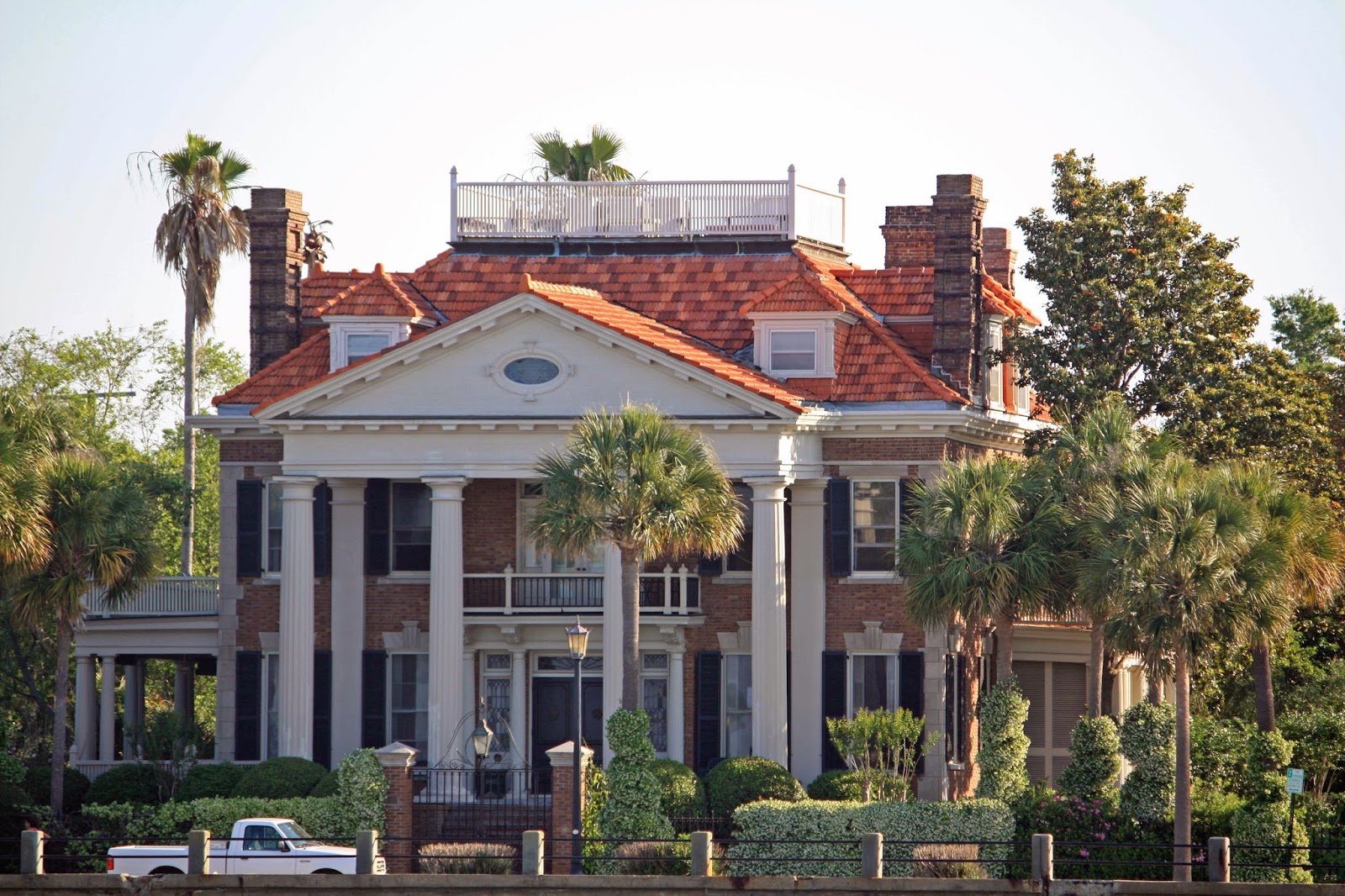
ball, the crew deservedly went ashore to explore Charleston. We found the gracious waterfront mansions and
well-made but overpriced sweetgrass baskets were still as we left them back in
our 2008 visit. We revisited the oldest
museum in America, the old slave market and the historic Nathaniel Russell
house.

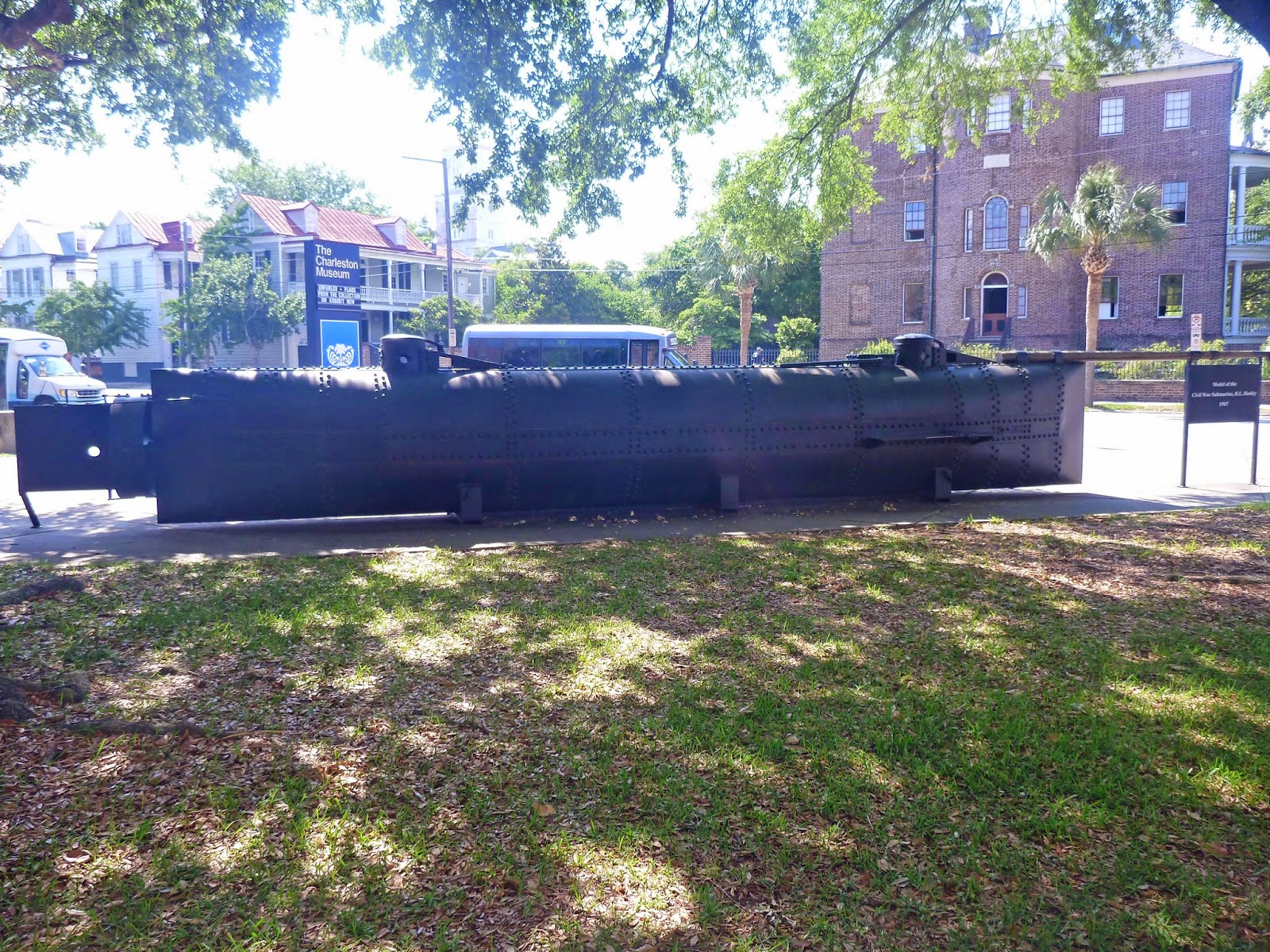
America’s oldest museum happens to be The Charleston Museum right
here in South Carolina. It opened in 1773, and from the beginning, displayed
geological specimens from its surrounding areas. Outside there is a replica of the American
Civil War H. L. Hunley submarine of the Confederate States of America. Drawing
from my vast experience working at the Groton submarine factory (Ha Ha), I explained
to Emily that the Hunley demonstrated the advantages and the dangers of
undersea warfare. She was the first combat submarine to sink a warship,
although Hunley was not completely submerged and, following her successful
attack, was lost along with her crew before she could return to her base. Apparently, the bowsprit containing the explosive charge was not quite long enough!
The exhibits inside run the gamut from textile and clothing
to silver to lowcountry life, rise of the South, Revolutionary War, Civil War,
natural history, and the most impressive arsenal of weaponry I’ve ever seen. If
we only had one of these multibarrel rifles aboard, maybe we could have gone
through the Somalia pirate waters!
to silver to lowcountry life, rise of the South, Revolutionary War, Civil War,
natural history, and the most impressive arsenal of weaponry I’ve ever seen. If
we only had one of these multibarrel rifles aboard, maybe we could have gone
through the Somalia pirate waters!


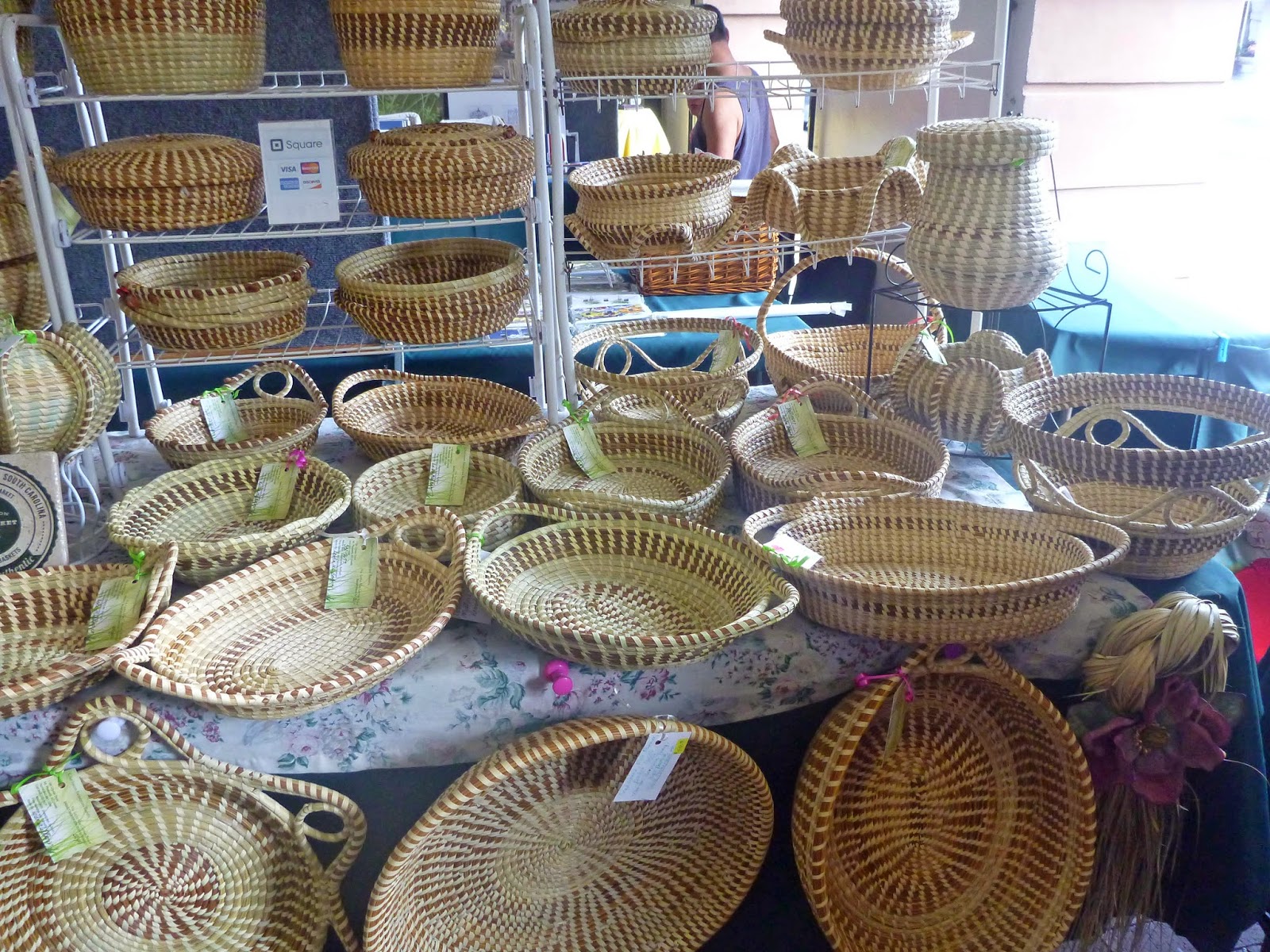
The slave markets only redeeming quality is the ability to
see the nicely made sweetgrass baskets. Since
we found and bought these same baskets in Dominica for less than 1/10th of the
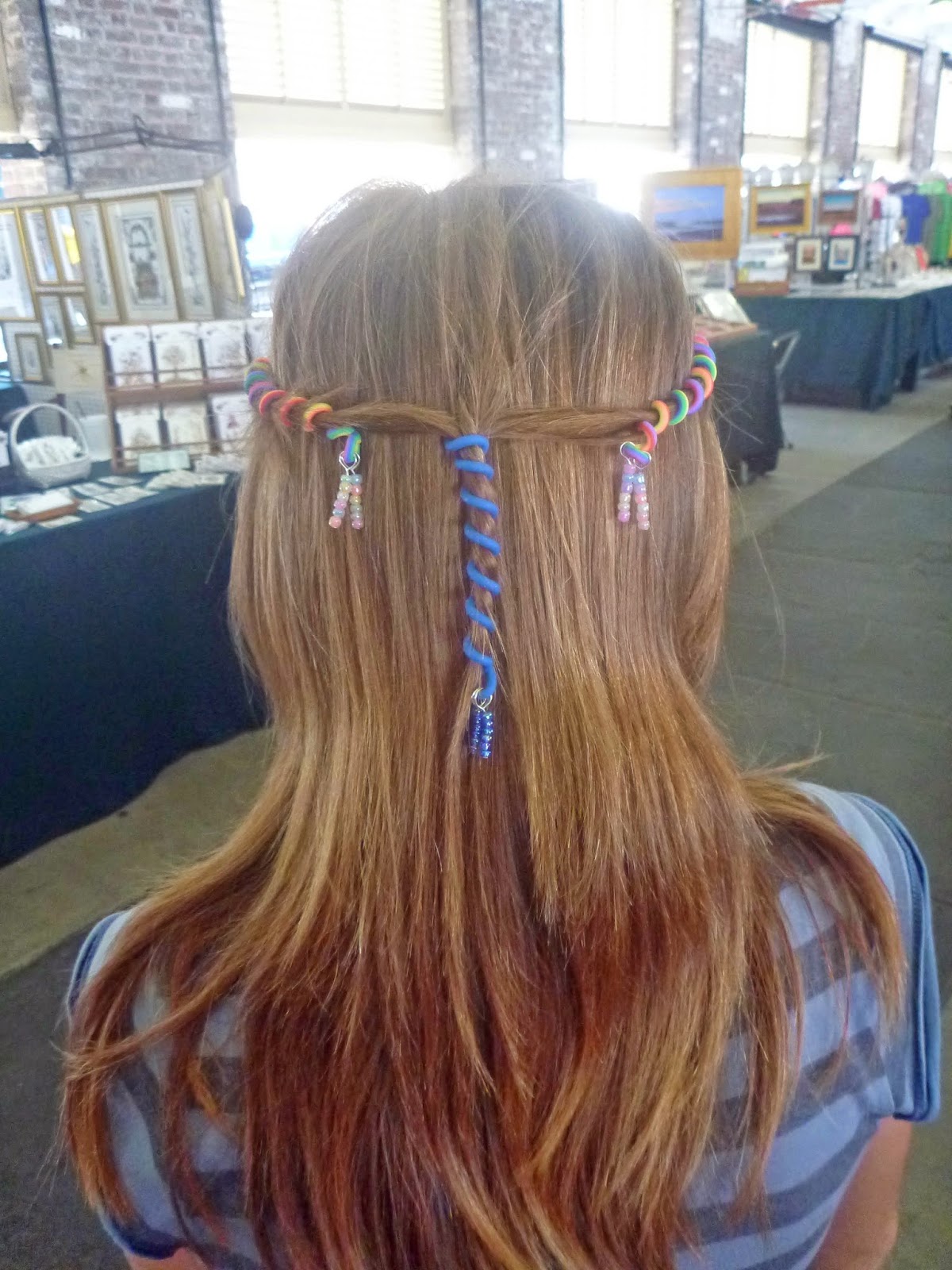
selling price here, we simply looked and complemented the ladies on their work. Among the cheap trinkets being hawked here,
Emily found some cool resin hair thingy’s she hopes will be OK with the school girls
in Ludlow, Mass.
Located in Downtown Charleston near High Battery, the
Nathaniel Russell House Museum at 51 Meeting Street, is widely recognized as one
of America’s most important neoclassical dwellings and was worth the stop. The Historic
Charleston Foundation purchased the National Historic Landmark in 1955, and the
house served as the Foundation’s headquarters for 37 years. Today, the
interiors are restored to their original 1808 grandeur and surrounded by formal
gardens.
Nathaniel Russell was born in Bristol, Rhode
Island. He settled in Charleston at the age of 27 in 1765, when Charleston was
a bustling seaport. By 1774, Charleston boasted a per capita of wealth nearly
four times that of all the American colonies. Russell’s career as a merchant
involved the shipment of cargoes to and from New England, the West Indies,
South America, Virginia, Great Britain, continental Europe, West Africa and
Asia.
While most of his profits came from the
exportation of staples, such as Carolina Gold rice, indigo, tobacco and cotton,
Russell handled a broad range of imported goods. He also participated in the
African slave trade both before and after the American Revolution.
The Nathaniel Russell House is an excellent
example of the Adam style of architecture. Russell’s house was built when local
carpenters had a decade of experience with the light and airy manner made
popular by Robert Adam. His house has been called an exercise in ellipses, for
from its free-flying stair to the wrought iron balconies, to the principal
windows and doors, we found it to be extraordinary. It was the last great house
of the city’s post-revolutionary period. Built in 1809, the house was listed in
the National Register in 1971 and Designated a National Historic Landmark in 1973.


We also stepped into the Cathedral of St. John
the Baptist. The Cathedral seats 720 people and is noted for its Franz Mayer
& Co. stained glass, hand painted Stations of the Cross, and neo-gothic
architecture. The cornerstone was laid in 1890, and the church opened in 1907.
The sides of the Sanctuary are adorned with
windows depicting the 4 Gospel writers with their winged creatures. Above the
High Altar is the Chancel window. The top section is a rose window depicting
St. John the Baptist baptizing Jesus with the Holy Spirit above. It is
surrounded by 8 adoring angels playing instruments. Above the Rose window is a Sacred
Heart. To the left of the Rose window is a pelican feeding her three newborn
pelicans, and to the right is the Lamb of God. Below all of this is a 5-light
replica of Da Vinci’s Last Supper.


In general, Charleston was a nice stop. They need some free dingy docks and the shuttle
busses (although free) were really overcrowded; but those are minor
complaints. After 2 tiring days of sightseeing,
Tom started to plot the trip up the ditch towards North Carolina. When we compared 3 long days of hand steering
and bridge openings, we again decided to head for the ocean since we could do
the same trip easily overnight. Come
along as our next stop will be in Carolina Beach, North Carolina.
Tom
Normal
0
false
false
false
EN-US
X-NONE
X-NONE
/* Style Definitions */
table.MsoNormalTable
{mso-style-name:”Table Normal”;
mso-tstyle-rowband-size:0;
mso-tstyle-colband-size:0;
mso-style-noshow:yes;
mso-style-priority:99;
mso-style-parent:””;
mso-padding-alt:0in 5.4pt 0in 5.4pt;
mso-para-margin-top:auto;
mso-para-margin-right:0in;
mso-para-margin-bottom:auto;
mso-para-margin-left:0in;
mso-pagination:widow-orphan;
font-size:11.0pt;
font-family:”Comic Sans MS”;}
Charleston,South Carolina
Well, Emily Gracemay well have tried to make us linger in Charleston as she proceeded to let the overboard macerator pump fail on the passage from Georgia. Since this little pump allows us to discharge waste when 3 miles offshore, it is mighty important and she may have succeeded. The captain, however, thwarted any such mutinous plan by having 2 spare pump impellers aboard. Although that fixed the problem, the captain was also ready with another complete replacement pump!
In any event, we entered the Ashley River and found the private mooring ball that we had found and reserved using Active Captain on our Coastal Explorer navigation software. Unfortunately the owner had left a decrepit dingy tied to it using copious amounts of rope. Despite valiant efforts by Captain and crew, we couldn’t get the tangled line free with our boat hook and ended up with the dingy painter wrapped around the underwater stabilizer fin. A local boater came over and with his help and the swift 2 knot current, we managed to break free unharmed and get temporarily re-attached to the mooring/dingy mess. The owner of the mooring was then called and he borrowed my knife to cut off the tangled mess he had left us and we were then properly attached to the mooring ball. It all worked out well, since we paid him $15 per night for a $20 per night mooring. He got a $45 windfall for our 3-night stay and we got a good deal.
After foiling the mutiny and surviving the attack mooring ball, the crew deservedly went ashore to explore Charleston. We found the gracious waterfront mansions and well-made but overpriced sweetgrass baskets were still as we left them back in our 2008 visit. We revisited the oldest museum in America, the old slave market and the historic Nathaniel Russell house.
America’s oldest museum happens to be The Charleston Museum right here in South Carolina. It opened in 1773, and from the beginning, displayed geological specimens from its surrounding areas. Outside there is a replica of the American Civil War H. L. Hunley submarine of the Confederate States of America. Drawing from my vast experience working at the Groton submarine factory (Ha Ha), I explained to Emily that the Hunley demonstrated the advantages and the dangers of undersea warfare. She was the first combat submarine to sink a warship, although Hunley was not completely submerged and, following her successful attack, was lost along with her crew before she could return to her base. Apparently, the bowsprit containing the explosive charge was not quite long enough!
The exhibits inside run the gamut from textile and clothing to silver to lowcountry life, rise of the South, Revolutionary War, Civil War, natural history, and the most impressive arsenal of weaponry I’ve ever seen. If we only had one of these multibarrel rifles aboard, maybe we could have gone through the Somalia pirate waters!
The slave markets only redeeming quality is the ability to see the nicely made sweetgrass baskets. Since we found and bought these same baskets in Dominica for less than 1/10th of the selling price here, we simply looked and complemented the ladies on their work. Among the cheap trinkets being hawked here, Emily found some cool resin hair thingy’s she hopes will be OK with the school girls in Ludlow, Mass.
Located in Downtown Charleston near High Battery, the Nathaniel Russell House Museum at 51 Meeting Street, is widely recognized as one of America’s most important neoclassical dwellings and was worth the stop. The Historic Charleston Foundation purchased the National Historic Landmark in 1955, and the house served as the Foundation’s headquarters for 37 years. Today, the interiors are restored to their original 1808 grandeur and surrounded by formal gardens.
Nathaniel Russell was born in Bristol, Rhode Island. He settled in Charleston at the age of 27 in 1765, when Charleston was a bustling seaport. By 1774, Charleston boasted a per capita of wealth nearly four times that of all the American colonies. Russell’s career as a merchant involved the shipment of cargoes to and from New England, the West Indies, South America, Virginia, Great Britain, continental Europe, West Africa and Asia.
While most of his profits came from the exportation of staples, such as Carolina Gold rice, indigo, tobacco and cotton, Russell handled a broad range of imported goods. He also participated in the African slave trade both before and after the American Revolution.
The Nathaniel Russell House is an excellent example of the Adam style of architecture. Russell’s house was built when local carpenters had a decade of experience with the light and airy manner made popular by Robert Adam. His house has been called an exercise in ellipses, for from its free-flying stair to the wrought iron balconies, to the principal windows and doors, we found it to be extraordinary. It was the last great house of the city’s post-revolutionary period. Built in 1809, the house was listed in the National Register in 1971 and Designated a National Historic Landmark in 1973.
We also stepped into the Cathedral of St. John the Baptist. The Cathedral seats 720 people and is noted for its Franz Mayer & Co. stained glass, hand painted Stations of the Cross, and neo-gothic architecture. The cornerstone was laid in 1890, and the church opened in 1907.
The sides of the Sanctuary are adorned with windows depicting the 4 Gospel writers with their winged creatures. Above the High Altar is the Chancel window. The top section is a rose window depicting St. John the Baptist baptizing Jesus with the Holy Spirit above. It is surrounded by 8 adoring angels playing instruments. Above the Rose window is a Sacred Heart. To the left of the Rose window is a pelican feeding her three newborn pelicans, and to the right is the Lamb of God. Below all of this is a 5-light replica of Da Vinci’s Last Supper.
In general, Charleston was a nice stop. They need some free dingy docks and the shuttle busses (although free) were really overcrowded; but those are minor complaints. After 2 tiring days of sightseeing, Tom started to plot the trip up the ditch towards North Carolina. When we compared 3 long days of hand steering and bridge openings, we again decided to head for the ocean since we could do the same trip easily overnight. Come along as our next stop will be in Carolina Beach, North Carolina.
Tom
Life in the Fast Lane: No Wake, Hit the Brake!
When we finished our amazing 212 nautical (243 statute) mile run on the ICW from Fernandina Beach to Charleston I was optimistic that we could make Beaufort today (268 statute miles) on the ICW. Turns out I was overly optimistic. I remember…
Day 127 – 365 Project…Bluebird Bath
Welcome to day 127 of 365 photos…Splish, splash, bluebird taking a bath! The bluebirds have very busy lately feeding their five children. Dad must have felt a need for a quick bath. He spent about five minutes splashing around in the birdbath. I love to watch the birds when they really get into their bath,… Continue Reading
The post Day 127 – 365 Project…Bluebird Bath appeared first on Moosetique Musing.
FPB Passage Notes – It Is Ocean Crossing Time
Passaging season is upon us and the FPB fleet is on the move. While FPB 64-6 Grey Wolf nears the end of a quick 4000 NM hop, FPB 64-3 Iron Lady is on her way from Hawaii to British Columbia. The majority of the rest of the FPB feet is getting ready for or have […]
Moorea: Vaiare

April 29, 2014
Vaiare – Moorea (French Polynesia)
S 17°30.468 – W 149°45 838
4/25 – The weekend is upon us again and our Tahitian family is joining us from Papeete. how do they get to Moorea? By ferry, of course. Ferries run from the Port of Pappete to Moorea’s port of Vaiare several times a day. The trip lasts 20 to 30 minutes (depending on the ferry) and costs 1,500 CP (about $20) for tourists, but show that you’re a senior and you only get charged 950 CP. Yes, sometimes I really like to look as old as I am.

Moorea is a beautiful island, even on a chart. It’s heart-shaped, with 2 big notches to the north (Opunohu and Cook’s Bay.) Vaiare is Moorea’s main harbor and town, 12 NM from Papeete harbor: ferries, shopping and ATM in town. There is also a marina but you’d be hard-pressed to find a spot. If you so desire, contact Papeete’s harbormaster. There are 2 main anchorage areas, on each side of the passe. We decided to follow the advice of the local yachtie “Ratafia” from Freres de la Cote and anchor north of the pass, close to the PGEM marker. There are also 3 mooring buoys for smaller yachts, 1st-come, 1st serve. But I must say that when the Ma’aramu started to gust from the SE on our last night, I was on anchor watch: not for our own anchor, but for the boats on mooring balls that were swinging into us, just a few yards off our bow. A word on this anchorage: the current can be swift at the WP indicated above, coming from the north, and when the Ma’aramu starts blowing from the SE, you’re in a wind-against-current situation: DOMINO sat cross-current and on top of her anchor… not a comfortable situation for most yachts.

Oh! The color of the water! Sapphire blue, gin-clear… imagine a bottle of Bombay gin with Lady Di’s sapphire ring at the bottom. The white-sand bottom is covered with a black weed, the water runs fast and clear with the current, and all this contributes to the most stunning water I’ve ever seen. Seriously! I spent hours just sitting there and staring at the measly 5 meters under our hulls… it’s not quantity, it’s quality!

It’s a 10-mn dinghy ride (when the ma’aramu isn’t blowing) from that anchorage to the ferry dock, so JP gathered our little family and we had ourselves a great weekend, never going to shore! While flocks of “meduses” were invading Moorea’s beaches and the authorities had decided to close all beaches, the reef side was clean.

It looks like the PGEM (Management Plan for Marine Environment) in Moorea is bearing fruit. The reef in Vaiare is very healthy, vibrant, with lots of life. Just take a swim and enjoy, don’t gather the wildlife, no fishing on the reef side.
4/28 – The kids went wild, jumping off the platform for hours, kayaking and swimming… and, yes, doing their homework and practicing their violin. They’re very much at home on board DOMINO… we’re thinking of putting them to work when it’s time to paint… but again, maybe not!
 |
| Tahitian Tifaifai, reversed applique, entirely hand-stitched. Here: Tiare Crown, in traditional red-and-white I’m in heaven! |
On Monday, I took the early ferry to Papeete to visit the “Salon du Tifaifai.” But that’s a story for the next blog. When JP picked me up again in the late afternoon, the Ma’aramu was blowing at 25 knots, he was soaked from the dinghy ride and we had a rather anxious night, exposed as we were to the SE winds. Time to seek shelter to the north, back to Cook’s Bay!
Till Next time…
dominomarie
Alaska Cruise 2014 Part one- the trip begins
After a short turnaround at home, checking mail, etc, we headed back to Anacortes, where Spirit was fueled and nearly ready for departure. After a nice gathering with friends at Skyline (Tucker’s, Lieschner’s, Alveys and Hislops’s), we headed to Spirit for a much needed night of sleep before rising early to launch our new tender which had been in dry storage. We installed the new propeller, intended to improve performance, but it actually made the performance worse so we put the original one back on.
After a final trip to Costco and Safeway we met our cruise guests, Ted and Lisa Marx about 7 PM for dinner at the Brown Lantern before retiring for an early departure from Anacortes Marina.
May 15, 2014
Dawn arrived all too early as we prepared to depart Anacortes Marina. Spirit departed the slip right on schedule at 0600, while Miriam and Ted took the tender out separately to meet outside the breakwater and hook up the tow line. By 0620 we underway seriously and headed down Guemes Channel to take advantage of the large ebb tide. Passing through Thatcher Pass we then headed across Blakely Sound and through Pole Pass and then past Stuart Island across Haro Strait to Bedwell Harbor where we cleared Canadian Customs. That process took only a few minutes by phone since the Customs dock was unmanned.
A short run from Bedwell Harbor brought us to Port Browning where we anchored Spirit in a nearly deserted bay in 25 feet of water. Patrick and Ted headed ashore to check out the Pub menu and hours before all four of us took a scenic cruise in the new tender through the Pender Canal back to Bedwell Harbor and then around South Pender Island via Haro Strait and back to Port Browning. Dinner at the pub was good, with an interesting cream of broccoli soup with blue cheese. Thursday was also fish and chips special night, with good beer battered cod for very reasonable prices.
 |
| Cruising the Pender Canal |

 |
| New Fishing Tender at Port Browning |
 |
| Spirit at anchor in the deserted bay at Port Browning |
Returning to Spirit the four of us played “Mexican Train” until late, then realized that with the large ebb tide in the morning that we needed to have another 0600 departure.
May 16, 2014
We raised the anchor right on schedule at 0600 and decided to try a new route (for us) via Georgeson Passage into the Strait of Georgia. Georgeson Passage, while a little narrow, has less current then Active Pass, and is 15 nautical miles shorter than going around the east end of Saturna Island. There were a few violent eddies and whirlpools, but nothing the boat autopilot could not handle.
Exiting into the Strait of Georgia we set a course for Vancouver that would keep us in Canadian Waters until we cleared the northern USA boundary and then cut across the VTS lanes to the correct northbound lane near Sand Head. The wind and seas had built to 25 knots and 3-5 foot seas on the starboard quarter. The stabilizers were working hard and we kept hearing a strange banging noise. Checking the engine room Patrick found the starboard stabilizer top bearing support housing bolts were loose, causing excessive motion and presumably causing the leak in the seal we had noticed. A few minutes with a large Allen wrench on the capscrews solved that problem and the rest of the trip into Vancouver’s False Creek and Quayside Marina was uneventful, where we arrived at 1225. We have now covered 85 nautical miles, only about 4000 left to go until we return to Anacortes.
The new tender towed nicely in the seas and arrived behind us in Vancouver with no spray on board, unlike Spirit, which had a lot of salt spray.
 |
| The new tender tows just fine! |
We re-provisioned with the fresh vegetables we could not bring across the border at both Costco, just a few blocks away, and at Urban Fare, one block from the marina. After a snack of fresh oysters at “Provence” Bistro at the head of the dock we put on a rack of St. Louis style baby back pork ribs to slow cook for a late dinner. The sun and warm temperatures made the cockpit the perfect place for dinner, which started with a shrimp and avocado cocktail. As the skies gradually darkened we finished off the evening with another round of “Mexican Train”.
 |
| Enjoying evening dinner in the cockpit with Ted and Lisa Marx |
May 16 – Jacksonville, FL
Lamb’s Yacht Center
We are at Lamb’s Yacht Center on the Ortega River in Jacksonville. We chose this marina, because it has covered slips…it’s not like being in the sheds at Atlantic Yacht Basin in Great Bridge. These slips are covered by a high concrete roof, which lets in plenty of light and breeze but keeps out the heat of the sun and the rain. It’s the perfect place to do work on a boat, especially teak work….and that is what we’ve been working on the last week and a half. Our first project was getting a maintenance coat of Cetol Gloss on the teak Stan refinished last spring. That meant removing the stainless rub rail trim, taping, sanding, cleaning and then finally applying a coat of gloss. The next project was to redo all the teak that wasn’t done last year. That meant all the old layers of Cetol needed to be removed from the cap rail and port side door. Stan does that by using a heat gun and a wonderful little scrapper he bought last year, both items make the job a lot easier, but still time consuming and hard on the knees. After all the old layers were removed and the decks swept, Stan cleaned the teak with Star Brite Teak Cleaner to remove the mildew and then wiped on Star Brite Teak Brightener. These products really restored the look of our teak and were easy to use. Before we could begin applying Cetol we had to tape, sand and remove dust with Xylene. Today we applied the first of three coats of Cetol, which will be followed by three coats of Cetol Gloss. Five more days and we will be looking great!
We’ve been very busy working on the boat, but we have taken a little time to do fun things too. We went to the beach and farmers market last week and this week we went to dinner with friends. They belong to a Captain’s Club that meets twice a month for dinner. We had a great visit with Barbara and David and enjoyed a nice fish fry and program. The program was presented by a treasure hunter…Amelia Research & Recovery, LLC. He explained the techniques they use and showed us some of the treasures they have recovered. We actually saw their ship working near Fernandina Beach when we came through there last month.
The teak ready for it’s maintenance coat of gloss

Stan removing the old layers of cetol
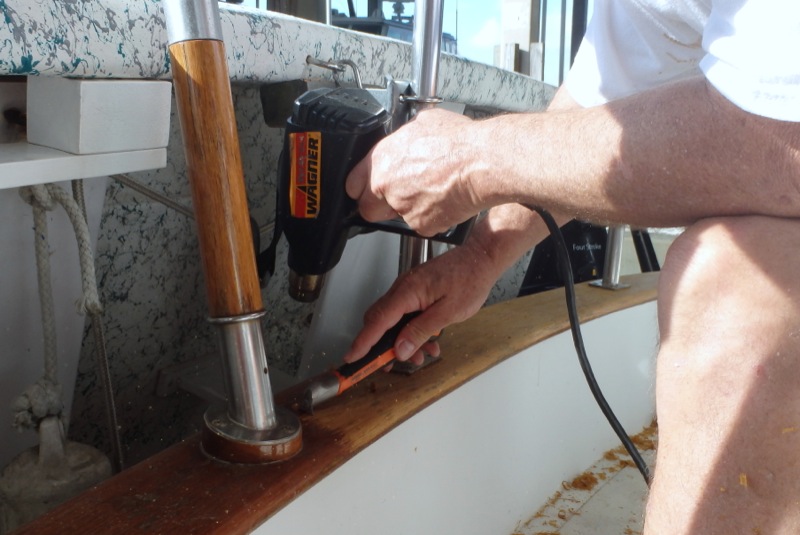
The next few pictures show the same spot of the cap rail. This picture shows why it needed a little work.

This is the same spot after the layers of cetol were removed

This is how it looked after the Star Brite treatment

And the same spot with its first coat of Cetol

Another spot on the cap rail that was looking very bad.

