
We weren’t planning to visit Round Harbour on the south side of Long Island as the entrance looked tight and the charts showed aquaculture filling the small basin inside. But we decided to at least check it out on our way past and are glad we did. The entrance wasn’t difficult and the bay inside…
FPB 78 Great Room: A Study In Light
The FPB 78 Great Room brings with it a festival of light, a wondrous ever-changing melding of inside and out. …Read More
The Lobsters Don’t Stand A Chance
Our northernmost goal this trip was the state of Maine. From our stopover in New York and vicinity, we daytripped up the coast, stopping over in small New England port towns and enjoying a more rural Read More …
Aug. 22 – Northeast Harbor, ME
Northeast Harbor Mooring
Mount Desert Island
“When I let go of what I am, I become what I might be.” ―Lao Tzu

We spent most of the day on the boat relaxing, reading, napping and doing research on what we want to do the next few days. Having a day of rain now and then really isn’t too bad…it gives us a chance to catch on a few things, work on maintenance projects and relax.
FPB 78 Video: Cochise Heaves-To And Stays Dry
Cochise heaves-to FPB style during sea trials… …Keeping her crew comfortable and dry. Be sure to watch to the end: …Read More
Aug. 21 – Northeast Harbor, ME
Northeast Harbor Mooring
Mount Desert Island
“I need the sea, because it teaches me.” —Pablo Neruda

Today we cruised over to Mount Desert Island…it was our first foggy day in Maine, not bad since we’ve been here almost two week. The funny thing is our first foggy day in Maine in 2013 was the day we cruised into Northeast Harbor on Mount Desert (the same place). The fog hung over the harbor all day, but the interior of the island was beautiful and clear. We should have planned to hike this afternoon, but we took the bus to Bar Harbor and hung out with the tourist instead.
THE ENCHANTING MEDIEVAL VILLAGE OF MONEMVASIA
Envoy is still in the marina at Rethymno, northern Crete.


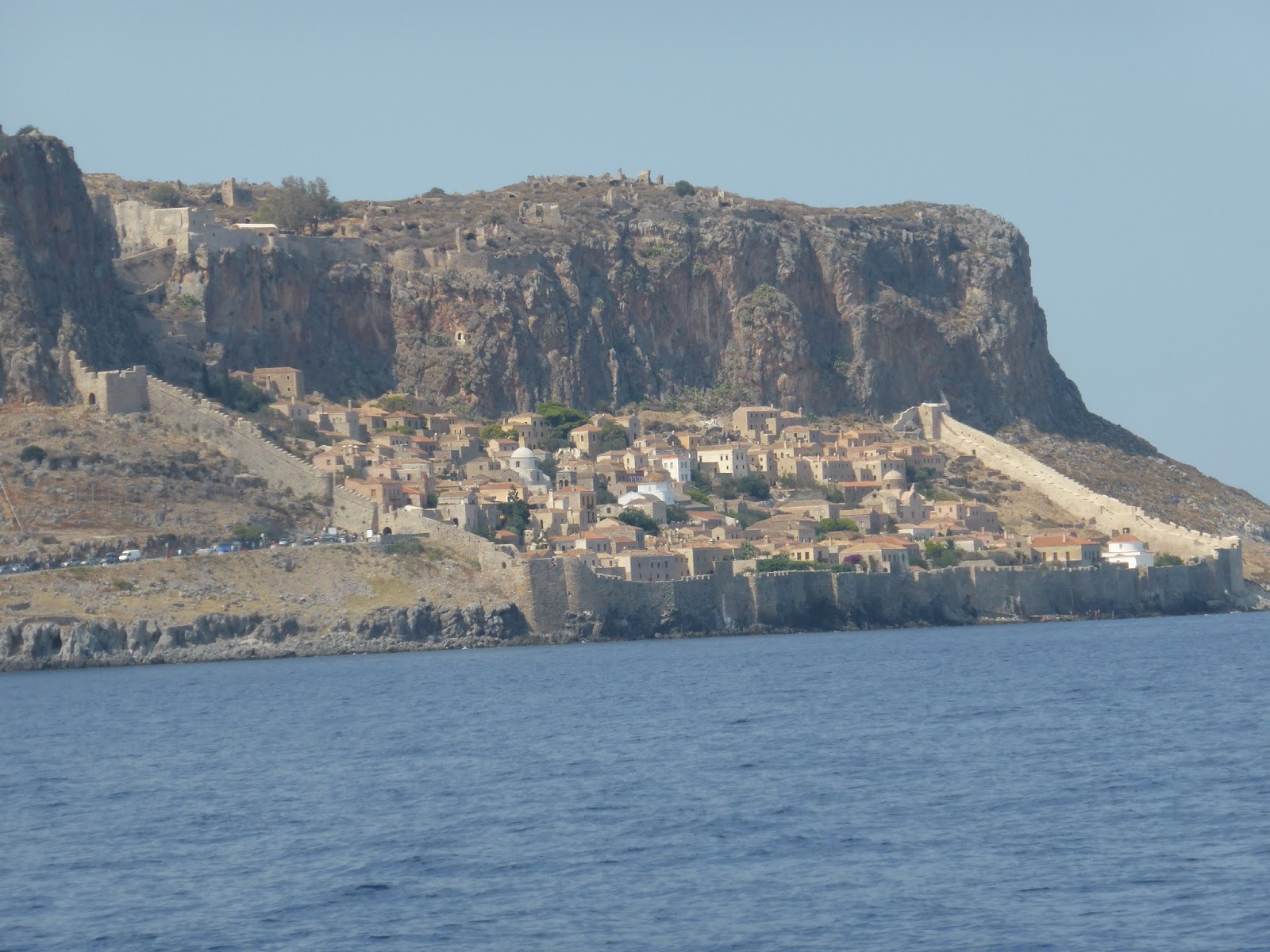
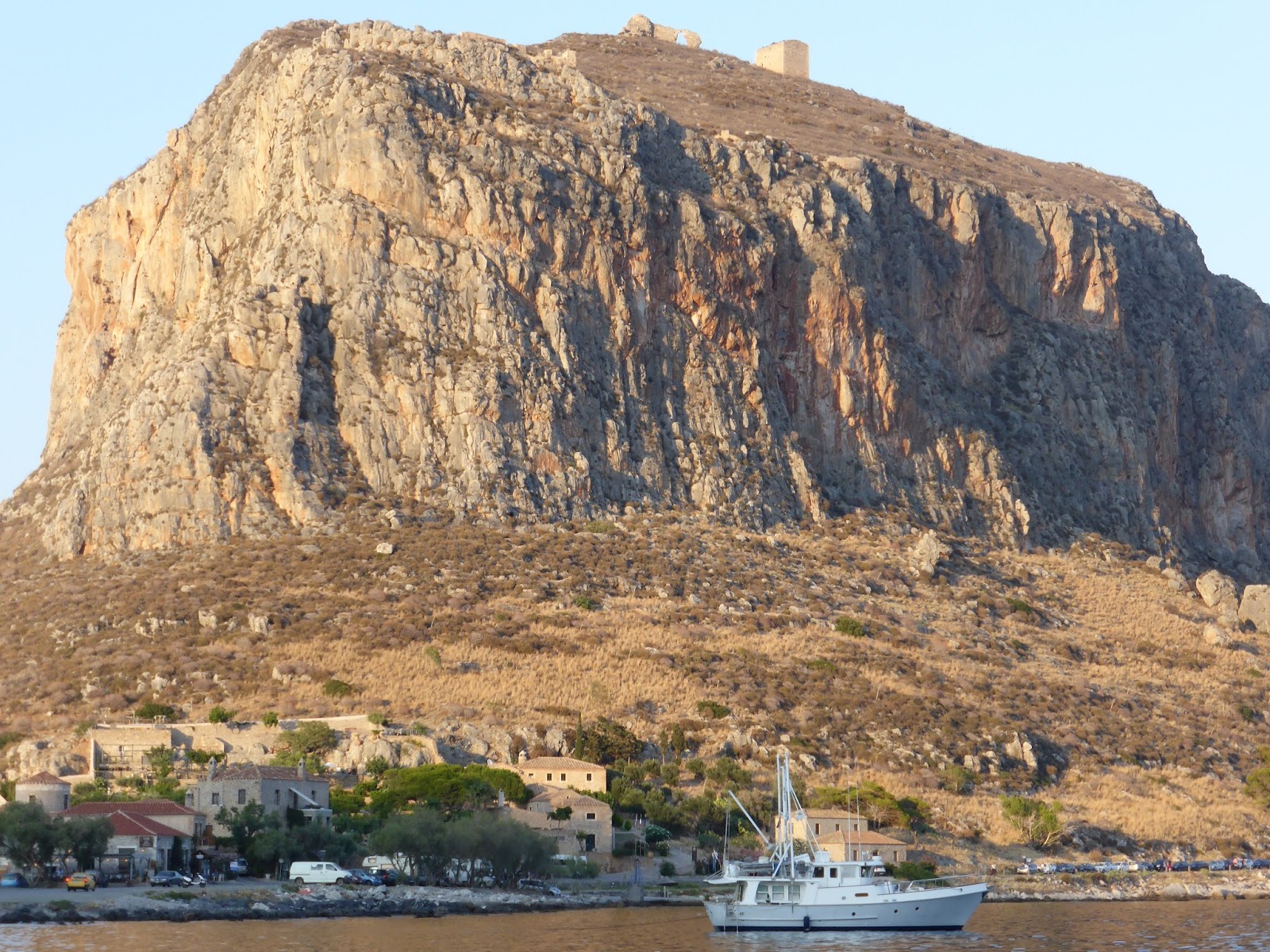
Monemvasia is a particularly interesting and romantic medieval Byzantine town located on a steep fortified island rising dramatically from the sea and connected by a causeway to the village of Yefira on the mainland.
Local inhabitants first moved to the natural rock fortress in the 6th century to resist raids by pirates and by the 13th century Monemvasia was an important Byzantine commercial and cultural centre of about 40,000 people before being taken over by the Turks. Several churches here were built in the 12th century and still in-use, although during the long period of Turkish occupation they were used as mosques. Now many formerly ruined houses in the narrow cobbled lanes have been rebuilt as holiday homes, small hotels, tavernas and shops, while retaining much of their former charm and character.
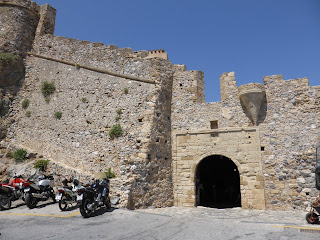
Impressive gateway through the walled town of Monemvasia

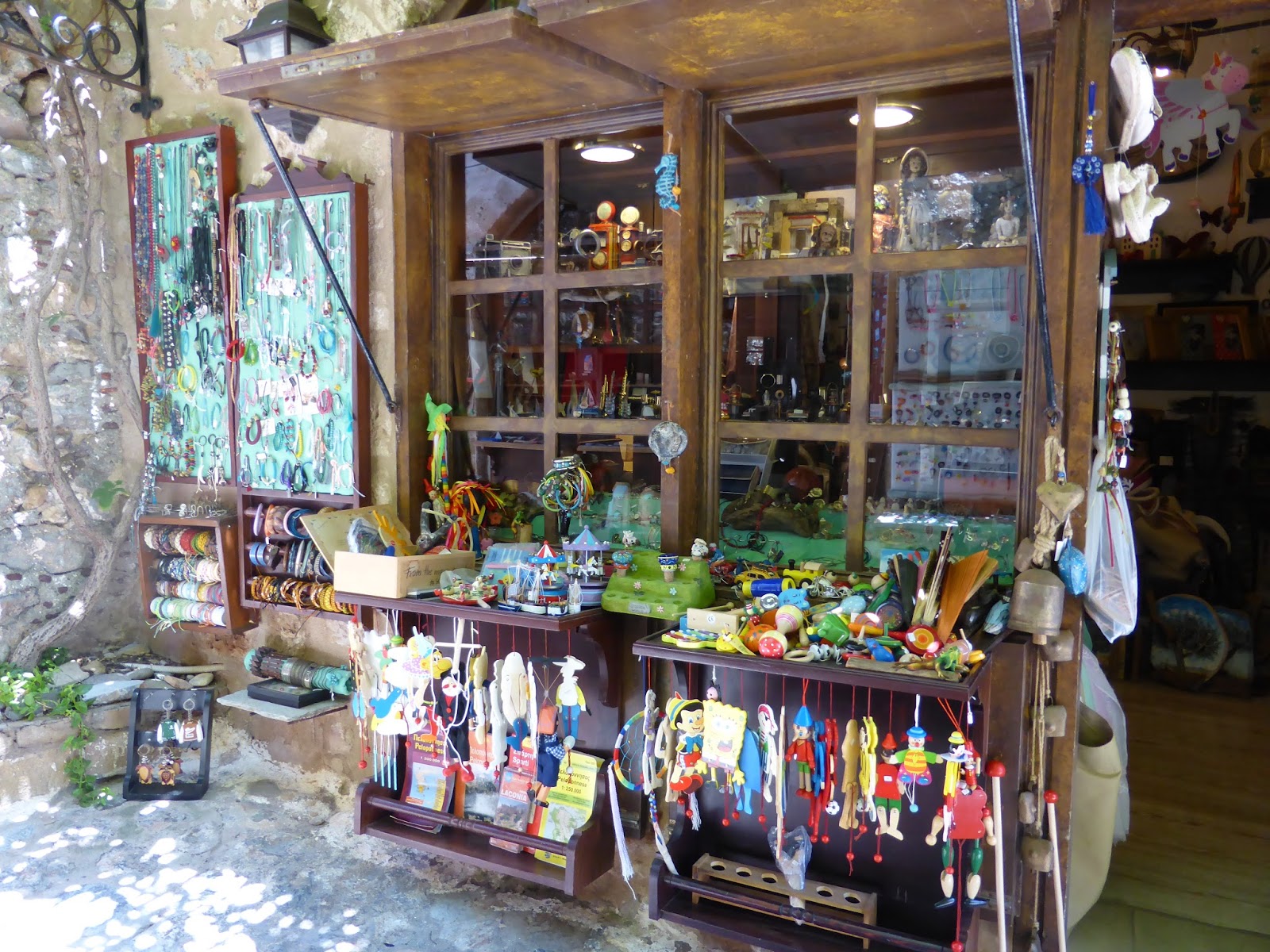
There’s lots of quirky shops in the narrow cobbled lanes
Part of the town’s violent history is that its Turkish inhabitants were massacred when they surrendered to the Greeks after a three month siege during the War of Independence.
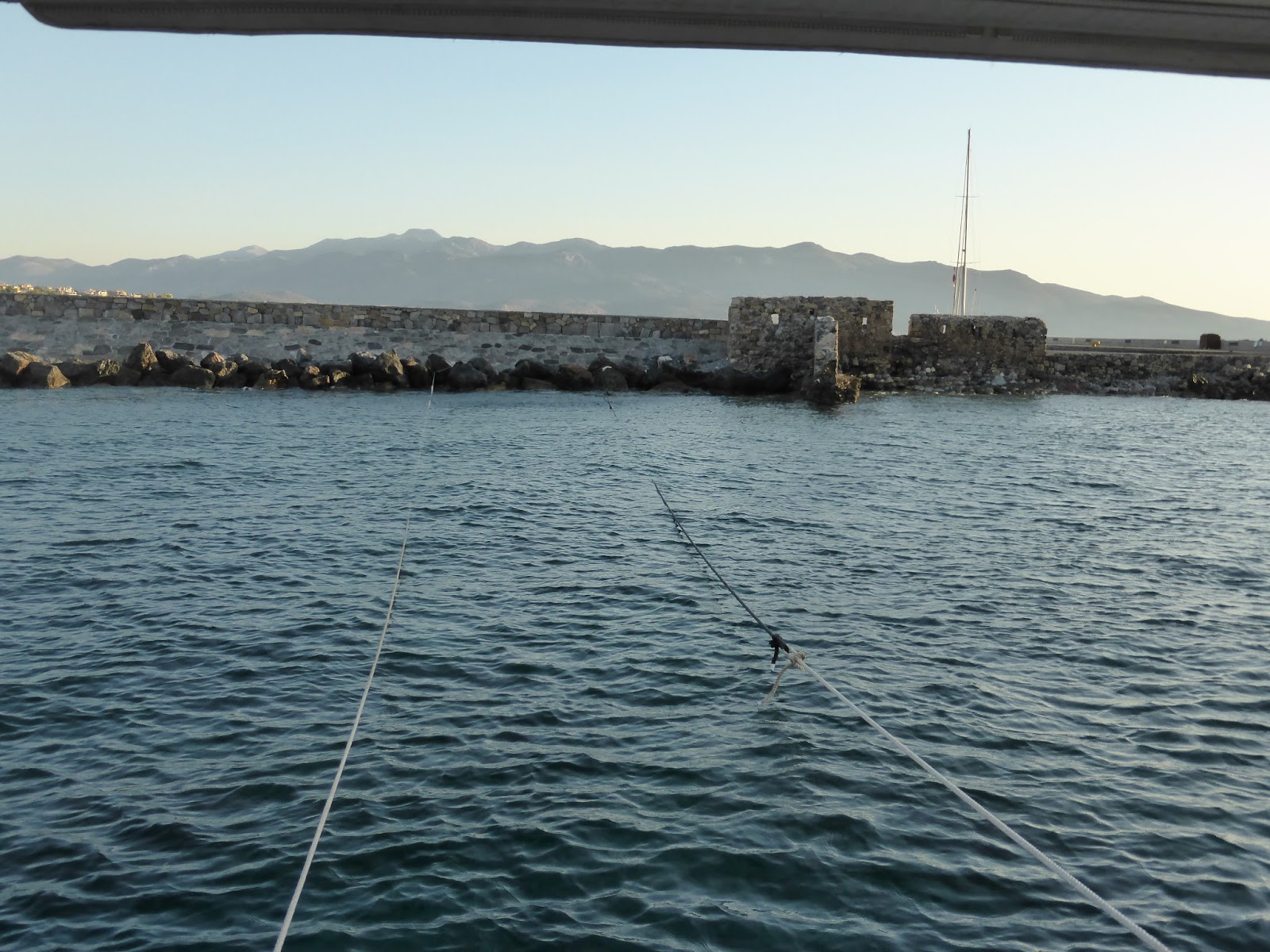
In former times the causeway had a drawbridge and fortified gatehouse and we anchor off the ruins of the gatehouse and use long lines to tie stern-to the shore.
Impressive Monemvasia Island is known as the “Gibraltar of Greece”
It’s rare to tie stern-to shore in New Zealand although it is done around Port Fitzroy at Great Barrier Island. As this is our first time to tie stern-to this season it brings to mind some of the pros and cons of using this system:
-You keep your stern to shore and bow to sea so that if there’s any swell you minimise rolling motion and only have to contend with more comfortable pitching.
-With your stern tied securely to shore its very safe in strong winds coming over the stern and with your anchor laid well out (with typically 50 metres of chain deployed) in deeper water the bow is unlikely to move (anchors don’t drag uphill).
-You can tie stern-to shore in a tighter spot than you can anchor in as you don’t need to allow for swinging room during wind shifts.
-More boats can fit into a given anchorage area as they don’t need swinging room.
However:
-Lines to the shore can be a means of rodents and insects coming aboard and we thread the line through the neck of a plastic soft drink bottle with its bottom cut off to try to prevent this.
-It’s not so easy to leave in a hurry, especially at night, as stern lines need to be retrieved. Leaving when anchored is far easier.
-If the wind changes and becomes strong on the beam it can place a lot of pressure on stern lines and ground tackle. Boats are known to break inadequate lines or drag anchors sideways.
-Other vessels sometimes anchor close-by across your anchor chain or come right next to you stern-to the shore.
-At anchor the boat swings to the wind so the cockpit is always sheltered.
After spending two nights with lines ashore we concluded we’d not be in a hurry to do this again without special reasons. Incidentally if an emergency arises while tied stern-to, such as dragging sideways, it’s best to let your stern lines go and allow the boat to swing out into the wind to reduce strain on your anchor. Lines can be retrieved later.
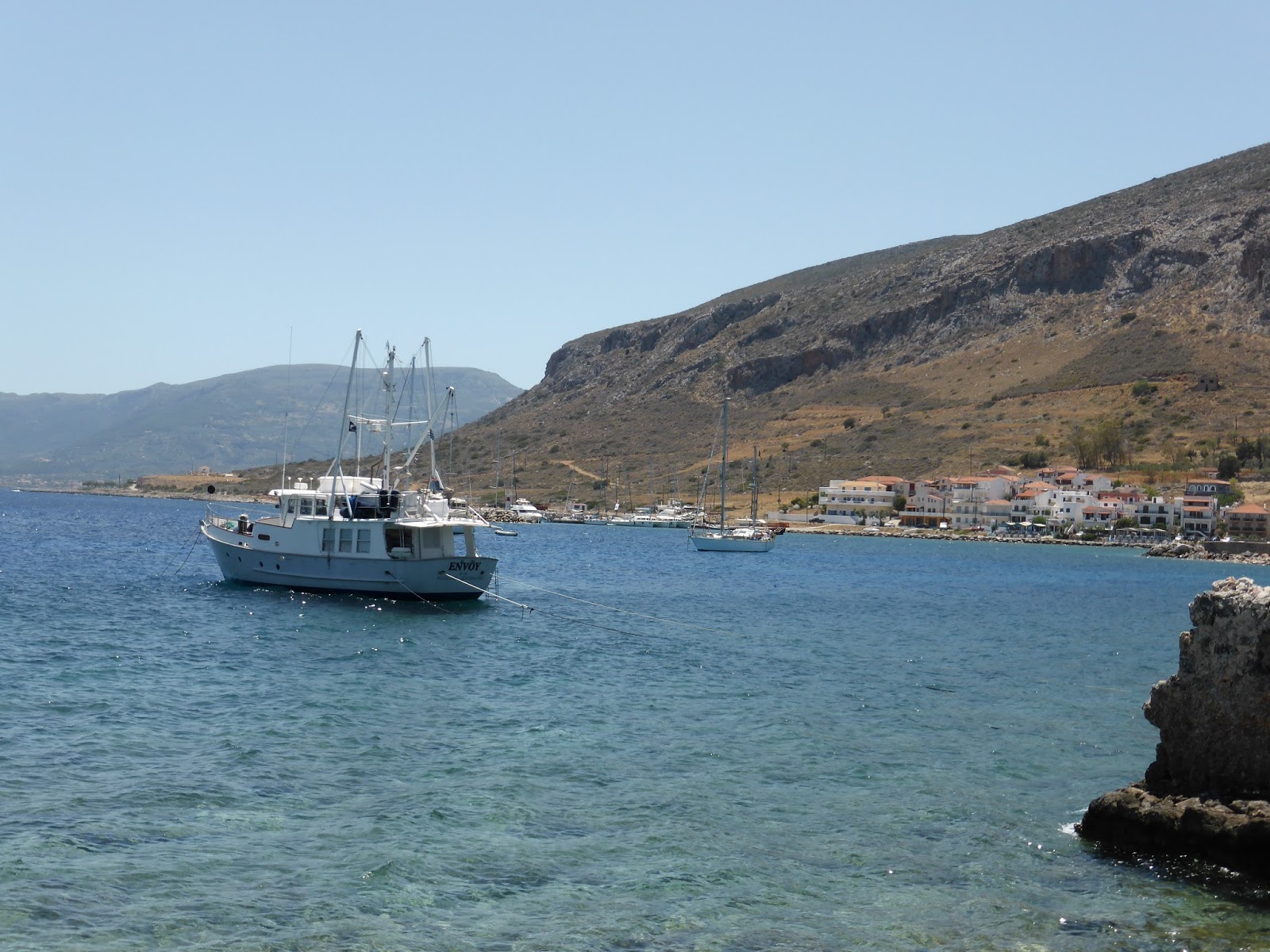
Envoy moored stern-to shore
Detail of stern lines – ideally these should have been set at a wider angle to each othet
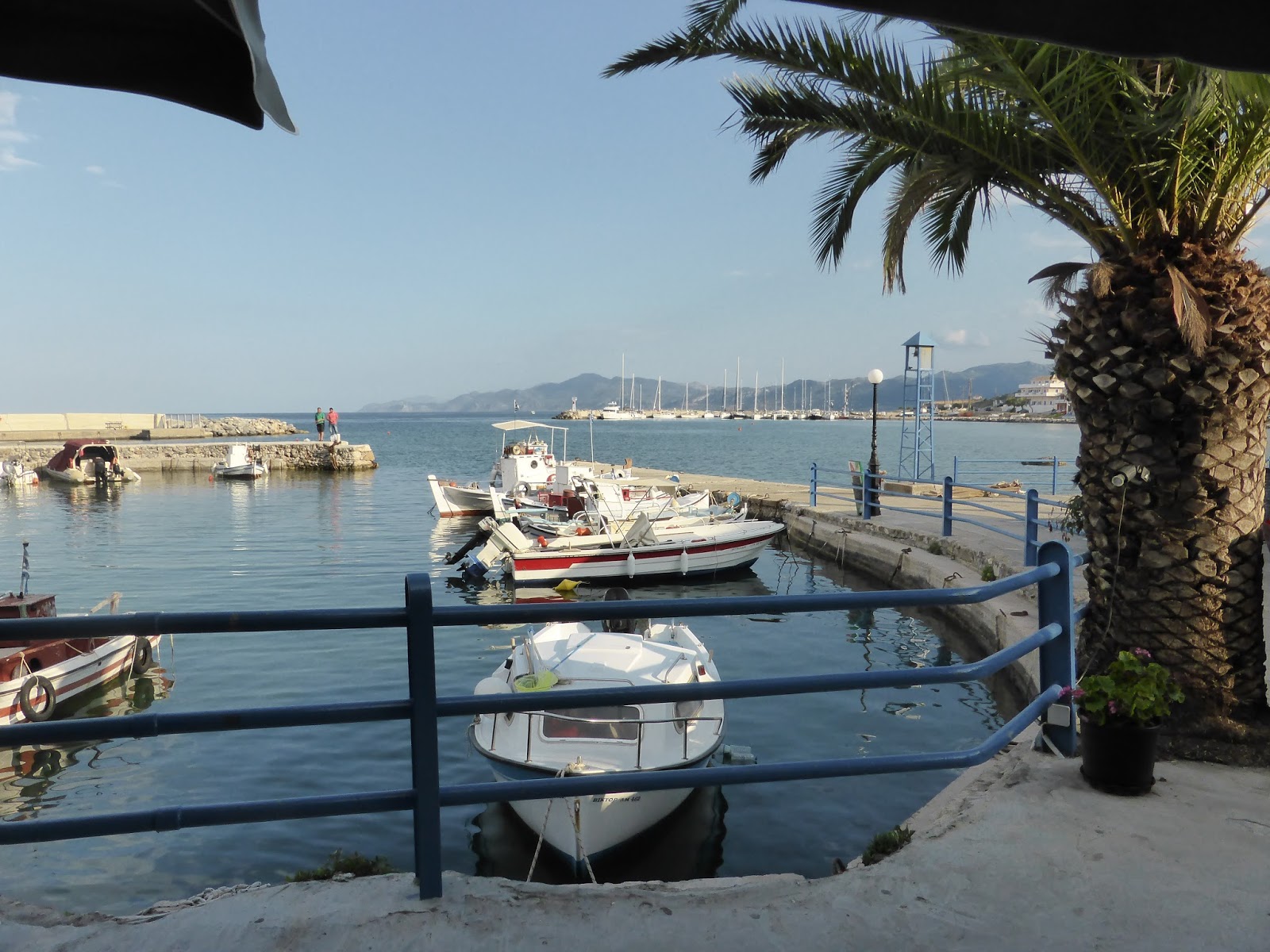
We’d not visited Yefira previously and enjoyed pottering around the village and the small, shallow, taverna-lined harbour for local fishing boats.
Yefiron’s harbour for small local boats
Here we find a fresh water tap and are able to replenish our supplies using Chris’s pumping system to discharge the water from jerrycans into Envoy’s tanks.
Envoy with Monemvasia in the background
It’s now a week since I went to have my ears treated and I was advised to see a doctor to check on them about now, so we find the one and only doctor in Yefira and drop in to see her. An examination confirms they are OK and she advises me to put three drops of pure alcohol in my ears if they get wet. Diane laughs saying she thinks I’ve generally got enough alcohol in my body without adding more. We ask how much we have to pay and she says the 15 minute consultancy is free.
Aug. 20 – Frenchboro, ME
Town Mooring
“You may say I’m a dreamer, but I’m not the only one. I hope someday you’ll join us. And the world will live as one.” ―John Lennon
 |
|
We caught up with our friends on Exuberant today. We met them in Frenchboro on Long Island. They told us it’s one of they favorite stops in Maine and after spending the afternoon hiking some of its trails, eating lobster and watching a beautiful sunset, I think we can say it’s one of ours too.
|
Aug. 19 – Vinalhaven Island, ME
Seal Bay – Anchorage
“Fantasy is hardly an escape from reality. It’s a way of understanding it.”―Lloyd Alexander

The Internet is iffy in this area of Maine, so blog posts may be delayed. We had a long day Friday and went back to an anchorage we really liked the first time we were up this way. This time is wasn’t as impressive. I’m not sure it was us, the timing of the tide or the crowd that was there, but it just didn’t seem as pretty as the first time we were here, but we still enjoyed our evening.
CONTINUE READING HERE…»
ENVOY AT KITHERA ISLAND
Envoy is currently in Rethimno Marina, northern Crete.




Next stop is the island of Nisos Elafonisos where we find a superb anchorage with sparkling clear waters on the NW side called Nisis Elli. We’re the only boat anchored here and we take the RHIB ashore to enjoy a swim off the sandy beach, followed by cheese, olives and cold shandy. This is not a taverna-lined beachfront but a deserted bay with just a few holiday apartments back from the stunning beach.
This is a bay on the south side of Nisos Elafonisos
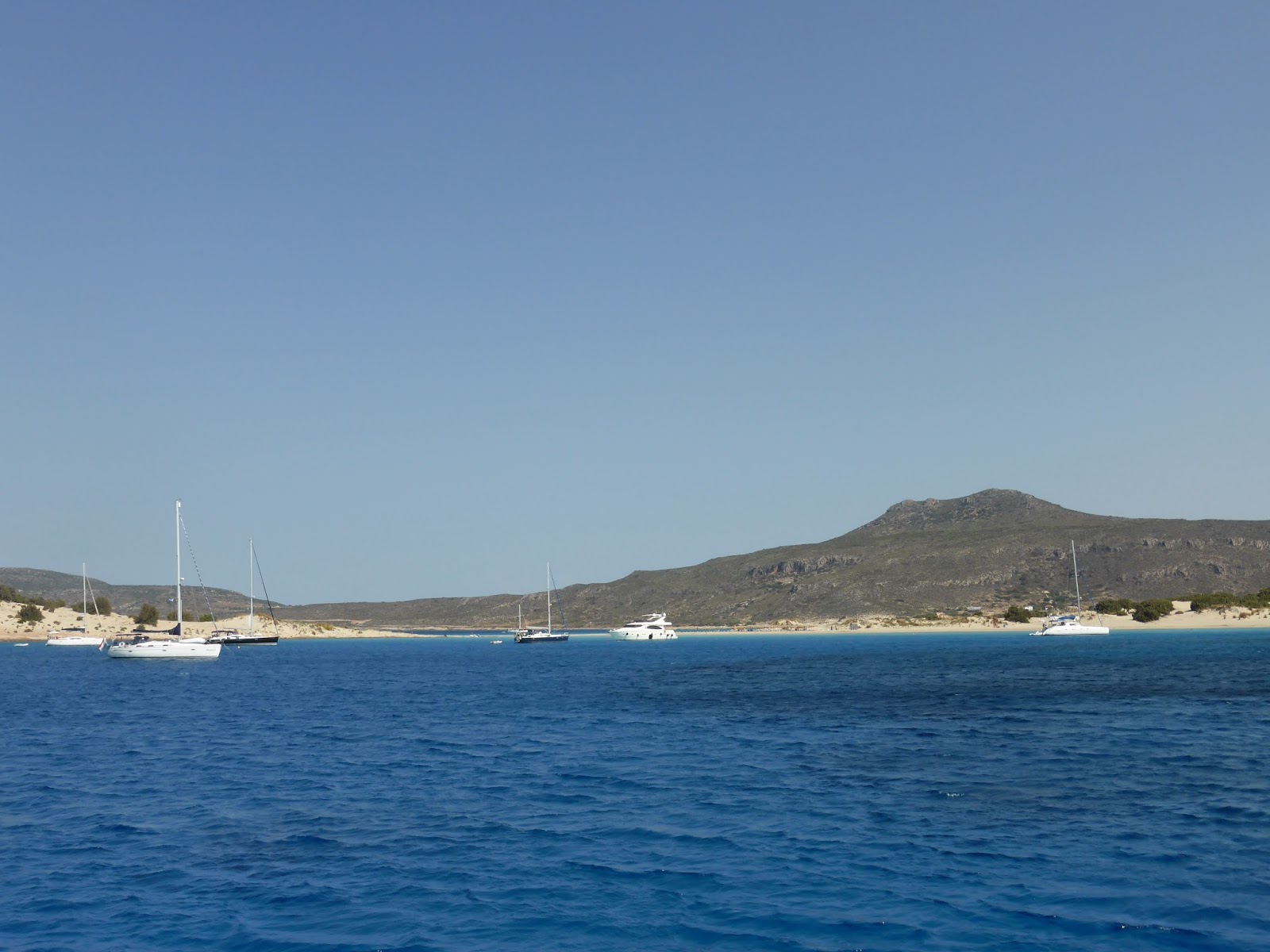
From here it’s only about 10 miles to the island of Kithera, lying off the south-eastern coast of Peloponnisos and one of the most unspoiled of all Greek islands.
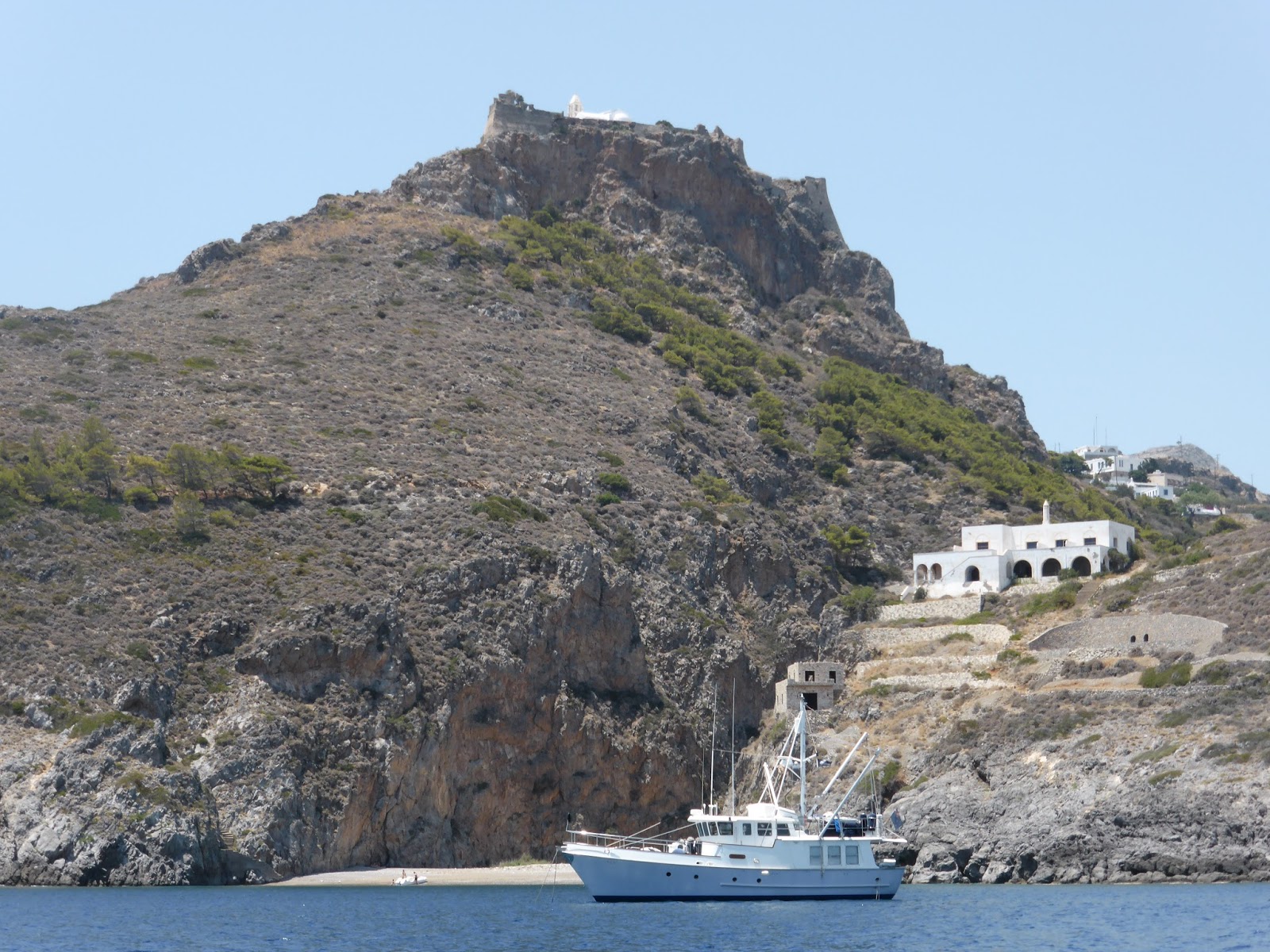
Its main port is Kapsali at the southern tip of the island – a beautiful bay to anchor in, surrounded by rugged cliffs and overlooked by the stunning hilltop fortress. The bay is exposed to the south so a bit rolly, but our flopper-stoppers do their job in reducing the effect of the swell.
Envoy at anchor with fortress behind
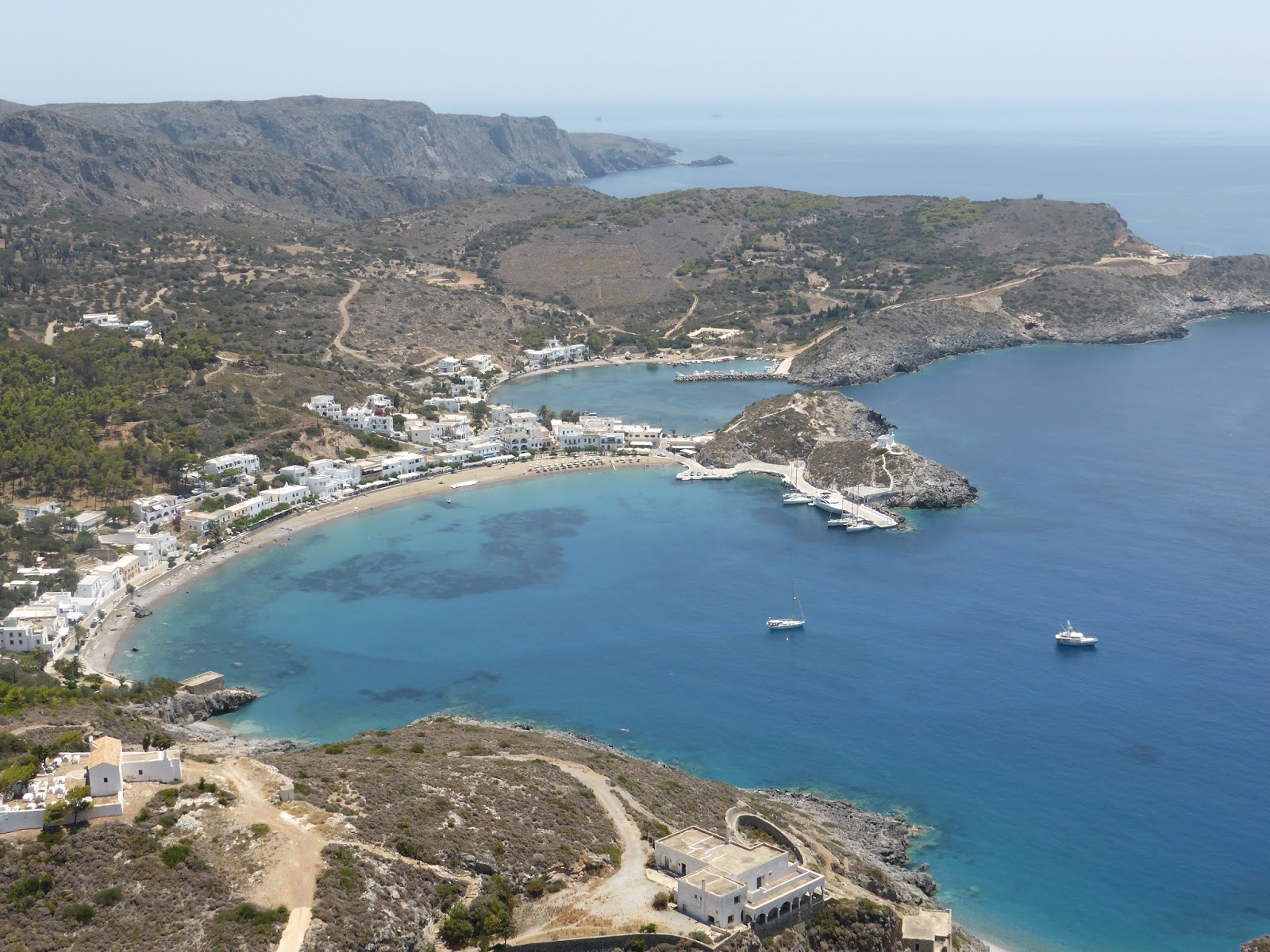
Kapsali harbour from the fortress with Envoy and just one other boat anchored
Ashore the old buildings are mostly painted with traditional whitewash contrasted with blue shutters, the seafront being lined with small tavernas. It’s still very quiet with only three or four other boats anchored here during our several day stop.
Kapsali’s taverna-lined foreshore
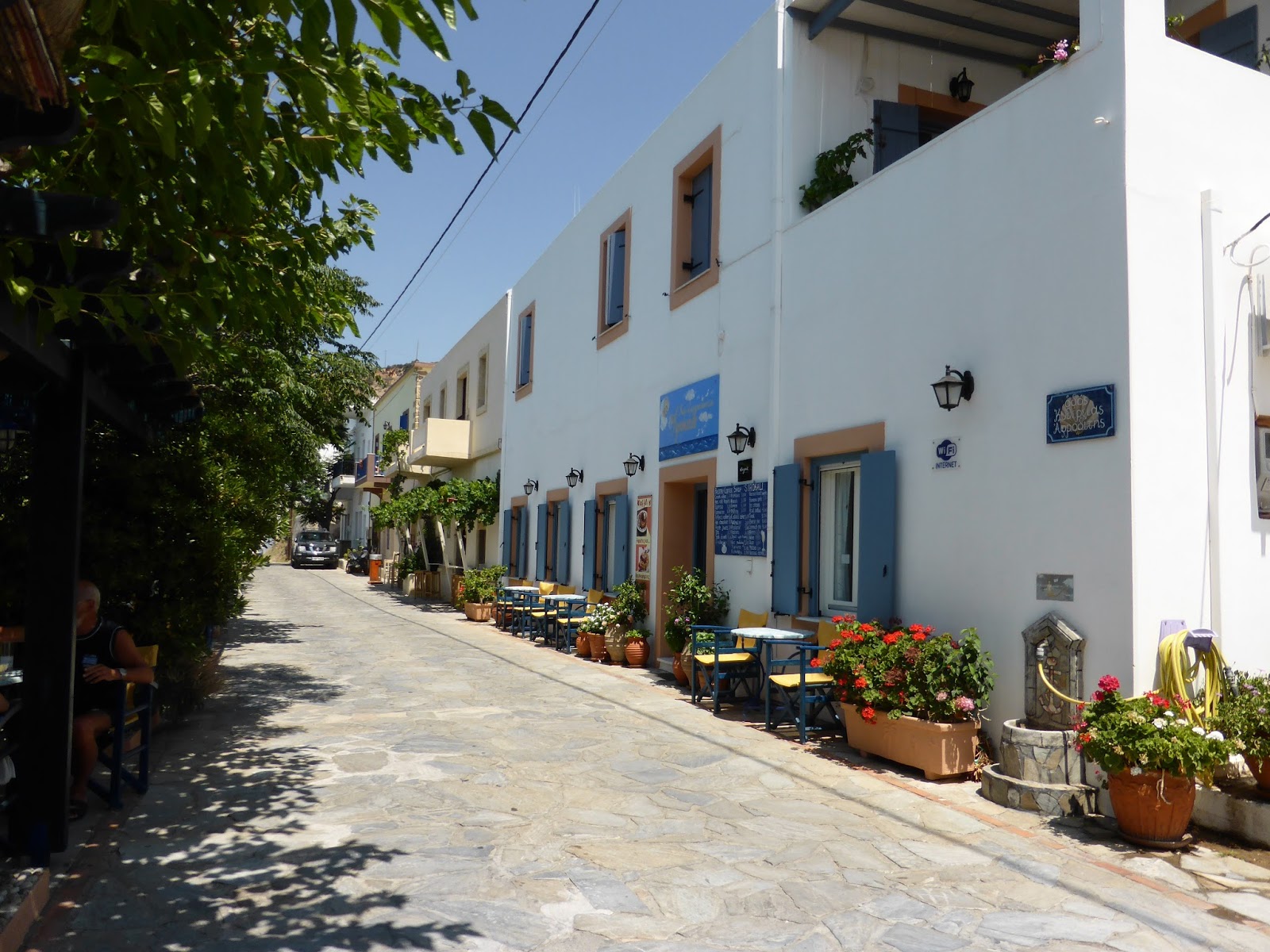
We liked these attractive steps and shrubbery

The bay has a small wharf and this is where most visiting boats want to go – why I don’t know as it’s much nicer to be anchored out in the bay. With the summer season getting under way we’re starting to see some very large planing motor vessels in the 20-30 metre range, of course all with about four to six uniform-clad crew. Some of these are seriously large vessels and it’s amusing to see them want to anchor right in close as if they are a small weekend cruiser.
Surely the wharf wasn’t intended for boats of this size
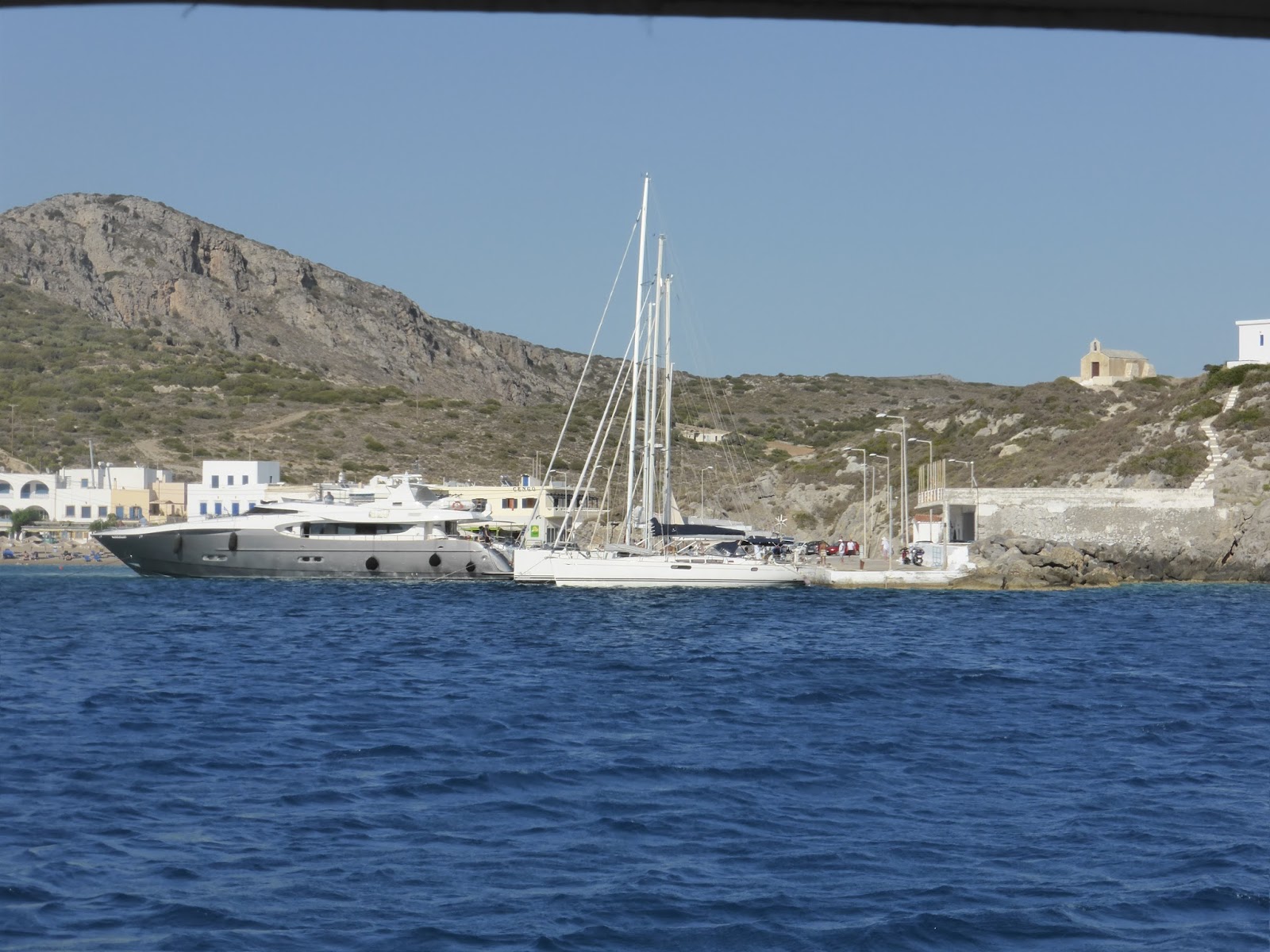
Many Greeks from Kithera emigrated to Australia and as we wander around we hear the accents of many of them back here enjoying holidays.
We take a taxi up the steep winding road to the fortress and chora (hilltop village) for some exploration and stunning views.
The Chora viewed from the fortress
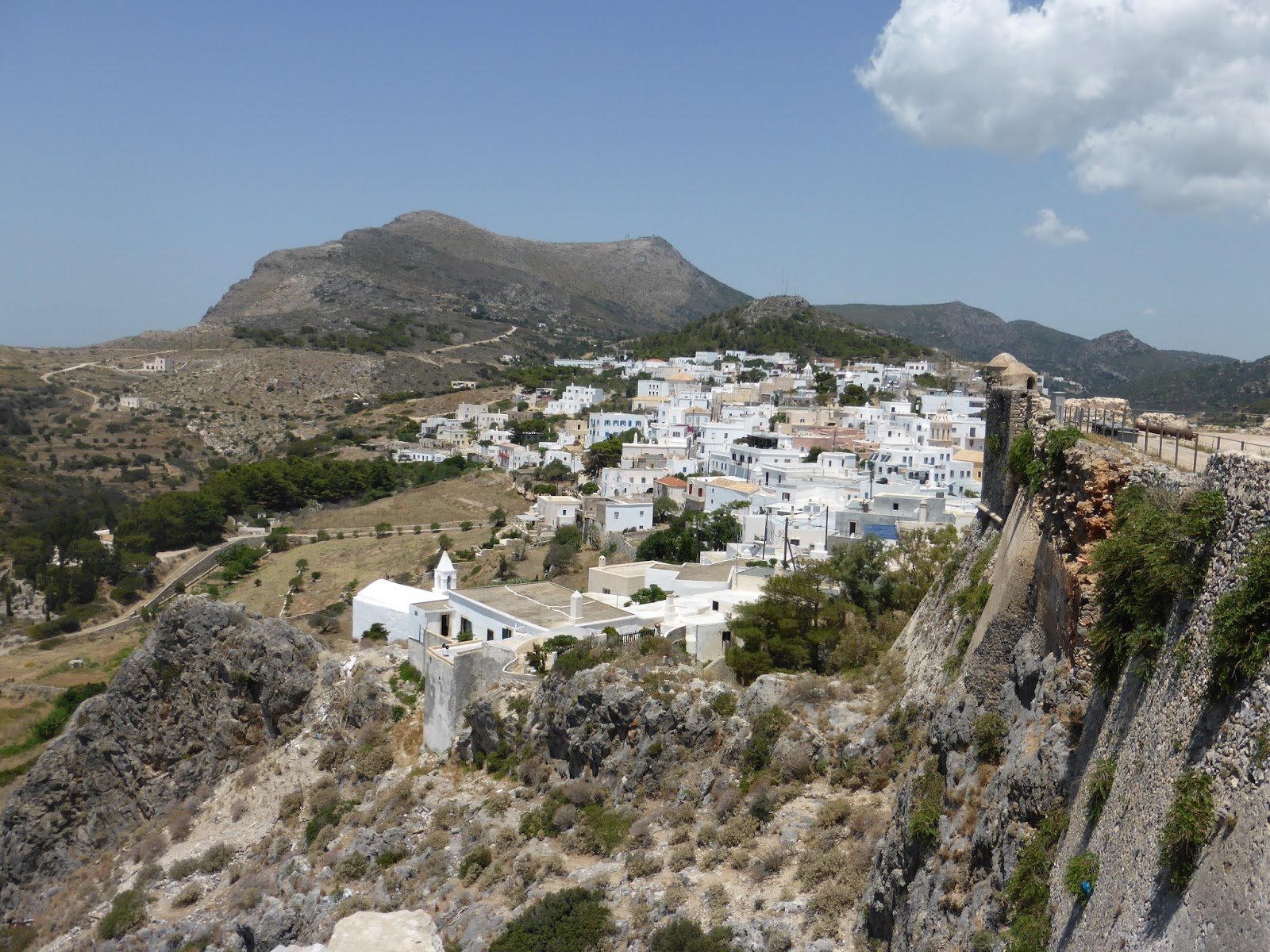
Built on a steep rocky promontory the fortress appears impregnable

Later we do some shopping at a small superette and find the owner to be extremely generous. It’s a hot day so he gives us free bottles of cold water, provides various cheeses for us to taste, gives me a free cold beer and then a healthy discount off the bill.
Our generous superette owner

My ears are slightly sore from constant exposure to seawater so we visit the small local hospital, finding it very modern and seemingly well-equipped. It’s under-staffed but the doctor and nurse we meet are very courteous and helpful, the doctor complaining that she’s rostered for 12 hours a day. Treatment is free but we have to pay for the medications provided.
We move on to anchor off the village of Avemolana which was new to us and a thoroughly delightful spot. This is not only sheltered from the consistent northerly winds but free from any swell, although there are wakes from fishing boats coming in and out of their harbour at all hours of day and night. As an aside fishing boats don’t make any concession to anchored visiting boats and pass close by making uncomfortable wakes. I guess they’ve been out for hours tending nets and keen to get home.
Ashore is a rocky cove where locals swim in crystal clear water from several small boat jetties and this whole scene is overlooked by several atmospheric tavernas.

Envoy is in distant background from this great inlet
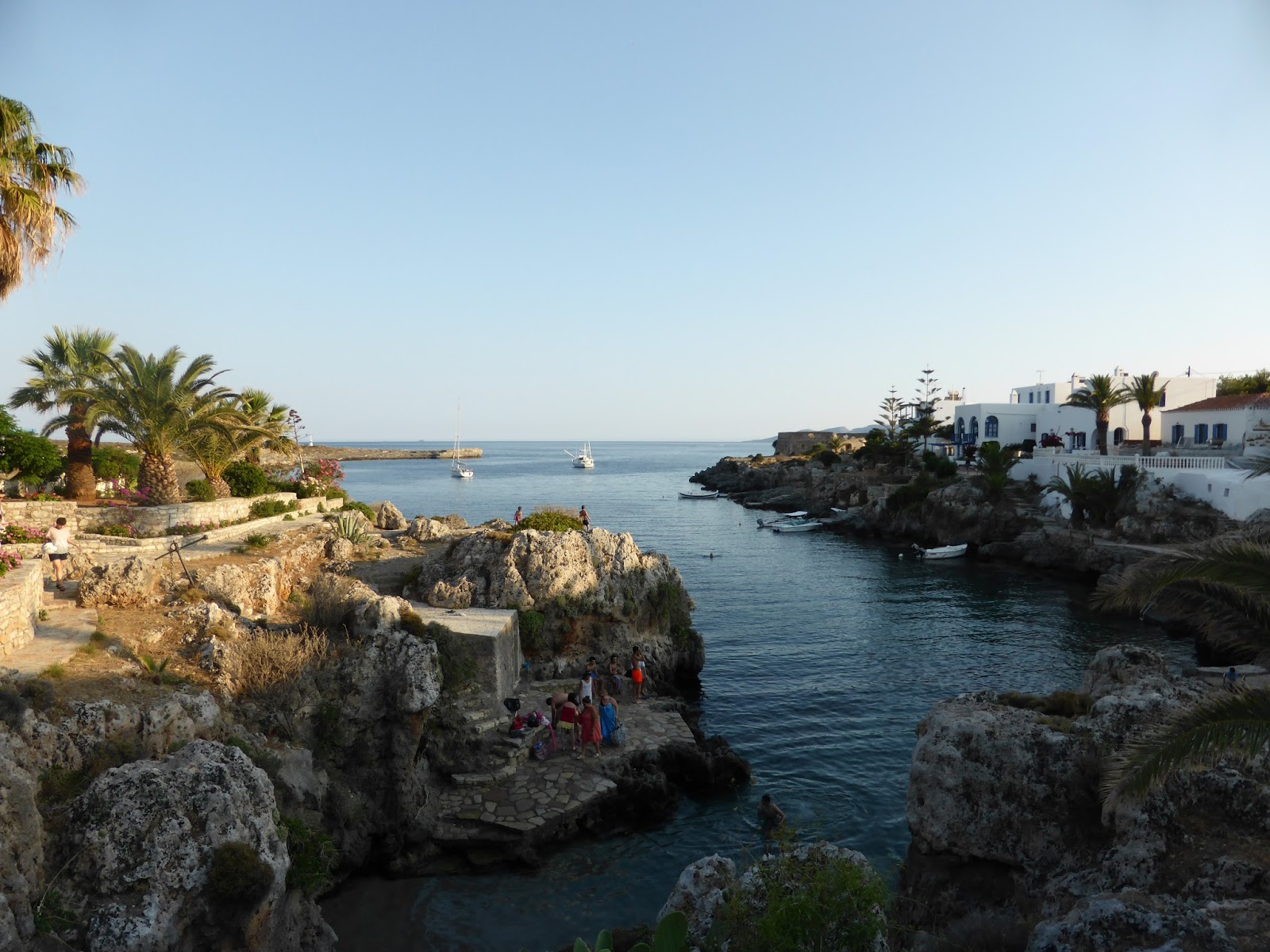
Envoy anchored off Avemolana

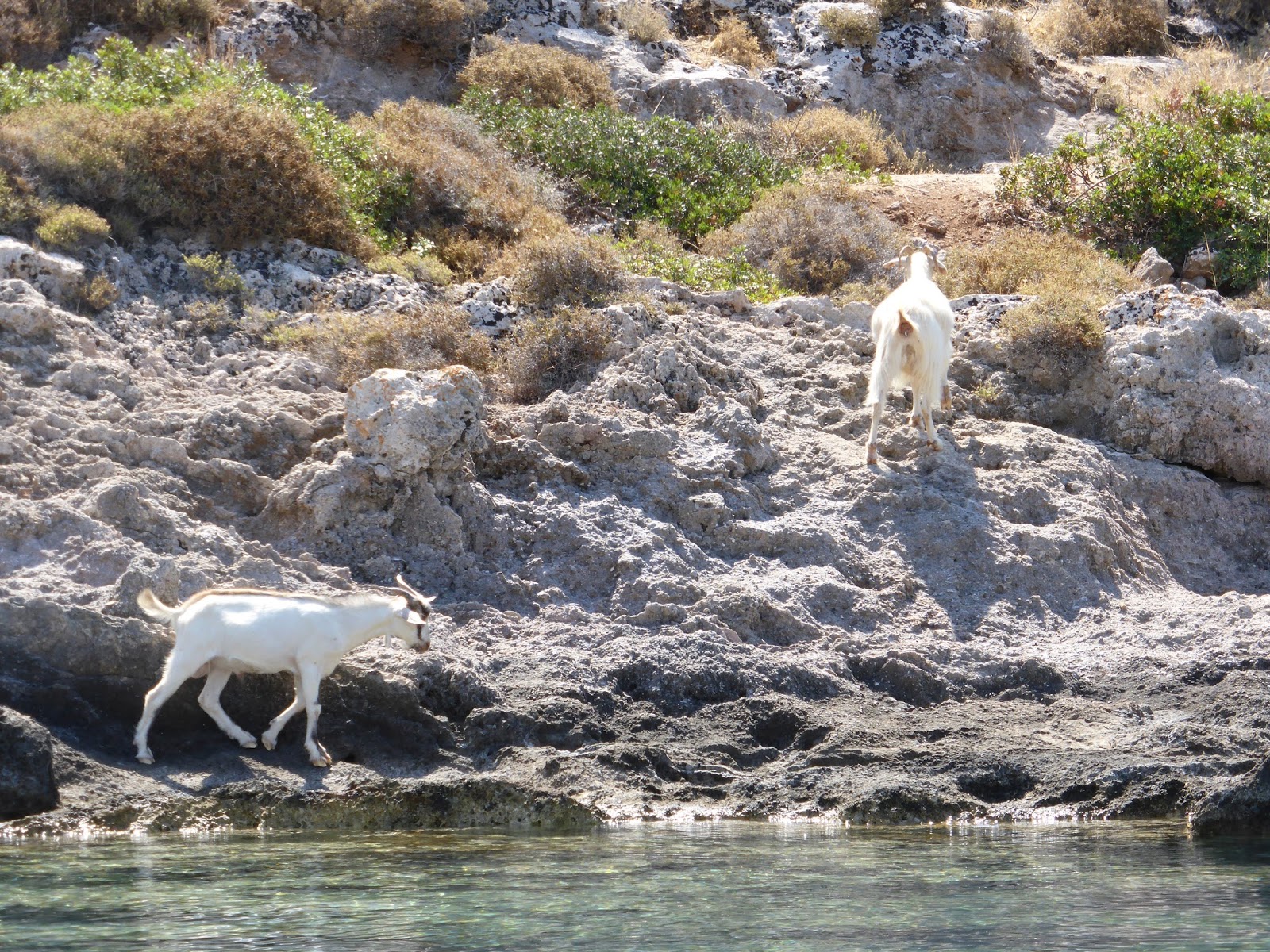
Even the goats enjoy Avemolana’s waters
There is no respite in the northerly wind and after two nights at Avemolana we move on in a 20 knot headwind and 1.5-2 metre head seas to Neapolis on the mainland. Unfortunately the steep seas and Envoy’s pitching motion tosses our herb garden overboard as we’d left it on the transom where it had so far safely sat for hundreds of miles. Diane had worked hard to get these mint, oregano and thyme plants into great shape so we’re a bit sad about this.
Just outside Dhiakofti is the wreck of the cargo ship Nordland, and as author Rod Heikell says it looks like her skipper attempted to perch her atop the islet.
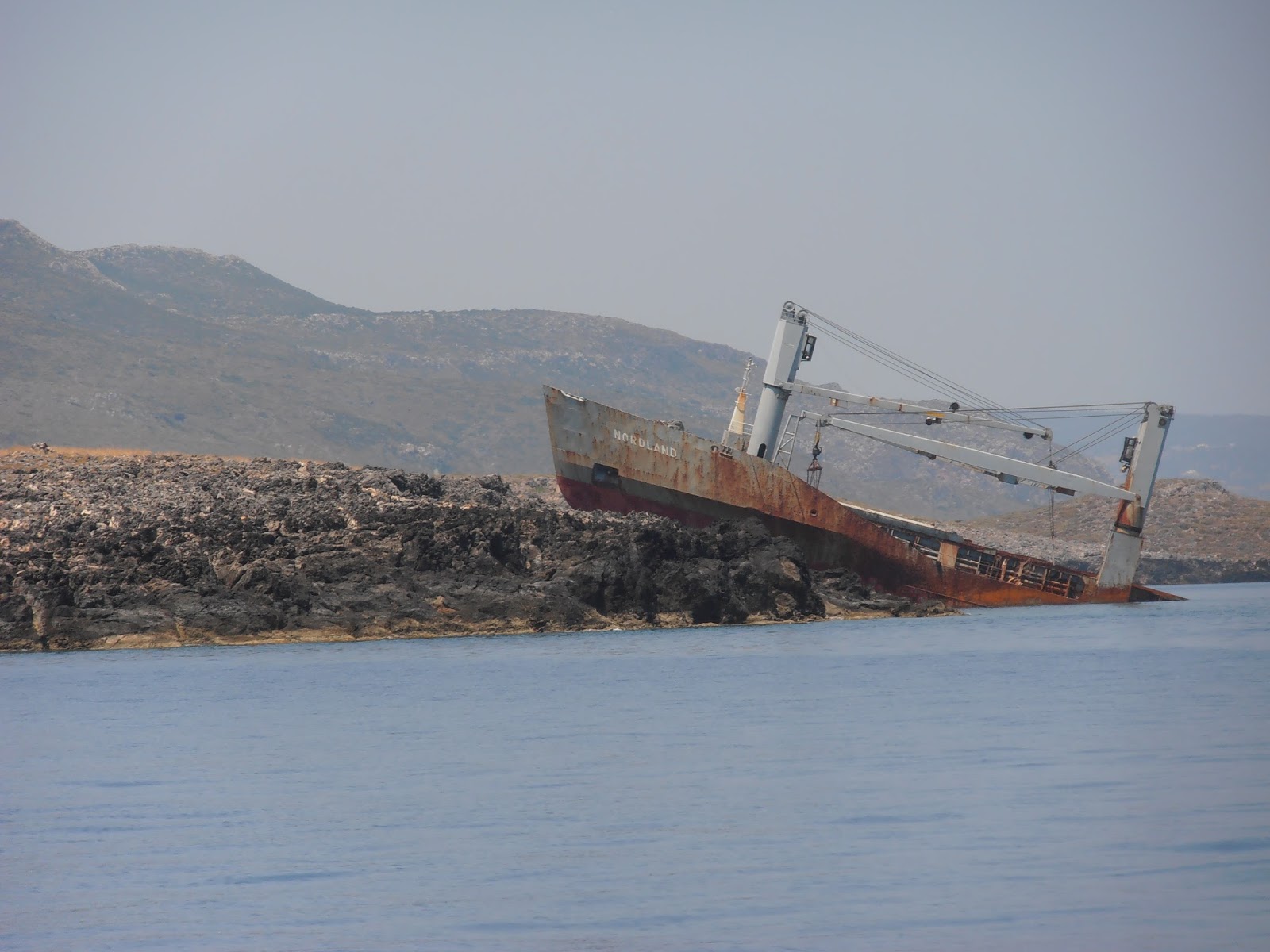
Neapolis is on the eastern side of a large bay nearly four miles across called Ormos Vatika. As we approach land in late afternoon the seas gradually reduce until they diminish into wavelets and we anchor in a relatively flat sea. Half an hour later though the wind changes to the south and a fetch kicks in. Fortunately it only lasts until sunset and then the wind reverts to its forecast north and all is peaceful for the night.
Next day first priority is to replace our herb garden and from three different shops we find a planter, soil, and all three herbs. Now the planter is secured to the transom so it can’t fall overboard.
At this stage we’ve had over 20 knot northerlies for several days and they’re forecast to continue. In fact this is the “Meltemi” wind, notorious in the Aegean Sea that we’re now bordering and is not what we need when we have a 60 mile open sea crossing to make to Milos Island soon. The Meltemi often lasts for a week or longer keeping many cruising boats holed up in safe anchorages. It’s caused by high pressure areas in the eastern Aegean (with winds circling anti-clockwise) combining with low pressure areas to the west (with winds circling clockwise) to produce generally Beaufort Force 5-7 winds. Although this is not a particularly strong wind by New Zealand standards the resulting sea conditions are much more severe here than with the same wind level at home. I’m not sure why this is so, but all cruisers comment on the fact that while the waves are not overly large at typically two metres they are close together, steep and breaking.
We decide to position ourselves at Monemvasia, being about the closest mainland point to Milos, so we can make the crossing when the weather is suitable.
