Tag Archives | Nordhavn

WHAT MAKES A GREAT CRUISING DESTINATION?

While Envoy is in Lefkas Marina, Greece, we are home in Auckland, New Zealand planning to return to Greece early April to hopefully commence cruising by late April.

Travel not to escape life but so life doesn’t escape you 

Most years we cruise to dozens of different new bays, villages and towns and we enjoy most of them in their own way, but makes for a really special one?
Destinations fall into one of three categories – anchorages, town harbours and marinas. Wherever possible we opt for anchorages, even when there is a harbour wall to secure to or a marina nearby.
The reasons for this are:
Cost:
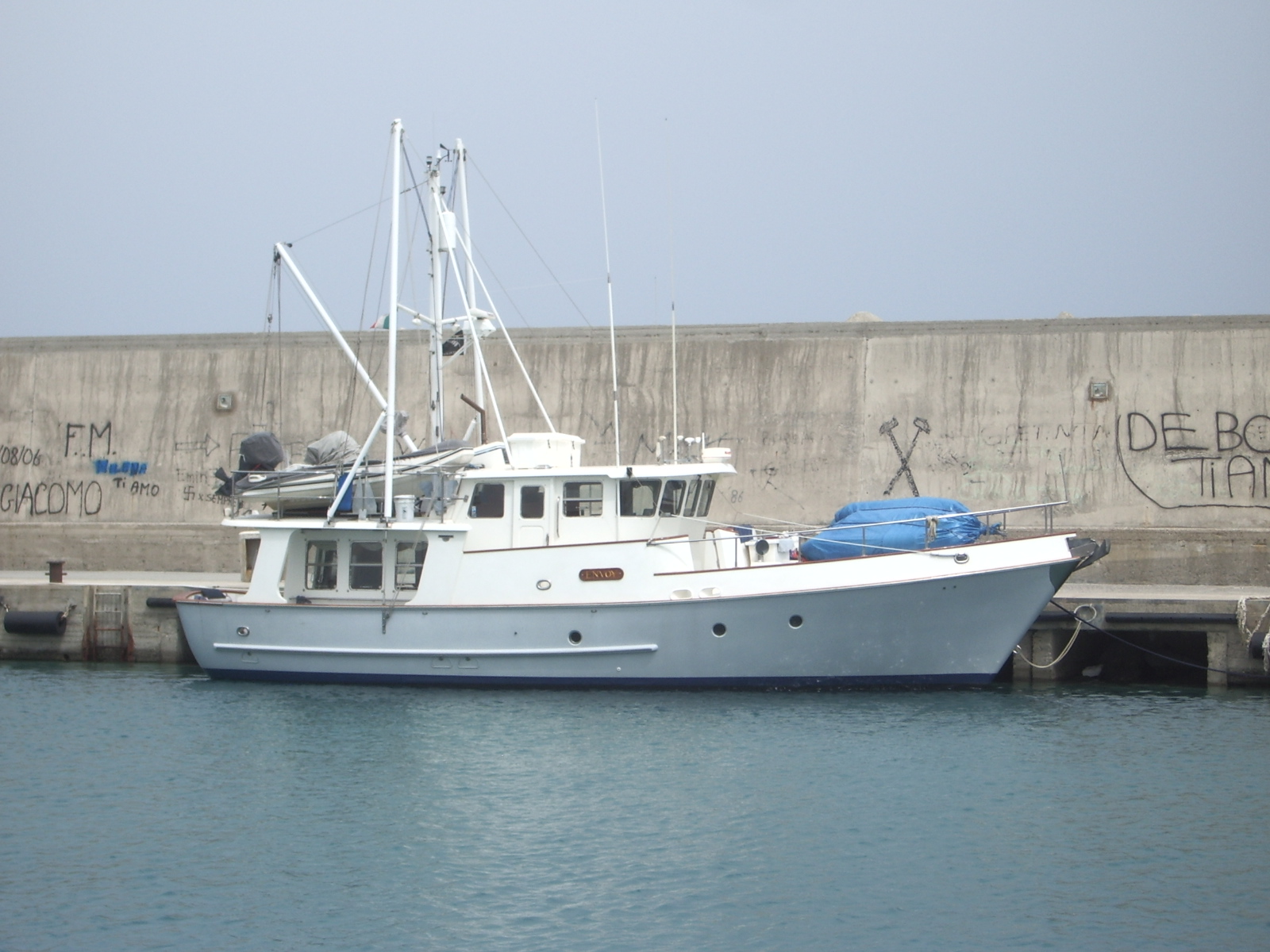
All marinas are fairly expensive at typically NZ$60-180 per night. While some harbours are free most charge something like half the lower end marina cost. When you’re cruising for months at a time you simply can’t afford to pay this cost more than you have to.

Mooring in a harbour is cheaper than a marina
Convenience:
It can take close to two hours to get into your berth, set up mooring lines, connect to shore power (if it works) and connect to water. In all marinas you then need to go to their office and show at least your passports, registration certificate and insurance policy and pay for your berth. In many cases you also need to go and visit the Port Police to show the same documents as well as the cruising log that most countries provide. This is less prevalent in harbours, but normally the authorities will come to find you. Leaving takes a lesser time, generally about an hour although longer if there is some complication such as another vessel’s anchor chain over yours (most harbours require you to anchor and then reverse in to the wall). In some destinations you need to visit the authorities on departure day as well, adding to the time. When at anchor there is rarely any obligation to visit authorities.
Coolness / Swimming:
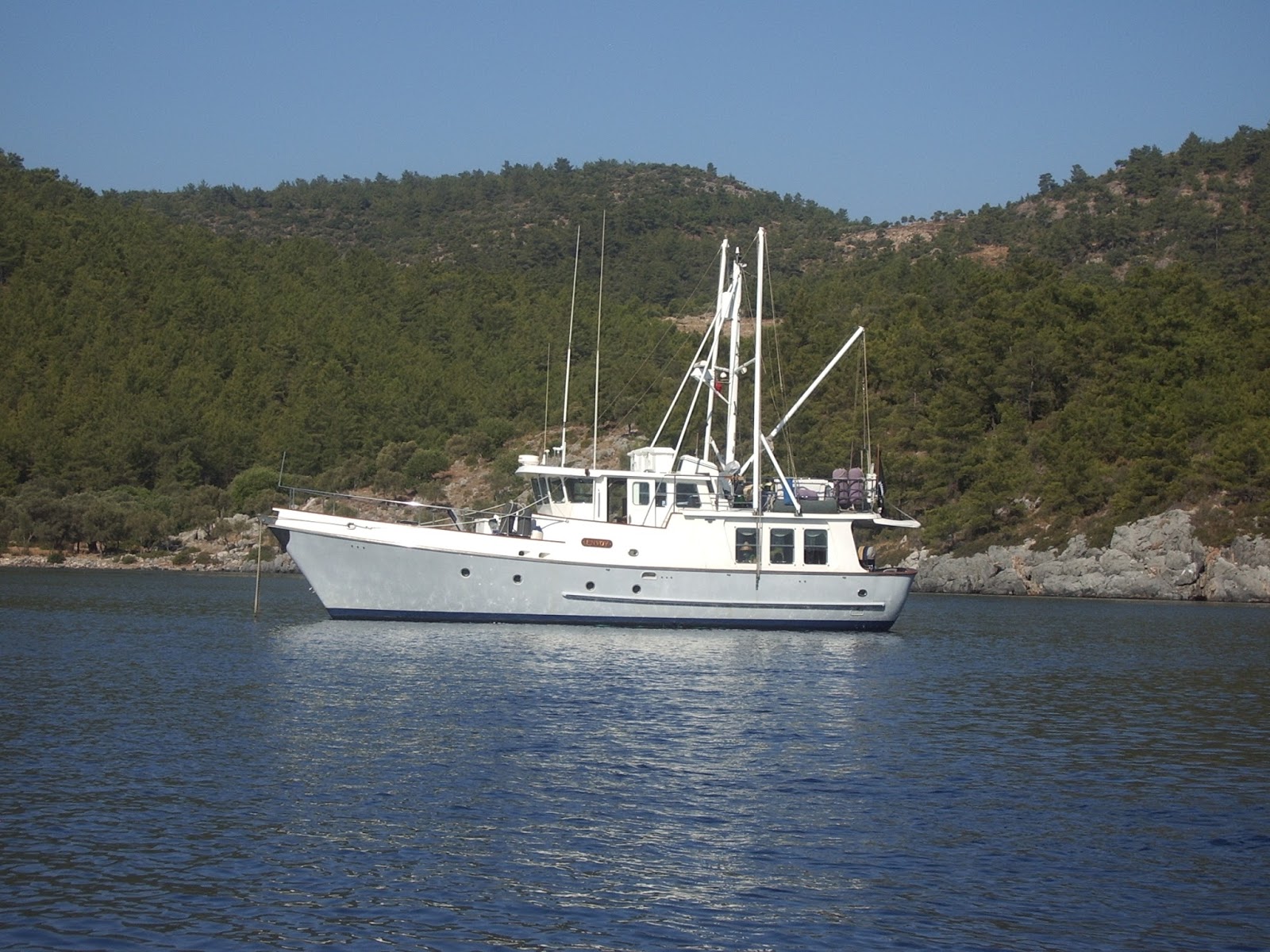
There is more cooling breeze at anchor away from the shelter and concrete expanses of harbours and marinas. In the hot Med summers it’s great to be able to swim regularly and this is possible in most anchorages. Not so in marinas or harbours where it’s mostly not allowed and in any case dangerous due to the proximity of shore power and/or the water is too polluted.

When anchored it’s cooler, more private, easier and cheaper
Privacy:
You enjoy good privacy at anchor while in marinas and harbours you generally have a boat on each side with attendant noise and lack of privacy. Another factor is that many of the boats alongside you are charter boats with their crews on short holidays wanting to party all night.
Having said all of the above we choose to go into marinas and on harbour walls from time to time in cases where there is no safe anchorage, if extremely adverse weather is forecast, when we are meeting visitors, when we are doing repairs or sometimes simply to enjoy the atmosphere of special harbours.

Sometimes it’s nice to enjoy the atmosphere of quaint harbours – Envoy in Fiskhardo

What makes an anchorage special? A special anchorage must have a great “atmosphere” and this can be from stunning natural features, from a picturesque village or town or from a combination of the two. Also most important is good holding and security in all forecast winds while second best is an alternative bolt hole nearby. You want calm water with little wind chop or swell from the open sea making for a peaceful stay. Too may vessels spoil an otherwise good anchorage, particularly if there are water skiers, jet skis or ferries passing through the anchorage, often at dangerous speeds and in close proximity. It should also have unpolluted clear water for swimming.

What makes a marina or harbour special? Those really special spots are mostly adjacent to atmospheric historic villages or towns. Again, most important is security in all conditions – many small marinas and harbours are not suitable for all weather and can encounter waves breaking over sea walls and dangerous surges. Allied to this is having good quality lazy lines to secure your bow (your stern is secured using your own lines). You want access to good facilities such as shore power, fresh water, toilets, showers and provisions with friendly staff (marinaras) to assist.

St. Helena Island Tour

On our last day in St. Helena we cleared out in the morning for a weekend departure and spent the rest of the day on a custom island tour with Derek Richards of No Limits Travel and Tours. We generally don’t like the constraints of a guided tour and initially were planning to hire a…

St. Helena Museum and Munden’s Point

On our fourth day at St. Helena, we learned more about the island’s history, geology and ecology at the excellent St. Helena museum, and visited St. James Church, the oldest Anglican church in the Southern Hemisphere. We also walked a track around Munden’s Point to Rupert’s Bay to see the new wharf and port facilities…

To Change or Not to Change? That is the Question.

Oil changes at sea get pretty close to a universal response from boaters I know. Everyone says loudly “DON’T DO IT.”  The risk of something going wrong when hundreds, if not a thousand miles, from shore is simply too high. And, with oil change intervals ranging between 250 and 375 hours, there typically is no…

In and around Jamestown

On our first three days in St. Helena, we handled the country arrival overhead, spent some time exploring in and around the main center of Jamestown, and made a trip to the St. Helena Distillery for a tour and tasting. The island most famous as Napolean’s place of exile has a rich and varied history…

Managing Fuel Economy

We currently are underway on a 3,650nm non-stop run from St. Helena to Barbados. Prior to this passage, our longest non-stop run without fueling was 3,023nm from Dampier, Australia to Rodrigues, Mauritius. The current 3,650nm passage is at the very limit of Dirona’s range and we are, naturally, monitoring fuel economy closely to ensure we…

SCOTLAND’S LOSSIEMOUTH HARBOUR (PART 2)

While Envoy is in Lefkas Marina, Greece, we are home in Auckland, New Zealand planning to return to Greece early April to hopefully commence cruising by late April.
On a chilly October morning we stand on Lossiemouth harbour’s quayside, where all that remains to remind us this was once a bustling fishing port filled with trawlers is one lobster boat, a handful of small open fishing boats and a long outdated sign pointing to where a busy fish market operated decades ago.

Well-dressed against the cold I examine the sign which is all that remains of a once thriving fish market

The area around the harbour is hugely atmospheric including many historic stone buildings now used as cafes, shops and a museum. The harbour’s main source of income nowadays is a marina accommodating up to 120 boats in the water and 48 on the hardstand, where they are securely lashed down during winter to prevent them blowing over during severe gales.
Lossiemouth has a long waiting list for permanent berths but visitors are always accommodated and enjoy the friendly reception, excellent facilities and local marine infrastructure. It’s not by chance that we’re visiting Lossiemouth but due to a family connection – my brother, Charles, is the Harbourmaster and we can see his 36ft van der Staadt designed sloop, Acrobat, moored to one of the pontoons.
Charles and his now-wife Marie sailed Acrobat from Brisbane Australia through south-east Asia, across the Indian Ocean and up the Red Sea into the Mediterranean. It was here during our 2005 visit to Acrobat in Turkey that Charles and Marie became our inspiration for the Med cruising life we now enjoy. After spending several years living and working in Turkey, Italy and France Charles and Marie motored through France’s Midi Canal system eventually arriving in Lossiemouth, where they continued to live aboard while working as well as finding time to sail and explore Scotland’s rugged and remote offshore islands and some of Norway’s frigid coastline. Charles has a great sense of humour and gets on very well with most everyone – he’s also a practical and highly technically qualified guy, being a shipwright, builder and cabinetmaker. After Acrobat arrived in the marina the staff and other berth holders were soon tapping his skills until he eventually gained employment there, later becoming the marina’s manager, a position which is very much hands-on.

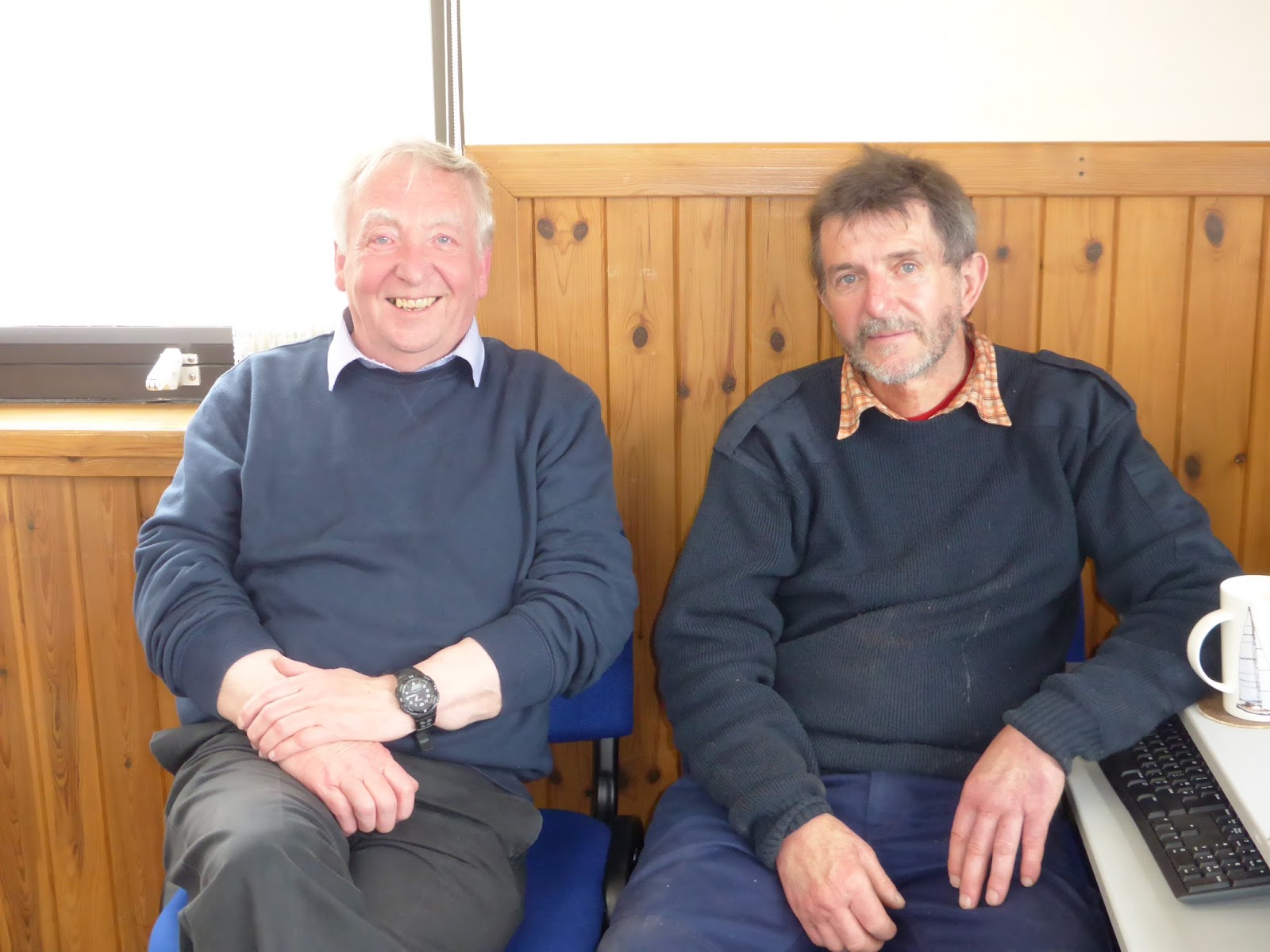
Harbour chairman George Reid (at left) with my brother Charles

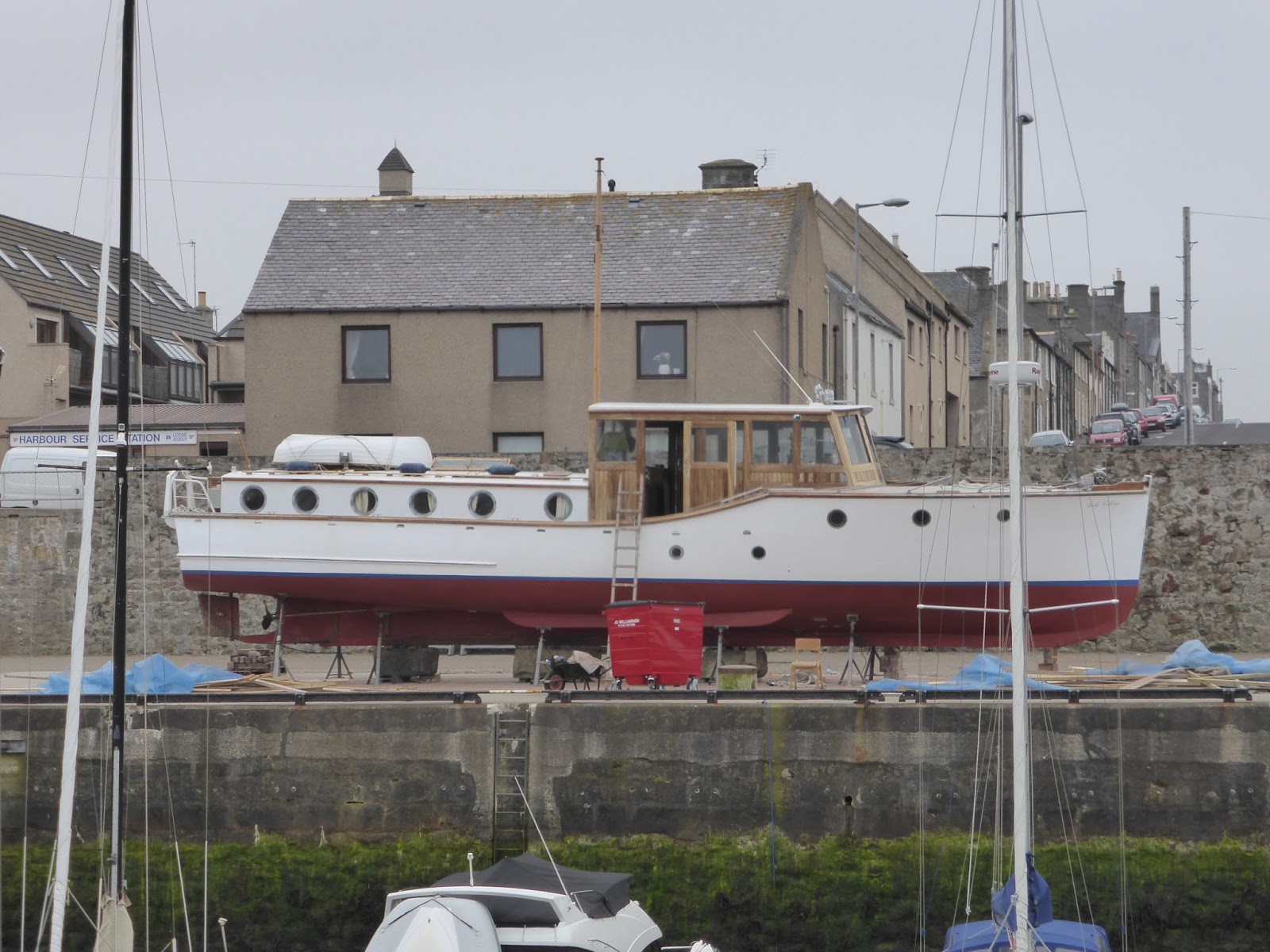
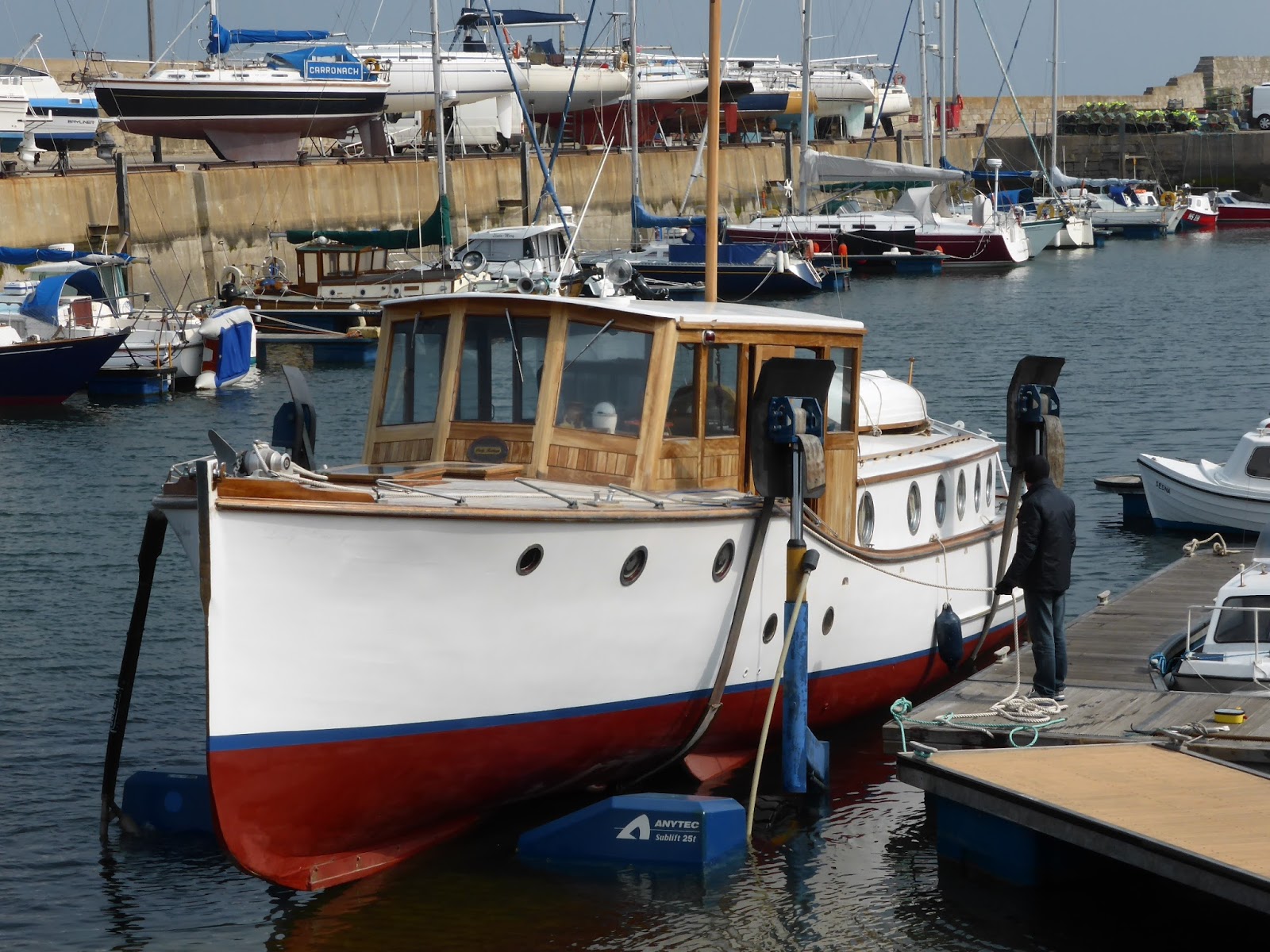
One of the most interesting vessels in the marina at the time of our visit was Lady Kathryn, an 18 tonne, 54ft oak-framed timber motor yacht powered with two Perkins diesel engines which were more than 10 years old when they were installed in the new vessel in 1929 and still going strong. Her owner proudly gave us a tour of his vessel and explained that she had participated in WW2, loaded to the gunwales with allied troops during their evacuation from Dunkirk.

Lady Kathryn evacuated allied troops from Dunkirk

The ultimate “big boy’s toy” 
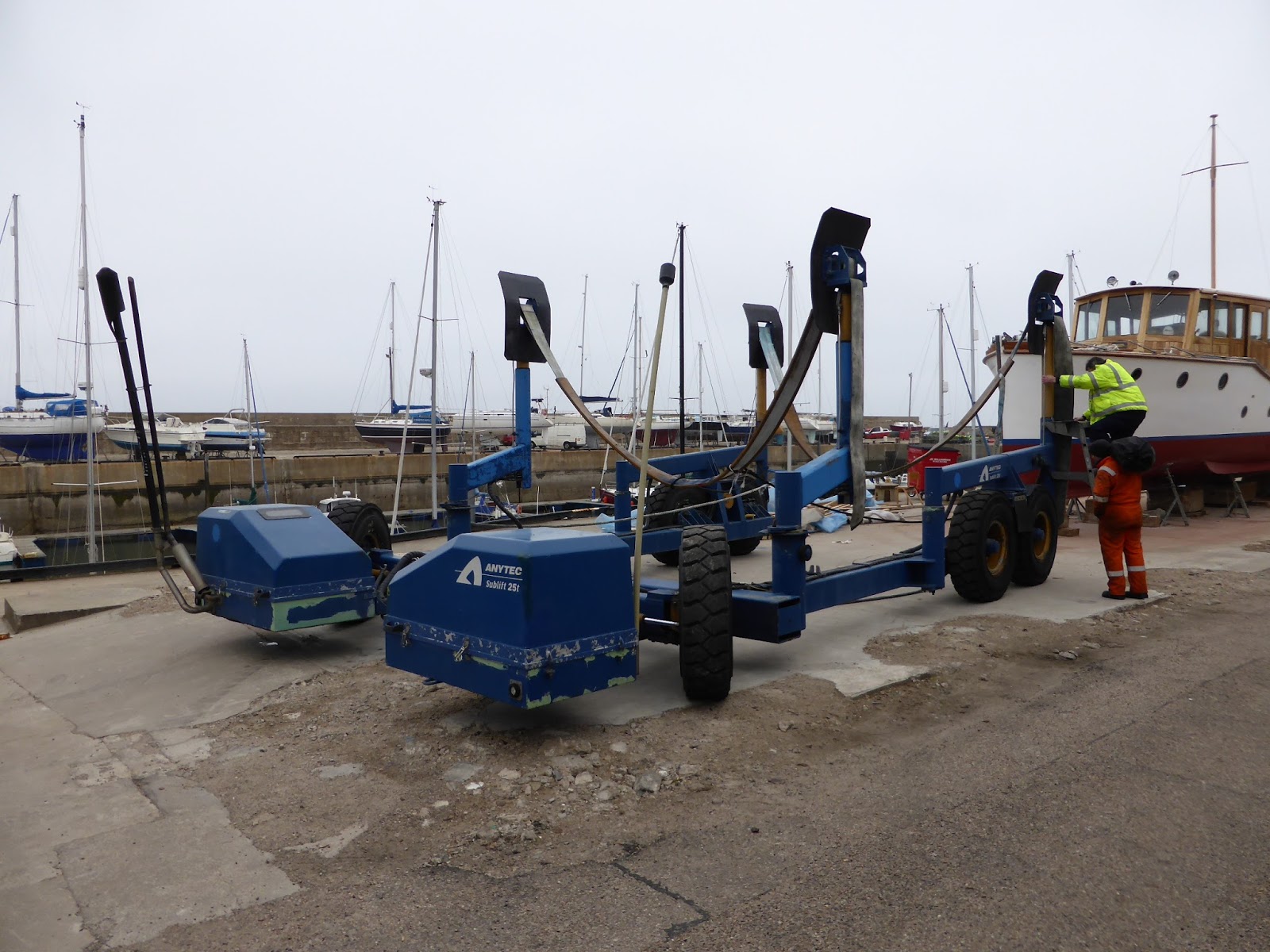
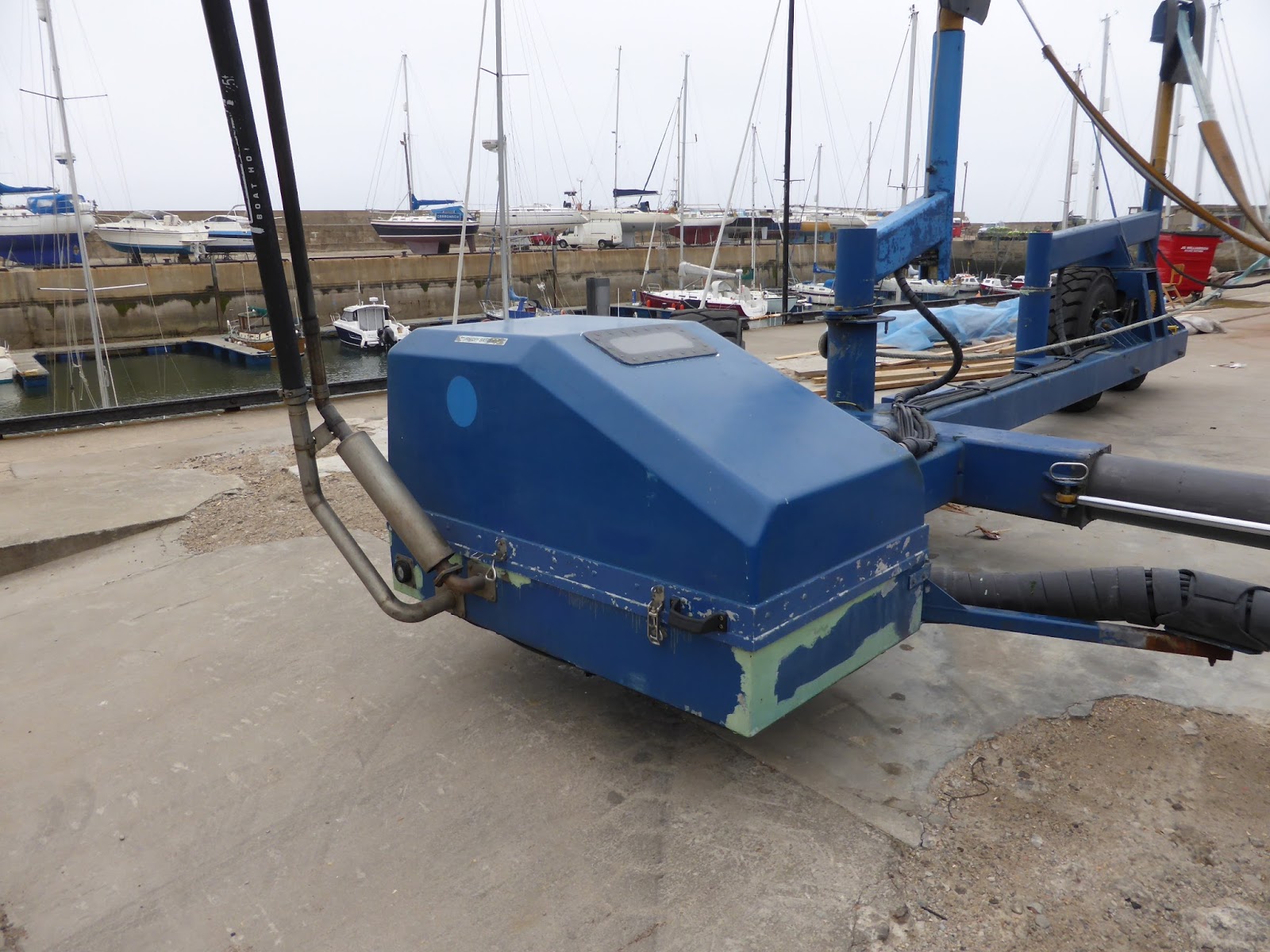
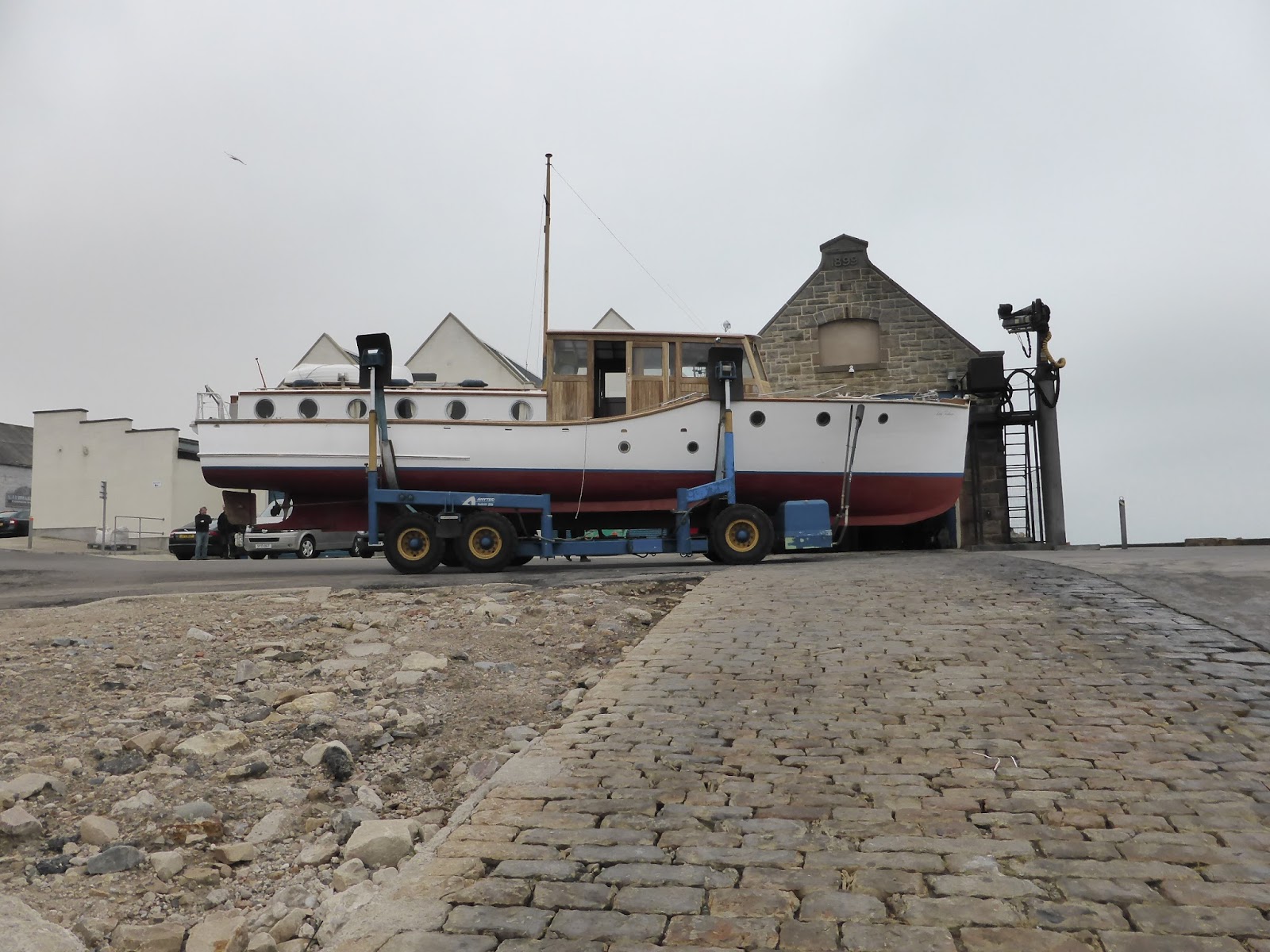
Most marinas move boats in and out of the water using a travel lift that straddles a boat and lifts it with high tensile strength strops. Lossiemouth uses a Swedish designed and built diesel-powered, remote-controlled submersible sub-lift with a 25tonne capacity. As the whole unit including the engine goes underwater the engine has a watertight hood using trapped air to keep the engine dry, and a snorkel for the exhaust to be used while the engine is under water.

Lossiemouth’s 25 tonne capacity sub-lift

Close-up of waterproof engine cover

Lady Kathryn being launched using the sub-lift

The sub-lift disappearing under water

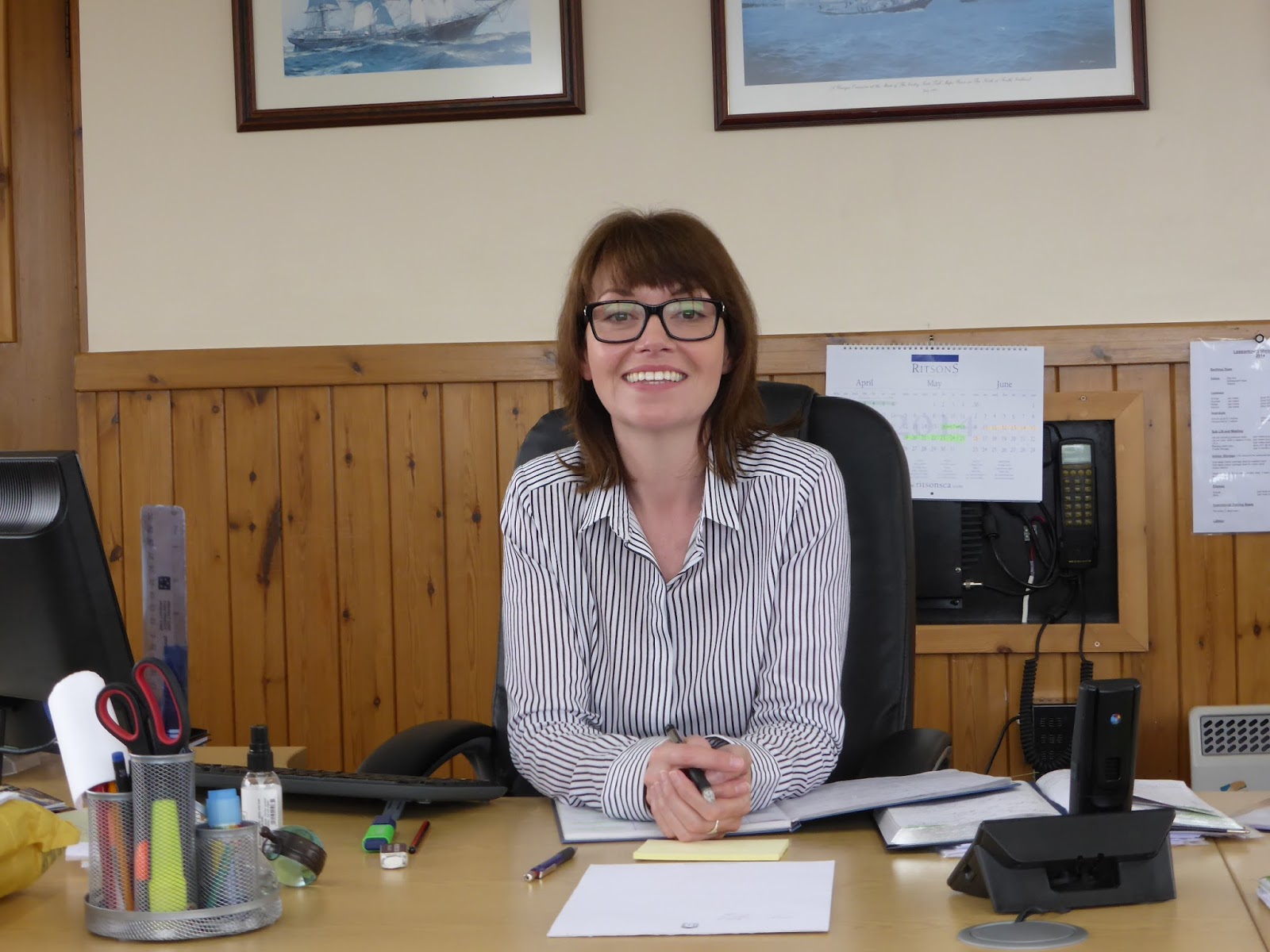
Amanda provides super-efficient administration services for berth holders and visitors

If like us you enjoy wandering around marinas and fishing harbours, there’s plenty to see on Scotland’s wild north-east coast.
Our next posting will start to detail our favourite ten Eastern Med cruising destinations – most of them relatively unknown.

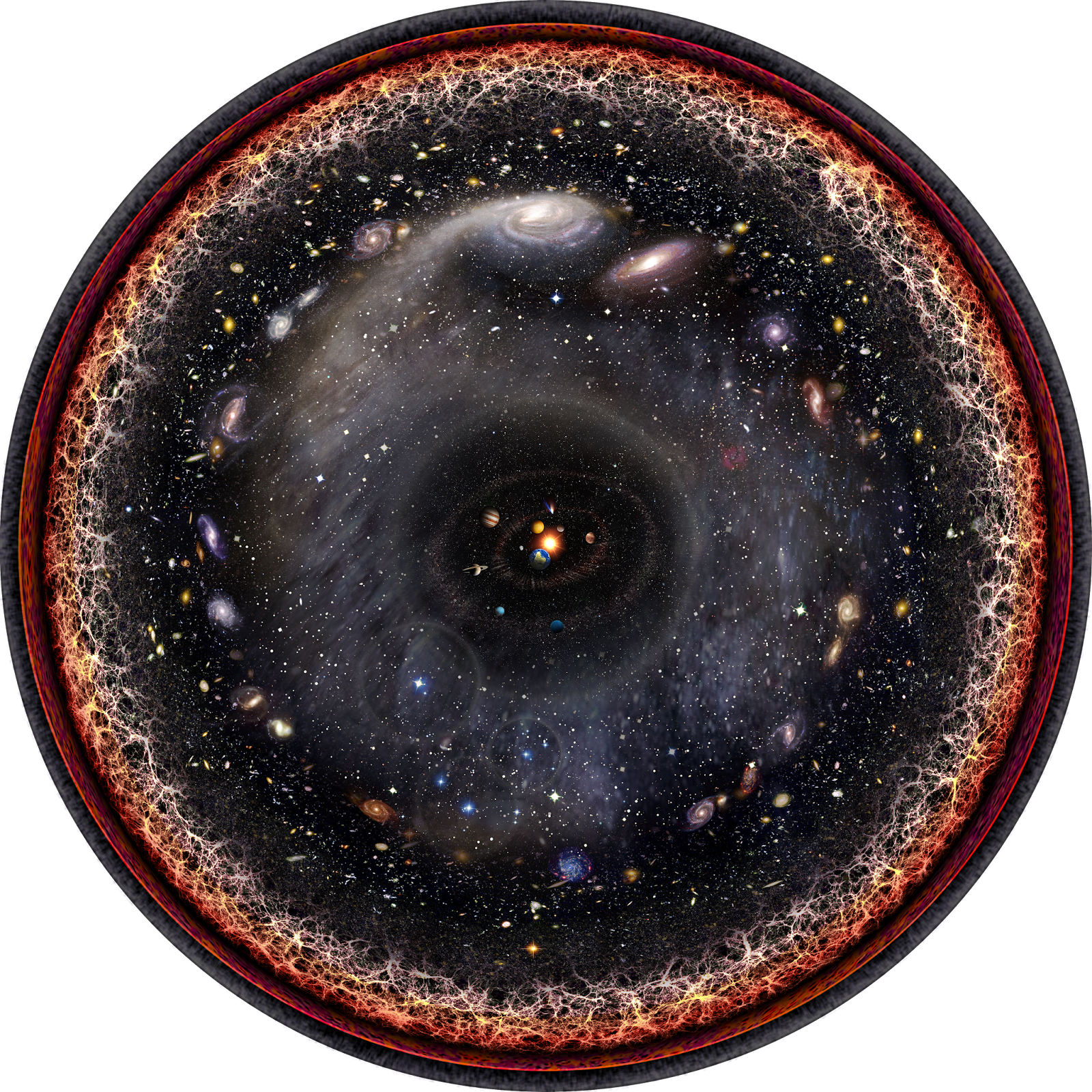
The Entire Observable Universe, Captured In One Stunning Image

Click Here —

Using Photoshop and logarithmic maps created by scientists at Princeton, artist and musician Pablo Carlos Budassi combined images from NASA with original sketches to create this stunning illustration that captures the unimaginably vast observable universe.
 http://www.huffingtonpost.com/entry/universe-logarithmic-image-pablo-carlos-budassi_568de0d7e4b0a2b6fb6ebda7

Nordhavn Exumas Abacos Bahamas trawler Caribbean Pickwick Boat dogs
Memphis Downtown

72º @ 26º

It’s nice to be back — the sound of the surf pounding the beach and winds blowing Northish — perfect temps along with ocean scents make being home a pleasure.

We did enjoy our time back in funky old Memphis.

Friends, food, music… a great hang.

Traditions stand:

Ralph always smokes us a Turkey and a couple of slabs of Ribs.

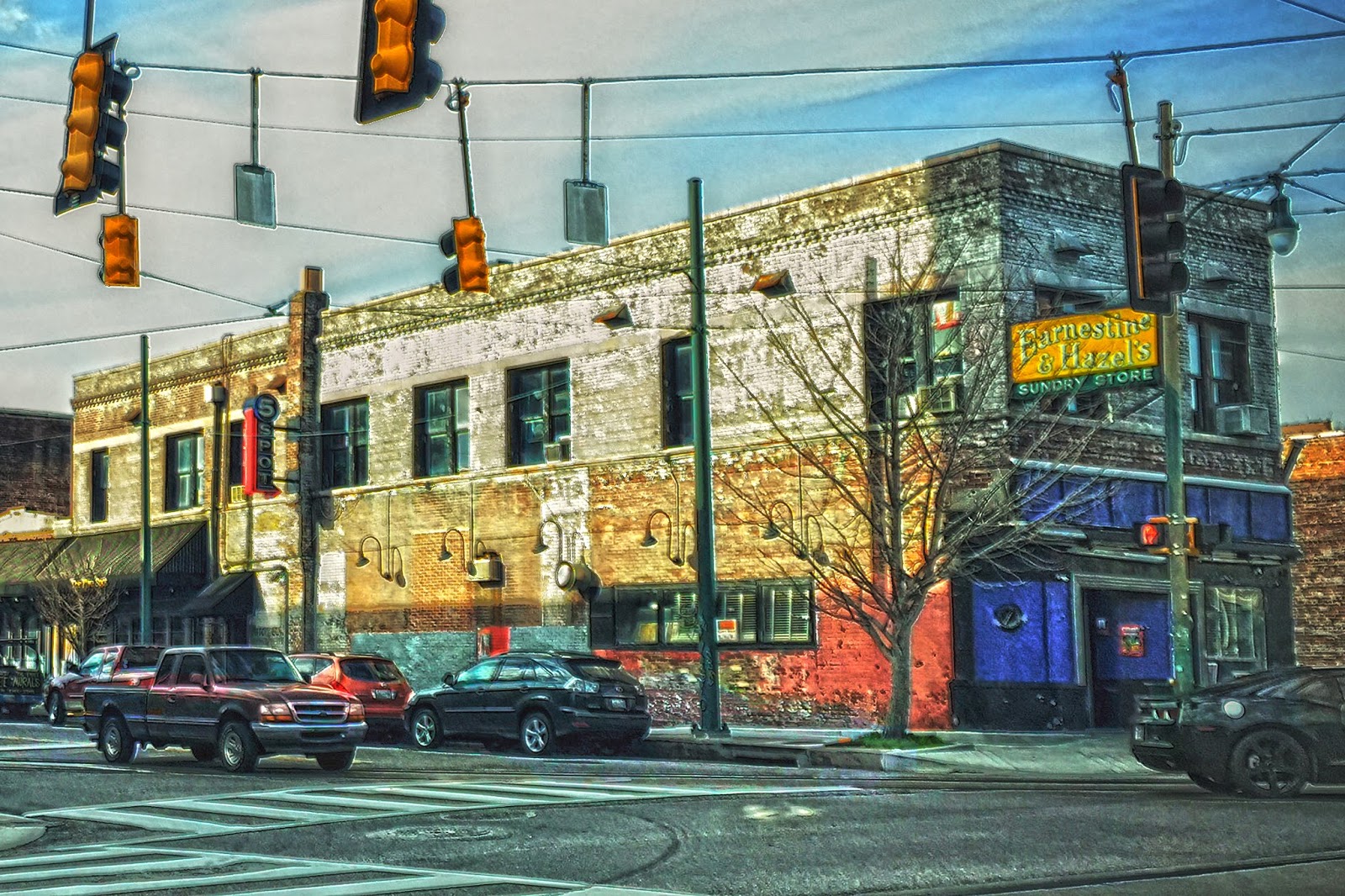
Earnestine and Hazel’s Soul Burgers on Christmas Eve and Gumbo with Catfish at Blue City Cafe on Beale St. early New Year’s Eve.

Our last night in town was capped off in true Memphis style with one last Soul Burger and a couple of sets of The Earnestine and Hazel’s House Band featuring old-old friend Willy Bearden pickin’ and singin’.

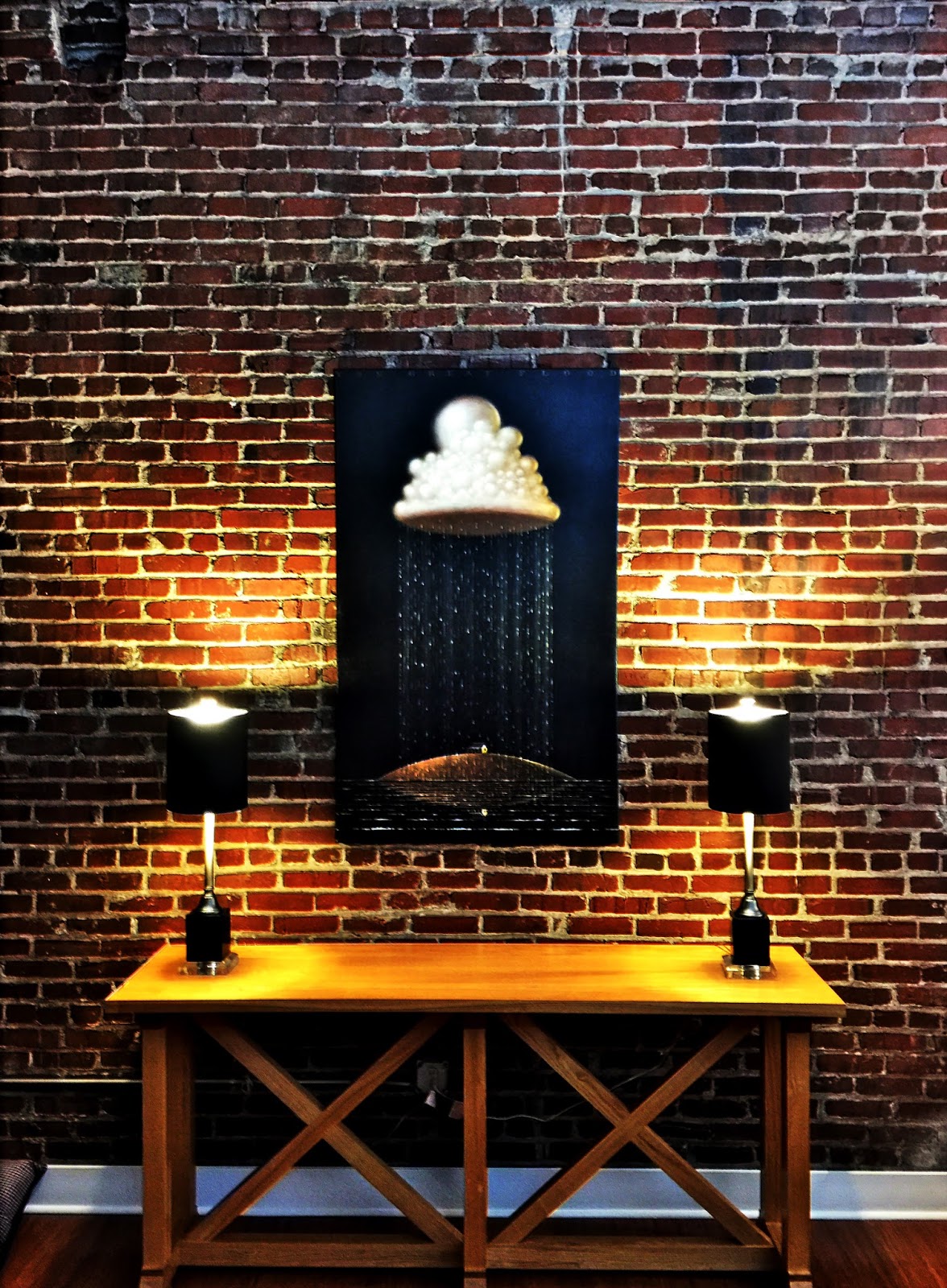
And… we added to our art collection with new piece by neighbor and running buddy, John Robinette.
We should know better than to walk into John’s studio, but the new painting does look perfect in this spot.

So, once again we found old Memphis to be a great hang; there’s no place like home.

But, there’s no place like home as I take a deep whiff of salt air, my sinuses clear, and a relaxed smile forms on all our faces. (Conflicted?—No, fortunate.)

Here’s to a healthy and fulfilling 2016.

Cheers…

Nordhavn Exumas Abacos Bahamas trawler Caribbean Pickwick Boat dogs
Memphis Downtown

Hello 2016

hopes … dreams … tentative expectations

here we go —

Nordhavn Exumas Abacos Bahamas trawler Caribbean Pickwick Boat dogs
Memphis Downtown