Tag Archives | Nordhavn

Ship’s Log

We keep a detailed ship’s log that records where we have been, what we have done, system state, and things we fix. Unlike commercial ship’s logs, that normally are hand-maintained and can’t be modified, ours is a bit primitive in that it’s just a Word document. We focus on it being easy to maintain rather…

Hattavagen

A small weather system was passing through, with gusts to 45 knots, as we were underway for Erjforden. We found a beautiful and peaceful anchorage at Hattavagen, and ended up spending three nights anchored in the sheltered basin. While there, we explored the area by tender, hiked up 510m Bandasen, and completed a few boat…

Hylsfjorden

The village of Sand lies in a beautiful setting where the Saudafjorden and the Hylsfjorden meet to form the Sandsfjorden. From our anchorage at Nevoyvagen, we’d already explored to the head of Saudafjorden, including hiking up 3,054ft (931m) Hovlandsnuten from the town of Sauda at the head, and had made a brief pass by tender…

Part III: Replacing 12kW GenSet Cylinder Head

  This installment of our maintenance series picks up from our previous video, where we replaced the defective cylinder head in our Northern Lights 12kW generator with a brand new one just shipped in from the US. In this video, we complete the job by adjusting the valves, replacing the coolant and bleeding the fuel…

Saudafjorden

Saudafjorden extends 10.5 miles (17km) between the towns of Sand and Sauda through several-thousand-foot mountains with many waterfalls. At the head, the popular Saga Trail extends from Sauda to 3,054ft (931m) Hovlandsnuten. Stone steps newly laid by Nepalese Sherpas lead to the summit, with panoramic views to Saudafjorden and the surrounding mountains. After a 22-mile…

Vindafjorden

After exploring its two branches, Sandeidfjorden and Yrkjefjorden, we completed our five-day tour of cross-shaped Vindafjorden in a beautiful anchorage at Kvaloy. On a warm and sunny day, we toured to the head by tender, then spent a lazy evening enjoying the surroundings from the cockpit. Below are trip highlights from July 24th, 2020. Click…

CRUISING UPDATE

When New Zealand moved to lockdown Level 1 on 14 May we became one of the few countries to allow unrestricted cruising once again, while the Australian situation continues to vary by state with some restrictions still in place.
More recently several other countries, mostly in the Med, Caribbean and South Pacific have followed suit, but there are various restrictions in place relating to isolation, quarantine and screening. 
For example Fiji has opened Nadi’s Port Denerau, but visiting crews must have had a minimum of 14 days quarantine at sea, have tested negative for covid-19 before departure to Fiji and be screened on arrival.
Most Australasian cruisers owning vessels overseas have chosen to forgo this year’s cruising because of confusion about regulations, difficulties booking return travel and the need to quarantine on return. There is also a general concern that circumstances can change very rapidly and cause major issues for those in the wrong place at the wrong time.
We continue to enjoy cruising aboard our Salthouse 52, Rapport and since purchase in late November have logged 50 nights aboard, despite staying off the water during lockdown Levels 3 and 4. 
We’ve spoken to several cruisers who went out to Waiheke, Great Barrier, Kawau and the Bay of Islands during lockdown and while most of them were approached by police none of them were required to return home or stop cruising, so it seems the only real issue would have been a question mark over insurance cover.
Our most recent trip has been eight nights in early June to Waiheke’s “bottom end”.
We arrive aboard at Hobsonville marina with our friends Frank and Marie on adismal Saturday morning and head to Westhaven to refuel. We mainly use the flybridge helm and after berthing at the fuel dock and going below I notice the bilge pump warning light activatedat the lower helm. 
After lifting our bilge hatches I find sea water coming in sufficientlyto activate the pumps. 
At this point we have no idea where the water is coming from and as a precaution contact Coastguard in case additional pumps are needed and it turns out Paul, the Coastguard skipper is also a marine surveyor. We can’t definitively find the source of the leak, but Paul finds a loose hose clamp on the outlet side of one the bilge pumpsand we can see some water back flowing into the bilge. 
After we tighten the hose clamp the leak stops and we clear all of the water from the bilge – problem solved right? Well, no.
We refuel and depart for Waiheke with a bilge hatch left open to monitor the situation. After about ten minutes Frank appears tellingme there’s sea water in the bilge again. Damnation or words to that effect are said as we head back to moor alongside the fuel berth to have another look. We agree the problem must be related to the engines as there was no water ingress when they weren’t running. 
Sure enough we find the port“dripless” shaft seal’s plastic water lubrication fitting has broken and water intended for lubrication is going into the bilge. Frank suggests a temporary repair using Selleys “Knead-It” fast-setting epoxy putty, usable in wet conditions(every cruising vessel should carry a tube or two of this) and 30minutes later the repair is complete.
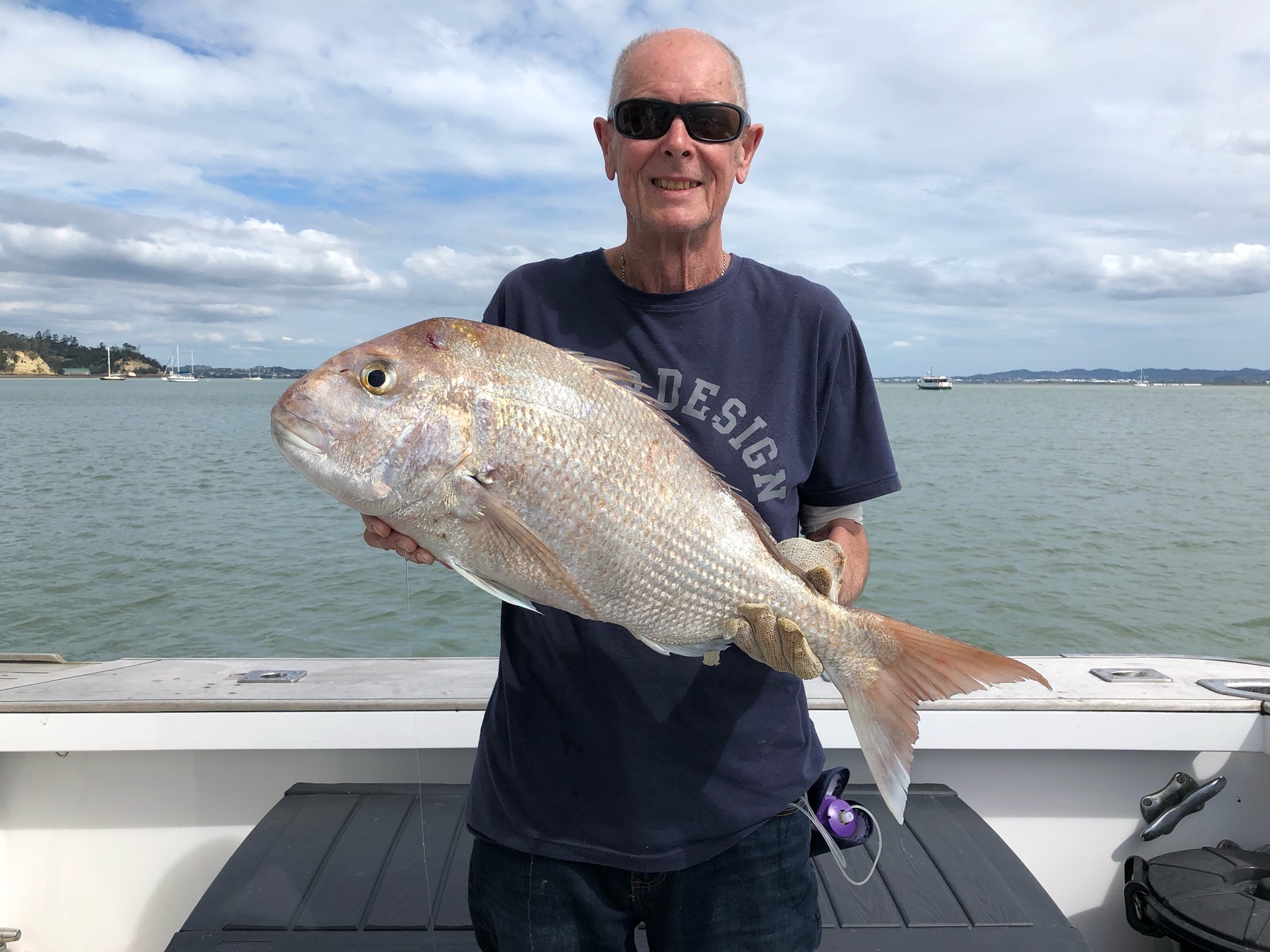
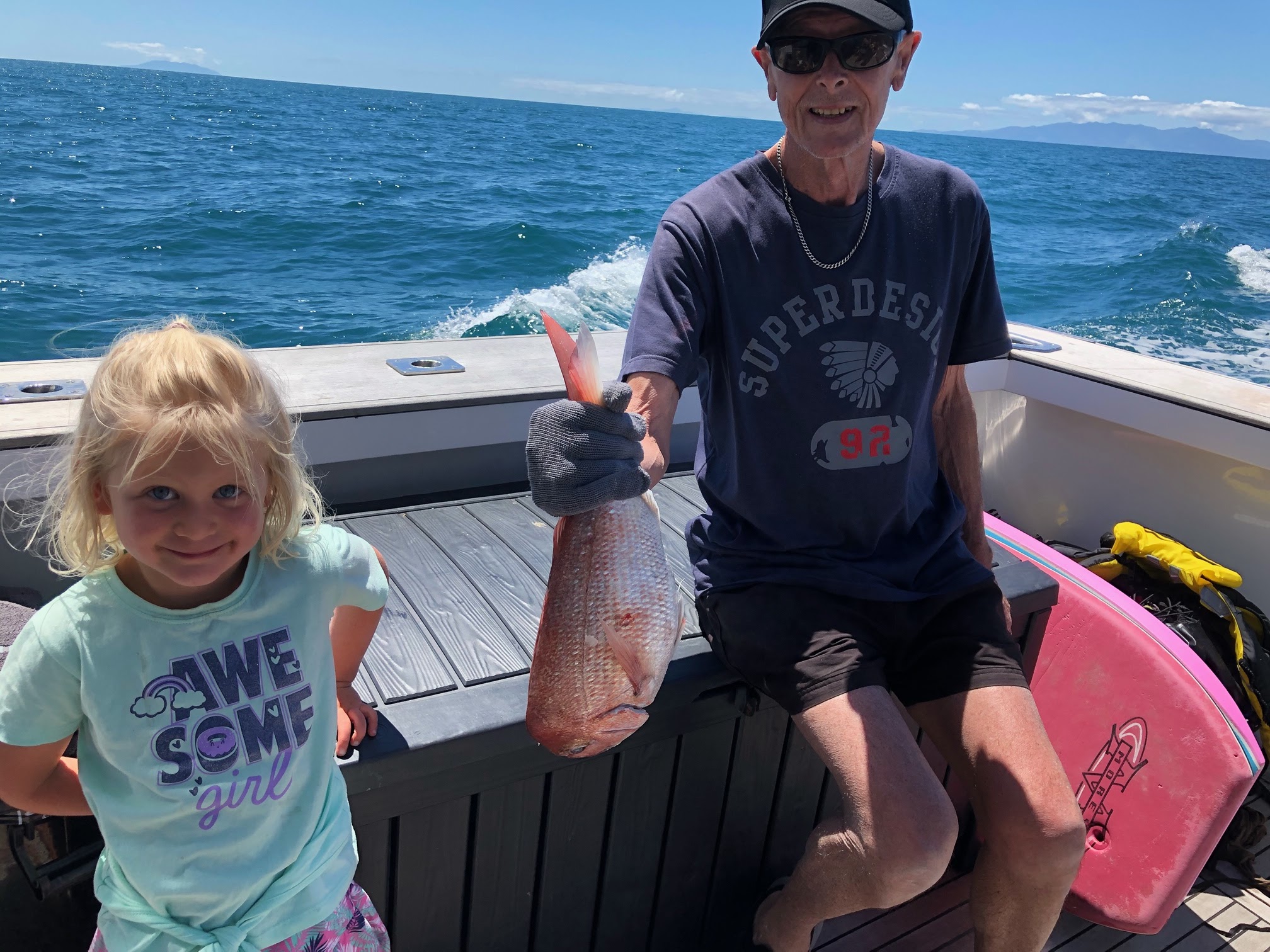
By now it’s late Saturday afternoon and with a gale warning in placeand heavy rain predicted we decide to spend the nightback onour marinamonitoringthe repair and awaitingbetter conditions. Two days later we head off for an excellent six days cruising with our temporary repair lastingwell. One highlight was drift fishing in the Firth of Thames finding plenty of hungry snapper at most times of day and states of tide. Another was Waihehe’s Mawhitipana Bay, better known asPalm Beach where set back from the beach’s eastern end is the delightful and relaxing Arcadia cafe reminiscent of the rustic tavernas we enjoyed during our Med cruising and having a superette next door sellingmost supplies.
After our return I organise repairs to our shaft seal. I’ve never been a big fan of dripless shaft seals witha rubberbellows because if the bellows fails the consequences can be catastrophic. 
However to be fair I’m told they’re widely used commercially.
Our shaft seals are about six years old and the manufacturer recommends installing a replacement service kit after this time. It turns out that for not much more than the cost of the service kits we can instal the very robust and low maintenance Kiwi shaft seals, so we go down that path. 
These seals incorporate an electronic alarm to detect a high seal temperature – normally caused by an issue with the supply of cooling sea water.
I’m also unhappy with our bilge pump monitoring systemand instal a loud audible alarm so we’llknow immediately a pump is activated and can then turn the alarm off while we check itscause.
Hopefully these problems are now resolved, but no doubt others will follow!

CRUISING UPDATE

When
New Zealand moved to lockdown Level 1 on 14 May we became one of the
few countries to allow unrestricted cruising once again, while the
Australian situation continues to vary by state with some
restrictions still in place.
More
recently several other countries, mostly in the Med, Caribbean and
South Pacific have followed suit, but there are various restrictions
in place relating to isolation, quarantine and screening. 
For example
Fiji has opened Nadi’s Port Denerau, but visiting crews must have
had a minimum of 14 days quarantine at sea, have tested negative for
covid-19 before departure to Fiji and be screened on arrival.
Most
Australasian cruisers owning vessels overseas have chosen to forgo
this year’s cruising because of confusion about regulations,
difficulties booking return travel and the need to quarantine on
return. There is also a general concern that circumstances can change
very rapidly and cause major issues for those in the wrong place at
the wrong time.
We
continue to enjoy cruising aboard our Salthouse 52, Rapport and since
purchase in late November have logged 50 nights aboard, despite
staying off the water during lockdown Levels 3 and 4. 
We’ve spoken
to several cruisers who went out to Waiheke, Great Barrier, Kawau and
the Bay of Islands during lockdown and while most of them were
approached by police none of them were required to return home or
stop cruising, so it seems the only real issue would have been a
question mark over insurance cover.
Our
most recent trip has been eight nights in early June to Waiheke’s
“bottom end”.
We
arrive aboard
at
Hobsonville marina
with
our friends Frank and Marie on
a
dismal Saturday morning and
head
to Westhaven to refuel. We mainly use the flybridge helm and after
berthing at the fuel dock and going below I notice the bilge pump
warning light
activated
at the lower helm. 
After
lifting
our
bilge hatches
I
find
sea water coming in sufficient
ly
to activate the pumps. 
At this point we have no idea where the water
is coming from and as a precaution contact Coastguard in case
additional pumps are needed
and
it
turns
out Paul, the Coastguard skipper is also a marine surveyor. We can’t
definitively find the source of the leak, but Paul finds a loose hose
clamp on the outlet side of one
the
bilge
pump
s
and we can see some water back flowing into the bilge. 
After we
tighten the hose clamp the leak stops and we clear all of the water
from the bilge – problem solved right?
Well,
no.
We
refuel and depart for Waiheke with a bilge hatch left open
to
monitor the situation
.
After about ten minutes Frank appears tell
ing
me
there’s
sea water in the bilge again. Damnation or words to that effect are
said as we head back to
moor
alongside
the
fuel berth
to
have
another look. We agree the problem must be related to the engines as
there was no water ingress when they weren’t running. 
Sure enough
we find the
port
“dripless” shaft seal’s plastic water lubrication fitting has
broken and water intended for lubrication
is
going
into the bilge. Frank suggests a temporary repair using
Selleys
“Knead-It”
fast-setting
epoxy putty,
usable
in wet conditions

(every
cruising vessel should carry a tube or two of this)
and
30
minutes later the repair is complete.
By
now it’s late Saturday afternoon and
with
a
gale warning in place

and heavy rain predicted we
decide
to
spend
the night

back
on
our
marina
monitoring
the repair and await
ing
better conditions.
Two
days later we
head
off for an excellent six days cruising
with
our
temporary repair last
ing
well.
One
highlight
w
as
drift fishing in the Firth of Thames finding plenty of hungry snapper
at most times of day and states of tide.
Another
was Waihehe’s Mawhitipana Bay, better known as

Palm Beach
where
set back from the beach’s eastern end is
the
delightful
and relax
ing
Arcadia
cafe
reminiscent of the rustic tavernas we enjoyed during our Med cruising
and
having
a
superette
next
door selling

most supplies.
After
our return I organise repairs
to
our shaft seal
.
I’ve never been a big fan of dripless shaft seals
with
a rubber

bellows
because
if the bellows
fails
the consequences can be catastrophic. 
However
to
be fair I’m told they’re widely used commercially.
Our
shaft seals are about six years old and the manufacturer recommends
installing a replacement service kit after this time. It turns out
that for not much more than the cost of the service kits we can
instal the very robust and low maintenance Kiwi shaft seals, so we go
down that path. 
These seals incorporate an electronic alarm to detect
a high seal temperature – normally caused by an issue with the
supply of cooling sea water.
I’m
also unhappy with our bilge pump monitoring
system
and instal a loud audible alarm so we’
ll
know immediately a pump is activated and can then turn the alarm off
while we check
its
cause.
Hopefully
these problems are now resolved, but no doubt others will follow!

Nedre Vats

Nedre Vats in Vatsjforden has a couple of great attractions for us: an excellent view hike up 1742ft (531m) Granuten and the AF Environmental Base decommissioning and recycling facility. The massive semi-submersible crane vessel Sleipnir that we passed en route to Stavanger had removed the 8,929-ton (8,100-metric ton) Jotun-B platform jacket from the North Sea…

Ilsvag

Our “move the boat every day” plan faltered when we reached beautiful Ilsvag at the head of Sandeidfjorden. We ended up spending three days in this scenic, sheltered anchorage and made our second Norwegian hike of 2020, to the summit of 1830 ft (557 m) Oktarenuten. From there we could see down into our anchorage…