
On our fourth day at St. Helena, we learned more about the island’s history, geology and ecology at the excellent St. Helena museum, and visited St. James Church, the oldest Anglican church in the Southern Hemisphere. We also walked a track around Munden’s Point to Rupert’s Bay to see the new wharf and port facilities…
Tag Archives | Nordhavn
To Change or Not to Change? That is the Question.
Oil changes at sea get pretty close to a universal response from boaters I know. Everyone says loudly “DON’T DO IT.” The risk of something going wrong when hundreds, if not a thousand miles, from shore is simply too high. And, with oil change intervals ranging between 250 and 375 hours, there typically is no…
In and around Jamestown
On our first three days in St. Helena, we handled the country arrival overhead, spent some time exploring in and around the main center of Jamestown, and made a trip to the St. Helena Distillery for a tour and tasting. The island most famous as Napolean’s place of exile has a rich and varied history…
Managing Fuel Economy
We currently are underway on a 3,650nm non-stop run from St. Helena to Barbados. Prior to this passage, our longest non-stop run without fueling was 3,023nm from Dampier, Australia to Rodrigues, Mauritius. The current 3,650nm passage is at the very limit of Dirona’s range and we are, naturally, monitoring fuel economy closely to ensure we…
SCOTLAND’S LOSSIEMOUTH HARBOUR (PART 2)
While Envoy is in Lefkas Marina, Greece, we are home in Auckland, New Zealand planning to return to Greece early April to hopefully commence cruising by late April.
On a chilly October morning we stand on Lossiemouth harbour’s quayside, where all that remains to remind us this was once a bustling fishing port filled with trawlers is one lobster boat, a handful of small open fishing boats and a long outdated sign pointing to where a busy fish market operated decades ago.


On a chilly October morning we stand on Lossiemouth harbour’s quayside, where all that remains to remind us this was once a bustling fishing port filled with trawlers is one lobster boat, a handful of small open fishing boats and a long outdated sign pointing to where a busy fish market operated decades ago.
Well-dressed against the cold I examine the sign which is all that remains of a once thriving fish market

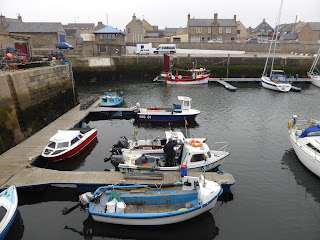
The area around the harbour is hugely atmospheric including many historic stone buildings now used as cafes, shops and a museum. The harbour’s main source of income nowadays is a marina accommodating up to 120 boats in the water and 48 on the hardstand, where they are securely lashed down during winter to prevent them blowing over during severe gales.
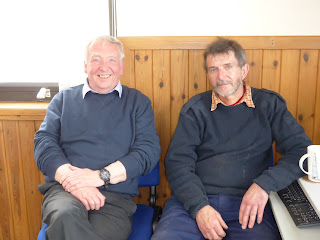
Lossiemouth has a long waiting list for permanent berths but visitors are always accommodated and enjoy the friendly reception, excellent facilities and local marine infrastructure. It’s not by chance that we’re visiting Lossiemouth but due to a family connection – my brother, Charles, is the Harbourmaster and we can see his 36ft van der Staadt designed sloop, Acrobat, moored to one of the pontoons.
Charles and his now-wife Marie sailed Acrobat from Brisbane Australia through south-east Asia, across the Indian Ocean and up the Red Sea into the Mediterranean. It was here during our 2005 visit to Acrobat in Turkey that Charles and Marie became our inspiration for the Med cruising life we now enjoy. After spending several years living and working in Turkey, Italy and France Charles and Marie motored through France’s Midi Canal system eventually arriving in Lossiemouth, where they continued to live aboard while working as well as finding time to sail and explore Scotland’s rugged and remote offshore islands and some of Norway’s frigid coastline. Charles has a great sense of humour and gets on very well with most everyone – he’s also a practical and highly technically qualified guy, being a shipwright, builder and cabinetmaker. After Acrobat arrived in the marina the staff and other berth holders were soon tapping his skills until he eventually gained employment there, later becoming the marina’s manager, a position which is very much hands-on.
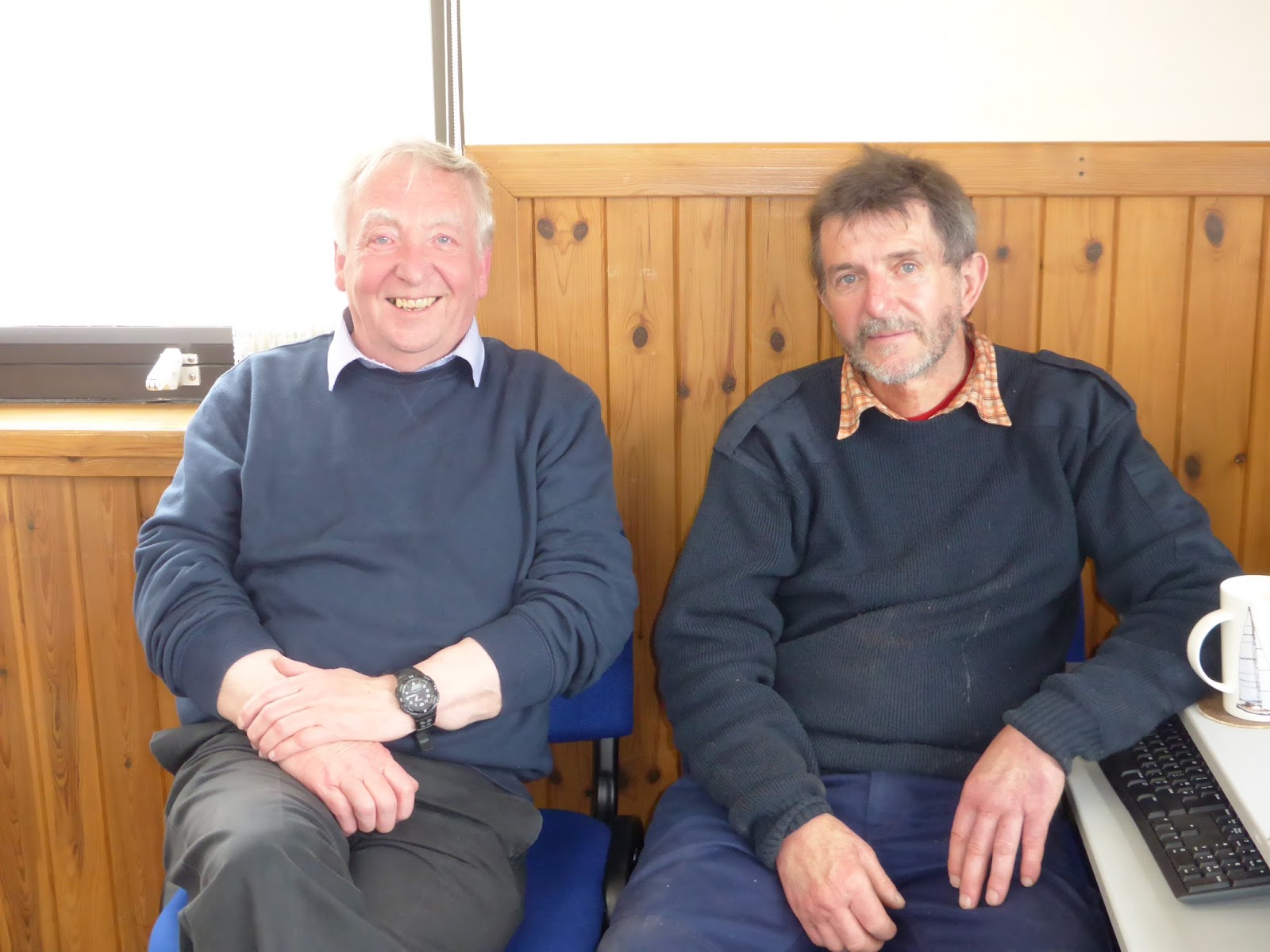
Harbour chairman George Reid (at left) with my brother Charles
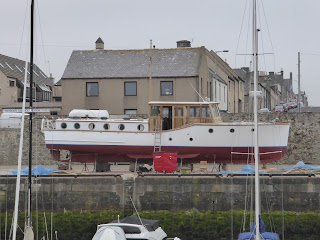
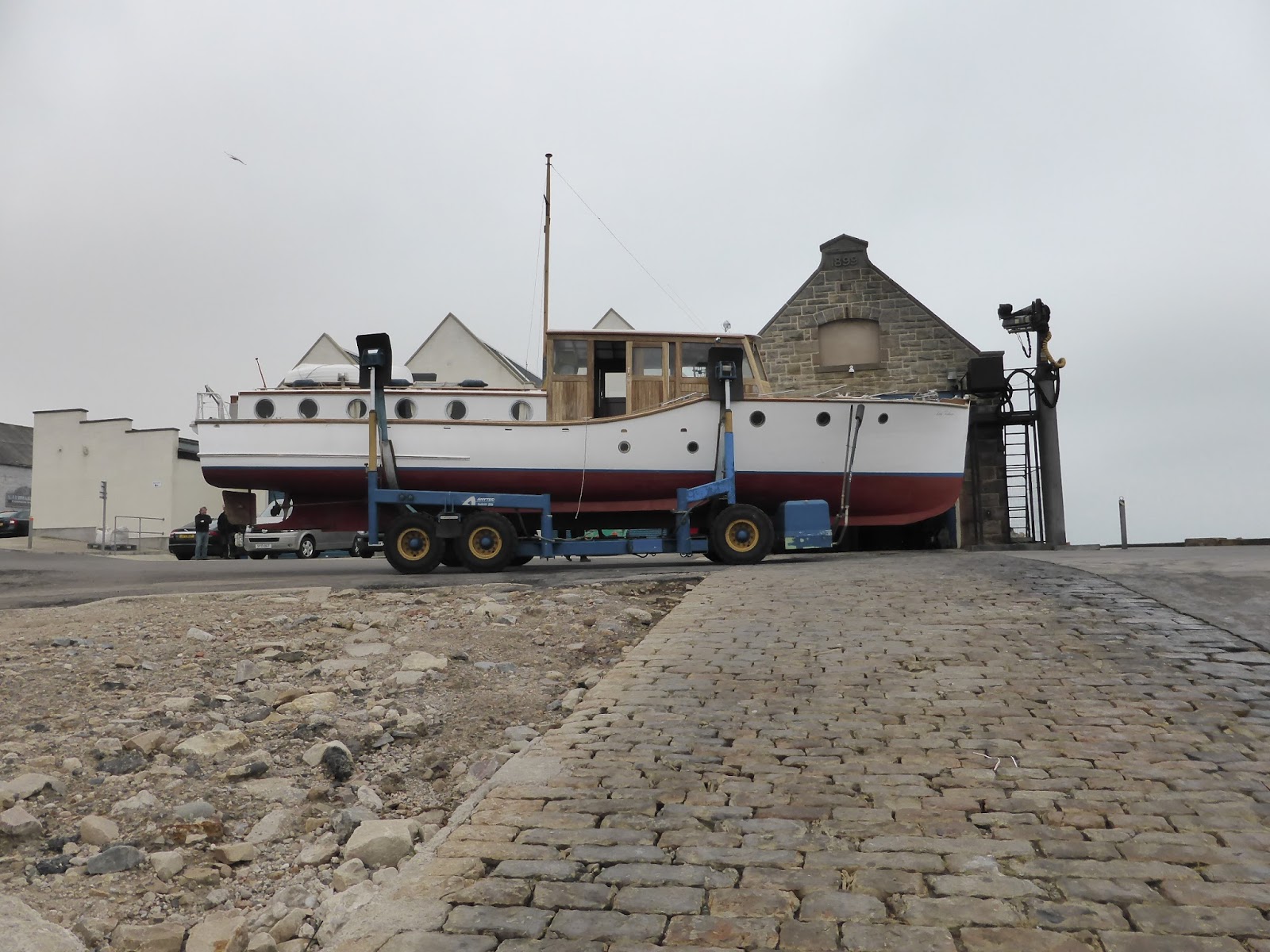
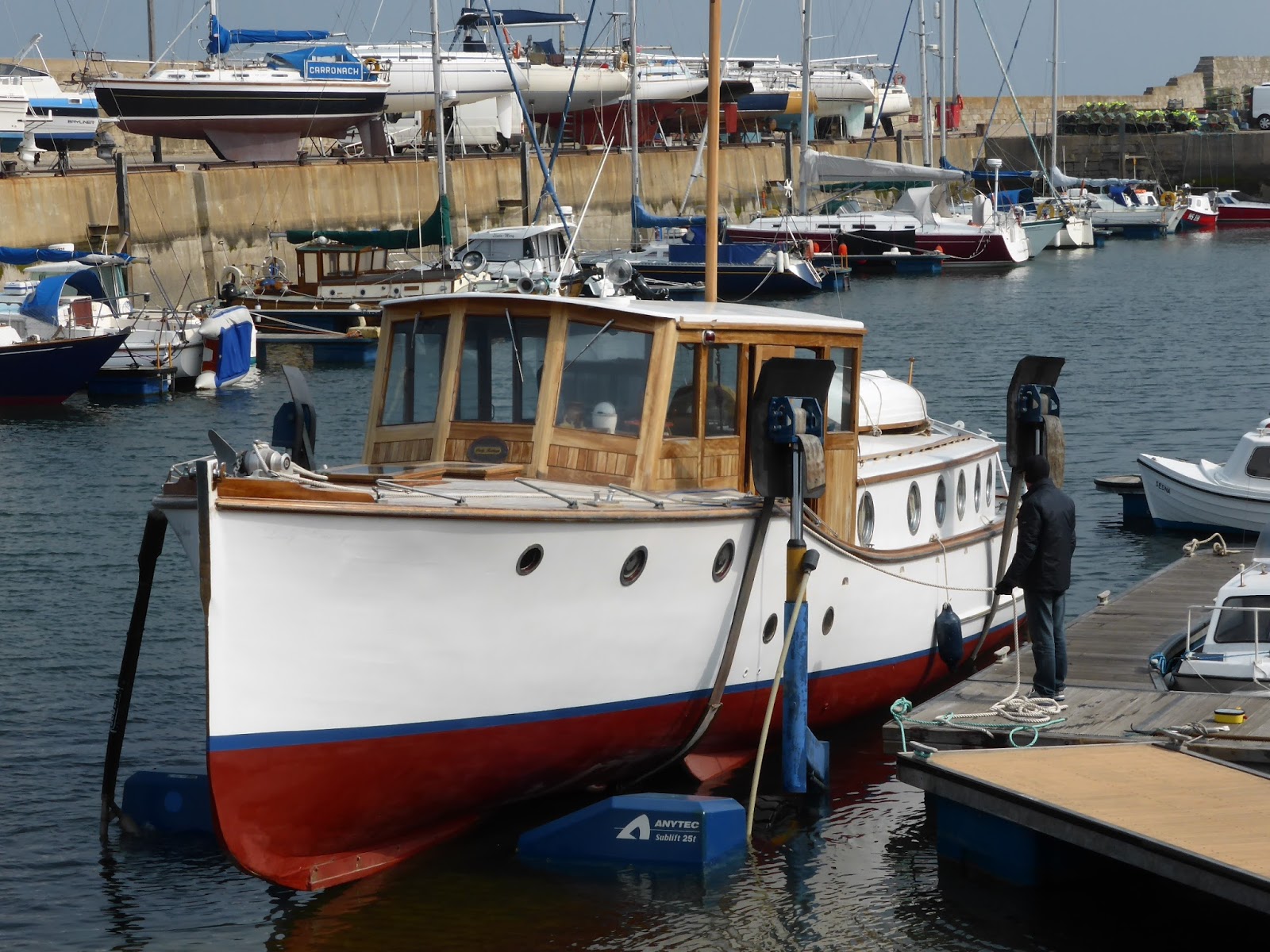
One of the most interesting vessels in the marina at the time of our visit was Lady Kathryn, an 18 tonne, 54ft oak-framed timber motor yacht powered with two Perkins diesel engines which were more than 10 years old when they were installed in the new vessel in 1929 and still going strong. Her owner proudly gave us a tour of his vessel and explained that she had participated in WW2, loaded to the gunwales with allied troops during their evacuation from Dunkirk.
Lady Kathryn evacuated allied troops from Dunkirk
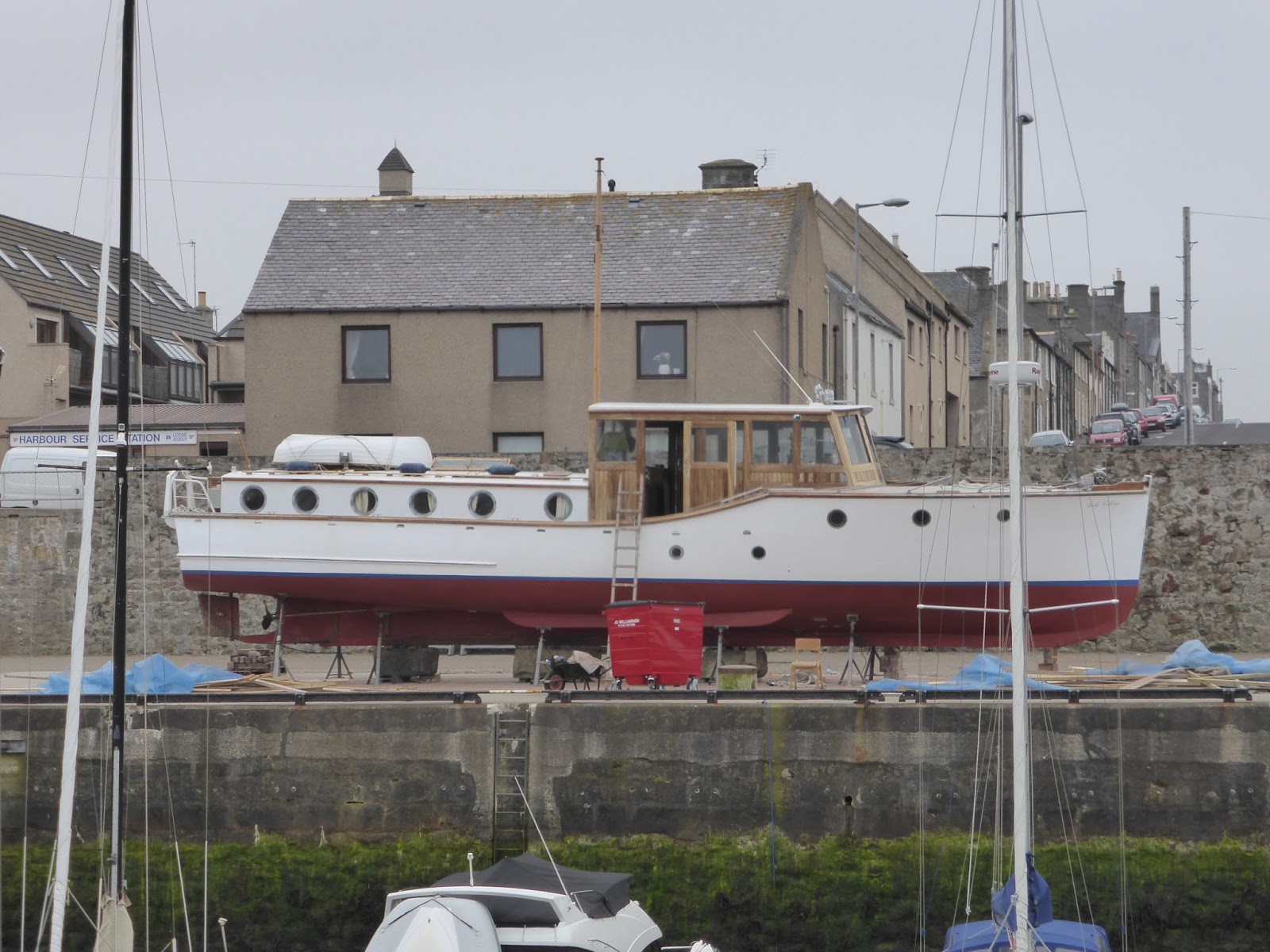
The ultimate “big boy’s toy”
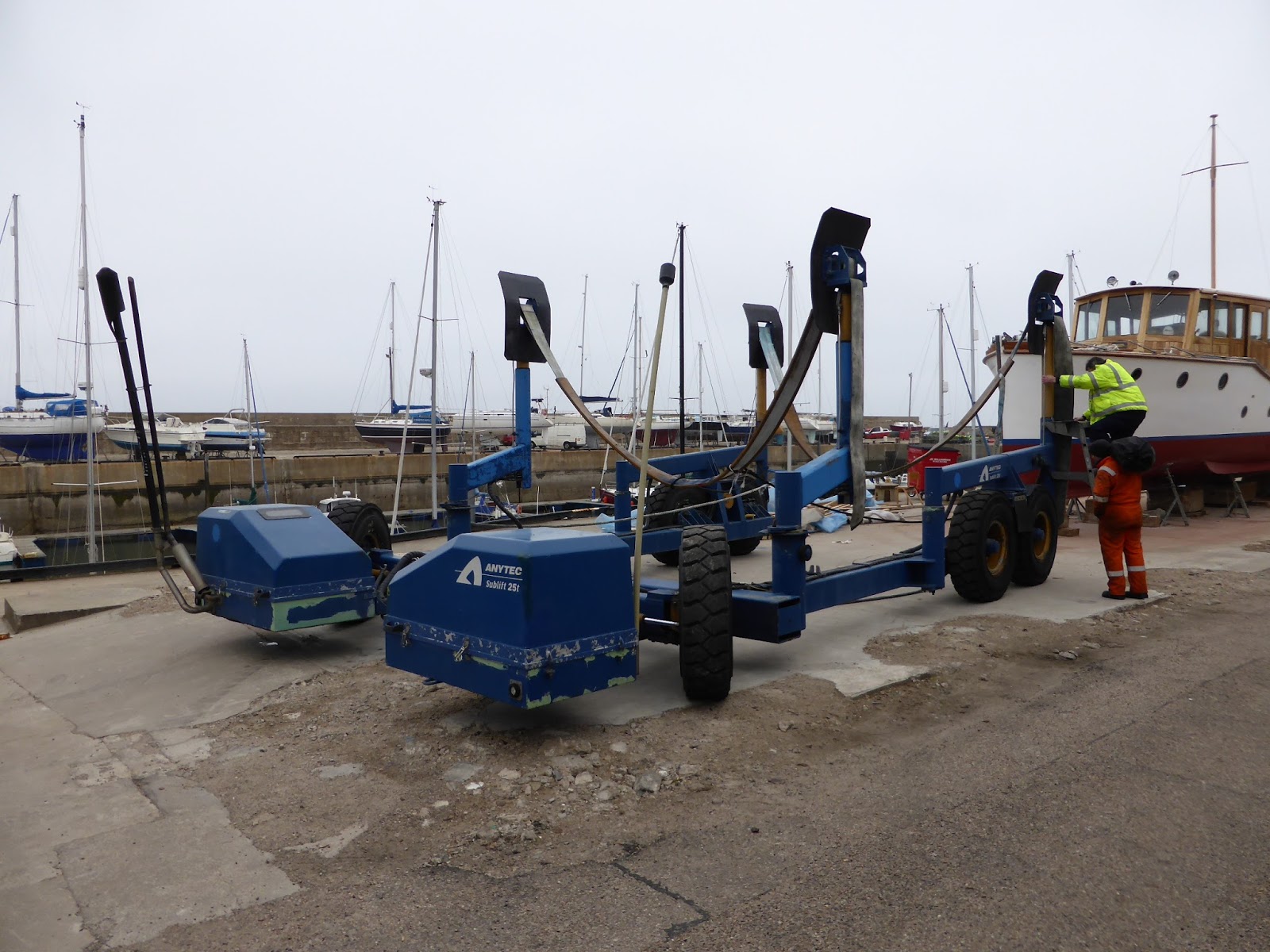
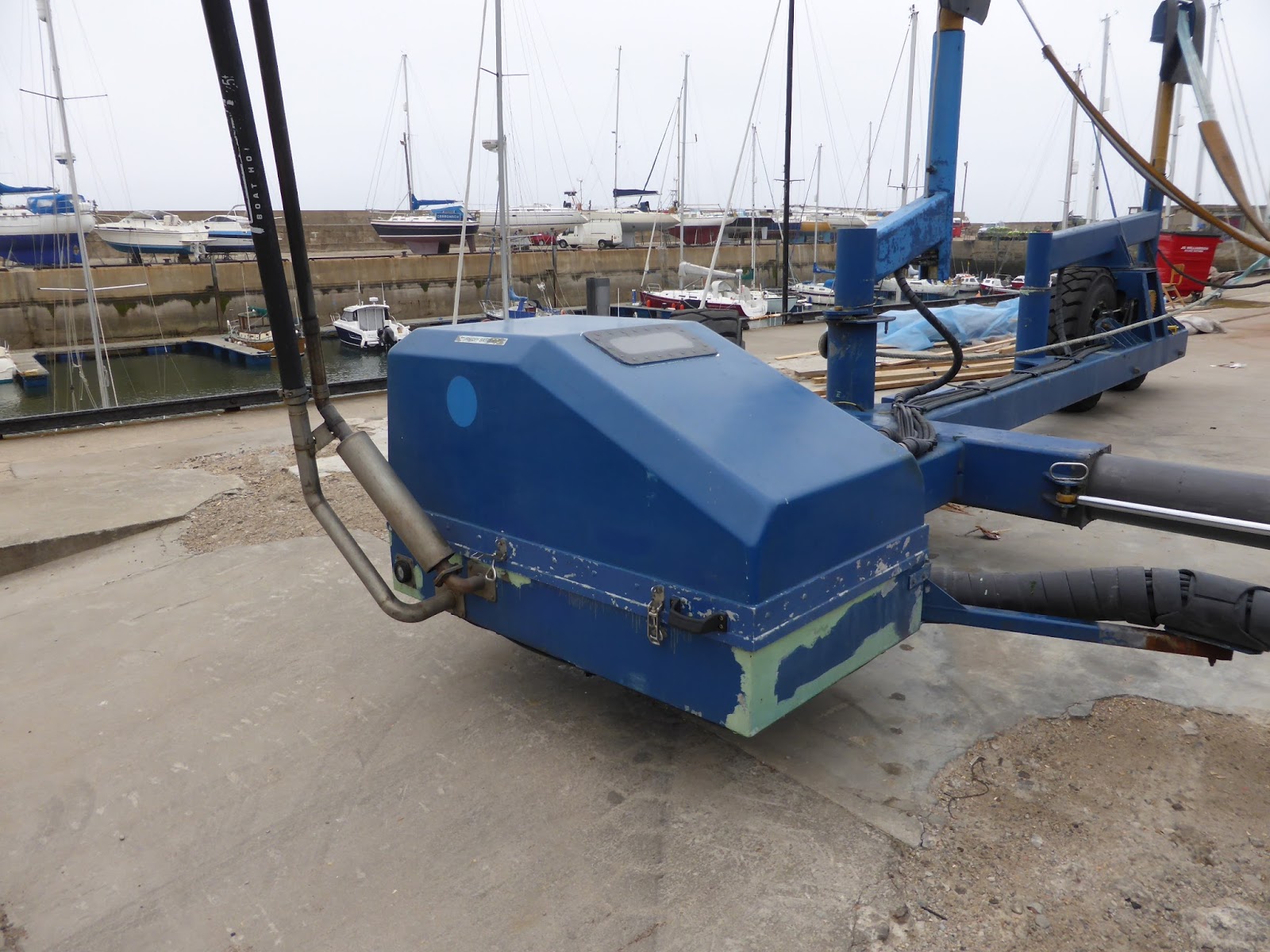
Most marinas move boats in and out of the water using a travel lift that straddles a boat and lifts it with high tensile strength strops. Lossiemouth uses a Swedish designed and built diesel-powered, remote-controlled submersible sub-lift with a 25tonne capacity. As the whole unit including the engine goes underwater the engine has a watertight hood using trapped air to keep the engine dry, and a snorkel for the exhaust to be used while the engine is under water.
Lossiemouth’s 25 tonne capacity sub-lift
Close-up of waterproof engine cover
Lady Kathryn being launched using the sub-lift
The sub-lift disappearing under water

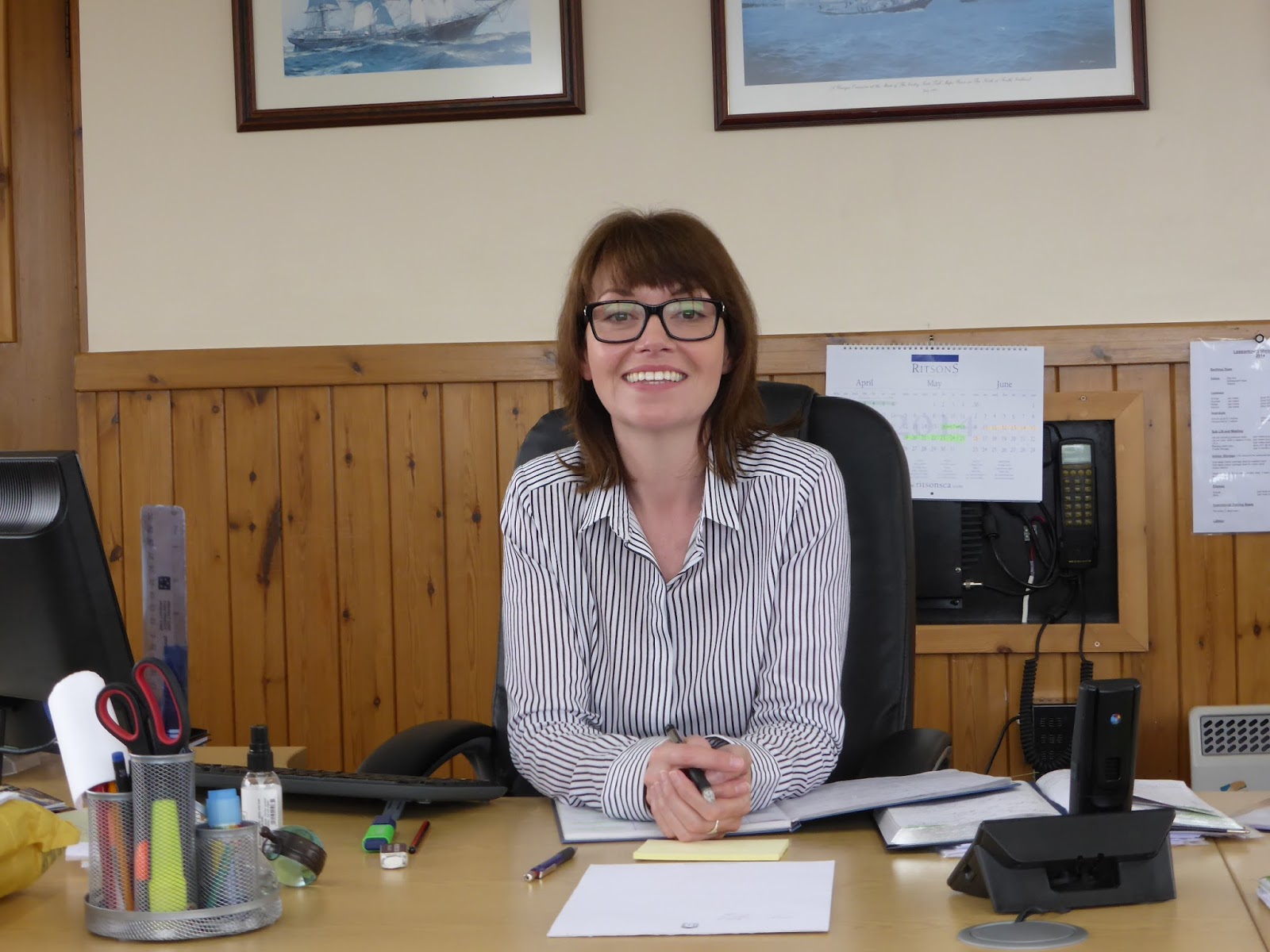
Amanda provides super-efficient administration services for berth holders and visitors
If like us you enjoy wandering around marinas and fishing harbours, there’s plenty to see on Scotland’s wild north-east coast.
Our next posting will start to detail our favourite ten Eastern Med cruising destinations – most of them relatively unknown.
The Entire Observable Universe, Captured In One Stunning Image

Using Photoshop and logarithmic maps created by scientists at Princeton, artist and musician Pablo Carlos Budassi combined images from NASA with original sketches to create this stunning illustration that captures the unimaginably vast observable universe.
http://www.huffingtonpost.com/entry/universe-logarithmic-image-pablo-carlos-budassi_568de0d7e4b0a2b6fb6ebda7
Nordhavn Exumas Abacos Bahamas trawler Caribbean Pickwick Boat dogs
Memphis Downtown
Memphis Downtown
72º @ 26º
It’s nice to be back — the sound of the surf pounding the beach and winds blowing Northish — perfect temps along with ocean scents make being home a pleasure.

We did enjoy our time back in funky old Memphis.
Friends, food, music… a great hang.

Traditions stand:

Ralph always smokes us a Turkey and a couple of slabs of Ribs.

Earnestine and Hazel’s Soul Burgers on Christmas Eve and Gumbo with Catfish at Blue City Cafe on Beale St. early New Year’s Eve.

Our last night in town was capped off in true Memphis style with one last Soul Burger and a couple of sets of The Earnestine and Hazel’s House Band featuring old-old friend Willy Bearden pickin’ and singin’.
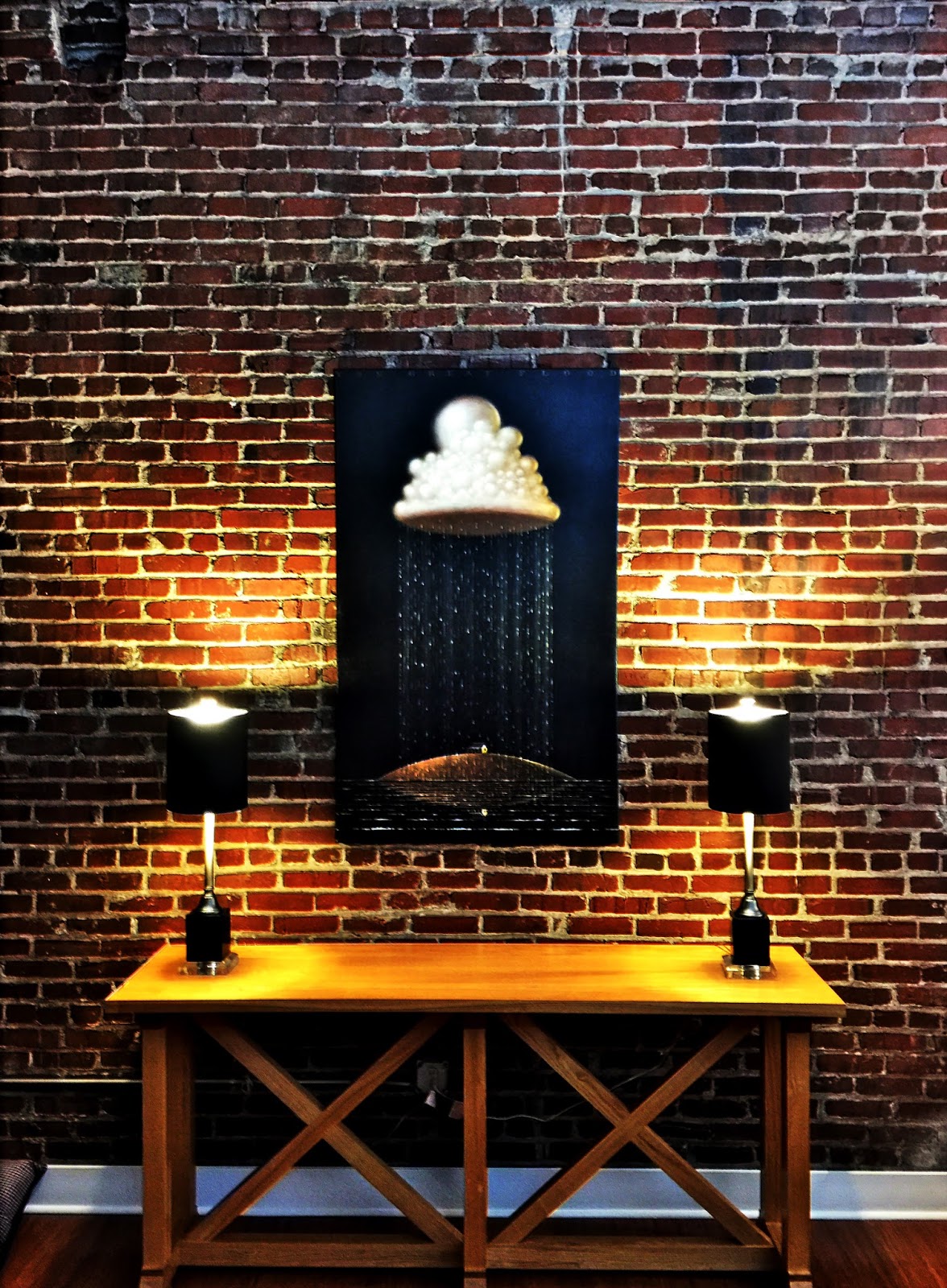
And… we added to our art collection with new piece by neighbor and running buddy, John Robinette.
We should know better than to walk into John’s studio, but the new painting does look perfect in this spot.
So, once again we found old Memphis to be a great hang; there’s no place like home.
But, there’s no place like home as I take a deep whiff of salt air, my sinuses clear, and a relaxed smile forms on all our faces. (Conflicted?—No, fortunate.)
Here’s to a healthy and fulfilling 2016.
Cheers…
Nordhavn Exumas Abacos Bahamas trawler Caribbean Pickwick Boat dogs
Memphis Downtown
Memphis Downtown
Hello 2016
hopes … dreams … tentative expectations
here we go —

Nordhavn Exumas Abacos Bahamas trawler Caribbean Pickwick Boat dogs
Memphis Downtown
Memphis Downtown
So Long 2015
You were a pretty good year.Nordhavn Exumas Abacos Bahamas trawler Caribbean Pickwick Boat dogs
Memphis Downtown
SCOTLAND’S LOSSIEMOUTH HARBOUR (PART 1)
While Envoy is in Lefkas Marina, Greece, we are home in Auckland, New Zealand, planning to return to Greece late March.





THE FIRTH OF MORAY
The next best thing to boating is wandering around interesting marinas. I’m lucky to have seen plenty of them around the world, but few as interesting as fishing harbour-turned-marina Lossiemouth in Scotland’s largest Firth – the Moray on the north-east coast.
Fishing-harbour-turned-marina Lossiemouth

Bordering the Highlands this is wild territory, where temperatures can struggle to reach double figures (the days we spent there were around 7dC), vicious North Sea gales and huge waves often lash the coast and the har (fog) severely restricts visibility.
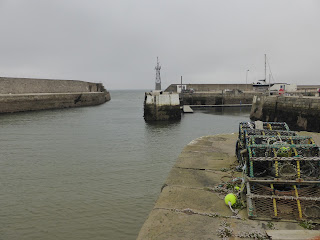
This scene looks peaceful but these massive harbour wall stone blocks were knocked down by huge breaking waves

The Firth’s 500 miles of shoreline includes salt marshes, mudflats, rocky shores, windswept cliffs and surprisingly, many stunning sandy beaches. But even in summer the water is a very chilly 12dC, discouraging all but the most masochistic of swimmers. Nevertheless hardy types enjoy kayaking, surfing windsurfing and sailing.
The Firth holds abundant wildlife both within and outside its Special Area of Conservation, one of Europe’s largest marine protection areas hosting seals, whales, dolphins, lobsters, scallops, many varieties of fish and hundreds of bird species.
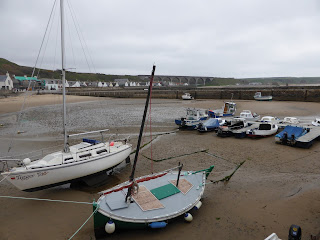
Unlike the Med Scotland is very tidal
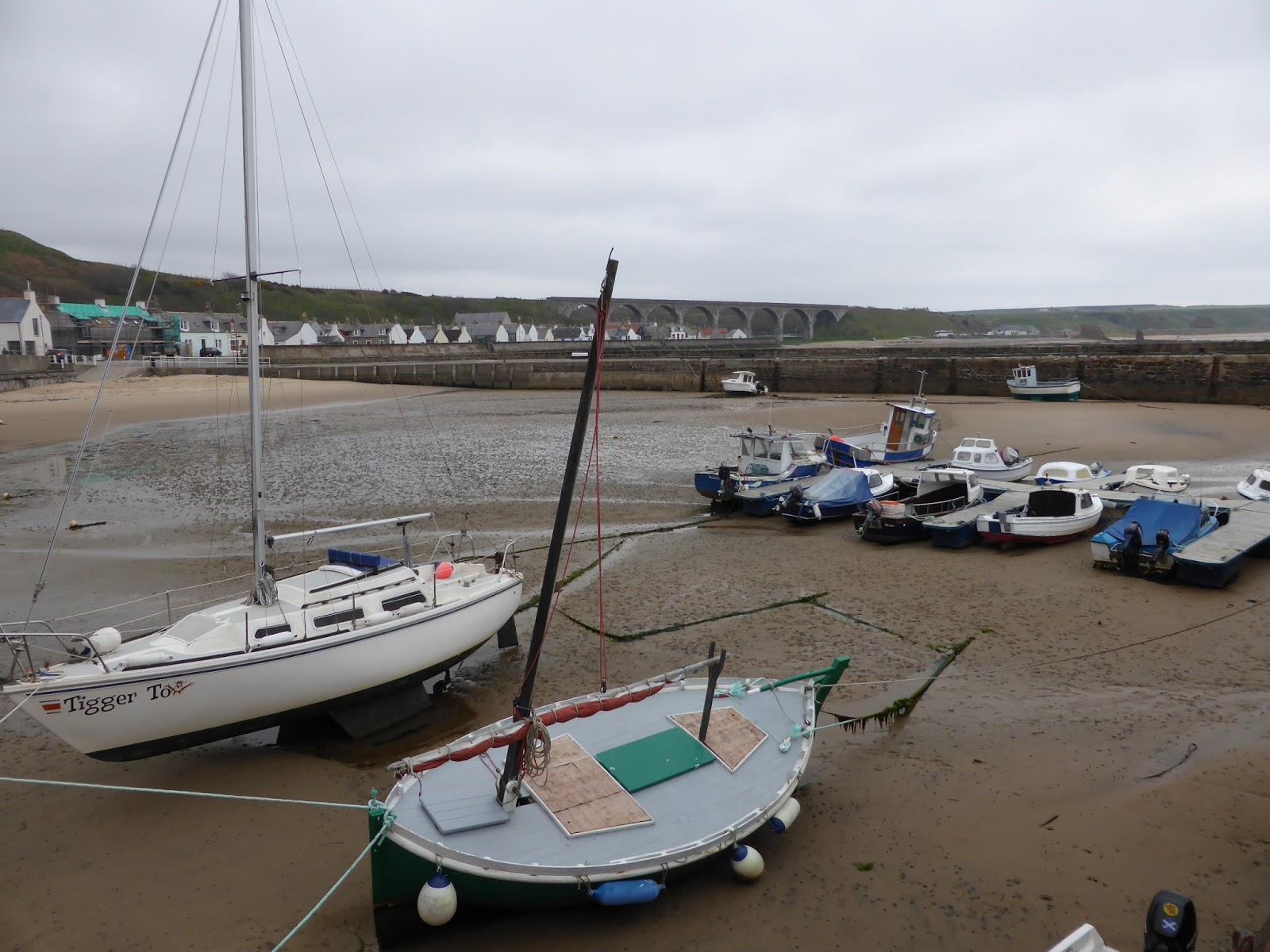
Picturesque Cullen harbour

At its western end the Firth leads to the famous Loch Ness and the 60-mile-long Caledonian Canal completed in 1822 and providing access to western Scotland. At the outer eastern end is the closest of the North Sea fields – Beatrice, with drilling rigs towering out of the sea.
Numerous whisky distilleries surround the area, many of which are open for the public to tour, enjoy tastings and lunches.
This whisky shop near the distilleries has an unbelievable number of whisky brands

Whisky bar near distilleries

LOSSIEMOUTH
The quaint village of Lossiemouth’s harbour is found at the mouth of the Lossie River, blasted out of solid rock in the 1830s as a trading port for the nearby town of Elgin.
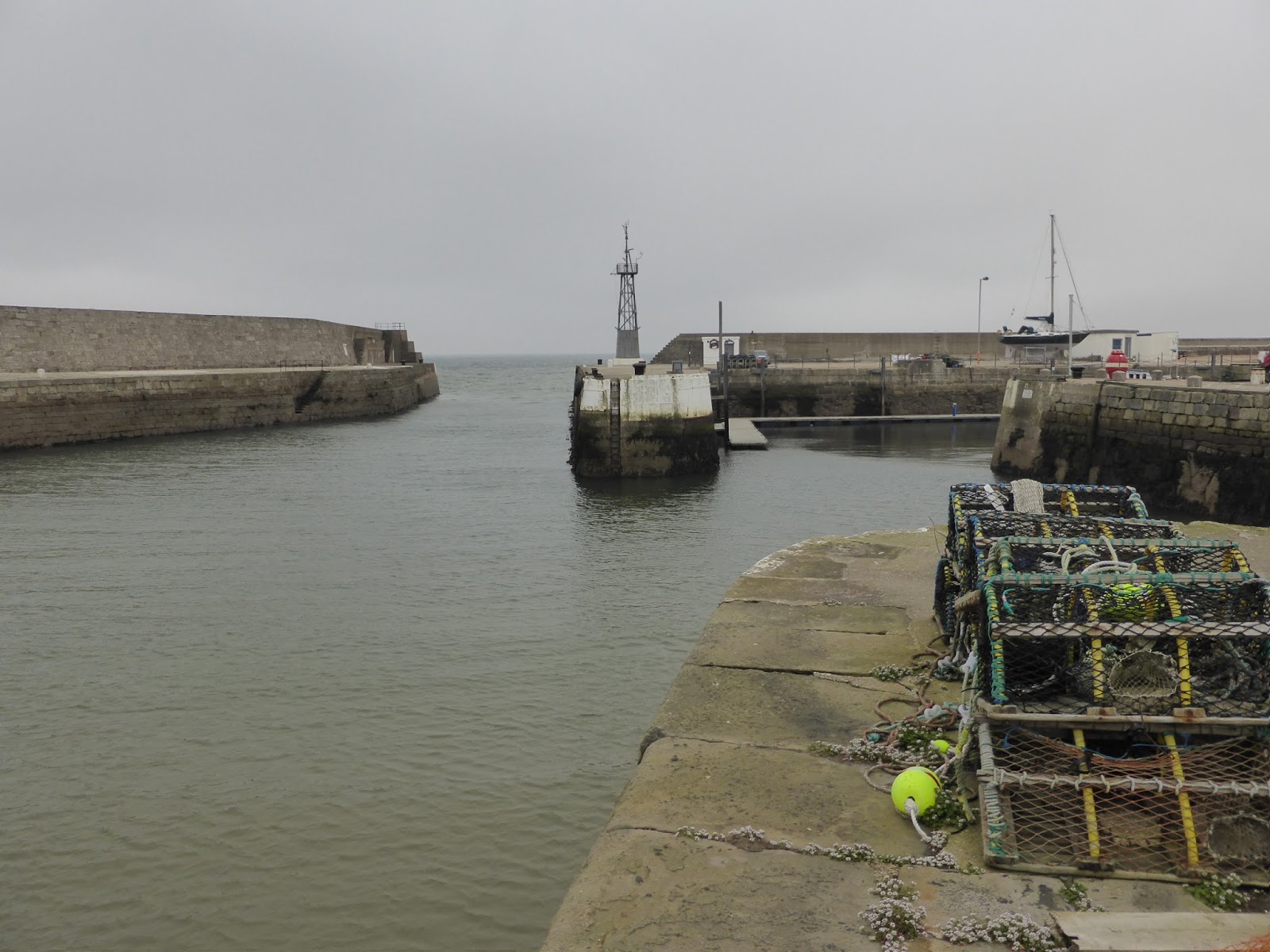
The narrow harbour entrance is parallel to the beach to reduce the surge from large waves
Access to this area is by train or air to Inverness 40 miles to the west of Elgin.
Between the two is the site of the historic Culloden battlefield where the last major battle on British soil took place in 1746. This battle still gets passions rising but contrary to the popular belief that this bloody battle was fought between Scots and English it was in fact between Protestant Loyalists led by the Duke of Cumberland and consisting of English, Scots, Irish and even some German and Austrian troops and Catholic Jacobites led by Charles Stuart consisting of mostly Highland Scots with some English and Irish troops. The Jacobites were largely non-professional volunteers and their early attack was quickly routed with severe casualties and further reprisals on the Jacobites to prevent any chance of the House of Stuart threatening the House of Hanover’s control of the monarchy.
The RAF has long maintained an airfield here nowadays home to Tornado fighters, Sea King Helicopters and the 617 Squadron – famously known as the Dambusters. It’s common to see these Tornados thundering overhead at low altitude.
Fishing became the mainstay of the economy and the first modern seine-net boat was designed here. Lossiemouth was Scotland’s second largest whitefish port and a fascinating quayside maritime museum brings back to life the tough times the hardy fishermen endured. In its zenith Lossiemouth was home port to about 80 fishing boats and the present chairman of the Marina Board, George Reid once owned 18. He explained to us the industry not only provided employment for about 400 boat crew but also for an infrastructure of a further 600 associated workers including packers, drivers, chandlers, mechanics and riggers. Nowadays all we could see is a solitary lobster boat plus about six small open fishing boats.
The fishing fleet now consists of a solitary lobster boat plus the small boats in the foreground
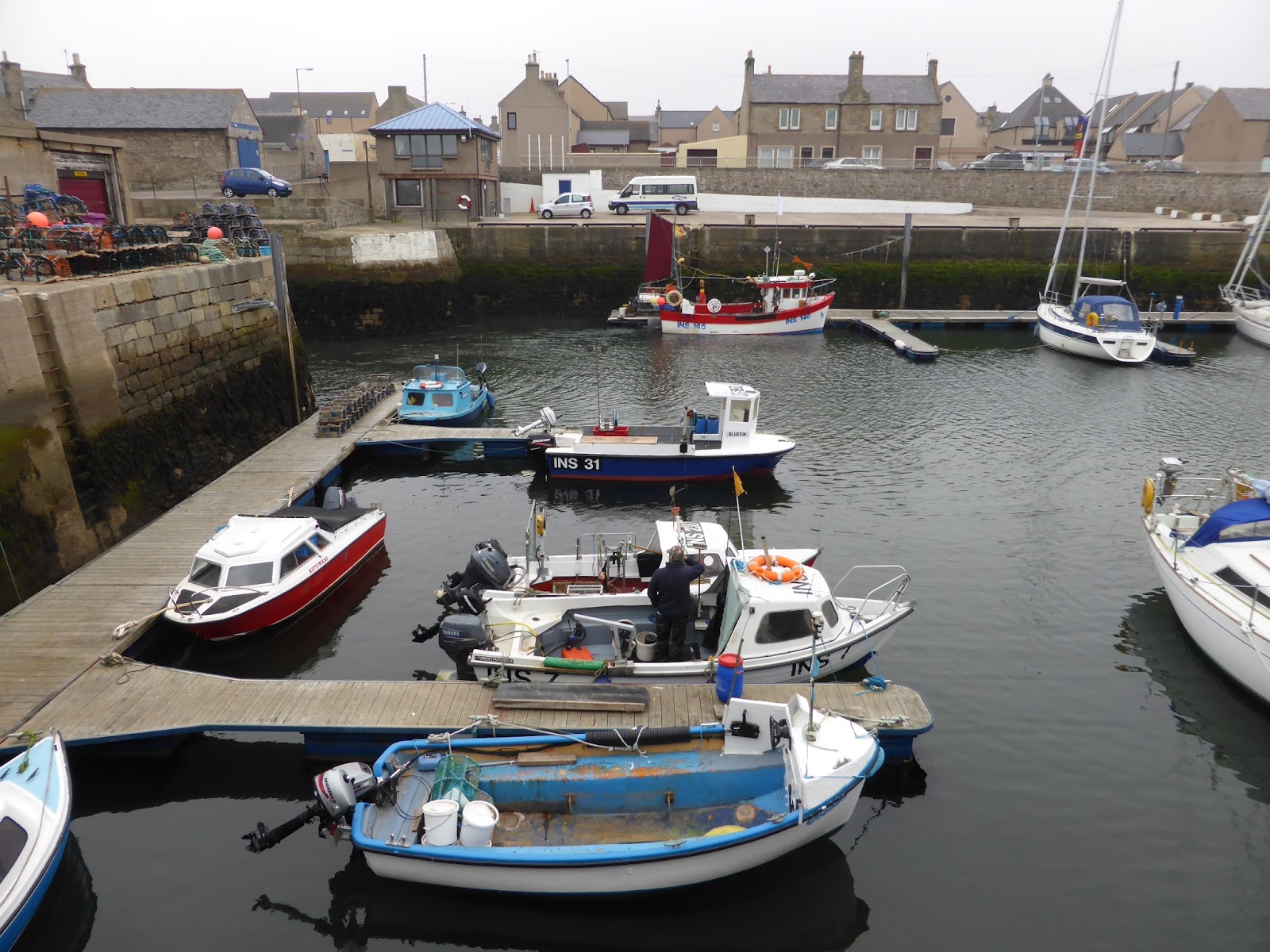
Close-up of lobster boat (lobsters are plentiful)

Although we assumed fishing died out here in the 1980s due to over-fishing and depletion of stocks, George says this was only part of the story and the other part is the EU largely forced the UK to abandon fishing. Many of the displaced workers subsequently found employment in the oil industry centred around Aberdeen.
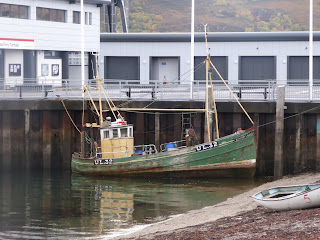
Trawlers still operate from some ports including MacDuff
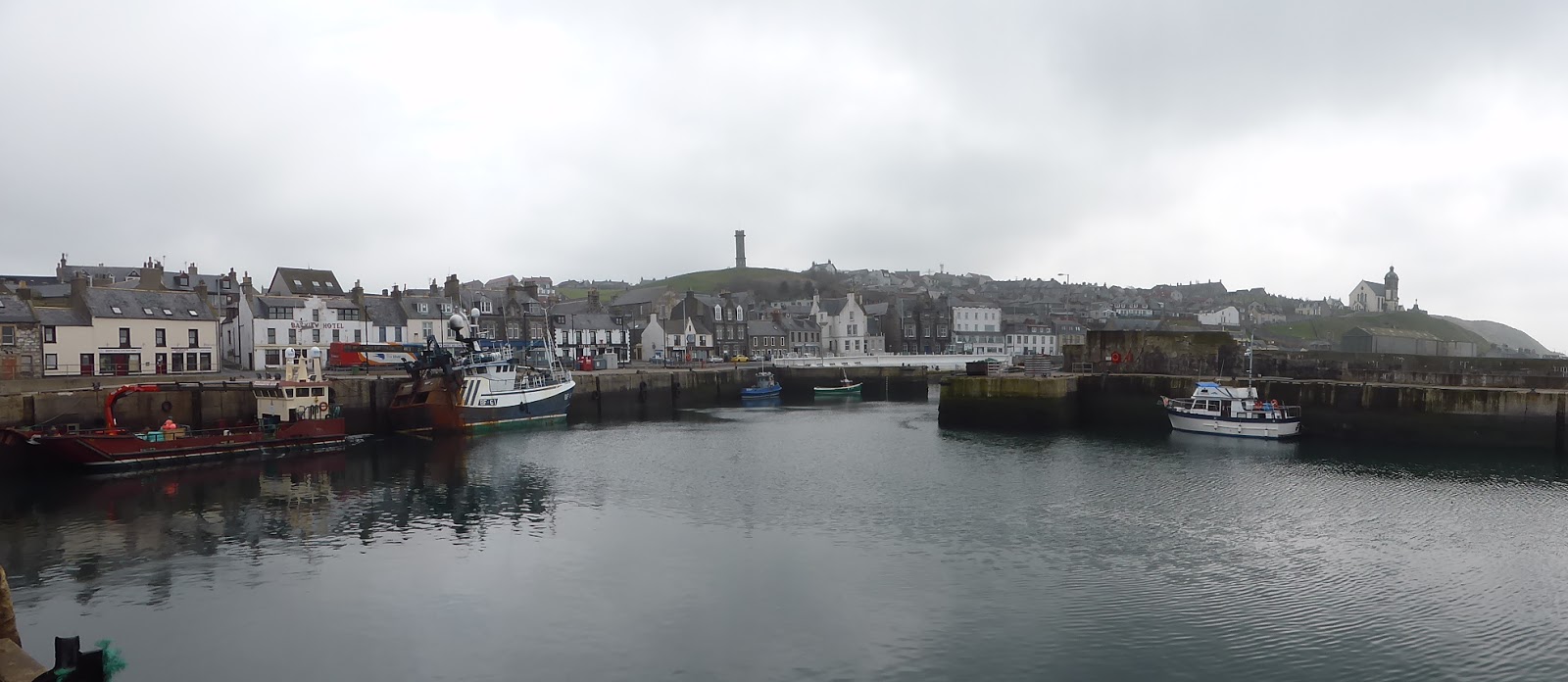
This is exactly my idea of a traditional still-working Scottish trawler

Next posting read more on the marina itself plus a highly unusual submersible travel lift and the 54ft wooden motor yacht that went to Dunkirk.
FOR FOODIES Think of Scottish food and you first think of porridge and haggis, but a more popular “national dish” these days is a rich seafood soup called Cullen Skink. We’ve enjoyed delicious clam chowder in Massachusetts and traditional bisque in France, but Cullen Skink has a smokier flavour than the former and is heartier than the latter – just the thing to warm you up on a cold Scottish autumn day. Cullen Skink originated in the medieval seaside town of Cullen on Scotland’s east coast, now a popular summer holiday and surfing resort. It’s based on smoked haddock, which is a popular and heavily fished species found on both sides of the North Atlantic generally reaching a size of about 600mm in length and 1.5kg in weight. We haven’t tried, but guess Cullen Skink could work well with any smoked fish. The balance is potatoes and onions. First the onions are lightly fried in butter. Meanwhile the haddock is separately lightly poached. Add milk to the onions, then small chunks of potato. When the spuds are nearly cooked, add the haddock and simmer for about five minutes. Add salt, pepper and chopped parsley, then serve piping hot with fresh crusty bread and butter – it is absolutely delicious.

