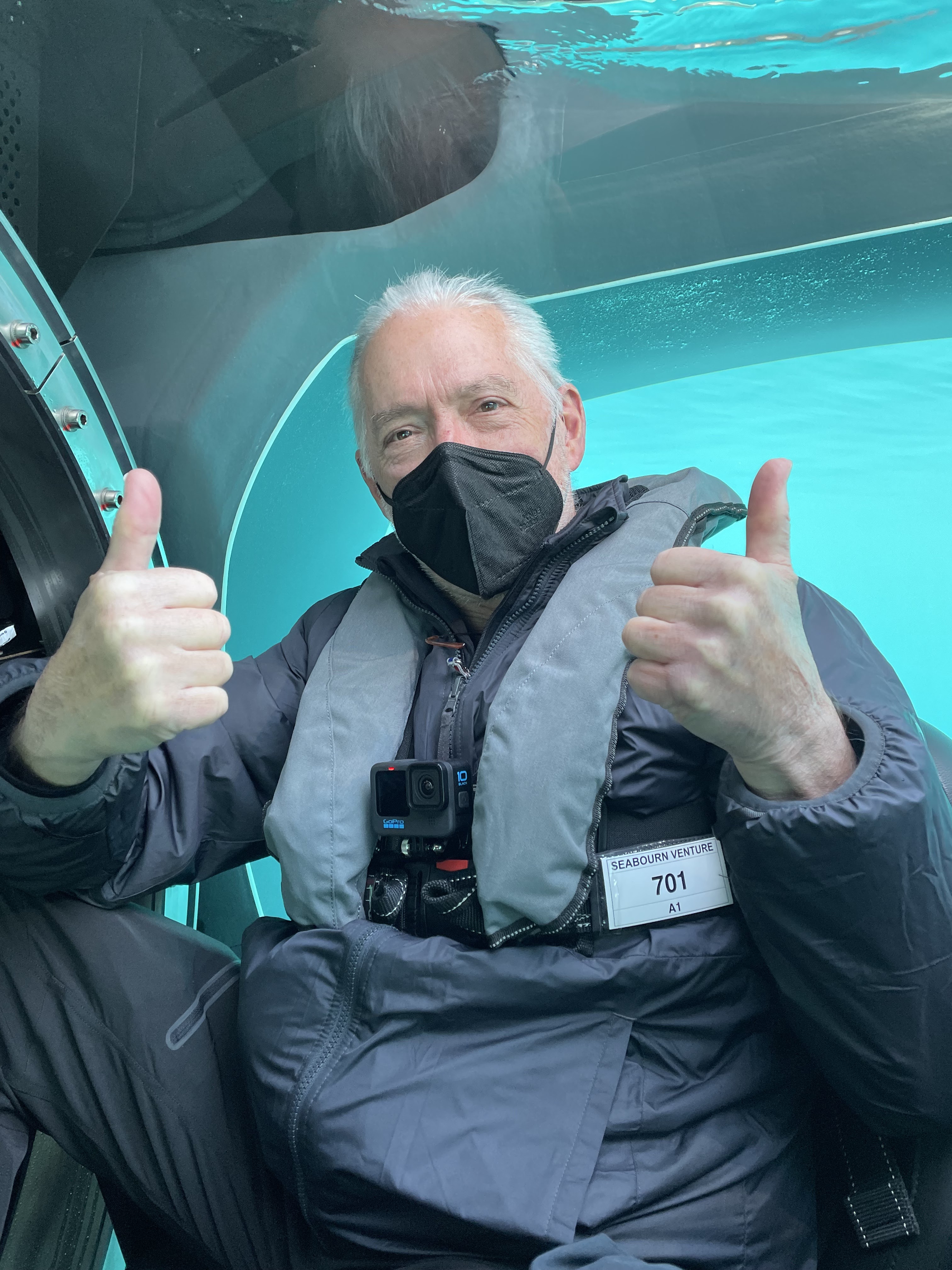
Our plans are always fairly fluid, but the past couple of years have seen even more changes than normal. In 2020, we made three major itinerary adjustments: skipping the Mediterranean and instead heading to Scotland; crossing the North Sea to Norway while en-route to cruising the Scottish Orkney and Shetland island groups; and choosing to…
Tag Archives | trawler
PONUI ISLAND MAGIC
As I write this we’ve been in Level 4lock down for nearly five weeks now and hopefully we’ll be going down to Level 3 next week and 2 the week after. So let’s hang on in there.
From a boating perspective we haven’t missed out on too much as until the last few days the weather has mostly been miserably wet, windyand chilly. Roll on Level 2, warmer weather and the resumption of boating – we can’t wait!
Here’s an edited version of an article to appear shortly in Pacific PowerBoat re cruising around the Ponui Island area.
In Auckland we’re spoiled for choice of great cruising destinations with about 1,200square miles of the mightyHauraki Gulf and dozens of islands on our doorstep, explainingwhy Auckland is said to have the largest number of boats per capita in the world.
One of ourfavourite inner Gulf islands is Ponui. Maori were the island’s first inhabitants during the 1400s and evidence still remains of 23 separate pa sites. The island was purchased in 1853 by the Chamberlin family, who remained through the generations and still farm the island to this day. Ponui translatesas “long night” and judging from the number of cruisers who frequent this area we’resure there’s been many anenjoyableand long nightspent here.
Ponui is about four miles long in a north to south direction, one to two miles wide and indented with numerous bays and coves offering at least 20 good anchorages, wellspread around the island allowing cruisers tofind safe shelter in all wind conditions. The highly informativeRoyal Akarana Yacht Club Coastal Cruising Handbook (a must have on board for cruisers) provides excellentinformation on most of these anchorages, so we’ll focus on just threeof our favourite areas.
By far Ponui’s most popular anchorage is Chamberlains Bay (also called North Harbour) bordering the northern coast’s Ruthe Passage separatingPonui andRotoroa Islands. This large bay offers great shelter in westerlies through to southerlies and for light north-westerlies and south-easterlies, although in stronger south-easterlies an uncomfortablefetch comes into the bay from the Firth of Thames. You’ll notice that Coastguard have a mooring for their rescue vessels in the bay’s north-west corner.ChamberlainsBay (note spelling of this bay is different to that of the Chamberlin family name) has no particular hazards except for itsmuddy bottom gradually shoalingtowards the southern shoreline. Immediately to the east are two great sandy beaches easily reached by dinghy. If anchoring off these beacheswatch out for the rocky outcrop between the two beaches and monitor your depth. Part of Chamberlains Bay’s appeal is that if the wind shifts to the north or east boats can easily moveless than a mile across to Rotoroa’s South-West Bay to shelter. Thisbay also has three moorings available to rent by prior arrangement at $25 per night. The Salvation Army ran an alcohol addiction treatment centre here from 1911 until 2005 and during that time no landing was allowed. It’s reputed that sometimes desperate alcoholics swam out to boats moored here trying to score a drink. Nowadays visitors are encouraged, but no dogs are allowed as Rotoroa is a wildlife sanctuary with kiwi and weka abounding. It’s well worth visiting their interesting Exhibition Centre and your kids will certainly love the nearby brick jail house. You’ll have to avoid the temptation to leave them there! Takea walk over the island for spectacular views of the Firth of Thames and visit Men’s Bay and Ladies’ Bay on Rotoroa’s east coast – great anchorages in settled westerly conditions. Formerly cruisers could only gazeat these near-perfect beaches from afar, but can now enjoy their white sand, crystal clear waters and gnarly shade-providing pohutukawa trees.
Shark Bay on the island’s western side bordering the Waiheke Channel isn’t mentioned on the NZ 5324Chart for this area, but it’s the bay to the north ofOranga and Poroaki Bays. Oranga Bay is too shallow for anchoring, but take your dinghy in to see the shipwreck on the shoreline with its impressivepropeller and the nearby remains of two boilers. You’ll also see plenty of rays gliding across the seabed searching for kai.
Shipwreck in Oranga Bay on a great early July day
Close up showing the wreck’s huge propeller
Poroaki Bay can be recognised by
Stunning unnamed bay south of Ponui Head
Barge at Poroaki Bay
Bryants Bay on
Fishing is generally good around Ponui, particularly on the eastern side in the Firth of Thames and we’re always able to feed ourselves,however on the north-western side be aware of the Te Matuki Marine Reserve extending across to Awaawaroa Bay on Waiheke Island’s south coast.
There are large signs on PonuiIsland’s foreshores advising the island is private property and that no dogs, fires or camping are allowed. I spoke to one of the island’s three farm owners who advisedboaties mayland on beaches provided they observe the above limitations.Ponui is home to nearly2,000 brown kiwi, descendants of just 13 released in 1964 anddogs and ferrets are theirmain predators so there’s good reason to ban dogs. While most dog owners are responsible a minorityapparently think leashed dogs are not a problem and that rules don’t apply to them. However even leashed dogscanupset farm animals andwildlife whiletheir scent is an issue in bird breeding areas sometimes causing birds to abandon their nests.
There is no fuel, water or supplies available in this area, except for wine at the very pleasant Man O’War Vineyard. On a fine summer’s day you’ll find dozens of inflatables ashore hereenjoying the sandy beach and the selection of winery beverages and snacks. Closest groceries are at Rocky Bay while for fuel and water you’ll have to make the eleven mile trip to Pine Harbour marina.
We really enjoy anchoring in these areas around Ponui and hope you will too, but remember if going ashore to act responsibly by taking no dogs, lighting no fires and taking your rubbish away with you.
Next Post will be about cruising at low rpm without compromising your engines’ performance and longevity.
PONUI ISLAND MAGIC
As
I write this we’ve been in Level 4
lock down for nearly
five weeks
now and hopefully we’ll
be going down to Level 3 next week and 2 the week after. So
let’s hang on in there.
From
a boating perspective we haven’t
missed out on
too much as
until the
last few days the
weather has mostly been miserably
wet, windy
and chilly.
Roll on Level 2, warmer weather and the resumption of boating – we
can’t wait!
Here’s
an edited version of an article to appear shortly in Pacific
PowerBoat re
cruising around the Ponui Island area.
In
Auckland
we’re
spoiled for choice of great
cruising
destinations with
about 1,200
square miles of the mighty
Hauraki Gulf and
dozens of islands on
our doorstep, explaining
why Auckland is said to have the largest number of boats per capita
in the world.
One
of our
favourite inner Gulf islands
is Ponui. Maori
were the
island’s first inhabitants during
the 1400s and
evidence still remains of 23 separate pa sites. The
island was purchased in
1853 by the
Chamberlin family, who remained
through the generations and still
farm the island to this day. Ponui
translates
as “long
night” and
judging
from the number of cruisers who frequent this area we’re
sure there’s been many an
enjoyable
and long
night
spent here.
Ponui
is about
four miles
long in a
north to
south direction,
one to two miles wide and
indented
with numerous bays and coves offering
at least 20
good anchorages,
well
spread around the
island allowing
cruisers to
find safe
shelter in
all wind conditions. The
highly informative
Royal Akarana Yacht Club Coastal Cruising Handbook (a
must have on board for cruisers) provides
excellent
information on most of these anchorages,
so we’ll
focus on just
three
of our
favourite
areas.
By
far Ponui’s
most popular anchorage is Chamberlains
Bay (also called North Harbour) bordering the northern coast’s
Ruthe Passage separating
Ponui and
Rotoroa Islands.
This large bay offers great shelter in westerlies through to
southerlies and for light north-westerlies and south-easterlies,
although in stronger south-easterlies an
uncomfortable
fetch comes into the bay from
the Firth of Thames.
You’ll
notice that Coastguard have a mooring for their rescue vessels in the
bay’s north-west corner.
Chamberlains
Bay
(note
spelling of this bay is different to that of the Chamberlin family
name) has
no particular hazards except
for its
muddy bottom gradually
shoaling
towards the
southern shoreline. Immediately
to the east are two great sandy beaches easily
reached by dinghy. If anchoring off
these beaches
watch out for the
rocky outcrop between the two beaches and
monitor your depth. Part
of Chamberlains
Bay’s appeal
is that if the wind shifts to the north or east boats can easily
move
less than a
mile across
to
Rotoroa’s South-West
Bay to
shelter.
This
bay also has three
moorings available to rent by prior arrangement at $25 per night. The
Salvation Army ran an alcohol addiction treatment centre here from
1911 until 2005 and
during that
time no
landing was allowed. It’s
reputed that sometimes desperate alcoholics swam out to boats moored
here trying to score a drink. Nowadays
visitors are
encouraged,
but no dogs are allowed as Rotoroa is a wildlife sanctuary with kiwi
and weka abounding. It’s well worth visiting their interesting
Exhibition Centre and your
kids will certainly
love the
nearby brick jail house. You’ll
have to avoid the temptation to leave them there! Take
a walk over the island for spectacular views of the Firth of
Thames and
visit Men’s
Bay and Ladies’ Bay on
Rotoroa’s east
coast – great
anchorages in settled westerly conditions. Formerly
cruisers could only gaze
at these near-perfect beaches from afar, but can now enjoy their
white sand,
crystal
clear
waters and
gnarly
shade-providing
pohutukawa
trees.
Shark
Bay on the island’s western side bordering the Waiheke Channel
isn’t
mentioned on the NZ
5324
Chart for
this area,
but
it’s
the bay to the north of
Oranga
and
Poroaki
Bays.
Oranga Bay is too shallow for anchoring, but take your dinghy in to
see the
shipwreck
on the shoreline with its impressive
propeller and the nearby remains of two boilers. You’ll
also see plenty of rays gliding across the seabed searching
for kai.
Shipwreck in Oranga Bay on a great early July day
Close up showing the wreck’s huge propeller
Poroaki
Bay can be recognised by
its
several
homesteads
and
protruding western headland providing
protection from the prevailing south-westerly wind. Very
often there’s also a large powered barge moored close to shore.
Between
Shark Bay and Ponui Head to the north are two unnamed
bays with
excellent sandy beaches and shelter from southerly through to
north-easterly
winds, but
be
aware of an unmarked rock south
west of Ponui Head (marked on chart).
The only negative for
this
area is
wakes produced by large motor vessels travelling at speed through the
Waiheke Channel.
Stunning unnamed bay south of Ponui Head
Barge at Poroaki Bay
Bryants
Bay on
north-east
coast is a
settled weather anchorage suitable for northerly through to
south-westerly winds. It’s
well protected
by Scully Reef and
consists
of three small bays, two of which are really
stunning,
together with a large anchoring area outside these bays. This
is an area where we’re often happy to anchor
for several
days and
holding is
good, but be aware of close to shore rocks. About
half a mile south is another well sheltered bay with a fine
sandy beach.
Fishing
is generally good around Ponui, particularly on the eastern side in
the Firth of Thames and
we’re always able to feed ourselves,
however on
the north-western side be aware of the Te Matuki Marine Reserve
extending across to Awaawaroa Bay on Waiheke Island’s south coast.
There
are large signs on Ponui
Island’s
foreshores advising the island is private property and that no dogs,
fires or camping are allowed. I spoke to one of the island’s
three farm
owners who advised
boaties may
land on beaches provided
they observe the above limitations.
Ponui is
home to nearly
2,000
brown kiwi,
descendants
of just 13
released in 1964 and
dogs
and ferrets are their
main predators
so there’s
good reason to ban dogs.
While most
dog owners are responsible a minority
apparently think leashed dogs are not a problem and
that rules
don’t apply to them. However even leashed dogs
can
upset farm
animals and
wildlife
while
their scent
is an issue in bird breeding areas sometimes
causing birds to abandon their nests.
There
is no fuel, water or supplies available in this area, except for wine
at the very
pleasant Man
O’War Vineyard.
On a fine
summer’s day you’ll find dozens of inflatables ashore here
enjoying
the sandy beach and the selection of winery beverages and snacks.
Closest
groceries are at Rocky Bay while for fuel and water you’ll have to
make the eleven mile trip to Pine Harbour marina.
We
really enjoy anchoring in these areas around
Ponui and
hope you will too, but
remember if going ashore to
act
responsibly by taking no dogs, lighting no fires and taking your
rubbish away
with you.
Next
Post will be about cruising at low rpm without compromising your
engines’ performance and longevity.
Sept. 13-16 – Mid September Updates
September in the Finger Lakes…it doesn’t get much better. Peaceful beautiful sunny days to enjoy the amazing countryside we call home. On Monday we picked a winery we haven’t visited before on Seneca Lake…wow have we missed out. The Leidenfrost Vineyard was a great place to spend the afternoon enjoying each other, a picnic, a bottle of wine and a great view of the lake.
Too Big to Keep
Change in plans….during one of our engine room checks, Jeff discovers a leak on our generator circulation pump. It’s nothing serious but Piston and Rudder, the local marine dealer in Petersburg, has a pump in stock so that is our new destination. Mike, the owner, is gracious enough to work us in to his busy schedule to […]
Seattle Arrival
We arrived into Seattle, Washington from Bend, Oregon exactly four weeks after we departed Charleston on our cross-country drive. The 328-mile (538 km) drive from Bend brought our total driving distance to 5,157 miles (8,299 km) across 14 states (South Carolina, Georgia, Florida, Alabama, Mississippi, Louisiana, Texas, New Mexico, Arizona, Utah, Nevada, California, Oregon and…
Road Trip to Seattle: Bend, Oregon
Bend, Oregon is a mecca for outdoor enthusiasts, with river-rafting, hiking, world-class climbing, and hundreds of miles of mountain-biking trails. And that’s just in the summer. Bend also is close to some of the best skiing in Oregon at the Mt Bachelor ski resort. The town also is home to more than 22 breweries, and…
Out with the Old, in with the New
Our current practice is to have our bottom cleaned and recoated with anti-fouling paint every two years. We tend to start a list of other things we want worked on or done at the next haulout as soon as we splash back into the water from the current haul out.
In the 2019 haulout we identified upgrading our house bank of batteries (the source of our electricity when we are not on shore power or running the generator) but upgraded the alternator charging our house bank instead. We nursed our batteries through the 2020 and 2021 cruising seasons but couldn’t put off an upgrade any longer. Fortunately, battery technology progressed during the intervening two years. While still expensive, the cost of the lithium iron phosphate (LiFePO4) batteries were getting to the point that on a per usable kilowatt-hour basis, the lithium batteries were cost competitive with traditional lead batteries. The demonstrated reliability of lithium batteries was also becoming apparent, as well (thank you, first adopters).
One of our criteria was that it had to work with our existing charging system and not require a redesign of the electrical system. It also had to fit in the space of our old battery bank, four 8D AGM batteries that weight 160 pounds each). We ended up with ten smaller batteries that weighed 37 pounds each). The listed amp-hour capacity of the new battery bank is 500 Ah at 24V which is not too dissimilar then the 540 Ah capacity of the old batteries. The real difference is that lithium batteries can be depleted almost completely without harming them while a lead battery ought not be depleted below half its capacity if you want it to last very long. We expect we’ll be able to regularly use 80% of the lithium battery bank capacity,400 Ah. Our old battery bank had aged to the point that even getting to the 50% point would only give us about 200 Ah.
The other advantage of lithium batteries are their ability to charge rapidly which we tested during our sea trials (below). At our normal cruising RPM, we are able to charge at about 150 amps until the batteries are nearly fully charged. While charging with our generator using the existing charger/inverter and the new standalone charger we are able to also charge at 150 amps until nearly fully charged. While lead batteries can accept a high charge rate until the 80% level. Past that point the rate of charging diminishes rapidly and the last 20% can take a depressingly long.time.
Out with the New, in with the Old
One thing we also changed while hauled out were our anodes (they protect the metal parts of the boat from galvanic corrosion by offering up a “sacrificial” metal anode). In 2019, we switched from zinc anodes to aluminum anodes. Aluminum is less toxic to marine life than zinc. Aluminum is also more reactive than zinc which, apparently, turned out to be a problem for us.
As we hung in the slings of the travel-lift after being pulled from the water, the amount of “hard growth” (barnacles and mussels) on our boat was impressive and far greater than normal. In particular the growth on the anodes themselves was an issue. The best explanation offered was the greater reactivity of the aluminum meant the individual anodes were “working” less to supply the necessary galvanic protection. A zinc anode while working will sluff
material. Barnacles prefer not to make their home on a surface that is disappearing under them. The aluminum anodes were apparently not losing as much material and allowed the hard growth to build.
When protecting a boat from galvanic corrosion, a calculation is done (or ought to be done) to determine the approximate location and size of the anodes. Since our boat had come with zinc anodes we decided that perhaps the switch to aluminum was a failed chemistry experiment. We decided to switch back.
Sea Trials in the San Juans
We splashed back in the water on Tuesday, 8/24, did some testing at the dock then did a quick sea trial in Port Townsend Bay to make sure there were no issues with the preventive maintenance done on the engine. We stayed the night at the dock to clean things up and put things back after two weeks in the boatyard. The next morning, we left with the ebb tide out of Admiralty Inlet. Our goal for the next two weeks was to spend most of our time at anchor, using the boat normally, watching the battery deplete than periodically recharging them with the genset.
We spent the first three nights at Prevost Harbor on Stuart Island, the next three nights in Garrison Bay on San Juan Island, followed by three nights in Echo Bay on Sucia Island, two nights in Fisherman’s Bay on Lopez Island, and two nights in Griffin Bay on San Juan Island. We had a great time as all of the anchorages offered shore access for us to stretch our legs.
The batteries and charging system worked exactly as we hoped. We could usually recharge a day’s worth of battery use with less than one and one-half hours of generator time. Previously, we had to run the genset for three and one-half hours spread over a morning and evening genset run. Even then, the old lead batteries were never completely refilled by the charging. We could also charge the lithium batteries by cruising for only one and one-half hours (about 10 miles of travel). The greater capacity gave us great flexibility as to when to do the genset run. Our normal consumption is about 9 Ah per hour so we could do a the genset run whenever it was convenient during the day.
Our last night in the San Juans was Mackaye Harbor on Lopez Island where we visited David and Rachel, owners of the Diesel Duck Shearwater.. From there we crossed back across the Strait of Juan de Fuca to Port Townsend to have a couple of items addressed for which parts hadn’t be available before our departure two week earlier.
The next morning, Thursday, 9/9, we scooted through the Port Townsend Canal near Port Hadlock, then down Puget Sound back to the Queen City YC outstation dock in Eagle Harbor where we have winter moorage. Tying up there brought us full circle and finished off the 2021 cruising season.
Out with the Old, in with the New
Our current practice is to have our bottom cleaned and recoated with anti-fouling paint every two years. We tend to start a list of other things we want worked on or done at the next haulout as soon as we splash back into the water from the current haul out.
In the 2019 haulout we identified upgrading our house bank of batteries (the source of our electricity when we are not on shore power or running the generator) but upgraded the alternator charging our house bank instead. We nursed our batteries through the 2020 and 2021 cruising seasons but couldn’t put off an upgrade any longer. Fortunately, battery technology progressed during the intervening two years. While still expensive, the cost of the lithium iron phosphate (LiFePO4) batteries were getting to the point that on a per usable kilowatt-hour basis, the lithium batteries were cost competitive with traditional lead batteries. The demonstrated reliability of lithium batteries was also becoming apparent, as well (thank you, first adopters).
One of our criteria was that it had to work with our existing charging system and not require a redesign of the electrical system. It also had to fit in the space of our old battery bank, four 8D AGM batteries that weight 160 pounds each). We ended up with ten smaller batteries that weighed 37 pounds each). The listed amp-hour capacity of the new battery bank is 500 Ah at 24V which is not too dissimilar then the 540 Ah capacity of the old batteries. The real difference is that lithium batteries can be depleted almost completely without harming them while a lead battery ought not be depleted below half its capacity if you want it to last very long. We expect we’ll be able to regularly use 80% of the lithium battery bank capacity, 400 Ah while our old battery bank had aged to the point that even getting to the 50% point would only give us 200 Ah.
The other advantage of lithium batteries are their ability to charge rapidly which we tested during our sea trials (below). At our normal cruising RPM, we are able to charge at about 150 amps until the batteries are nearly fully charged. While charging with our generator using the existing charger/inverter and the new standalone charger we are able to also charge at 150 amps until nearly fully charged. While lead batteries can accept a high charge rate until the 80% level, past that at which the rate diminishes depressingly as you approach 100%.
Out with the New, in with the Old
One thing we also changed while hauled out were our anodes (they protect the metal parts of the boat from galvanic corrosion by offering up a “sacrificial” metal anode). In 2019, we switched from zinc anodes to aluminum anodes. Aluminum is less toxic to marine life than zinc. Aluminum is also more reactive than zinc which, apparently, turned out to be a problem for us.
As we hung in the slings of the travel-lift after being pulled from the water, the amount of “hard growth” (barnacles and mussels) on our boat was impressive and far greater than normal. In particular the growth on the anodes themselves was an issue. The best explanation offered was the greater reactivity of the aluminum meant the individual anodes were “working” less to supply the necessary galvanic protection. A zinc anode while working will sluff
material. Barnacles prefer not to make their home on a surface that is disappearing under them. The aluminum anodes were apparently not losing as much material and allowed the hard growth to build.
When protecting a boat from galvanic corrosion, a calculation is done (or ought to be done) to determine the approximate location and size of the anodes. Since our boat had come with zinc anodes we decided that perhaps the switch to aluminum was a failed chemistry experiment. We decided to switch back.
Sea Trials in the San Juans
We splashed back in the water on Tuesday, 8/24, did some testing at the dock then did a quick sea trial in Port Townsend Bay to make sure there were no issues with the preventive maintenance done on the engine. We stayed the night at the dock to clean things up and put things back after two weeks in the boatyard. The next morning, we left with the ebb out of Admiralty Inlet. Our goal for the next two weeks to was spend most of our time at anchor, using the boat normally, watching the battery deplete than periodically recharging them with the genset.
We spent the first three nights at Prevost Harbor on Stuart Island, the next three nights in Garrison Bay on San Juan Island, followed by three nights in Echo Bay on Sucia Island, two nights in Fisherman’s Bay on Lopez Island, and two nights in Griffin Bay on San Juan Island. We had a great time as all of the anchorages offered shore access for us to stretch our legs. Our last night in the San Juans was Mackaye Harbor on Lopez Island where we visited David and Rachel, owners of the Diesel Duck Shearwater.. From there we crossed back across the Strait of Juan de Fuca to Port Townsend to have a couple of items addressed for which the parts hadn’t be available before our departure two week earlier.
The next morning, Thursday, 9/9, we scooted through the Port Townsend Canal near Port Hadlock, then down Puget Sound back to the Queen City YC outstation dock in Eagle Harbor where we have winter moorage and finished off our 2021 cruising season.
Krogen Rendezvous Part two: Bear Mama Drama
Our adventure begins shortly after launching the dinghies and leaving the protected anchorage of Windfall Harbor for our three mile trip to the Pack Creek Bear Preserve. It’s flat calm in our anchorage but as we continue north, the seas and wind build dramatically. We spot several brown bears along the shoreline but dare not stop […]