
St. Katharine Docks in London was a fabulous base for a winter visit to London. In addition to the marina, the St. Katharine Docks complex includes nearly a dozen excellent restaurants, is adjacent to the Tower of London, within walking distance of many other local attractions and restaurants, and convenient to public transport. And the…
Northbound 2018: Express to Morehead City
As noted in the previous article, we departed Venice at 1140 hours on Saturday. Our goal was a fuel stop in Morehead City North Carolina, which is approximately 900 NM from Sarasota.
By early Sunday morning we were off Everglades National Park when we…
Northbound 2018: Express to Morehead City
As noted in the previous article, we departed Venice at 1140 hours on Saturday. Our goal was a fuel stop in Morehead City North Carolina, which is approximately 900 NM from Sarasota.By early Sunday morning we were off Everglades National Park when we f…
Northbound 2018: Overheat Alarm Out of the Gate
Reader Note: This blog has been silent since the last trip south from Hinghan to Sarasota, which, incidentally, set what I believe will be an all-time record for cooperative weather and running time (i.e., 7 days and 7 hours). My lack of activity resulted from being heavily involved in editing my daughter, Lesley’s, doctoral dissertation and a bit of laziness. Lesley successfully defended her dissertation in March and graduated from Northeastern University’ College of Professional Studies with an Ed.D on May 10th.
Now to our story. As usual, the process of transitioning our residence from Sarasota to Hingham involves preparation including crew, maintenance, food, weather and, most critical for this trip, the route out of Sarasota Bay.
The crew decision came early in December when Morgan Watt decided to do another journey. Morgan crewed with me in 2017 with Guy Aries so this would be his second time. Morgan is eminently qualified as second in command as he has both a pilot’s and captain’s license. Morgan flew jets for NetJets for 17 years. Needless to say, he brings considerable experience with navigation, communication and weather. Morgan nominated his father, David, as the third member of our crew. David too has boating experience and has taught boating safety classes.
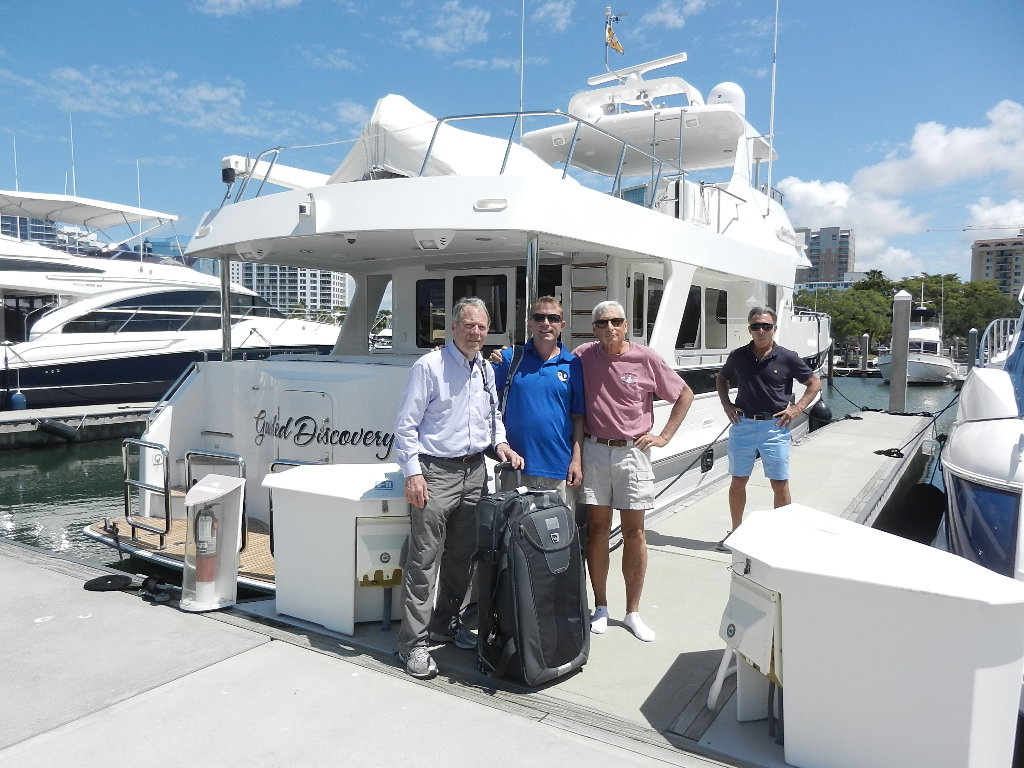 |
| David Watt, Morgan Watt and myself at departure. My friend, Jim Lampl, in the background came to see us off |
Food for the journey north is a “no brainer.” Morton’s Gourmet Market provides prepared entrees, called “Gourmet Meals To Go,”and their executive chef, Fernando, prepared some special dishes including mushroom ravioli; Dijon chicken with fingerling potatoes and Brussell sprouts; and chicken pico degallo with fingerling potatoes and green beans. Add to this their standard fare including grilled salmon, meatloaf and mashed potatoes, veal cannaloni and eggplant rollatini and you have the makings of gourmet meals. The rest of the provisioning process is outlined on an Excel worksheet. The key to provisioning is to have food for 9 days. That requires 27 dinner entrees which are frozen and stored in the freezer. When we depart Sarasota or Hingham the freezer and refrigerators are stocked close to capacity. Fortunately, the 63 has a full size GE Monogram side by side refrigerator.
Maintenance. Dealing with repairs and maintenance during the winter of 2018 in Sarasota proved to be an exercise in frustration and considerable expense. Needless to say, almost every repair required multiple visits by my service personnel. They literally could not fix anything it right the first time. I may treat this a separate blog article, perhaps as a way of venting my frustration. We finally finished all maintenance and repair tasks on day before departure.
Now to weather. As of Friday morning at 10:45 AM we had favorable conditions all the way to Cape Hatteras. Winds off the Florida Keys were forecasted to be around 10 knots with seas 2 to 3 feet on Saturday. Heading north off Cape Canaveral the forecast called for north winds 10 to 15 with 2 to 3 feet seas on Sunday. Farther north on Monday, at Jekyll Island Georgia, NOAA was calling for east north east at 10 to 15 knots with seas 3 to 4 feet. Waters off Cape Fear on Tuesday showed winds less than 10 knots and seas 2 to 4 feet. Finally at Cape Hatteras they were calling for west winds 10 to 20 with seas 3 to 6, which for us would be mostly a following sea.
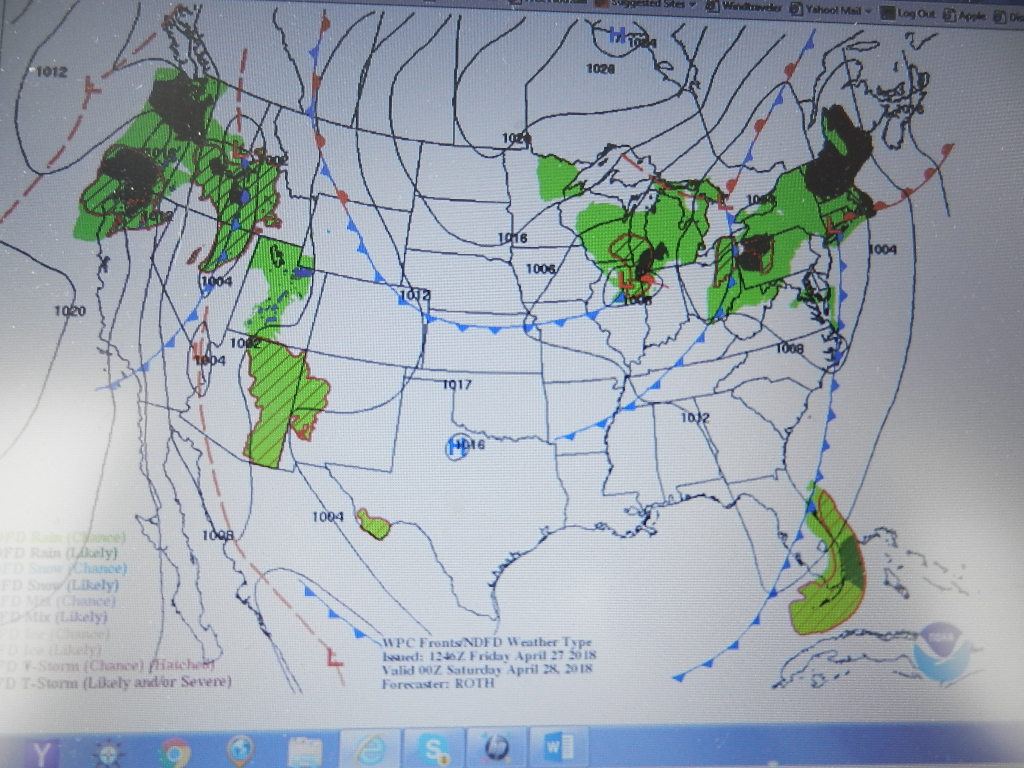 |
| The “big picture” on Friday morning showed calm weather in the southeastern US |
The next important decision is how to depart from Sarasota Bay. This decision involves tides, winds and seas. The easiest way is via Sarasota Big Pass. But this route comes with a tricky ever shifting shoal at the mouth of the pass. The slowest and safest way is south on the Gulf Intracoastal Waterway (GICW) to Venice. This route, however, involves four (4) bridges and several no wake zones.
This year I chose to map the route through the Big Pass shoal by following the fishing party boat on on its daily run out to the Gulf fishing grounds. My AB RIB is equipped with a depth sounder and Garmin Chartplotter. What I found was a controlling depth (i.e., the shallowest spot) of 6 feet. This strongly suggested that the best time to traverse the route was at high tide. “High tide” in Sarasota adds 2 feet of clearance. So, at the shallowest spot we would have 3 feet of clearance. The high occurred on Friday, August 27, at noon time and that fact and the forecasted seas of 2 feet of less dictated our departure time.
The crew arrived on Friday, April 27 at 11:45 AM and by 12:21 PM we were on our way. At 12:51 , one hour after high tide, we traversed Big Pass. Seas were less than a foot, largely to due to protection of the 2 mile sand bar to the west. Our depth sounders lowest reading on the planned course was 1.5 feet. We were now successfully in the Gulf and headed south.
Around 14:00 I noted an alarm on the stabilizer control panel that read as follows”High Oil Temperature / Warning Only / Check Cooling System.” This alarm indicated that the hydraulic fluid was overheating. This is a precursor to a full overheat would could damage the system. Catching it early was good news. The bad news is we had to shut down the stabilizers and would not be able to continue the voyage until the problem was resolved.
Fortunately, winds out of the northwest at 10 to 15 and seas under 2 feet were favorable to a complete shut down of both engines. Now adrift approximately 5 NM south west of Venice, Morgan and I began to process of trouble shooting the problem. We immediately noted no water flow at site glass and that hydraulic fluid level was full. This indicated a blockage somewhere in the cooling system.
Fortunately we were also within cell phone range. This facilitated contact with Randy Ives, Outer Reef’s Warranty Manager, and Robert from ABT TRAC, who at the time was located in the United Kingdom. We decided to work with Robert since he was the expert.
We first checked the sea strainer basket. It was clear and this was no surprise and I had verified that all six sea strainers were clean the day before departure. With the sea strainer cap off we opened the through hull fitting and verified the water was flowing freely. We then removed the hose leading from the sea strainer to the impeller. It was clear. We then removed a housing at the impeller and checked that the impeller was spinning. Then we verified water flow from the impeller to the site glass. Water was flowing up to the site glass and this suggested a blockage in the head exchanger. We then removed the zincs from the heat exchanger and noted that the lower zinc was broken off from the plug and jammed in the hole. The broken zinc was a problem but not sufficient enough to block the water flow.
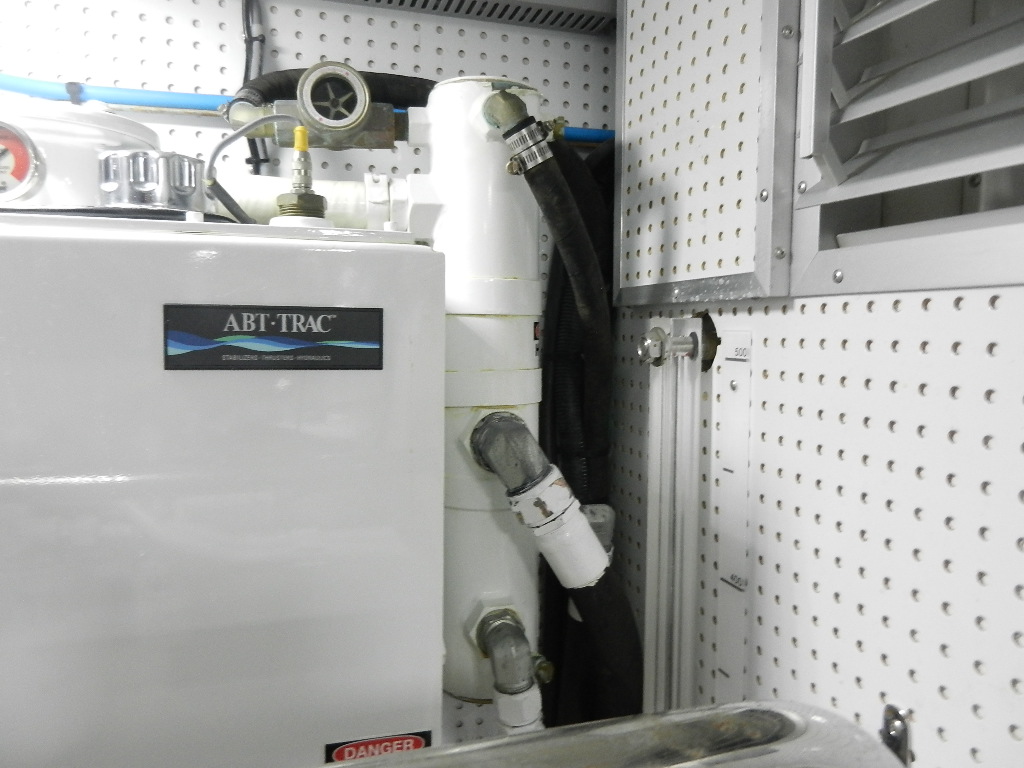 |
| Hydraulic System site glass and heat exchanger |
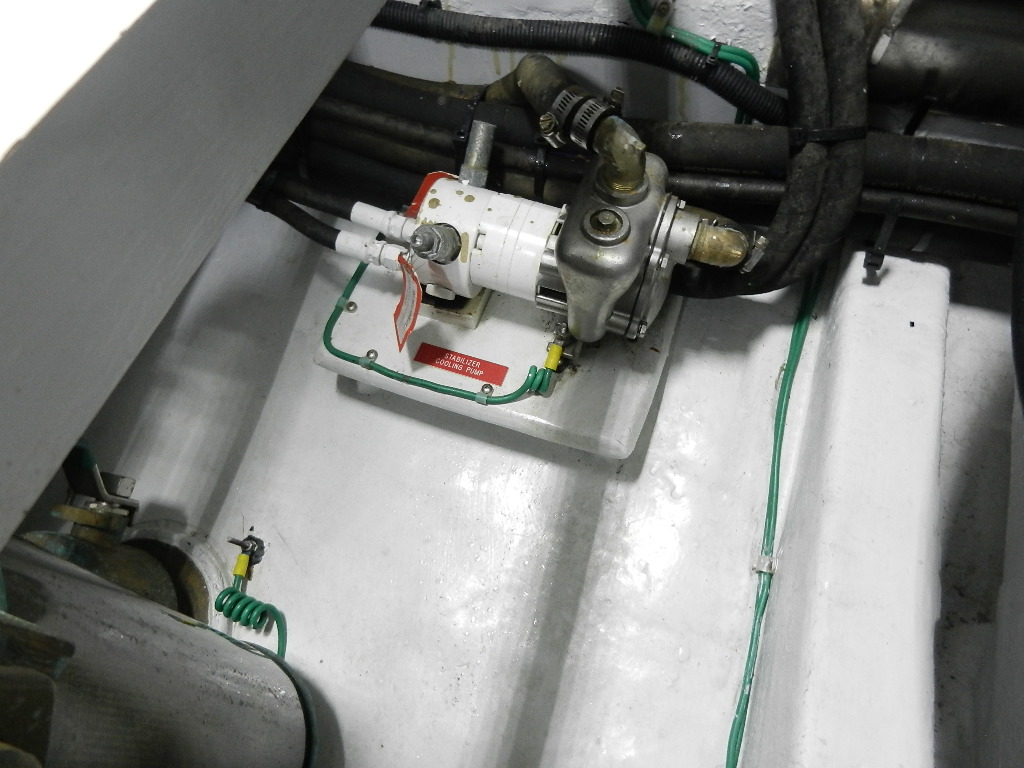 |
| Hydraulic system impeller pump |
At this point we had narrowed the blockage to the heat exchanger. If this were the case, we would need, at a minimum, a mixture of hydrochloric acid and water to clean the strainer. Unfortunately we had none aboard. We decided to head for Venice and called the Crows Nest Restaurant for dockage, which was available. The Crows Nest is located just inside the Venice Inlet.
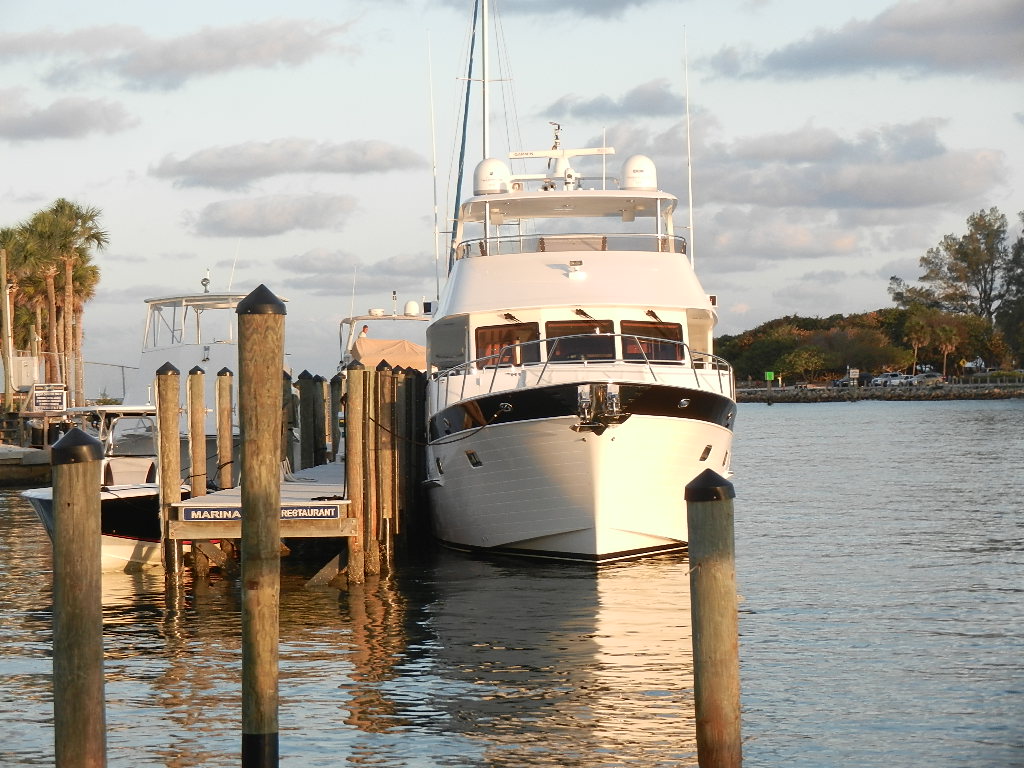 |
| Guided Discovery at the Crow’s Nest |
Venice was approximately 5 NM to the northeast and we headed for the inlet. This put the seas, which had build 2 to 3 feet, on the port side. As we traveled northeast we noted that engine bilge light on the annunciator panel (over the helm) was indicating that the bilge pump was operating. We appeared to be taking on water. Sure enough, that was the case. I discovered that the port side engine room port hole was open. Worse, the 24 volt battery charger that sits just aft of the port hole has shorted out due to salt water entering through the cooling vents (a $1,300 loss). I have never opened any port holes. Hence checking for open portholes is not on my Engine Room Checklist.
I surmised that when Master’s Touch Marine Services technician, Joey, replaced the 220 volt ISO Boost transformer he had left the port hole opened. I then notified Master’s Touch’s owner, Jeff Quattlebaum, of the error only to learn that Jeff, himself had opened the port hole when he was painting the 16KW generator. Jeff forgot to close it.
He then refused to take responsibility. First he claimed that it was my responsibility to check for an open porthole. I showed him the engine Room Check list and pointed out that checking for open portholes in not part of my procedure as I do not open the engine portholes or any portholes for that matter. Then he claimed that he verbally had told me that the window was open, which was blatantly untrue.
I found Jeff’s response to the problem regrettable on several counts. The most troubling was that he had driven to Venice to address a problem with my hydraulic heat exchanger (although he was planning to be there anyhow). As a concession, he agreed not to charge me for the trip to Venice and the 90 minutes to clean the heat exchanger. Unfortunately, the cost of replacing the MasterVolt charger was $1,315, which is what Jeff charged me a rear sgo when he replaced the same unit as the result of an internal failure. However, he also terminated our service relationship and threatened that I would not be able to get service in the future from Marina Jack Services. I found the whole transaction totally unacceptable.
This was not the first time that Jeff’s was careless. During a repair to a hydraulic leak at my stern thruster in December 2016 he mistakenly shut off my hydraulic steering ball valve located immediately above the thruster to stop the flow of hydraulic fluid. It did not stop the release of fluid as the two systems are unrelated. Unfortunately, he did not reopen the valve. The result was that weeks later I pulled out of my slip only to discover I had no steering. Fortunately I was able to return to my slip using engines and thrusters. Had I damaged another boat we would have had a serious legal problem related to Jeff’s negligence.
Doing business with Jeff has always been a bit of a challenge. He does not answer his phone and does not communicate. That said, Jeff has done many projects successfully and I regret that we will not continue working together.
As noted above Jeff fixed the problem (by pouring acid into the heat exchanger) and by 11:40 AM on Saturday we were on our way.
Bottom line: We had lost a full day.
Explanatory Note:
Northbound 2018: Overheat Alarm Out of the Gate
Reader Note: This blog has been silent since the last trip south from Hinghan to Sarasota, which, incidentally, set what I believe will be an all-time record for cooperative weather and running time (i.e., 7 days and 7 hours). My lack of activity resulted from being heavily involved in editing my daughter, Lesley’s, doctoral dissertation and a bit of laziness. Lesley successfully defended her dissertation in March and graduated from Northeastern University’ College of Professional Studies with an Ed.D on May 10th.
Now to our story. As usual, the process of transitioning our residence from Sarasota to Hingham involves preparation including crew, maintenance, food, weather and, most critical for this trip, the route out of Sarasota Bay.
The crew decision came early in December when Morgan Watt decided to do another journey. Morgan crewed with me in 2017 with Guy Aries so this would be his second time. Morgan is eminently qualified as second in command as he has both a pilot’s and captain’s license. Morgan flew jets for NetJets for 17 years. Needless to say, he brings considerable experience with navigation, communication and weather. Morgan nominated his father, David, as the third member of our crew. David too has boating experience and has taught boating safety classes.
|
| David Watt, Morgan Watt and myself at departure. My friend, Jim Lampl, in the background cam to see us off |
Food for the journey north is a “no brainer.” Morton’s Gourmet Market provides prepared entrees, called “Gourmet Meals To Go,”and their executive chef, Fernando, prepared some special dishes including mushroom ravioli; Dijon chicken with fingerling potatoes and Brussell sprouts; and chicken pico degallo with fingerling potatoes and green beans. Add to this their standard fare including grilled salmon, meatloaf and mashed potatoes, veal cannaloni and eggplant rollatini and you have the makings of gourmet meals. The rest of the provisioning process is outlined on an Excel worksheet. The key to provisioning is to have food for 9 days. That requires 27 dinner entrees which are frozen and stored in the freezer. When we depart Sarasota or Hingham the freezer and refrigerators are stocked close to capacity. Fortunately, the 63 has a full size GE Monogram side by side refrigerator.
Maintenance. Dealing with repairs and maintenance during the winter of 2018 in Sarasota proved to be an exercise in frustration and considerable expense. Needless to say, almost every repair required multiple visits by my service personnel. They literally could not fix anything it right the first time. I may treat this a separate blog article, perhaps as a way of venting my frustration. We finally finished all maintenance and repair tasks on day before departure.
Now to weather. As of Friday morning at 10:45 AM we had favorable conditions all the way to Cape Hatteras. Winds off the Florida Keys were forecasted to be around 10 knots with seas 2 to 3 feet on Saturday. Heading north off Cape Canaveral the forecast called for north winds 10 to 15 with 2 to 3 feet seas on Sunday. Farther north on Monday, at Jekyll Island Georgia, NOAA was calling for east north east at 10 to 15 knots with seas 3 to 4 feet. Waters off Cape Fear on Tuesday showed winds less than 10 knots and seas 2 to 4 feet. Finally at Cape Hatteras they were calling for west winds 10 to 20 with seas 3 to 6, which for us would be mostly a following sea.
The next important decision is how to depart from Sarasota Bay. This decision involves tides, winds and seas. The easiest way is via Sarasota Big Pass. But this route comes with a tricky ever shifting shoal at the mouth of the pass. The slowest and safest way is south on the Gulf Intracoastal Waterway (GICW) to Venice. This route, however, involves four (4) bridges and several no wake zones.
This year I chose to map the route through the Big Pass shoal by following the fishing party boat on on its daily run out to the Gulf fishing grounds. My AB RIB is equipped with a depth sounder and Garmin Chartplotter. What I found was a controlling depth (i.e., the shallowest spot) of 6 feet. This strongly suggested that the best time to traverse the route was at high tide. “High tide” in Sarasota adds 2 feet of clearance. So, at the shallowest spot we would have 3 feet of clearance. The high occurred on Friday, August 27, at noon time and that fact and the forecasted seas of 2 feet of less dictated our departure time.
The crew arrived on Friday, April 27 at 11:45 AM and by 12:21 PM we were on our way. At 12:51 , one hour after high tide, we traversed Big Pass. Seas were less than a foot, largely to due to protection of the 2 mile sand bar to the west. Our depth sounders lowest reading on the planned course was 1.5 feet. We were now successfully in the Gulf and headed south.
Around 14:00 I noted an alarm on the stabilizer control panel that read as follows”High Oil Temperature / Warning Only / Check Cooling System.” This alarm indicated that the hydraulic fluid was overheating. This is a precursor to a full overheat would could damage the system. Catching it early was good news. The bad news is we had to shut down the stabilizers and would not be able to continue the voyage until the problem was resolved.
Fortunately, winds out of the northwest at 10 to 15 and seas under 2 feet were favorable to a complete shut down of both engines. Now adrift approximately 5 NM south west of Venice, Morgan and I began to process of trouble shooting the problem. We immediately noted no water flow at site glass and that hydraulic fluid level was full. This indicated a blockage somewhere in the cooling system.
Fortunately we were within cell phone range. This facilitated contact with Randy Ives, Outer Reef’s Warranty Manager, and Robert from ABT TRAC, who at the time was located in the United Kingdom. We decided to work with Robert since he was the expert.
We first checked the sea strainer basket. It was clear and this was no surprise and I had verified that all six sea strainers were clean the day before departure. With the sea strainer cap off we opened the through hull fitting and verified the water was flowing freely. We then removed the hose leading from the sea strainer to the impeller. It was clear. We then removed a housing at the impeller and checked that the impeller was spinning. Then we verified water flow from the impeller to the site glass. Water was flowing up to the site glass and this suggested a blockage in the head exchanger. We then removed the zincs from the heat exchanger and noted that the lower zinc was broken off from the plug and jammed in the hole. The broken zinc was a problem but not sufficient enough to block the water flow.
At this point we had narrowed the blockage to the heat exchanger. If this were the case, we would need, at a minimum, a mixture of hydrochloric acid and water to clean the strainer. Unfortunately we had none aboard. We decided to head for Venice and called the Crows Nest Restaurant for dockage, which was available. The Crows Nest is located just inside the Venice Inlet.
|
| Guided Discovery at the Crow’s Nest |
Venice was approximately 5 NM to the northeast and we headed for the inlet. This put the seas, which had build 2 to 3 feet, on the port side. As we traveled northeast we noted that engine bilge light on the annunciator panel (over the helm) was indicating that the bilge pump was operating. We appeared to be taking on water. Sure enough, that was the case. I discovered that the port side engine room port hole was open. Worse, the 24 volt battery charger that sits just aft of the port hole has shorted out due to salt water entering through the cooling vents (a $1,300 loss). I have never opened any port holes. Hence checking for open portholes is not on my Engine Room Checklist.
I surmised that when Master’s Touch Marine Services technician, Joey, replaced the 220 volt ISO Boost transformer he had left the port hole opened. I then notified Master’s Touch’s owner, Jeff Quattlebaum, of the error only to learn that Jeff, himself had opened the port hole when he was painting the 16KW generator. Jeff forgot to close it.
He then refused to take responsibility. First he claimed that it was my responsibility to check for an open porthole. I showed him the engine Room Check list and pointed out that checking for open portholes in not part of my procedure as I do not open the engine portholes or any portholes for that matter. Then he claimed that he verbally had told me that the window was open, which was blatantly untrue.
I found Jeff’s response to the problem regrettable on several counts. The most troubling was that he had driven to Venice to address a problem with my hydraulic heat exchanger (although he was planning to be there anyhow). As a concession, he agreed not to charge me for the trip to Venice and the 90 minutes to clean the heat exchanger. Unfortunately, the cost of replacing the MasterVolt charger was $1,315, which is what Jeff charged me a rear sgo when he replaced the same unit as the result of an internal failure. However, he also terminated our service relationship and threatened that I would not be able to get service in the future from Marina Jack Services. I found the whole transaction totally unacceptable.
This was not the first time that Jeff’s was careless. During a repair to a hydraulic leak at my stern thruster in December 2016 he mistakenly shut off my hydraulic steering ball valve located immediately above the thruster to stop the flow of hydraulic fluid. It did not stop the release of fluid as the two systems are unrelated. Unfortunately, he did not reopen the valve. The result was that weeks later I pulled out of my slip only to discover I had no steering. Fortunately I was able to return to my slip using engines and thrusters. Had I damaged another boat we would have had a serious legal problem related to Jeff’s negligence.
Doing business with Jeff has always been a bit of a challenge. He does not answer his phone and does not communicate. That said, Jeff has done many projects successfully and I regret that we will not continue working together.
As noted above Jeff fixed the problem (by pouring acid into the heat exchanger) and by 11:40 AM on Saturday we were on our way.
Bottom line: We had lost a full day.
Explanatory Note:
Alaska 2018 Blog Post 8 – Petersburg
May 18, 2018Another sunny but cool day in Petersburg when the sun streaming in our stateroom windows woke us. We took off uptown, looking at all the booths that had sprung up overnight. There were at least three beer gardens, people dressed…
Alalska 2018 Blog Post 7 – Wrangell to Petersburg
May 13, 2018
After docking Spirit, Patrick walked the 1 ½ miles to town and found the hardware store still open to purchase a shop vacuum to clean out the Diesel Kabola heater, which had sooted up badly. Patrick made it with minutes to spare, since everything closed at 3:00 PM. We decided on Mother’s Day dinner at the Stikine Inn, at the bar, since the place was so crowded for Mother’s Day. Food and service was great, with large portions good for several meals.
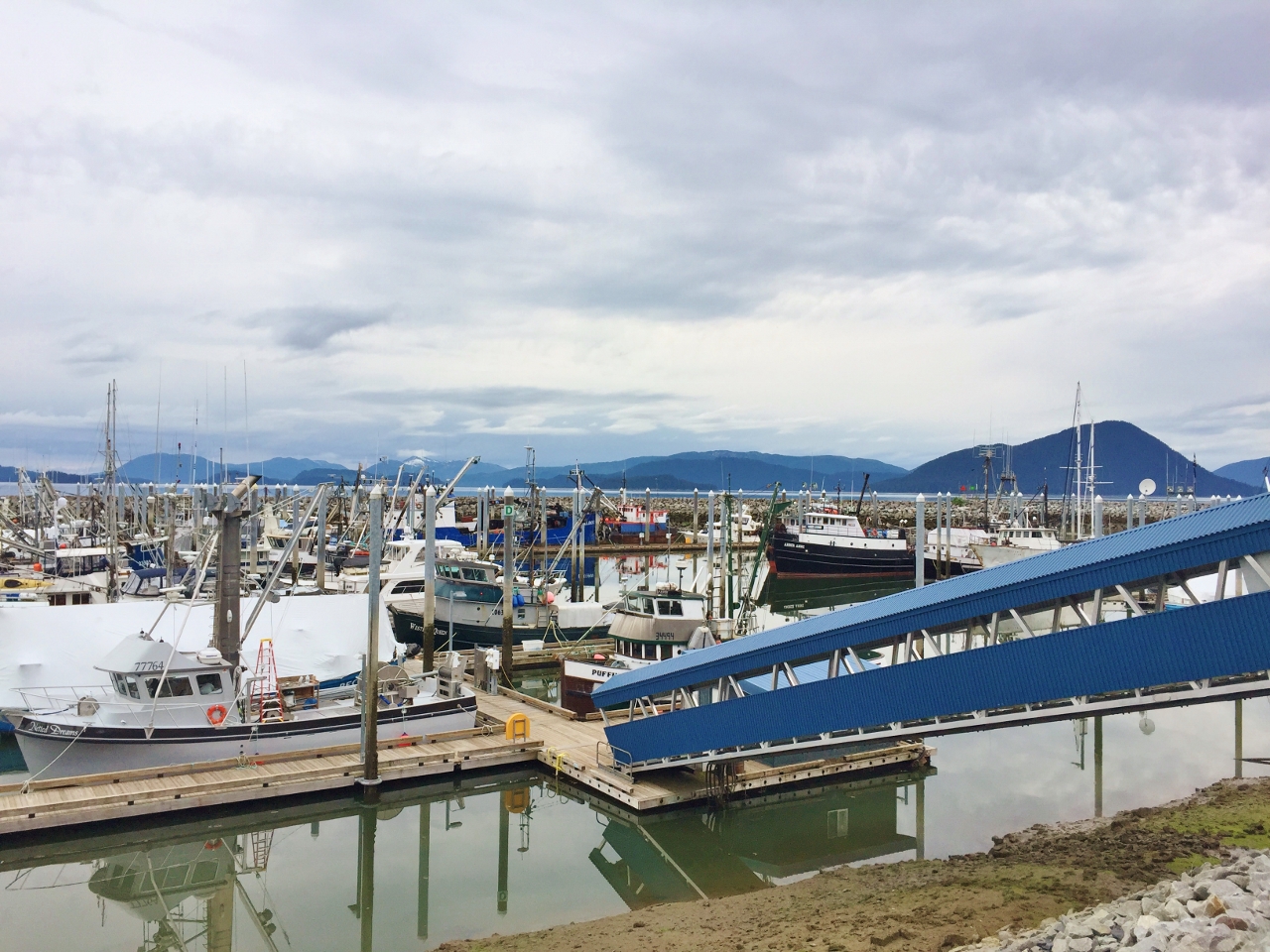 |
| Heritage Harbor near low tide |
May 14, 2018
The rain returned and stayed all day, so we cleaned the Kabola Heater with the new shop vacuum; the heater now runs fine. Patrick also cleaned the watermaker filters and did general engine checks, as well as arranging a main engine service check on May 17 in Petersburg.
 |
| Nearly Deserted main street in Wrangell |
 |
| Wall Art is becoming common |
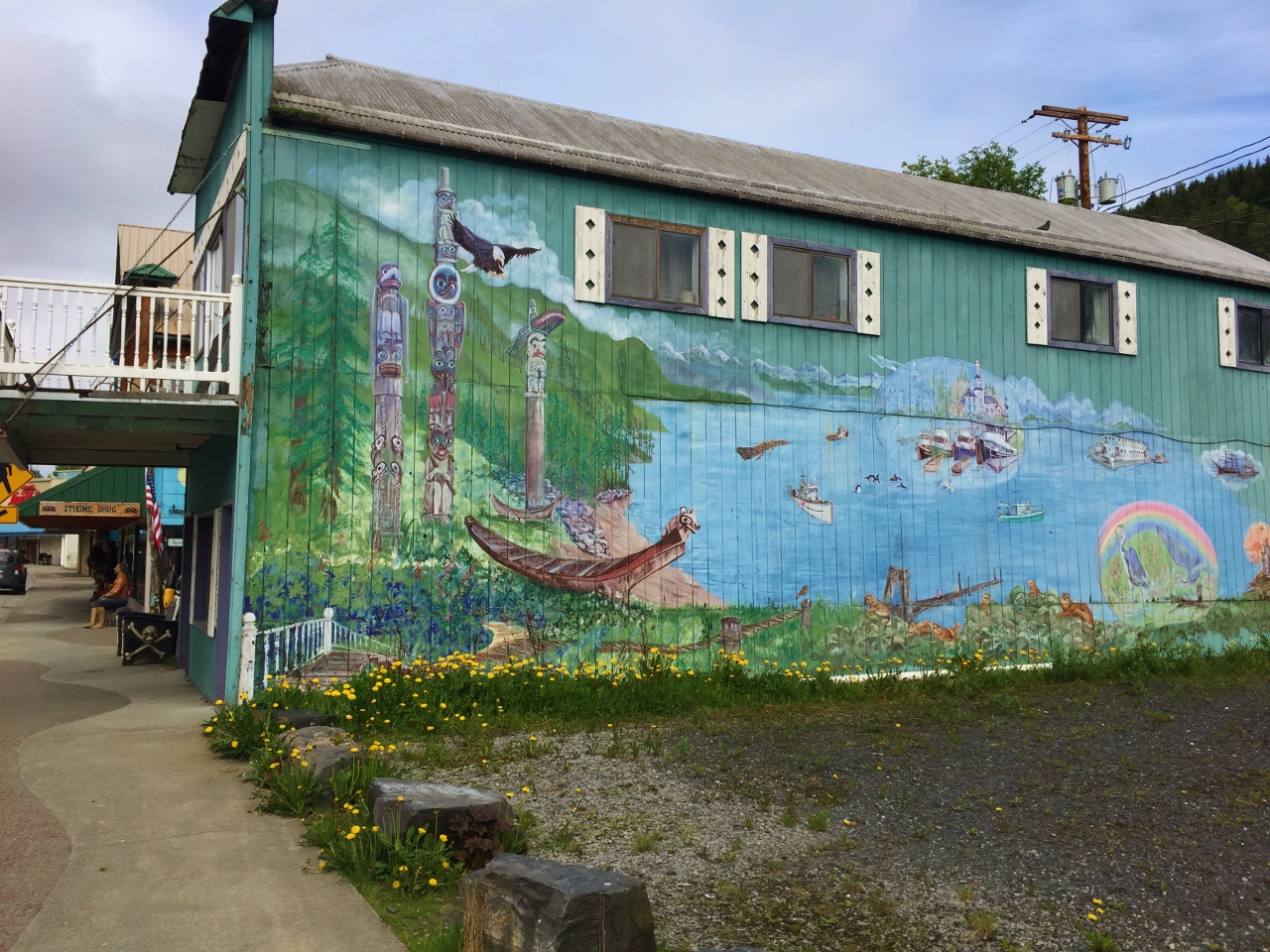 |
| More wall art in Wrangell |
May 15, 2018
A sunny day in Wrangell, with walks into town and slow cooking a pork shoulder in BBQ sauce so we could have dinner with cruising friends on the Selene 53 “Tranquility”. Rick and Pat Lennon arrived from Montana and we had a relaxing evening on board with the slow cooked pork, preceded by spot prawn cocktails.
 |
| Miriam and Lennon’s sharing spot prawns |
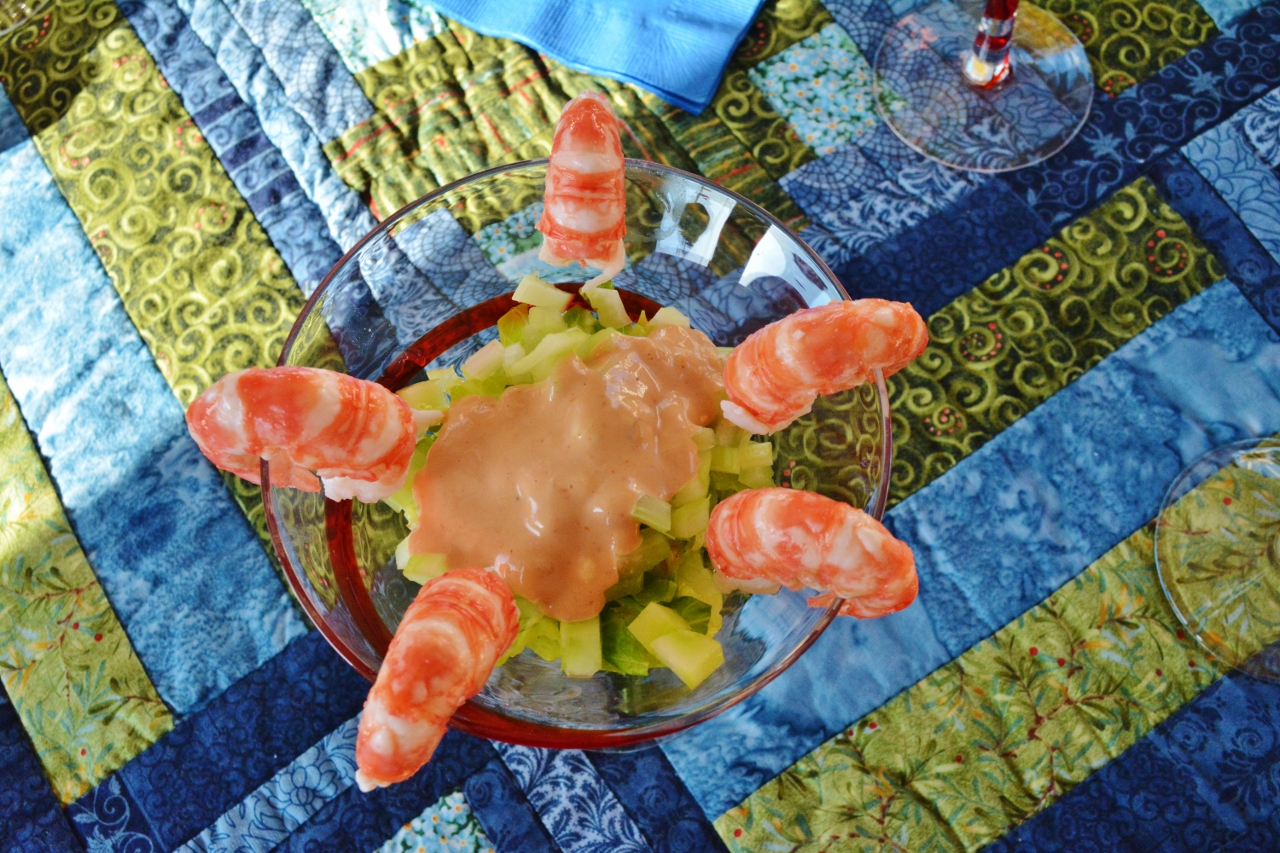 |
| Our version of a spot prawn cocktail |
May 16, 2018
The morning was sunny, but cold, only 46 degrees. We cast off the lines at 0855 and headed west towards Vank and Sokolof islands. The channel between Vank and Sokolof Islands has high currents. In Sumner Strait, the flood current past Station Island increased to more than 2 knots against us.. Entering Wrangell Narrows at Point Alexander at 1158, we were boosted by the flood current, at times reaching 4 knots. The helpful current persisted until Green Point.
We were early for docking in the sometimes-high currents in Petersburg Harbor, especially since we were assigned a slip in the newer North Harbor, closer to town but more exposed to the current in Wrangell Narrows. We slowed down and timed our arrival closer to slack water and at 1432 were tied up at slip 35 in the North Harbor, having come only 40 nautical miles since Wrangell.
Our view out the wheelhouse windows is great, north down the entrance to the narrows with the mountains and glaciers across Frederick Sound providing a great backdrop.
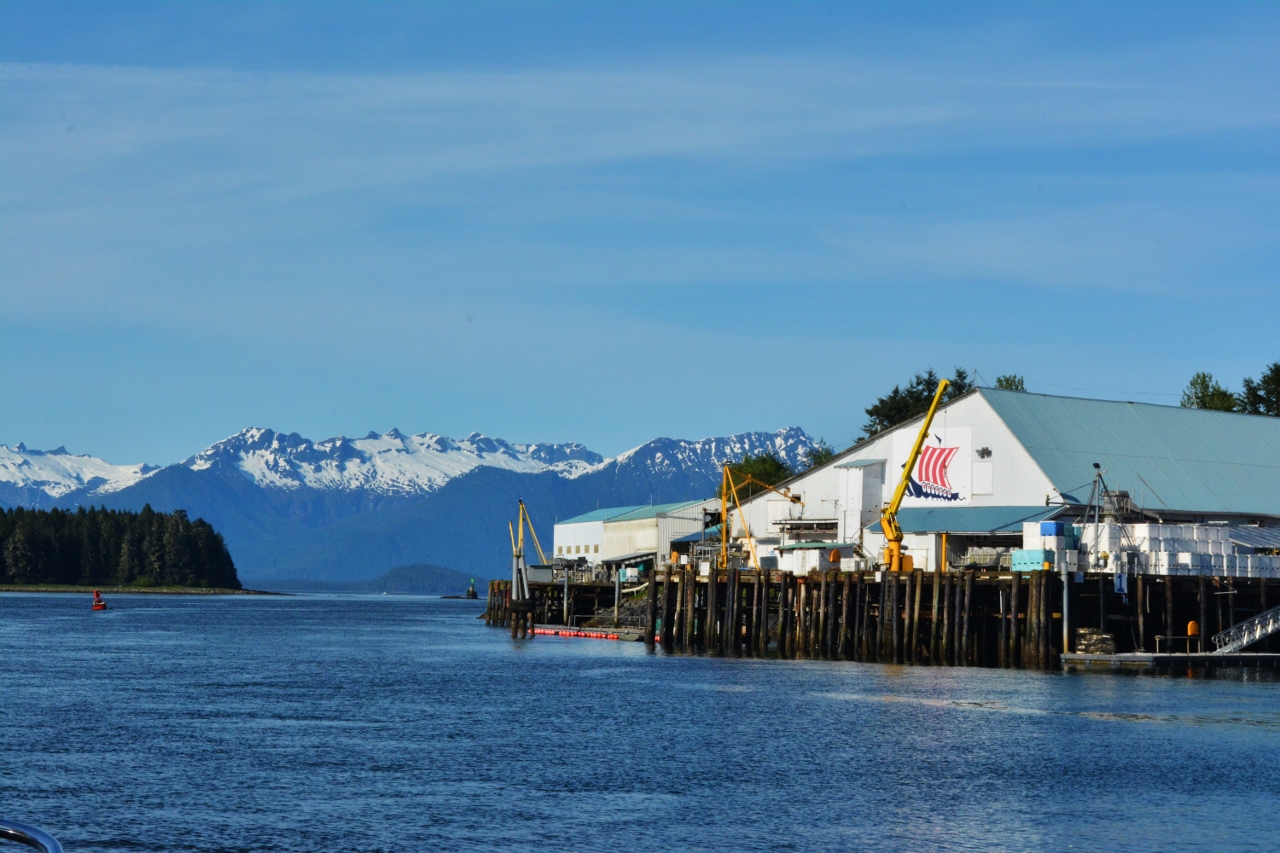 |
| View from the wheelhouse in Petersburg |
The “Little Norway” festival starts tomorrow and runs through Sunday, with parades, dinners, herring toss contests and generally fun for all. The Little Norway festival is centered around May 17, Norwegian Independence Day. We were last here for the festival in 2015.
May 17, 2018
Another sunny day in Petersburg. We have engine maintenance scheduled at “Piston & Rudder” at 1000, near low tide. Low tide this morning is -3.5 feet. We left our slip at 0900 and were at the shop at 0910. By the time the brief servicing was complete, the flood tide was flowing at 4.3 knots, too fast to even leave the float at the shop, so we waited for the current to subside and took care of other miscellaneous maintenance tasks like replacing a failed GFCI outlet on the flybridge. By 1500 the currents were low enough that we returned to North Harbor, backing into our slip with a 3 knot current pushing into the slip. We were thankful for bow and stern thrusters.
 |
| This boat has been lying on the beach for years, no thrusters! |
Taughnnock State Park
“I would rather own little and see the world than own the world and see little of it.” ― Alexander Sattler
Taughannock Falls State Park is a 750-acre park located on the western shore of Cayuga Lake. It was was created in 1925 and many improvements were made in the 1930s. The park’s namesake waterfall is one of the outstanding natural attractions of the Northeast. Taughannock Falls plunges 215 feet past rocky cliffs that tower nearly 400 feet above the gorge. Gorge and rim trails offer spectacular views from above the falls and from below at the end of the gorge trail. Campsites and cabins overlook Cayuga Lake, with marina, boat launch and beach nearby. A multi-use trail for hiking and cross-country skiing, winds past sledding slopes and natural skating ponds. The park offers organized activities including tours through the gorge and summer concerts along the lakefront.
CONTINUE READING HERE…»
May 16 – A Perfect Lunch
“The secret is not to run behind butterflies, but to take care of the garden so they come to you.” -Guru Sloth
Wednesday was a pretty day and the sun was finally out, so we decided to drive up the lake for a picnic at Lucas Vineyards. Lucas Vineyards is Cayuga Lake’s oldest winery, they have been selling wine since 1980 and it’s still a family run business including three generations. The vineyard sits on the western side of Cayuga Lake near Interlaken and offers a wonderful view of the lake from their deck and garden. It was a wonderful spot to relax enjoy a picnic lunch on such a beautiful day.
Shakedown Cruise Spring 2018
You can sense a wave of calm envelop Idyll Time and her crew as we exit Tsehum Harbor and transition from work mode to cruise mode. It is so nice to finally be away from the boat yard. We will spend the next week testing our systems and exploring some of the Gulf Islands before […]
