
We got another chance to see a Metal Shark boat in action during a routine Coast Guard inspection on the way to Brunswick, Georgia. We were trying to reach Brunswick Landing Marina to fuel before they closed for the day, so would have preferred not to have been boarded, but the Coast Guard officers were…
9 March 2017 Route 66 Williams, AZ
This morning we departed Grand Canyon National Park after 5 phenomenal days en route to Williams, AZ, on Route 66. We arrived here noonish and after a quick lunch, I asked Bill if he’d like to go to dinner at Wild West Junctio…
8 March 2017 Our Grand Canyon Adventures
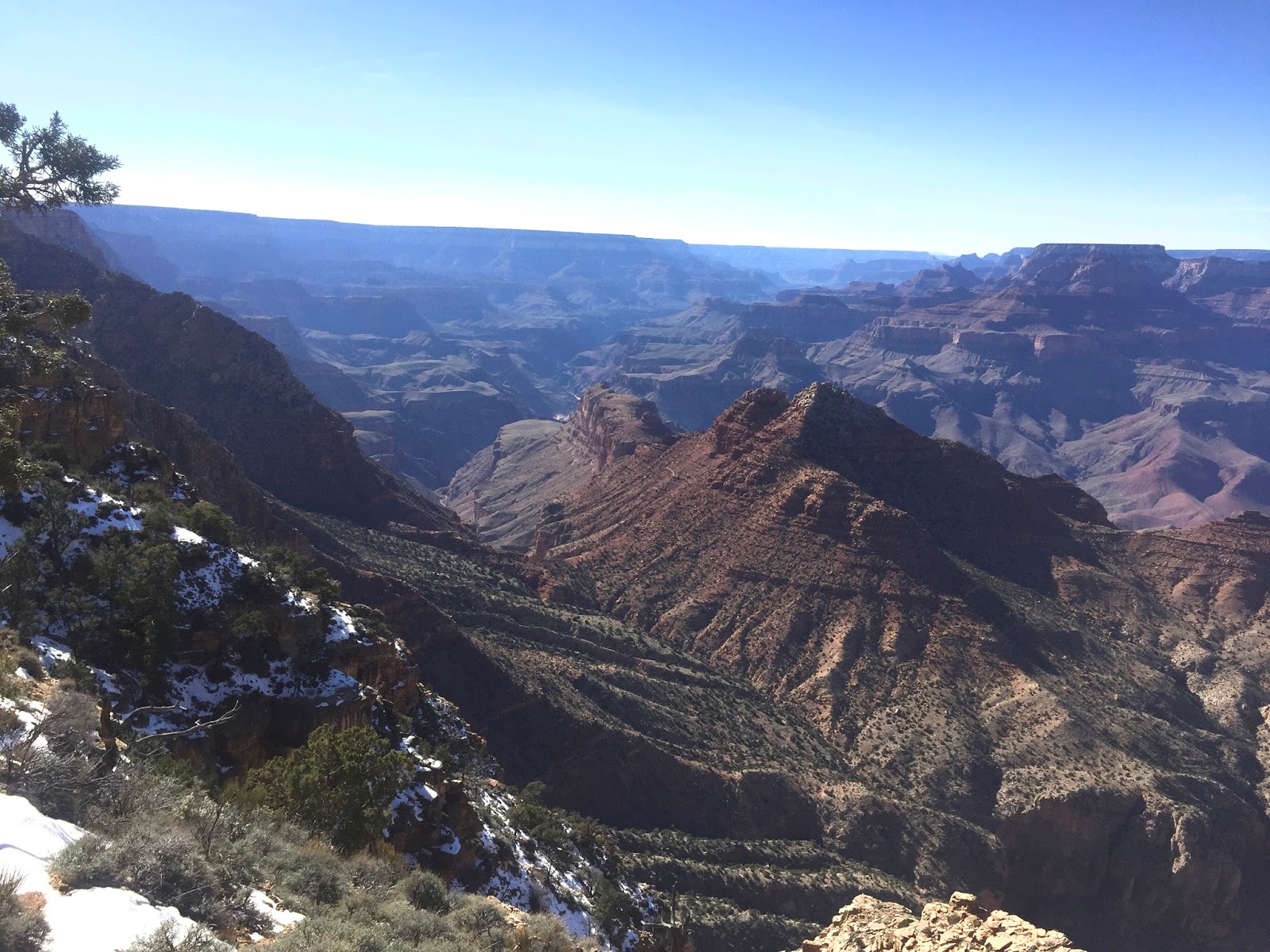
Vast, magnificent, and inarguably beautiful, is the Grand Canyon, and a natural wonder that you simply have to see to believe. Stretching 277 miles from end to end, steep, rocky walls descend more than a mile to the canyon’s floor, where the wild Colorado River traces a swift course southwest. The expanse brought to the fore, how insignificant we really are.
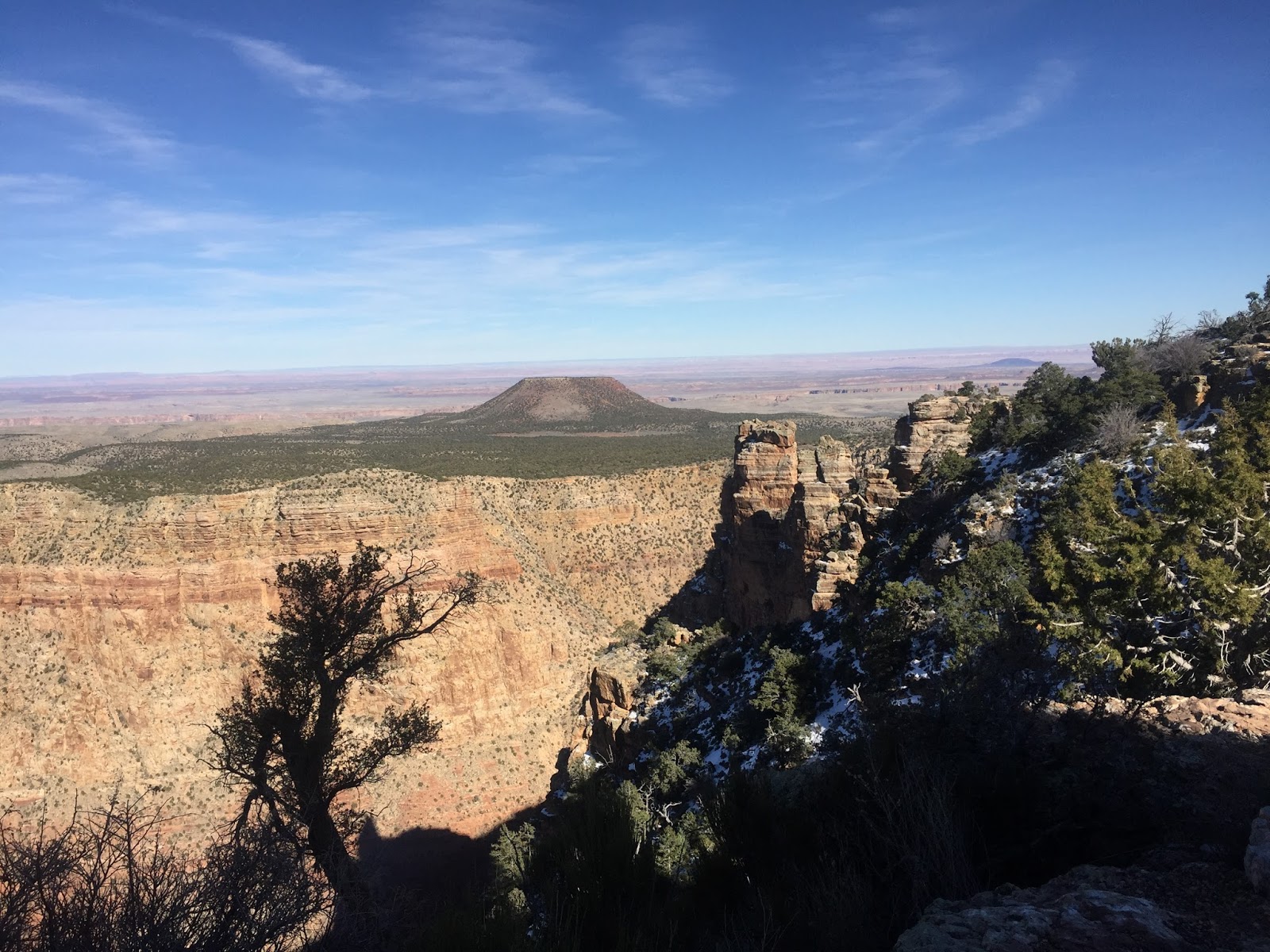
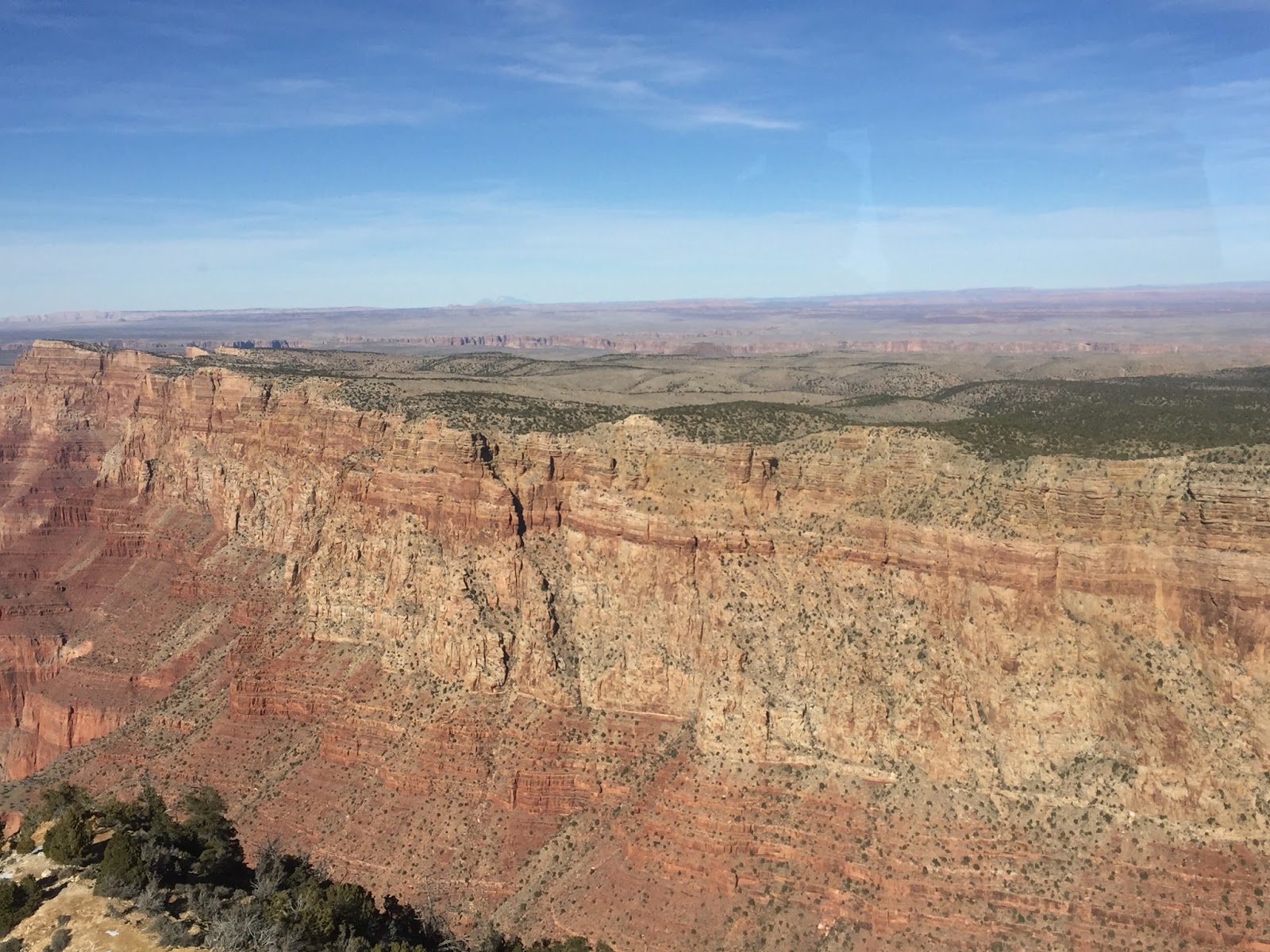
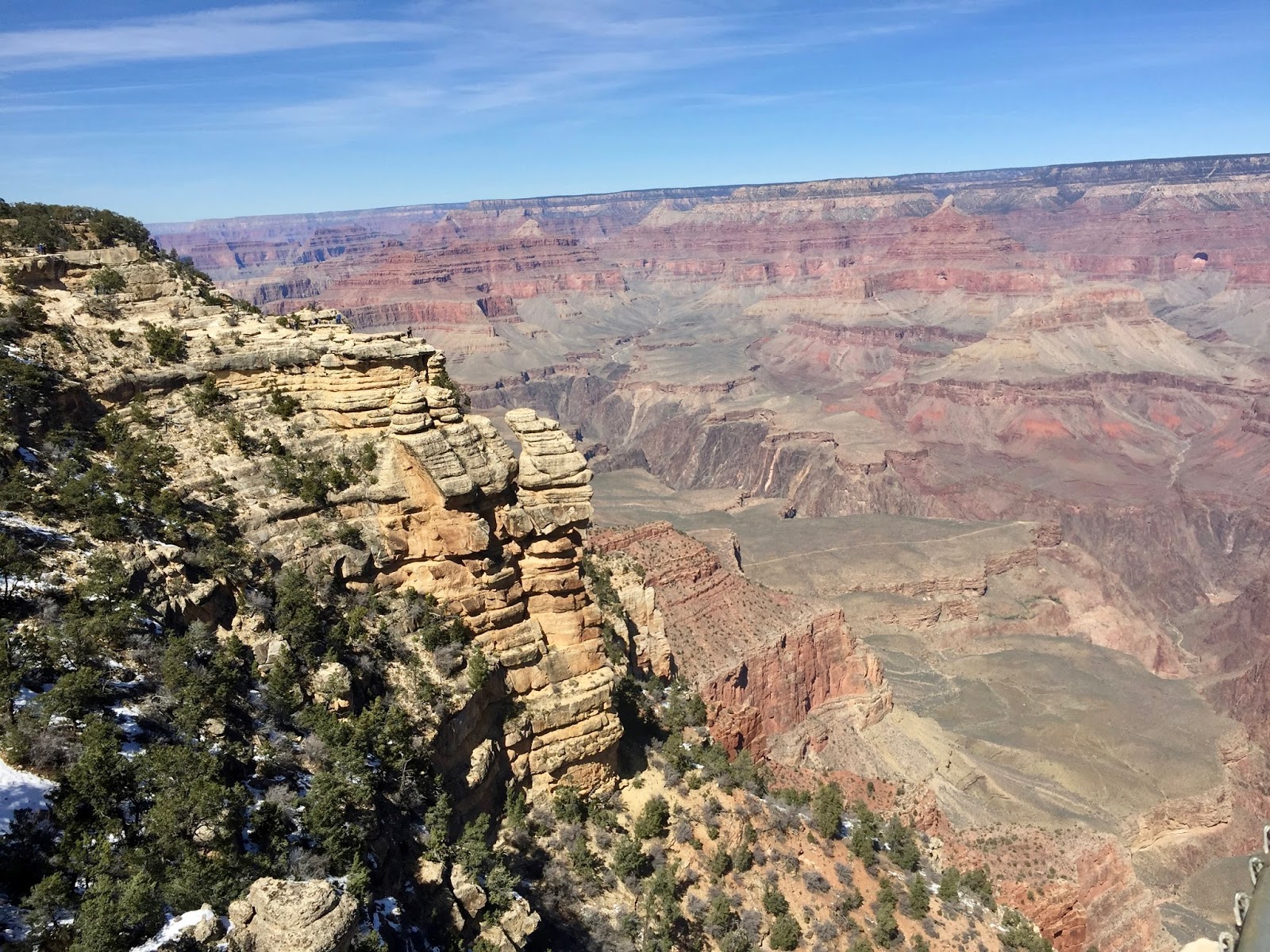
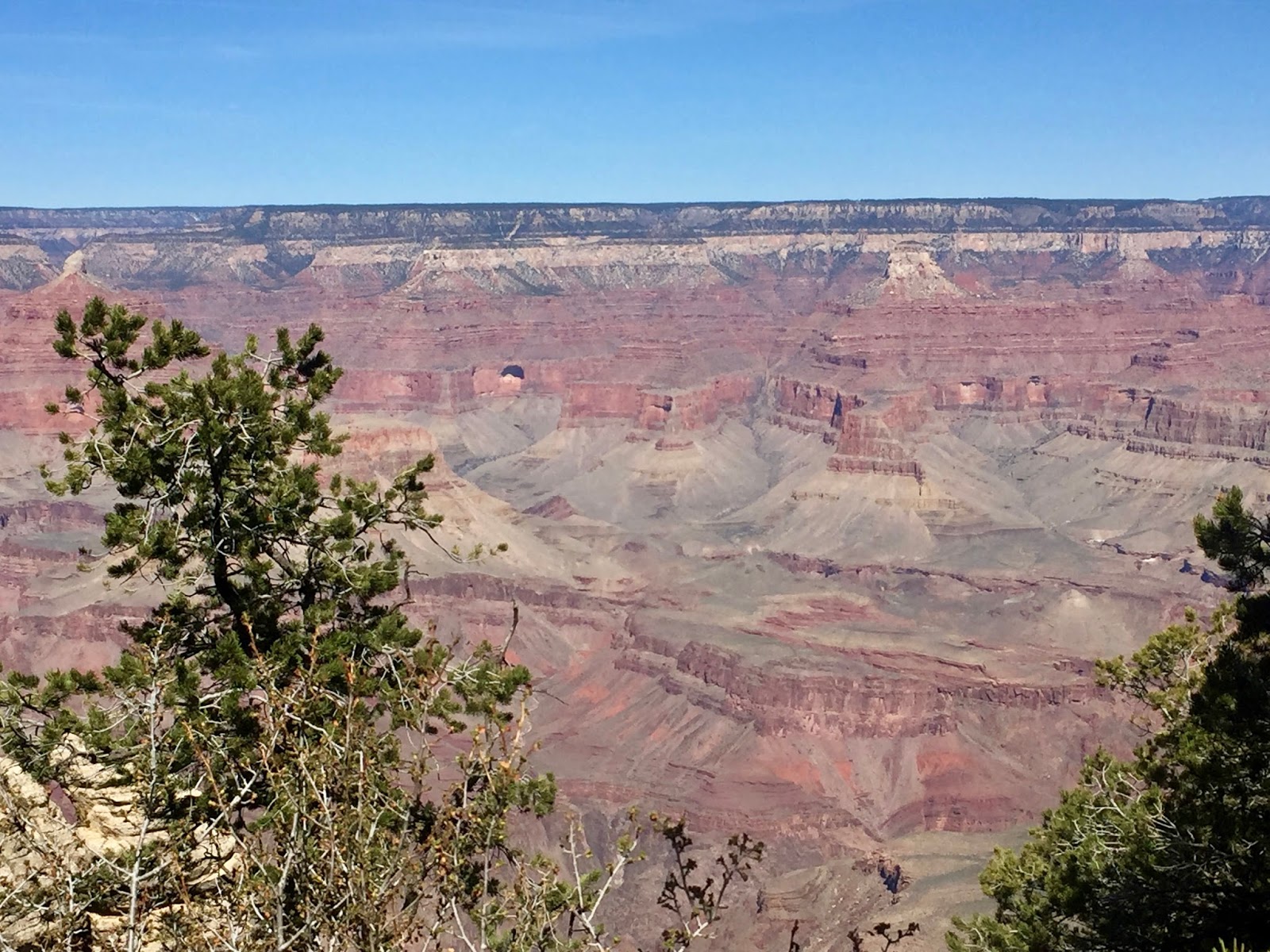
It’s as if a paintbrush, dipped in golds and pinks and oranges and purples, swept over narrows and craggys in an area that’s an average of 10 miles wide (18 miles at its widest) and a mile deep with layered bands of red rock revealing millions of years of geological history. The unique combinations of color are the result of the earth’s physical structure and forms that have been caused by one of the most spectacular examples of erosion anywhere in the world.. All of these factors to decorate this work of art.
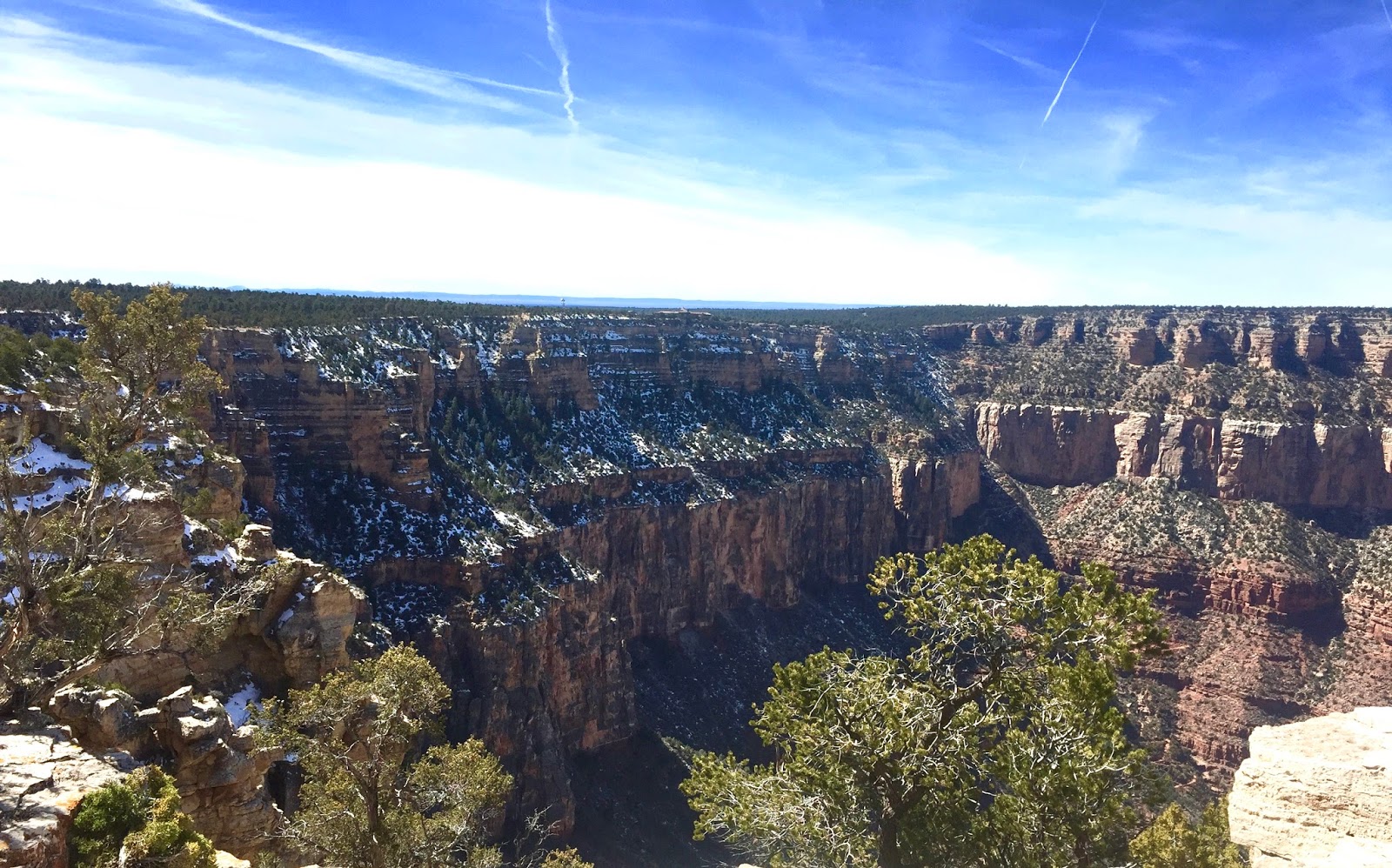
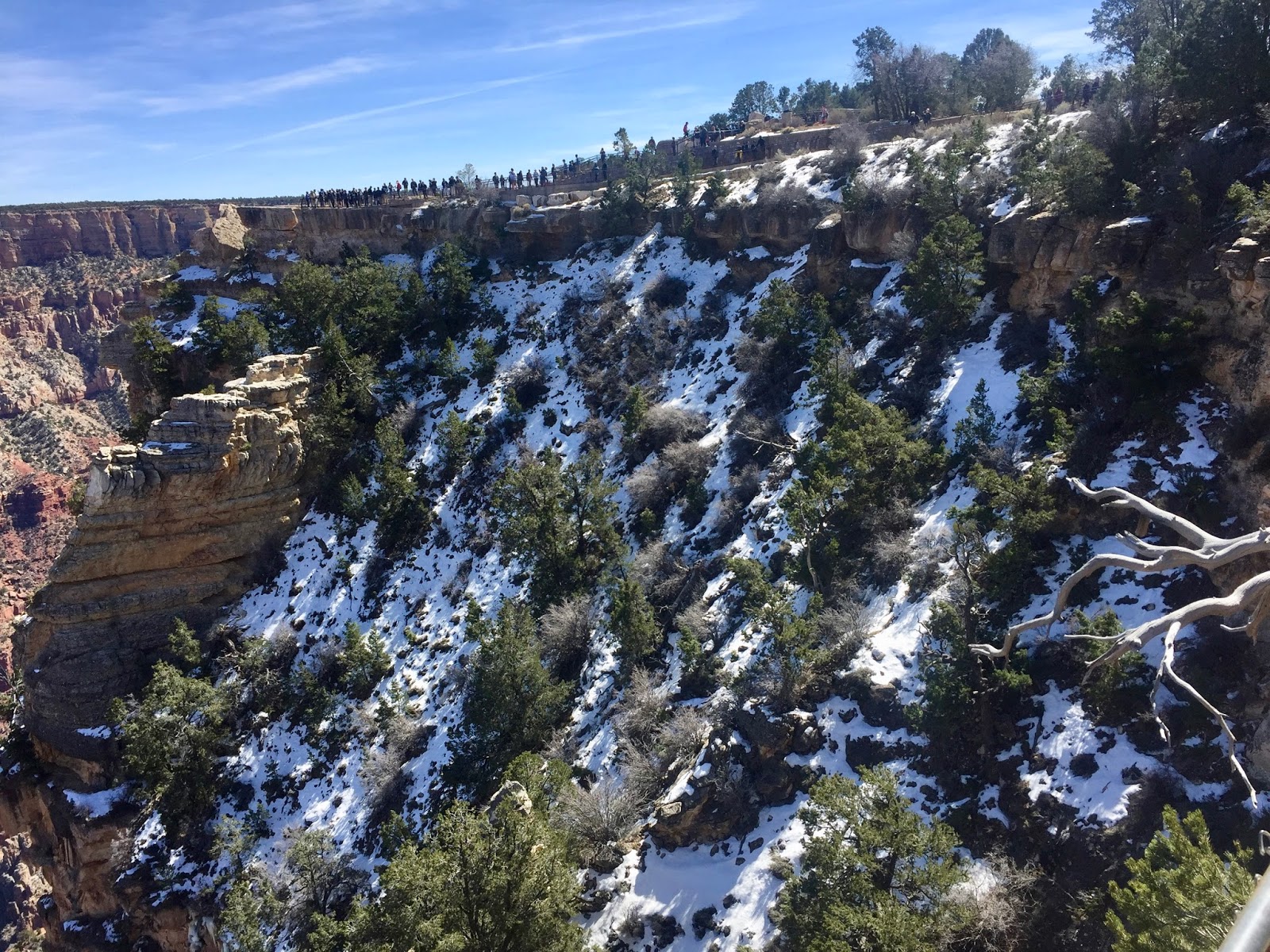
We stepped to the edge and still couldn’t take it all in. The immense size of the Grand Canyon is overwhelming our senses. Snow remains in the park and as the direction of the sun alters the canyons appearance, so are the canyon formations highlighted by snow.
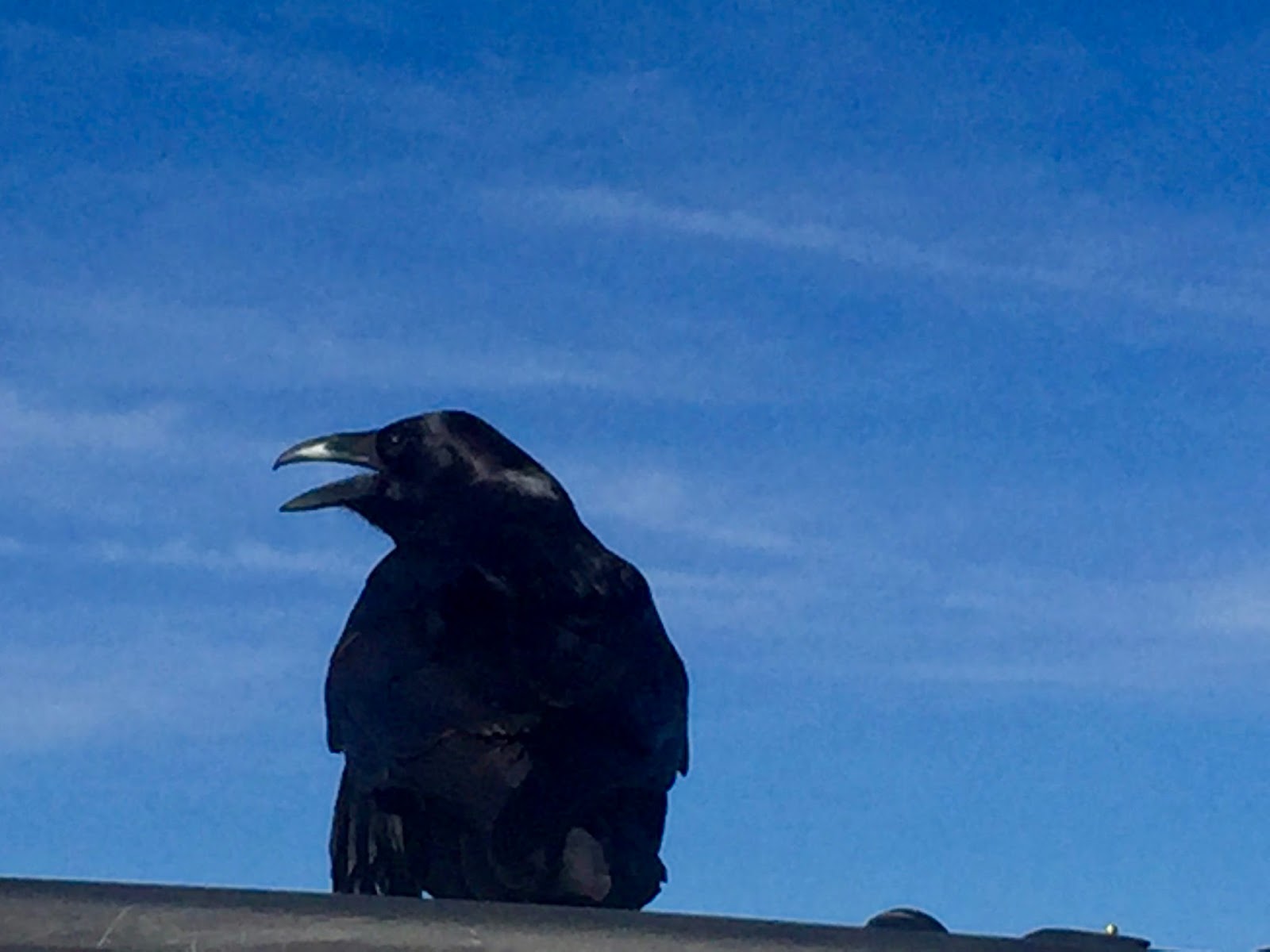
This guy had taken over someone’s car roof and was squawking away.
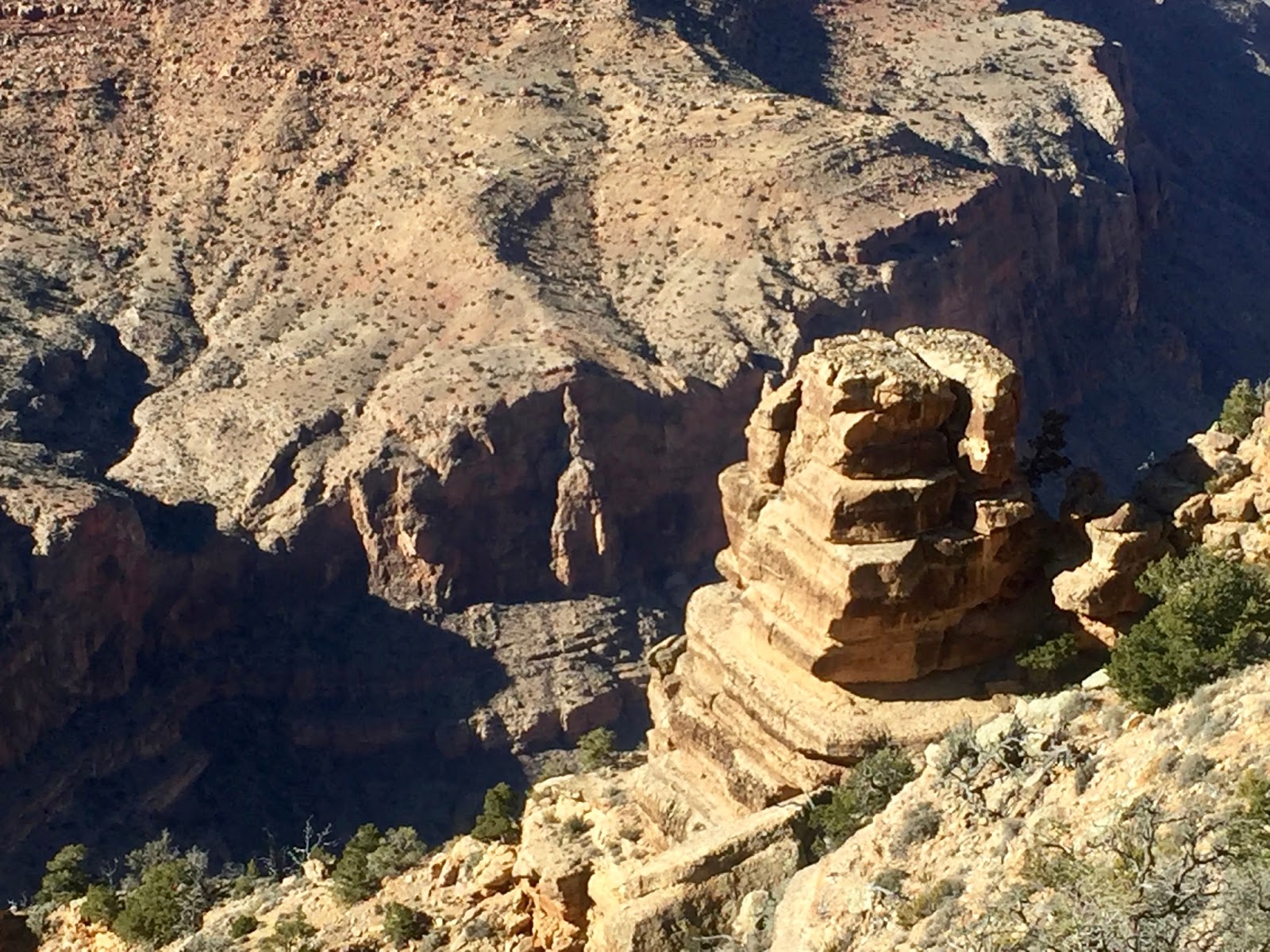

Pictures and paintings just can’t do it justice—it’s one of those things you have to see to believe. As with all sides of the Canyon, the South Rim features astounding views of what took Mother Nature millions and millions of years to create. That why it has earned the distinction as one of the world’s Seven Wonders

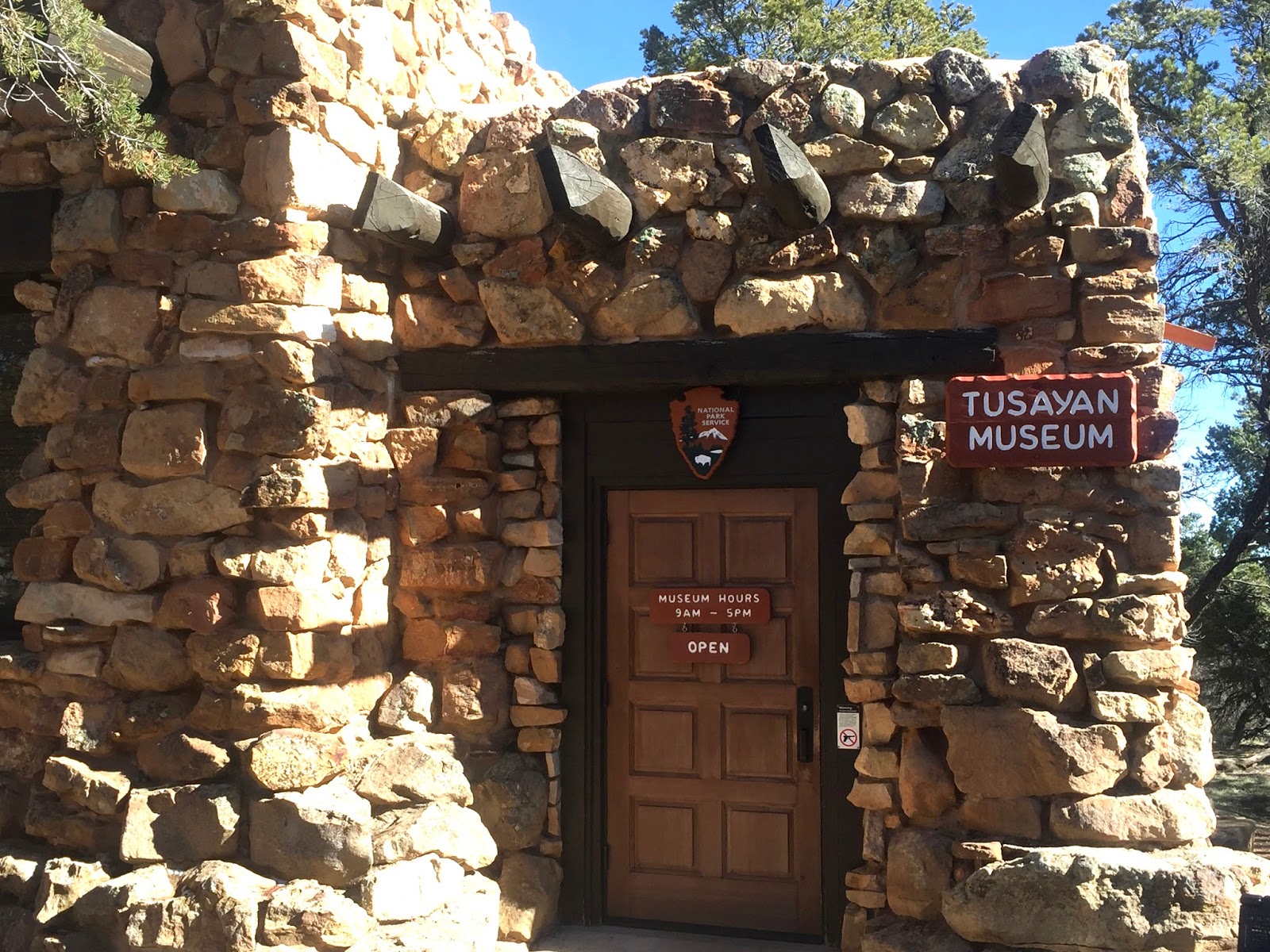 The Tuscan Pueblo Ruin was interesting to walk the area and try to visualize what life for those people might’ve been like 800 years ago. This ruin is just one of more than 4000 archaeological sites found within the Grand Canyon National Park. The site consists of a small, u-shaped pueblo featuring a living area, storage rooms, and a kiva, which is a room used by Puebloans for religious rituals and political meetings. Kivas are square-walled and underground and used for spiritual ceremonies.
Fortunately, the day we visited was a clear day and we were able to see the distant San Francisco Peaks. The Hopi Indians considered these mountains as sacred, believing that the spirits who lived there would bring rain and other blessings in the spring.
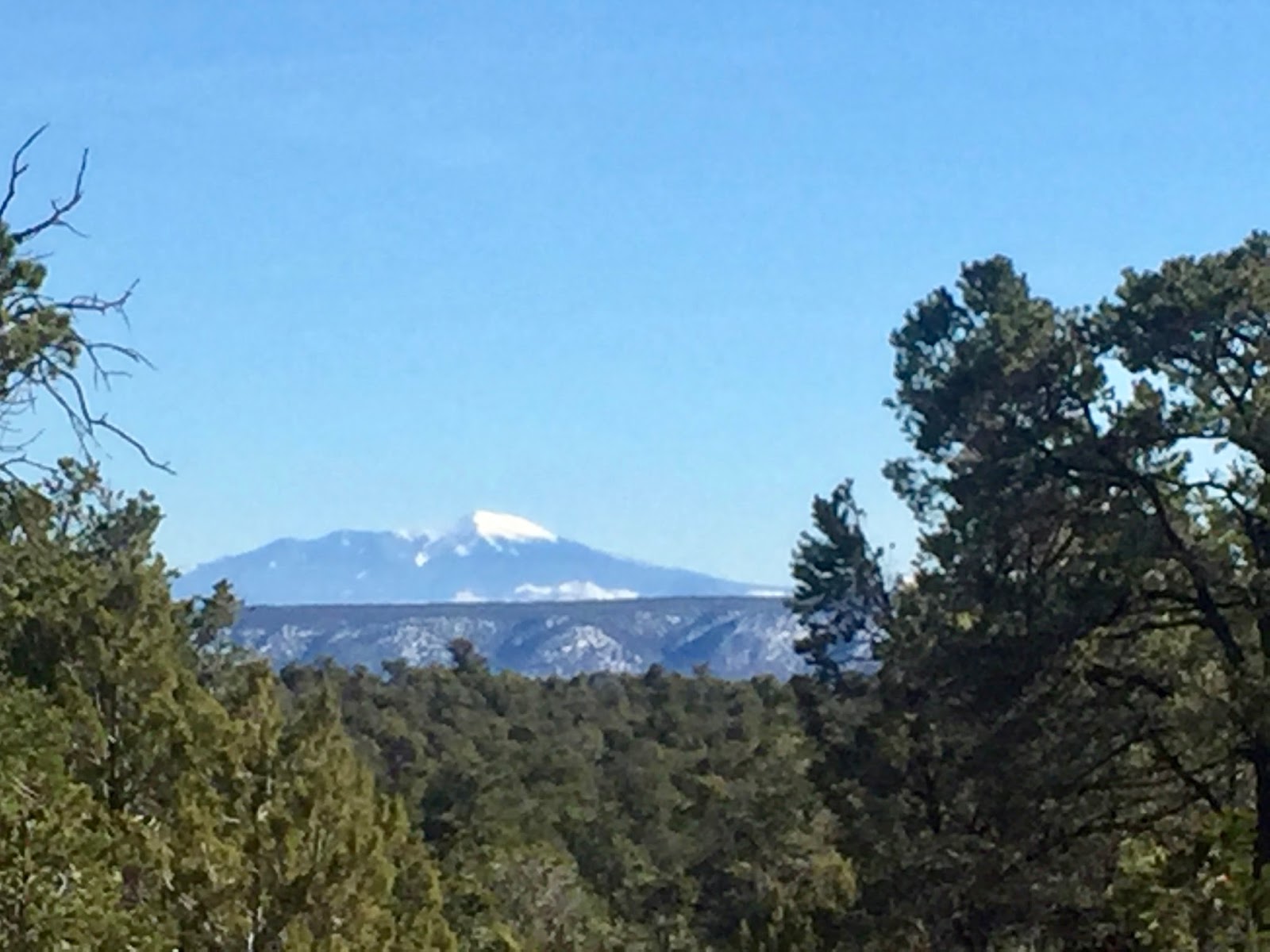
San Francisco Peaks

The Desert View Watchtower is a 70 foot tall circular stone building located on the eastern edge of the South Rim where the Colorado River begins to turn north and the Painted Desert is visible as it stretches toward the Navajo and Hopi Reservations.
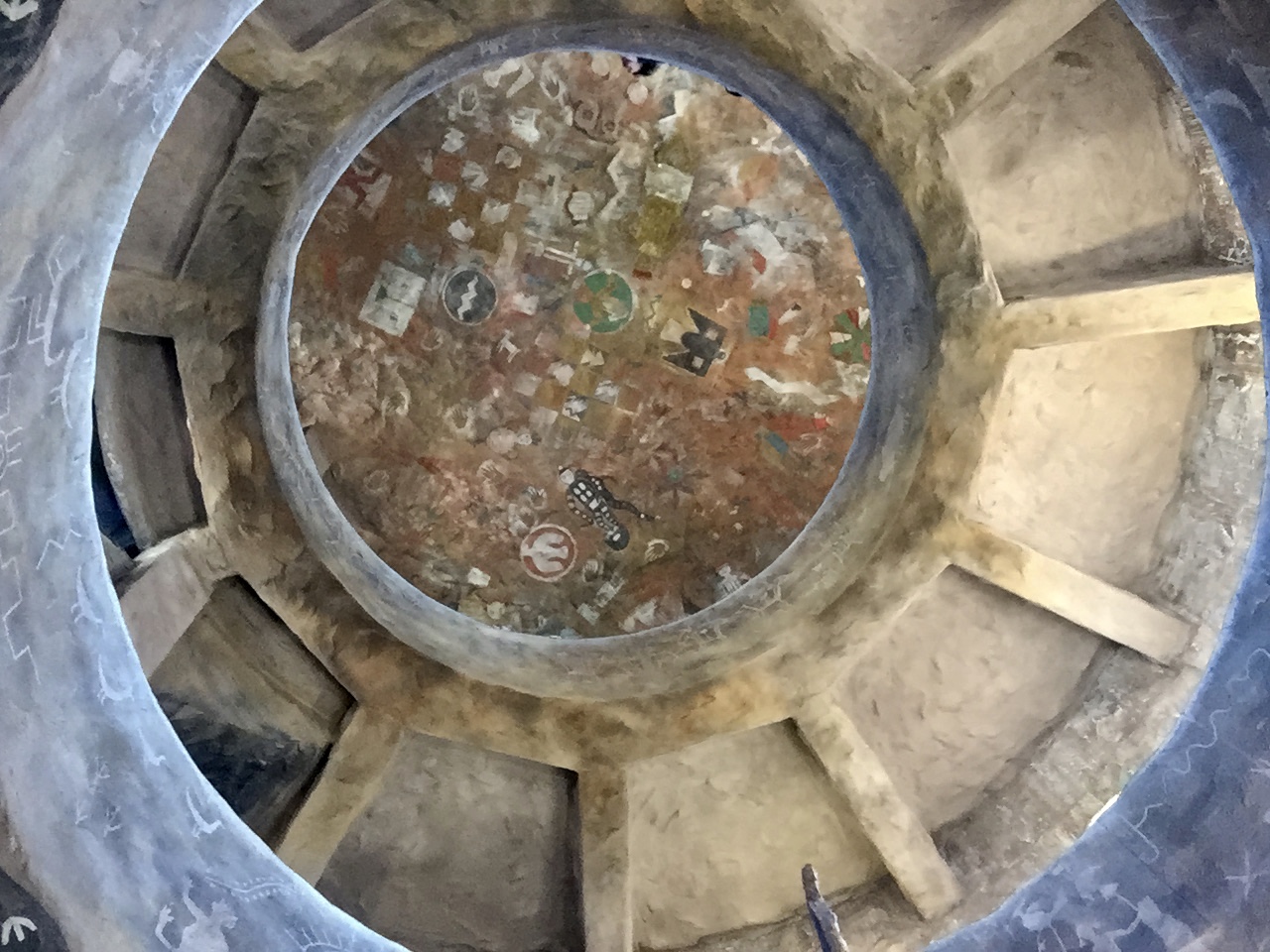
The ceiling of the Watch Tower, 5th floor, looking up from first floor.

Each story of the Watchtower has several windows enabling us to gain different views of the Canyon and the surrounding area. The first floor displays a Hopi snake altar right in the center of the room.
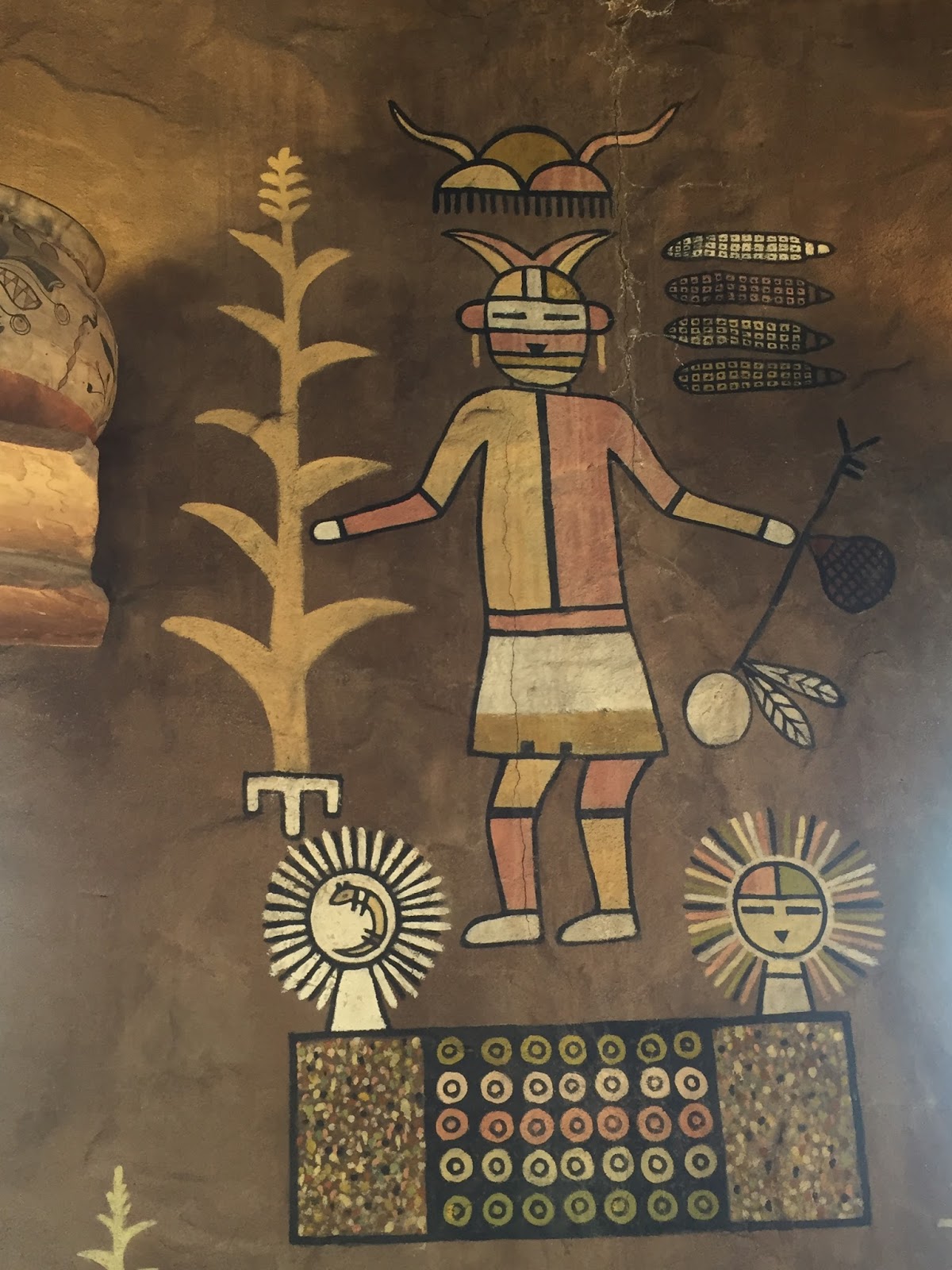
Walls and ceilings are covered in Native American symbols and pictographs. There’s a mural of the Hopi Snake Legend describing their cultural connection to the Grand Canyon.

The painting tells the story of a Hopi man who floated down the Colorado River through the canyon in a hollow log. We saw the film of the canyon and river at the IMAX and the river is ferocious. Difficult to fathom what his journey in his USS Hollow Log must’ve been been like after seeing the rambunctious and turbulent current in the river.
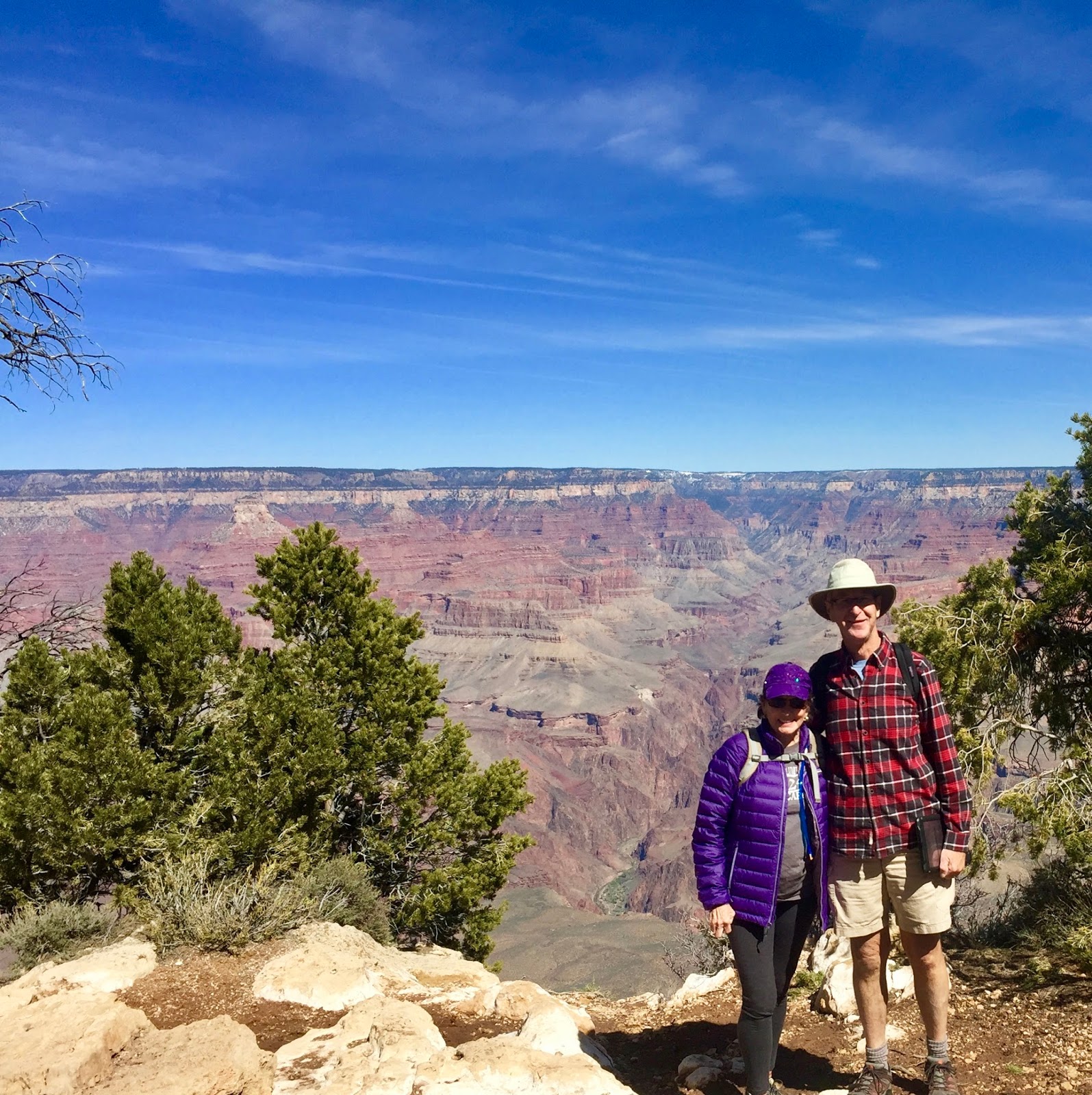
On our final day we hiked the South Rim Trail. We so much wanted to hike the Bright Angel Trail but it was steep and still iced over. We did go part of the way to the 2 holes in the rock but didn’t dare venture any farther. Not a good time in our lives for a broken hip.
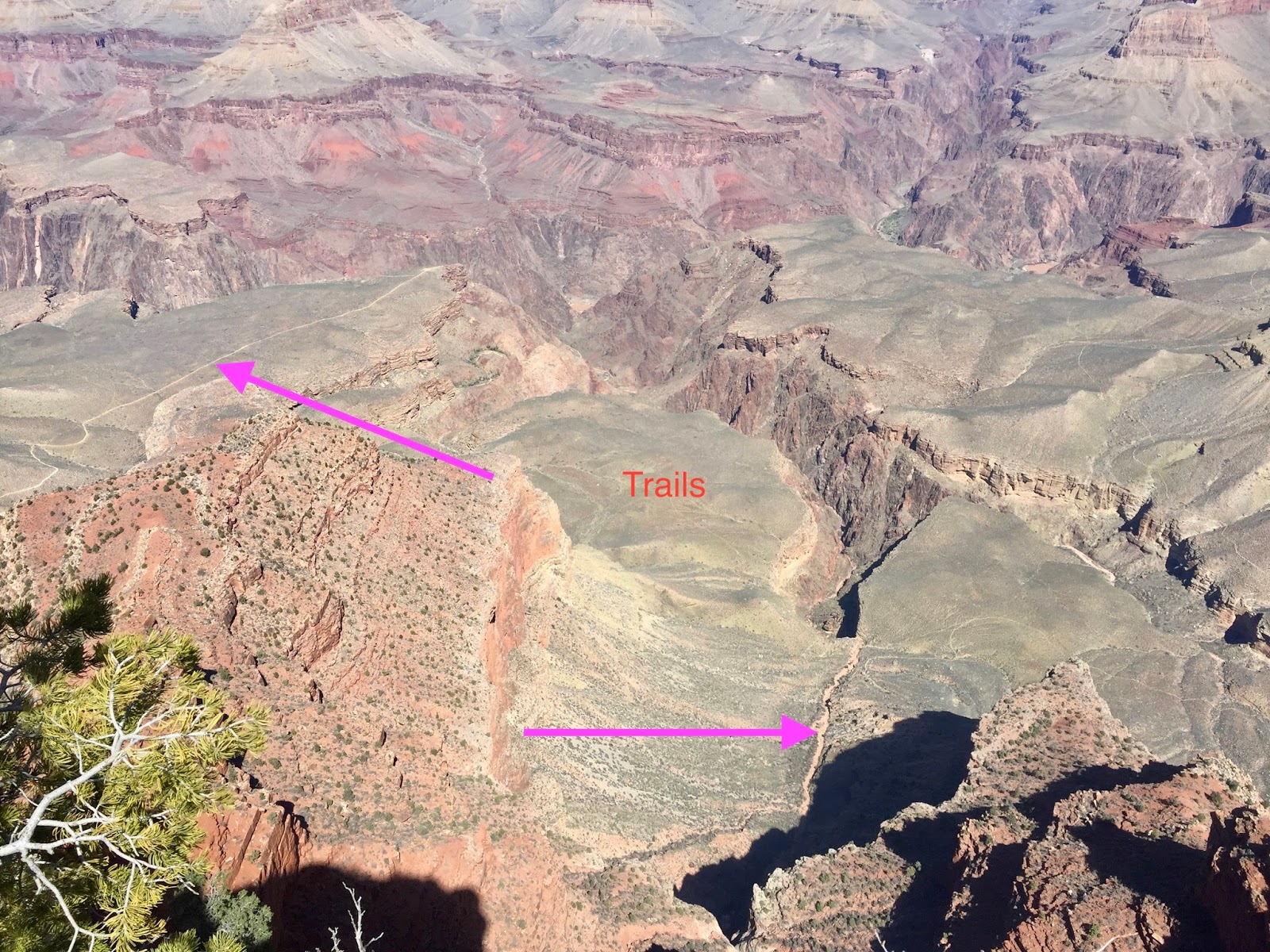
Trails
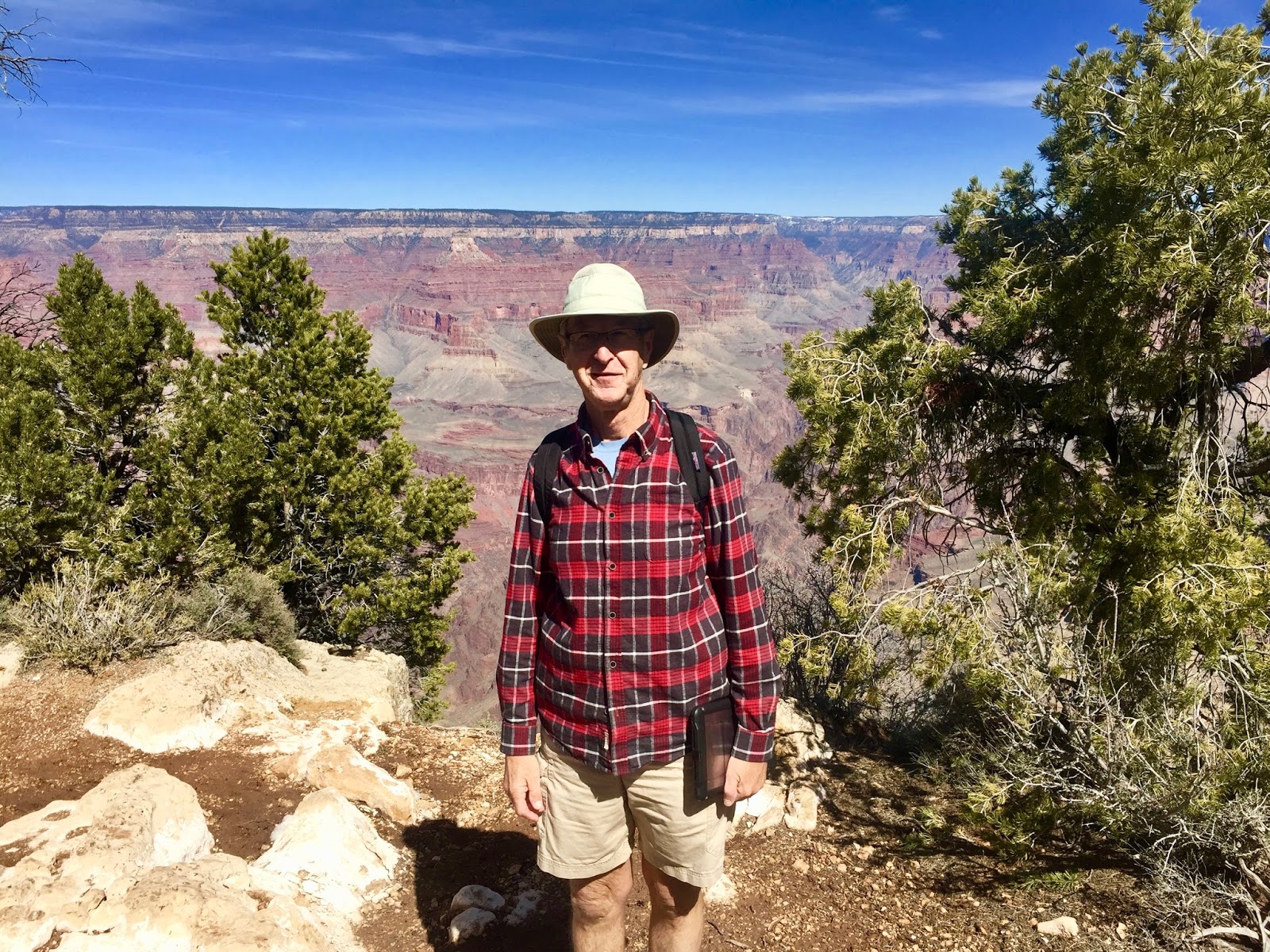
We saw so much more on the hike than we could’ve seen from the shuttle buses. Words fail me. Please forgive the endless photos but just can’t bring myself to delete any.
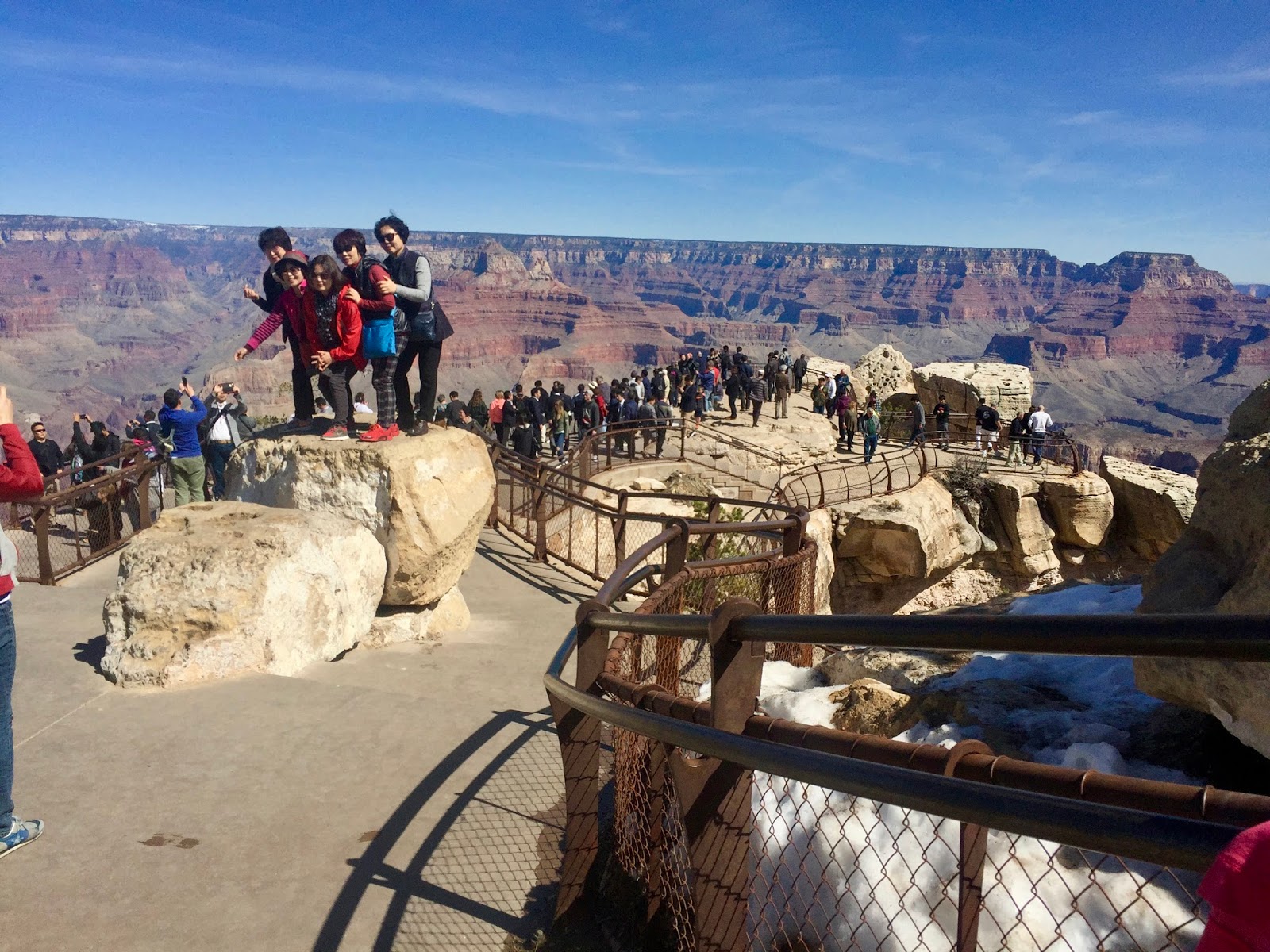 Believe it or not, we’ve beat the spring and summer onslaught of tourists.
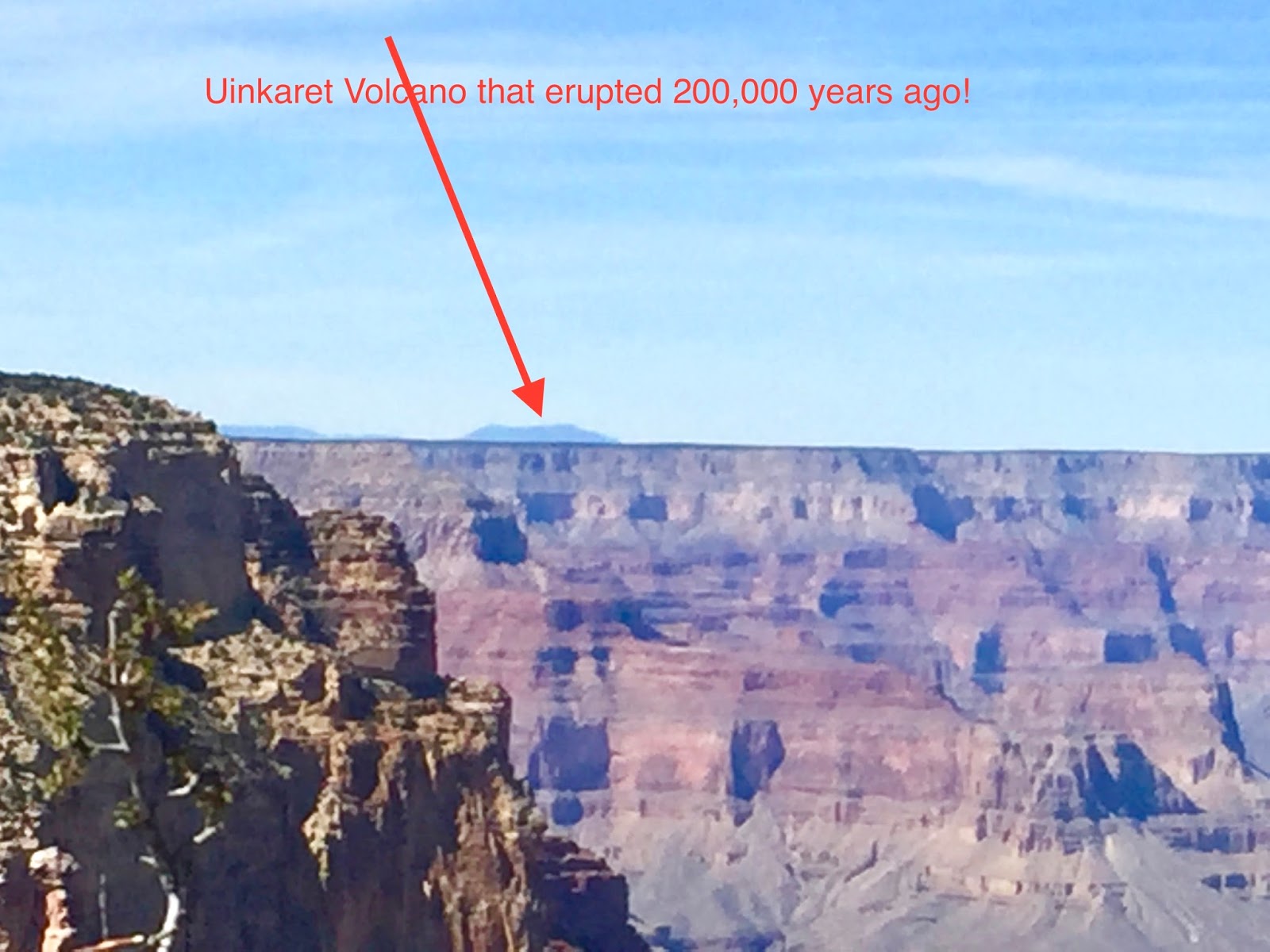
This volcano hasn’t erupted in 200,000 years.
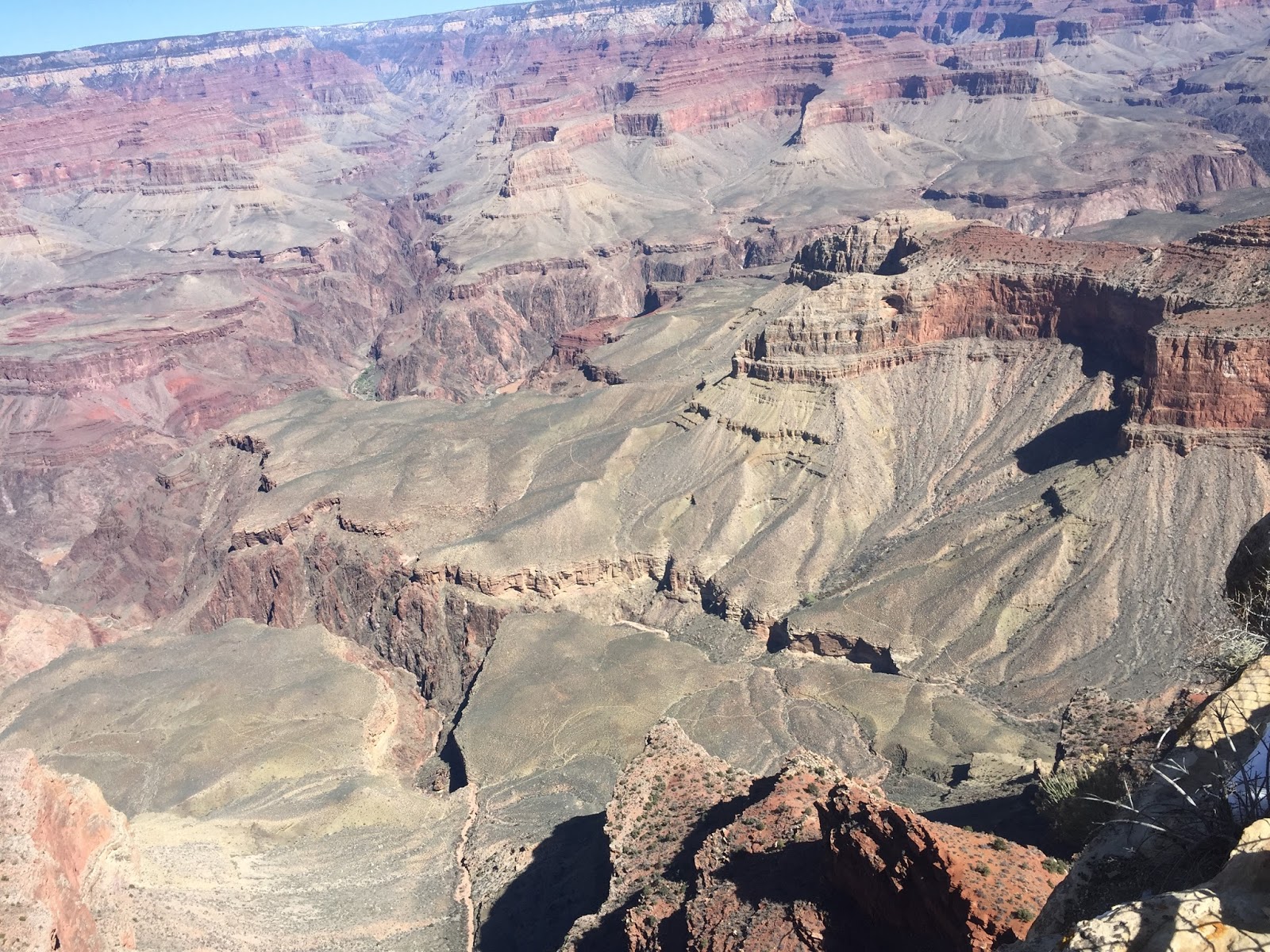
An artist’s palette
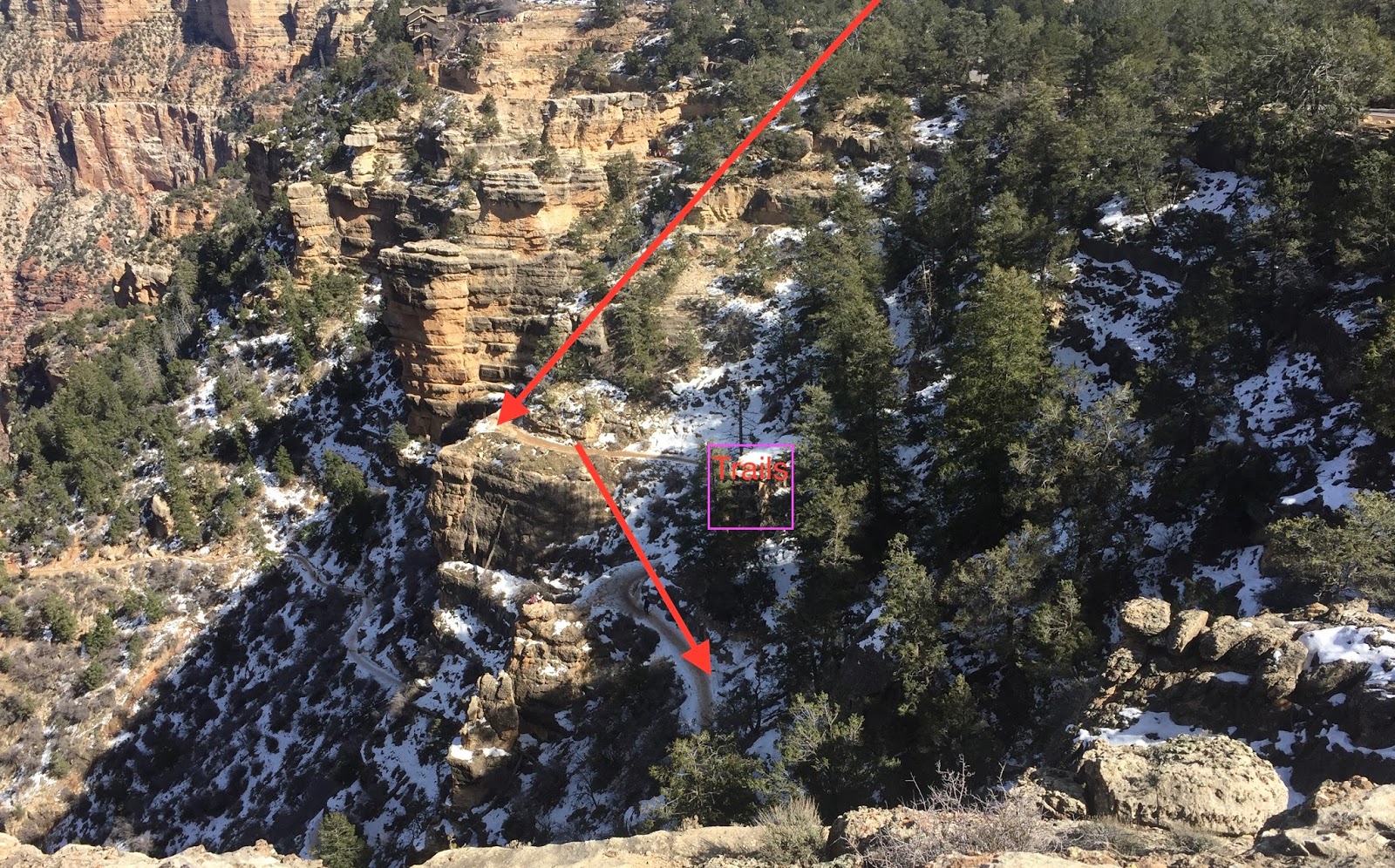
Trails
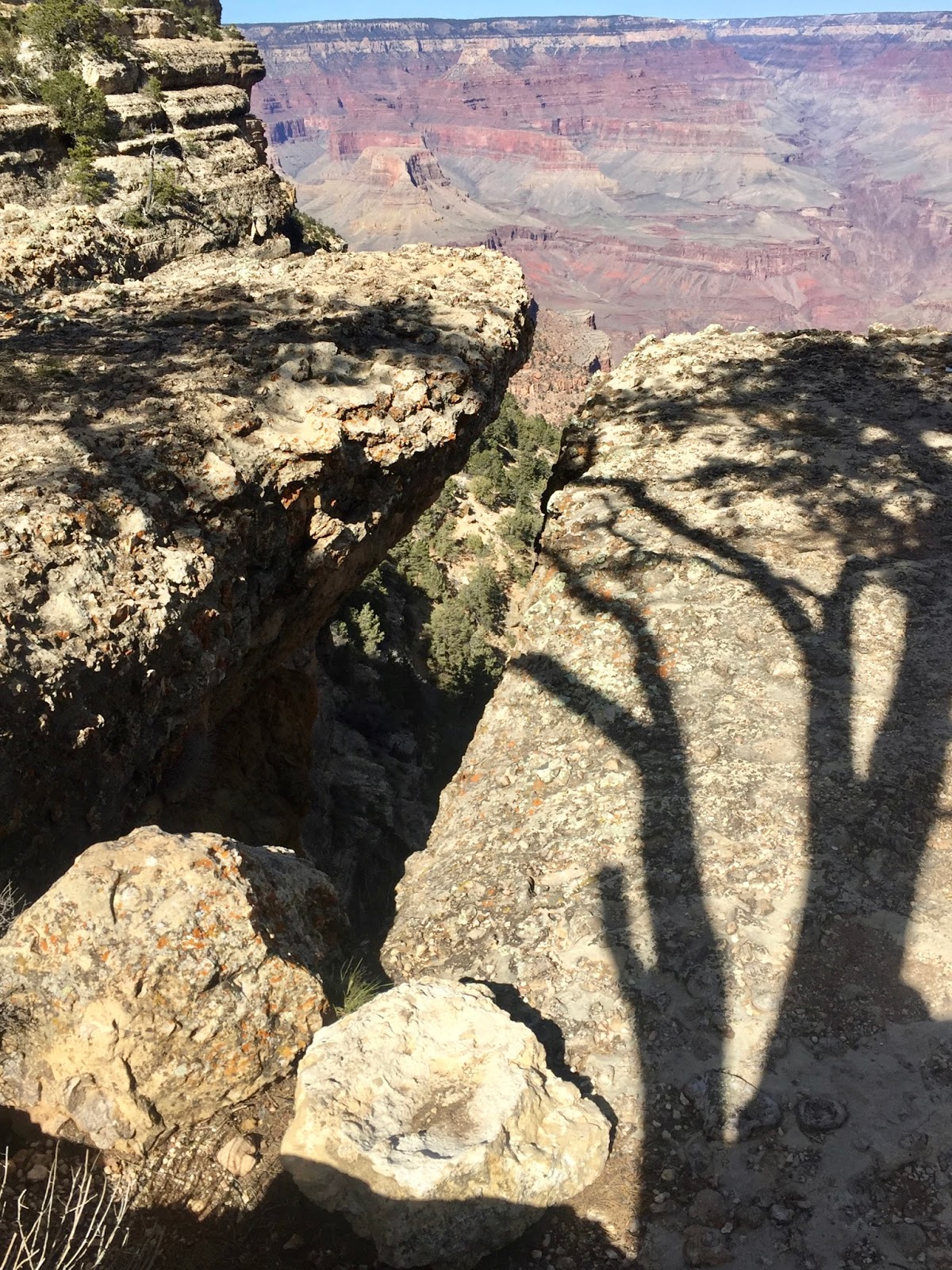
A cleft in the rock
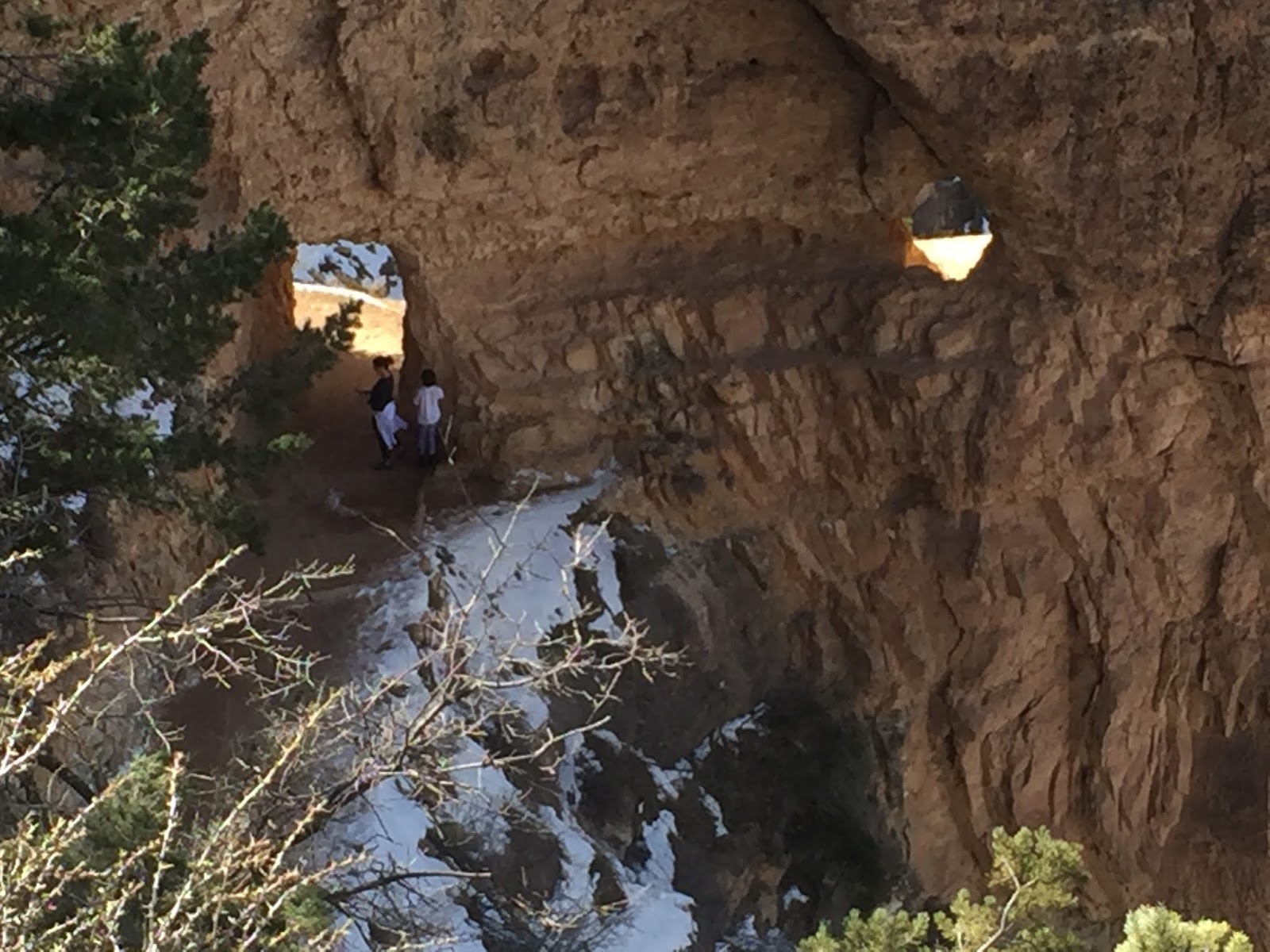
Holes in the rock on the Bright Angel Trail
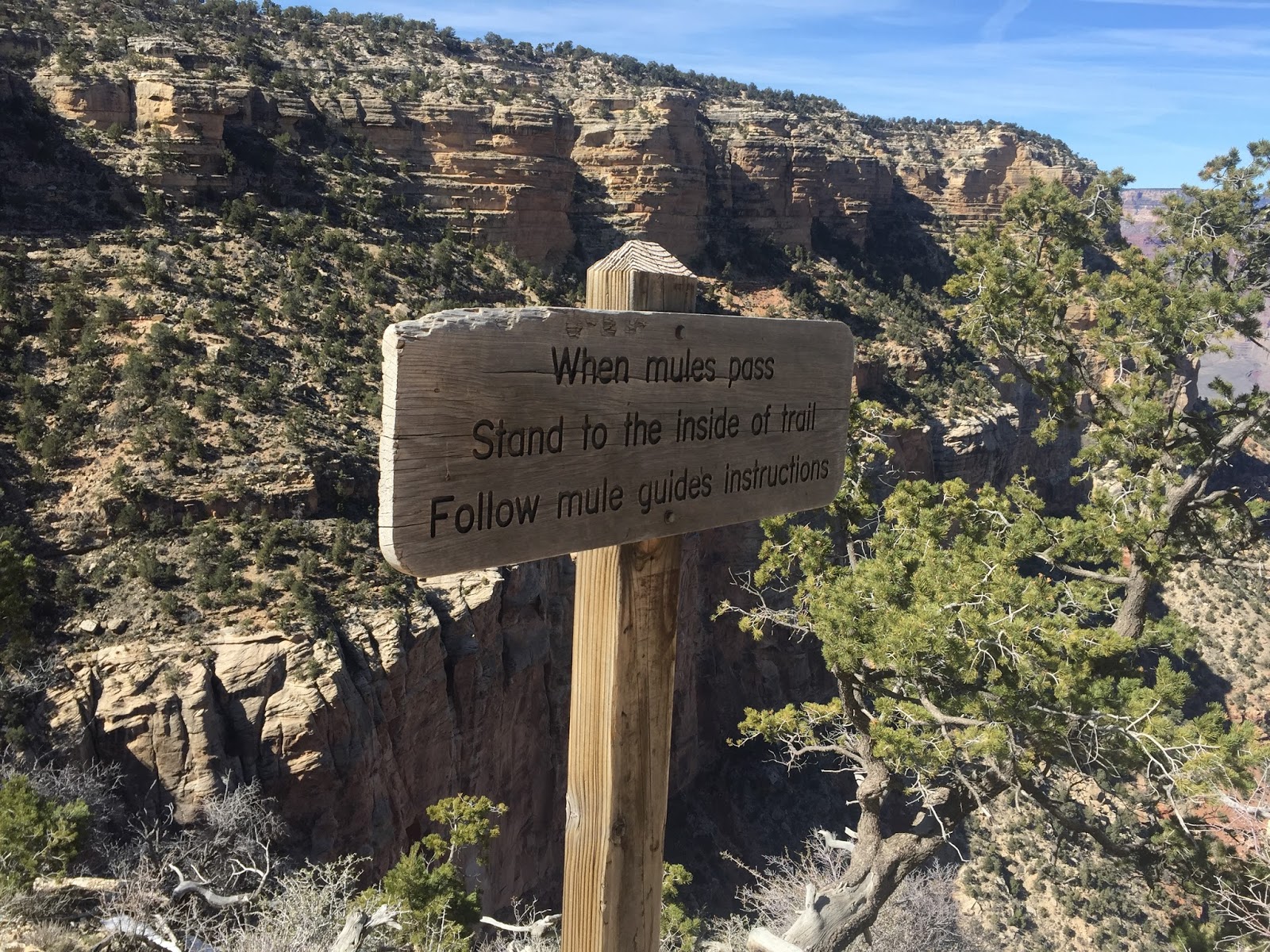
“When mules pass….”

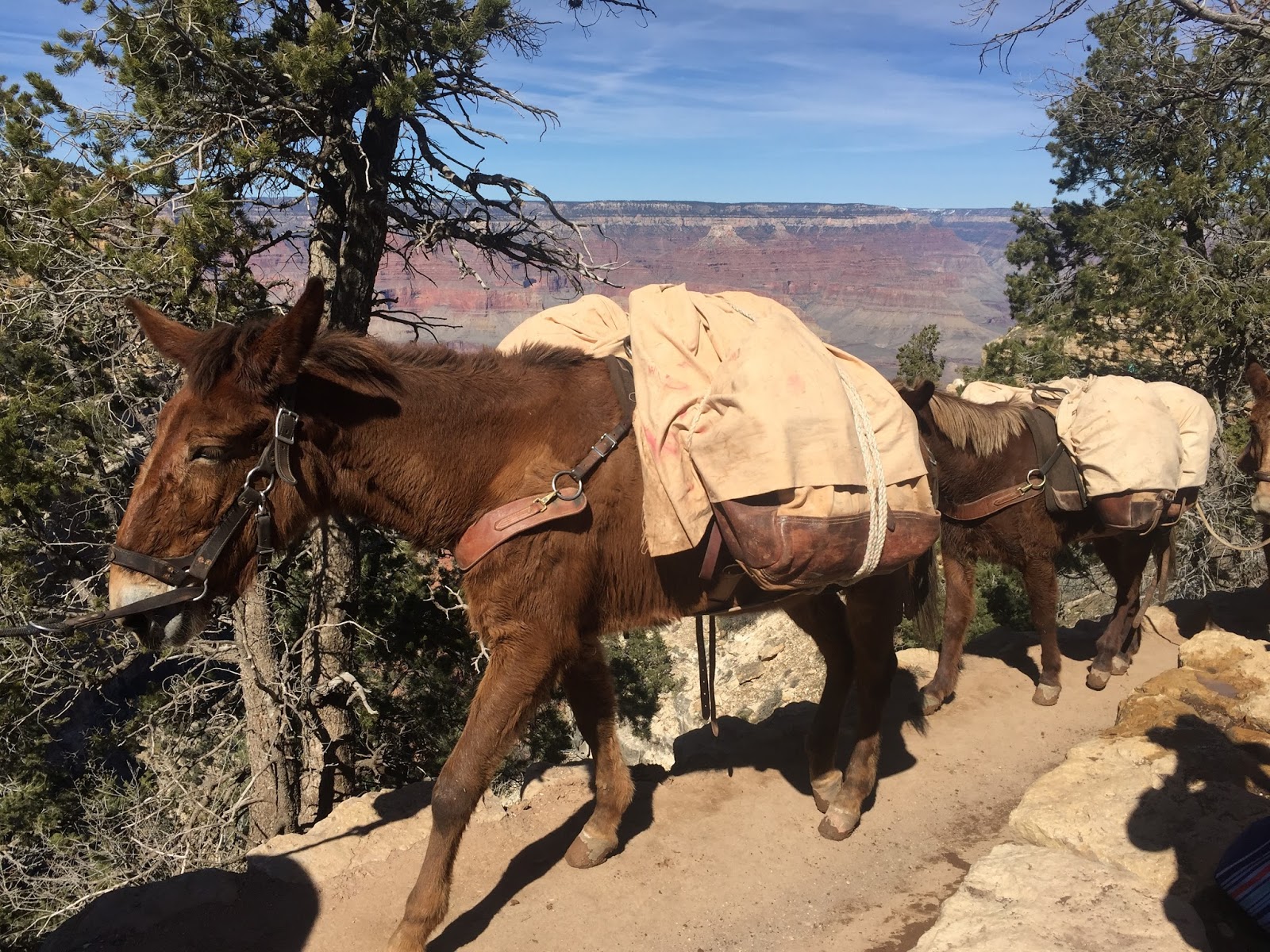


Hole in the rock that’s passable on Bright Angel Trail
One of the Seven Natural Wonders of the World, the canyon changes by the hour and by the season. Sunset and sunrise are experiences of a lifetime and the South Rim is the best place to experience the many moods of the canyon.There are museums that feature history, heritage, and geology, the IMAX movie and the National Park Service movie in the Park Visitor Center are very educational before visiting the park. There is so much to do in and around the South Rim. Our 5 day visit was truly memorable and something we’ll always remember and cherish.
Bill and Laura
Grand Canyon National Park, AZ
Simrad Marine Electronics: The Correct Choice – Or Did We Make A Mistake? Updated 3/8/17
*Since we posted this article, we have had several comments from readers. Of particular interest was an email from blogger …Read More
Back on the water again
We are so excited to spend time on Daybreak with Jerome and Karen Fisher!!! Out to The South Pacific we go….
Back on the water again
We are so excited to spend time on Daybreak with Jerome and Karen Fisher!!! Out to The South Pacific we go….
5 March 2017 Sedona – Jerome – Clarkdale – Tuzigott – Cottondale – Sedona, AZ
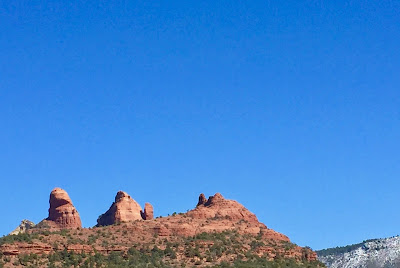
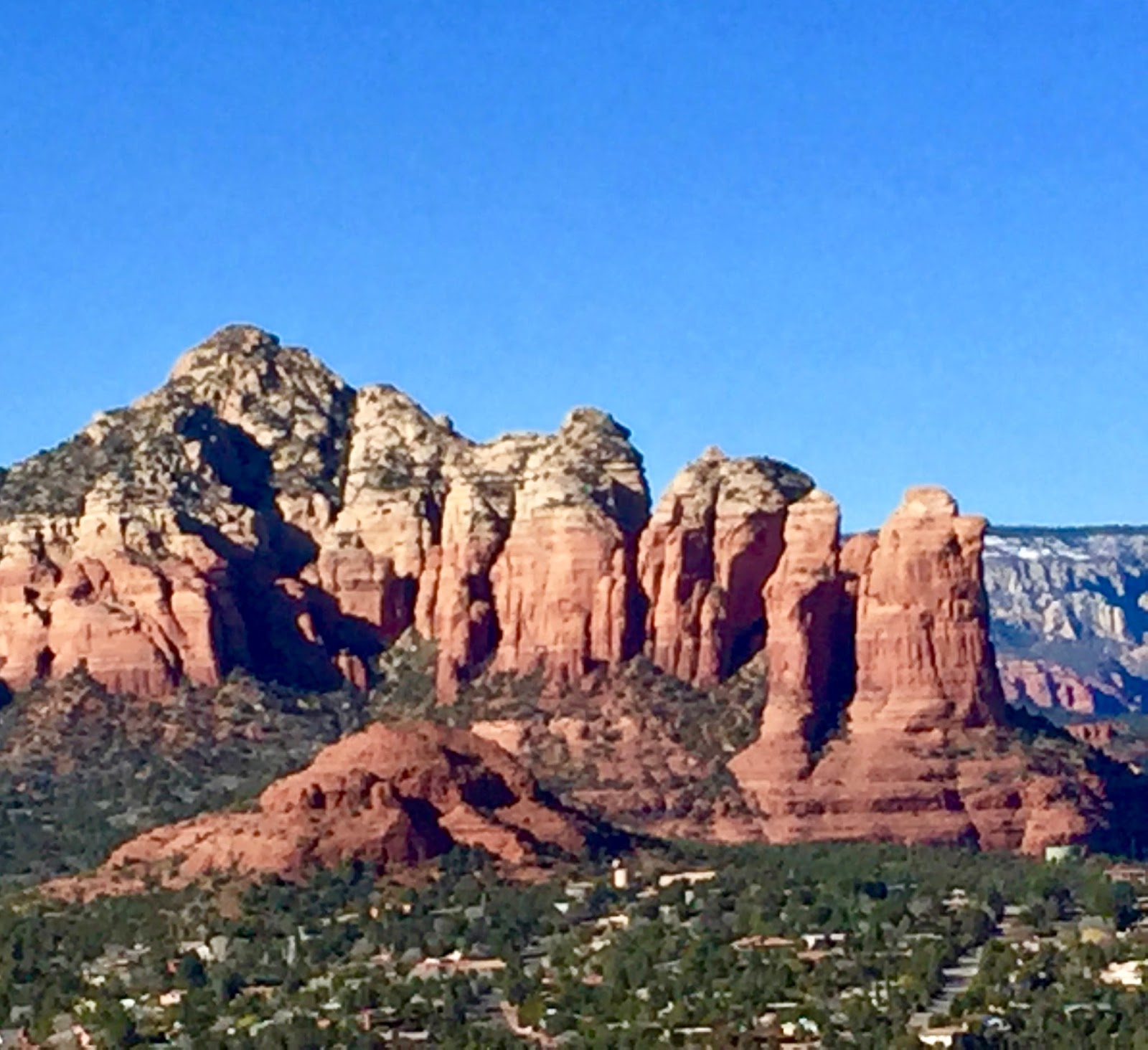
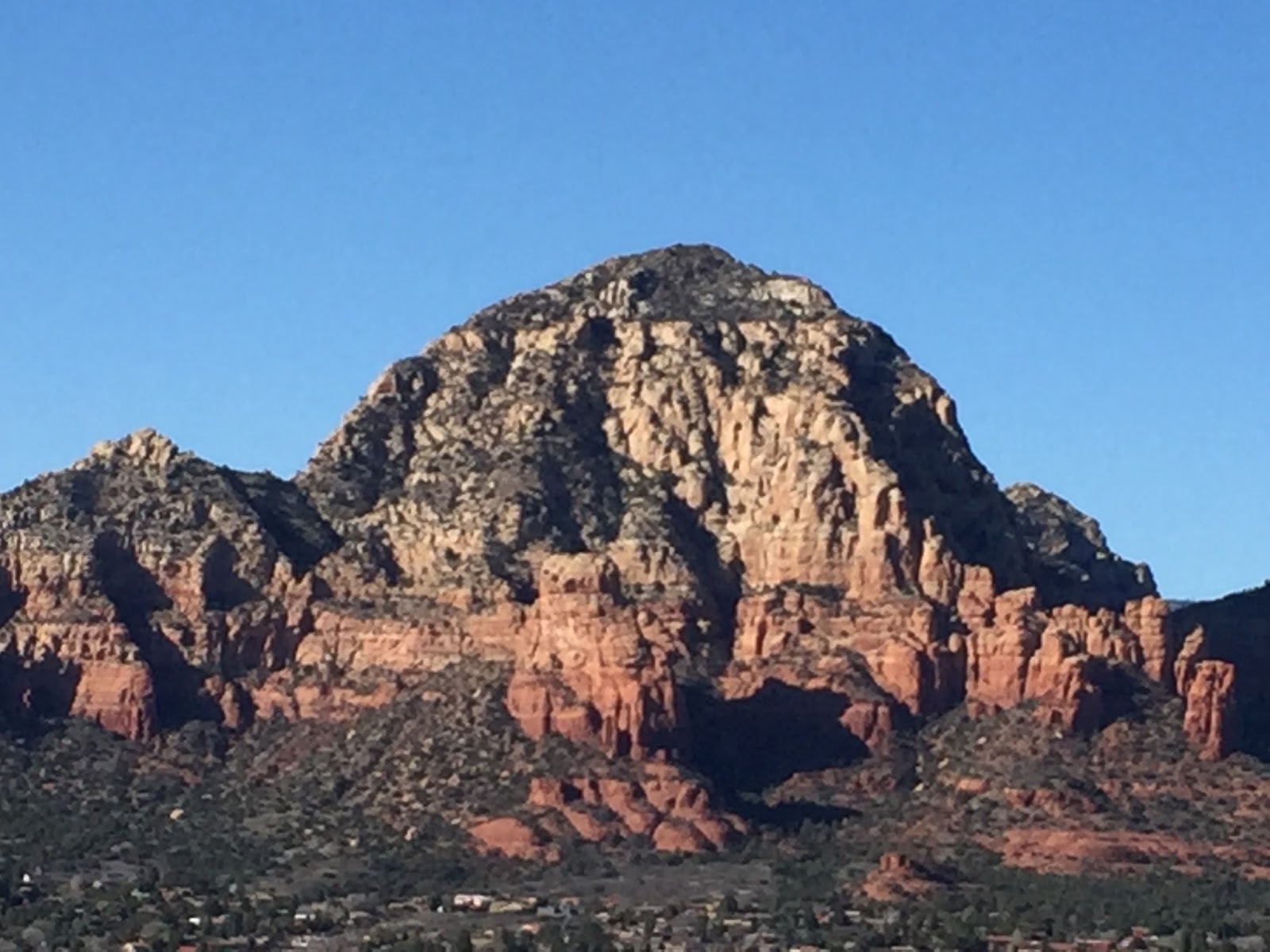
Situated in a stunning setting, surrounded by red rock mountains and buttes lies the little village of Sedona where there are fabulous views from the main highway running through the town and almost every street corner. Sedona is known for its energy vortexes and many people consider it to be a highly spiritual place.
Our first morning in Sedona we took two narrated trolly tours that were immensely educational and provided a great overview of the Sedona area. We became acquainted with our tour guide, Mark, who also gave us some tips of places to go and things to do during our visit there.
Mr. Schnebly, one of the early settlers, petitioned for a post office and that was granted. His wife was named Sedona. Go figure! Schnebly Hill Road is the route from downtown to our campground and it winds above Sedona, rocky and unpaved, to some great hiking trails. We accidentally explored two of those because we got separated but nobody got lost.
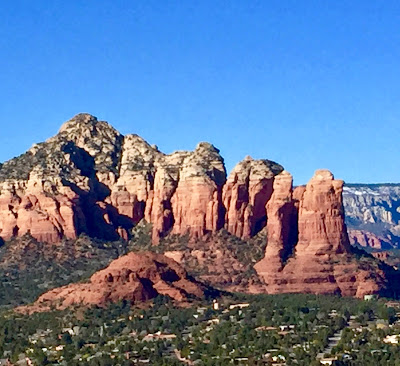
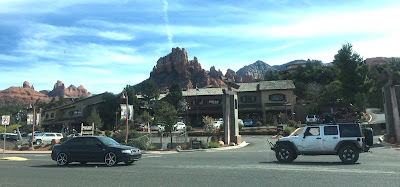
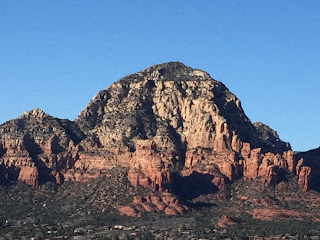
Our first morning in Sedona we took two narrated trolly tours that were immensely educational and provided a great overview of the Sedona area. We became acquainted with our tour guide, Mark, who also gave us some tips of places to go and things to do during our visit there.
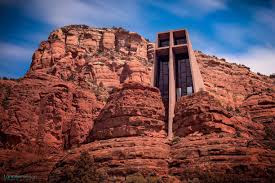
Built into a Sedona Butte is the Chapel of the Holy Cross in a breath-taking location providing an exemplary view of the town by standing by the altar. Built into a Sedona Butte is the Chapel of the Holy Cross in a breath-taking location providing an exemplary view of the town through the windows behind the altar.
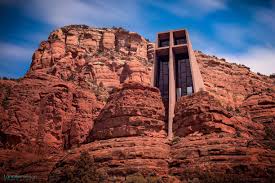
Mr. Schnebly, one of the early settlers, petitioned for a post office and that was granted. His wife was named Sedona. Go figure! Schnebly Hill Road is the route from downtown to our campground and it winds above Sedona, rocky and unpaved, to some great hiking trails. We accidentally explored two of those because we got separated but nobody got lost.
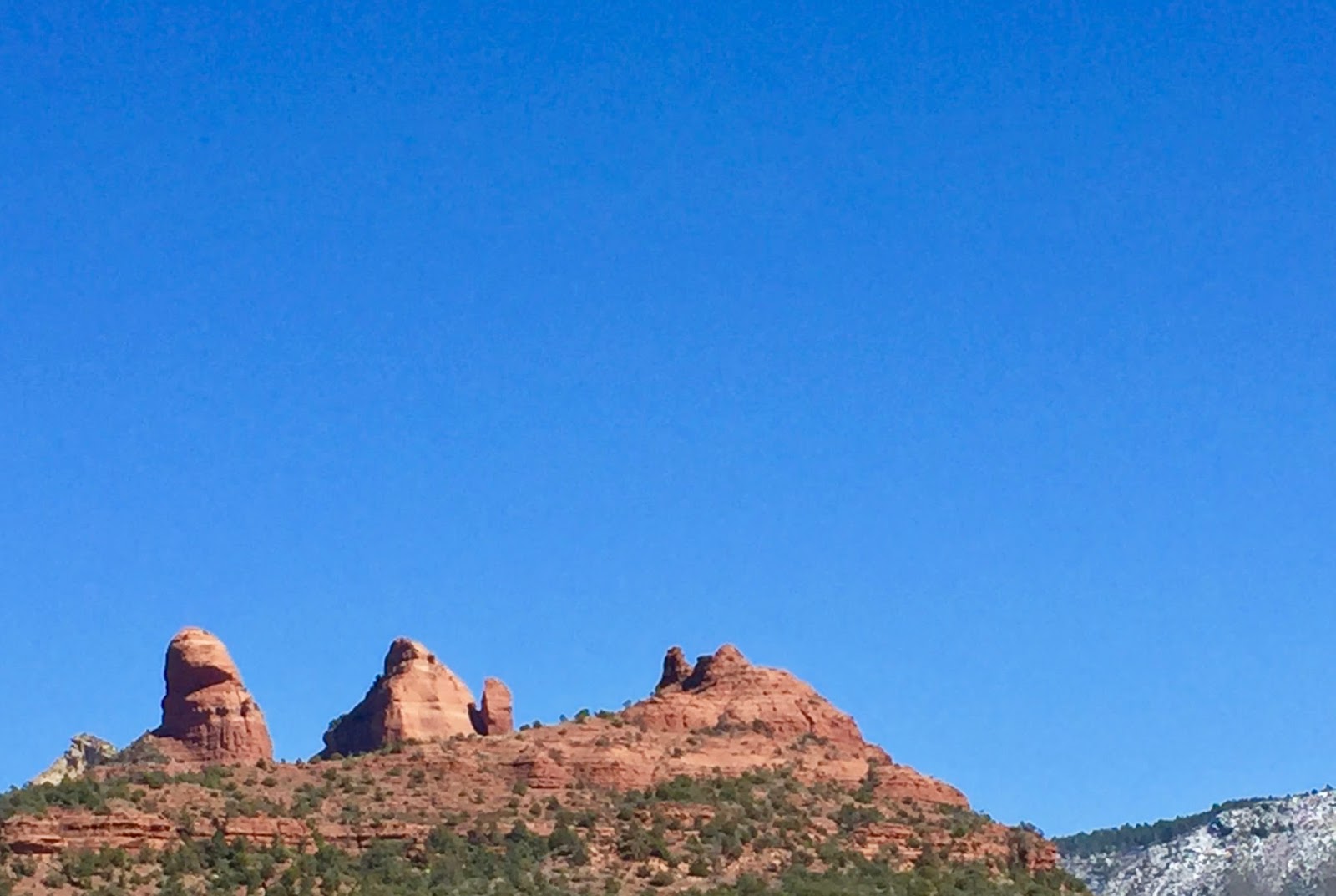
How could anyone ever become wearied by these magnificent creations!
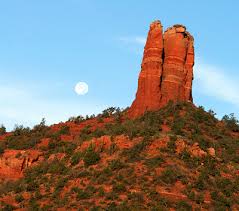
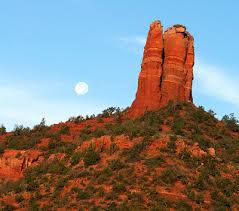
The Chimney of West Sedona
This huge formation rises from the top of the low mesa on which it sits. Depending on your vantage point, Chimney Rock looks like a single spire but from a different view, the three spires of the emergance are clearly visible.
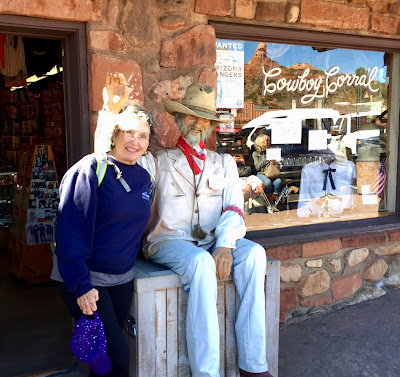
The downtown streets are lined with cute shops and interesting restaurants.
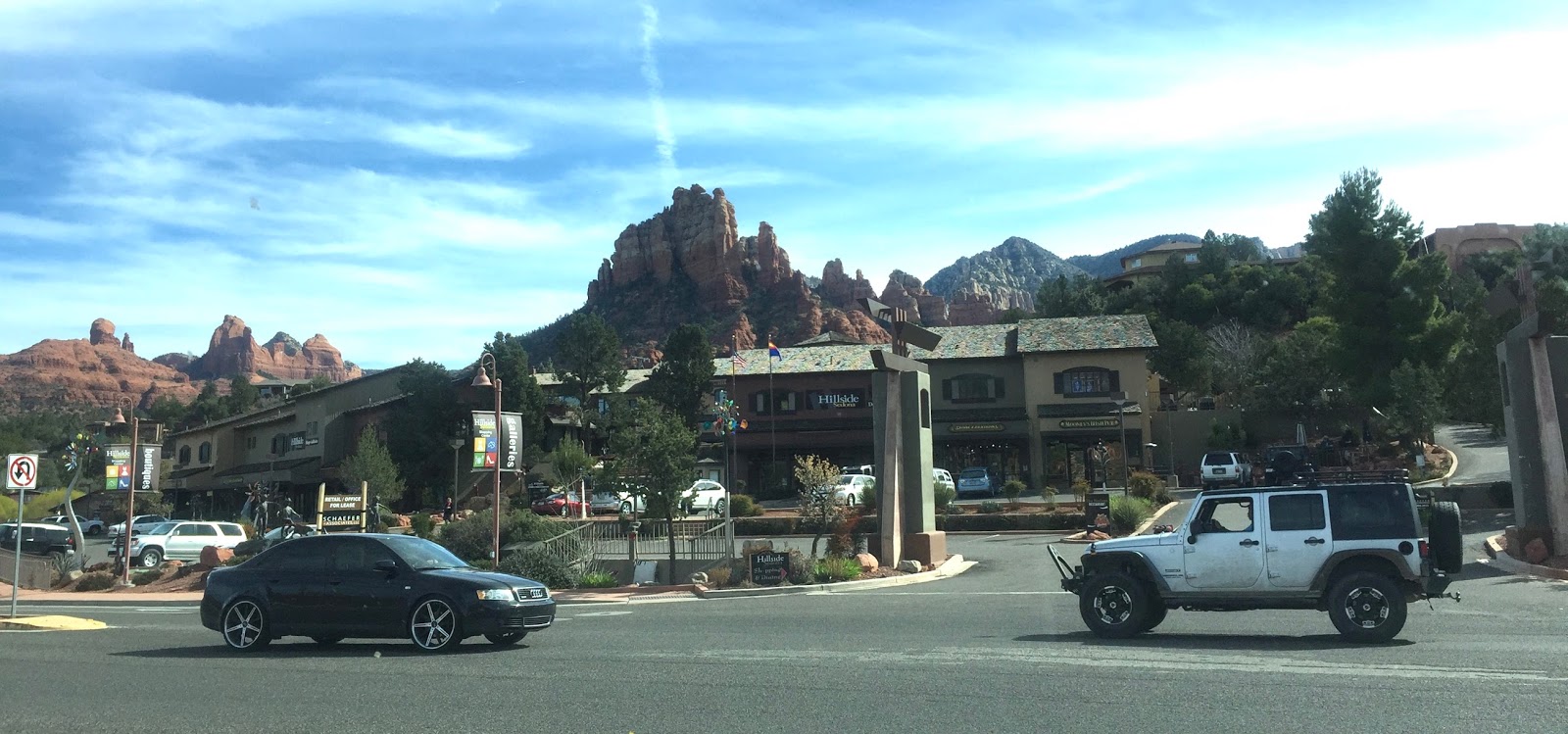
One of the many traffic circles in Sedona. The locals make it flow smoothly but tourists hover, blocking traffic, wondering if they should “go” or continue sitting there.
Mark suggested that we drive north on a highway with numerous switchbacks of sharp bends and curves that climbed quickly from Sedona up the side of the Mongolian Rim to the top of Highway 89A and the vista of the overlook for Oak Creek Canyon.
 |
| A snow covered mountain side of Oak Creek Canyon |
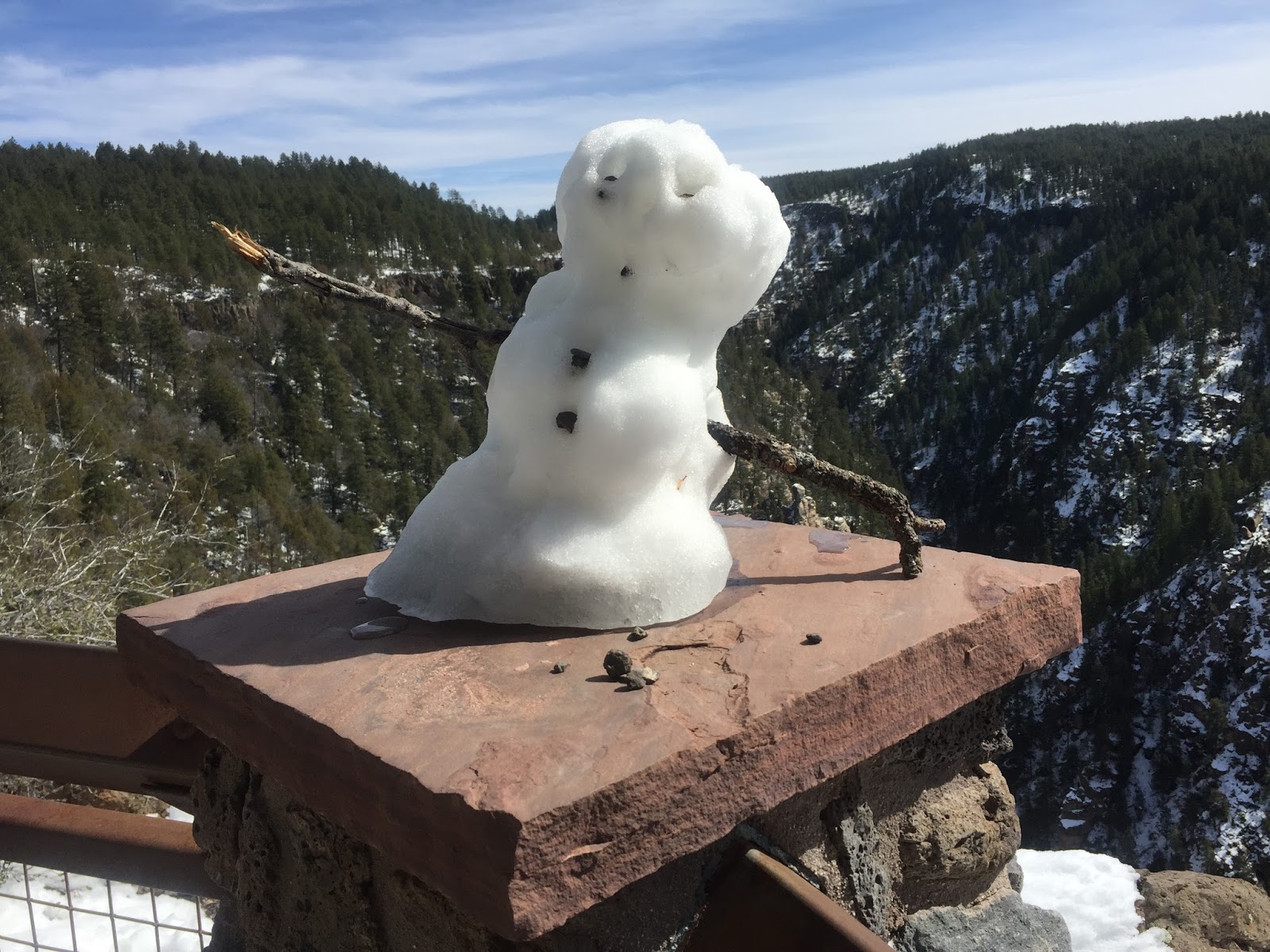
From the canyon rim, we had a dazzling panoramic view stretching 5-8 miles toward Sedona. Snow remained from a recent snowfall and we found a snowman on one of the walls.
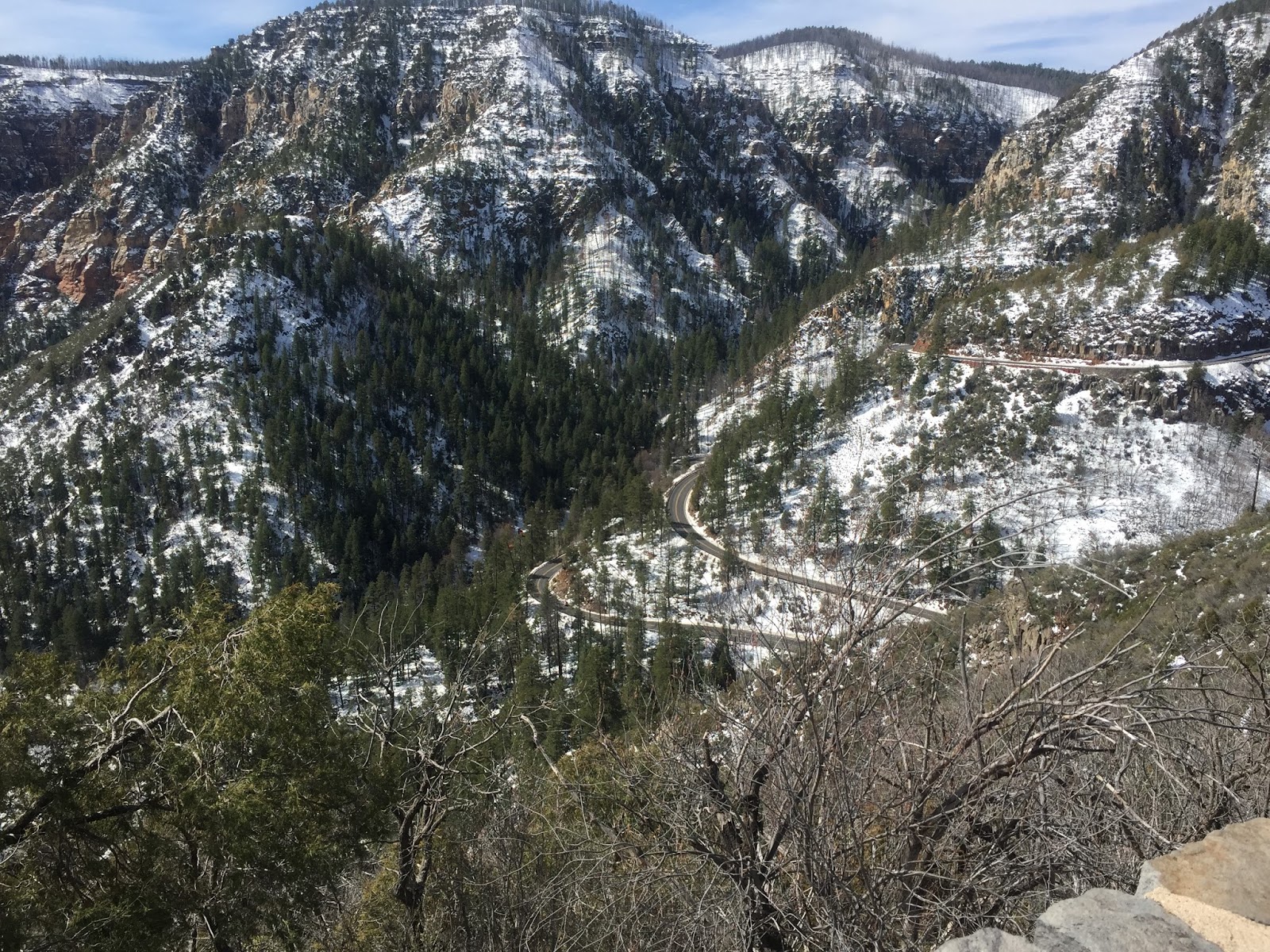
Four of the circuitous paths that Highway 89A carves into the mountainside to get us to the rim can be seen in the above photo.

Never did we think we’d ever see snow again in our lives!
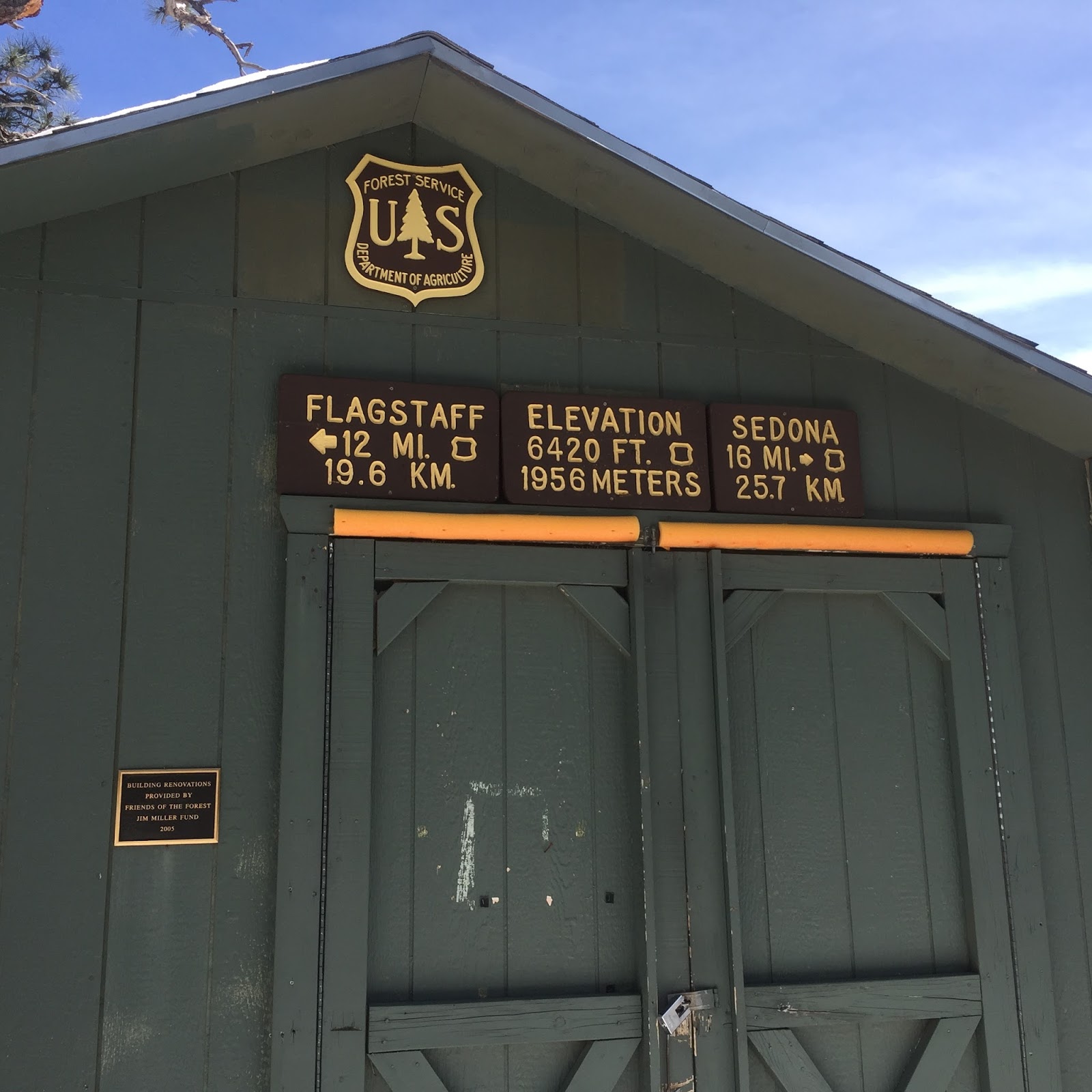
At the top of Oak Creek Canyon
Mark strongly recommended adding Jerome, AZ, to our itinerary. When we arrived in that unusual village, we couldn’t believe our eyes! It was founded in the late 19th century, is more than 5,000 feet above sea level and sits on Cleopatra Hill, overlooking the Verde Valley. It’s known by two descriptive names—American’s Most Vertical City and the Largest Ghost Town in America.
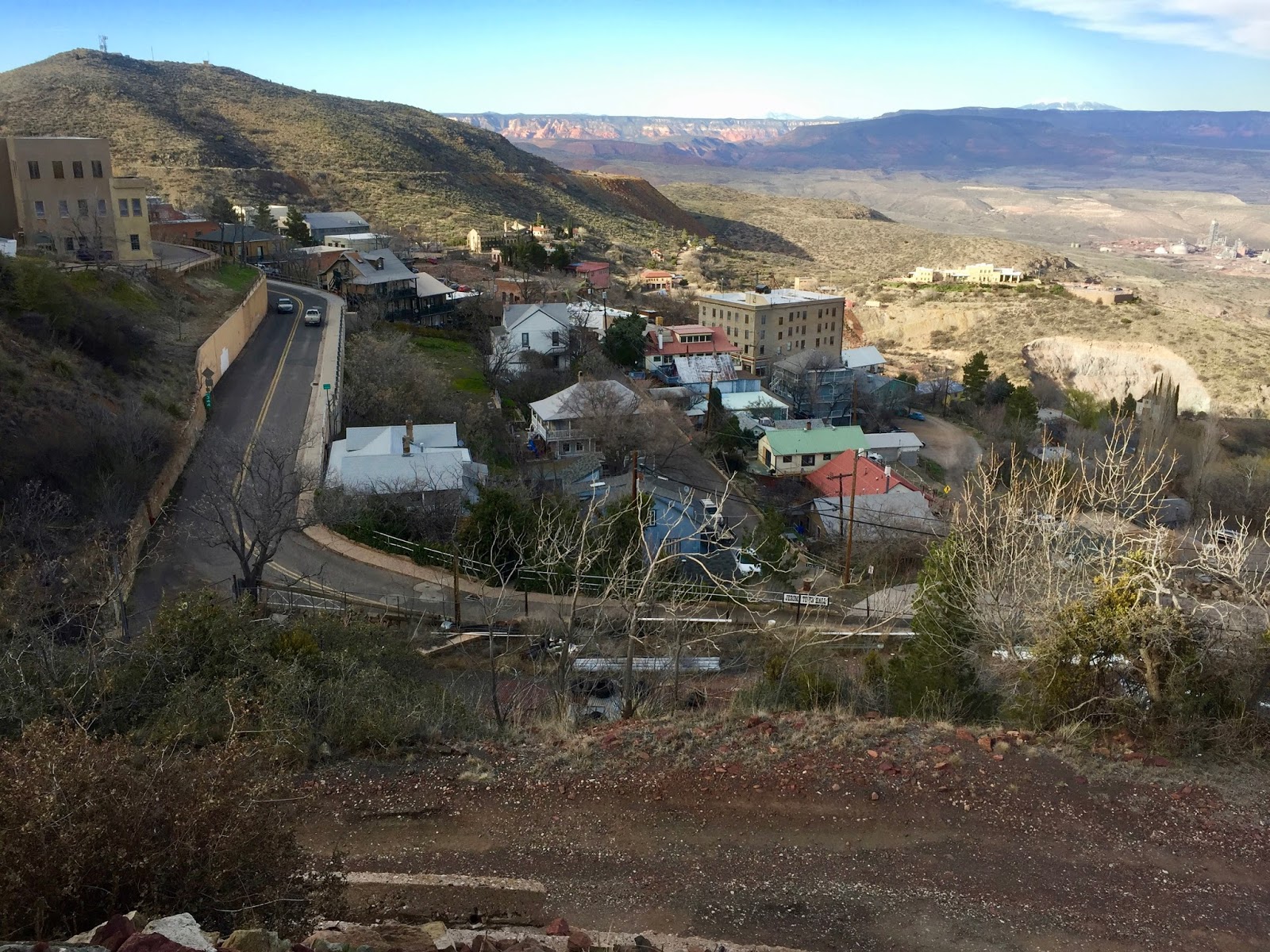
This tiny old mining town, turned ghost town, is located along a mountainside high above the desert floor, and has become a tourist attraction. A steep hill with switchbacks is the main street through town. Views from the streets and through some of the shop windows, are amazing. Many of the old buildings have been renovated but some still stand as ruins, creating a very interesting dynamic.
This town is unique to say the least, and has many interesting and quirky sites.
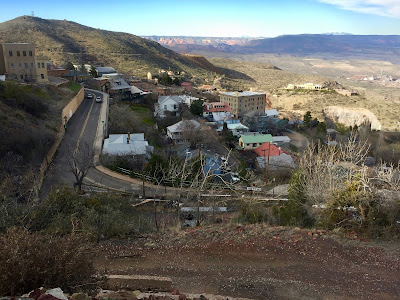
This tiny old mining town, turned ghost town, is located along a mountainside high above the desert floor, and has become a tourist attraction. A steep hill with switchbacks is the main street through town. Views from the streets and through some of the shop windows, are amazing. Many of the old buildings have been renovated but some still stand as ruins, creating a very interesting dynamic.
This town is unique to say the least, and has many interesting and quirky sites.
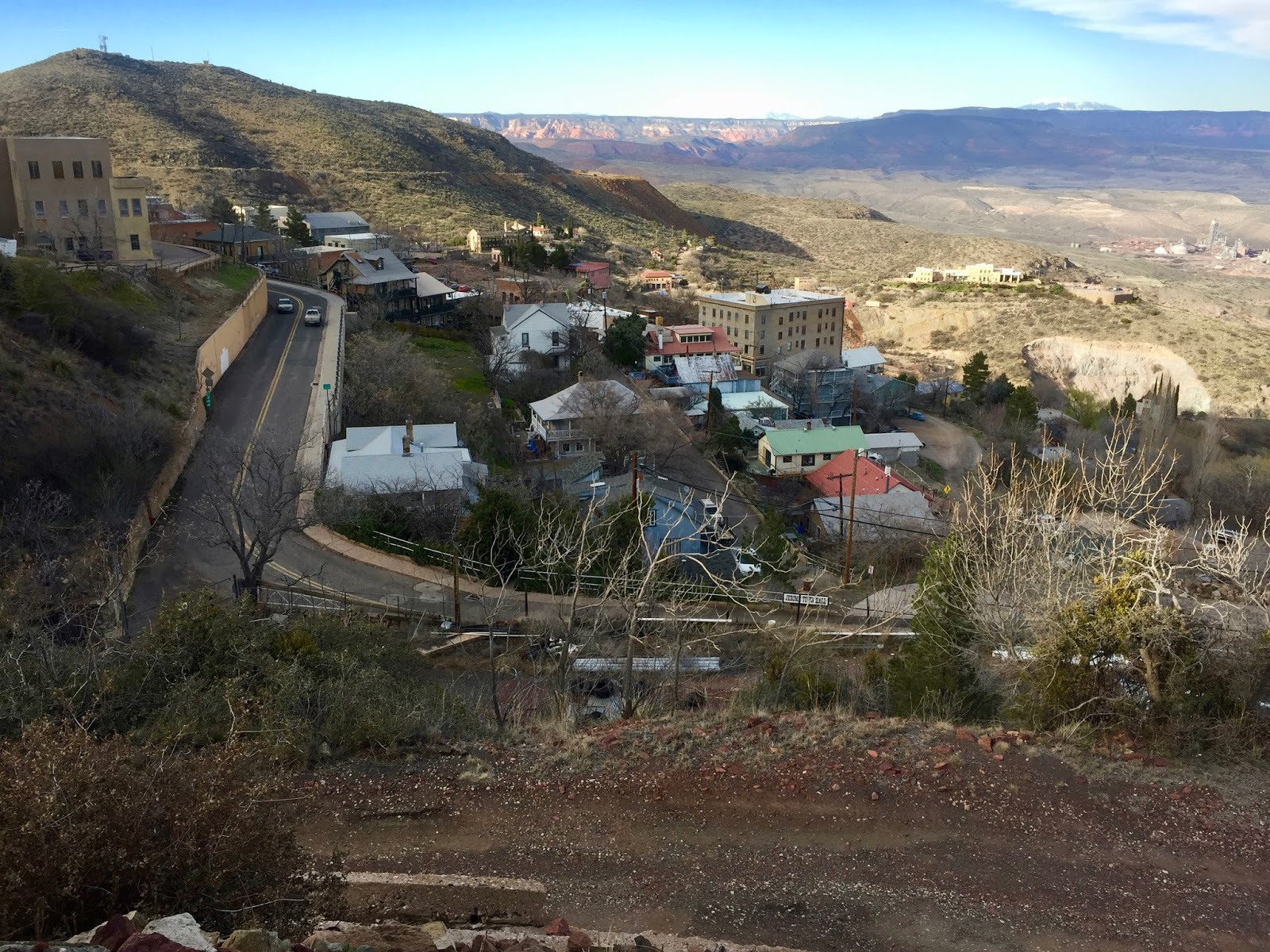
Jerome is a historic copper mining town and was once known as the most wicked town in the west with a population of 15,000 in the 1920’s. Today it is a thriving tourist and artist community boasting a population of 450. It sits above what was the largest copper mine in AZ and produced an astonishing 3 million pounds of copper a month. Today the mines are silent and Jerome has become the largest ghost town in America.
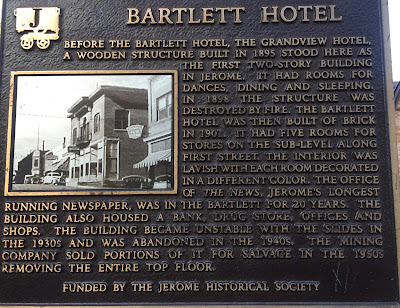
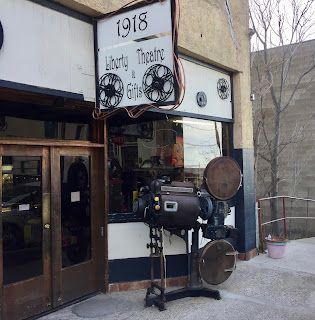

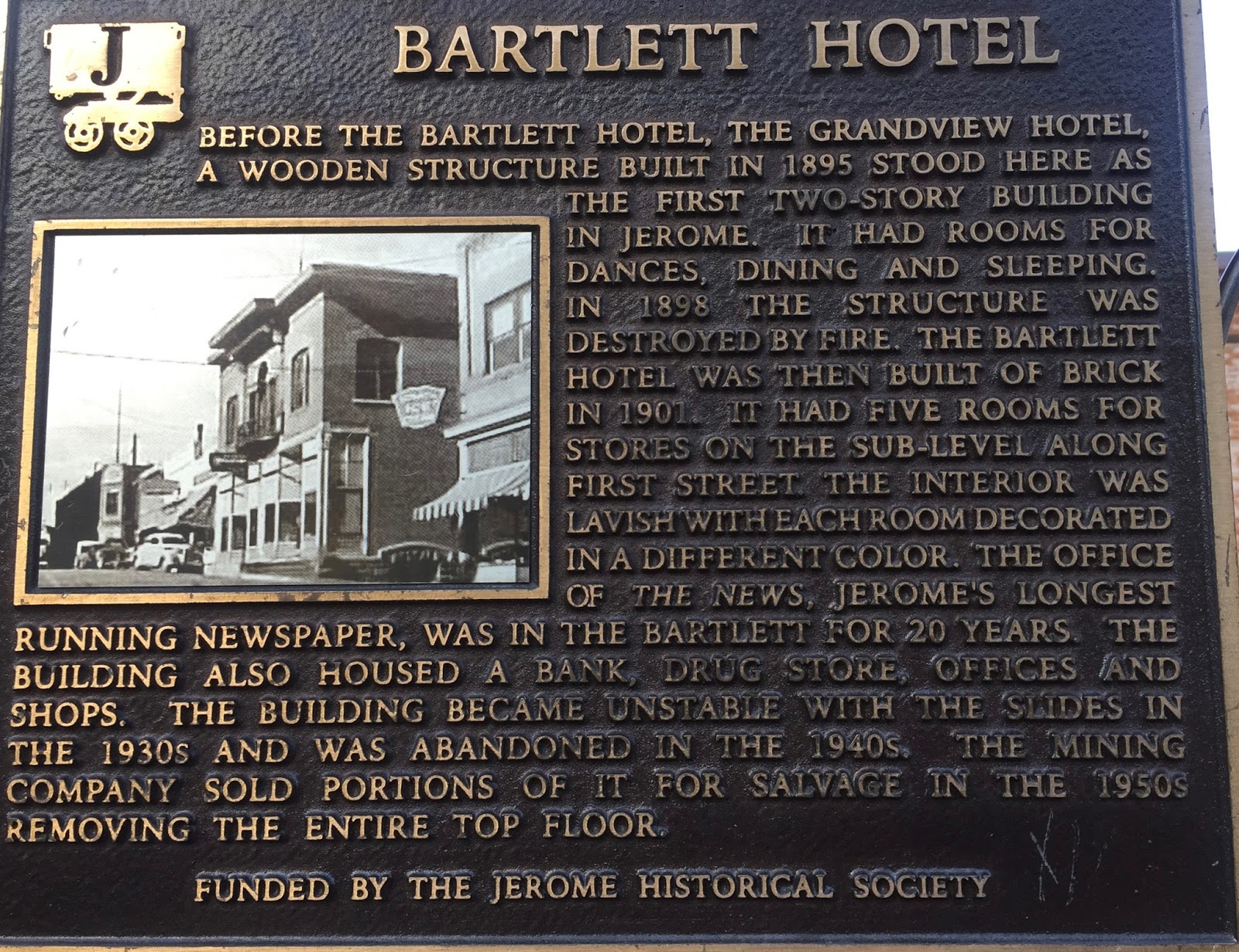
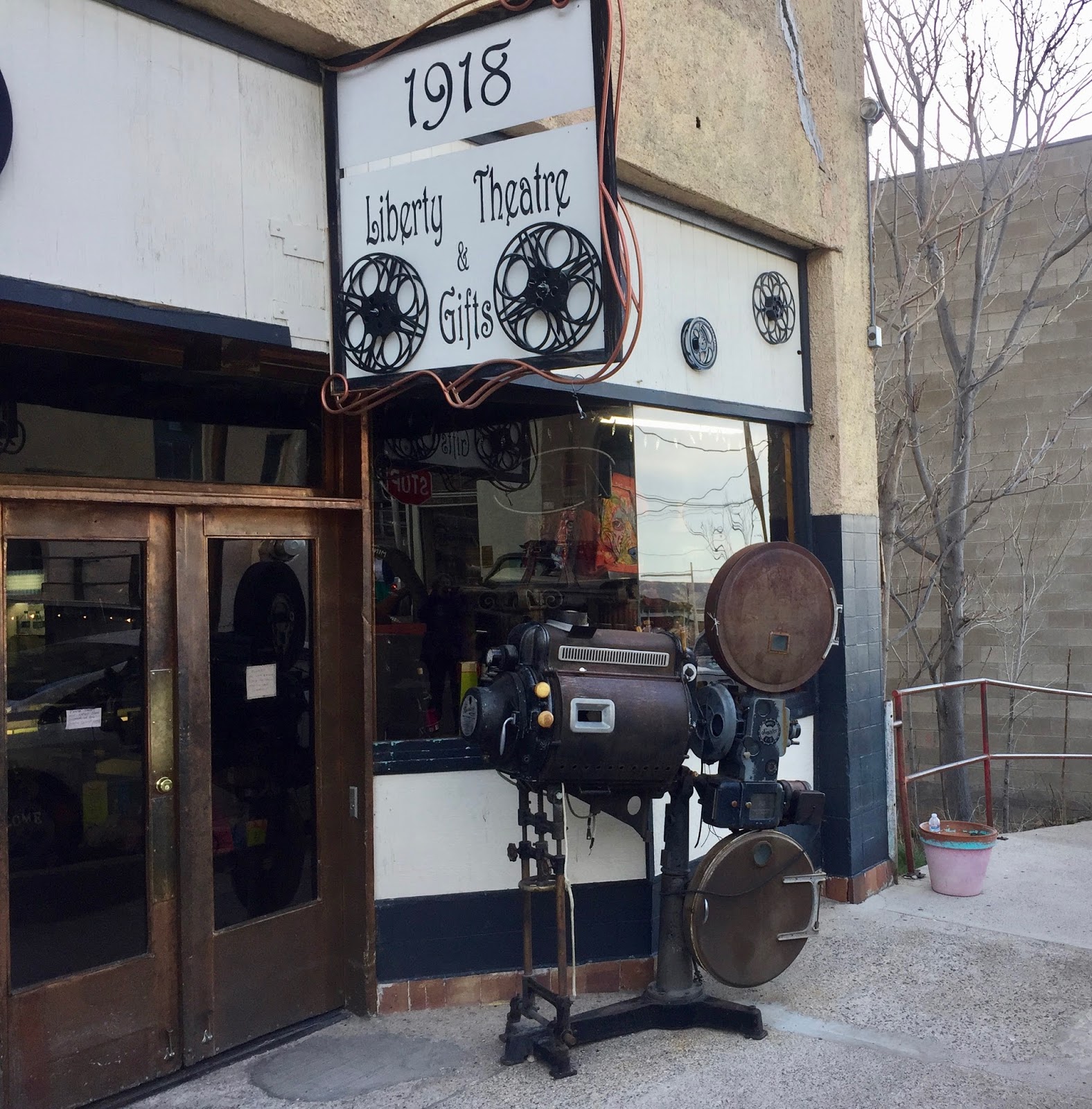
It is an enchanting town and a photographer’s paradise making it well worth your time to visit. Externally, it hasn’t changed much in nearly 100 years. Most of the buildings in use today were built after the fires of 1894 and 1899. You’ve just got to see it to believe it.

This is what’s left of one of Jerome’s finest hotel but today stands in ruins.
The town’s built on a 30 degree incline of the mountainside so gravity has pulled a number of buildings down the slope. To the delight of the inmates, one of those buildings was the town’s jail.
One area not to miss is the “Cribs District” which is across the street from the English Kitchen, in a back alley where all the buildings were part of Jerome’s ill-famed “prostitution row”.

Mark recommended a visit to the Jerome Grand Hotel, a historic landmark, once a hospital and now a hotel. It is a historic Spanish Mission style building that served as a hospital from 1927 until 1950. Then it sat unused for 44 years until it was purchased in 1994 to start its life as the Jerome Grand Hotel. Steam heat is still used in many areas and the 1926 Otis Elevator services all 5 floors. In the windowed garage, we saw their 1928 Springfield Phantom 1 Rolls-Royce. We were intrigued by numerous historic pictures and antiques also displayed throughout the building.
Another little town between Sedona and Jerome is Clarkdale, located at the base of Cleopatra Hill, the location where Jerome is King of the Hill. William Clark was owner of one of Jerome’s largest copper mines, thus the town’s name. The Verde Canyon Railroad is based there and still takes tourists on a 4 hour train ride with dinner served.
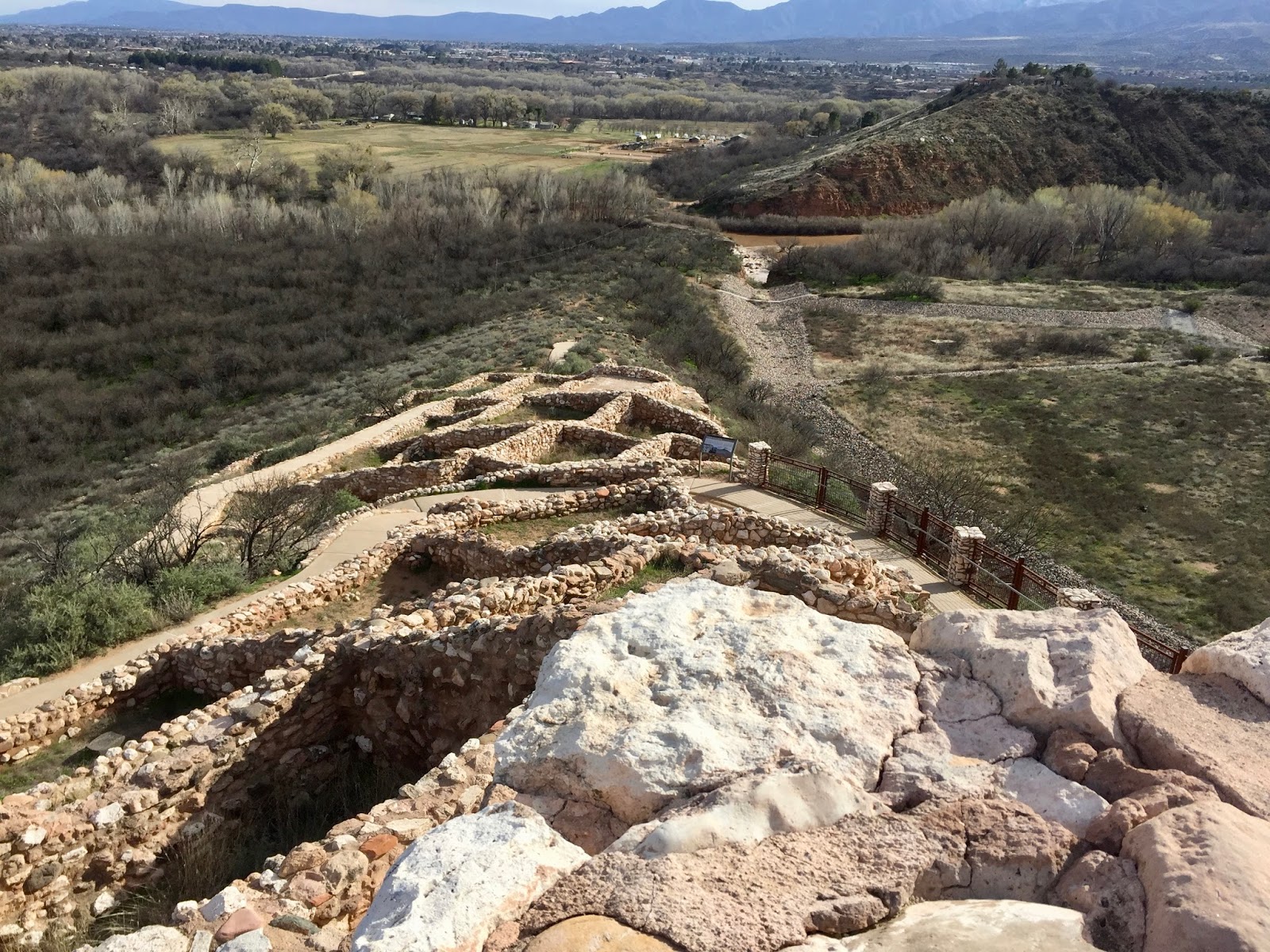
Tuzigoot National Monument was conveniently on our route that day, historic Highway 89A, and is an old Indian dwelling. There are two hiking trails that give visitors an up close look at the culture from long ago. The Sinagua people were agriculturalists and they built and lived in the pueblo that consisted of 110 rooms including second and third story structures. They left the area around 1400. The first buildings were built around A.D. 1000. The ruins still exist on this small mound. The site is currently comprised of 42 acres.
Tuzigoot is near yet another tiny town on historic 89A wherein all our explorations took us that day, namely Cottonwood. Back in the days of mining, Cottonwood had a reputation for lawlessness. Heavy bootlegging abounded, therefore attracting other non-law abiding citizens. This burg was known to have the best bootlegging booze within hundreds of miles, attracting people from LA, Phoenix, and other closer-to-home folks.
“The times they are a-changin'” because today, Cottonwood’s the place to go if you’re looking for something different. It’s complete with a vast array of wine tasting rooms, restaurants, a picturesque historic old town complete with high sidewalks and false fronted buildings that lend to the old west atmosphere. It’s surrounded by jagged mountains on the south, east, and west. To the north are mesas and buttes. How did this town come by its name? There are beautiful Cottonwood trees that grow along the beautiful Verde River which flows through this town.
Before returning home to Sedona, Cottonwood was our last scheduled stop. Mark confessed that he’s a musician and would be entertaining at one of the wine bars that night. We passed up First Friday in Sedona when all the galleries are open late to be able to hear Mark play guitar and sing accompanied by his friend on bass. Mark’s been playing since he was in the 4th grade and it shows. He is extremely talented, writes many of his own lyrics, composes his own music, and has a marvelous voice. Our last night in the Sedona area ended on a sweet sounding note.
Bill and Laura
Sedona, AZ
“The times they are a-changin'” because today, Cottonwood’s the place to go if you’re looking for something different. It’s complete with a vast array of wine tasting rooms, restaurants, a picturesque historic old town complete with high sidewalks and false fronted buildings that lend to the old west atmosphere. It’s surrounded by jagged mountains on the south, east, and west. To the north are mesas and buttes. How did this town come by its name? There are beautiful Cottonwood trees that grow along the beautiful Verde River which flows through this town.
Before returning home to Sedona, Cottonwood was our last scheduled stop. Mark confessed that he’s a musician and would be entertaining at one of the wine bars that night. We passed up First Friday in Sedona when all the galleries are open late to be able to hear Mark play guitar and sing accompanied by his friend on bass. Mark’s been playing since he was in the 4th grade and it shows. He is extremely talented, writes many of his own lyrics, composes his own music, and has a marvelous voice. Our last night in the Sedona area ended on a sweet sounding note.
Bill and Laura
Sedona, AZ
FPB 781 Cochise
We are interested in all ocean-going power boats, but right near the top of the pack is the FPB series from Steve and Linda Dashew. We’ve seen many FPBs over the years as we completed our around-the-world run and the first things that jumps out is they are unfinished aluminum. When we were in New Zealand…
Hilton Head Island
The National Weather Service recorded peak wind gusts at 88 mph 5-10 miles off Hilton Head Island on October 8th, 2016 during Hurricane Mathew. We saw the resulting damage from those winds first-hand after an 86nm run from Charleston to Hilton Head Island. Palmetto Bay Marina, pictured, was completely destroyed. Many of the docks along…
AHOY THERE CAPTAIN
Envoy is in Lefkas Marina for the northern hemisphere winter and we’re home for the New Zealand summer, returning April – not too far away now!


This is an article we wrote published by Pacific MotorBoat magazine – not to be taken too seriously!
Boating is one of the few freedoms left, a hugely relaxing pastime and as such we shouldn’t allow many things out there on the water to annoy us. I don’t easily get annoyed and even smile and wave when high-powered speedboats towing water skiers pass within a few metres of Envoy at anchor – that’s how it is in the Med.
But I’m not perfect by any means so I do find the odd thing irritating.
High on the list is boats at anchor displaying incorrect lights – I mean Rules are Rules. I must admit it tends to be mostly sailing yacht skippers who display white or coloured flashing strobe lights instead of the regulation all-round continuous white light. They justify this by saying the white light is not clearly visible to other vessels, especially against a background of lights ashore and /or high above eye level aloft the mast, whereas a flashing strobe is more visible. This is probably true, but if they’re going to display strobe lights they should also display the legally-required light. It would be interesting to see what liability was attached to a skipper whose boat was accidentally hit while displaying incorrect lights and whether he/she would be covered by insurance. Incidentally it is illegal to display any anchor light, other than an all-round white light, that could be mistaken for another navigation light such as a nearby channel marker.
Another on my list is inconsiderate skippers laying out stern anchors and/or buoying their anchors in busy anchorages.
Stern anchors are useful in exposed anchorages to keep your boat aligned with the swell to reduce rolling, but they cause problems in normal anchorages when boats swing to changing wind or tide, except of course the one with the stern anchor.
Anchor buoys can be useful in very rocky anchorages when the buoy’s line can be used to lift a fouled anchor (sometimes this works but not always), but some skippers also use them to mark the position of their anchor in an effort to discourage other skippers from anchoring anywhere nearby. There is a common misconception that a newly arriving boat should not anchor in a position where it ends up over another boat’s anchor. There’s actually nothing wrong with this practice – it could all change with the slightest wind shift, but what you shouldn’t do is lay your anchor chain over that of another boat, making it difficult for them to retrieve their anchor. These anchor buoys and their lines can be a menace when boats move with wind and tide and I have no hesitation in removing any buoy that threatens to snag our running gear and politely returning it to its owner.
Stern anchors and anchor buoys should not be used in busy anchorages like this one at Knidos, Turkey

Then there is the incorrect use of the title “Captain”. When tradesmen come aboard Envoy they usually greet me and then carry on referring to me as “Captain” which always strikes me as rather ridiculous aboard a 14 metre vessel with mostly only two people on board.
In most navies including the US, British, Australian and New Zealand the rank of Captain is very senior, in fact equating to that of Colonel in the army, whereas an army Captain equates to a navy Lieutenant (three ranks down from a navy Captain).
You don’t have to hold the rank of Captain to command a navy ship and often they are commanded by lesser ranks such as Commanders, Lieutenant Commanders or even Lieutenants on smaller vessels. By tradition in these cases he or she in command is referred to as “Captain” aboard the vessel regardless of actual rank.
Whereas “Captain” is a rank in the Armed Services, in the Merchant Navy the term “Master” describes the person in command and “Captain” is a courtesy title that correctly used applies to those marine professionals holding an internationally recognised Master’s certificate of competency and who command or have commanded a seagoing merchant ship. Those who command pleasure vessels should be referred to as the “Skipper”.
A naval Captain is a higher rank than that of Captain in the army or air force
Sometimes in boating magazines you find letters to the editor or advertisements for services signed by somebody prefixing their name with the title “Captain”. This is fine if the person concerned is or has been a Captain in the Navy or a Master in the Merchant Navy, but should not be used by for example a pleasure boat skipper, a charter boat skipper or someone who has completed a course, even those offered by leading providers such as CoastGuard and the Royal Yachting Association. Some other marine education providers call their offering a “Captain’s Course” but a graduate cannot correctly be called a Captain; this is about as ridiculous as the local Darts Team Captain using the title outside of the pub.
