21 June 2015 Bozeman and Big Sky, Montana

     Not only is today a day to honor our fathers, it it also marks our 8th week of loving our new adventure of land cruising. We were excited but VERY apprehensive about what lay ahead. Now, 2 months later, the baseless fears are gone and each day becomes easier and more fun. There is one thing that we are having difficulty with from 7 years of moving slower than a snail’s pace is that we’ve traveled so far but it hasn’t been an ordeal at all. Weather doesn’t dictate and we have a car!!! Two great things that removes lots of uncertainties.

     This is a more sedentary lifestyle than cruising which helps explain the many over-weight people that we see. We have to make a very special effort to get out and break a sweat and get our heart rate up. No idea why that’s so difficult unless it’s because the coach is so much more comfy and more ergonomically friendly than the boat. Temp is always perfect; starting genset is only the flip of a switch; the shower is wonderful; and we sleep like dead people. We’re great sleepers on the boat but this is even a more sound sleep—didn’t believe that could be possible. Life is good and everyday we are thankful for our health and the opportunity to revel in this nomadic lifestyle.

Unlike · Comment ·

2015-06 Fishing Lituya Bay, Whale Bay and Sitka Sound with the Cowboys and the Judge

June 11 – 21: Fishing Lituya Bay, Whale Bay and Sitka SoundWild Blue anchored in Lituya BaySince June 11th Alex has been fishing with San Luis Obispo Caballeros Roger Larson and Bob Daniels and Judge Sid Findley.  There’s lots of stories to tell a…

Brunswick, Ga to Bald Head Island, NC

We are both excited and a little apprehensive about our next leg of cruising. We will be doing two back to back overnights as we run offshore from Brunswick to Bald Head Island. The overnighter’s are always special as nighttime out on the ocean seems so peaceful. We are however always aware that traveling in […]

13-18 June 2015 Deadwood, SD, and Surrounding Areas

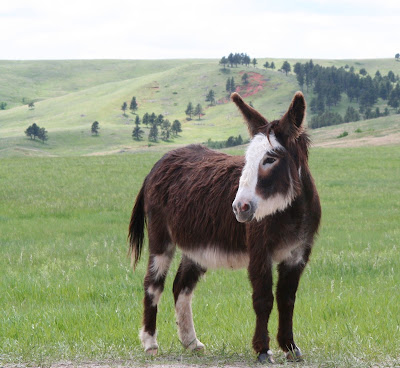
Tame yet wild.
They wandered to our car sticking their heads in the window looking for a handout.
       We’ve settled in just outside of Deadwood, a historic mining camp built on a rowdy history of gold, gambling and gunpowder. We planned to stay 3 days but each day we beg for “just one more”.  There is so much to do here within a 50mile radius so it’s just a great place to use as our base. 

     
     Our first stop was Mount Rushmore, rising from the plains as a prelude to the Rockies. This is a must-see for any tourists in the South Dakota Black Hills and is one of our nation’s most significant and enduring patriotic symbols.  Gutzon Borglum, also creator of Stone Mountain’s carvings, sculpted the colossal faces of U.S. presidents, George Washington, Thomas Jefferson, Theodore Roosevelt and Abraham Lincoln, representing the first 150 years of America’s democracy.


     We beat the crowds and soaked in the beauty of this monument that was washed in the early morning light as we reflected on the symbolism of the four presidents and the magnificent engineering feat required to carve from a granite mountain.  If your patriotism needs a revitalization, this vista will fill the bill.

     To fully appreciate and understand the significance of Mount Rushmore, we visited the Rushmore-Borglum Story.  In Borglum’s opinion, women carry most of life’s burdens so he sculpted a female Atlas holding the earth’s global responsibilities on her shoulders. 

     About his presidential carvings, Borglum said, “…let us place there, carved high, as close to heaven as we can, the words of our leaders, their faces, to show posterity what manner of men they were.  Then breathe a prayer that these records will endure until the wind and rain alone shall wear them away.” No words can describe the beauty of Mount Rushmore.

    Have you ever wondered how and why those 4 particular presidents were chosen?  I have and here’s the “how come”.  The birth of our nation is symbolized by George Washington.  Thomas Jefferson represents our country’s expansion with the Louisiana Purchase.  Theodore Roosevelt was a leader in our development signified by the Panama Canal, Trust Buster and Conservation.  Abe Lincoln worked to preserve our nation in saving the union during the Civil War.  So that’s “how come”.


Obviously, this is BEFORE Wild Bill’s demise
Is it true that you’re known by the company you keep?
Birds of a feather….?

      In Deadwood, there are more than 80 gambling halls in Deadwood and at least that many watering holes. Thanks to TripAdvisor, we went to a newcomer to the Deadwood scene, Pump House at Mind Blown Studio.  It’s a one-of-a-kind establishment that’s a deli, coffee house, and glass blowing studio all in one, homed inside a retro Texaco gas station.


     While there, we witnessed the re-enacted murder of Wild Bill Hickok and the capture and trial of the cowardly killer, Jack McCall. On Main Street, known for its bars, brothels and gambling houses, Wild Bill was playing poker in Saloon No. 10 when McCall walked in and shot Will Bill in the back of the head.  Bill was holding two pairs, Aces and Eights, which became known as the Dead Man’s Hand. Jack was first tried by a miner’s court in Deadwood and found not guilty.  He was later tried, executed and buried with the noose still around his neck.


     Lead, SD, a century-old community founded by miners and merchants, has some of the most spectacular scenery in North America. Thousands of miners and muleskinners made and lost their fortunes there and sometimes all in one day. One of the first enterprises there was  the Gold Rush of 1876 and the Homestake Gold Mine which produced 40 millions ounces of gold during its lifetime, valued over a billion dollars. The mine closed in 2002, and was American’s longest continuously operating, largest, deepest mine in the western hemisphere and stretching over 8,000 feet below the town of Lead.
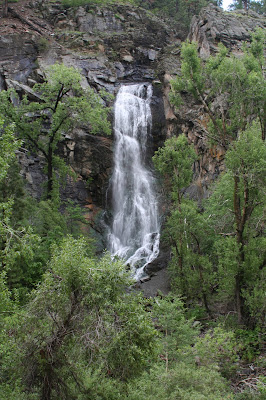

Bridal Veil Falls
Spearfish, SD

     This is Lakota Sioux Indian territory and their word, “paha sapa” means “hills black”.  From a distance, the Black Hills look exactly like that—dark, misty prominences rising from the otherwise undisturbed prairie. The Sioux’s must not have been flatlanders because the name “Hills” is misleading.  18 of the Black Hill’s peaks surpass 7,000 feet; Harney Peak, being the tallest of them all, at 7,242 feet.  On hiking trails, any group is limited to “25 beating hearts including stock and pets”.  Thought that to be a funny way to enumerate those in a hiking group.

One of the hand carved tunnels


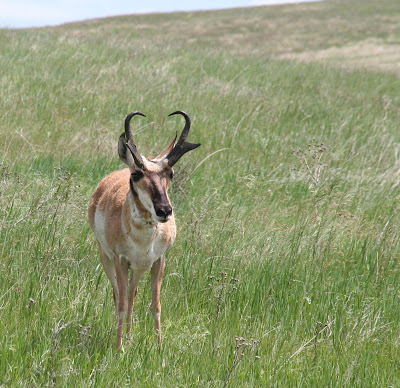
      There is so much wildlife in the Custer State Park Park—pronghorn, prairie dogs, whitetail and mule deer, elk and bighorn sheep that roam the precipices and prairies during the day and at night you can hear the mournful howl of coyotes.


     Custer State Park in the Black Hills covers 71,000 acres and every inch is playground. There are 3 dedicated drives; Iron Mountain Road, Needles Highway, and the Wildlife Loop Road.  We experienced all 4. Nearly 1300 massive bison roam the prairie.  They’re gargantuan with males weighing up to a ton.  They look like they’d move at trawler speed but they can run 30 mph.

     Iron Mountain Road is part of the Peter Norbeck National Scenic Byway leading from Custer State Park to Mount Rushmore. There are 3 granite tunnels that perfectly frame the memorial in the distance.  “They” said that building the highway was a crazy idea and could never be built.  Mr. Norbeck didn’t listen. He mapped out a route on foot and on horseback that captured the grandeur of these ancient mountains and the rest is history.  His 70 mile long byway is one of the the most outstanding byways in America.
    
     Needles Highway is a must-do drive when visiting the park. 
It features soaring granite pinnacles, man-made tunnels and hairpin curves all leading to beautiful Sylvan Lake, the crown jewel of Custer State Park.  Granite outcroppings resist erosion, consequently clusters of towering, slender peaks have formed spires reminiscent of a Gothic cathedral. The Needles Eye is a granite formation that looks like the eye of a needle.


The Needle’s Eye
Custer State Park, SD


     On the Wildlife Loop, altitude 5000 feet, we stopped at Blue Bell Lodge which is as comfy as a pair of old jeans and offers a Western experience that was a pure delight.  We had dinner of buffalo meatloaf and buffalo tips with fresh sautéed mushrooms which was superb.  Loved the bar’s stools which are saddles.


     Ending our stay here we drove to Hill City, SD, and took a trip back to the days of yesteryear when steam engines chugged across the country.  Our round trip excursion in1880 authentic vintage cars was pulled by a steam driven iron horse. Bill wanted to sit in an open car as close to the engine as possible so he could smell and hear everything the engine “emitted”—-so we did.  We traveled through meadows and canyons of the Black Hills to Keystone, SD, returning to Hill City.  Both the weather and temp were beautifully perfect and Bill was like a little kid.
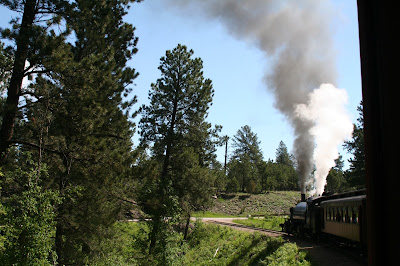
Our 1880 Steam Engine Train Ride

     We depart the Black Hills area tomorrow heading in a north westerly direction.  Experiencing the terrain/topography/landscape and history of South Dakota’s Black Hills, has been an experience that is indelibly imprinted in our minds.


Bill and Laura Bender
Monaco Dynasty Baroness Motor Coach

Fantastic Weekend

The is from mid May, just saw it did not get published when I tried at the time. Ox Bow cruise to Stockton for a Stockton Ports baseball game. 

Loving Delta Living

We’ve had some lovely Delta weekends lately. A ski boat weekend a couple weeks ago where we went through the beautiful Steamboat Slough and had a late lunch at Wimpys deck bar, then last weekend was an Ox Bow Yacht Club cruise to Delta Marina in Rio Vi…

THE CRUISING LIFE – FIXING YOUR BOAT IN EXOTIC LOCATIONS

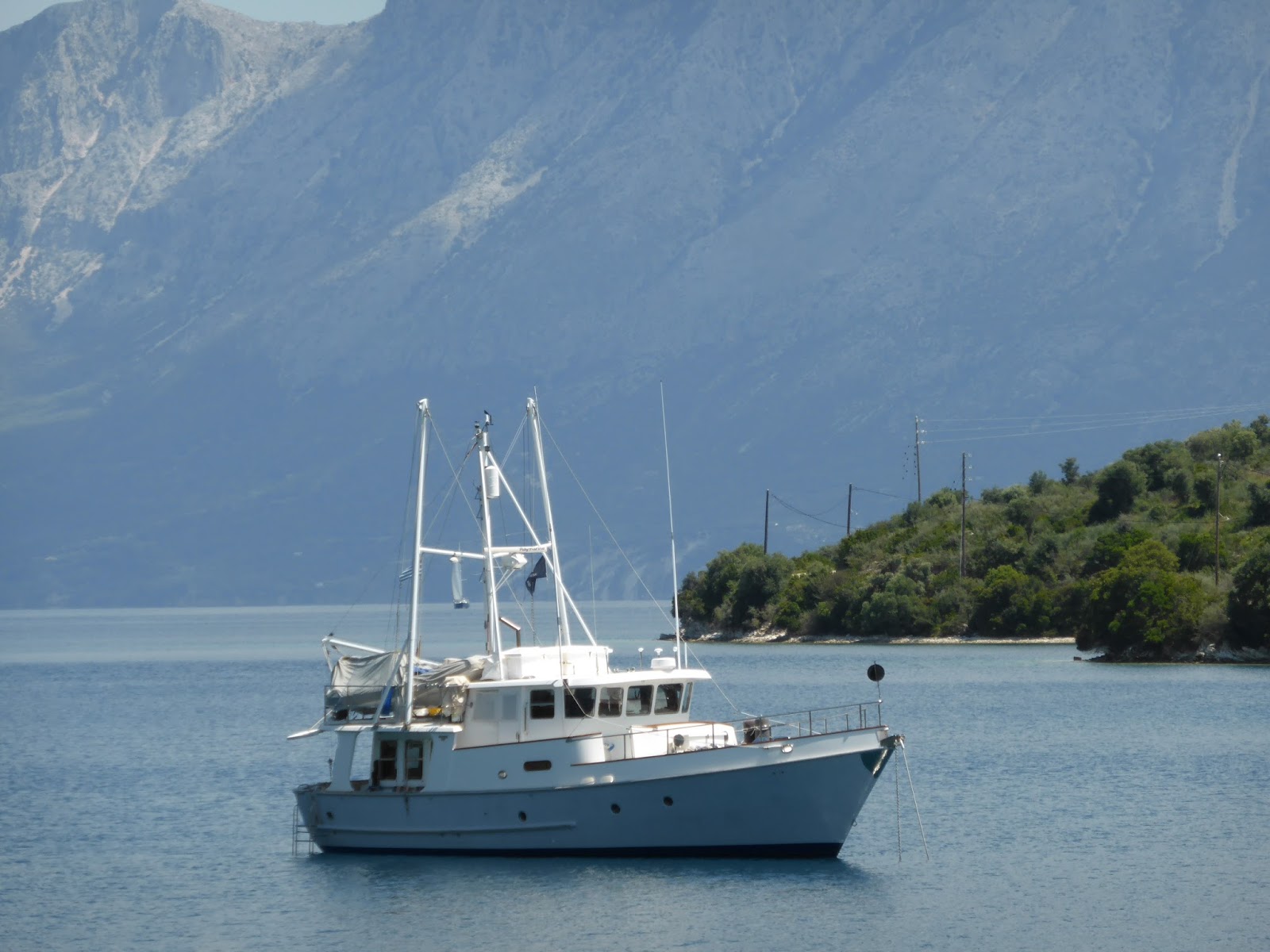
Envoy is located at Lefkas Marina, Greece.
Cruisers have a popular saying: “the cruising life is fixing your boat in exotic locations” and this carries a lot of truth – during our several months of cruising the Med each year we meet many fellow cruisers – mostly with sailing yachts, and inevitably conversation soon turns to the subject of what equipment needs fixing. Regardless of the type of boat or its age we have yet to meet a cruiser who says nothing on his boat needs attention.

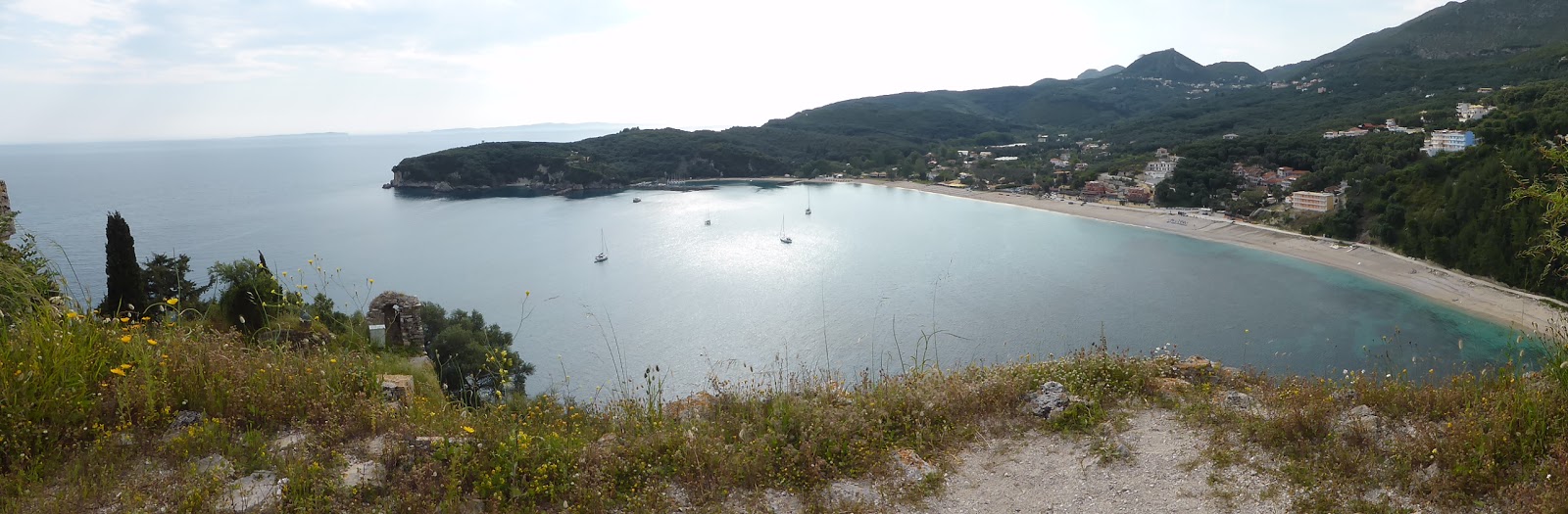
Anchoring in great bays like these is a major part of cruising but not without some technical work too

Most cruisers are very pragmatic about this and don’t let a technical problem spoil their cruising. For example we’ve cruised for a whole season without a working water maker and another without our hydraulic stabilisers. Of course there was some irritation about these circumstances but we didn’t let them interfere with our cruising plans – if you become overly pedantic about non mission-critical problems you may never cast off from the marina to start your adventures.
In New Zealand we’re fortunate in having a tremendous infrastructure of qualified and competent marine technicians and spare parts availability, but this is often not the case when cruising overseas and can be further complicated by a lack of knowledge of the local situation and by different languages. Cruisers like us, who mostly relied on service contractors when boating in home waters, soon learn to become independent and try to tackle as much as possible themselves.
Fortunately there are many sources of technical information available to assist the cruiser, and at various times we’ve used most of the following:
– Our own boat’s technical manual originally prepared by the manufacturer and added to by owners
– On board instruction manuals and spare parts lists from original equipment suppliers
– Contact with the boat’s manufacturer, previous owners and owners’ associations
– Contact with the manufacturer of the equipment in question
– Technical reference books carried aboard (such as Nigel Calder’s “Boatowners Mechanical and Electrical Manual”)
– Technical articles copied from boating magazines
– Talking with other skippers
– Local marine engineering companies
– Agents for the equipment in question both locally and back in New Zealand
– Internet searches for information
– The many available You Tube videos showing how to perform numerous technical tasks

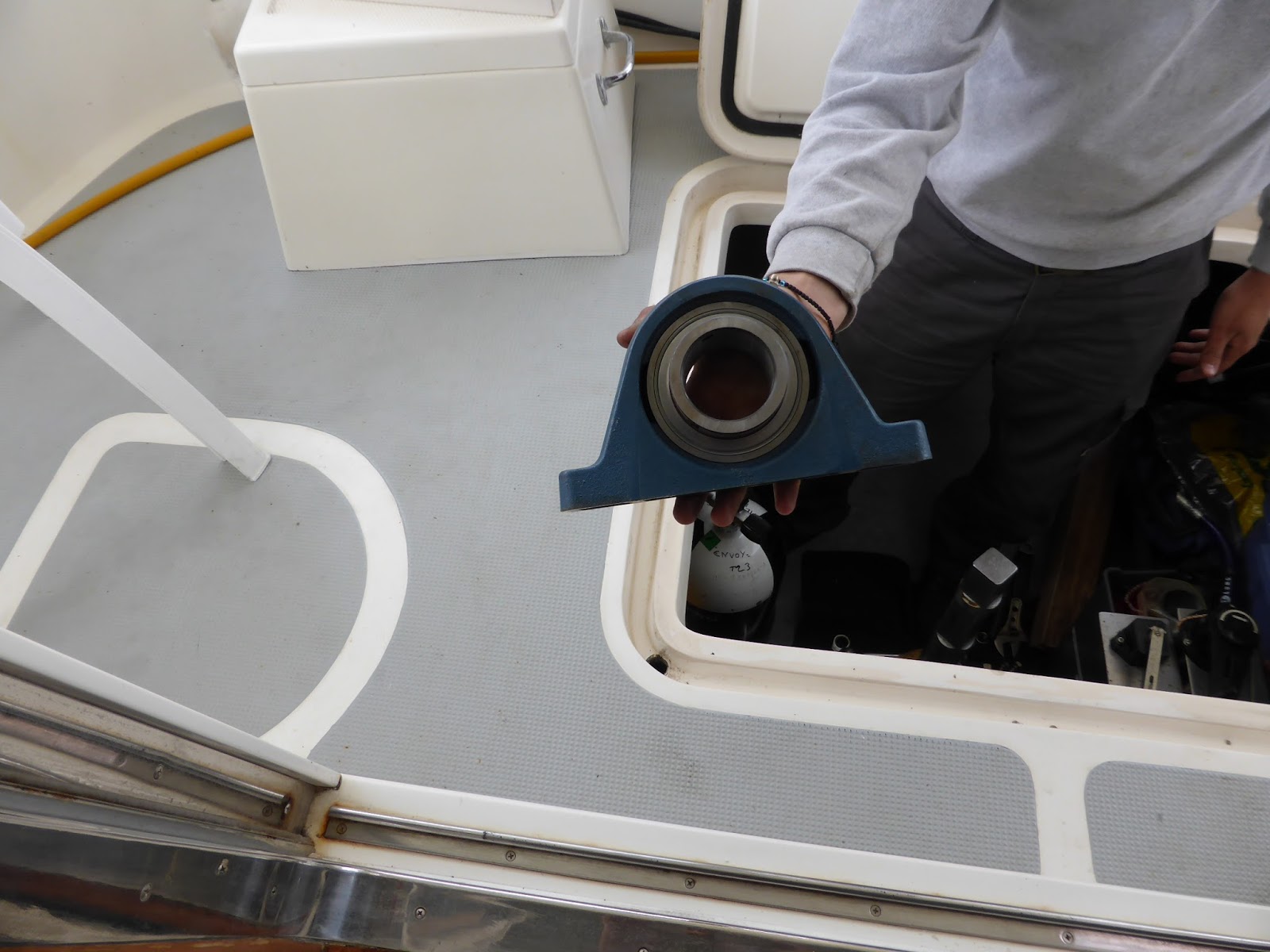
Among many other tasks during 2015 our main rudder bearing needed replacement

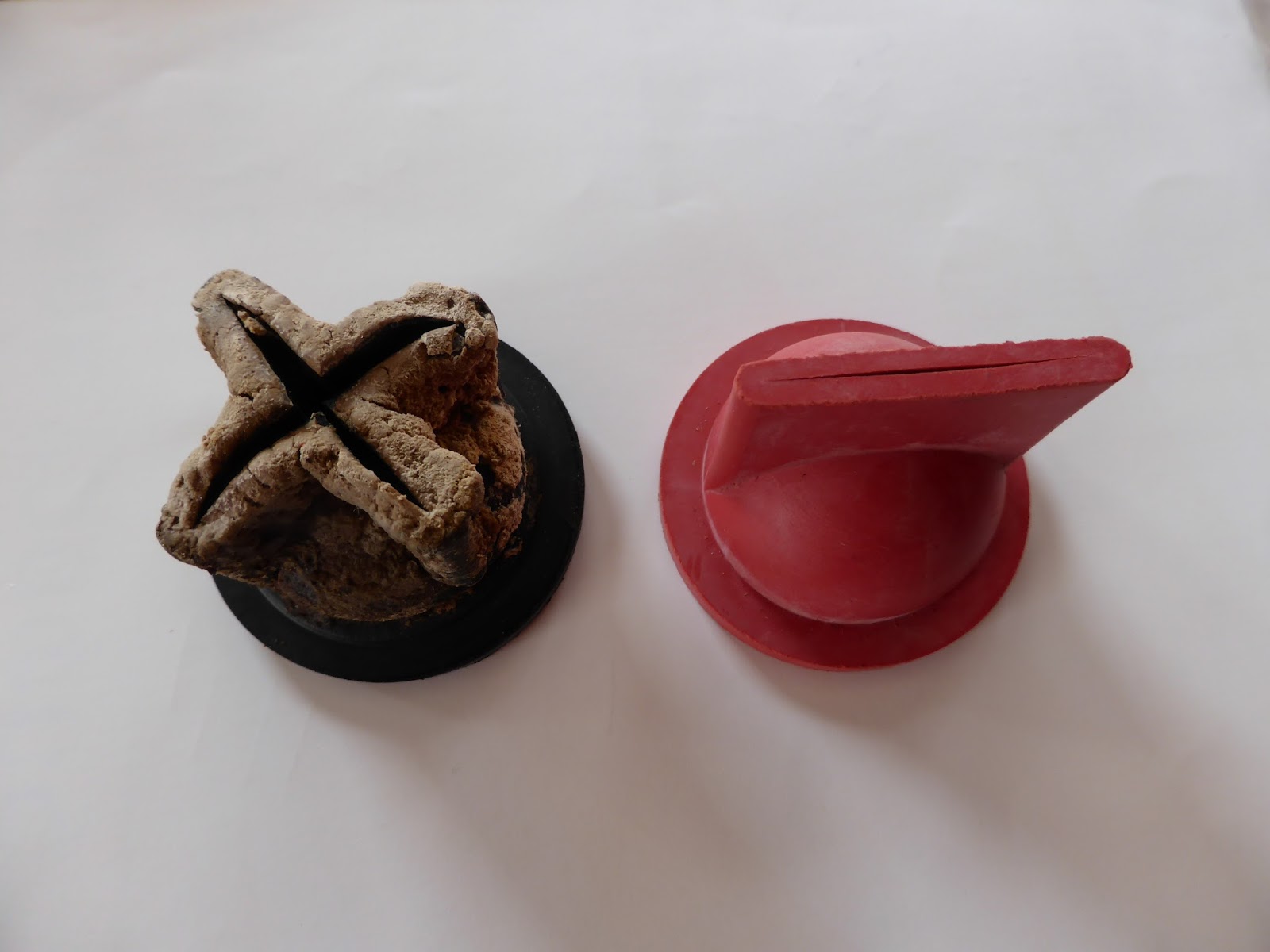
…………as did our toilet’s joker valves

But we inevitably need to have work done by contractors when we don’t have the knowledge or skills to carry out a task and recent examples have been changing injectors, setting valve clearances and reconditioning a starter motor and alternator.
When we need a contractor we try to find out who the best ones are by talking with other cruisers, and we always remain on board while the job is done. This is necessary because contractors normally arrive without any manuals or information, and often without even adequate tools to complete the task – recently an electrician arrived for a fault-finding job on our electric head and needed to borrow our multimeter! Working alongside contractors is also a great way to increase our technical skills.
Contractors in some overseas regions often don’t deliver the service we expect and mostly receive in New Zealand; example – an Italian service agent for a well known European engine brand “fixed” an engine oil leak by placing a plastic container under the leak to catch the drips. On the positive side we have found many skilled and resourceful contractors very adept at repairing failed components rather than replacing them with expensive and difficult-to-source new ones.
To maximize your technical security and independence it’s essential to carry onboard a comprehensive toolkit, complete spare parts and manuals for all installed equipment, and an extensive range of chandlery items.
It’s often said that the cost of maintaining a cruising boat is about ten per cent of the boat’s capital value each year, but over six years we’ve found between five and six per cent to be closer to the mark (not including fuel and oil). Our philosophy is to maintain our boat in tip-top condition mechanically, better than average condition cosmetically and to strike a balance between preventative maintenance and “if it ain’t broke don’t fix it.”
You can have new Envoy blog postings immediately emailed to you by entering your email address under “Follow by Email” located above, and hitting the Submit tab.

13 June 2015 Minneapolis, MN – Badlands, South Dakota

     Madison, WI, was a great treat for cyclists and was terrific for us but difficult to leave.  Time to press on to Minneapolis which is the number one among the top 50 most bike friendly cities in our country.  Bill had to celebrate that fact by doing a 60 mile ride on his little 20” wheel Bike Friday.  He loved “setting a record” for himself.  Now he wants to go 70.  If he had a real bicycle, he could probably keep up with the young hot dogs!  On the day he chose to do that, he came upon a GM old car show so that gave him even more delight.  We took a ‘day-apart’ day and I stayed home and did things I wanted to do and never stepped out the door while he was out laying out the miles and seeing old stuff.  

      While in that city, we made several futile attempts to locate Minnehaha Falls by bicycle and HAD to see it before leaving so we drove there and discovered a beautiful park.  Se Salt is a cute little restaurant within the park that a bike shop employee told us about so that’s where we had lunch.  When we spied Surly Bender beer, you know we had to have it even though we don’t really care for dark beer but this was quite good.  I’m sure the name had a lot to do with it.


     Loved that city because it IS a city and because it has so many little funky eclectic areas reminding me of Atlanta’s Little Five but with different flavors.  Look forward to going back there again.


    The Corn Palace, is a place Bill visited as a child and he was eager to take me there. It’s uniquely American on the rolling prairies of Mitchell, South Dakota.  The building is famous for the huge colorful murals on its outside walls. They are redesigned every year but this year it’s also going through major face lift.

     In June, the rye and sour dock from last year are removed from the building and new bundles are stapled there and completed by the end of July.  Artists transfer their sketches to roofing paper which is attached to the mural panels.  13 shades of colored corn are planted locally each April in carefully separated plots to ensure plants don’t cross-pollinate and dilute the purity of the colors. Then they are hand-picked, along with other prairie plants especially for the murals.
  
     Artisans combine bundles of rye grass and sour dock, a hearty prairie plat, and staple the bundles to the frames..  The end result is the colored ears of corn being carefully sawed in half, trimmed, and nailed to the wall to create the variegated images for which the Corn Palace if famous. They work all summer to complete the mosaics so that it’ll be completed by fall for their festival to celebrate agriculture and the productivity of the South Dakotas.  

     The theme is different every year—-it’s sort of a corn-by-number mosaic as they use 3,000 bushels of rye, oat heads and sour dock to complete their designs. They were only about ¼ of the way completed when we visited.

     Next, we visited the small town of Wall, SD, whose Main Street is definitely western and is home to the world-famous Wall Drug Store, circa 1931.  I always like to know “how come” so here’s the story.  In 1931, a couple bought the only drugstore in Wall and after a 5 year trial, they hadn’t grown too much but they were still seeing many cars passing by without stopping.  On an a sizzling July day, they had an idea.  The folks traveling through the hot dusty prairie must be very thirsty so they put up signs on the highway announcing “free ice water” and the rest, as they say, is history.  FREE ICE WATER!  This uncomplicated and creative idea rocketed them to success. As a child, Bill was also wowed by this icon but 60+ years later it’s experienced exponential growth to 76,000 square feet and probably just about that many opportunities to make purchases. As the saying goes, “if they don’t have it, you don’t need it.”  

     I found the Trip Advisor reviews to be very negative but when we arrived, it was mind-boggling to see the varieties of “stuff”—both  quality items and tourist-trap junk. Wall Drug is a must-see——if for nothing else but just to say you’ve been there.  


     The Badlands Country beckoned us next and is a short drive from Wall.  For almost 2 centuries, the area in and around Badlands National Park has been an important center for paleontological research.  Some of the most spectacular fossil and rock accumulations in North America were found in this area.  and give scientists clues about how early animal species lived. It’s a wonderland of water chiseled spires, ragged ridges, rugged canyons and prairie.  The lower prairie lies along the floodplain of the White River, is grass-covered and scattered with isolated steep-sided hills with flat tops somewhat like a mesa but more narrow.   As you approach the upper prairie, the grassy flat lands begin to undulate—-and then there it is! 


“The Wall”, standing between the two as a barrier to north and south travel.  “The Wall”, is a rugged ribbon 0.5 to 3 miles wide displaying a succession of pigmented steeples and ridges with snaking ravines.   So that’s “how come” the town of Wall got its name. 


     In this land of the Sioux Indians is revealed some of the most rapid landscape changes anywhere on earth.  Hundred of centuries and erosion has hewed blade-like margins and abysses, chimneys, turrets and turtle back humps.  The siltstone, mud stone and volcanic ash area are easily worn away by nature’s forces resulting in a sculpted fairy land. I was fascinated by the strata while learning about the origin of each with explanations of the variations in coloration.  


     The Visitor Center has interesting displays of the geology and paleontology.  Two paleontologists were at work in a display room and were more than eager to answer my multitude of questions.  It was hard to pull myself away from watching them carefully and gently remove tiny particles of mudstone to reveal a hidden treasure.  One, who was working with a minuscule jack hammer, said that his project, about 37,000 years old, has already revealed to him that his treasure contains remains of a carnivore identified by feces that has a pink cast to it.


     The Badlands National Park’s 250,000 acres continue to be rich in prehistoric animal fossils and a variety of wildlife.  Prairie dogs are plentiful and the herds of majestic Big Horn sheep and bison continue to roam and graze.  We didn’t see any eagles but those little prairie dogs would be easy pickings for them.


We’re loving it and please stay tuned.


Bill and Laura
Monaco Dynasty Motor Coach