
Our time here has come to an end here – it has been fun to discover a new community of boaters, and friendly townspeople – but time has come for us to move on. We have been busy trying to cram in the last few places we have wanted to eat at, and …
Industry Mourns Marine Magazine Publisher, Skip Allen
The industry mourns the passing of an Icon. Skip Allen gave us our first break by publishing many of our cruising articles in Southern Boating when we first starting cruising as a couple in the early 1990’s. Skip’s passing is sad news for us and for…
YOU CAN LIVE THE DREAM – part three
Diane and I are now back aboard Envoy in Lefkas Marina, Greece.
This is the third and final parts of our article published in Pacific Passagemaker magazine.
CONSIDERING THE PRACTICAL ISSUES OF THE LIVE-ABOARD LIFE
Once Diane and I decided to buy a passagemaker and live the on-board cruising life there were numerous issues we considered mostly falling into these categories:
How long you are going to be away each year
The vast majority of cruisers (power and sail) don’t literally spend the whole year away on their boat. Most have families and assets in their home country, and generally leave their boat during the few mid-winter months of their cruising region to return home. An exception to this would be some European cruisers for whom the weather is much kinder in a location like the Med than in their own country. Diane and I spent most of one winter aboard Envoy in Turkey, and haven’t chosen to repeat the experience as there seems little point in sitting out a winter on our boat in a marina when we can be enjoying a New Zealand summer with our family and friends.
How many years you will cruise for
The short answer is as long as you are enjoying the experience, and health, funds and other circumstances permit. We have so far lived aboard most of five years and plan to continue for another three or four. We rarely meet cruisers who’ve lived aboard for more than ten years, although they certainly are around.
Dependent family
Most of the cruising community are in the age group mid 50s to mid 70s, and no longer have school-age children. It’s rare to meet cruisers living aboard with children. Elderly parents generally accept that you are living your lives to the full, appreciate your regular phone calls and enjoy seeing you during return visits home.
Family and Friends
Of course you miss your family and close friends, but some will visit you and share in your cruising experience. Otherwise being able to see your family and friends for at least one period during the year keeps these relationships intact. Loneliness has not been an issue for us and we have made new friendships with other cruisers during our travels.
Work
Most cruisers we meet are semi or completely retired. Many do some form of consulting work or manage their investments remotely, or are able to find some casual work if they choose to. A fewer number of younger cruisers take time out from the work force to go cruising, planning to return to work later.
Your home
Some cruisers elect to sell their house to provide funds for cruising while many others rent them out to provide a regular income. Another option is to simply leave it vacant.
Compatibility and confidence
Many people will say that you won’t get on well together as a couple spending all that time together in the close confines of a boat. Only you will know if this is correct or not, and we probably all know people where this lifestyle would be doomed to failure. Allied to this issue is one partner having a lack of confidence in the other partner’s ability to manage the live aboard process. If you are passionate you are half way there, and the confidence will come with sharing experiences together.
Health
A reasonable but not perfect standard of general health and fitness is required for the live-aboard life – another argument for starting the cruising life sooner than later … life’s time clock is ticking. Nonetheless we have met several cruising couples who’ve needed to return home regularly for various forms of medical treatment. Travel medical insurance is highly desirable as medical treatment can be extremely expensive overseas.
Pets
Overseas regulations concerning the transportation and quarantine of pets are much less strict than in New Zealand, and some cruisers take their pets along. Similarly there are fewer pet restrictions on beaches and in restaurants and cafes. Diane and I have always had a dog or cat at home and loved them dearly, but decided not to keep a pet aboard a boat. Under these circumstances you may need to find somebody to take over or care for your pet so it doesn’t stand in the way of your cruising adventure.
Comfort aboard
When yachtsmen come aboard Envoy they are amazed at the living space available compared to sailing vessels of the same length, and often say she’s like a small ship, or a floating apartment. At 14 metres Envoy is at the lower end of the passagemaker size range, but still has features such as headroom throughout, a queen-size walk-around double bed, full size refrigerator and freezer, four ring gas stove with a near full-size oven, microwave, washing machine and dryer, water maker, two ensuite heads and showers, reverse cycle air conditioning, excellent sound and DVD systems and a generator to provide power whenever needed. Furthermore she has both hydraulic and paravane stabilisers to dramatically reduce roll both under way and while anchored. Comfort is not an issue as we don’t get wet, cold or wind-blown, and Envoy’s motion is rarely lively enough to spill a cup of coffee.
Capital costs
The size, age and condition of your passagemaker determines its initial capital cost with the price range probably starting around NZ$400,000 (240,000 Euros). You could certainly buy a well-equipped Nordhavn 46, in good condition built during the 1990s for about NZ$530,000 (318,000 Euros). Bigger isn’t always better, and remember that the larger vessel you buy the greater will be the cost of insurance, casual and winter marina berthage and repairs and maintenance.
Living costs
Actual living costs such as food, beverages, household supplies and personal spending are about the same cruising as when at home. Maintenance is dearer due to the higher cost of parts and greater distances traveled, and what also bumps up costs is annual travel to and from our boat, additional fuel for the longer distances cruised, and sightseeing ashore – particularly rental cars and accommodation (occasional travel inland away from the boat is well worth the experience in the many interesting new areas). Casual marina prices are also high in the Med, e.g. for our 14 metre Nordhavn 46 typically about NZ$130 (78 Euros) per night plus power and water, sometimes higher. You pay considerably less (or sometimes even nothing) in town harbours, particularly in Greek waters, but the best option is to anchor wherever possible, which is mostly free. Winter berthage rates are considerably less than casual and we’re paying NZ$21 (12.40 Euros) per night including all services and 23% VAT. Some costs are fixed and are for the whole year, such as insurance, winter marina, travel, most regulatory costs and some maintenance, while most other costs including living costs and fuel are variable depending on the time spent aboard and the distance traveled. During 2012 we spent 200 days aboard, and cruised 1,736 miles for 336 engine hours. Excluding living costs maintenance was the largest cost at NZ$26,200 (15,700 Euros). This was about what we expected at 5.4% of Envoy’s estimated value, and on average has been consistent over four years cruising. Second largest was fuel at NZ$9,700 (5,800 Euros) including 3,440 litres of diesel, petrol for the RHIBs, engine oil and cooking gas. Third was marina and regulatory costs at NZ$7,500 (4,500 Euros), while fourth was boat and travel insurance at NZ$6,100 (3,660 Euros). Communication costs including internet and phone is also significant and although this could be reduced by using only Wi-Fi, we prefer to stay connected all the time using pre-pay USBs for internet access. Diane and I look at this not as “cost” but as our “investment in fun”.
Mar. 25 – Jacksonville, FL
Ortega Yacht Club Marina
We had a beautiful day to explore our new surroundings. Stan spent a little time this morning talking to a few boat yards in the area, getting information on a haul out and work we’d like to have done on the boat later this year. The rest of the day was spent relaxing, talking to other boaters we’ve met last year and packing for our trip home.
Our home at Ortega Yacht Club

Our views from the flybridge


For Our Northern Friends
Spring just called and left a message… “Hey, it’s Spring — Sorry I’m late, but I’ll arrive soon. Held up at border by INS.”

Nordhavn Exumas Abacos Bahamas trawler Caribbean Pickwick Boat dogs
Memphis Downtown
Marsh Harbour Marina, March 23 – 25, 2014
We are still at Jib Room, Marsh Harbour Marina. We had beautiful weather except for one day. We had a huge storm on Tuesday, the 25th. Very strong winds, and rain. Even though we knew there was a big storm coming, Dream Chaser left anyway. I got an email from them and they made it through the Whale; said it was a bit rough but they are safe at a Marina in Black Sound. We ran into Mike from Casey Dee who is also staying here. Since it was a rainy day it was a good day to wash clothes. Cheaper here than at Bluff House Marina; it only cost $16.00 for two loads instead of the $30.00 we paid at Bluff House.
We had our first conch burger the other day at Curly Tails in Marsh Harbor and it was just alright. They looked a lot better at the restaurant at Man-O-War. At least we can say we tried one. I liked the Conch dinners much better. We saw a man cutting conch out of their shell and making Conch Salad. After seeing him do this, my sister decided she would never eat conch again. Nightly, about sun down, the conch horns come out. We can hear them across the harbor and then our side returns the call. My sister Sharon is getting real good at it. The other night it kept up about ½ hour.
Internet in the Bahamas leaves a lot to be desired. You have to go down to the Jib Room to get a good signal. We decided to buy a month service from Bahamas WiMAX; so far it has been just OK. Also, we have been trying to buy a telephone from Bahamas Telephone and haven’t had any luck as yet. They are kind of like the Post Office and don’t work regular hours.
CO’s comments: I have been meeting quite a few sail boaters on this trip and, you know, they are not so bad after all.
1st Mate’s comments: I’m having a blast blowing my conch horn each day at sunset. It gets better each day. By the time I get home, I should be an expert!
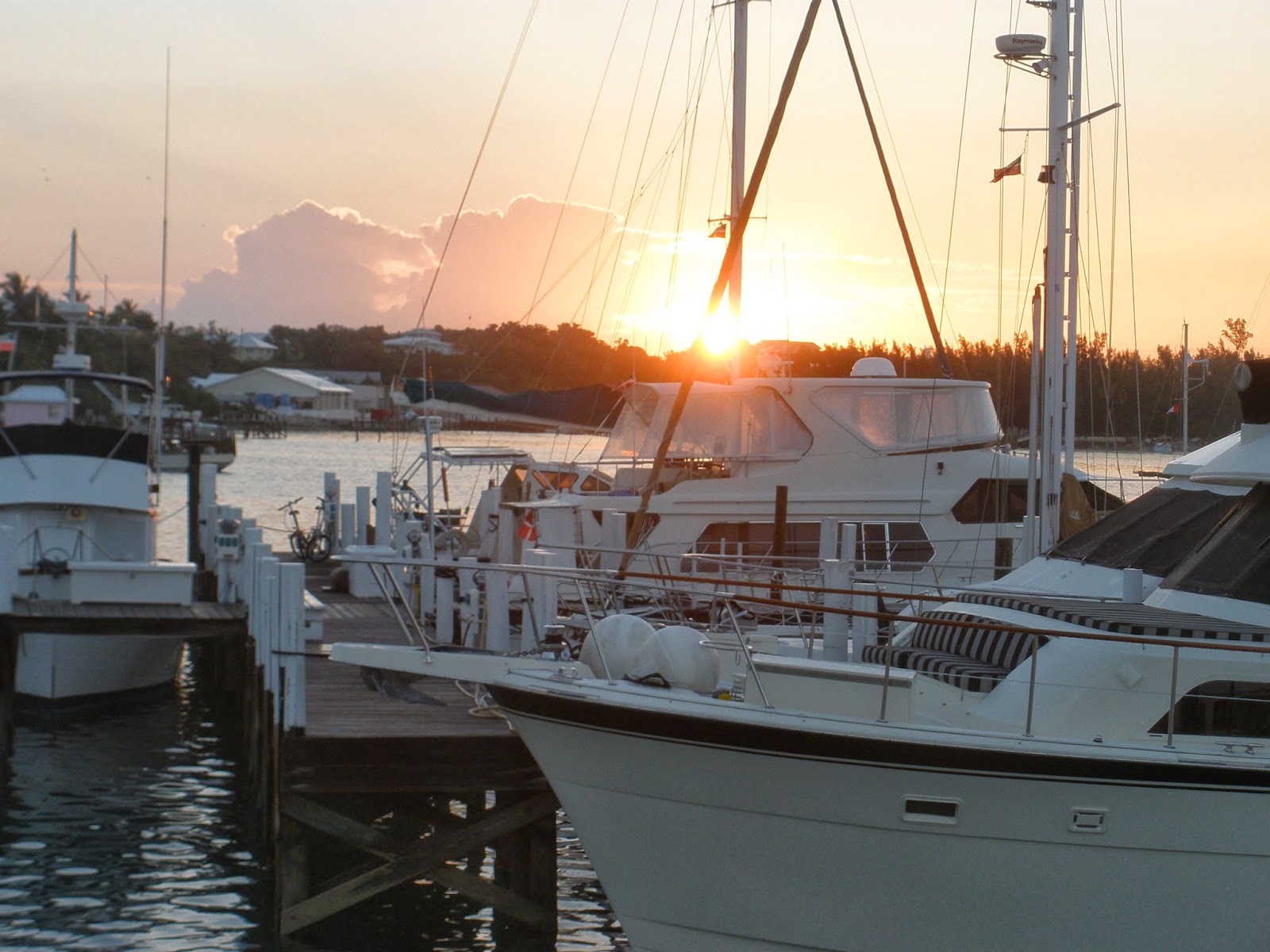
3-22-2014: Sun Set at Marsh Harbour Marina
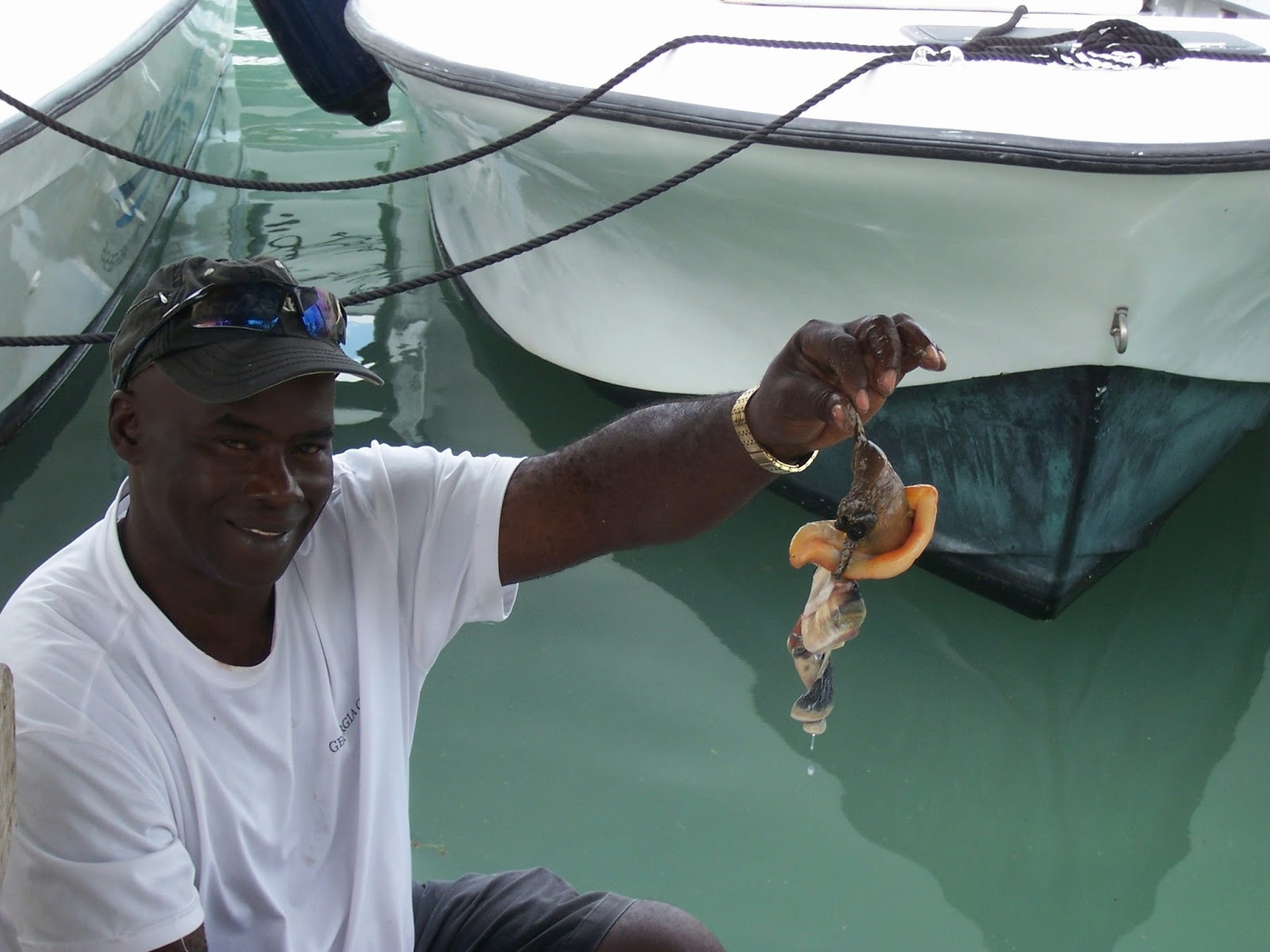
3-24-2014: This is the conch freshly removed from it’s shell
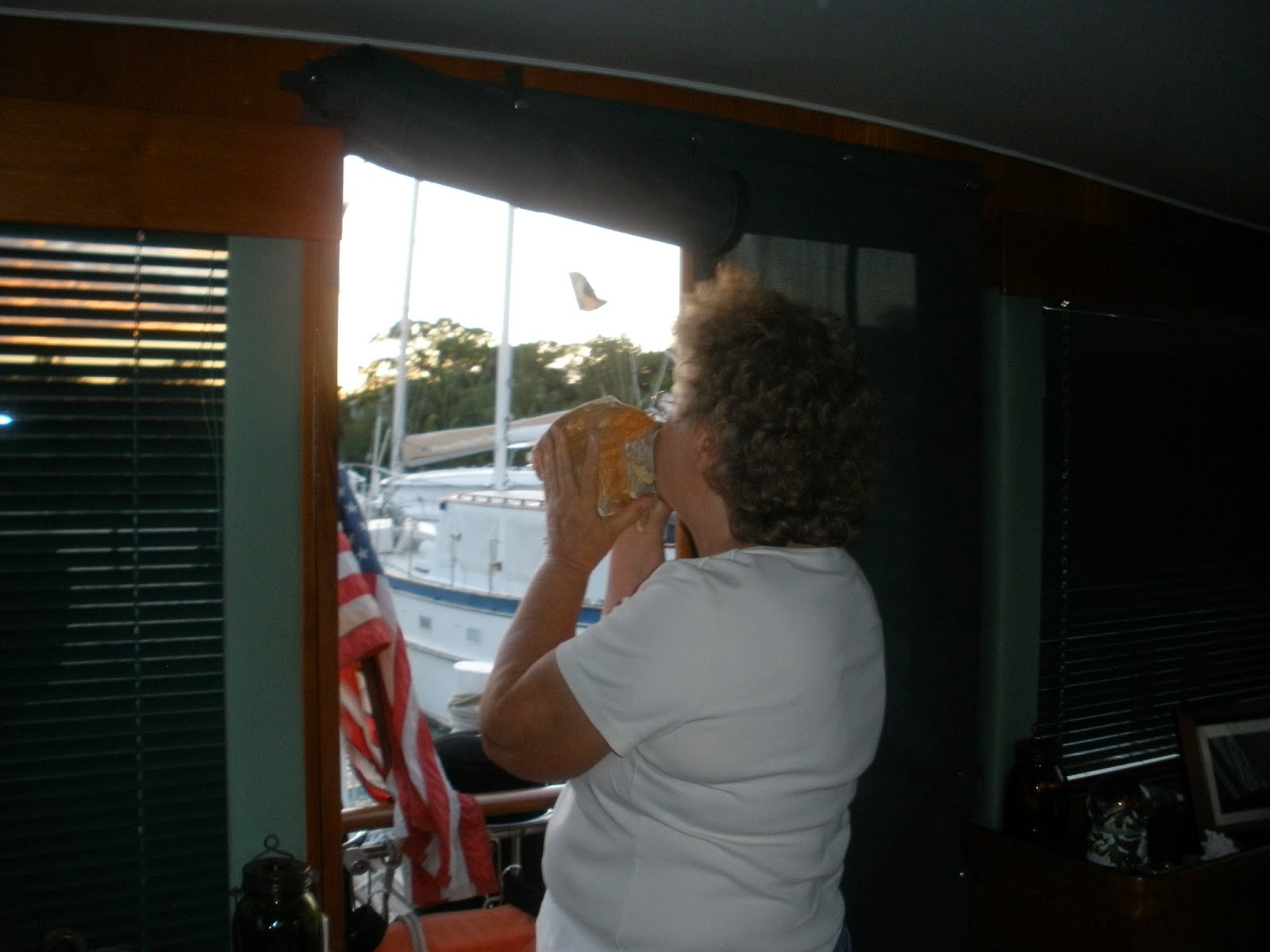
3-25-2014: Answering the conch call from across the harbor.
Anchors away..
Today’s conference call had to be accomplished in 30 minutes to accommodate our schedules. So we were done in 45 minutes, not bad for so many big topics.I have to tell you that it is far easier to discuss granite and sinks than anchors and electr…
Day 74 – 365 Project…hawk on the fence
Welcome to day 74 of 365 photos…this red-shouldered hawk was sitting on the neighbors fence. With the bluebirds coming back, I was hoping that he was not in the area any longer. He likes to sit on the bluebird house too. He also likes to have a bird for lunch every so often. Camera: Nikon… Continue Reading
The post Day 74 – 365 Project…hawk on the fence appeared first on Moosetique Musing.
Quick Visit Home
Shortly after Mike & Nancy returned to the frozen tundra we had flights booked to do the same. It was a typical day of flying for me. Our connecting flight to Cedar Rapids had been cancelled two days earlier at which time we had been re-booked on a…
Up a Familiar Path
After a few weeks of basking the sun and luxury we bid our beloved Sutera Harbor goodbye. the stop here is always a good chance to tune up the boat and the body. Twenty days of running, swimming and exercise took off a few of those yummy Filipina pork …
