
Nordhavn Exumas Abacos Bahamas trawler Caribbean Pickwick Boat dogs
Memphis Downtown
Istaboa’s Waypoints 2013-11-03 11:28:00
Mount Saint Benedict and the Caroni Swamp
We took an
organized tour to see a bit more of the area before heading north. Our tour with Jesse James of Members Only
maxitaxi took us to see the Saint Benedict monastery and the Coroni Swamp.
organized tour to see a bit more of the area before heading north. Our tour with Jesse James of Members Only
maxitaxi took us to see the Saint Benedict monastery and the Coroni Swamp.

Mount Saint Benedict, or the Abbey of Our Lady
of Exile, is a Benedictine abbey located in north Trinidad. It was founded in
October 1912, by an order of monks from Brazil, after the Order of St Benedict
of Italy.
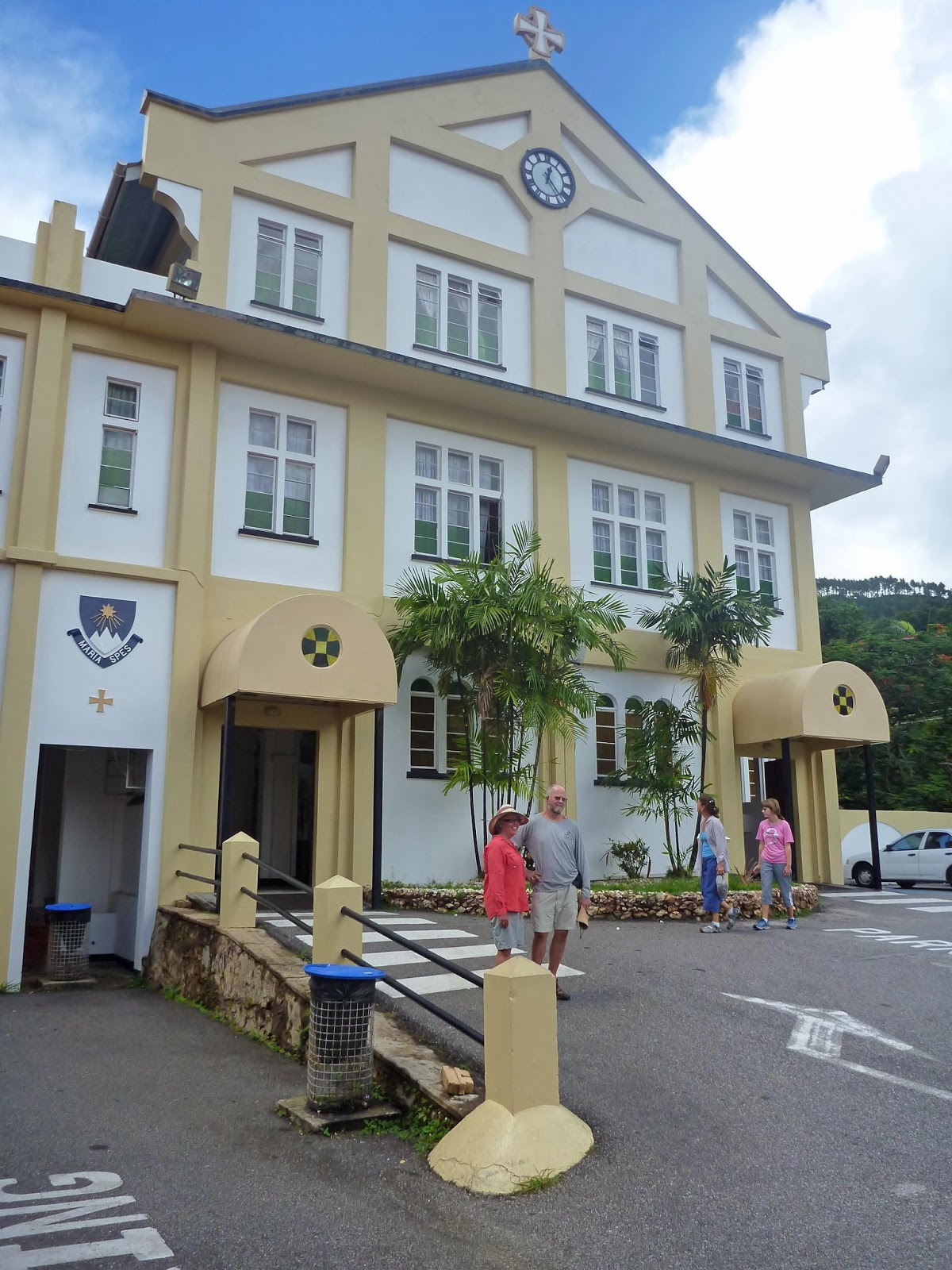
The Abbey complex consists of several
buildings, among them a church, a monastery, a seminary, a yoghurt factory, a
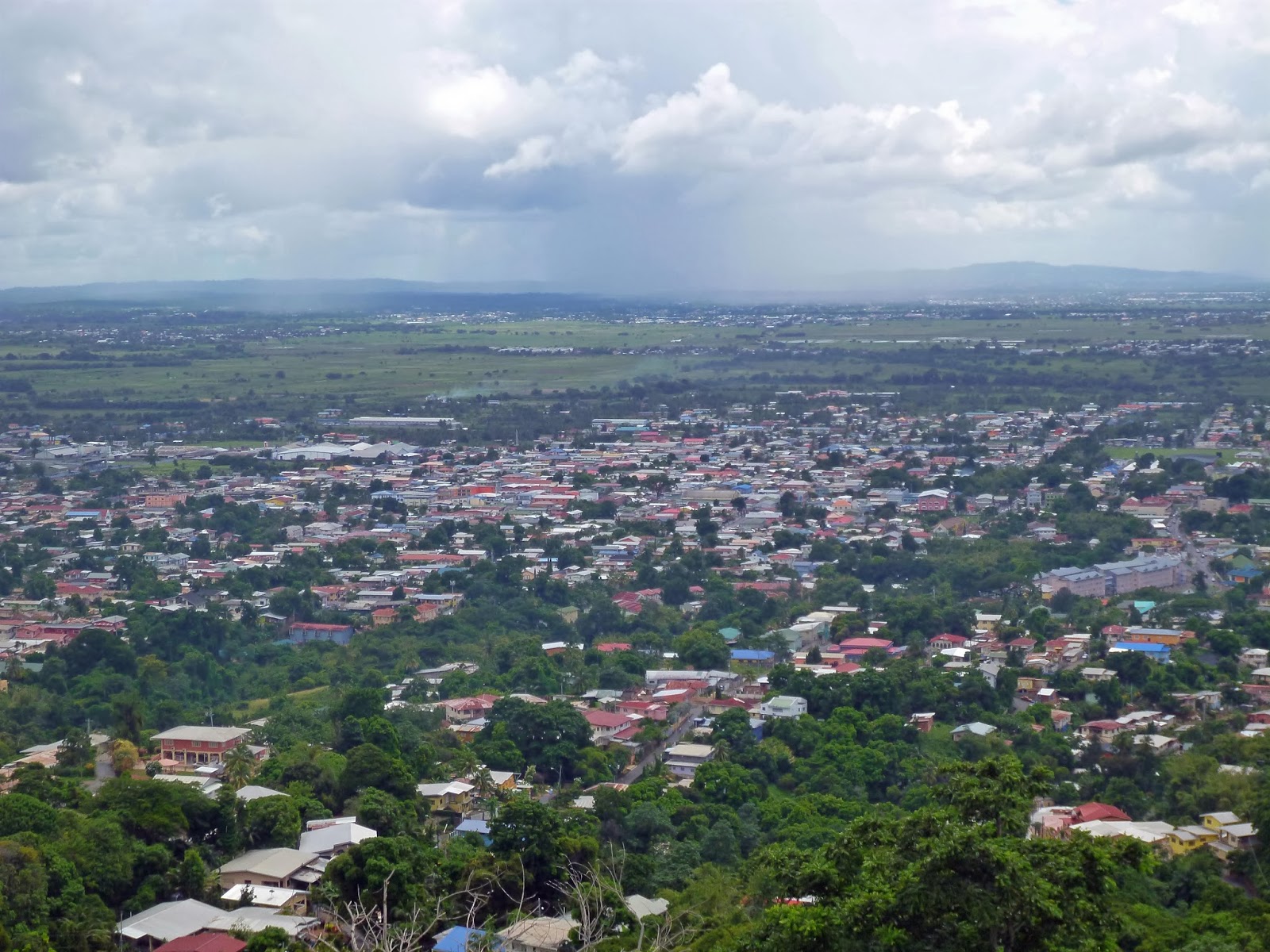
drug rehab center, and Guest House. The whole complex is situated high in the Northern
Range, north of St. Augustine. It is visible for miles around, with its
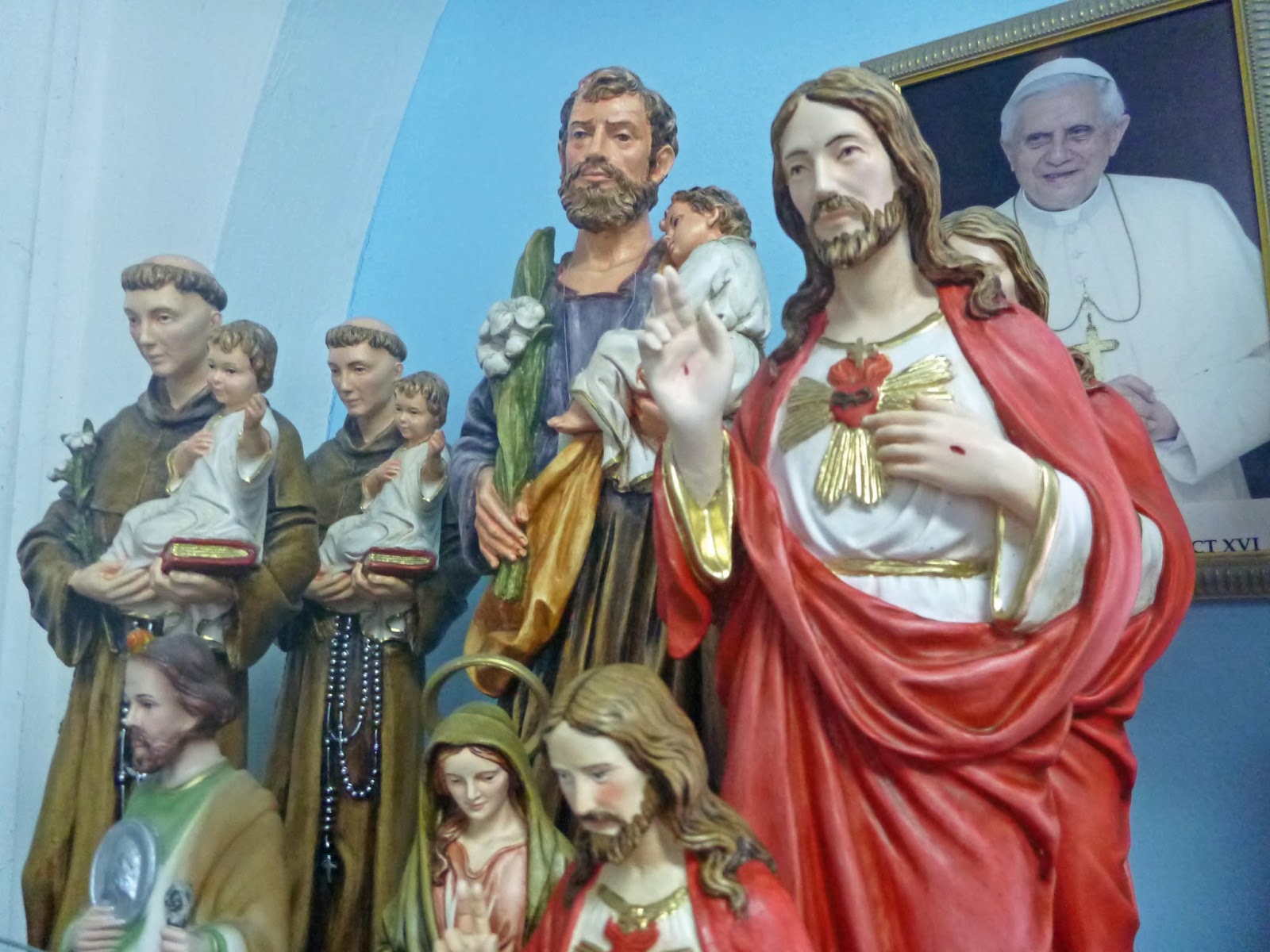
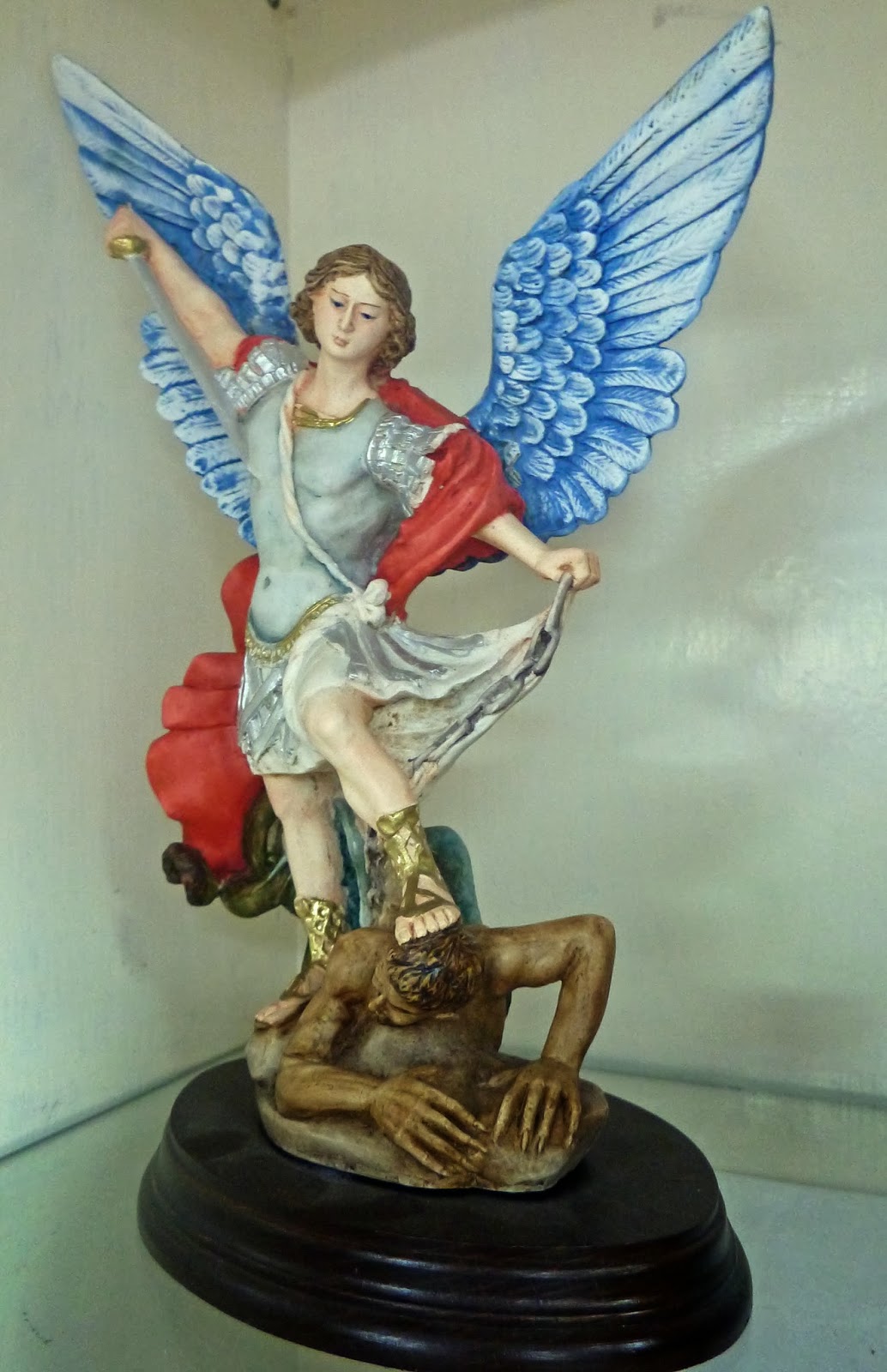
landmark tower and distinctive red-roofed buildings. We said a few prayers in the church and
looked around in the gift shop and enjoyed the commanding views. Jesse talked us into a private tour of the
guest house full of antiques and original paintings.
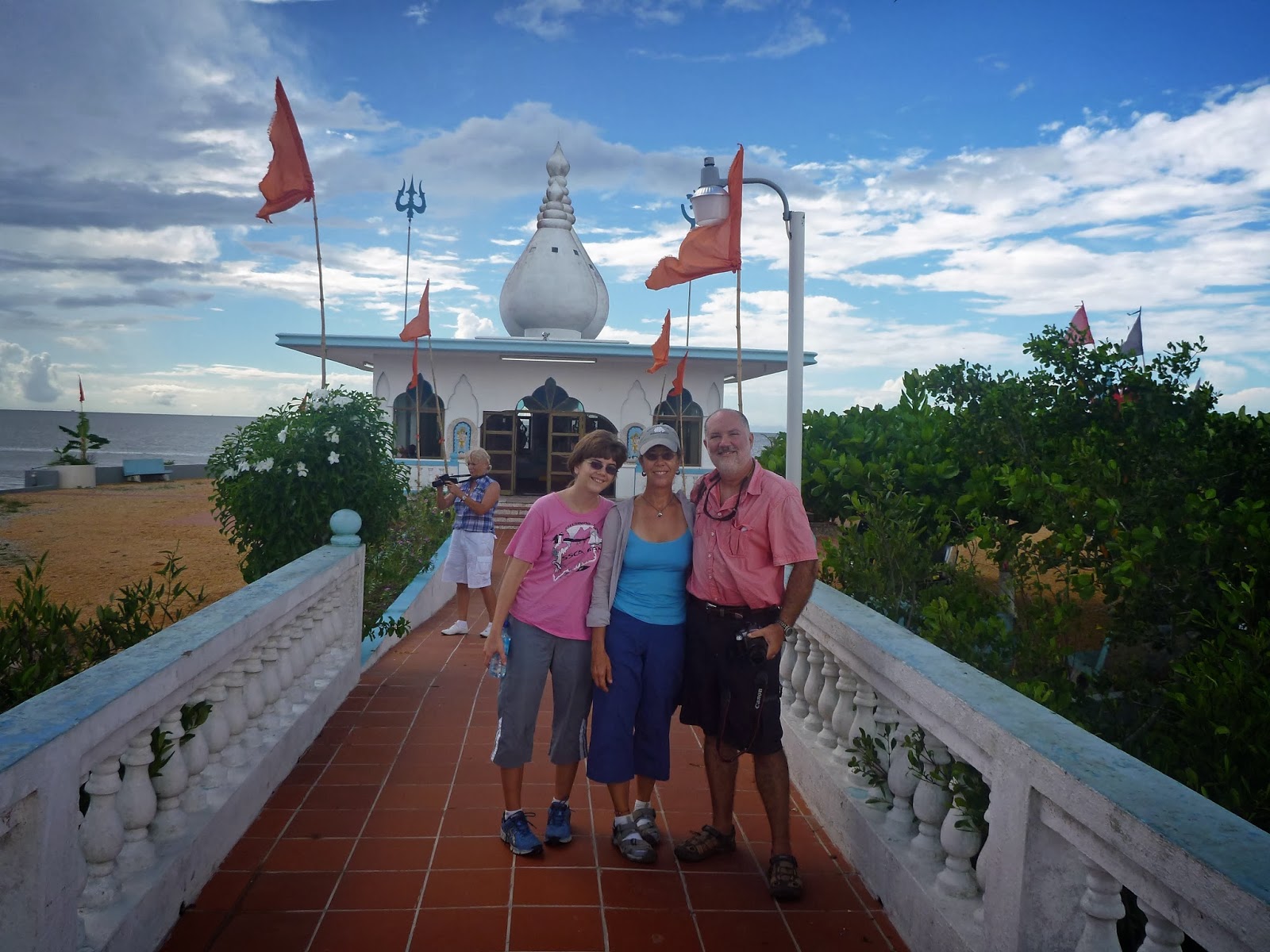
Our next stop was the Temple-in-the-Sea, located on the west
coast of Trinidad in the village of Waterloo near the town of Chaguanas. The
obvious “uncommon” aspect of this beautiful Hindu Temple is interesting in and
of itself, but it’s the history of how the Temple came to rest at such an
unusual spot that is truly fascinating.
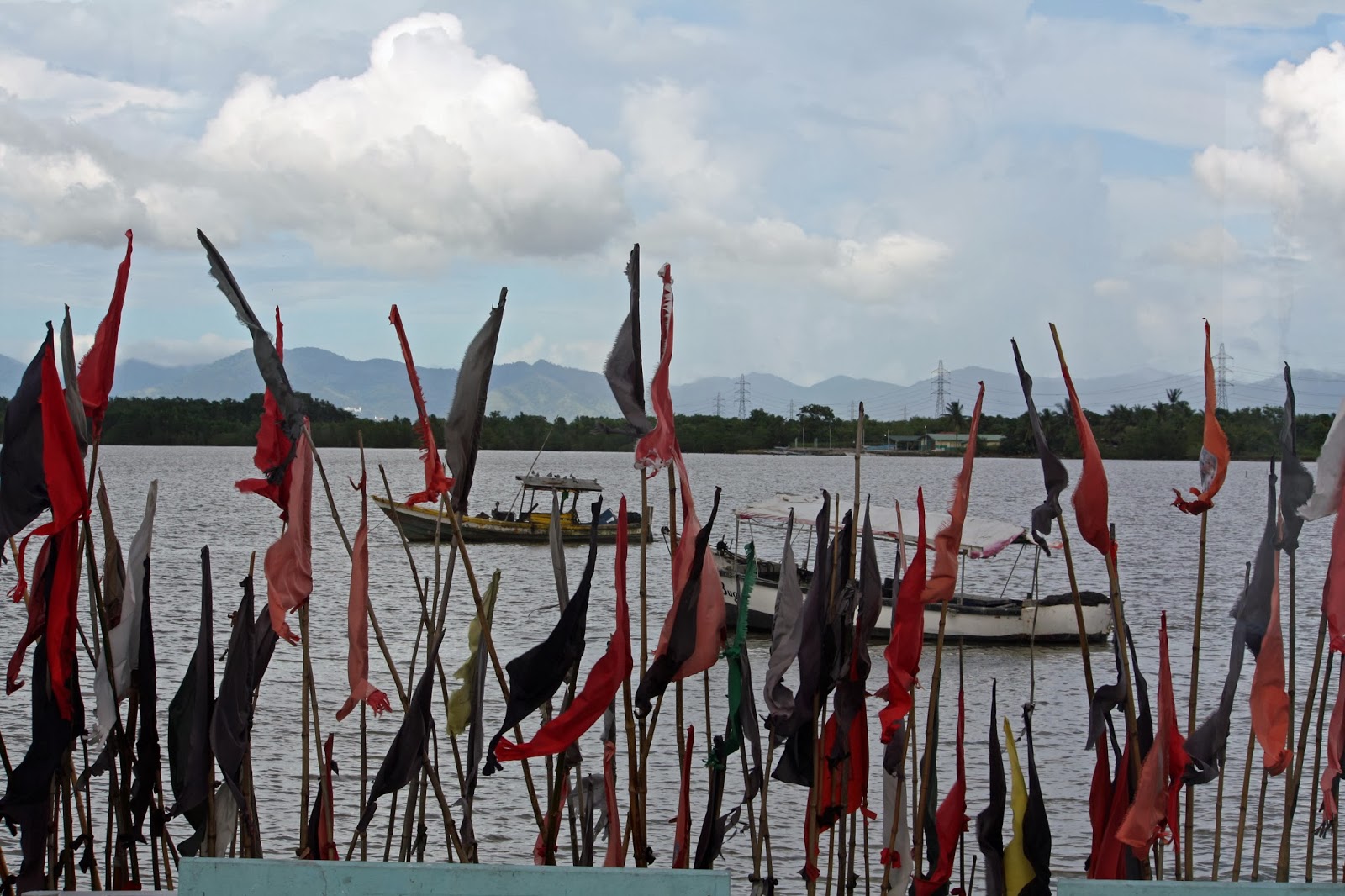
The Waterloo Sea
Temple dates back to the mid-1940s when a seriously devout and determined
Indian laborer named Sewdass Sadhu built the original version on dry-land. East
Indian laborers, initially brought to Trinidad in the 1800s to work the sugar
cane fields, had few, if any, places to practice their religion formally up
until that time. Sewdass, who ran a small grocery store near his home in
Waterloo, purchased a small tract of land from the state-owned Caroni Sugar
Company upon which he built the original Temple.
No problem,
right?
right?
Wrong.
Seems the folks
at Caroni didn’t like having a Hindu Temple around. Upon its completion in
1952, they ordered Sewdass to destroy his life’s work. He, of course, refused,
an act of defiance that earned him a $400 fine for trespassing on government
land, plus two weeks in jail; just enough time for the government to tear down
the Temple.
Sewdass’ story could’ve
easily ended right there, but this was no ordinary guy. As soon as he got out
of jail, he set about re-doing his life’s work in a place no one could quarrel
with.
“You broke the mandir on the land. Then I will
build my mandir on nobody’s land. I will build a mandir in the sea.”
Armed with a
bicycle, a leather bag, a couple of buckets and the type of determination most
of us could never hope to understand, he started building his next Temple,
stone by stone, in the middle of the sea.
He literally built the whole foundation out of stones that he stashed in
his leather bag and buckets, trekked to the sea from God-knows-where on his
bike, and piled in this spot, 500 feet from the shore, until he effectively
created his own island… by
himself! It took a good 17
years, but Sewdass did eventually realize his life’s dream again before passing
away in 1971 at the age of 68.
In 1994, when
erosion damaged the structure, the Trinidad & Tobago government stepped in
to make repairs, even going so far as to construct a bridge to make the Temple
more easily accessible from the mainland.
The Waterloo
Cremation Site is also next to the grounds of this Temple and we saw the
smoldering remains of a pyre as we passed.
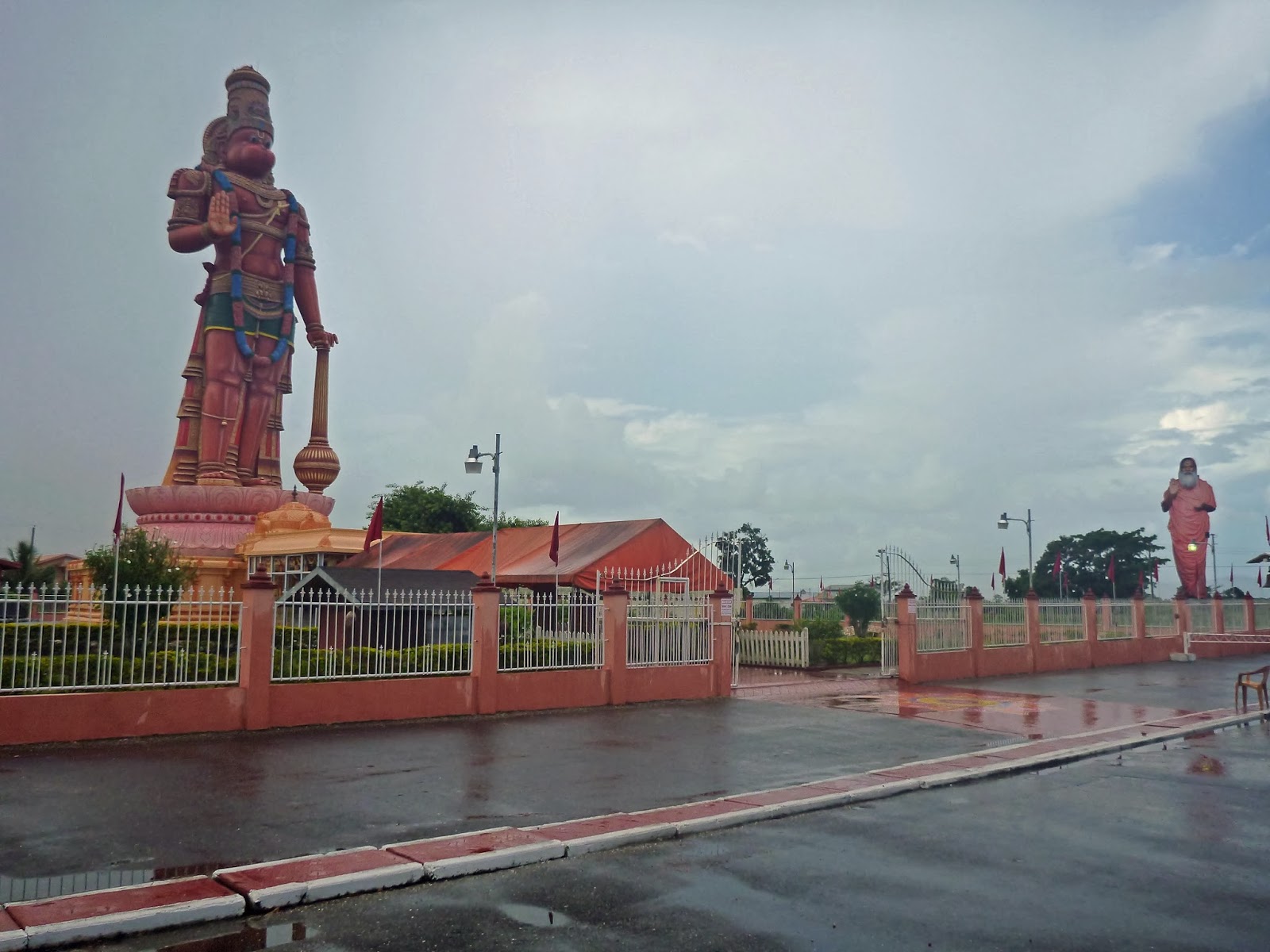
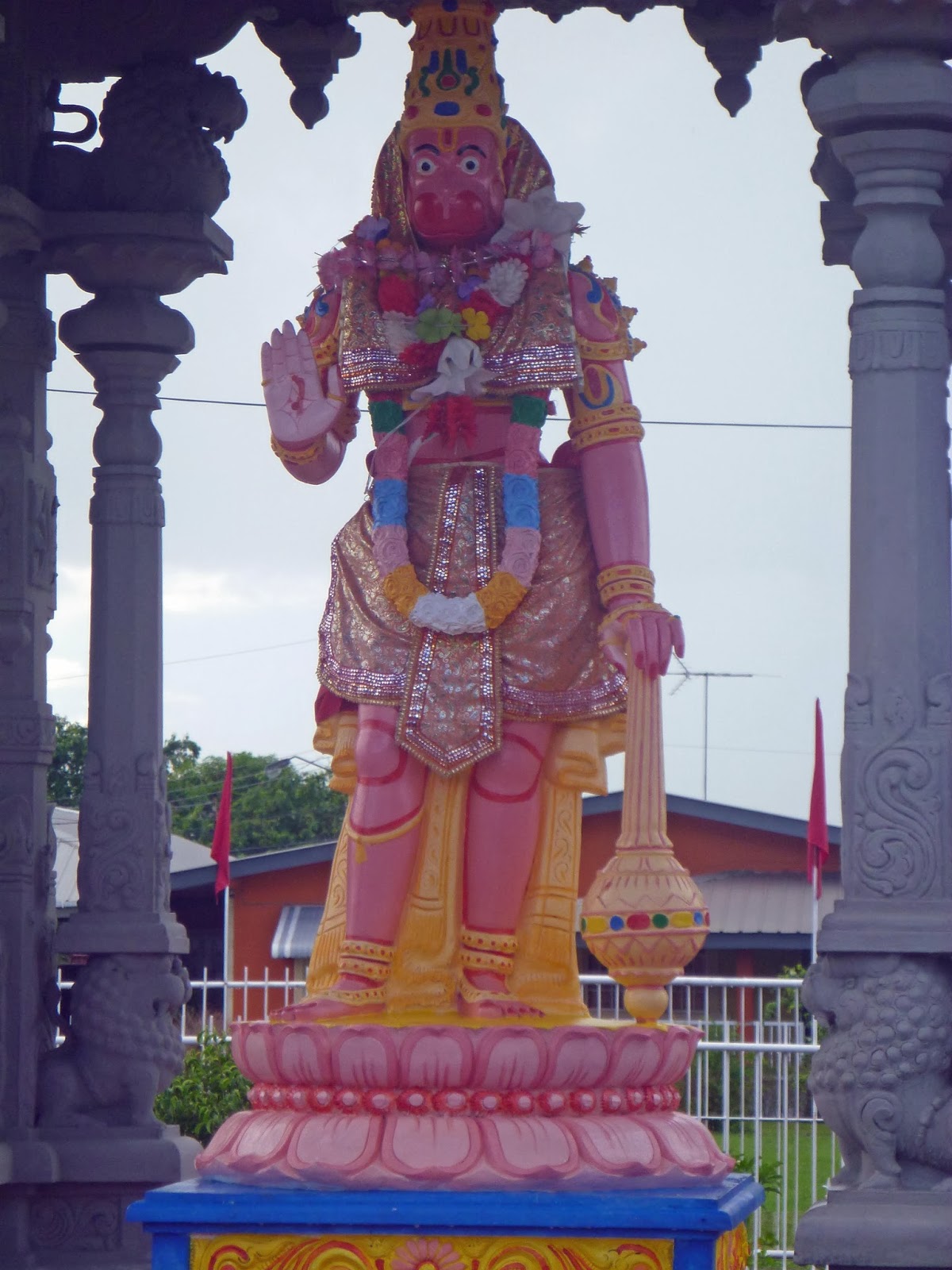
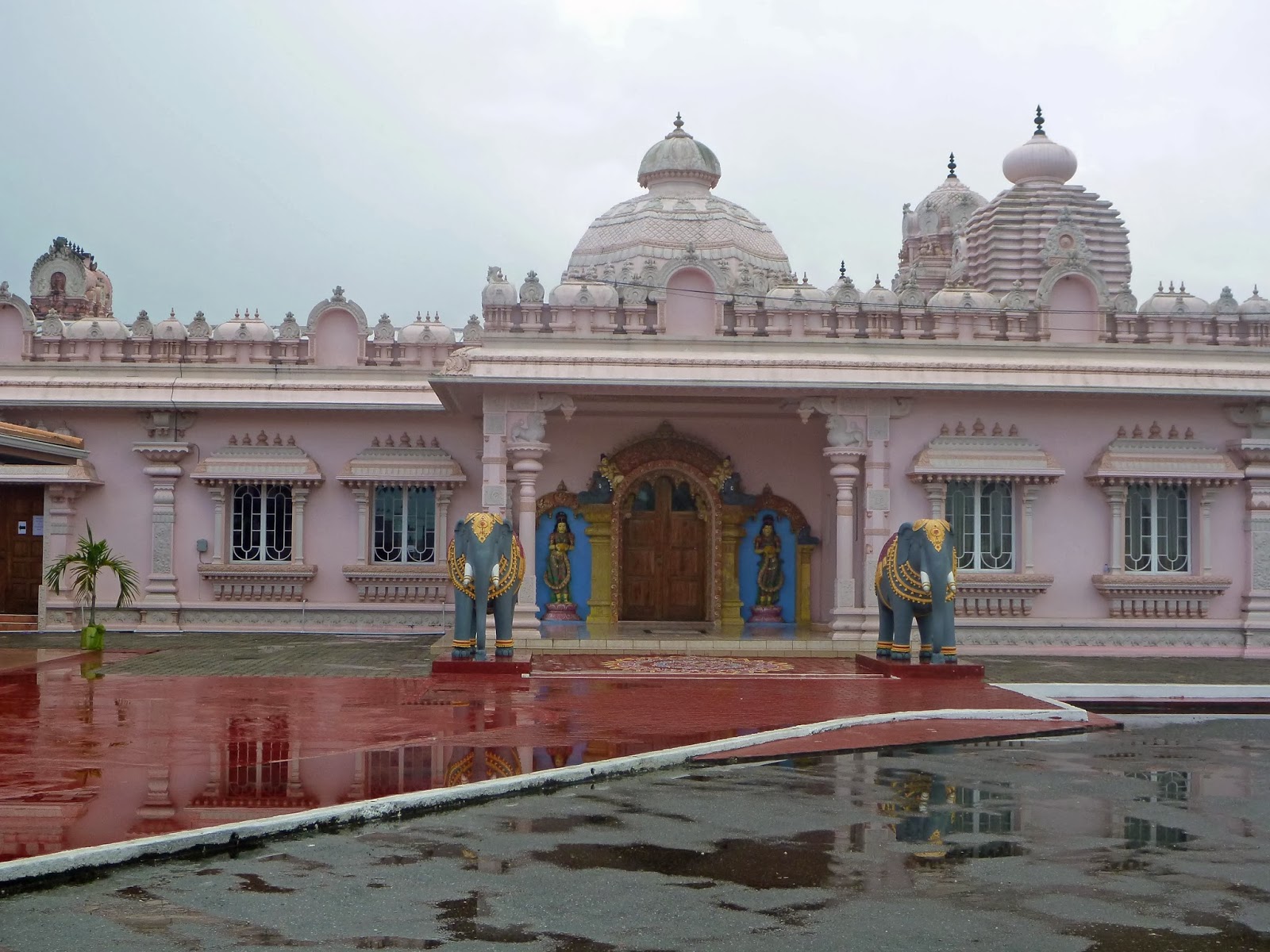
We traveled
through several communities and saw other temples and mosques proving that
today’s Trinidad is truly a melting pot of cultures. Just before sunset, we arrived at the
highlight of the tour.
The 20 square
mile Caroni Swamp is the largest mangrove wetland in Trinidad. It lies just
south of capital Port of Spain, on the island’s western shore, where the Coroni
River joins the Gulf of Paria.
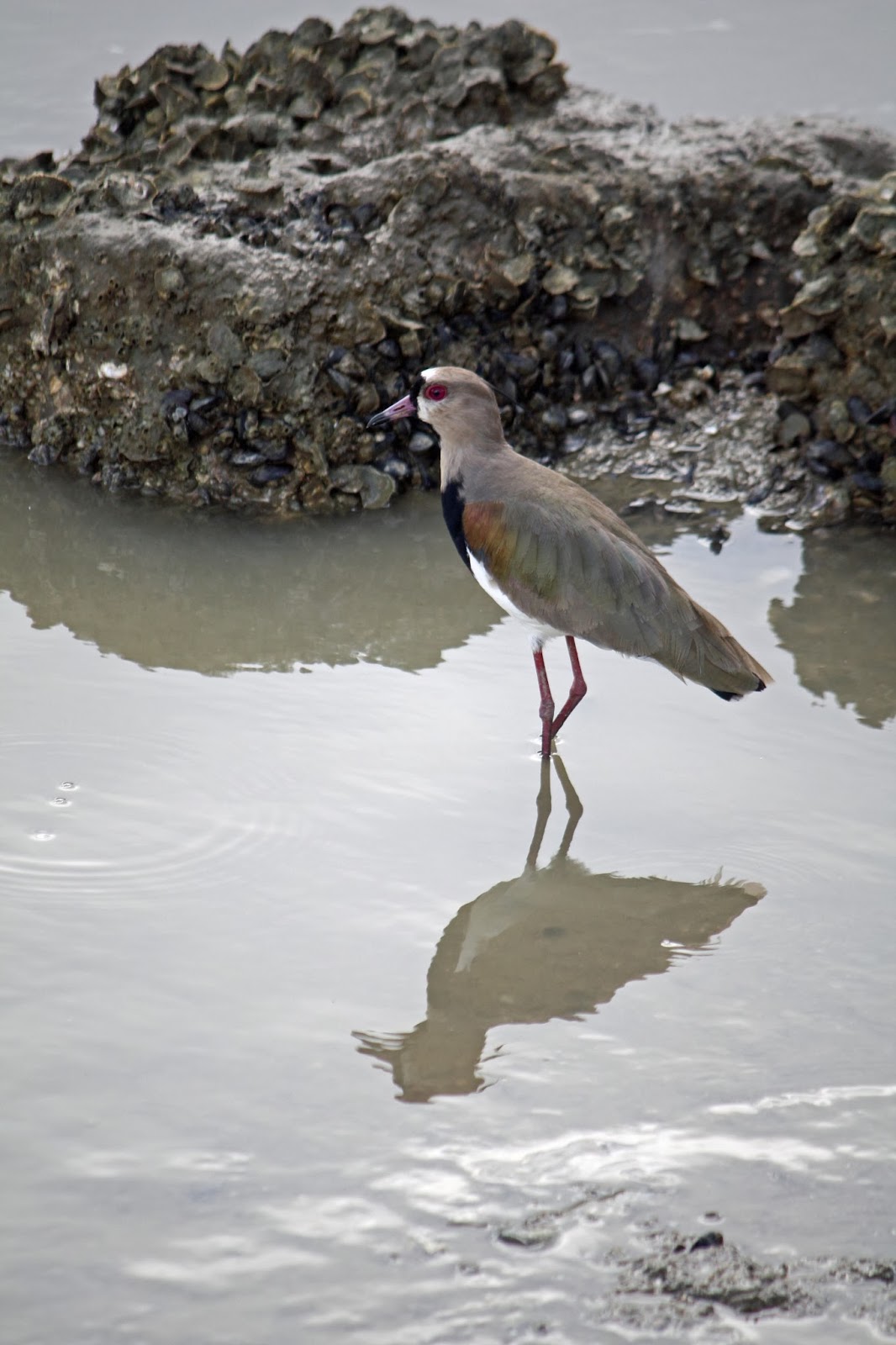
The swamp is home
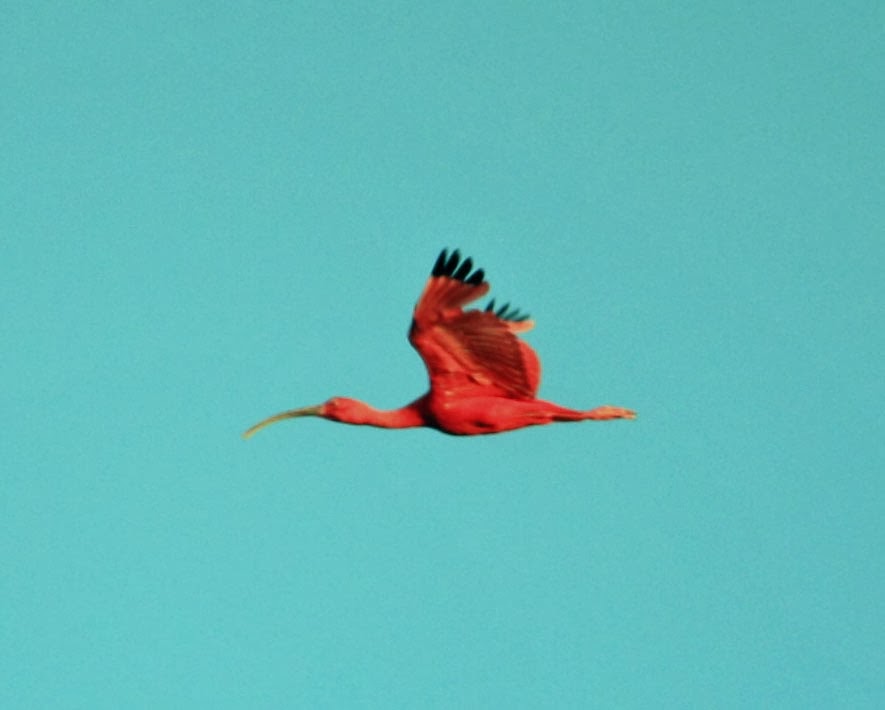
to some 200 avian species. The most famous inhabitants are the Scarlet Ibis (Eudocimus
ruber), Trinidad’s national bird. During the day they feed in Venezuela, 11
miles away, returning to Trinidad at dusk – a spectacle that has become a
“must” on tourist itineraries. Although
we had seen these birds up close on our 2009 trip up the Manamo River in
Venezuela, we wanted to see these beautiful birds once more.
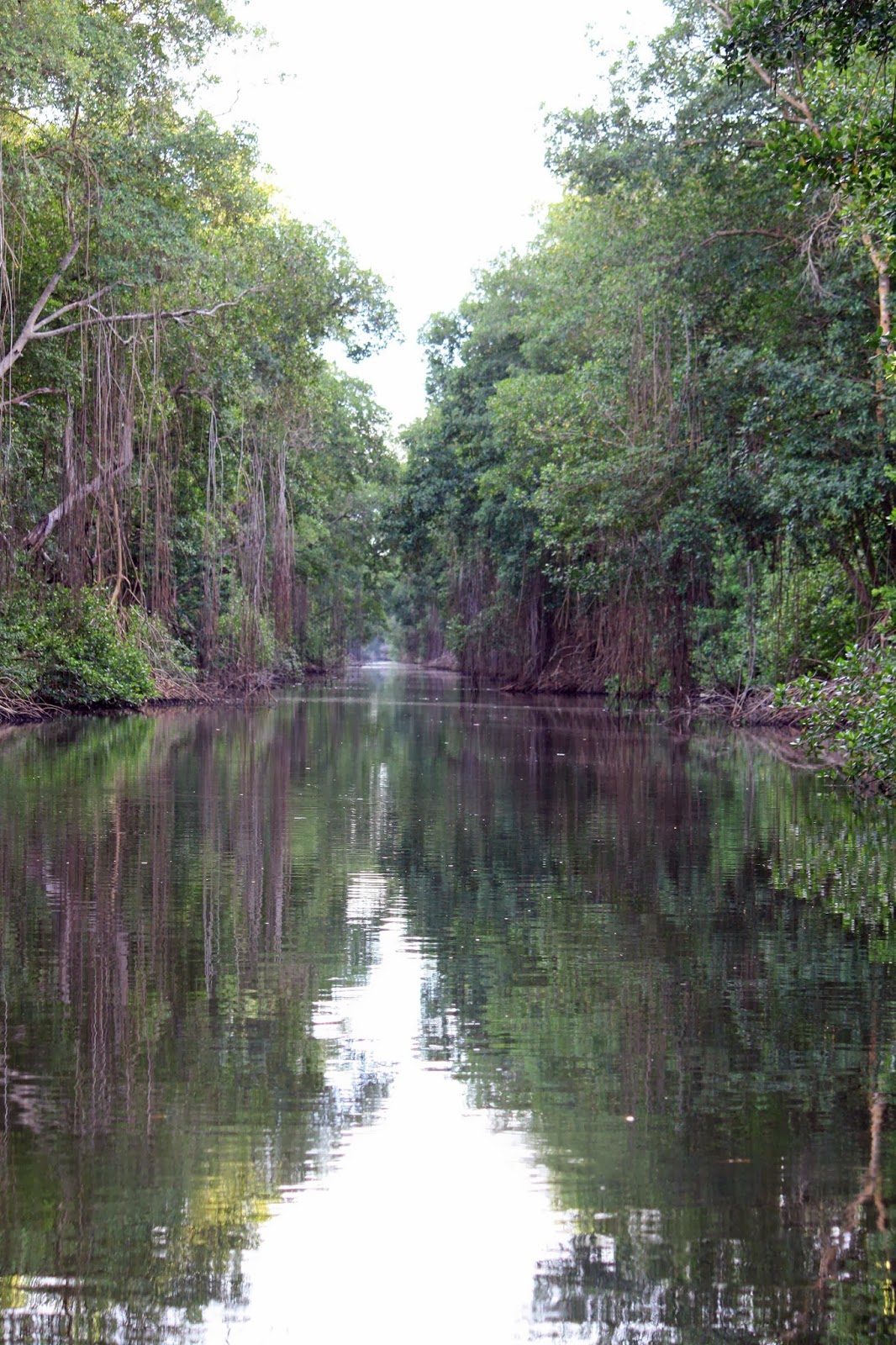
The swamp is a
maze of channels – some natural and some dredged. It’s not surprising that you
can’t just hire a boat and go out there yourself – you could so easily get
lost. However, the boat captains do these tours every day and know the
waterways intimately.
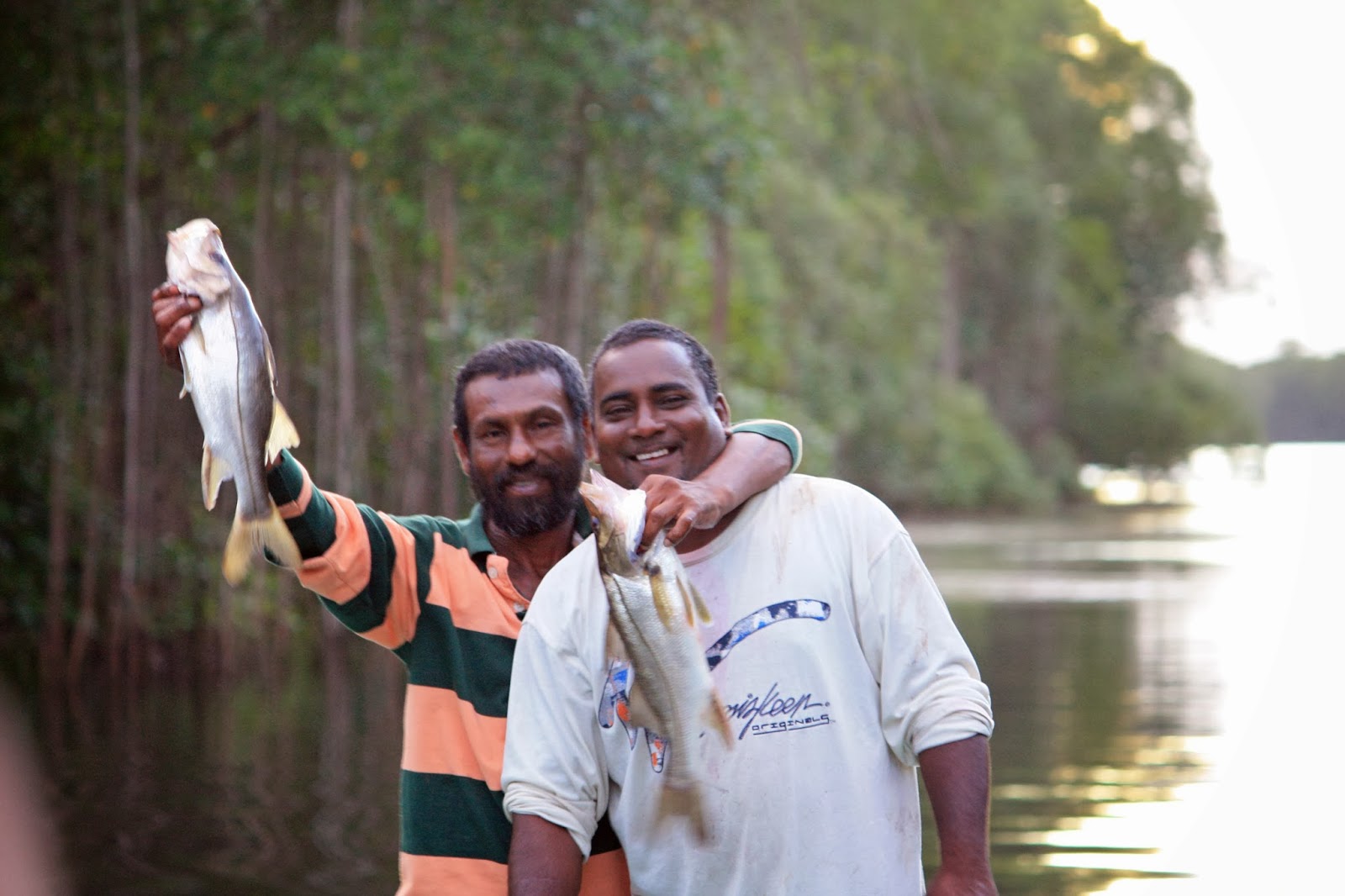
Some of the swamp was public land and a couple of locals
showed us their catch.
Although Scarlet
Ibis might be the focus of the trip, there is a vast amount of wildlife in the
mangroves. Within minutes of leaving the
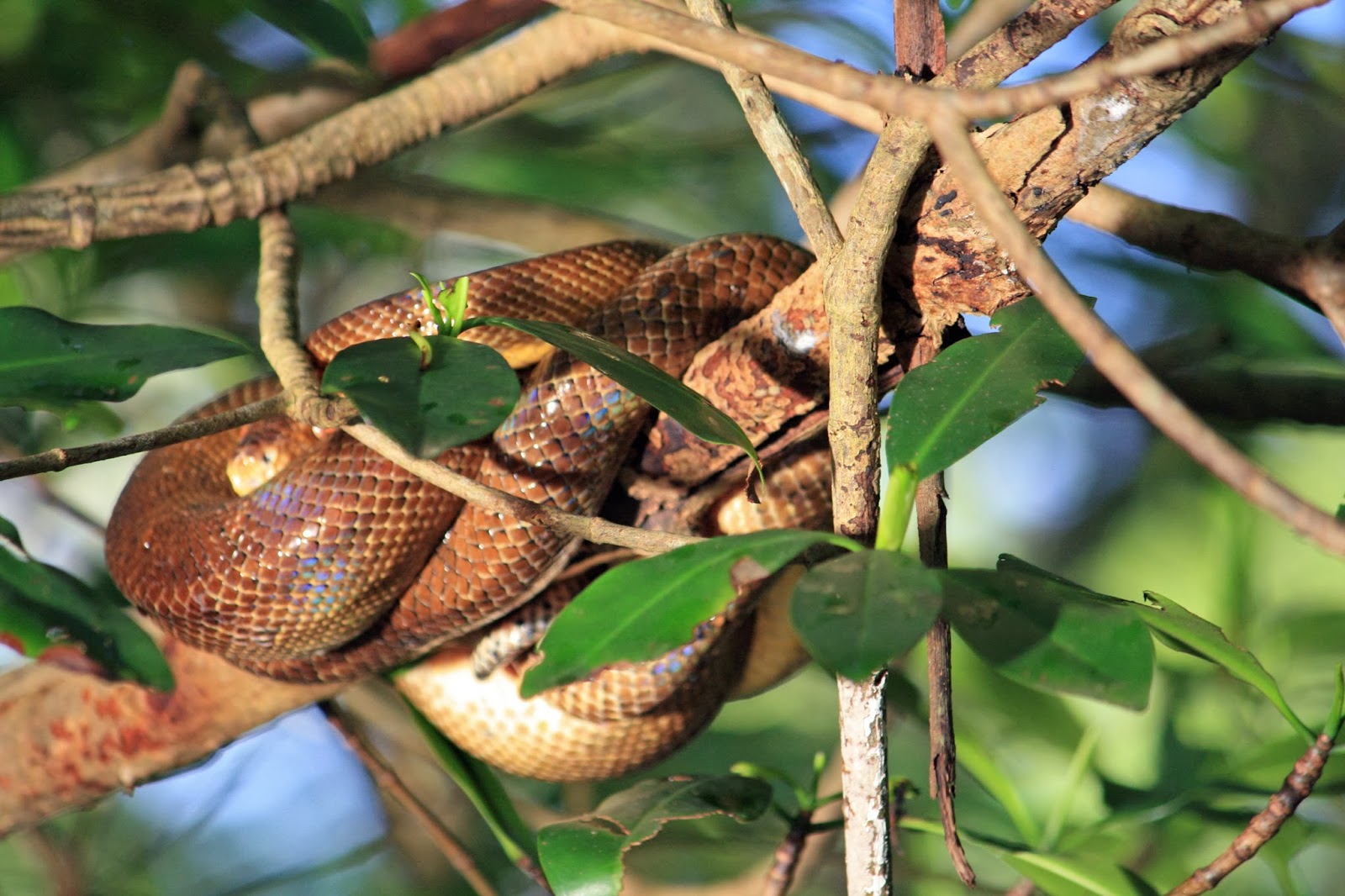
jetty we saw our first wildlife – a five or six foot tree boa, sleeping in the
branches of an overhanging mangrove, immediately above the boat.
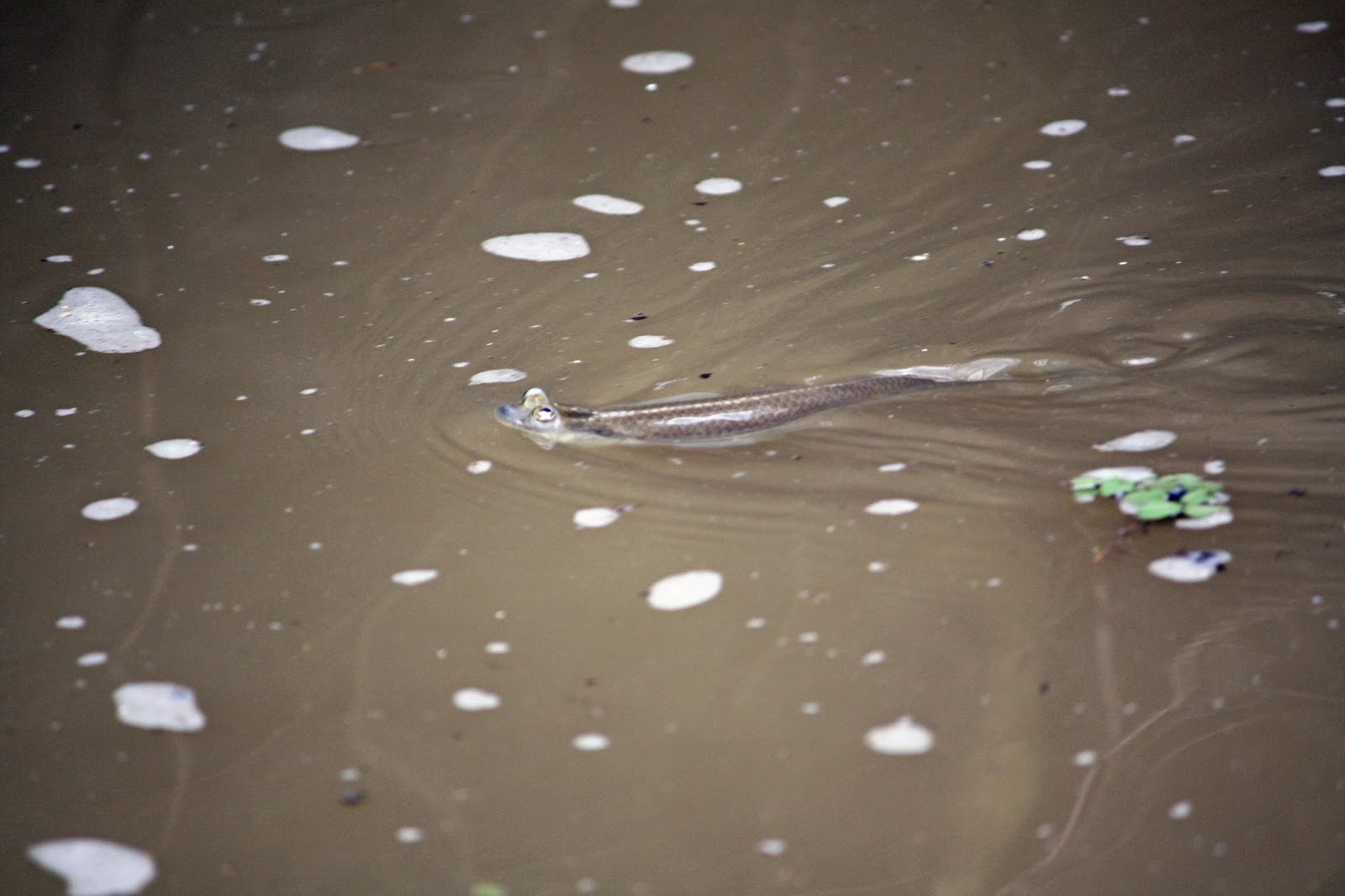

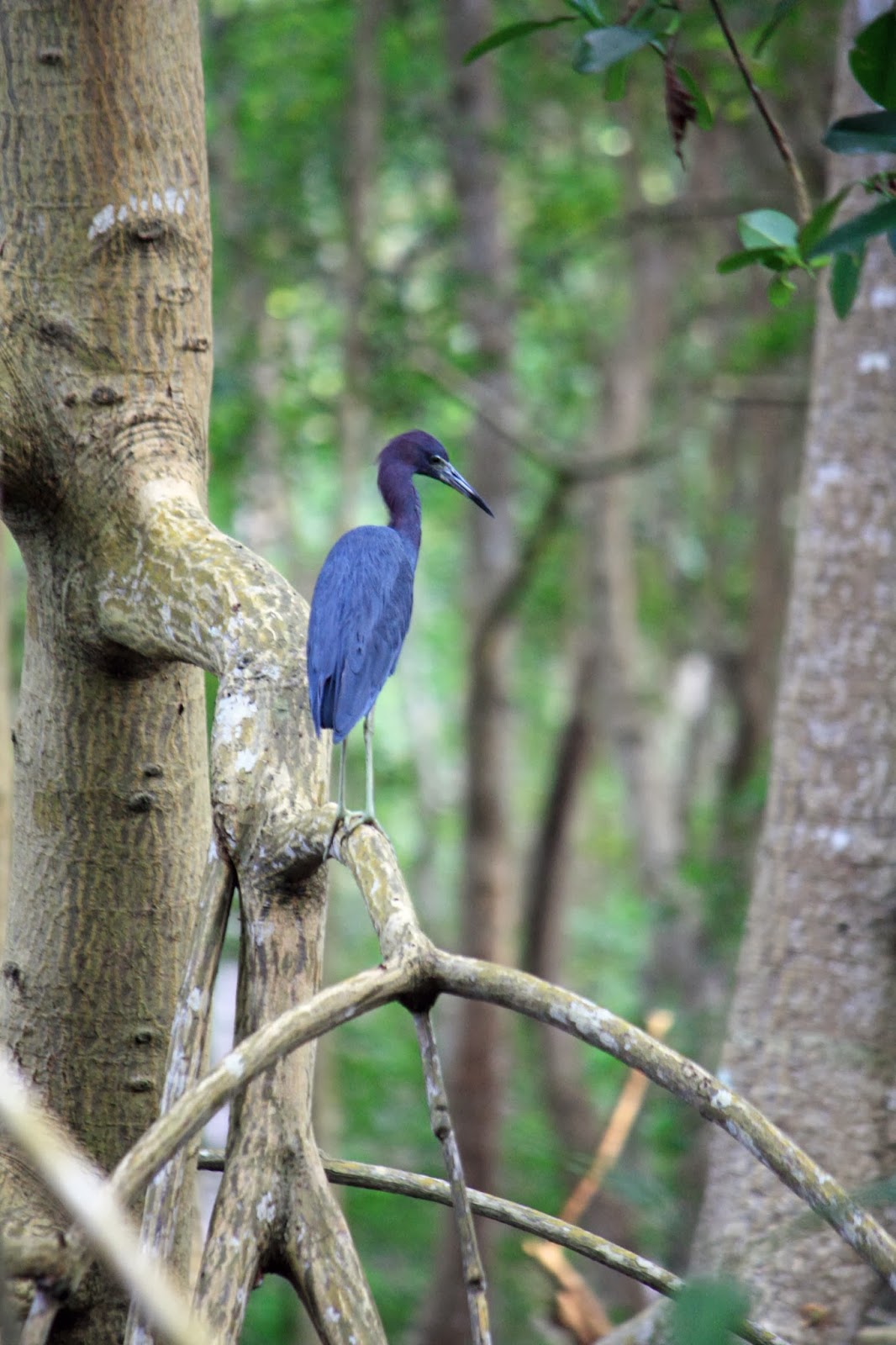
We also spotted a few birds of prey and
several types of herons and egrets as well as some small 4-eyed fish. The fish had two eyes above and two eyes
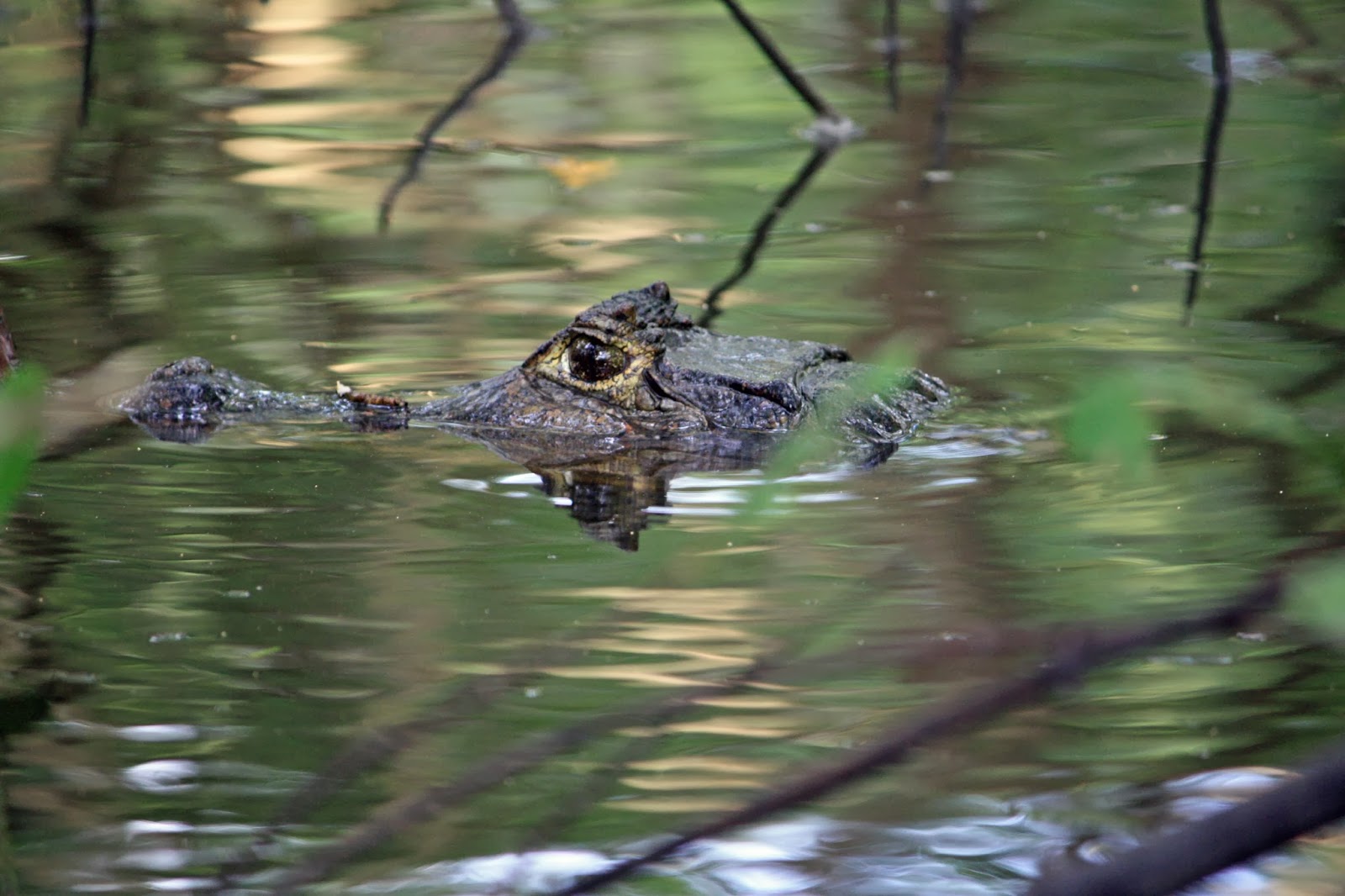
below the water. We saw 2 or 3 caiman
trying to blend in.
After a leisurely
30-minute cruise through the waterways, with our guide pointing out a wide
collection of bird species, we eventually arrived at a large area of open
water. Surrounded by mangroves on all sides and featuring several islands and
mud flats, this ‘lake’ was clearly somewhere special. Making our way across the
water, we stopped and drifted, facing a mangrove-covered island backed by the
hills of Trinidad’s Northern Range. Once the engines were switched off, it
became a spot of wonderful peace and solitude.

Six o’ clock was
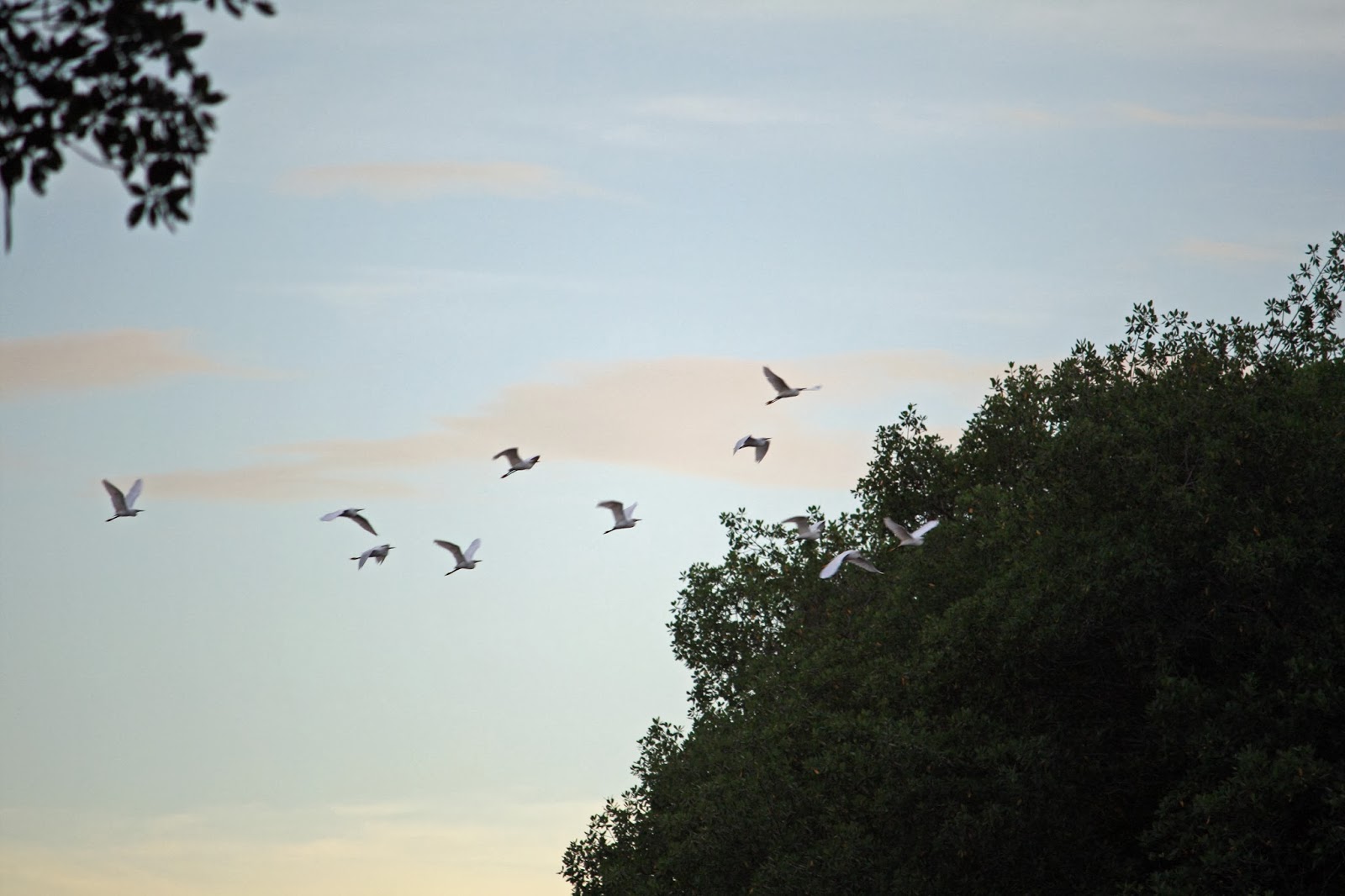
rapidly approaching and the light was starting to fade. One by one we watched
bright red ibis fly overhead and land in the tree tops.


Within a few
minutes another flock arrived. Slowly, the pace picked up. So did the flock
size. Within ten to fifteen minutes it was a continuous procession of birds,
with flock sizes of ten to a hundred birds. White egrets were mixed in with the
ibis and they roosted side by side. Virtually all of the birds landed on one central
island, turning the green of the mangroves scarlet red.

Juvenile Scarlet
Ibis are black in color. The scarlet coloring, which comes from the diet of
crabs and other crustaceans, only comes when the birds have matured at two
years of age. The coloring gets darker as the bird gets older. All the early
arrivals were mature adult males. As the procession progressed, a few juveniles
could be seen amongst the adults. By the end, juveniles represented the
majority; clearly not strong enough to keep up with the adults.

As suddenly as it
had started, the spectacle came to an end. Light was fading fast and the tour
boats started up, cast off and headed back into the narrow channels of the
mangroves. A journey that had taken 30-40 minutes outbound became just 10
minutes or so on the return, showing how one has no sense of direction or
perspective in the waterways.
We returned after
dark and all agreed it was a good day.
Tom
Mount Saint Benedict and the Caroni Swamp
We took an organized tour to see a bit more of the area before heading north. Our tour with Jesse James of Members Only maxitaxi took us to see the Saint Benedict monastery and the Coroni Swamp. Mount Saint Benedict, or the Abbey of Our Lady of E…
Today’s Pics
Nordhavn Exumas Abacos Bahamas trawler Caribbean Pickwick Boat dogs
Memphis Downtown
AUTUMN CRUISING WITH AMY IN THE IONIAN SEA
Envoy is currently anchored at spectacular Meganisi Island where we’re enjoying the last day of our 2013 cruise before going into the marina for the winter. Laurie aboard Envoy in Paxos Island’s sheltered Lakki Bay (Amy photo) We anchored in north…
New Places Around Puget Sound
We had a good pause in Port Townsend, taking care of a lot of little maintenance chores and small repairs, but it was more work than fun. We had a wonderful visit from our friends Bonnie & Walt, and we got to see a little of the town. W…
…the sailor's life for me, Ho!
(Continued…)
Koahsiung Adventures – Temple Visits
Note to Readers: I visited the sites in this article between October 12 -17. The delay is due to my inability to transfer photos of the Tao temples from my iPad to my computer. I finally resorted to transferring them via email but that…
October 31 – Marina Costa Baja
Normal
0
false
false
false
EN-US
JA
X-NONE
/* Style Definitions */
table.MsoNormalTable
{mso-style-name:”Table Normal”;
mso-tstyle-rowband-size:0;
mso-tstyle-colband-size:0;
mso-style-noshow:yes;
mso-style-priority:99;
mso-style-parent:””;
mso-padding-alt:0in 5.4pt 0in 5.4pt;
mso-para-margin:0in;
mso-para-margin-bottom:.0001pt;
mso-pagination:widow-orphan;
font-size:12.0pt;
font-family:Cambria;
mso-ascii-font-family:Cambria;
mso-ascii-theme-font:minor-latin;
mso-hansi-font-family:Cambria;
mso-hansi-theme-font:minor-latin;}
We
arrived in Cabo on October 1 and rented a car for the drive to La Paz. We made a quick stop at Costco on the
way. I forgot to buy coffee, which I
remember too late was excellent, but we picked up some beautiful U S New York
strip steaks and great French cheeses.
We arrived at the marina at about 6, unloaded the car and made a dash
for Azul, our favorite local restaurant where we ran into friends. Peter and Mary Rose and Jay and Liza who are
fellow Nordhavn owners. They had elected
to keep their boats in La Paz for the summer.
It was a first for them and most probably a last. Both couples found it much too hot.
arrived in Cabo on October 1 and rented a car for the drive to La Paz. We made a quick stop at Costco on the
way. I forgot to buy coffee, which I
remember too late was excellent, but we picked up some beautiful U S New York
strip steaks and great French cheeses.
We arrived at the marina at about 6, unloaded the car and made a dash
for Azul, our favorite local restaurant where we ran into friends. Peter and Mary Rose and Jay and Liza who are
fellow Nordhavn owners. They had elected
to keep their boats in La Paz for the summer.
It was a first for them and most probably a last. Both couples found it much too hot.
We had
little time to cruise when we first arrived. Earl had brought parts with him –
membranes for the water maker and pistons and bushings for the stabilizers. Replacing these is normal maintenance,
although in the case of the water maker, the unit itself had let us know that
it needed the new membranes. It has made
lots of water for us since 2008 and the membranes had had it.
little time to cruise when we first arrived. Earl had brought parts with him –
membranes for the water maker and pistons and bushings for the stabilizers. Replacing these is normal maintenance,
although in the case of the water maker, the unit itself had let us know that
it needed the new membranes. It has made
lots of water for us since 2008 and the membranes had had it.
I had
pretty well cleaned out the pantry and frig before we left, so while Earl was
overseeing the maintenance, I was doing provisioning. Finally, a week after arriving, we left the
marina, with Earl chomping at the bit.
Fishing was supposed to be great!
Within 20 minutes of leaving the marina we were stopped and boarded by
Mexican security wanting to inspect our papers.
They are always very nice and polite, but, all the same, the machine
guns put me off a little.
pretty well cleaned out the pantry and frig before we left, so while Earl was
overseeing the maintenance, I was doing provisioning. Finally, a week after arriving, we left the
marina, with Earl chomping at the bit.
Fishing was supposed to be great!
Within 20 minutes of leaving the marina we were stopped and boarded by
Mexican security wanting to inspect our papers.
They are always very nice and polite, but, all the same, the machine
guns put me off a little.
We headed
up to Ensenada Grande. Earl put his
fishing lines out and everything was just fine.
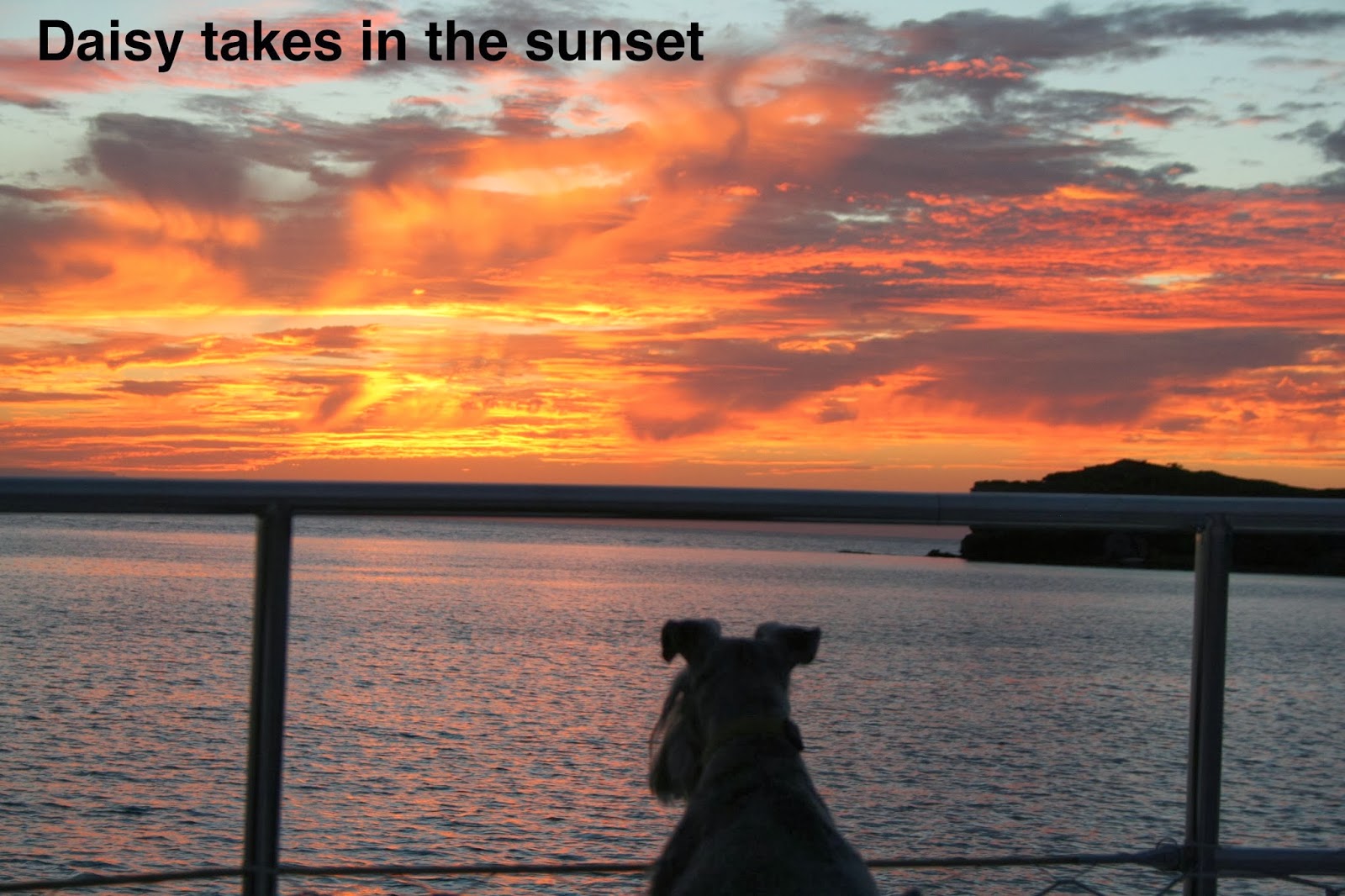
I was sitting in the air conditioned salon reading and Daisy was
chilling upstairs in the pilot house.
When Earl found that he had lost all 400 yards of line, as well as an expensive
lure, from one rod, he tried to pin the blame on us. No way!
We had not been told that we were on duty and were not taking the
blame! (And how was Daisy to hear the
fish if someone did not put the clicker on the reel).
up to Ensenada Grande. Earl put his
fishing lines out and everything was just fine.
I was sitting in the air conditioned salon reading and Daisy was
chilling upstairs in the pilot house.
When Earl found that he had lost all 400 yards of line, as well as an expensive
lure, from one rod, he tried to pin the blame on us. No way!
We had not been told that we were on duty and were not taking the
blame! (And how was Daisy to hear the
fish if someone did not put the clicker on the reel).
Other
than the fishing fiasco, it was a lovely ride: beautiful water, porpoises and
mobulas. We were in the water as soon as
the anchor was set. What heaven! We had the place to ourselves – 85 degree
water as clear as could be and no suits needed.
than the fishing fiasco, it was a lovely ride: beautiful water, porpoises and
mobulas. We were in the water as soon as
the anchor was set. What heaven! We had the place to ourselves – 85 degree
water as clear as could be and no suits needed.
Unfortunately,
the next day, I started to feel under the weather. By mid afternoon, Earl was concerned and
headed back to the marina. He took care
of everything, including getting the name of a doctor to see me, Dr Touchman
(612-157-0126) who was wonderful. Earl
wanted to go to the hospital at 8 pm. I
told him I would go the next day if I was not any better. That I was willing to consider a trip to the
hospital was enough to convince him I was at death’s door – He has never let me
forget the “false labor” that resulted in our son birth shortly after arriving
at the hospital.
the next day, I started to feel under the weather. By mid afternoon, Earl was concerned and
headed back to the marina. He took care
of everything, including getting the name of a doctor to see me, Dr Touchman
(612-157-0126) who was wonderful. Earl
wanted to go to the hospital at 8 pm. I
told him I would go the next day if I was not any better. That I was willing to consider a trip to the
hospital was enough to convince him I was at death’s door – He has never let me
forget the “false labor” that resulted in our son birth shortly after arriving
at the hospital.
The
next day I was still not well, so off we went.
This was my second experience with Mexican medical care. My first was having Dr. Veronica sew up the
back of my scalp at 9 pm on the boat.
Once again, I have to say that I am impressed. Earl had spoken to the doctor on the phone
and he said the best place to go would be the old city hospital since they have
the best diagnostic equipment and that he would meet us there. We went to the hospital and Earl called the
doctor who came out and led us back to an examination room. After he checked me out, he said an
ultrasound was in order. So we followed
him down the hall. The first room he
tried was occupied, so he took us down a hall to another. There he and the ultrasound tech checked me out. Following that he told me that the good news
was that no surgery was required and that basically everything was great except
I had an irritated colon that could be treated by diet and medication. He gave me some prescriptions and told me to
call if I did not feel better in 3 days.
At that point, I asked him how we were to pay him. (Keep in mind that we had not filled in one
piece of paper at this point- let alone the norm for the US). He said the ultrasound was 600 pesos and his
fee was 400 pesos. I gave him 1,000
pesos and we were off at a total cost of less than $75.
next day I was still not well, so off we went.
This was my second experience with Mexican medical care. My first was having Dr. Veronica sew up the
back of my scalp at 9 pm on the boat.
Once again, I have to say that I am impressed. Earl had spoken to the doctor on the phone
and he said the best place to go would be the old city hospital since they have
the best diagnostic equipment and that he would meet us there. We went to the hospital and Earl called the
doctor who came out and led us back to an examination room. After he checked me out, he said an
ultrasound was in order. So we followed
him down the hall. The first room he
tried was occupied, so he took us down a hall to another. There he and the ultrasound tech checked me out. Following that he told me that the good news
was that no surgery was required and that basically everything was great except
I had an irritated colon that could be treated by diet and medication. He gave me some prescriptions and told me to
call if I did not feel better in 3 days.
At that point, I asked him how we were to pay him. (Keep in mind that we had not filled in one
piece of paper at this point- let alone the norm for the US). He said the ultrasound was 600 pesos and his
fee was 400 pesos. I gave him 1,000
pesos and we were off at a total cost of less than $75.
Getting
the prescriptions filled was also novel.
I had three medications. Unlike
the US, here the pills come in packages, the quantity having little to do with
the prescribed amount. I was given 10 of
medicine A that I was supposed to take 4 time a day for 3 days (12 needed), 15
of medicine B that I was supposed to take 2 of, 4 times a day for 3 days (total
of 16), and 24 of medicine C that I was to take 3 times day for 10 days (30 ).
the prescriptions filled was also novel.
I had three medications. Unlike
the US, here the pills come in packages, the quantity having little to do with
the prescribed amount. I was given 10 of
medicine A that I was supposed to take 4 time a day for 3 days (12 needed), 15
of medicine B that I was supposed to take 2 of, 4 times a day for 3 days (total
of 16), and 24 of medicine C that I was to take 3 times day for 10 days (30 ).
Whatever,
within 3 days, I was feeling significantly better!
within 3 days, I was feeling significantly better!
While
we were in La Paz, Earl replaced the switch in our grey water tank for the
second time. Although almost everything in this boat is great, Nordhavn did
some things oddly, the grey water system being one. All the grey water, including the kitchen
sink went to the tank. No matter how
careful one is, the water from the kitchen sink can be greasy, unlike the water
from the washing machine and showers, so a bypass is be nice to have to keep
grease and such out of the tank. Last year, we finally put in a kitchen sink bypass. The automatic float switch in the tank had
stopped working shortly after we bought the boat and PAE had replaced it for us
in the fall of 09. It failed again
within two months. This time, Earl and Fito replaced it. When Earl and Fito pulled it out, it was a
disgusting sight, even though we had tried to clean it by pouring large amounts
of cleaner down the shower. After
spending a few hours cleaning out the tank, they discovered that the switch may
have shorted out since it was installed inside the tank itself. The new set up has the switch outside and
dry. We will see if it does better. It is certainly lovely to have it on automatic!
we were in La Paz, Earl replaced the switch in our grey water tank for the
second time. Although almost everything in this boat is great, Nordhavn did
some things oddly, the grey water system being one. All the grey water, including the kitchen
sink went to the tank. No matter how
careful one is, the water from the kitchen sink can be greasy, unlike the water
from the washing machine and showers, so a bypass is be nice to have to keep
grease and such out of the tank. Last year, we finally put in a kitchen sink bypass. The automatic float switch in the tank had
stopped working shortly after we bought the boat and PAE had replaced it for us
in the fall of 09. It failed again
within two months. This time, Earl and Fito replaced it. When Earl and Fito pulled it out, it was a
disgusting sight, even though we had tried to clean it by pouring large amounts
of cleaner down the shower. After
spending a few hours cleaning out the tank, they discovered that the switch may
have shorted out since it was installed inside the tank itself. The new set up has the switch outside and
dry. We will see if it does better. It is certainly lovely to have it on automatic!
There
is always something that can be done on a boat!
is always something that can be done on a boat!
Finally
on Monday the 14th we took off again. We were in such a hurry that Earl refused to
be impressed by the tropical storm Octave that was heading toward the
Baja. After all, it was going to Loreto
not La Paz. The air was heavy and wet,
but we did not care. After the winds
picked up, we moved from Gabriel to Caleta Partida, our bulletproof anchorage
between the islands of Espiritu Santo and Partida. We had a lovely pasta dinner on the back deck
watching the clouds race across the sky and then the storm hit. Rain harder than we have seen here before and
winds, building and building. Earl
finally resorted to taking his clothes off to keep them dry when he went out to
check things. It was actually exactly as
forecasted, except instead of maximum winds of 30 we had gusts of 55 or more before
the storm passed in the morning. (Turned
out that Octave went south and probably closer to us than Loreto). It was a pretty wild night, but with a good
anchorage, good anchor and lots of chain, we really did not have anything to
worry about ourselves although our flags took a beating. About 1 am someone anchored in a nearby bay
started calling mayday. That continued
for the next 4 hours or so. There was
really nothing we could do. We would
have been nuts to go out and did not try.
The next day, we saw a sailboat grounded on the beach there. Pick your anchorages with care!
on Monday the 14th we took off again. We were in such a hurry that Earl refused to
be impressed by the tropical storm Octave that was heading toward the
Baja. After all, it was going to Loreto
not La Paz. The air was heavy and wet,
but we did not care. After the winds
picked up, we moved from Gabriel to Caleta Partida, our bulletproof anchorage
between the islands of Espiritu Santo and Partida. We had a lovely pasta dinner on the back deck
watching the clouds race across the sky and then the storm hit. Rain harder than we have seen here before and
winds, building and building. Earl
finally resorted to taking his clothes off to keep them dry when he went out to
check things. It was actually exactly as
forecasted, except instead of maximum winds of 30 we had gusts of 55 or more before
the storm passed in the morning. (Turned
out that Octave went south and probably closer to us than Loreto). It was a pretty wild night, but with a good
anchorage, good anchor and lots of chain, we really did not have anything to
worry about ourselves although our flags took a beating. About 1 am someone anchored in a nearby bay
started calling mayday. That continued
for the next 4 hours or so. There was
really nothing we could do. We would
have been nuts to go out and did not try.
The next day, we saw a sailboat grounded on the beach there. Pick your anchorages with care!
The
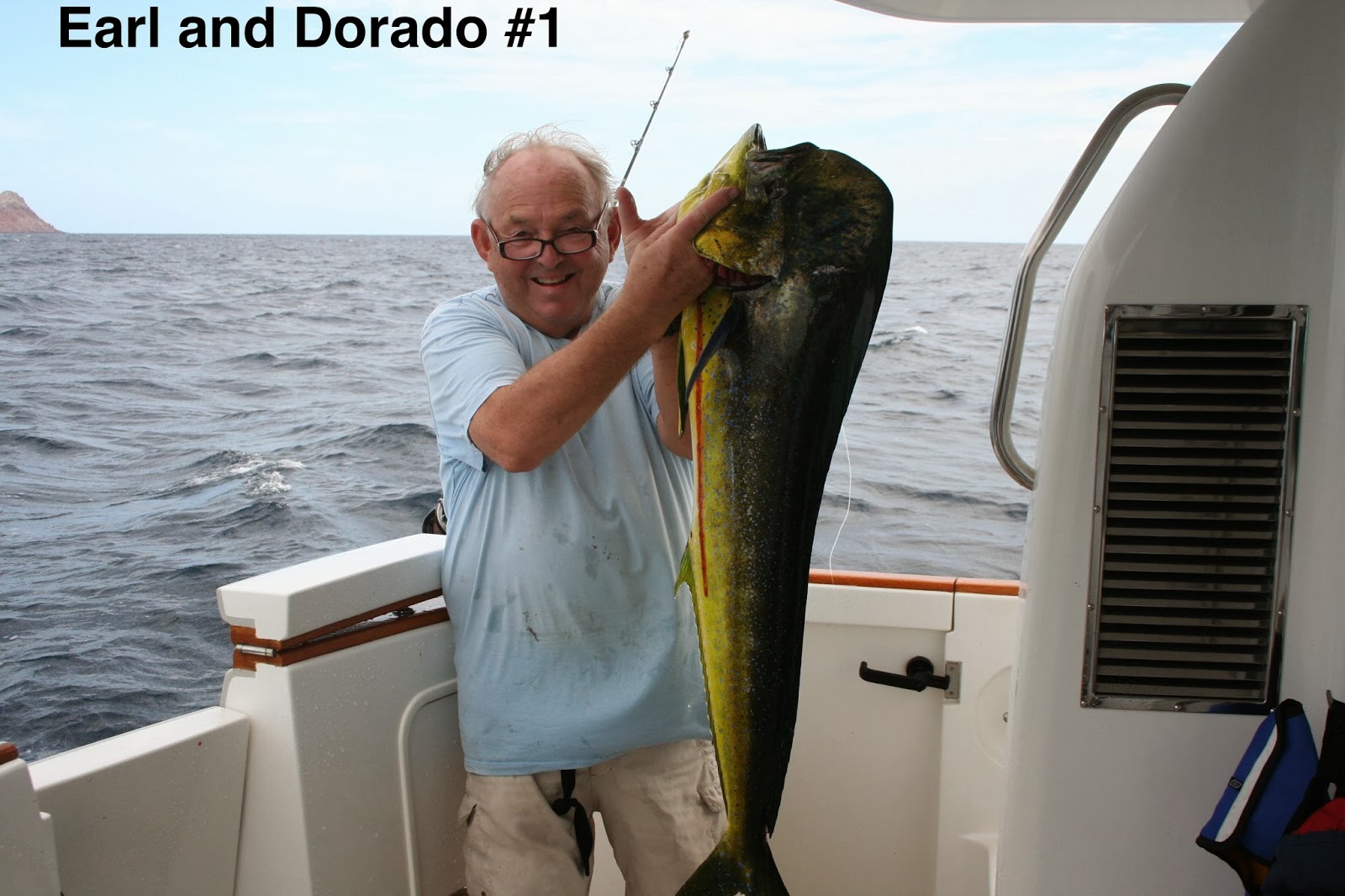
next day we finally caught some dorado.
Daisy has remembered that she is on watch and lets us know when she
hears the line on the rod going out. The
first fish flopped around the back deck and splattered everything with
blood. Earl took off his shorts and
shirt and soaked them in cold water before going down to get fresh
clothes. Bam! Another fish on! This one fought by a naked Earl. He has special strap on pole holders for
fishing into which the rods fit, but the original belts have failed and he
replaced them, not particularly well, with twine. Since the twine was loose, I had to stand
behind him, holding it up. Sorry – no
video.
next day we finally caught some dorado.
Daisy has remembered that she is on watch and lets us know when she
hears the line on the rod going out. The
first fish flopped around the back deck and splattered everything with
blood. Earl took off his shorts and
shirt and soaked them in cold water before going down to get fresh
clothes. Bam! Another fish on! This one fought by a naked Earl. He has special strap on pole holders for
fishing into which the rods fit, but the original belts have failed and he
replaced them, not particularly well, with twine. Since the twine was loose, I had to stand
behind him, holding it up. Sorry – no
video.
Some
friends told us yesterday that we should pour cheap tequila over the gills of
the fish when we bring it in and will pass out, thus avoiding the blood
spatters. I will get a bottle rot gut
and put it with the gaff hook.
friends told us yesterday that we should pour cheap tequila over the gills of
the fish when we bring it in and will pass out, thus avoiding the blood
spatters. I will get a bottle rot gut
and put it with the gaff hook.
W
returned to Costa Baja on the 15th so that we could pick up our
friend John (in his car) at the airport in La Paz and get the boat ready for
our next cruise. Our son Jon and his
wife Becky came down to spend 10 days with us on the 19th. What a treat for us!
returned to Costa Baja on the 15th so that we could pick up our
friend John (in his car) at the airport in La Paz and get the boat ready for
our next cruise. Our son Jon and his
wife Becky came down to spend 10 days with us on the 19th. What a treat for us!
Maybe
to compensate for Octave and the relative lack of fish earlier in the month, we
had a fabulous trip on both counts with the kids. The 20th we headed out south
towards Cerralvo Channel on beautiful seas.
Fishing was supposed to be good, but not for us so we headed north to
anchor at Bonanza on the SE end of Espiritu Santo. The kids took the dingy to the beach and
walked for a couple of hours – a bit further than I think they had
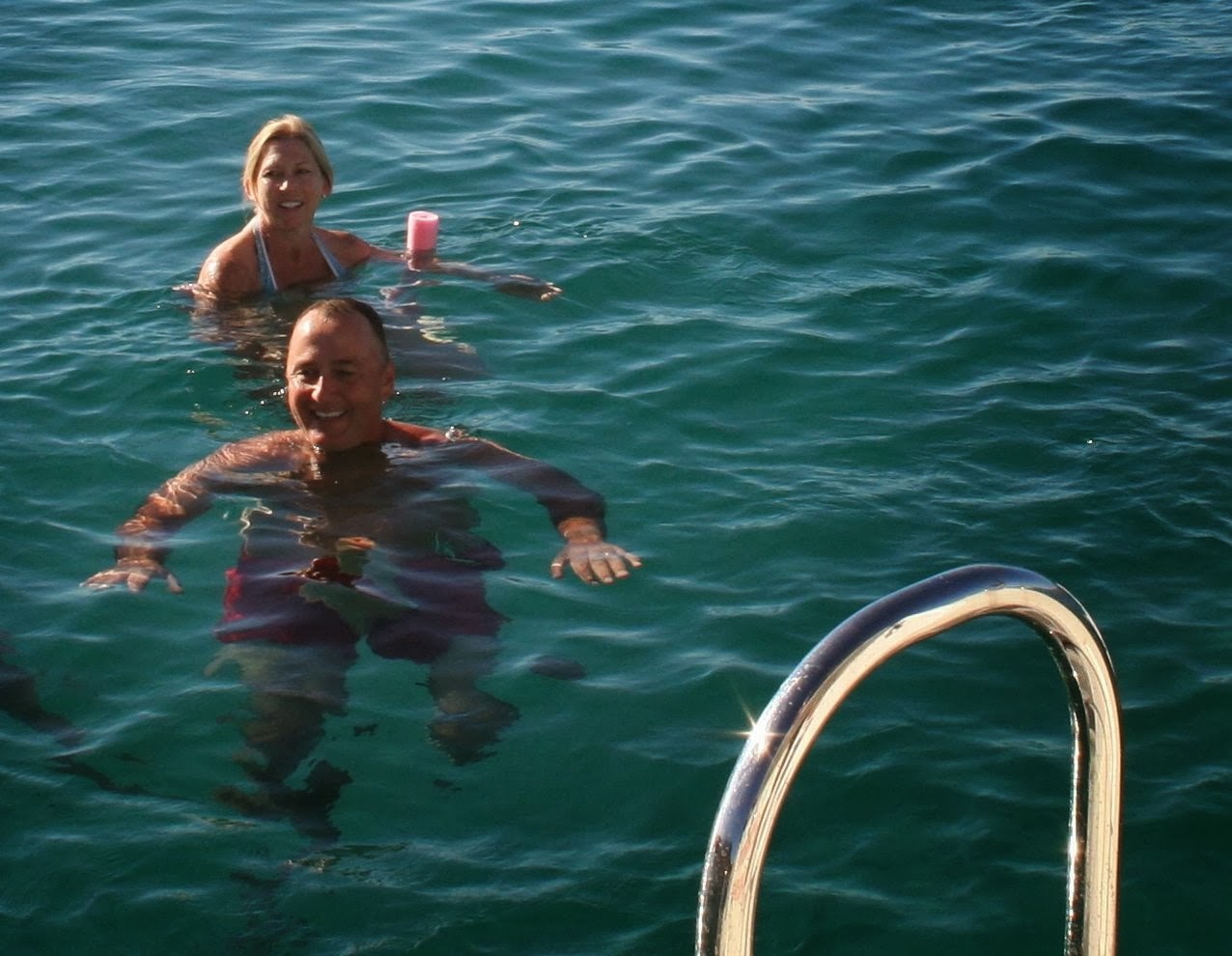
intended. Everyone swam and we had stir
fry chicken, then Jon and Becky hung their feet over the swim step and played
with the fish swimming in our blue lights before going to bed early!
to compensate for Octave and the relative lack of fish earlier in the month, we
had a fabulous trip on both counts with the kids. The 20th we headed out south
towards Cerralvo Channel on beautiful seas.
Fishing was supposed to be good, but not for us so we headed north to
anchor at Bonanza on the SE end of Espiritu Santo. The kids took the dingy to the beach and
walked for a couple of hours – a bit further than I think they had
intended. Everyone swam and we had stir
fry chicken, then Jon and Becky hung their feet over the swim step and played
with the fish swimming in our blue lights before going to bed early!
 |
| Off the beach at Bonanza |
 |
| Gin clear water |
After
leaving Bonanza, Becky caught the first fish – a bonita – the first of many
fish for the week. We ended up at
Gabriel for the night – more swimming, running around in the dingy and dorado
for dinner. The next day, Tuesday, we
headed north to Isla San Francisco and had good luck catching dorado. Just as we headed into the anchorage, we got
a bonus – a sailfish. What an unexpected
thrill! Releasing it was also
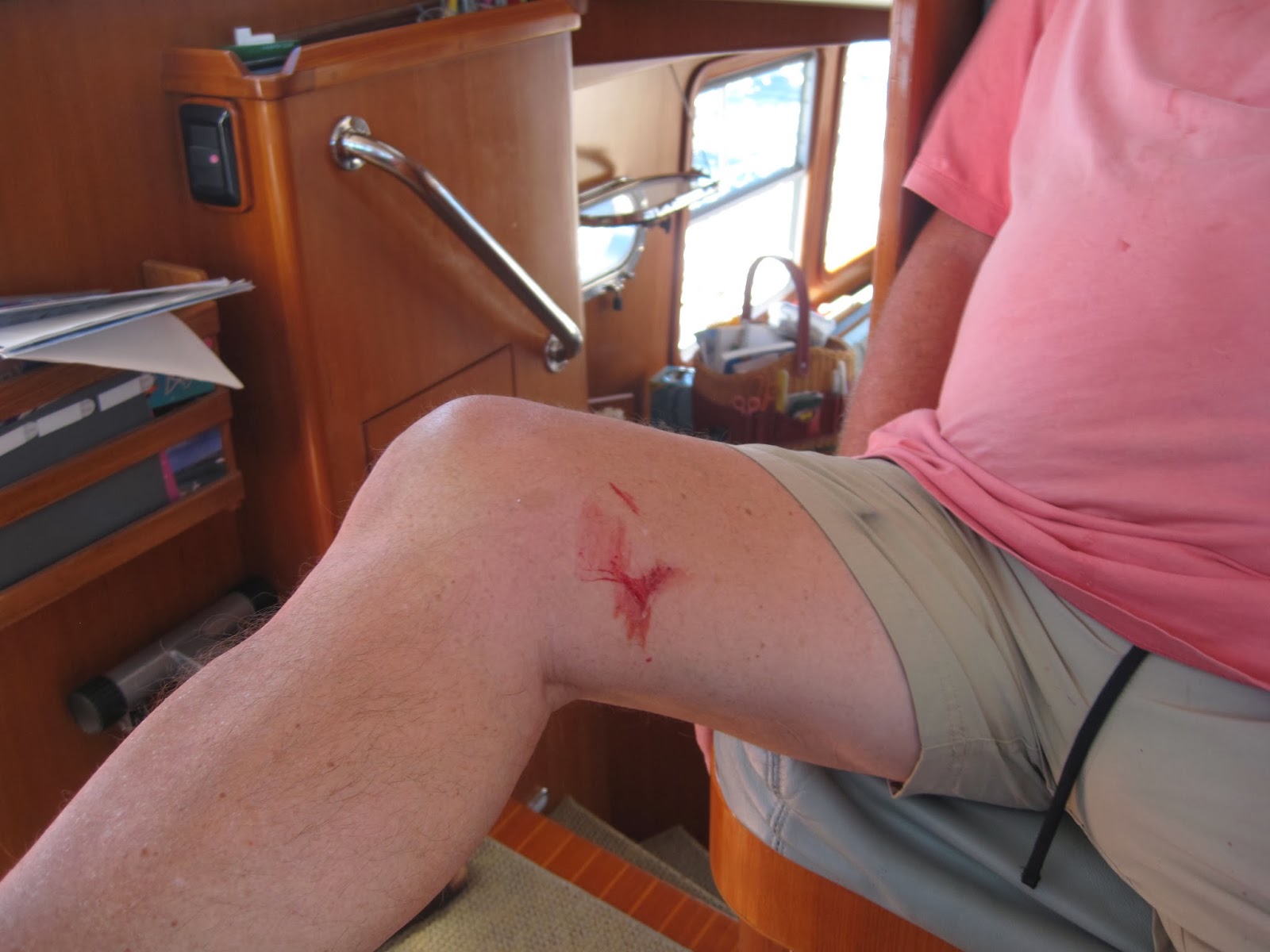
exciting. The fish first got its bill
under the swim step and then managed to come up and slash Earl’s leg. (He is very proud of the injury!)
leaving Bonanza, Becky caught the first fish – a bonita – the first of many
fish for the week. We ended up at
Gabriel for the night – more swimming, running around in the dingy and dorado
for dinner. The next day, Tuesday, we
headed north to Isla San Francisco and had good luck catching dorado. Just as we headed into the anchorage, we got
a bonus – a sailfish. What an unexpected
thrill! Releasing it was also
exciting. The fish first got its bill
under the swim step and then managed to come up and slash Earl’s leg. (He is very proud of the injury!)
 |
| Becky’s dorado |
 |
| Sailfish! |
 |
| Earl’s war wound |
The
kids hit the beach and we tried to give away some dorado, since we had more
than we could eat for dinner. Jon and
Becky climbed up the ridge and down the back to the beach on the north side
where they went skinny dipping.
kids hit the beach and we tried to give away some dorado, since we had more
than we could eat for dinner. Jon and
Becky climbed up the ridge and down the back to the beach on the north side
where they went skinny dipping.
The
next day we were hard at the fishing again.
We went north up the west side of Isla San Jose, around the tip, and
south back to the anchorage at San Francisco.
Right away we started catching (and releasing) fish. After about an hour, Earl was afraid that we
would not make it around the island, so we pulled in the lines for a few
hours. Later, the lines were out, and
Jon was napping in the salon while Becky was watching. Zing!
Fish on. Jon jumped up and
knocked over the table in the cockpit in his rush to get the fish. Lots of yelling! Within 2 minutes we saw a huge marlin jump,
just about the time that Jon announced that all the line was gone. Apparently there was some issue with the
drag. Boy, did Earl give him a bad time!
next day we were hard at the fishing again.
We went north up the west side of Isla San Jose, around the tip, and
south back to the anchorage at San Francisco.
Right away we started catching (and releasing) fish. After about an hour, Earl was afraid that we
would not make it around the island, so we pulled in the lines for a few
hours. Later, the lines were out, and
Jon was napping in the salon while Becky was watching. Zing!
Fish on. Jon jumped up and
knocked over the table in the cockpit in his rush to get the fish. Lots of yelling! Within 2 minutes we saw a huge marlin jump,
just about the time that Jon announced that all the line was gone. Apparently there was some issue with the
drag. Boy, did Earl give him a bad time!
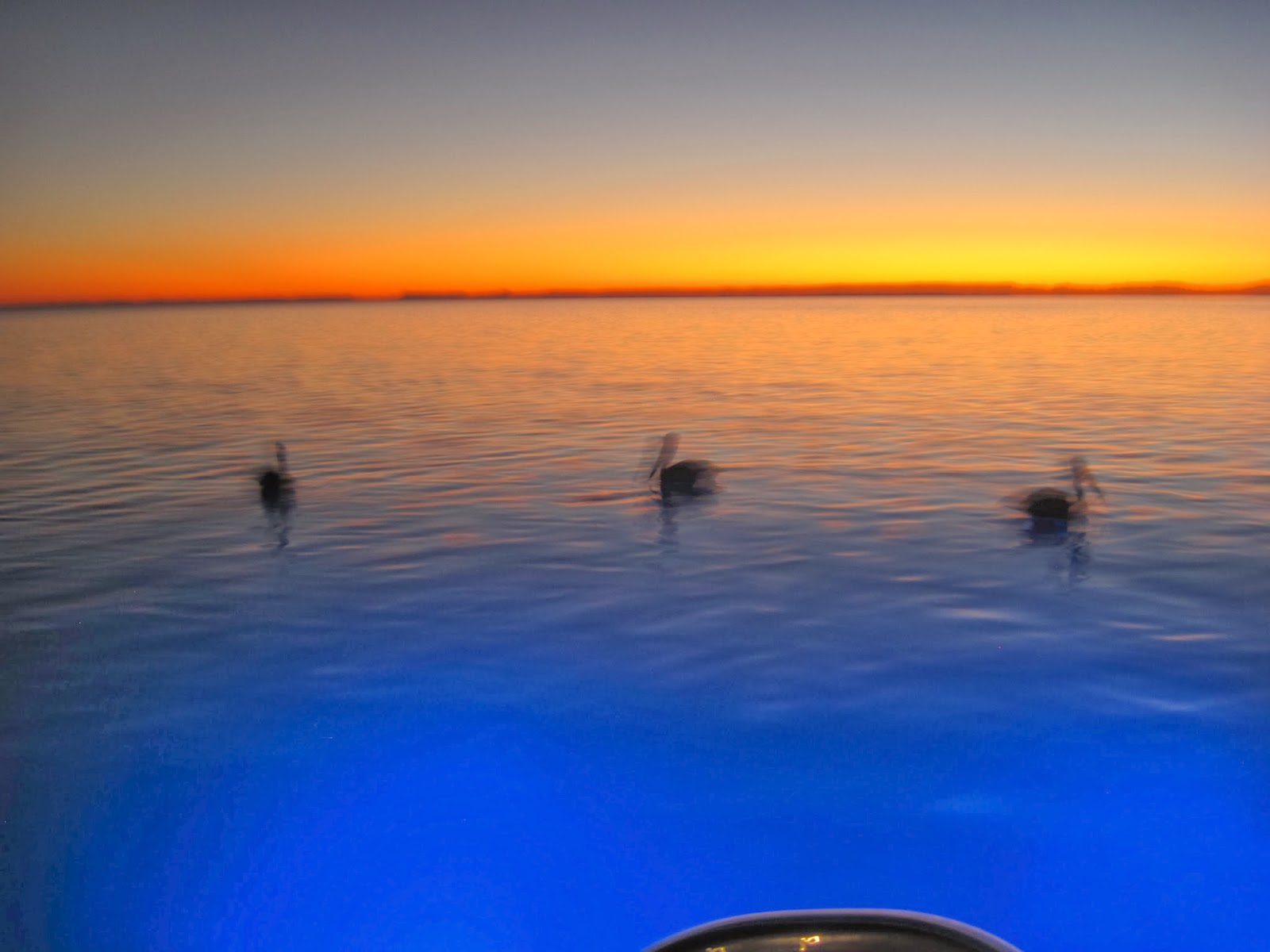 |
| Pelicans waiting to feed at our lights |
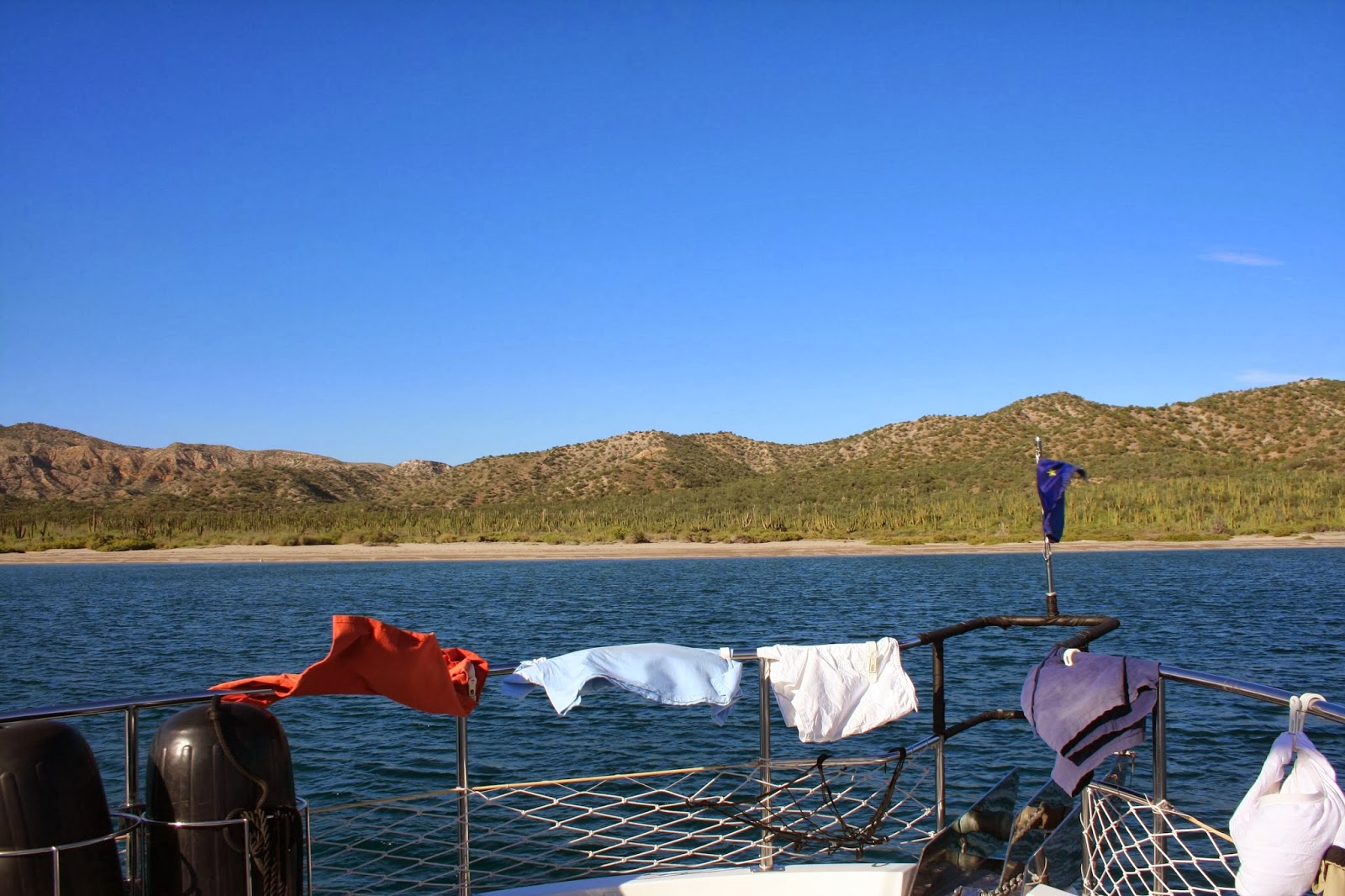 |
| Laundry day |
 |
| Wasn’t Becky’s larger? |
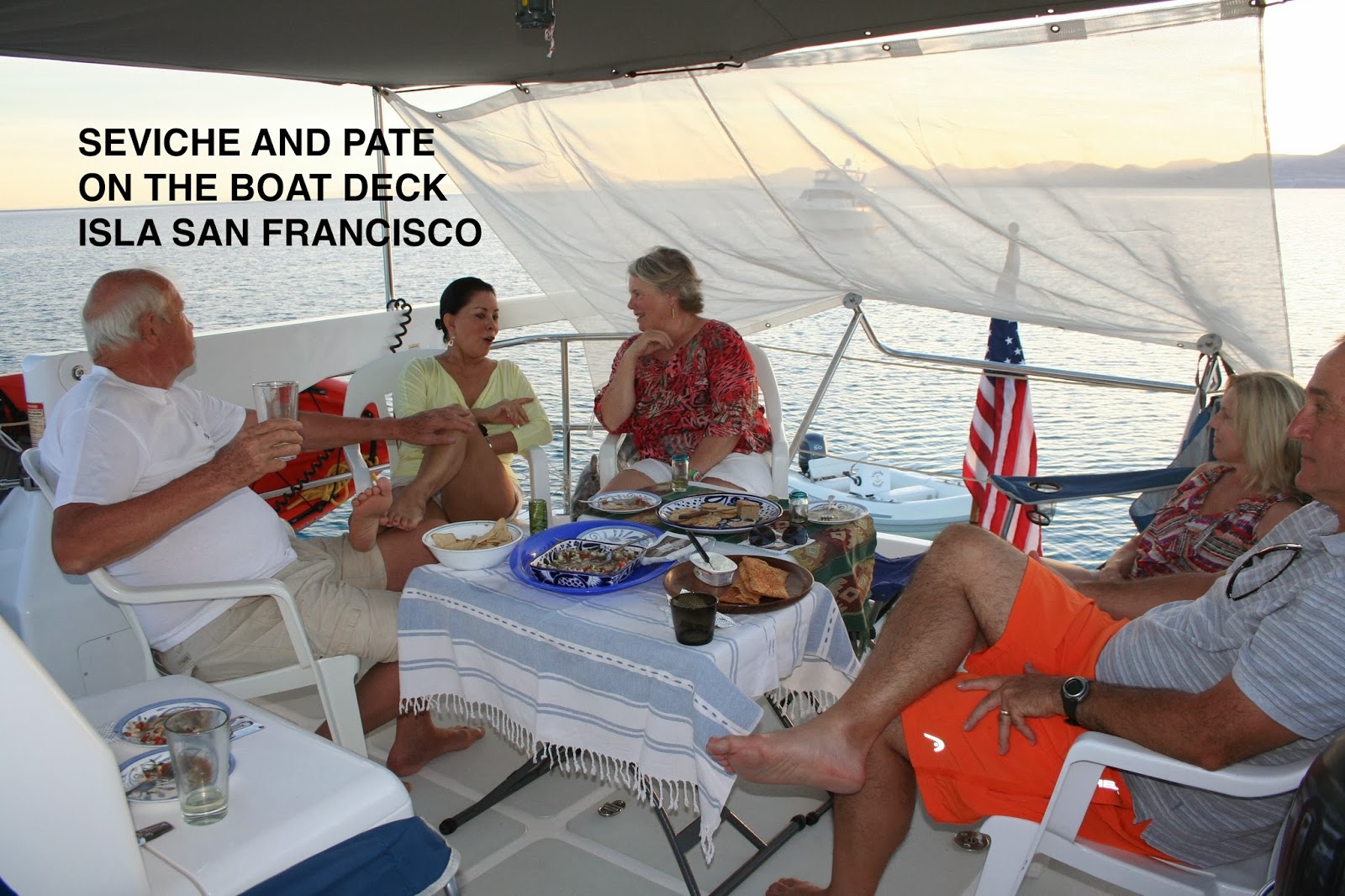
We got
into the anchorage around 4:30, with just enough time for a swim before John
and Maria Luisa came over from the Viking Spirit for dinner. Our boat is not
really big enough for 6 comfortably at the table, so we had a picnic style
evening on the boat deck under Earl’s pavilion.
Scallop ceviche and pate, followed by fabulous (if I do say so) Thai
chicken curry and rice, topped off with vanilla ice cream and baileys. A hard life, but someone has to do it!
into the anchorage around 4:30, with just enough time for a swim before John
and Maria Luisa came over from the Viking Spirit for dinner. Our boat is not
really big enough for 6 comfortably at the table, so we had a picnic style
evening on the boat deck under Earl’s pavilion.
Scallop ceviche and pate, followed by fabulous (if I do say so) Thai
chicken curry and rice, topped off with vanilla ice cream and baileys. A hard life, but someone has to do it!

The
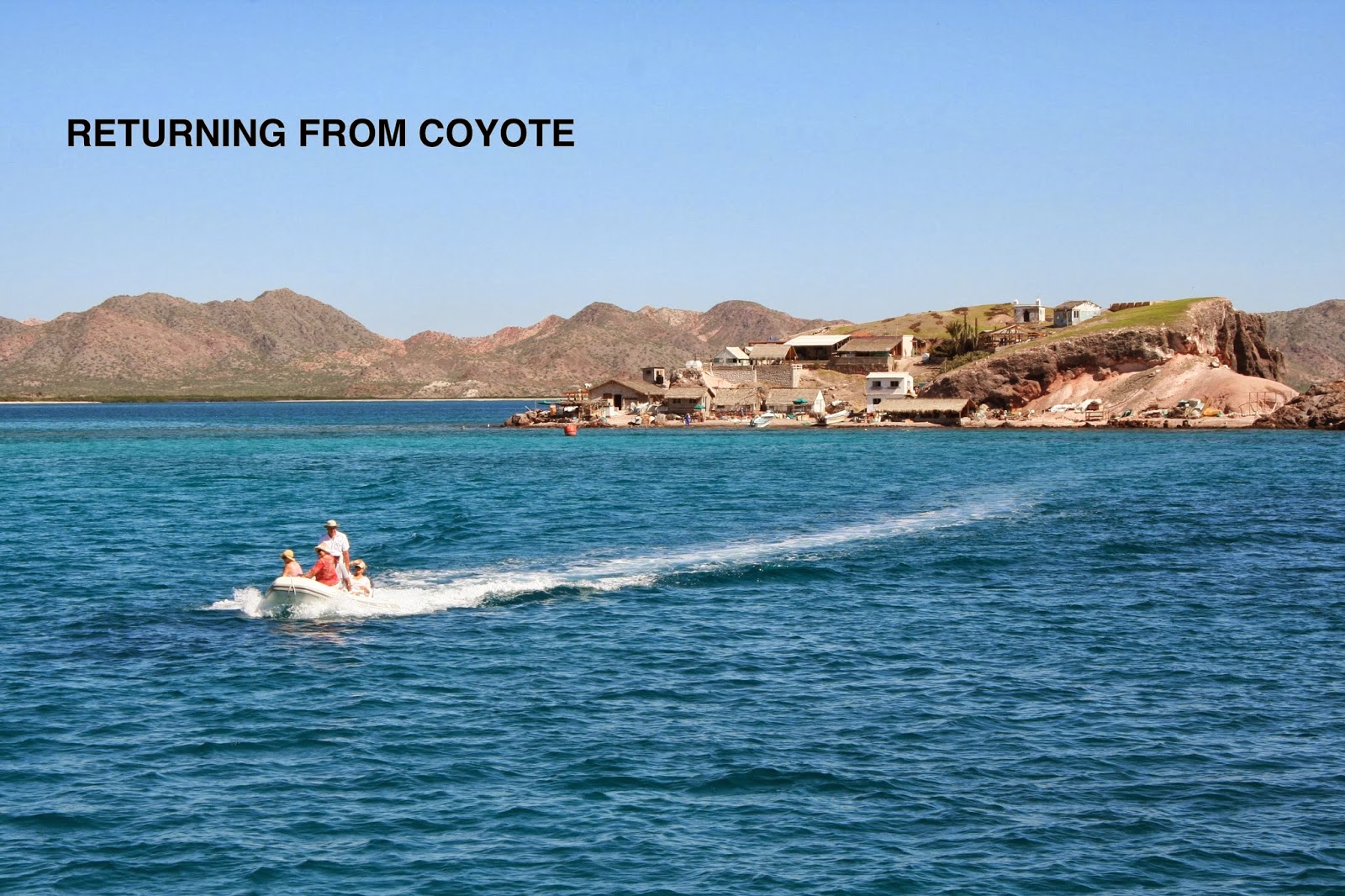
next day John and Marie Luisa took us in their big dingy to Isla Coyote, which
I have long wanted to visit, but Earl always had some reason not to go. It is a rock on which there are few
houses. The families there live off of
fishing and the sale of some really lovely shell necklaces. Up until a few days before our visit, one of
the sights was a collection whale bones – whole skeletons as I understand. Sadly, just a few days before our visit a
bunch of Mexican marines came to the island and took all the bones, some of
them 40 + years old. The locals suspect
that they were taken to be sold. It is
very sad. These people have so little
and they were very proud of these whale bones.
next day John and Marie Luisa took us in their big dingy to Isla Coyote, which
I have long wanted to visit, but Earl always had some reason not to go. It is a rock on which there are few
houses. The families there live off of
fishing and the sale of some really lovely shell necklaces. Up until a few days before our visit, one of
the sights was a collection whale bones – whole skeletons as I understand. Sadly, just a few days before our visit a
bunch of Mexican marines came to the island and took all the bones, some of
them 40 + years old. The locals suspect
that they were taken to be sold. It is
very sad. These people have so little
and they were very proud of these whale bones.
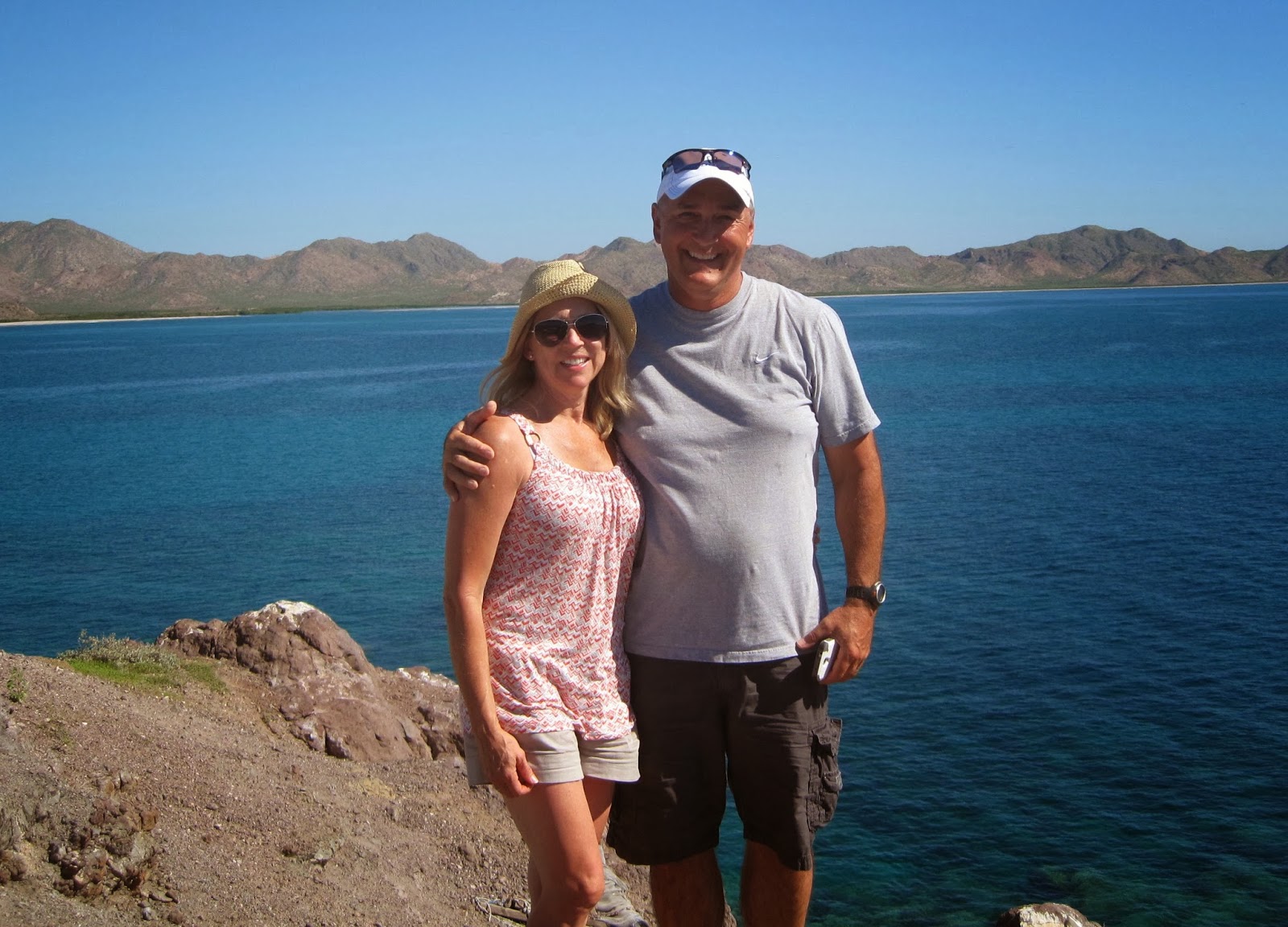 |
| Jon and Becky atop Isla Coyote |

 |
| Coyote fisherman and crab |
After
our visit to Coyote, we fished east of Isla San Jose for 4 hours, but caught
nothing. Back to Isla San Francisco,
this time to the northeast side, for the night.
The kids explored the beach and Earl and I swam before going over to the
Viking Spirit for dinner with John and Marie Luisa. As usual, it was wonderful. John’s specialty is huge, half pound, beef filets
accompanied by equally large baked potatoes and masses of butter. It was delicious. I am ashamed to say, I ate all of mine.
our visit to Coyote, we fished east of Isla San Jose for 4 hours, but caught
nothing. Back to Isla San Francisco,
this time to the northeast side, for the night.
The kids explored the beach and Earl and I swam before going over to the
Viking Spirit for dinner with John and Marie Luisa. As usual, it was wonderful. John’s specialty is huge, half pound, beef filets
accompanied by equally large baked potatoes and masses of butter. It was delicious. I am ashamed to say, I ate all of mine.
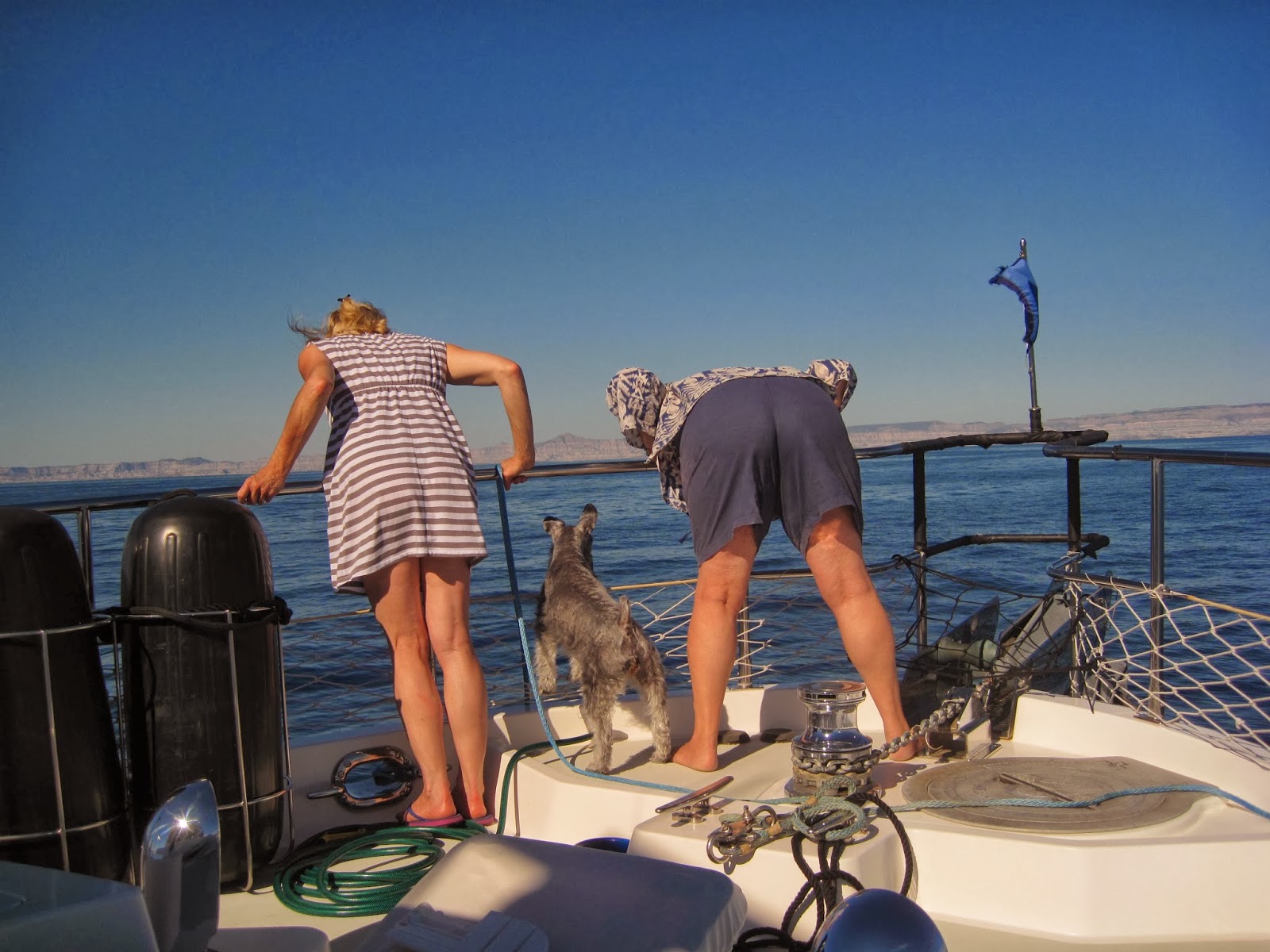 |
| Three ladies watching dolphin |
The
next day we decided to make one last attempted to get some big fish for
Jon. We ran quite far off shore to a
underwater sea mount that is known for good fishing. It worked.
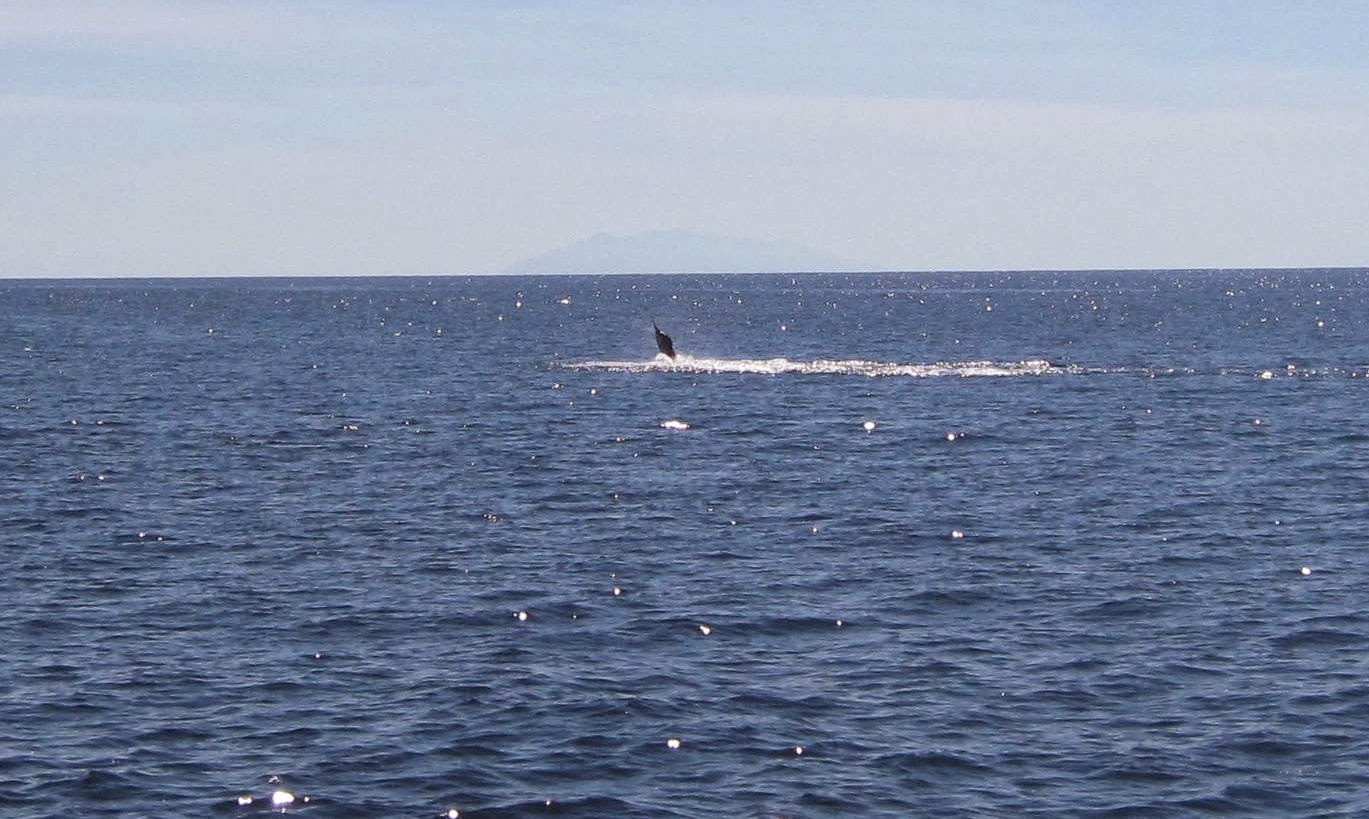
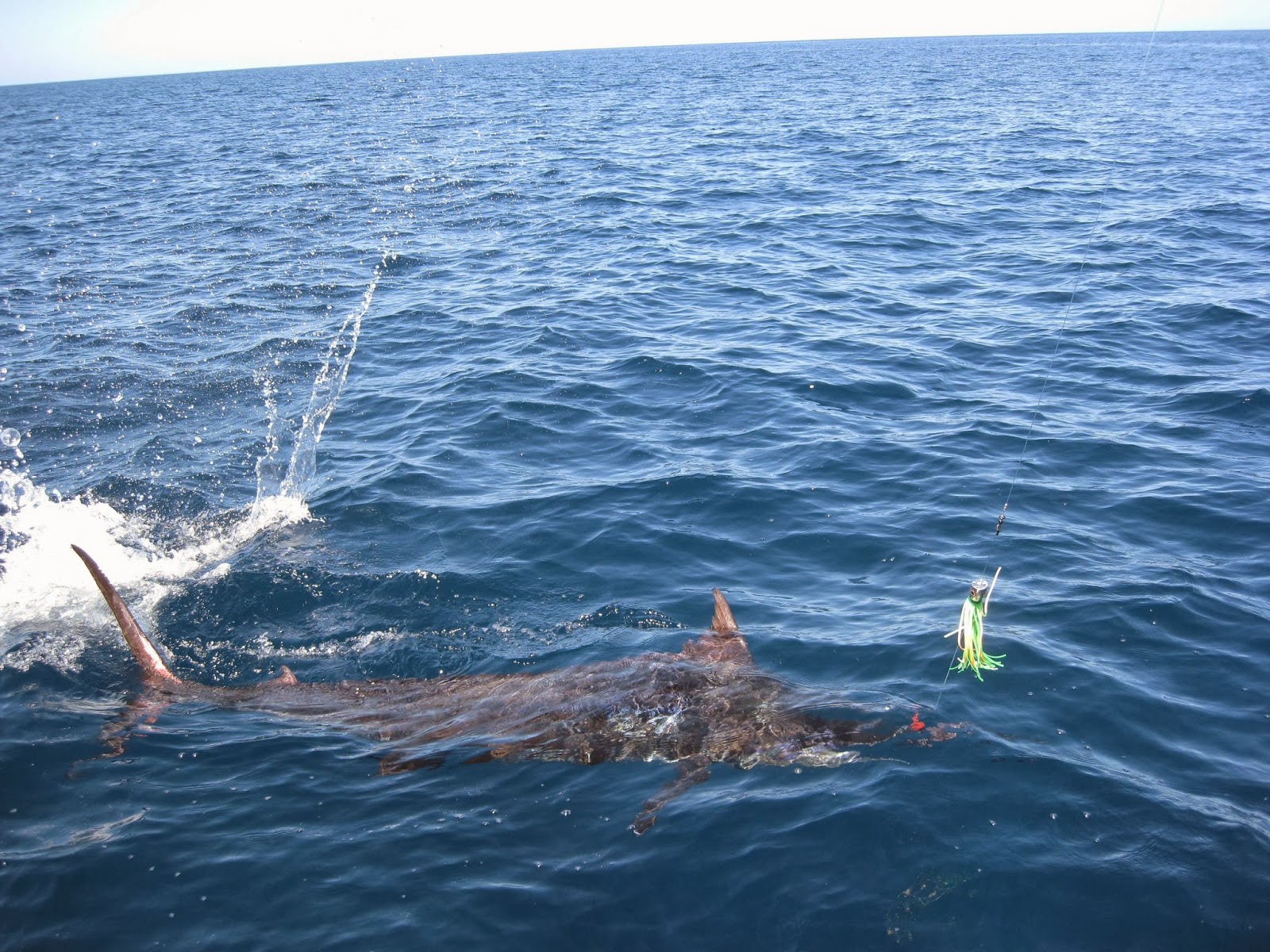
Actually everything worked, the seas, the fish, the fisherman etc. John hooked a large marlin. We guess over 300
pounds. It was everything it should be,
fighting, jumping and wonderful. It left
John exhausted and in seventh heaven. Not
very long after, he caught another smaller marlin. We pulled into Ensenada Grande around 6:30
and collapsed into the water. It was a
wonderful day.
next day we decided to make one last attempted to get some big fish for
Jon. We ran quite far off shore to a
underwater sea mount that is known for good fishing. It worked.
Actually everything worked, the seas, the fish, the fisherman etc. John hooked a large marlin. We guess over 300
pounds. It was everything it should be,
fighting, jumping and wonderful. It left
John exhausted and in seventh heaven. Not
very long after, he caught another smaller marlin. We pulled into Ensenada Grande around 6:30
and collapsed into the water. It was a
wonderful day.

 |
| Marlin jumping |
 |
| Marlin by the swimstep |
The
next day, we all decided there would be no fishing. The kids went for a kayak ride – Becky’s
first – while we stayed on the boat and took multiple swims. It was Saturday and a good number of boats
came and anchored. We decided it was too
crowded and headed south to San Gabriel for our last stop. It was much more private and Jon and Becky
enjoyed a long kayak around the bay. The
high point may have been the discovery of a treasure trove of shells, some of
which they have taken home to Oregon.
next day, we all decided there would be no fishing. The kids went for a kayak ride – Becky’s
first – while we stayed on the boat and took multiple swims. It was Saturday and a good number of boats
came and anchored. We decided it was too
crowded and headed south to San Gabriel for our last stop. It was much more private and Jon and Becky
enjoyed a long kayak around the bay. The
high point may have been the discovery of a treasure trove of shells, some of
which they have taken home to Oregon.
 |
| Kayaking at Ensenada Grande |
Sunday
morning we headed back to the marina.
Jon and Earl stayed at the boat while Becky and I went to refresh our
provisions. By this time we had no eggs,
no oranges, no onions, no tomatoes, no fruit, and almost no vegetables. We had been given only an hour to shop, so we
were very efficient and managed not only to get groceries but also to stop by
Ibarra’s pottery to get some bowls for Becky to bring home. We got home in time for lunch at the golf
club as promised, only to find that we had changed from daylight savings time
that morning and it was consequently only 11 am. We must have looked tragic, because they
agreed to serve us lunch instead of breakfast.
Later that afternoon, Becky and I hit the public market for ‘princess
dresses’ for Becky’s granddaughters and did some other souvenir shopping. It was very successful shopping. The day was finished by a wonderful dinner at
Azul.
morning we headed back to the marina.
Jon and Earl stayed at the boat while Becky and I went to refresh our
provisions. By this time we had no eggs,
no oranges, no onions, no tomatoes, no fruit, and almost no vegetables. We had been given only an hour to shop, so we
were very efficient and managed not only to get groceries but also to stop by
Ibarra’s pottery to get some bowls for Becky to bring home. We got home in time for lunch at the golf
club as promised, only to find that we had changed from daylight savings time
that morning and it was consequently only 11 am. We must have looked tragic, because they
agreed to serve us lunch instead of breakfast.
Later that afternoon, Becky and I hit the public market for ‘princess
dresses’ for Becky’s granddaughters and did some other souvenir shopping. It was very successful shopping. The day was finished by a wonderful dinner at
Azul.
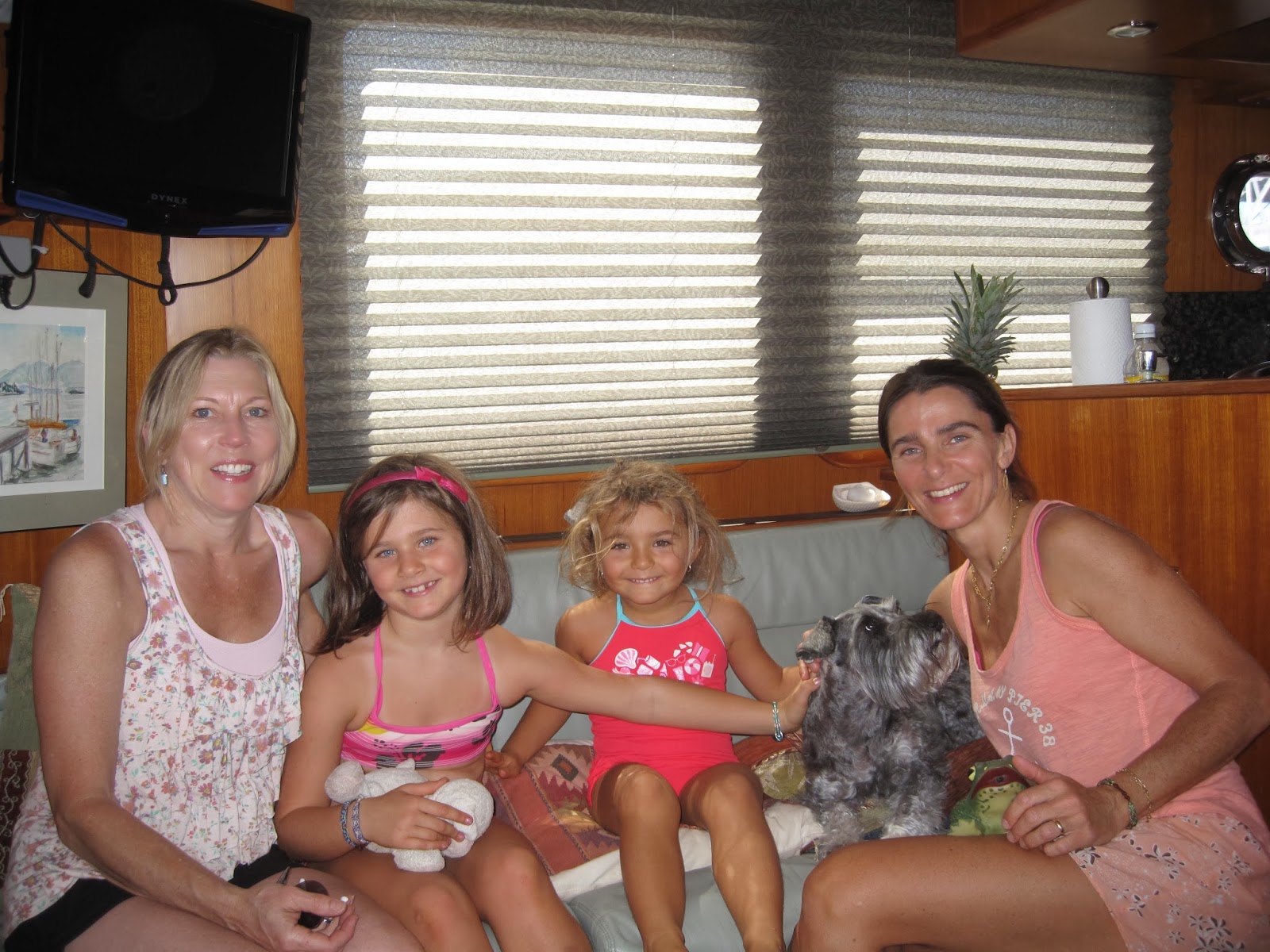 |
| Our pretty neighbors – Giada and Alba – who love Daisy |
Monday,
the last day, Becky and Jon spent mostly at the beach club, catching more sun
and some swimming in the infinity pool.
We broke long enough to get real Mexican food at Rancho Viejo for lunch. That night, the kids went to eat sushi – Earl
and I were still full from the past few meals and stayed home. Then sadly the next morning the taxi came to
take them back to the airport after a wonderful time for all four of us.
the last day, Becky and Jon spent mostly at the beach club, catching more sun
and some swimming in the infinity pool.
We broke long enough to get real Mexican food at Rancho Viejo for lunch. That night, the kids went to eat sushi – Earl
and I were still full from the past few meals and stayed home. Then sadly the next morning the taxi came to
take them back to the airport after a wonderful time for all four of us.
October 31 – Marina Costa Baja
We arrived in Cabo on October 1 and rented a car for the drive to La Paz. We made a quick stop at Costco on the way. I forgot to buy coffee, which I remember too late was excellent, but we picked up some beautiful U S New York …
