
From the Washabuck River we travelled south through the Barra Strait to spend a couple of days in and around Denys Basin. The current can reach several knots in the Barra Strait narrows, so we left the anchorage at Washabuck River to time our arrival for slack water mid-tide. The Grand Narrows Railway bridge in…
Tag Archives | Nordhavn
Sometimes Your Luck Runs Out
So to hedge our bet, this crew is going to spend a few days on the West Coast of Florida on a business trip.

Sarasota has always been one of our favorite places.

Luckily, (we hope) Istaboa is high and dry, on the hard, at Hinckley Yachts in Port Salerno. She’s inside a building, being painted as well as a sundry of other items being done to her.
We feel fortunate as we see the many boats at Old Port Cove scurrying around in order to find shelter. North Palm Beach Marina is full as I’m sure every other official Hurricane Hole in the area is.
This is a serious storm. We’ve never been forced to deal with such. So we’re buttoning up our little house on Spearfish and crossing our fingers in hopes all will still be here when we return.
We’re still clinging to both optimism and cynicism — Maybe Matthew will head east — Maybe it’s media hyperbole — But, maybe not.
Guess we’ll know in a few days.
Wish us all luck, please.
In the left hand corner of this blog is our Old Port Cove Weather Station. This will be functional as long as there’s power and internet. Real Time Weather for OPC.
Nordhavn Exumas Abacos Bahamas trawler Caribbean Pickwick Boat dogs
Memphis Downtown
Memphis Downtown
CRUISING TO HISTORIC SOUDHA BAY
CRUISING TO HISTORIC SOUDHA BAY
Envoy is currently anchored at Mourtos on the Greek mainland opposite Corfu with my brother Charles aboard.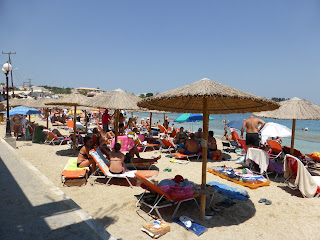





Envoy is currently anchored at Mourtos on the Greek mainland opposite Corfu with my brother Charles aboard.
It’s great to visit destinations we missed during 2010 and we find one in Agia Pelagia – a spectacular beach in a great setting though ridiculously crowded ashore. We’re the only boat anchored here but like some other beaches an irritation is high-powered sports boats towing skiers, banana boats etc. To be fair they only seem to operate from about midday to 1700 (a good time to be ashore!) and the rest of the time is peaceful at anchor.
Agia Pelagia’s crowded narrow beach

At this location, like many, it’s difficult to find a place to put the RHIB when going ashore, but a fisherman kindly offers us a place and helps us moor alongside his boat.
Our RHIB is moored alongside a fishing boat in Agia Pelagia
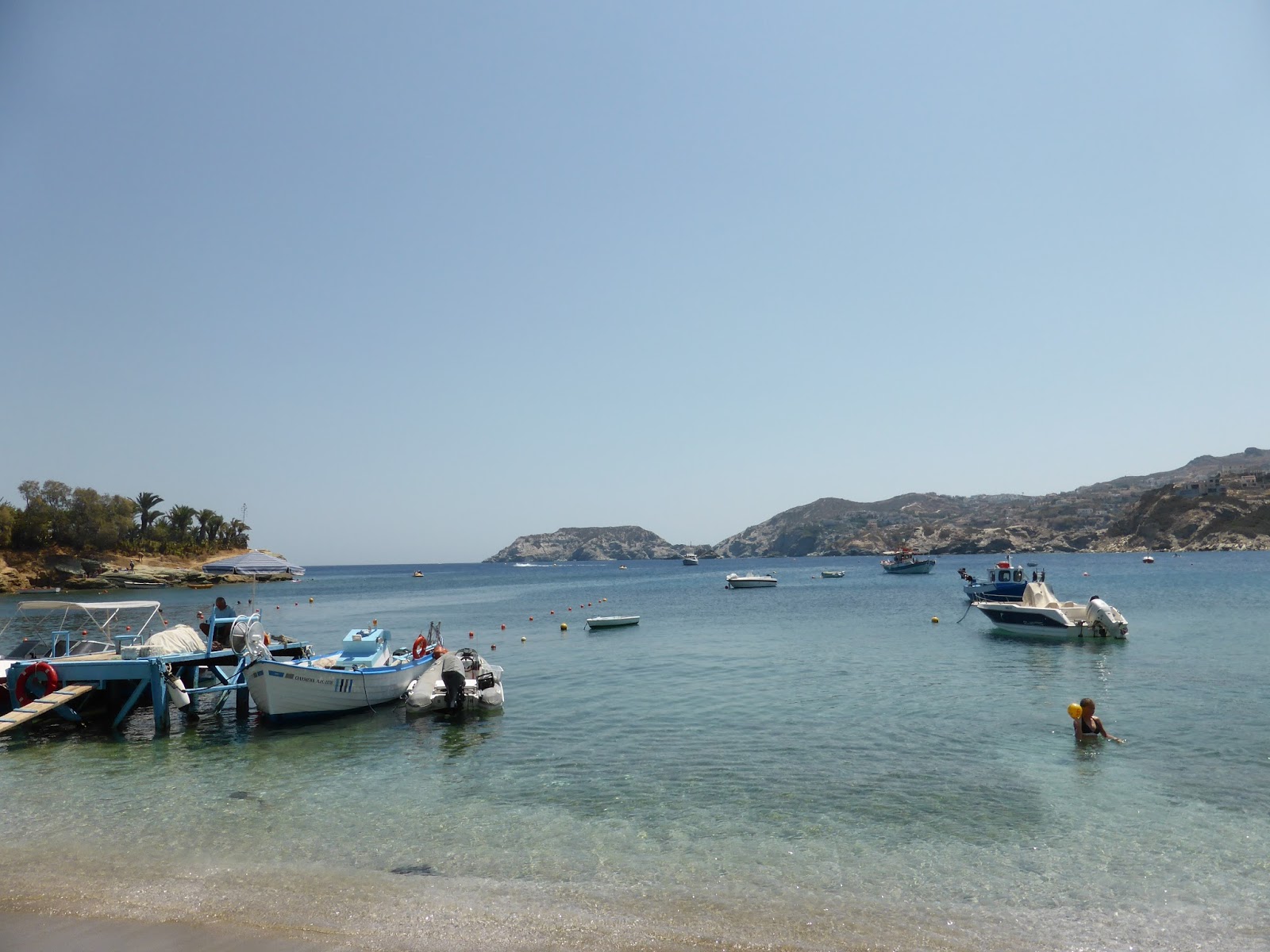
The taverna owners tell us the tourists are mainly Greek on package tours and not spending much money. Many don’t have much to spend with the austerity measures, a 25 year-old qualified nurse saying she’d changed to waitressing as her nurse’s wages had reduced to 400 Euros (about NZ$670) per month – extremely low even per week. Her husband, a plumber, was told by his employer that he’d get paid when he could afford to pay him.
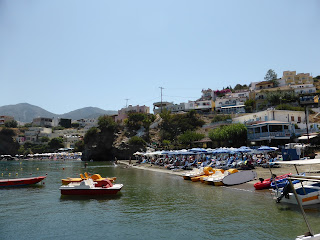
Next day we move further west to the small town of Ormos Bali, where often too much swell prevents anchoring but we find it calm this time and with no sports boat activity – bliss!
Ormos Bali’s beachfront

Ormos Bali viewed from Envoy at anchor

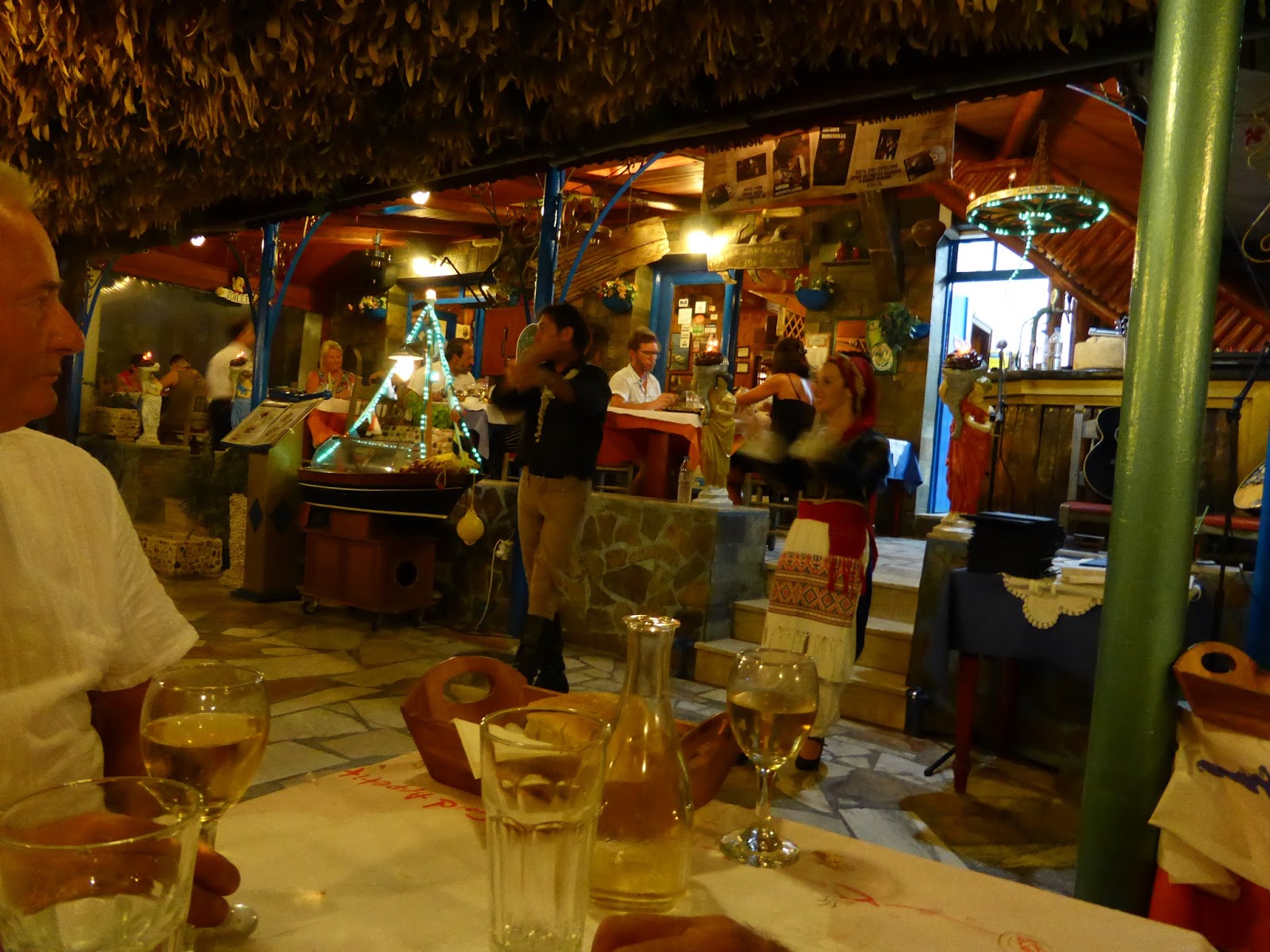
Later we have dinner ashore to the sound of live Greek music and traditional dancing, though the two performers seem mostly intent on getting the diners up to dance with them.
Dancers in traditional Cretan costumes
Like most overnight stops so far free fresh water is available from the small craft jetty and we replenish Envoy’s tanks using our portable containers and Chris’s pump.
One of our favourite destinations of all time is Ormos Milati on the northern side of the mouth of famous Soudha Bay, protected from all except rare easterlies and it’s here we anchor next.
Although it’s one of the best anchorages on the coast we’re the only boat anchored here. Ashore are excellent sandy beaches with clear water, although in typical Greek style large portions of the beach are covered with deck chairs and umbrellas. Here we have the first rain shower in many weeks.
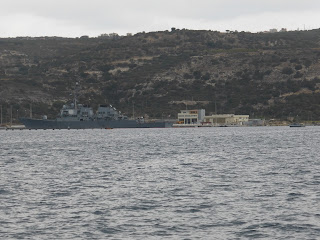
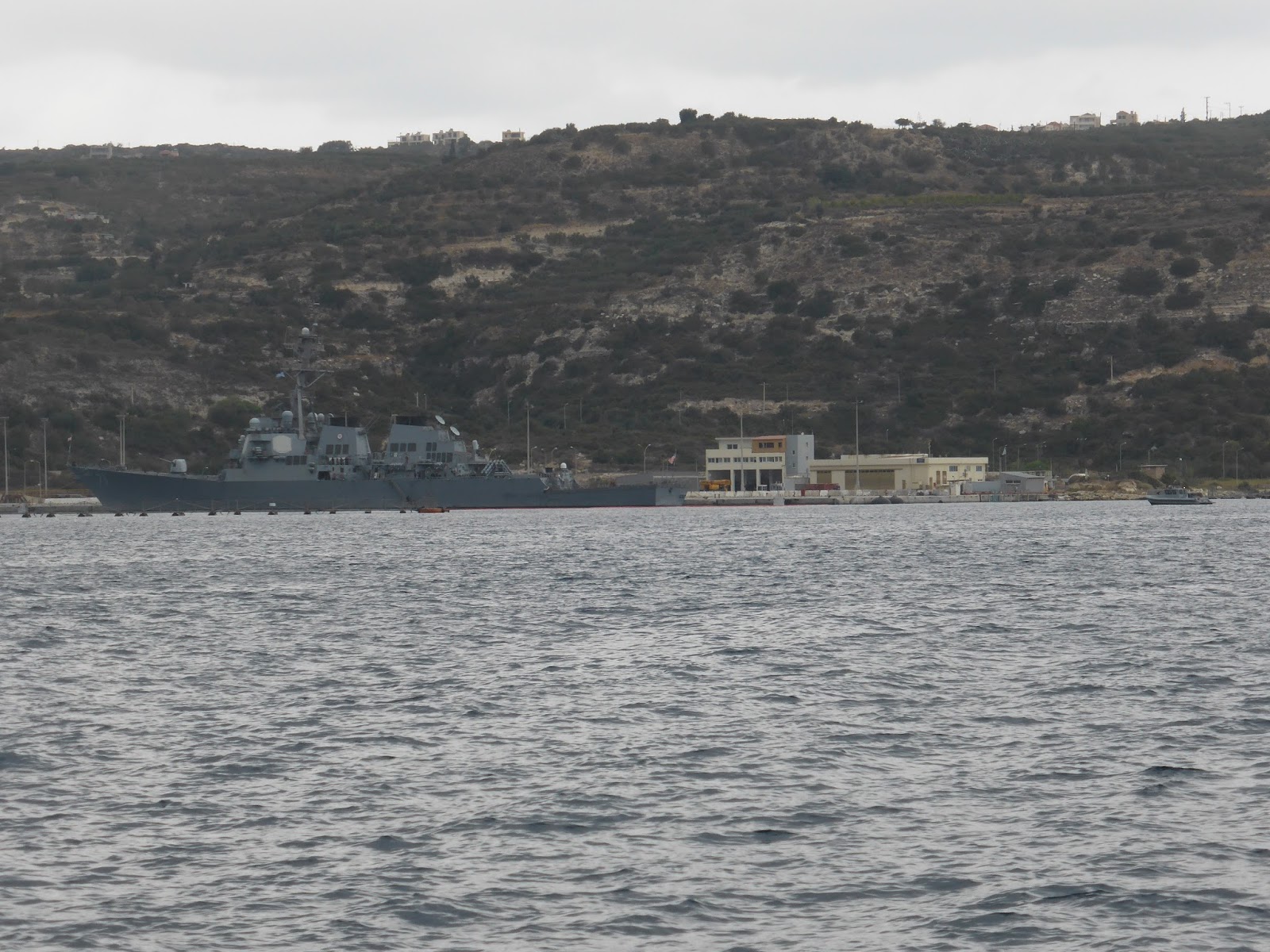
Soudha Bay itself is a four-mile long sheltered inlet running east-west containing a NATO naval base and the town of Soudha and a NATO naval base where we see several warships including a submarine. Tight security reigns here and armed patrol boats guard the warships. At one stage we approach too closely and a patrol boat roars over with blue lights flashing and siren sounding and instructs us to move further away.
Warship anchored in Soudha Bay
Artillery on the headland above the bay’s entrance still provides protection.
There is also a military airfield nearby, and jet fighters regularly roar over our heads.
During WW2 the Allies suffered heavy losses of ships in Soudha Bay at the hands of German bombers.
At the head of the bay is an Allied war cemetery, beautifully maintained in a wonderful setting, with the graves of 446 New Zealanders, mostly aged in their 20s, along with a lesser number of Australians who died during the German invasion of Crete.
Soudha Bay’s Allied war cemetery with Envoy anchored in background

The war graves are perfectly maintained and cared for

Although the battle was lost a big contribution to the war effort was made because the German paratroops were so decimated that Hitler never used them again. Also the invasion of Russia was delayed due to heavy German casualties in Crete, resulting in the freezing Russian winter taking a heavy toll and contributing to the eventual annihilation and capture of the German forces at Stalingrad – a critical turning point in WW2.
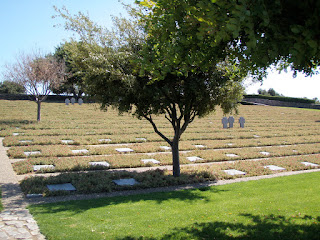
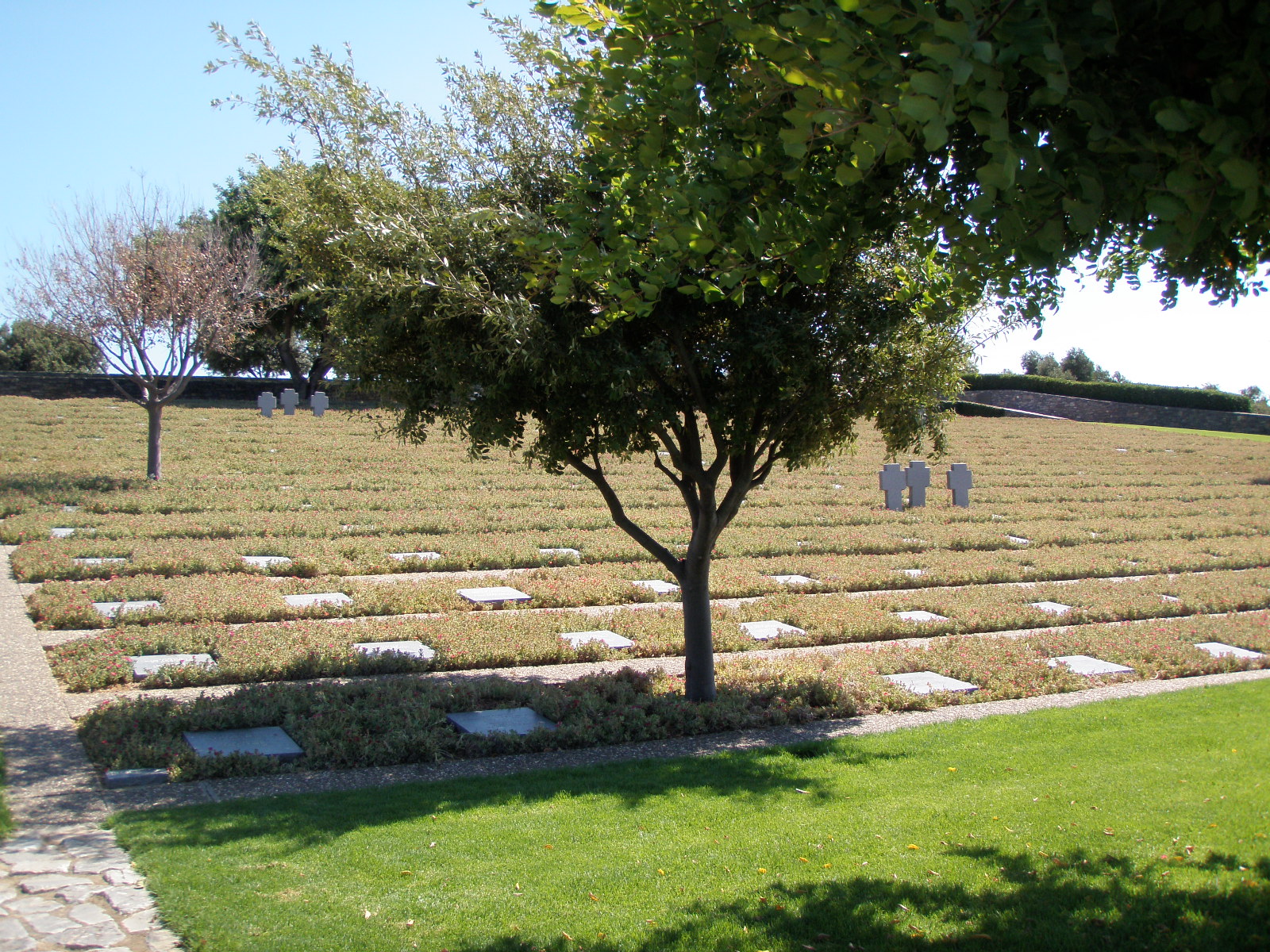
We also visit the German War Cemetery at Maleme, the scene of some of the fiercest fighting of the Battle of Crete. This is located on Hill 107 overlooking the airfield, and held by New Zealanders. They were decimating the German paratroopers on the airfield below until German aircraft arrived and wiped out most of the Kiwis. The cemetery is well designed and maintained, containing the remains of 4,460 young German men, disinterred from about 60 graveyards around Crete to be finally laid to rest in one location. It is typical of the generosity of the Cretans, that despite the appalling atrocities of the German soldiers to civilians during their occupation, they donated the land for the cemetery.
The German cemetery with Maleme airfield in background
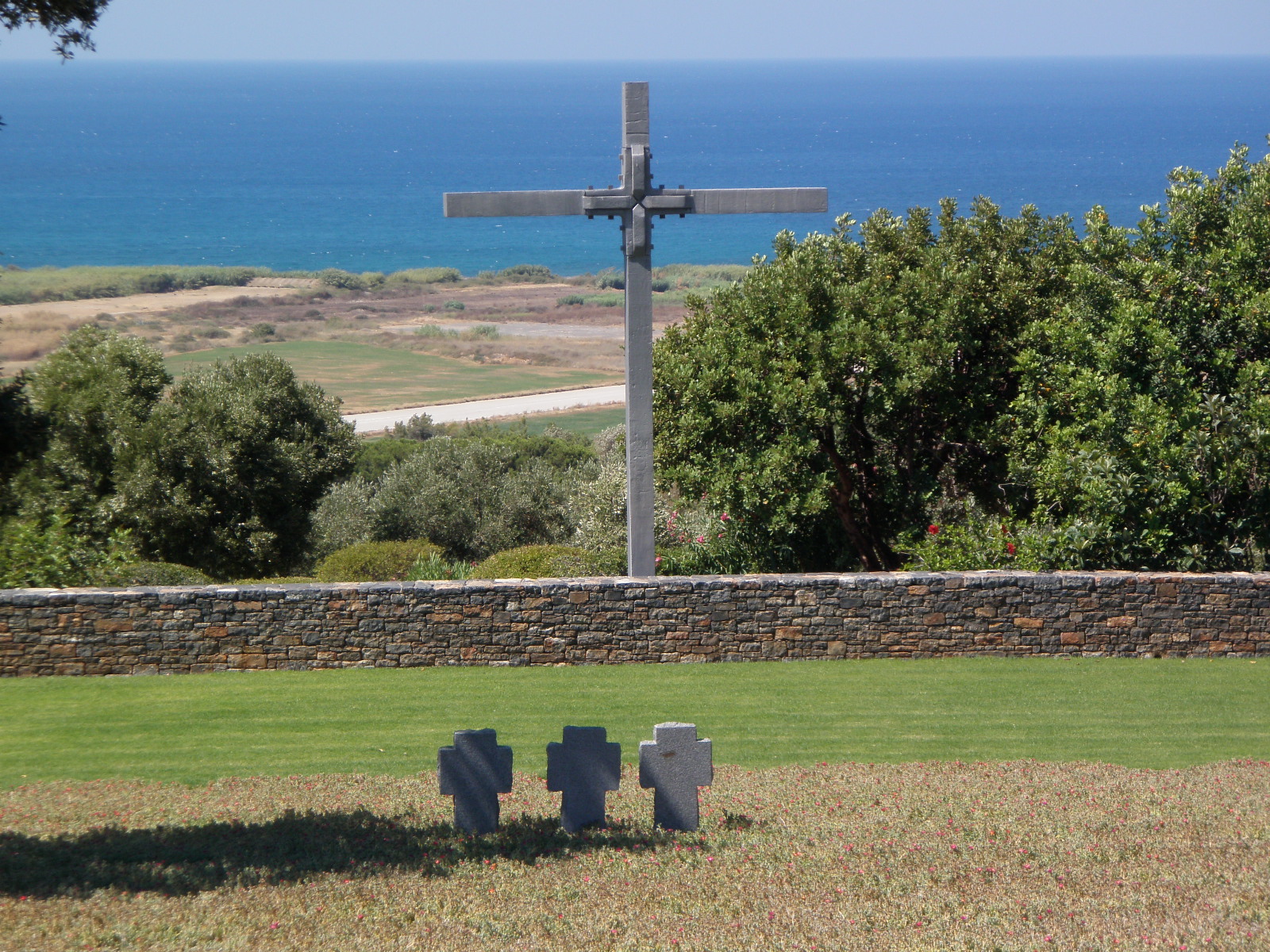
The German graves are also in a peaceful and cared for setting
The Cretans fought very fiercely and bravely against the German occupiers eventually forcing them to retreat to the town of Chania, where they remained under virtual siege until surrendering to the British forces (not wanting to risk their chances with Cretan partisans) before the final collapse of Germany.
Washabuck River
We’d never seen flocks of eagles before, but that was practically the scene at Indian Island at the head of Wyhcocomagh Bay. We anchored in the pristine Washabuck River and ran the tender twenty-five miles up Wyhcocomagh Bay. As we rounded the southwest point of Indian Island, we saw an eagle in a tree, then…
AGIOS NIKOLAOS
Envoy is currently anchored off the northern coast of Corfu Island.


In Crete it’s just a short cruise from Spinalongas to the marina at Agios Nikolaos where we’re berthing Envoy for a few days to do some inland touring with Sharon, Doug and our daughter, Amy (who has flown in from London for a long weekend).
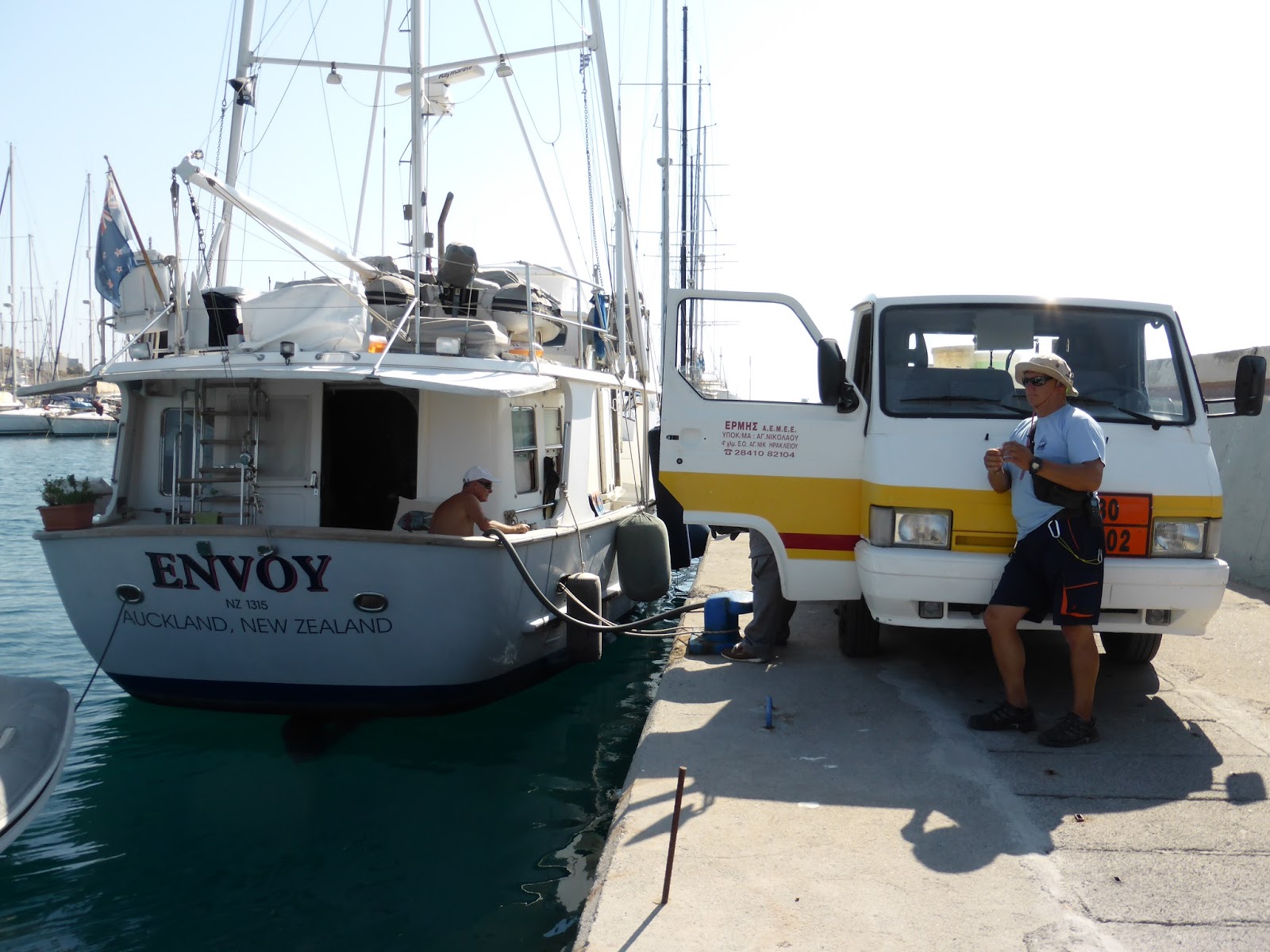
Here is the furthermost point we’ll be from our home base at Lefkas and we take on 1,500 litres of diesel from a tanker that pulls alongside costing 1.10 Euros (about NZ$1.83) per litre. This sounds like a lot of fuel but will enable Envoy to cruise more than 1,200 miles at our average consumption of 6-8 litres per hour.
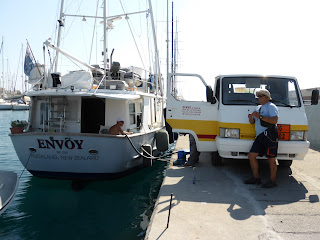
Fuel tanker refuelling Envoy
We spend a day visiting some inland mountain villages and the Lasithi Plateau – an extremely fertile large green plain surprisingly located 900 metres high in the hills and where all manner of produce is grown. Water for cultivation used to be lifted from bores using windmills, in fact about 7,000 were constructed during the 17th century, some still used today.
The villages are exactly as you might picture them – narrow winding streets, where a car has to pull over to let an oncoming car through, ancient, rustic buildings, mostly in a poor state of repair and some derelict, peeling paint in white and blue, old men with waistcoats and moustaches sitting outside small tavernas looking up with interest as a car passes to ease their boredom, elderly hunched-over women dressed totally in black.
We stop at a taverna for a great lunch of roast wild pork with home-grown potatoes and vegetables followed by the inevitable free dessert of fresh fruit.
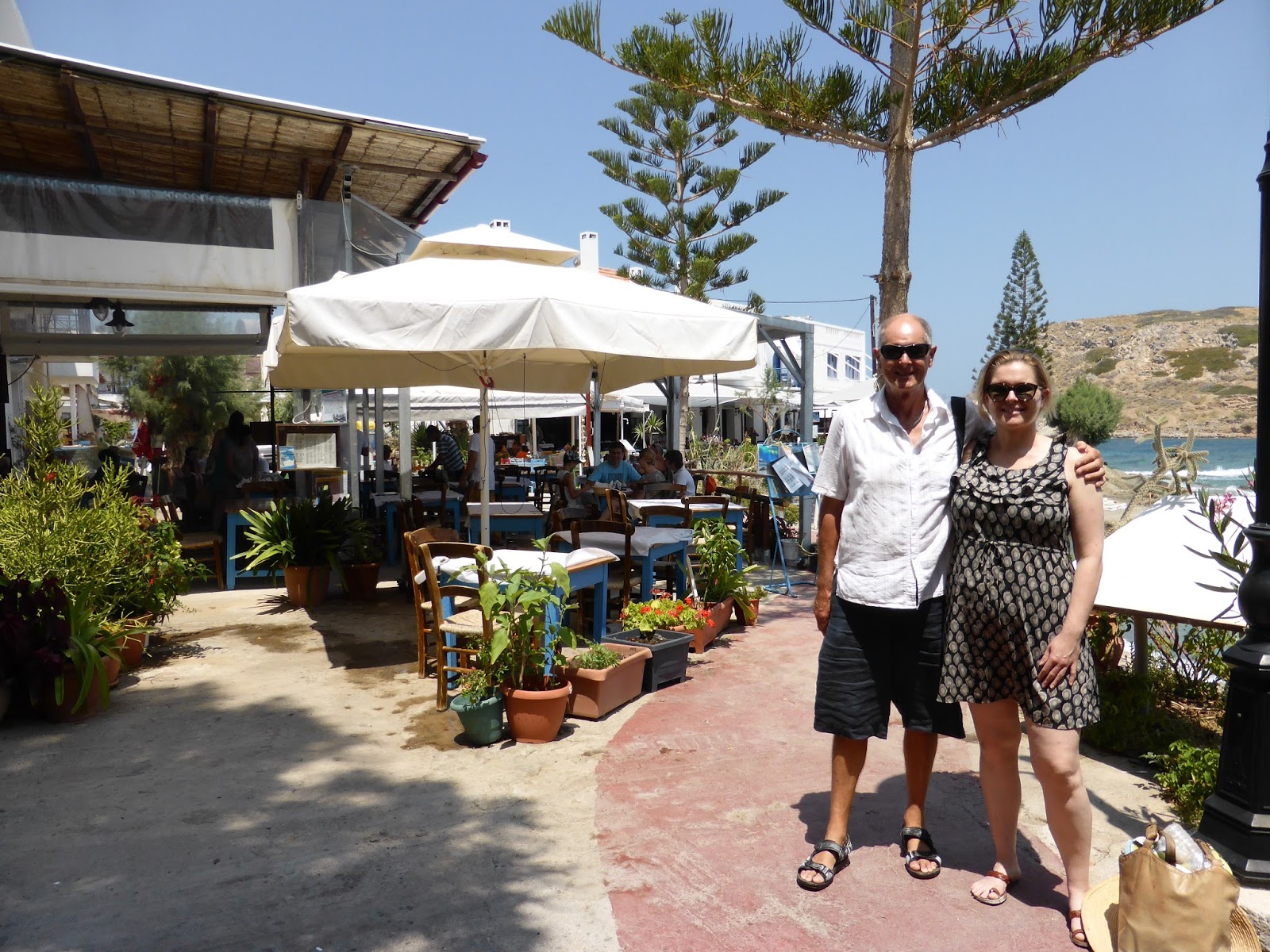
Next day we drive to Mochlos, a fishing village turned swimming beach surrounded by tavernas but retaining some natural charm, tranquility and character. Mochlos beach has several atmospheric tavernas
Laurie and Amy at Mochlos
Mochlos Beach

Agios Nikolaos itself is a great place to visit and we enjoy strolling through the many lanes, and sitting in waterfront tavernas watching the world go by.
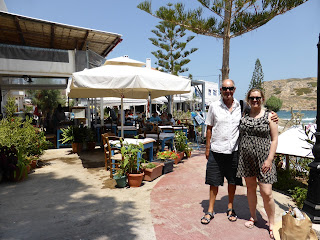
Doug, Sharon, Amy and Laurie enjoy evening drinks in a taverna at Agios Nikolaos

Here we also visit the Port Police to provide a new Crew List, required when different visitors (crew) join the vessel. There used to be a requirement to report to the Port Police in every port or marina you visit (except when anchoring), though this need has been abolished.
There are very few areas to anchor on Crete’s north coast offering good shelter, because the “Meltemi” wind is consistently from the NW or N generating a one to two metre swell. The coast is roughly 140 miles from east to west, but there are only about six harbours or marinas and five good most weather anchorages along its entire length. There are many more very small, shallow sheltered bays suitable for use by small shallow draught boats , but not for visiting cruising boats.
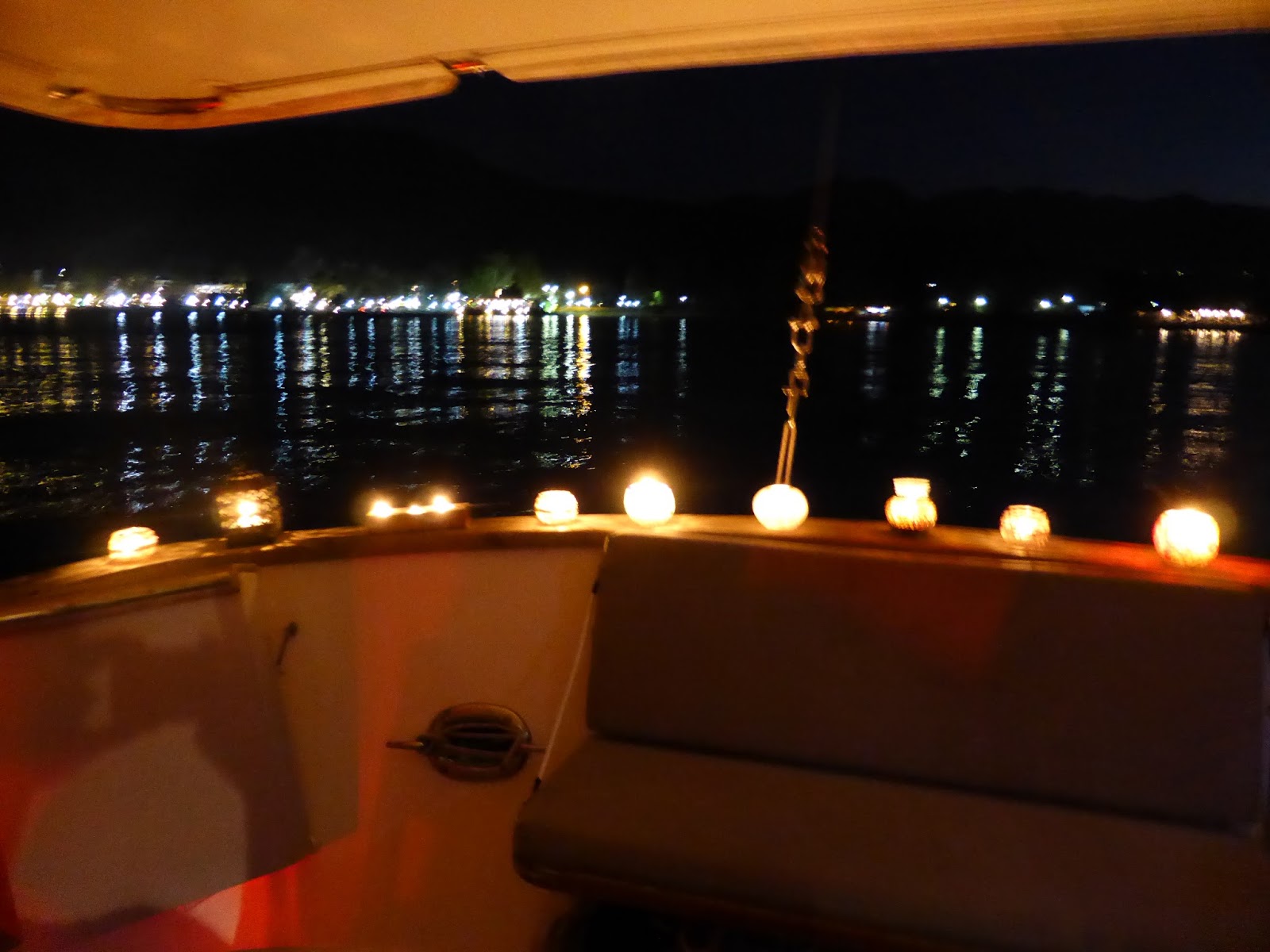
A BBQ by candlelight in Envoy’s cockpit
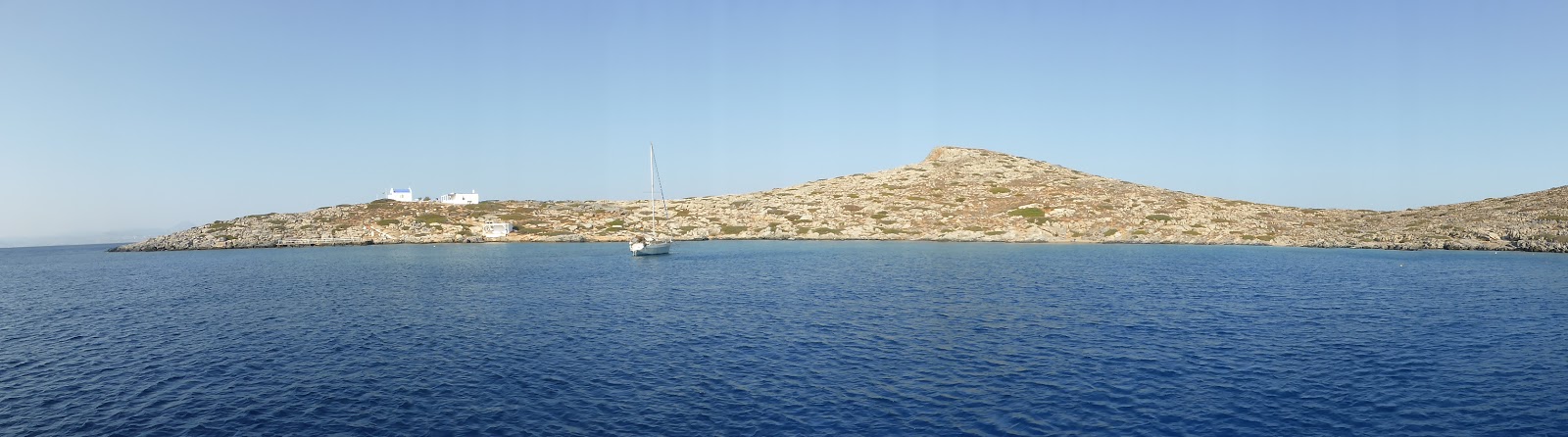
From Agios Nikolaos we cruise for about seven hours to the island of Nisos Dhia, correctly described as “bleak” in the Cruising Guide, though two south-facing bays offer reasonable shelter from the predominant northerly wind. We have a 20 knot headwind, choppy sea on the bow and easterly current reducing our speed to about 4.8 knots most of the way before sharing our anchorage with just two yachts and a fishing boat.
Anchorage at Nisos Dhia
Sydney
Despite 1) falling rain, 2) a forecast for thunderstorms, 3) an exposed run through the edge of the North Atlantic 4) uncertainty about anywhere to land the tender, and 5) a potentially difficult re-entry to Little Bras d’Or channel into a strong ebb current against a freshening northerly wind, the shorter and admittedly slightly more…
Baddeck
Baddeck is the largest town on the Bras d’Or Lakes and is famous for once being home to inventor Alexander Graham Bell. We very much enjoyed this traditional maritime town with its strong Scottish heritage and the excellent Alexander Graham Bell museum. Trip highlights from August 30th and 31st follow. Click any image for a…
Newfoundland to Nova Scotia
From Newfoundland we made a 150-nm, 24-hour passage to Bras d’Or Lake in Nova Scotia. In addition to looking for a good weather forecast for the run across Laurentian Channel between Newfoundland and Nova Scotia, we also needed to time our arrival at the entrance channel, Great Bras d’Or. The current at the narrow north…
THE ISLAND OF THE LIVING DEAD
Envoy is currently anchored off the Greek mainland village of Parga in the northern Ionian with our Australian friends Simon and Bronwyn aboard.




After a cruise of about 65 miles taking 12 hours from Santorini in great conditions seeing only a few ships on the horizon along the way we arrive at the fascinating lagoon of Ormos Spinalongas in north-east Crete. This is a perfectly sheltered bay measuring about two miles long by half a mile wide with very shallow depths ranging from about three to eight metres. It’s entrance at the northern end is protected by the island of Nisos Spinalongas though the steep surrounding hills regularly produce strong katabatic winds lifting sheets of spray and producing a small but lively chop.
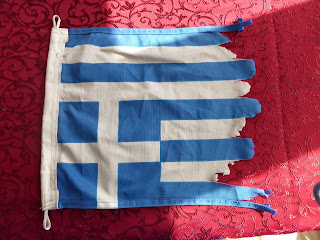
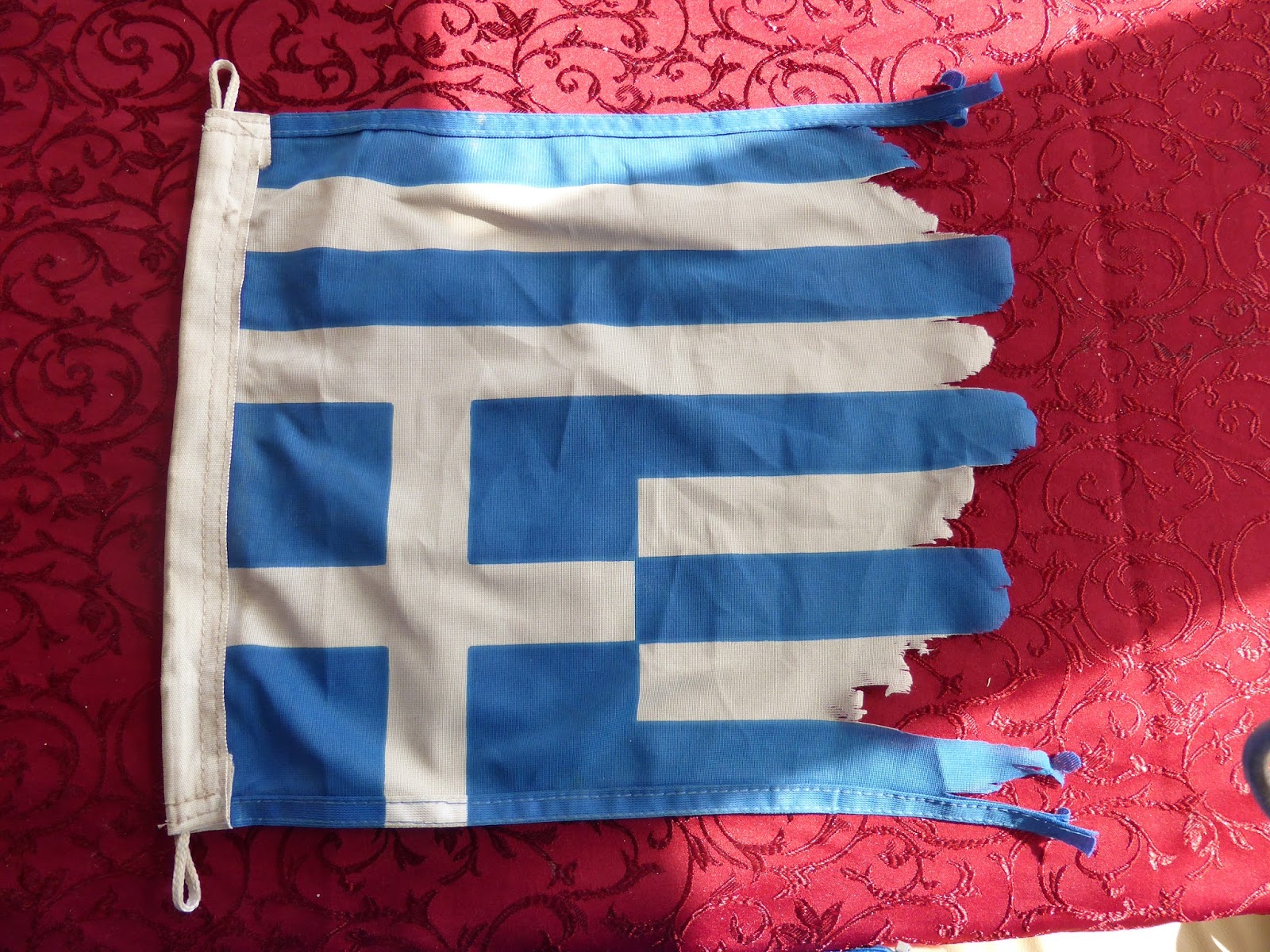
Our Greek courtesy flag has been battered by recent continuous strong winds. It’s upside down by the way.
The small village of Plaka and larger one of Elounda are interesting to wander around and good for obtaining supplies.
Plaka is a beautiful village

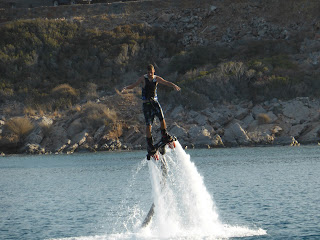
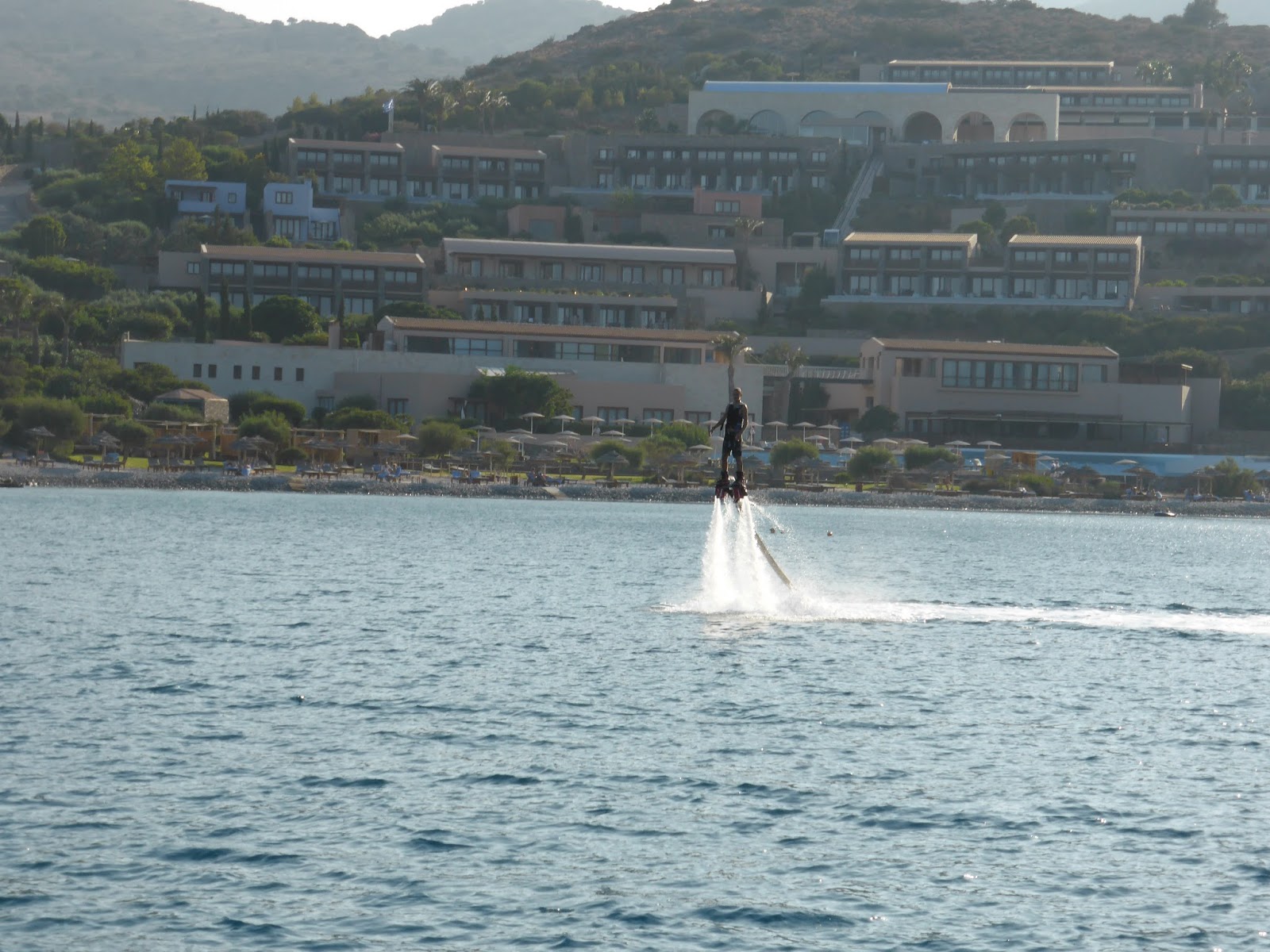
Off Plaka we have to do a double take when we see this water-powered hovering device

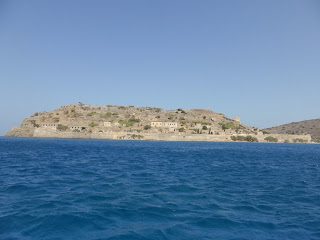
Spinalongas island viewed from Plaka

Another view of Spinalongas

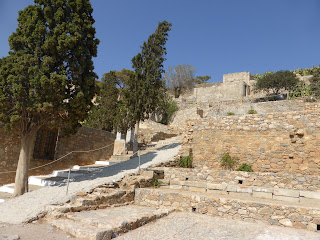
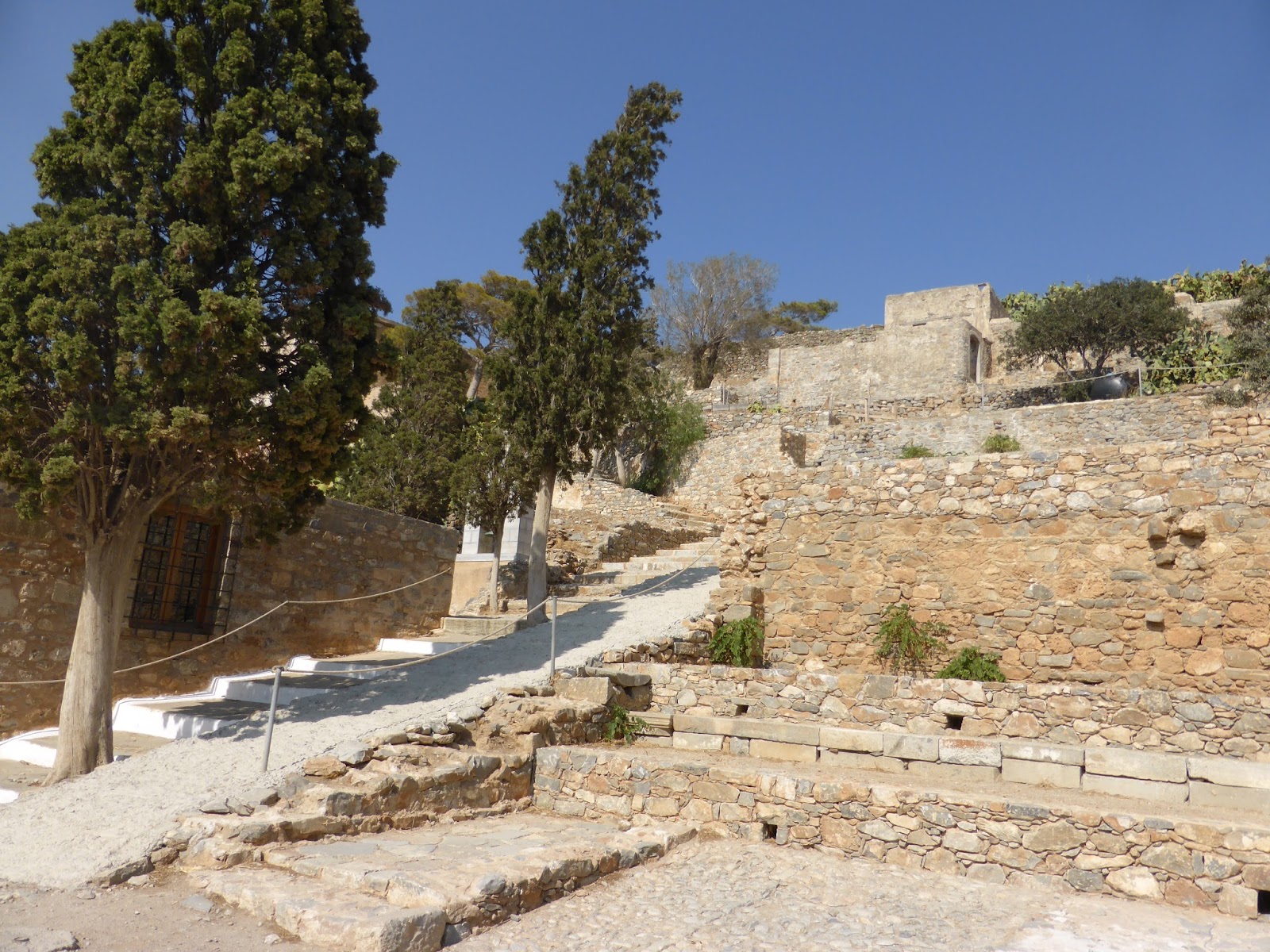
Apart from several tranquil anchorages the area’s highlight is the island with its Venetian Castle built in 1579 on the site of an older fortress and which later withstood a 25 year siege by Turkish invaders in the 16th century. Eventually the Venetian and Genoan defenders were allowed to leave while about six hundred Cretan co-defenders were enslaved. The castle is an interesting example of how several protective walls were commonly built so that defenders could retreat to higher protected ground if one wall was breached.
In 1903 the island became an infamous leper colony where Greek lepers from all stratas of society were rounded up by the police and forced to live it closed in 1957. Lepers were left isolated in appalling conditions mostly to fend for themselves and there are many touching stories of lepers helping each other as well as nurses, a priest and a doctor assisting them, ignoring the very real risk of contracting the disease. Despite the hardships the lepers provided for themselves by cultivating the land and fishing. Some fell in love, married and had children.
Anything leaving the island had to be sterilised in a high pressure steam chamber, even the money the lepers used to buy provisions from merchants who stayed on the beach outside the walls to avoid contact.
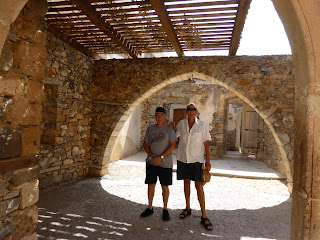
Doug and Laurie investigate a ruined house
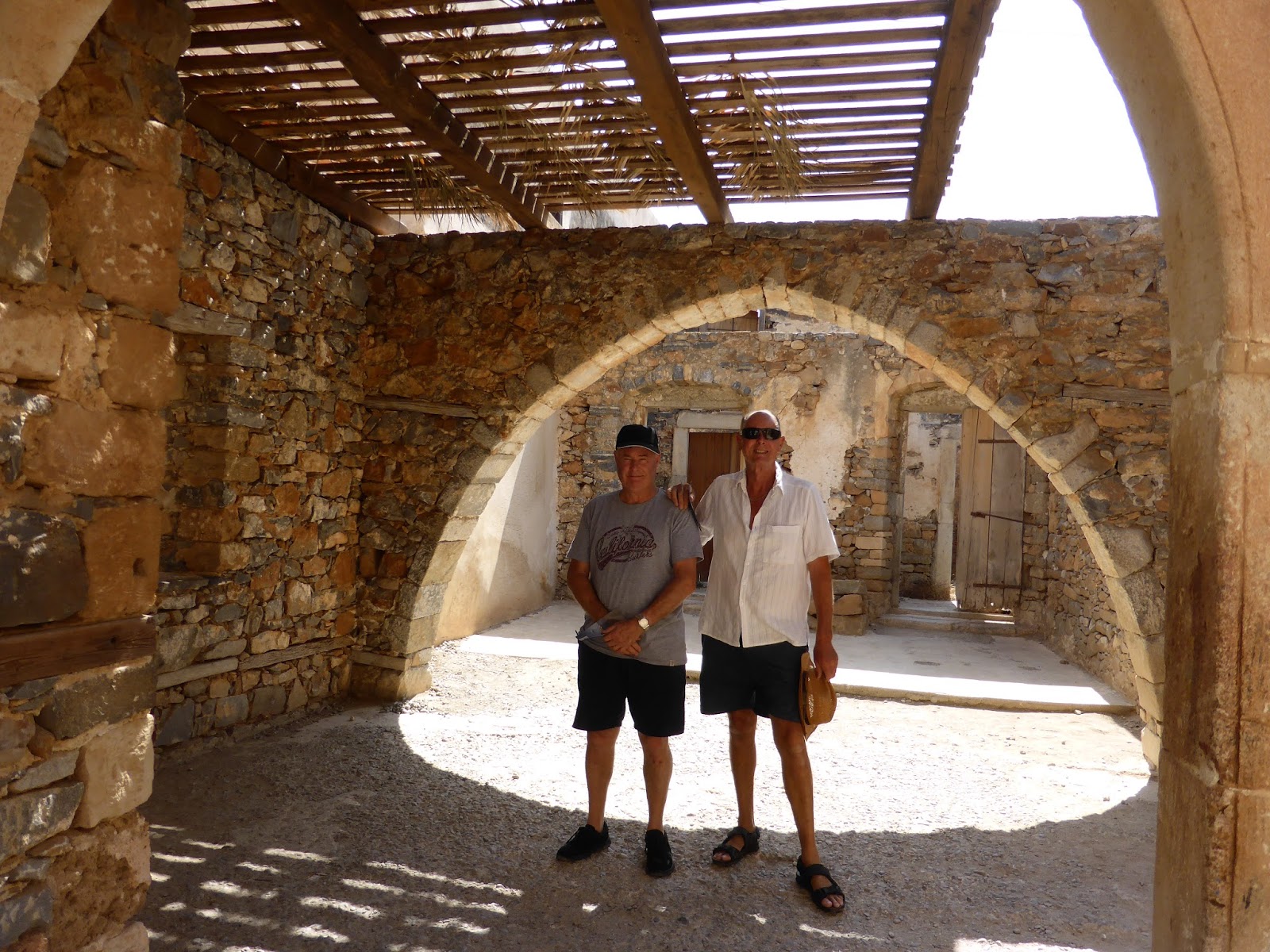
More ruined houses
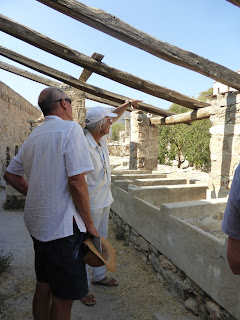
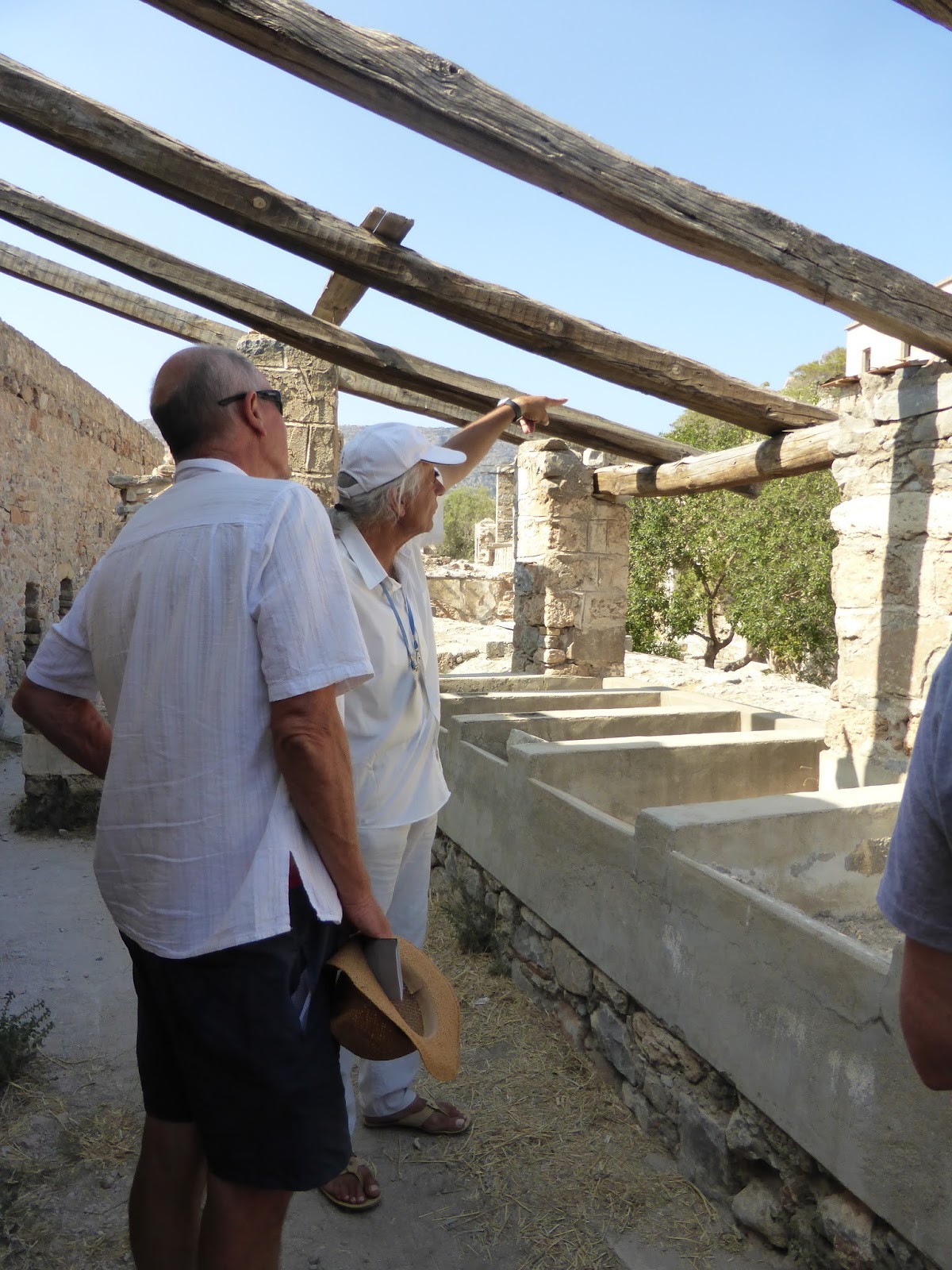
Our guide explains where the laundry tubs were used to wash contaminated clothes and dressings
Our enthusiastic guide shows us a macabre old stone building where a deep pit contains bones of the dead while their skulls are stacked on shelves around the walls. It’s often worth paying a guide (in this case 30 Euros – about $50) to get a full understanding of what you’re seeing.
The island is certainly eerie and although unlit at night radiates an unusual luminescent glow.
Locals call Spinalongas the island of the living dead.
TECHNICAL
Little mention has recently been made in the Blog on this subject simply because fortunately there have been few issues for several weeks now – just routine scheduled maintenance.
FOR FOODIES
Fresh seafood is plentiful and in Eloundra we have a delicious shrimp salad served with a local mayonnaise

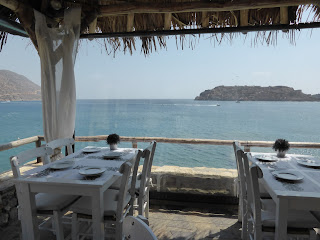
Stunning view of waterfront from the restaurant

Last Day in Newfoundland
Newfoundland is a world-class cruising destination and we’ll certainly be back for more. Our initial plan for cruising the province was to circumnavigate the island, hitting the highlights. But after our first taste of the beautiful fiords and amazing view hikes along the south coast, we were hooked. We decided instead to spend our time…
