
As posted earlier, Istaboa’s in Sarasota, (I like saying that), hosting a trio of wireless internet gearheads while providing the perfect venue for the testing of all sorts of wireless mojo.The first order of business was to completely remove the forme…
Tag Archives | Nordhavn
April 15, 2014 – Marina at an Jose Del Cabo
Thursday April 10, 2014 – Underway from Costa Baja Marina, La Paz
Today Serenity left La Paz after 5 wonderful years. We originally came for one year and then could not leave. Finally it is time to go north and once again fish for salmon, shrimp and crabs, but we leave with indelible memories of the Sea of Cortez, its sea life, its birds, its people, it clear warm water, white sand beaches, beautiful anchorages, spectacular scenery and unbelievable sunsets, and of La Paz which has been a second home in many ways. It has been more special than we can ever have dreamed and we have been blessed with many new friends whom we hope to see up north.
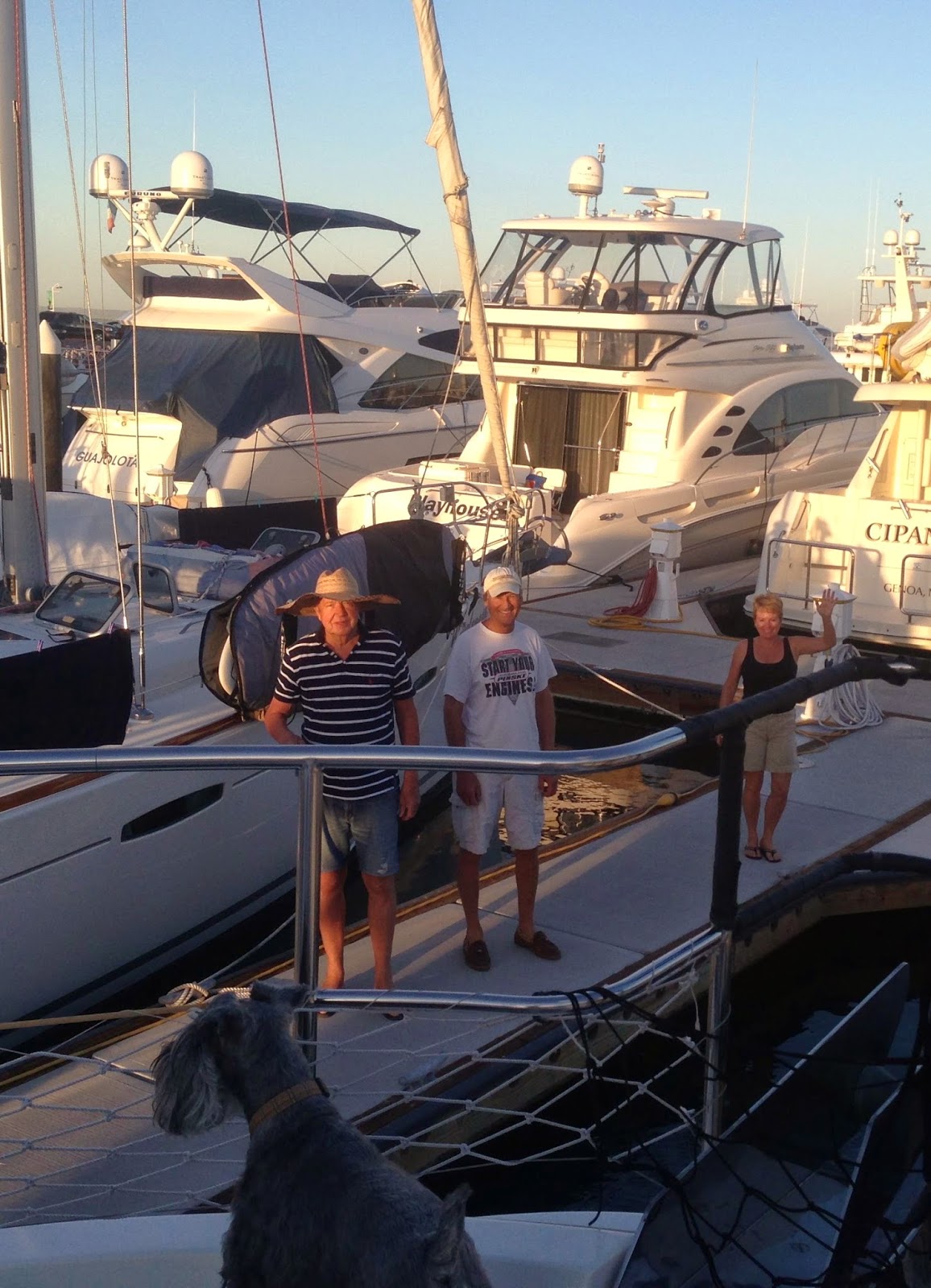 |
| Daisy saying goodbye to John, Jay and Lisa |
Perhaps this is a good time to make note of some of our favorite places in La Paz for any future visitors.
There are lots of good places to eat in town, but for us Azul Marina at Costa Baja and its sister restaurant Nim in town have the best food in town – great variety – from fine dining to pizza -, reasonable prices, and wonderful people. If you go to Azul, be sure to try the scallop carpaccio with basil, and don’t miss the summer rolls at Nim.
The Rancho Viejo Hacienda is our favorite for Mexican food. Earl loves the seafood soup and I don’t think you can beat the tacos aranchera.
Our go to food markets are Mega, Walmart, Sam’s Club and most favorite of all, the local store Aramburo, known among cruisers as the Brown Cow store after the large statute of a cow which decorates its front. Aramburo is downtown on the corner of Madero and Hidalgo and has an amazing selection of stuff for a small market. It reminds me of the small neighborhood groceries of my youth in New York City, crowded but with an amazing assortment of items. They will frequently have fresh basil or ginger when I can’t find it elsewhere. Their meat is excellent- as you might suspect from the line at the counter -and my favorite tequila, Don Julio 70, is about 20% cheaper than at Mega.
Just down Madero from Aramburo is the best bakery in town, Pan d’Lys. I love the rustic and sour dough breads. In front of the bakery there is an organic market on Tuesdays and Saturdays where one can find beautiful fresh produce and homemade sausages among other things.
There are two public markets. Mercado Bravo is a wonderful place to buy fish, but my favorite is Mercado Madero. That is not because of the food – much of which I find scary- but for the extraordinarily elaborate princess dresses that I have bought for countless little girls. The shop I go to is the largest in the market and the senora now gives me a discount, hardly necessary since the dresses are always under $40 and frequently as little as $25.
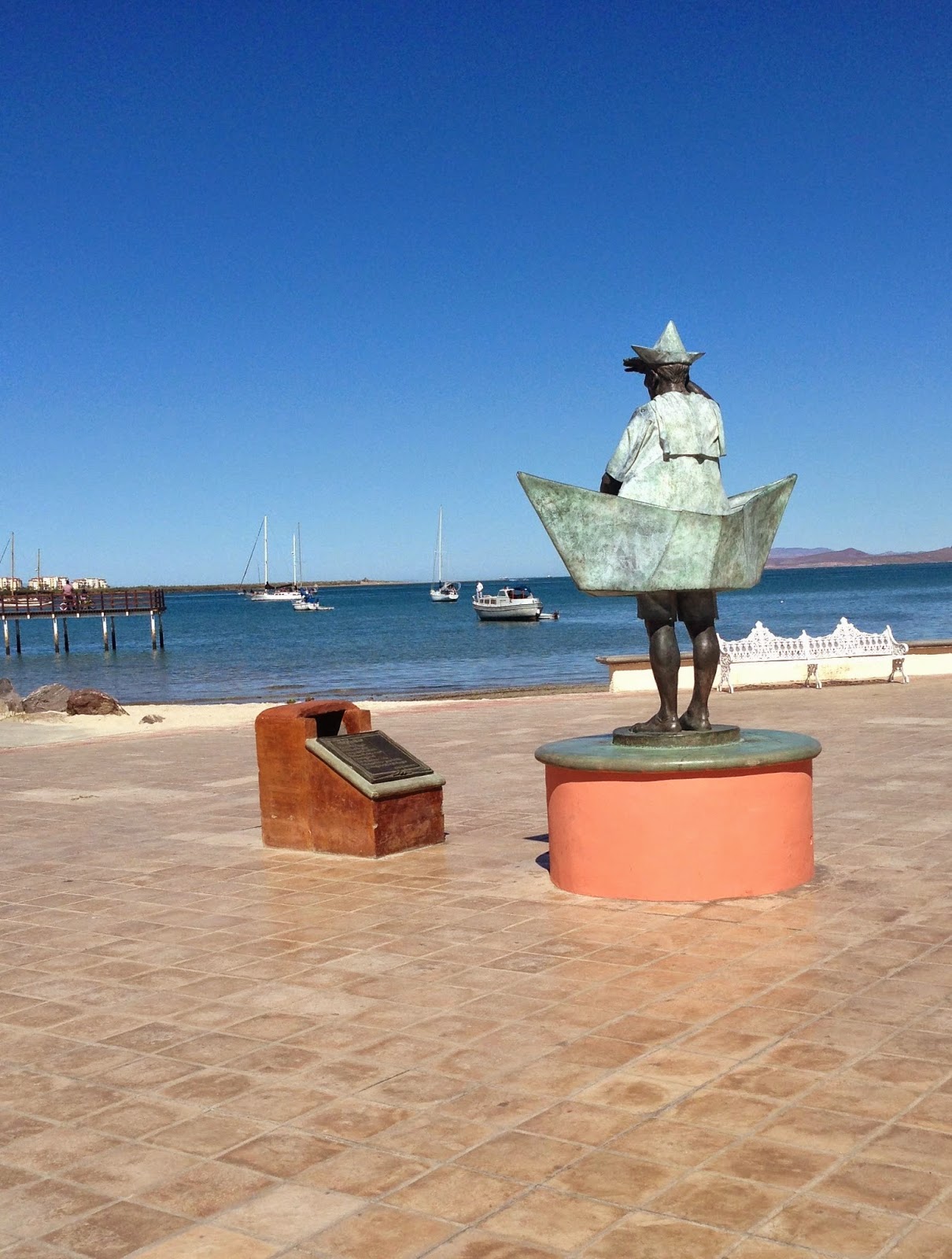
The Malecon along the sea is a lovely walk and decorated with statutes, many of which are very nice. There is, however, one I love above all others. It is a man in a paper boat looking out to sea. I never look at him without smiling.
Then there is Ibarra Pottery on Prieto between Republica and Torre Iglesias. Here you can buy pottery made by the Ibarra family (Julio, Juanita and Vicki). It is very unique and the shop even more so. In the back, they have some talavera pottery from Pueblo at the best prices I have found. I dearly love all the Ibarras and will miss their smiling faces more than I can say. They say they will miss my business.
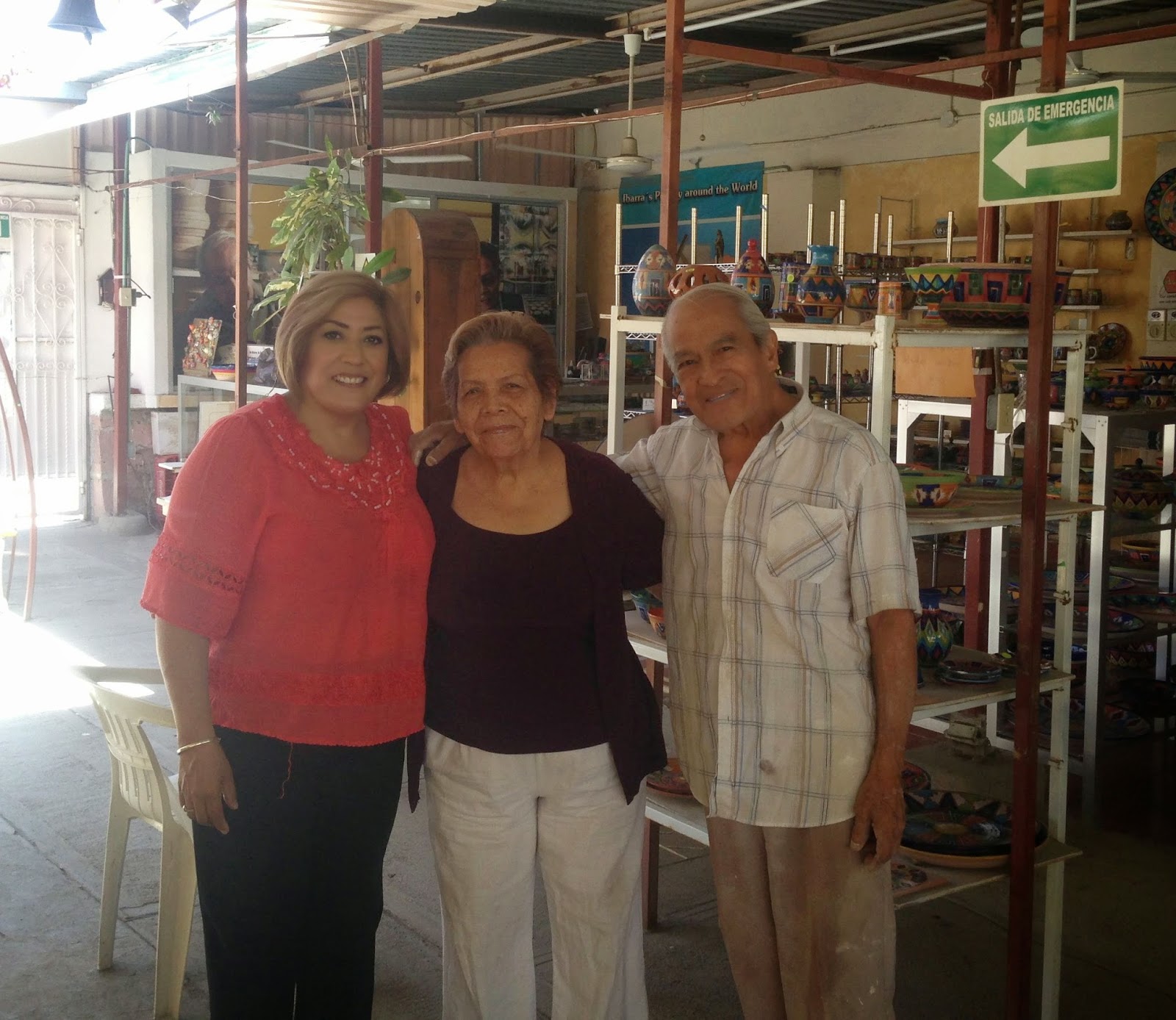 |
| Vicki, Juanita and Julio Ibarra |
Lopez Marine Supplies on the 5th of February has an amazing selection of stuff. It is expensive but probably not more so than any marine store.
Across the street from the Mercado Madero is a store called the Mercado, a Michaels-type shop full of all types of items for crafts.
Dr. Tomas Rodriguez (Clinica Veterinaria Madero) has been a wonderful vet for Daisy. His English is very good and no reservations are needed to see him. He has been cleaning Daisy’s teeth at less than 20% of the cost in the US and we will miss him and his services. His clinic is on Revolution between 5 de Febrero and Navarro.
Dr Toushmann was a real find. An excellent doctor who speaks great English and will even make boat calls. Telephone 612-157-0126.
And finally there is Fito who has taken such wonderful care of our boat for the past 5 years. Serenity will miss her frequent washings and we will miss a friend. Fito’s number is 612-117-5011. (If calling from the States, add 011-52-1 to the number)
Saturday, April 12, 2014 – fishing off the coast of Frailes.
We spent our first night at anchor in Muertos, an anchorage we have visited many times. We did not put down the dingy and go ashore for dinner for some of the best chili rellenos in Baja. Instead we watched the sunset from the boat and enjoyed a tender Costco NY strip steak and salad. There were about 7 other boats, all on the move for the end of the season. Some were going north to San Carlos and others, like us, south to the Cape to start the long trip north.
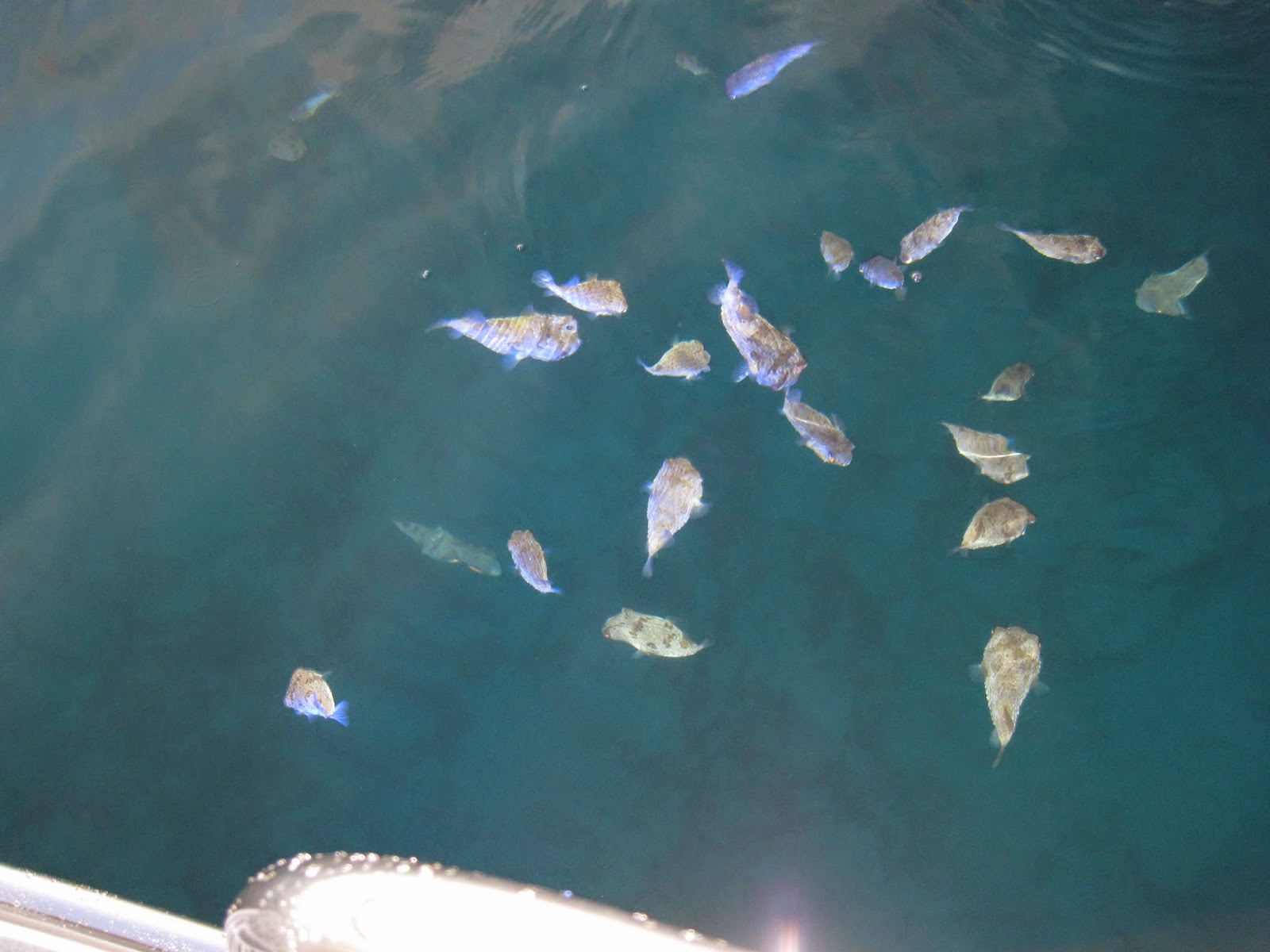 |
| Friendly little puffer fish at Muertos |
The next day I was struck by how different the landscape is from what has surrounded us for the last 5 years of cruising. While there are still hills, they seem far more covered with vegetation and the beautiful rock formations are nowhere in sight.
The water temperature has changed significantly. It was 73 in Costa Baja, 75 in the morning in Muertos and now 77. With warm water comes the fulfillment of Earl’s desires – marlin!
Yesterday about an hour out of Frailes, Daisy told us there was a fish on and all hell broke loose. We had a beautiful marlin. Earl was so excited that it was impossible to following his conflicting and incessant orders. It took the rest of the trip to get our heart rates down.
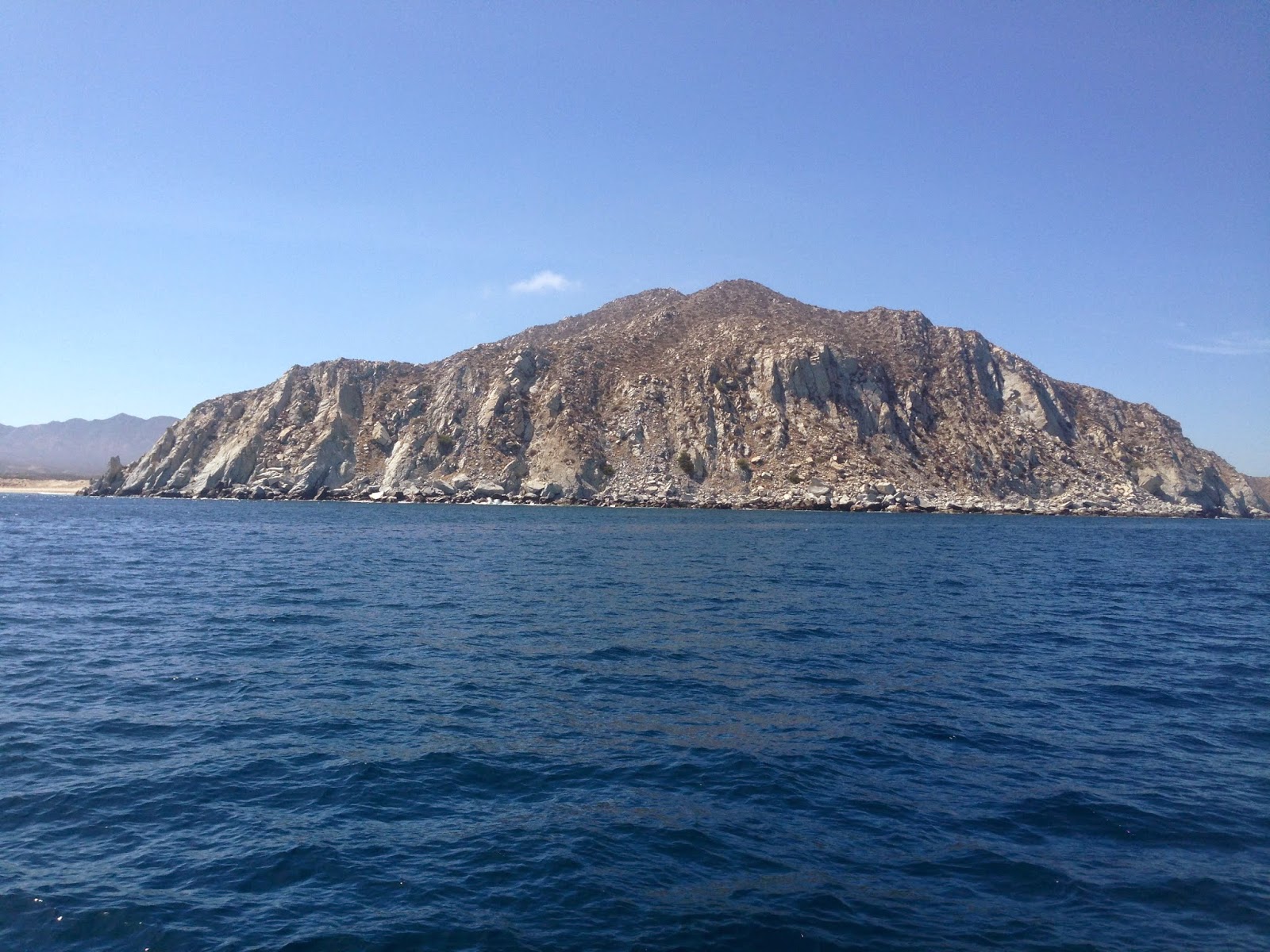 |
| North approach to Frailes |
After a pleasant night anchored at Frailes, we woke to flat seas. To my surprise –not- Earl wanted to fish again, so off we went at 8. It is now 10:30 and we have had three marlin. One we lost because Earl refused to believe Daisy, but the other two we handled quite well. Unfortunately I did not get photos of the jumps. These occur early in the process when I am trying to run the boat, chase the fish, reel up the other line and tie on Earl’s belt. Nevertheless, I have a happy husband!
 |
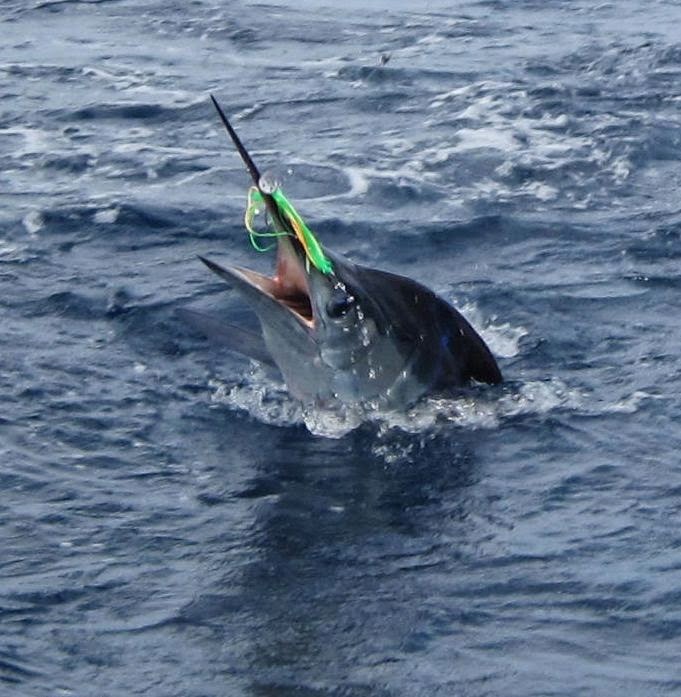
| Beautiful marlin, beautiful blue water |
Monday April 14, 2014 – going into San Jose Del Cabo
The rest of the fishing was great. By the end of Saturday, we were both exhausted after 4 marlin plus three lost. Then, after a good night’s sleep, we went out at 9 am and soon got another great fish- probably our largest striped marlin to date. It was also the wildest. Never have I seen a fish dance on its tail like this one did. Once again, I was too busy to get a photo. It never did calm down. When the time came to retrieve Earl’s beloved lure and let the fish go, there was a lot of drama. First the lure came apart and had to be retrieved in two pieces while the fish varied between being too far away or under our swim step. Finally, the lure in our possession, it was not easy to let the fish go. It somehow managed to get its bill stuck between the slots of our swim step. This one fish did us in for the day. We fished without much enthusiasm for a couple more hours and then returned to Frailes for another peaceful night.
 |
||
| Come to Poppa |
 |
| In it comes! |
 |
| This is the lure that caught all the marlin |
There is a little wind today, but it is from the north and thus on our tail. The traveling is lovely. Earl pointed out that this could well be the last time we’ll have the wind behind us. Prevailing winds going north will be from the north and we will be bucking. Time will tell.
We will spend a few days in San Jose. Our wonderful friends Sharon and Dave from Cipango that was tied across from us in Costa Baja have a condo in San Jose and we plan on a fun day with them tomorrow. Then we will have the next two days to clean the boat, pick up provisions and meet our friends the Scarboro’s at the airport. They will be going on the first leg of our trip with us.
April 15, 2014 – Marina at an Jose Del Cabo
Thursday
April 10, 2014 – Underway from Costa Baja Marina, La Paz
April 10, 2014 – Underway from Costa Baja Marina, La Paz
Today
Serenity left La Paz after 5 wonderful years.
We originally came for one year and then could not leave. Finally it is time to go north and once again
fish for salmon, shrimp and crabs, but we leave with indelible memories of the
Sea of Cortez, its sea life, its birds, its people, it clear warm water, white
sand beaches, beautiful anchorages, spectacular scenery and unbelievable
sunsets, and of La Paz which has been a second home in many ways. It has been more special than we can ever
have dreamed and we have been blessed with many new friends whom we hope to see
up north.
Serenity left La Paz after 5 wonderful years.
We originally came for one year and then could not leave. Finally it is time to go north and once again
fish for salmon, shrimp and crabs, but we leave with indelible memories of the
Sea of Cortez, its sea life, its birds, its people, it clear warm water, white
sand beaches, beautiful anchorages, spectacular scenery and unbelievable
sunsets, and of La Paz which has been a second home in many ways. It has been more special than we can ever
have dreamed and we have been blessed with many new friends whom we hope to see
up north.
|
| Daisy saying goodbye to John, Jay and Lisa |
Perhaps
this is a good time to make note of some of our favorite places in La Paz for any
future visitors.
this is a good time to make note of some of our favorite places in La Paz for any
future visitors.
There
are lots of good places to eat in town, but for us Azul Marina at Costa Baja
and its sister restaurant Nim in town have the best food in town – great
variety – from fine dining to pizza -, reasonable prices, and wonderful people. If you go to Azul, be sure to try the scallop
carpaccio with basil, and don’t miss the summer rolls at Nim.
are lots of good places to eat in town, but for us Azul Marina at Costa Baja
and its sister restaurant Nim in town have the best food in town – great
variety – from fine dining to pizza -, reasonable prices, and wonderful people. If you go to Azul, be sure to try the scallop
carpaccio with basil, and don’t miss the summer rolls at Nim.
The
Rancho Viejo Hacienda is our favorite for Mexican food. Earl loves the seafood soup and I don’t think
you can beat the tacos aranchera.
Rancho Viejo Hacienda is our favorite for Mexican food. Earl loves the seafood soup and I don’t think
you can beat the tacos aranchera.
Our go
to food markets are Mega, Walmart, Sam’s Club and most favorite of all, the
local store Aramburo, known among cruisers as the Brown Cow store after the
large statute of a cow which decorates its front. Aramburo is downtown on the corner of Madero
and Hidalgo and has an amazing selection of stuff for a small market. It reminds me of the small neighborhood
groceries of my youth in New York City, crowded but with an amazing assortment
of items. They will frequently have fresh basil or ginger when I can’t find it
elsewhere. Their meat is excellent- as
you might suspect from the line at the counter -and my favorite tequila, Don
Julio 70, is about 20% cheaper than at Mega.
to food markets are Mega, Walmart, Sam’s Club and most favorite of all, the
local store Aramburo, known among cruisers as the Brown Cow store after the
large statute of a cow which decorates its front. Aramburo is downtown on the corner of Madero
and Hidalgo and has an amazing selection of stuff for a small market. It reminds me of the small neighborhood
groceries of my youth in New York City, crowded but with an amazing assortment
of items. They will frequently have fresh basil or ginger when I can’t find it
elsewhere. Their meat is excellent- as
you might suspect from the line at the counter -and my favorite tequila, Don
Julio 70, is about 20% cheaper than at Mega.
Just
down Madero from Aramburo is the best bakery in town, Pan d’Lys. I love the rustic and sour dough breads. In front of the bakery there is an organic
market on Tuesdays and Saturdays where one can find beautiful fresh produce and
homemade sausages among other things.
down Madero from Aramburo is the best bakery in town, Pan d’Lys. I love the rustic and sour dough breads. In front of the bakery there is an organic
market on Tuesdays and Saturdays where one can find beautiful fresh produce and
homemade sausages among other things.
There
are two public markets. Mercado Bravo is
a wonderful place to buy fish, but my favorite is Mercado Madero. That is not because of the food – much of
which I find scary- but for the extraordinarily elaborate princess dresses that
I have bought for countless little girls.
The shop I go to is the largest in the market and the senora now gives
me a discount, hardly necessary since the dresses are always under $40 and
frequently as little as $25.
are two public markets. Mercado Bravo is
a wonderful place to buy fish, but my favorite is Mercado Madero. That is not because of the food – much of
which I find scary- but for the extraordinarily elaborate princess dresses that
I have bought for countless little girls.
The shop I go to is the largest in the market and the senora now gives
me a discount, hardly necessary since the dresses are always under $40 and
frequently as little as $25.
The
Malecon along the sea is a lovely walk and decorated with statutes, many of
which are very nice. There is, however,
one I love above all others. It is a man
in a paper boat looking out to sea. I
never look at him without smiling.
Malecon along the sea is a lovely walk and decorated with statutes, many of
which are very nice. There is, however,
one I love above all others. It is a man
in a paper boat looking out to sea. I
never look at him without smiling.
Then
there is Ibarra Pottery on Prieto between Republica and Torre Iglesias. Here you can buy pottery made by the Ibarra
family (Julio, Juanita and Vicki). It is
very unique and the shop even more so.
In the back, they have some talavera pottery from Pueblo at the best
prices I have found. I dearly love all
the Ibarras and will miss their smiling faces more than I can say. They say they will miss my business.
there is Ibarra Pottery on Prieto between Republica and Torre Iglesias. Here you can buy pottery made by the Ibarra
family (Julio, Juanita and Vicki). It is
very unique and the shop even more so.
In the back, they have some talavera pottery from Pueblo at the best
prices I have found. I dearly love all
the Ibarras and will miss their smiling faces more than I can say. They say they will miss my business.
|
| Vicki, Juanita and Julio Ibarra |
Lopez
Marine Supplies on the 5th of February has an amazing selection of
stuff. It is expensive but probably not
more so than any marine store.
Marine Supplies on the 5th of February has an amazing selection of
stuff. It is expensive but probably not
more so than any marine store.
Across
the street from the Mercado Madero is a store called the Mercado, a Michaels-type
shop full of all types of items for crafts.
the street from the Mercado Madero is a store called the Mercado, a Michaels-type
shop full of all types of items for crafts.
Dr.
Tomas Rodriguez (Clinica Veterinaria Madero) has been a wonderful vet for
Daisy. His English is very good and no
reservations are needed to see him. He
has been cleaning Daisy’s teeth at less than 20% of the cost in the US and we
will miss him and his services. His
clinic is on Revolution between 5 de Febrero and Navarro.
Tomas Rodriguez (Clinica Veterinaria Madero) has been a wonderful vet for
Daisy. His English is very good and no
reservations are needed to see him. He
has been cleaning Daisy’s teeth at less than 20% of the cost in the US and we
will miss him and his services. His
clinic is on Revolution between 5 de Febrero and Navarro.
Dr Toushmann
was a real find. An excellent doctor who
speaks great English and will even make boat calls. Telephone 612-157-0126.
was a real find. An excellent doctor who
speaks great English and will even make boat calls. Telephone 612-157-0126.
And
finally there is Fito who has taken such wonderful care of our boat for the
past 5 years. Serenity will miss her
frequent washings and we will miss a friend.
Fito’s number is 612-117-5011.
(If calling from the States, add 011-52-1 to the number)
finally there is Fito who has taken such wonderful care of our boat for the
past 5 years. Serenity will miss her
frequent washings and we will miss a friend.
Fito’s number is 612-117-5011.
(If calling from the States, add 011-52-1 to the number)
Saturday,
April 12, 2014 – fishing off the coast of Frailes.
April 12, 2014 – fishing off the coast of Frailes.
We
spent our first night at anchor in Muertos, an anchorage we have visited many
times. We did not put down the dingy and
go ashore for dinner for some of the best chili rellenos in Baja. Instead we watched the sunset from the boat
and enjoyed a tender Costco NY strip steak and salad. There were about 7 other boats, all on the
move for the end of the season. Some were
going north to San Carlos and others, like us, south to the Cape to start the
long trip north.
spent our first night at anchor in Muertos, an anchorage we have visited many
times. We did not put down the dingy and
go ashore for dinner for some of the best chili rellenos in Baja. Instead we watched the sunset from the boat
and enjoyed a tender Costco NY strip steak and salad. There were about 7 other boats, all on the
move for the end of the season. Some were
going north to San Carlos and others, like us, south to the Cape to start the
long trip north.
|
| Friendly little puffer fish at Muertos |
The
next day I was struck by how different the landscape is from what has
surrounded us for the last 5 years of cruising.
While there are still hills, they seem far more covered with vegetation
and the beautiful rock formations are nowhere in sight.
next day I was struck by how different the landscape is from what has
surrounded us for the last 5 years of cruising.
While there are still hills, they seem far more covered with vegetation
and the beautiful rock formations are nowhere in sight.
The
water temperature has changed significantly.
It was 73 in Costa Baja, 75 in the morning in Muertos and now 77. With warm water comes the fulfillment of
Earl’s desires – marlin!
water temperature has changed significantly.
It was 73 in Costa Baja, 75 in the morning in Muertos and now 77. With warm water comes the fulfillment of
Earl’s desires – marlin!
Yesterday
about an hour out of Frailes, Daisy told us there was a fish on and all hell
broke loose. We had a beautiful
marlin. Earl was so excited that it was
impossible to following his conflicting and incessant orders. It took the rest of the trip to get our heart
rates down.
about an hour out of Frailes, Daisy told us there was a fish on and all hell
broke loose. We had a beautiful
marlin. Earl was so excited that it was
impossible to following his conflicting and incessant orders. It took the rest of the trip to get our heart
rates down.
|
| North approach to Frailes |
After a
pleasant night anchored at Frailes, we woke to flat seas. To my surprise –not- Earl wanted to fish
again, so off we went at 8. It is now
10:30 and we have had three marlin. One
we lost because Earl refused to believe Daisy, but the other two we handled
quite well. Unfortunately I did not get
photos of the jumps. These occur early in the process when I am trying to run
the boat, chase the fish, reel up the other line and tie on Earl’s belt. Nevertheless, I have a happy husband!
pleasant night anchored at Frailes, we woke to flat seas. To my surprise –not- Earl wanted to fish
again, so off we went at 8. It is now
10:30 and we have had three marlin. One
we lost because Earl refused to believe Daisy, but the other two we handled
quite well. Unfortunately I did not get
photos of the jumps. These occur early in the process when I am trying to run
the boat, chase the fish, reel up the other line and tie on Earl’s belt. Nevertheless, I have a happy husband!
|
| Beautiful marlin, beautiful blue water |
Monday
April 14, 2014 – going into San Jose Del Cabo
April 14, 2014 – going into San Jose Del Cabo
The
rest of the fishing was great. By the
end of Saturday, we were both exhausted after 4 marlin plus three lost. Then, after a good night’s sleep, we went out
at 9 am and soon got another great fish- probably our largest striped marlin to
date. It was also the wildest. Never have I seen a fish dance on its tail
like this one did. Once again, I was too
busy to get a photo. It never did calm
down. When the time came to retrieve Earl’s beloved lure and let the fish go,
there was a lot of drama. First the lure
came apart and had to be retrieved in two pieces while the fish varied between
being too far away or under our swim step.
Finally, the lure in our possession, it was not easy to let the fish
go. It somehow managed to get its bill
stuck between the slots of our swim step.
This one fish did us in for the day.
We fished without much enthusiasm for a couple more hours and then
returned to Frailes for another peaceful night.
rest of the fishing was great. By the
end of Saturday, we were both exhausted after 4 marlin plus three lost. Then, after a good night’s sleep, we went out
at 9 am and soon got another great fish- probably our largest striped marlin to
date. It was also the wildest. Never have I seen a fish dance on its tail
like this one did. Once again, I was too
busy to get a photo. It never did calm
down. When the time came to retrieve Earl’s beloved lure and let the fish go,
there was a lot of drama. First the lure
came apart and had to be retrieved in two pieces while the fish varied between
being too far away or under our swim step.
Finally, the lure in our possession, it was not easy to let the fish
go. It somehow managed to get its bill
stuck between the slots of our swim step.
This one fish did us in for the day.
We fished without much enthusiasm for a couple more hours and then
returned to Frailes for another peaceful night.
|
||
| Come to Poppa |
|
| In it comes! |
|
| This is the lure that caught all the marlin |
There
is a little wind today, but it is from the north and thus on our tail. The traveling is lovely. Earl pointed out that this could well be the
last time we’ll have the wind behind us.
Prevailing winds going north will be from the north and we will be
bucking. Time will tell.
is a little wind today, but it is from the north and thus on our tail. The traveling is lovely. Earl pointed out that this could well be the
last time we’ll have the wind behind us.
Prevailing winds going north will be from the north and we will be
bucking. Time will tell.
We will
spend a few days in San Jose. Our
wonderful friends Sharon and Dave from Cipango that was tied across from us in
Costa Baja have a condo in San Jose and we plan on a fun day with them
tomorrow. Then we will have the next two
days to clean the boat, pick up provisions and meet our friends the Scarboro’s
at the airport. They will be going on
the first leg of our trip with us.
spend a few days in San Jose. Our
wonderful friends Sharon and Dave from Cipango that was tied across from us in
Costa Baja have a condo in San Jose and we plan on a fun day with them
tomorrow. Then we will have the next two
days to clean the boat, pick up provisions and meet our friends the Scarboro’s
at the airport. They will be going on
the first leg of our trip with us.
ENVOY’S CRUISING PLANS FOR 2014
We’re now back aboard Envoy in Lefkas Marina, Greece.
Our long flight back to Athens was made more enjoyable by an unexpected upgrade to Business Class on the six hour Dubai-Athens sector. We only book cattle class, so for once enjoyed the different world of great food, fine wines, white tablecloths and attentive service.
Then it was a warm sunny day on our arrival in Athens, which always makes for a good start. It’s a five hour bus ride to Lefkada, and next day we took a taxi to the bus station. As the taxi pulled up a scruffily dressed elderly porter offered to assist with our luggage. We don’t normally need any help but he looked like he needed some work, so we asked the taxi driver how much to pay him, and he replied “whatever you think is fair”. We followed the porter for a less than five minute walk to our bus and handed him 2 Euros (about NZ$3). He looked displeased and said 5 Euros. Diane and I thought this was really funny and didn’t quibble about such a small sum, thinking he’s on a pretty good rate at 5 Euros for five minutes work.
Arriving back aboard Envoy everything was just how we’d left her, except for a little more dust than usual resulting from the major repair work to our leaking fuel tank – cutting steel, grinding and welding. We were particularly pleased there was no diesel in the bilges, indicating the repair has been successful.
One of our first tasks was to start the Lugger engine to check that the serviced starter motor, new injectors, new fuel lift pump and reconditioned Sea Power generator were working OK. Unfortunately the Sea Power wasn’t working. This is important because it produces 120 volt AC power whenever the Lugger is running, allowing us to run the refrigeration system (which is 120 V AC). Without the Sea Power we need to run the generator to operate refrigeration. Further checks in Lefkada, and later in Athens failed to find the cause of the problem. The Sea Power consists of a heavy-duty alternator and an inverter. The inverter seems to be the problem, but this is an old unit – 22 years old to be precise, and it seems beyond repair. Our current plan is to use the generator this season and buy a new SeaPower unit for next season. However we’ll also look at other inverter options.
A few days later we lifted Envoy from the water to find the hull very clean but quite a lot of growth on the propellers, despite using a special antifouling. This season we’re trying a new Italian propeller antifouling called Velox. Other work we had to do was install a new seacock for the generator and a new main rudder bearing. Everything else has been routine seasonal jobs.
Now Envoy is back in the water and we’re in England and Scotland for three weeks.
When we get back we’re planning to head up to Corfu, clear-out of Greece, go over to nearby Albania for a few days, then to the east coast of Italy and cruise down to Sicily where we’ll spend most of our season.
Our long flight back to Athens was made more enjoyable by an unexpected upgrade to Business Class on the six hour Dubai-Athens sector. We only book cattle class, so for once enjoyed the different world of great food, fine wines, white tablecloths and attentive service.
Then it was a warm sunny day on our arrival in Athens, which always makes for a good start. It’s a five hour bus ride to Lefkada, and next day we took a taxi to the bus station. As the taxi pulled up a scruffily dressed elderly porter offered to assist with our luggage. We don’t normally need any help but he looked like he needed some work, so we asked the taxi driver how much to pay him, and he replied “whatever you think is fair”. We followed the porter for a less than five minute walk to our bus and handed him 2 Euros (about NZ$3). He looked displeased and said 5 Euros. Diane and I thought this was really funny and didn’t quibble about such a small sum, thinking he’s on a pretty good rate at 5 Euros for five minutes work.
Arriving back aboard Envoy everything was just how we’d left her, except for a little more dust than usual resulting from the major repair work to our leaking fuel tank – cutting steel, grinding and welding. We were particularly pleased there was no diesel in the bilges, indicating the repair has been successful.
One of our first tasks was to start the Lugger engine to check that the serviced starter motor, new injectors, new fuel lift pump and reconditioned Sea Power generator were working OK. Unfortunately the Sea Power wasn’t working. This is important because it produces 120 volt AC power whenever the Lugger is running, allowing us to run the refrigeration system (which is 120 V AC). Without the Sea Power we need to run the generator to operate refrigeration. Further checks in Lefkada, and later in Athens failed to find the cause of the problem. The Sea Power consists of a heavy-duty alternator and an inverter. The inverter seems to be the problem, but this is an old unit – 22 years old to be precise, and it seems beyond repair. Our current plan is to use the generator this season and buy a new SeaPower unit for next season. However we’ll also look at other inverter options.
A few days later we lifted Envoy from the water to find the hull very clean but quite a lot of growth on the propellers, despite using a special antifouling. This season we’re trying a new Italian propeller antifouling called Velox. Other work we had to do was install a new seacock for the generator and a new main rudder bearing. Everything else has been routine seasonal jobs.
Now Envoy is back in the water and we’re in England and Scotland for three weeks.
When we get back we’re planning to head up to Corfu, clear-out of Greece, go over to nearby Albania for a few days, then to the east coast of Italy and cruise down to Sicily where we’ll spend most of our season.
Where In The World Is Istaboa?
Well, it has a nice ring to it. Istaboa’s in Sarasota.Marina Jack’s in Sarasota to be exact.Haven’t been posting much on the blog as of late, we’ve been working pretty steady spreading wireless internet around marinas. onSpot wifi has gotten pretty goo…
Camouflage in the Underwater World – By Emily
Gaze at a reef and you’ll see a vivid habitat- tan fire coral, purple gorgonians, red lacy-looking lionfish, and millions of other colors and corals. But what is more interesting is what you can’t see… and what’s in clear view telling you “don’t touch me”. In reefs all animals drape themselves in color or camouflage to entice mates, catch prey, or even hide in plain sight.
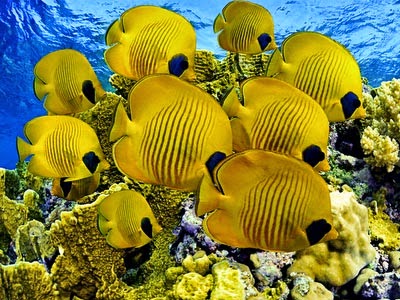 |
| Butterfly Fish (Ref 5) |
There are many types of camouflage, many of which we have seen in our travels. The most common is coloring that resembles surroundings. Many wrasses and parrotfish are blue or brown to mimic the color of the water or coral. Most young parrotfish look a lot like coral, so that when they move it seems like the coral has come to life. The most amazing example is the frogfish, a creature even I have not seen, but still hope to. One that we have seen is the devil scorpion fish.
 |
| Scorpianfish (Ref 10) |
Most of the angelfish and butterfly fish use disruptive coloring to break up their distinct shape and become more like the reef. Non-repetitive designs like spots or stripes may stand out in open water, but they become part of the menagerie of shapes in a reef. Queen and Emperor Angelfish are blue and yellow striped to blend in, and Threespot Flounder have eyes on their body to confuse predators.
Yet other creatures find different ways to hide. Toad fish, stargazers, and rays lie close to the bottom to eliminate their shadow, making them almost invisible to predators; they’re just a lump in the sand. Fish like lizardfishes and garden eels even bury themselves or dig holes. One rare fish that we have seen is the shortnose batfish that looks basically like a pancake with two legs, a tail, and a snoot. Many shells bury themselves in sand; the only giveaway is their track that weaves through the ripples of sand. Wobbegongs are flat and colored to the bottom, and they’re so confident in their camouflage they won’t move unless touched.
 |
|
| Long Nose Batfish (Ref 4) |
The most breathtaking form of camouflage is self-decoration. Hermit crabs carry a heavy shell, Decorator Crabs load themselves with massive amounts of debris, and Carrier Shells glue on shell fragments in a spiral pattern. Many shells are smooth to repel such growths, but others, like the Atlantic Thorny Oyster give lots of protrusions to attract algae and coral.
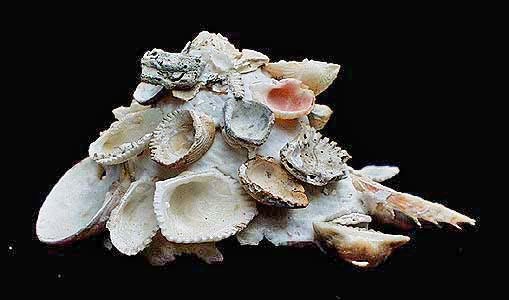 |
| Carrier Shell (Ref 6) |
Trumpet fish and seahorses display cryptic behavior, mimicking the reef, whether that may be swaying soft corals or waving grasses. Razorfish and trumpetfish are long and skinny to look like a floating branch. Groupers and many other fish stay very still, relying on their coloring to stay inconspicuous. Trumpet fish are the funniest, for when they are approached, they stay very still, only moving to sway back and forth. Suddenly they start to change color and dart away to safety.
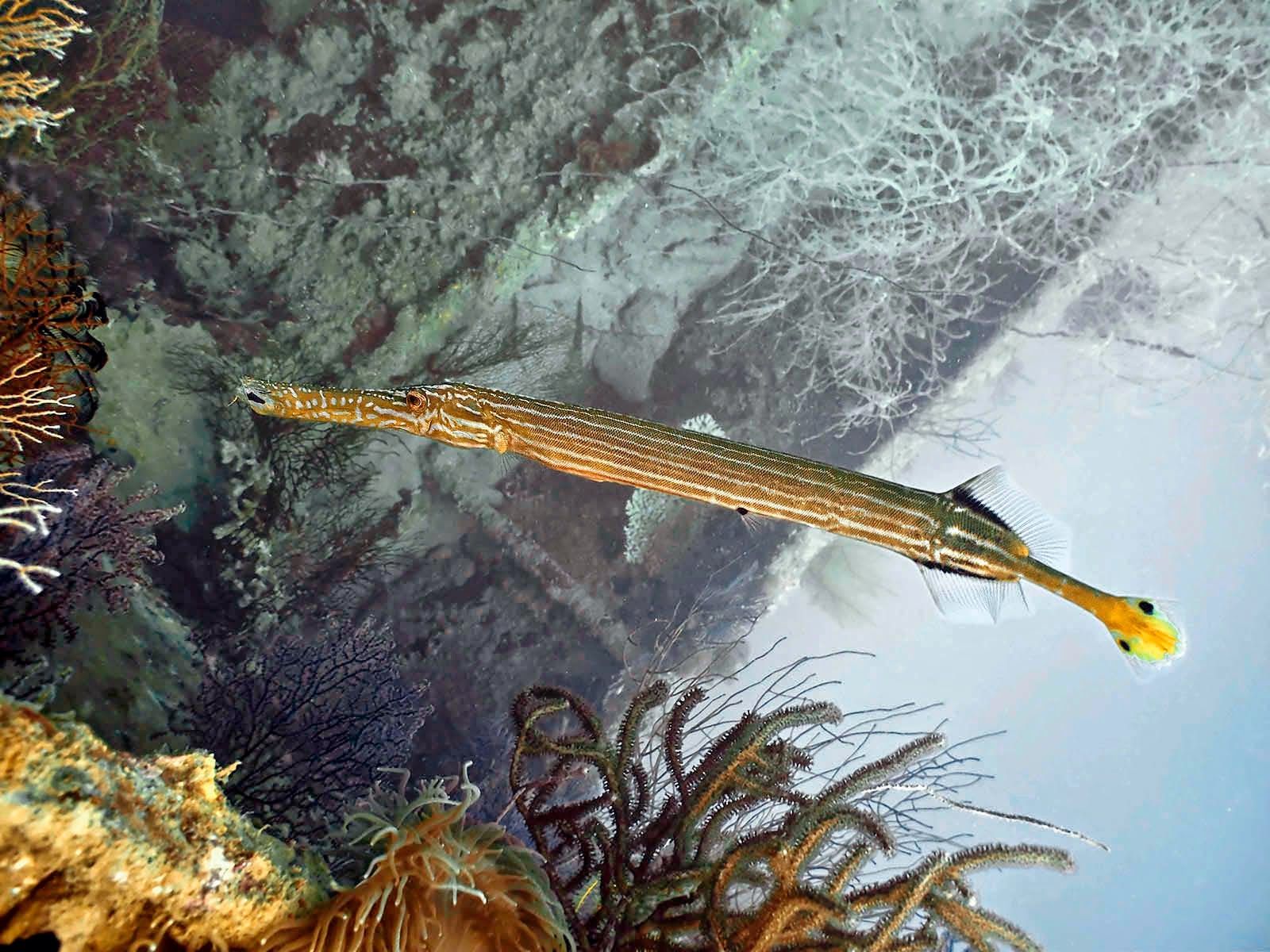 |
| Trumpetfish (Ref 8) |
What I think of as the best camouflage is changing color; the octopus, flounder, and squid do it well. Octopi not only use it to camouflage, they also use it to hunt. They drift over a patch of coral when they’re dark brown, and then stop and make their webbing white. Fish in the rocks think it’s an opening and dart into the octopus’s hungry mouth. When they’re still they change color rapidly to suit the coral, which is impressive considering they’re colorblind. Once we saw an octopus eating a conch, a few tentacles in and around it, but when he saw us he stopped and hastily changed color, not moving even when we were a few inches away, as if to say, “it’s mine, go away!”
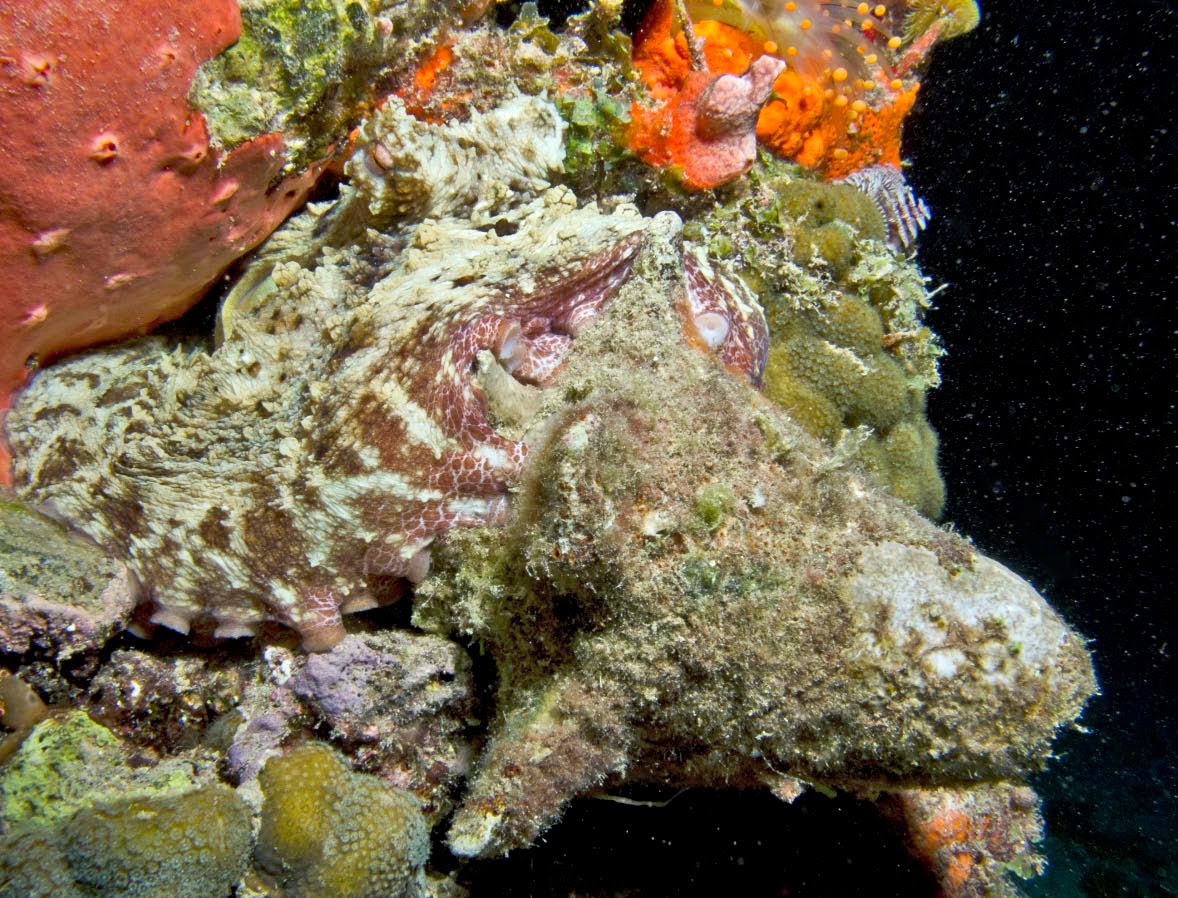 |
| Octopus Eating Conch, can you spot him? (Ref 9) |
Open-ocean fish are often silvery or transparent to color themselves like the sea. Moon jellyfish are almost entirely clear; the only giveaway is their faint outline and slight shimmer. Fish like tuna are silvery to reflect light and appear blue from a distance. Some squid illuminate their underside with sparkles so as not to appear as a dark shape when viewed from below.
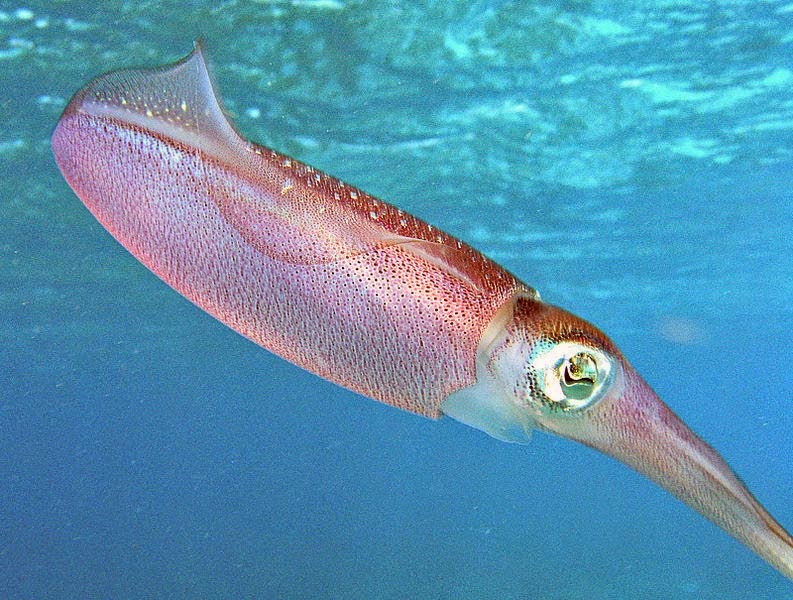 |
| Squid (Ref 7) |
Some animals have light-colored underbellies because they are “counter-shaded.” They are darkest on their backs, which are most often in direct sunlight, and lightest on their undersides, where a predator would see against the sun. An effectively camouflaged prey may appear flat and insubstantial.
Some sea creatures use motion dazzle. Motion dazzle may degrade predators’ ability to estimate the prey’s speed and direction accurately, giving the prey an improved chance of escape. Motion dazzle distorts speed perception, and is most effective at high speeds; stripes can also distort perception of size (and so, perceived range to the target). One example is a school of moving striped fish, such as razor fish and striped catfish.
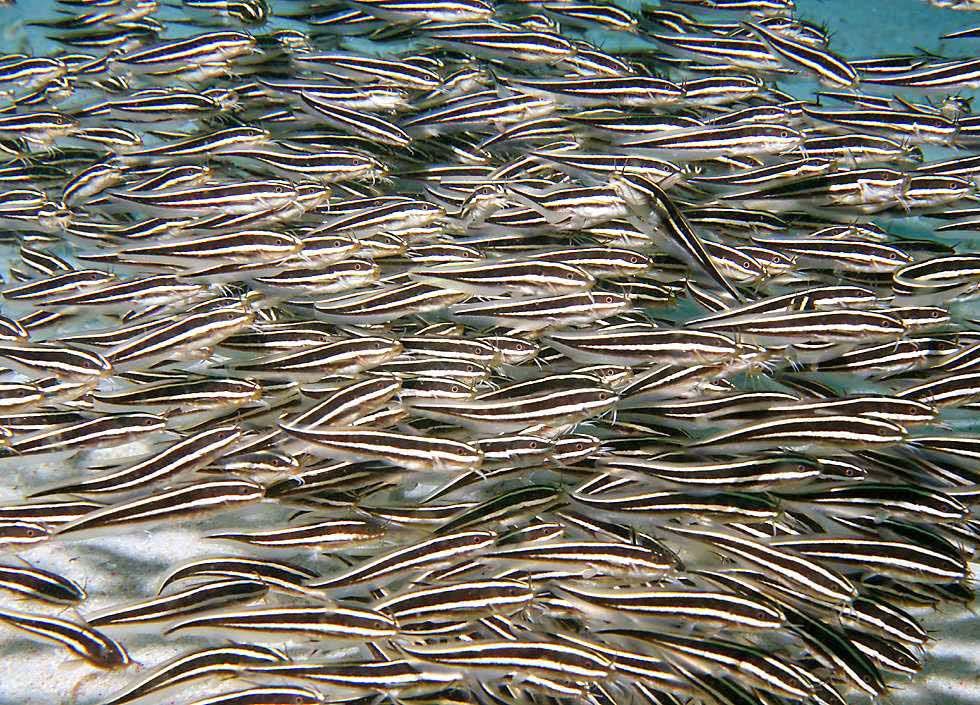 |
| Striped Catfish (Ref 13) |
Underwater, the most complicated disguise is the art of using depth and color. As you may know, colors disappear with the reds and oranges fading first. Longer wavelengths of reds and oranges are quickly absorbed by the water. Damselfish, angelfish, and wrasses decorate themselves with these colors so that their color fades and blends, with depth, into the colors of the background, blue, green, and yellow dominating. Clouds of angelfish, and damselfish would blend their colors into a collage of multi shaded masses, stripes and spots helping to weave the pattern of the busy reef habitat. The more fish, the merrier, with such an excess of pattern and color, no one creature stands out. You can easily imagine how a predator would have trouble picking a single fish from a school of similar color, constantly moving.
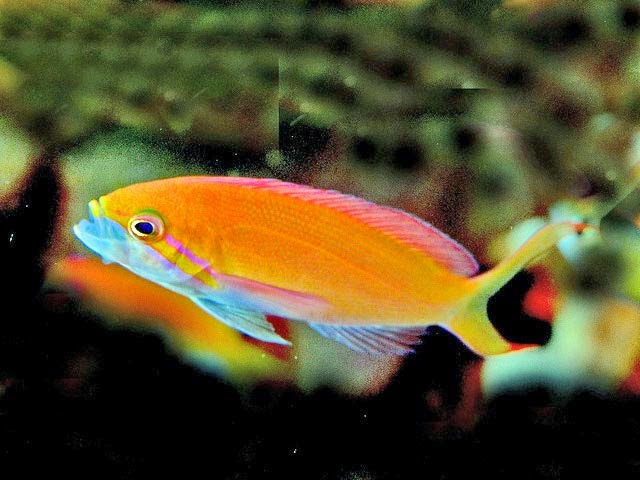 |
| Anthias Normal (Ref 11) |
But, the color so useful in fading away can also be used to stand out. Fish use vivid displays of color to communicate their love to mates… or to warn away unwanted guests. Masters of beauty, Athias, appear drab normally, but erect their dorsal fins and blare their colors to attract a mate. The show doesn’t last for long though, the colorful performance exposing them to great risk from predators. The ability to change color is a class of skin cells
called chromatophores that show color through light manipulation or pigmentation. Chromatophores can instantly mark their bearer as terrifying, invisible, or irresistible.
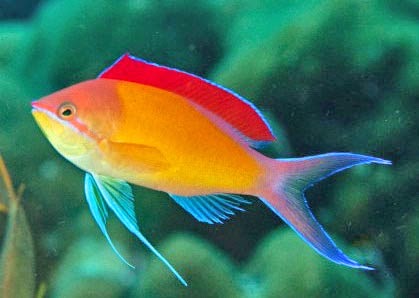 |
| Anthias Courting (Ref 12) |
Some other colorful examples are Stonefish, who use their brown exterior to be invisible, but when frightened, open their colorful pectoral fins to warn off predators, “Stay away, I’m poisonous!”, and cleaner shrimp, who are not only colorful, but at a depth seem black and white, where red turns black.
In the underwater world, those who stand out and stay still clearly have a meaning. Bold colors can advertise danger. Clown fish sit in stinging anemones, lionfish are poisonous, and scorpion fish are too.
Fire urchins are red, yellow, purple and blue, able to stand out at any depth, and blast the message: toxic. One day I saw a ray that was unfamiliar to me. It was sitting on the bottom innocently covered with sand, and stupid me wanted to see what color it was. I dove down to the bottom and touched it to make it move, since it clearly wasn’t afraid- bad mistake. Zzzzzzt! I received an electric shock; I later learned it was a lesser electric ray. I never did see its color, but lesson learned, and I didn’t try to touch it again. Just yesterday, we saw an Atlantic Torpedo, able to produce enough electricity to stop a man’s heart.
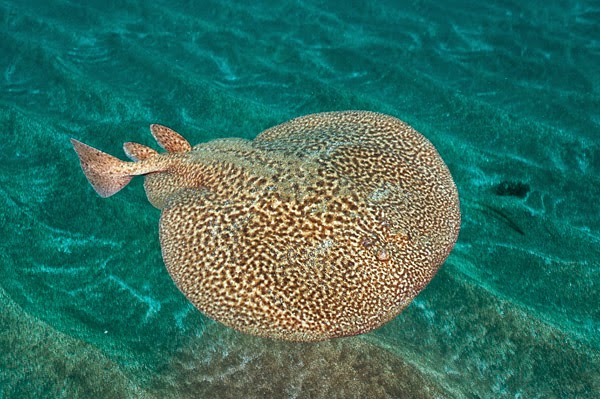 |
| Torpedo Ray (Ref 14) |
But, if a fish wanted to attract a mate without being seen, how would he do it? To solve this problem Damselfish use reflectors to flash UV signals to communicate with others, and predators can’t see it. A male Squarespot Anthias is red and orange in normal light, at eighty feet is blue and purple, but in UV light is dark with a brilliant white spot, an easily seen signal to others of his kind, but not predators.
Every creature is exceptional in its own way, a majority amazing in camouflage. Others have found a way to stand out, extraordinary and bathed in color.
Emily
References:
1. en.wikipedia.org/wiki/Camouflage
2. National Geographic Vol. 209 NO. 5 May 2005
3. Reef Fish Identification, Tropical Pacific
6. http://www.zymoglyphic.org/exhibits/xenophora/images/4.jpg
7. a-z animals.com
9. emilygwestonphotography.com
10. http://www.divevietnam.com/
11. www.kudalaut.eu
12. www.flickr.com
14.www.elasmodiver.com
Camouflage in the Underwater World – By Emily
Gaze at a reef and
you’ll see a vivid habitat- tan fire coral, purple gorgonians, red lacy-looking
lionfish, and millions of other colors and corals. But what is more interesting
is what you can’t see… and what’s in clear view telling you “don’t touch me”.
In reefs all animals drape themselves in color or camouflage to entice mates,
catch prey, or even hide in plain sight.
you’ll see a vivid habitat- tan fire coral, purple gorgonians, red lacy-looking
lionfish, and millions of other colors and corals. But what is more interesting
is what you can’t see… and what’s in clear view telling you “don’t touch me”.
In reefs all animals drape themselves in color or camouflage to entice mates,
catch prey, or even hide in plain sight.
|
| Butterfly Fish (Ref 5) |
There are many
types of camouflage, many of which we have seen in our travels. The most common
is coloring that resembles surroundings. Many wrasses and parrotfish are blue
or brown to mimic the color of the water or coral. Most young parrotfish look a
lot like coral, so that when they move it seems like the coral has come to
life. The most amazing example is the frogfish, a creature even I have not seen,
but still hope to. One that we have seen is the devil scorpion fish.
|
| Scorpianfish (Ref 10) |
Most of the
angelfish and butterfly fish use disruptive coloring to break up their distinct
shape and become more like the reef. Non-repetitive designs like spots or
stripes may stand out in open water, but they become part of the menagerie of
shapes in a reef. Queen and Emperor Angelfish are blue and yellow striped to
blend in, and Threespot Flounder have eyes on their body to confuse predators.
angelfish and butterfly fish use disruptive coloring to break up their distinct
shape and become more like the reef. Non-repetitive designs like spots or
stripes may stand out in open water, but they become part of the menagerie of
shapes in a reef. Queen and Emperor Angelfish are blue and yellow striped to
blend in, and Threespot Flounder have eyes on their body to confuse predators.
Yet other
creatures find different ways to hide. Toad fish, stargazers, and rays lie
close to the bottom to eliminate their shadow, making them almost invisible to
predators; they’re just a lump in the sand. Fish like lizardfishes and garden
eels even bury themselves or dig holes. One rare fish that we have seen is the
shortnose batfish that looks basically like a pancake with two legs, a tail,
and a snoot. Many shells bury themselves in sand; the only giveaway is their
track that weaves through the ripples of sand. Wobbegongs are flat and colored
to the bottom, and they’re so confident in their camouflage they won’t move
unless touched.
creatures find different ways to hide. Toad fish, stargazers, and rays lie
close to the bottom to eliminate their shadow, making them almost invisible to
predators; they’re just a lump in the sand. Fish like lizardfishes and garden
eels even bury themselves or dig holes. One rare fish that we have seen is the
shortnose batfish that looks basically like a pancake with two legs, a tail,
and a snoot. Many shells bury themselves in sand; the only giveaway is their
track that weaves through the ripples of sand. Wobbegongs are flat and colored
to the bottom, and they’re so confident in their camouflage they won’t move
unless touched.
|
|
| Long Nose Batfish (Ref 4) |
The most
breathtaking form of camouflage is self-decoration. Hermit crabs carry a heavy
shell, Decorator Crabs load themselves with massive amounts of debris, and
Carrier Shells glue on shell fragments in a spiral pattern. Many shells are
smooth to repel such growths, but others, like the Atlantic Thorny Oyster give
lots of protrusions to attract algae and coral.
breathtaking form of camouflage is self-decoration. Hermit crabs carry a heavy
shell, Decorator Crabs load themselves with massive amounts of debris, and
Carrier Shells glue on shell fragments in a spiral pattern. Many shells are
smooth to repel such growths, but others, like the Atlantic Thorny Oyster give
lots of protrusions to attract algae and coral.
|
| Carrier Shell (Ref 6) |
Trumpet fish and seahorses
display cryptic behavior, mimicking the reef, whether that may be swaying soft
corals or waving grasses. Razorfish and trumpetfish are long and skinny to look
like a floating branch. Groupers and many other fish stay very still, relying
on their coloring to stay inconspicuous. Trumpet fish are the funniest, for
when they are approached, they stay very still, only moving to sway back and
forth. Suddenly they start to change color and dart away to safety.
display cryptic behavior, mimicking the reef, whether that may be swaying soft
corals or waving grasses. Razorfish and trumpetfish are long and skinny to look
like a floating branch. Groupers and many other fish stay very still, relying
on their coloring to stay inconspicuous. Trumpet fish are the funniest, for
when they are approached, they stay very still, only moving to sway back and
forth. Suddenly they start to change color and dart away to safety.
|
| Trumpetfish (Ref 8) |
What I think of as
the best camouflage is changing color; the octopus, flounder, and squid do it
well. Octopi not only use it to camouflage, they also use it to hunt. They
drift over a patch of coral when they’re dark brown, and then stop and make
their webbing white. Fish in the rocks think it’s an opening and dart into the
octopus’s hungry mouth. When they’re still they change color rapidly to suit
the coral, which is impressive considering they’re colorblind. Once we saw an
octopus eating a conch, a few tentacles in and around it, but when he saw us he
stopped and hastily changed color, not moving even when we were a few inches
away, as if to say, “it’s mine, go away!”
the best camouflage is changing color; the octopus, flounder, and squid do it
well. Octopi not only use it to camouflage, they also use it to hunt. They
drift over a patch of coral when they’re dark brown, and then stop and make
their webbing white. Fish in the rocks think it’s an opening and dart into the
octopus’s hungry mouth. When they’re still they change color rapidly to suit
the coral, which is impressive considering they’re colorblind. Once we saw an
octopus eating a conch, a few tentacles in and around it, but when he saw us he
stopped and hastily changed color, not moving even when we were a few inches
away, as if to say, “it’s mine, go away!”
|
| Octopus Eating Conch, can you spot him? (Ref 9) |
Open-ocean fish
are often silvery or transparent to color themselves like the sea. Moon jellyfish are almost entirely clear; the
only giveaway is their faint outline and slight shimmer. Fish like tuna are
silvery to reflect light and appear blue from a distance. Some squid illuminate
their underside with sparkles so as not to appear as a dark shape when viewed
from below.
are often silvery or transparent to color themselves like the sea. Moon jellyfish are almost entirely clear; the
only giveaway is their faint outline and slight shimmer. Fish like tuna are
silvery to reflect light and appear blue from a distance. Some squid illuminate
their underside with sparkles so as not to appear as a dark shape when viewed
from below.
|
| Squid (Ref 7) |
Some
animals have light-colored underbellies because they are
“counter-shaded.” They are darkest on their backs, which are most
often in direct sunlight, and lightest on their undersides, where a predator
would see against the sun. An effectively camouflaged prey may appear flat and
insubstantial.
animals have light-colored underbellies because they are
“counter-shaded.” They are darkest on their backs, which are most
often in direct sunlight, and lightest on their undersides, where a predator
would see against the sun. An effectively camouflaged prey may appear flat and
insubstantial.
Some sea creatures
use motion dazzle. Motion dazzle may degrade predators’ ability to estimate the
prey’s speed and direction accurately, giving the prey an improved chance of escape.
Motion dazzle distorts speed perception, and is most effective at high speeds;
stripes can also distort perception of size (and so, perceived range to the
target). One example is a school of moving striped fish, such as razor fish and
striped catfish.
use motion dazzle. Motion dazzle may degrade predators’ ability to estimate the
prey’s speed and direction accurately, giving the prey an improved chance of escape.
Motion dazzle distorts speed perception, and is most effective at high speeds;
stripes can also distort perception of size (and so, perceived range to the
target). One example is a school of moving striped fish, such as razor fish and
striped catfish.
|
| Striped Catfish (Ref 13) |
Underwater, the
most complicated disguise is the art of using depth and color. As you may know,
colors disappear with the reds and oranges fading first. Longer wavelengths of
reds and oranges are quickly absorbed by the water. Damselfish, angelfish, and
wrasses decorate themselves with these colors so that their color fades and blends,
with depth, into the colors of the background, blue, green, and yellow
dominating. Clouds of angelfish, and damselfish would blend their colors into a
collage of multi shaded masses, stripes and spots helping to weave the pattern
of the busy reef habitat. The more fish,
the merrier, with such an excess of pattern and color, no one creature stands
out. You can easily imagine how a predator would have trouble picking a single
fish from a school of similar color, constantly moving.
most complicated disguise is the art of using depth and color. As you may know,
colors disappear with the reds and oranges fading first. Longer wavelengths of
reds and oranges are quickly absorbed by the water. Damselfish, angelfish, and
wrasses decorate themselves with these colors so that their color fades and blends,
with depth, into the colors of the background, blue, green, and yellow
dominating. Clouds of angelfish, and damselfish would blend their colors into a
collage of multi shaded masses, stripes and spots helping to weave the pattern
of the busy reef habitat. The more fish,
the merrier, with such an excess of pattern and color, no one creature stands
out. You can easily imagine how a predator would have trouble picking a single
fish from a school of similar color, constantly moving.
|
| Anthias Normal (Ref 11) |
But, the color so
useful in fading away can also be used to stand out. Fish use vivid displays of
color to communicate their love to mates… or to warn away unwanted guests. Masters
of beauty, Athias, appear drab normally, but erect their dorsal fins and blare
their colors to attract a mate. The show doesn’t last for long though, the
colorful performance exposing them to great risk from predators. The ability to
change color is a class of skin cells
useful in fading away can also be used to stand out. Fish use vivid displays of
color to communicate their love to mates… or to warn away unwanted guests. Masters
of beauty, Athias, appear drab normally, but erect their dorsal fins and blare
their colors to attract a mate. The show doesn’t last for long though, the
colorful performance exposing them to great risk from predators. The ability to
change color is a class of skin cells
called chromatophores that show color
through light manipulation or pigmentation. Chromatophores can instantly mark
their bearer as terrifying, invisible, or irresistible.
through light manipulation or pigmentation. Chromatophores can instantly mark
their bearer as terrifying, invisible, or irresistible.
|
| Anthias Courting (Ref 12) |
Some other
colorful examples are Stonefish, who use their brown exterior to be invisible,
but when frightened, open their colorful pectoral fins to warn off predators, “Stay
away, I’m poisonous!”, and cleaner shrimp, who are not only colorful, but at a
depth seem black and white, where red turns black.
colorful examples are Stonefish, who use their brown exterior to be invisible,
but when frightened, open their colorful pectoral fins to warn off predators, “Stay
away, I’m poisonous!”, and cleaner shrimp, who are not only colorful, but at a
depth seem black and white, where red turns black.
In the underwater
world, those who stand out and stay still clearly have a meaning. Bold colors
can advertise danger. Clown fish sit in stinging anemones, lionfish are
poisonous, and scorpion fish are too.
world, those who stand out and stay still clearly have a meaning. Bold colors
can advertise danger. Clown fish sit in stinging anemones, lionfish are
poisonous, and scorpion fish are too.
Fire urchins are red, yellow, purple and
blue, able to stand out at any depth, and blast the message: toxic. One day I saw a ray that was
unfamiliar to me. It was sitting on the bottom innocently covered with sand,
and stupid me wanted to see what color it was. I dove down to the bottom and
touched it to make it move, since it clearly wasn’t afraid- bad mistake.
Zzzzzzt! I received an electric shock; I
later learned it was a lesser electric ray. I never did see its color, but
lesson learned, and I didn’t try to touch it again. Just yesterday, we saw an
Atlantic Torpedo, able to produce enough electricity to stop a man’s heart.
blue, able to stand out at any depth, and blast the message: toxic. One day I saw a ray that was
unfamiliar to me. It was sitting on the bottom innocently covered with sand,
and stupid me wanted to see what color it was. I dove down to the bottom and
touched it to make it move, since it clearly wasn’t afraid- bad mistake.
Zzzzzzt! I received an electric shock; I
later learned it was a lesser electric ray. I never did see its color, but
lesson learned, and I didn’t try to touch it again. Just yesterday, we saw an
Atlantic Torpedo, able to produce enough electricity to stop a man’s heart.
|
| Torpedo Ray (Ref 14) |
But, if a fish
wanted to attract a mate without being seen, how would he do it? To solve this
problem Damselfish use reflectors to flash UV signals to communicate with
others, and predators can’t see it. A male Squarespot Anthias is red and orange
in normal light, at eighty feet is blue and purple, but in UV light is dark
with a brilliant white spot, an easily seen signal to others of his kind, but
not predators.
wanted to attract a mate without being seen, how would he do it? To solve this
problem Damselfish use reflectors to flash UV signals to communicate with
others, and predators can’t see it. A male Squarespot Anthias is red and orange
in normal light, at eighty feet is blue and purple, but in UV light is dark
with a brilliant white spot, an easily seen signal to others of his kind, but
not predators.
Normal
0
false
false
false
EN-US
X-NONE
X-NONE
/* Style Definitions */
table.MsoNormalTable
{mso-style-name:”Table Normal”;
mso-tstyle-rowband-size:0;
mso-tstyle-colband-size:0;
mso-style-noshow:yes;
mso-style-priority:99;
mso-style-parent:””;
mso-padding-alt:0in 5.4pt 0in 5.4pt;
mso-para-margin-top:auto;
mso-para-margin-right:0in;
mso-para-margin-bottom:auto;
mso-para-margin-left:0in;
mso-pagination:widow-orphan;
font-size:11.0pt;
font-family:”Calibri”,”sans-serif”;
mso-ascii-font-family:Calibri;
mso-ascii-theme-font:minor-latin;
mso-hansi-font-family:Calibri;
mso-hansi-theme-font:minor-latin;}
Every creature is exceptional
in its own way, a majority amazing in camouflage. Others have found a way to
stand out, extraordinary and bathed in color.
in its own way, a majority amazing in camouflage. Others have found a way to
stand out, extraordinary and bathed in color.
Emily
References:
1. en.wikipedia.org/wiki/Camouflage
2.
National Geographic Vol. 209 NO. 5
May 2005
National Geographic Vol. 209 NO. 5
May 2005
3.
Reef Fish Identification, Tropical
Pacific
Reef Fish Identification, Tropical
Pacific
6. http://www.zymoglyphic.org/exhibits/xenophora/images/4.jpg
7. a-z
animals.com
animals.com
9.
emilygwestonphotography.com
emilygwestonphotography.com
10. http://www.divevietnam.com/
11. www.kudalaut.eu
12.
www.flickr.com
www.flickr.com
14.www.elasmodiver.com
April 2014 Update on Us
2012 and 2013 were both challenging years for us. 2012 was hard because Keith was an especially difficult infant due to digestive problems. As soon as Keith outgrew his acid reflux, all three of our parents experienced serious health issues. … Continue reading →
April 2014 Update on Us
2012 and 2013 were both challenging years for us. 2012 was hard because Keith was an especially difficult infant due to digestive problems. As soon as Keith outgrew his acid reflux, all three of our parents experienced serious health issues. Helping the folks consumed our 2013. 2014 has gotten off to a better start, though. … Continue reading April 2014 Update on Us
The Exumas
We spent about 5 days in Georgetown. We never found a lot of Kid boats but it had not changed much since 2009. They still had an active VHF radio net each morning and plenty of organized activities. Tom took advantage of the VHF net to advertise to the 300 cruising boats anchored here and unload some used items. We sold our old back-up dingy, 2 HP outboard motor and all of our paper Caribbean charts to 3 different cruisers. Here is a pic of our old dingy being towed away…it had no patches but it was almost 10 years old.


We also found the Chat ‘n Chill conch bar was still there and we ordered up 3 salads for a beach snack. We watched them bring 3 conchs up from the beach, open and clean them and then chop them up (raw) finely with fresh onions, peppers, tomatoes and they drowned it all in lime and orange juice. I even had them add a little diced habanero hot pepper to mine for some extra zip!


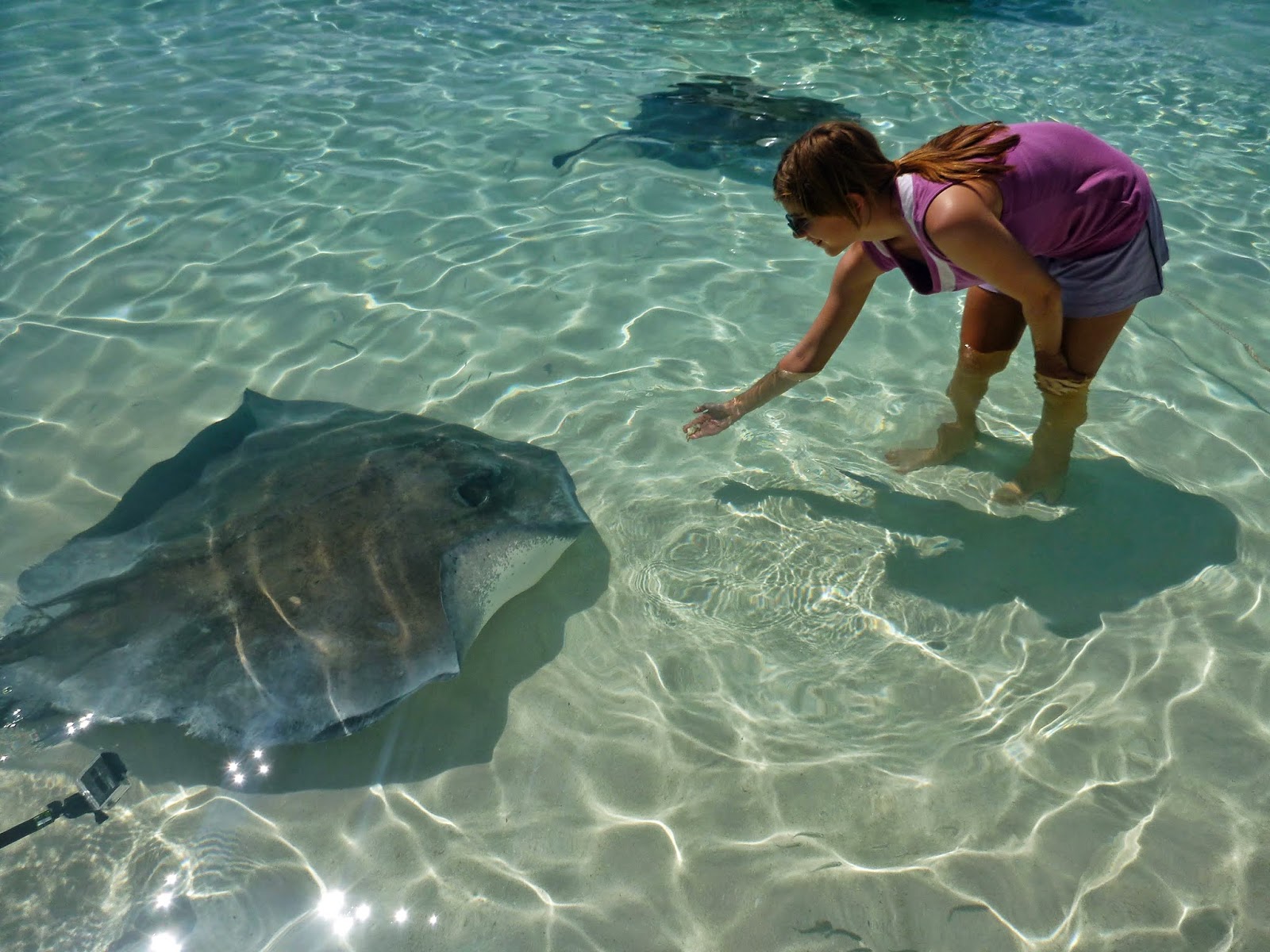
Man, was that good. Emily enjoyed petting the tame sting rays that were also enjoying the conch discards.
From Georgetown we moved northwest to Rudder Cut Cay where we took shelter from the wind that would clock from southeast to west to north within 24 to 36 hours before returning to the normal easterly direction. This happened each time a cold front went through which was happening about every 5 days. We had to plan our moves to enjoy the south wind while moving north but find good shelter from the clocking winds after arrival. Because of the limited anchorages giving shelter from the west winds and the sheer number of cruising boats, it was a challenge to find room.

We saw 3 good sized boats driven hard aground on reefs. This fellow tried to anchor near me but was convinced (by me) that there was not enough room and anchored elsewhere. The next morning, he was hard on a reef and was pulled off by the blue salvage vessel.
The water was clear at Rudder Cut Cay. Kim and Emily Snorkeled each day collecting shells. We saw an underwater statue here too before moving north to Big Majors & Staniel Cay. Check out the eyes on the milk conch in the photo below.

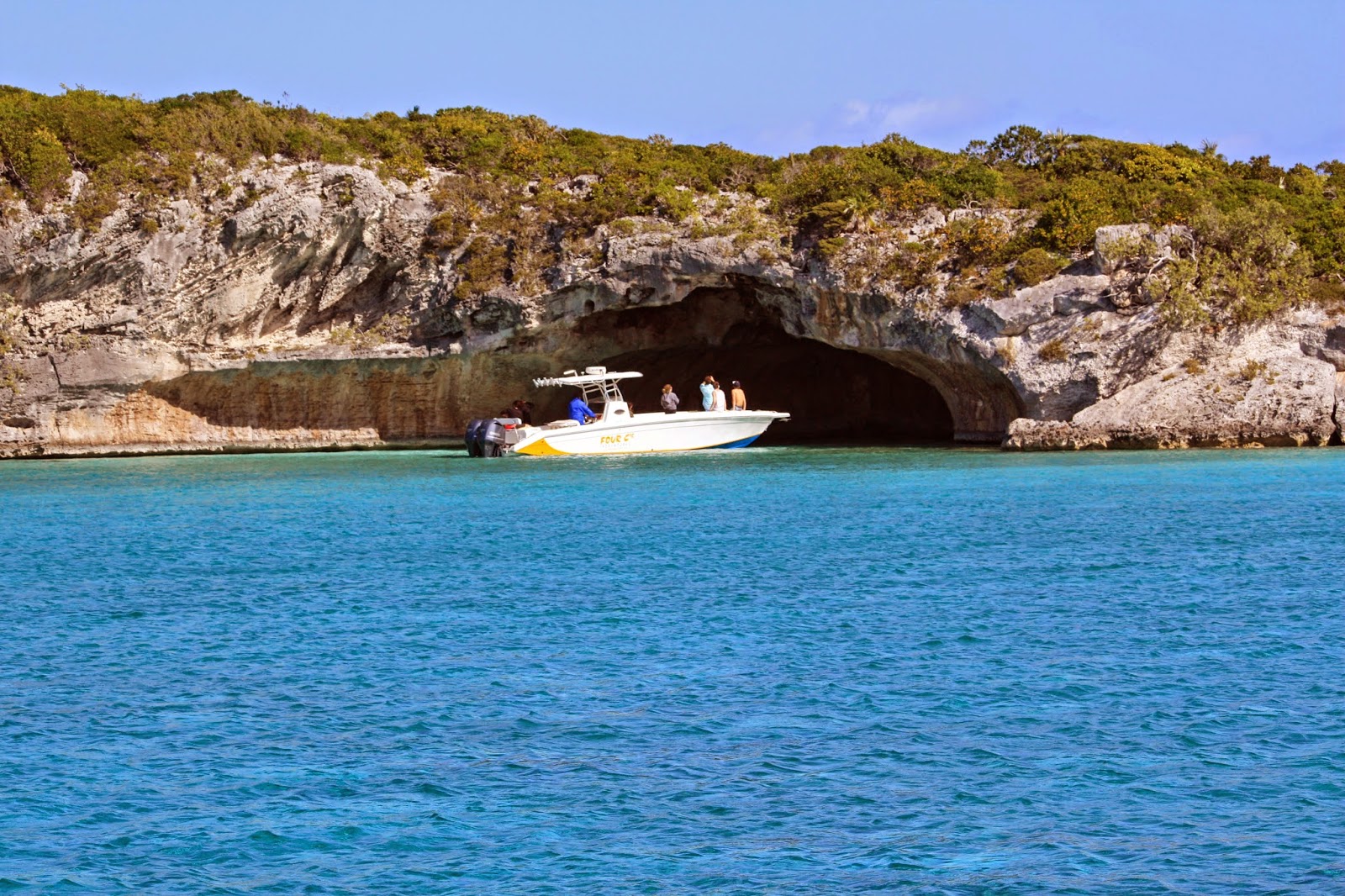
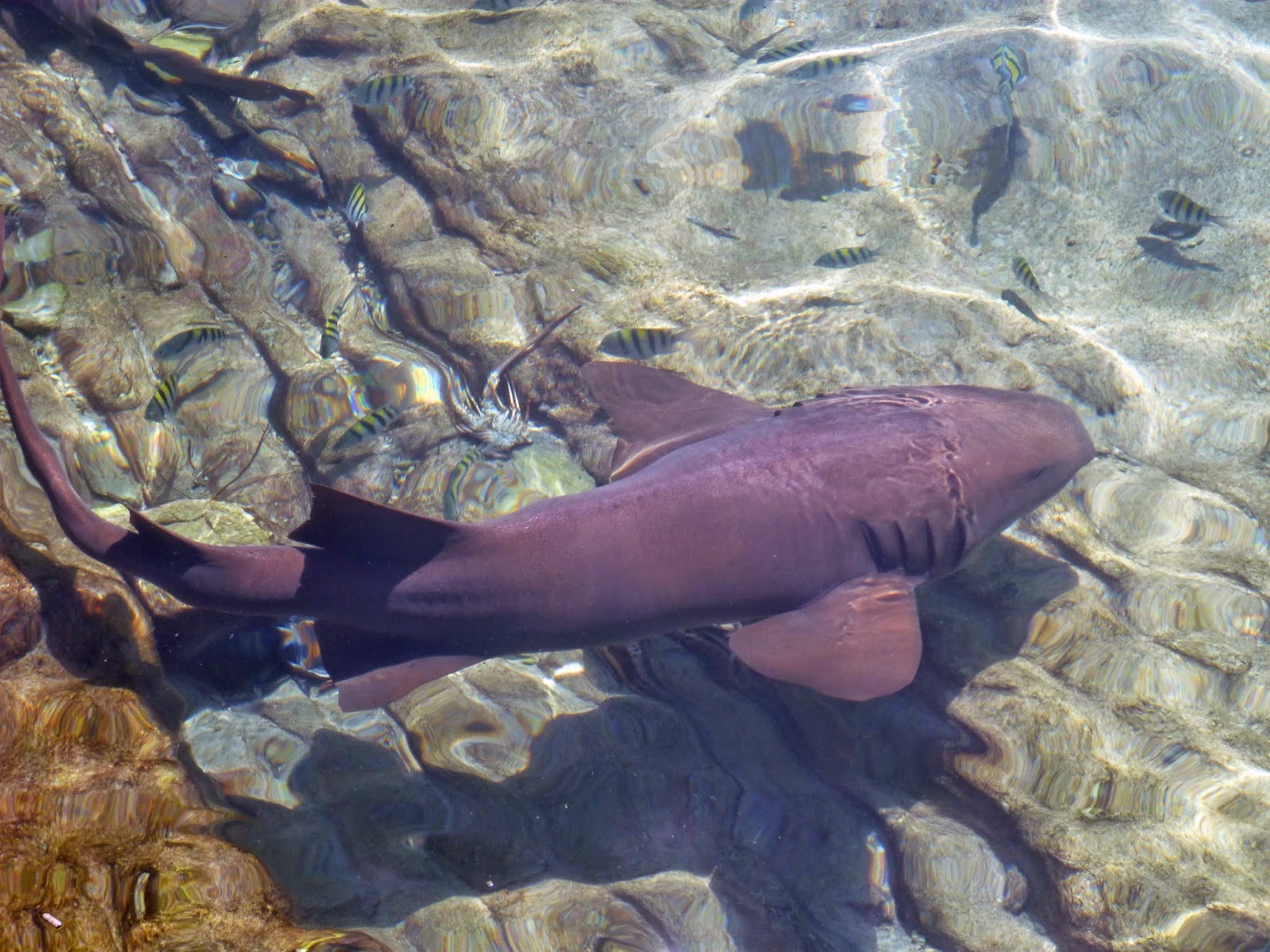
We enjoyed feeding the swimming pigs again and snorkeling Thunderball Cave. The nurse sharks are still hanging around the dingy dock at the yacht club waiting for handouts.


Warderick Wells was our next stop but was a disappointment because we were looking forward to feeding the sugar birds (bannaquits). During our 2009 stop, the rangers handed out sugar and Emily had swarms of the birds on her tiny hands. Environmental Nazis have now stopped handing out sugar and they discourage feeding them. We ignored their idiocy, took out our own sugar and found at least one bird that remembered the good old days with us.

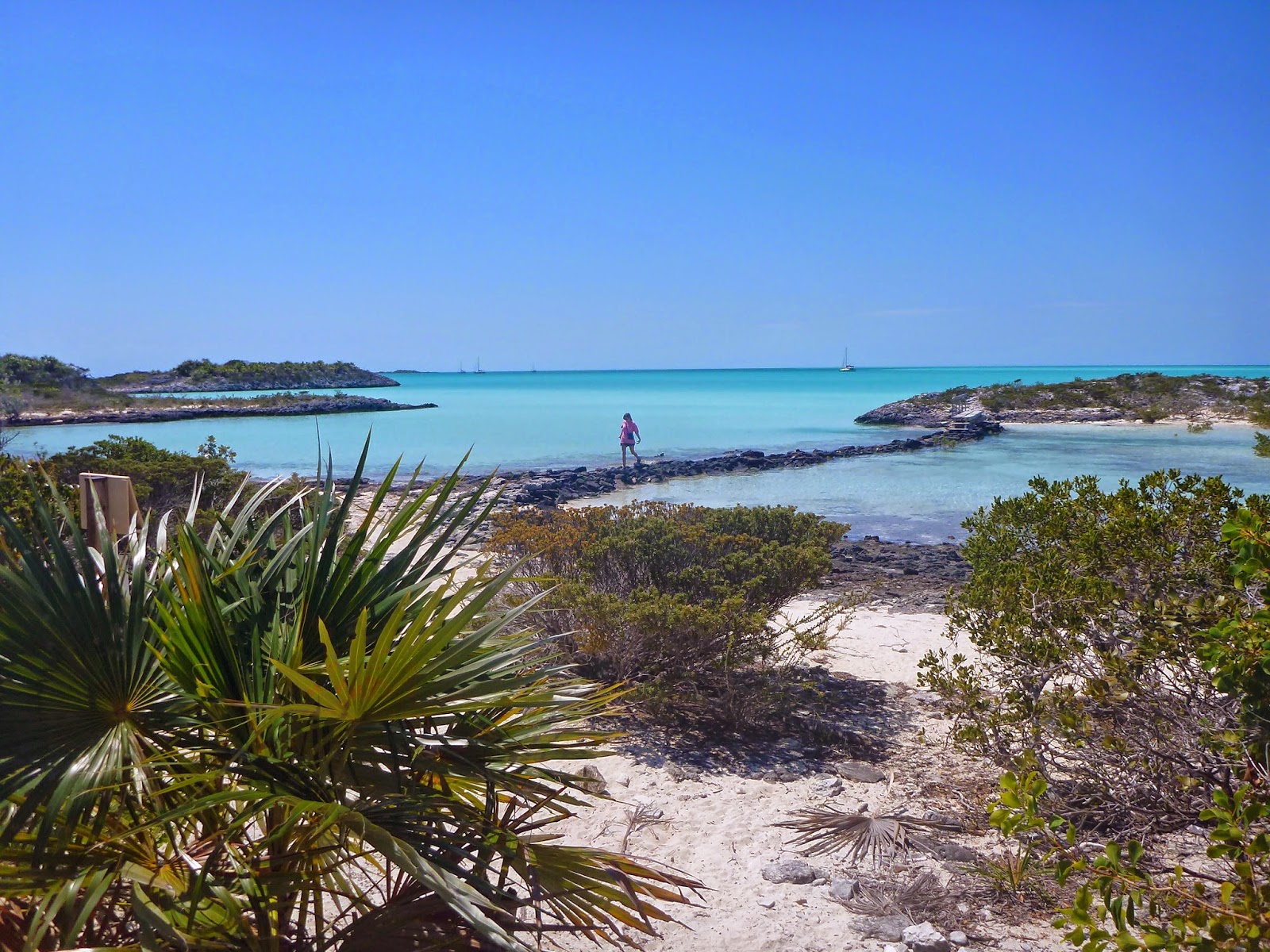
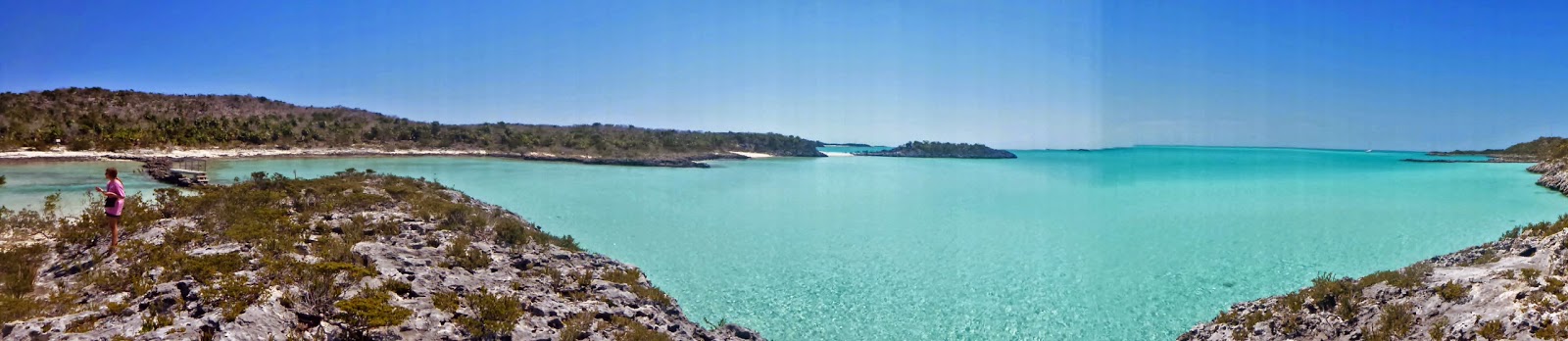
Tom and Emily hiked up towards Boo Boo Hill and Tom slipped on some loose rocks and found a different type of Boo Boo. Despite a bloody knee we enjoyed the views.
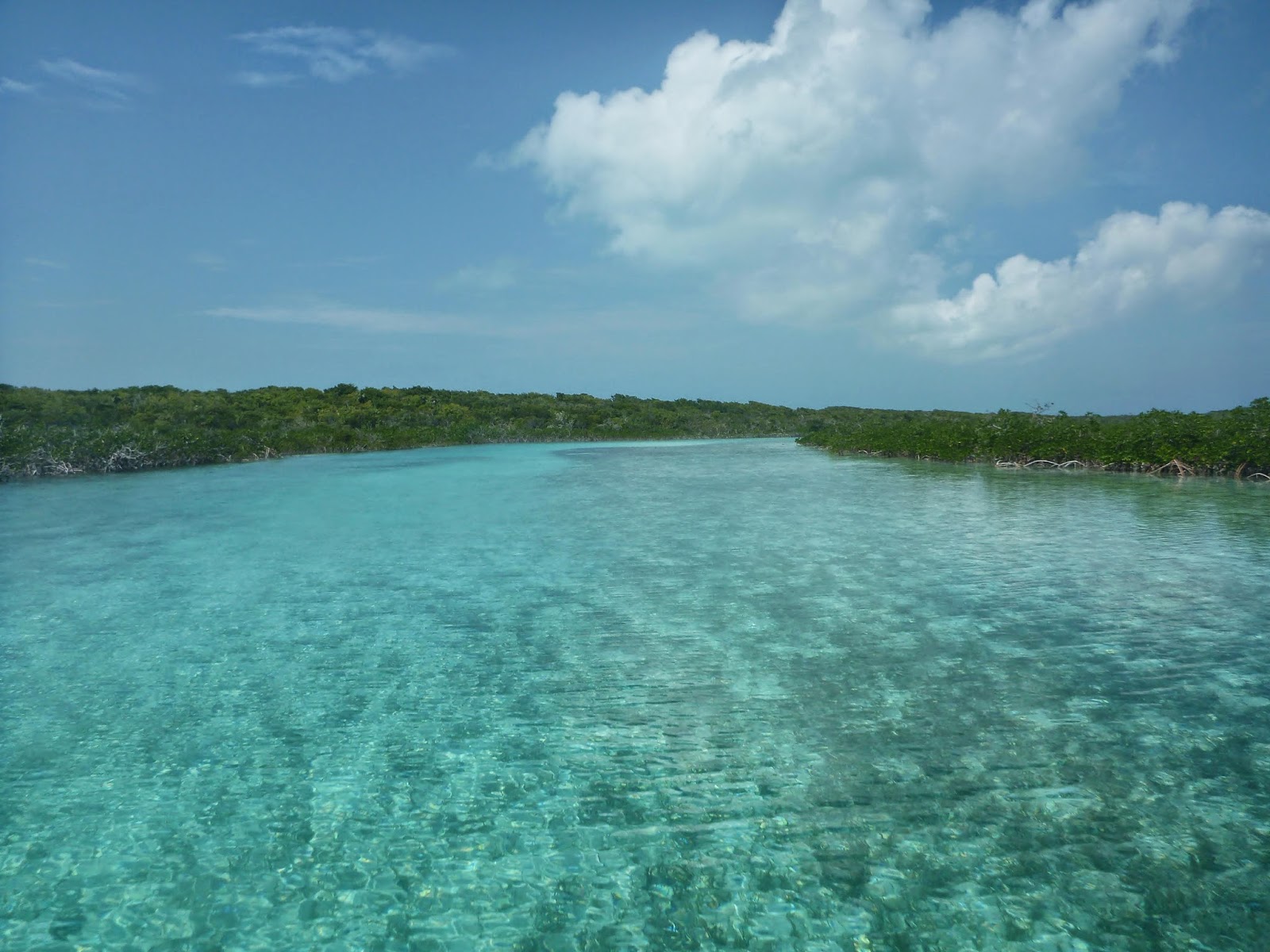
After Wardrick Wells, we stopped at Shroud Cay. This island was new to us and we enjoyed taking the dingy through the winding mangrove streams all the way to the eastern side and a powder white beach.
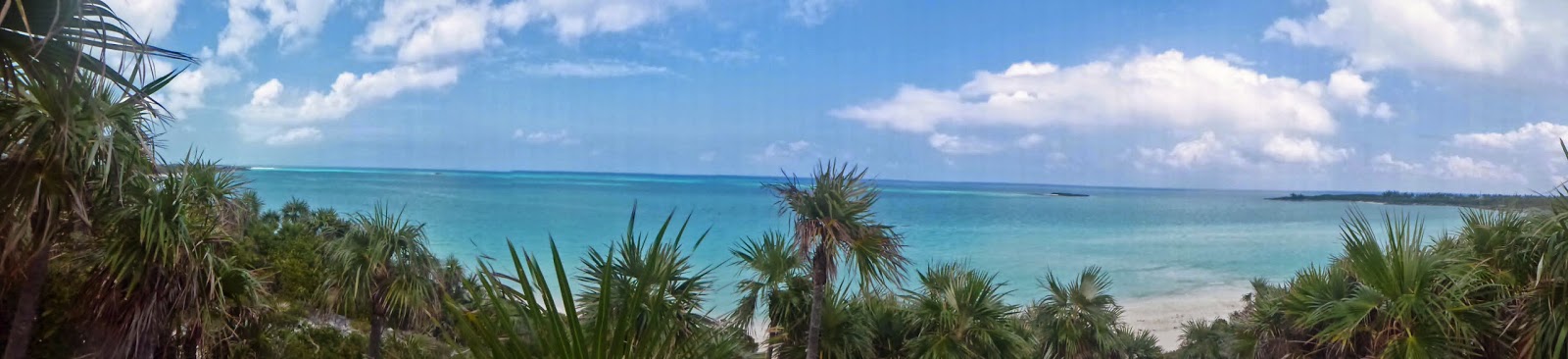
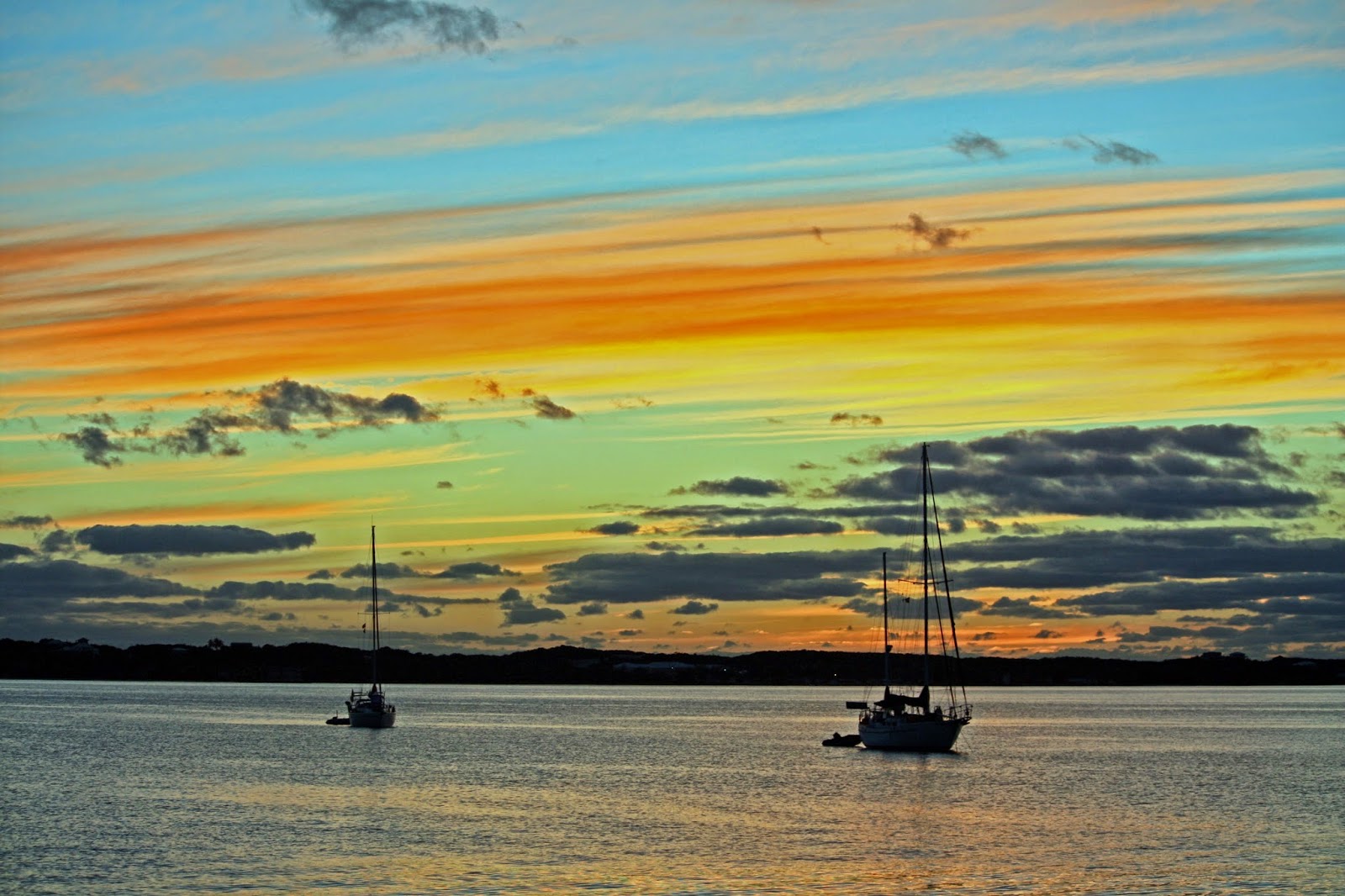
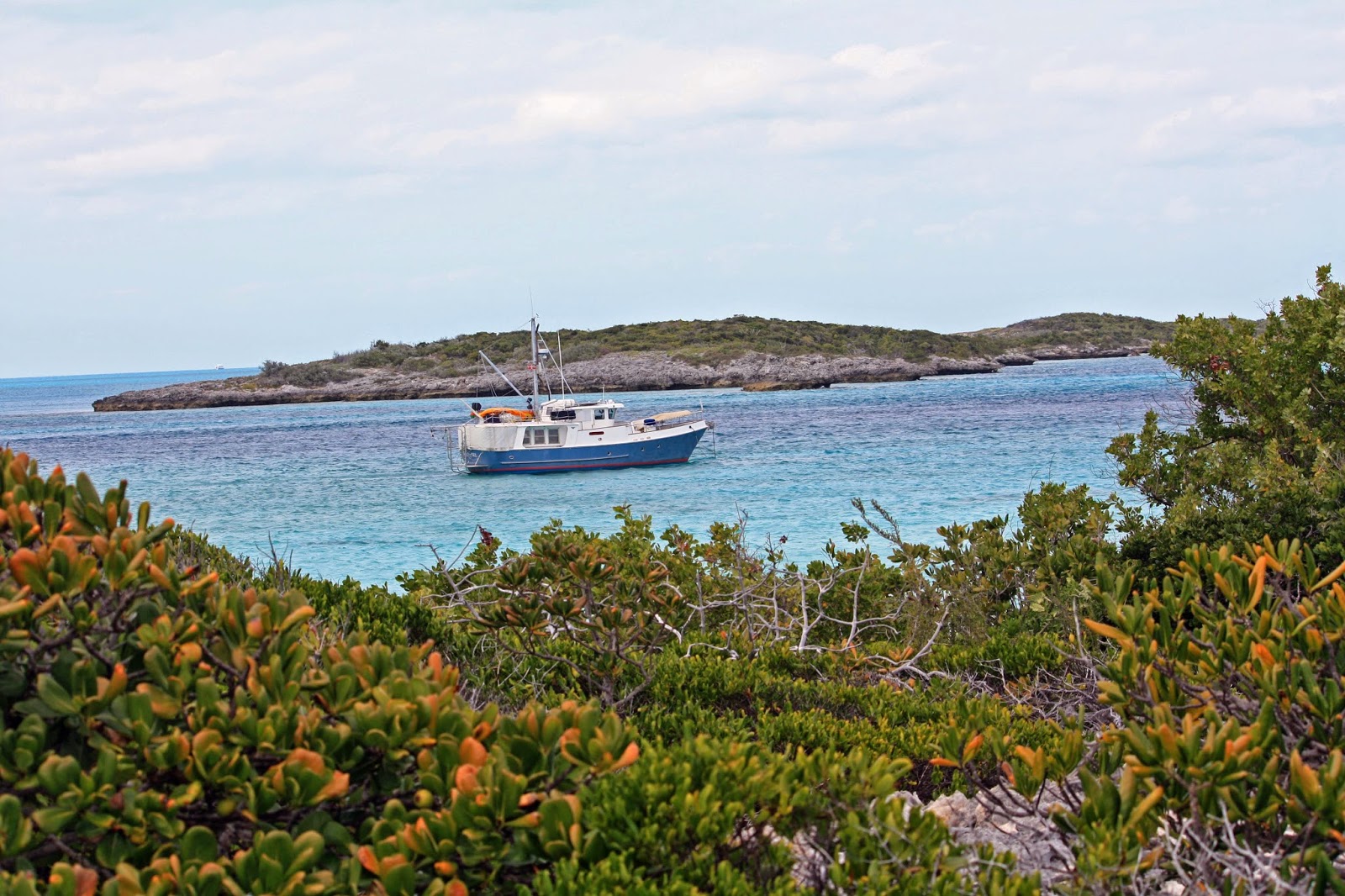
Our last stop in the Exumas was Allen’s Cay. Although crowded in the main anchorage, we found just enough room to set our hook in southwest Allan’s Cay. We were all alone with our private white sandy beach. We were a bit anxious as the winds rose to 25 knots and started clocking around. At two points in this process the stern of Emily Grace was only about 30 feet off the jagged coral coast. The anchor was dug in hard however and held well. This was not the first time we were thankful for our oversized 120 lb Spade anchor!

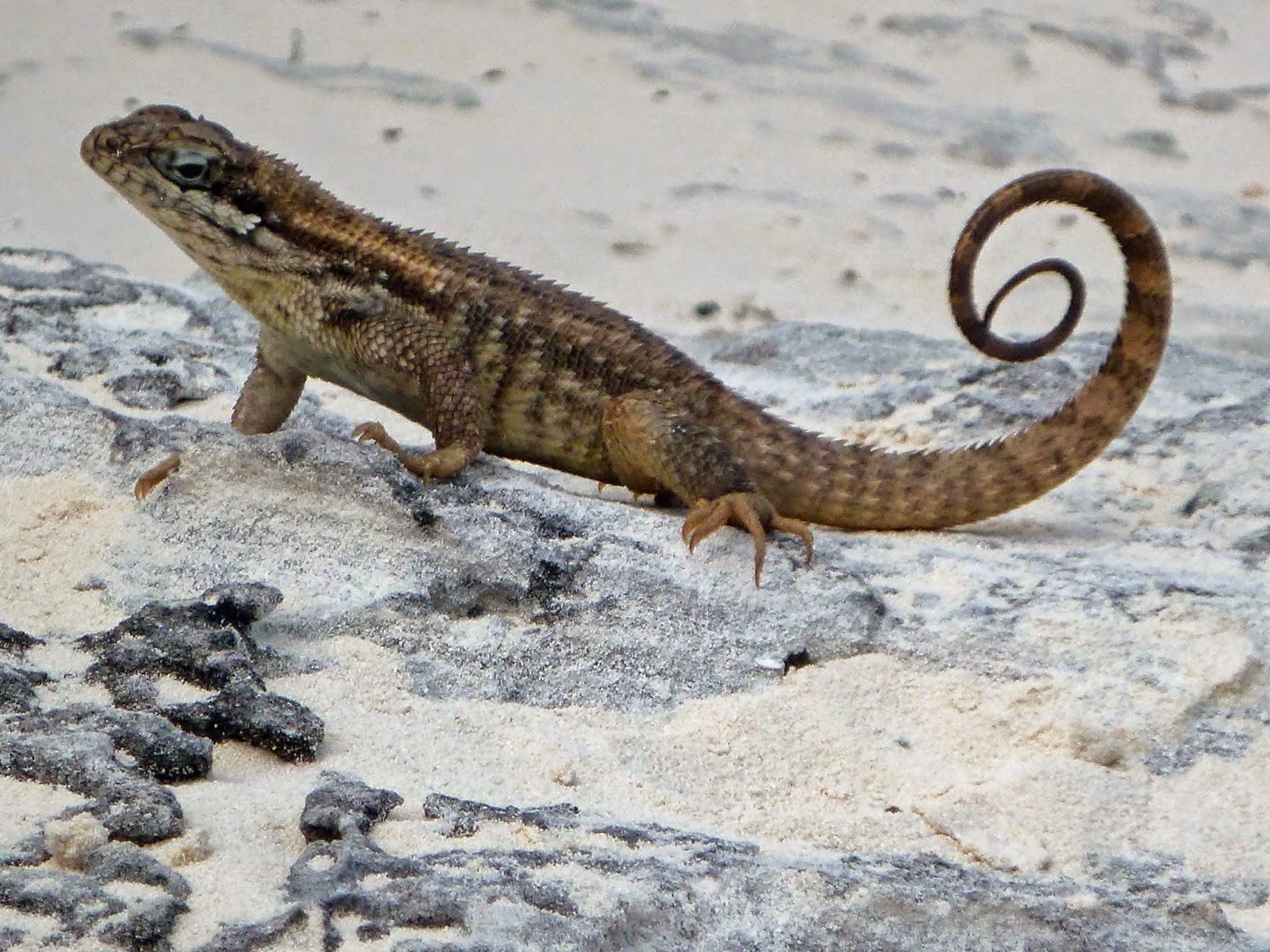
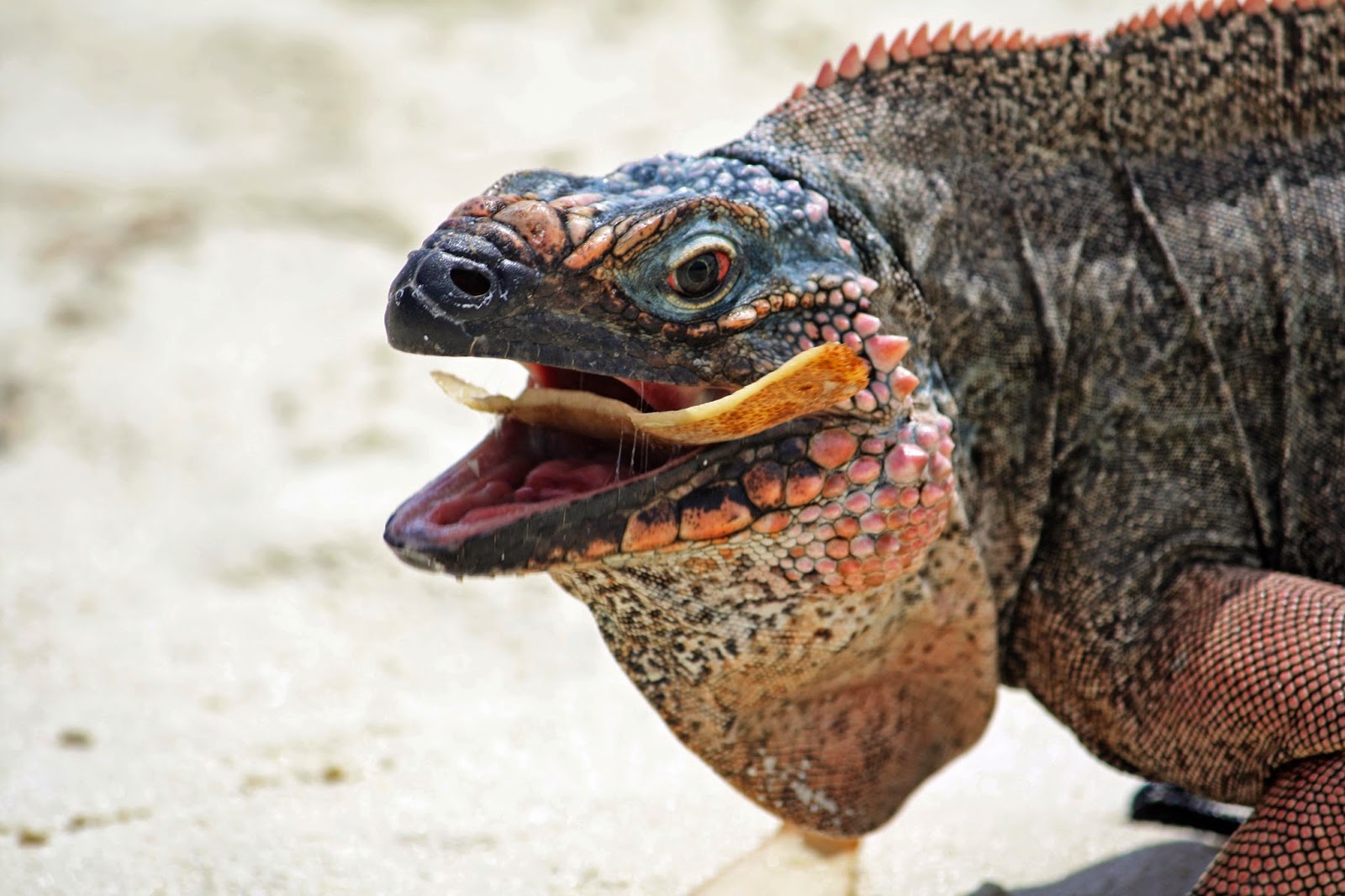
The big attraction here is the iguanas. That same private beach in our cove would swarm with hungry iguanas every time we would come to shore with our table scraps. Judging from their numbers, they seem to be doing just fine.


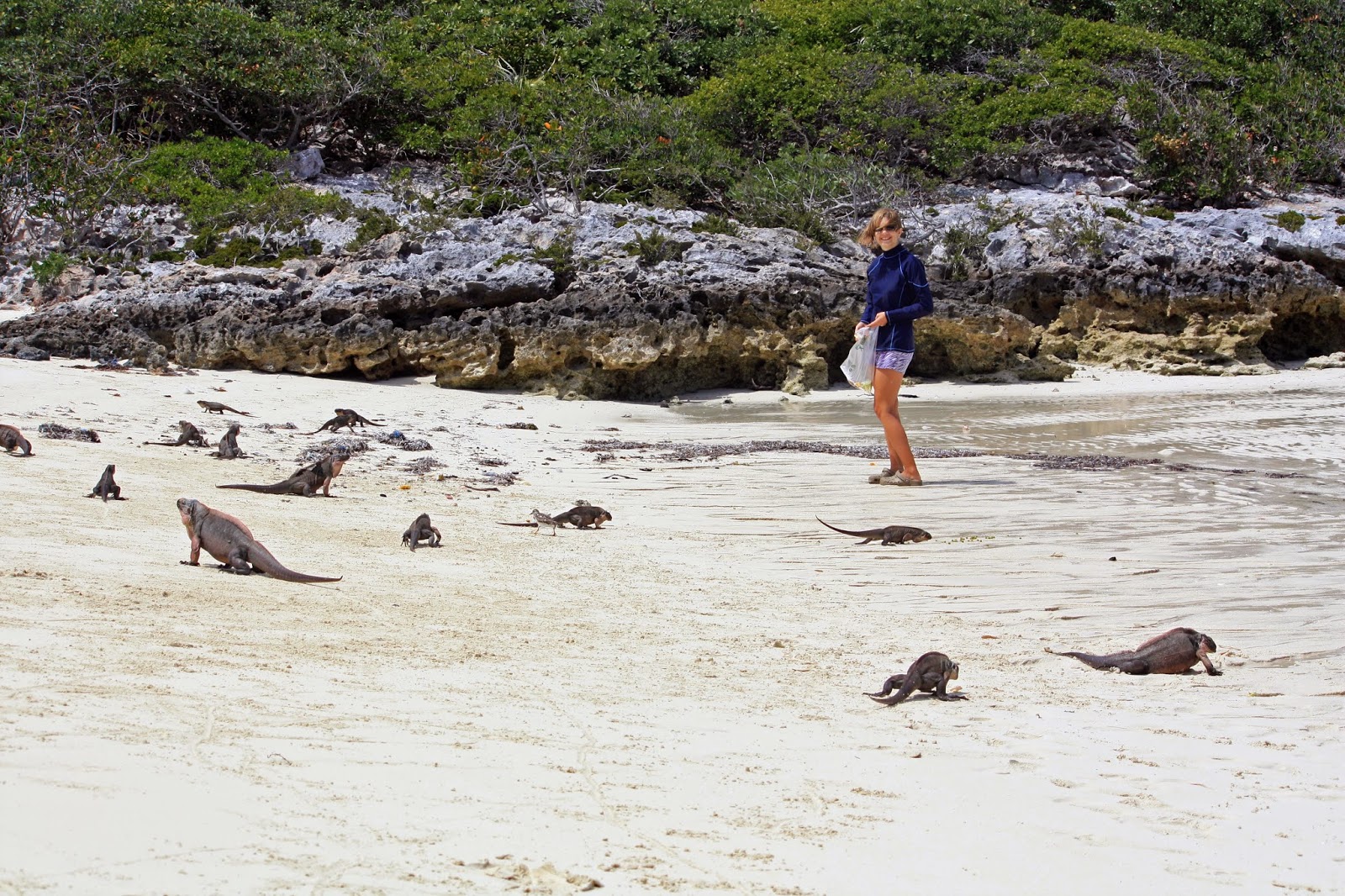
From here we will make a short hop northeast to Spanish Wells at the north of Eleuthera before heading up to the Abacos. These are all new islands to us and we are anxious to see what they have to offer. Come along.

Tom
