Tag Archives | Nordhavn

The Exumas

We spent about 5 days in Georgetown.  We never found a lot of Kid boats but it had
not changed much since 2009.  They still
had an active VHF radio net each morning and plenty of organized activities.  Tom took advantage of the VHF net to
advertise to the 300 cruising boats anchored here and unload some used
items.  We sold our old back-up dingy, 2
HP outboard motor and all of our paper Caribbean charts to 3 different
cruisers.  Here is a pic of our old dingy
being towed away…it had no patches but it was almost 10 years old.

We also found the Chat ‘n Chill conch bar was still there and
we ordered up 3 salads for a beach snack. 
We watched them bring 3 conchs up from the beach, open and clean them
and then chop them up (raw) finely with fresh onions, peppers, tomatoes and
they drowned it all in lime and orange juice. 
I even had them add a little diced habanero hot pepper to mine for some
extra zip!  

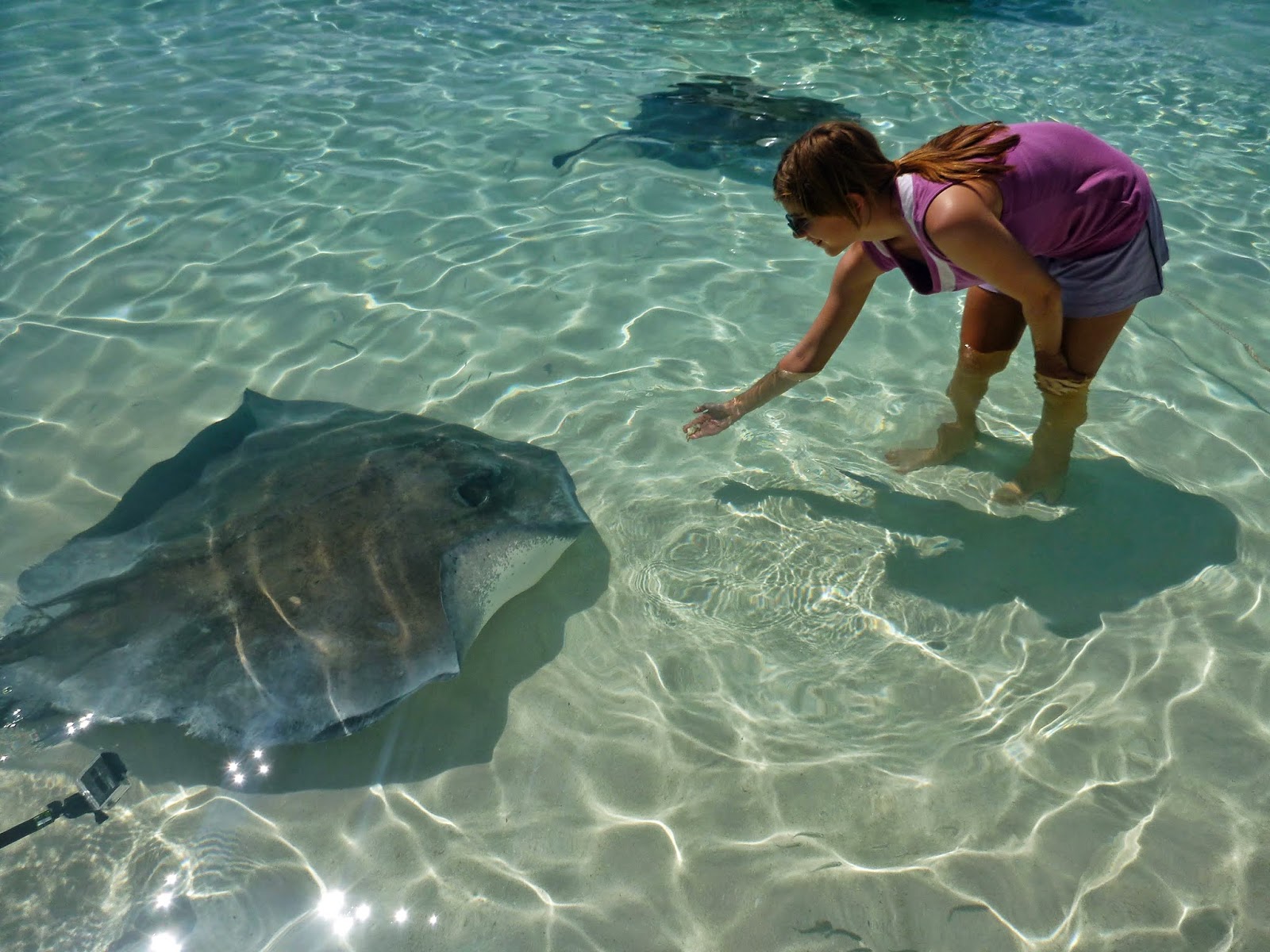
Man, was that good.  Emily enjoyed petting the tame sting rays
that were also enjoying the conch discards.

From Georgetown we moved northwest to Rudder Cut Cay where
we took shelter from the wind that would clock from southeast to west to north
within 24 to 36 hours before returning to the normal easterly direction.  This happened each time a cold front went
through which was happening about every 5 days. 
We had to plan our moves to enjoy the south wind while moving north but
find good shelter from the clocking winds after arrival.  Because of the limited anchorages giving
shelter from the west winds and the sheer number of cruising boats, it was a
challenge to find room. 

We saw 3 good
sized boats driven hard aground on reefs. 
This fellow tried to anchor near me but was convinced (by me) that there was not
enough room and anchored elsewhere.  The
next morning, he was hard on a reef and was pulled off by the blue salvage
vessel.

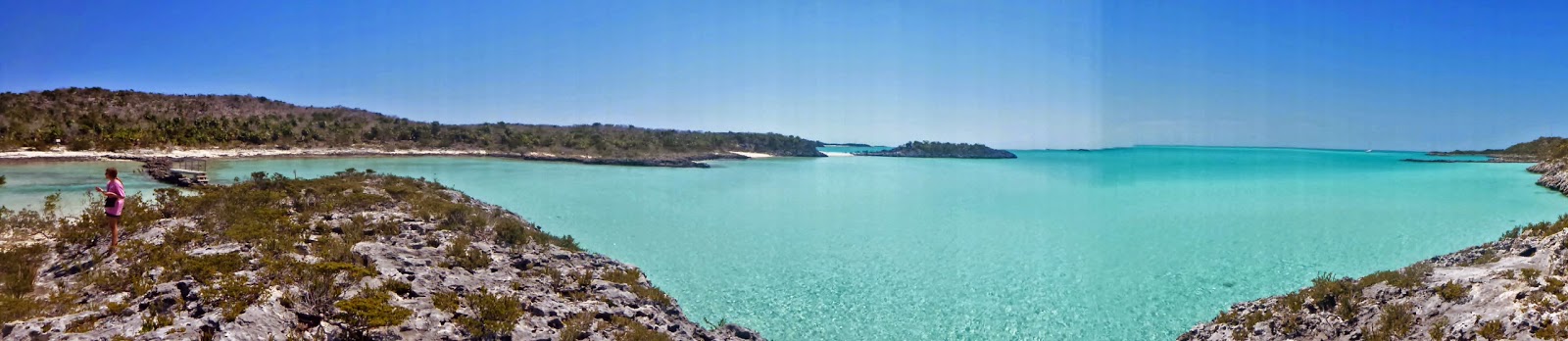
The water was clear at Rudder Cut Cay.  Kim and Emily Snorkeled each day collecting
shells.  We saw an underwater statue here
too before moving north to Big Majors & Staniel Cay. Check out the eyes on the milk conch in the photo below.

 
We enjoyed feeding the swimming pigs again and snorkeling
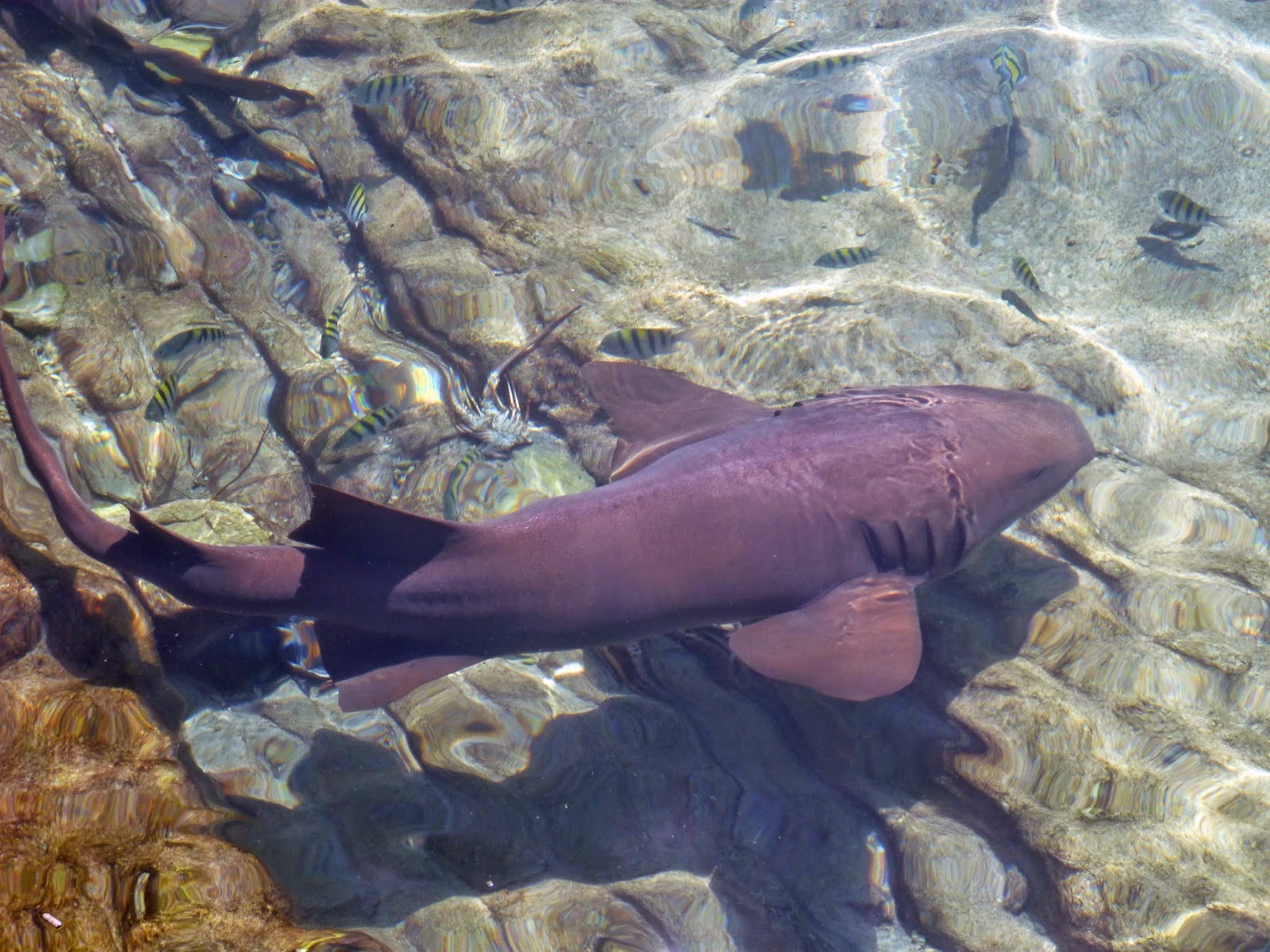
Thunderball Cave.  The nurse sharks are
still hanging around the dingy dock at the yacht club waiting for handouts.

 
Warderick Wells was our next stop but was a disappointment
because we were looking forward to feeding the sugar birds (bannaquits).  During our 2009 stop, the rangers handed out
sugar and Emily had swarms of the birds on her tiny hands.  Environmental Nazis have now stopped handing
out sugar and they discourage feeding them. 
We ignored their idiocy, took out our own sugar and found at least one
bird that remembered the good old days with us. 


Tom and Emily hiked up towards Boo Boo Hill and Tom slipped on some
loose rocks and found a different type of Boo Boo.  Despite a bloody knee we enjoyed the views.

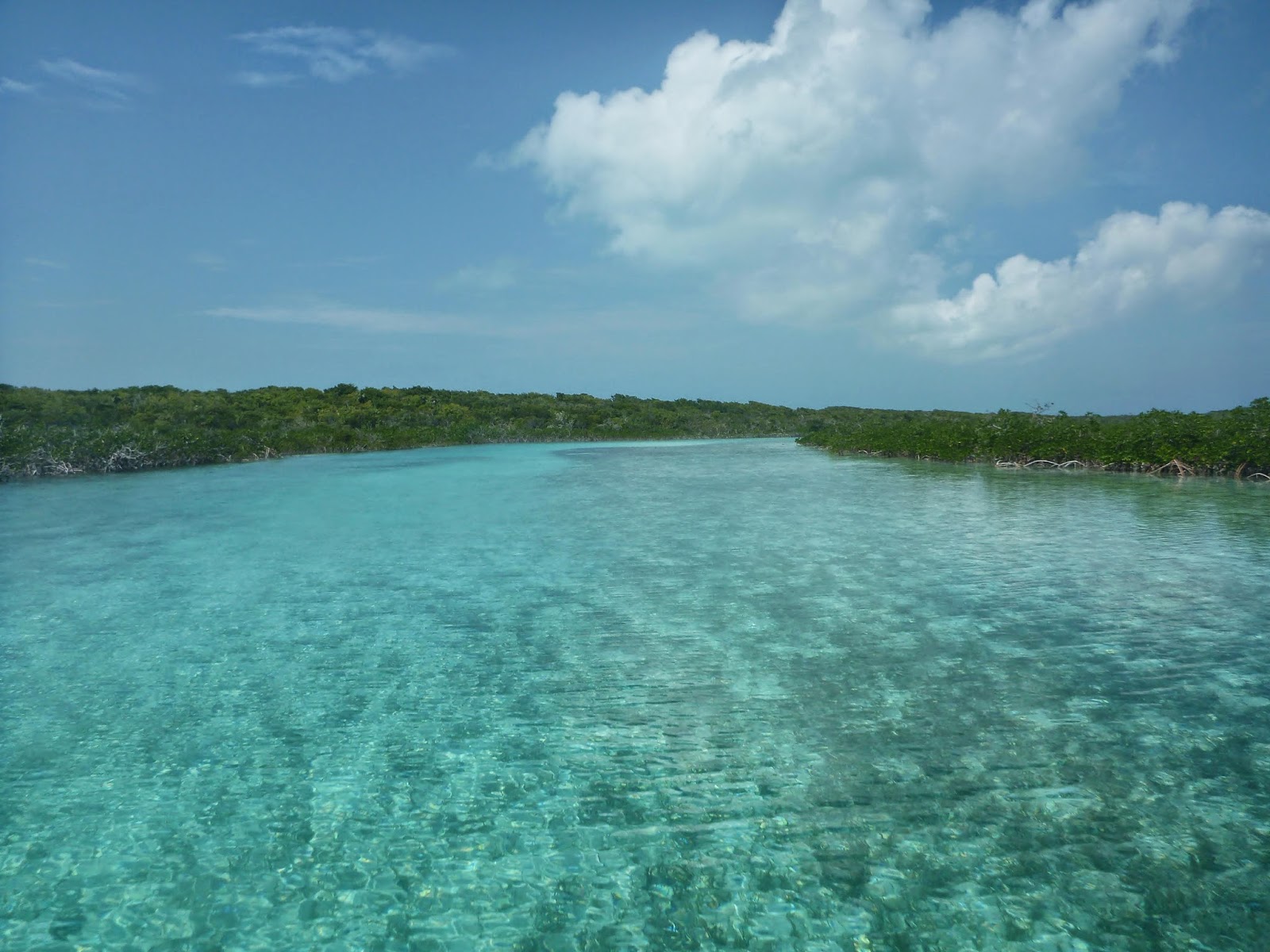
After Wardrick Wells, we stopped at Shroud Cay.  This island was new to us and we enjoyed
taking the dingy through the winding mangrove streams all the way to the
eastern side and a powder white beach.


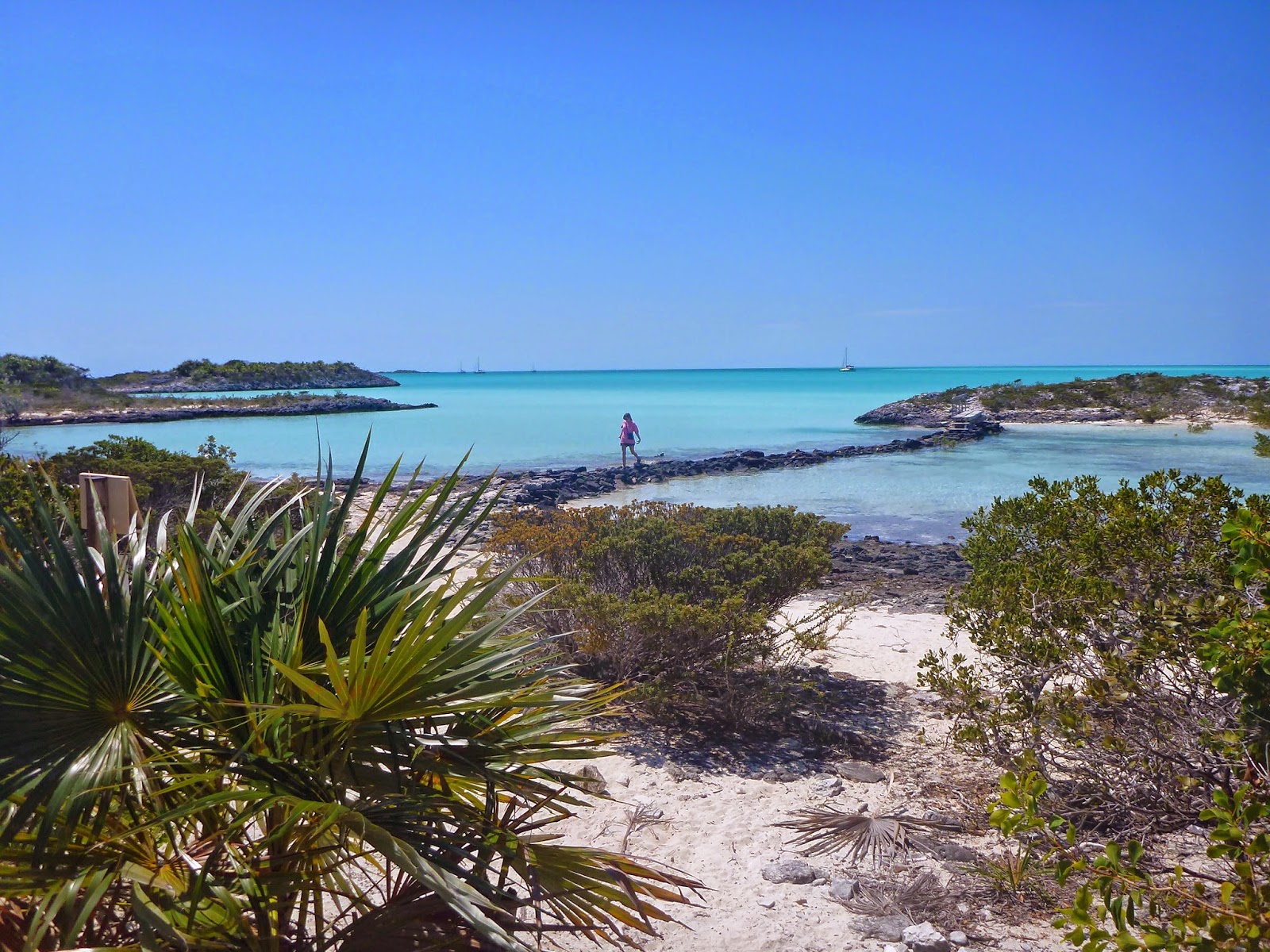
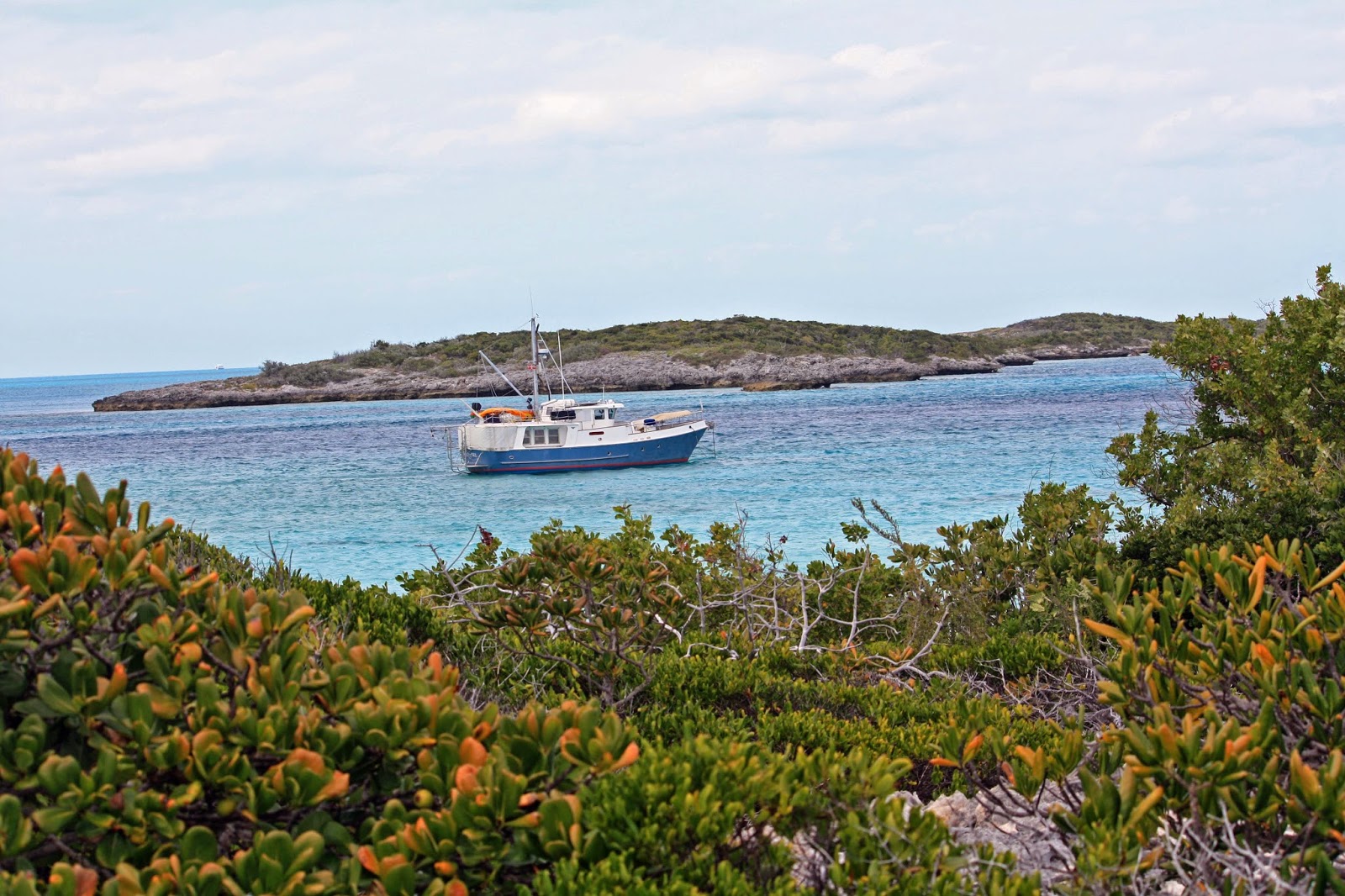
Our last stop in the Exumas was Allen’s Cay.  Although crowded in the main anchorage, we
found just enough room to set our hook in southwest Allan’s Cay.  We were all alone with our private white
sandy beach. We were a bit anxious as the winds rose to 25 knots and started
clocking around.  At two points in this
process the stern of Emily Grace was only about 30 feet off the jagged coral
coast.  The anchor was dug in hard however
and held well.  This was not the first
time we were thankful for our oversized 120 lb Spade anchor!

 
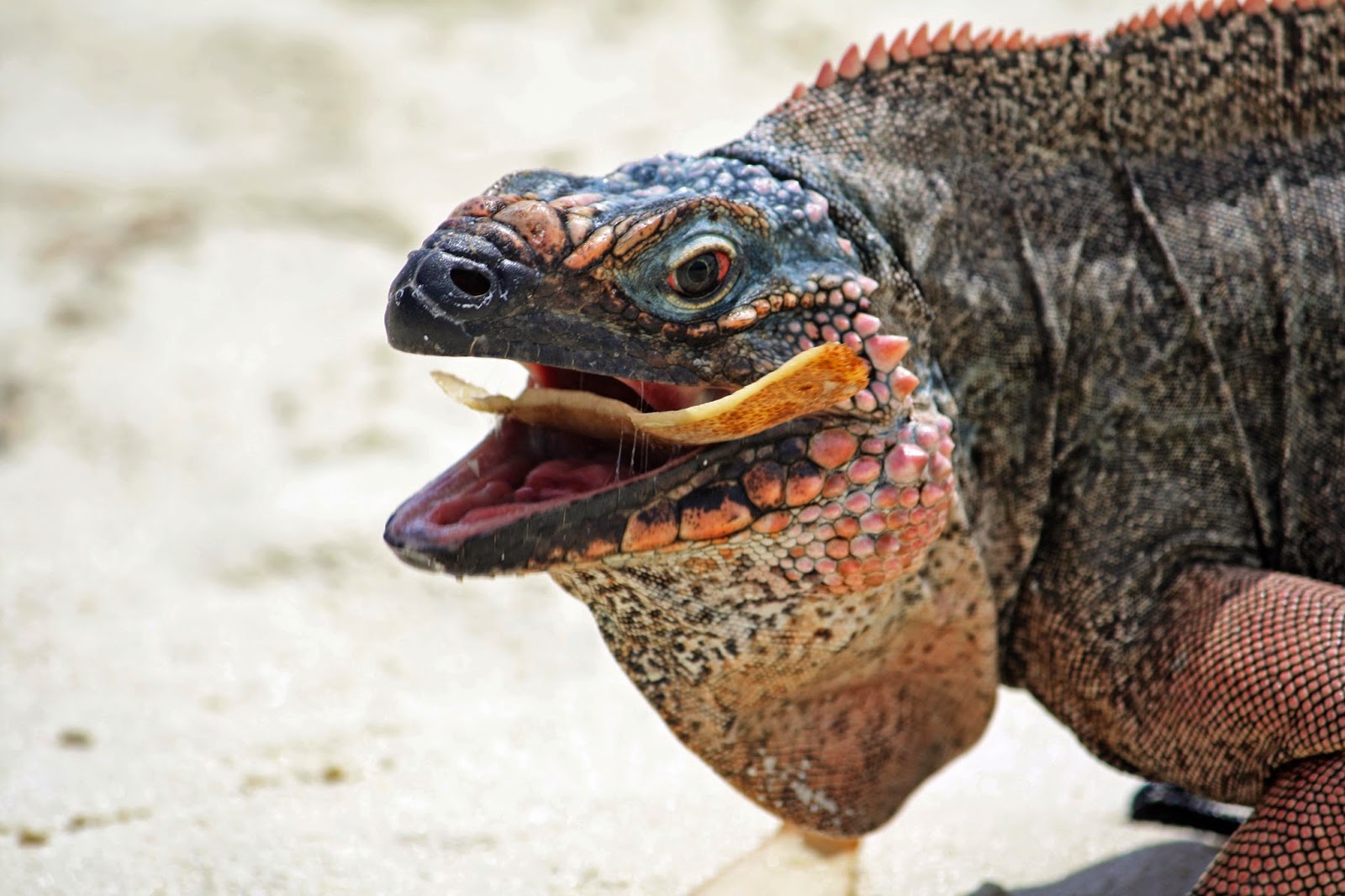
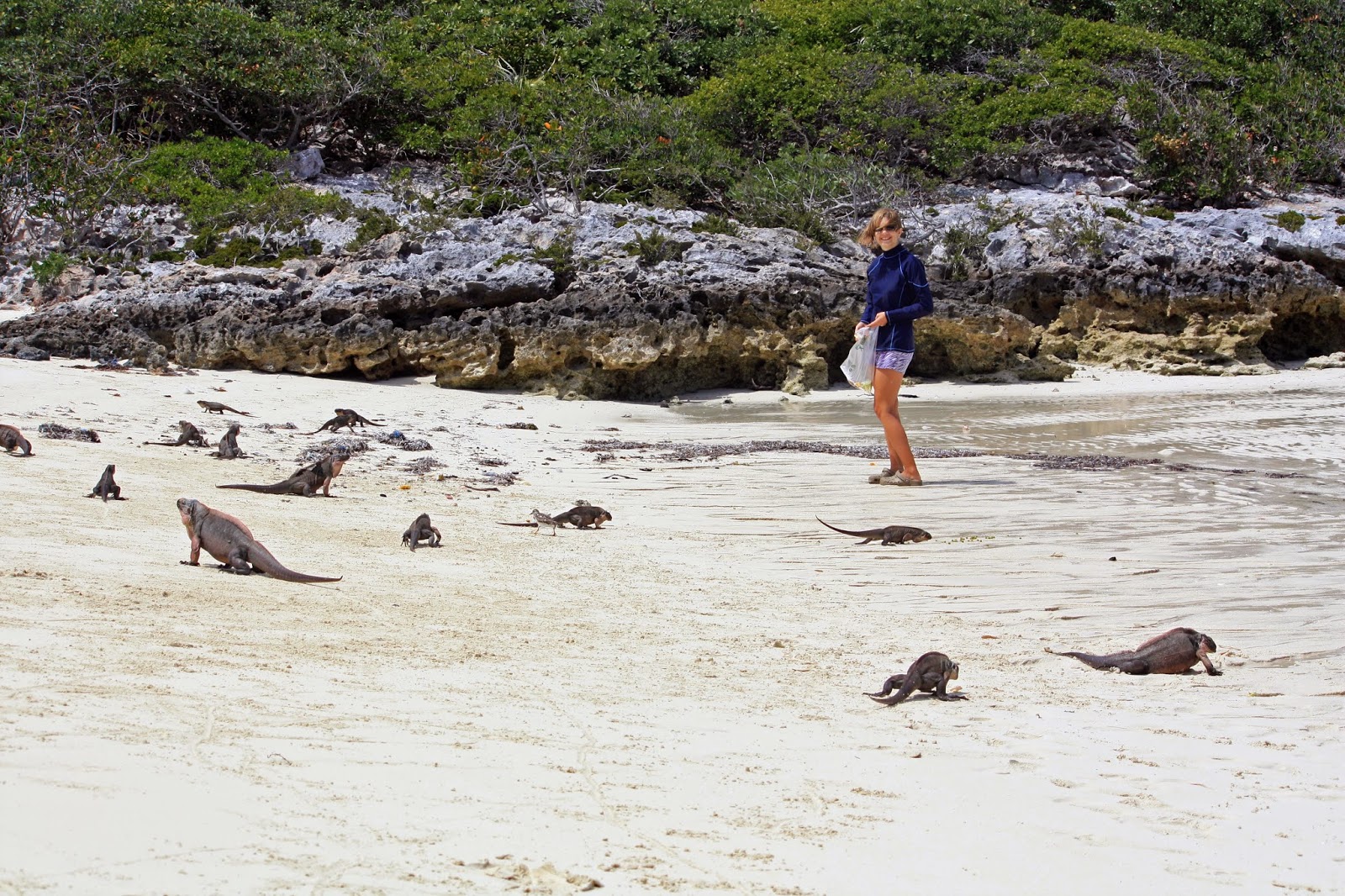
The big attraction here is the iguanas.  That same private beach in our cove would
swarm with hungry iguanas every time we would come to shore with our table
scraps.  Judging from their numbers, they
seem to be doing just fine.

From here we will make a short hop northeast to Spanish
Wells at the north of Eleuthera before heading up to the Abacos.  These are all new islands to us and we are
anxious to see what they have to offer. 
Come along.

Tom

THE ARGONAUT April 2, 2014

CAPTAIN’S LOG

March 15 – 31   Santa Marta to Cartagena de Indias to Bogota’

This morning we are at sea about 200 miles east of Colon, Panama.  I am on watch.  It is 0900, and my watch began at 0700.  Everyone else is asleep.  The Trade Winds are blowing us and the sea, which is a rolling three to seven feet on our starboard quarter.  I love listening to classical music at this time of day; no one is around and I can turn up the volume as much as I want.  The wind is fresh, the sky is a little pink, and the sun is rising.  It is great to be alive!


We left Santa Marta yesterday morning after ten days in Colombia.  This is a wonderful country and we are so glad we came here.  It is clean, it offers very interesting tourist experiences, great food, very friendly and accommodating people, and a rich history and culture.  People work here; no one is loafing. Colombians seem very happy and good natured with an easy sense of humor, yet there is a welcomed interpersonal formality that reflects respect.  It is very safe; we felt no sense of insecurity anywhere, and travel was easy to arrange once we were here.


We arrived Friday March 14 at 0200.  The next day we completed formalities and looked over the town as I reported in my last blog.  Saturday we arranged for a trip to Cartagena and Bogota.   On Sunday we hired a private van to take us by road to Cartagena de Indias.  The fare was a suspicious $35 each for a four hour drive.  As it turned out the van wasn’t really private, unless you think eight people stuffed in a little Korean crap box was a private vehicle.  Our fellow passengers were foreign travelers like us, and luggage was stuffed everywhere.  Anyway, the drive along the coast gave us a chance to see Colombia.  The coast from Santa Marta to Panama and beyond to Ecuador is mostly mangrove wetland.  There are some beaches, but for the most part it is brackish inlets and swamps.  Small, seemingly poor fishing villages dot the coastline except for Barranquilla, a very large city located at mouth the Rio Magdalena, the country’s largest river.  Barranquilla is the third largest port after Cartagena and Santa Marta.    The road was in some places a four lane interstate highway, then, when it entered a town, would converge to two lanes before leaving the town and returning to four, maybe.  This part of Colombia is arid.  Although the Trade Winds blow constantly and are heavy with water much of the time, the rain isn’t released on the coast at this time of year, rather the clouds float over the coastal mountains, hit the Andes and drop their payload.  In Santa Marta it hasn’t rained for four months.


The Andes (called the Sierra Nevada de Santa Marta at this location) in Colombia are divided into three parallel mountain ranges, the Cordillera Oriental (the nominal Andes), the Cordillera Central, and Cordillera Occidental.  The tallest range, the Oriental, begins a few miles east of Santa Marta, where a 16,000 mountain called Mount Bolivar rises from the sea.  The three ranges lie along a southwest path to Ecuador where they merge and turn south and continue down the continent ending at Tierra del Fuego in Chile.  As the Trade Winds strike the Andes at Santa Marta, some of the wind is directed south to the Amazon basin on the south side of the Cordillera Oriental providing rain and moisture to the Amazon Basin.  Bogota’ is located on their northern slopes at a level of almost 9, 000 ft.  On the southern side of these mountains lies the Amazon Valley, which occupies about half of the land mass of Colombia.  Some of the air moves inland between the northern slope of the Andes and the other mountain ranges, the area between which are long, wide, and verdant valleys.  The Rio Magdalena, Colombia’s largest river, flows through the valley between the Central and Oriental Mountains to Barranquilla where it ends in the Caribbean Sea.   From the air, these valleys look like California’s Central or Sacramento Valleys, although more green and lush.  Medellin, Colombia’s second largest city lies at the northeastern end of the Cordillera Central.   Cali, third largest, is south of Panama and on the interior side of the Cordillera Occidental.  We were told that Medellin is the most beautiful city and Cali is home to the most beautiful ladies, although we unfortunately cannot verify these opinions as we didn’t have time to visit them. 


About half of Colombia lies south and west of Panama.  The Pacific coast of Colombia is known as the Darien.   The southern part of Panama and this region are dense jungles formed on floating plant matter, sort of like peat. Part of the Darien is a rich savannah that supports the cattle industry in Colombia.  The wet part of the Darien will not support roads or structures, but it does provide a home to some of the most remote and primitive Indians on the planet.  It is also home to the drug cartels and their cocoa fields.


Cartagena de Indias is best described by pictures, which I have posted on www.tischtravels.com.  Cartagena was “discovered” by the Spanish in 1506 and became site of their gold mint and was the principal port for the export of gold to Spain.  It was so important that the Spanish built the largest fort in the Americas, Castillo San Felipe de Barajas, named after the king.  Cartagena was the center of Spanish power because it was the point from which gold was shipped to Spain and of course it had to be protected at all costs.  In the late 18 century the fort was attacked by a large British force under command of General Edward Vernon whose intent was to dislodge the Spanish and take the nexus of Spanish power in the Americas for England.  However the campaign failed, although they did manage to take Port Arroyo in Panama, and Veracruz in Mexico.


Edward Vernon’s family members were beneficiaries of a land grant in Virginia from the King of England.  They were also friends of the Washington family.  In fact Lawrence Washington, George’s older brother fought in the Cartagena campaign as a British officer under Vernon.   Lawrence Washington bought some of the Vernon’s Virginia holdings and, after his death it was bequeathed first to his wife, and at her death shortly thereafter it fell to George, who named his plantation “Mount Vernon”.  Anyway, Edward Vernon lost the campaign to deny the Spanish the riches of Colombia and South America and it remained in Spanish hands until Colombia was granted independence in 1810 as a result of a revolutionary war led by Simon Bolivar (a Mason like GW). 


There are five islands that form Cartagena and its harbor.  The historic center is on one of the islands and is an intact medieval city that once was home to Sir Francis Drake and others.  It is a UNESCO World Heritage site.  Like other Spanish territories it was the site of an active and vicious Inquisition, which extorted wealth from the rich and prosperous.  Today the former site of execution and torture is a public park named for Simon Bolivar.  Of the other four islands, two are home to beautiful high rise apartments and condos as well as designer shopping areas.   The other islands contain the sea port and the San Filipe fortress.  Cartagena is a beautiful, exciting, interesting city that offers some of the best restaurants we have encountered in our travels.


Before the arrival of the Spanish, Colombia and the locality of Cartagena had long been a crossroads of trading activity between the various tribes of the Americas, including the Incas and Aztecs.  Native peoples inhabited this region for perhaps 20,000 years, and developed a very sophisticated culture and economy, including irrigated fields, trading over long distances and a robust belief system.  Among other beliefs, they worshiped the sun as the source of all power, and gold represented the sun.  Gold could easily be found in the sands of the Rio Magdalena near Barranquilla.  Native peoples created the lost wax method of jewelry making and fashioned beautiful objects of gold, including gold bells to adorn tree branches at the site of buried family members.  From what I could discern, their belief system was very similar to other ancient peoples, and included a belief in an afterlife and the need to send off the deceased man with his principal wife (they were allowed twenty), and as many of his belongings as would be necessary to get him started in the afterworld.  Corpses were usually adorned in gold if they were of a high rank.  The museum in Cartagena and Bogota’ have wonderful pieces of gold art that survived the Spanish plundering of the native civilization. 


One of the more interesting ancient beliefs that seems to have persisted to this day and can be seen in everyday Colombian life is the idea that fertility in the female can be best predicted by a large bottom, or in modern parlance, a big booty.  Younger women here show as much as possible, wear the tightest clothing possible, and accentuate their derrière in a way that appeals to the primal instincts of man, those same instincts that the church has tried to stamp out for 2100 years.  Colombia also sports the fifth highest use of plastic surgery in the world.  Women here employ all the tools God gave them, and a few developed by modern technology, to enhance their natural endowments as much as possible. 


After four delightful days in Cartagena we flew to Bogota’, the capital city.  Formerly known by the indigenous peoples as El Dorado, Bogota lies about 400 miles southeast of Cartagena on the northern slopes of the Andes, 9,000 above sea level.  The city is home to about 8,000,000 people and is the largest city in Colombia.  It is a lovely city with modern high rises, broad thoroughfares, large parks, and clean streets.  We stayed in the nicest part of town and devoted one day to touring its major sites. The major points of interest are the “T” zone near our hotel, which is the center of the city’s restaurant and night life.  The restaurants are world class, lovely with good service and wonderful food.  The Monserrate Sanctuary and former monastery atop one of Bogotá’s’ highest peaks is a spot not to be missed because of the panoramic view of this huge and sprawling city.  The historic Spanish center known as the Candelaria is colorful, very interesting and home to the Botero Museum.  Here you can see the delightful paintings and sculptures of Botero that are sure to bring a smile.   A few blocks further down the hill is the city center and large Public Square, characteristic of Spanish cities.  On the south side is the Catholic Cathedral and offices of the Archdiocese, across the square is the office of the Mayor, and on the other two sides are the National Capital and the Palace of Justice.  Behind the capital is the Presidential Palace. The Palace of Justice was rebuilt a few years ago after a fire that destroyed it.  The fire was set by the minions of Pablo Escobar who were attempting destroy evidence of his misdeeds.  


We enjoyed our week poking around Colombia, but now it was time to get back to ARGO and get underway for Panama.  I wasn’t looking forward to the Caribbean again, which offers potentially high winds and seas, and our trip would take two days.  As it turned out, our trip was fine and we arrived in Colon on the Caribbean side of Panama right on schedule.  Our only problem was the failure of our water maker, which caused a certain level of anxiety and consternation.  We took the whole thing apart at sea, I was crawling around places on the boat I had hoped I would never have to crawl into, but things worked out and the water maker hobbled along.  We are going to transit the canal today (3/31) and tomorrow, and we will complete the story then. 


Thanks for looking in on us.


Randy and Rebecca

Start your own blog now! Free!

THE ARGONAUT April 2, 2014

CAPTAIN’S LOG March 15 – 31   Santa Marta to Cartagena de Indias to Bogota’ This morning we are at sea about 200 miles east of Colon, Panama.  I am on watch.  It is 0900, and my watch began at 0700.  Everyone else is asleep.  The Trade Winds are blowing us and the sea, which is a rolling three to seven feet on our starboard quarter.  I love listening to classical music at this time of day; no one is around and I can turn up the volume as much as I want.  The wind is fresh, the sky is a little…

South Florida Sleigh Ride

By Barbara ListonORLANDO, Florida (Reuters) – A hammerhead shark dragged a college student in his kayak up the Atlantic coast for a two-hour “South Florida sleigh ride” that the kayaker taped with a head-mounted camera and posted on YouTube.Ada…

YOU CAN LIVE THE DREAM – part three

Diane and I are now back aboard Envoy in Lefkas Marina, Greece.

This is the third and final parts of our article published in Pacific Passagemaker magazine.

CONSIDERING THE PRACTICAL ISSUES OF THE LIVE-ABOARD LIFE
Once Diane and I decided to buy a passagemaker and live the on-board cruising life there were numerous issues we considered mostly falling into these categories:

How long you are going to be away each year
The vast majority of cruisers (power and sail) don’t literally spend the whole year away on their boat. Most have families and assets in their home country, and generally leave their boat during the few mid-winter months of their cruising region to return home. An exception to this would be some European cruisers for whom the weather is much kinder in a location like the Med than in their own country. Diane and I spent most of one winter aboard Envoy in Turkey, and haven’t chosen to repeat the experience as there seems little point in sitting out a winter on our boat in a marina when we can be enjoying a New Zealand summer with our family and friends.

How many years you will cruise for
The short answer is as long as you are enjoying the experience, and health, funds and other circumstances permit. We have so far lived aboard most of five years and plan to continue for another three or four. We rarely meet cruisers who’ve lived aboard for more than ten years, although they certainly are around.

Dependent family
Most of the cruising community are in the age group mid 50s to mid 70s, and no longer have school-age children. It’s rare to meet cruisers living aboard with children. Elderly parents generally accept that you are living your lives to the full, appreciate your regular phone calls and enjoy seeing you during return visits home.

Family and Friends
Of course you miss your family and close friends, but some will visit you and share in your cruising experience. Otherwise being able to see your family and friends for at least one period during the year keeps these relationships intact. Loneliness has not been an issue for us and we have made new friendships with other cruisers during our travels.

Work
Most cruisers we meet are semi or completely retired. Many do some form of consulting work or manage their investments remotely, or are able to find some casual work if they choose to. A fewer number of younger cruisers take time out from the work force to go cruising, planning to return to work later.

Your home
Some cruisers elect to sell their house to provide funds for cruising while many others rent them out to provide a regular income. Another option is to simply leave it vacant.

Compatibility and confidence
Many people will say that you won’t get on well together as a couple spending all that time together in the close confines of a boat. Only you will know if this is correct or not, and we probably all know people where this lifestyle would be doomed to failure. Allied to this issue is one partner having a lack of confidence in the other partner’s ability to manage the live aboard process. If you are passionate you are half way there, and the confidence will come with sharing experiences together.

Health
A reasonable but not perfect standard of general health and fitness is required for the live-aboard life – another argument for starting the cruising life sooner than later … life’s time clock is ticking. Nonetheless we have met several cruising couples who’ve needed to return home regularly for various forms of medical treatment. Travel medical insurance is highly desirable as medical treatment can be extremely expensive overseas.

Pets
Overseas regulations concerning the transportation and quarantine of pets are much less strict than in New Zealand, and some cruisers take their pets along. Similarly there are fewer pet restrictions on beaches and in restaurants and cafes. Diane and I have always had a dog or cat at home and loved them dearly, but decided not to keep a pet aboard a boat. Under these circumstances you may need to find somebody to take over or care for your pet so it doesn’t stand in the way of your cruising adventure.

Comfort aboard
When yachtsmen come aboard Envoy they are amazed at the living space available compared to sailing vessels of the same length, and often say she’s like a small ship, or a floating apartment. At 14 metres Envoy is at the lower end of the passagemaker size range, but still has features such as headroom throughout, a queen-size walk-around double bed, full size refrigerator and freezer, four ring gas stove with a near full-size oven, microwave, washing machine and dryer, water maker, two ensuite heads and showers, reverse cycle air conditioning, excellent sound and DVD systems and a generator to provide power whenever needed. Furthermore she has both hydraulic and paravane stabilisers to dramatically reduce roll both under way and while anchored. Comfort is not an issue as we don’t get wet, cold or wind-blown, and Envoy’s motion is rarely lively enough to spill a cup of coffee.

Capital costs
The size, age and condition of your passagemaker determines its initial capital cost with the price range probably starting around NZ$400,000 (240,000 Euros). You could certainly buy a well-equipped Nordhavn 46, in good condition built during the 1990s for about NZ$530,000 (318,000 Euros). Bigger isn’t always better, and remember that the larger vessel you buy the greater will be the cost of insurance, casual and winter marina berthage and repairs and maintenance.

Living costs
Actual living costs such as food, beverages, household supplies and personal spending are about the same cruising as when at home. Maintenance is dearer due to the higher cost of parts and greater distances traveled, and what also bumps up costs is annual travel to and from our boat, additional fuel for the longer distances cruised, and sightseeing ashore – particularly rental cars and accommodation (occasional travel inland away from the boat is well worth the experience in the many interesting new areas). Casual marina prices are also high in the Med, e.g. for our 14 metre Nordhavn 46 typically about NZ$130 (78 Euros) per night plus power and water, sometimes higher. You pay considerably less (or sometimes even nothing) in town harbours, particularly in Greek waters, but the best option is to anchor wherever possible, which is mostly free. Winter berthage rates are considerably less than casual and we’re paying NZ$21 (12.40 Euros) per night including all services and 23% VAT. Some costs are fixed and are for the whole year, such as insurance, winter marina, travel, most regulatory costs and some maintenance, while most other costs including living costs and fuel are variable depending on the time spent aboard and the distance traveled. During 2012 we spent 200 days aboard, and cruised 1,736 miles for 336 engine hours. Excluding living costs maintenance was the largest cost at NZ$26,200 (15,700 Euros). This was about what we expected at 5.4% of Envoy’s estimated value, and on average has been consistent over four years cruising. Second largest was fuel at NZ$9,700 (5,800 Euros) including 3,440 litres of diesel, petrol for the RHIBs, engine oil and cooking gas. Third was marina and regulatory costs at NZ$7,500 (4,500 Euros), while fourth was boat and travel insurance at NZ$6,100 (3,660 Euros). Communication costs including internet and phone is also significant and although this could be reduced by using only Wi-Fi, we prefer to stay connected all the time using pre-pay USBs for internet access. Diane and I look at this not as “cost” but as our “investment in fun”.

For Our Northern Friends

Spring just called and left a message… “Hey, it’s Spring — Sorry I’m late, but I’ll arrive soon. Held up at border by INS.”

Nordhavn Exumas Abacos Bahamas trawler Caribbean Pickwick Boat dogs
Memphis Downtown

Happy Birthday, Codi

We hope it’s a good one.Nordhavn Exumas Abacos Bahamas trawler Caribbean Pickwick Boat dogs
Memphis Downtown

Dolphin Rescue

Found on Doonesbury’s page today.Nordhavn Exumas Abacos Bahamas trawler Caribbean Pickwick Boat dogs
Memphis Downtown

Los Suenos to Golfito Costa Rica

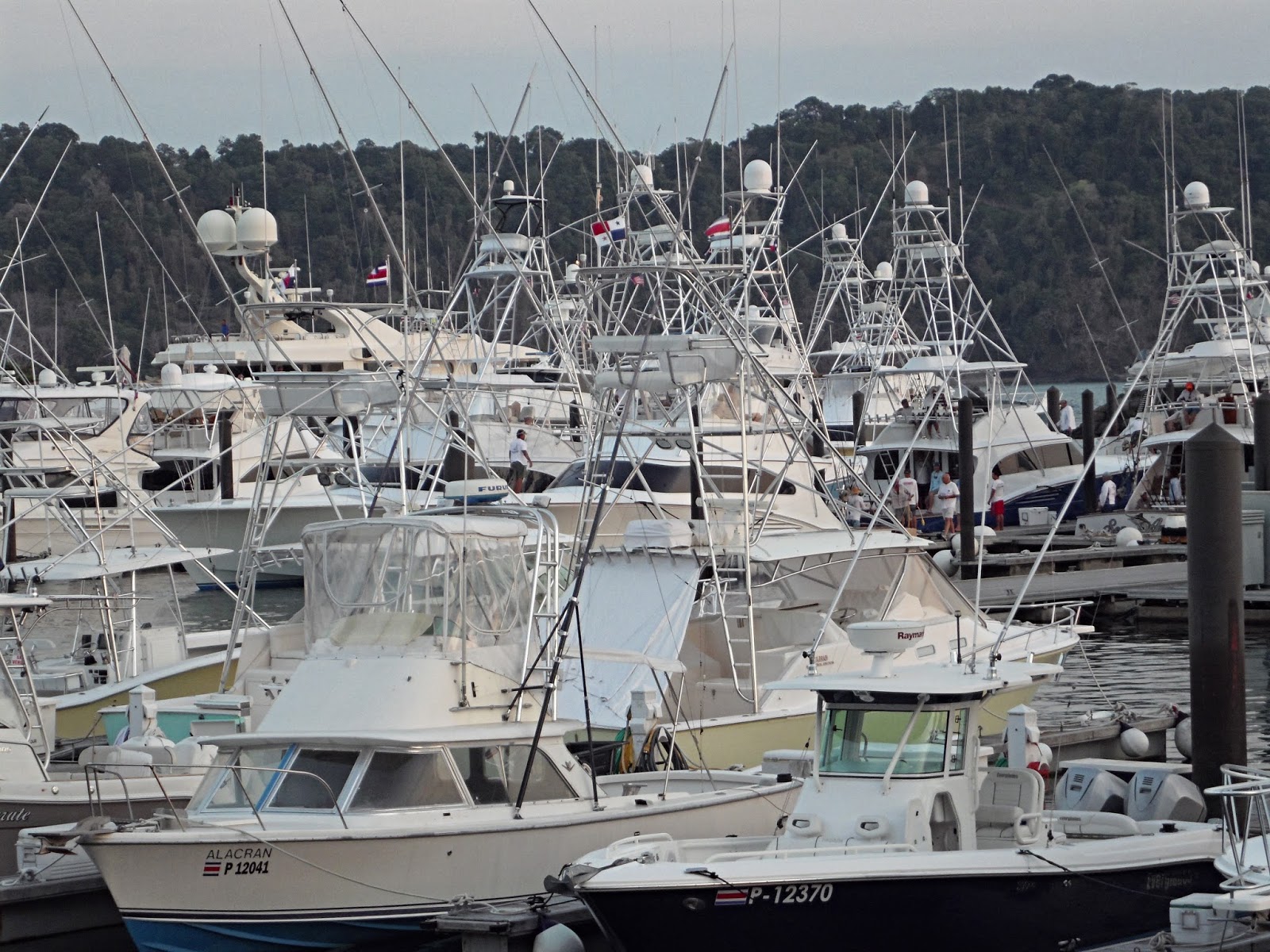
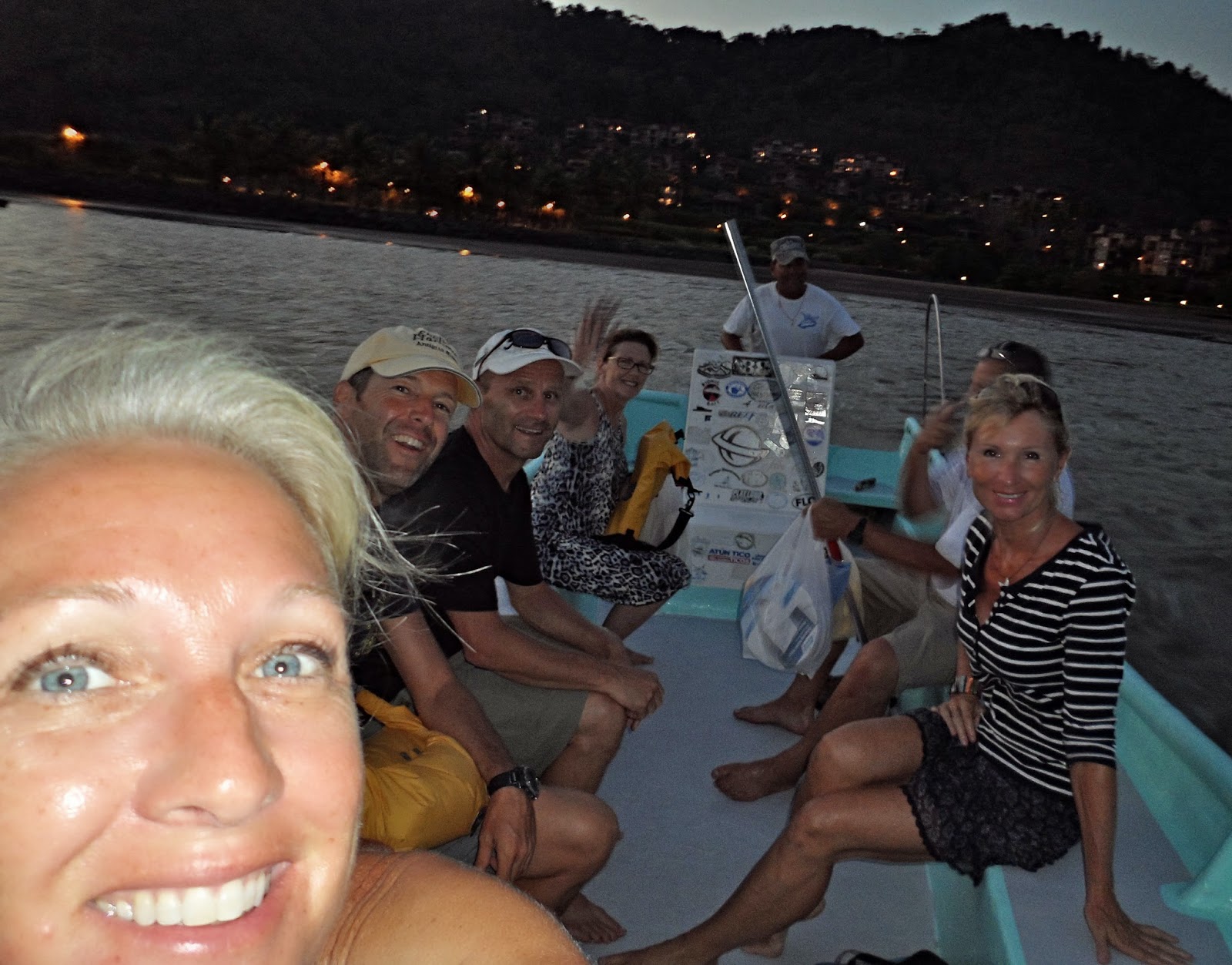
The water continues to stay blue, calm and beautiful as Anna Mae and crew move down the coast of Costa Rica. We have been anchoring in bays and staying in marina’s along the way. We anchored one night in Bahia Herradura and took a panga to shore. The Marina Los Suenos was hosting The 2014 Triple Crown Fishing Tournament. The docks where full to capacity with sport fishing boats. 


A fun panga ride to shore

Fun on the beach


Our next stop was Quepos. We stayed at Marina Pez Vela and struggled with more surge… The facility was very nice, along with helpful and friendly marina staff.  Surge continues to be a problem with our heavy trawler. Anna Mae groans with the pull of the turbulent currents that tug her lines. It makes for a noisy bumpy night and a frustrated crew. Our bumpers and dock lines are looking sadly used.

While at Quepos we explored Manuel Antonio National Park, the most famous biological reserve in Costa Rica.  Our guide pointed out various animal and plant life, we would not have seen much without his help. The tour was relaxing and interesting, but not as much wildlife as we had anticipated. 


The whole family

High up in a tree, a Sloth with her baby.

A male iguana relaxing in the sun. The razor wire didn’t seem to bother him.
I have decided that we are all very spoiled with the amazing wildlife we have  experienced while at sea. It doesn’t matter how many times I watch the dolphins race to our bow and perform for us, it’s always a thrill. We have learned to lean out and wave to get the dolphins attention. They turn sideways and look up at us as we clap for them. Yesterday I took Bill’s harmonica out and blew a few notes. They stayed on our bow for about twenty minutes. We slowed the boat hopeful they would hang around to swim with us. No such luck, as soon as we slowed, they swam out of sight.


Dolphins on the bow of Anna Mae


Anna Mae anchored at Cane Island 


Our one night stay at Isla del Cano or “Cane Island” was magical. It lays 12 miles NW of Oso Peninsula. There are at least 5 plateaus with 10 spectacular dive sites. Tom and Susanne paddled over on their SUP and checked us into the Isla del Cano National Biosphere Preserve. We paid our $6.00 anchorage fee, $8.00 per person snorkel fee and the numerous documents needing our signature. We set our anchor and settled in for the day. We snorkeled coral reefs with pinnacles reaching up from the white sandy bottom. The fish life was colorful, plentiful and amazing. Several sea turtles entertained us with their slow easy movements in the clear blue water. Numerous Manta rays hugged the bottom as we swam above. A couple of white tipped reef sharks swam by along with a large school of grouper. 
We have learned many lessons while in the waters of Costa Rica. Don’t try to check into a Port or a marina on the weekend or before 9am and after 5pm. When asked how long you will be staying, alway request the longest amount of time available and get your fingers ready to sign, sign, sign on the dotted line. This country is very ecologically friendly but they use an entire forest each and every day with the mountains of paperwork they require. The country is lovely, but not boater friendly. We anticipated more boats in these waters, now we understand why. We are still working on paperwork to exit the country. Hopefully we can get everything resolved prior to our scheduled flight home to Oregon in the next few days. Currently tied to the dock at Banana Bay Marina while will continue to struggle with customs and emigrations issues. Thankfully we are in paradise…

YOU CAN LIVE THE DREAM – part two

The 2nd of three parts of our article recently published in Pacific Passagemaker magazine.

Sources of cruising and technical information
Those interested in the live-aboard cruising lifestyle can find valuable information from:
– Voyaging Under Power, the Bible of passage making by Captain Robert P Beebe, 4th edition updated by Denis Umstot
– PassageMaker magazine (US)
– Seven Seas Cruising Association
– Cruising blogs
– Web sites of various passagemaker builders, often with links to cruising blogs
– Brand owners’ websites
– Noonsite.com
– Cruising guides to various areas
– OEM instruction Manuals and manufacturers of the equipment
– Technical books (e.g. Nigel Calder‘s Boatowners’ Mechanical and Electrical Manual)
– Other cruisers
– Local marine engineering companies and/or agents for equipment
– Internet and You Tube searches
– Previous owners of your boat

Buying your passagemaker
Although the boat market has come out of the bottom of the trough it’s still a buyer’s market, and now is a good time to purchase and enjoy your new or pre-owned passagemaker.
A passagemaker is a modest-sized motor vessel that can safely, comfortably and economically cross oceans to take its owners and their families anywhere in the world.
Typically it will be heavy-displacement, single-engined, diesel powered, around 12 to 23 metres in length, with sufficient in-built fuel tank capacity to cruise at least 2,500 miles, easily handled by two people, able to proceed in open seas in most weather conditions, and equipped for long periods of living aboard.
To simplify your selection process a good first step is to decide the specific brand and size of boat you want to buy. An excellent resource is the US magazine, PassageMaker, having a wealth of useful information about passage making as well as listing many vessels for sale and providing an excellent guide to market values.
Passagemakers are technically complex making a comparison of different vessels for sale with varying equipment levels challenging. We used a spreadsheet to list vessels plus their equipment and inventories so that we were able to objectively compare what was included with each vessel, and judge their relative value.
Consider the location of vessels for sale and your intended cruising area. We wanted to use our passagemaker in the Med so primarily looked at vessels located in Europe.
Allied to the location issue is the complex one of port of registry. If you importing a vessel to your home country you may be required to pay some form of tax or duty. If you are locating a vessel elsewhere you will often be able to avoid this indefinitely. For example our New Zealand-registered vessel can remain in EU waters up to 18 months at a time without paying tax (VAT). Before the expiry of the 18 month period it’s only necessary to leave EU waters for a few days, and the 18 month clock is re-set. This is a complex issue and if buying offshore we suggest involving an experienced marine solicitor to ensure the vessel is unencumbered, and that correct documentary procedures are followed to minimise your liabilities.

You can cruise to stunning places like this bay in Croatia

Do all live-aboard cruisers cross oceans?
Absolutely not; there are literally thousands of people living aboard all manner of boats, and some do cross oceans, but a much large number enjoy what I’ll describe as adventurous coastal cruising.
Our live-aboard experience is five years cruising 11,000 miles in the Med but we’re rarely more than 40 miles from the nearest land. Many cruisers enjoy fantastic cruising locations like the Med, the Bahamas, North and South America, and South-East Asia without needing to venture across the major oceans, and while it’s a great feeling to have a boat that is ocean-capable, the majority of cruisers elect to ship even these vessels aboard purpose-built freighters rather than traverse the large distances on their own hulls. From a cost perspective the two options are generally considered to be similar. Many of the cruisers who do cross oceans take extra crew along to assist during that part of their voyage. We greatly admire the exploits of folks like Jim and Suzy Sink, who in 1990 were the first to circumnavigate the world aboard a production motor yacht, Salvation 11 – a Nordhavn 46, covering over 50,000 nm during five years, but we don’t plan to do that ourselves.

Read the 3rd and final part of this article next week.