Day 101 – 365 Project…Wisteria

Welcome to day 101 of  365 photos…the wisteria around here in North Carolina is beautiful at this time of the year. Invasive but beautiful. This particular wisteria was  grown and cultivated along a fence line and it looked so nice that I had to stop and take a photo of it. While I was walking… Continue Reading

The post Day 101 – 365 Project…Wisteria appeared first on Moosetique Musing.

Sandinsanity 2014 has begun

Well, back to it. Sandinsanity 2014 has officially begun! One of the last things I did last year was lay the last layer of glass on the keel. I hadn’t put a sander to it at all so that’s where I started today.All the fabric edges are fairly pronounced …

The Abacos

Normal
0

false
false
false

EN-US
X-NONE
X-NONE

/* Style Definitions */
table.MsoNormalTable
{mso-style-name:”Table Normal”;
mso-tstyle-rowband-size:0;
mso-tstyle-colband-size:0;
mso-style-noshow:yes;
mso-style-priority:99;
mso-style-parent:””;
mso-padding-alt:0in 5.4pt 0in 5.4pt;
mso-para-margin-top:auto;
mso-para-margin-right:0in;
mso-para-margin-bottom:auto;
mso-para-margin-left:0in;
mso-pagination:widow-orphan;
font-size:11.0pt;
font-family:”Calibri”,”sans-serif”;
mso-ascii-font-family:Calibri;
mso-ascii-theme-font:minor-latin;
mso-hansi-font-family:Calibri;
mso-hansi-theme-font:minor-latin;}

We had a smooth
passage north towards the Abacos and our first stop was at Spanish Wells in
northern Eleuthera.  The winds were west
so we tucked on the east side of Meeks patch and the next day as the winds went
North we anchored just south of Russell Island. 
From here it was an easy dingy ride into Spanish Wells.

Spanish
Wells is a very unique island. It is almost all white and very prosperous. It
is also dry so no alcohol is sold or served in restaurants. The main industry
is fishing and the major catch is crayfish or Bahamian Lobster. Spanish Wells
supplies over half of the lobsters for all of the Bahamas and the fisherman
make a very good living.  We saw several
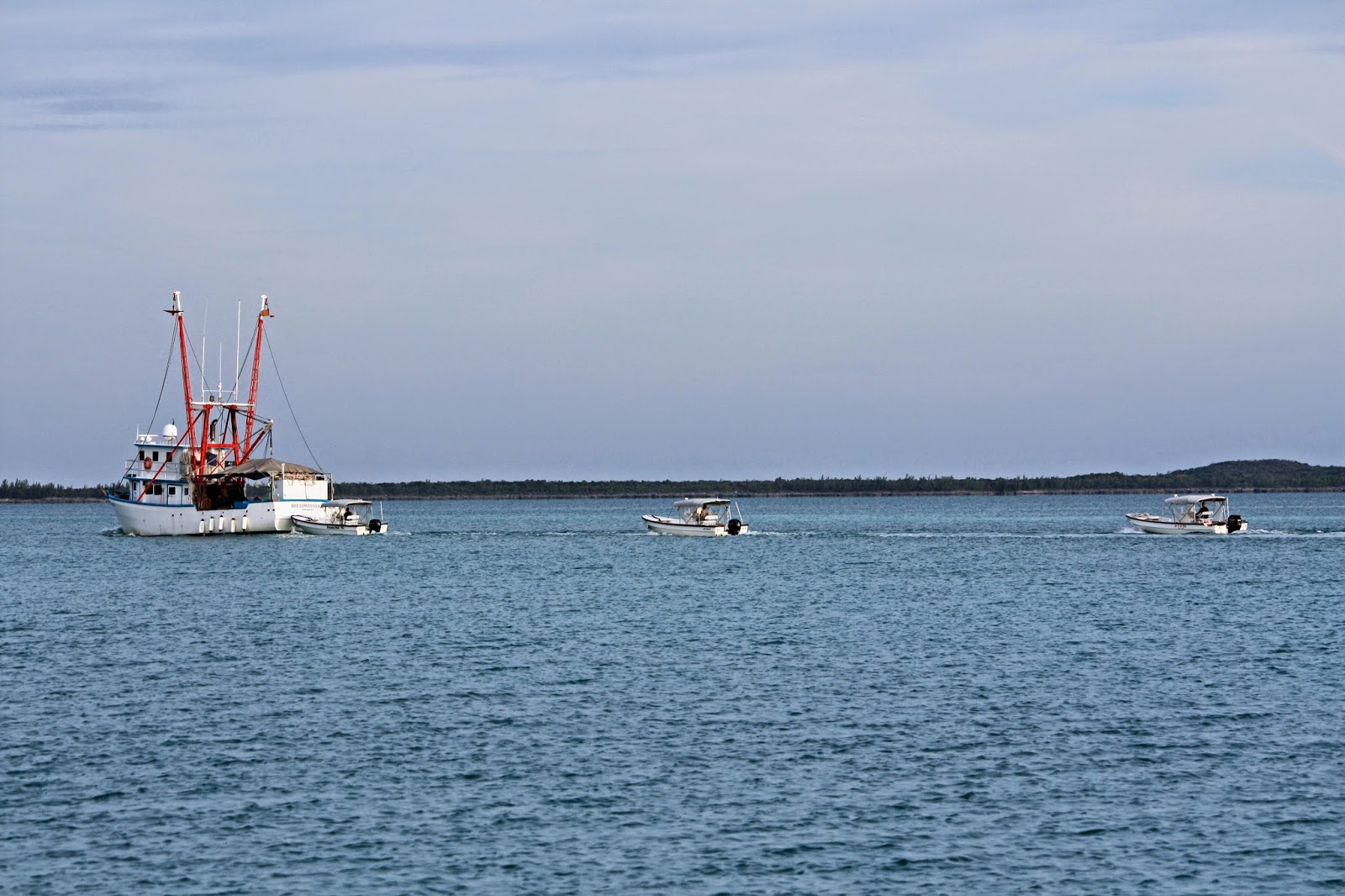
of the mother boats returning to harbor with their catch.  They towed the small boats used by divers
hunting for lobster and conch.  Most
mother ships had at least 3 and sometimes as many as 6 of the small boats.
We went
in and filled a propane gas tank, did some food shopping and had a nice
lunch.  Kim suffered without her normal
Kalik beer but somehow survived.  These
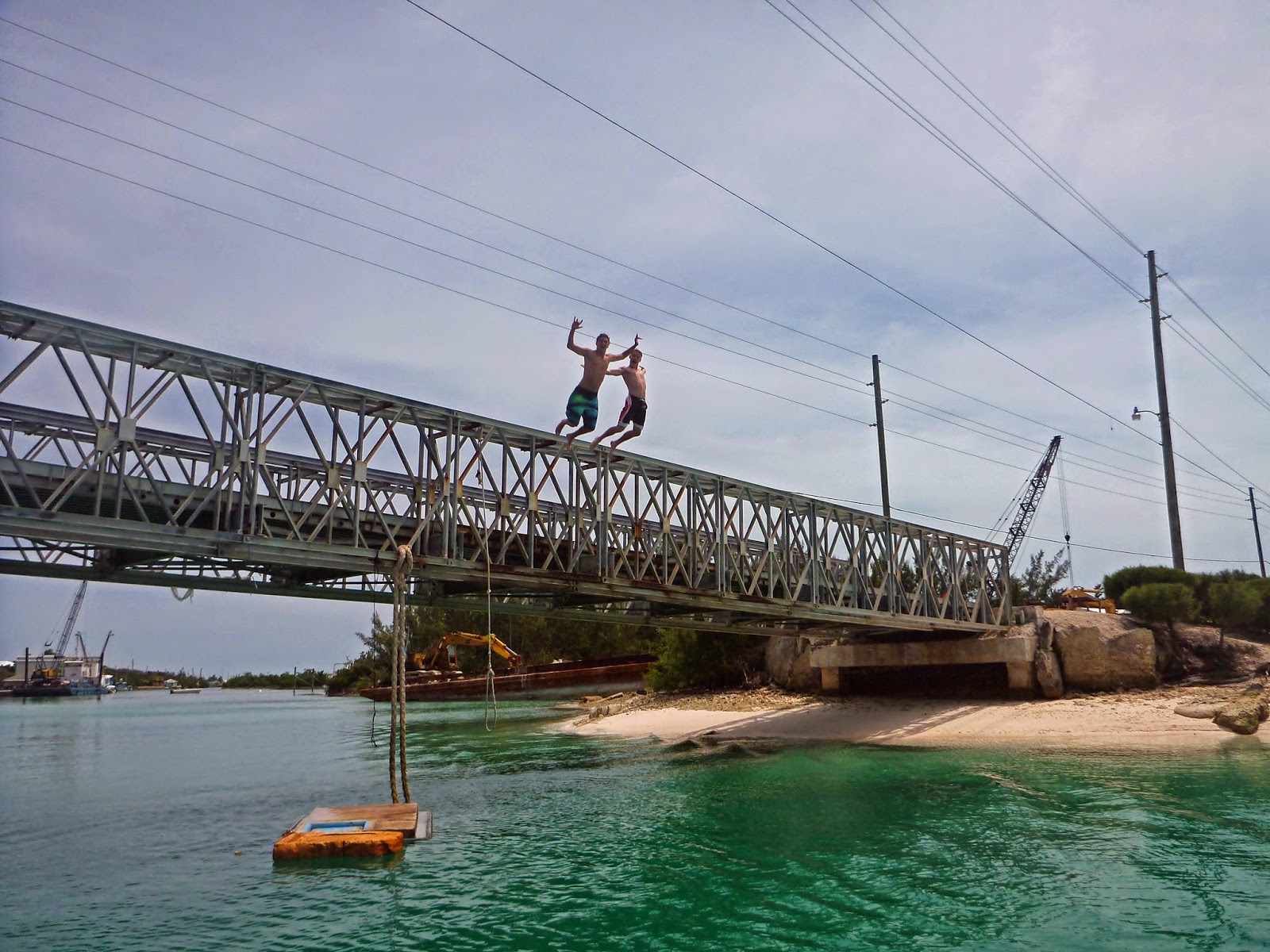
kids were jumping of the bridge and agreed to perform for us.  We bought some grouper directly from a
fisherman but the lobster prices were too dear for us.
After a
quiet night we made the 10 hour passage to the Abacos and anchored just inside
Lynyard Cay where we found a calm spot to drop the hook in about 8ft over white
sand.  The next day we took a 2 mile
dingy ride into Little Harbor.

Our guidebooks say Little Harbor “comes close to anyone’s dream of a
Bahamian hideaway”. It is a much protected bay with a mixed shoreline of
high rock cliffs and caves, a smattering of cottages, and a sandy beach. 
We were enticed
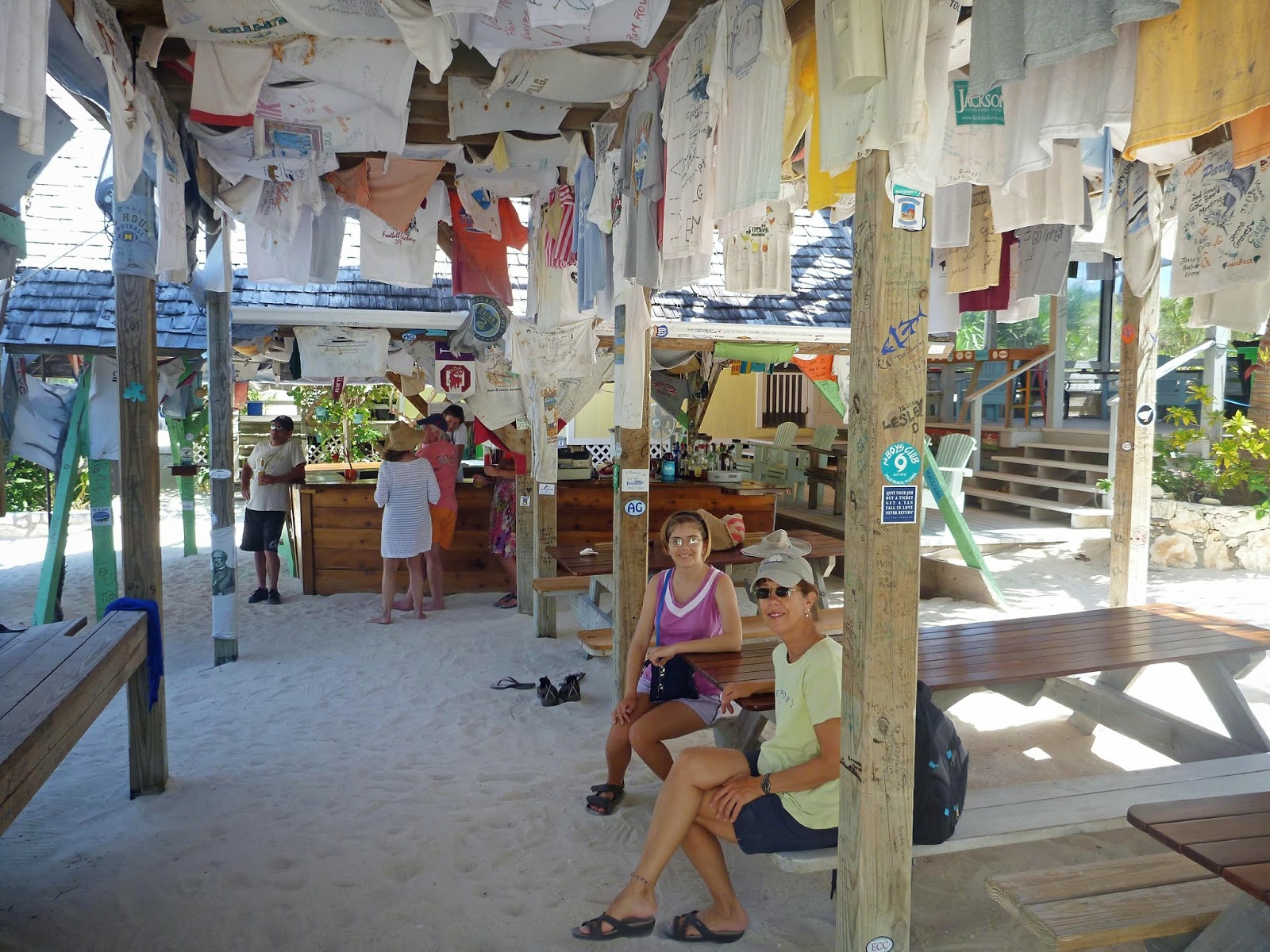
ashore by the aromas wafting from Pete’s pub. The pub has a roof, but no walls
or floor, a small bar area and large eating area with heavy wood tables and
benches that sit on the sand. You could wiggle your toes in the warm sand floor
and read the signed tee shirts hanging from the ceiling. The pub served
burgers, conch and a variety of fresh caught fish…grouper, snapper, wahoo,
and Kim had trigger fish…excellent. After lunch at the pub we wandered to the
Gallery where bronze works were displayed and for sale.
 
This is the Gallery,
Studio and Forge of the late Randolph Johnstone, well known artist of bronze
sculptures. His sculptures became famous and ultimately lucrative. One of his
large works, titled “St. Peter: Fisher of Men,” rests in the
Vatican’s museum in Rome. It is now his son Pete Johnston, himself an acclaimed
bronze & wood sculptor, who operates the facility. 
  
There were some
pieces done by the late Randolph Johnstone but most of the pieces were done by
his son Pete (hence ‘Pete’s Pub’). Emily bought a nice leather belt with a cast
turtle buckle.  Further along the path we
came to the Studio and Foundry, where the bronzes are cast. We were unable to
see the casting process, which is done only a few times during the summer
season.
We met a nice
couple cruising on Mud Puddle Rose, a
Grand Banks, and we went north with them for a snorkel on Sandy Cay.  The snorkeling was good but the swell made it
a little rolly.  After the snorkel both
boats moved north just outside Hopetown for calmer waters where Joe and Susan
joined us on Emily Grace for dinner
with Kim’s nasi goreng. Joe was
full of cruising tips for the few remaining cays to my northwest and it was a
nice evening.  They brought their poodle
Bocci and Emily enjoyed playing with her.
 
Next we motored
north to Hopetown.  Hope Town was settled
by British Loyalists who were seeking safe refuge after the American
Revolution.  Many of the settlers came from the Carolinas, by way of East
Florida, after that area was turned over to Spain in the Peace of Paris
(1783).  The same treaty called for the evacuation of New York by the
loyalists.  Many people moved back to England, Canada, or south to the
British Caribbean.  The initial settlements were at Carleton (near the
current Treasure Cay) and Marsh Harbour.  By 1785, there were over 1,000
refugees in Abaco who were distributed in five or six settlements.  The
settlement at Hope Town was founded in 1785, in part, by a widow from South
Carolina named Wyannie Malone.  Wyannie, along with her children, started
a dynasty in Hope Town that spread the Malone name throughout the Bahamas, over
to Florida, and outwards from there.
Every magazine
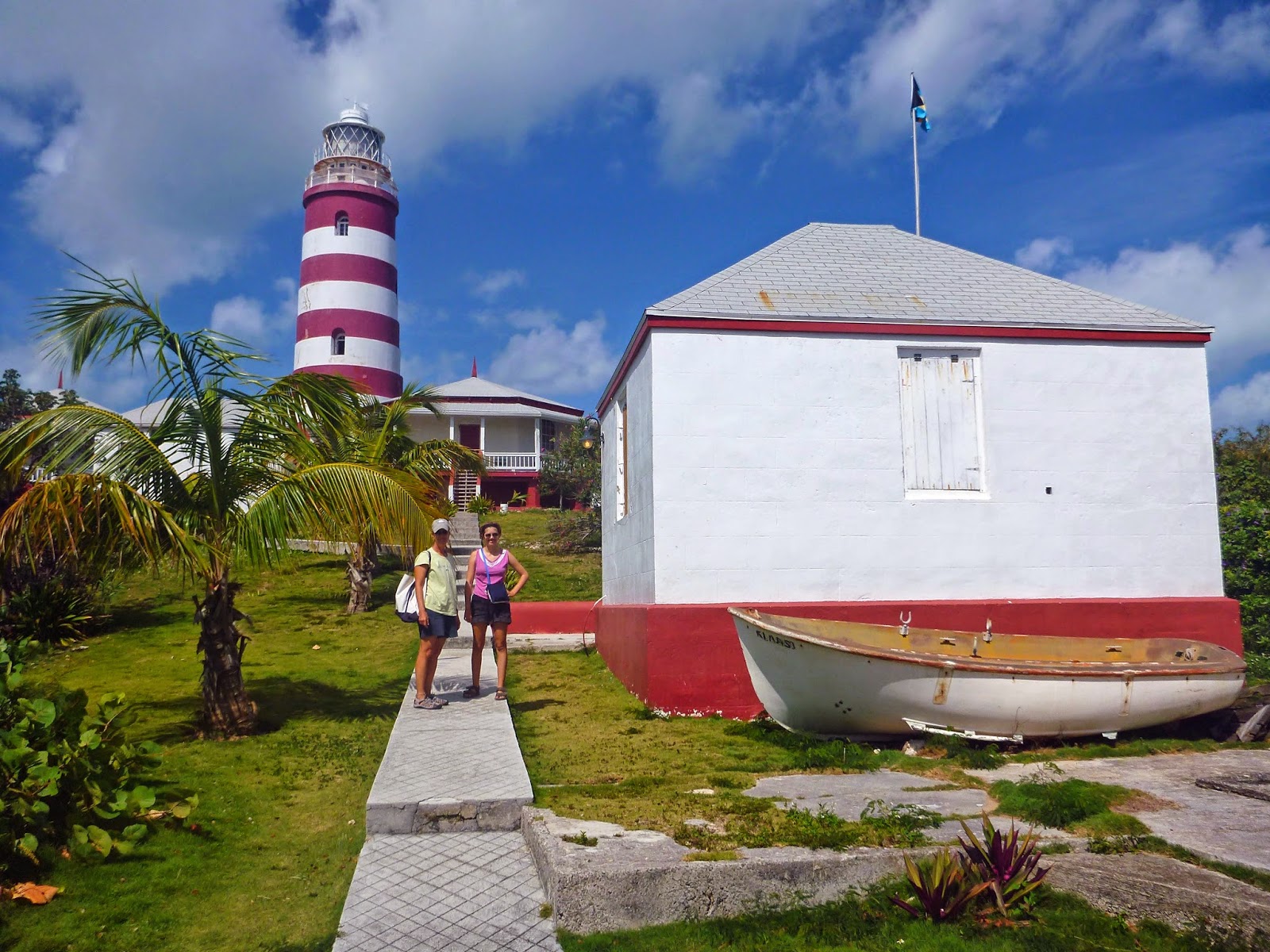
picture of the Bahamas includes a photograph of one very historic lighthouse.
After making our arrival at Hope Town Marina, we proceeded to the end of the
island to the lighthouse steps. After a short walk to the entrance to the
lighthouse, you enter, and then work your way up six levels to the top. You get
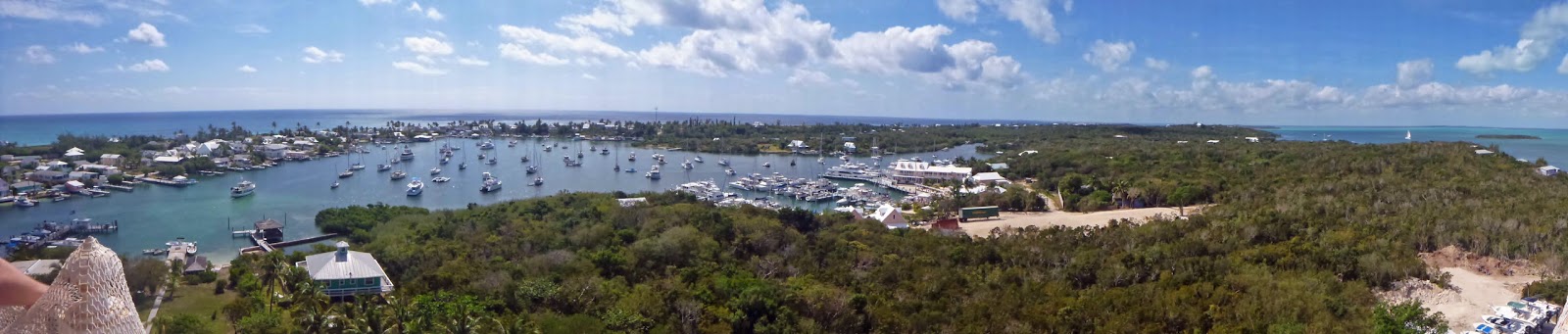
great views of the Abacos in almost every direction.


This lighthouse is the only kerosene fueled lighthouse remaining in the
Bahamas. There once were three, but technology and cost of ownership, has seen
two of the remaining three converted. This lighthouse has been added to the
UNESCO trust.
The candy striped
tower rises 124 steps above the mound upon which it stands. The mechanism that
rotates the light is a clockwork mechanism that is powered by a huge weight and
must be rewound every two hours. The 8000 pound burner and its Fresnel lens
rotate on a pool of mercury that reduces friction. A light push of the hand is
enough to turn it. Construction of the lighthouse was opposed by inhabitants of
Hope Town who made their living salvaging valuable cargo from ships that
wrecked in the shallow waters. In one incident, salvers rescued the cargo of a
ship en route to Cuba—slaves. They took the human cargo to Nassau where they
were set free.
It is a
picturesque little town with small, colorful houses, lots of flowers and narrow
streets and lanes.  There is only one
real street that forks into two branches for a short distance. That street is
navigable by small cars and trucks but the most common form of transportation
is the golf cart. The lanes are so narrow that they are accessible only to
pedestrians and bicycles.
We were walking
along looking at the pastel painted houses when we came across a small tree
being devoured by about a dozen of these enormous colorful caterpillars.  We looked them up when we got back and found
that they become a large but very dull looking moth.
 
Pseudosphinx
tetrio is a species of moth in the family Sphingidae. Its common names include
tetrio sphinx, giant gray sphinx, frangipani hornworm, and plumeria
caterpillar. It is native to the tropical and subtropical Americas from the
southern and southwestern United States to Brazil. The occasional individual
has been recorded as far north as the northeastern United States so we must be
getting close to home.

Normal
0

false
false
false

EN-US
X-NONE
X-NONE

/* Style Definitions */
table.MsoNormalTable
{mso-style-name:”Table Normal”;
mso-tstyle-rowband-size:0;
mso-tstyle-colband-size:0;
mso-style-noshow:yes;
mso-style-priority:99;
mso-style-parent:””;
mso-padding-alt:0in 5.4pt 0in 5.4pt;
mso-para-margin-top:auto;
mso-para-margin-right:0in;
mso-para-margin-bottom:auto;
mso-para-margin-left:0in;
mso-pagination:widow-orphan;
font-size:11.0pt;
font-family:”Calibri”,”sans-serif”;
mso-ascii-font-family:Calibri;
mso-ascii-theme-font:minor-latin;
mso-hansi-font-family:Calibri;
mso-hansi-theme-font:minor-latin;}

After Hopetown, we
anchored in Marsh Harbor which is a good size town with a US style grocery store.  We got a few provisions to hold us until we
reach Florida.  After the winds clocked
around east again, we visited Great Guana Cay. 
We first anchored in Bakers bay that was created by a cruise ship
company.  They dredged out a deep water
bay and actually created an island with the dredged sand.  The cruise ship company has long abandoned this
harbor but the island was great for collecting shells.  After 2 days we moved just outside Settlement
harbor for lunch at Nippers Bar.
Next stop was
Green Turtle Cay and we anchored outside the harbor for the first night.  Tom took the dingy into Black Sound with the
depth sounder and made sure Emily Grace
would not run aground going in the narrow, shallow channel.  The next morning at high tide we entered
without any drama with 8 inches under the keel…plenty of depth!  Inside we found deeper water and grabbed a
mooring ball at $15 per night at Donny’s Dock.
Originally settled
in 1783 by the “Loyalists” escaping the revolutionary war, Green
Turtle Cay is one of the most historical of the out islands. New Plymouth,
Green Turtle’s main settlement with its brightly painted clapboard and gingerbread
adorned houses and narrow picket fence lined streets is reminiscent of a quaint New England town. 
 
The town offers several historical sites including its 200 year old cemetery,
the Cays original jail (now painted pink) a model schooner museum, Albert Lowe
Museum, a Sculpture Garden with bronze busts of famous Bahamian historical
figures along with many historical homes. 
 
We rented a golf
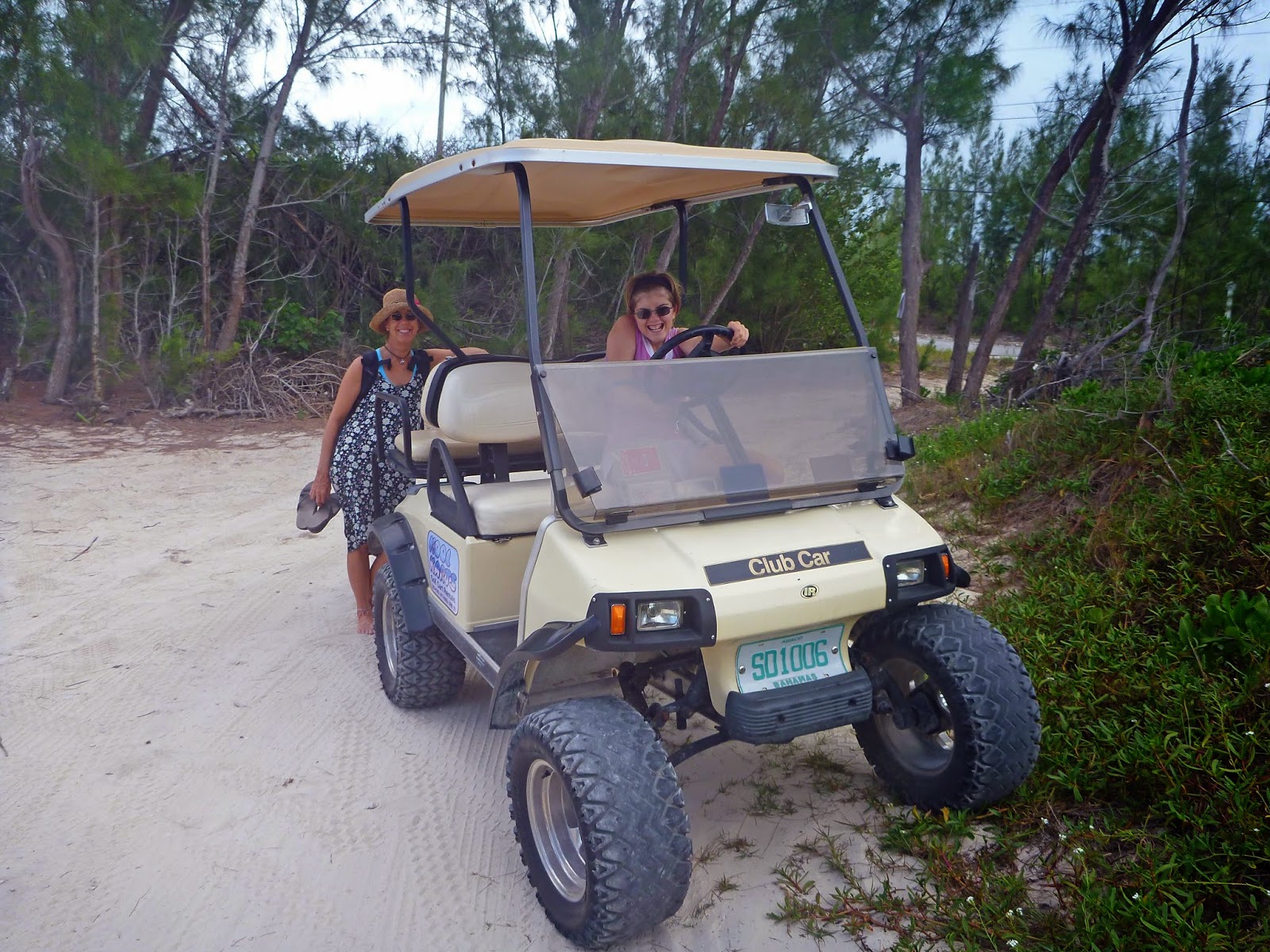
cart for two days and Emily really enjoyed driving around.  The Captain took over in the narrow concrete
streets of New Plymouth but Emily did pretty good elsewhere.   
We enjoyed lunches ashore and bought some
local coconut bread warm from the oven. 
We are now officially famous since we were recognized by some strangers
who have been reading our blog.  They
nervously approached us at a restaurant and asked if we were that famous circumnavigator
family.  News quickly spread around the
dock and soon other cruisers were coming by to ask about favorite places, best
equipment to have on a cruising boat, how much it all cost, etc.  The captain handed out wisdom and stories while
Emily folded and handed out origami birds and dragons.  It was all pretty cool and yes, we now all
have swelled heads.  

Normal
0

false
false
false

EN-US
X-NONE
X-NONE

/* Style Definitions */
table.MsoNormalTable
{mso-style-name:”Table Normal”;
mso-tstyle-rowband-size:0;
mso-tstyle-colband-size:0;
mso-style-noshow:yes;
mso-style-priority:99;
mso-style-parent:””;
mso-padding-alt:0in 5.4pt 0in 5.4pt;
mso-para-margin-top:auto;
mso-para-margin-right:0in;
mso-para-margin-bottom:auto;
mso-para-margin-left:0in;
mso-pagination:widow-orphan;
font-size:11.0pt;
font-family:”Calibri”,”sans-serif”;
mso-ascii-font-family:Calibri;
mso-ascii-theme-font:minor-latin;
mso-hansi-font-family:Calibri;
mso-hansi-theme-font:minor-latin;}

After Green Turtle
Cay we moved to an uninhabited island called Powell Cay.  It was recommended by Aries II as a nice
place to relax in front of a white sand beach. 
It was just that and Kim and Emily snorkeled and collected more shells
there.  We stayed 2 days until the winds
shifted and drove us into the protected shores of Coopers Town.  There we walked the small working town and
found a restaurant to serve us cracked conch fritters.  
We stopped once
more at Crab Cay to collect the weather while we were within range of the cell
towers.  Since we now have a good
forecast we will head off tomorrow.  Tomorrows’
run will be a 7 hour run to Great Sale Cay and will take us out of cell phone/internet range . 
This is other uninhabited island with a white sand beach.  We will spend the night there and leave Wednesday
morning for the 160 mile passage across the Gulf Stream and into Cape
Canaveral. The key here is to avoid any north winds that would oppose the swift
north flowing current and build big waves. 
With any luck our last tricky passage will go well.  
Stay tuned Dear reader
to see how we did.
Tom

The Abacos


We had a smooth passage north towards the Abacos and our first stop was at Spanish Wells in northern Eleuthera.  The winds were west so we tucked on the east side of Meeks patch and the next day as the winds went North we anchored just south of Russell Island.  From here it was an easy dingy ride into Spanish Wells.

Spanish Wells is a very unique island. It is almost all white and very prosperous. It is also dry so no alcohol is sold or served in restaurants. The main industry is fishing and the major catch is crayfish or Bahamian Lobster. Spanish Wells supplies over half of the lobsters for all of the Bahamas and the fisherman make a very good living.  We saw several of the mother boats returning to harbor with their catch.  They towed the small boats used by divers hunting for lobster and conch.  Most mother ships had at least 3 and sometimes as many as 6 of the small boats.
We went in and filled a propane gas tank, did some food shopping and had a nice lunch.  Kim suffered without her normal Kalik beer but somehow survived.  These kids were jumping of the bridge and agreed to perform for us.  We bought some grouper directly from a fisherman but the lobster prices were too dear for us.
After a quiet night we made the 10 hour passage to the Abacos and anchored just inside Lynyard Cay where we found a calm spot to drop the hook in about 8ft over white sand.  The next day we took a 2 mile dingy ride into Little Harbor.

Our guidebooks say Little Harbor “comes close to anyone’s dream of a Bahamian hideaway”. It is a much protected bay with a mixed shoreline of high rock cliffs and caves, a smattering of cottages, and a sandy beach. 
We were enticed ashore by the aromas wafting from Pete’s pub. The pub has a roof, but no walls or floor, a small bar area and large eating area with heavy wood tables and benches that sit on the sand. You could wiggle your toes in the warm sand floor and read the signed tee shirts hanging from the ceiling. The pub served burgers, conch and a variety of fresh caught fish…grouper, snapper, wahoo, and Kim had trigger fish…excellent. After lunch at the pub we wandered to the Gallery where bronze works were displayed and for sale.
 
This is the Gallery, Studio and Forge of the late Randolph Johnstone, well known artist of bronze sculptures. His sculptures became famous and ultimately lucrative. One of his large works, titled “St. Peter: Fisher of Men,” rests in the Vatican’s museum in Rome. It is now his son Pete Johnston, himself an acclaimed bronze & wood sculptor, who operates the facility. 
  
There were some pieces done by the late Randolph Johnstone but most of the pieces were done by his son Pete (hence ‘Pete’s Pub’). Emily bought a nice leather belt with a cast turtle buckle.  Further along the path we came to the Studio and Foundry, where the bronzes are cast. We were unable to see the casting process, which is done only a few times during the summer season.
We met a nice couple cruising on Mud Puddle Rose, a Grand Banks, and we went north with them for a snorkel on Sandy Cay.  The snorkeling was good but the swell made it a little rolly.  After the snorkel both boats moved north just outside Hopetown for calmer waters where Joe and Susan joined us on Emily Grace for dinner with Kim’s nasi goreng. Joe was full of cruising tips for the few remaining cays to my northwest and it was a nice evening.  They brought their poodle Bocci and Emily enjoyed playing with her.
 
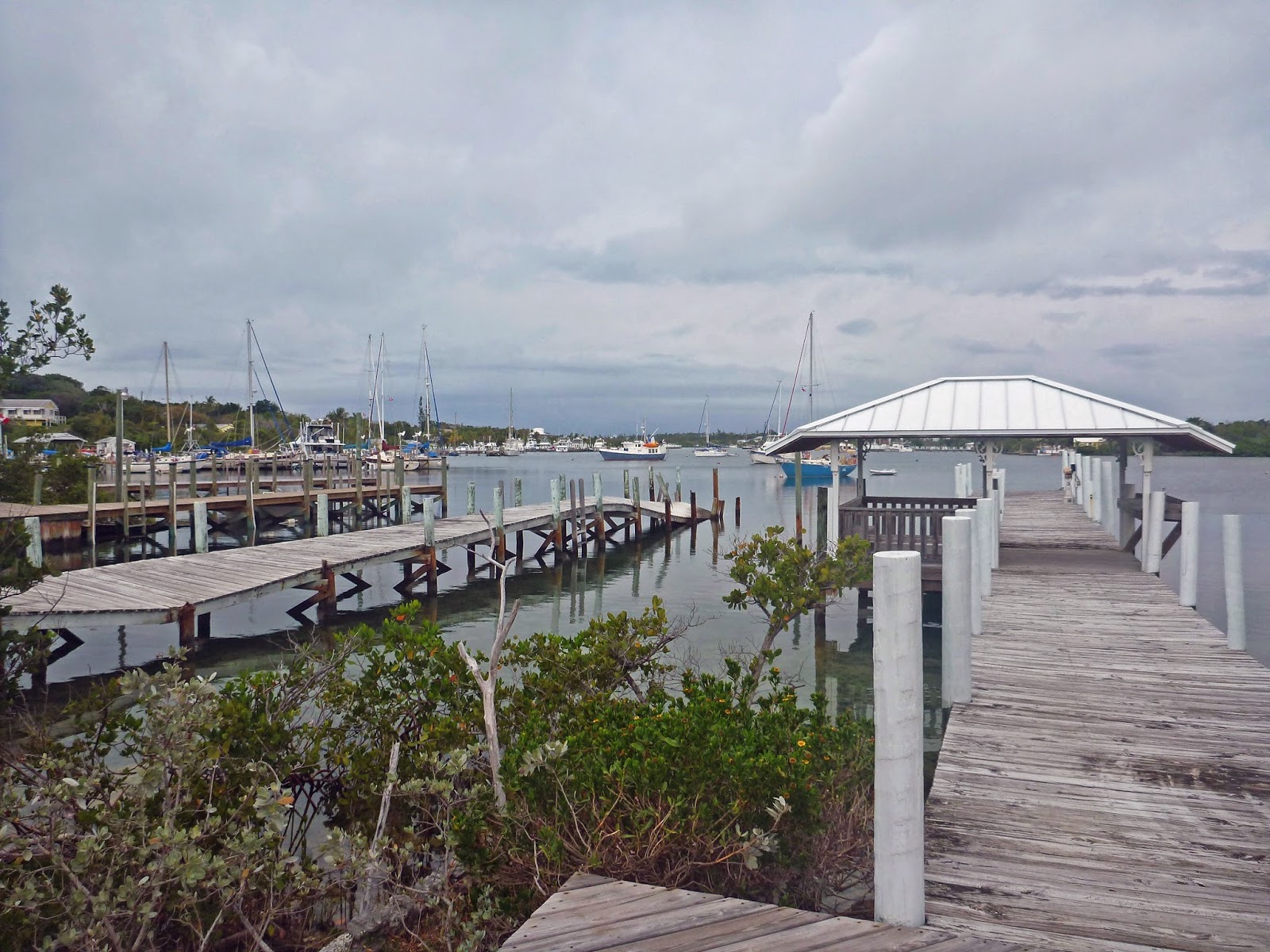
Next we motored north to Hopetown.  Hope Town was settled by British Loyalists who were seeking safe refuge after the American Revolution.  Many of the settlers came from the Carolinas, by way of East Florida, after that area was turned over to Spain in the Peace of Paris (1783).  The same treaty called for the evacuation of New York by the loyalists.  Many people moved back to England, Canada, or south to the British Caribbean.  The initial settlements were at Carleton (near the current Treasure Cay) and Marsh Harbour.  By 1785, there were over 1,000 refugees in Abaco who were distributed in five or six settlements.  The settlement at Hope Town was founded in 1785, in part, by a widow from South Carolina named Wyannie Malone.  Wyannie, along with her children, started a dynasty in Hope Town that spread the Malone name throughout the Bahamas, over to Florida, and outwards from there.
Every magazine picture of the Bahamas includes a photograph of one very historic lighthouse. After making our arrival at Hope Town Marina, we proceeded to the end of the island to the lighthouse steps. After a short walk to the entrance to the lighthouse, you enter, and then work your way up six levels to the top. You get great views of the Abacos in almost every direction.


This lighthouse is the only kerosene fueled lighthouse remaining in the Bahamas. There once were three, but technology and cost of ownership, has seen two of the remaining three converted. This lighthouse has been added to the UNESCO trust.
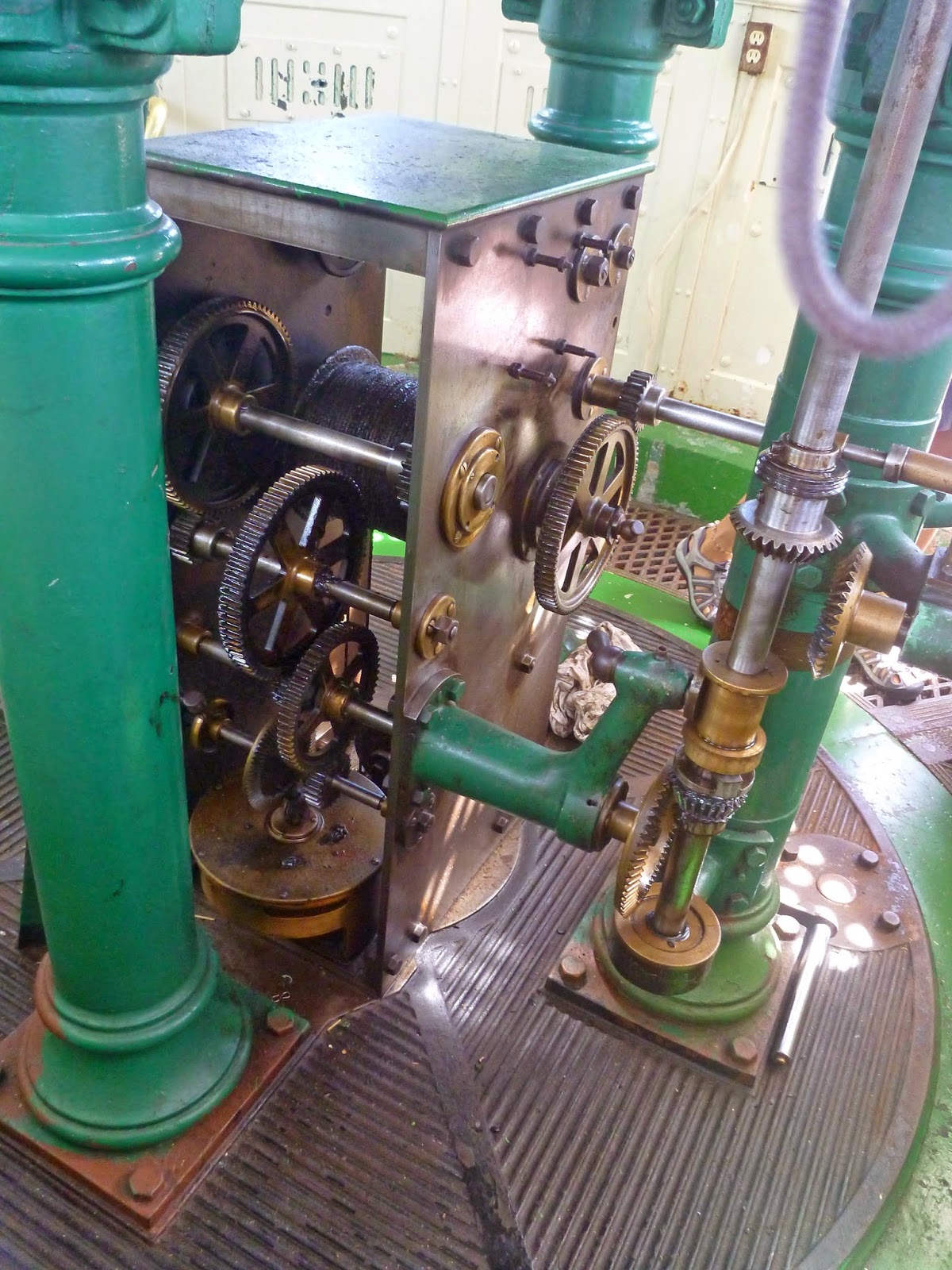
The candy striped tower rises 124 steps above the mound upon which it stands. The mechanism that rotates the light is a clockwork mechanism that is powered by a huge weight and must be rewound every two hours. The 8000 pound burner and its Fresnel lens rotate on a pool of mercury that reduces friction. A light push of the hand is enough to turn it. Construction of the lighthouse was opposed by inhabitants of Hope Town who made their living salvaging valuable cargo from ships that wrecked in the shallow waters. In one incident, salvers rescued the cargo of a ship en route to Cuba—slaves. They took the human cargo to Nassau where they were set free.
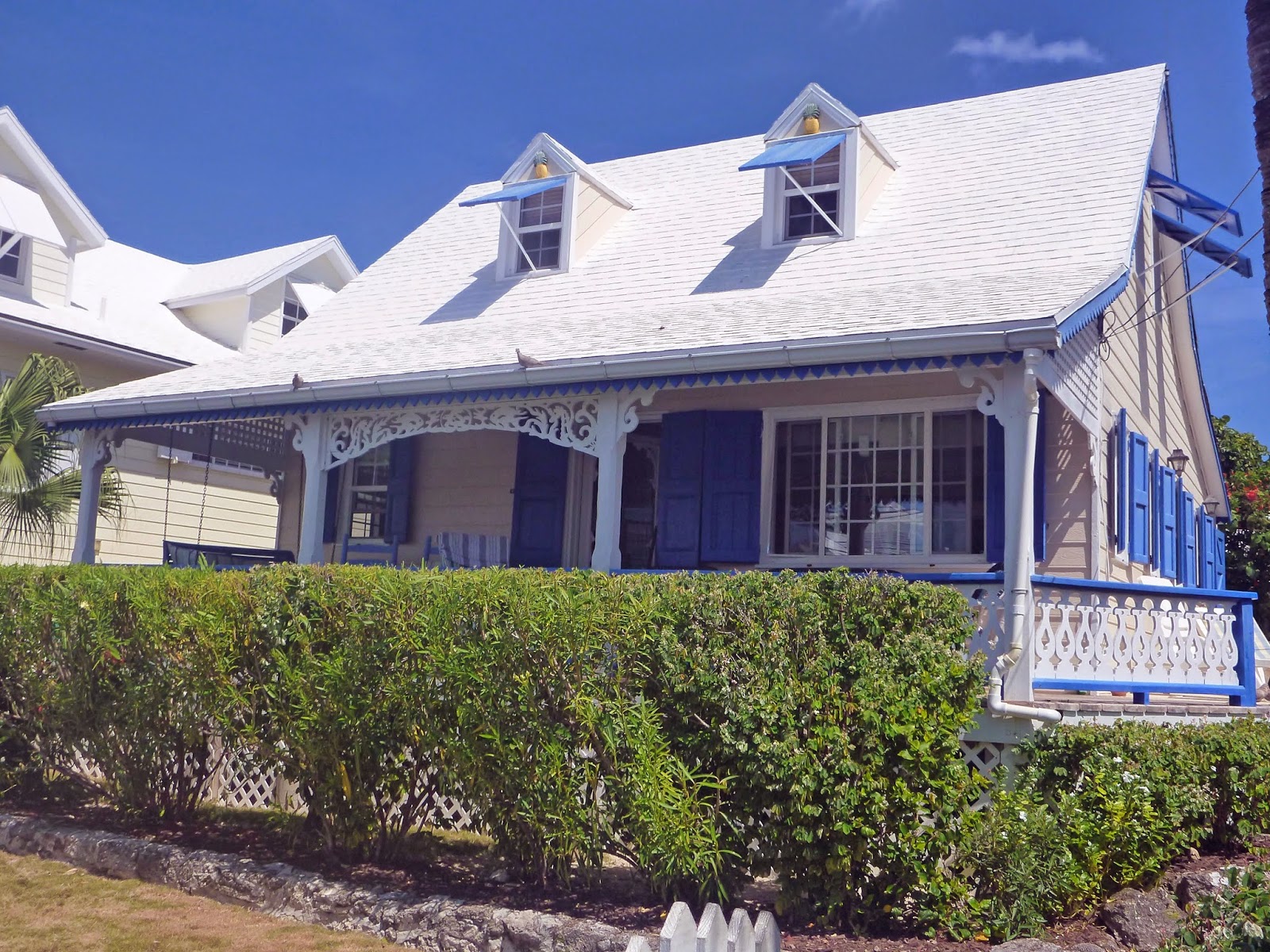
It is a picturesque little town with small, colorful houses, lots of flowers and narrow streets and lanes.  There is only one real street that forks into two branches for a short distance. That street is navigable by small cars and trucks but the most common form of transportation is the golf cart. The lanes are so narrow that they are accessible only to pedestrians and bicycles.
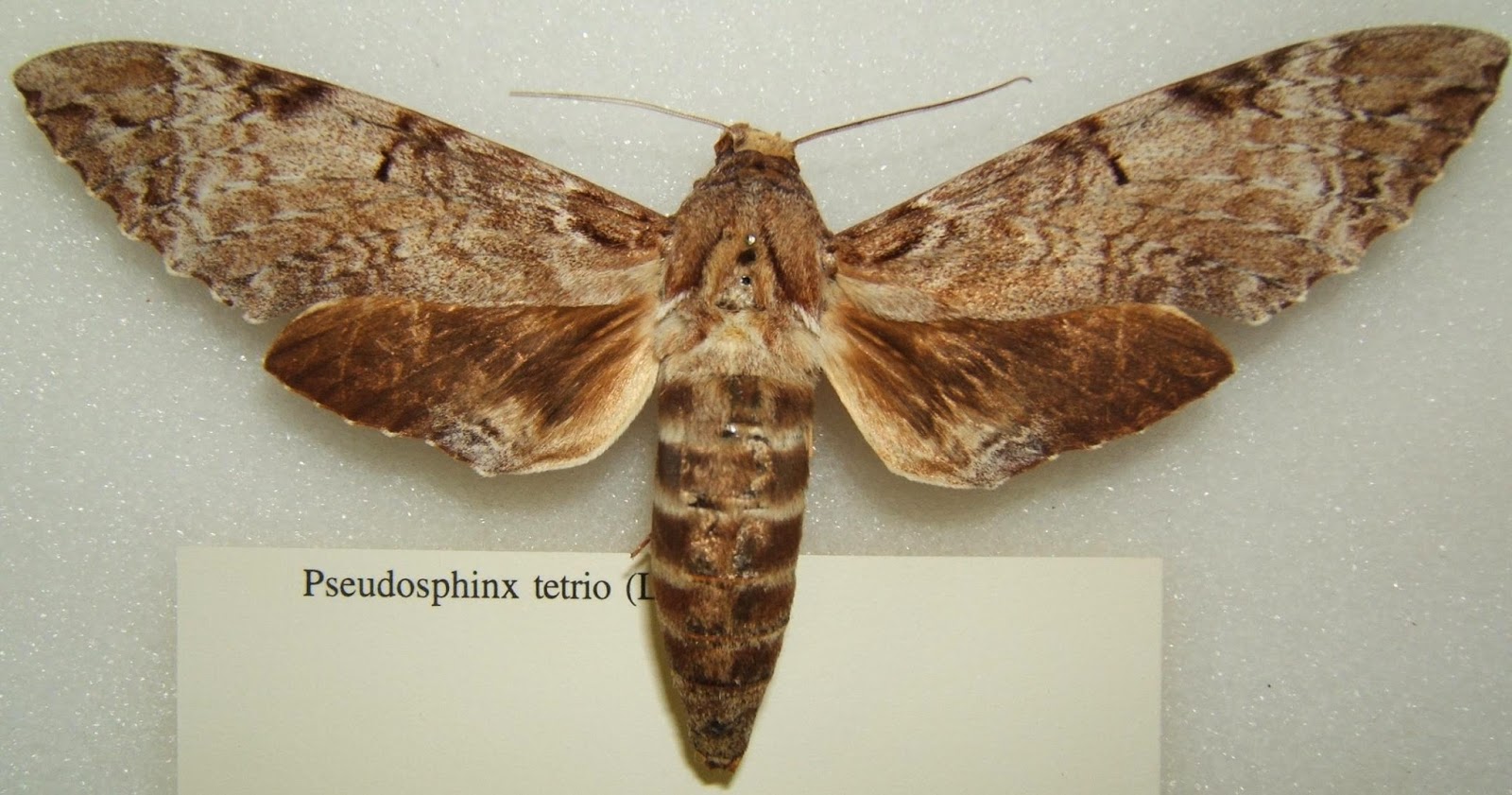
We were walking along looking at the pastel painted houses when we came across a small tree being devoured by about a dozen of these enormous colorful caterpillars.  We looked them up when we got back and found that they become a large but very dull looking moth.
 
Pseudosphinx tetrio is a species of moth in the family Sphingidae. Its common names include tetrio sphinx, giant gray sphinx, frangipani hornworm, and plumeria caterpillar. It is native to the tropical and subtropical Americas from the southern and southwestern United States to Brazil. The occasional individual has been recorded as far north as the northeastern United States so we must be getting close to home.
After Hopetown, we anchored in Marsh Harbor which is a good size town with a US style grocery store.  We got a few provisions to hold us until we reach Florida.  After the winds clocked around east again, we visited Great Guana Cay.  We first anchored in Bakers bay that was created by a cruise ship company.  They dredged out a deep water bay and actually created an island with the dredged sand.  The cruise ship company has long abandoned this harbor but the island was great for collecting shells.  After 2 days we moved just outside Settlement harbor for lunch at Nippers Bar.
Next stop was Green Turtle Cay and we anchored outside the harbor for the first night.  Tom took the dingy into Black Sound with the depth sounder and made sure Emily Gracewould not run aground going in the narrow, shallow channel.  The next morning at high tide we entered without any drama with 8 inches under the keel…plenty of depth!  Inside we found deeper water and grabbed a mooring ball at $15 per night at Donny’s Dock.
Originally settled in 1783 by the “Loyalists” escaping the revolutionary war, Green Turtle Cay is one of the most historical of the out islands. New Plymouth, Green Turtle’s main settlement with its brightly painted clapboard and gingerbread adorned houses and narrow picket fence lined streets is reminiscent of a quaint New England town. 
 
The town offers several historical sites including its 200 year old cemetery, the Cays original jail (now painted pink) a model schooner museum, Albert Lowe Museum, a Sculpture Garden with bronze busts of famous Bahamian historical figures along with many historical homes. 
 
We rented a golf cart for two days and Emily really enjoyed driving around.  The Captain took over in the narrow concrete streets of New Plymouth but Emily did pretty good elsewhere.   
We enjoyed lunches ashore and bought some local coconut bread warm from the oven.  We are now officially famous since we were recognized by some strangers who have been reading our blog.  They nervously approached us at a restaurant and asked if we were that famous circumnavigator family.  News quickly spread around the dock and soon other cruisers were coming by to ask about favorite places, best equipment to have on a cruising boat, how much it all cost, etc.  The captain handed out wisdom and stories while Emily folded and handed out origami birds and dragons.  It was all pretty cool and yes, we now all have swelled heads.  
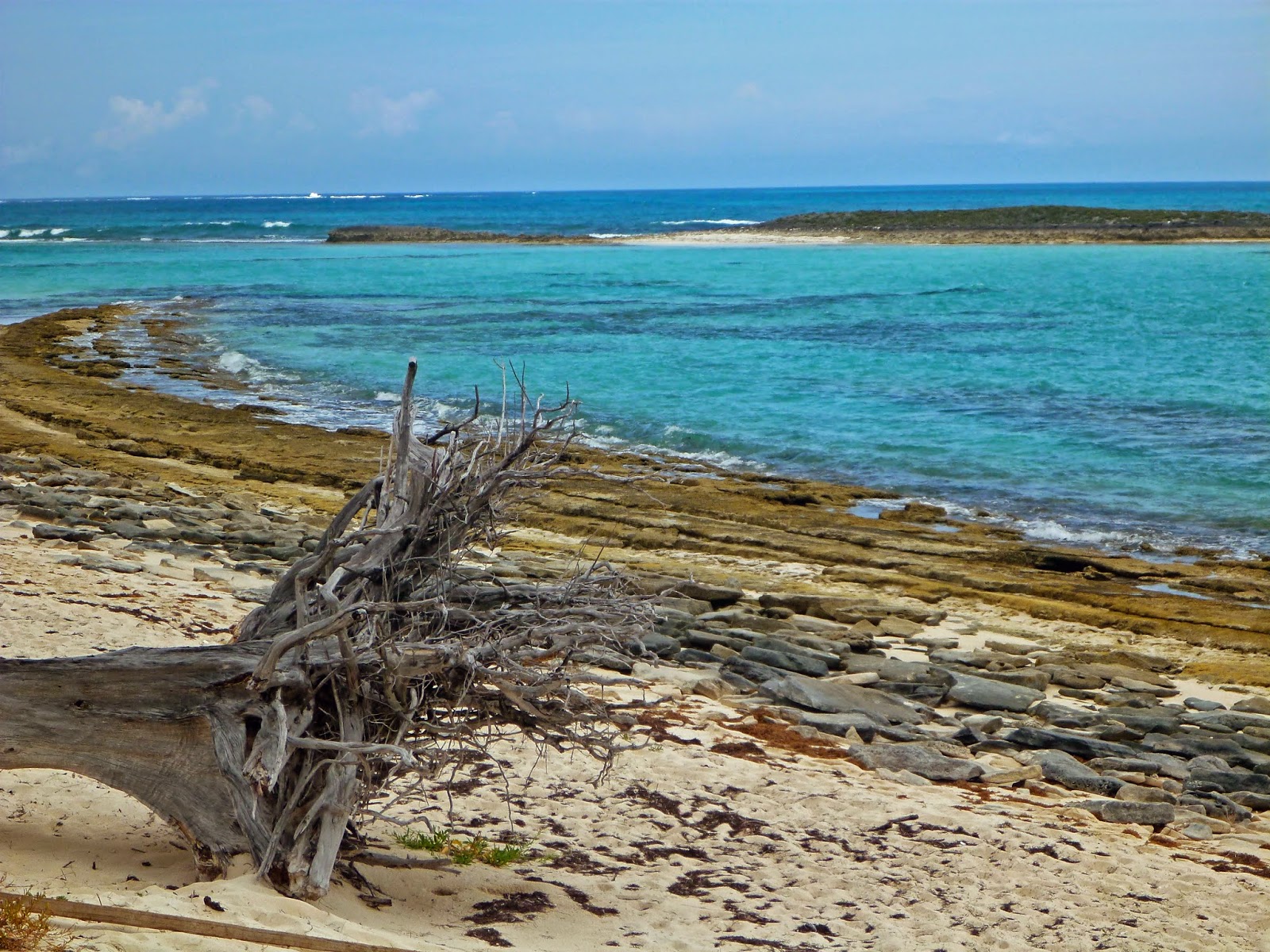
After Green Turtle Cay we moved to an uninhabited island called Powell Cay.  It was recommended by Aries II as a nice place to relax in front of a white sand beach.  It was just that and Kim and Emily snorkeled and collected more shells there.  We stayed 2 days until the winds shifted and drove us into the protected shores of Coopers Town.  There we walked the small working town and found a restaurant to serve us cracked conch fritters.  
We stopped once more at Crab Cay to collect the weather while we were within range of the cell towers.  Since we now have a good forecast we will head off tomorrow.  Tomorrows’ run will be a 7 hour run to Great Sale Cay and will take us out of cell phone/internet range .  This is other uninhabited island with a white sand beach.  We will spend the night there and leave Wednesday morning for the 160 mile passage across the Gulf Stream and into Cape Canaveral. The key here is to avoid any north winds that would oppose the swift north flowing current and build big waves.  With any luck our last tricky passage will go well.  
Stay tuned Dear reader to see how we did.
Tom

Stay Tuned – Pictures Tonight!

Assuming I don’t run into technical difficulties, I’m going to upload Tom B.’s pictures from the yard in Taiwan tonight.  I’m at work right now, so that’s why the upload isn’t happening now (in case you were wondering).See you later!

How to Elope in Ontario?

Elopement is both trendy and a great way to reduce both cost and stress of a big wedding. A simple private wedding ceremony on the boat is a unique and exciting way of getting married in Toronto. Our Toronto Elopement … Continue reading

April 20 – Hontoon Island State Park

Park DockWe woke to a grey windy day…it definitely didn’t feel like the middle of April in Florida or Easter. I had planned to drink my coffee in our little gazebo on the pier, but decided inside was better today. We moved twenty miles further up the…

Bilge Pump Tests – Surprising Results

Cruising is said (by those in the know) to be going from one pump repair to another. We think we do a little better than this, but we are always looking to improve, and so recently conducted a series of tests with surprising results. We tested these three pumps (from right to left): the Bosworth, […]

First Days at Sea

April 18, 2014

It was an early wakeup as we prepared for the three hour drive to Fort Lauderdale.  We planned to leave at 0700, avoiding all the potential traffic choke points as we headed east across “Alligator Alley” (I-75) from Punta Gorda to the airport.

The strategy worked and we actually arrived at the car rental return before 1000.  After turning the car in, we rode the free shuttle to the cruise ship terminal and checked in.  We had to wait for about 1 hour before the ship was ready for boarding.  Even though the ship was ready, the staterooms were not, but they became available about 1300.  After a mandatory safety drill at 1500 we expected to leave at 1600, but delays in loading both luggage and stores pushed our departure back nearly one hour.

We were able to enjoy a welcome reception with the captain and senior crew at 1900 before we headed to dinner.  Dinner, while good, was marred by both our table location and poor service, so we asked for a new table.  We will see if it is any better tomorrow.  We will travel 275 nautical miles before we reach our next destination, Half Moon Cay, some 24 NM from Eleuthera in the Bahamas.

April 19, 2014

We chose to have breakfast delivered to the room at 0600 so we could be on the first boat ashore at Half Moon Cay to make the snorkeling tour time Patrick had signed up for.  We suspected the tour would be cancelled due high winds in the area and were surprised when the ship was able to anchor in the 25 knot winds.  The snorkeling tour was cancelled but the stop continued and we had a great day at the beach, since the beach was in the lee from the winds.  Patrick participated in rum tasting before returning to the ship, which departed at 1600.

Returning to the ship, we relaxed with appetizers before heading to the dining room to our new table.  We were the only ones at the table that evening, and the service and food were great.  Since we are still in the Caribbean, the food was themed with those spices.  Miriam had a pot roast entrée and Patrick had a Veracruz style fish dish.  We chose to go to the late show, with a comedian, but left early since it was not very good, in our opinion.

April 20, 2014

Easter Sunday dawned with clear skies, a moderate swell on the beam and 15 knot winds.  There were two services offered, Catholic Mass in the main show theater, and small non-denominational service in one of the meeting rooms.

We began the day with exercise walks on the upper deck and then breakfast in the Pinnacle Dining Room.  The rest of the day was spent in the sun around the pool, passing 14 NM from Cuba about noon and then passing Haiti about 1800.   The ocean was deserted except for a few freighters going the opposite direction.  After more walks around the promenade deck (2 miles) and a late and light lunch we finally returned to the room to prepare for the first formal night.  We were not surprised at the number of passengers who chose not to participate in the formal night, with everything from shorts to jeans around the ship.  However, we both dressed in formal clothes and went to the Pinnacle restaurant for dinner before the late show.

Tomorrow is another day at sea before we arrive in Curacao on Tuesday.  We will not post pictures until we have a faster and cheaper internet connection.

Day 100 – 365 Project…Kitesurfer

Welcome to day 100 of  365 photos…this kitesurfer (kiteboarder) put on a great show for me on Cedar Island. These were taken a couple of days ago and the day was dark, dreary, windy and cold. This dude was NOT camera shy. When he saw the camera, he made his way toward me and had… Continue Reading

The post Day 100 – 365 Project…Kitesurfer appeared first on Moosetique Musing.