 |
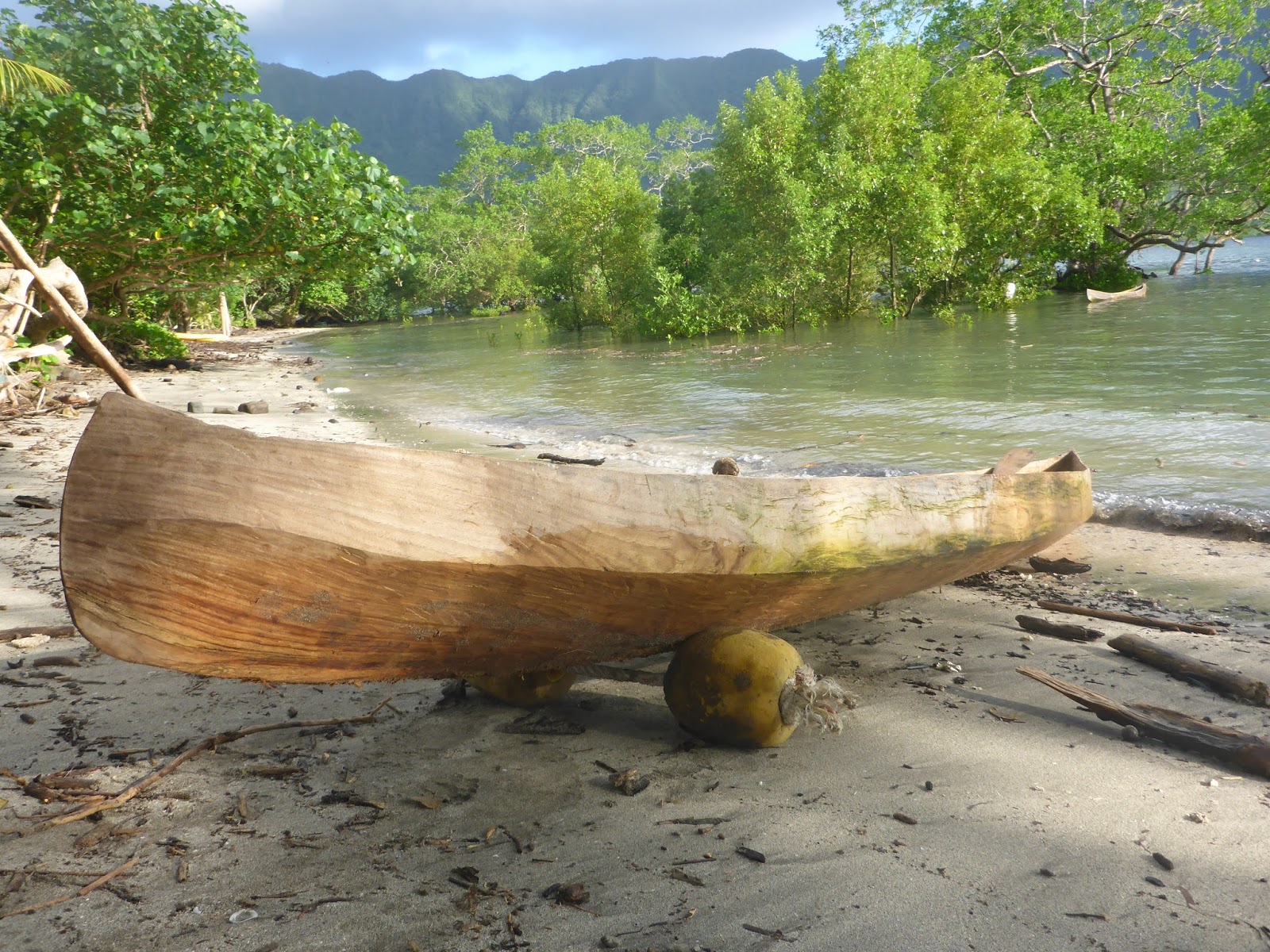
| In the banks Islands, dug-out canoes are the only way to fly! |
December 19, 2017
 |
| DOMINO in Vanuatu |
Weeks, months go by and we have been so involved with land life that I haven’t written much. Already, we are in the Marshall Islands, out of Vanuatu (New Hebrides), out of Kiribati (Gilbert Islands), and I have so much to write about these wonderful places, starting with Vanuatu, South to North.
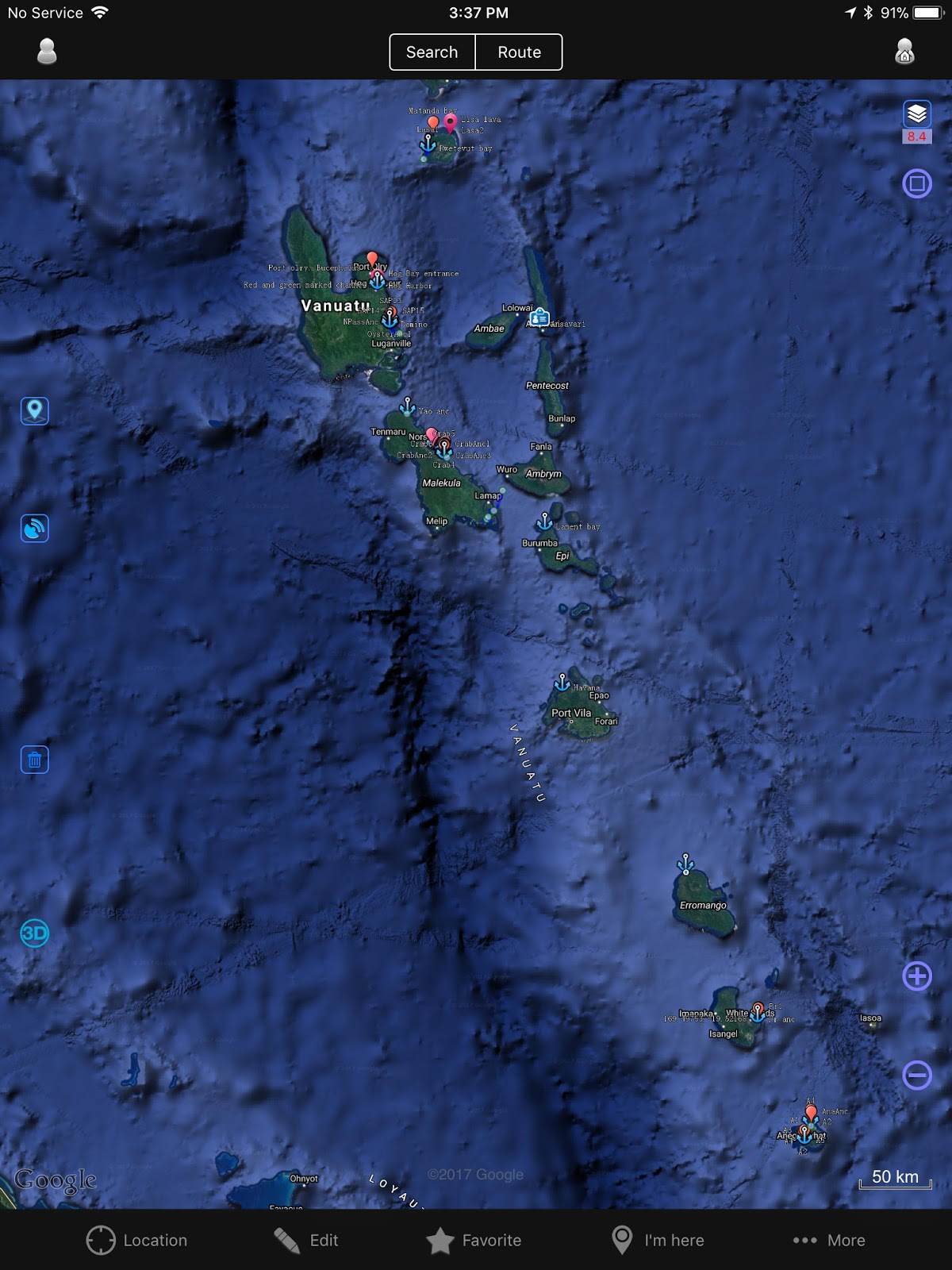
I’ll let the pix do the talking… Once again, our granddaughter Zoe and friend Q joined us for 2 weeks, and there’s no greater pleasure than grandchildren on board.
 |
| A parrot fish peeks over a bit of coral |
Snorkeling in Anathem Island, the southernmost of Vanuatu Islands, trying to shelter from strong westerlies, was a challenge.
 |
| Breakfast on board, ready to go for a swim |
At Anelghowhat, the tide was running strong and even my strong swimmers had a frisky time staying put in the current. Clear water, though, but not much reef to see. Over-visited by cruise ships!
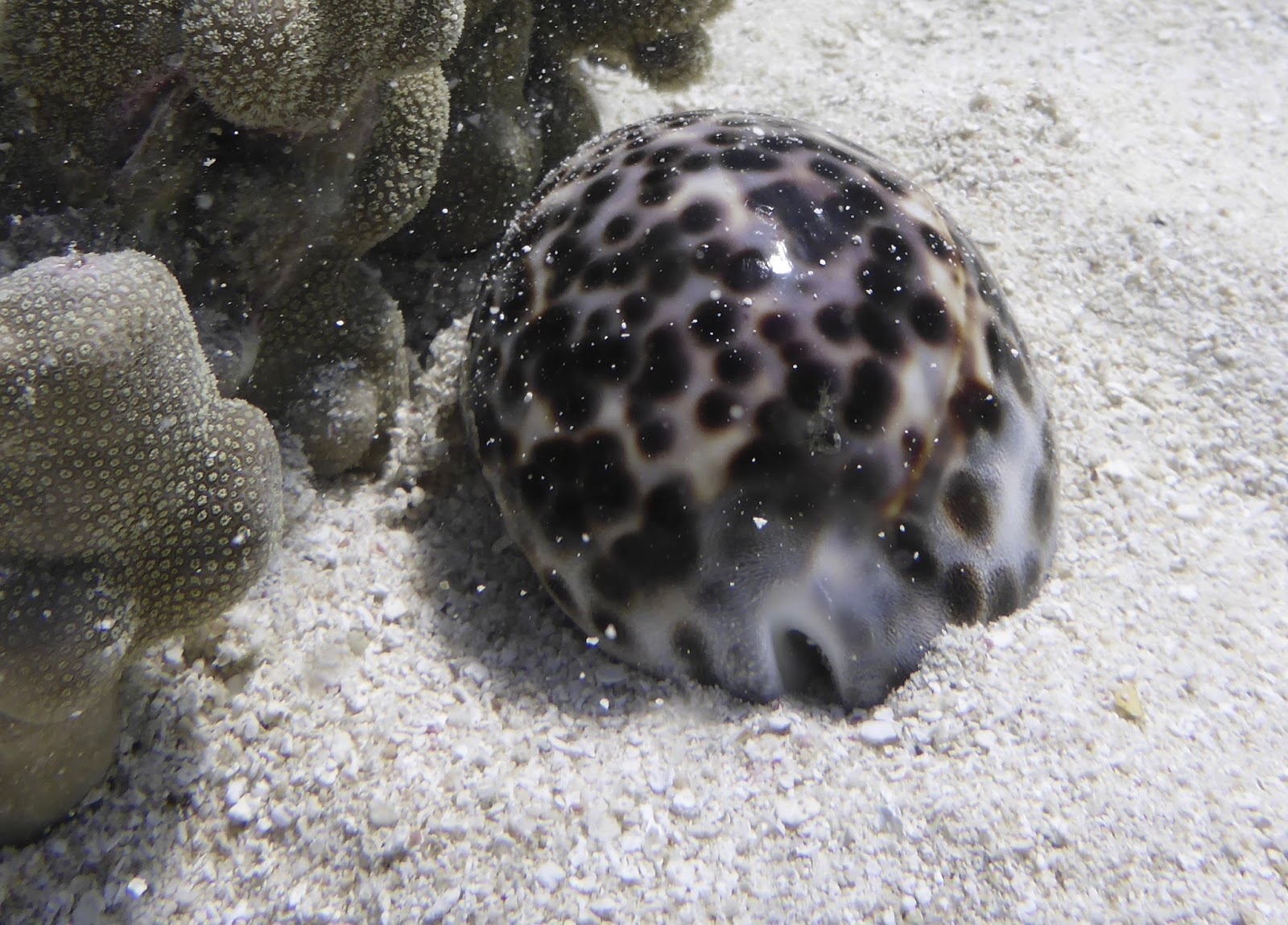 |
| A lonely cowrie, not much else around |
The northern anchorage at Anawamet was not much more sheltered, but we never found t
he turtles in the chop from 25Kts+ winds. We had to console ourselves with a 20-lb pumpkin the villagers gifted us!
 |
| It may be blowin’ a stink, we’re off for a snork! |
Soon, the westerlies abated and the SE trades returned. It was time to head north to Tanna and its volcano. Good thing we had waited! The yachts anchored in Port Resolution for the past 3 days were covered in volcanic ash, quite a mess, as the westerlies had swept the plume right above the anchorage.
 |
| The Old Man is spweing |
The Tanna Volcano, Mt. Yasur —or the “Old Man”— is, I believe, one of only 2 active volcanoes in the world were you can walk the rim. It’s a spectacular experience that our girls will not soon forget. Not free, however, by a long shot: cruisers, beware! If Northern Vanuatu is poor, it’s not so in Tanna where the tourist trade is swift.

An overnight stop at Erromango’s north shore, in a tiny enclave of black sand, introduced our girls to the purplish-blue of black-sand bottom anchorages… and a white tip reef shark, while DOMINO stood still in this volcanic crater.
 |
| flower market boon |
Efate Island, home of Port Vila, the capital, had a few surprises for our girls.
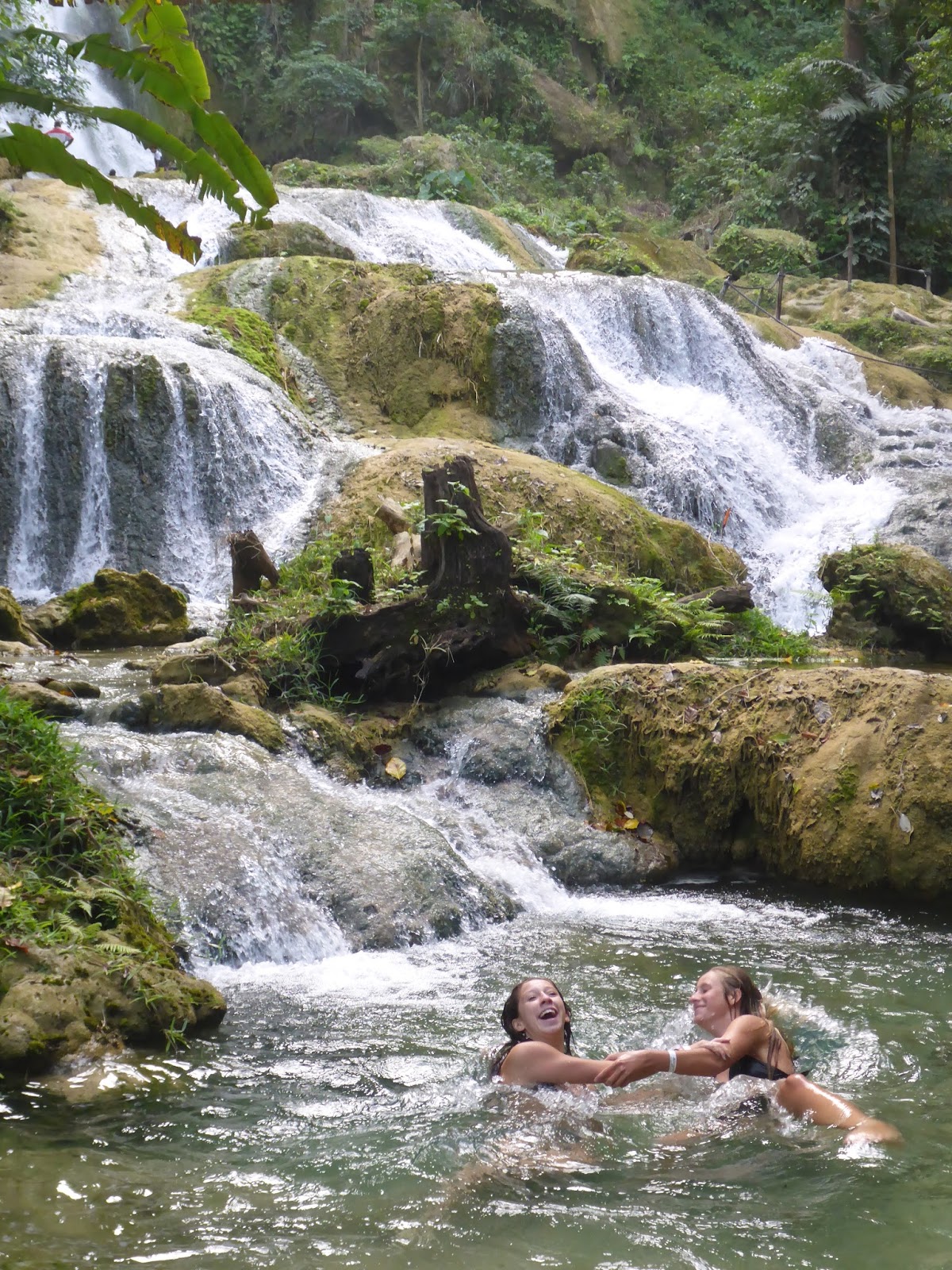
The Mele Cascades saw us all gliding down waterfalls and swimming in calm pools like happy fish.
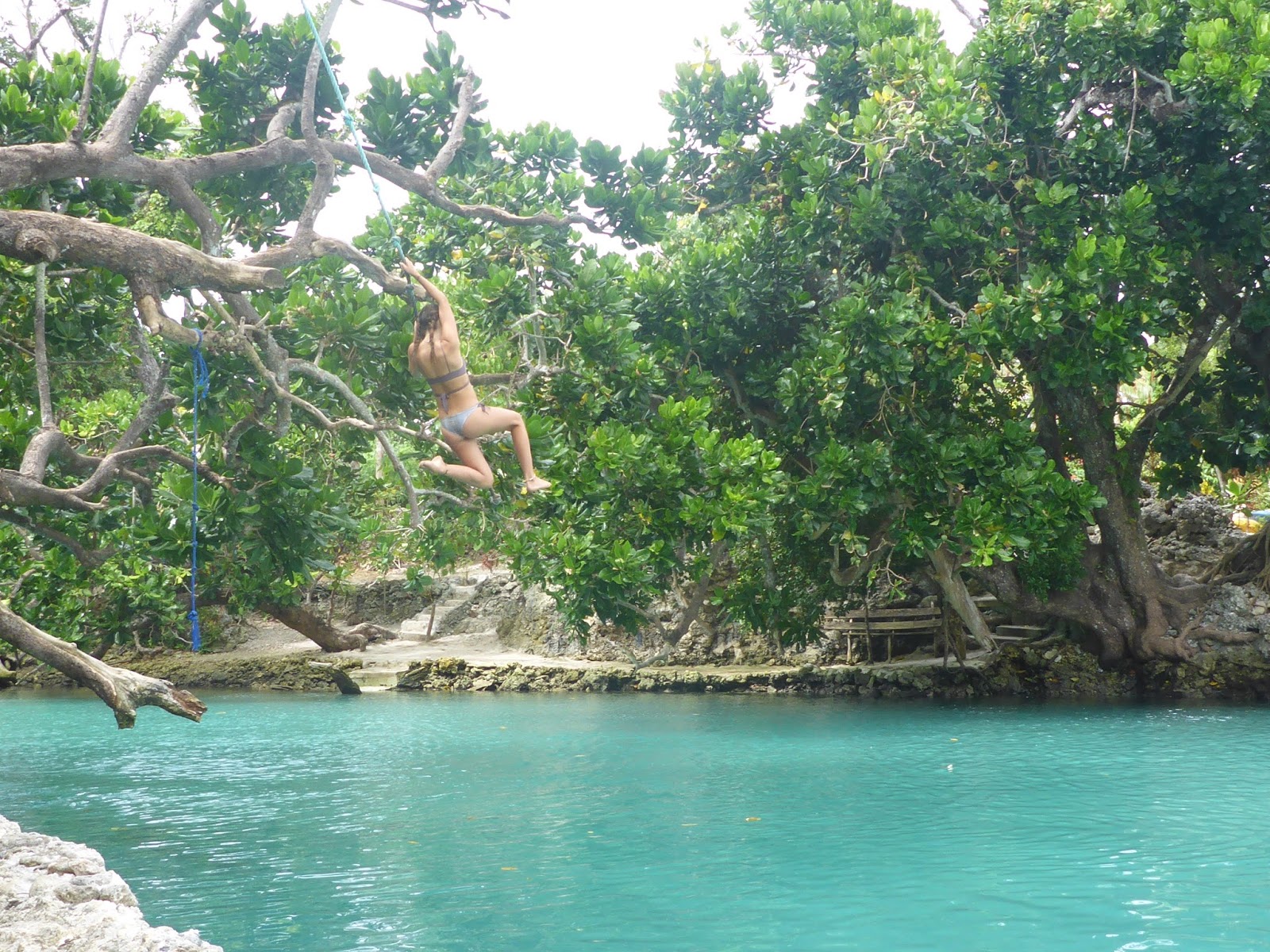
The Blue Hole saw the girls play Jane-of-the-jungle, swinging from vines into cerulean-blue pools.
The turtle farm elicited oohs and aaah and awes, as the girls handled baby turtles, fed big turtles and got introduced to coconut crab.

Then, we were off to Havana Harbor, NW of Port Vila, where the main activity is to scavenge for WWII glass. At the end of the war, the Americans scuttled all their ships all over Vanuatu, and you can find treasures on the beach: Coca Cola bottle glass, Australian beer bottle glass, airplane and submarine tempered windshield glass… I was lucky to find a few treasures!
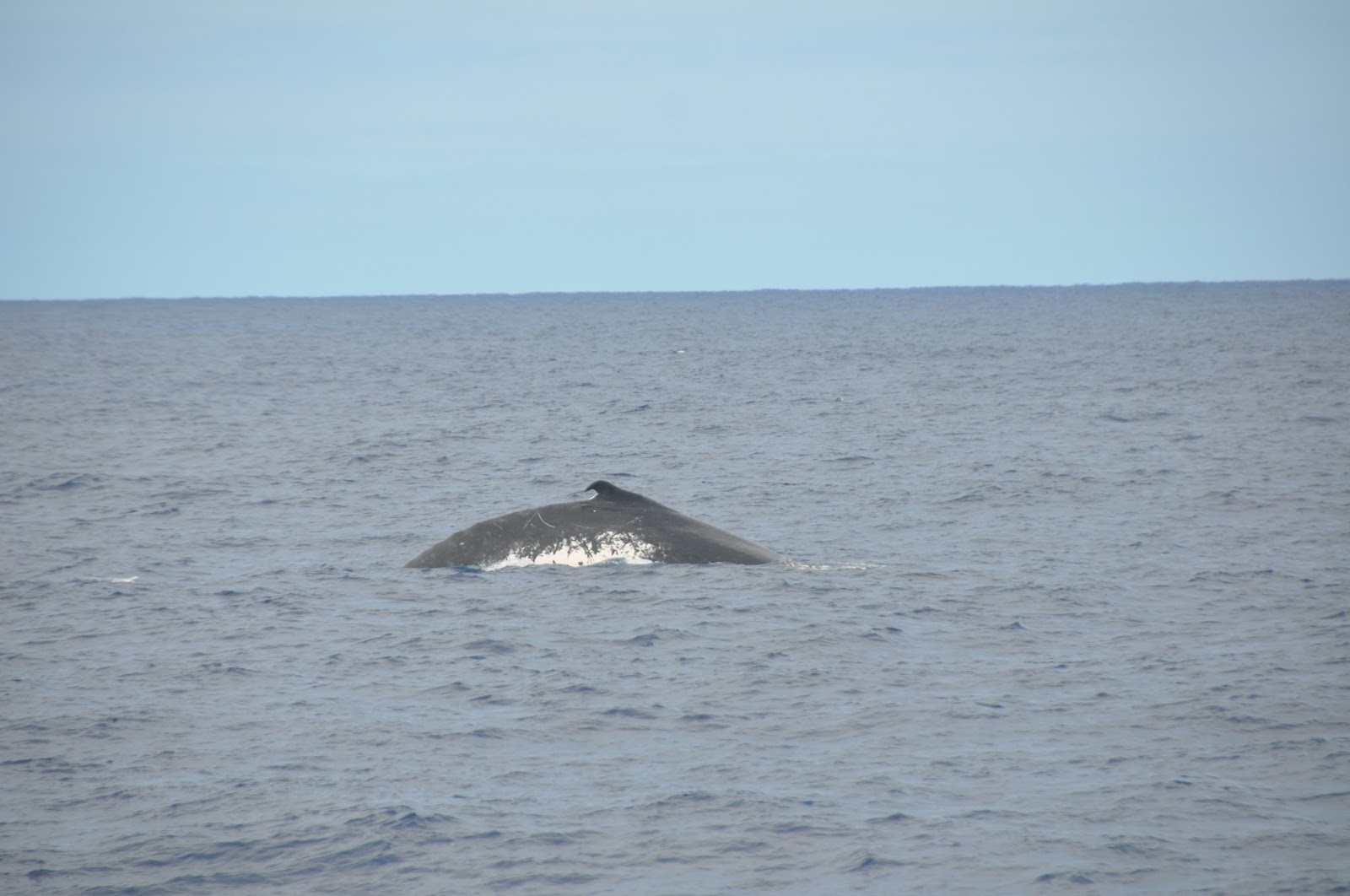 |
| Whales are always a welcome sight |
As quickly as they had arrived, the girls had vanished, a breath of fresh air in our life.
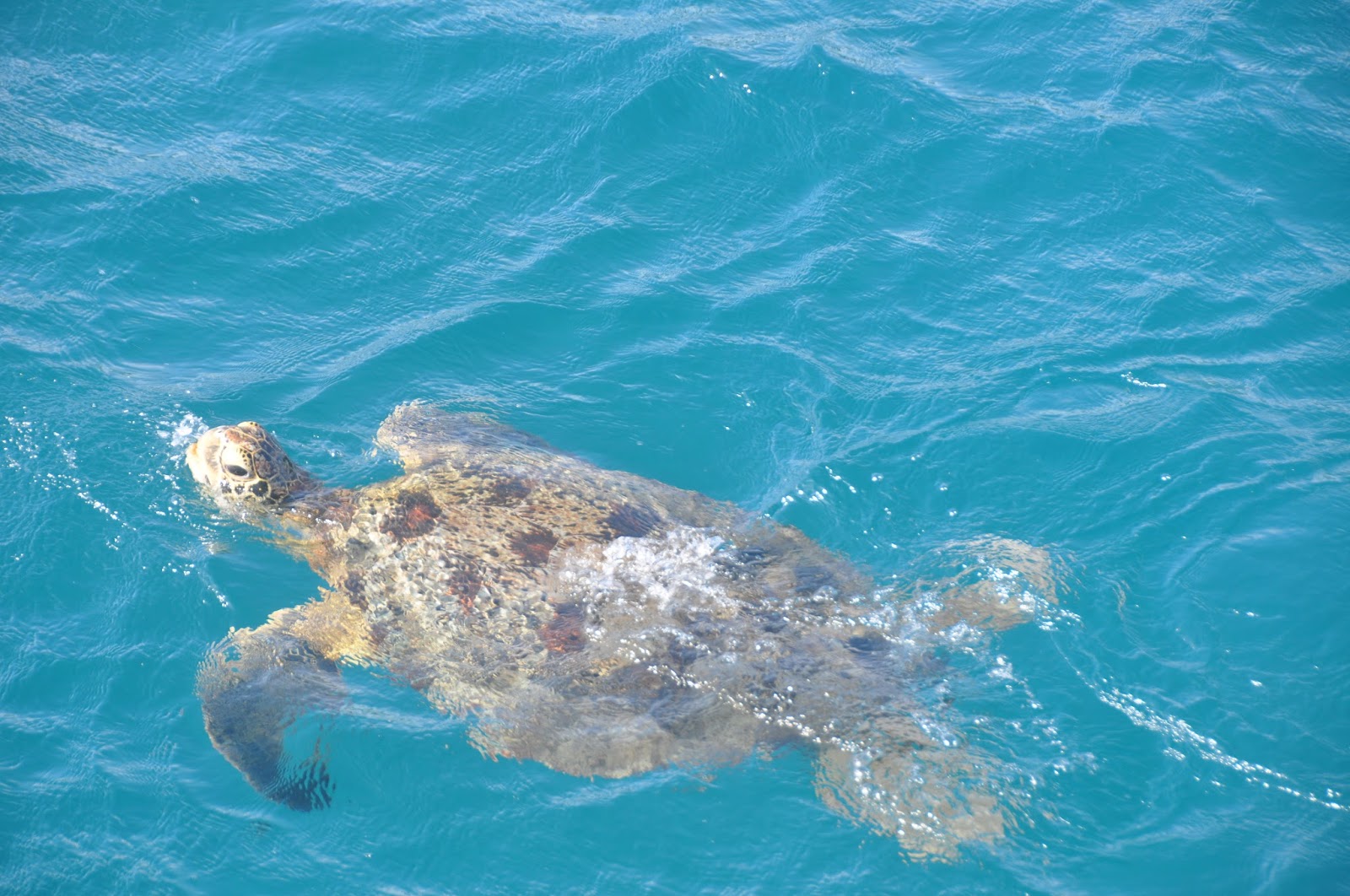 |
| … and turtles are fun to swim with |
Off to Epi Island and Lamen Bay, the very best spot to swim with dozens of turtles and a couple of manatees. to the NE of the bay, the coral garden is vast and the water is clear, well worth a look.
 |
| Manatees, big sea cows, are really gentle and gregarious |
In Malekula, Crab Bay is worth a stop. The only reserve we’ve encountered, it’s a good spot to snorkel with turtles on the NW end, and big parrot fish on the NE end.
Not the same story in Vao. 15*54.101S, 167*18.167E – A beautiful sand spit, french village ashore, dead reef. Still, a pretty overnight stop.
 |
| The Blue Hole in Espiritu Santo |
Next Island: Espiritu Santo.
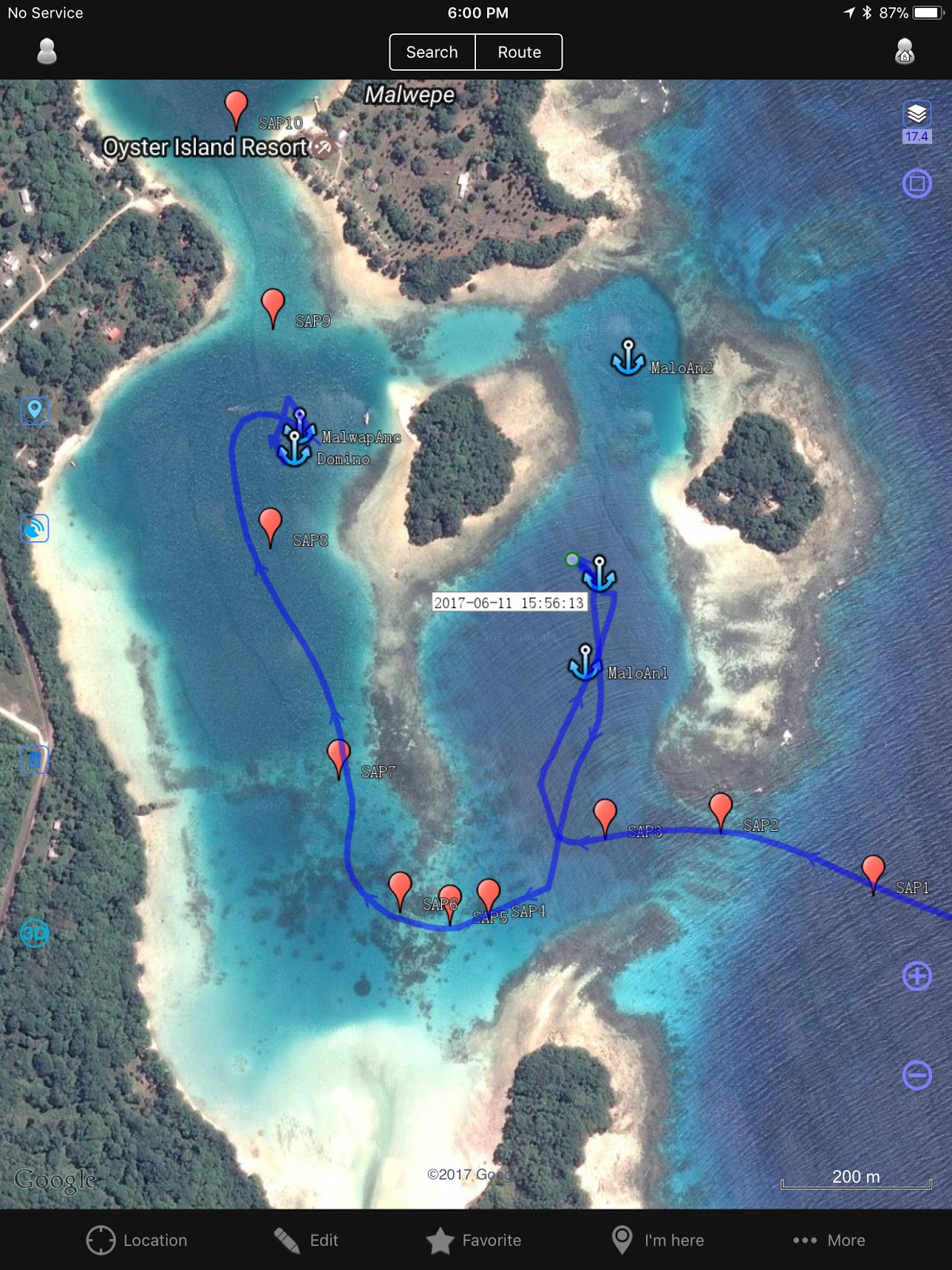
Our first stop at Oyster Island / Petersen bay was a good choice in bad weather. This is possibly the only hurricane hole in Vanuatu. We anchored in the outer lagoon and waited for high water to cross into the inner lagoon. Just enough water, and the waypoints on the Rocket Guide were spot on.
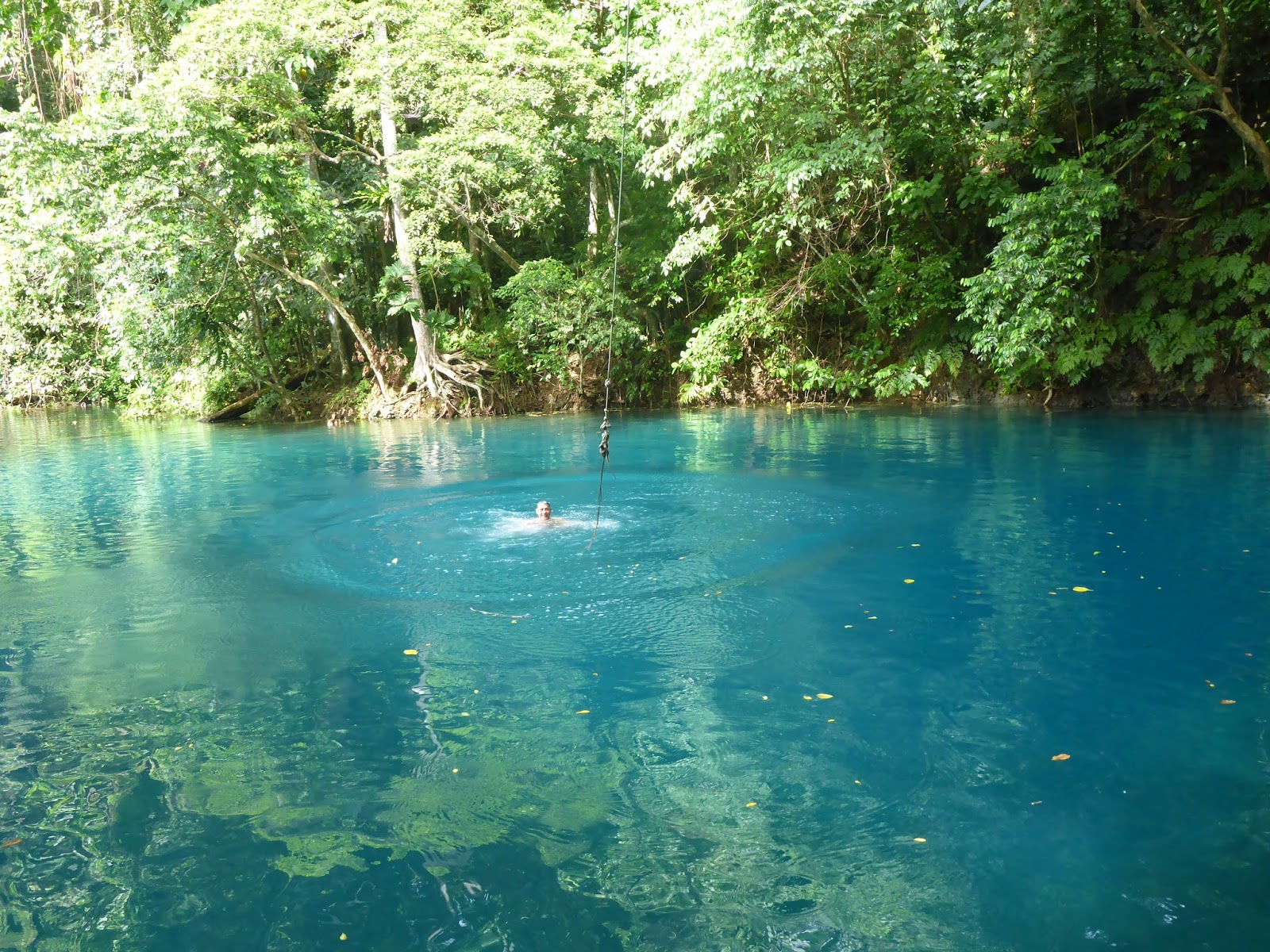
From that anchorage, it was a short and magical dinghy ride upriver where, for a $10 fee (or trade for a soccer ball) we enjoyed the splendid Blue Hole.
Still traveling north, we made it to the famed “Champagne Beach,” anchoring in Lonock Bay. Now, you tell me! Where do you even have to pay to walk on a public beach? We landed the kayaks on Champagne Beach and the keeper asked us to pay to walk on the beach. We left, of course, then found out that she had no right to do so. Instead, we landed at the inn in Lonock Bay and celebrated Fathers Day with a couple fruit drinks. Yes, another lovely stop.

In Ambae, we were lucky to arrive a few weeks before the volcano decided to rumble and the entire 11,000 population had to be evacuated. Lolowai Bay is quite spectacular, another volcanic crater, totally protected. One night, and we were off.
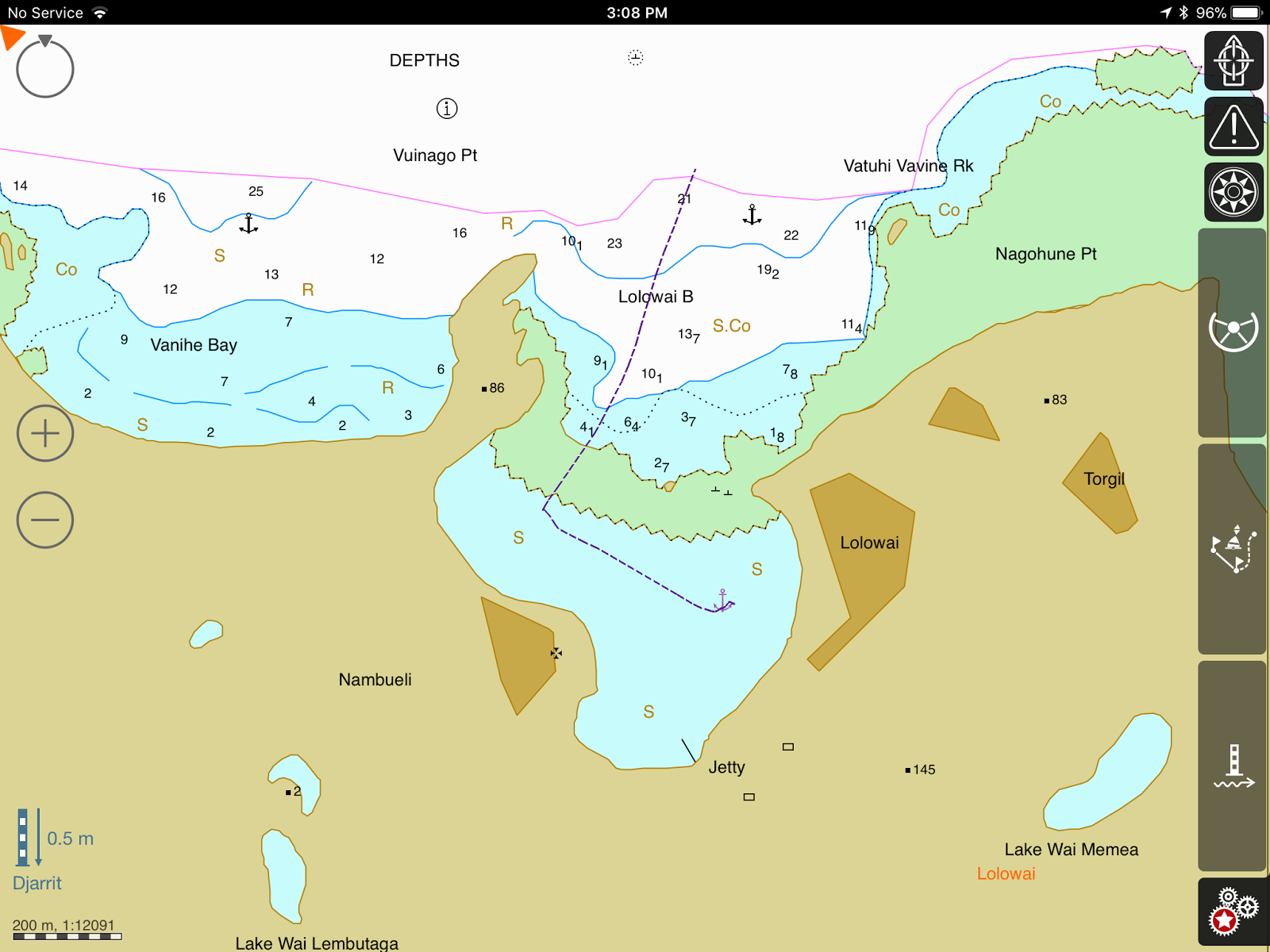 |
| Totally protected from the sea, Lolowai Bay, a volacnic crater |
Across the channel, due East of Ambae, lies Maewo and the lovely bay at Ansavari. 15*22.590S, 168*07.920E – This is a lovely bay. We anchored by the roaring waterfall and —I should have known better— accepted our guide’s invitation to scale the waterfall and go spearfishing fresh water shrimps.
 |
| Water taro terraces cling to the hill, way above the bay. |
A thin bamboo stick and a rubber band, 8 waterfall pools and 3 hours later, we had scaled the waterfall and had netted 2 shrimps each. Thankfully, our guide had the other 50 promised prawns and we had a great dinner, still charmed by the powerful pull of the earth, water and energy that flow freely in these magical islands.
 |
| JP holds the bag and happily lets our guide spear a few prawns. |
To the south and east of the bay, the snorkeling is good. Ancient, very ancient coral stands the test of time.
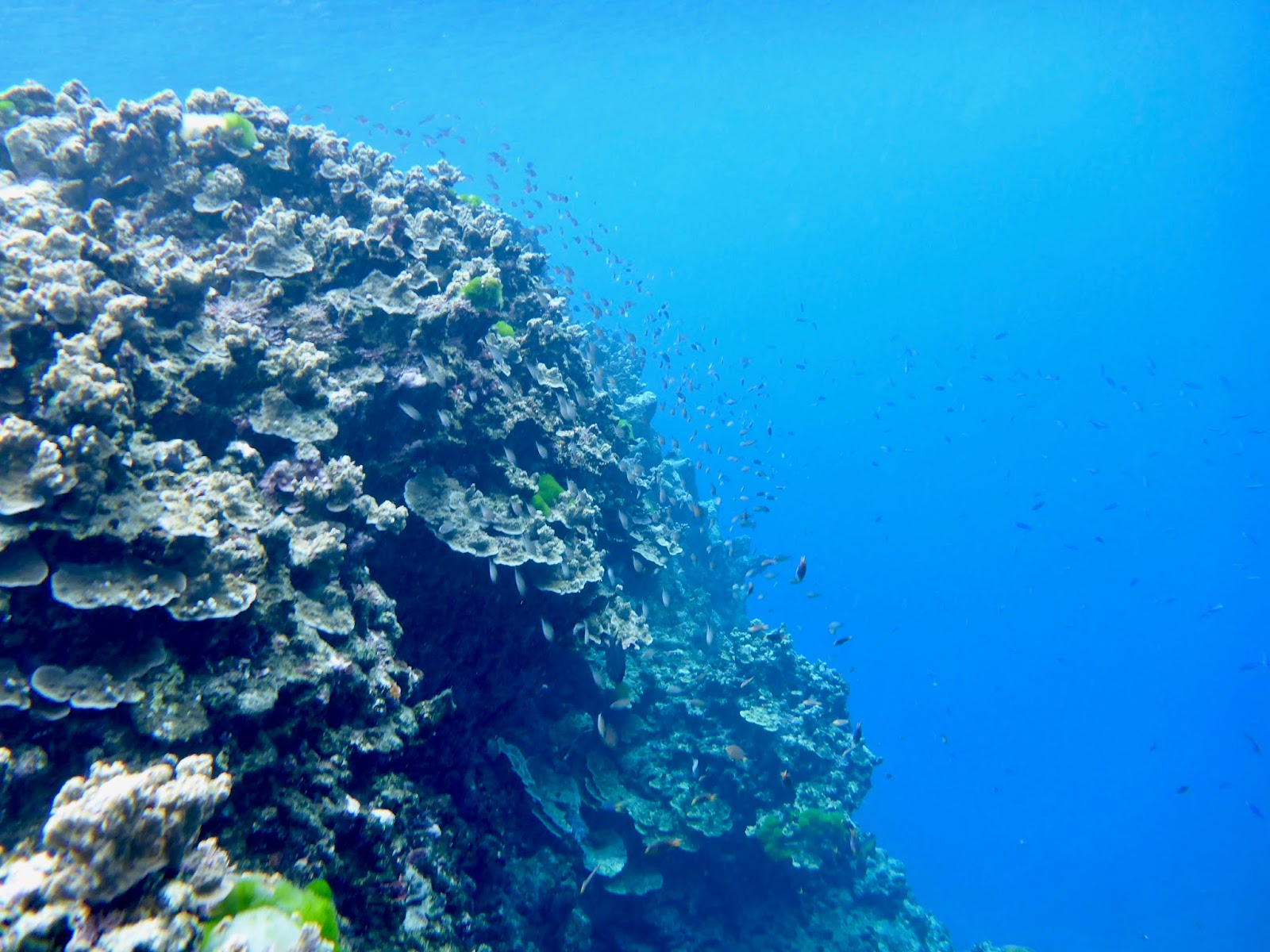 |
| Every day, I had to dive these ancient corals, so unlike any other I had seen in the Pacific |
Reminiscent of the ancient coral we had seen in Guanaja (Honduras) this is definitely a place to explore, its trenches, caves, mounds and crevices.

Off to the Bank Islands, starting with Gaua (Santa Maria). 14*18.801S, 167*25.897E The little anchorage of Kwetevut is a good overnight stop before attempting to enter LosaLava in the north, an anchorage that needs excellent lighting to enter. No sooner had we dropped anchor than the chief was visiting us in his canoe, a tradition common to all the Banks Islands. We soon found out that the Banks had been ravaged by Cyclone Donna the prior month. A Cat. IV cyclone wrecks havoc in these islands, mostly on the gardens, destroying crops, twist vines, felling all coconuts, and soon there is nothing to eat. Even the fish gets displaced. Sadly, we had not even a fish to gift the village.
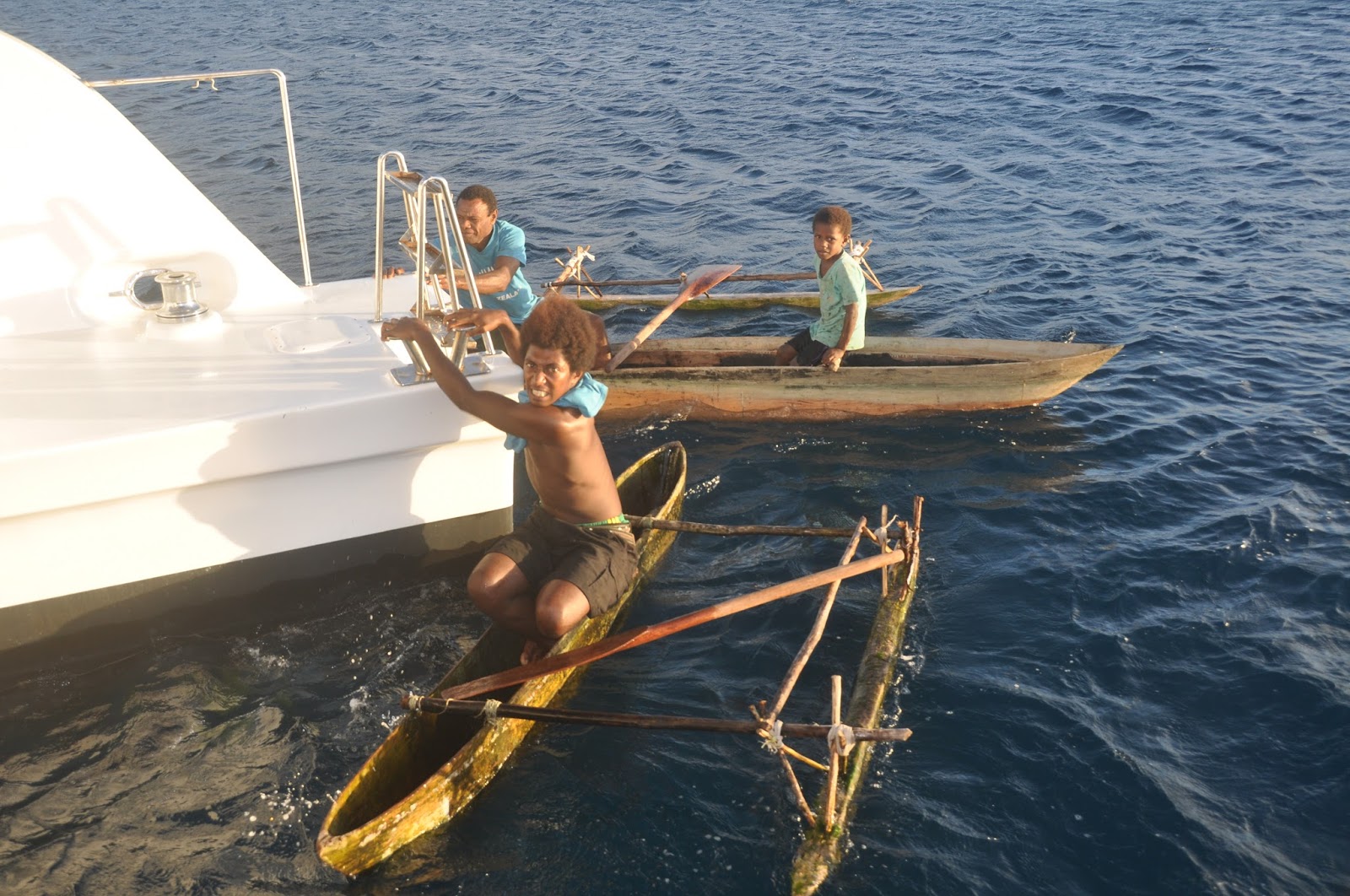 |
| As soon as we drop anchor, the locals come to visit |
Losa Lava was our next destination. 14*12.482S, 167*34.185E –
 |
| Entering Losa Lava, not too hard, but can be tricky in low light and high wind. |
This is a good stop, but beware the guide’s tours offerings! JP fell for the trick to the active volcano surrounded by a lake and waterfall. It sounded good, “easy” 3-hour round trip. My hero returned after a 5-hour hike to “the limit of his ability” and really unsafe, still in one piece, but scratched by undergrowth and bush, scratches soon to become majorly infected and turned into a 3-week staph infection nightmare. We also booked a trip to the waterfall on the west side, but after 30 minutes of dinghy in 27Kts, blinded and soaked, we turned around. When the locals tell you “Easy” and “Piece of Cake” and “2-3 hour trip,” understand BRUTAL!!!!
 |
| He may be deaf and mute, but our friend is the best communicator ever! With mimes and gestures, he had us laughing so hard! We could not refuse his prize for entertaining us: JP’s sunglasses!!! |
Next? Ureparapara, the most magical island, village, and people on earth!
 |
| Have you hugged your wahoo today? |
Until then,
dominomarie