Sans Souci is in Seattle!

Sans Souci
I still think of Sans Souci as our “new boat.” It replaced a smaller boat from the same manufacturer (a Norhavn 62 which bore the same name.) I remember when she was built and all the excitement of customizing her, traveling to Taiwan to watch her built, waiting anxiously as she was delivered to the US aboard a freighter, and finally starting the engines for the first time.
That was only about eight years ago, but since that time she has taken us over thirty thousand miles, south to Costa Rica, north to Alaska, then across the Bering Sea, through Japan, Taiwan and Hong Kong. In the Eastern Med we explored Turkey, Greece, Malta, Croatia, Montenegro. Then to the Med where we explored Sardinia, Italy, Spain and France. It has been an amazing journey.
Sailors (and, us power boaters) have been known to claim that the true definition for the word “cruising” is “Fixing your boat in exotic places.”
Salt water is corrosive. It may be pretty, but the same sea spray which feels so good as you move through it is constantly eating away at everything on the boat. Plus, think about the toll that bouncing over ocean waves takes on a boat. Imagine even the best-built of homes, and what would happen were you to dangle it from a giant bungie cord rising and falling every few seconds for months at a time. And, then think about all the systems on a boat; four different electrical systems (12v, 24v, 120v, 240v) with electricity that we make ourselves, water that we make ourselves, satellite communications equipment, navigation equipment, satellite tv positioning systems, grey water system, black water system and much more. Boats are comprised of dozens of intricate systems which live in a highly corrosive environment.
The bottom line: Those of you who are reading this particular blog entry hoping I’ll talk about sexy and exciting places to go may as well stop reading now. Sans Souci has put on a lot of miles over the past eight years and the time has come to “make her new again” before we set out on our next big adventure.
I’d also say that if you are someone hoping to buy a boat, hide this article from your significant other. It is best if she or he doesn’t figure our what boats really cost, or how much work they are, until later.
The rule of thumb on boats is that one should estimate about 10% of the purchase price for a boat as the annual maintenance budget. I could never understand how people could spend that much, but … as you’ll see reading this blog entry, I’m doing a few years of “catch up” this year!

When Sans Souci was in Croatia we shipped SIX of these giant containers of spare parts to the boat
Each season as we cruise I make a list of things that need fixed. This has meant shipping spare parts around the world.

Jeff Sanson, Pacific Yacht Management
During the off-season, Jeff my Seattle based mechanic and his team fly to wherever I’ve left the boat and start working on the annual maintenance. This has meant getting work done in dozens of countries, each with their own import regulations, access to parts, and languages. Some countries, where you would think it would be easiest turned out to represent a serious challenge. In Japan we struggled even to find engine oil. Jeff did a fantastic job, but the fact is that getting the right people and the right parts, while traveling internationally, is not easy and in some places it is impossible.
There are many projects which we decided were best handled when the boat returned to Seattle.
This past season Roberta and I really started sensing that the time had come to bring Sans Souci home. The boat was running fine, and if we had needed to cross an ocean, I have no doubt we’d have made it without having to pull out the oars. But, there were dozens of little ways in which Sans Souci was sending us a message that she wanted some loving of the sort Jeff could only give her back home in Seattle.

Loading Sans Souci onto a freighter in Mallora Spain for the long ride home to Seattle
We had planned to cruise this past summer in the Caribbean along with our GSSR partner boats Seabird and Ocean Pearl. However, there were lots of reasons why it just didn’t happen. In addition to our sensing that Sans Souci needed serious maintenance, we had some personal issues that pulled us home.

Cabo San Lucas, Mexico
Some of you might know that we have lived, when not on the boat, in Mexico for the last seventeen years. Last year we decided to build a home in the California Desert and sell our home in San Jose Del Cabo, Mexico. We were working with an architect to design our new home, plus needed to get our home in Mexico ready for sale. Our home in Cabo took a direct hit from a hurricane a couple years ago. We had made most of the repairs but there was still some work to do to get the home ready for sale, and the toughest was to break the news to our friends and neighbors that we’d be moving. This was particularly rough in that we had created a life so good that no one understood why we’d be willing to blow it up. All we could say in response is that we did it because at the core we are wandering nomads. The perfection of our lives in Cabo was part of what we wanted to change. We like new places, new things, new challenges, new restaurants, etc. It’s why we cruise the world. Our life in Cabo was too comfortable and we wanted to shake things up.
It was time to send Sans Souci home and focus on events at home.
Anyway .. this all brings me to the work that is now well underway.
Like all boat repair lists, ours started small and grew.
Initially, all we wanted was to update the boat cosmetically. The carpet was worn. Our doggies had put some scratches in the wood floors, there were dings in the cabinetry, fiberglass that had been bumped by the tender, the couch in the living room was starting to sag and the outside cushions had faded.

A whole new couch for Sans Souci – slightly wider than the prior one, and deeper. We visited the factory where the couch was custom made. They do the furniture for Westport, a high-end boat builder.
No decision has been made on where we will be cruising next. We don’t know if it will be in the continental United States or if we’ll be heading somewhere off the grid. We have discussed heading back to Alaska, but we have also discussed Hawaii, the Caribbean and South America. Our assumption is that we’ll go somewhere and that it probably means that this is our last bite at the apple for major boat repairs before we start another five to ten years of having the boat away from home. Whatever we do next we know that we want the boat made new before we begin, so that our next thirty thousand miles are as trouble free as those that have already passed beneath our keel.
There was only one really big project we were discussing…
Those who read my blog this last season were frustrated by reading me whine in virtually every blog entry about our inability to find a calm peaceful anchorage. We have “flopper stoppers” – giant trays we hang off the side of the boat which help keep the boat from being tossed around when our anchorage isn’t calm. Normally these do a great job, but they were inadequate for the unprotected anchorages we found in the Med. We ripped the trays off the boat on a couple of occasions and were miserable at anchor for most of the season.
Thus, I started researching “at rest” stabilization.
When Sans Souci is underway we have giant wings under the water that look like stubby aircraft wings. As we move through the water they pivot in an effort to keep the boat flat. If you’ve ever put your hand out the window while driving you know how they work. But when sitting still, they do nothing to keep the boat from moving with the waves.

The Seakeeper Gyro
The first option I explored was the gyro based systems, like Seakeeper. These work by spinning a giant ball at very high speed to stabilize the boat. Remember the tops and gyroscopes we had as kids? It’s the same principal, and they do work.
But, unfortunately, a gyro based system wouldn’t be possible on Sans Souci. The gyros grow in size based on the weight of the vessel they are trying to stabilize. A gyro sufficient in size to stabilize Sans Souci would weigh two tons, and be nearly four feet across. I simply couldn’t find room to place it anywhere. A single-engine boat like ours “might” find a place, but our twin engines fill the engine room.

Abt Trac Star System
I had heard about another system which would use the boat’s existing stabilizers to provide at rest stabilization but have had doubts about whether or not it really works. Basically, all it does is flap the stabilizer fins even though the boat is sitting still. By moving the fins rapidly the movement of the waves is counteracted. The company that made my stabilizers has pitched me on it a few times over the years but I’d never heard of anyone successfully using their system. I hadn’t heard anything bad, but I didn’t know of any boats as heavy as mine using the system successfully.
I posted a message to all the owners of large Nordhavns to see whether anyone else had experimented with the system, and received a response from only one Nordhavn owner, who had upgraded to the system, but then partially uninstalled the system. The stabilizer fins required are larger than the normal stabilizer fins. I spoke with the owner of the boat and he didn’t like how the boat felt while underway with the over-sized fins. He went back to the normal sized fins, reducing the effectiveness of the at-rest stabilization. His experience was an exception though. I spoke with other boat owners (all lighter boats, and non-Nordhavn) who said the system did work and was very effective. And, I convinced myself that the larger fins would be fine on my boat. The other Nordhavn was single engine, and my dual engine, twin skeg, boat would track much better through the water. I’m confident that having larger fins will not be an issue on my boat.

The hole where my stabilizers normally reside. Getting the old ones out was quite a project
As I got deeper into the project I discovered the project wouldn’t be as simple as I first thought. For example, my stabilizers are powered by a hydraulic system that runs off my main engines. I would need a way to power the hydraulic system without the main engines running. This would mean a large electrically-powered hydraulic pump, which I’d need to find space for. I then realized that the “actuators” (the big piston-driven mechanism inside the boat that pivots the stabilizers) would need replaced with larger units. I’d also need to replace the computer brain that powered the stabilizers. And as the project became reality we hit other surprises. Jeff recommended we hire a nautical engineer to verify that the hull was strong enough to handle the larger stabilizers, and then the engineer recommended beefing up the fiberglass.

My new electrically powered hydraulic pump. It is shown here sitting on top of a mockup of my new larger hydraulic tank
At this point, if I had it to do over again, I probably wouldn’t. But – I haven’t tried out the new stabilizers yet and won’t until we put the boat in the water in June. If the system does its job it will have all been worth it. I am optimistic, but the jury is still out.
For more information: CLICK HERE
How to turn a little project into a big project

Steve D’Antonio
There is a gentleman named Steve D’Antonio who offers marine consulting services. His reputation is legendary and I’ve always wanted an excuse to have him look at Sans Souci. One of the many services he offers is boat inspection. Steve has a reputation for finding EVERYTHING wrong on a boat. One fellow boater I spoke to, when I mentioned wanting Steve to survey my boat, said, “Ken, don’t do it. Steve will find so much wrong with your boat that when he is finished you’ll take one look at his report and then sell the boat.” I am very confident in Sans Souci’s seaworthiness, but that’s a challenge I could not resist. When we head to sea with Sans Souci we are literally betting our lives on the boat getting us to our destination safely. I have absolute confidence in my normal mechanic Jeff, but .. there’s nothing wrong with getting a second opinion. If there is even a remote possibility that something somewhere might need fixed, I want it found. A thousand miles offshore is the wrong place to discover that a bolt should be tightened.

Corrosion
It would be an understatement to say that Steve did an amazing job. His reputation is well deserved. To be fair, arguably, most of the items he found are things that would be fine without fixing, or that Jeff would have caught and fixed. But .. Steve spent two long days crawling everywhere on Sans Souci and came up with hundreds of items and SIX HUNDRED and FIFTY pictures of things that he felt merited attention. Sans Souci is a carefully maintained boat. It has been difficult getting the repairs exactly the way I want them given all the frustrations of international travel. But… we now have the time and the right team to get things made new. Between Steve and Jeff, I have zero doubt that Sans Souci will be better than new when she comes back from the shipyard. If you ever hear a boat has been through a Steve D’Antonio inspection and the repairs made, you can feel comfortable taking that boat to sea.
In addition to everything else going on, here are a few samples of other projects…
I decided to overhaul the navigation system on Sans Souci.
First, a bit of background…
We have been running two different pieces of software for chart plotting: Nobeltec Odyssey (on a Windows PC) and Furuno Navnet 3d (which is a proprietary hardware system.) The two systems have very different interfaces, and I’ve never really used the Navnet 3d system. I use it as a backup, but even as a backup it has seemed unreliable and awkward to use. In BOTH Turkey and Spain it died completely and had to be replaced. If you think it is frustrating to spend money replacing equipment you use, imagine spending money on equipment that is a never-used backup.
Actually, there is one minor piece of Navnet 3d that I do use. Whereas I haven’t been impressed with Navnet 3d as a chart plotting system, it comes in handy as a second radar from time to time.
When Jeff called to say, “You need new charts for your Navnet 3d system,” I responded, “You know. I don’t use anything but the radar. Why don’t I just install a cheap radar, PLUS get a second computer running Nobeltec?” At first Jeff thought I was crazy. I sent him a link to a cheap radar, and he wrote back, “Ken. That is a piece of crap. You don’t want it on the boat.” I reminded Jeff that I was just looking for a backup radar, not my primary radar. Given that it was a piece of equipment that might never be used, why would it being a piece of fecal matter make a difference?
I don’t remember if it was Jeff or I who had the winning idea…
I wanted Navnet 3d off the boat. We discussed going with something called TZ Touch, that to be honest I still don’t completely understand. What I knew was that I liked Nobeltec and didn’t really want to learn something new, and I was not giving up Nobeltec as my primary system. Not happening. And, as we looked at cheap radars, I started thinking about training Roberta or any crew, on using the backup radar. And.. the toughest one to train would be – me! Don’t let anyone tell you that it is easy to use radar. On a clear day with only a few boats around, radar is easy. But .. when running in rough seas, with ugly weather, with lots of boats around, knowing how to make the radar do magic is absolutely critical. And, as I thought about this ..the solution was obvious. What I really wanted was to have my backup be the same as my primary. I wanted TWO copies of Nobeltec, and two of my “good” (Furuno 2127 BB) radar. If I’m at sea, and my radar or my chart plotter flakes out, I want to press a button and go. I don’t want to futz around learning a new system that I never use.
Thus … the decision was made that:
– Navnet 3d would go
– My pre-existing primary radar would become my backup
– I’d get a second computer to run Nobeltec
– I’d get a new radar as my primary, that would be just like what my old radar was

Twin identical radars
To make a very long story short, I ultimately decided that the right answer was to have twin computers, each running Nobeltec, with two identical radars. My primary radar has been a Furuno Black box 2127 unit. It’s a high-end commercial unit and has been bulletproof. My existing 2127 will now be my backup and the new 2127 will be my primary. The beauty of this is that whereas before everyone needed to learn two different radar packages and two different chartplotter packages I now have two identical systems on tap at all times.

I am using small computers to run the chart plotter software. Two of these little palm sized units is running Windows 10 with Nobeltec Odyssey. The third is running Simon, the software I use for monitoring. I should note that these have SSD drives for reliability and are fan-less. I’m making it a priority as I redo the electronics to bring down the noise level in the pilot house.

Sans Souci has been upgraded to having four monitors! We had three before, plus three tiny 4” displays. The small displays were used as displays for various cameras around the boat. Now with four large monitors I can dedicate one of the displays to the cameras, one to radar, one to the chart plotter and one to the boat’s monitoring system

We also swapped the monitor on the flybridge to a new monitor. One major improvement is that we’ll now be able to route the video from our monitoring system to the fly bridge. Historically I haven’t been running from the fly bridge and one reason is the lack of video from Simon (our monitoring system. Without it I just haven’t felt comfortable.)
Here’s a quick summary of some other projects:
Carpeting – Roberta and I disagree on what to do with carpeting on the boat. She is focused on pretty, and I am focused on “lasts forever.” Every time we walk into some high-traffic location (like an airport) and I see carpet, I immediately say, “Why can’t we have this carpet?” Roberta always says, “Don’t worry. I will choose something durable.” Fingers are crossed that she does.
Wood dings – Someone once told me that scratches and dings are “personality.” If you see an eight year old boat that has zero scratches, the odds are it has been a marina queen, or owned by someone who was afraid to take it out into rough seas. We’re going to make Sans Souci new again, but anyone going on board today would instantly know that Sans Souci has lots of personality.
Annual Maintenance – I subscribe to a service called “Wheelhouse Technologies.” They have a database with all of the equipment on my boat. Each piece of equipment has recommended maintenance at different intervals. Bearings need greased. Pumps need replaced, rebuilt, or new bearings. Engines need oil changes, new oil filters and new fuel filters. Hoses need replaced. The list is endless. Even on a normal year there is plenty to be done on Sans Souci. As a bit of a side story, in one of my first jobs as a computer programmer I was assigned to programming software to keep track of maintenance on the DC-10 aircraft. I remember the stacks of paper that we would generate showing work to be done. They now seem small!
Steve D’Antonio – Steve’s “fix it” list on Sans Souci is a full-time job. Steve did exactly what I wanted. He dug deep, and focused on the small details. He crawled into places I never knew existed. Jeff will be assigning a full time mechanic just to “work Steve’s list.”

Mickey Smith. Mickey and I have a long history. In my former life as a software entrepreneur Mickey was my company’s technical contact at the chip manufacturer Intel. It says something about the complexity of the electrical systems on today’s boats that an Intel alumni is designing the electrical systems.
Mickey Smith – Sometimes cool things happen. The original designer of my boat’s electrical system was an engineer named Mickey Smith. He worked for Nordhavn designing their electrical systems, and then went to a competitor, followed by retiring. Recently Mickey decided to “drop back in” and Jeff scooped him up. No one is more prepared to look at my electrical system and verify that it is exactly right than Mickey Smith. There are some projects that I will be speaking to Mickey about. In particular, how we designed Sans Souci is different than how we use Sans Souci. I remember adding tremendous battery and inverter capacity to Sans Souci thinking we’d want to survive overnight at anchor without running a generator. I have an amazing 14kw of inverter power and over 2,000 amp hours of battery capacity! That is two or three times what most boats my size have. And, what is really strange is that we just don’t use it. Sans Souci’s electrical requirements are such that we always run a generator. We like cruising in warm places, running the air conditioning constantly, and we like our satellite tv, satellite internet … and even running the hot tub. Sans Souci is a very comfortable boat. We have the creature comforts of a boat many times our size and also the electrical requirement. The inverters and batteries are not used, but take up a lot of space, put out a lot of heat, add complexity to the boat, and need maintained. My #1 lesson from our 10s of thousands of miles of cruising is that “simple is good.” Anything I can do to simplify the boat is a good thing. Having anything on the boat that is complex and unused is not smart. I’m not ready to say that I want to remove this stuff from the boat, but I am looking forward to talking with Mickey about what he thinks I should do (and, having him tweak my system.)
Bumper on the back – One of Jeff’s more interesting projects is to experiment with adding a rubber bumper to the back of my boat. Every year, one of Jeff’s projects is to re-fiberglass the swim step at the back of the boat. Year after year we bump the swim step with the tender and take out chunks of the fiberglass, as well as pieces of the teak. It’s not that we’re bad drivers of the tender, but there are times when the tender arrives at the back of Sans Souci and the swim step is moving through a six foot arc. On those days the focus is on getting passengers onto the swim step safely. No one cares about whether the tender or swim step takes a little abuse. I have done experiments with putting large fenders at the back of the swim step and last year had a custom wide fender made that exactly matched the swim step, but nothing works. This year I want Jeff to find a way to put rubber around the swim step that won’t come off. It’s a trickier task than it sounds.

Removing the miles of surplus wiring on Sans Souci

There were two other goals for the rewiring project – 1) Better ventilation for the equipment. We run in warm climates and I’ve had trouble with equipment melting down. And, 2) Swapping to quieter equipment. The pilot house has been very noisy.
Rewiring the boat – Sans Souci was born with messed up wiring. When we were early in construction on Sans Souci I hired a top company out of Florida (Larry Smith Electronics) to install all of the entertainment, communications and navigation electronics. They developed fancy wiring diagrams and sent the wire over to Taiwan where the boat was built. They then went bankrupt taking my money with them. I then hired a new company who had their own way of doing things and produced their own fancy wiring diagrams, and shipped a lot more wire to Taiwan. My boat wound up with two sets of wiring, much of which went nowhere! This left an undocumented mess which has haunted the boat over the years and which I decided needed cleaned up. Thus, we’re pulling both sets of wires; trash bag after trash bag of wires, completely off the boat and rewiring. While we’re going we are updating to the latest standards; things like HDMI to all the TVs, an HDMI switcher allowing any video to be routed anywhere, NMEA 2000, etc.

To keep things simple we are installing push button switches around the boat to choose the audio/video sources.
Anchor watch – This is a small project, but one that could have tremendous benefit. We tend to anchor for most of the nights in a season. On a calm night anchoring is wonderful, but when the wind kicks up anchoring can become a challenge. We’re spent many long nights sitting in the pilothouse watching the wind gauge hoping that the anchor would hold and the boat wouldn’t wind up on shore. I also use a series of “apps” on my ipad and iphone to track where we are in our “circle” (the circle that we swing around our anchor.) What I’ve always wanted is a simple alarm that would wake me if the wind goes past a certain velocity. When we drop anchor, we tend to have a very good idea what it would take to cause the boat to break anchor. If it is shallow water and sand, with lots of room to put out chain, we’re in better shape than when on hard pack or weeds and not much scope. We usually have a pretty good idea what speed wind could potentially be a threat. What if I could simply have an alarm that wakes me if the wind passes a certain speed? Over time at an anchorage confidence builds. If on our first night in an anchorage we see 30 knots of wind and the boat holds solid, 25 knots won’t be moving us on subsequent nights. Each night I can set the threshold higher as we sit in the anchorage. On the first night I might say “Wake me at 25 knots.” And, if I was woken and we the wind were to leap to 40 knots, I would feel safe in setting the “wake alarm” to 35 knots on the second night. It’s just a way of avoiding being woke up unnecessarily.
Kayaks – Sans Souci has two tenders on the bow; a 15′ tender and an 11′ tender. The small tender is never used. A couple years back I swapped the engine on the small tender to electric, figuring it would be easier to maintain, and I was right. But.. the tender still isn’t being used. So .. we decided that perhaps we should dump the small tender completely and replace with a couple of kayaks. We bought a couple of fun looking Hobie Kayaks that you paddle with your feet (or, oar by hand.) They seem like they will be good exercise, fun to goof off with, plus easier to beach when we need to get to shore and there are waves. They are fairly light — but, not light. Each weighs around 80 pounds, and our bow sits about 10′ in the air. I’m not sure if I’ll need to use the davit to lower them into the water, or if I can pitch them over the side. It will be a learning experience.
New tender – Roberta and I spent last season taking pictures of the tenders from other boats. We knew our tender was getting old and tired and were trying to decide what to replace it with. Many readers of my blog sent suggestions. Ultimately, we decided that we’d just re-order a new version of what we already had (an AB Inflatables 15DLX.) You can’t beat up a tender or run it in rougher conditions than we have, and our tender runs great. It is fast and reliable. What more could we want?
Stabilizers – I already mentioned the huge project to replace my stabilizers. I had lunch with a friend who flew 747 aircraft for many years and mentioned to him that my new fins would make his wings look small. I was only partially joking! The new fins are shaped differently and are much larger. And, what I didn’t appreciate at first was that everything needs upsized. The “actuator;” the piston driven mechanism that drives the fins needs replaced and my hydraulic system needs upsized to handle the hydraulic needs. It’s a bunch more work than I expected.
Seachest – Much of the equipment on Sans Souci uses seawater for cooling. Rather than each of these items (the generators, the hydraulic system, the a/c chillers) having their own sea water intakes, all of the water comes into a single “box” and is distributed to the equipment from this single box (which has two intakes and six outflows.) The problem is that the box (chest) is tough to clean and loses effectiveness when it needs cleaning. We’re moving the seachest where it can be made larger, and the new seachest will be lined with copper, which sounds wrong to me, but allegedly will collect crud much slower.
Exhaust – This season, I had problems with Sans Souci overheating at higher RPMs. We discovered some leaks in the exhaust system and hopefully this was the issue…

New remotes for our new air handlers. Sans Souci came with an air conditioning system from Cruisair, but we could never get it to work correctly. In 2008 we swapped the chillers for Technicold (from Northern Lights, makers of our lugger engines) and now we are swapping the air handlers to Technicold. The new chillers have been 100% reliable!
Air Handlers – Sans Souci uses a “chilled water” air conditioning system. This means that the boat has machines (called chillers) which refrigerate water (or, heat water) and distribute it throughout the boat in a giant plastic loop. In each of the rooms of the boat there are little machines called “air handlers” that look like car radiators. The piped water goes into the air handlers which have fans that blow heated or cooled air into the room. Some of Sans Souci’s air handlers are noisy and annoying as a result of being operated non-stop in hot humid environments for nearly a decade. We are replacing the air handlers, which means in some cases doing woodwork, as the air handlers are buried deep in cabinetry.
HD 7 – Sans Souci has not been in the mainland of the United States since 2009. For the first part of our world cruise we had no television. But in the Western Med we were able to obtain satellite tv from the UK. Coming back to the US we had to replace parts of the satellite positioning unit to obtain US tv. We also had to replace the satellite tv receivers. Well … given that all of this work was happening, when Jeff called to say, “Ken. Are you sure you want to continue with your eight year old sat tv receiver? It is now obsolete and your unit is near the end of its life. If you get a new one you’ll get HD.” What could I say?

New controls for a new autopilot system
New auto pilot – Sans Souci’s exterior controls are starting to show their age, and needed replaced. As Jeff was looking into replacing them, he discovered my auto-pilot (the system that I use to drive Sans Souci) is now obsolete and hard to get parts for. “Crap,” I said and approved upgrading to the latest autopilot system. Remember — the goal is to get Sans Souci back BETTER than when new.

Sans Souci’s helm chairs are being reupholstered. At one point we discussed adding an autopilot control on the arm, like in this picture. I decided that would be too lazy, even for me — and, passed.
Anyway… that’s it so far, but .. there are still a couple of months ahead of work, and the list could grow. Although, I don’t see how it could! Other than the hull it really will be a new boat!
As to this year’s cruising…
The current plan is that we won’t be cruising this year! I apologize to readers of my blog, but we’ve been cruising every year since buying our Nordhavn 62 in 1997. This may change, but our current plan is to spend plenty of time on the boat, but sitting at the dock. We haven’t ruled out the possibility that we’ll get bored and fire up the engines, but … spending a year just sitting at the dock in the Pacific NW, zipping around the bay with the kayaks and tender, sounds pretty darn good!
As to future cruising…
I am typing this from on an airplane as we travel to Hawaii. Our current idea (and, keep in mind that all cruising ideas are written on sand at low time) is that we’ll take the boat to Hawaii. That said, we have friends who say there is no good cruising in Hawaii, and other friends saying it is a wonderful place to have a boat. We figure we’ll check it out for ourselves and then decide. Alternately, we might head to the Caribbean, or back to Alaska, or I’d like to go back to Croatia, or Roberta would like South America, or ..
We have lots of choices!
Thank you,
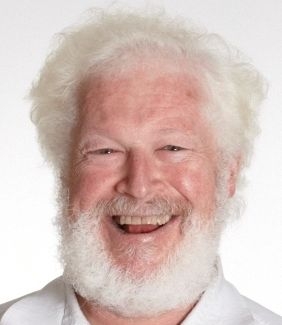
Ken Williams
N68 Sans Souci