
Not really working on the boat full time yet. I’ve sold my soul to the Gubment till the end of the month.  I have been acquiring materials that’ll be needed to get some of the underwater hardware ready.Some of the stainless for skeg & rudd…
No, not yet
May 7 – Great Bridge, VA
Great Bridge Historical Park Free Dock
“A single sunbeam is enough to drive away many shadows.” —St. Francis of Assisi
We’ve spent the last two days moving through the ICW in a remote section of northern North Carolina. There isn’t a lot to see or do between Oriental on the Neuse River and Great Bridge, Virginia. It’s more than 150 miles through man-made cuts and open sounds and bays. Even on a sunny, nice day there really isn’t much to look at, but this time it was wet, cold and dreary. Stan drove from the lower helm most of the time.
CONTINUE READING HERE…»
Bird’s Eye View – North Palm Beach Marina
The onSpot guys have installed a new web-cam at North Palm Beach Marina. Kinda fun to watch real time video of the ICW at Parker Bridge.Nordhavn Exumas Abacos Bahamas trawler Caribbean Pickwick Boat dogs
Memphis Downtown
Budd Reef
BUDD REEF, just east of Rabi.We waited in Albert Cove (Rabi) and then crossed at the Texas PassEntered by the west passage We visited Budd Reef in June 2015. We had high hopes to snorkle the reef and hire a local to take us to Cobia Island w…
2016-10 Princess Royal Reach to Grenville Channel and Lowe Inlet.
Saturday, May 7, 2016The high wind warnings persist so the crew is OK with early morning departures in hopes of minimizing exposure to the winds. By 6am we’ve departed Work Bay. It is a fine anchorage but there is room for just one boat nea…
Black Point to Georgetown
Hi all, We are now at anchor in Elizabeth Harbour just off Sand dollar Beach on Stocking Island. It was an easy day trip out in The Exuma Sound down to Great Exuma Island. We are traveling in some of the best fishing grounds around but our freezer is full so no fishing today. […]
Hingham Bound: Spoke Too Soon – revised
The following two paragraphs are borrowed from my last article, Direct Stuart to Morehead City.
“Hours of boredom punctuated by moments of stark terror.” I learned this phrase years ago when I flew airplanes as an instrument rated private pilot and it very well describes what can happen. I have many tales. Now change the word “moments” to “hours” and the phrase now works for boating. As readers who follow this blog know, I have some pretty wild tales.
Sorry, no wild tales at this time and hopeful not on this voyage. On my 4 to 7 AM watch Wednesday night, I did a complete review of the weather for the remainder of our route and as of 8:00 AM the weather window remains open and OK enough. So much for boredom even on a three hour watch.”
In the previous article I also mentioned that we had not reviewed the Abandon Ship Procedures and stated since we were 10 miles or more from shore that its review “might just be appropriate.”
Time for a wild tale.
It’s around 2:00 PM on Thursday afternoon. Winds are 15 to 20 knots and we have been running in a 3 to 5 foot following sea for several hours with a forecast for more of the same. That forecast also mentions a chance of thunderstorms but up to this point we have been in partly sunny skies with no rain. Ahead of us at Cape Fear and to the north of there, Sirius Satellite Weather is showing a large are of rain and thunderstorms. The storms appear to be moving north at a speed greater than Guided Discovery’s 8.4 knots. We should be OK.
So the three of us sit down at the pilothouse settee to review the four page Abandon Ship Procedures.
Explanatory Note: Cliff Rome, Captain of the 70 foot Delta trawler Oasis, who Diana and I met in 2014 when we were commissioning Guided Discovery is the author of the Abandon Ship Procedures. Cliff, to his credit, is more OCD than me and he wrote this brilliant document, which he generously shared. I adapted it to reflect our situation and equipment level.
At 4:00 PM we paused our review to make a 4 hour log entry. It included the following:
- 20 NM south of Cape Fear
- Wind WNW 26 gusting to 34
- Following Sea 6 to 8 feet (off the starboard aft quarter)
- Comment: We have clear skies with no storm visible for 360 degrees. Strong thunderstorms north and west of Cape Fear. A low pressure center is close to the boat. Barometric pressure is 29.56.
Side Note: It’s probably not the best idea to discuss abandoning ship when you in the vicinity of a place with a name like “Cape Fear.”
Then, at 4:08 PM, Wylie noticed a Marine Warning on the Sirius Weather screen. It advised “thunderstorms with gusts to 33 knots” We noted in the log that waves were off the starboard aft quarter. At 4:55, the marine warning was lifted. We noted winds of 20 to 25 knots. At that point we got out our SOP and prepared the boat for heavy seas.
Winds and seas quickly built. We noted at 5:41 PM that winds were northwest at 40 to 44 knots with a 7 to 9 foot following sea off the port aft quarter. We also noted that the marine warning was reissued but noted it was not for our area. We were experiencing 8 to 10 feet big rolling waves. We could see storms around us at a distance but nothing close by.
Explanatory Note: Gauging wave height and wave period is difficult when you are in a boat. Further, to avoid exaggeration, either high (to brag) or low to minimize risk), I ask each crew member for an opinion and we agree on consensus log entry.
When we crossed the narrow “short cut” passage at Frying Pan Shoal at 6:40 PM, we were in 10 to 12 foot (big – very big) seas with sustained winds in the mid-thirties. Once past the shoal seas started to diminish, albeit very slowly.
Throughout all of this turbulence we were relatively comfortable although we limited our movement. We had to re-secure the salon table, not fun, as our first attempt allowed some movement, which given it size and weight, well over 100 pounds, could do some significant damage if unsecured. We also became concerned about the refrigerator which groaned, suggesting it wanted to break loose on the 10 to 12 foot rollers. I had not experienced refrigerator “groaning” on past encounters with big seas, but then this was the first experience with a big following sea.
Thanks to Wylie, below is a link to a video showing us pitching and rolling.
https://youtu.be/VKAJ7RMczrI
We had one casualty. Wylie announced that he was experiencing sea sickness and rated its severity at 8 on a 10 scale. Wylie, a pilot, had not previously experienced any motion sickness. Tom to the rescue with an wrist band that puts pressure on the wrist pulse points, ointment behind the ears, and a ginger lozenge that he claimed would cure this and many other ailments. Well, too little, or depending on your viewpoint, too late, Wylie’s succumbed 10 minutes later. Wylie was lucky. His “bout” lasted only 5 minutes. However, he needed a full night’s sleep to recover.
Explanatory Note: This is my fourth Sarasota to Hingham voyage (1,600+ statute miles each – 6,400 miles) and my track record is unbroken. Someone gets sick on every voyage. Wylie holds the record for the shortest bout. Other have fared worse with vomiting and dry heaving lasting for hours! The only good news is that once the person recovers, it’s over and they seem to immune from future sea sickness (at least on our trip).
I polled the crew regarding anxiety and their opinion of whether we should head in. Both Wylie and Tom expressed some level of concern but not enough to call it quits. That said, heading for shore was not without a few problems. 1. We were over 10 miles from shore, which in itself translates to over an hour of punishment. 2. We were over 20 miles from safe harbor at the Cape Fear River. 3. Either choice required a turn to port which would have put the massive rollers on the beam. We would have taken some horrendous rolls despite our over-sized stabilizers.
That said, I had little to no anxiety and, except for a flying refrigerator, no concern about our safety. Why?
- I had experienced big seas including 10 to 12 footers in the past and knew that the boat could handle the seas.
- The 63 Outer Reef is built to Ocean Category A standards, “Unlimited Navigation.”
- Outer Reef’s shipyard is ISO 9000 certified. This provides some assurance of build quality, which two years running have confirmed.
- The lazerette door, the engine room doors (forward and aft) and the pilot house doors are heavy duty with dogs to secure them.
- The chance of a mechanical malfunction was very small. The boat has run almost a 1,000 hours without a hiccup to the engines or running gear (including stabilizers).
- I perform an engine room check every 6 hours. This limits the chance for a surprise.
- Sirius Satellite Weather allows us to monitor the weather, including forecasts, radar and sea conditions. Again limiting surprises.
- The storms were moving north faster than we were.
- The hour of the day worked in our favor. Storms tend to diminish as evening comes with cooler temperatures.
- The seas would be smaller once we crossed the Panhandle Shoal “short cut.”
- I’d used the Frying Pan Shoal short cut before and in the dark of night. I knew that while shallower than surrounding water, there is adequate depth to reduce being hit with a breaking wave.
Further, to ensure our safety, I called the Coast Guard to see if there was a Notice to Mariners on the Frying Pan Shoal shortcut. There was none. We proceeded through the shoal, noted that the G1 buoy was missing, and, over the next few hours seas began to diminish as the storm ahead pushed further north. The 8:30 PM log entry noted diminished NW winds at 16 knots, seas 3 to 5 foot and, the words “smooth ride.”
Side Note: The Coast Guard was not up to date on the missing navigation aid. So much for ‘their” local knowledge.
A little perspective. The old cliché “experience is the best teacher” is valid for me at least as it relates to weather. With experience I’ve come to view weather more like a four dimensional checkerboard. Dimension #1 is NOAA weather reports. What are the facts? This includes current conditions, big picture forecasts (pressure and fronts) for the next 6 days. Dimension #2 is time. Where will we be in relation to our route (see chart of rout with 100 mile intervals below)? Dimension #3 is the trend. What will conditions be before and after our arrival time at a particular waypoint? Dimension #4 is contingency plans. When all else fails, where can I go to seek shelter? With this approach it is possible to venture out into conditions that would previously have kept me at the dock.
Meanwhile, after crossing Frying Pan Shoal we finished our discussion of the Abandon Ship Plan as we proceeded north to Morehead City with a favorable tail wind and 3 to 5 foot following seas. The “sea gods” (Neptune et al) looked favorably upon us as we entered the Beaufort (Morehead City) Inlet on a rising tide where we saw speeds over 12 knots. Good News: We got to the Morehead City Yacht Basin at 7:03 AM. Bad News: The gas dock does not open until 8:30 AM. Oh well.
Hours of boredom punctuated by moments (or “hours” if boating) of stark terror (or at a minimum if boating, cause for concern).”
Written by Les and Wylie
Shoal Bay to Port McNeill Part One
May 5, 2016
High Slack tide at our next tidal rapid, Greene Point, was at 1552, so we left Shoal Bay at 1500 under sunny skies. We transited Greene Point Rapids right at slack water and headed down Chancellor Channel in brisk winds. Turning into Wellbore Channel we transited Whirlpool Rapids with a 5 knot push behind us. The original plan was to spend the night at Forward Harbour and then on to Port Harvey the next day.
Patrick made the call to continue since Sunderland Channel looked OK. However, when we got to Johnstone Strait the conditions deteriorated with short steep seas and winds steady at 35 knots, gusting to 41 knots. The seas were accentuated by the ebb tide now strongly flowing against the wind. The tide rips in this area are well known and we endured the slamming and spray for less than one hour before the winds began to decrease and the seas calmed down. Somewhere after the seas built up, the portside ball fender went over the side, still attached, and as the waves hit it the fender would appear airborne well above the bow rail. By the time we reached the Broken Islands the winds were down to 15 knots and the seas were calm. We pulled into Port Harvey and shut the engines down at 2030, with still plenty of daylight.
The wreckage from the sinking of the barge (with the store and Red Shoe restaurant) is beginning to get cleaned up and George Cambridge has a new float which will have the octagonal tent from North Island Marina as a temporary gathering place as George and Gail rebuild.
 |
| The barge has been refloated and a new float for the tent is in place |
Since it was Cinco de Mayo, we had chicken enchiladas for dinner and then called it a night, saving the washing of the salt off the boat for the next day.
 |
| Even with the rebuilding, there are plenty of scenic views in Port Harvey |
May 6, 2016
By sunrise the two other boats in Port Harvey had departed for Port McNeill, everyone trying to get across Cape Caution while there is relatively good weather. The gales in Johnstone Strait do not extend to Cape Caution and yachts are crossing every day according to AIS. The sun came out, still breezy, and we washed the salt off Spirit from yesterday’s excitement. By early afternoon two more yachts had joined Spirit in Port Harvey.
With several more yachts on the dock we had an impromptu potluck on Spirit, with steaks, spot prawns, steamed asparagus, salad and roasted potatoes, followed by ice cream sundaes. Meanwhile the wind continued to howl from the NW in Johnstone Strait.
ENVOY NOW IN THE WATER AND PROGRESSING TOWARDS CRUISE MODE
Envoy has now moved to Gouvia Marina, Corfu.
We enjoyed the process of getting Envoy prepared for cruising having decided not to worry about meeting any time schedule and take each day as it comes – not becoming frustrated when as often happens contractors don’t turn up on time or at all. In 2014 preparation took us four weeks and this year just a day over three so we thought we’d done pretty well.
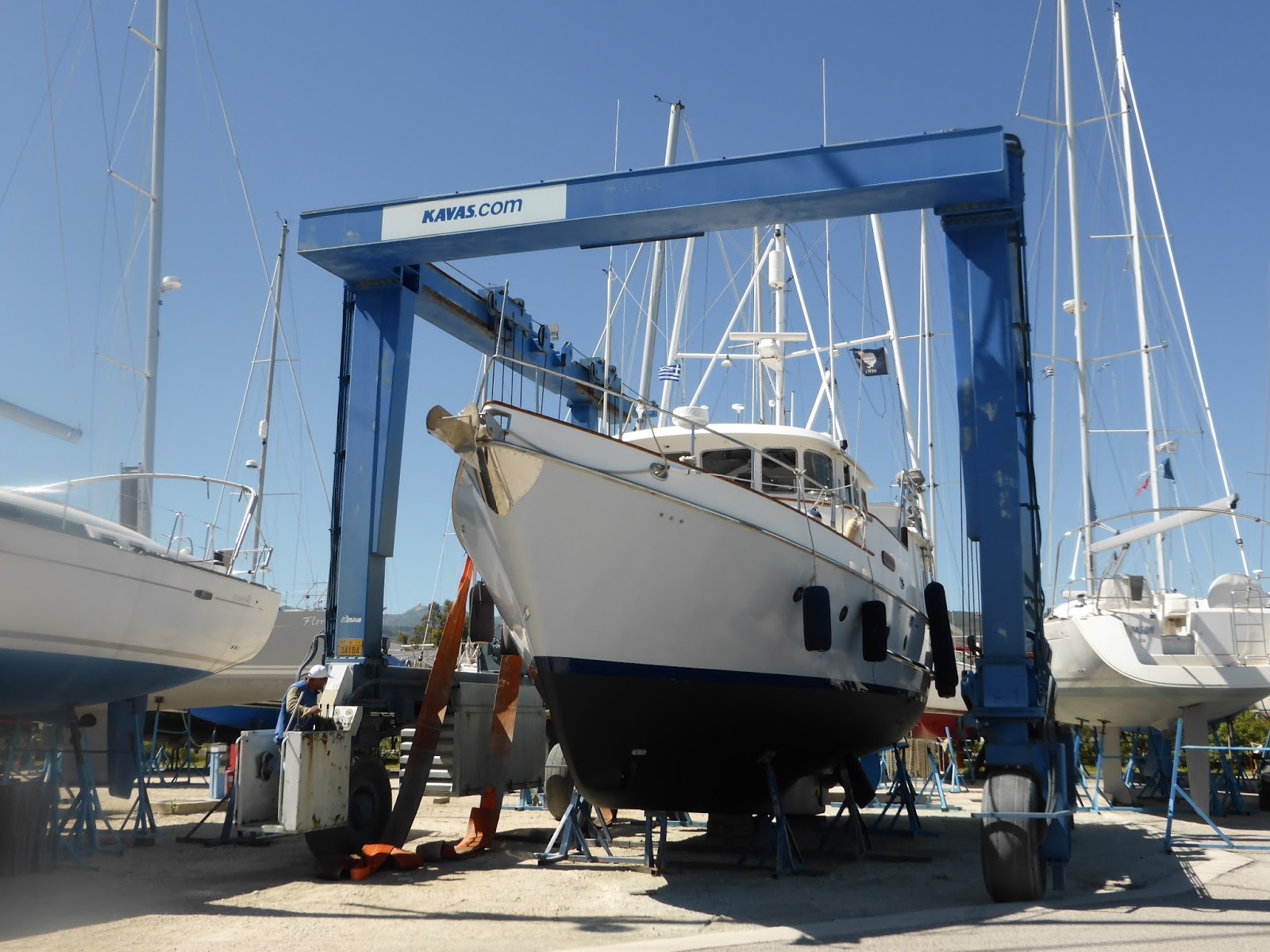
Envoy went into the water nearly two weeks ago on a beautiful sunny day with great excitement on our part. The travel lift operators always give you plenty of time to check for sea water leaks and after half an hour we had none. But when we checked again after docking into our marina berth we had a couple of minor leaks, both of which have been resolved.
Envoy going back into the water
We’ve not had good results with various propeller antifouls over the years so took them back to gleaming bare metal and coated them with lanolin to see how that goes.
Envoy’s propellers

The weather here has been great with light winds and temps in the low-mid 20s.
During the first days here we visited Vodafone to sort out both phone and internet connections and always find them incredibly helpful. Using our Mobile Broadband Device we can connect using our iPad and laptops simultaneously. Di’s laptop wouldn’t start up so she took it to a local repair shop who not only fixed it but upgraded it to Windows 7 – all for 30 Euros (about NZ$50). Now it’s working great and much faster.
Although there are no obvious signs of economic issues here, locals tell us that unemployment is a real issue particularly in the big cities, and that many young people are leaving to get jobs overseas. While people are stoic about the situation they don’t see it getting better any time soon.
Di’s on-board herb garden

We had to spend about three hours with our agent – A1 Yachting visiting the Port Police, Customs and regular Police to get our documentation sorted out for cruising here. Although in Greece it’s possible to do this without using an agent, we’ve found A1’s assistance over the years to be invaluable, saving a lot of time, hassle, heartache and cost – especially this year as some new laws come into effect on 1 May and nobody is totally clear on how they will work.
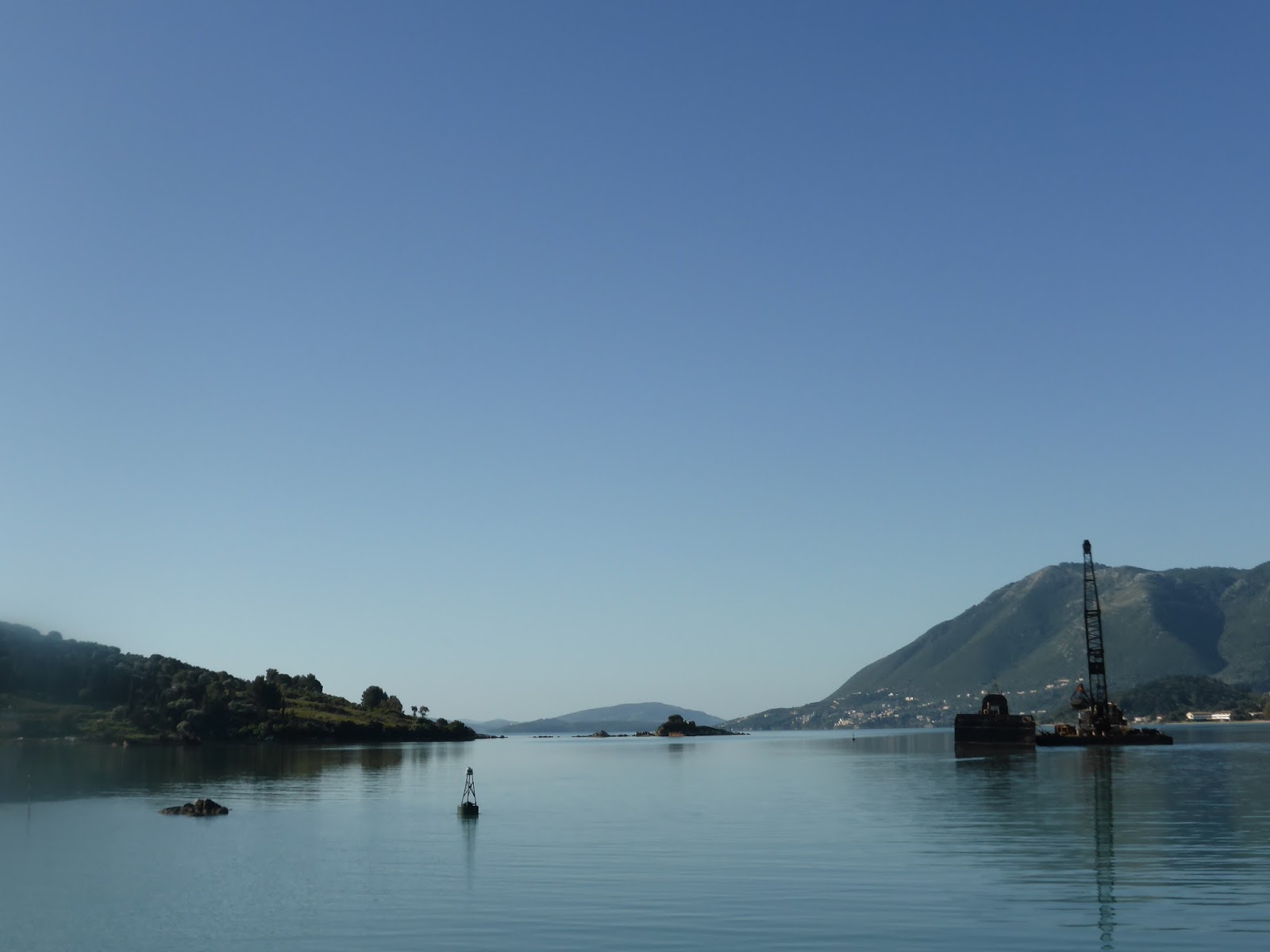
The day of our sea trial in the Lefkas canal was stunning and not much of a test for our stabilisers
There’s been some progress on items mentioned in our last Envoy blog:
1.The domestic fresh water heater’s water leak is fixed and it’s feeding hot water to all the right places. The mechanic who removed and reconditioned the unit hadn’t connected it back correctly, but now all good.
2.Our large RHIB and Yamaha 25hp outboard has been finished and sea-trialed. The sounder is working well and a wiring fault which caused the auxiliary power supply (to sounder and vhf) to shut down has been fixed. Here in the EU there is a requirement that fuels must have 10% ethanol content for so-called environmental reasons. While the environmental grounds for doing this are very dubious the practical result is very negative for the boating community because ethanol is hygroscopic and the Yamaha mechanic told us many of the problems he resolves are directly related to this – particularly moisture and “sugar-like” deposits in fuel systems. It’s not so bad in cars because the fuel is used more quickly and doesn’t have time to attract moisture, but outboard motor fuel for example is often kept for many months or even carried from one season to the next. The advice now is not to keep petrol more than a few months, never from one season to the next and to add fuel conditioner – we are now using a “Wurth” product. It’s also an issue in diesel and we are now using Stanadyne as recommended by Lugger and several industry gurus.
3.The boom winch which I reported as not operating is actually fine – I’d just forgotten how to operate it correctly.
4.Two new Deka bow thruster batteries have been installed along with a new circuit breaker as the previous one failed (after doing its job) when the short circuit occurred that caused the battery problem.
5.The Naiad stabiliser’s hydraulic rams have had new seal kits installed and are working well. The 12 volt pump providing sea water for cooling the hydraulic oil didn’t work so we’ve replaced that with our onboard spare. We also changed the hydraulic fluid filter and I had wanted to change the fluid as recommended by Naiad to do every two years, but the mechanics talked me out of this as the current fluid, has only been used for a few hundred hours, is filtered, looks perfect and – as they said “heavy hydraulic equipment is frequently operated nearly every day for many years without the need for fluid changes”.
Most equipment has now been tested and working OK but I still have to test the watermaker – I didn’t want to do that while in the marina with dubious water quality.
Other issues which have arisen are:
The Yanmar wing engine wouldn’t start and following analysis by Sailand’s mechanic a new fuel lift pump was installed and all now OK. The Genset wasn’t starting easily so the electrician tested the glow plug and found there was no current reaching it. A new relay fixed that.
The Lugger engine wasn’t starting easily so Sailand’s electrician measured the voltage at the starter finding it to be very low. He suggested making and installing a heavy duty earth cable between the engine and the battery bank’s negative earth busbar. This has been done and starting is now excellent. At the same time he checked the battery bank’s parallel switch for emergency starting and considered it to be too light for the amps involved, so sourced and fitted a new one for us.
The Lugger’s throttle cable jammed just as we were manoeuvring out of the marina for a sea trial – which was disconcerting to say the least, so Sailand recommended fitting a new control unit and throttle and gear cables (none of which had been replaced in at least 10 years). This installation took most of a day as the lengthy cables travel between decks and it’s very hard to access some of these spaces and then feed the cables through.
Laurie with old throttle and gear cables

The only job Sailand ran out of time to do was to machine polish the superstructure gelcoat so this is one that Diane and I will have to roll up our sleeves and do ourselves.
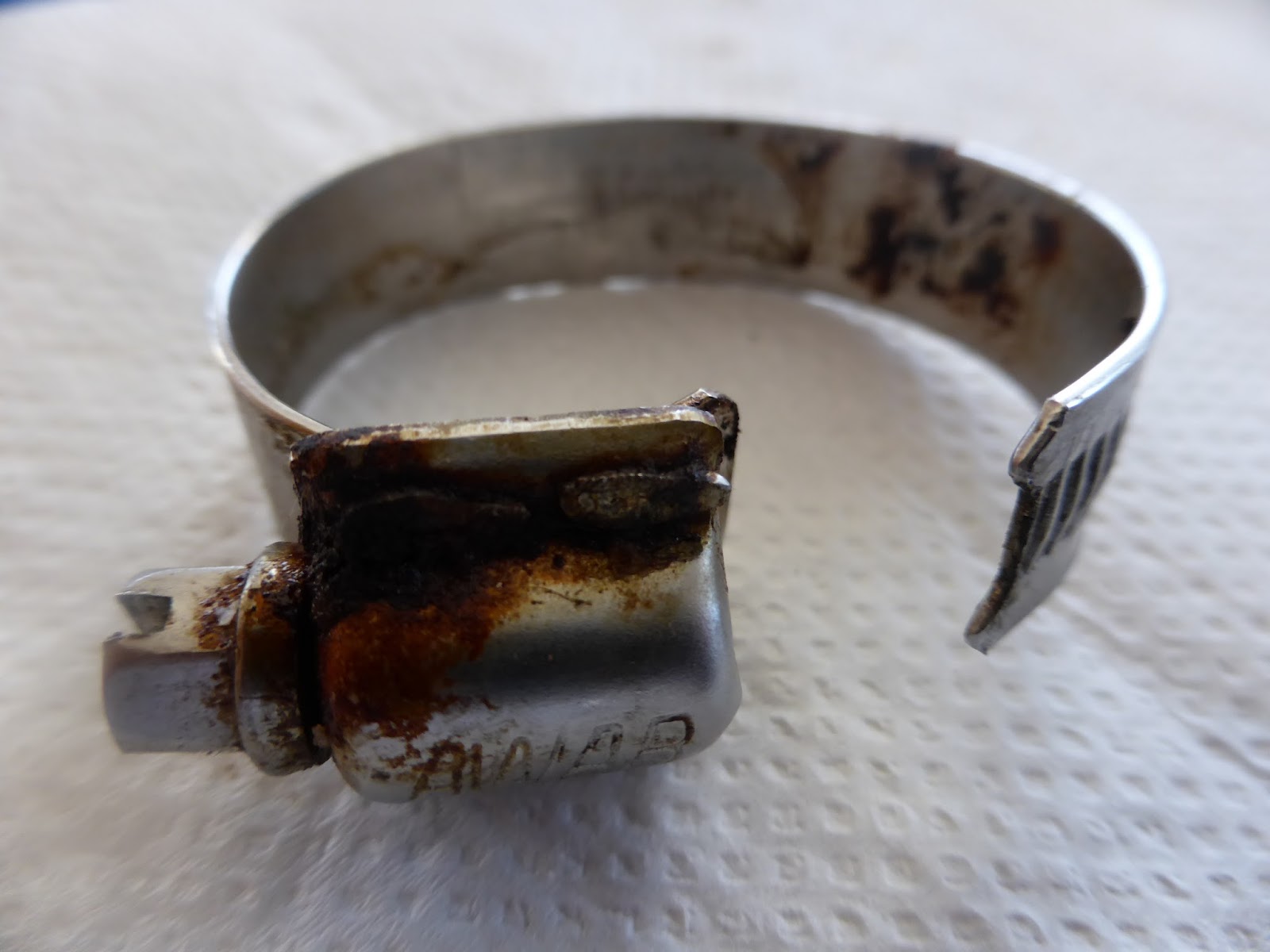
Rust never sleeps! Throughout Envoy are many dozens or possibly a few hundred hose clips. Any rusted ones need to be replaced. They should always be installed with the tightening bolt on the top side of the clamp so that any drips of water don’t contribute to rust. This one was installed bolt down on a bilge pump hose.
Our “To Do List” always looks pretty daunting to begin with and I must say it’s very satisfying to look at our list and see 79 items ticked off with only a few non-urgent ones remaining.
FPB 78-1: A Bright Outlook
With an anchored wingspan of 60’/18m boom end to boom end… …we have been figuring on a little extra visibility. …Read More
